Sieve vs Sifter is essentially the difference between the screening component and the complete screening machine. In industrial screening, a sieve is mainly used to separate materials through its apertures, while a sifter moves and processes the material to complete the screening process.
Simply put, the sieve is responsible for “separating,” while the sifter is responsible for “moving.” The sieve provides the apertures and separation conditions, while the sifter provides the material movement needed for screening. The two work together to achieve continuous screening.
What Is a Sieve?
In a sieve vs sifter comparison, a sieve is the part of screening equipment that directly separates materials. As material passes across the screen surface, smaller particles pass through the apertures, while larger particles remain on the screen surface and continue moving. Common screening media include:
| Screening Media | Main Characteristics |
| Woven wire mesh | Suitable for powders and granules; available in different aperture sizes |
| Perforated plate | More rigid and suitable for heavier or larger particles |
| Polyurethane screen panel | Good wear resistance for applications with higher wear |
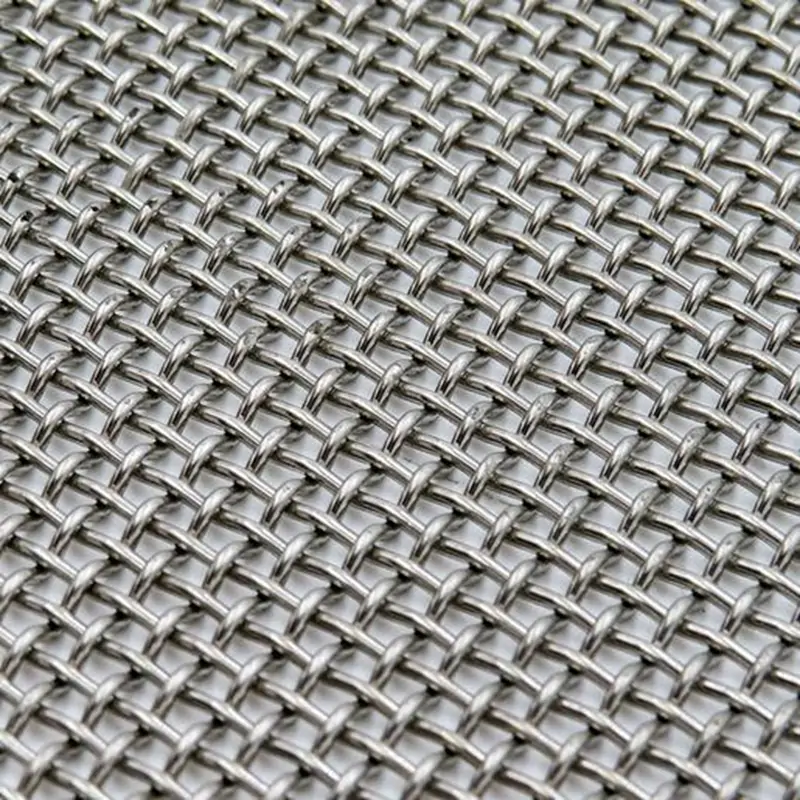
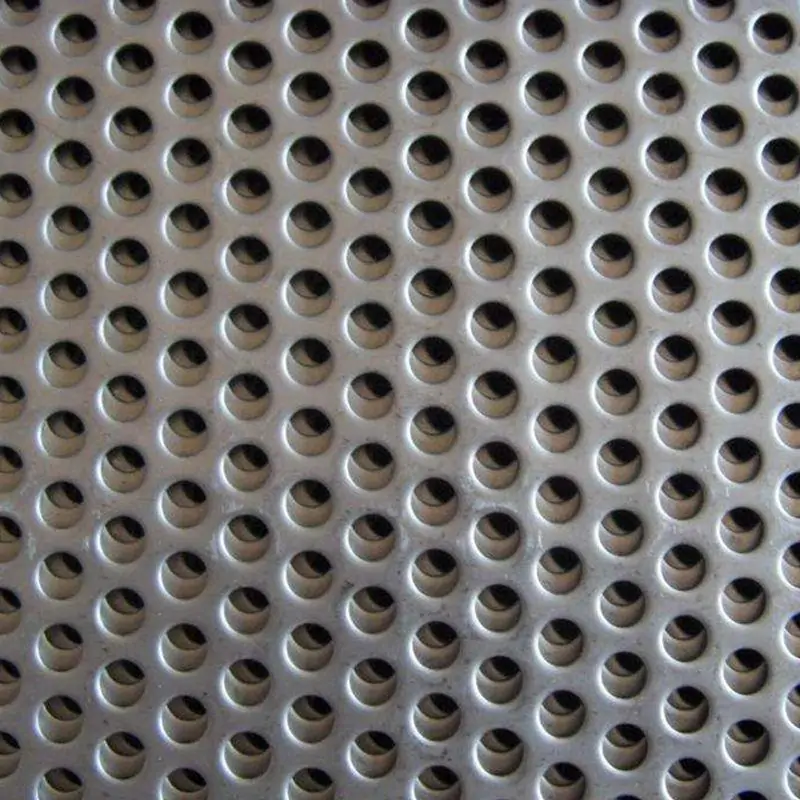
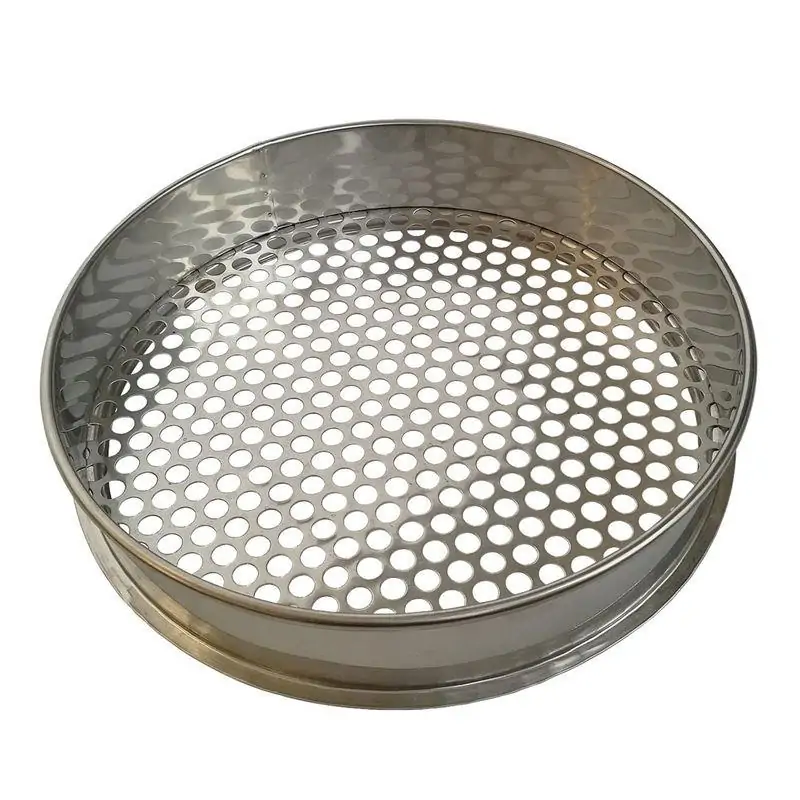
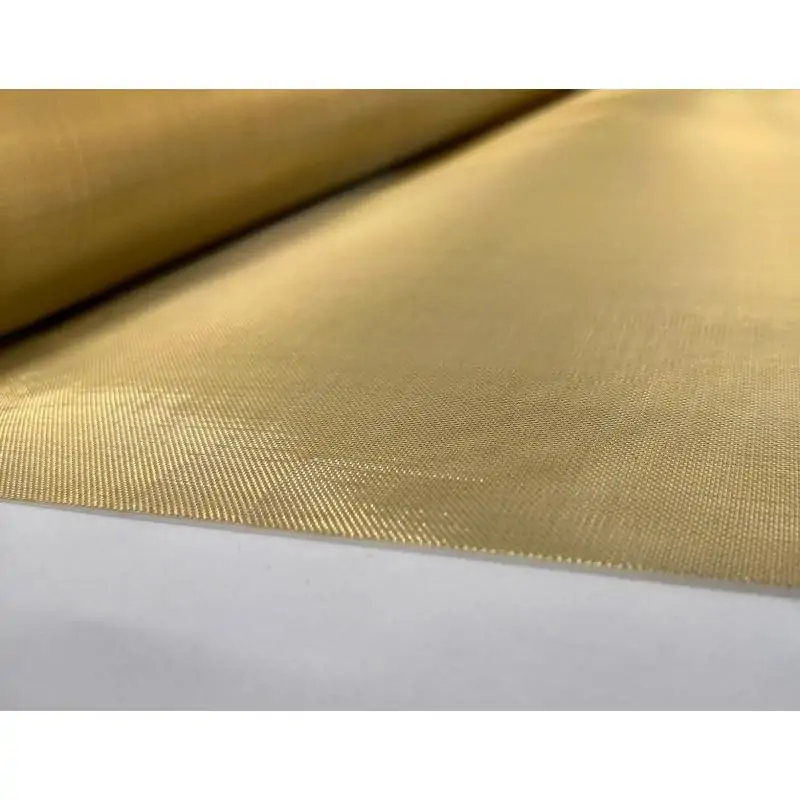
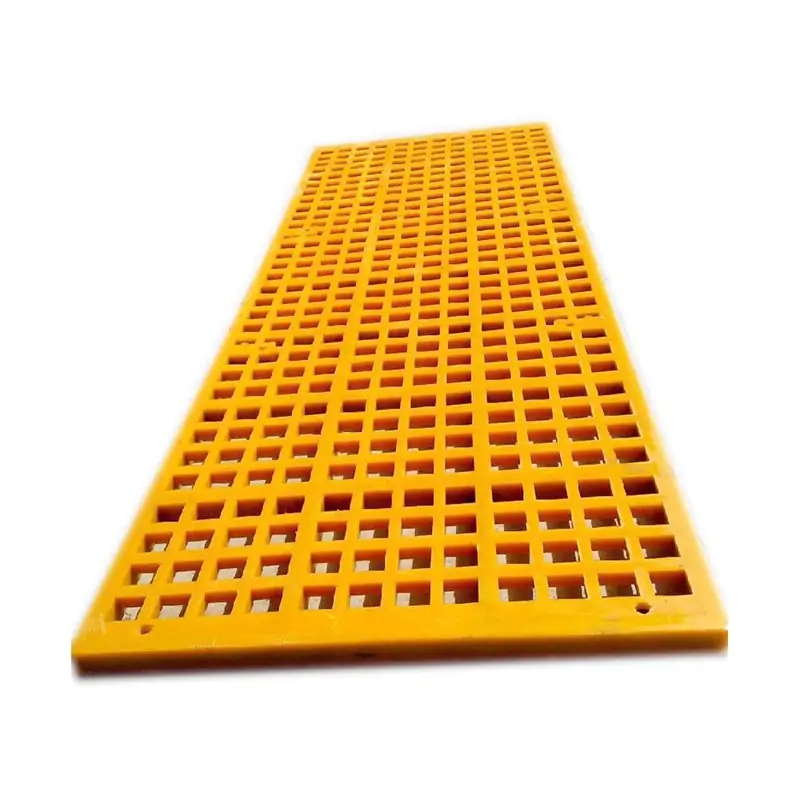
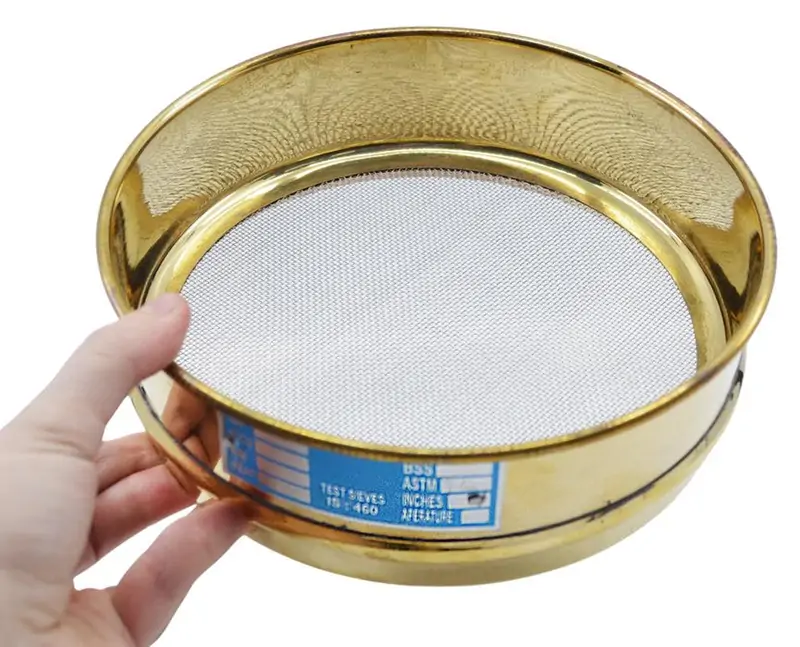
The aperture size and screen material should be selected according to the material and screening requirements. For standard requirements for test sieves and metal wire cloth, see ISO 3310-1.For more details on standard sieve sizes, frame diameters, aperture sizes, and mesh sizes, see our Standard Sieve Sizes guide.
What Is a Sifter?
In the sieve vs sifter comparison, a sifter is the machine that moves material across a sieve for screening. Different sifters use different movements, such as vibration, rotation, or oscillation, and can be fitted with different sieve types and aperture sizes for different screening requirements.
Common screening equipment includes vibrating screens, rotary vibrating screens, centrifugal sifters, gyratory sifters, and trommel screens.For a comparison of different industrial screening equipment, see our guide to Types of Industrial Screeners.
Sieve vs Sifter: What Is the Relationship?
A sieve is the working part of a sifter that separates the material, while the sifter is the complete machine that carries out the screening process. The sieve provides apertures of different sizes for particles to pass through, while the sifter keeps the material moving across the sieve. Sieve analysis shows how much material falls into each particle size range.
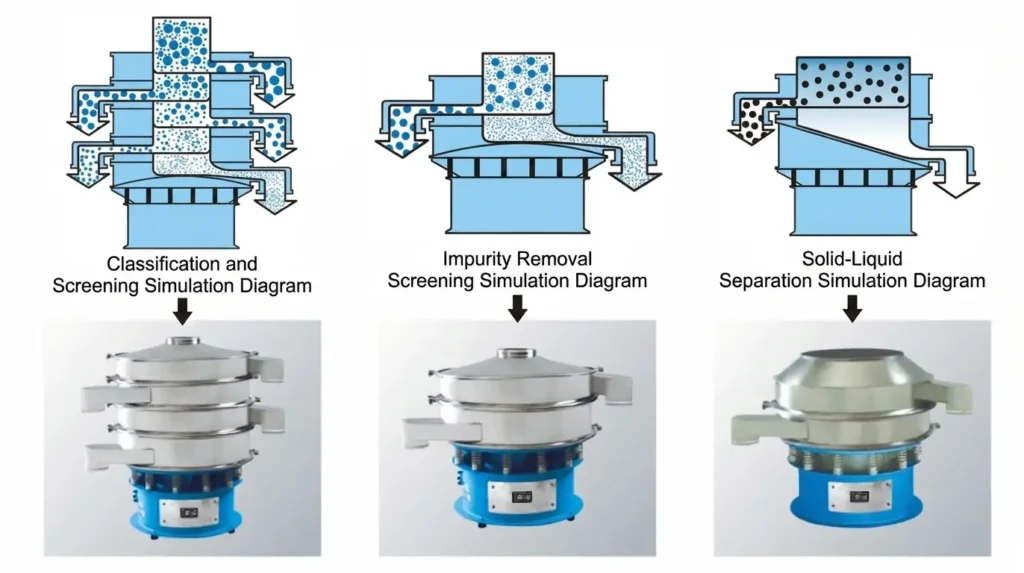
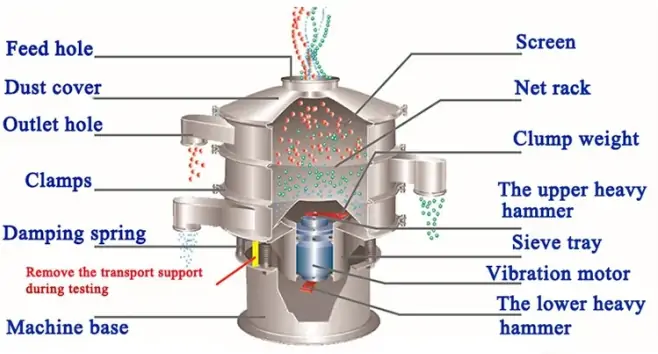
In other words, the sieve decides what can pass through, while the sifter provides the movement needed to make the material pass through. Without a suitable sieve, the machine cannot separate the material as required. Without the sifter, the sieve cannot carry out continuous screening on its own.
| Comparison | Sieve | Sifter |
| Position | Screening component | Complete machine |
| Main function | Separates material through the apertures | Moves material across the sieve |
| Main factors | Aperture size, screen structure | Material movement, processing capacity |
| Common forms | Woven wire mesh, perforated plate, polyurethane screen panel | Vibrating screen, rotary vibrating screen, centrifugal sifter, etc. |
So, a sieve and a sifter are not two machines that replace each other. The sieve is the working part, while the sifter is the complete machine.
How Do a Sieve and a Sifter Work Together?
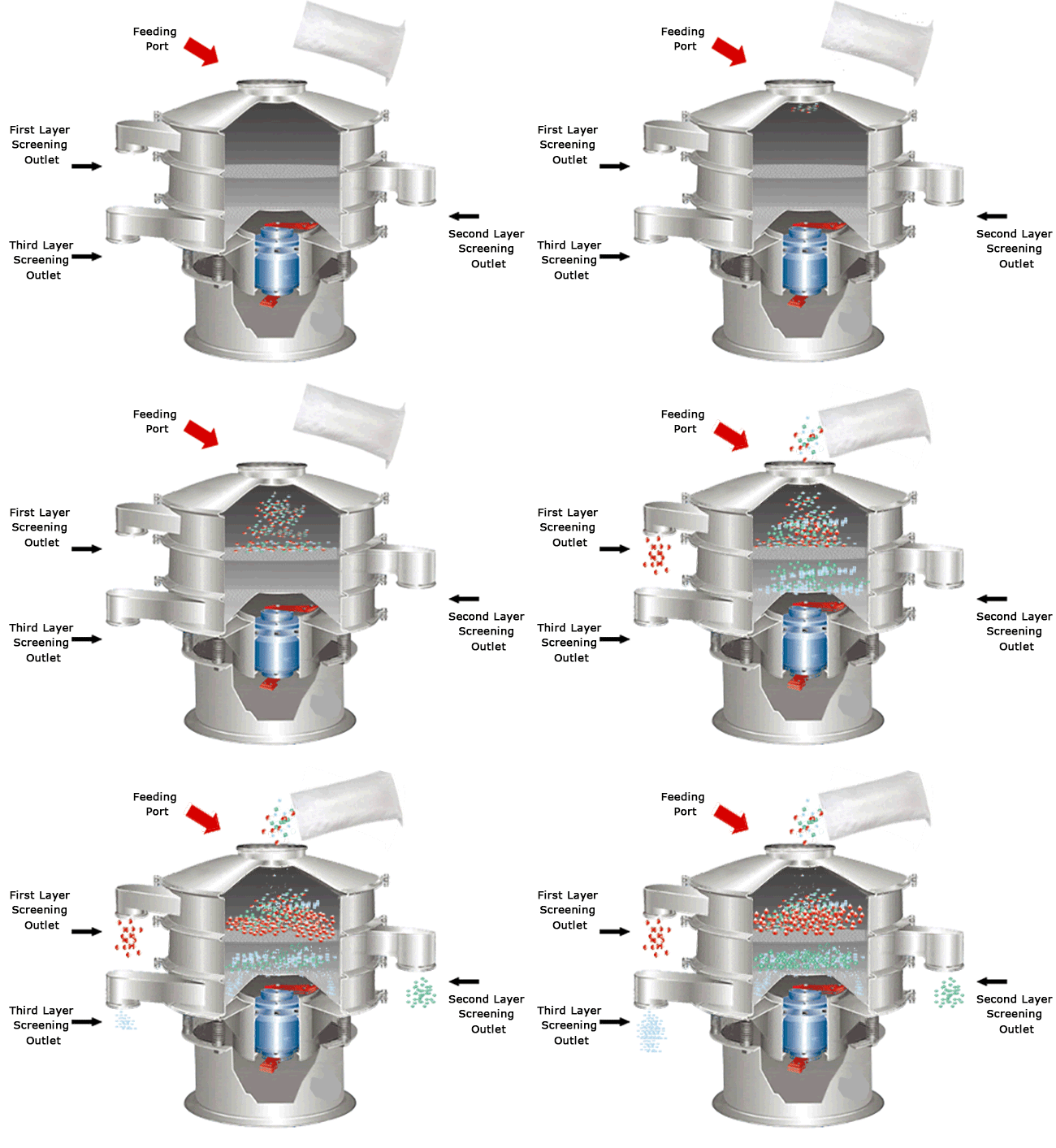
A sifter uses vibration, rotation, or other movements to keep material moving across the sieve. As the material passes over the sieve, particles that are small enough pass through the apertures, while larger particles continue moving along the screen surface and are discharged through a different outlet.
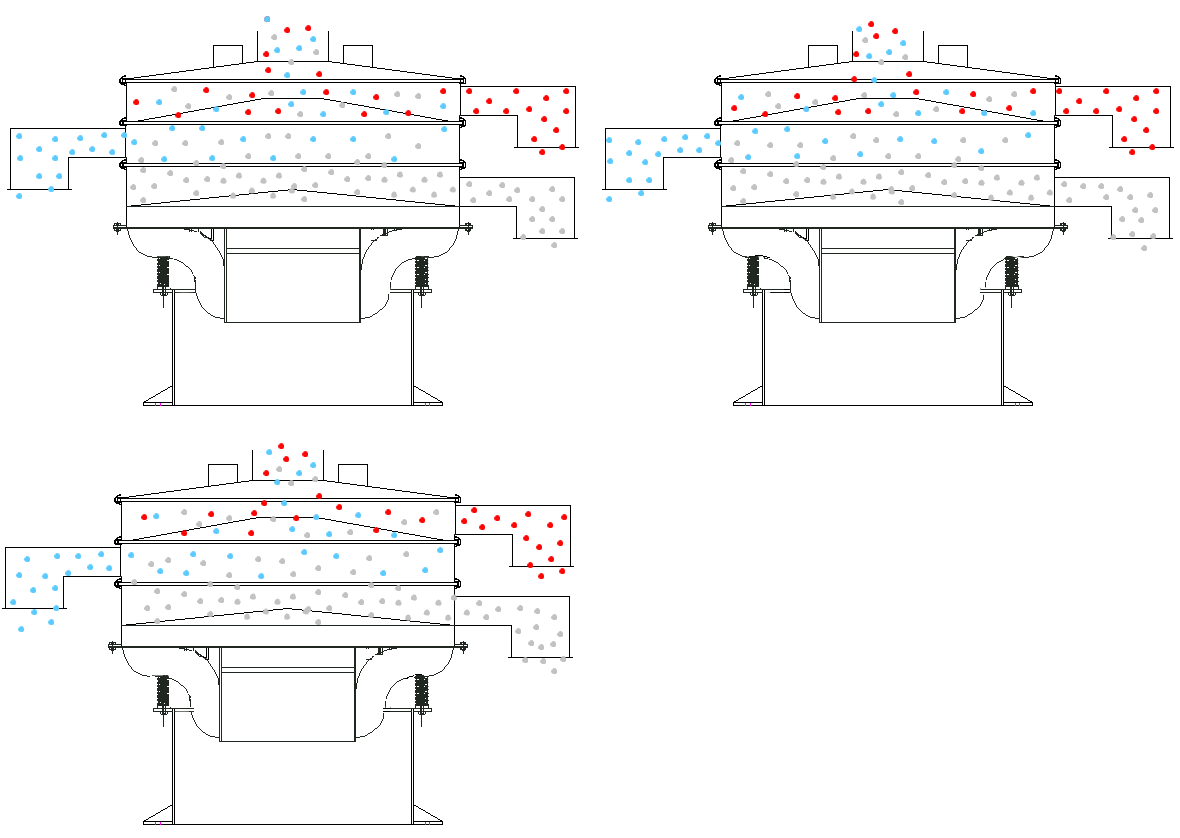
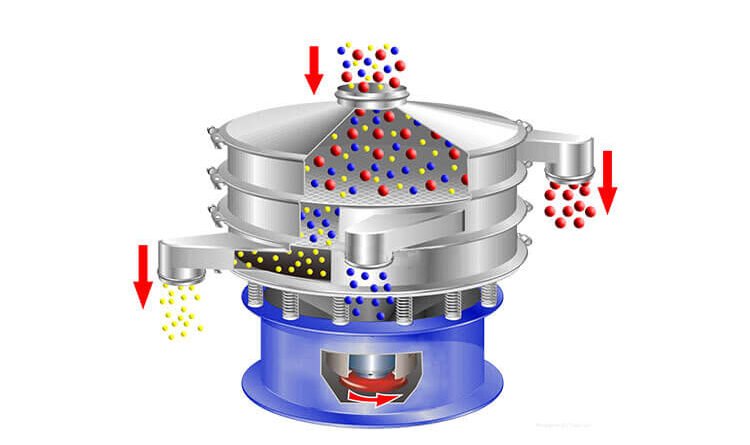
Different types of sifters move material in different ways. Vibrating screens use vibration to move material across the screen surface, while rotary equipment uses rotation to move material through the screening area. So even with the same aperture size, different equipment can produce different screening results.
The sieve determines what size can pass through, while the sifter determines how the material moves across the sieve. The two need to be matched according to the material, target particle size, and processing capacity.
How to Choose a Sifter?
The right sifter depends on the material, target particle size, processing capacity, and screening requirements. Different sifters are designed for different screening conditions.
| Screening Requirement | Equipment to Consider |
| Fine powder screening | Rotary vibrating screen |
| Ultra-fine powder or materials prone to clogging, agglomeration, or static | Ultrasonic vibrating screen |
| Higher-capacity screening of powders and granules | Linear vibrating screen |
| Fine powder screening with airflow | Centrifugal sifter |
| Fine powders or slurries requiring pneumatic conveying | Pneumatic vibratory sifter |
For a broader explanation of vibrating sieve machines, including their working process, different types, and selection factors, see our Vibrating Sieve Machine guide.
For sticky, abrasive, easily agglomerated, or otherwise difficult-to-screen materials, the sifter may also need a suitable screening method and screen cleaning system. These conditions can lead to problems such as screen blinding, screen wear, and changes in screening performance. See disadvantages of a sieve shaker for more information.
Can Replacing the Sieve Change the Screening Particle Size?
Yes, in many cases. If the material, feed rate, and sifter stay the same, changing the sieve to a different aperture size can change the screening size. For more details on the relationship between mesh size and aperture, see our guide to Vibrating Screen Mesh Size and Aperture. For example, if you are using a 5 mm sieve and need a finer cut, you can replace it with a smaller aperture.
But the sieve aperture is not the only factor that determines the final screening result. If the material, capacity, or screening requirement changes, the existing sifter may no longer be suitable even with a different sieve. For flour screening, these factors also affect the choice of rotary vibrating screen. See Flour Powder Rotary Vibrating Screen: How to Choose the Right Machine for a specific selection guide.
If you are changing the screening size on an existing machine, send Jiarui the material, feed particle size, target size, and required capacity. We can check whether a sieve change is enough or whether the machine also needs to be adjusted.
FAQs
Sieve vs Sifter: What Is the Difference?
A sieve is the part of a sifter that directly contacts the material and performs the separation, while the sifter is responsible for moving the material across the screen surface. One performs the separation, while the other provides the movement required for screening. They are not the same thing.
Is a sieve part of a sifter?
Yes. A sieve is generally installed at the screen surface of a sifter. As the material passes across the sieve, particles smaller than the apertures can pass through, while larger particles remain on the screen surface and continue moving forward.
What is the relationship between sieve aperture size and screening particle size?
They are directly related. Larger apertures generally allow larger particles to pass through, while smaller apertures produce a finer screened fraction. However, the aperture size does not necessarily equal the final particle size obtained, because material characteristics and screening conditions also affect the result.
Can one sifter use sieves with different aperture sizes?
Yes. As long as the sieve size and installation method match the equipment, the same sifter can use sieves with different aperture sizes for different screening requirements.
Do I need to replace the entire sifter when changing the aperture size?
Usually not. If you only need to change the screening particle size while the material and processing capacity remain basically unchanged, replacing the sieve is usually sufficient. If the material, processing capacity, or screening requirements also change, the suitability of the equipment needs to be checked again.
How Do I Choose the Right Sifter for My Material?
Start with the material, feed particle size, target screening size, and required capacity. Jiarui can use these details to determine a suitable sifter type and sieve configuration. For sticky, easily agglomerated, abrasive, or static-prone materials, the screening method and screen cleaning system may also need to be adjusted.