W-Type Double Cone Mixer
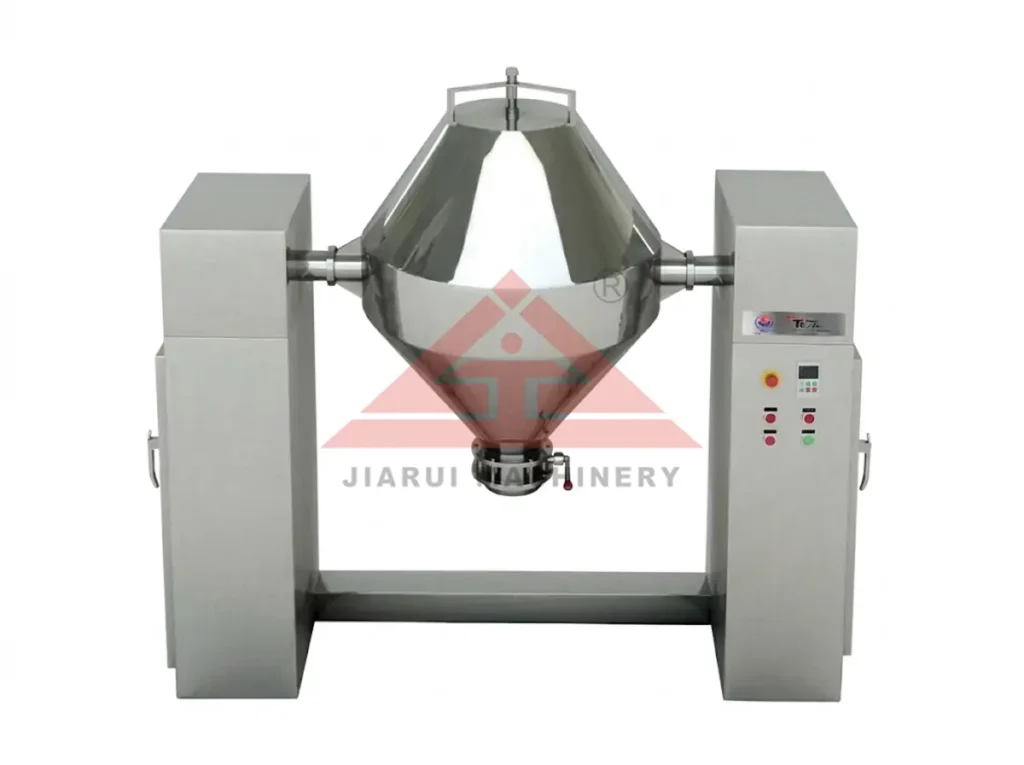
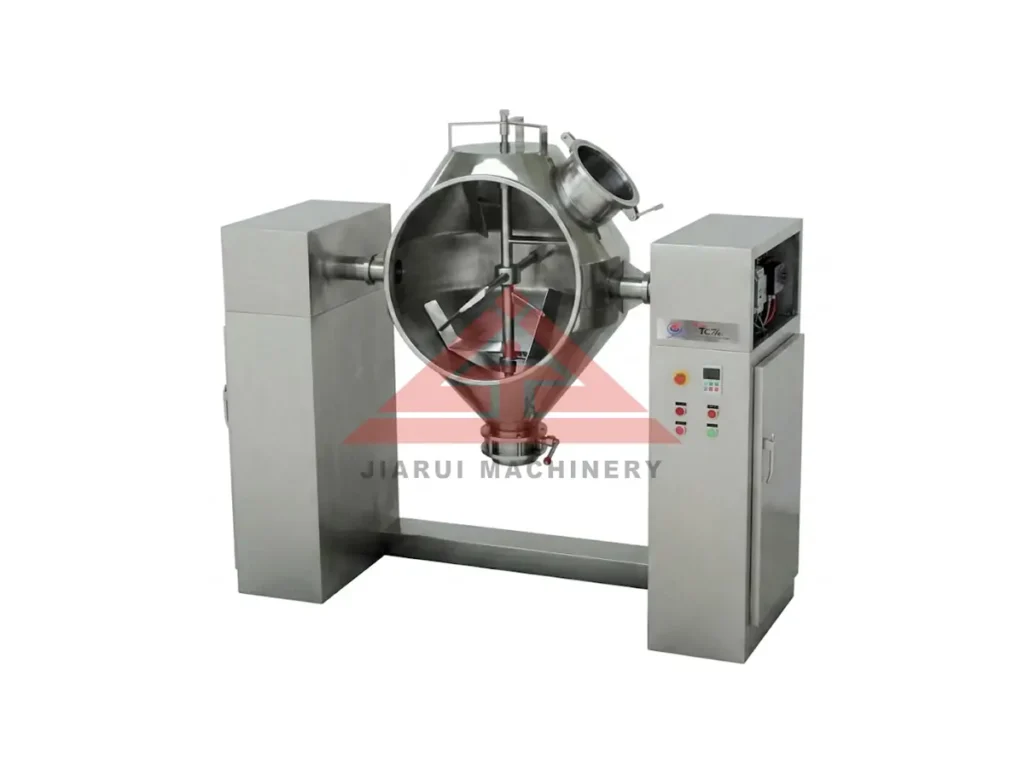
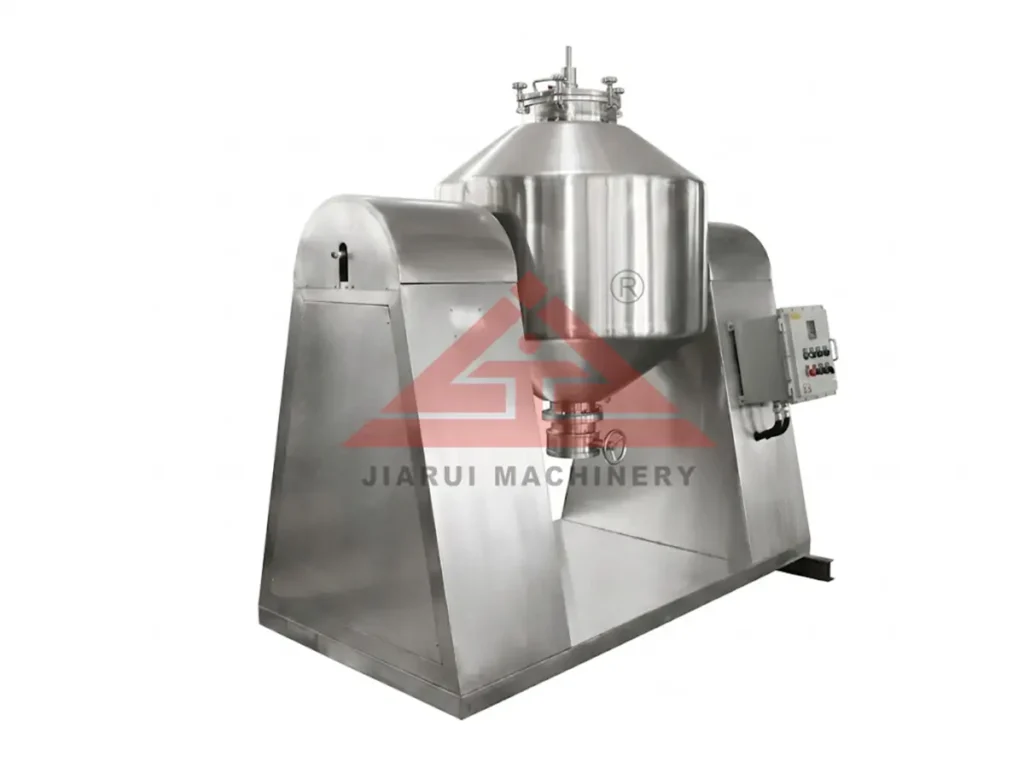
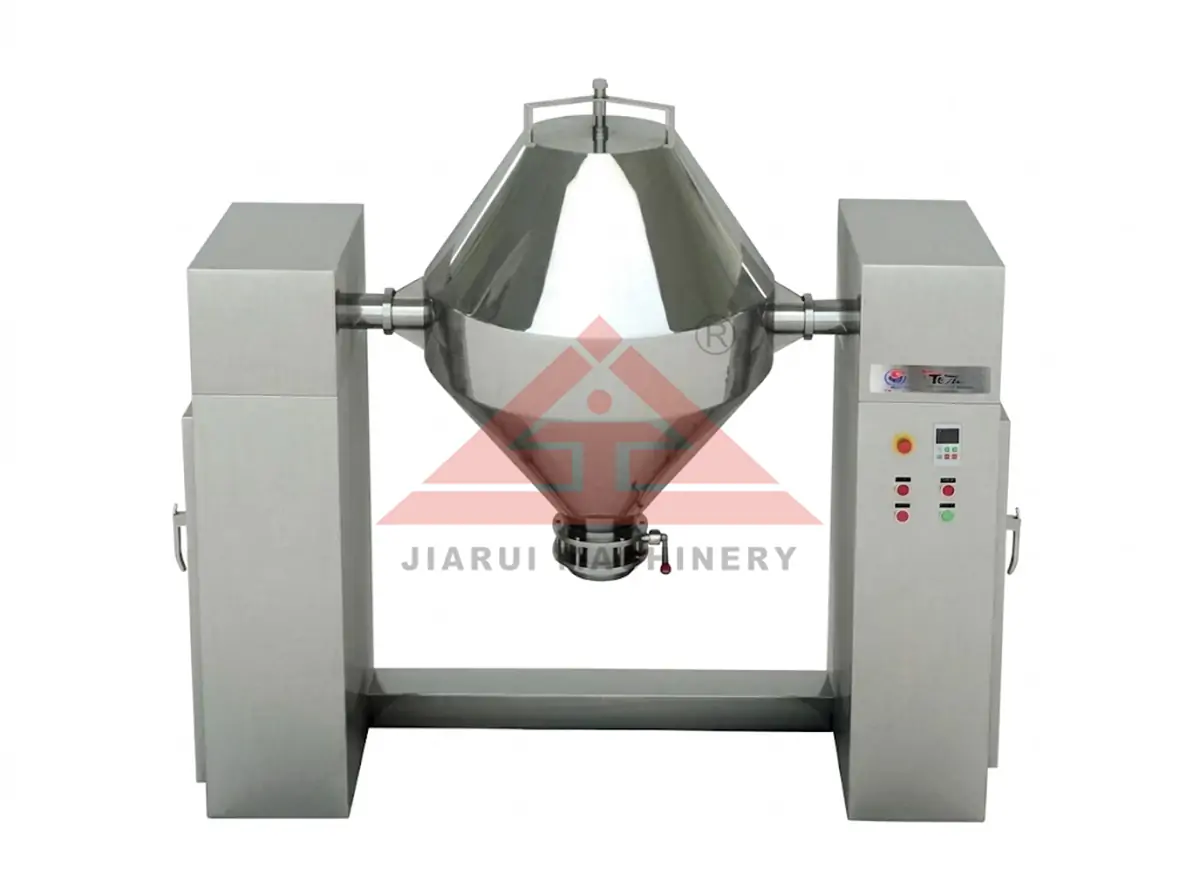
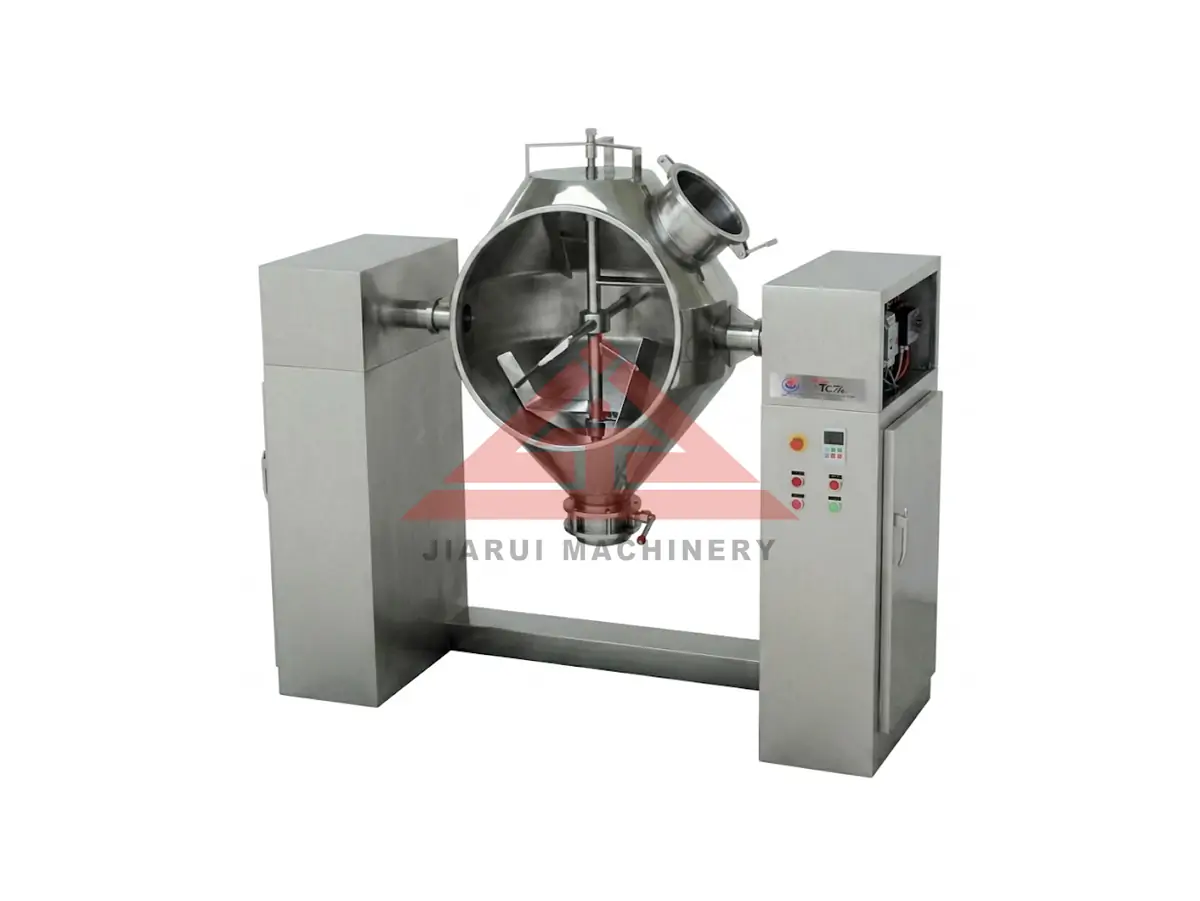
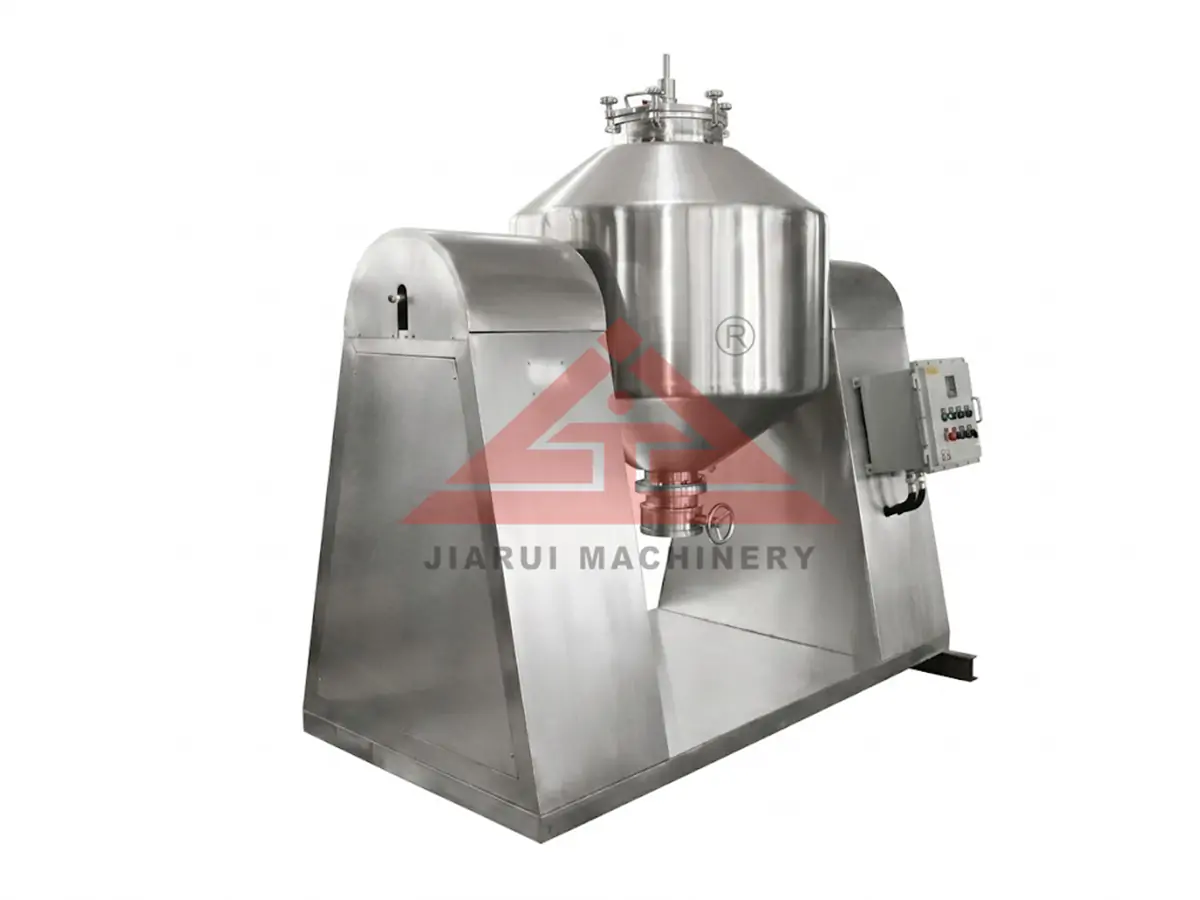
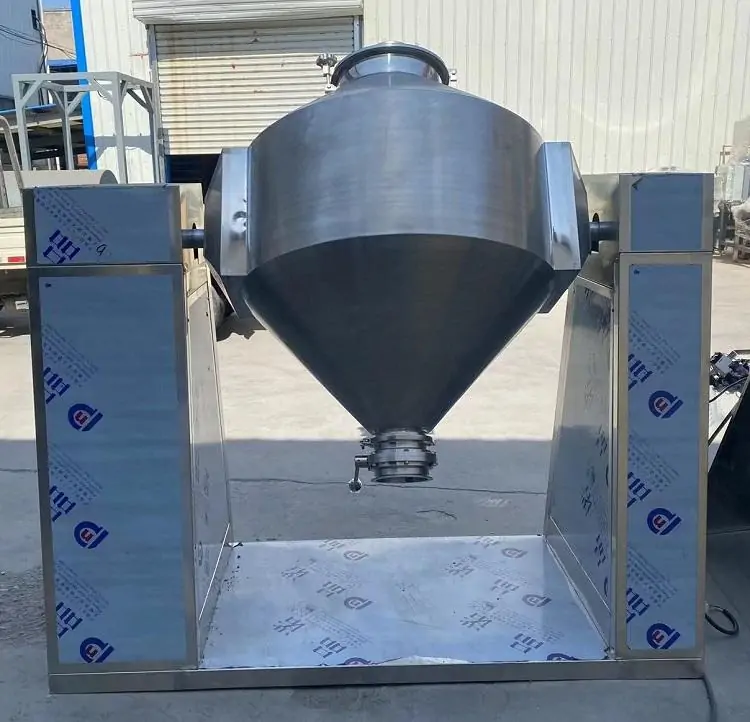
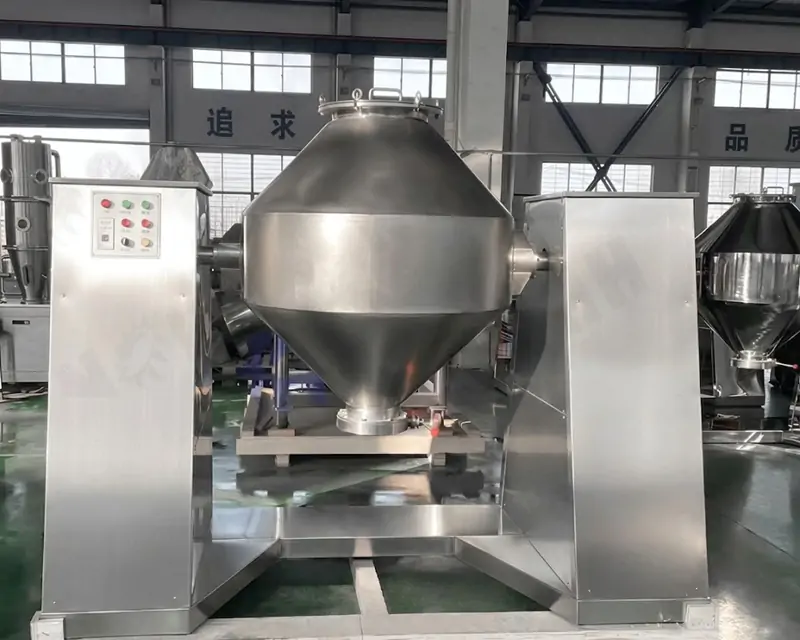
The W-Type Double Cone Mixer is a tumbling mixer used for powders, granules, and powder-granule mixtures. It rotates the double cone vessel to move materials upward, downward, and between different areas inside the chamber, allowing different components to gradually achieve uniform mixing. Compared with high-speed mixing methods, this equipment provides a gentler mixing process and is suitable for applications where particle breakage needs to be reduced and material properties need to be maintained.
W-Type Double Cone Mixer is mainly used for free-flowing dry powders, granules, and multi-component formulations. It is commonly applied in batch mixing processes in industries such as food, chemical, pharmaceutical, and new materials. According to different material characteristics and production requirements, the equipment can be configured with different vessel volumes, contact materials, and feeding/discharge structures.
- Mixing Type: Double Cone Tumbling Mixing
- Suitable Materials: Powder, Granule and Powder-Granule Materials
- Mixing Feature: Low-Shear Mixing for Reducing Particle Breakage
- Material Movement: Lifting, Falling and Mixing During Vessel Rotation
- Contact Material: Carbon Steel, SUS304 or SUS316 Stainless Steel
- Customization: Customized Volume, Feeding/Discharge Structure and Mixing Configuration
What Is a W-Type Double Cone Mixer?
W-Type Double Cone Mixer (Double Cone Blender) is a tumbling mixing equipment used for batch mixing of powders and granules. During operation, the double cone vessel rotates slowly, lifting and dropping the materials repeatedly to achieve gradual and uniform mixing.
Compared with mixers that rely on internal agitators for forced mixing, the movement of a W-Type Double Cone Mixer is gentler, with lower shear force during operation. Therefore, it is more suitable for free-flowing powders, granules, and materials that require protection of particle integrity.
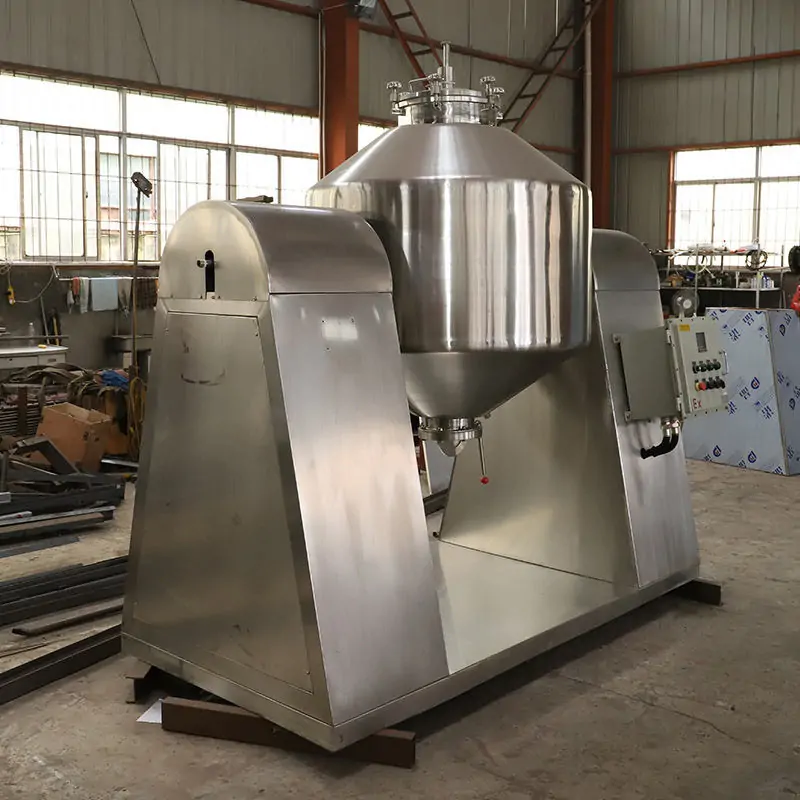
How Does a W-Type Double Cone Mixer Work?
The W-Type Double Cone Mixer mixes materials through the rotation of the double-cone vessel.Learn more about the Double Cone Mixer Working Principle and material movement during the mixing process. With its W-shaped vessel structure formed by two connected cones, the materials do not move in only one direction during rotation. Instead, they continuously change positions between the two cone sections and the central area, allowing different components to gradually mix.
Step 1: Double Cone Vessel Moves the Materials.After the equipment starts, the vessel rotates slowly, and the materials at the bottom move upward along the vessel wall. When the vessel reaches a certain angle, the materials fall away from the wall and slide down along the cone surface to the other side.
Step 2: Materials Exchange Between Two Cone Sections.Due to the cone-shaped structure at both ends of the W-type vessel, materials move back and forth between the two cone sections during rotation. Different areas of materials continuously contact and mix with each other, reducing local material concentration.
Step 3: Continuous Circulation Completes Mixing.As the equipment continues running, materials repeatedly go through lifting, falling, and position exchange processes until the required mixing condition is achieved.
Main Structure
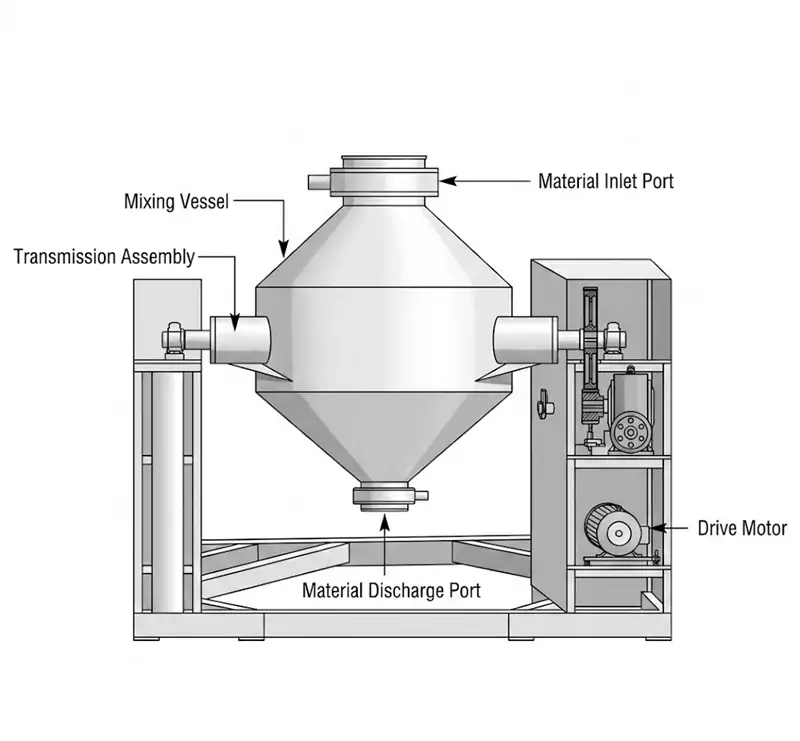
The structure of a W-Type Double Cone Mixer is relatively simple. It mainly relies on the rotation of the double cone vessel to move materials and complete the mixing process. The mixing performance mainly depends on the internal material movement, stable rotation, and convenient feeding and discharge design.
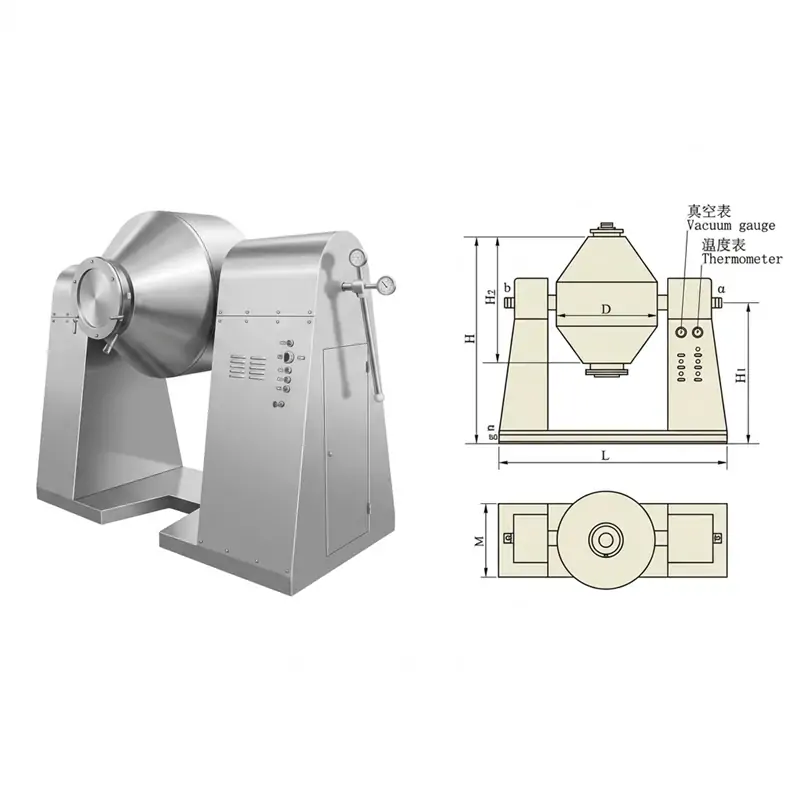
The Double Cone Vessel Is the Core of Mixing.The double cone vessel is the most important part of this type of mixer. Two cones are connected to form a W-shaped internal space. During rotation, materials move upward along the vessel wall, slide down along the cone surface, and continuously exchange positions between the two cone sections. Compared with a simple cylindrical structure, this design provides more opportunities for material contact and redistribution.
How Does the Vessel Rotate?The equipment uses a motor and reducer to drive the vessel at a low rotating speed. Since the mixing process mainly depends on vessel movement, the rotation speed needs to remain stable to avoid insufficient or excessive material movement. The drive system size is mainly selected according to equipment specifications and operating load. Larger equipment requires a stronger drive system due to the increased vessel weight.
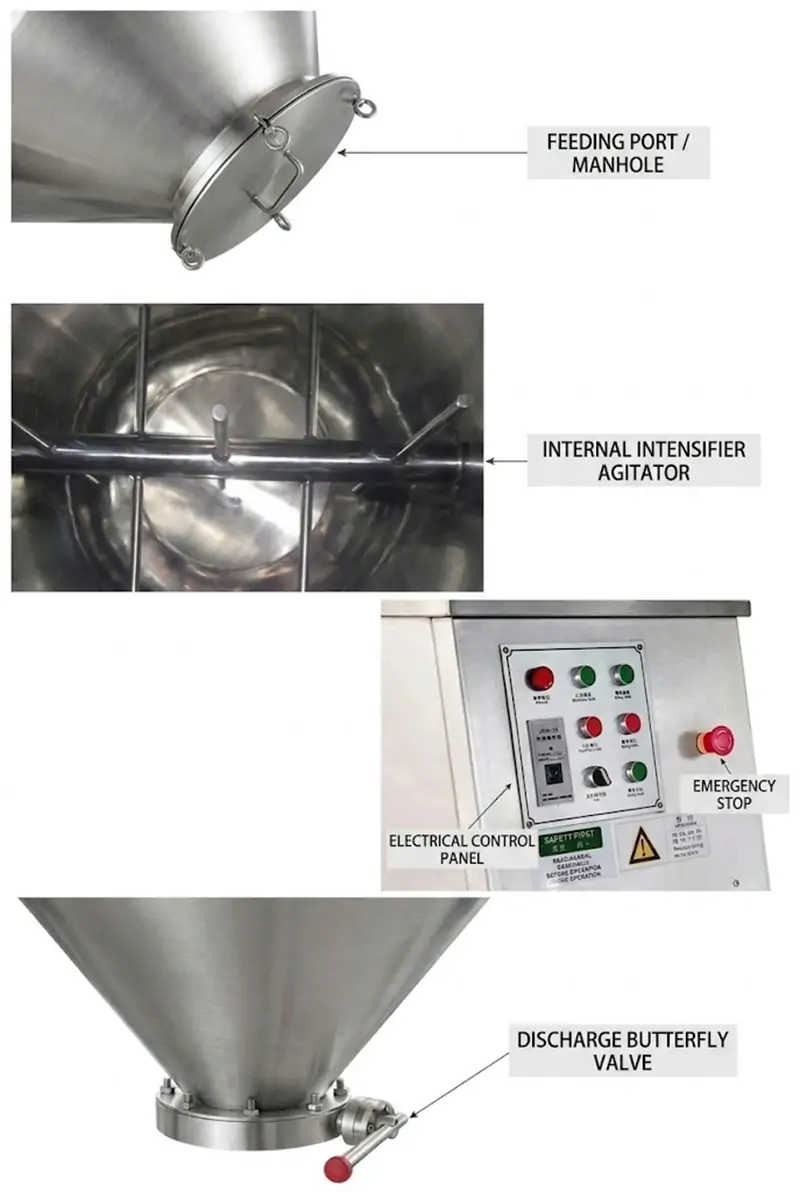
Why Is the Discharge Structure Important?W-Type Double Cone Mixer requires frequent loading and unloading during production, making the feeding and discharge structure an important consideration. Different materials can be equipped with different feeding ports and discharge valves. Especially for powder materials, smooth discharge and easy internal cleaning directly affect daily operation.
When Is an Intensifier Mixing Device Required?For powders that are easy to agglomerate or mixing processes that require adding a small amount of liquid, an intensifier mixing device can be added to improve material dispersion. However, for free-flowing powders and granules, the standard tumbling mixing structure is usually sufficient.
Suitable Materials
W-Type Double Cone Mixer is commonly used for batch mixing of powders, granules, and powder-granule mixtures. The equipment rotates the double cone vessel to tumble the materials, allowing different components to continuously exchange positions inside the vessel. When selecting the equipment, factors such as material flowability, particle size, moisture content, and tendency to agglomerate should be considered.
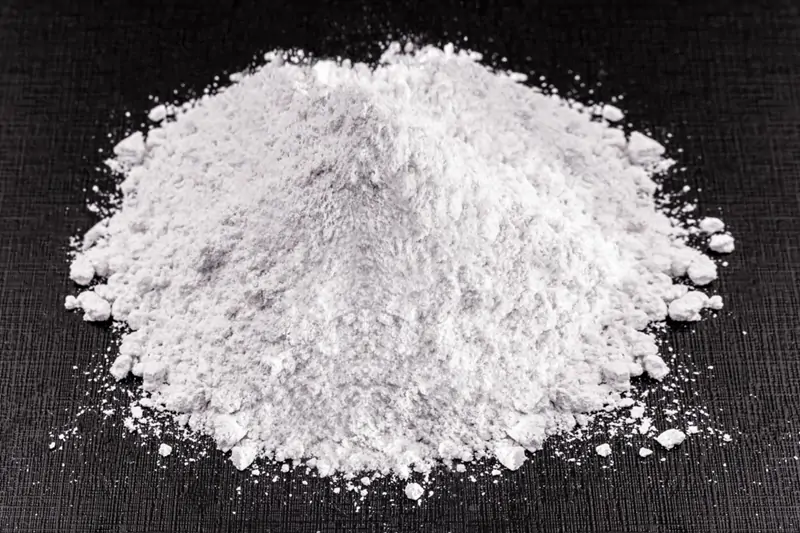
Powder Materials for Mixing 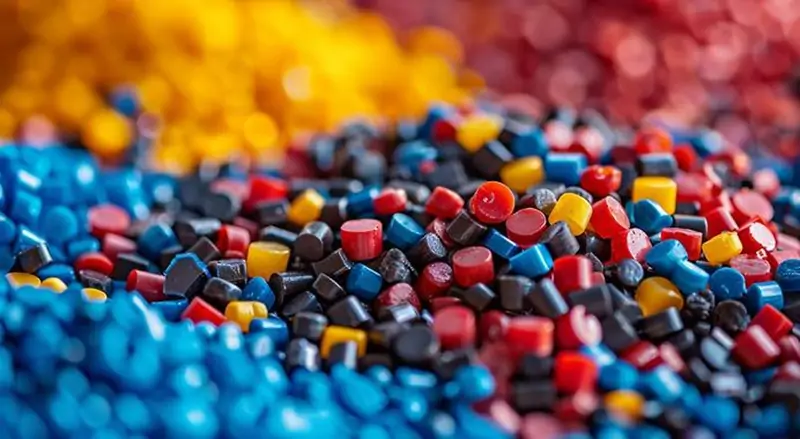
Granular Materials for Mixing 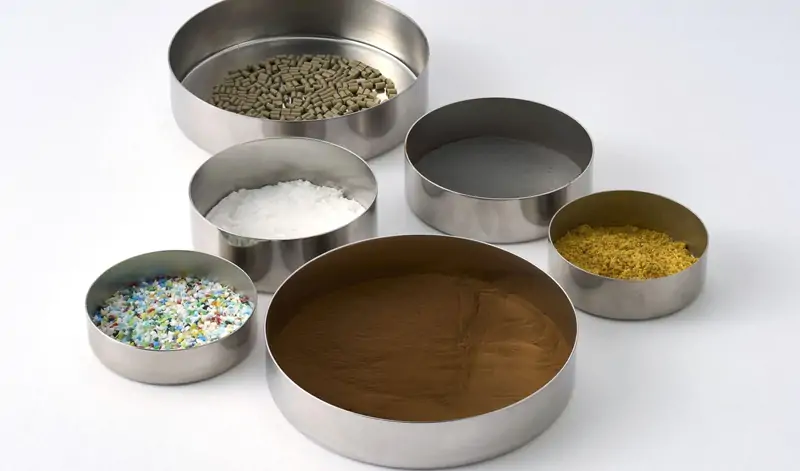
Powder and Granule Mixtures 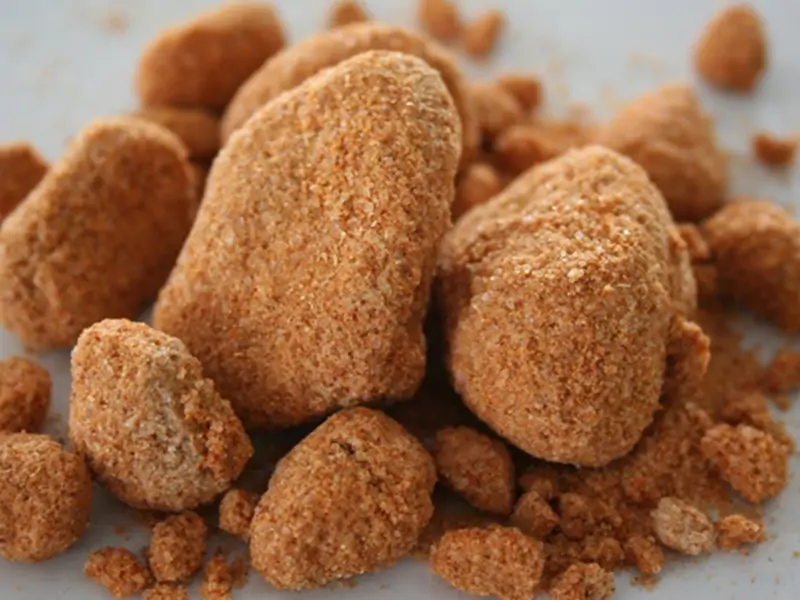
Agglomerated Powder Materials
Powder Materials:W-Type Double Cone Mixer is suitable for free-flowing powders, such as food powders, chemical raw materials, and pharmaceutical excipients. During operation, the powder materials are continuously tumbled with the vessel rotation, allowing different components to contact each other and making it suitable for batch mixing of various powder formulations.
Granular Materials:For materials such as plastic pellets, metal particles, and ceramic granules that require maintaining particle shape, W-Type Double Cone Mixer completes the mixing process through vessel tumbling. The gentle mixing movement helps reduce the impact of excessive shear force on particles and is suitable for production processes where particle integrity is important.
Powder and Granule Mixtures:In some formulation processes, powders need to be mixed with granular materials, such as additives and modified materials. Since powders and granules usually have differences in particle size and flowability, continuous tumbling allows the two materials to contact sufficiently and gradually achieve uniform distribution.
Agglomerated or Special Materials:For materials that are easy to agglomerate, have poor flowability, or require adding a small amount of liquid, an intensifier mixing device can be added according to the mixing requirements. However, if the materials already have good flowability, the standard tumbling mixing structure can usually meet the production requirements.
Equipment Selection
When selecting a W-Type Double Cone Mixer, the first consideration should be the material characteristics. The equipment uses double cone vessel rotation to tumble materials and provides a gentle mixing method without relying on high-speed shear. For example, free-flowing powders and granules usually require a standard configuration, while materials that are easy to cake, absorb moisture, or require liquid addition may need adjusted equipment configurations.
- For Standard Powders and Granules:
- For materials such as flour, milk powder, chemical powders, and plastic pellets with good flowability, a standard W-Type Double Cone Mixer configuration is usually suitable. The equipment size mainly depends on the required batch mixing amount and material density to avoid excessive loading that may affect vessel rotation.
- What Should Be Considered for Agglomerating Materials?
- If powders easily absorb moisture and form lumps, or if a small amount of liquid needs to be added during mixing, standard tumbling mixing may not provide sufficient dispersion. In these cases, an intensifier mixing device can be considered to break up agglomerated materials and improve mixing performance.
- How to Select Equipment for Food and Pharmaceutical Applications?
- For food and pharmaceutical applications with higher hygiene requirements, the material contact parts, sealing structure, and cleaning convenience should be considered according to relevant GMP (Good Manufacturing Practice) requirements. According to production requirements, the equipment can be manufactured with SUS304 or SUS316 stainless steel and configured with suitable feeding and discharge structures.
- How to Determine the Mixer Capacity?
- The capacity of a W-Type Double Cone Mixer should not be selected simply based on the largest possible loading volume. A certain amount of internal space is required for material tumbling. Therefore, equipment size is usually determined according to batch quantity, material density, and production requirements.
For common free-flowing powders and granules, the standard configuration can generally meet production needs. If materials are easy to agglomerate, require liquid addition, or have higher hygiene requirements, the process conditions should be confirmed first before determining a suitable configuration.
Technical Parameters
W-Type Double Cone Mixer specifications are mainly selected according to the batch mixing quantity, while material density and flowability also need to be considered. Since different materials have different loading weights, the final equipment configuration should be determined according to specific production conditions. The following parameters are for common configurations.
| Model | Total Volume (L) | Batch Mixing Capacity (kg/batch) | Mixing Time (min) | Motor Power (kW) | Vessel Speed (rpm) |
| W-200 | 200 | 40–100 | 6–10 | 1.1 | 12–15 |
| W-300 | 300 | 60–150 | 6–10 | 1.5 | 12–15 |
| W-500 | 500 | 100–200 | 6–10 | 2.2 | 12 |
| W-1000 | 1000 | 200–400 | 6–10 | 4 | 12 |
| W-1500 | 1500 | 300–500 | 6–10 | 4–5.5 | 12 |
| W-2000 | 2000 | 400–800 | 6–10 | 7.5 | 10–12 |
| W-2500 | 2500 | 500–1000 | 6–10 | 7.5–11 | 10–12 |
Note: The above parameters are for reference only. Actual specifications may vary depending on material characteristics and customized requirements.
Parameter Explanation
Mixing Volume:During operation, W-Type Double Cone Mixer requires sufficient internal space for materials to tumble with vessel rotation. Therefore, equipment size cannot be selected only according to total vessel volume. The actual batch quantity should also be considered. Excessive loading will reduce the available movement space and affect mixing performance.
Material Density:Different material densities affect the actual loading weight of the equipment. For example, metal powders, mineral powders, and common food powders have different weights under the same vessel volume. Therefore, material density should be considered when selecting the suitable model.
Mixing Requirements:For free-flowing powders and granules, the standard W-Type Double Cone Mixer structure can usually meet production requirements. If materials are easy to agglomerate or require liquid addition during mixing, an intensifier mixing device or adjusted internal structure may be required.
W-Type Double Cone Mixer vs Ribbon Mixer
When selecting powder mixing equipment, W-Type Double Cone Mixer and Ribbon Mixer are often compared. Both types of equipment can be used for powder and granule mixing, but their mixing methods are different, which affects the suitable materials and production requirements.
| Comparison Item | W-Type Double Cone Mixer | Ribbon Mixer |
| Mixing Method | Materials are lifted and tumbled through vessel rotation to achieve mixing | Material is circulated and mixed by the rotation of the inner and outer ribbons. |
| Mixing Characteristics | Gentle mixing process with lower shear force | Stronger material circulation with higher mixing intensity |
| Suitable Materials | Powders, granules, and materials requiring better particle integrity protection | Various powders and large-batch formulation materials |
| Particle Protection | Better suitable for fragile particles or applications requiring reduced material damage | Relatively stronger shear effect, suitable for common industrial powders |
| Liquid Addition | Spray liquid addition or auxiliary structures can be added according to process requirements | Commonly used for powder formulations requiring stronger mixing action |
| Common Applications | Food additives, pharmaceutical powders, fine chemicals, and new material powders | Dry mortar, feed, chemical raw materials, and industrial powder formulations |
How to Determine Which Equipment Is More Suitable?
- If the material is relatively fragile and requires reduced particle breakage or a gentler mixing process, W-Type Double Cone Mixer is usually more suitable.
- If the production batch is larger and stronger material circulation or shorter mixing time is required, Ribbon Mixer is more commonly selected.
- For materials with large density differences, powders that are easy to agglomerate, or products requiring special additives, the material characteristics should be evaluated first.
Customization Capability
The structure of W-Type Double Cone Mixer is relatively mature, but different materials and production requirements have a significant influence on equipment configuration. Jiarui can adjust the vessel size, intensifier mixing structure, and feeding/discharge design according to customer mixing quantity, material characteristics, and operating conditions.
How Is the Mixing Volume Determined?Different material densities and batch quantities require different equipment sizes. W-Type Double Cone Mixer needs sufficient internal space for materials to move during rotation. Therefore, equipment volume is usually determined according to the actual mixing quantity instead of simply selecting a larger model.
When Is an Intensifier Mixing Device Required?For free-flowing powders and granules, the standard double cone tumbling structure can usually meet mixing requirements. If materials are easy to agglomerate, difficult to disperse, or require a small amount of liquid addition during mixing, an intensifier mixing device can be added to improve powder dispersion and reduce the influence of agglomeration on mixing uniformity.
How Can Feeding/Discharge Structure and Material Be Adjusted?Different production environments have different requirements for equipment structure. Food and pharmaceutical industries usually pay more attention to contact materials, sealing structures, and cleaning convenience. According to specific requirements, the equipment can be manufactured with SUS304 or SUS316 stainless steel and configured with suitable feeding ports, discharge valves, and internal surface treatment.
To determine a suitable equipment configuration, customers usually need to provide:
- Material name and condition (powder, granule, or powder-granule mixture);
- Batch mixing quantity;
- Material density, particle size, and flowability;
- Whether the material tends to agglomerate or requires liquid addition;
- Requirements for material, cleaning, and discharge structure.
Jiarui Manufacturing
W-Type Double Cone Mixer relies on vessel rotation to tumble materials, so the vessel rotation structure, internal contact surface, and discharge system are important during manufacturing. Jiarui adjusts the corresponding structures according to equipment specifications and material requirements.
Why Is the Vessel Structure Important?
The double cone vessel is the area where materials are lifted, mixed, and redistributed. After vessel processing and assembly, stable rotation needs to be ensured so that materials can continuously move upward, fall, and exchange positions inside the vessel. For larger equipment models, the matching between vessel weight and rotation structure also needs to be considered in advance.
How Are Material Contact Surfaces Processed?
Powder materials directly contact the internal surface of the vessel, so surface treatment affects material residue and cleaning. Carbon steel structures can be used for common materials, while SUS304 or SUS316 stainless steel can be selected for food and pharmaceutical applications with higher hygiene requirements. The internal surface treatment can also be adjusted according to material characteristics and cleaning requirements.
When Is Reinforced Mixing Structure Required?
If materials are easy to agglomerate, have poor flowability, or require a small amount of liquid addition, an Intensifier Bar can be installed inside the vessel to help break up agglomerated materials. For common free-flowing powders and granules, the standard double cone structure is usually sufficient. This configuration is not required for every application and mainly depends on material characteristics.
How Is the Discharge Designed?
After mixing is completed, the vessel rotates to the discharge position, and materials are discharged through the bottom discharge structure. The discharge valve type and size need to be selected according to material flowability and downstream equipment requirements. For powder production, sealing performance and residual material control should also be considered to avoid material accumulation at the discharge area.
After assembly, Jiarui performs operation checks on the vessel rotation, transmission system, and discharge structure to confirm that the equipment operates properly before delivery.
FAQs
Get a Free Consultation
Fill out the form below to connect with our experts and receive personalized recommendations for your application.