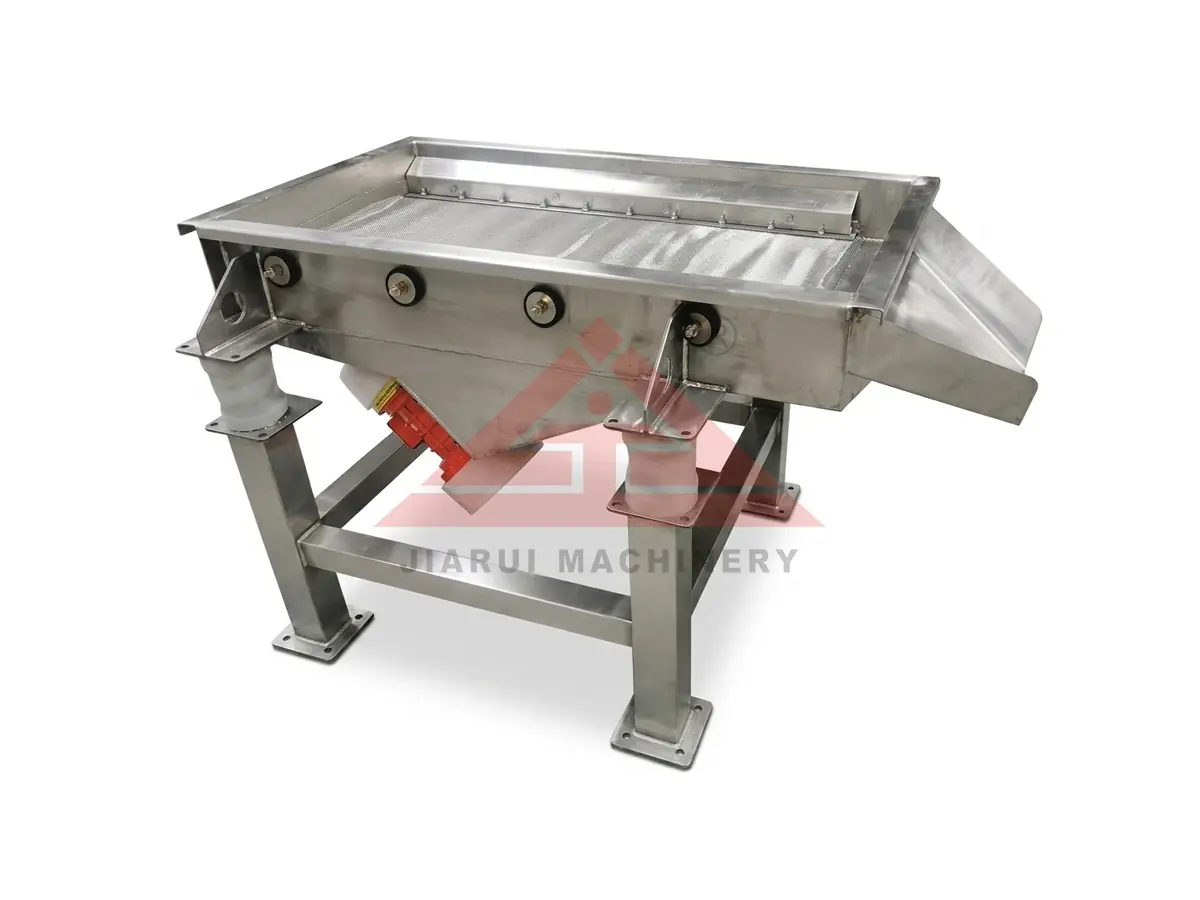
Linear Vibrating Screen
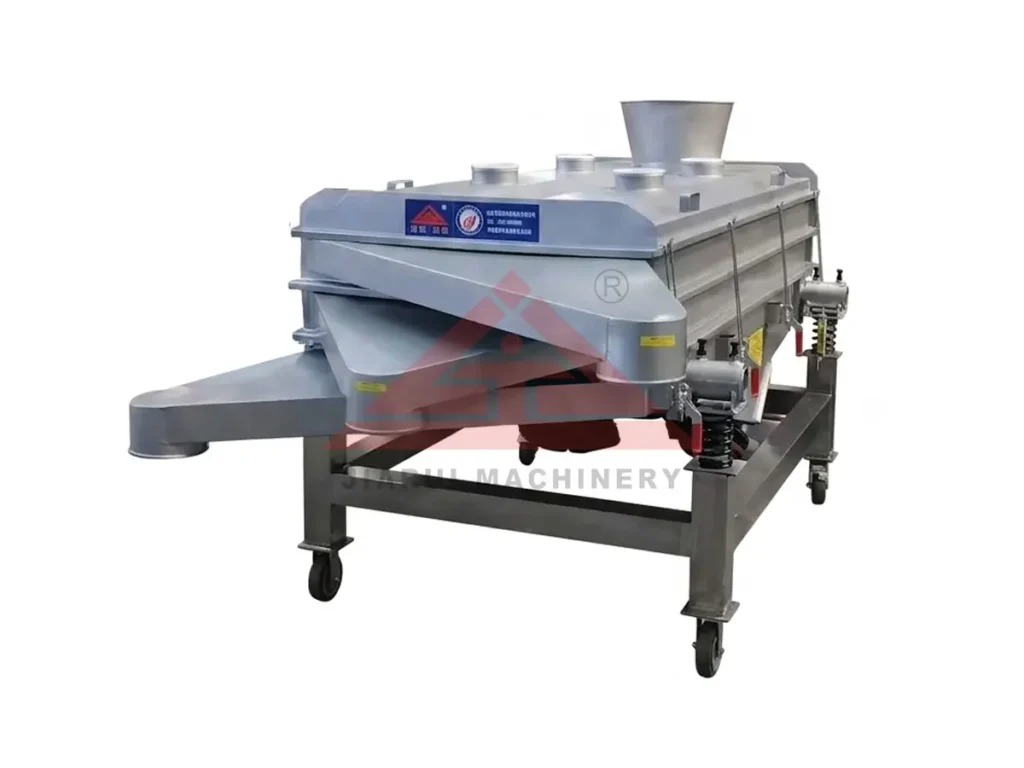
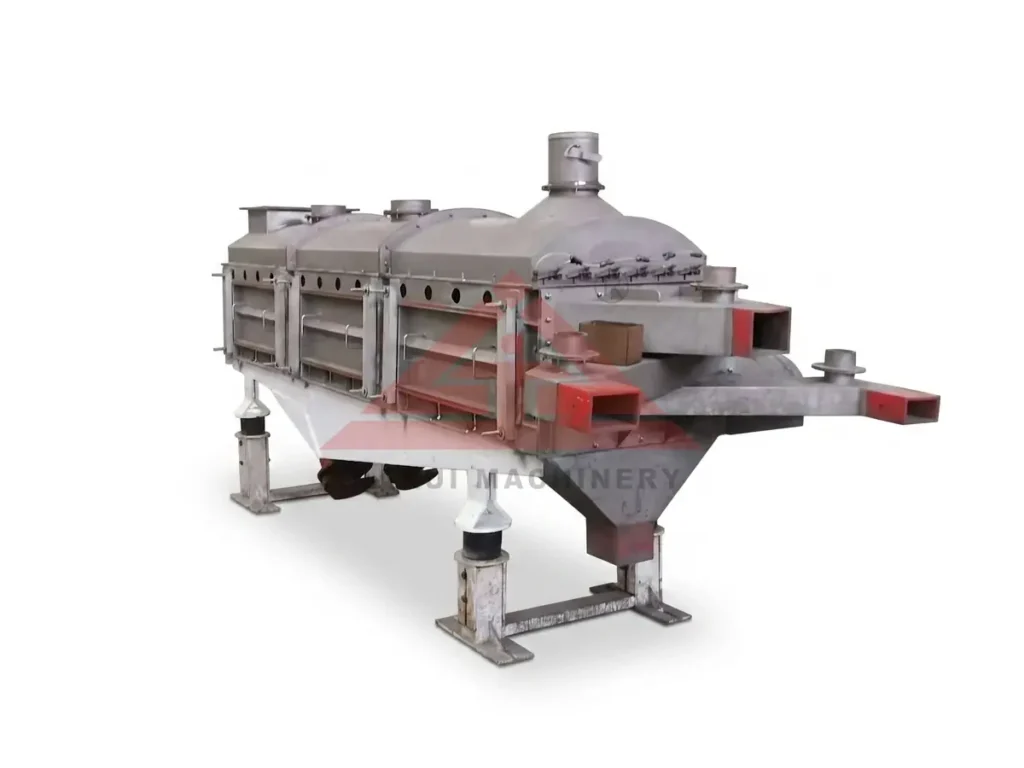
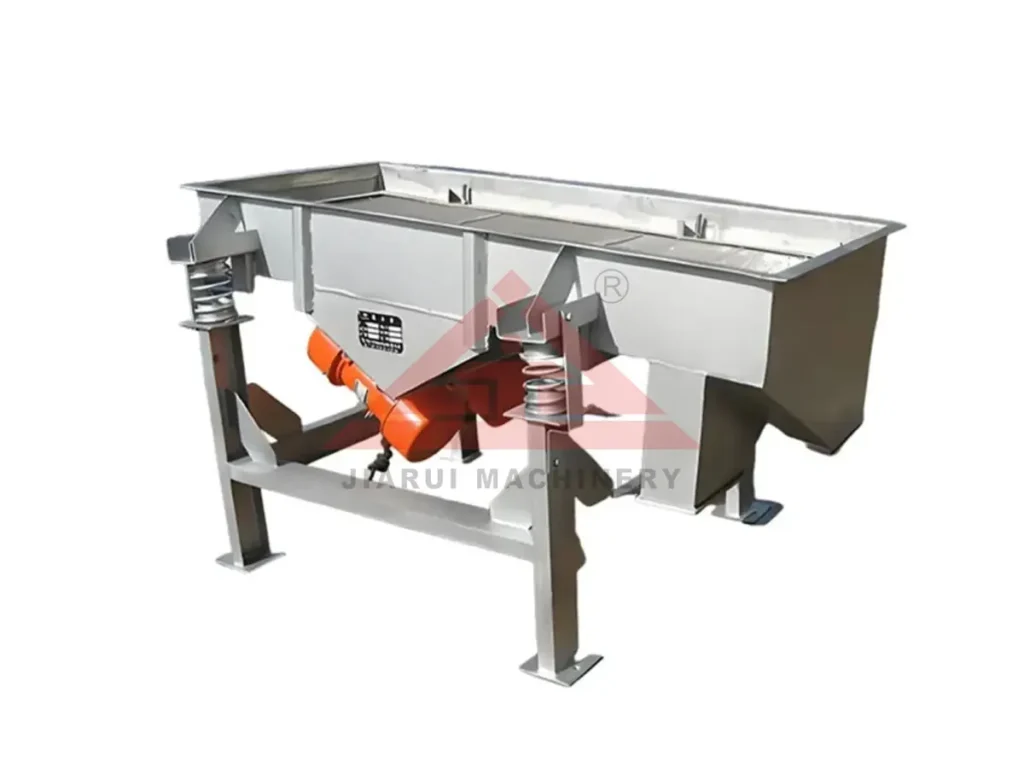
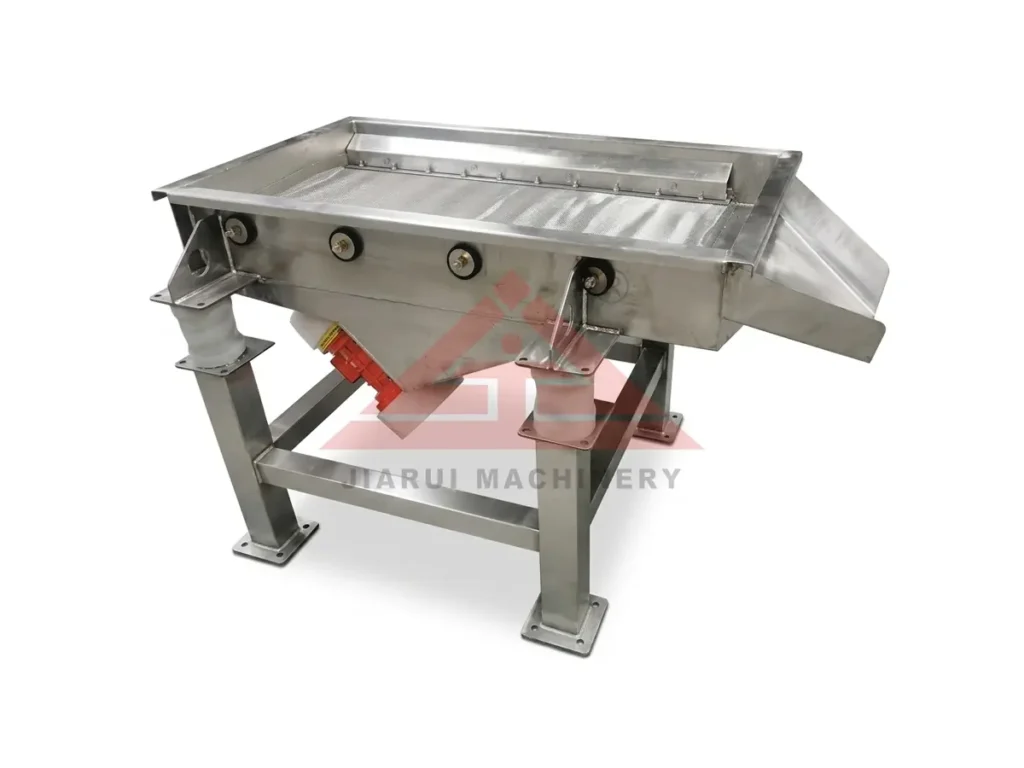
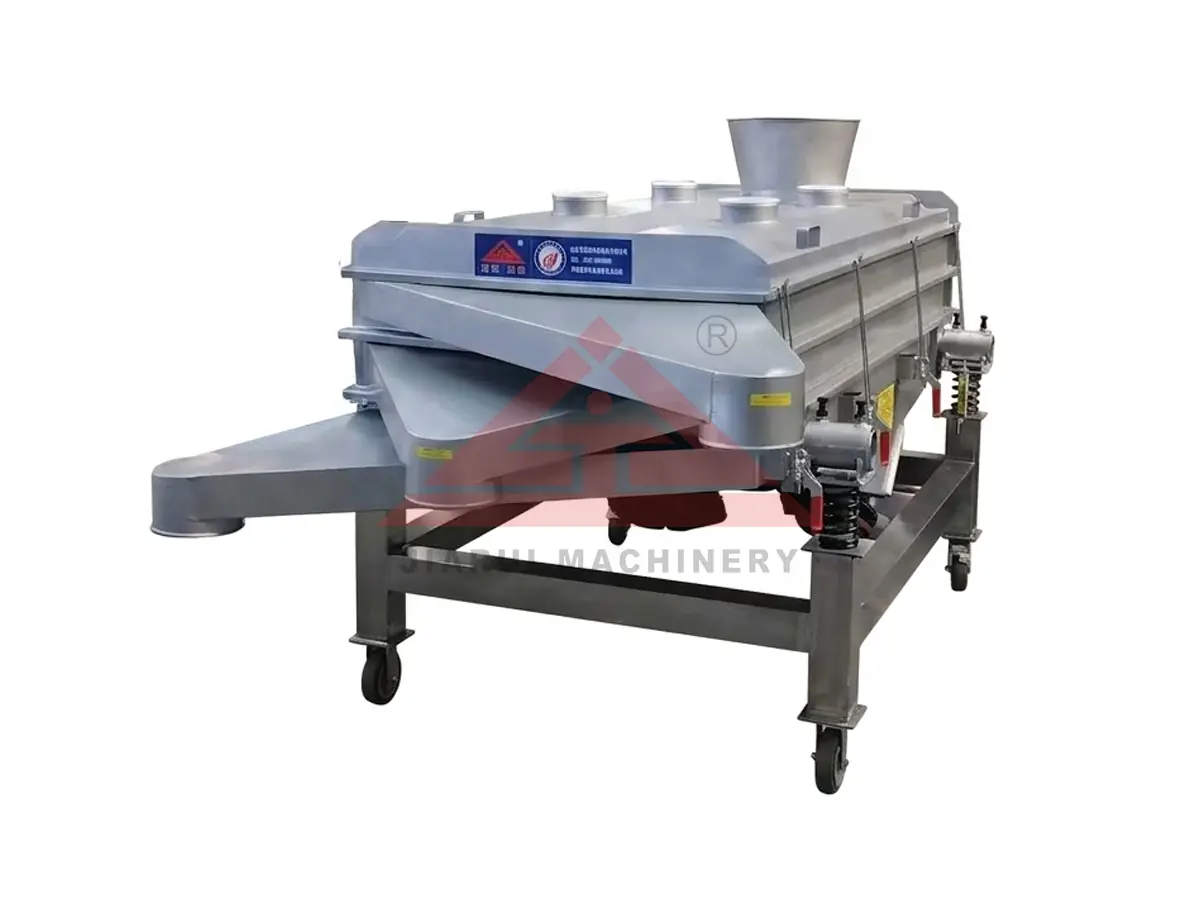
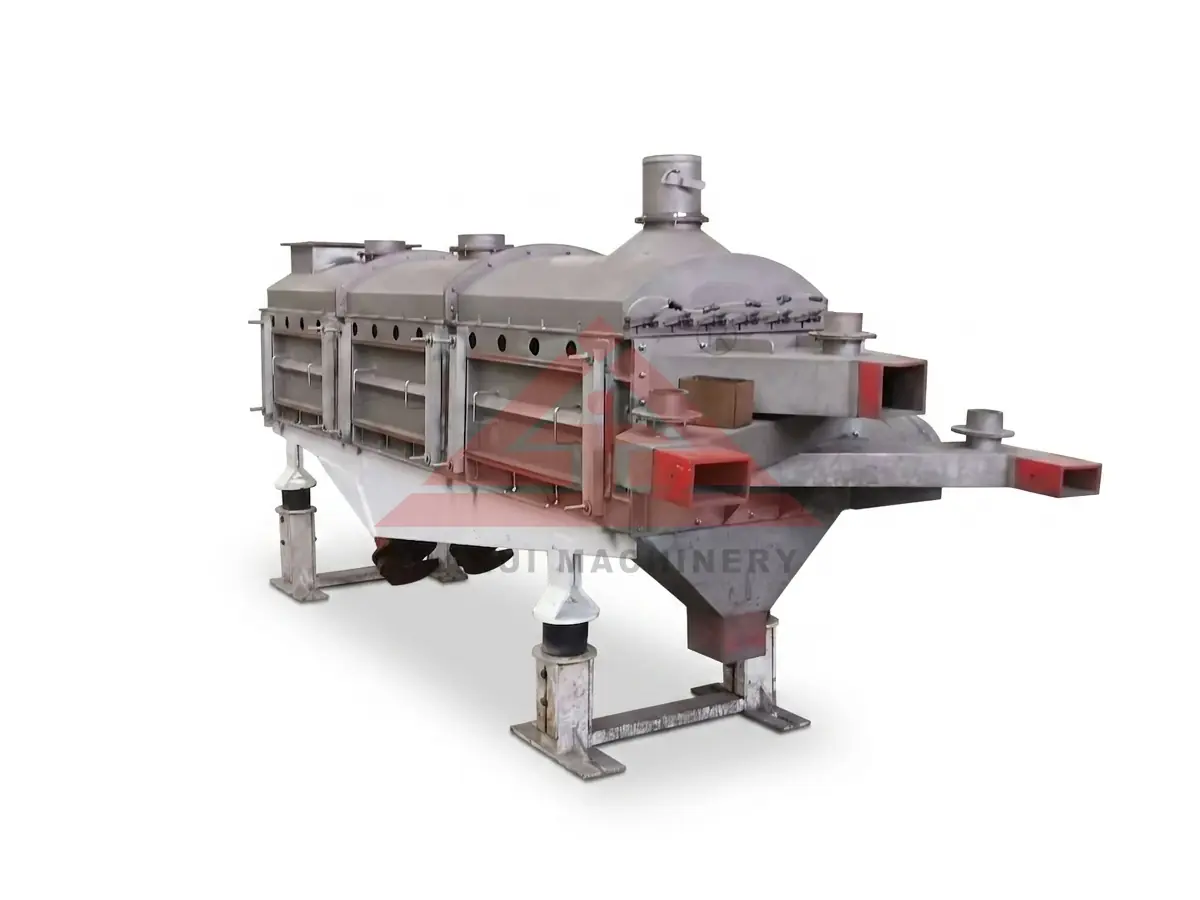
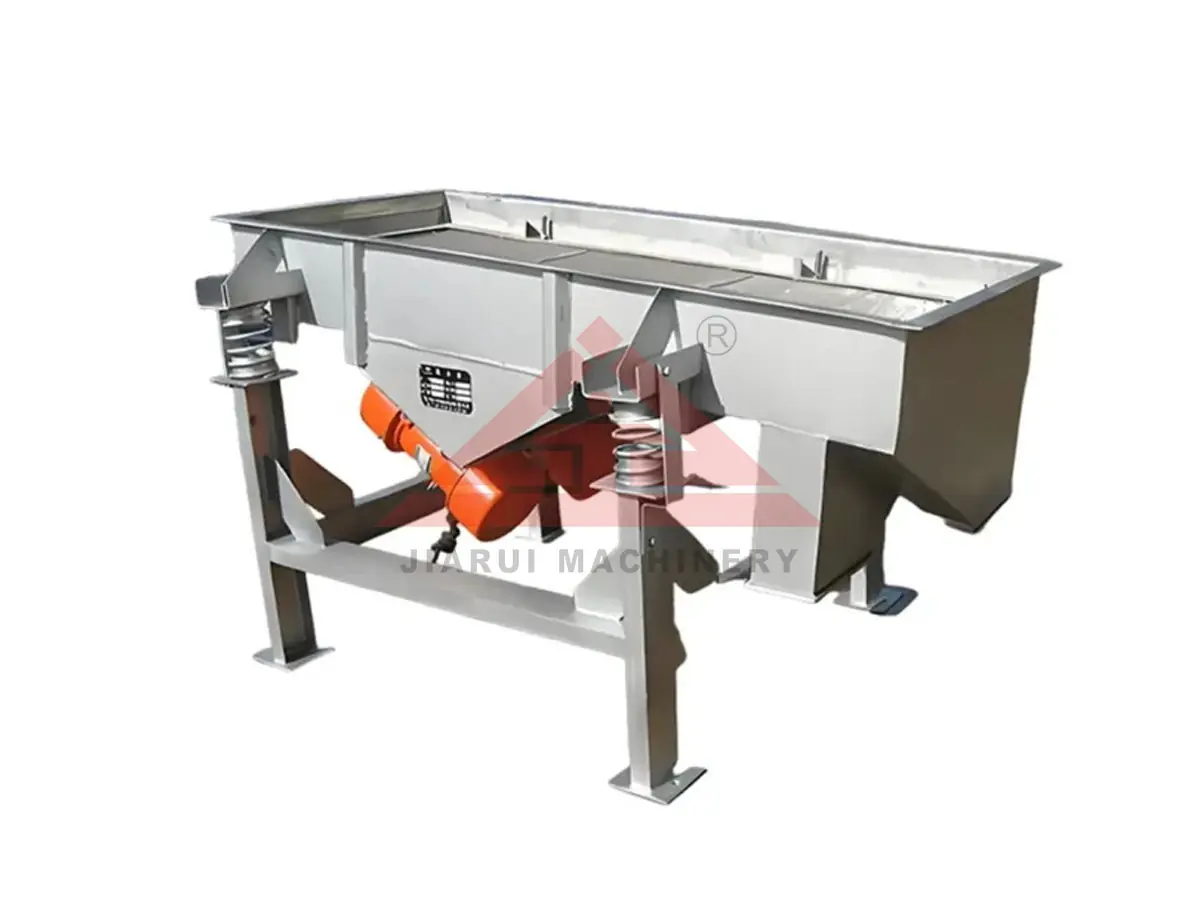
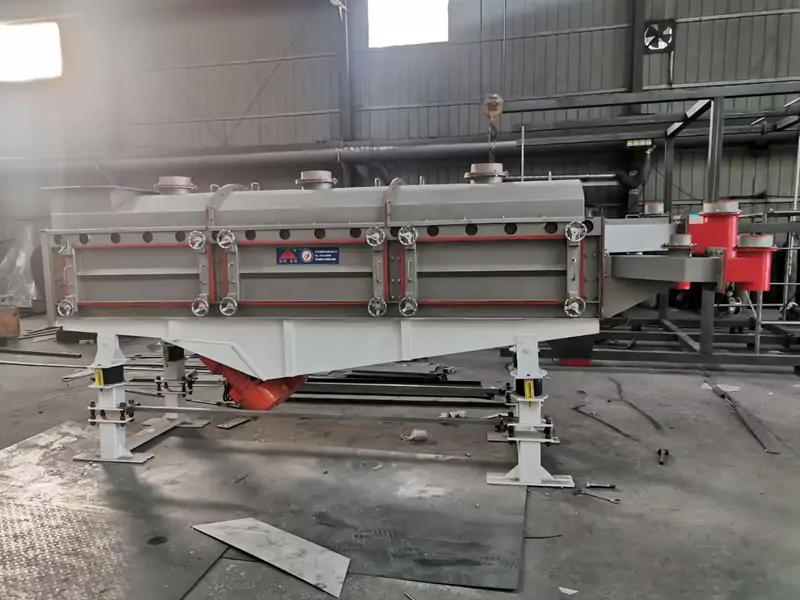
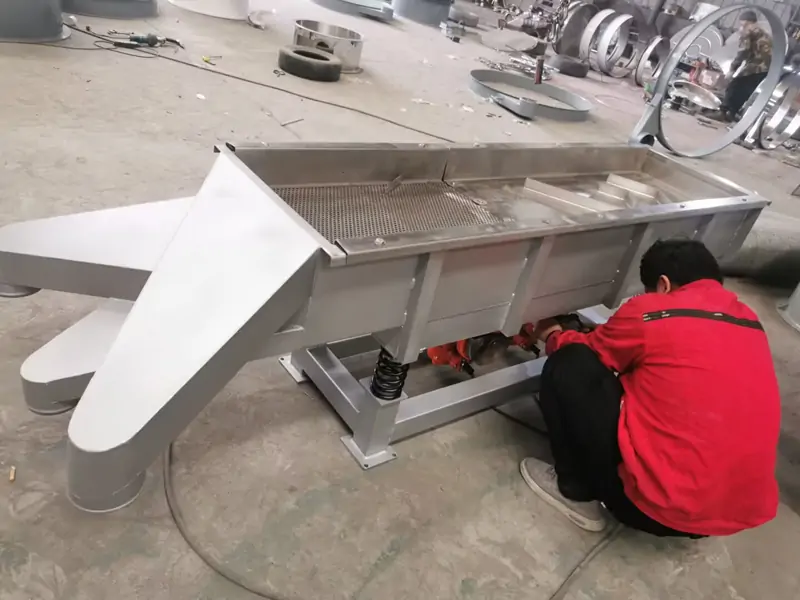
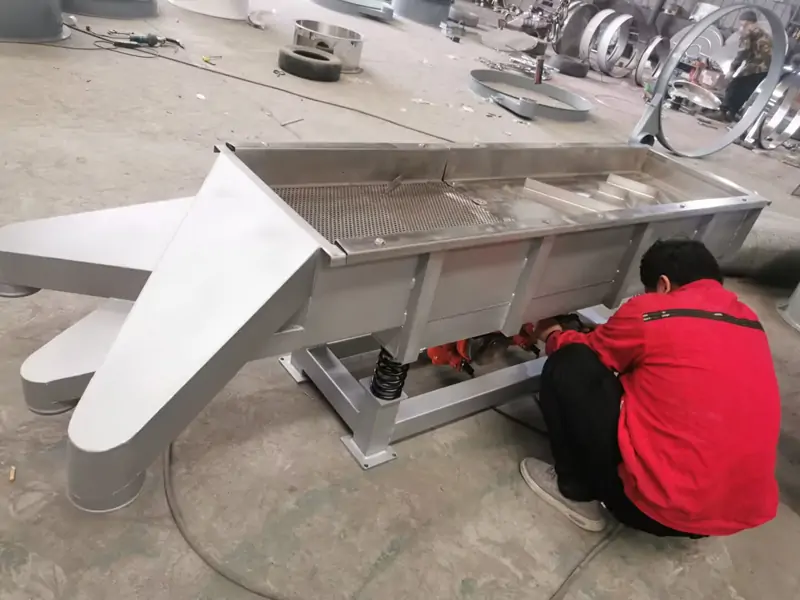
The JR-ZS Series Linear Vibrating Screen consists of a vibrating motor, screen box, screen mesh, vibration transmission mechanism, and vibration damping device. Jiarui Machinery uses specialized horizontal motors as the power source, causing the material to be thrown upward on the screen mesh while moving forward in a linear motion. It can be equipped with single-layer or multi-layer screen meshes to achieve objectives such as classification, impurity removal, dust removal, inspection, washing, and dewatering. It can be used in production lines to achieve automated operations. They are commonly used for screening and grading granular and powdered materials in the chemical, food, metallurgical, mining, building materials, grain, abrasive, fertilizer, and coal industries.
- Model: JR-ZS-520/525/530/1020/1025/1030/1225
- Capacity: Depends on the material and mesh
- Feed Size: Suitable for 1 to 250 mesh and below
- Screening: 1–5 layers, grading/impurity removal
- Drive System: Vibration motor / variable frequency drive (optional)
- Customization: Various specifications and models are available. They can be customized to meet specific working condition requirements.
What is a Linear Vibrating Screen?
Linear Vibrating Screen, also known as a linear screen, is a machine driven by a vibration motor, used for separating materials by particle size. It mainly consists of a screen box, mesh, vibration motor, transmission parts, and damping system. The machine moves materials forward in a straight line while screening through one or multiple layers. Material is fed evenly into the inlet, then spreads and moves across the screen. Different sizes are separated during the process, with oversize and undersized materials discharged from different outlets. It is commonly used in mining, chemicals, food, construction materials, grain, fertilizer, and coal processing, with capacity around 10–500 t/h depending on the material.
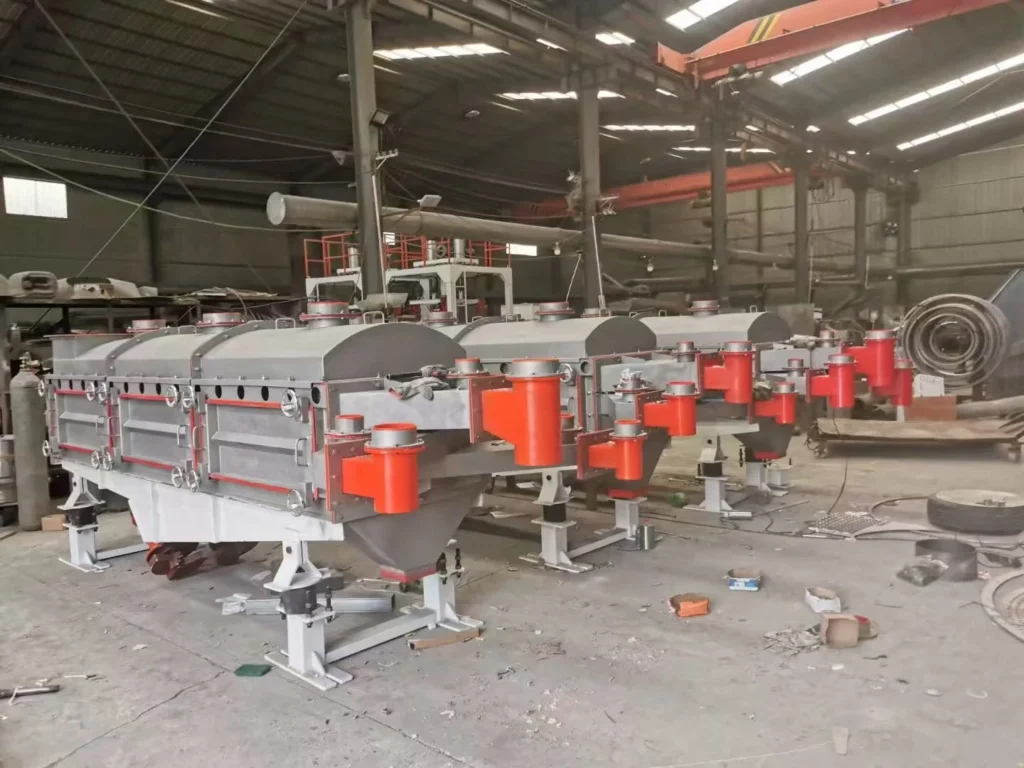
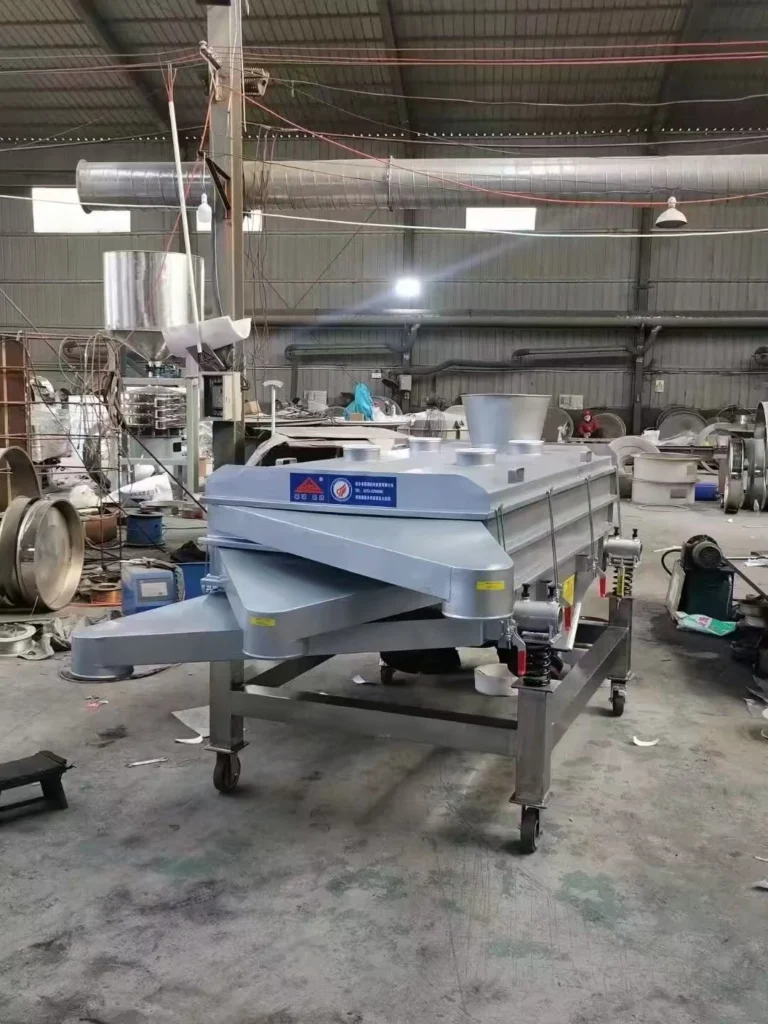
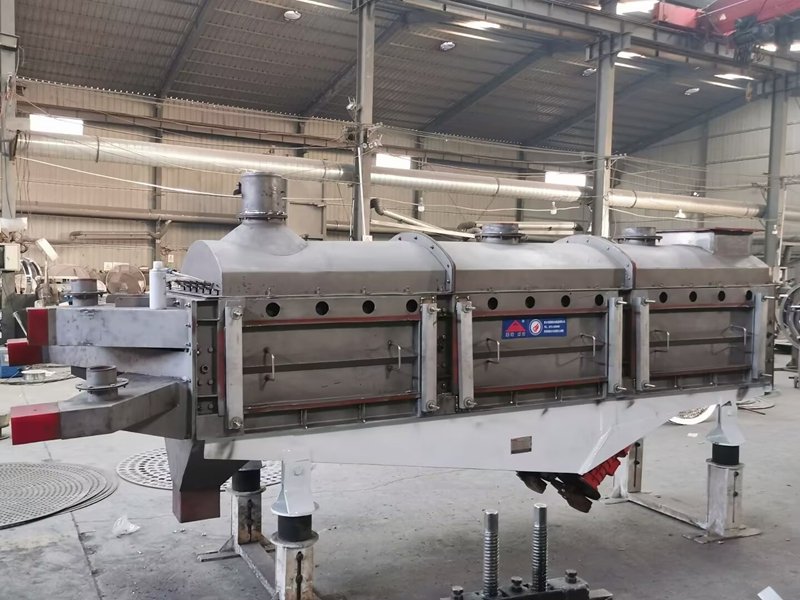
Working Principle of a Linear Vibrating Screen
Step 1: Power Source: The eccentric weights of the two motors generate centrifugal force as they rotate. In the direction parallel to the motor shafts, the centrifugal forces are equal in magnitude but opposite in direction, thus canceling each other out; in the direction perpendicular to the motor shafts, the centrifugal forces add together.
Step 2: Energy Transfer: Driven by the resultant force and the supporting springs, the screen box is forced to perform strict linear reciprocating vibrations along the direction of the resultant force. This vibration trajectory typically forms a fixed angle with the horizontal screen surface (a common angle is 45°), providing the driving force that moves the material forward.
Step 3: Ejection and Dispersal: The initial material continuously enters the horizontal or slightly inclined screen surface through the feed inlet. The upward impact force of the screen box ejects the material in batches, propelling it upward and forward. In the air, the material instantly transitions from a compacted state to a loose state, breaking the bonds between particles and separating moist or agglomerating powders and granules.
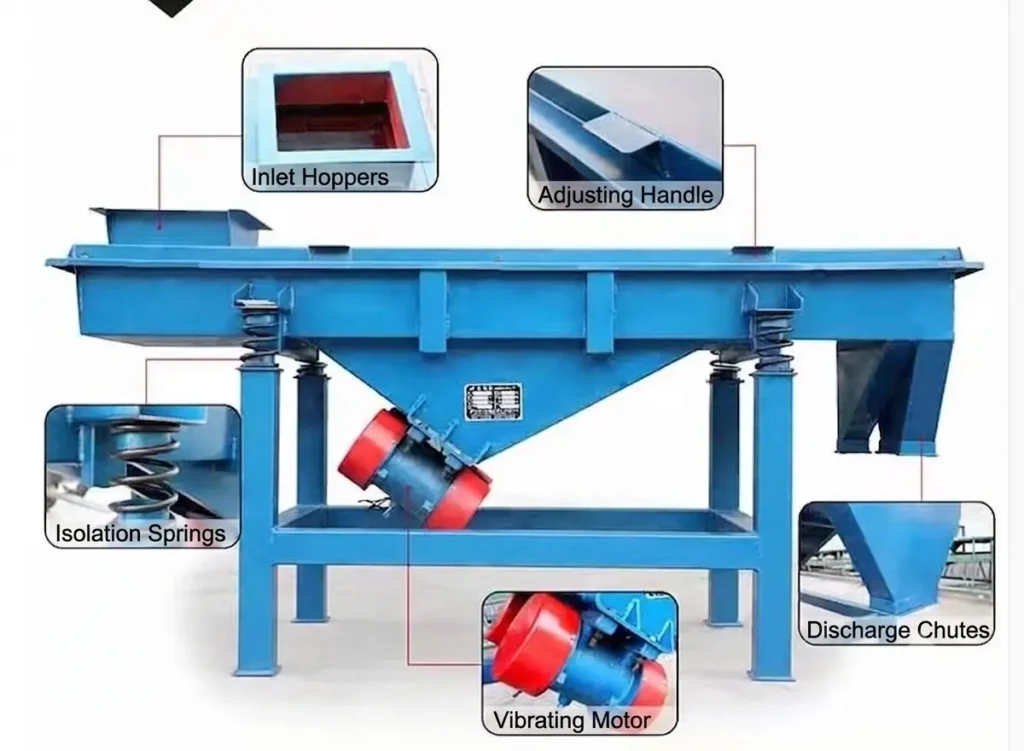
Step 4: Natural Stratification: Under the combined effects of gravity and vibration, the thrown material falls forward and back onto the screen surface. During this repeated throwing and falling process, the material undergoes dynamic stratification. Smaller particles pass through the gaps between larger particles, rapidly settling to the bottom of the material layer and coming into contact with the screen mesh; larger particles, meanwhile, are squeezed upward and float on the upper surface of the material layer.
Step 5: Screening: Final Classification:
- Undersized: The fine particles in the bottom layer pass smoothly through the screen apertures upon subsequent contact with the screen mesh, falling into the lower hopper and being discharged.
- Oversize: The large particles (or impurities) in the upper layer that cannot pass through the screen apertures continue to slide forward along the screen surface and are ultimately discharged through the coarse material discharge port at the front end.
Result: At this point, the entire process of continuous and efficient “continuous classification/fine impurity removal” of the material is complete.
Advantages
The JR Series Linear Vibrating Screen is designed for stable and efficient material screening in continuous production lines. It combines high throughput, accurate grading, and simple operation, making it suitable for mining, chemical, food, and bulk material processing. Below are its main advantages:
High screening efficiency
Stable separation performance with multi-layer screening, achieving clear particle grading for different material sizes.
Large capacity handling
Supports continuous operation with capacities typically up to 10–500 t/h depending on material conditions.
Quick mesh replacement
Screen mesh can be changed in about 3–5 minutes, reducing downtime during maintenance. For operating procedures, maintenance checks, and common troubleshooting, see our [Linear Vibrating Screen Operation and Maintenance Guide].
Stable and low-noise operation
Equipped with damping springs to reduce vibration impact and keep noise at a lower level during running.
Adjustable operation settings
Vibration force and screen angle (0°–15°) can be adjusted to match different materials.
Flexible structure design
Screen size, frame type, and layout can be customized based on production line requirements and installation space.
Applications
JR-ZS Linear Vibrating Screen is used in production lines for screening, grading, and removing impurities from bulk materials. It can handle both dry and wet materials, and works well in processes where materials change frequently or need stable particle size control.It is commonly used in the following industries:
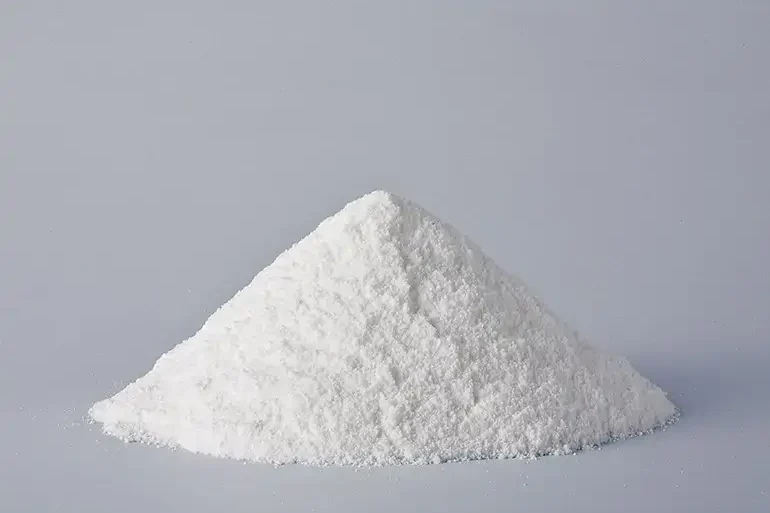
Chemical & Pharmaceutical Industry
Urea, fertilizers, phosphate materials, soda ash, resin powder, activated carbon, pharmaceutical intermediates
→ Used for grading and impurity removal
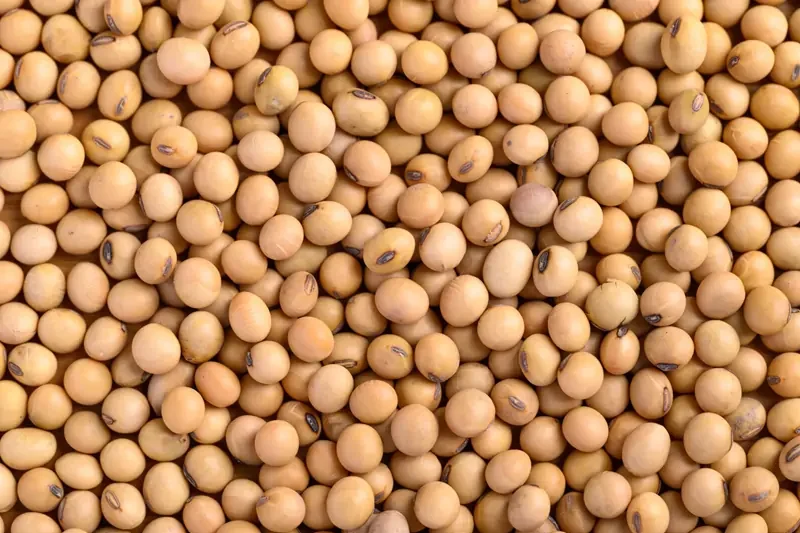
Food & Agricultural Processing
Grain (wheat, corn, rice), flour, starch, sugar, salt, feed
Used for cleaning and size classification. For starch screening, see our guide on [Linear Vibrating Screen for Starch].
Mining & Construction Materials
Coal, limestone, iron ore, sand, gypsum, cement, dry mortar
→ Used for separating different particle sizes in bulk materials
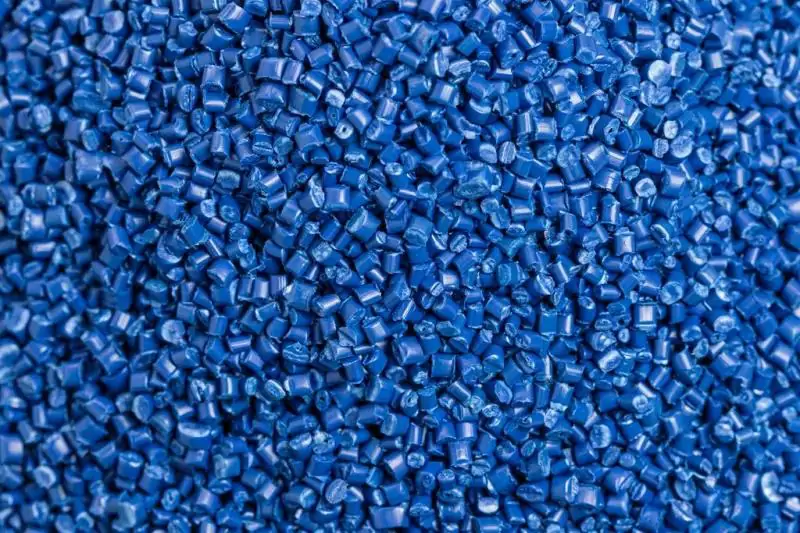
Plastics & Recycling Industry
Plastic pellets, recycled granules, rubber powder, plastic flakes
→ Used for sorting and material recovery
Technical Parameters
JR-ZS Linear Vibrating Screen is available in multiple standard models to meet different capacity and layout requirements. It can be configured based on production needs such as screen size, layers, vibration settings, and power options, making it suitable for both small and large-scale processing lines. Standard technical parameters are listed below, and customized designs are available according to material conditions and plant requirements.
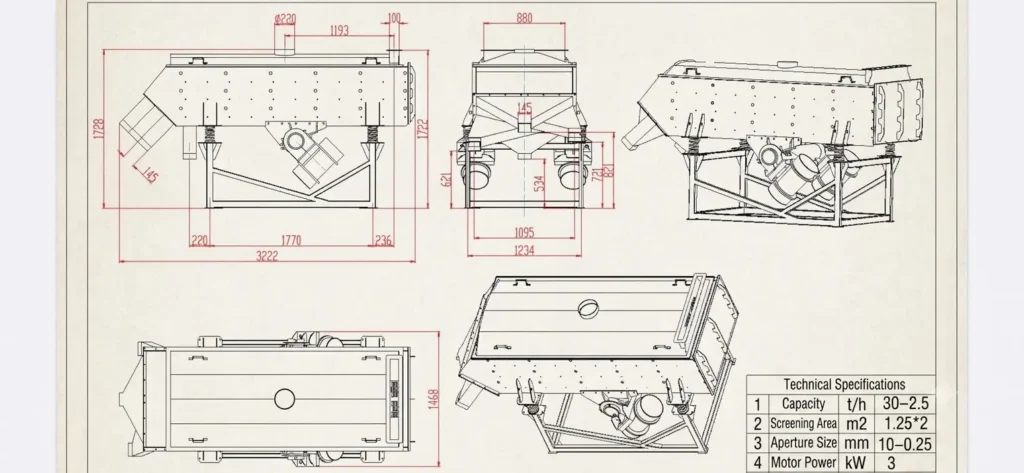
| Model | JR-ZS-520 | JR-ZS-525 | JR-ZS-530 | JR-ZS-1020 | JR-ZS-1025 | JR-ZS-1030 | JR-ZS-1225 |
| Screen Size (mm) | 500×2000 | 500×2500 | 500×3000 | 1000×2000 | 1000×2500 | 1000×3000 | 1200×2500 |
| Particle Size (mm) | 0.074–60 | 0.074–60 | 0.074–60 | 0.074–60 | 0.074–60 | 0.074–60 | 0.074–60 |
| Vibration Frequency | 960 / 1450 | 960 / 1450 | 960 / 1450 | 960 / 1450 | 960 / 1450 | 960 / 1450 | 960 / 1450 |
| Screen Inclination | 1°–7° | 1°–7° | 1°–7° | 1°–7° | 1°–7° | 1°–7° | 1°–7° |
| Amplitude (mm) | 1–4.5 | 1–4.5 | 1–4.5 | 1–4.5 | 1–4.5 | 1–4.5 | 1–4.5 |
| Layers | 1–6 | 1–6 | 1–6 | 1–6 | 1–6 | 1–6 | 1–6 |
| Power (kW) | 2 (0.37–0.75) | 2 (0.37–0.75) | 2 (0.37–0.75) | 2 (0.37–0.75) | 2 (0.37–0.75) | 2 (0.37–0.75) | 2 (0.37–0.75) |
At Jiarui Machinery, we offer custom-made linear vibrating screens. If you need a custom solution, contact us today.
Linear Vibrating Screen vs Rotary Vibrating Screen
Screening equipment selection usually involves comparing different machine types, with Linear Vibrating Screen and Rotary Vibrating Screen being two commonly used solutions in industrial grading systems. Both are used for particle separation but differ in motion type and application focus, so the choice depends on material type, required capacity, and plant layout.
| Item | Linear Vibrating Screen | Rotary Vibrating Screen |
| Working Principle | Linear motion driven by dual vibration motors | 3D rotary motion with spiral screening path |
| Structure Design | Rectangular multi-layer screen box | Compact circular enclosed structure |
| Processing Capacity | Production capacity depends on the screen machine’s specifications, mesh size, and the material being processed. 500 k g ~2000 k g / h | Production capacity depends on the screen machine’s specifications, mesh size, and the material being processed. 500 k g ~2000 k g /h |
| Efficiency | Stable high-throughput screening | Better performance in fine separation |
| Energy Consumption | Medium | Low to medium |
| Footprint | Requires larger installation space | Compact layout |
| Maintenance | Mesh replacement, motor inspection | Frequent cleaning for fine powders |
| Investment Cost | Medium | Medium to low |
| Suitable Materials | Ore, sand, coal, fertilizer, aggregates | Fine powder, additives, chemical materials |
| Typical Applications | Mining, construction, bulk material processing | Food, chemical, pharmaceutical screening |
| Suitable Conditions | High capacity, continuous production, stable feed | Fine material, lower capacity, higher precision requirement |
Selection Note
Linear Vibrating Screen is commonly used in high-capacity continuous production lines where stable throughput is required. The Rotary Vibrating Screen is more suitable for fine-material grading and precision separation. Final selection depends on material characteristics, required capacity, and plant conditions. For a comparison of different industrial screener types and selection considerations, see our guide to Types of Industrial Screeners: How to Choose the Right One?
Jiarui Machinery can adjust screen size, layers, drive configuration, and layout design based on project requirements to match different production line setups.
Custom Linear Vibrating Screen
JR-ZS Linear Vibrating Screen can be adjusted based on actual production needs. It works well for bulk materials with different particle sizes, moisture content, or continuous grading requirements. Key parameters such as screen size, number of layers, vibration settings, capacity, and structure material can be configured to fit different production lines, including integration with feeding or conveying systems where needed.
To provide a suitable configuration and quotation, please share the following details:
- Material type
- Feed particle size range
- Required capacity (t/h)
- Installation space or layout conditions
- Material moisture content and specific gravity
If any of the above details are not clear, Jiarui Machinery can assist in confirming the configuration based on your application conditions.
Why Choose Jiarui Machinery?
Jiarui Machinery is a manufacturer and supplier of screening, conveying, and feeding equipment, founded in 2012. With experienced engineering teams and in-house production capability, the company focuses on the design and manufacturing of industrial screening systems, including vibrating screens, conveying equipment, and ultrasonic screening solutions. Our equipment has been applied across the food, pharmaceutical, chemical, metallurgy, plastics, ceramics, and new energy materials industries.
Over the years, Jiarui Machinery has built a stable technical foundation and production experience, supported by ISO 9001 quality management certification and multiple utility model patents. We also hold various industry recognitions, including membership in industry associations and compliance with national quality and credit standards. These certifications reflect our consistent manufacturing control and project execution capability.
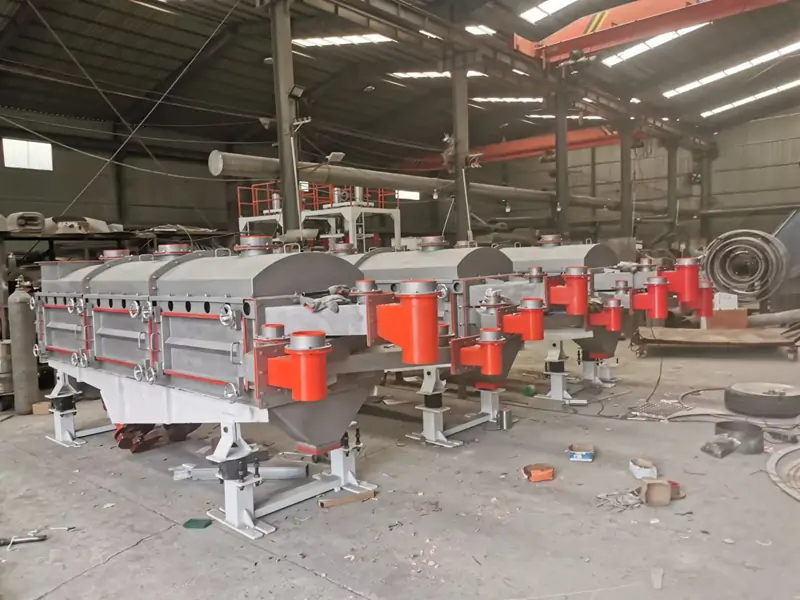
Beyond equipment supply, we provide integrated screening system solutions based on real production requirements. From material analysis and equipment selection to full production line configuration, we support customized engineering design for different industrial applications. Jiarui Machinery focuses on delivering practical, reliable systems that meet real production needs and long-term operating conditions.
Related Articles
Jiarui Linear Vibrating Screen Operation and Maintenance Guide
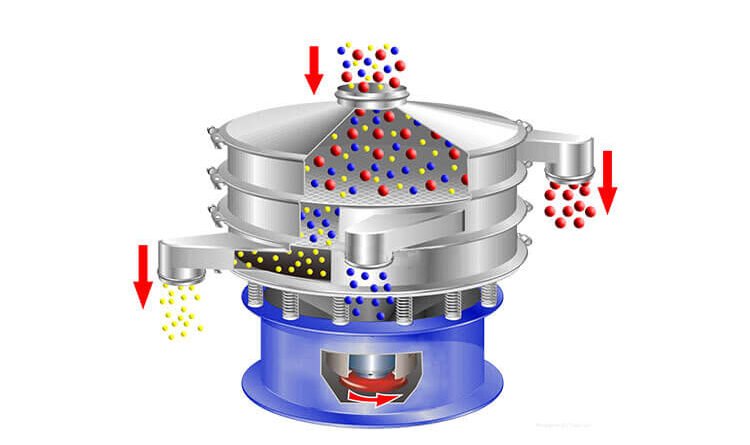
How Does a Rotary Vibrating Screen Work?
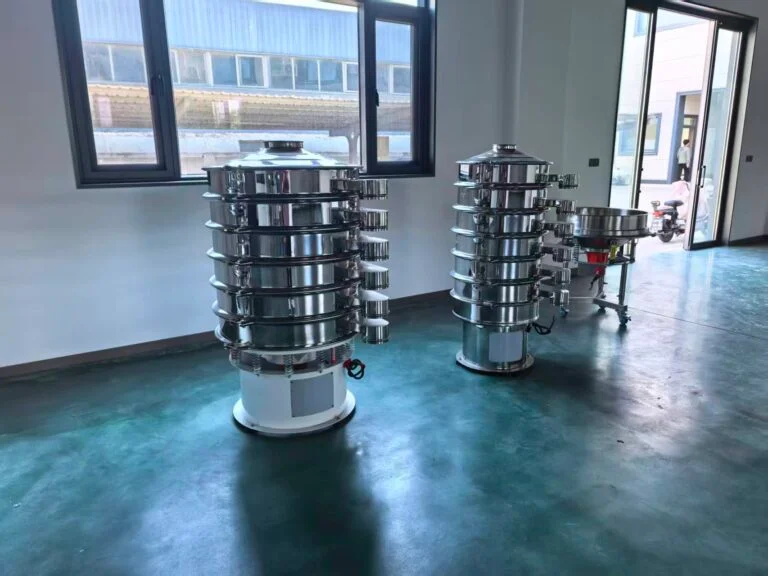
What is a Rotary Vibrating Screen?
FAQs
Get a Free Consultation
Fill out the form below to connect with our experts and receive personalized recommendations for your application.