
When selecting a vibrating screen, mesh size and aperture (opening size) are two important screen specifications. Mesh size indicates the number of openings per inch of screen, while aperture refers to the actual opening size of each mesh opening.
In general, the higher the mesh number, the smaller the aperture, and the finer the material that can be screened. However, mesh size and aperture do not have a strict one-to-one relationship because the actual aperture also depends on wire diameter and mesh specifications.If you want to understand how the sieve relates to the complete screening machine, see our guide to Sieve vs Sifter.
Vibrating Screen Mesh Size and Aperture Comparison Table
| Screen Mesh Size | Reference Aperture | Aperture (μm) |
| 4 mesh | 4.75 mm | 4750 μm |
| 6 mesh | 3.35 mm | 3350 μm |
| 8 mesh | 2.36 mm | 2360 μm |
| 10 mesh | 2.00 mm | 2000 μm |
| 12 mesh | 1.70 mm | 1700 μm |
| 16 mesh | 1.18 mm | 1180 μm |
| 20 mesh | 0.85 mm | 850 μm |
| 30 mesh | 0.60 mm | 600 μm |
| 40 mesh | 0.425 mm | 425 μm |
| 50 mesh | 0.300 mm | 300 μm |
| 60 mesh | 0.250 mm | 250 μm |
| 80 mesh | 0.180 mm | 180 μm |
| 100 mesh | 0.150 mm | 150 μm |
| 120 mesh | 0.125 mm | 125 μm |
| 140 mesh | 0.106 mm | 106 μm |
| 170 mesh | 0.090 mm | 90 μm |
| 200 mesh | 0.075 mm | 75 μm |
| 230 mesh | 0.063 mm | 63 μm |
| 270 mesh | 0.053 mm | 53 μm |
| 325 mesh | 0.045 mm | 45 μm |
| 400 mesh | 0.038 mm | 38 μm |
Note: The values above are commonly used reference values. Actual screen specifications may vary depending on the mesh specification and applicable standard. For reference, ISO 3310-1 specifies technical requirements and testing methods for test sieves made of metal wire cloth. For final selection, use the required aperture size and material screening requirements as the main basis.
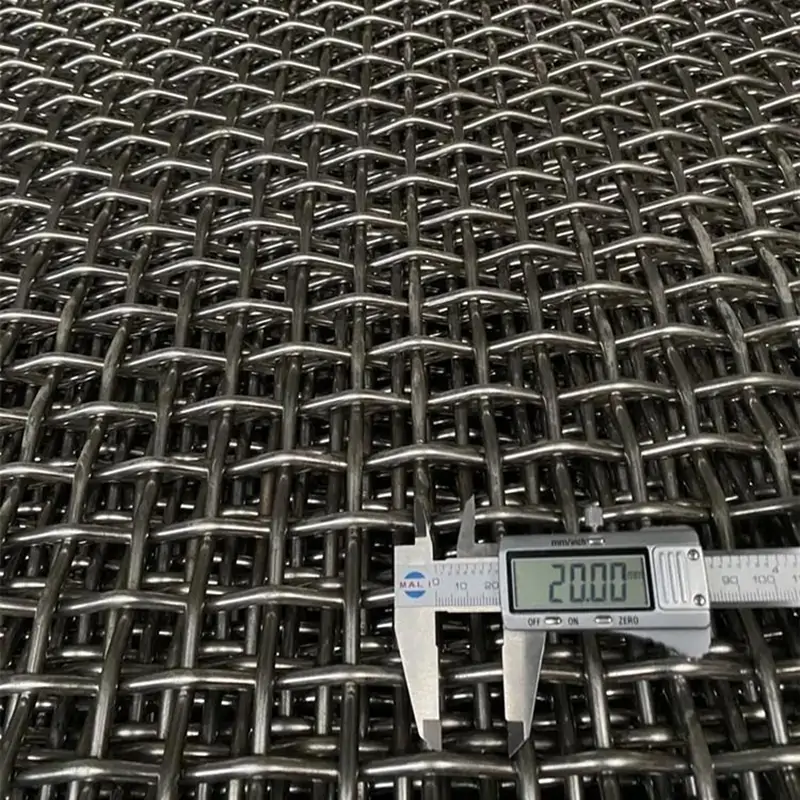
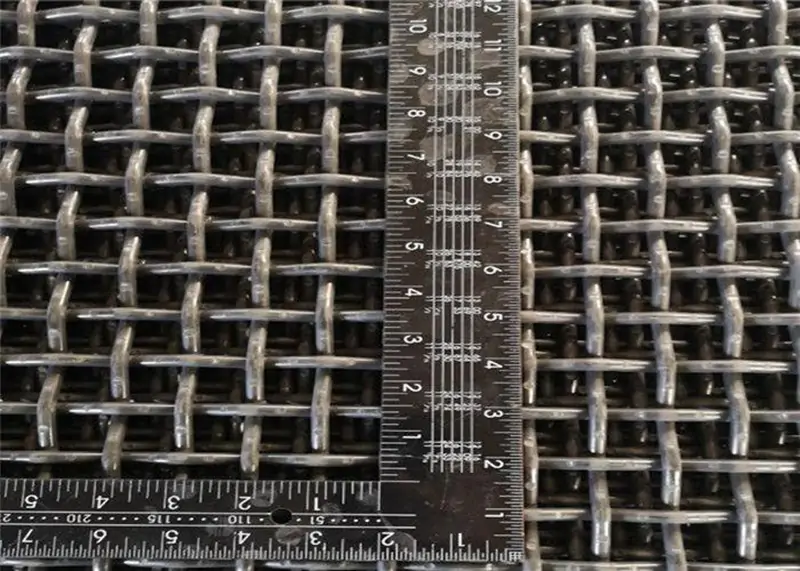
The Higher the Mesh Number, the Smaller the Aperture
The simplest rule to remember is: the higher the mesh number, the smaller the aperture, and the finer the material that can be screened. For example:
- 20 mesh ≈ 0.85 mm
- 40 mesh ≈ 0.425 mm
- 80 mesh ≈ 0.18 mm
- 200 mesh ≈ 0.075 mm
If you need to screen finer powder, a higher mesh size is generally required. For fine powder applications where screen clogging or reduced screening efficiency is a concern, see our Ultrasonic Vibrating Screen for more information.
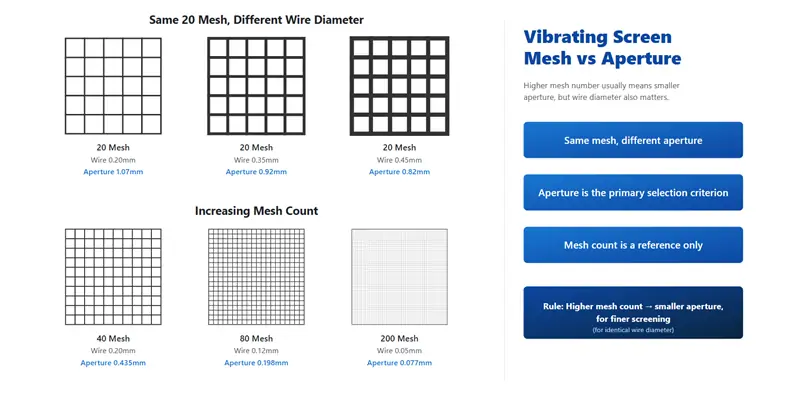
However, mesh size and aperture are not a fixed one-to-one relationship. Even with the same 20 mesh, the actual aperture can vary if the wire diameter is different. Therefore, mesh size can be used to quickly estimate the aperture, but the actual aperture size should be confirmed when purchasing a vibrating screen.
For flour screening, the required mesh size also depends on whether you need to remove lumps and impurities, perform fine screening, or separate different flour sizes. See Flour Powder Rotary Vibrating Screen: How to Choose the Right Machine for a more specific selection guide.
Selecting Mesh by Actual Aperture Size
If you already know the required aperture size, you can use the table below to find the corresponding reference mesh size.If you want to understand the differences between sieve frame diameter, sieve opening size, and mesh count, see our guide to Different Sieve Sizes.The values below are approximate references for quick conversion. The actual mesh specification should be selected based on the required aperture size.
| Required Aperture Size | Reference Mesh Size |
| 2.0 mm | Approx. 10 mesh |
| 1.0 mm | Approx. 18 mesh |
| 0.5 mm | Approx. 35 mesh |
| 0.3 mm | Approx. 50 mesh |
| 0.2 mm | Approx. 70–80 mesh |
| 0.15 mm | Approx. 100 mesh |
| 0.1 mm | Approx. 140 mesh |
| 0.075 mm | Approx. 200 mesh |
| 0.05 mm | Approx. 270 mesh |
| 0.045 mm | Approx. 325 mesh |
For example, if you need an aperture of around 0.5 mm, you can use 35 mesh as a reference. The specific specification should also be determined based on material particle size, target screening size, and processing capacity. For standard test sieve frame diameters, aperture sizes, and mesh size references, see our Standard Sieve Sizes guide. When configuring a vibrating screen, Jiarui determines the mesh specification and equipment parameters based on these conditions.
For screen mesh selection, the required aperture size is the main basis, while mesh size can be used as a reference for finding a suitable range.
FAQs
What does mesh size mean for a vibrating screen?
Mesh size refers to the number of openings per inch of screen. In general, the higher the mesh number, the smaller the openings and the finer the material that can be screened. For example, a 20 mesh screen normally has larger openings than an 80 mesh screen.
What is the aperture size of 20, 40, and 80 mesh screens?
As common reference values, 20 mesh is approximately 0.85 mm, 40 mesh is approximately 0.425 mm, and 80 mesh is approximately 0.18 mm. Actual aperture sizes may vary depending on the screen mesh specification.
Does a higher mesh number mean a smaller aperture?
Yes. In general, a higher mesh number means a smaller aperture. Low mesh screens have larger openings for larger particles, while high mesh screens have smaller openings and are more suitable for fine particles and powders.
Should I select vibrating screen mesh by mesh size or aperture?
If you already know the required screening size, it is better to determine the actual aperture first. Mesh size can help identify the approximate range, but it does not fully represent the actual aperture. Material particle size, processing capacity, and material characteristics should also be considered.
Why can the aperture be different for the same mesh size?
Because the actual aperture depends on both mesh size and wire diameter. Two 20 mesh screens made with different wire diameters can therefore have different opening sizes. When purchasing screen mesh, it is better to confirm the required aperture size rather than relying on mesh size alone.
Can Jiarui customize the right vibrating screen mesh for my material?
Yes. Jiarui can recommend a suitable screen mesh specification and vibrating screen configuration based on your material, particle size range, target screening size, processing capacity, and operating conditions. If a standard screen mesh does not meet your requirements, a customized solution can also be provided.