Chemical materials can have very different screening requirements. Some only need large particles or lumps removed, some need to be separated by particle size, and some fine powders are prone to screen blinding, sticking to the screen, or static buildup.
So when choosing a chemical rotary vibrating screen, do not look only at capacity and machine size. First determine what you need to screen, what the material is like, what particle size you need to separate, and how many screen decks you need. Then determine the material, cleaning method, and other configurations.
1.Determine the Screening Purpose
First, be clear about what you want the screen to do.
- Remove large particles or lumps: Remove large particles, lumps, or foreign matter from the powder.
- Separate by particle size: Separate the material into different particle-size ranges.
- Screen fine powder: When the material is very fine, also consider whether it may blind the screen, stick to the mesh, or carry static charge during screening.
2.Look at the Material and Target Particle Size
First, describe the material clearly. Is it a powder or granules? Does it tend to agglomerate? Does it stick to the screen? Does it carry static charge? If the material is corrosive, mention that as well. For a closer look at how these material properties affect screen selection, see our guide to Chemical Rotary Vibrating Screen: How Material Properties Affect Screen Selection.
Then look at the particle size you need to separate. Do you need to remove large particles, or do you want only a certain particle-size range to pass through?
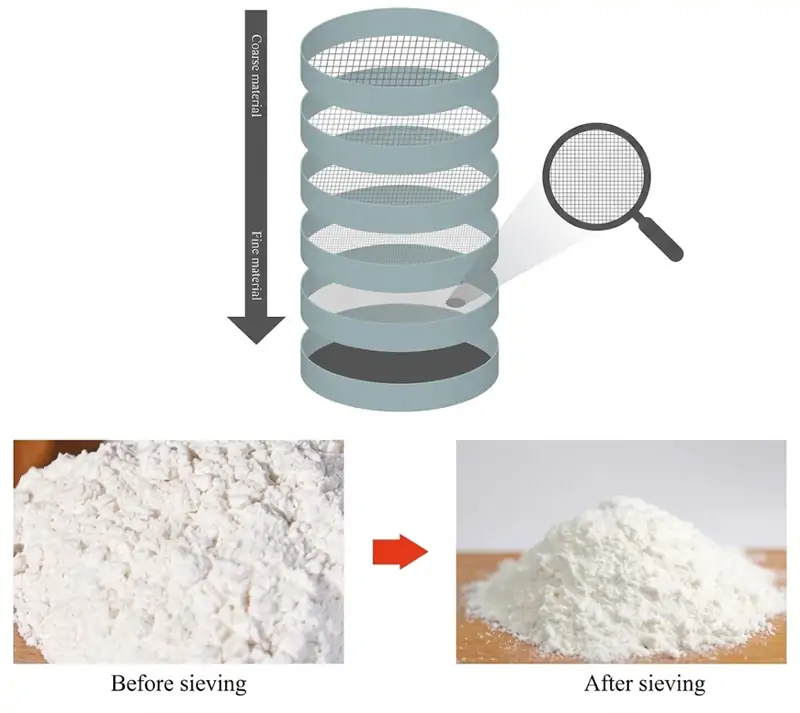
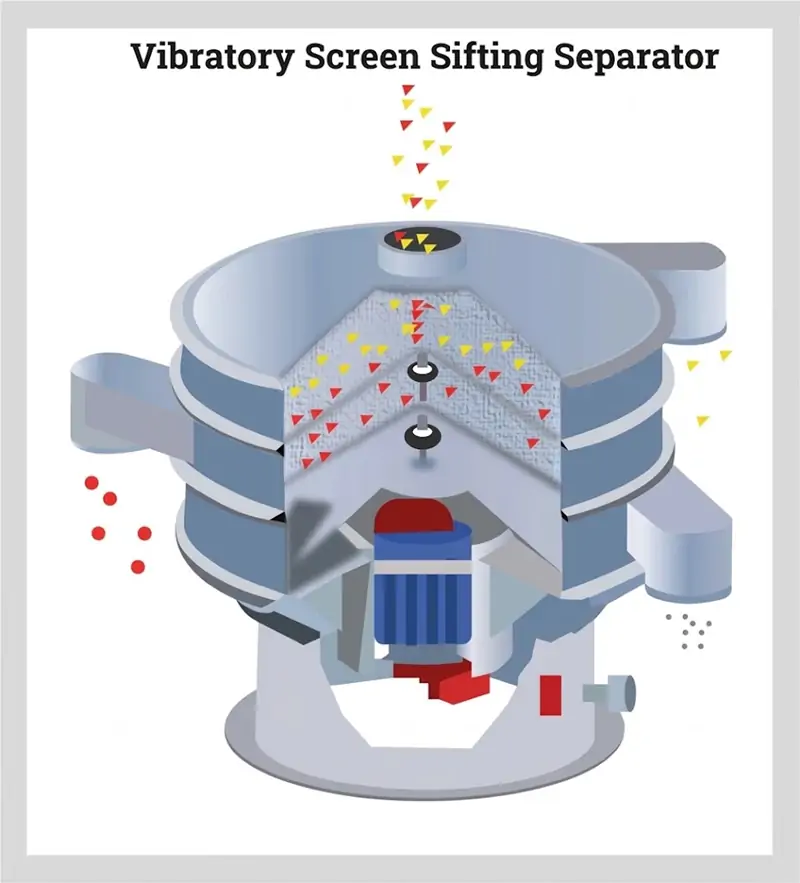
Give the supplier the feed particle-size range and target particle size so they can determine the appropriate screen opening.
3.Determine the Screen Opening, Number of Decks, Material, and Cleaning Method
Once the target particle size is clear, select the screen opening for the rotary vibrating screen. Do not just tell the supplier, “I need a certain mesh size.” It is better to specify what particle size should pass through and what particle size should remain on the screen. For fine powders, a very small screen opening may also be more prone to blinding.
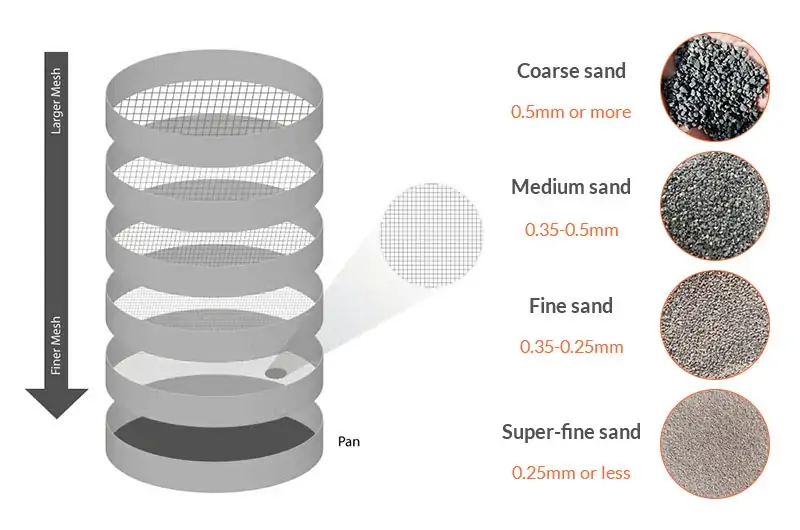
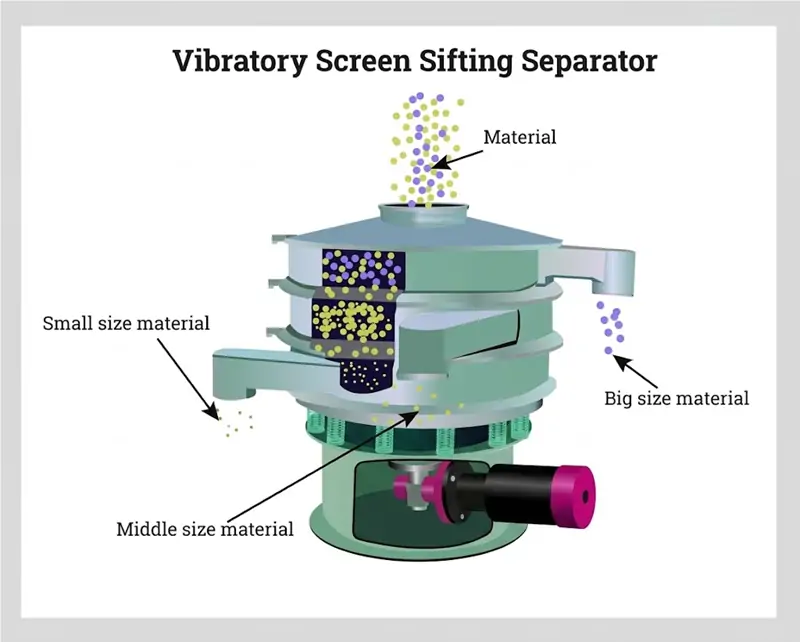
The number of decks depends on how many particle sizes you need to separate. If you only need coarse and fine fractions, one deck is enough. If you need several particle-size ranges, add more decks.
If the material is corrosive, confirm the material used for the parts that come into contact with it. 304 stainless steel can be used for some applications. If higher corrosion resistance is required, 316L or another material can be considered. The entire machine does not need to use the same material. The parts in direct contact with the material are more important.
Fine powders, materials that tend to agglomerate, or materials with static charge may block the screen after running for a while. In this case, consider bouncing balls, brushes, or ultrasonic screen cleaning. If a standard cleaning method works, there is no need to add ultrasonic cleaning.
4.Check Capacity, Motor, and Sealing
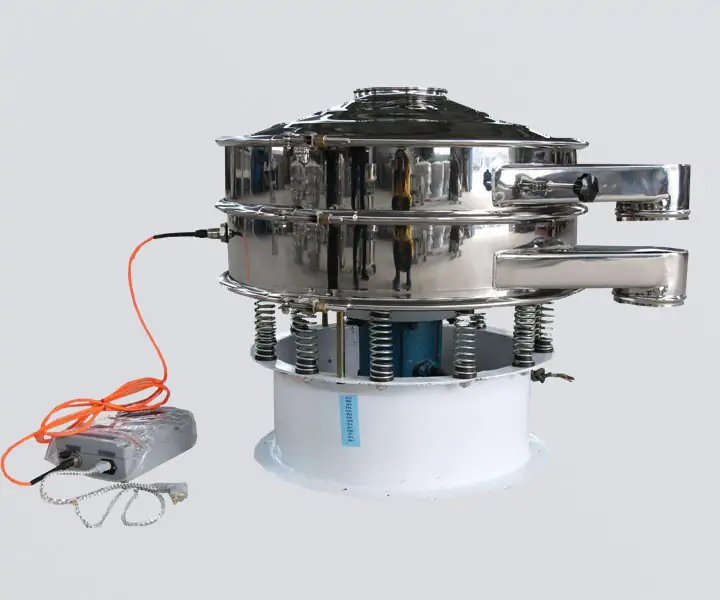
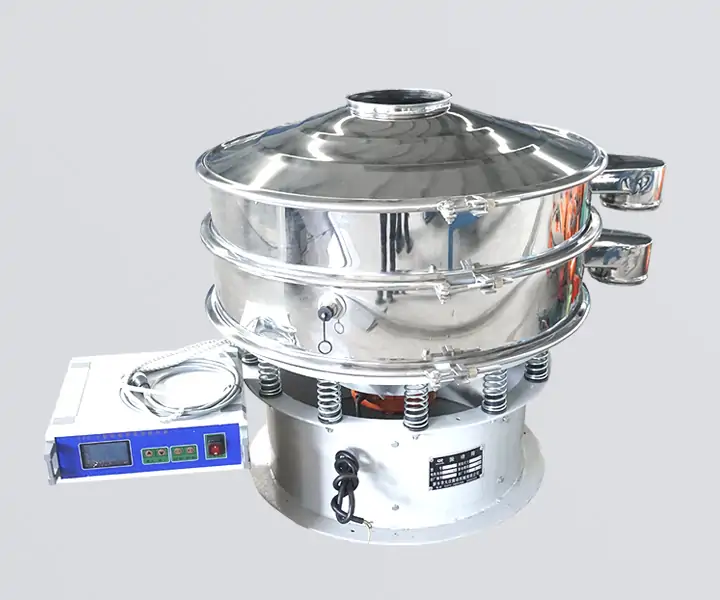
Capacity cannot be judged by one number alone. Even at the same required throughput, coarse-particle removal and fine-powder screening may have different requirements for screen opening, number of decks, and machine size. When requesting a quote, provide the required hourly capacity along with the material particle size and screening requirements.
Motor power depends on the machine specifications and screening requirements. When purchasing, provide the site voltage, frequency, and number of phases. If there are special protection or explosion-proof requirements, mention them in advance.
If you are screening a fine powder that produces dust, consider the machine sealing. Dust may escape from the feed inlet, discharge outlet, or equipment connections, so confirm whether enclosed screening is needed and whether a dust collection system needs to be connected.
5.Check Installation and Maintenance Conditions
Once the machine size is determined, make sure it will fit the site. Tell the supplier the feed inlet height, discharge direction, available space, and overall machine height. Pay particular attention to the overall height when using multiple decks.
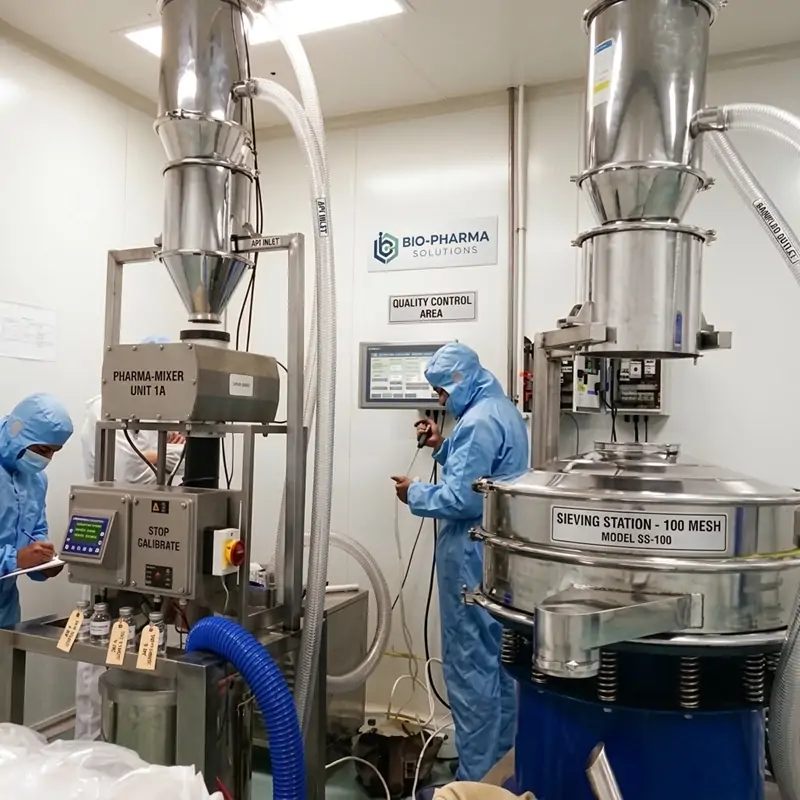
Leave enough space around the machine for screen replacement and maintenance. If the space is too tight, replacing the screen, cleaning the machine, and checking the motor will be more difficult. If the machine will be installed in a high-temperature, humid, or dusty environment, tell the supplier in advance.
6.Determine the Configuration From Your Purchasing Requirements
When requesting a quote, provide the supplier with information about your material, screening requirements, and site conditions.
| Information to Provide | Details |
| Material | Material name, powder or granules |
| Material characteristics | Whether it tends to agglomerate, stick, carry static charge, corrode, or blind the screen |
| Screening purpose | Removing large particles, lumps, or foreign matter, or separating by particle size |
| Particle size | Approximate feed particle-size range and the particle size you want to remove or pass |
| Capacity | Required throughput per hour in kilograms or tons |
| Material requirements | Requirements for parts that come into contact with the material |
| Electrical requirements | Site voltage, frequency, number of phases, and any special protection or explosion-proof requirements |
| Dust conditions | Whether enclosed screening is needed and whether a dust collection system will be connected |
| Installation conditions | Feed inlet height, discharge direction, machine height, and available space |
It is fine if you do not yet know what mesh size, number of decks, or whether to use 304 or 316L. Tell Jiarui your material, screening requirements, and site conditions, and the Jiarui engineering team can determine the screen, number of decks, material, cleaning method, and machine size based on the specific application.
You can also confirm the availability of common spare parts such as screens and motors, as well as installation, commissioning, and technical support.
FAQs
How do I choose the mesh size for a chemical rotary vibrating screen?
First determine the particle size you need to separate, then select the screen opening. Mesh size is only one way to specify a screen and cannot determine screening performance by itself. For fine powders, also consider screen blinding.
Should I use 304 or 316L for a chemical rotary vibrating screen?
It depends on the material’s corrosiveness and which parts come into direct contact with it. 304 can be used for some applications. If higher corrosion resistance is required, consider 316L or another material.
Why does fine powder blind the screen after running for a while?
Fine powder may block the screen because the particles are very fine, agglomerate, stick to the mesh, or carry static charge. Check the material first, then choose a suitable cleaning method such as bouncing balls, brushes, or ultrasonic screen cleaning.
How many screen decks does a chemical rotary vibrating screen need?
It depends on how many particle-size ranges you need to separate. If you only need to remove large particles, one deck is usually enough. If you need several particle-size ranges, add more decks. More decks do not necessarily mean higher capacity.
What size chemical rotary vibrating screen should I choose?
Do not look at capacity alone. Screen opening, number of decks, particle size, and material condition can all affect actual capacity. Installation space also needs to be considered. When requesting a quote, provide the capacity, material, and screening requirements together.
Does a chemical rotary vibrating screen need to be enclosed?
If the material produces a lot of dust, consider sealing at the feed inlet, discharge outlet, and equipment connections. Whether full enclosure is needed depends on the dust conditions and the dust collection requirements of the production line. Jiarui can customize the sealing, feed and discharge connections, and dust collection connections according to the material, dust conditions, and site connections.