
الخلاط الشريطي الأفقي (سلسلة WLDH) – حل متقدم لخلط المساحيق عالي الكفاءة
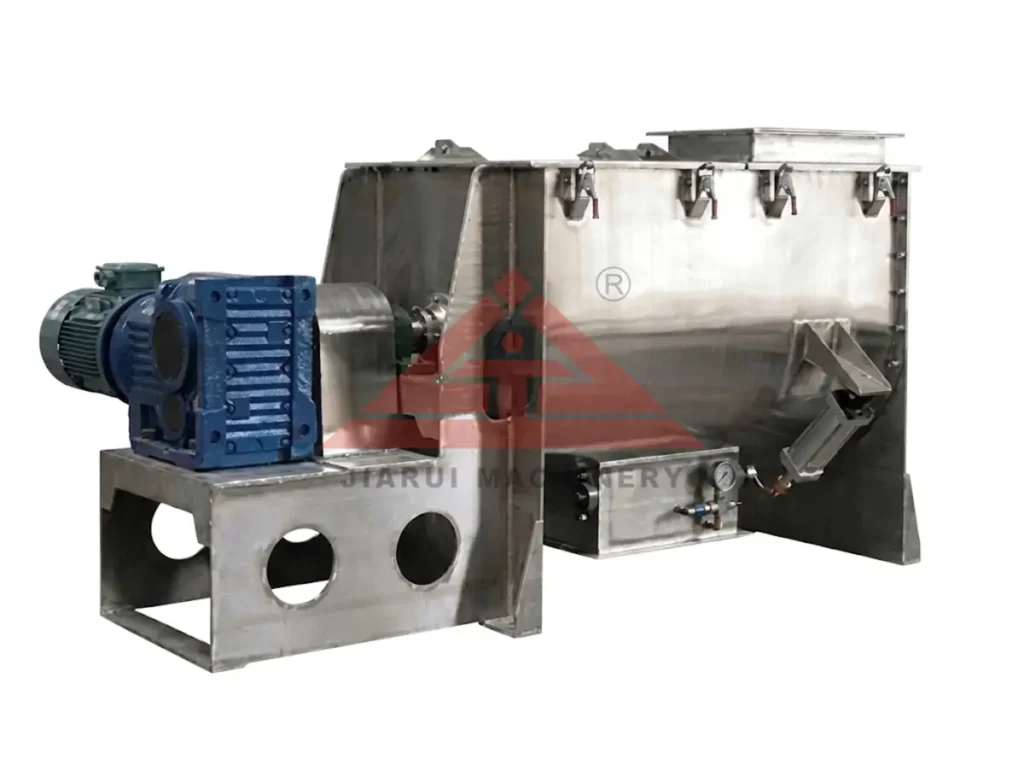
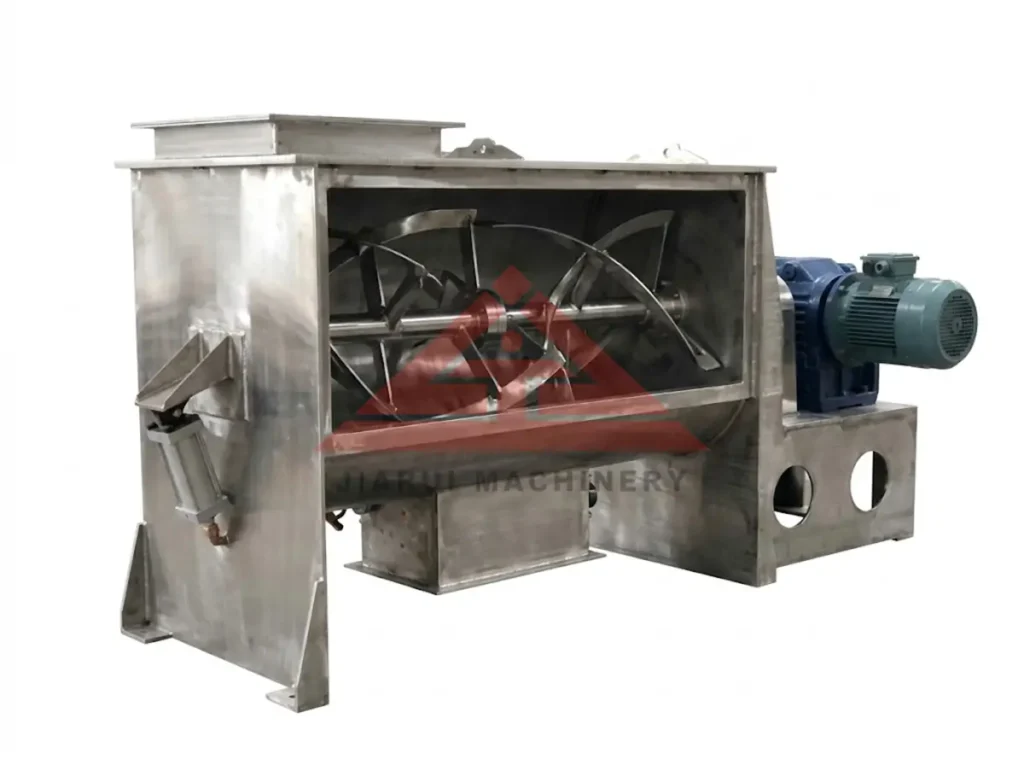
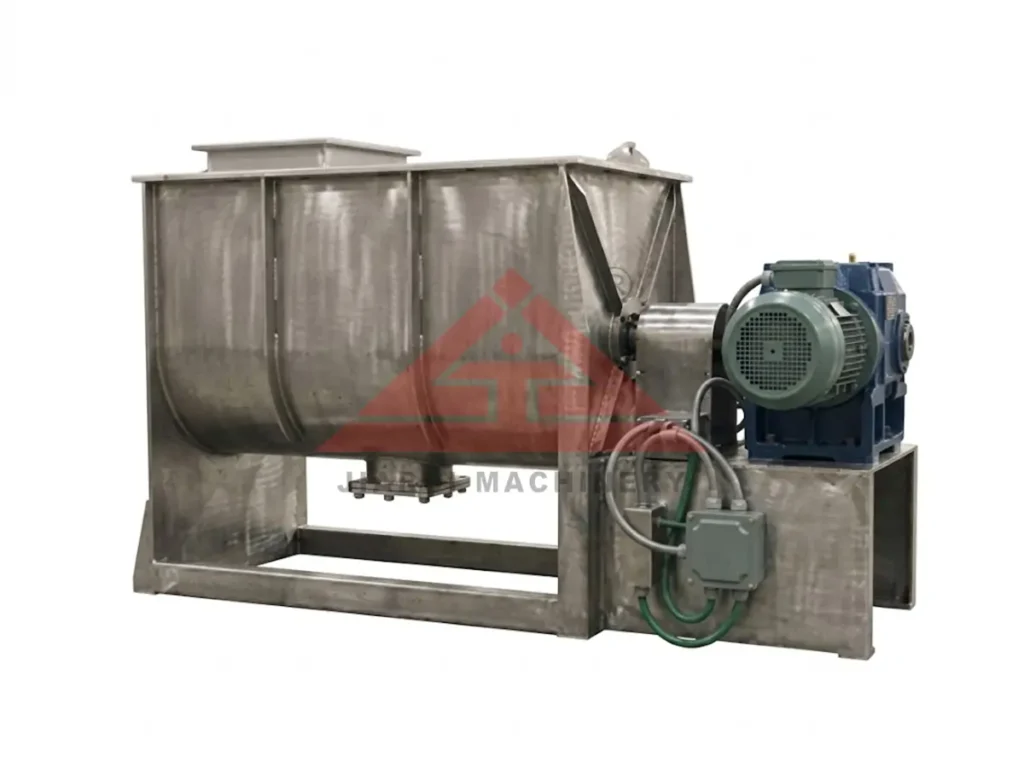
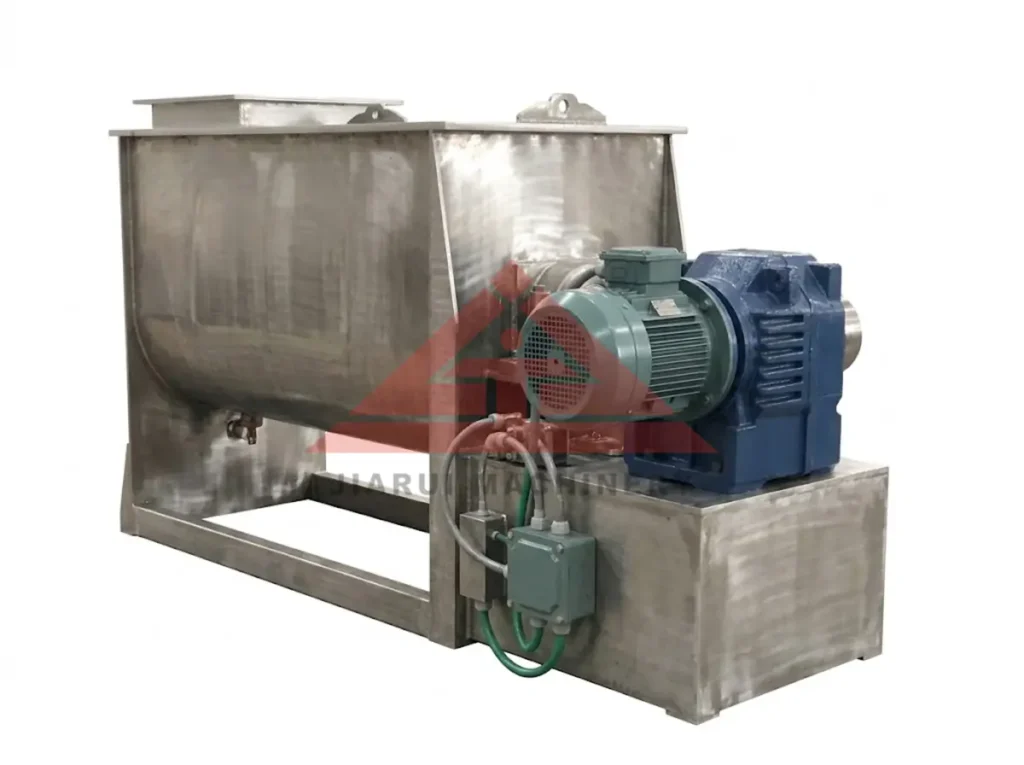
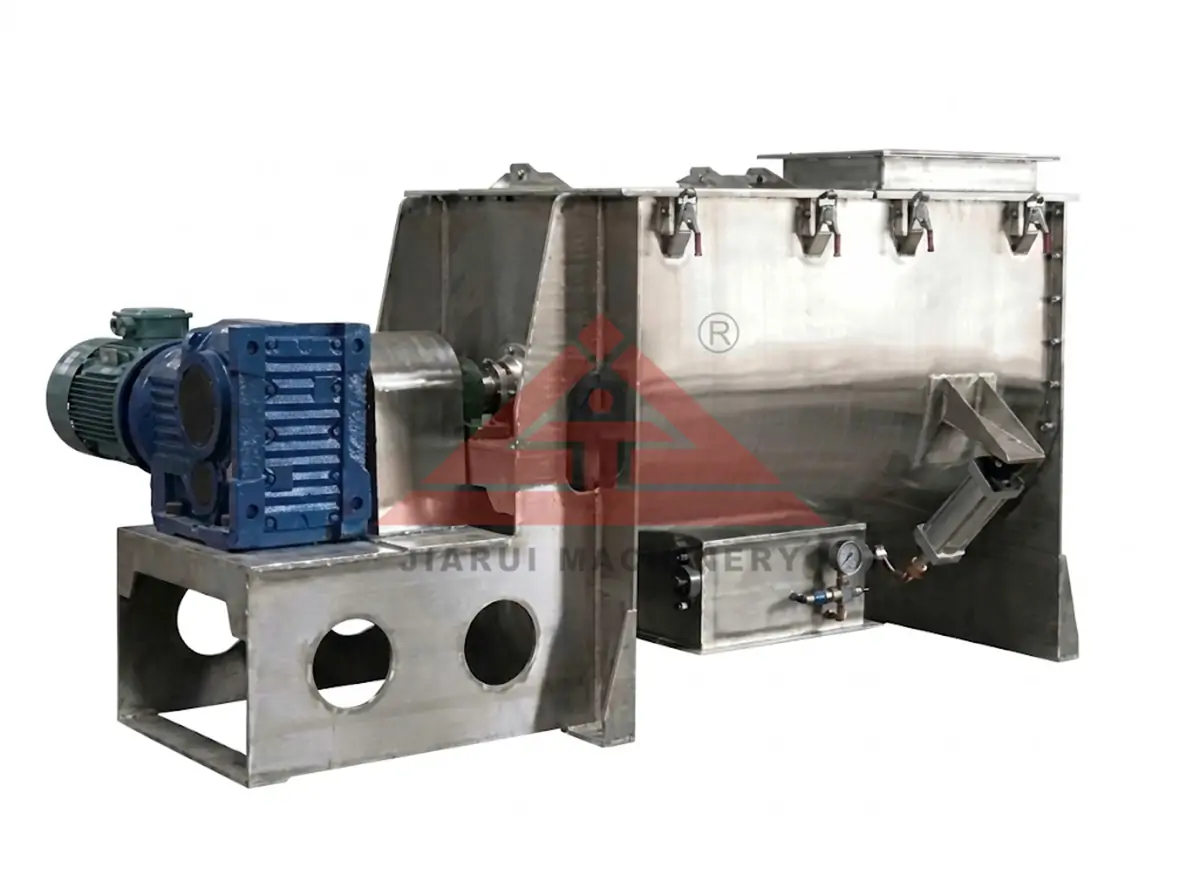
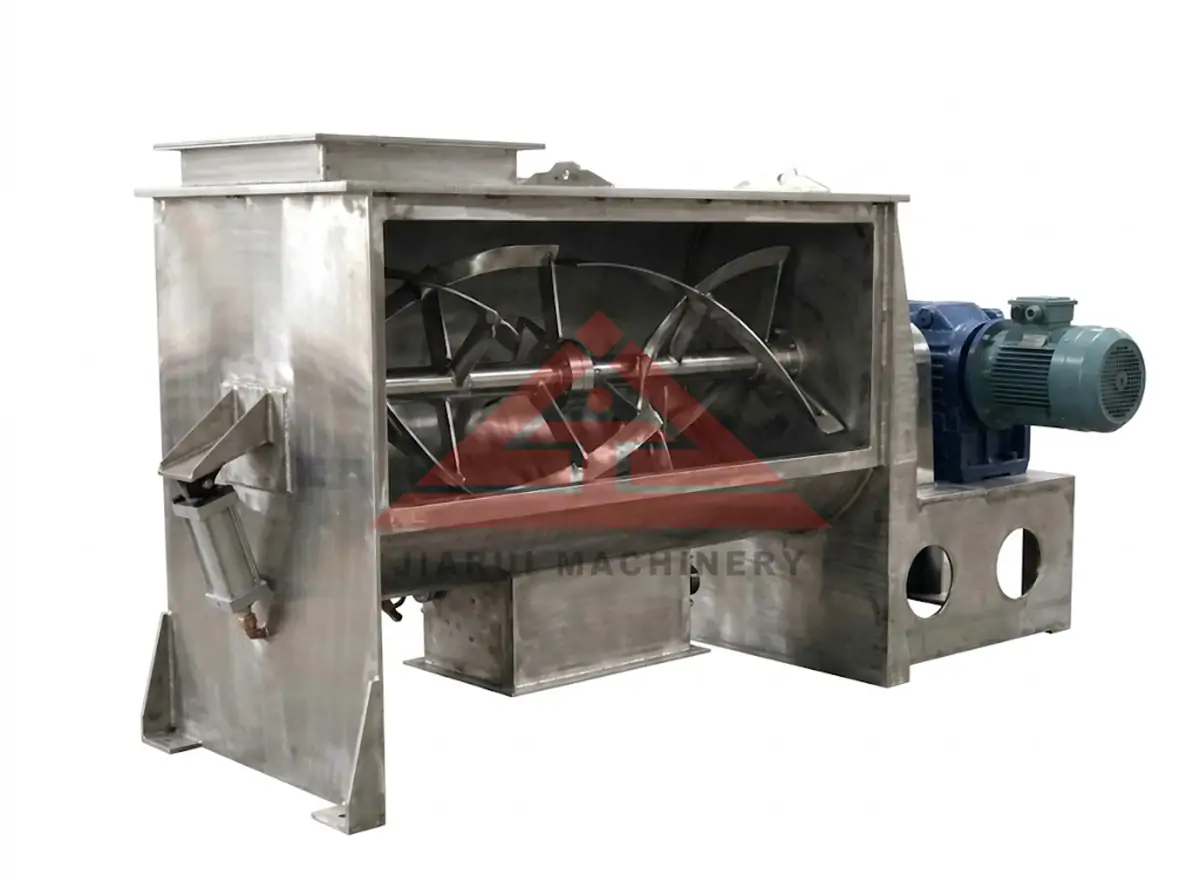
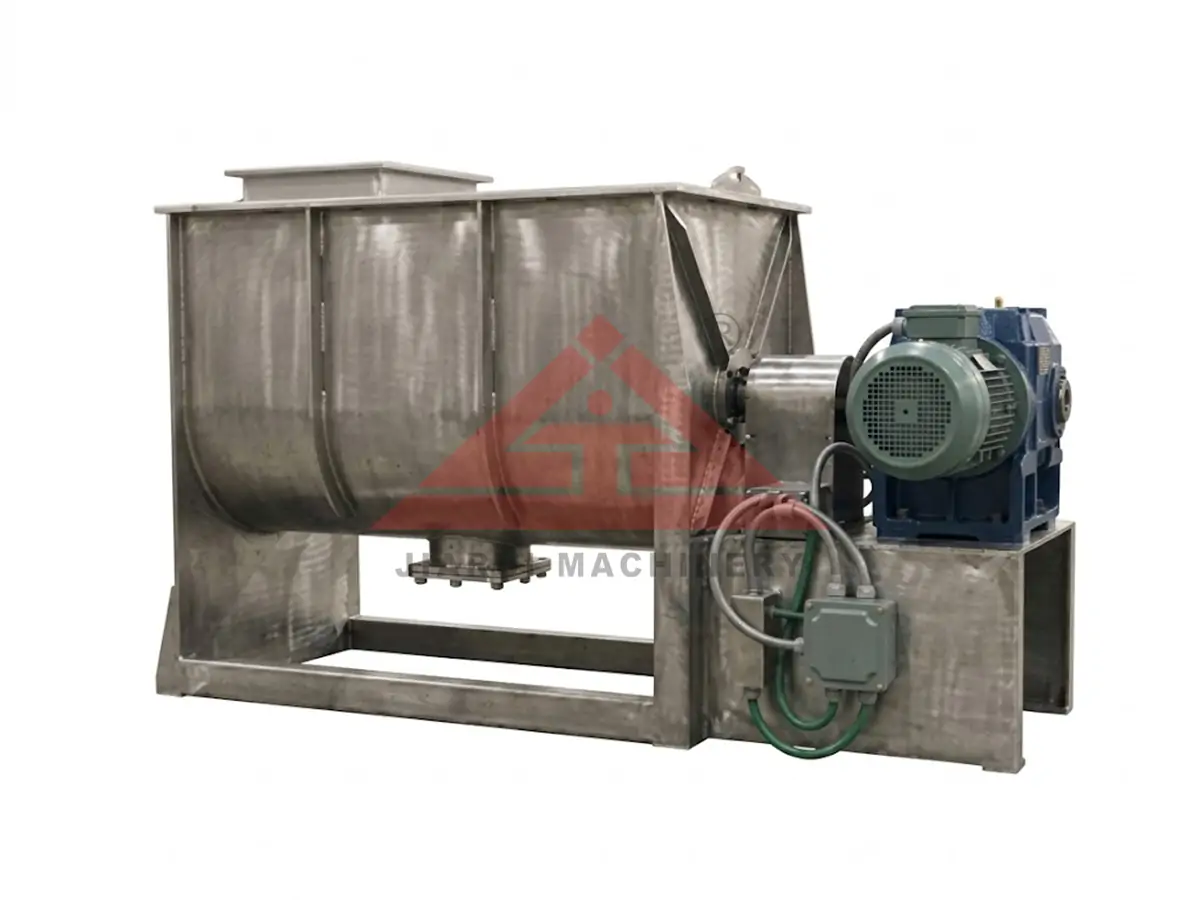
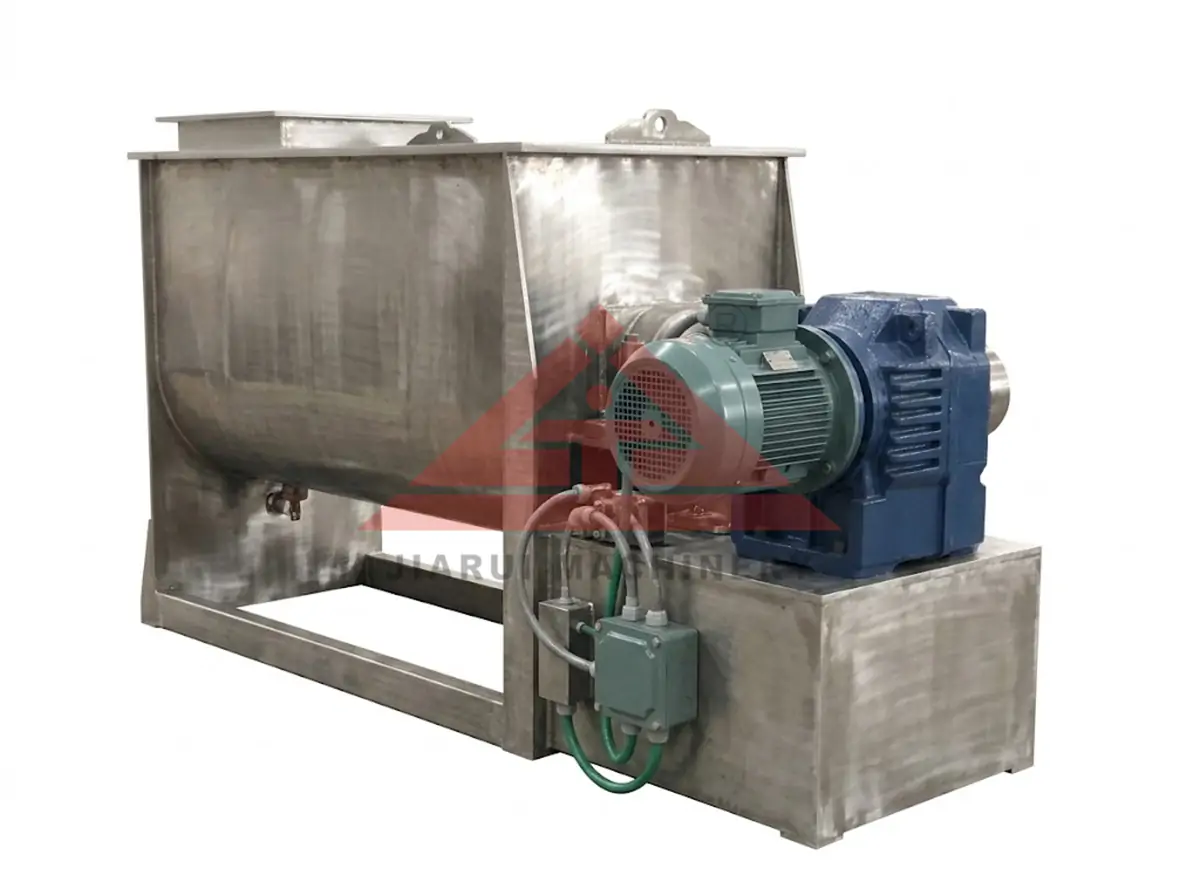
تُستخدم خلاطة الشريط الأفقي بشكل أساسي لخلط المساحيق والحبيبات والمواد المسحوقية مع كميات صغيرة من الإضافات السائلة. وهي مناسبة لخلط التركيبات متعددة المكونات وعمليات الإنتاج بالدفعات. مع غرفة أفقية على شكل حرف U ونظام خلط بشريط مزدوج، يدفع الشريط الخارجي المواد من كلا الجانبين نحو المركز، بينما ينقل الشريط الداخلي المواد من المركز نحو كلا الجانبين، مما يخلق دوراناً مستمراً للمواد خلال دورة الخلط ويحسّن تجانس الخلط.
يُستخدم هذا الجهاز على نطاق واسع لخلط المواد الكيميائية الخام والمضافات الغذائية وحبيبات البلاستيك والملاط الجاف ومواد أخرى. وفقاً لاختلاف سيولة المواد وحجم الدفعة ومتطلبات الإنتاج،, جاروي يمكن تخصيص مواصفات الجهاز وهيكل الشريط ووظائف إضافية مثل أنظمة التسخين والتبريد والضغط الموجب والتفريغ لتلبية متطلبات المعالجة المختلفة.
- طراز المنتج: سلسلة WLDH خلاطة الشريط الأفقي
- سعة الخلط: 240–16000 كجم/دفعة
- نوع المادة: مساحيق وحبيبات وتركيبات مسحوقية مع إضافات سائلة
- هيكل الخلاط: غرفة أفقية على شكل حرف U، نظام خلط بشريط مزدوج
- خيارات المواد: فولاذ مقاوم للصدأ / فولاذ كربوني
- قوة المحرك: 3–110 كيلوواط (يُختار وفقاً للطراز وظروف المواد)
- التخصيص: يمكن تخصيص هيكل الشريط والمواد والوظائف الإضافية
ما هي خلاطة الشريط الأفقي؟
خلاطة الشريط الأفقي هي آلة خلط تستخدم غرفة أفقية على شكل حرف U وهيكل خلط بشريط. وهي أيضاً نوع من معدات خلط المساحيق تُستخدم عادةً لخلط المساحيق والحبيبات والتركيبات. لمزيد من المعلومات حول مبادئ الخلط بالشريط وتطبيقات خلط المساحيق، راجع دليلنا حول آلة الخلط بالشريط الأفقي لخلط المساحيق. أثناء التشغيل، تقود الأشرطة الدوارة المواد للدوران داخل الغرفة، مما يسمح للمكونات المختلفة بالاتصال الكامل ببعضها البعض. جوهر الجهاز هو حركة الدوران المحوري التي ينشئها هيكل الشريط المزدوج، والتي تتيح التبادل المستمر بين المواد القريبة من جدار الغرفة وتلك الموجودة في المركز.
تُستخدم خلاطة الشريط الأفقي بشكل أساسي لخلط مواد مسحوقية متعددة وحبيبات وتركيبات تتطلب إضافة كميات صغيرة من السائل. نظراً لاختلاف المواد في السيولة والكثافة واللزوجة ومتطلبات الخلط، يجب اختيار هيكل الشريط المناسب ومواصفات الجهاز والتكوين المساعد وفقاً لظروف الإنتاج المحددة.
مبدأ العمل
تعتمد عملية الخلط بشكل أساسي على حركة الدوران التي ينشئها نظام الخلط بشريط مزدوج. يقود المحرك عمود الشريط عبر المخفض، مما يؤدي إلى دوران المواد داخل الغرفة طوال دورة الخلط وتحقيق خلط متجانس من خلال حركة المواد وتبادلها.
نقل الحركة:يقود المحرك عمود الشريط للدوران ويوفر الطاقة لدوران المواد. يحافظ المخفض على سرعة دوران مستقرة، مما يسمح للخلاط بالتعامل مع أحمال مواد مختلفة وتحقيق أداء خلط متسق.
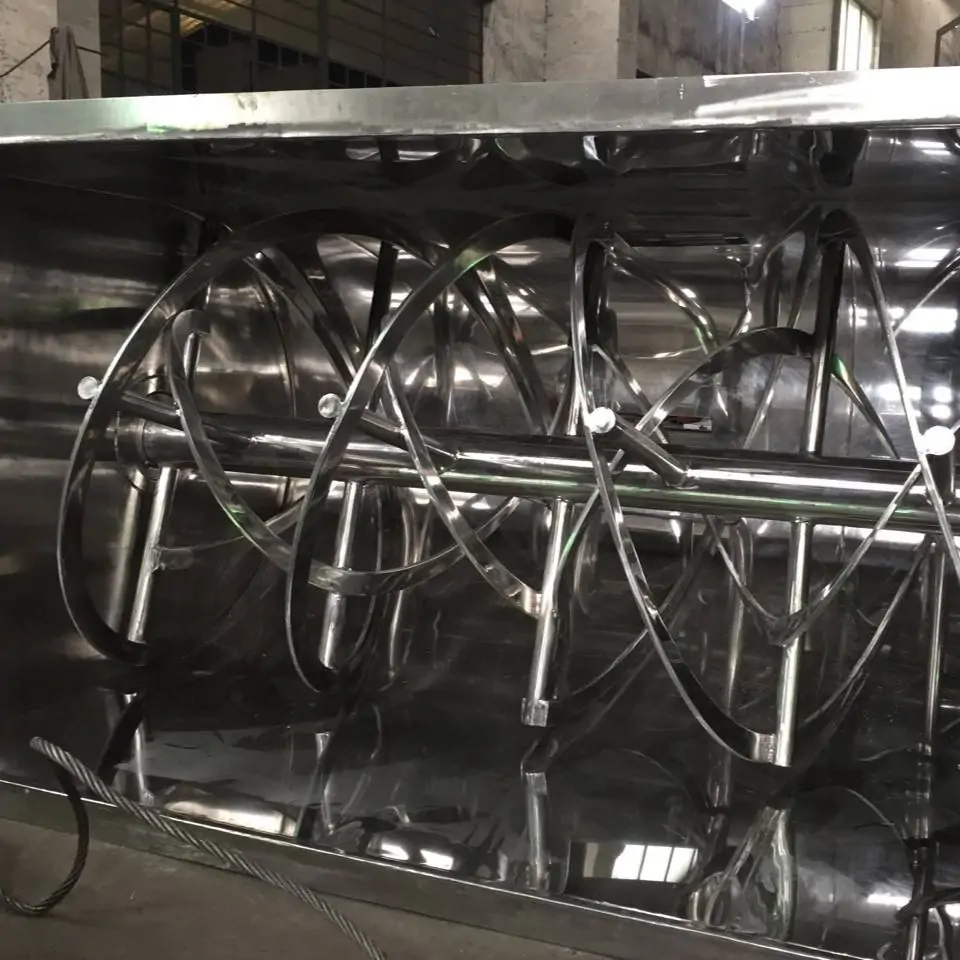
الدوران ثنائي الاتجاه:يُثبّت الشريط الخارجي بالقرب من جدار الغرفة ويدفع المواد بشكل أساسي من كلا الجانبين نحو المركز. ينقل الشريط الداخلي المواد من المنطقة المركزية نحو كلا الجانبين. يعمل الشريطان الداخلي والخارجي معاً لإنشاء دوران مستمر وتبادل للمواد داخل الغرفة.
عملية الخلط:مع دوران الأشرطة، تُنقل المواد باستمرار وتُقلب وتُعاد توزيعها داخل الغرفة. تحقق المواد الخام المختلفة اتصالاً كافياً، مما يسمح للمساحيق والحبيبات والتركيبات متعددة المكونات بتحقيق خلط متجانس.
الهيكل الرئيسي
صُمم هيكل خلاطة الشريط الأفقي بشكل أساسي حول دوران المواد والتشغيل المستقر. تؤثر غرفة الخلط ومجموعة المحرك بالشريط ونظام النقل جميعها على أداء الخلط وظروف التشغيل.
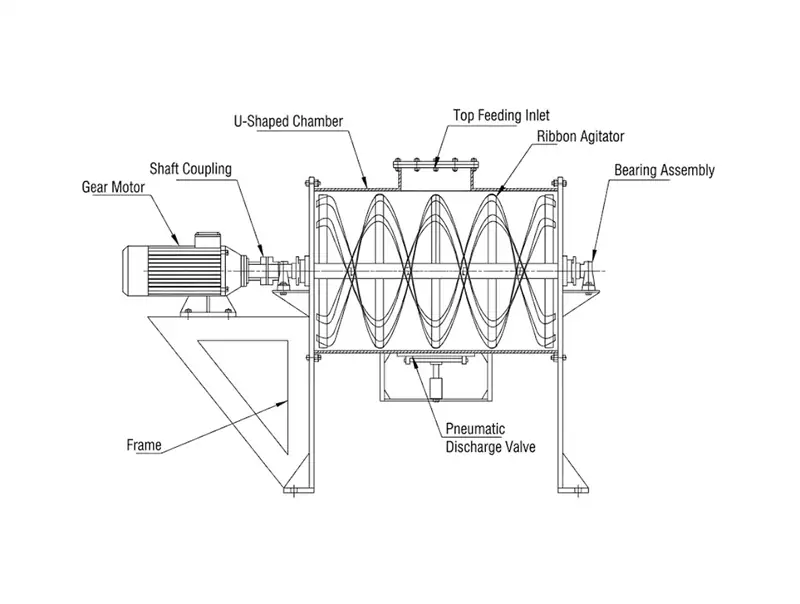
غرفة الخلط على شكل حرف U:الغرفة على شكل حرف U هي المساحة الرئيسية لخلط المواد. يجب أن يضمن هيكلها الداخلي قدرة المواد على التحرك مع الأشرطة. يُصمم حجم الغرفة والحجم الفعلي عموماً وفقاً لسعة الدفعة لتجنب التحميل الزائد الذي يؤثر على دوران المواد.
مجموعة المحرك بالشريط:مجموعة المحرك بالشريط هي المكون الأساسي المسؤول عن الخلط. تتكون من عمود رئيسي وأشرطة داخلية وخارجية. تعتمد الأشرطة الداخلية والخارجية تصاميم اتجاهية مختلفة لتحريك المواد في مناطق مختلفة وإنشاء دوران داخل الغرفة. بالنسبة للمواد المختلفة، يجب اختيار هياكل الأشرطة المناسبة ومعايير التشغيل.
نظام النقل:يتكون نظام النقل من محرك ومخفض، مما يوفر طاقة مستقرة لدوران الشريط. يجب اختيار تكوين الطاقة وفقاً لمواصفات الجهاز وأحمال المواد لضمان التشغيل المستقر لنظام الخلط.
جهاز التفريغ:يقع جهاز التفريغ في الجزء السفلي من الغرفة ويُستخدم لتفريغ المواد المخلوطة. يمكن لتصميم التفريغ المعقول تقليل بقايا المواد وتسهيل الاتصال بمعدات معدات النقل التعبئة والتغليف downstream.
بالنسبة للمواد المختلفة ومتطلبات الإنتاج المختلفة، يجب مطابقة حجم الغرفة وهيكل الشريط وتكوين المحرك بشكل مناسب. وإلا، قد يحدث دوران غير كافٍ للمواد أو خلط غير متجانس.
مواد التطبيق
خلاطة الشريط الأفقي مناسبة لخلط المساحيق والحبيبات والتركيبات التي تحتوي على كميات صغيرة من السائل. تختلف المواد المختلفة في السيولة وحجم الجسيمات والكثافة ومتطلبات التركيبة. لذلك، يجب أن يأخذ اختيار المعدات في الاعتبار ليس فقط حجم الآلة، بل أيضاً ما إذا كانت المواد يمكن أن تتبادل بشكل كافٍ أثناء الخلط وما إذا كانت مشاكل مثل تكسر الجسيمات أو توزيع السائل غير المتجانس قد تحدث.
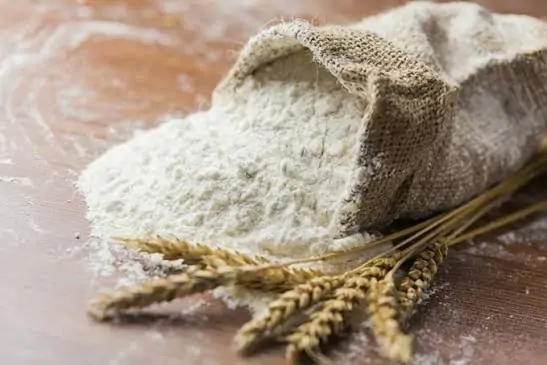 الدقيق
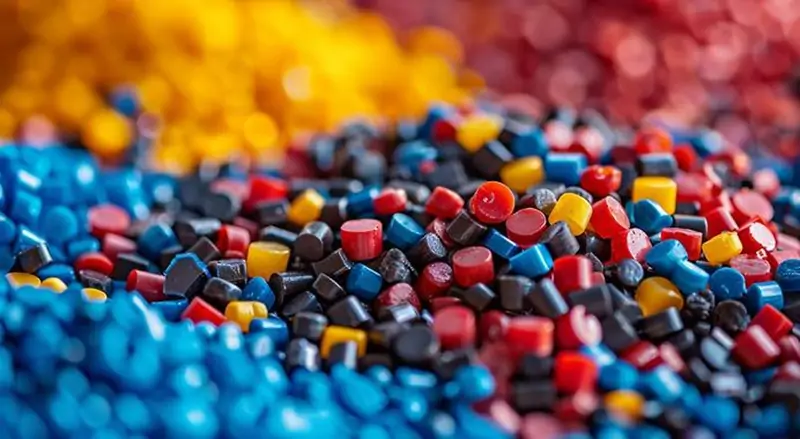 كريات البلاستيك
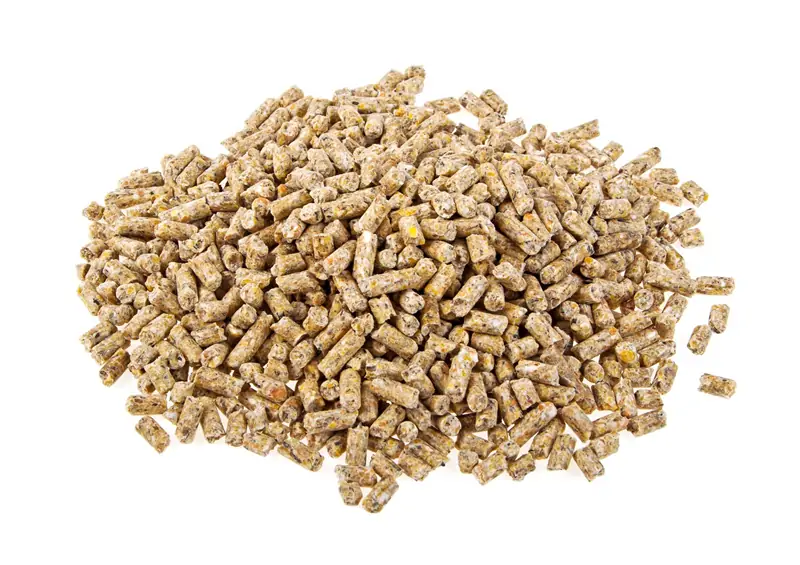 حبيبات الأعلاف الحيوانية
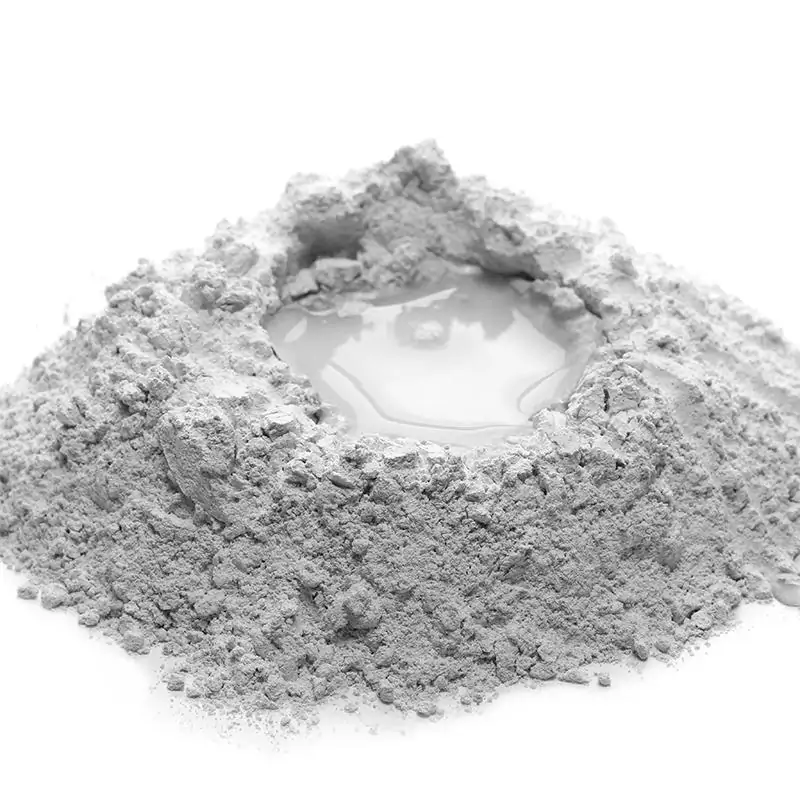 خلط المسحوق والسائل
| نوع المادة | المواد الشائعة | اعتبارات الخلط | صورة |
| مواد مسحوقية | دقيق، مضافات غذائية، مساحيق كيميائية، مسحوق بلاستيكي | التركيز على سيولة المواد وتجانس الخلط لتجنب التراكم الموضعي الذي يؤثر على أداء الخلط | صورة الدقيق / المسحوق الغذائي |
| خلط المساحيق والحبيبات | حبيبات البلاستيك، حبيبات الراتنج، حبيبات الأعلاف | ضمان التبادل الكافي بين المواد ذات الأحجام الجسيمية المختلفة مع تقليل تكسر الجسيمات أثناء الخلط | صورة حبيبات البلاستيك / حبيبات الأعلاف |
| خلط المسحوق مع السائل | مواد التركيبة التي تحتوي على زيت أو إضافات أو مكونات سائلة أخرى | التحكم السليم في طريقة إضافة السائل لضمان التوزيع المنتظم في جميع أنحاء المواد | صورة مسحوق مخلوط مع سائل |
إذا كانت المواد ذات محتوى رطوبة عالٍ أو لزوجة قوية أو اختلافات كبيرة في نسب المكونات، يُوصى بتقديم معلومات المواد مسبقًا حتى يتمكن المهندسون من تأكيد هيكل الشريط المناسب وتكوين المعدات.
كيفية الاختيار
عند اختيار خلاط الشريط، لا تأخذ في الاعتبار حجم الطراز فقط. عادةً ما نفهم أولاً خصائص المواد، وكمية الدفعة المطلوبة، وما إذا كانت هناك متطلبات خاصة مثل إضافة السائل أو التسخين. قد يؤدي استخدام نفس التكوين لمواد مختلفة إلى أداء خلط مختلف.
خلط المسحوق:بالنسبة للدقيق والإضافات الغذائية والمساحيق الكيميائية وغيرها من المواد المسحوقة، ركز على سيولة المواد وكمية التحميل بالدفعة. قد لا توفر المعدات الصغيرة جدًا مساحة كافية لدوران المواد، بينما قد تقلل المعدات الكبيرة جدًا من معدل استخدام المعدات.
خلط المسحوق والحبيبات:بالنسبة لحبيبات البلاستيك وحبيبات الراتنج وحبيبات الأعلاف وغيرها من المواد، يجب الانتباه إلى الحفاظ على سلامة الجسيمات أثناء الخلط. بالإضافة إلى السعة، يجب مراعاة هيكل الشريط وسرعة التشغيل لتجنب التأثير على حالة الجسيمات.
التركيبات مع الإضافات السائلة:إذا كان يجب إضافة زيت أو إضافات أو مكونات سائلة أخرى أثناء الخلط، فيجب تأكيد كمية وطريقة إضافة السائل مسبقًا. يؤثر التوزيع المنتظم للسائل مباشرة على نتيجة الخلط النهائية.
4. يعتمد حجم المعدات بشكل أساسي على كمية الخلط بالدفعة، بينما يجب أيضًا مراعاة الكثافة الظاهرية ووقت الخلط ومتطلبات الإنتاج. تتيح معلومات المواد الدقيقة للمهندسين تحديد مواصفات معدات أكثر ملاءمة.
المعايير الفنية
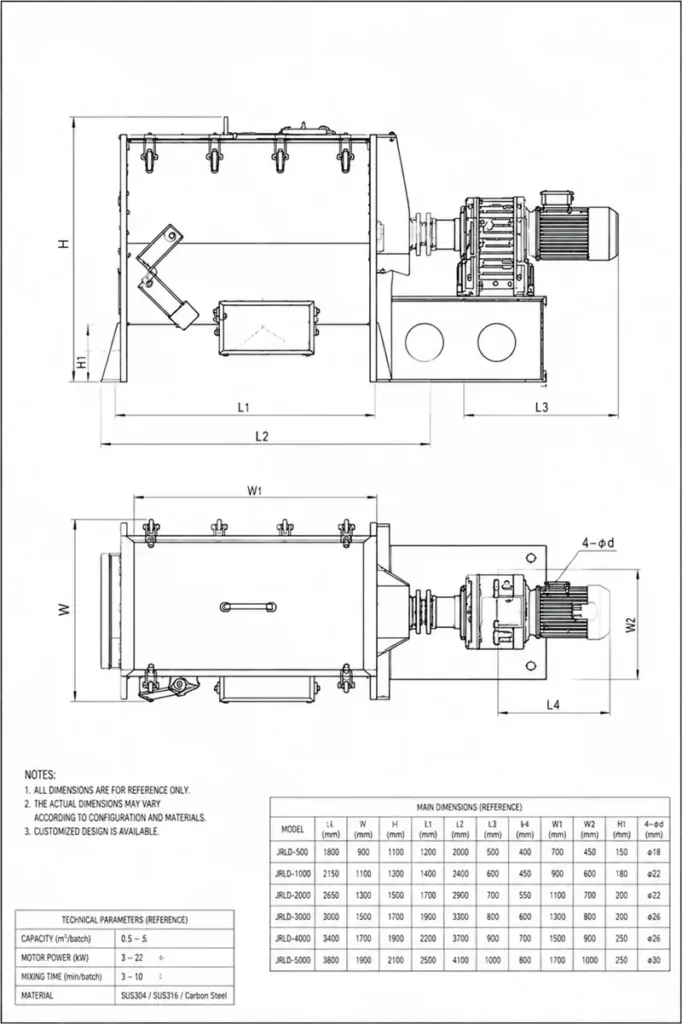
يتوفر خلاط الشريط الأفقي بمواصفات متعددة. يمكن مطابقة قوة المحرك وسرعة الدوران وسعة الخلط بالدفعة وفقًا لخصائص المواد ومتطلبات الإنتاج.
| الموديل | قوة المحرك (كيلوواط) | السرعة (دورة/دقيقة) | سعة الخلط بالدفعة (كجم) | الأبعاد الكلية (مم) |
| WLDH-0.3 | 3 | 41 | 240 | 2300×680×1080 |
| WLDH-0.5 | 5.5 | 41 | 400 | 2900×780×1240 |
| WLDH-1 | 11 | 33 | 800 | 3200×1000×1400 |
| WLDH-2 | 15 | 33 | 1600 | 3860×1200×1650 |
| WLDH-3 | 18.5 | 33 | 2400 | 4320×1300×1900 |
| WLDH-4 | 22 | 28 | 3200 | 4600×1400×2000 |
| WLDH-5 | 37 | 28 | 4000 | 4850×1500×2020 |
| WLDH-6 | 37 | 22 | 4800 | 5400×1560×2200 |
| WLDH-8 | 45 | 22 | 6400 | 5100×1720×2420 |
| WLDH-10 | 55 | 19 | 8000 | 5610×1750×2360 |
| WLDH-15 | 90 | 17 | 12000 | 5820×2000×2900 |
| WLDH-20 | 110 | 11 | 16000 | 6060×2630×3160 |
ملاحظة: سعة الخلط بالدفعة هي قيمة مرجعية وقد تختلف حسب الكثافة الظاهرية للمواد والسيولة ونسبة التعبئة. يجب تحديد تكوين المعدات النهائي وفقًا للمواد المحددة ومتطلبات الخلط.
تكوين مخصص
لا يوجد تكوين ثابت واحد لـ الخلاط الشريطي الأفقي يكون مناسبًا لجميع المواد. المسحوق والحبيبات والتركيبات التي تتطلب إضافة سائل لها متطلبات مختلفة أثناء الخلط، لذلك قد تختلف تكوينات المعدات أيضًا.
عادةً ما يقوم فريق جياروي الهندسي أولاً بتقييم خصائص المواد ومتطلبات التشغيل قبل تحديد هيكل الشريط المناسب ومواد المعدات والتكوينات ذات الصلة.
متى يكون تعديل التكوين مطلوبًا؟
بالنسبة لخلط المسحوق التقليدي، يمكن عادةً أن يلبي هيكل الشريط المزدوج القياسي المتطلبات.
يجب تأكيد تكوين المعدات مسبقًا في الحالات التالية:
- المواد عرضة للالتصاق بالجدار أو تشكيل كتل؛;
- يجب خلط المسحوق والحبيبات؛;
- يجب إضافة زيت أو إضافات أو سوائل أخرى أثناء الخلط؛;
- توجد متطلبات خاصة لمواد المعدات أو التسخين أو التبريد.
المعلومات المطلوبة للاستفسار
لمطابقة المعدات بشكل أكثر دقة، يرجى تقديم المعلومات الرئيسية التالية:
- اسم المادة؛;
- كمية الخلط بالدفعة؛;
- حالة المواد (مسحوق أو حبيبات أو تحتوي على سائل)؛;
- ما إذا كان التسخين أو التبريد أو وظائف خاصة أخرى مطلوبة
تصنيع Jiarui
على الرغم من أن هيكل خلاط الشريط الأفقي بسيط، إلا أن أداء الخلط الفعلي يعتمد بشكل أساسي على نظام الخلط الداخلي. تحتاج الشرائط إلى تدوير وتبادل المواد داخل الغرفة أثناء الخلط. إذا لم يتم تصميم المطابقة بين الشرائط والغرفة بشكل صحيح، فقد يتأثر دوران المواد وقد يحدث خلط غير متساوٍ.
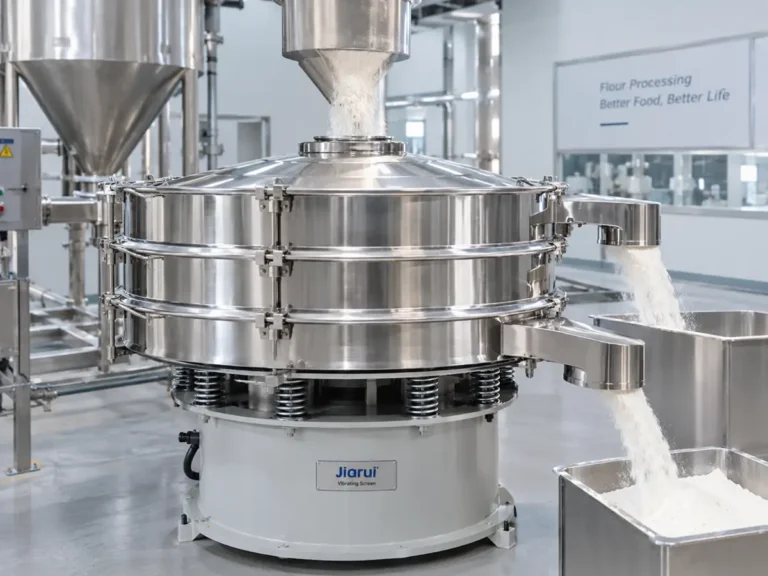
أثناء التصنيع، تركز جياروي على المطابقة بين عمود الخلط والشرائط والغرفة. تؤثر أبعاد الشريط وموضع التركيب وحالة الدوران جميعها على حركة المواد داخل المعدات وتحتاج إلى التعديل وفقًا لمواصفات المعدات ومتطلبات التشغيل.
بالنسبة للمواد المختلفة، يجب أيضًا تأكيد مادة الأجزاء الملامسة للمنتج مسبقًا. يمكن استخدام التكوينات التقليدية للمساحيق الصناعية العادية، بينما تتطلب تطبيقات الأغذية والكيماويات وغيرها من التطبيقات ذات متطلبات النظافة أو مقاومة التآكل حل مواد مناسبًا. بالنسبة لتطبيقات مساحيق الأغذية والأدوية، قد تحتاج مواد ملامسة المنتج وتصميم المعدات إلى تلبية متطلبات النظافة والمواد والتصنيع المعمول بها. بالنسبة لتطبيقات الأغذية والأدوية الخاضعة للتنظيم، يجب تأكيد المتطلبات المعمول بها بناءً على المنتج المقصود وعملية التصنيع. ممارسات التصنيع الجيدة الحالية (CGMPs) لإدارة الغذاء والدواء الأمريكية.
بعد التجميع، يتم فحص المعدات للتأكد من تشغيل الشريط وأداء النقل وظروف التفريغ. يتم تسليم خلاط الشريط الأفقي للاستخدام بعد التأكد من تشغيل جميع المكونات بشكل صحيح.
الأسئلة الشائعة
احصل على استشارة مجانية
املأ النموذج أدناه للتواصل مع خبرائنا والحصول على توصيات مخصصة لتطبيقك.