
Mélangeur à Ruban Horizontal (Série WLDH) – Solution de Mélange de Poudres à Haute Efficacité
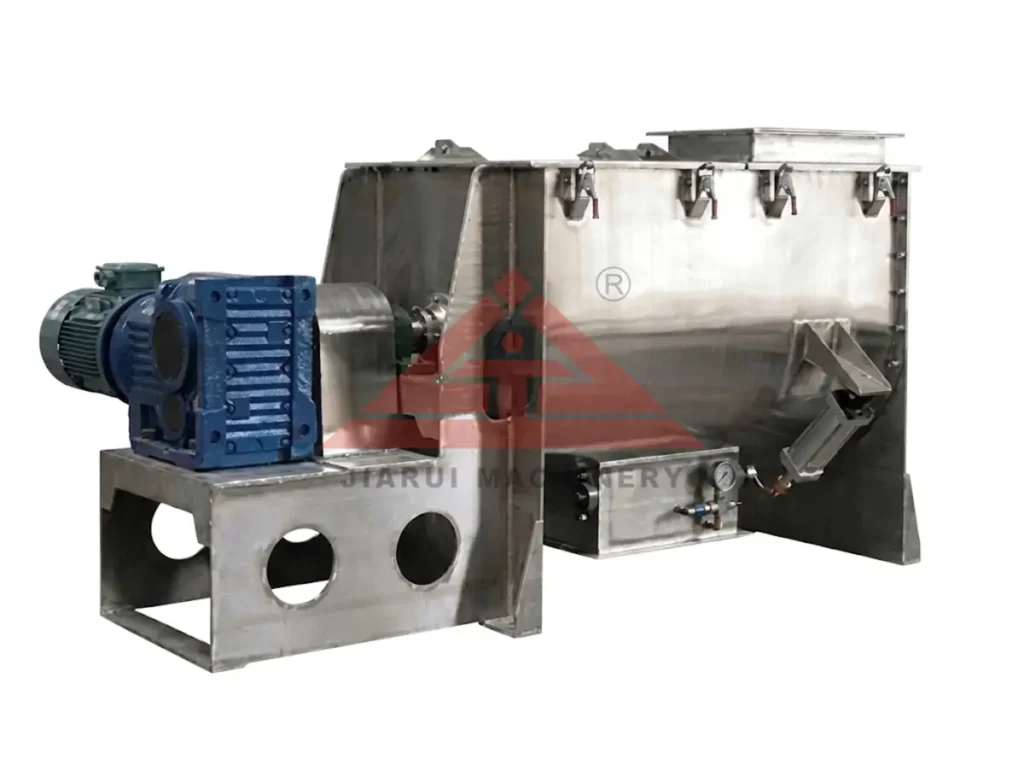
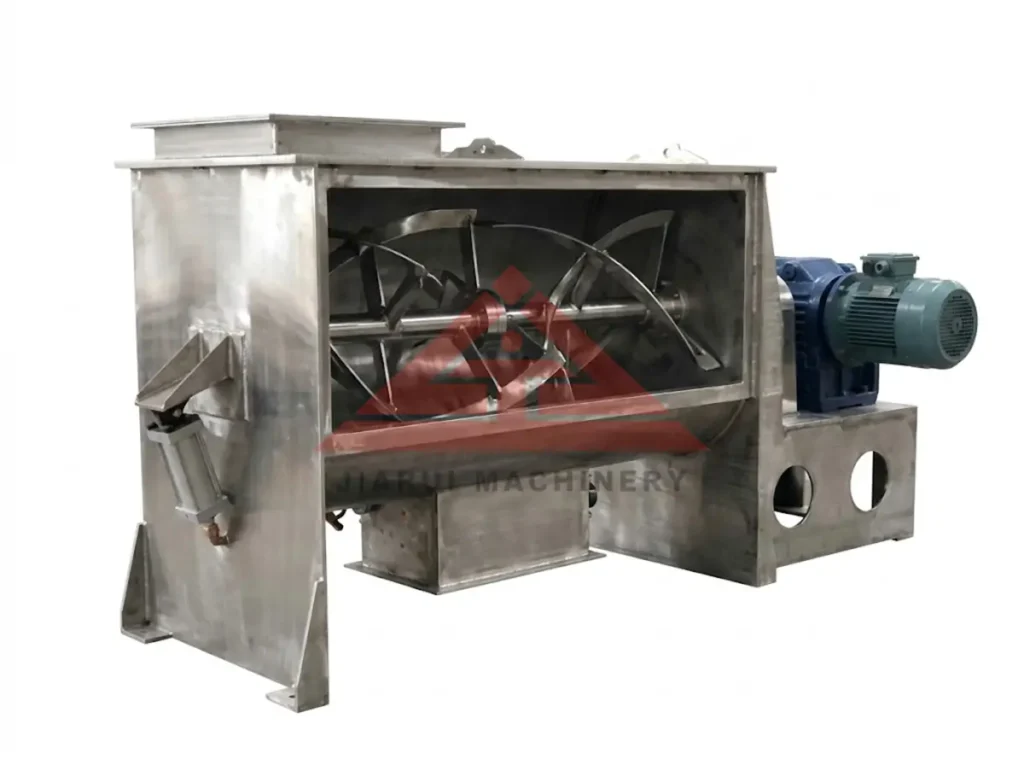
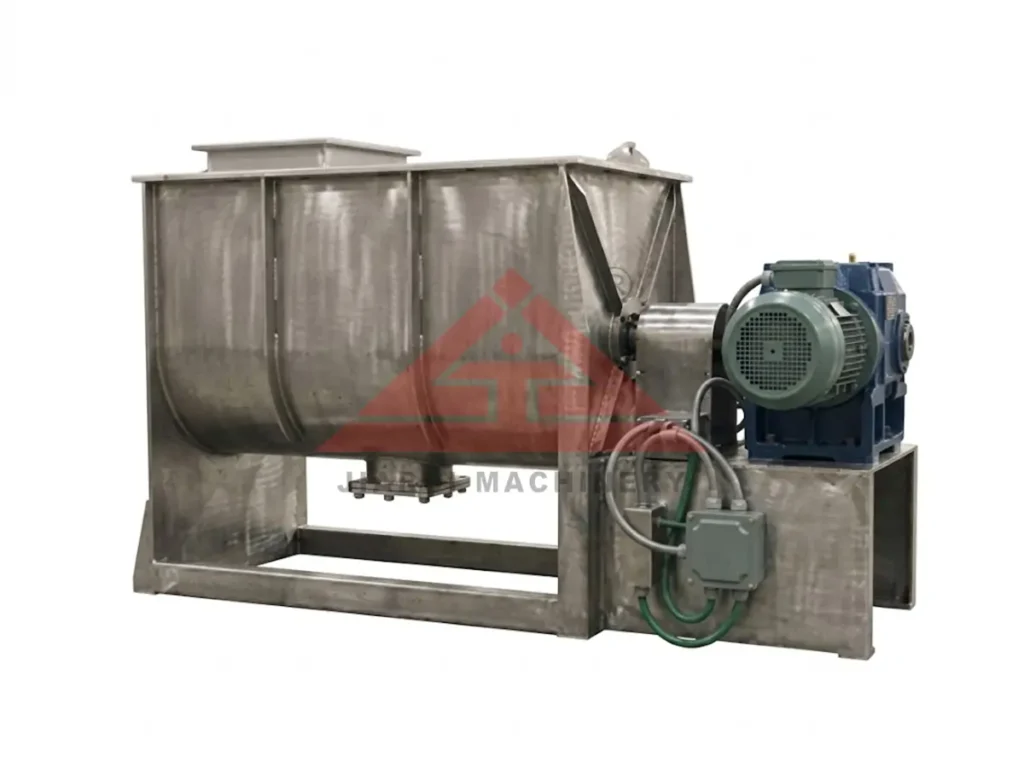
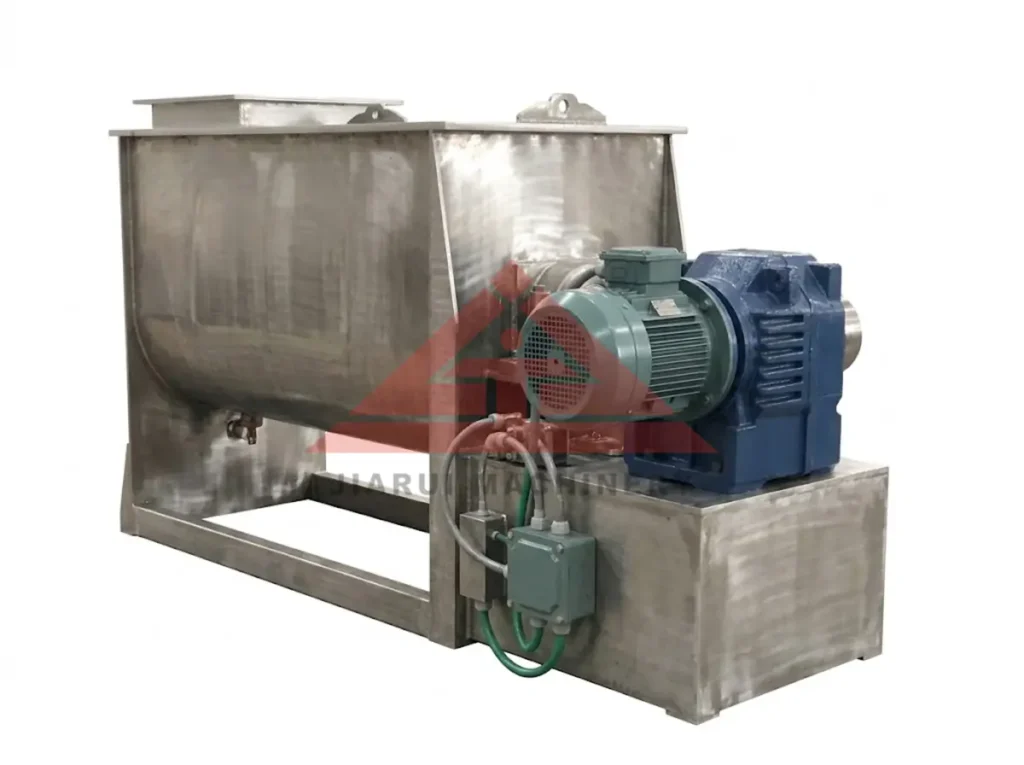
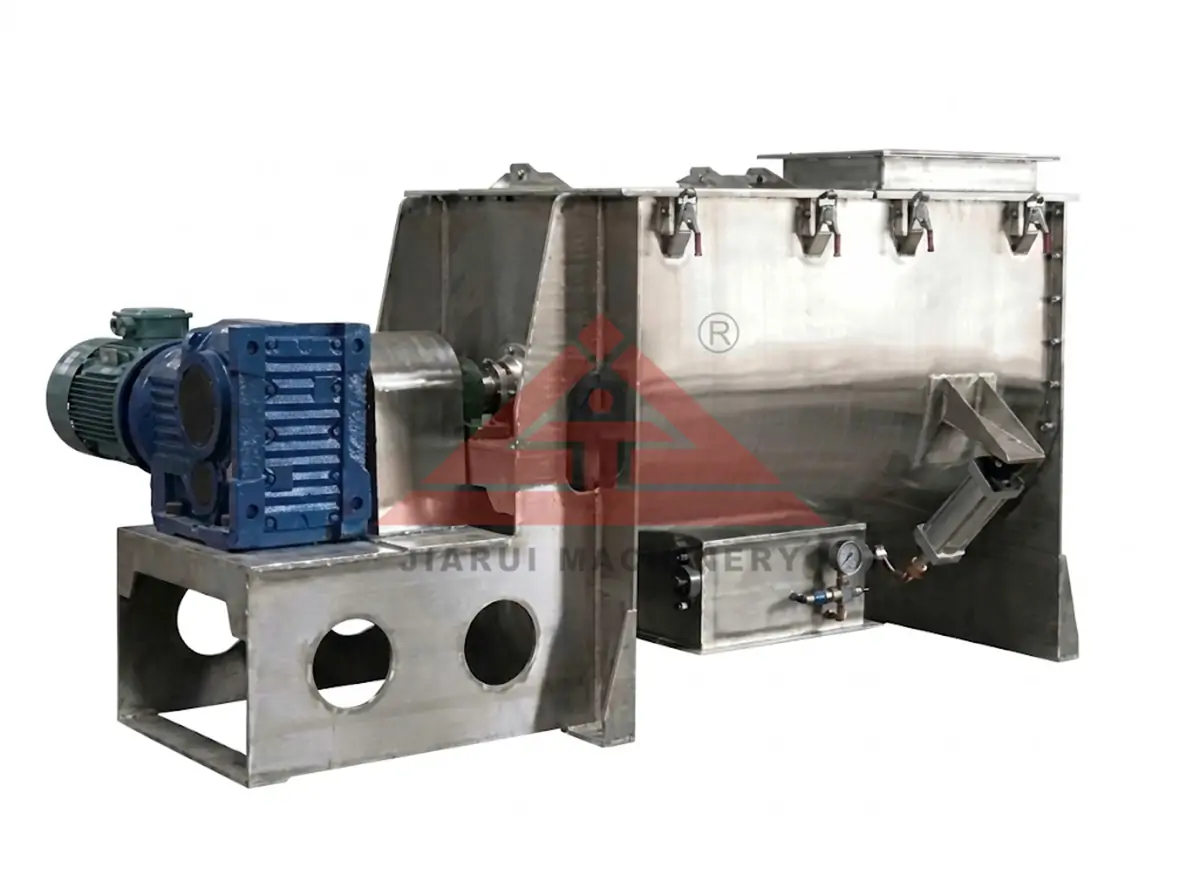
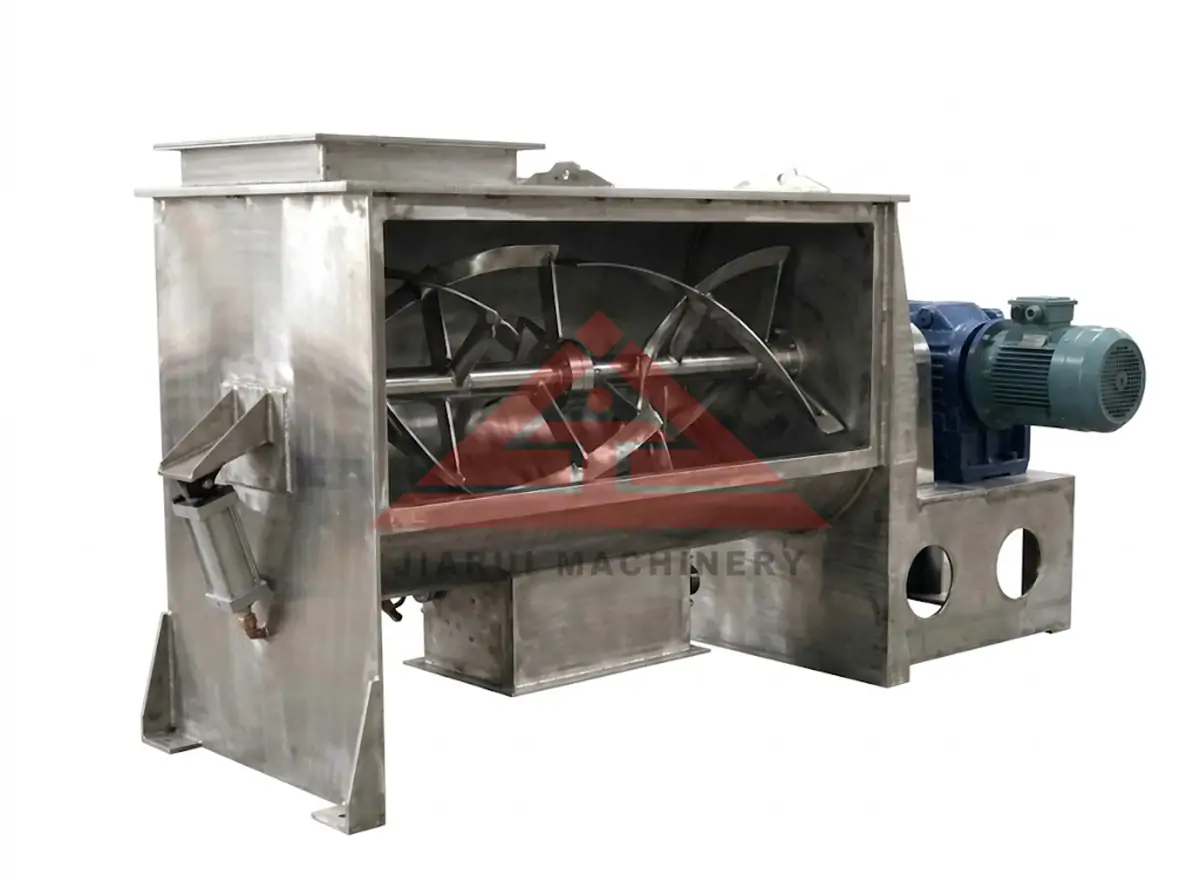
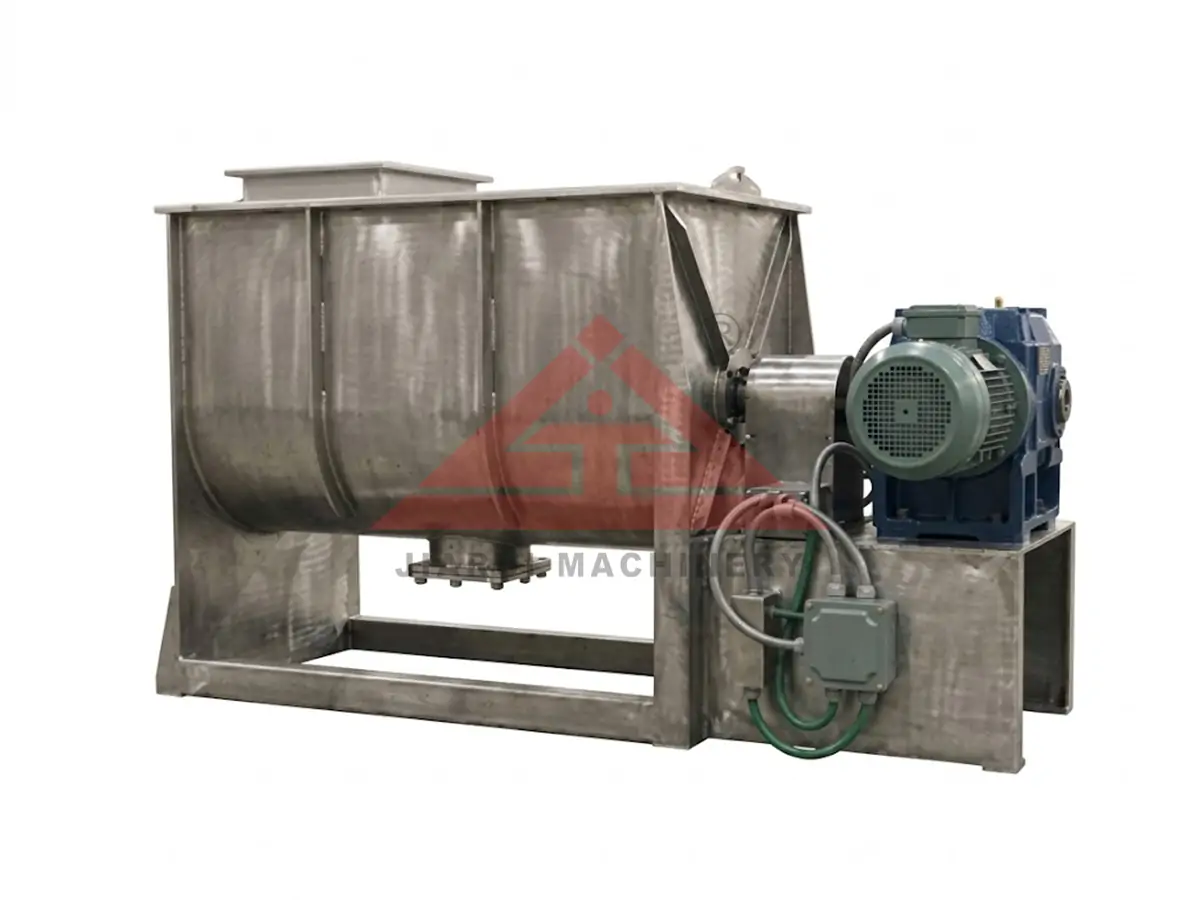
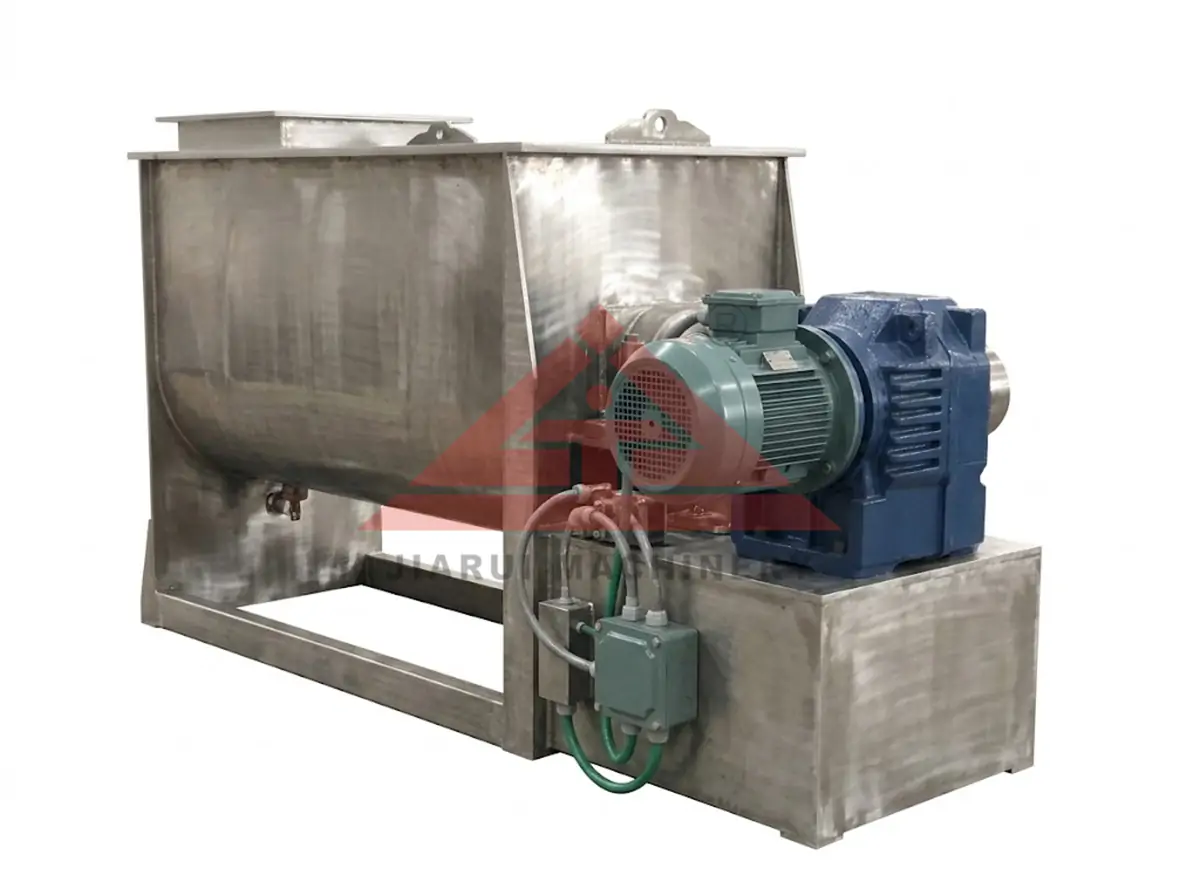
Un mélangeur à ruban horizontal est principalement utilisé pour mélanger des poudres, des granulés et des matériaux pulvérulents avec de petites quantités d'additifs liquides. Il convient aux processus de mélange de formulations multi-composants et aux processus de production par lots. Avec une chambre horizontale en forme de U et un système de double ruban de mélange, le ruban externe pousse les matériaux des deux côtés vers le centre, tandis que le ruban interne déplace les matériaux du centre vers les deux côtés, créant une circulation continue des matériaux pendant le cycle de mélange et améliorant l'uniformité du mélange.
Cet équipement est largement utilisé pour mélanger des matières premières chimiques, des additifs alimentaires, des granulés de plastique, du mortier sec et d'autres matériaux. Selon la fluidité des différents matériaux, la taille des lots et les exigences de production, Jiarui il est possible de personnaliser les spécifications de l'équipement, la structure du ruban et les fonctions supplémentaires telles que les systèmes de chauffage, de refroidissement, de pression positive et de vide pour répondre aux différentes exigences de traitement.
- Modèle de produit : Mélangeur à Ruban Horizontal Série WLDH
- Capacité de mélange : 240–16000 kg/lot
- Type de Matériau : Poudres, granulés et formulations à base de poudre avec additifs liquides
- Structure du mélangeur : Chambre horizontale en forme de U, système de double ruban de mélange
- Options de matériaux : Acier inoxydable / Acier au carbone
- Puissance du moteur : 3–110 kW (Sélectionné selon le modèle et les conditions des matériaux)
- Personnalisation : La structure du ruban, le matériau et les fonctions supplémentaires peuvent être personnalisés
Qu'est-ce qu'un mélangeur à ruban horizontal ?
Un mélangeur à ruban horizontal est une machine de mélange qui utilise une chambre horizontale en forme de U et une structure de mélange à ruban. C'est également un type de équipement de mélange de poudres couramment utilisé pour le mélange de poudres, de granulés et de formulations. Pour plus d'informations sur les principes de mélange à ruban et les applications de mélange de poudres, consultez notre guide sur le Machine de mélange à ruban horizontal pour le mélange de poudres. Pendant le fonctionnement, les rubans rotatifs entraînent les matériaux à circuler à l'intérieur de la chambre, permettant aux différents composants d'entrer pleinement en contact les uns avec les autres. Le cœur de l'équipement est le mouvement de circulation axiale créé par la structure à double ruban, qui permet un échange continu entre les matériaux proches de la paroi de la chambre et ceux au centre.
Le mélangeur à ruban horizontal est principalement utilisé pour mélanger plusieurs matériaux en poudre, des granulés et des formulations nécessitant de petites quantités d'ajout de liquide. Étant donné que différents matériaux varient en fluidité, densité, viscosité et exigences de mélange, la structure de ruban appropriée, les spécifications de l'équipement et la configuration auxiliaire doivent être sélectionnées en fonction des conditions de production spécifiques.
Principe de fonctionnement
Le processus de mélange repose principalement sur le mouvement de circulation créé par le système de double ruban de mélange. Le moteur entraîne l'arbre du ruban via le réducteur, ce qui fait circuler les matériaux à l'intérieur de la chambre tout au long du cycle de mélange et permet d'obtenir un mélange uniforme grâce au mouvement et à l'échange des matériaux.
Transmission de puissance :Le moteur entraîne l'arbre du ruban en rotation et fournit la puissance pour la circulation des matériaux. Le réducteur maintient une vitesse de rotation stable, permettant au mélangeur de traiter différentes charges de matériaux et d'obtenir des performances de mélange constantes.
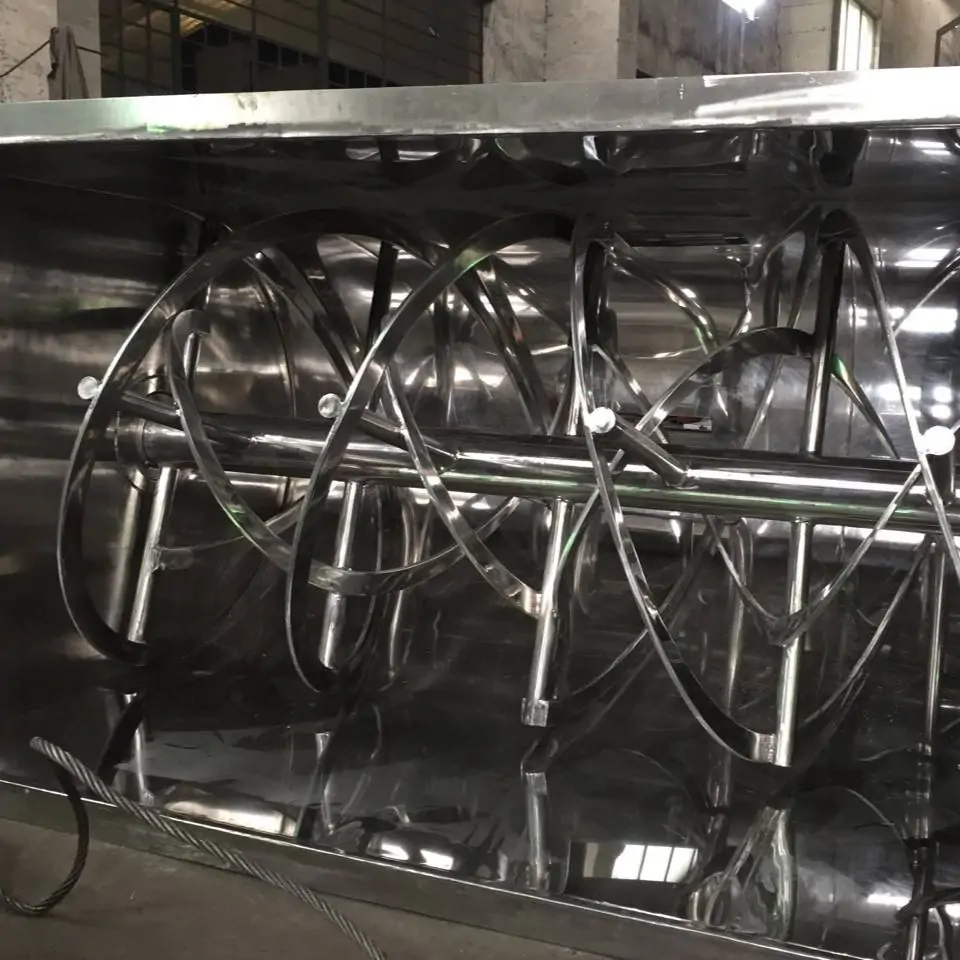
Circulation bidirectionnelle :Le ruban externe est installé près de la paroi de la chambre et pousse principalement les matériaux des deux côtés vers le centre. Le ruban interne déplace les matériaux de la zone centrale vers les deux côtés. Les rubans interne et externe travaillent ensemble pour créer une circulation continue et un échange de matériaux à l'intérieur de la chambre.
Processus de mélange :Lorsque les rubans tournent, les matériaux sont continuellement déplacés, retournés et redistribués à l'intérieur de la chambre. Les différentes matières premières entrent en contact suffisant, permettant aux poudres, granulés et formulations multi-composants d'atteindre un mélange uniforme.
Structure Principale
La structure du mélangeur à ruban horizontal est principalement conçue autour de la circulation des matériaux et d'un fonctionnement stable. La chambre de mélange, l'ensemble agitateur à ruban et le système de transmission affectent tous les performances de mélange et les conditions de fonctionnement.
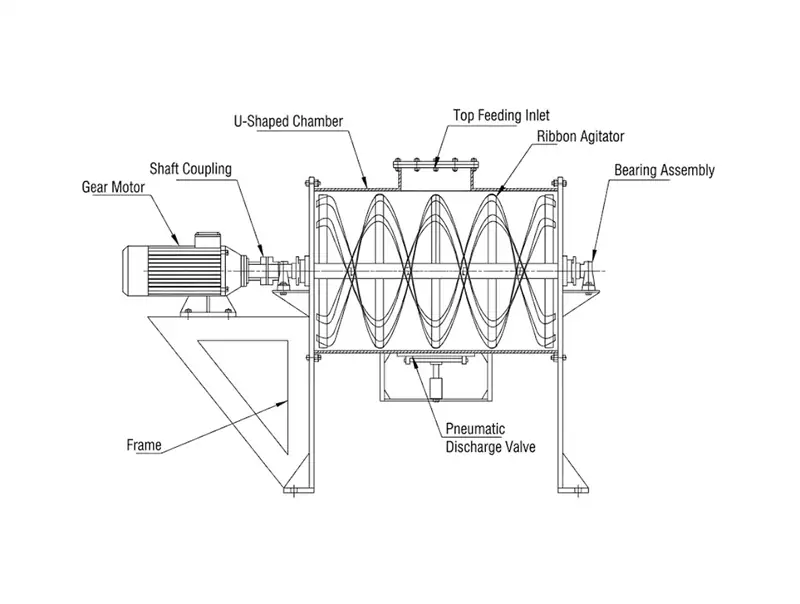
Chambre de mélange en forme de U :La chambre en forme de U est l'espace principal pour le mélange des matériaux. Sa structure interne doit garantir que les matériaux peuvent se déplacer avec les rubans. La taille de la chambre et le volume effectif sont généralement conçus en fonction de la capacité du lot afin d'éviter qu'une charge excessive n'affecte la circulation des matériaux.
Ensemble agitateur à ruban: L'ensemble agitateur à ruban est le composant principal responsable du mélange. Il se compose d'un arbre principal et de rubans interne et externe. Les rubans interne et externe adoptent des conceptions directionnelles différentes pour déplacer les matériaux dans différentes zones et créer une circulation à l'intérieur de la chambre. Pour différents matériaux, des structures de ruban et des paramètres de fonctionnement appropriés doivent être sélectionnés.
Système de transmission :Le système de transmission se compose d'un moteur et d'un réducteur, fournissant une puissance stable pour la rotation du ruban. La configuration de puissance doit être sélectionnée en fonction des spécifications de l'équipement et des charges de matériaux afin de garantir un fonctionnement stable du système de mélange.
Dispositif de décharge: Le dispositif de décharge est situé au bas de la chambre et est utilisé pour évacuer les matériaux mélangés. Une conception de décharge raisonnable peut réduire les résidus de matériaux et faciliter la connexion avec les équipements en aval équipement de convoyage et d'emballage.
Pour différents matériaux et exigences de production, la taille de la chambre, la structure du ruban et la configuration d'entraînement doivent être correctement adaptées. Sinon, une circulation insuffisante des matériaux ou un mélange inégal peut se produire.
Matériaux d'application
Le mélangeur à ruban horizontal convient au mélange de poudres, de granulés et de formulations contenant de petites quantités de liquide. Différents matériaux varient en fluidité, taille de particules, densité et exigences de formulation. Par conséquent, la sélection de l'équipement ne doit pas seulement prendre en compte la taille de la machine, mais aussi si les matériaux peuvent s'échanger suffisamment pendant le mélange et si des problèmes tels que la rupture de particules ou une distribution inégale du liquide peuvent se produire.
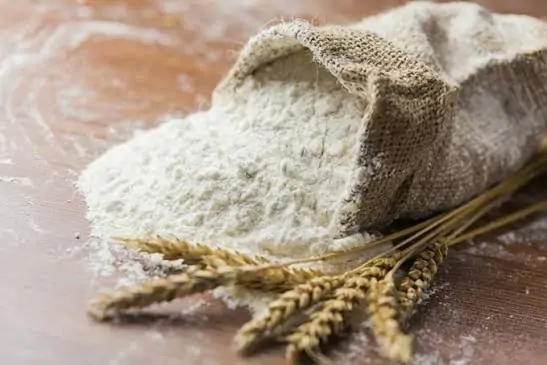 Farine
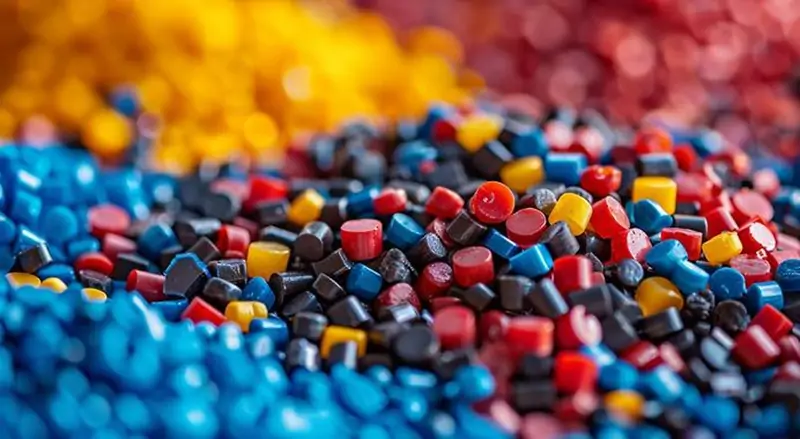 Granulés de plastique
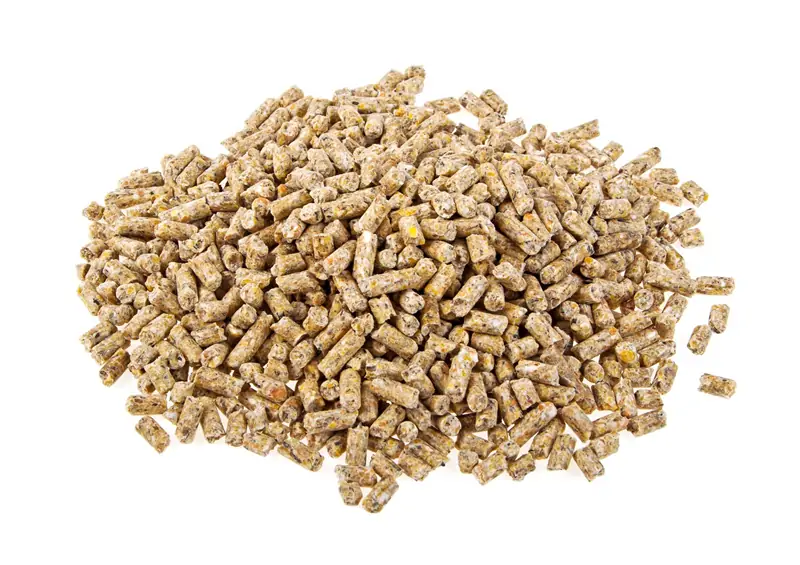 Granulés d'aliments pour animaux
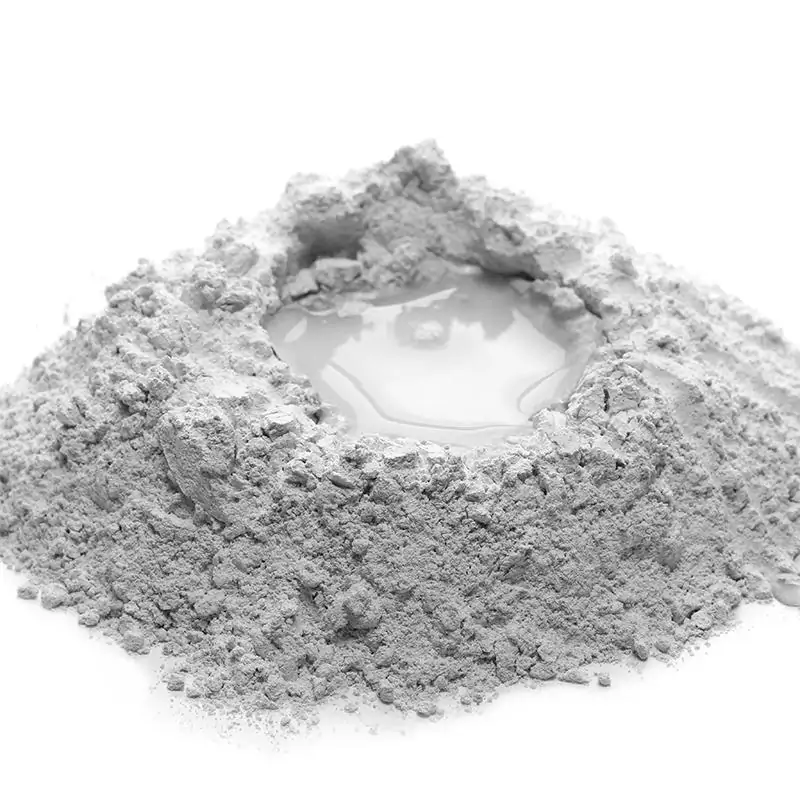 Mélange poudre-liquide
| Type de matériau | Matériaux courants | Considérations de mélange | Image |
| Matériaux en poudre | Farine, additifs alimentaires, poudres chimiques, poudre de plastique | Se concentrer sur la fluidité des matériaux et l'uniformité du mélange pour éviter que l'accumulation locale n'affecte les performances de mélange | Image de farine / poudre alimentaire |
| Mélange de poudres et de granulés | Granulés de plastique, granulés de résine, granulés d'aliments pour animaux | Assurer un échange suffisant entre les matériaux de différentes tailles de particules tout en réduisant la casse des particules lors du mélange | Image de granulés de plastique / granulés d'aliments |
| Mélange Poudre-Liquide | Matériaux de formulation contenant de l'huile, des additifs ou d'autres composants liquides | Contrôler correctement la méthode d'ajout du liquide pour garantir une répartition uniforme dans l'ensemble des matériaux | Image de poudre mélangée à un liquide |
Si les matériaux présentent une teneur en humidité élevée, une viscosité importante ou des écarts importants dans les ratios de composants, il est recommandé de fournir les informations sur les matériaux à l'avance afin que les ingénieurs puissent confirmer la structure de ruban et la configuration de l'équipement appropriées.
Comment choisir
Lors de la sélection d'un mélangeur à ruban, ne tenez pas uniquement compte de la taille du modèle. Nous commençons généralement par comprendre les caractéristiques des matériaux, la quantité de lot requise et si des exigences particulières telles que l'ajout de liquide ou le chauffage sont impliquées. L'utilisation de la même configuration pour différents matériaux peut entraîner des performances de mélange différentes.
Mélange de poudres :Pour la farine, les additifs alimentaires, les poudres chimiques et autres matériaux pulvérulents, concentrez-vous sur la coulabilité des matériaux et la quantité de chargement par lot. Un équipement trop petit peut ne pas offrir un espace suffisant pour la circulation des matériaux, tandis qu'un équipement trop grand peut réduire le taux d'utilisation de l'équipement.
Mélange de poudres et de granulés :Pour les granulés de plastique, les granulés de résine, les granulés d'aliments et autres matériaux, une attention particulière doit être portée au maintien de l'intégrité des particules pendant le mélange. Outre la capacité, la structure du ruban et la vitesse de fonctionnement doivent être prises en compte pour éviter d'affecter l'état des particules.
Formulations avec additifs liquides :Si de l'huile, des additifs ou d'autres composants liquides doivent être ajoutés pendant le mélange, la quantité et la méthode d'ajout du liquide doivent être confirmées à l'avance. Une répartition uniforme du liquide affecte directement le résultat final du mélange.
4. La taille de l'équipement dépend principalement de la quantité de mélange par lot, tandis que la densité apparente, le temps de mélange et les exigences de production doivent également être pris en compte. Des informations précises sur les matériaux permettent aux ingénieurs de déterminer une spécification d'équipement plus appropriée.
Paramètres techniques
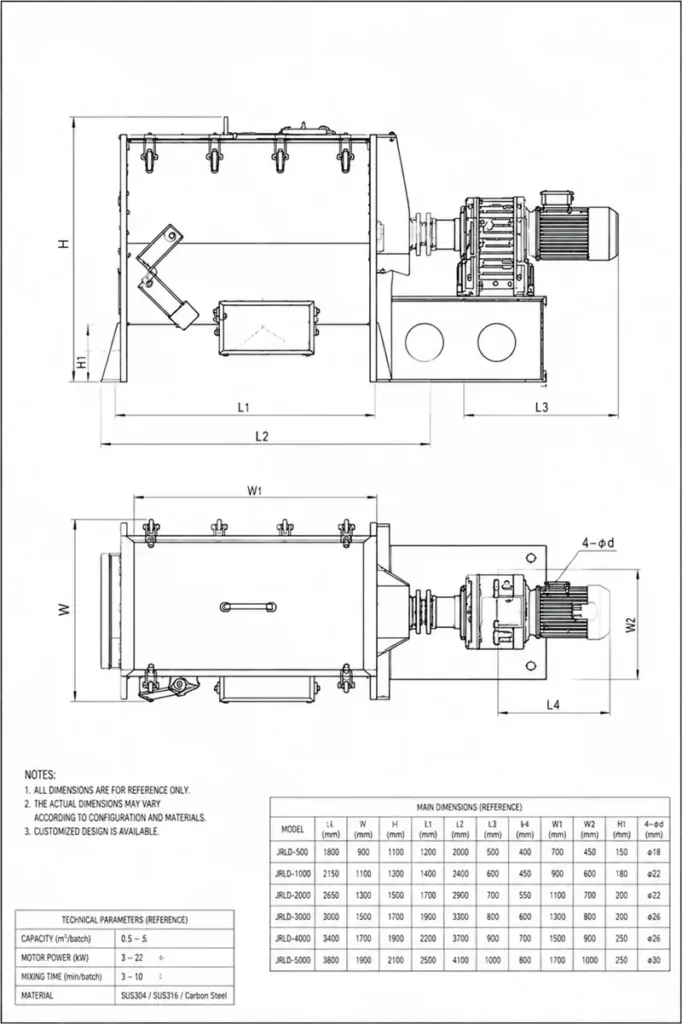
Le mélangeur horizontal à ruban est disponible en plusieurs spécifications. La puissance du moteur, la vitesse de rotation et la capacité de mélange par lot peuvent être adaptées en fonction des caractéristiques des matériaux et des exigences de production.
| Modèle | Puissance du moteur (kW) | Vitesse (tr/min) | Capacité de mélange par lot (kg) | Dimensions hors tout (mm) |
| WLDH-0.3 | 3 | 41 | 240 | 2300×680×1080 |
| WLDH-0.5 | 5.5 | 41 | 400 | 2900×780×1240 |
| WLDH-1 | 11 | 33 | 800 | 3200×1000×1400 |
| WLDH-2 | 15 | 33 | 1600 | 3860×1200×1650 |
| WLDH-3 | 18.5 | 33 | 2400 | 4320×1300×1900 |
| WLDH-4 | 22 | 28 | 3200 | 4600×1400×2000 |
| WLDH-5 | 37 | 28 | 4000 | 4850×1500×2020 |
| WLDH-6 | 37 | 22 | 4800 | 5400×1560×2200 |
| WLDH-8 | 45 | 22 | 6400 | 5100×1720×2420 |
| WLDH-10 | 55 | 19 | 8000 | 5610×1750×2360 |
| WLDH-15 | 90 | 17 | 12000 | 5820×2000×2900 |
| WLDH-20 | 110 | 11 | 16000 | 6060×2630×3160 |
Note : La capacité de mélange par lot est une valeur de référence et peut varier en fonction de la densité apparente du matériau, de sa fluidité et du taux de remplissage. La configuration finale de l'équipement doit être déterminée en fonction du matériau spécifique et des exigences de mélange.
Configuration personnalisée
Il n'existe pas de configuration fixe unique d'un Mélangeur à ruban horizontal qui convienne à tous les matériaux. Les poudres, les granulés et les formulations nécessitant un ajout de liquide ont des exigences différentes lors du mélange, de sorte que les configurations d'équipement peuvent également différer.
L'équipe d'ingénierie Jiarui évalue généralement d'abord les caractéristiques des matériaux et les exigences de fonctionnement avant de déterminer la structure de ruban appropriée, le matériau de l'équipement et les configurations associées.
Quand un ajustement de configuration est-il requis ?
Pour le mélange de poudres conventionnel, une structure standard à double ruban peut généralement répondre aux exigences.
La configuration de l'équipement doit être confirmée à l'avance dans les situations suivantes :
- Les matériaux ont tendance à coller à la paroi ou à former des grumeaux ;
- Des poudres et des granulés doivent être mélangés ;
- De l'huile, des additifs ou d'autres liquides doivent être ajoutés pendant le mélange ;
- Des exigences particulières existent concernant le matériau de l'équipement, le chauffage ou le refroidissement.
Informations requises pour la demande de devis
Pour adapter l'équipement plus précisément, veuillez fournir les informations clés suivantes :
- Nom du matériau ;
- Quantité de mélange par lot ;
- État du matériau (poudre, granulés ou contenant du liquide) ;
- Si le chauffage, le refroidissement ou d'autres fonctions spéciales sont requis
Fabrication Jiarui
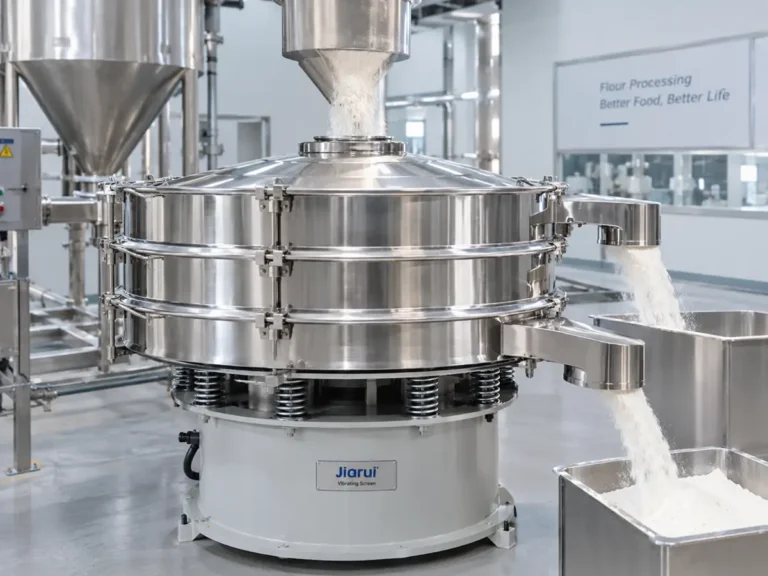
Bien que la structure d'un mélangeur à ruban horizontal soit simple, la performance de mélange réelle dépend principalement du système de mélange interne. Les rubans doivent faire circuler et échanger les matériaux à l'intérieur de la chambre pendant le mélange. Si l'adéquation entre les rubans et la chambre n'est pas correctement conçue, la circulation des matériaux peut être affectée et un mélange inégal peut se produire.
Lors de la fabrication, Jiarui se concentre sur l'adéquation entre l'arbre de mélange, les rubans et la chambre. Les dimensions des rubans, la position d'installation et les conditions de rotation influencent tous le mouvement des matériaux à l'intérieur de l'équipement et doivent être ajustées en fonction des spécifications de l'équipement et des exigences d'exploitation.
Pour différents matériaux, le matériau des pièces en contact avec le produit doit également être confirmé à l'avance. Les configurations conventionnelles peuvent être utilisées pour les poudres industrielles ordinaires, tandis que les applications alimentaires, chimiques et autres avec des exigences d'hygiène ou de résistance à la corrosion nécessitent une solution matérielle appropriée. Pour les applications de poudres alimentaires et pharmaceutiques, les matériaux en contact avec le produit et la conception de l'équipement peuvent devoir répondre aux exigences applicables en matière d'hygiène, de matériaux et de fabrication. Pour les applications alimentaires et pharmaceutiques réglementées, les exigences applicables doivent être confirmées en fonction du produit prévu et du processus de fabrication. Bonnes pratiques de fabrication actuelles (CGMP) de la FDA.
Après l'assemblage, l'équipement est inspecté pour le fonctionnement des rubans, la performance de transmission et les conditions de décharge. Le mélangeur à ruban horizontal est livré pour utilisation après confirmation que tous les composants fonctionnent correctement.
FAQ
Obtenez une consultation gratuite
Remplissez le formulaire ci-dessous pour entrer en contact avec nos experts et recevoir des recommandations personnalisées pour votre application.