Horizontal Ribbon Mixer (WLDH Series) – High-Efficiency Powder Blending Solution
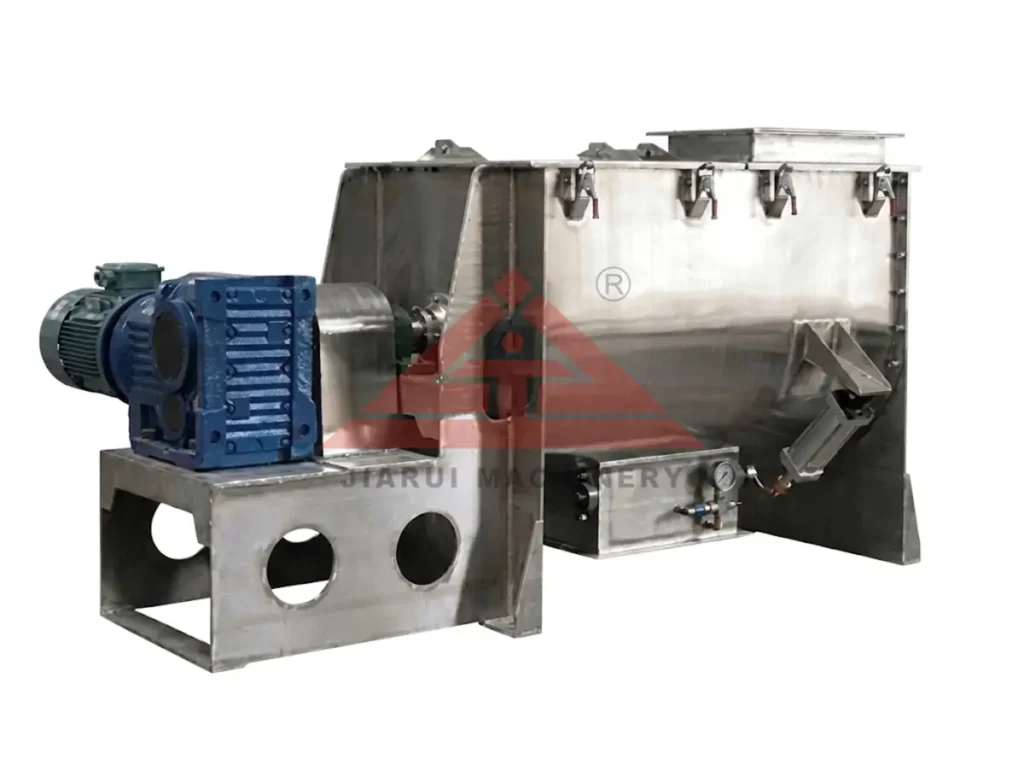
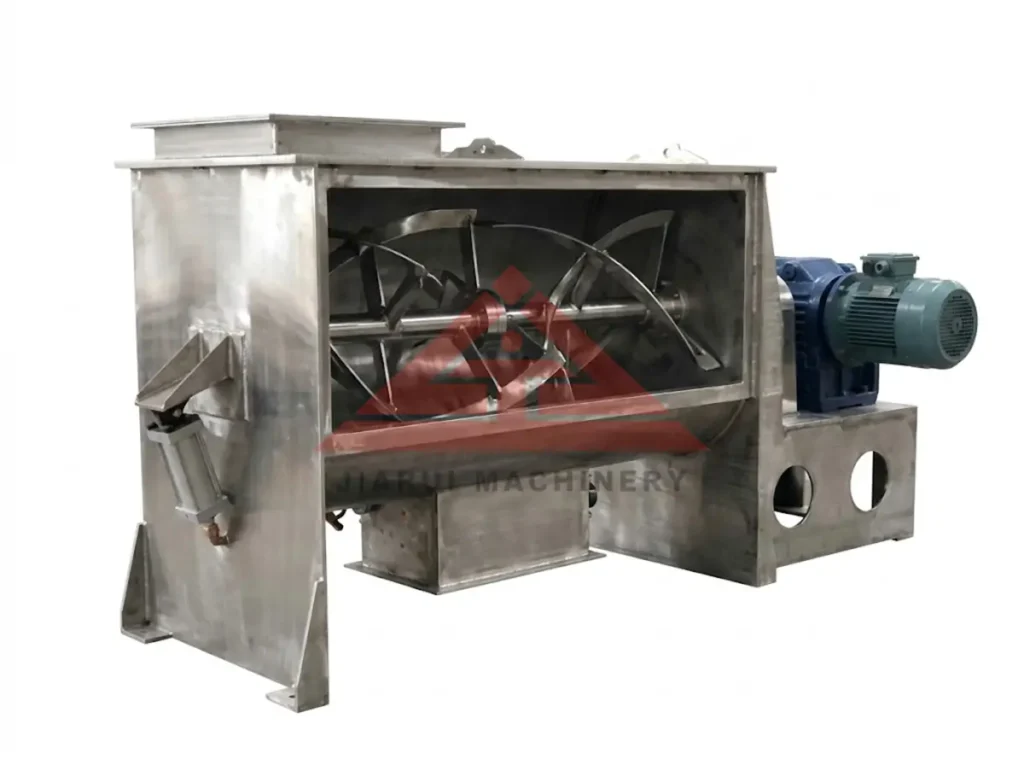
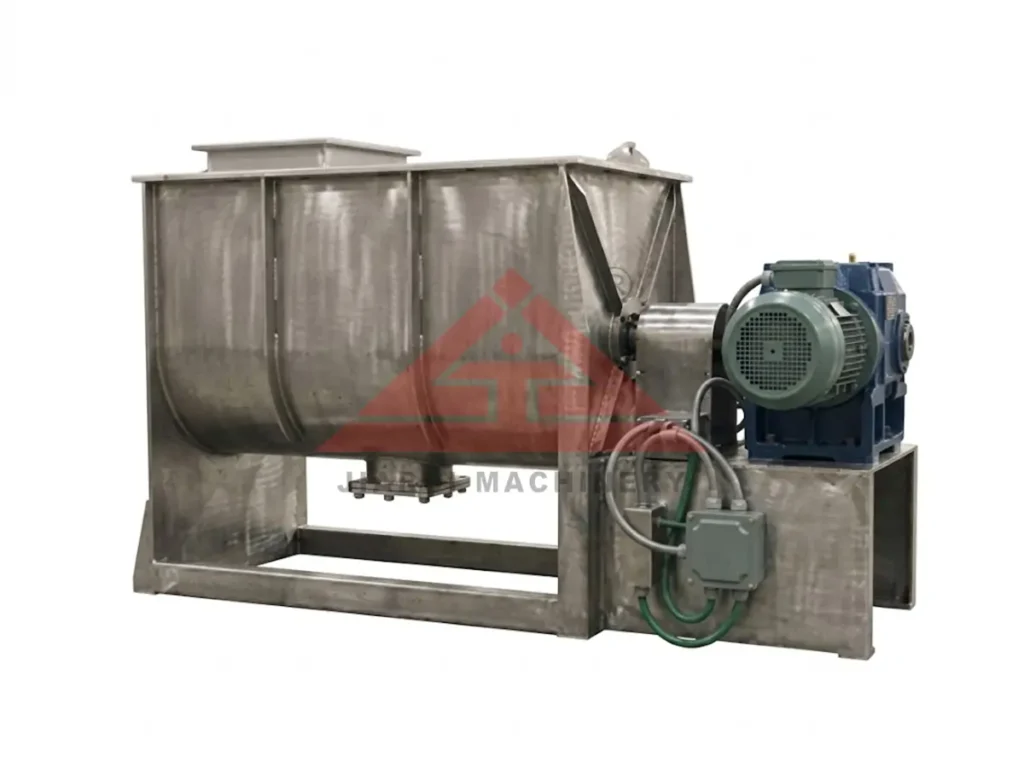
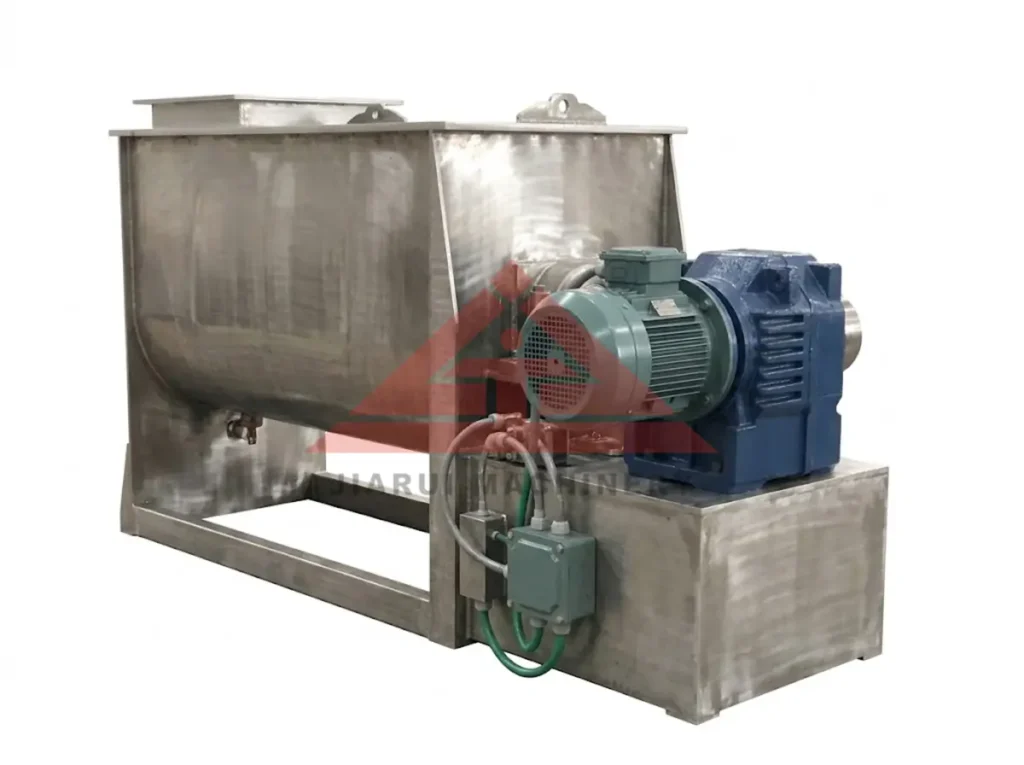
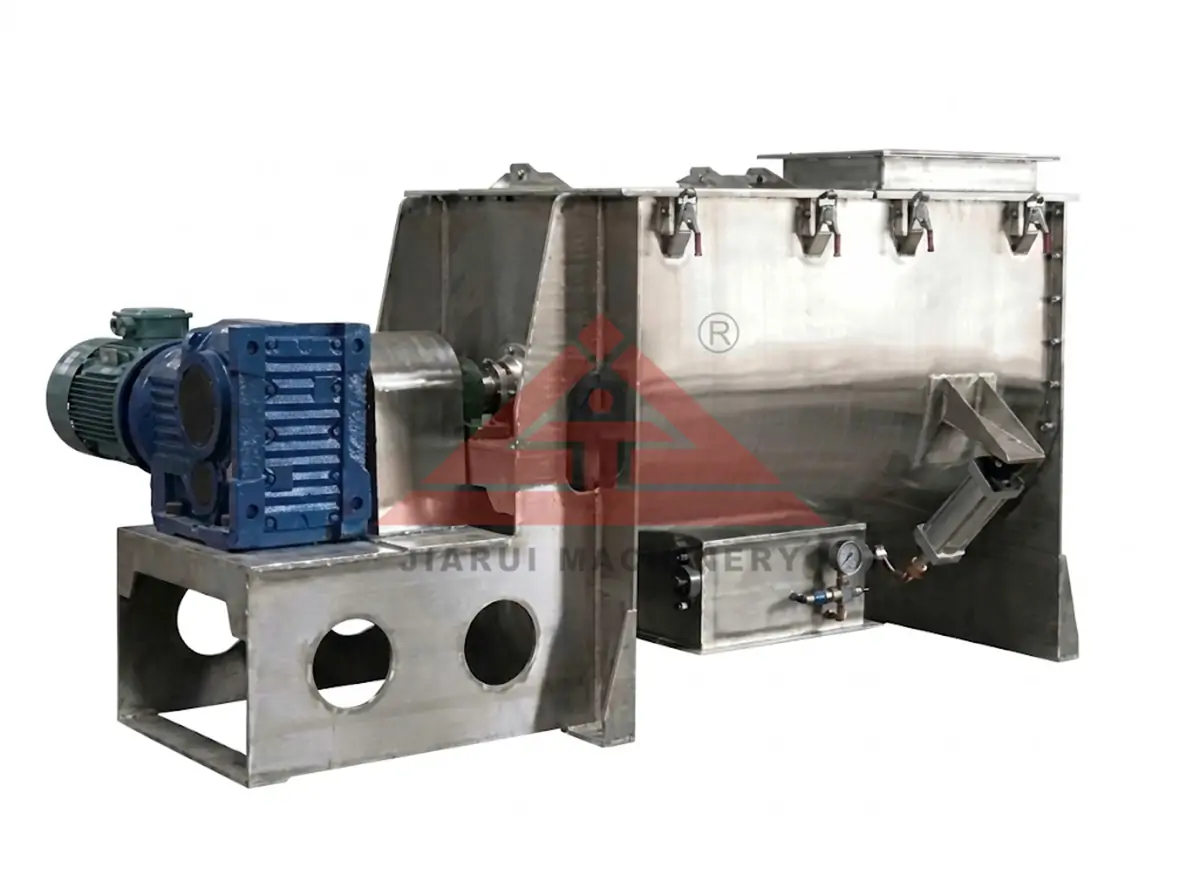
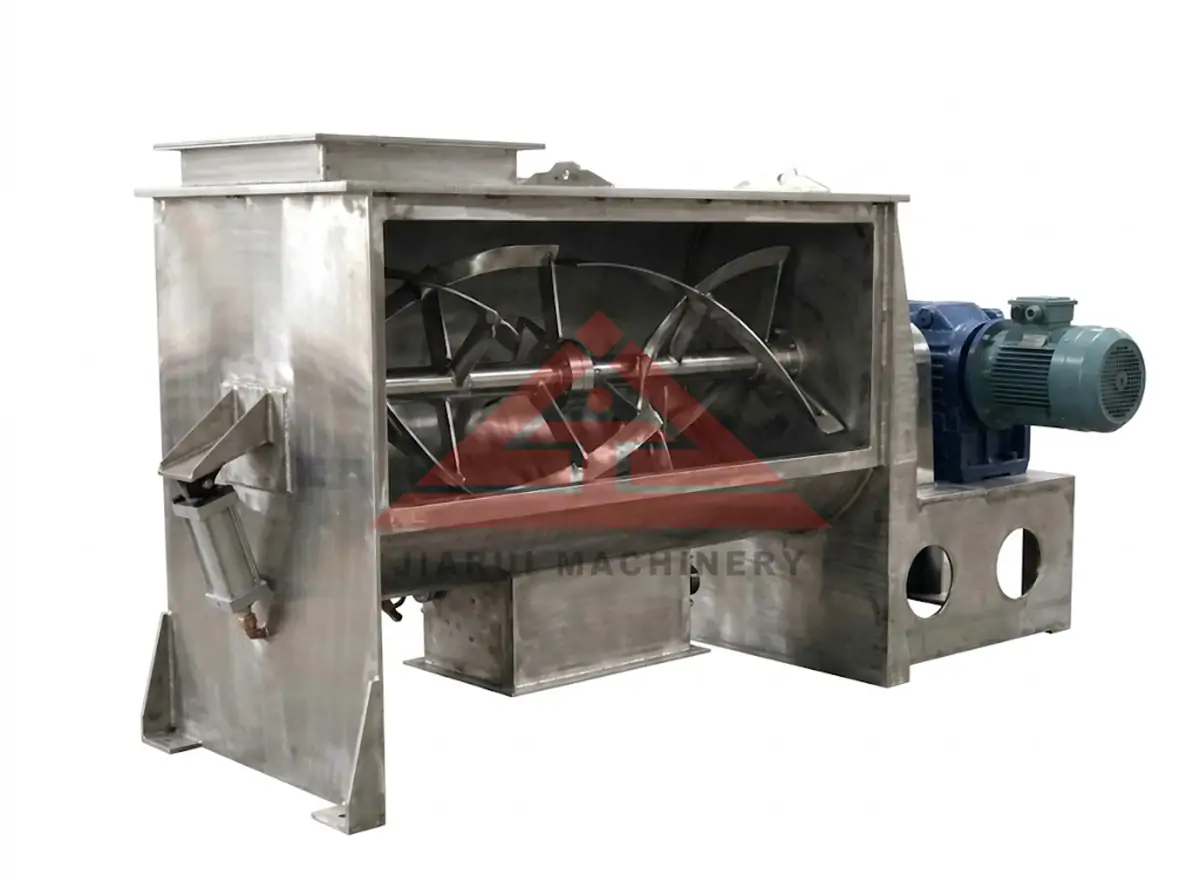
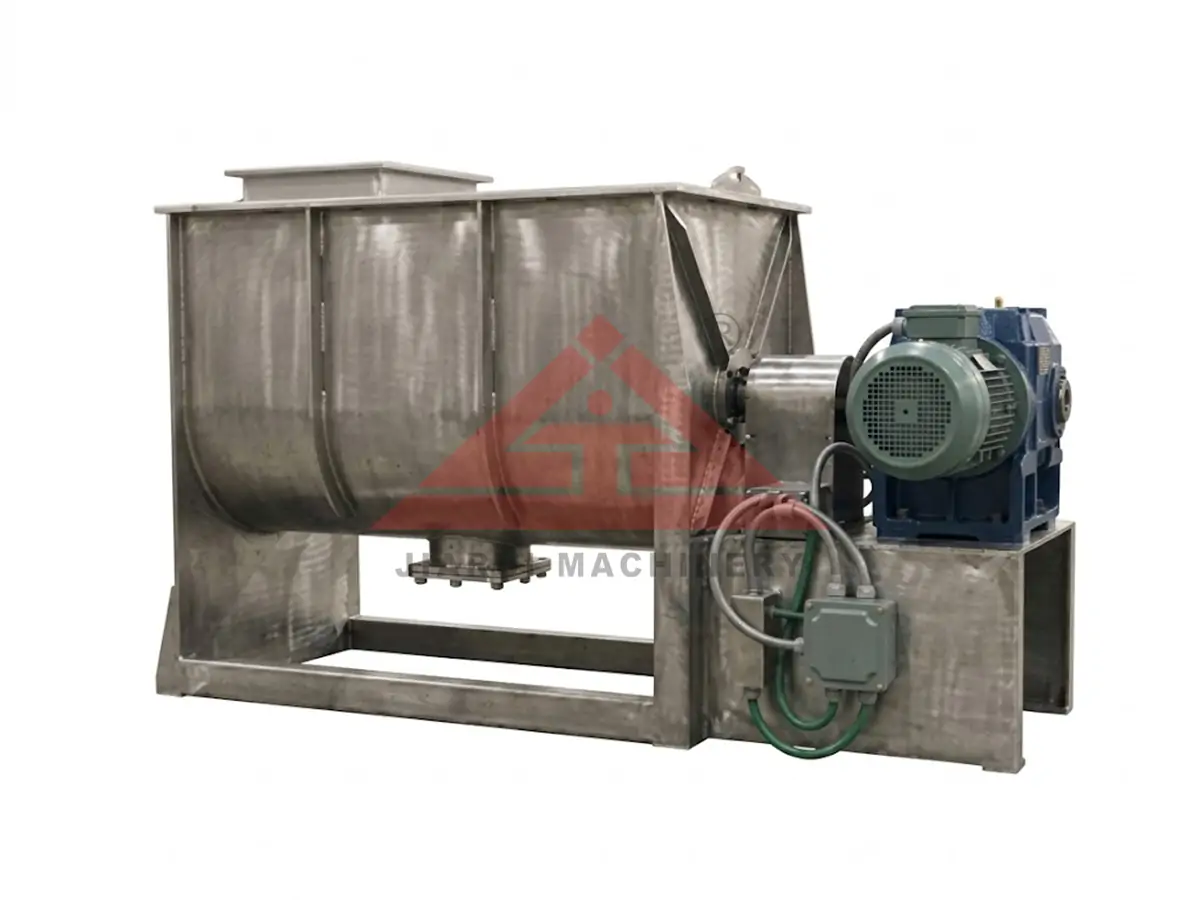
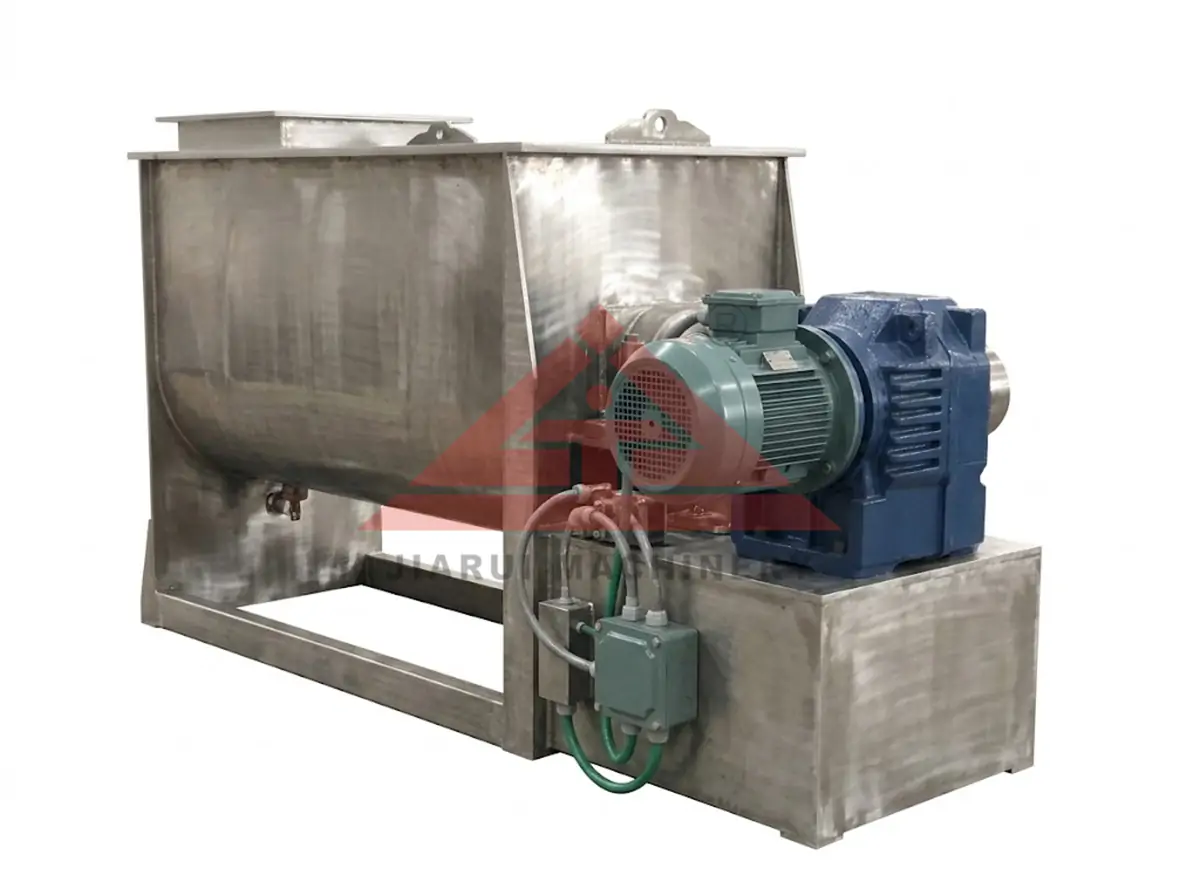
A Horizontal Ribbon Mixer is mainly used for mixing powders, granules, and powder materials with small amounts of liquid additives. It is suitable for multi-component formulation mixing and batch production processes. With a horizontal U-shaped chamber and double ribbon mixing system, the outer ribbon pushes materials from both sides toward the center, while the inner ribbon moves materials from the center toward both sides, creating continuous material circulation during the mixing cycle and improving mixing uniformity.
This equipment is widely used for mixing chemical raw materials, food additives, plastic granules, dry mortar and other materials. According to different material flowability, batch size and production requirements, Jiarui can customize the equipment specifications, ribbon structure and additional functions such as heating, cooling, positive pressure and vacuum systems to meet different processing requirements.
- Product Model: WLDH Series Horizontal Ribbon Mixer
- Mixing Capacity: 240–16000 kg/batch
- Material Type: Powder, granules and powder-based formulations with liquid additives
- Mixer Structure: U-shaped horizontal chamber, double ribbon mixing system
- Material Options: Stainless steel / Carbon steel
- Motor Power: 3–110 kW (Selected according to model and material conditions)
- Customization: Ribbon structure, material and additional functions can be customized
What Is a Horizontal Ribbon Mixer?
A Horizontal Ribbon Mixer is a mixing machine that uses a horizontal U-shaped chamber and ribbon mixing structure. It is also a type of powder mixing equipment commonly used for blending powders, granules and formulations. For more information about ribbon blending principles and powder mixing applications, see our guide to the Horizontal Ribbon Blender Machine for Powder Mixing. During operation, the rotating ribbons drive materials to circulate inside the chamber, allowing different components to fully contact each other. The core of the equipment is the axial circulation movement created by the double ribbon structure, which enables continuous exchange between materials near the chamber wall and those in the center.
The Horizontal Ribbon Mixer is mainly used for mixing multiple powder materials, granules and formulations requiring small amounts of liquid addition. Since different materials vary in flowability, density, viscosity and mixing requirements, the appropriate ribbon structure, equipment specification and auxiliary configuration need to be selected according to specific production conditions.
Working Principle
The mixing process mainly relies on the circulation movement created by the double ribbon mixing system. The motor drives the ribbon shaft through the reducer, causing materials inside the chamber to circulate throughout the mixing cycle and achieve uniform mixing through material movement and exchange.
Power Transmission:The motor drives the ribbon shaft to rotate and provides power for material circulation. The reducer maintains a stable rotation speed, allowing the mixer to handle different material loads and achieve consistent mixing performance.
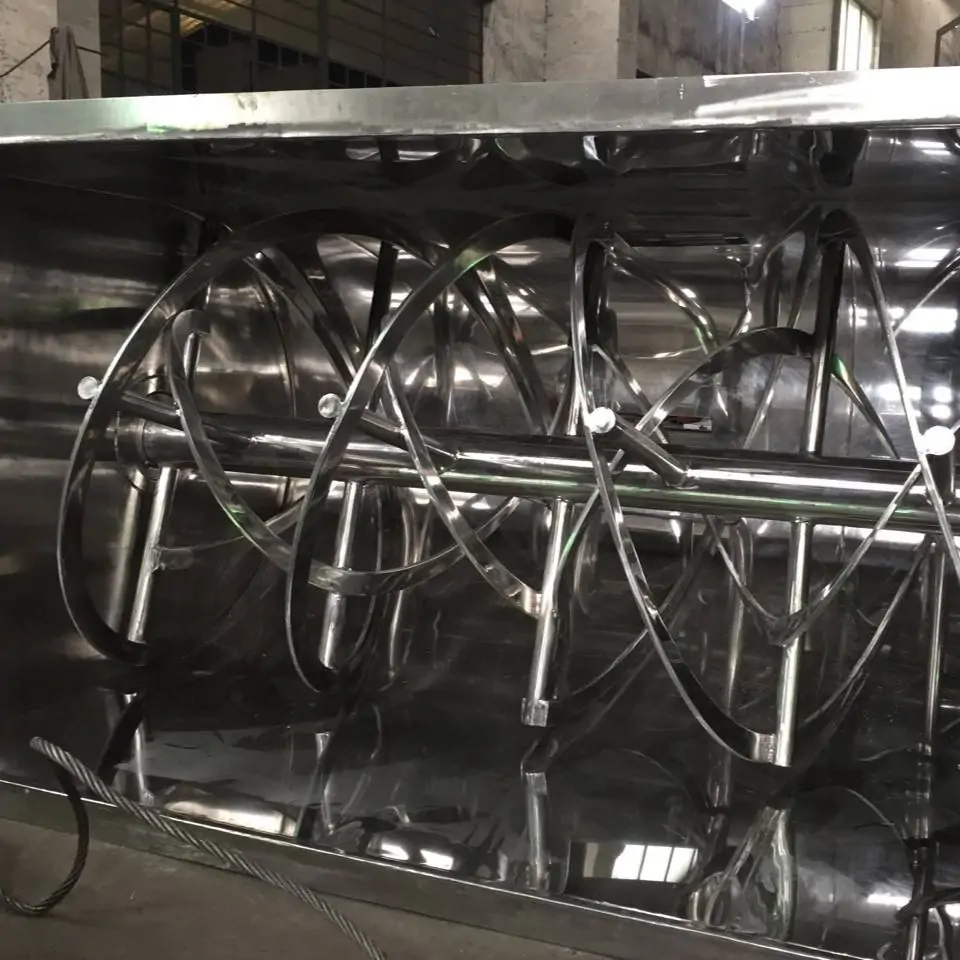
Two-Way Circulation:The outer ribbon is installed close to the chamber wall and mainly pushes materials from both sides toward the center. The inner ribbon moves materials from the center area toward both sides. The inner and outer ribbons work together to create continuous circulation and material exchange inside the chamber.
Mixing Process:As the ribbons rotate, materials are continuously moved, turned over and redistributed inside the chamber. Different raw materials achieve sufficient contact, allowing powders, granules and multi-component formulations to achieve uniform mixing.
Main Structure
The structure of the Horizontal Ribbon Mixer is mainly designed around material circulation and stable operation. The mixing chamber, ribbon agitator assembly and transmission system all affect the mixing performance and operating conditions.
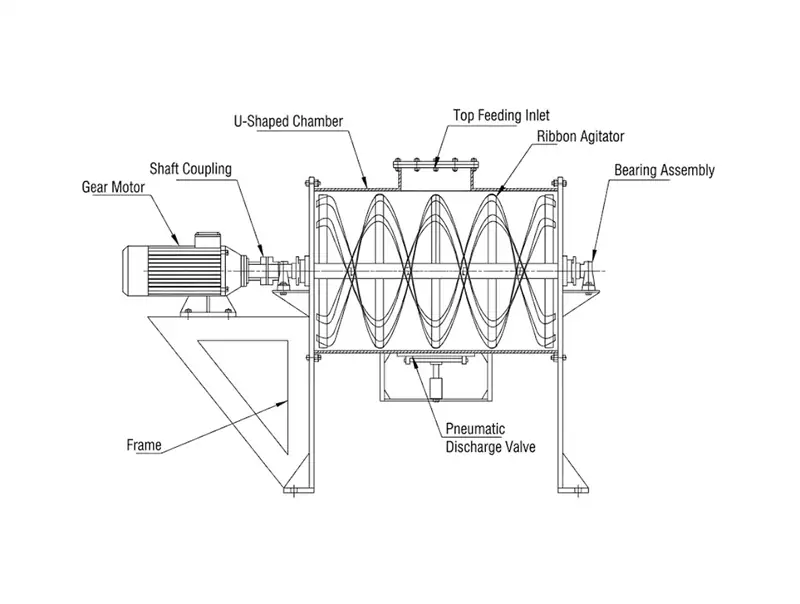
U-Shaped Mixing Chamber:The U-shaped chamber is the main space for material mixing. Its internal structure needs to ensure that materials can move with the ribbons. The chamber size and effective volume are generally designed according to the batch capacity to avoid excessive loading from affecting material circulation.
Ribbon Agitator Assembly:The ribbon agitator assembly is the core component responsible for mixing. It consists of a main shaft and inner and outer ribbons. The inner and outer ribbons adopt different directional designs to move materials in different areas and create circulation inside the chamber. For different materials, suitable ribbon structures and operating parameters need to be selected.
Transmission System:The transmission system consists of a motor and reducer, providing stable power for ribbon rotation. The power configuration needs to be selected according to equipment specifications and material loads to ensure stable operation of the mixing system.
Discharge Device:The discharge device is located at the bottom of the chamber and is used to discharge the mixed materials. A reasonable discharge design can reduce material residue and facilitate connection with downstream conveying equipment and packaging equipment.
For different materials and production requirements, the chamber size, ribbon structure and drive configuration need to be properly matched. Otherwise, insufficient material circulation or uneven mixing may occur.
Application Materials
The Horizontal Ribbon Mixer is suitable for mixing powders, granules and formulations containing small amounts of liquid. Different materials vary in flowability, particle size, density and formulation requirements. Therefore, equipment selection should not only consider machine size, but also whether materials can exchange sufficiently during mixing and whether problems such as particle breakage or uneven liquid distribution may occur.
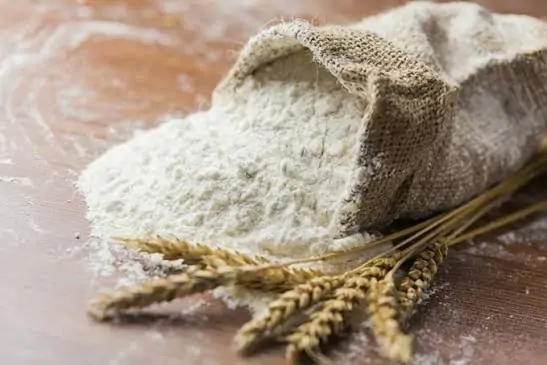 Flour
Flour Plastic Pellets
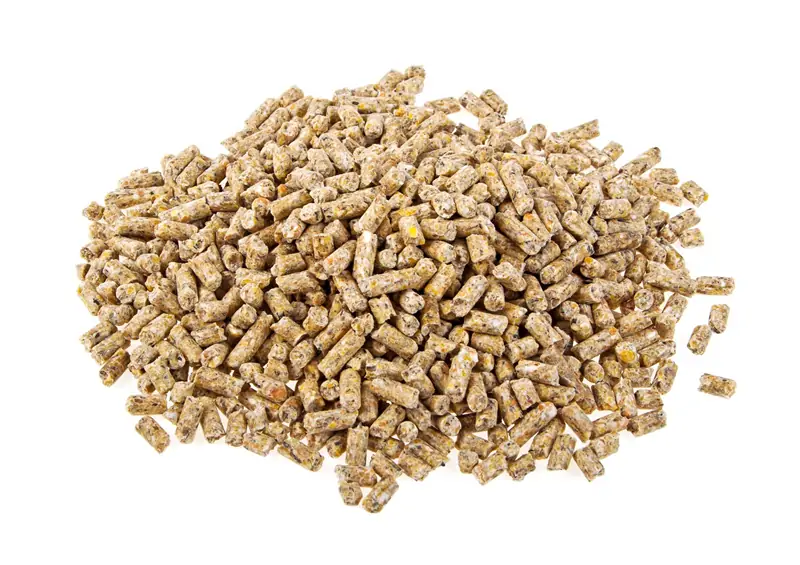 Animal Feed Pellets
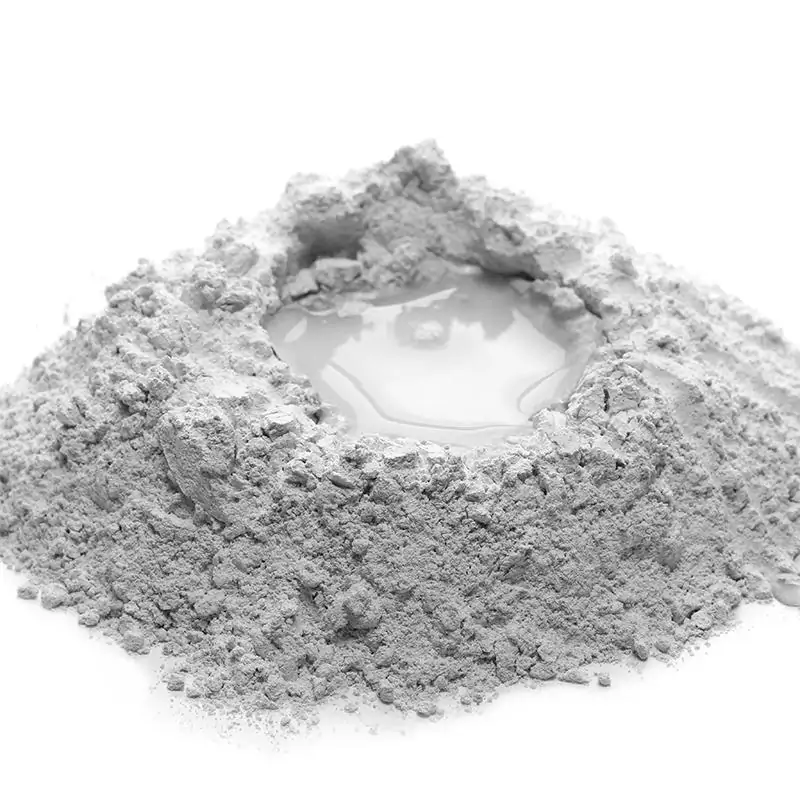 Powder Liquid Mixing
| Material Type | Common Materials | Mixing Considerations | Image |
| Powder Materials | Flour, food additives, chemical powders, plastic powder | Focus on material flowability and mixing uniformity to avoid local accumulation affecting mixing performance | Flour / food powder image |
| Powder & Granule Mixing | Plastic pellets, resin granules, feed pellets | Ensure sufficient exchange between materials with different particle sizes while reducing particle breakage during mixing | Plastic pellets / feed pellets image |
| Powder-Liquid Mixing | Formulation materials containing oil, additives or other liquid components | Properly control the liquid addition method to ensure uniform distribution throughout the materials | Powder mixed with liquid image |
If materials have high moisture content, strong viscosity or large differences in component ratios, it is recommended to provide material information in advance so that engineers can confirm the appropriate ribbon structure and equipment configuration.
How to Select
When selecting a Ribbon Mixer, do not consider only the model size. We usually first understand the material characteristics, required batch quantity, and whether special requirements such as liquid addition or heating are involved. Using the same configuration for different materials may result in different mixing performance.
1.Powder Mixing:For flour, food additives, chemical powders and other powder materials, focus on material flowability and batch loading quantity. Equipment that is too small may not provide sufficient space for material circulation, while equipment that is too large may reduce equipment utilization.
2.Powder and Granule Mixing:For plastic pellets, resin granules, feed pellets and other materials, attention should be paid to maintaining particle integrity during mixing. In addition to capacity, the ribbon structure and operating speed should be considered to avoid affecting particle condition.
3.Formulations with Liquid Additives:If oil, additives or other liquid components need to be added during mixing, the liquid addition amount and method should be confirmed in advance. Uniform liquid distribution directly affects the final mixing result.
4. Equipment size mainly depends on the batch mixing quantity, while bulk density, mixing time and production requirements also need to be considered. Accurate material information allows engineers to determine a more suitable equipment specification.
Technical Parameters
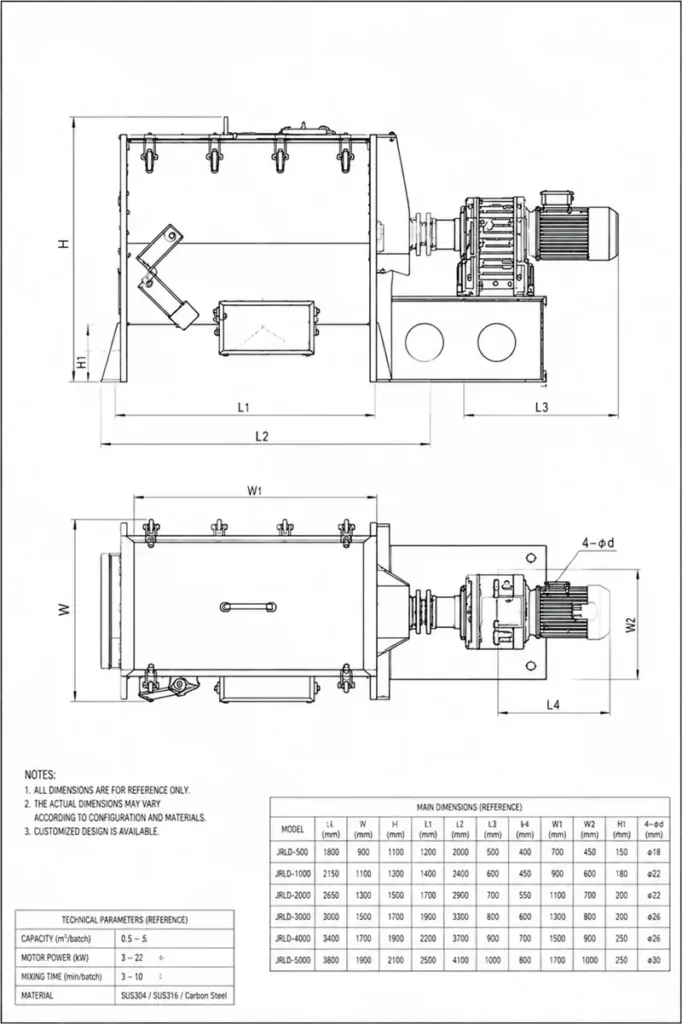
The Horizontal Ribbon Mixer is available in multiple specifications. Motor power, rotational speed and batch mixing capacity can be matched according to material characteristics and production requirements.
| Model | Motor Power (kW) | Speed (r/min) | Batch Mixing Capacity (kg) | Overall Dimensions (mm) |
| WLDH-0.3 | 3 | 41 | 240 | 2300×680×1080 |
| WLDH-0.5 | 5.5 | 41 | 400 | 2900×780×1240 |
| WLDH-1 | 11 | 33 | 800 | 3200×1000×1400 |
| WLDH-2 | 15 | 33 | 1600 | 3860×1200×1650 |
| WLDH-3 | 18.5 | 33 | 2400 | 4320×1300×1900 |
| WLDH-4 | 22 | 28 | 3200 | 4600×1400×2000 |
| WLDH-5 | 37 | 28 | 4000 | 4850×1500×2020 |
| WLDH-6 | 37 | 22 | 4800 | 5400×1560×2200 |
| WLDH-8 | 45 | 22 | 6400 | 5100×1720×2420 |
| WLDH-10 | 55 | 19 | 8000 | 5610×1750×2360 |
| WLDH-15 | 90 | 17 | 12000 | 5820×2000×2900 |
| WLDH-20 | 110 | 11 | 16000 | 6060×2630×3160 |
Note: Batch mixing capacity is a reference value and may vary depending on material bulk density, flowability and filling ratio. The final equipment configuration should be determined according to the specific material and mixing requirements.
Customized Configuration
There is no single fixed configuration of a Horizontal Ribbon Mixer that is suitable for all materials. Powder, granules and formulations requiring liquid addition have different requirements during mixing, so equipment configurations may also differ.
The Jiarui engineering team usually first evaluates material characteristics and operating requirements before determining the appropriate ribbon structure, equipment material and related configurations.
When Is Configuration Adjustment Required?
For conventional powder mixing, a standard double ribbon structure can generally meet the requirements.
The equipment configuration needs to be confirmed in advance in the following situations:
- Materials are prone to sticking to the wall or forming lumps;
- Powder and granules need to be mixed;
- Oil, additives or other liquids need to be added during mixing;
- Special requirements exist for equipment material, heating or cooling.
Information Required for Inquiry
To match the equipment more accurately, please provide the following key information:
- Material name;
- Batch mixing quantity;
- Material condition (powder, granules or liquid-containing);
- Whether heating, cooling or other special functions are required
Jiarui Manufacturing
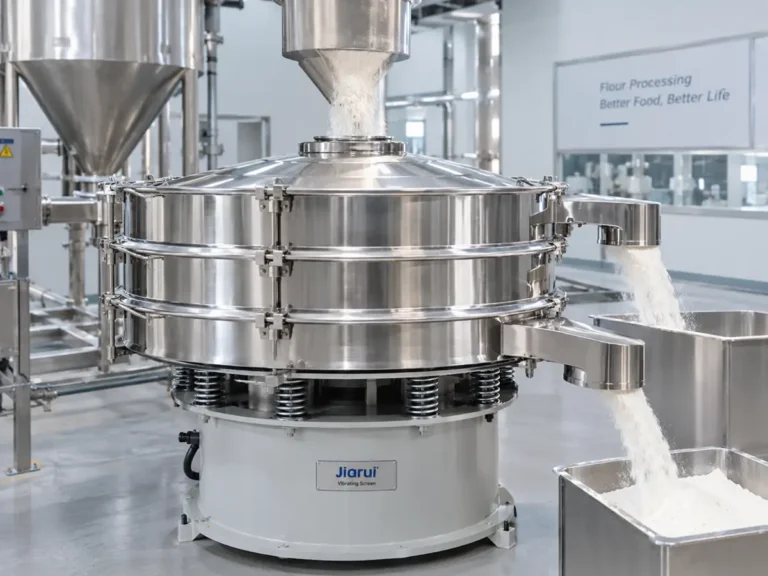
Although the structure of a Horizontal Ribbon Mixer is straightforward, the actual mixing performance mainly depends on the internal mixing system. The ribbons need to circulate and exchange materials inside the chamber during mixing. If the matching between the ribbons and the chamber is not properly designed, material circulation may be affected and uneven mixing may occur.
During manufacturing, Jiarui focuses on the matching between the mixing shaft, ribbons and chamber. The ribbon dimensions, installation position and rotation condition all influence the material movement inside the equipment and need to be adjusted according to equipment specifications and operating requirements.
For different materials, the material of the product-contacting parts also needs to be confirmed in advance. Conventional configurations can be used for ordinary industrial powders, while food, chemical and other applications with hygiene or corrosion-resistance requirements require an appropriate material solution. For food and pharmaceutical powder applications, product-contact materials and equipment design may need to meet applicable hygiene, material and manufacturing requirements.For regulated food and pharmaceutical applications, applicable requirements should be confirmed based on the intended product and manufacturing process. FDA Current Good Manufacturing Practices (CGMPs).
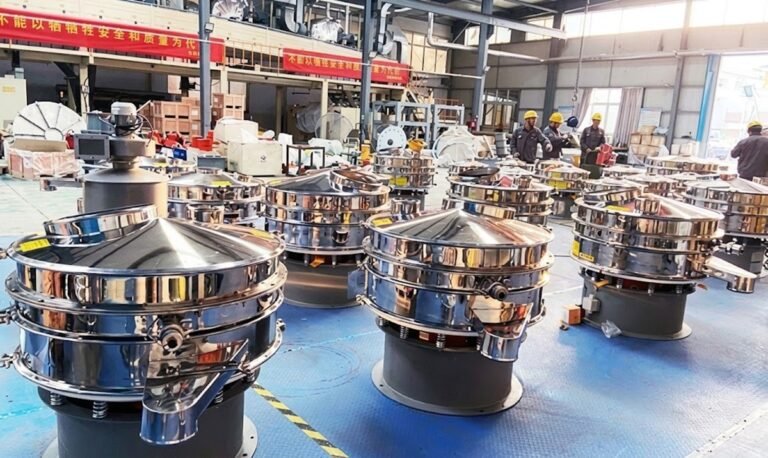
After assembly, the equipment is inspected for ribbon operation, transmission performance and discharge conditions. The Horizontal Ribbon Mixer is delivered for use after confirming that all components operate properly.
FAQs
Get a Free Consultation
Fill out the form below to connect with our experts and receive personalized recommendations for your application.