What is a Vibrating Hopper Inclined Screw Conveyor Snus Auger Feeding Machine?
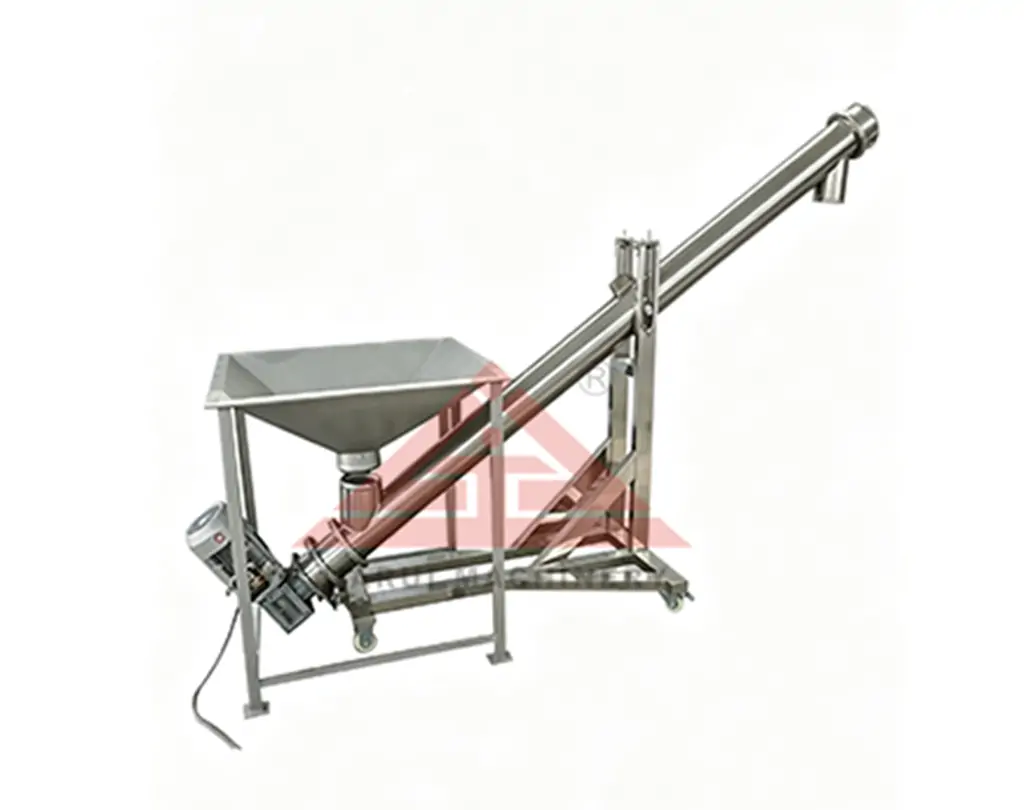
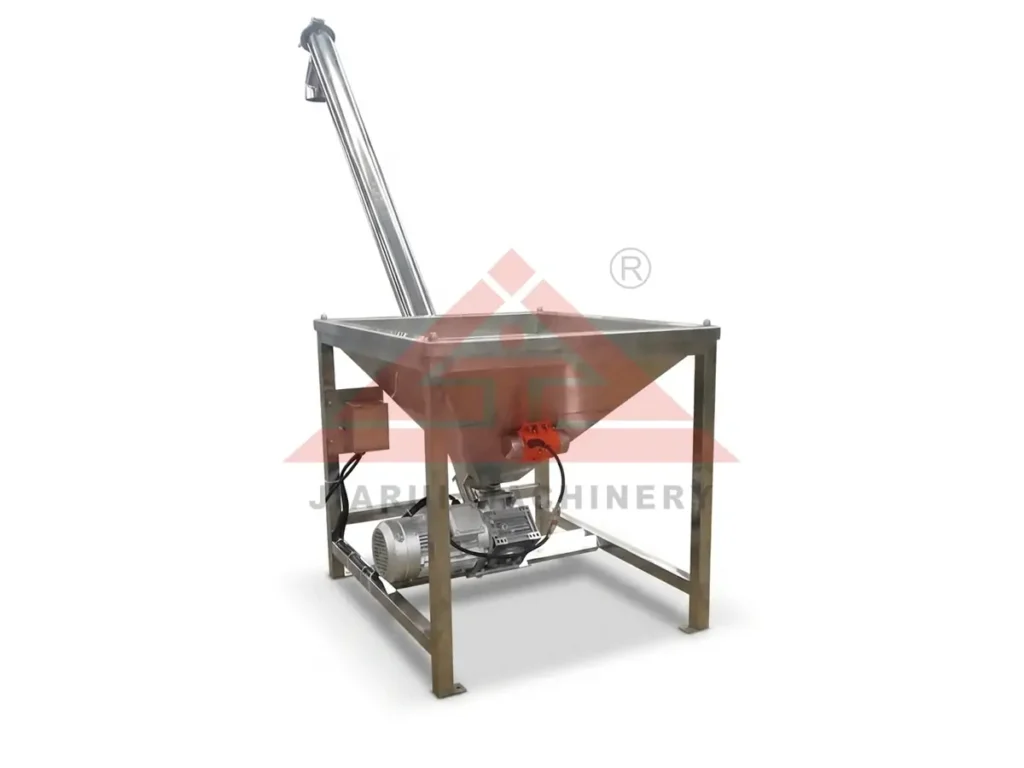
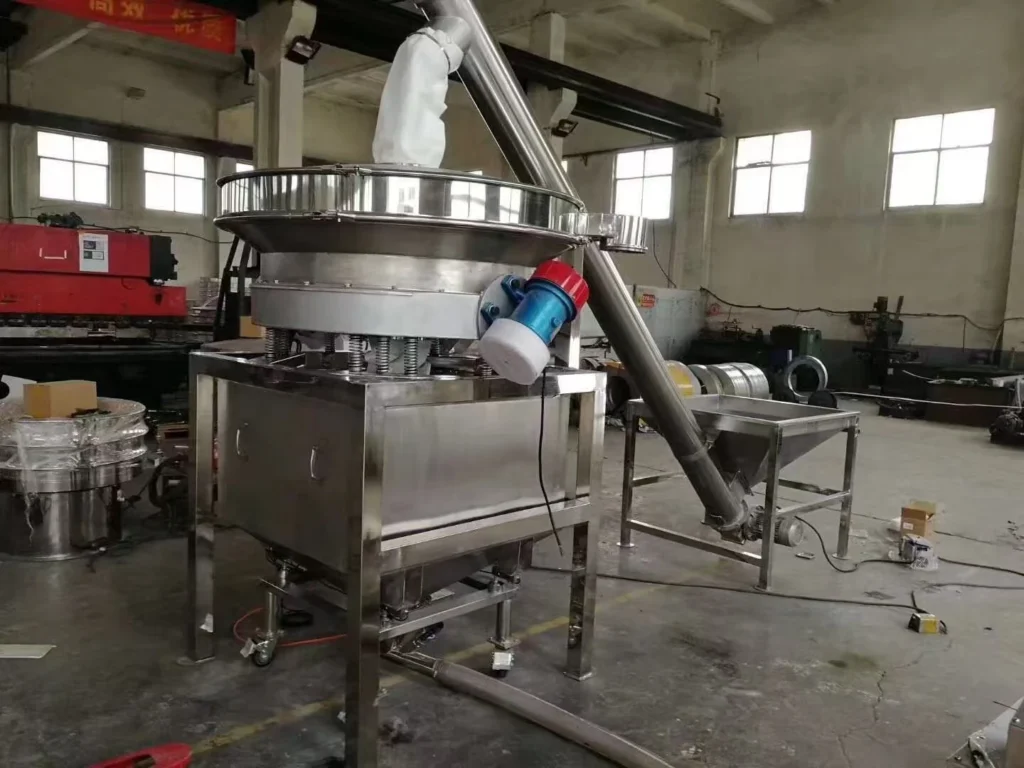
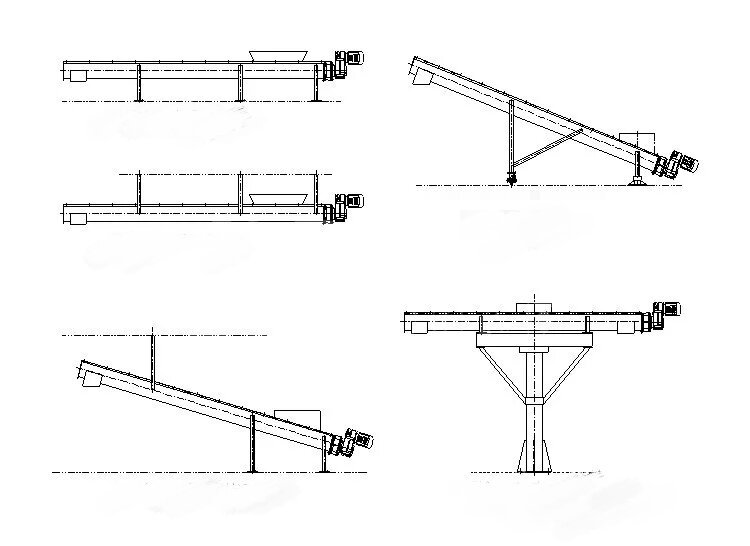
Vibrating Hopper Inclined Screw Conveyor Snus Auger Feeding Machine is a continuous conveying device used in industries such as chemical engineering, metallurgy, construction, papermaking, and food processing to transport powdered and granular materials. It is suitable for materials with temperatures below 200°C. Its structure consists of a drive unit, screw shaft, U-shaped trough, support frame, and inlet/outlet ports. The shaft end is connected to the screw body using involute spline joints. It is equipped with either a shaftless screw or double-pitch blade design, supporting multi-directional conveying including horizontal, inclined, and vertical. Some models feature a mobile structure and variable-speed motor, making them particularly suitable for field mobile operations, such as concrete mixing stations and bulk material storage and transfer scenarios.
Structural characteristics
- The shaft is connected to the hanger bearings, head, and tailshaft using an embedded tongue joint. Installation and removal do not require axial movement, making maintenance convenient. The core shaft is long with fewer hangers, resulting in fewer potential failure points.
- A variable-diameter structure is adopted to increase the volume at the hanger bearing location, preventing contact between the hanger bearings and the material. This extends the service life of the hanger bearings to over two years.
- All transmission components use a floating connection method. The hanger bearings feature a universal joint structure, allowing the screw body, hanger bearings, and tail assembly to form an integrated rotating flotation unit. Within a certain range, this unit can freely rotate to avoid obstacles, preventing material jamming and blockages.
- The head and tail bearing housings are located outside the casing. All bearings employ multi-layer sealing and mating sealing technologies, ensuring extended bearing service life.
Main components
Folded spiral
- Spiral: Depending on the direction in which the spiral blade wraps around the shaft, the blades can be divided into left-handed and right-handed. A spiral surface that conforms to the right-hand rule is a right-handed spiral; Otherwise, it is a left-handed spiral. The conveying direction of the material is determined by the rotation direction of the spiral and the rotation direction of the spiral shaft. In production, the direction of material flow is also judged using the left and right-hand rules: the left hand is used for right-handed spirals, and the right hand is used for left-handed spirals. In this case, the curved fingers indicate the rotation direction of the spiral shaft, and the thumb indicates the conveying direction of the material.
- Blade Shape: The entire blade is directly welded or riveted to the shaft, used for drying fine powder particles.
- Belt-type: With radial rods fixed to the shaft between the belt and the shaft, used for block materials with certain viscosity.
- Paddle type: (paddle type) has strong mixing and stirring effects and is used for homogenizing materials through stirring and blending.
- The formed: (sawtooth) inherent tooth-shaped groove serves to cut, loosen, and stir. The screw can be combined.
Folding Shaft
- Shaft Connection: Solid shafts are still used at the connection points between shafts.
- Hollow Shaft: High strength, light weight, and easy to connect.
① Insert the solid shaft into the hollow shaft at the joint, then fit a short sleeve over the hollow shaft. Next, secure the sleeve and both shafts together by driving screws through the sleeve in mutually perpendicular directions. At this point, the spiral blade should be connected to the sleeve.
② Insert the solid shaft into the hollow shaft and secure it with a suitable screw. The spiral diameter d = (0.2~0.35)D is used for quick bearing conveyance.
Folding Bearing
- Thrust Bearing: It bears the axial force generated by the resistance of conveying materials and is placed in front of the materials.
- Intermediate Bearing: A split sliding bearing used to support the screw shaft.
Folding material trough
U-shaped and cylindrical types. When an intermediate hanging bearing is present, use the U-type; when it is not, use either the U-type or cylindrical type. The sides of the U-shape are vertical, with a semicircular bottom. The upper edges of the side walls are reinforced with longitudinal angle steel, which also serves to fix the cover plate, ensuring sealing and enhancing the rigidity of the machine trough as well as the hanging bearing. The inner diameter of the semicircle is approximately 4~8mm larger than the diameter of the screw blade.
Working principle
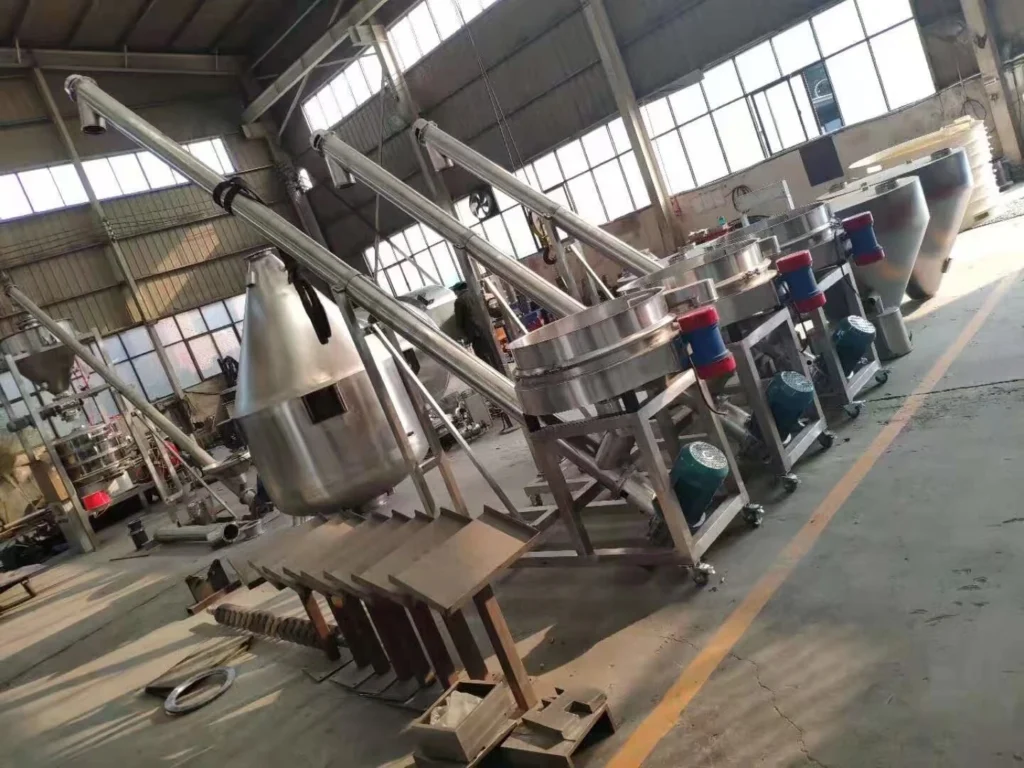
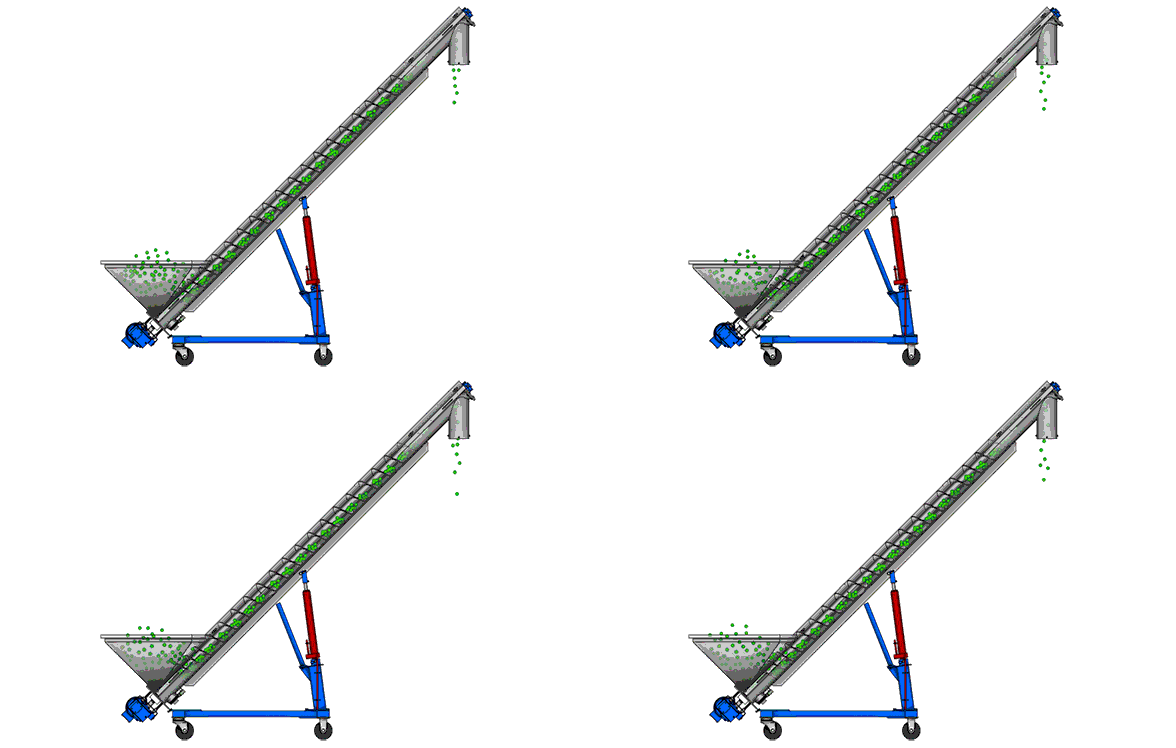
The rotating spiral blades push the material to convey it through the Vibrating hopper, inclined screw conveyor snus auger feeding machine. The force that keeps the material from rotating together with the spiral blades is the material’s own weight and the frictional resistance between the material and the conveyor casing. The spiral blades welded onto the rotating axis of the screw conveyor come in various forms, such as solid, belt-like, and blade-like, depending on the type of material being conveyed. At the terminal end of the spiral axis in the direction of material movement, there is a thrust bearing to withstand the axial counterforce exerted.
Work process
Continuous conveying without flexible traction components can cause bending, leading to damage to blades and casings. For long-distance conveying, an intermediate bearing is added to prevent bending. The bearing is a split sliding bearing. The bearings at both ends are of different types: the thrust bearing at the end opposite the direction of material flow withstands radial and axial forces, while the start-end bearing is a radial bearing.
Core Advantages
- A sealed working condition to prevent dust from flying around and improve the working environment.
- Simple structure, small size, compact.
- There can be multiple feed and discharge ports, allowing flexible process arrangement. However, only one door can be opened during operation.
- Operational safety.
- The material conveying direction is reversible and can convey materials in both directions simultaneously.
- Complete processes such as material conveying, mixing, stirring, loosening, heating, and cooling.
What problems can it help you solve?
A Vibrating hopper inclined screw conveyor snus auger feeding machine can help you tackle material handling challenges in situations where space is limited, you need to transport and lift materials at the same time, or you have requirements for environmental protection and cleanliness.
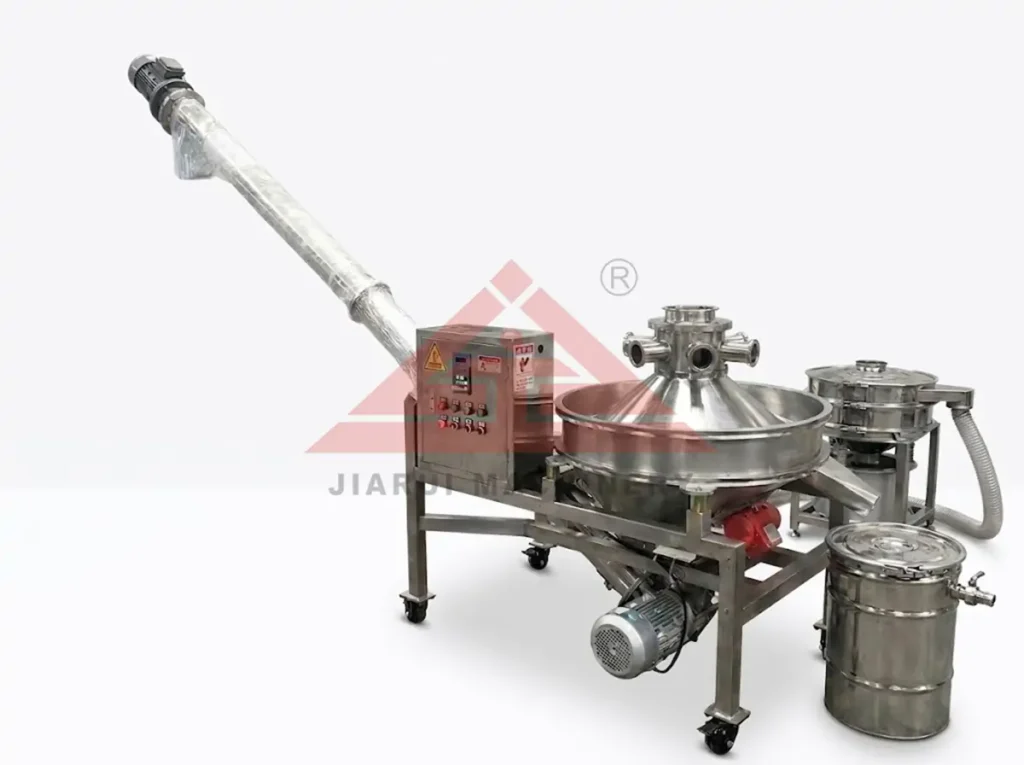
Main Categories
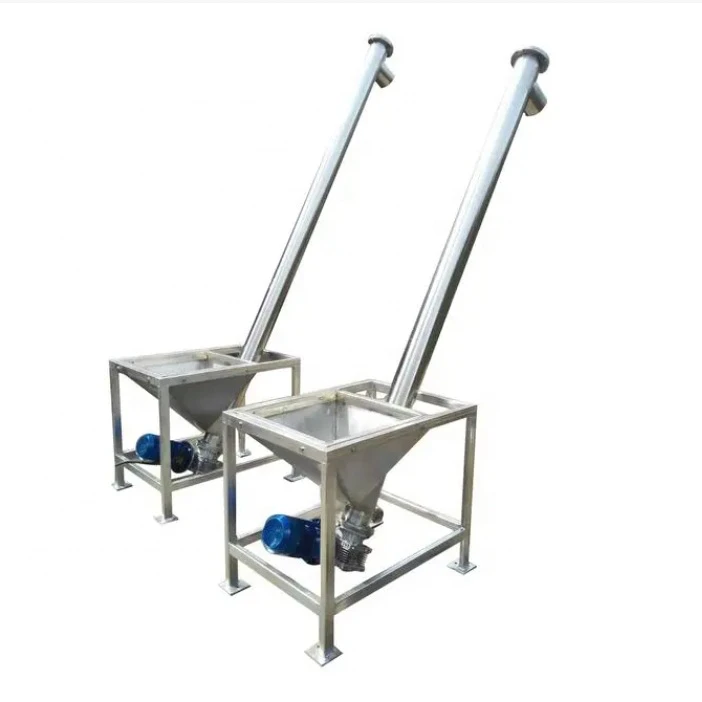
Vibrating hopper inclined screw conveyor snus auger feeding machine, according to design and application scenarios, is mainly divided into the following types:
| Type | Structural Characteristics | Maximum Inclination Reference |
| LS Type Screw Conveyor Snus Auger Feeding Machine | General-purpose, designed in accordance with national standards. The bearings are externally mounted for easy maintenance. | ≤ 30° |
| GX Type Tubular Screw Conveyor Snus Auger Feeding Machine | The shell is made of seamless steel pipe, offering better rigidity and sealing performance. | 0° – 90° |
| Shaftless Screw Conveyor Snus Auger Feeding Machine | It has no central shaft and uses an integral steel spiral blade. It is suitable for conveying viscous or entangled materials. | ≤ 15° |
| Mobile Screw Conveyor Snus Auger Feeding Machine | Equipped with mobile wheels for non-fixed installation, it is suitable for field mobile operations such as concrete mixing stations. | 0° – 60° |
Specific parameters
Since vibrating hopper inclined screw conveyor snus auger feeding machines come in various models, their technical parameters also differ. Below is a summary of common models and their technical parameters.
| Model Specifications | Spiral Diameter (mm) | Pitch (mm) | Speed (r/min) | Flow Rate (m³/h) | Power (10m, kW) | Power (30m, kW) |
| LS100/GX200 | 100 / 200 | 100 | 140 | 2.2 | 1.1 | 1.6 |
| LS160 | 160 | 160 | 120 | 7.6 | 1.5 | 2.8 |
| LS200/GX250 | 200 / 250 | 200 | 90 | 11 | 2.2 | 3.2 |
| LS250/GX300 | 250 / 300 | 250 | 90 | 22 | 2.4 | 5.3 |
| LS315 | 315 | 315 | 75 | 36.4 | 3.2 | 8.4 |
| LS400/GX400 | 400 | 355 | 75 | 66.1 | 5.1 | 11 |
| LS500/GX500 | 500 | 400 | 60 | 93.1 | 4.1 | 15.3 |
| LS630 | 630 | 450 | 60 | 160 | 8.6 | 25.9 |
| LS800 | 800 | 500 | 45 | 223 | 12 | 36 |
| LS1000 | 1000 | 560 | 35 | 304 | 16 | 48 |
| LS1250 | 1250 | 630 | 30 | 458 | 24.4 | 73.3 |
Applicable Industries
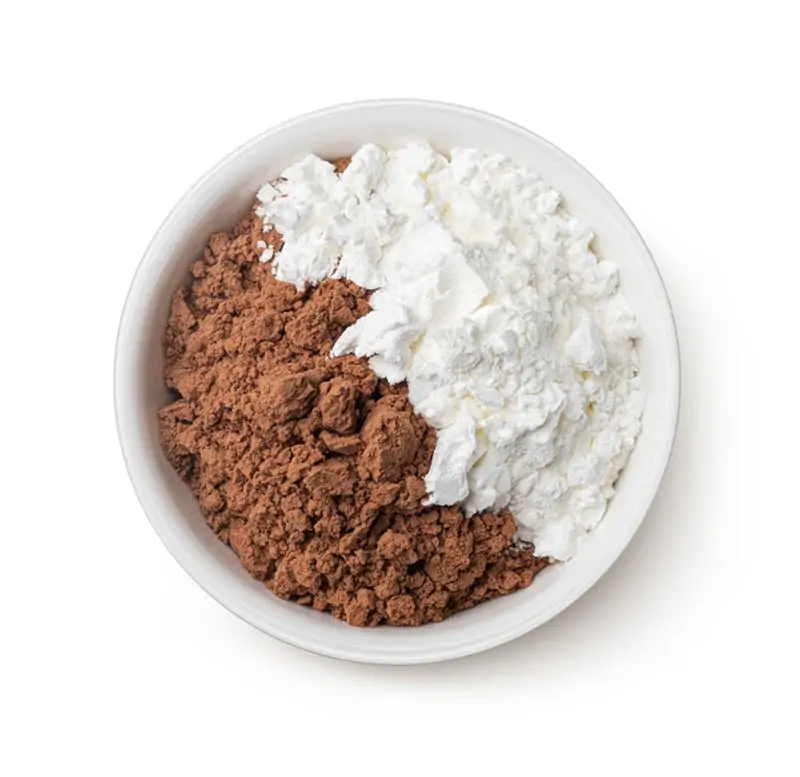
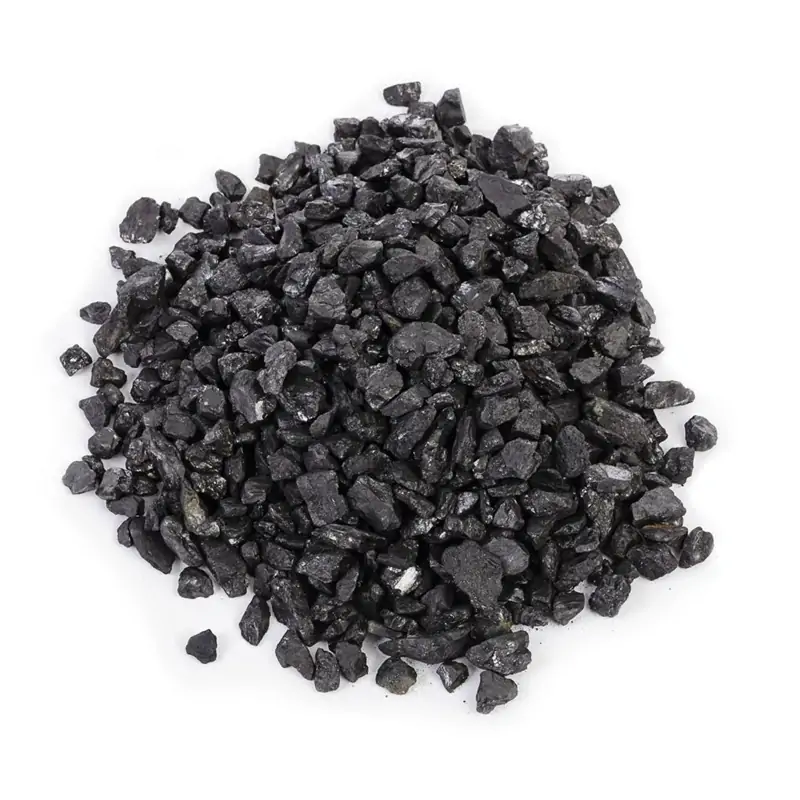
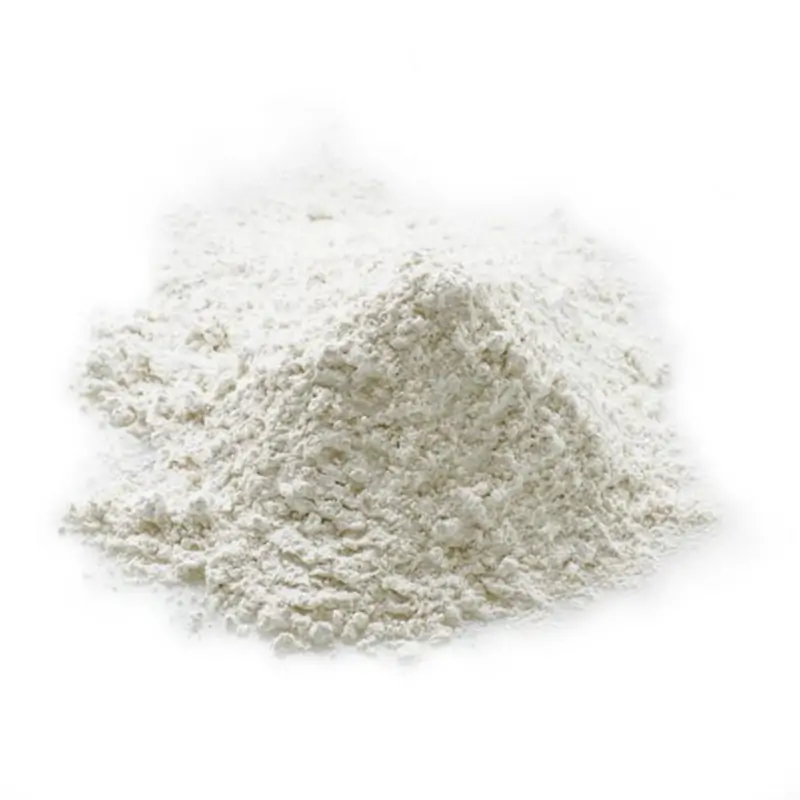
Vibrating hopper inclined screw conveyor snus auger feeding machine is widely used in various industries, such as building materials, chemicals, electricity, metallurgy, coal mining, and grain. It is suitable for horizontal or inclined conveying of powdery, granular, and small block materials, such as coal, ash, slag, cement, and grain, with a material temperature below 200℃. Screw conveyors are not suitable for materials that are easily perishable, highly viscous, or prone to caking. In concrete mixing plants, the role of screw conveyors is maximized.



How do you choose the right machine model?
- Be clear about the material’s characteristics: consider the type, particle size, stickiness, moisture content, etc.
- Determine the incline and machine length: figure out the maximum angle and conveyor distance based on available space.
- Determine the conveyor capacity: decide the required throughput according to production needs.
- Match the model and material: based on the above info, preliminarily select a model, and choose stainless steel or carbon steel depending on industry requirements.
Vibrating Hopper Inclined Screw Conveyor Snus Auger Feeding Machine VS Other conveyors
| Comparison Dimensions | Vibrating Hopper Inclined Screw Conveyor Snus Auger Feeding Machine | Bucket Elevator | Belt Conveyor | Scraper Conveyor |
| Working Principle | Rotating spiral blades push the material | The hopper cycles to enhance material handling | Transporting objects by friction drive through conveyor belts | The chain drives the scraper to convey materials. |
| Applicable Materials | Powdered, granular, and small lump materials. | and even larger block materials. | Various loose, bulk, and packaged items. | Powdered, granular, and lump materials. |
| Conveying Capacity | Medium | Moderate | Large | Large |
| Conveying Distance | Short distance (typically ≤10 meters for single units) | Moderate distance | Long distance | Long distance- |
| Lifting Height | Low (≤8 meters) | High (≤30 meters) | Medium | Medium |
| Space Occupancy | Small, compact structure | Moderate | Large, requiring significant horizontal space – primarily open – Low | Medium |
| Sealing Performance | Fully enclosed, dust-free | Fully enclosed | Medium | Medium |
| Energy Consumption | Medium to high | Moderate | Large | High |
| Maintenance Cost | Low | Moderate | Long distance | High |
| Core Advantages | Compact structure, good sealing, and flexible layout (with multiple points for material loading and unloading). | Large lifting height with minimal material breakage. | High conveying capacity, long conveying distance, and low energy consumption. | Suitable for long-distance, steep-angle conveying of bulk materials. |
| Main limitations | Short conveying distance; material is prone to damage; | Overload-sensitive with many fragile components; | Large space occupation and poor sealing; | Generally good sealing but prone to leakage for powder materials |
Conclusion
The vibrating hopper inclined screw conveyor snus auger feeding machine with side barriers is a type of belt conveying equipment that continuously transports materials. It is composed of attaching freely stretchable, wave-shaped vertical ‘side skirts’ to both sides of a flat rubber transport belt, and attaching transverse partitions with certain strength and elasticity between the skirts to form box-like troughs, allowing materials to be transported continuously within these troughs.