Many factories use a vibro sifter not simply to screen material once, but to remove particles that do not meet the required particle size during continuous production.
For example, coarse particles may need to be removed from powder, while granular products may need to be separated into different sizes. The advantages of a vibro sifter can be seen in these specific screening processes.
What Are the Practical Advantages of a Vibro Sifter in Production?
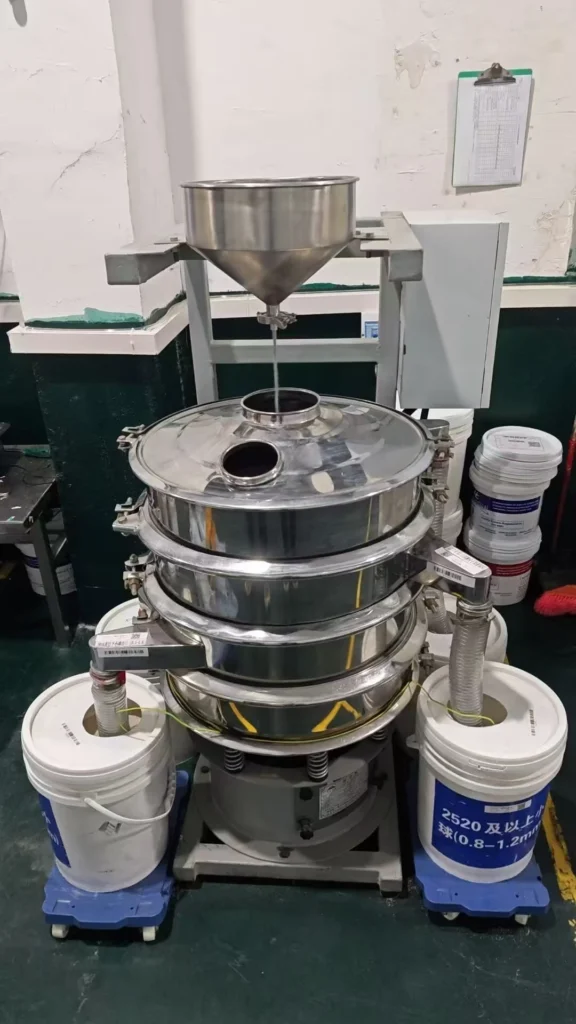
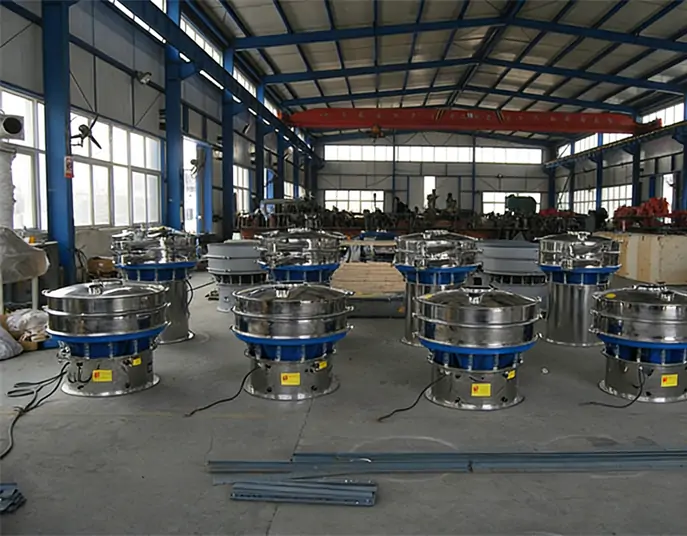
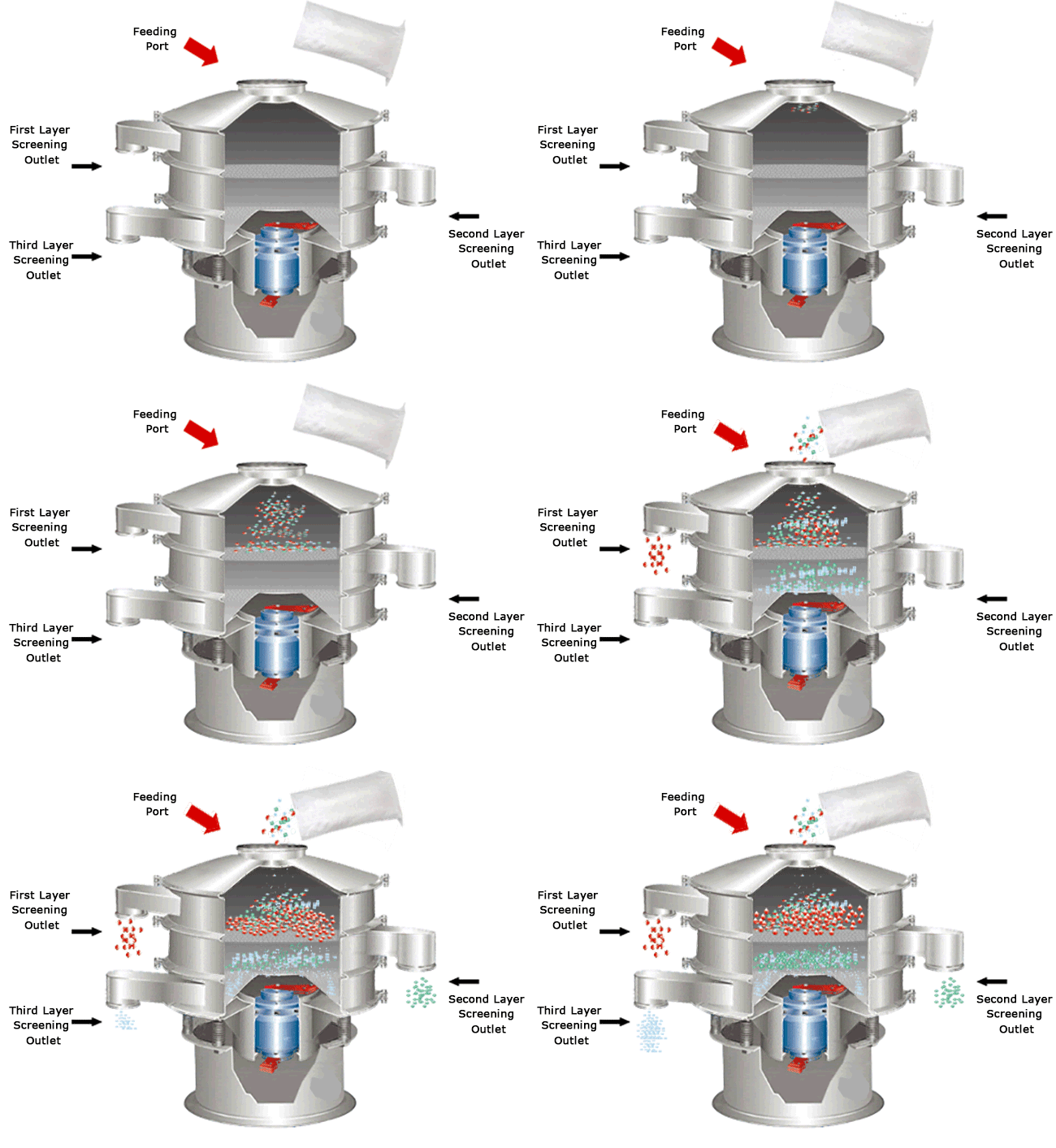
Material Can Pass Through the Screen Continuously:When the vibro sifter is running, the material continuously moves with the vibration of the screen surface. Smaller particles pass through the screen openings, while larger particles continue moving toward the discharge outlet, allowing continuous screening. For production lines that require continuous feeding and discharge, this type of screening is more suitable. The machine does not need to process material batch by batch like manual screening and can be placed between upstream and downstream processes.
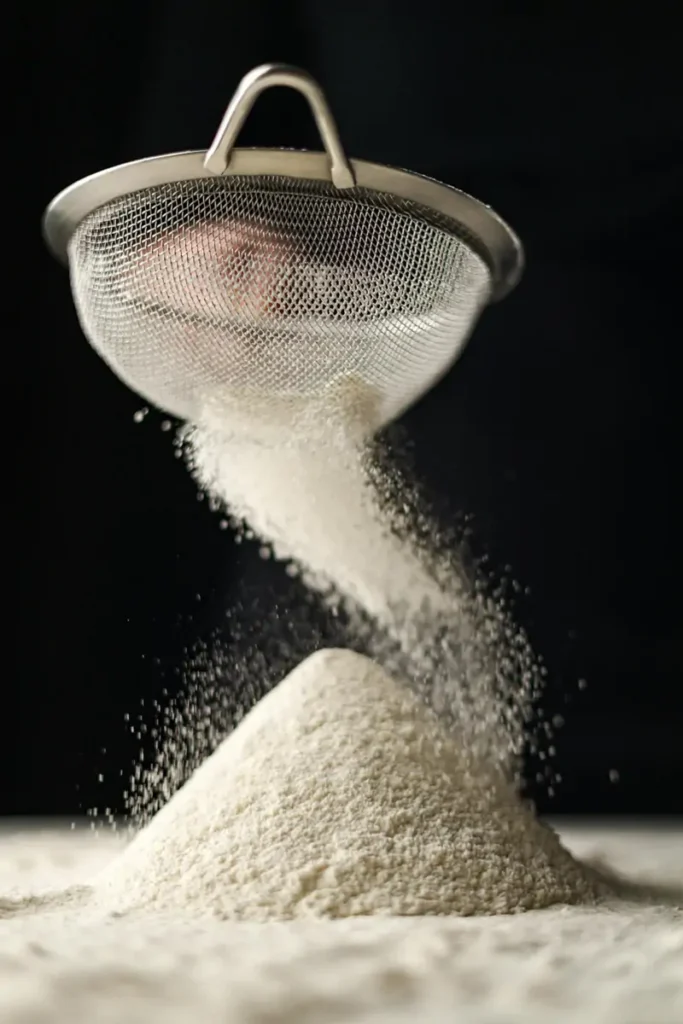
Suitable for Fine Powder Screening:Fine powder can easily spread across the screen surface after entering the screen. If the material stays in the same area, some screen openings may be covered, reducing the chance for fine particles to pass through. Vibration keeps the material moving and redistributes it, allowing more material to contact the screen and reducing the amount of material that stays in the same area.
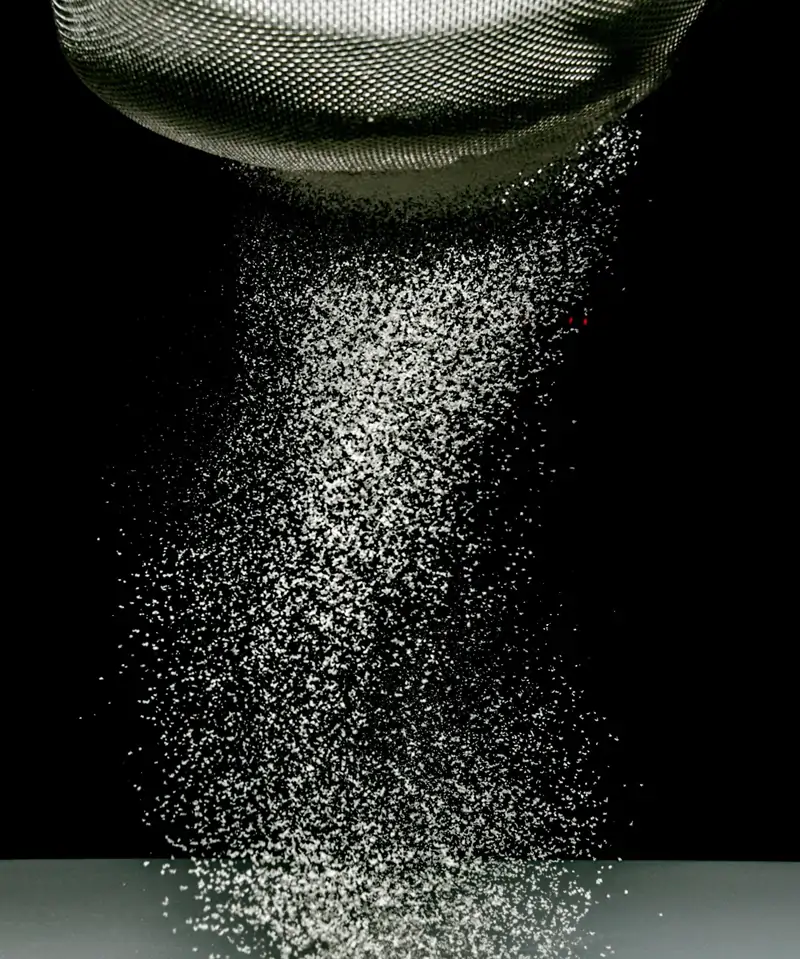
However, this does not mean that fine powder screening will not cause screen blinding. Materials with high moisture content, strong stickiness, or a tendency to form agglomerates can still block the screen openings. In this case, the screen type and whether a screen cleaning device is needed also need to be considered. For very fine powders, an ultrasonic vibrating screen can also be considered when screen cleaning becomes a concern.
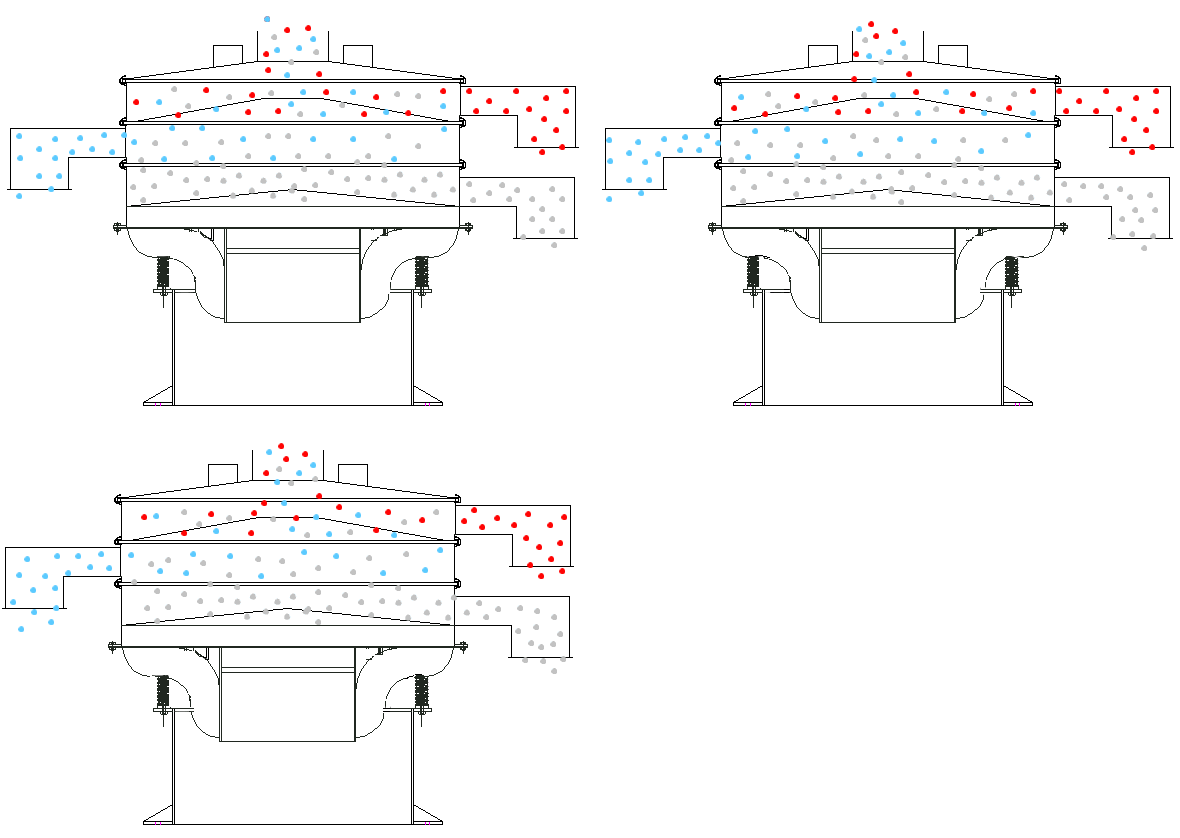
One Machine Can Separate Multiple Particle Sizes:If the product needs to be separated into several different particle size ranges, multiple screen decks can be used. The material moves gradually from the upper screen deck downward, and particles of different sizes are discharged through the corresponding outlets. A rotary vibrating screen can be configured with multiple screen decks for this type of particle size separation. This allows several particle size grades to be separated in one screening process, reducing repeated screening and material transfer.
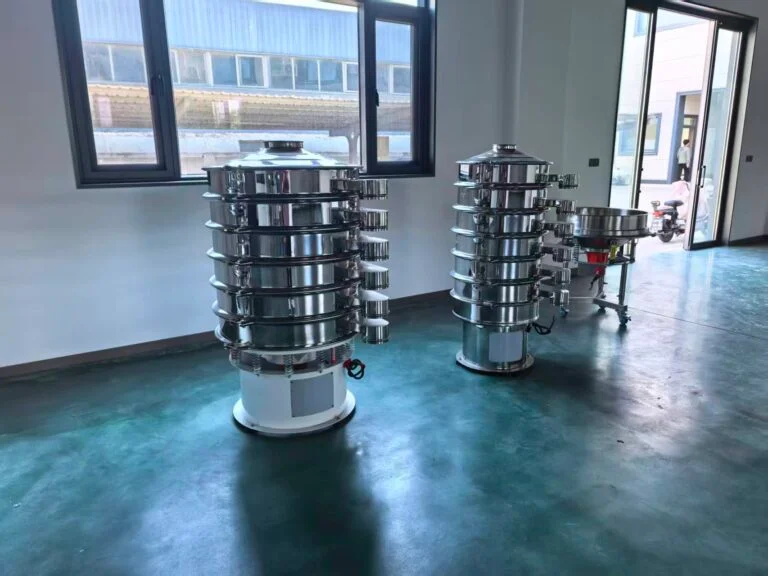
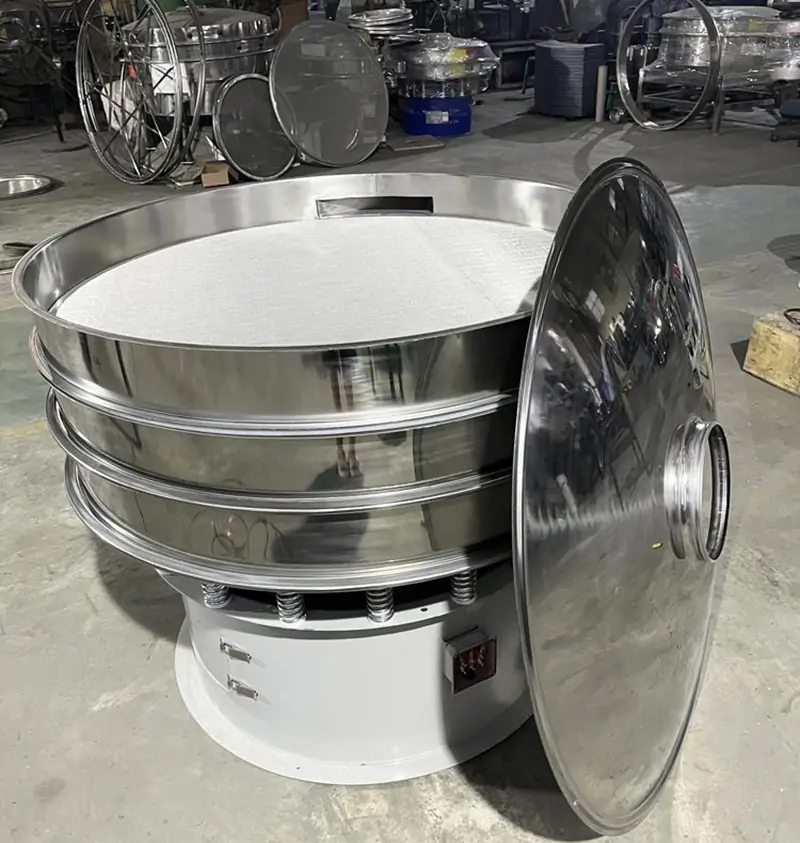
Can Be Connected Directly to a Continuous Production Line:A vibro sifter can continuously feed, screen, and discharge material, so it can be placed between upstream and downstream processes in a production line. For example, material from a crushing process can pass through the sifter first, while mixed material can also be screened before entering the next process.
In this way, the sifter does not need to stop and process material separately. It can work along with the entire production line.
What Production Tasks Are Suitable for a Vibro Sifter?
A vibro sifter is mainly used to remove coarse particles or separate products by particle size.
- Removing coarse particles from powder: Screen out large particles or insufficiently crushed particles from powder.
- Grading granular products: Separate products into two or more grades according to particle size.
- Screening after mixing: Remove agglomerates or larger particles formed during mixing.
- Screening before packaging: Perform final screening before the product enters the packaging process.
- Screening in continuous production lines: Place the sifter between processes such as crushing, mixing, and drying for continuous material processing.
Even with the same vibro sifter, actual screening performance can vary with the material, screen specification, or throughput. Therefore, whether the equipment is suitable cannot be judged only by whether it can screen the material. The material and production conditions also need to be considered.
When Is a Vibro Sifter Not Always Suitable?
A vibro sifter is not suitable for every material.
- If the material has high moisture content, strong stickiness, or a strong tendency to form large agglomerates, the screen openings may become blocked quickly. For very light, very fine powders that are prone to static electricity, screen cleaning and anti-static measures also need to be considered.
- If the material contains a large amount of oversized material, it is also not suitable to feed all of it directly onto the screen. When the feed particle size is too large, crushing or other pre-treatment may be required.
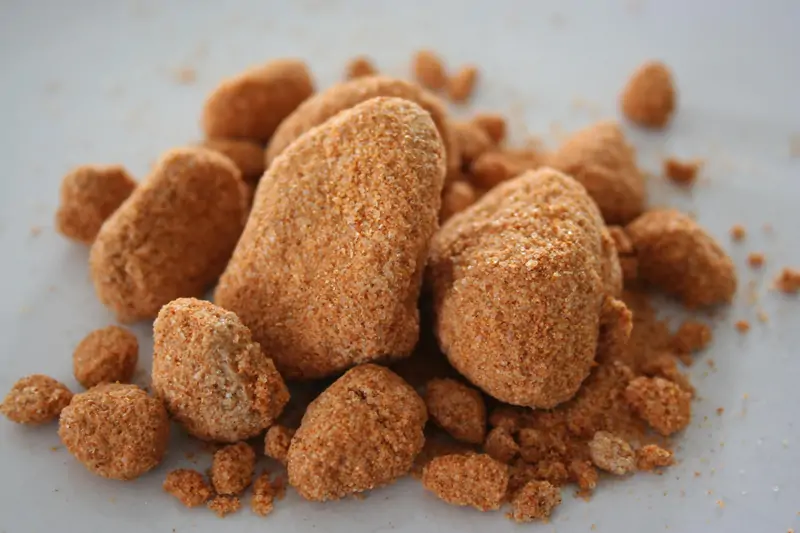
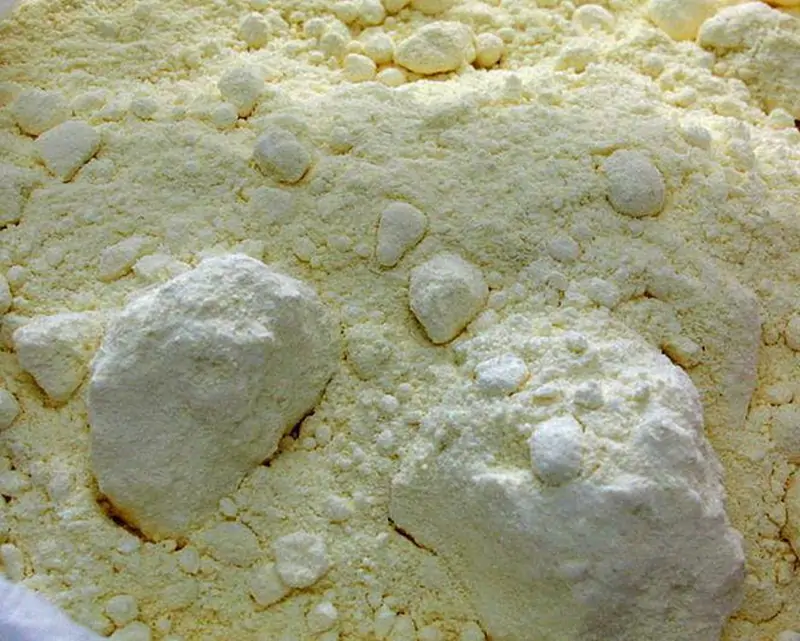
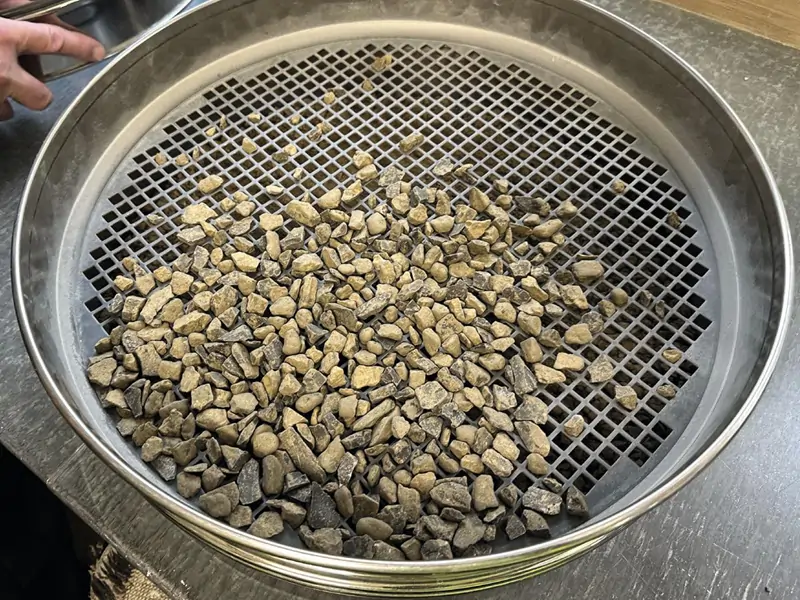
In addition, throughput cannot be determined only by the machine model. Different production rates may require adjustments to the screening area, feeding method, and discharge method. Therefore, when selecting equipment, you cannot look only at the screen mesh size. The material, required throughput per hour, target particle size, and how the equipment will be connected to the production line all need to be considered together.
If you are still unsure which vibro sifter is suitable for your material, you can provide Jiarui with the material type, throughput, target particle size, and installation conditions. We can help confirm a suitable machine and configuration based on these requirements.
FAQs
How Many Particle Sizes Can a Vibro Sifter Separate at One Time?
This depends on the number of screen decks. With one screen deck, the material can generally be separated into two particle size ranges. With additional screen decks, multiple particle size grades can be separated at the same time. The number of screen decks needs to be determined according to the target particle sizes and material characteristics.
Is a Vibro Sifter Suitable for Fine Powder?
Yes. Vibration keeps fine powder moving across the screen and reduces the amount of material that stays in the same area for a long time. However, very fine powders that tend to agglomerate or generate static electricity still require suitable screens and screen cleaning methods.
Does a Higher Mesh Count Mean Better Screening Performance?
Not necessarily. A finer screen can allow smaller particles to pass through, but throughput may also be affected, and the possibility of screen blinding may increase. The screen specification needs to be selected according to the target particle size and material characteristics. ISO 3310-1:2016 also specifies technical requirements and testing methods for metal wire cloth test sieves.
Will the Throughput of the Same Vibro Sifter Always Be the Same?
Not necessarily. Throughput is affected by factors such as material particle size, flowability, moisture content, screen specification, and feeding method. The actual throughput of the same machine may vary when screening different materials.
Is a Vibro Sifter Prone to Screen Blinding?
Not necessarily. Vibration can reduce the amount of material that stays in the screen openings for a long time, but wet materials, sticky materials, and powders that tend to form agglomerates can still cause screen blinding. If the material is difficult to screen, a suitable screen cleaning method may also be needed.
What Should I Do If I Am Not Sure Which Vibro Sifter to Choose?
You can provide Jiarui with the material type, throughput, feed particle size, target particle size, and installation conditions. Jiarui can confirm a suitable machine size, screen, and configuration based on these conditions, and customize the inlet and outlet arrangement according to the installation requirements.