An industrial flour sifter machine, simply put, is used to screen flour and remove unwanted material. After the flour enters the machine, the powder that meets the required size passes through the screen, while coarse particles, impurities, or lumps that have not been fully broken apart are separated. Depending on the machine structure, screening can be carried out through vibration or internal rotation.
The purpose of flour screening can be different. Some applications mainly focus on removing impurities, some need to handle lumps, while others require particle size classification.Therefore, when choosing an industrial flour sifter, first determine what problem needs to be solved, and then select the appropriate screening method.
What Types of Industrial Flour Sifter Machines Are Available?
There is more than one type of industrial flour sifter machine. Common options include inline vibrating sifters, rotary vibrating sifters, centrifugal sifters, and ultrasonic vibrating sifters. Different structures are suitable for different flour conditions, screening purposes, and production line layouts.
Inline Vibrating Sifter
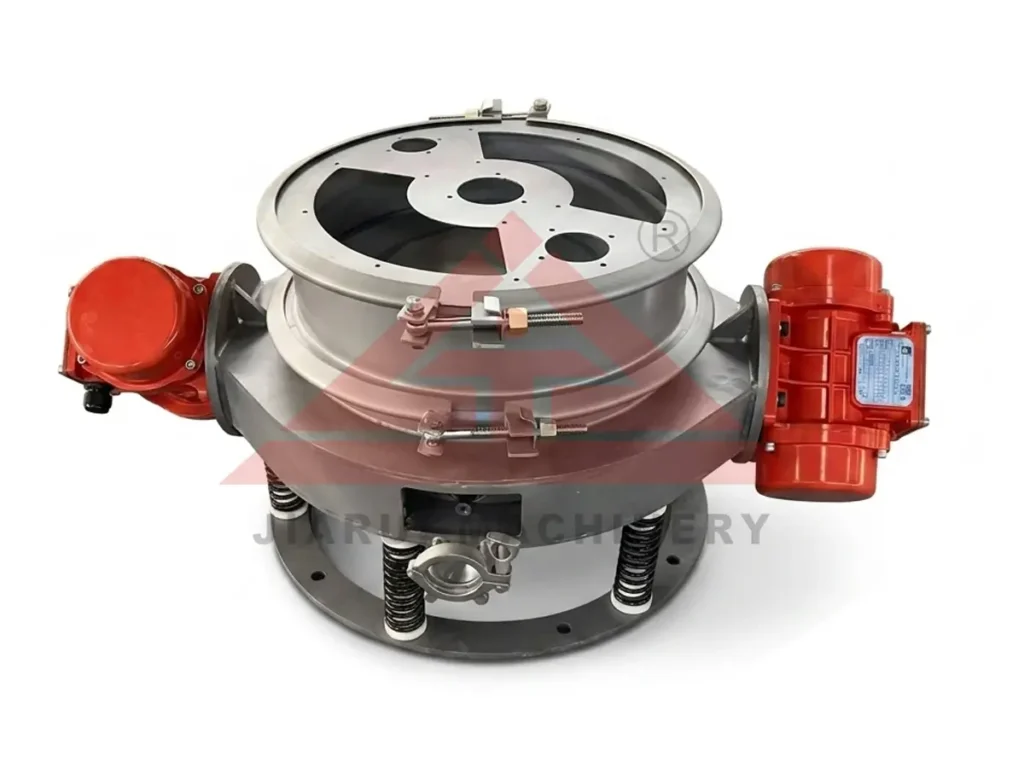
An inline vibrating sifter has a relatively direct feeding and discharge arrangement, making it convenient to connect with upstream and downstream conveying equipment. If the main purpose is flour impurity removal, simple screening, or safety screening before packaging, and the machine needs to be directly connected to a continuous production line, this type can be considered.
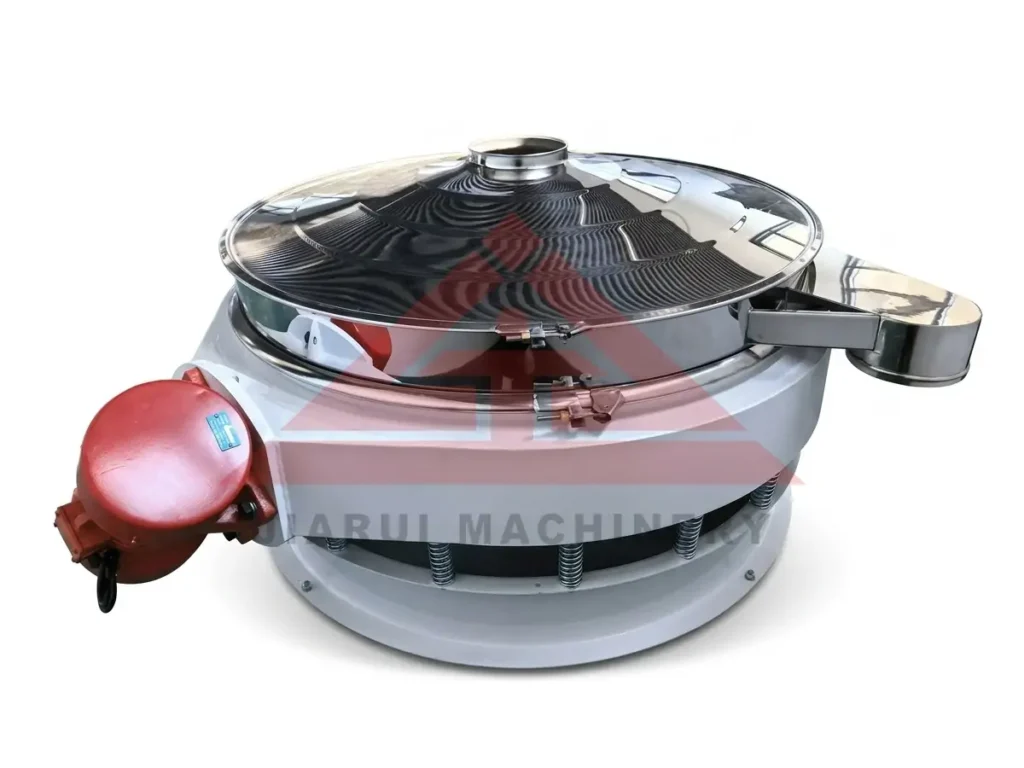
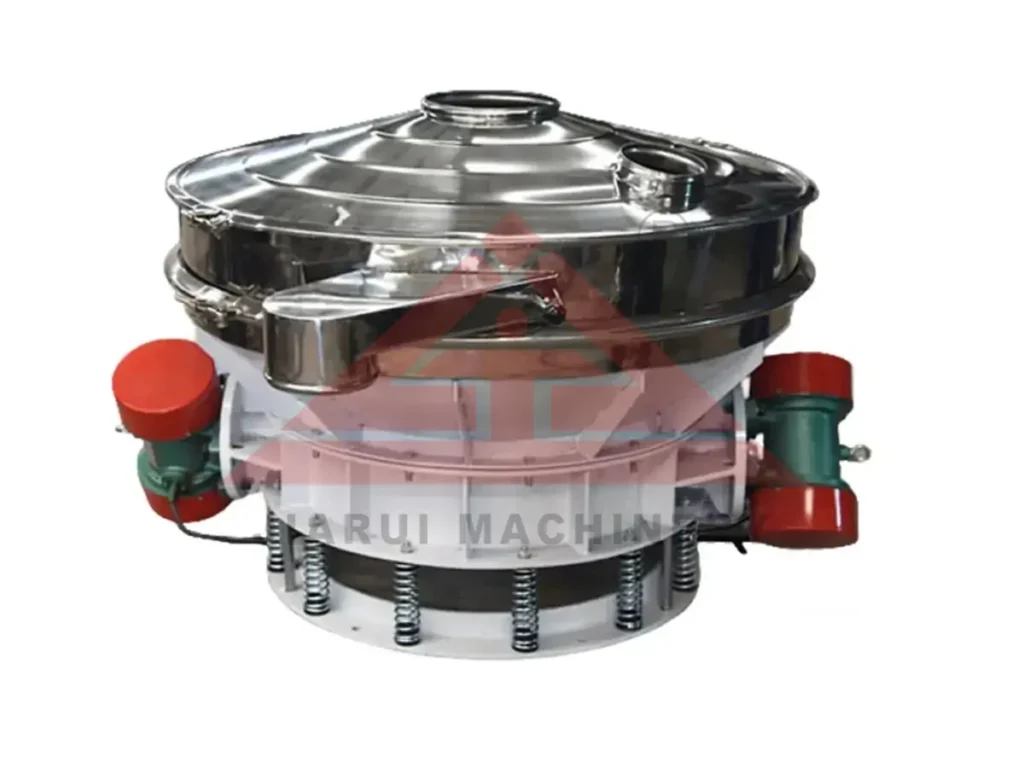
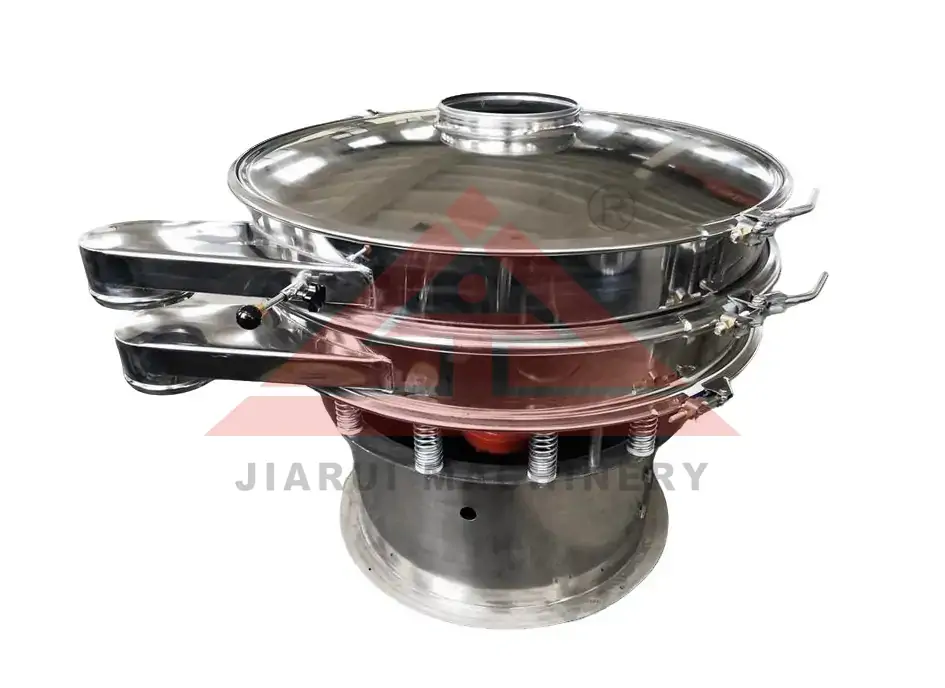
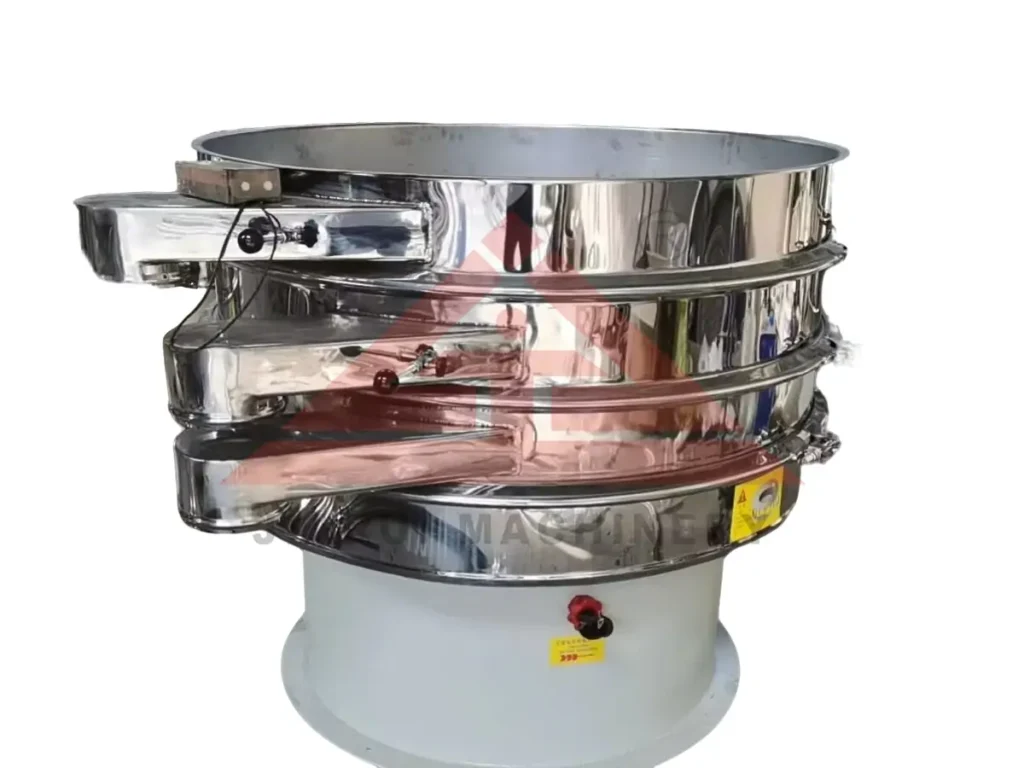
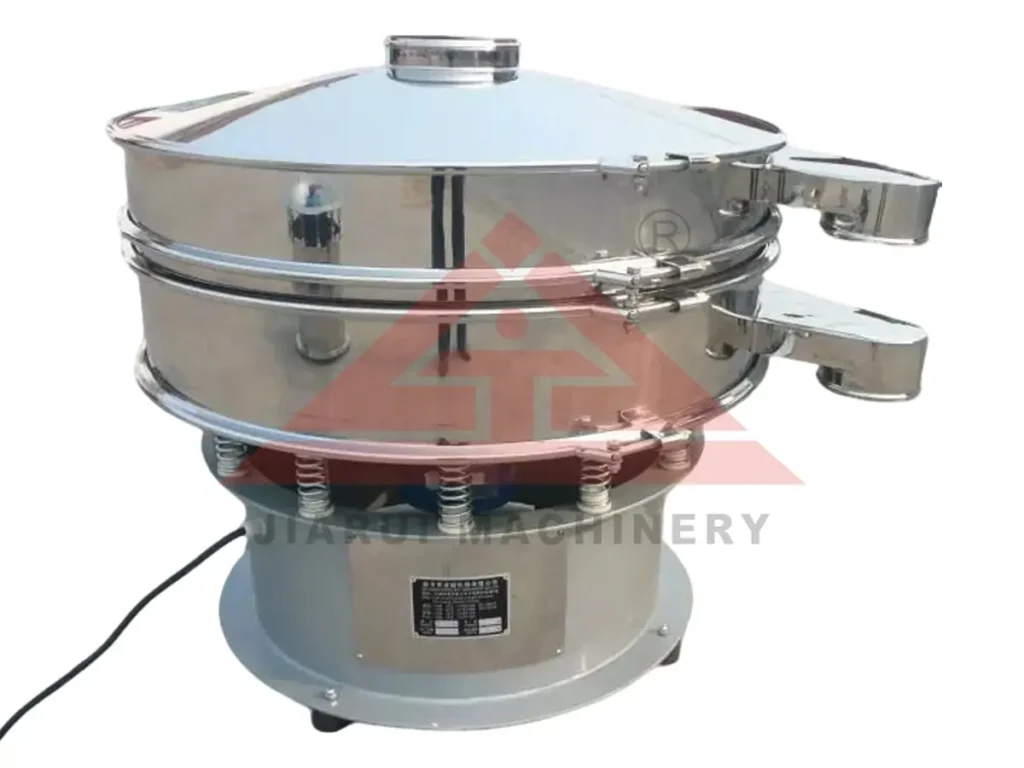
Rotary Vibrating Sifter
A rotary vibrating sifter uses vibration to move flour across the screen surface. Flour that meets the requirements passes through the screen, while coarse particles and impurities are separated. It is suitable for general screening, impurity removal, and particle size classification. If single-layer or multi-layer screens are required to separate materials of different particle sizes, the rotary vibrating sifter also offers flexible configuration options.
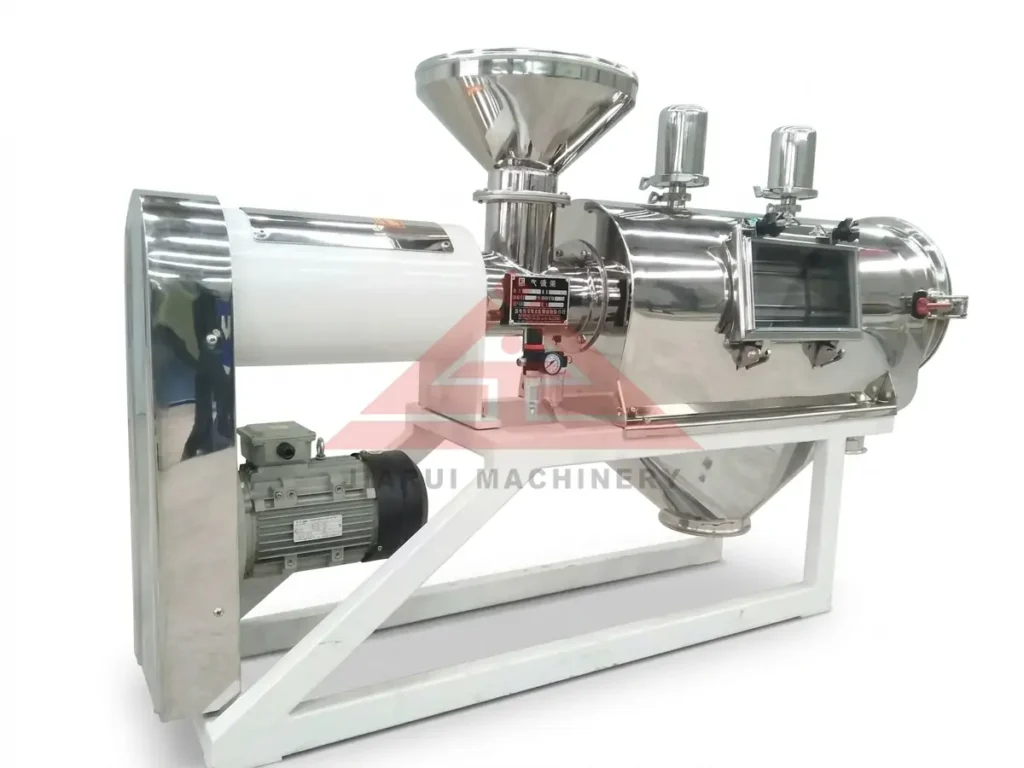
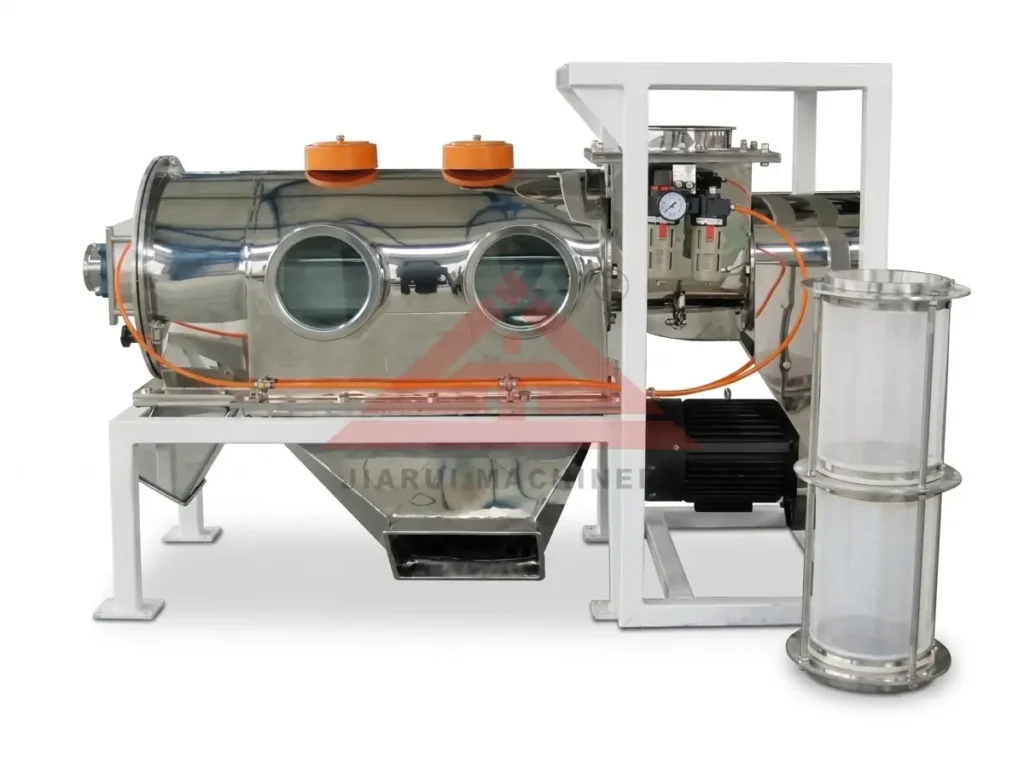
Centrifugal Sifter
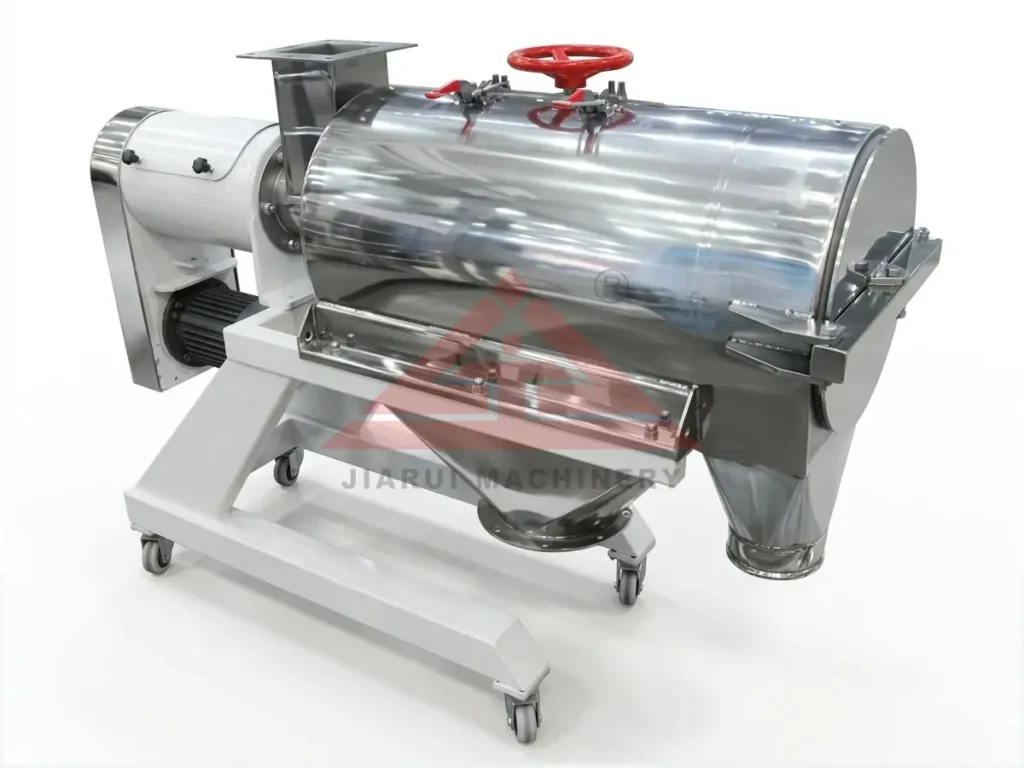
A centrifugal sifter does not rely on vibration of the entire machine. Instead, it uses internal rotating components to move the material inside the screen chamber and pass it through the screen. It is more suitable for continuous powder screening. If the flour production line requires continuous feeding, screening, and discharge, this type can be considered.
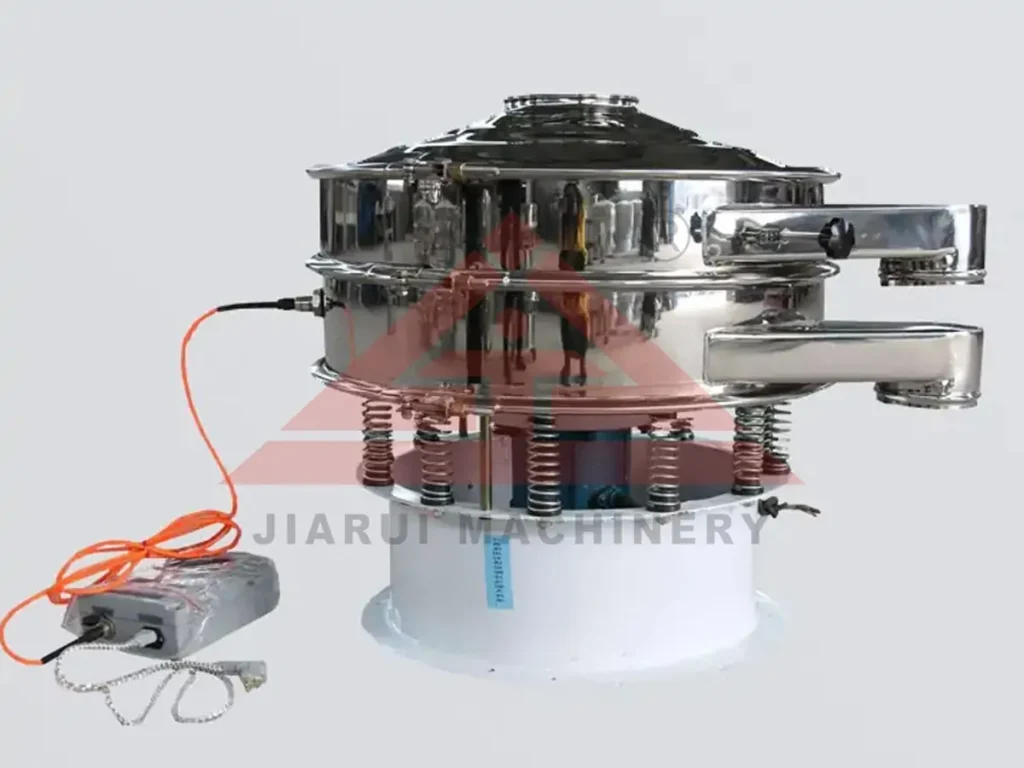
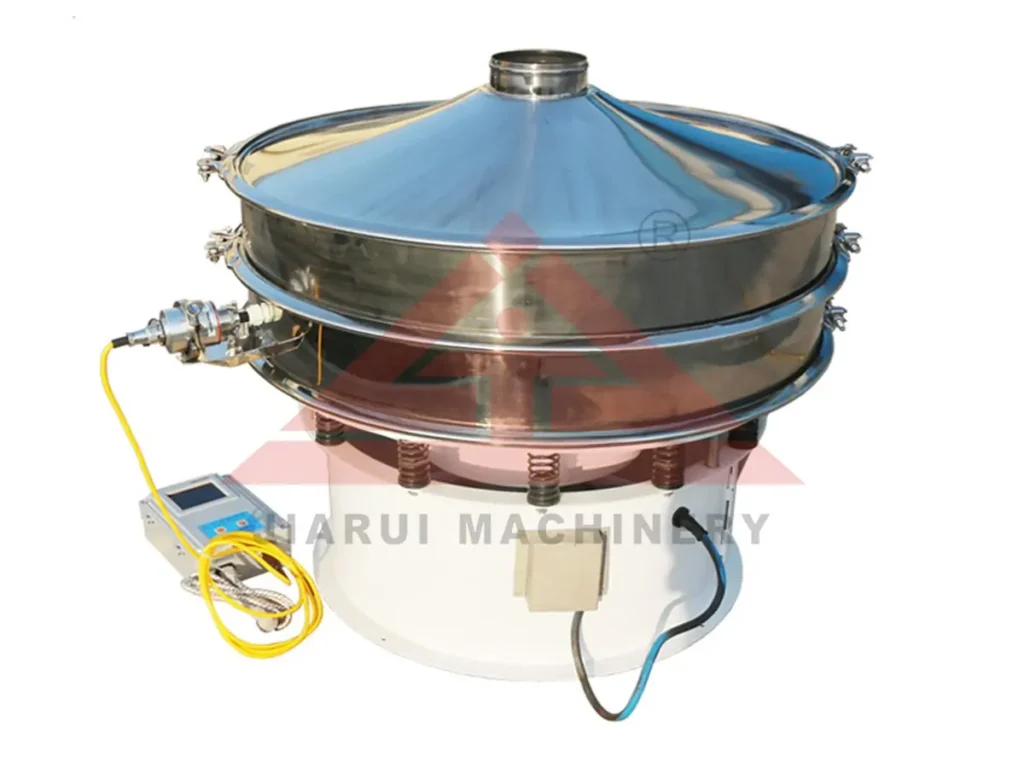
Ultrasonic Vibrating Sifter
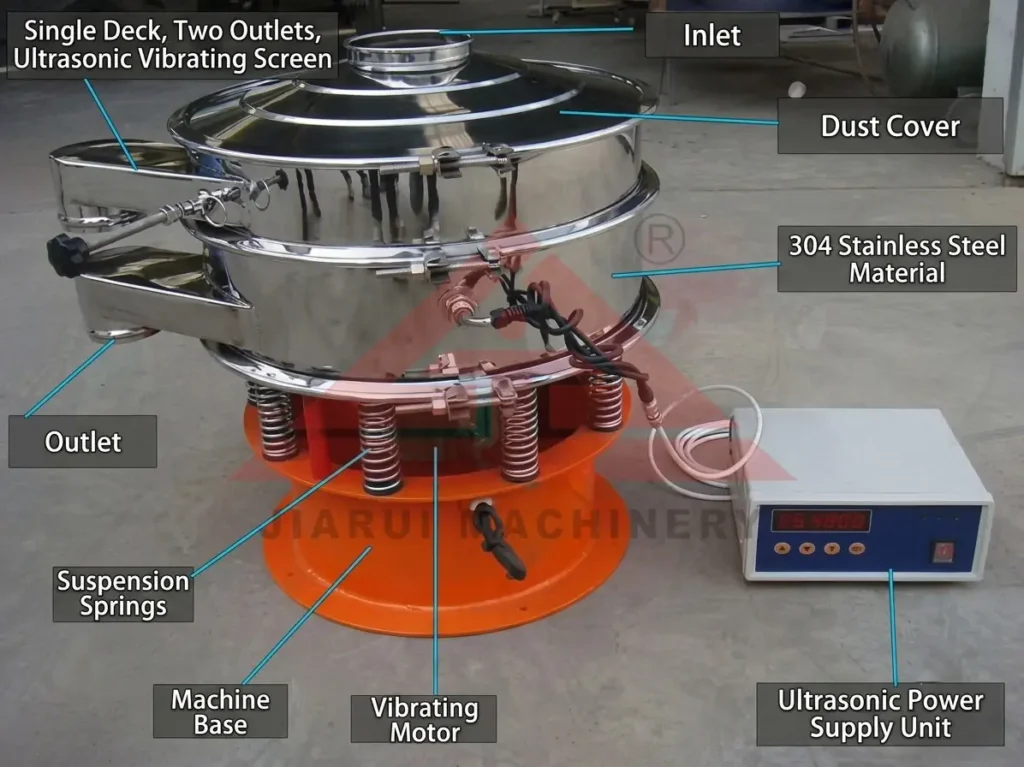
An ultrasonic vibrating sifter adds an ultrasonic system to a conventional vibrating sifter, mainly to reduce screen blockage. If flour needs to be screened through a fine mesh and a conventional vibrating sifter is prone to screen clogging, an ultrasonic system can be considered. Not every flour screening application requires ultrasound. Whether it is needed mainly depends on the screen mesh size and material characteristics.
How to Choose the Right Industrial Flour Sifter Machine?
All of the machines mentioned above can be used for flour screening, but their suitable applications are not exactly the same. You can first determine the equipment type based on the screening purpose, and then select the specific model according to the capacity, screen requirements, and production line conditions.
| Main Requirement | Type to Consider | Key Selection Factors |
| Remove impurities and coarse particles from flour | Inline Vibrating Sifter | Capacity, screen, feeding and discharge method |
| General screening, impurity removal, or particle size classification | Rotary Vibrating Sifter | Capacity, screen mesh size, number of screen layers |
| Continuous feeding, screening, and discharge | Centrifugal Sifter | Capacity, material condition, production line layout |
| Fine screening with a tendency for screen blockage | Ultrasonic Vibrating Sifter | Screen mesh size, material characteristics, screen blockage |
If the main purpose is simple impurity removal, an inline vibrating sifter can be considered. For particle size classification, a rotary vibrating sifter can be considered. For continuous powder screening, a centrifugal sifter can be considered. If a fine screen is required and screen blockage is a problem, an ultrasonic system can be considered.
After determining the equipment type, the specific configuration should be selected according to the flour type, processing capacity, screen requirements, and production line layout.For more details on the practical advantages of vibro sifters in production, see our guide to The Application Advantages of Vibro Sifter.
What Material Should Be Used for a Flour Sifting Machine?
Flour is a food raw material, so the material-contact parts of the sifting machine need particular attention to material, surface treatment, and cleaning methods. SUS304 stainless steel is a common choice. If higher requirements for corrosion resistance, hygiene, or cleaning are needed, SUS316L can also be selected according to the process. Components that directly contact the flour, such as the screen, inlet, screen chamber, and outlet, should be selected according to the application requirements.
In addition to material, it is important to consider whether the machine is easy to clean, whether flour can easily remain inside, whether the screen is easy to remove and replace, and whether the sealing structure is suitable. For food production lines that require frequent cleaning, these details can help reduce material residue and make routine maintenance easier.
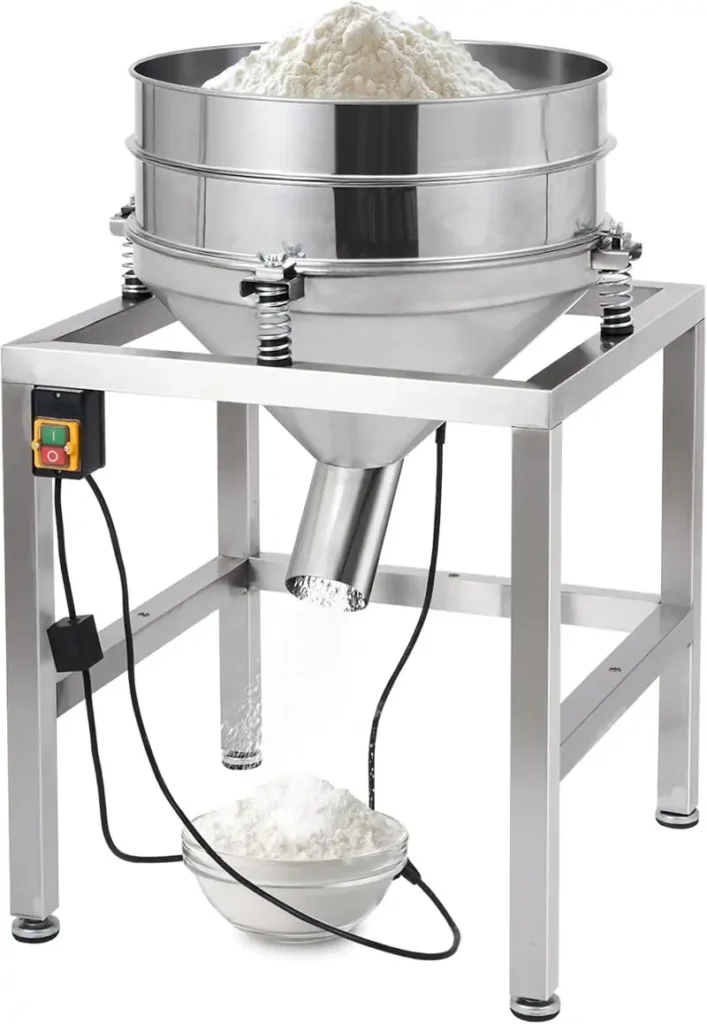
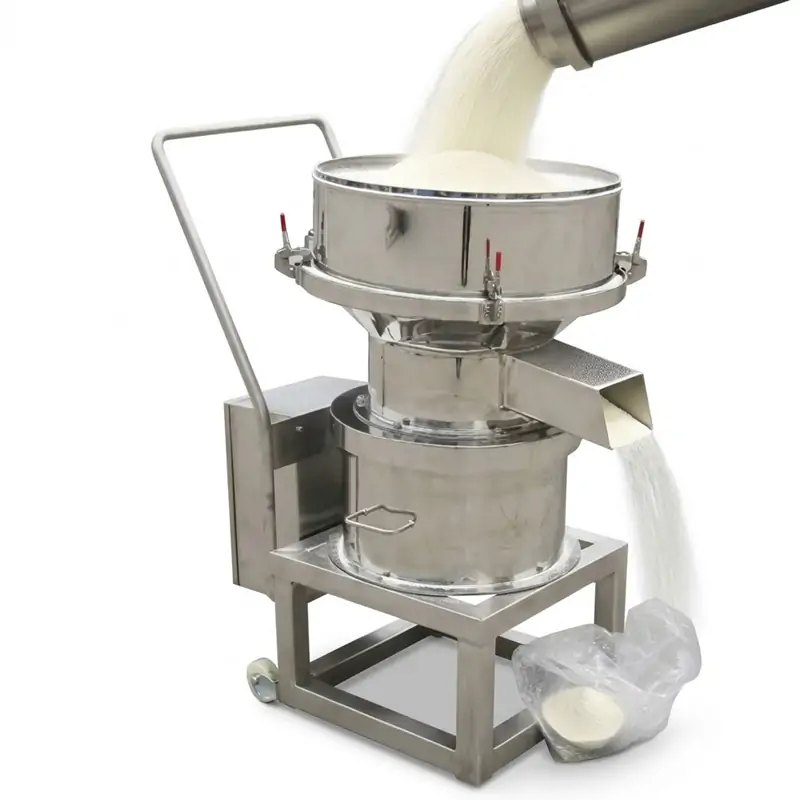
If flour dust is present in the production environment, equipment sealing, grounding, and electrical configuration also need to be considered. Whether specific explosion-proof or dust-safety configurations are required should be determined according to the hazardous area classification, installation environment, and applicable local safety requirements. Jiarui can customize the equipment material, structure, sealing, and related configurations according to the specific material, production environment, and production line requirements.
Therefore, when choosing an industrial flour sifter machine, do not look only at the equipment name or processing capacity. The selection should also consider the flour type, screening purpose, screen requirements, contact material, and production line layout.
FAQs
Can an industrial flour sifter machine remove lumps?
Yes, but the result depends on the lump size, flour moisture content, and screening method. Small lumps that can be easily broken apart can usually be separated during screening. For larger hard lumps, the appropriate screening structure or an additional lump-breaking configuration needs to be selected according to the material condition.
What mesh size is normally used for flour screening?
There is no single standard screen mesh size. The screen specification should be selected according to the flour type, feed particle size, and final screening requirements. The screen requirements for ordinary impurity removal are different from those for fine classification, so the mesh size cannot be determined based only on the fact that the material is flour.
Does a flour sifting machine have to be made of stainless steel?
For parts that directly contact flour, stainless steel such as SUS304 is normally preferred. If higher requirements for corrosion resistance, hygiene, or cleaning are needed, SUS316L can also be selected according to the process. The specific material should be determined based on the production environment, cleaning method, and food-contact requirements.
Which is better for flour, a vibrating sifter or a centrifugal sifter?
Both can be used for flour screening, but they are suitable for different applications. A vibrating sifter is more suitable for general impurity removal, screening, and particle size classification, while a centrifugal sifter is more suitable for continuous powder screening. The choice also depends on the processing capacity, screen requirements, flour condition, and feeding and discharge arrangement of the production line.
What is the processing capacity of an industrial flour sifter machine?
There is no fixed capacity that applies to all flour. Capacity is mainly affected by the flour type, moisture content, feeding condition, screen specification, screening area, and screening requirements. When purchasing, the target capacity should be provided rather than judging capacity only from the machine model, so the manufacturer can configure the equipment appropriately.
Can Jiarui customize a sifting machine for a flour production line?
Yes. Jiarui can customize screening equipment according to the flour type, processing capacity, screening requirements, and production line layout. The equipment size, screen, material-contact parts, feeding and discharge structure, and sealing method can also be configured. For an existing production line, the design can be based on the available installation space and interfaces with upstream and downstream equipment.
If you are choosing an industrial flour sifter machine, you can provide the flour type, processing capacity, screening requirements, and production line layout to the Jiarui engineering team. We can help determine the appropriate equipment type and configuration based on the specific process.