For industrial powder screening, the difficult part is often not choosing “which screening machine,” but understanding the characteristics of the powder, what needs to be removed, and whether the screen will clog during screening.
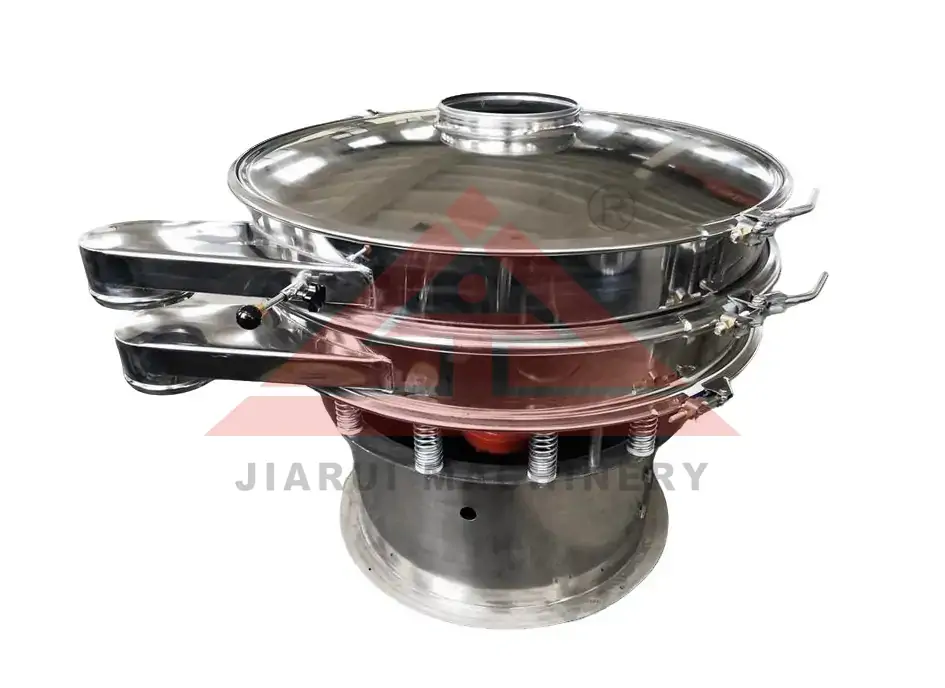
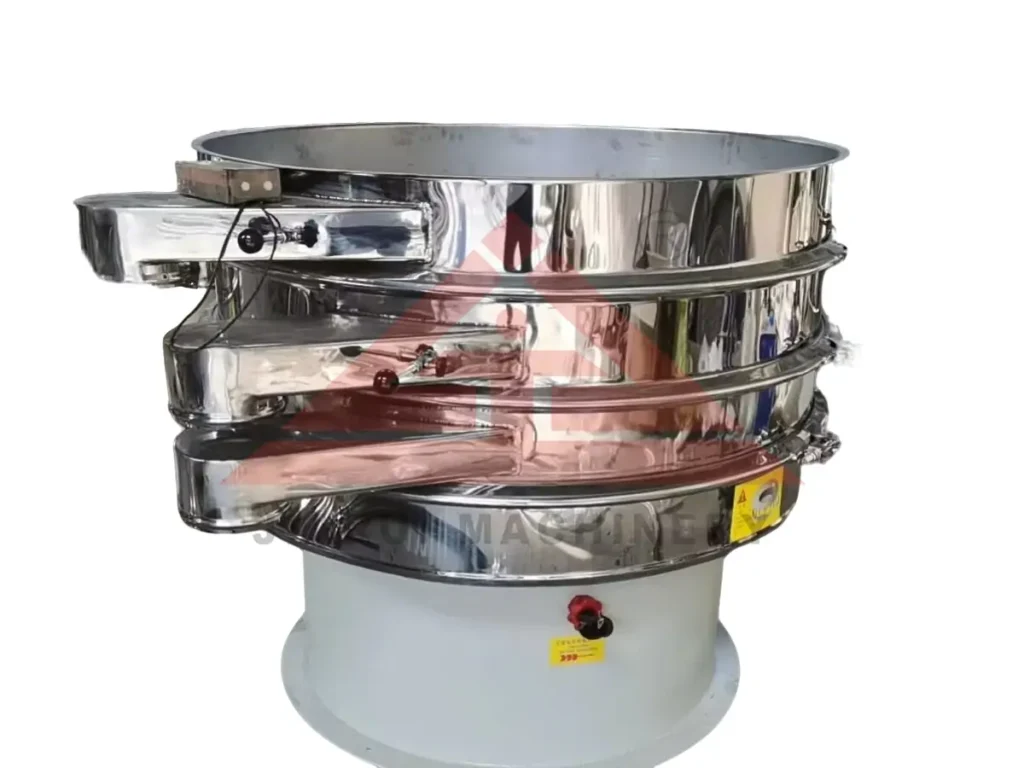
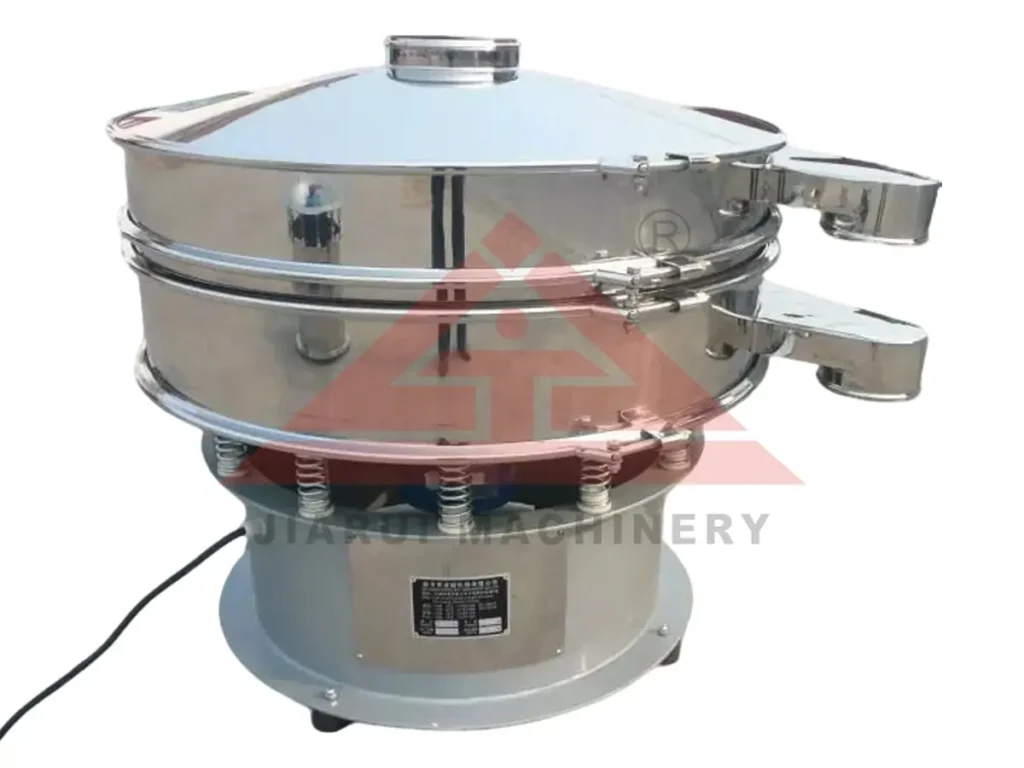
A vibro sifter machine mainly uses vibration to move powder through the screen mesh. It is used to remove coarse particles, lumps, and foreign matter, or to separate material by particle size. Even with the same 200-mesh screening requirement, free-flowing powder and powder that is prone to static charge or agglomeration may require completely different equipment configurations. Therefore, machine selection should not be based on mesh size alone. Material characteristics, screening purpose, and throughput also need to be considered.
Can Industrial Powder Be Screened with a Vibro Sifter?
Yes. For most dry, reasonably free-flowing industrial powders, a vibro sifter is a common screening machine. It is mainly used for two purposes:
- Removing impurities: Screening out coarse particles, lumps, or foreign matter from the powder.
- Classification: Separating powder into two or more particle-size fractions.
If the powder has good flowability and does not have obvious problems with stickiness, static charge, or severe agglomeration, a three-dimensional rotary vibrating screen can be considered first.
If the powder is very fine and tends to clog or stick to the screen, or agglomerate during screening, it is not enough to look only at the sifter model and mesh size. The screen cleaning method also needs attention.
If a standard screen cleaning method is sufficient, there is no need to add extra equipment. If the screen still tends to clog, an ultrasonic screen cleaning system can be considered.
Which Vibro Sifter Should Be Used for Industrial Powder?
A simple starting point is to look at the powder condition and screening requirements:
| Powder Condition | Preferred Option | Main Points to Consider |
| Dry, free-flowing powder, mainly used for impurity removal or classification | Three-dimensional rotary vibrating screen | Screen specification, number of decks, throughput |
| Fine powder that tends to clog or stick to the screen and is still difficult to screen with standard cleaning methods | Ultrasonic vibrating screen | Ultrasonic screen cleaning, screen specification, throughput |
The equipment should not be understood as a fixed one-to-one match. The same powder may require different equipment configurations depending on the screening size, throughput, and production process.
For ordinary industrial powder impurity removal or classification, a three-dimensional rotary vibrating screen can be evaluated first. If the main problem is screen clogging with fine powder, ultrasonic screen cleaning can then be considered.
Why Does Powder Tend to Clog the Screen?
Screen clogging is common when screening industrial powders, especially fine powders. The cause is often not insufficient vibration. Instead, the powder itself may become trapped in the screen openings or adhere to the screen, for example because the particles are very fine, prone to static charge, contain moisture, have some stickiness, or have already agglomerated before screening.
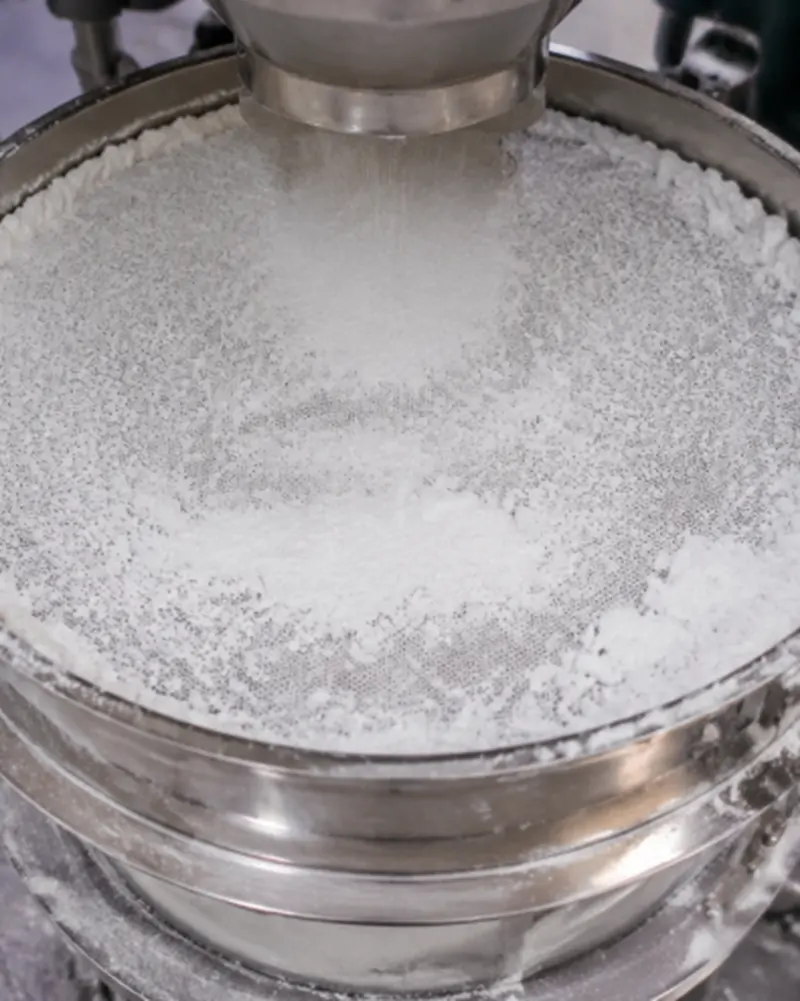
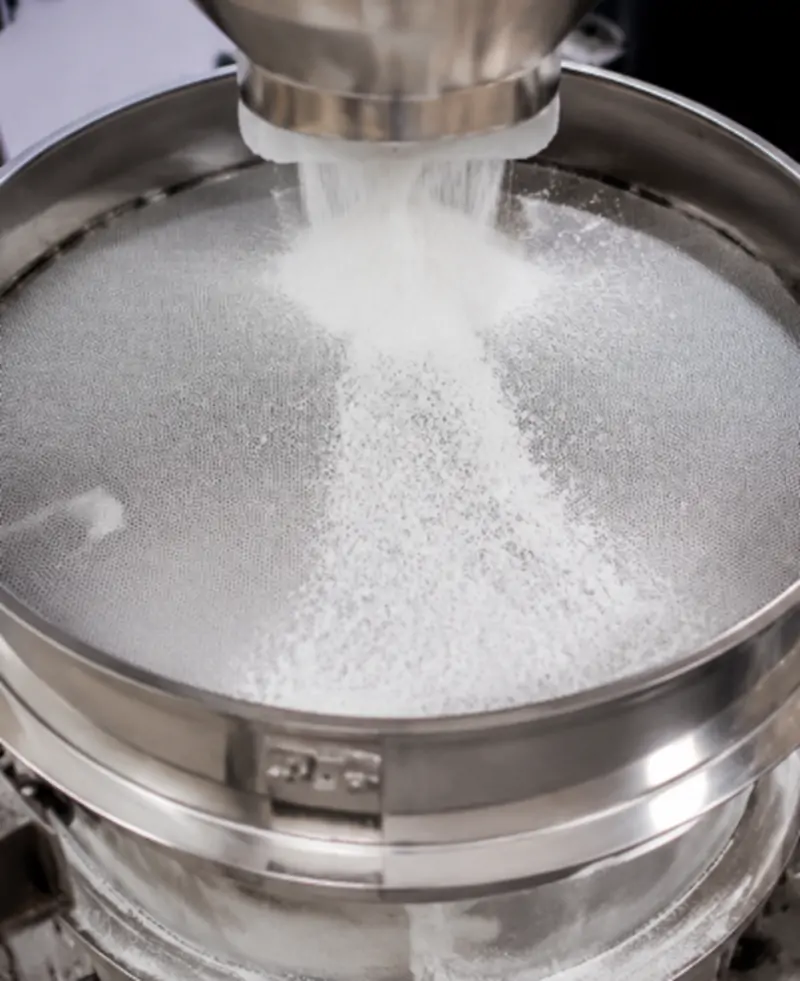
The finer the screen openings, the more demanding the requirements for material flowability and screen cleaning. If standard cleaning methods such as bouncing balls or screen cleaning brushes still cannot keep the openings clear, an ultrasonic screen cleaning system can be considered.
Ultrasonic screening mainly helps reduce the clogging and adhesion of fine powder in the screen openings, making it easier for the fine powder to pass through the screen. However, not all fine powders require ultrasonic cleaning. If a standard rotary vibrating screen can already complete the screening process steadily, there is no need to add this configuration.
What Is the Difference Between a Standard Rotary Vibrating Screen and an Ultrasonic Vibrating Screen?
Both use vibration to move material through the screen. The main difference is whether an ultrasonic screen cleaning system is added and how the screen is cleaned.
A standard rotary vibrating screen uses three-dimensional vibration to move material across the screen and works with bouncing balls, screen cleaning brushes, and other methods to reduce screen clogging. For free-flowing industrial powders, this is usually sufficient for impurity removal and classification.
An ultrasonic vibrating screen adds an ultrasonic screen cleaning system to the standard vibrating screen. The ultrasonic system acts on the screen mesh to reduce the clogging and adhesion of fine powder in the screen openings, making it more suitable for fine powders, powders that tend to clog the screen, or applications using finer mesh.For a detailed explanation of how ultrasonic vibration works and when it is needed, see our guide to Ultrasonic Rotary Vibrating Screen.
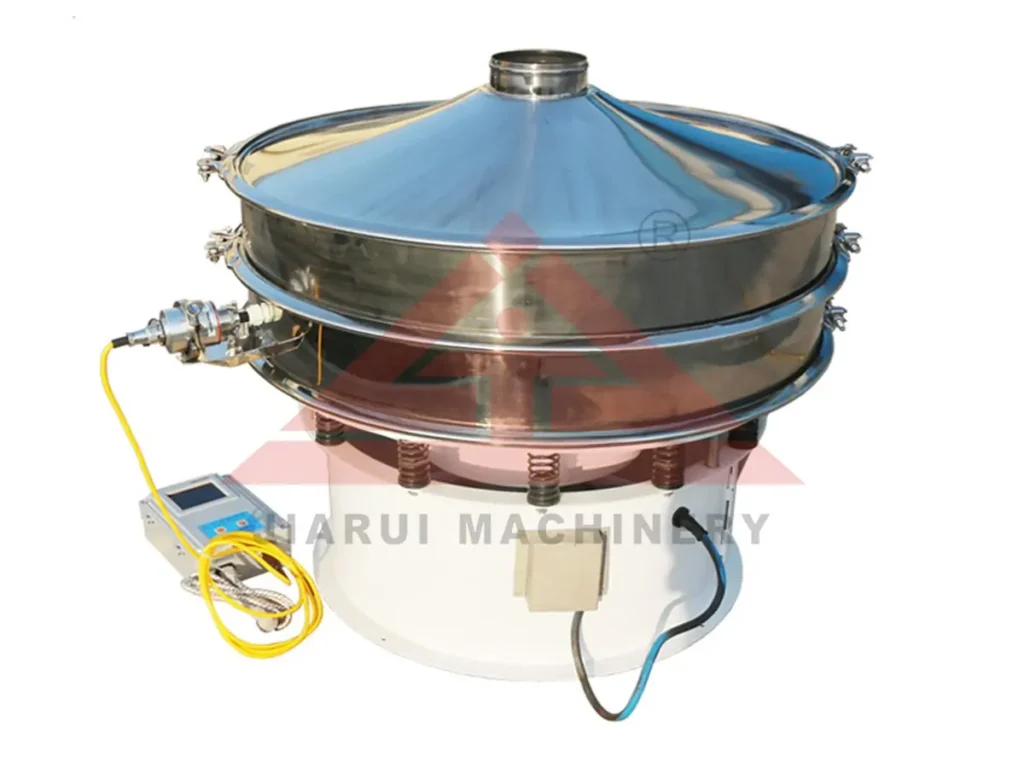
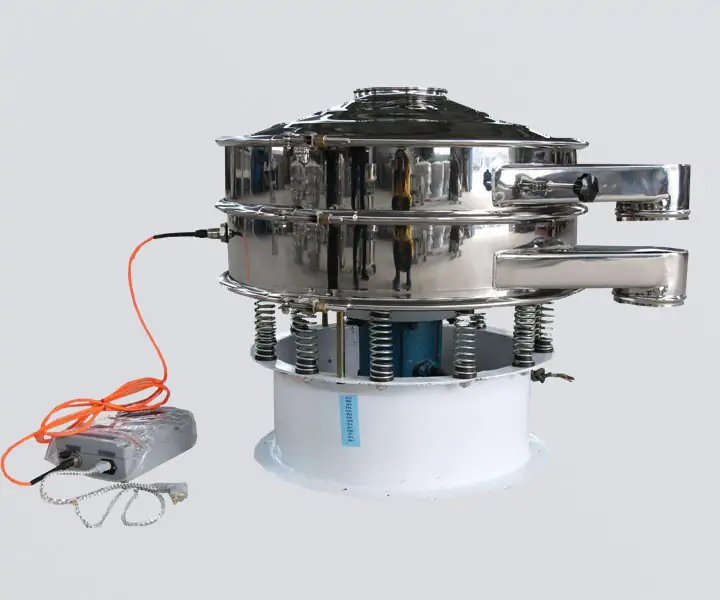
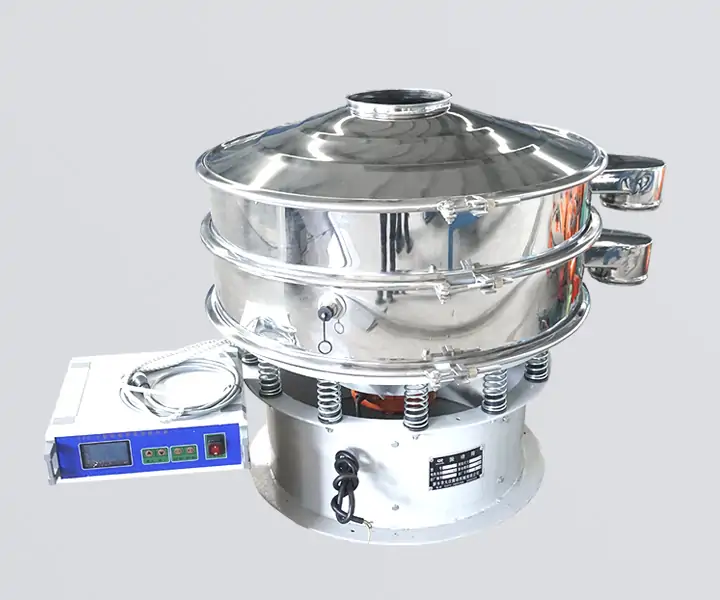
| Comparison Item | Standard Rotary Vibrating Screen | Ultrasonic Vibrating Screen |
| Screening method | Three-dimensional vibration screening | Three-dimensional vibration + ultrasonic screen cleaning |
| Suitable materials | Free-flowing powders | Fine powders and powders prone to screen clogging |
| Screen cleaning method | Bouncing balls, screen cleaning brushes, etc. | Ultrasonic screen cleaning |
| Screen clogging | Suitable for general clogging conditions | More targeted for fine-powder clogging |
| Equipment configuration | Relatively simple structure | Additional ultrasonic system |
| Application | Ordinary impurity removal and classification | Fine mesh and screen-clogging applications |
How to Choose a Vibro Sifter Machine for Industrial Powder?
When choosing a vibro sifter machine for industrial powder screening, do not look only at the mesh size. You first need to determine what the powder is, how fine it needs to be screened, how much material needs to be processed per hour, and whether the screen is likely to clog. For a reference on standard sieve sizes, aperture sizes, and mesh sizes, see our Standard Sieve Sizes guide.For chemical powder applications, see our guide to Chemical Rotary Vibrating Screen configuration.
| Conditions to Confirm | Main Impact |
| Material characteristics | Screen mesh and cleaning method |
| Feed particle size | Sifter specification and screen configuration |
| Screening particle size | Mesh size and number of screen decks |
| Throughput | Screen area and equipment specification |
| Whether the screen is prone to clogging | Whether ultrasonic screen cleaning is needed |
When selecting the equipment, start with the powder itself:
- Free-flowing ordinary industrial powder → Three-dimensional rotary vibrating screen
- Fine powder that tends to clog the screen, or applications using finer mesh → Evaluate ultrasonic screen cleaning
This is not a fixed one-to-one relationship. The same powder may require different equipment configurations depending on the screening size, throughput, and production process. Therefore, neither 200 mesh nor 5 tons per hour alone can determine the equipment model.
To determine a specific model, at least the material name, feed particle size, screening particle size, and required throughput are needed. For more information on China Rotary Vibrating Screen prices, specifications, and supplier selection, see our China Rotary Vibrating Screen guide. When comparing suppliers, you can also refer to our guide on how to choose a rotary vibrating screen manufacturer. If the material tends to stick to the screen, generate static charge, or agglomerate, this should also be stated in advance.If you want to understand where a vibro sifter is useful beyond basic powder screening, see our guide to The Application Advantages of Vibro Sifter .
If you have not determined the specific model yet, you can provide the material name, screening requirements, and throughput to Jiarui‘s engineering team. We can assess whether a three-dimensional rotary vibrating screen is suitable and whether an ultrasonic screen cleaning system is needed.
FAQs
Can industrial powder be screened with a vibro sifter?
Yes. For dry, reasonably free-flowing industrial powders, vibro sifters are commonly used for impurity removal, lump removal, and particle-size classification. Whether to use a standard rotary vibrating screen or an ultrasonic vibrating screen depends on the powder particle size, flowability, throughput, and tendency to clog the screen.
What type of vibrating screen should be used for 200-mesh powder?
200 mesh is only a screen specification and cannot determine the sifter model by itself. If the powder has good flowability, a standard rotary vibrating screen can usually be considered first. If the powder is very fine and tends to clog or stick to the screen during screening, ultrasonic screen cleaning should be evaluated. Throughput and the number of screening decks also need to be considered when determining the equipment configuration.
Why does fine powder tend to clog the screen?
Fine powder may clog the screen because of very small particles, static charge, moisture, stickiness, or material agglomeration. These problems generally become more noticeable as the screen openings become finer. If standard cleaning methods such as bouncing balls or screen cleaning brushes still cannot keep the openings clear, an ultrasonic screen cleaning system can be considered.
What is the difference between a standard rotary vibrating screen and an ultrasonic vibrating screen?
Both use vibration to move material through the screen. The main difference is whether an ultrasonic screen cleaning system is added. A standard rotary vibrating screen is suitable for free-flowing powders. For fine powders, powders prone to screen clogging, or applications using finer mesh, ultrasonic screen cleaning can reduce screen clogging and powder adhesion.
Why can’t a vibrating screen model be determined only by 5 tons per hour?
5 tons per hour only indicates the required throughput. It cannot determine the vibrating screen model by itself. Different powders have different flowability, bulk density, feed particle size, screening particle size, and screen-clogging characteristics. Even at the same throughput, the required screen area and equipment configuration may be different. When selecting the equipment, throughput should be determined first, followed by the equipment specification based on material characteristics and screening requirements.
Can an industrial powder vibro sifter be customized according to the material?
Yes. Jiarui can configure the equipment according to material characteristics, screening particle size, throughput, and production line layout, including the sifter specification, screen mesh, number of decks, inlet and outlet structure, and screen cleaning method. For fine powders, the need for an ultrasonic screen cleaning system can also be evaluated based on the actual screen-clogging condition.