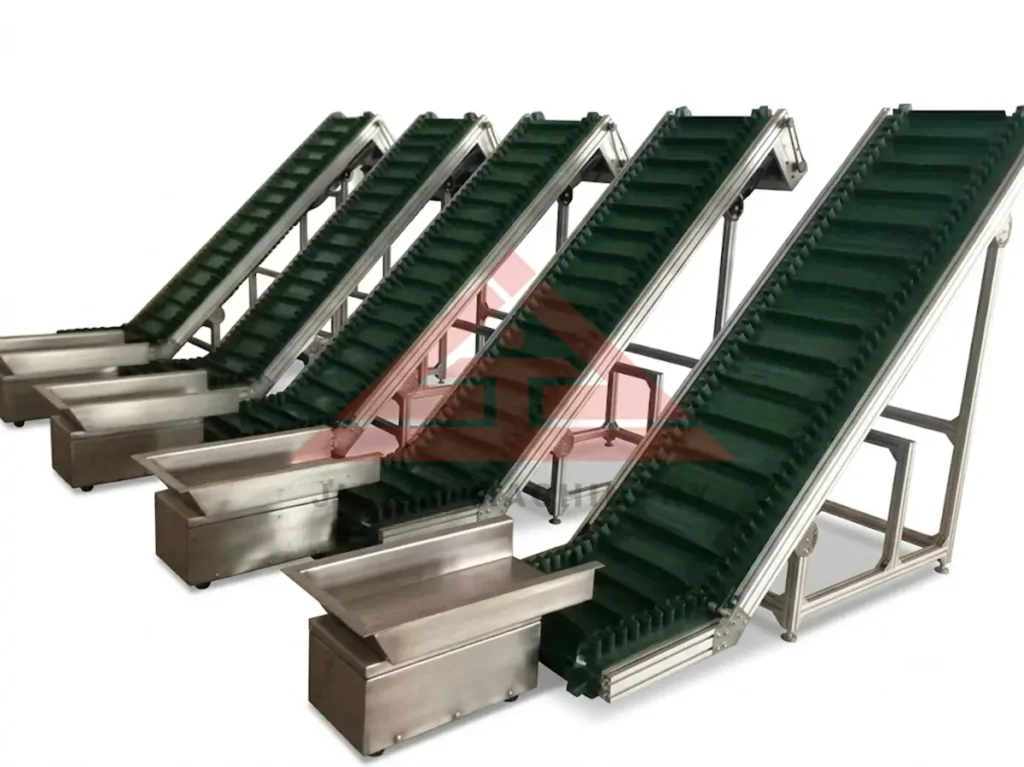
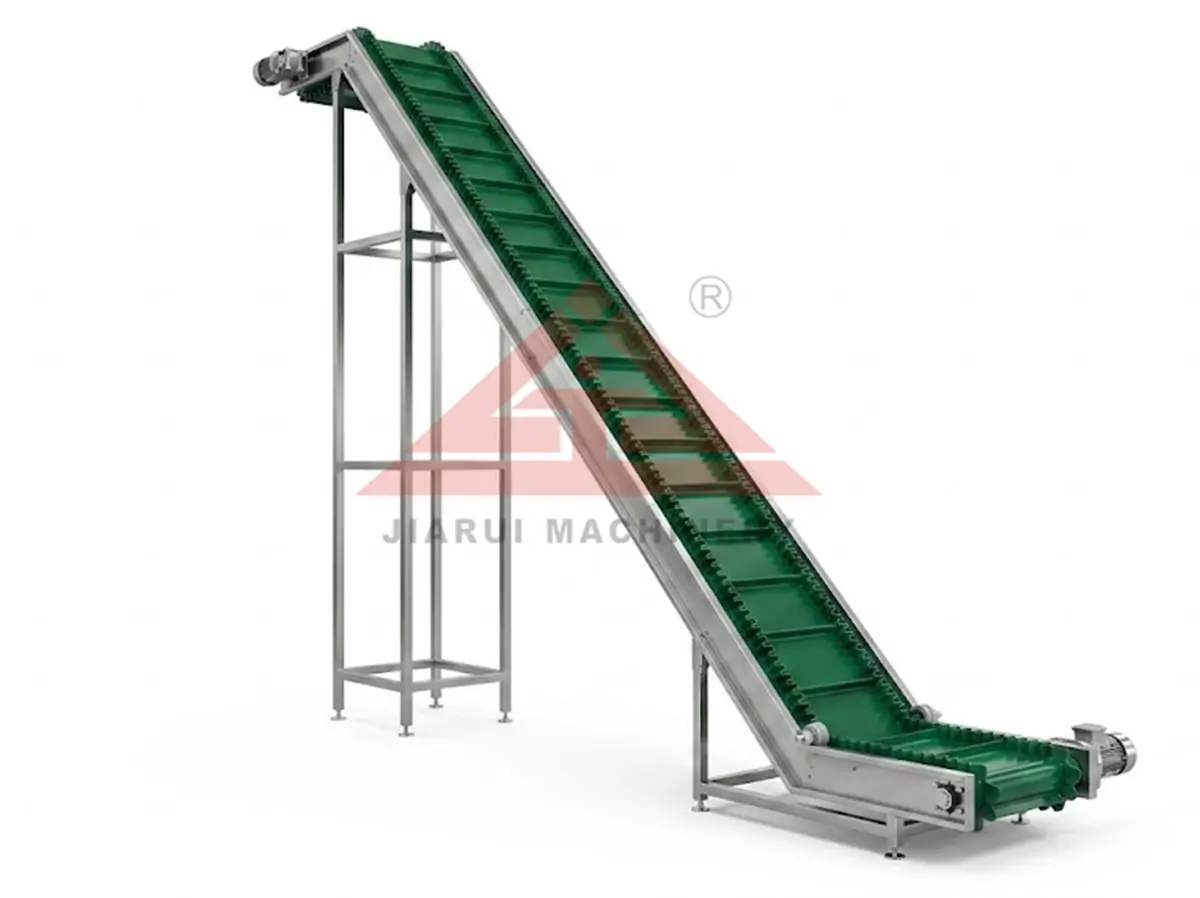
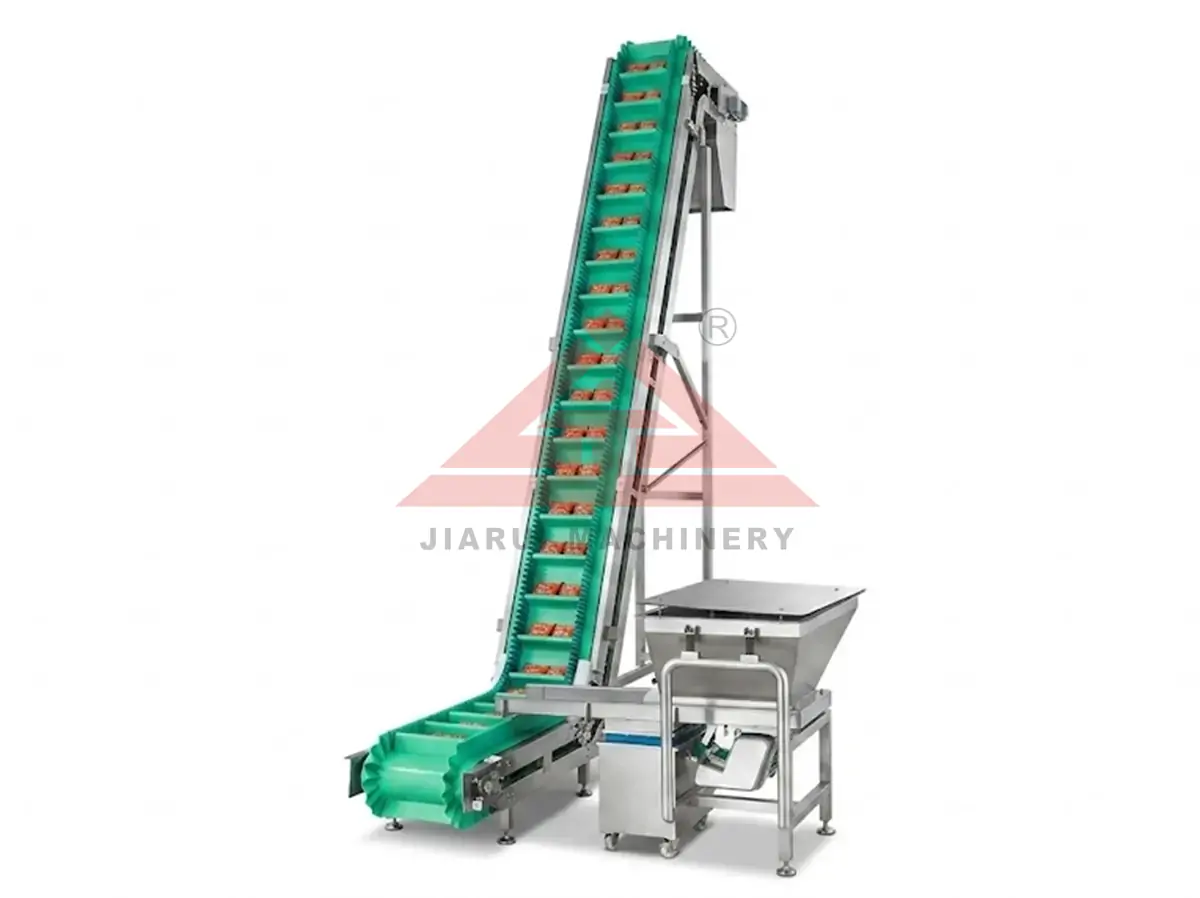
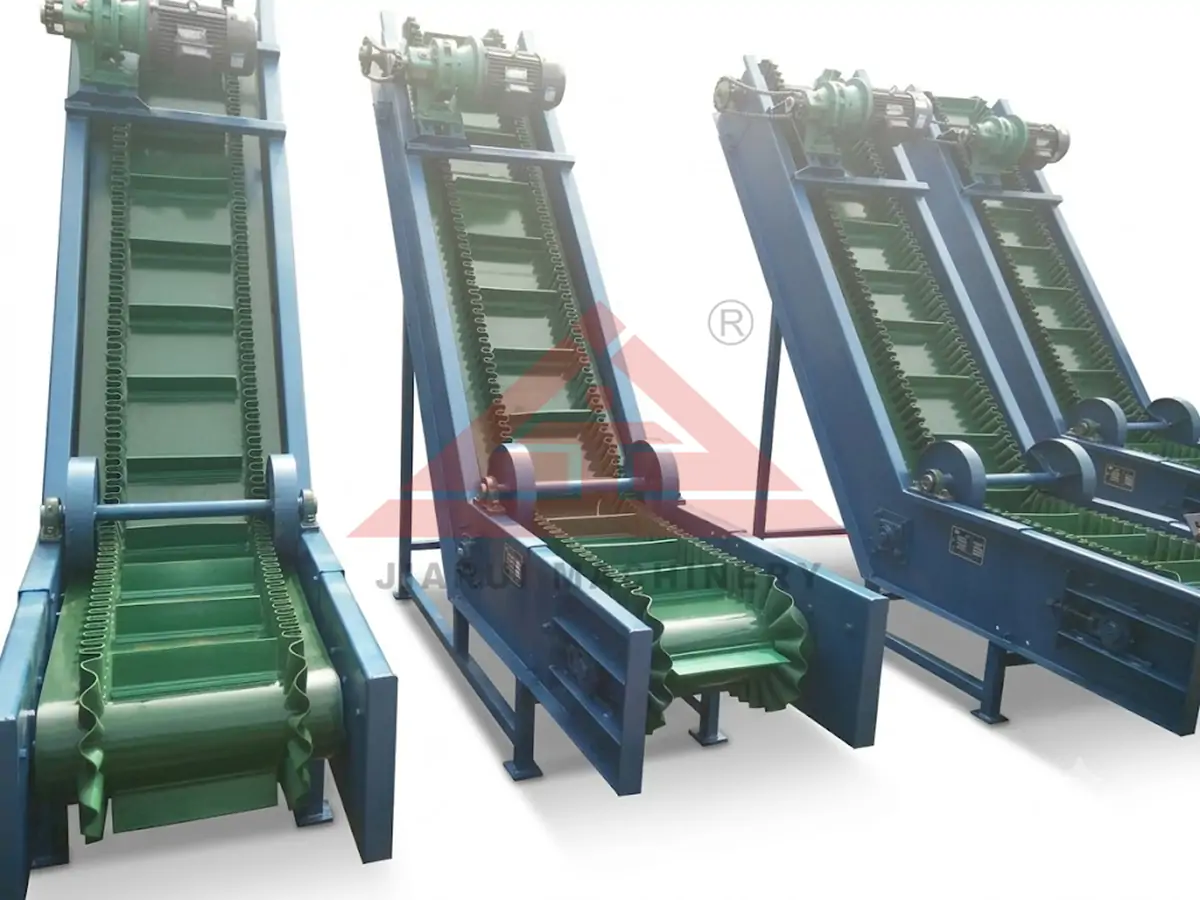
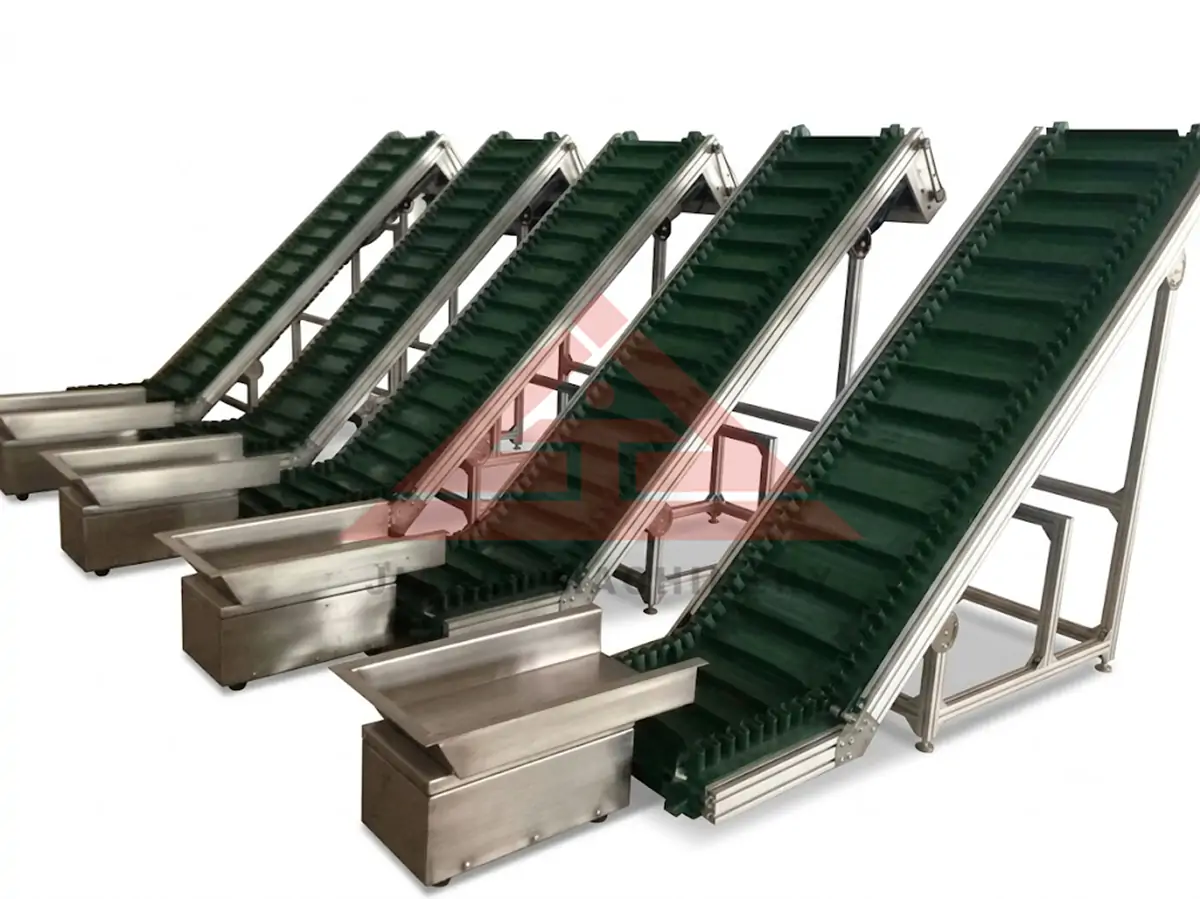
Stollenbandförderer | Jiarui Schrägfördersystem für Schüttgüter
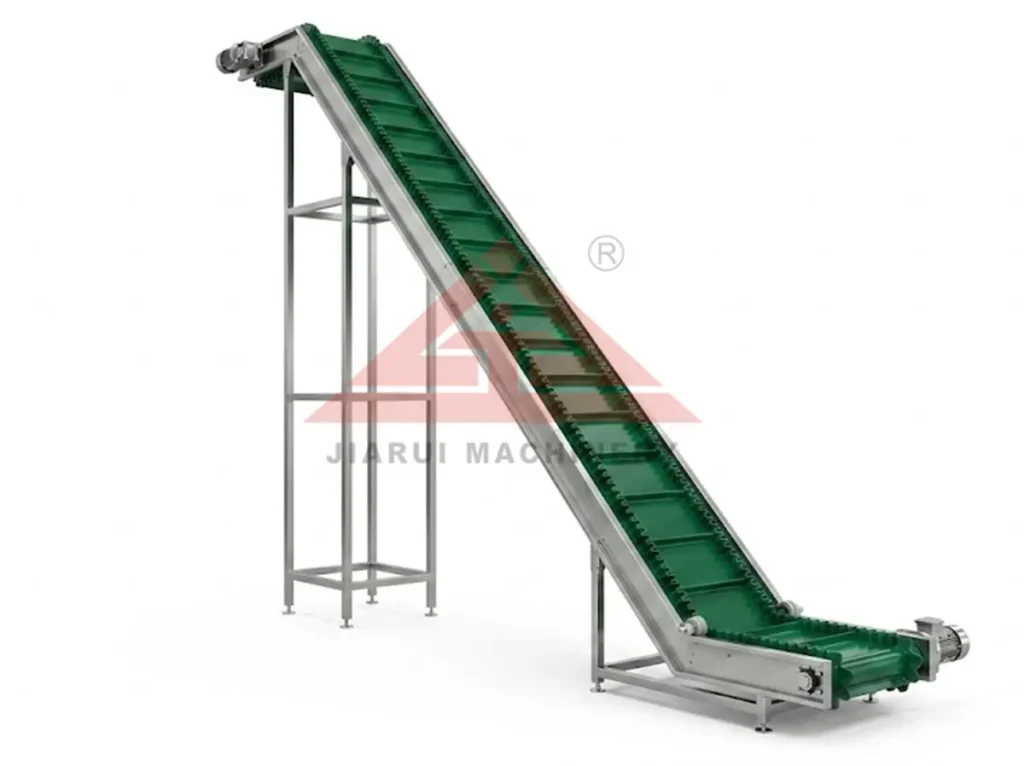
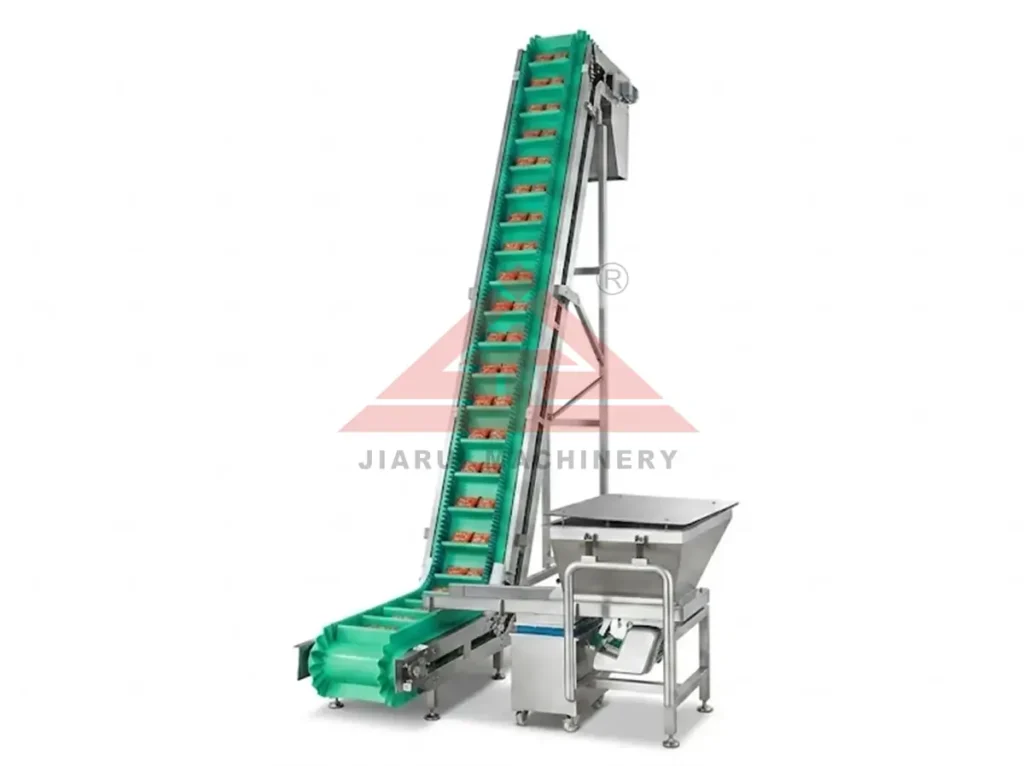
Ein Steilförderband mit Mitnehmern wird verwendet, um Pulver, Granulate und kleine Schüttgüter in einer Steigung zu transportieren, insbesondere dort, wo ein standardmäßiges Flachförderband den erforderlichen Förderwinkel nicht bewältigen kann. Mitnehmer und Seitenwände helfen, das Material auf dem Band zu halten und Rückrollen sowie Verschüttung während des Transports zu reduzieren.
Es wird häufig im Bergbau, in der Baustoffindustrie, in der chemischen Verarbeitung, im Bereich neuer Energien, in der Lebensmittelindustrie und im Umweltschutz eingesetzt. Jiarui kann die Bandbreite, Hubhöhe, Förderkapazität und Struktur individuell an das Material und den Installationsraum anpassen. Es kann auch mit anderen Förderanlagen integriert werden, um einen kontinuierlichen Materialtransfer zwischen verschiedenen Prozessen zu unterstützen.
- Modell: ZDS200-ZDS900
- Bandbreite: 200-900 mm
- Motorleistung: 0,55-7,5 kW
- Schrägwinkel: 20°-45°
- Hubhöhe: 1000-5500 mm
- Förderlänge: 1500-5500 mm
- Geeignete Materialien: Pulver, granulare Materialien, kleine Schüttgüter
- Rahmenmaterial: Kohlenstoffstahl, Edelstahl
Was ist ein Stollenbandförderer?
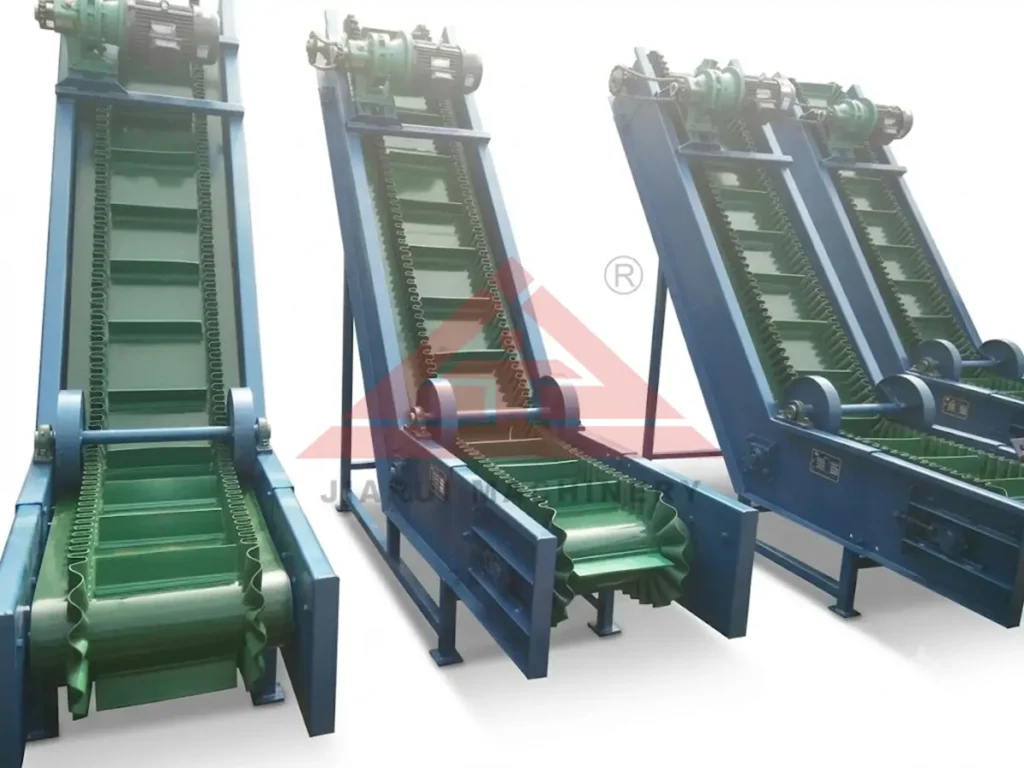
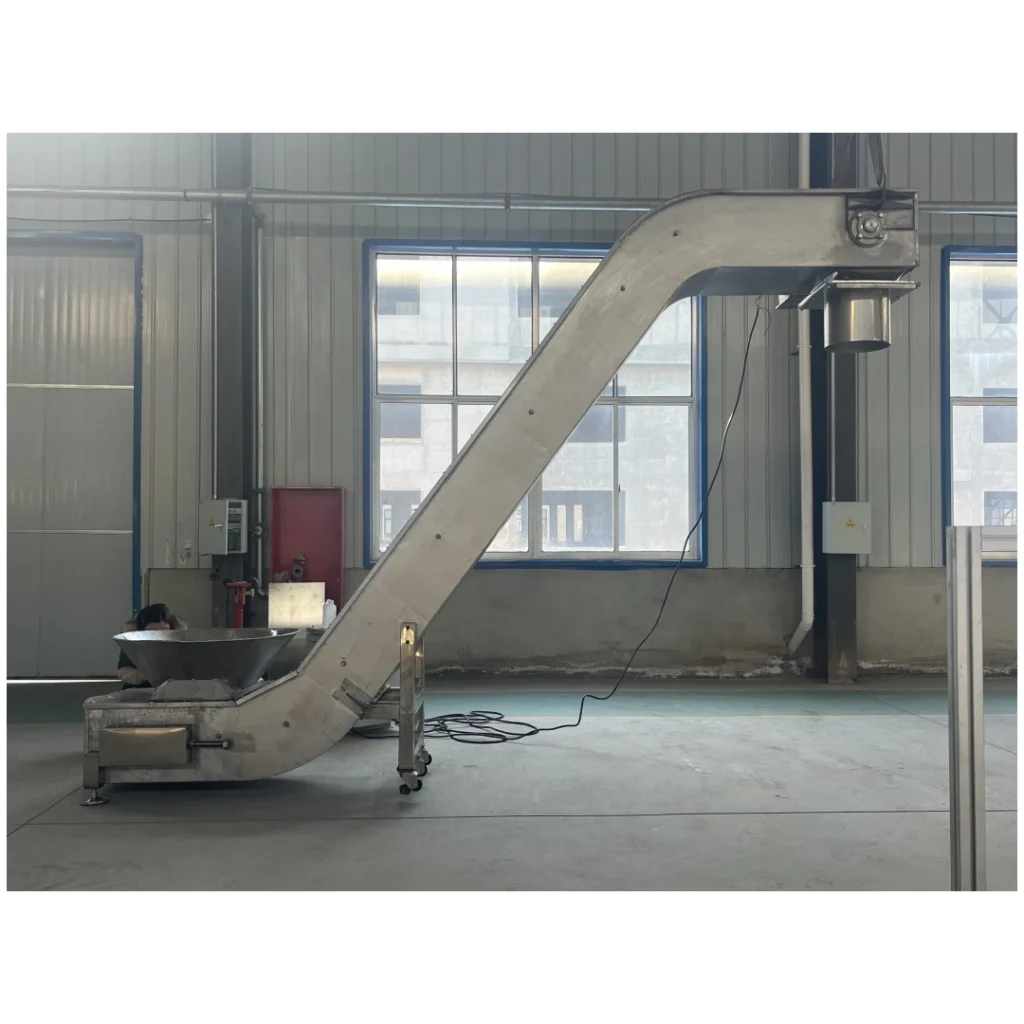
Ein Stollenbandförderer, auch bekannt als Stollen-Seitenwandbandförderer, Steilwinkelförderer oder Stollenfördersystem, ist eine kontinuierliche Fördermaschine, die aus einem Standardbandförderer durch Hinzufügung von Querstollen und Seitenwänden entwickelt wurde. Die Stollen bewegen sich zusammen mit dem Förderband, um das Material zu stützen und Rückrollen beim Schrägtransport zu reduzieren, während die Seitenwände verhindern, dass Material über die Kanten verschüttet wird, sodass pulverförmige, granulare und kleine Schüttgüter stabil transportiert werden können.
Dieser Typ von Schrägförderer für Schüttgüter wird hauptsächlich für Materialtransferanwendungen eingesetzt, bei denen Höhenunterschiede in Produktionslinien bestehen. Der übliche Förderwinkel beträgt 20°-45°, und die Struktur kann je nach Materialeigenschaften, Förderkapazität und Installationsbedingungen angepasst werden. Er wird häufig in Bergbau, Baustoffen, Chemie, neuen Energien, Lebensmitteln und anderen Branchen der Schüttguthandhabung eingesetzt.
Funktionsprinzip
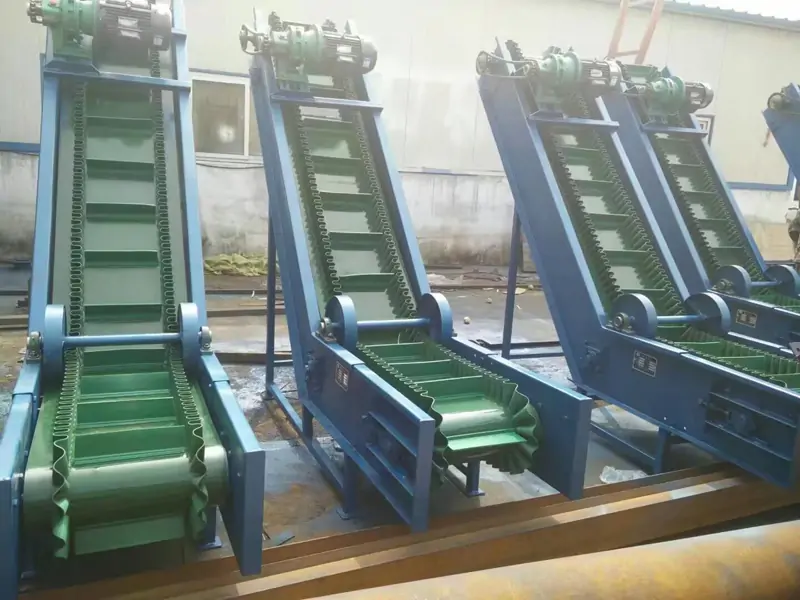
Der Stollenbandförderer verbessert die Schrägförderleistung durch die Hinzufügung von Querstollen und Seitenwandstrukturen zu einem Standardförderband, wodurch kontinuierliche Materialtragabschnitte auf der Bandoberfläche entstehen. Nachdem Materialien in den Förderbereich gelangen, reduzieren die Stollen das Abwärtsgleiten, während die Seitenwände seitliches Verschütten verhindern, sodass pulverförmige, granulare Materialien und kleine Stückgüter sich mit dem Förderband nach oben bewegen können.
Wie reduzieren Stollen das Materialgleiten?
Wenn ein Standardbandförderer mit einem größeren Neigungswinkel arbeitet, können Materialien aufgrund der Schwerkraft nach unten gleiten. Nachdem Stollen auf der Bandoberfläche installiert sind, bieten sie segmentierte Unterstützung für die Materialien, sodass diese sich zusammen mit dem Band nach oben bewegen können und das Rückrollen beim Schrägtransport reduziert wird.
Wie reduzieren Seitenwände Materialverschüttung?
Die Seitenwände an beiden Seiten des Förderbands erhöhen den Materialaufnahmebereich und verhindern, dass sich Material zu den Kanten ausbreitet. In Kombination mit Querstollen trägt die Seitenwandkonstruktion dazu bei, Leckagen und Verschüttungen von pulverförmigen und granularen Materialien beim Schrägtransport zu reduzieren und das Material im effektiven Förderbereich zu halten.
Wie erreicht das Förderband eine kontinuierliche Förderung?
Das Antriebssystem versorgt das Förderband für den kontinuierlichen Betrieb mit Energie. Nachdem Materialien in den von Stollen und Seitenwänden gebildeten Tragbereich gelangen, bewegen sie sich mit dem Band zur Austragsseite für den Transfer. Der gesamte Förderprozess läuft kontinuierlich, wodurch das System für Schüttguthebe- und Transferanwendungen in Produktionslinien geeignet ist.
Die Förderleistung eines Stollenbandförderers hängt nicht nur von der Gerätestruktur ab, sondern auch von Materialeigenschaften, Förderwinkel und Standortbedingungen. Die richtige Auswahl von Stollendesign, Seitenwandhöhe und Förderparametern ermöglicht es dem Gerät, die Anforderungen verschiedener Schüttguthandhabungsanwendungen besser zu erfüllen.
Hauptstruktur
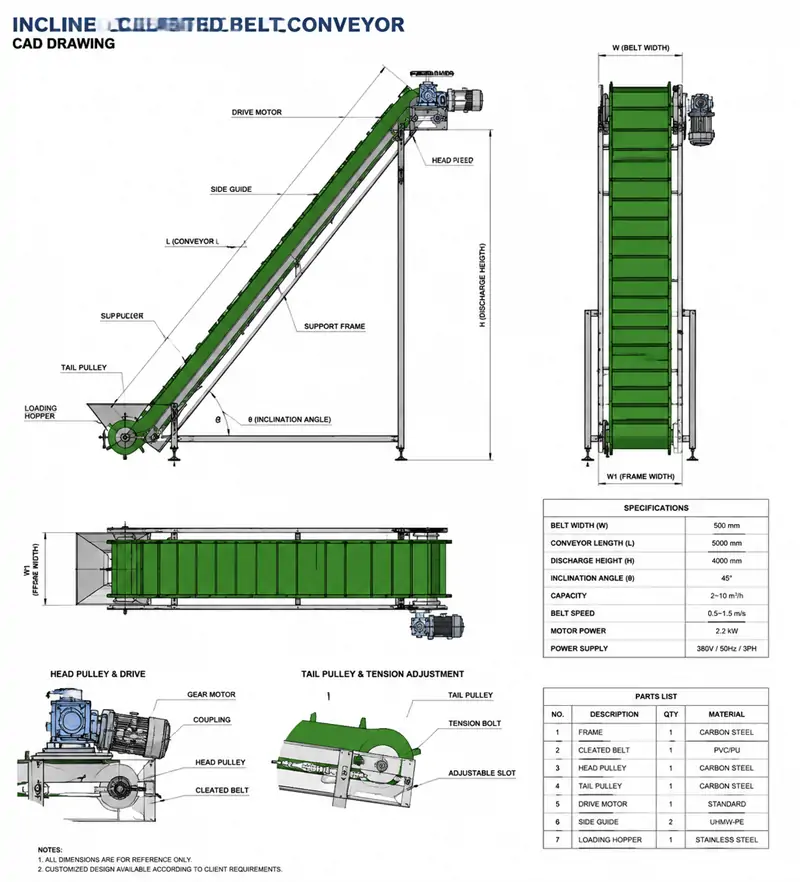
Ein Stollenbandförderer besteht hauptsächlich aus einem Förderband, Querstollen, Seitenwänden, Antriebssystem und Rahmenstruktur. Unterschiedliche Materialien und Betriebsumgebungen erfordern unterschiedliche Strukturdesigns. Beispielsweise liegt bei der Pulverförderung der Fokus stärker auf der Verhinderung von Materialleckagen und der Verbesserung der Abdichtungsleistung, während granulare Materialien stärkere Stollenstrukturen und stabile Förderleistung erfordern.
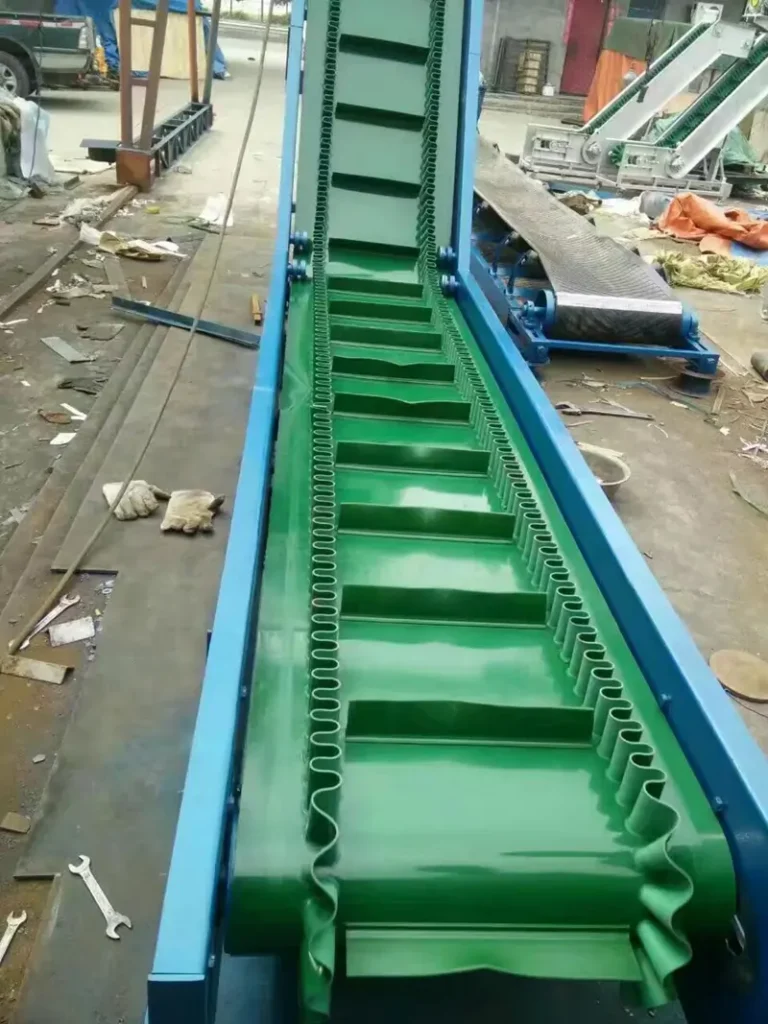
Förderband
Das Förderband ist die Kernkomponente, die für das Tragen und Transportieren von Material verantwortlich ist. Je nach Materialeigenschaften und Betriebsbedingungen können verschiedene Bandtypen wie Gummibänder, PVC-Bänder oder andere geeignete Förderbandmaterialien ausgewählt werden. Bandbreite, Dicke und Material sollten basierend auf Förderkapazität, Materialgröße und Laufbedingungen bestimmt werden.
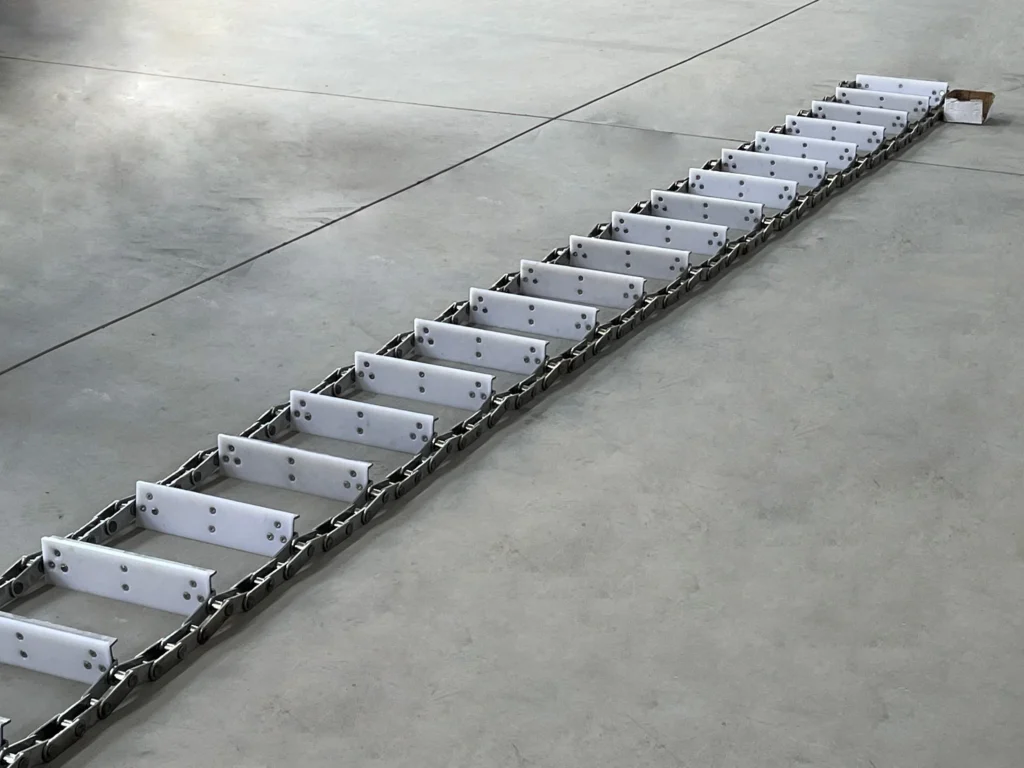
Stollen und Seitenwände
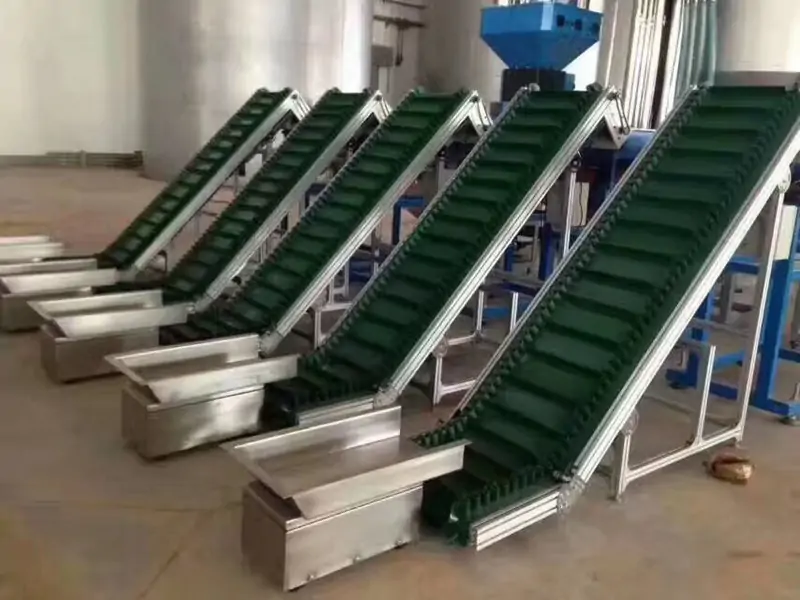
Die Querstollen sind auf der Förderbandoberfläche installiert, um Material zu stützen und die Schrägförderfähigkeit zu verbessern. Die Seitenwände an beiden Seiten erhöhen den Materialtragraum und reduzieren Materialverschüttung von den Kanten. Die Stollenhöhe, der Abstand und das Seitenwanddesign beeinflussen direkt die Förderleistung des schrägen Stollenbandförderers.
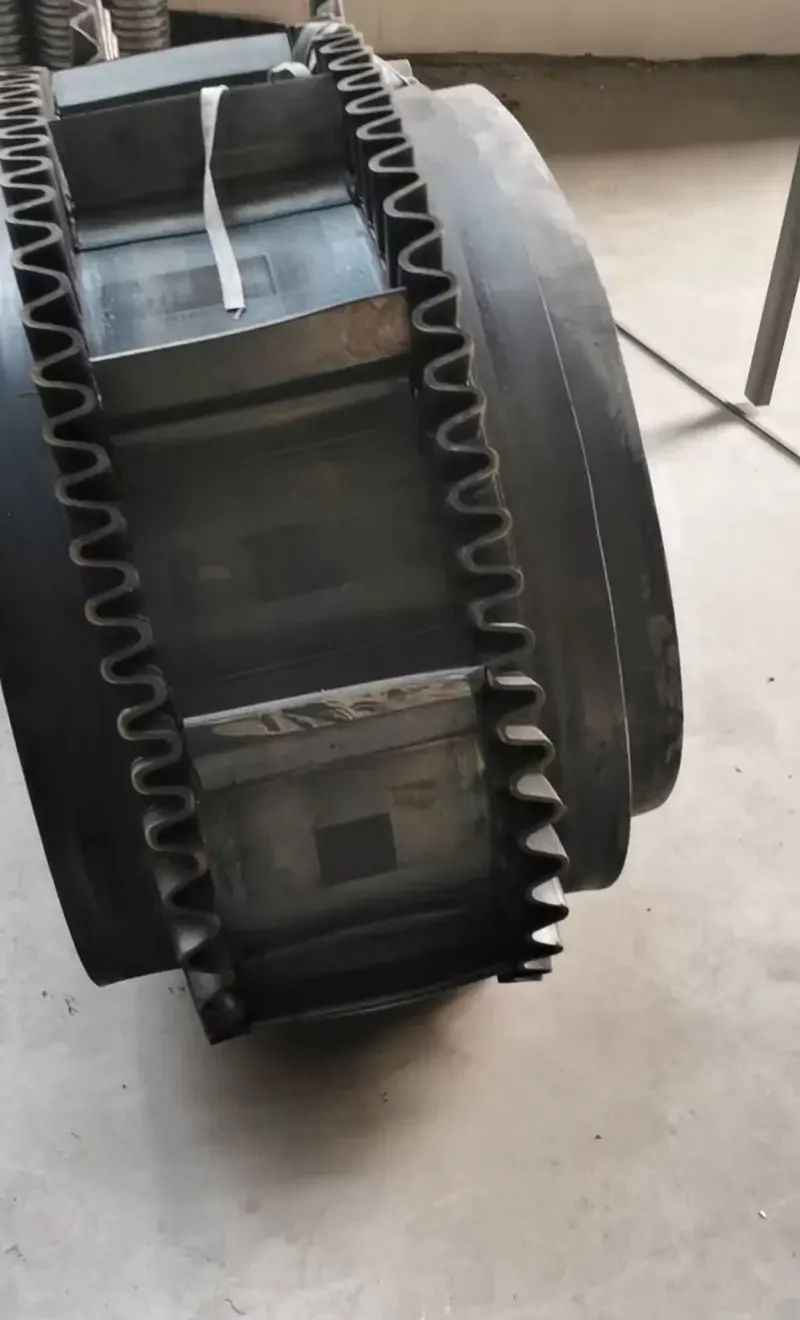
Antriebssystem und Rahmen
Das Antriebssystem liefert kontinuierliche Betriebsleistung für das Förderband. Die Motorleistung sollte entsprechend der Förderlänge, Hubhöhe und Materialgewicht ausgewählt werden. Der Rahmen stützt das gesamte Fördersystem und kann je nach Arbeitsumgebung aus Kohlenstoffstahl oder Edelstahl gefertigt werden.
Die strukturelle Auslegung eines Cleated-Bandförderersystems muss entsprechend den spezifischen Betriebsbedingungen angepasst werden. Unterschiedliche Materialien, Förderhöhen und Installationsräume beeinflussen die endgültige Gerätekonfiguration. Eine korrekte strukturelle Abstimmung verbessert die Betriebsstabilität und reduziert zukünftigen Wartungsaufwand.
Produktparameter
Unterschiedliche Produktionslinien stellen unterschiedliche Anforderungen an Förderhöhe, -distanz und -kapazität. Der Cleated-Bandförderer wird hauptsächlich nach Bandbreite, Motorleistung, Förderwinkel und Standortbedingungen ausgewählt. Die folgenden Parameter können als Referenz für die Modellauswahl dienen. Die endgültige Konfiguration sollte entsprechend den Materialeigenschaften und der Installationsumgebung bestätigt werden.
| Modell | Gurtbreite (mm) | Motorleistung (kW) | Neigungswinkel (°) | Hubhöhe (mm) | Förderlänge (mm) |
| ZDS200 | 200 | 0.55 | 20-45 | 1000-3000 | 1500-3500 |
| ZDS300 | 300 | 0.75 | 20-45 | 1000-3500 | 1500-3500 |
| ZDS400 | 400 | 1.5 | 20-45 | 1000-4000 | 1500-4000 |
| ZDS500 | 500 | 2.5 | 20-45 | 1000-4500 | 1500-4500 |
| ZDS600 | 600 | 3 | 20-45 | 1000-4500 | 1500-4500 |
| ZDS700 | 700 | 4 | 20-45 | 1000-5000 | 1500-5000 |
| ZDS800 | 800 | 5.5 | 20-45 | 1000-5000 | 1500-5000 |
| ZDS900 | 900 | 7.5 | 20-45 | 1000-5500 | 1500-5500 |
| Artikel | Konfiguration |
| Geeignete Materialien | Pulver, granulare Materialien, kleine Schüttgüter |
| Förderbandmaterial | PVC, PU, Gummi |
| Rahmenmaterial | Kohlenstoffstahl, Edelstahl |
Eine größere Bandbreite bietet in der Regel eine größere Materialauflagefläche, aber die tatsächliche Förderkapazität wird auch durch Materialdichte, Partikelgröße, Förderwinkel und Bandgeschwindigkeit beeinflusst. Für detaillierte Auslegung von Förderbändern und Praktiken der SchüttgutHandhabung lesen Sie bitte die technischen Ressourcen, die von der Conveyor Equipment Manufacturers Association (CEMA) veröffentlicht wurden. Die Modellauswahl sollte nicht nur dimensionale Parameter berücksichtigen, sondern auch die tatsächlichen Förderanforderungen erfüllen. Hubhöhe und Förderlänge sind Referenzbereiche. Die erreichbare Hubhöhe hängt von der gewählten Förderlänge und dem Neigungswinkel ab.
Referenz für Bandbreite und Förderkapazität
| Bandbreite | Anwendung |
| 200-300 mm | Kleine Beschickung und Produktionslinien mit begrenztem Platz |
| 400-600 mm | Standardmäßige industrielle kontinuierliche Förderung |
| 700-900 mm | Großvolumige Schüttguthubförderung |
Die tatsächliche Förderkapazität wird auch durch Materialdichte, Partikelgröße, Neigungswinkel und Betriebsgeschwindigkeit beeinflusst. Jiarui bewertet die Arbeitsbedingungen und bestätigt die geeignete Konfiguration des Steilförderbands mit Mitnehmern basierend auf den spezifischen Anforderungen.
Vorteile
Das Steilförderband mit Mitnehmern wurde hauptsächlich entwickelt, um häufige Probleme von Standardförderbändern beim geneigten Transport zu lösen, wie Materialrückrollen, Verschüttung und übermäßigen Platzbedarf. Durch das kombinierte Design von Quermitnehmern und Seitenwänden verbessert das Gerät die Stabilität des Materialtransports und eignet sich für den kontinuierlichen Transfer verschiedener Schüttgüter unter verschiedenen Höhenunterschieden und Installationsbedingungen.
Reduzierter Installationsraum für Höhenunterschiedsförderung
Für Produktionslinien, die eine geneigte Hubförderung erfordern, kann eine Erhöhung des Förderwinkels die horizontale Länge des Förderers reduzieren, wodurch das geneigte Steilförderband mit Mitnehmern besser für Installationsumgebungen mit begrenztem Platz geeignet ist.
Materialien in einem kontrollierten Bereich halten
Die Mitnehmer stützen die Materialien, während die Seitenwände eine seitliche Ausbreitung verhindern. Diese Struktur reduziert Rutschen und Verschüttung beim geneigten Transport und hält die Materialien innerhalb des effektiven Förderbereichs.
Anpassbare Struktur basierend auf Arbeitsbedingungen
Die Förderbandbreite, das Mitnehmerdesign, die Seitenwandhöhe und die Materialauswahl können entsprechend den Materialeigenschaften und den Anforderungen vor Ort angepasst werden.
Geeignet für kontinuierlichen Transfer in Produktionslinien
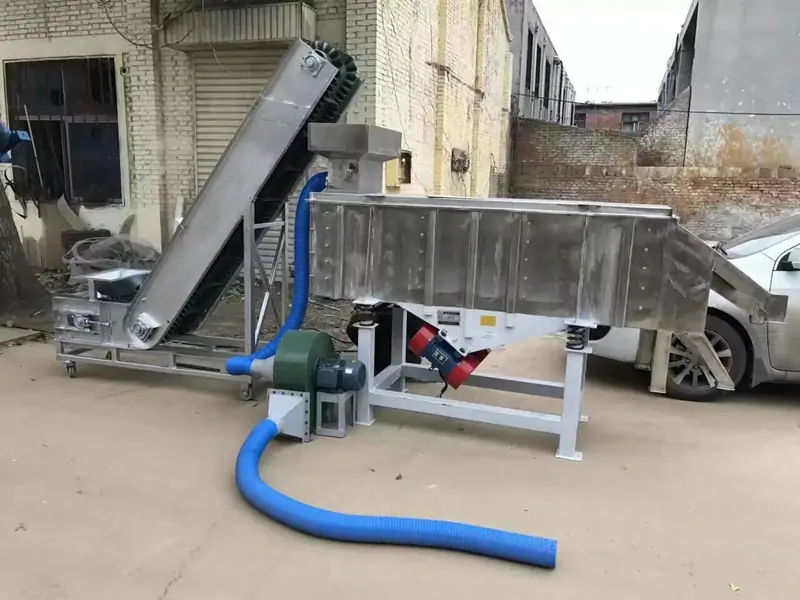
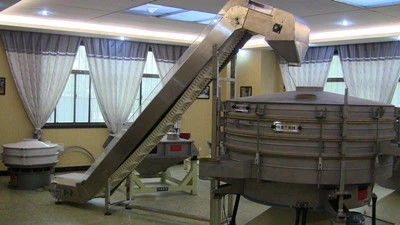
Mit kontinuierlicher Betriebsfähigkeit kann das Steilförderbandsystem mit Zerkleinerungs-, Sieb-, Verpackungs- und anderen Prozessen verbunden werden, wodurch manueller Transfer reduziert und die Effizienz der Produktionslinienverbindung verbessert wird.
Anwendungen
Das Steilförderband mit Mitnehmern wird hauptsächlich für Schüttguttransferanwendungen mit Höhenunterschieden eingesetzt. Durch die Kombination von Mitnehmern und Seitenwänden können pulverförmige Materialien, granulare Materialien und kleine Schüttgüter stabil entlang einer geneigten Richtung gefördert werden. Im Vergleich zu Standardförderbändern eignet es sich besser für geneigte Hubanwendungen, insbesondere in Produktionslinien mit begrenztem Platz oder Anforderungen zur Reduzierung von Materialverschüttung.
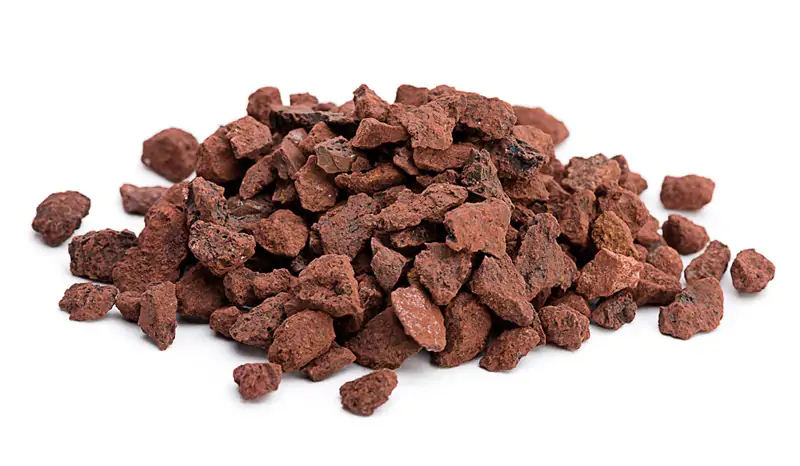 Eisenerz
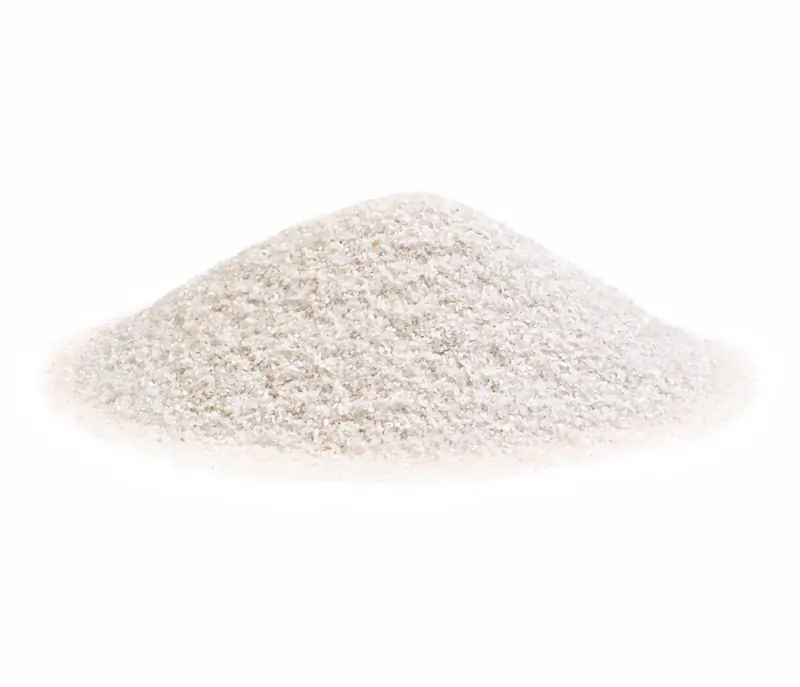 Quarzsand
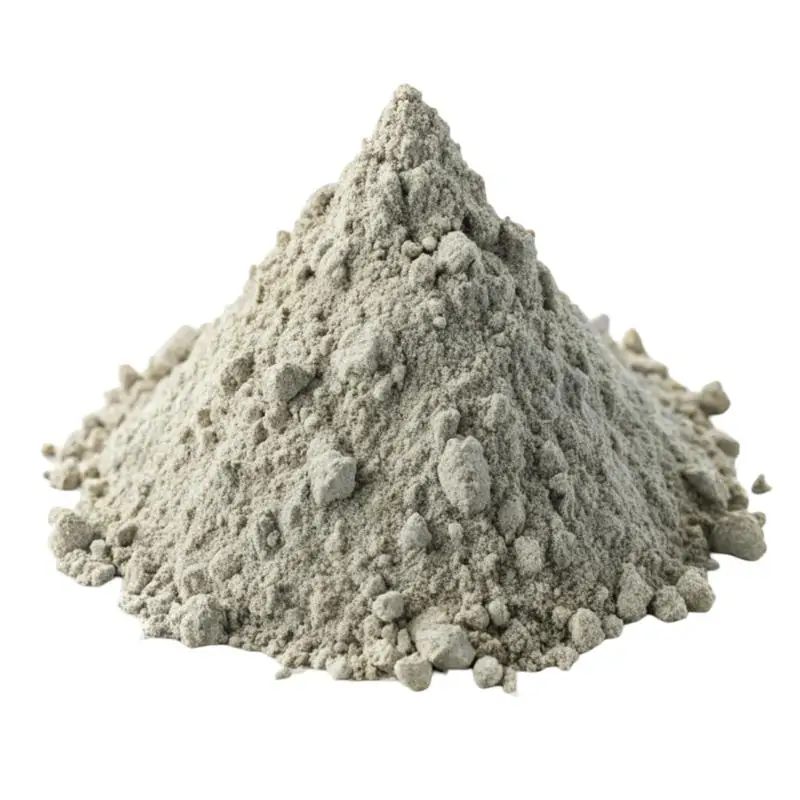 Zementpulver
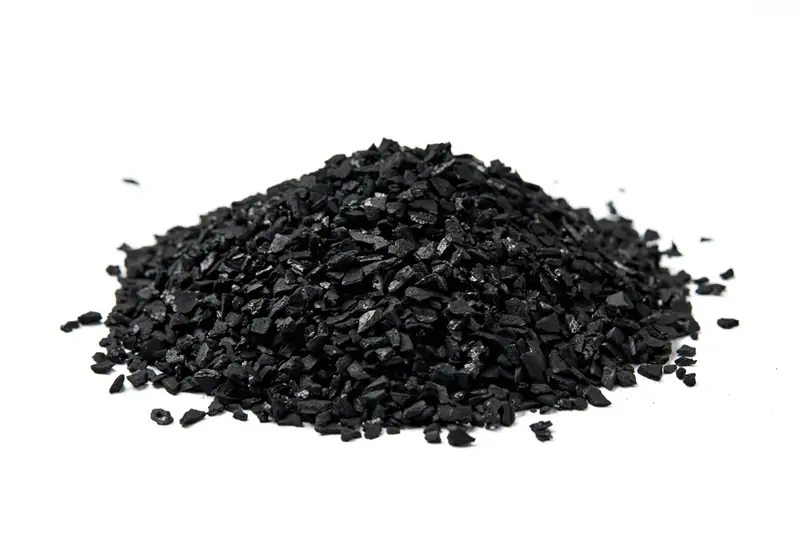 Aktivkohle
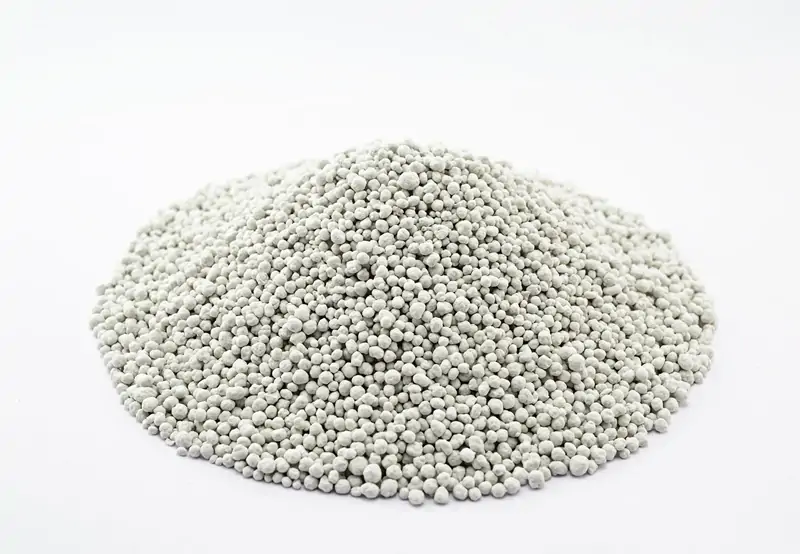 Düngemittelgranulat
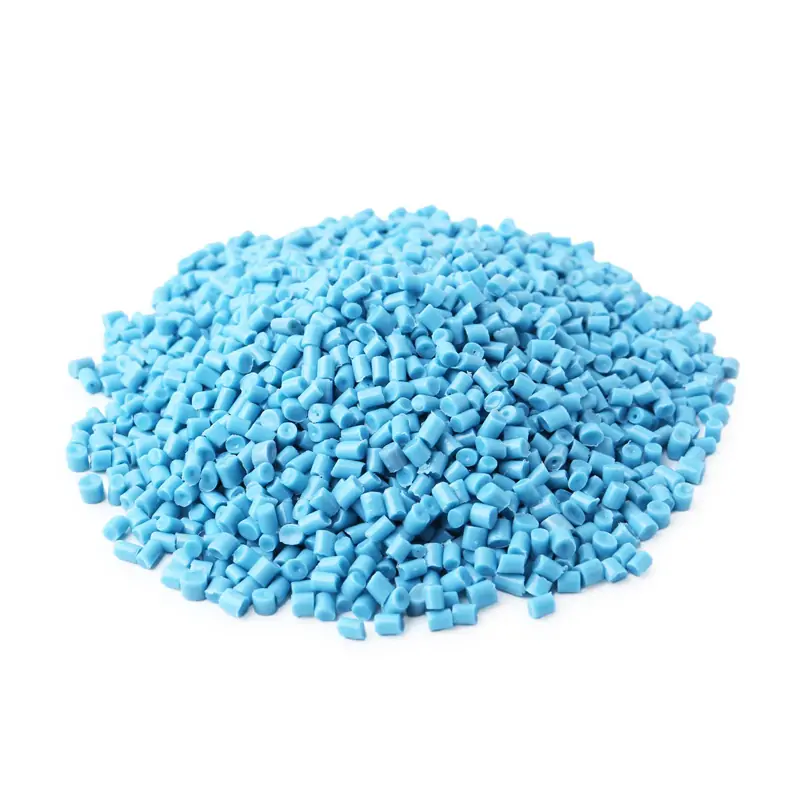 Kunststoffpellets
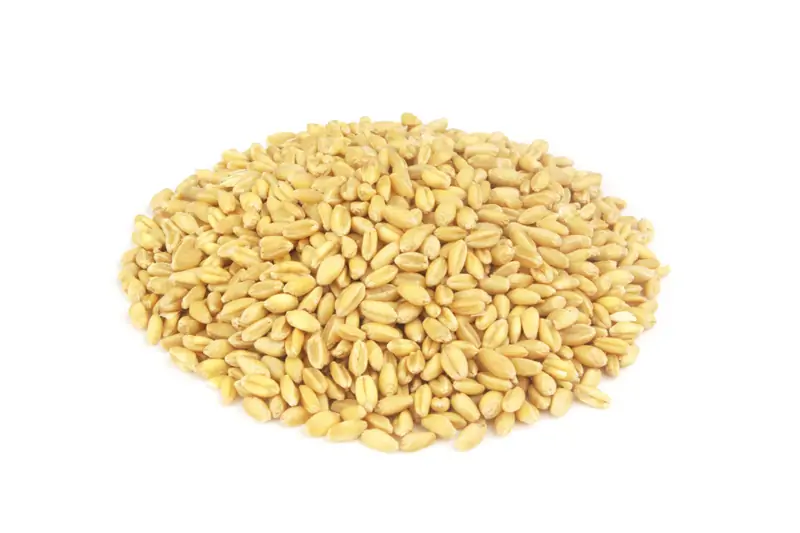 Weizen
 Elektronische Materialien
Häufig geförderte Materialien
| Material | Häufige Branchen | Fördermerkmale |
| Eisenerz und Mineralpartikel | Bergbau, Mineralaufbereitung | Wird zum Heben von Materialien nach Zerkleinerung und Siebung verwendet |
| Kalkstein und Zuschlagstoffe | Baustoffe, Zuschlagstoffproduktion | Geeignet für großvolumigen Schüttguttransfer |
| Zementpulver und Mineralpulver | Zement- und Pulverindustrie | Fokussiert auf die Verhinderung von Verschüttung und die Aufrechterhaltung der Förderstabilität |
| Kohlepartikel | Energie- und Brennstoffindustrie | Geeignet für kontinuierliche Förderung zwischen verschiedenen Höhenlagen |
| Düngemittelgranulate | Chemische und landwirtschaftliche Industrie | Geeignet für Materialien mit guter Fließfähigkeit |
| Kunststoffpellets | Kunststoffe und neue Materialien | Förderbandmaterialien können entsprechend den Reinheitsanforderungen ausgewählt werden |
| Getreide und Futtermittel | Lebensmittel- und Landwirtschaftsindustrie | In der Regel werden lebensmittelgerechte Förderkonfigurationen eingesetzt |
| Lithiumbatterie-Materialpulver | Neue-Energie-Industrie | Erfordert Beachtung der Materialkontaminationsvermeidung und Umweltanforderungen |
Materialien, die eine sorgfältige Auswahl erfordern
Der Stegbandförderer ist für die meisten Schüttgüter geeignet, jedoch müssen einige spezielle Betriebsbedingungen im Voraus bewertet werden:
- Materialien mit hohem Feuchtigkeitsgehalt und starker Haftung können Materialansammlungen auf dem Förderband verursachen;
- Hochtemperaturmaterialien erfordern hitzebeständige Förderstrukturen;
- Scharfe, große und stark abrasive Materialien erfordern eine Berücksichtigung der Verschleißfestigkeit des Förderbands;
- Materialien, die eine präzise Zufuhrsteuerung erfordern, sind möglicherweise besser für spezielle Zufuhreinrichtungen geeignet.
Unterschiedliche Materialien verhalten sich während des Transports unterschiedlich. Besonders bei größeren Neigungswinkeln beeinflussen Fließfähigkeit, Korngröße und Abrasivität des Materials die Geräteleistung. Eine ordnungsgemäße Abstimmung von Förderband, Stegdesign und Seitenwandstruktur ist unerlässlich, um einen langfristig stabilen Betrieb des geneigten Schüttgutfördersystems zu gewährleisten.
Stegbandförderer vs. Standard-Gurtförderer
Ein Standard-Gurtförderer eignet sich für konventionellen Materialtransport, während ein Stegbandförderer die Materialtransportleistung durch Querstege und Seitenwandstrukturen verbessert und somit besser für Steilwinkelförderung und Anwendungen mit Höhenunterschieden geeignet ist.
| Vergleichspunkt | Standard-Gurtförderer | Stollenbandförderer |
| Förderwinkel | Geeignet für horizontale und leicht geneigte Förderung | Geeignet für größere Neigungswinkel-Hubanwendungen |
| Materialtransportmethode | Nutzt Bandreibung zum Bewegen von Materialien | Stege stützen Materialien und Seitenwände verhindern seitliches Verschütten |
| Verschüttungsschutz | Bei größeren Winkeln kann es zu Materialrutschen und Verschüttung kommen | Besser geeignet für Pulver, Granulate und Schüttgüter |
| Platzbedarf | Erfordert längere Förderstrecke bei zunehmender Hubhöhe | Reduziert die Förderstrecke und eignet sich für platzbeschränkte Layouts |
| Anwendung | Konventioneller horizontaler Transfer und Kurzstreckenförderung | Geneigte Förderung und Materialtransfer mit Höhenunterschieden |
Auswahlhilfe
Wenn die Produktionslinie hauptsächlich horizontale oder flachwinklige Materialförderung bewältigt, kann ein Standard-Gurtförderer in der Regel die Anforderungen mit einfacher Struktur und bequemer Wartung erfüllen.
Wenn am Standort ein großer Höhenunterschied besteht, der Installationsplatz begrenzt ist oder Materialien beim geneigten Transport zum Rutschen und Verschütten neigen, ist der Stegbandförderer die geeignetere Förderlösung.
Die Geräteauswahl sollte nicht nur die Hubhöhe berücksichtigen. Auch die Rutscheigenschaften des Materials, das Verschüttungsrisiko und der verfügbare Installationsplatz beeinflussen das endgültige Design. Unterschiedliche Materialien haben unterschiedliche Anforderungen an die Verschleißfestigkeit des Förderbands, die Belastungsfestigkeit der Stege und die Reinigungsmethoden, daher sollte die Konfiguration entsprechend den tatsächlichen Betriebsbedingungen festgelegt werden.
Individualisierung
Das Design eines Stegbandförderers hängt nicht nur von der Förderlänge und Hubhöhe ab, sondern auch von den Materialeigenschaften, dem Installationsplatz und den Anschlussmethoden der Produktionslinie. Unterschiedliche Materialien haben unterschiedliche Fließfähigkeit, Feuchtigkeitsgehalt und Abrasivität, was die Auswahl von Förderbändern, Stegen und Seitenwandstrukturen beeinflusst.
Das Jiarui-Ingenieurteam kann kundenspezifische geneigte Gurtfördererlösungen gemäß den Kundenanforderungen entwickeln, einschließlich Anpassungen von Bandbreite, Förderhöhe, Neigungswinkel, Kapazität, Gerätematerialien und Installationsmethoden. Diese Lösungen helfen Kunden, Probleme wie begrenzten Platz, Materialverschüttung, instabile Förderung und Produktionslinienintegration zu lösen.
Zur Bestätigung der geeigneten Gerätekonfiguration können Kunden die folgenden Informationen bereitstellen:
- Materialname und -zustand (Pulver, Granulate, kleine Schüttgüter usw.)
- Materialkorngröße, Feuchtigkeitsgehalt und Abrasivität
- Erforderliche Förderkapazität (Tonnen/Stunde)
- Erforderliche Hubhöhe und horizontale Förderstrecke
- Installationsplatz und Aufgabe-/Austragsbedingungen
- Anforderungen an Gerätematerial, Hygiene oder Korrosionsbeständigkeit
Jedes Projekt hat unterschiedliche Förderbedingungen. Ein genaues Verständnis der Standortanforderungen ist eine wichtige Grundlage für die Gewährleistung der Geräteleistung. Jiarui wird die von Kunden bereitgestellten Anwendungsinformationen bewerten und eine geeignete Stegbandförderer-Konfiguration bestätigen.
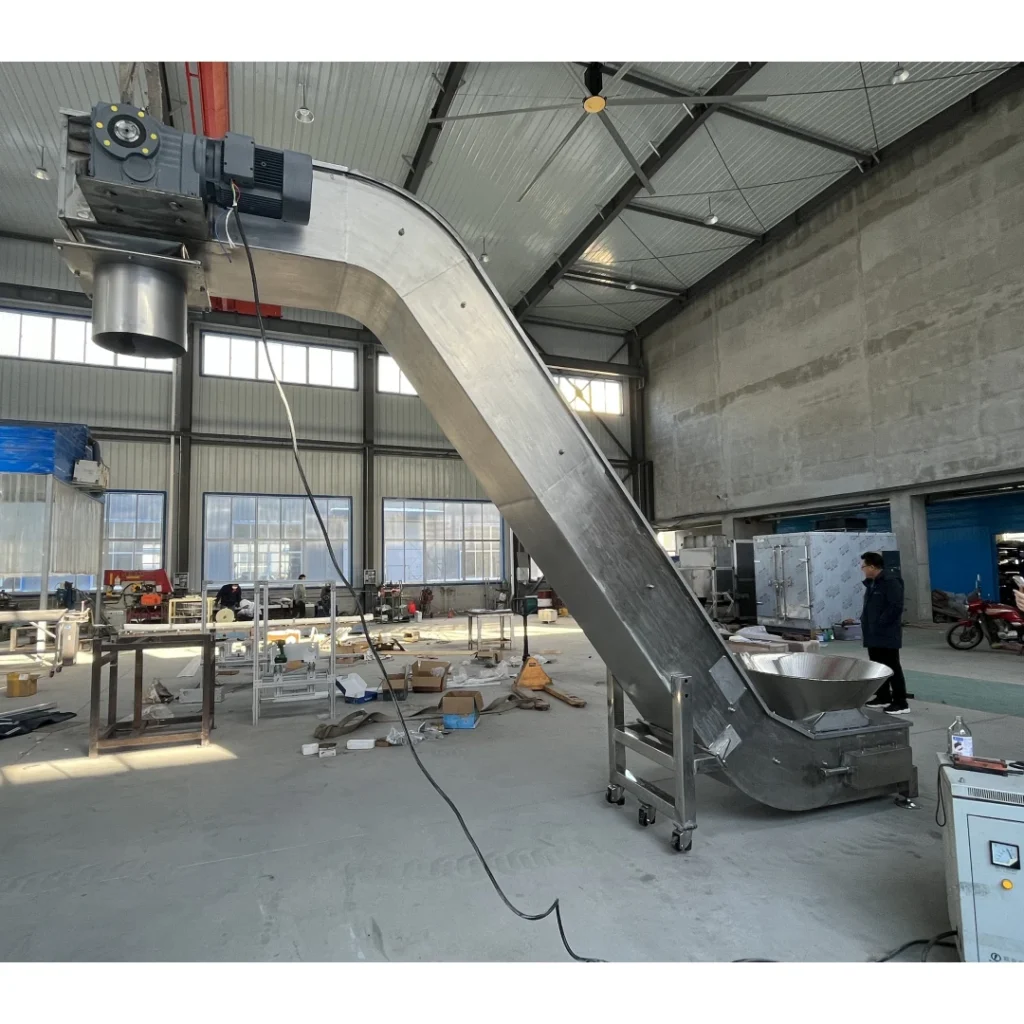
Jiarui Manufacturing
Ein Stegbandförderer kann nicht einfach durch die Wahl eines festen Modells ausgewählt werden, um alle Produktionsanforderungen zu erfüllen. Materialeigenschaften, Hubhöhe, Installationsplatz und Anschlussmethoden der Produktionslinie beeinflussen alle die endgültige Gerätekonfiguration. Mit jahrelanger Erfahrung in der Konstruktion und Herstellung von Fördergeräten kann Jiarui die von Kunden bereitgestellten Anwendungsbedingungen analysieren und bei der Bestimmung geeigneter Förderstrukturen, Materialoptionen und Gerätekonfigurationen helfen.
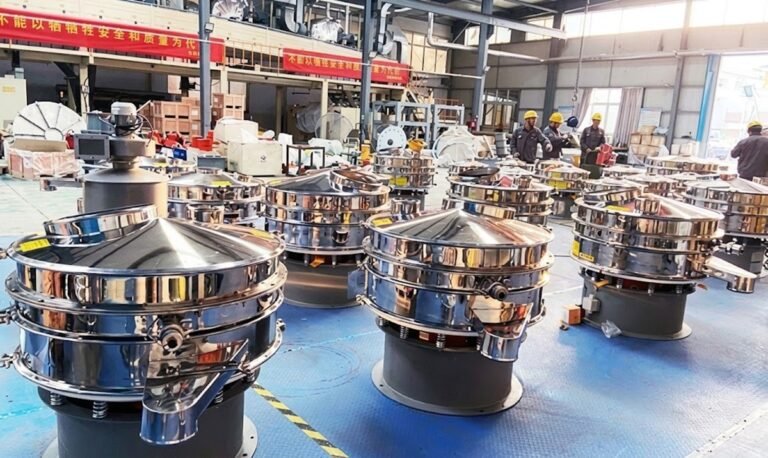
Von der Anforderungskommunikation und Lösungsbestätigung über die Gerätefertigung bis hin zur Werksprüfung passt das Jiarui-Ingenieurteam das Design an die tatsächlichen Standortbedingungen an, um Installations- und Betriebsprobleme nach der Lieferung zu reduzieren. Ob es um Pulvermaterial-Antiverschüttung, stabilen Transport von Granulaten oder spezielle Materialanforderungen unter rauen Umgebungen geht, wir bieten entsprechende Schüttguthandling-Förderlösungen basierend auf den tatsächlichen Anwendungsanforderungen.
Häufig gestellte Fragen
Kostenlose Beratung erhalten
Füllen Sie das untenstehende Formular aus, um sich mit unseren Experten zu verbinden und personalisierte Empfehlungen für Ihre Anwendung zu erhalten.