When buying a China rotary vibrating screen, price matters, but it should not be the only thing you compare. Two rotary vibrating screens may have different prices because the screen diameter, number of screen layers, screen mesh, material, and configuration are different. Comparing only the total price can make different machine configurations look like the same equipment.
If you are planning to source a rotary vibrating screen from China, first clarify a few key questions: What machine size do you need? How many screen layers are required? Is the machine suitable for your material? How should you compare quotations from different suppliers? Confirm these points first, then compare prices.
What Is a Rotary Vibrating Screen?
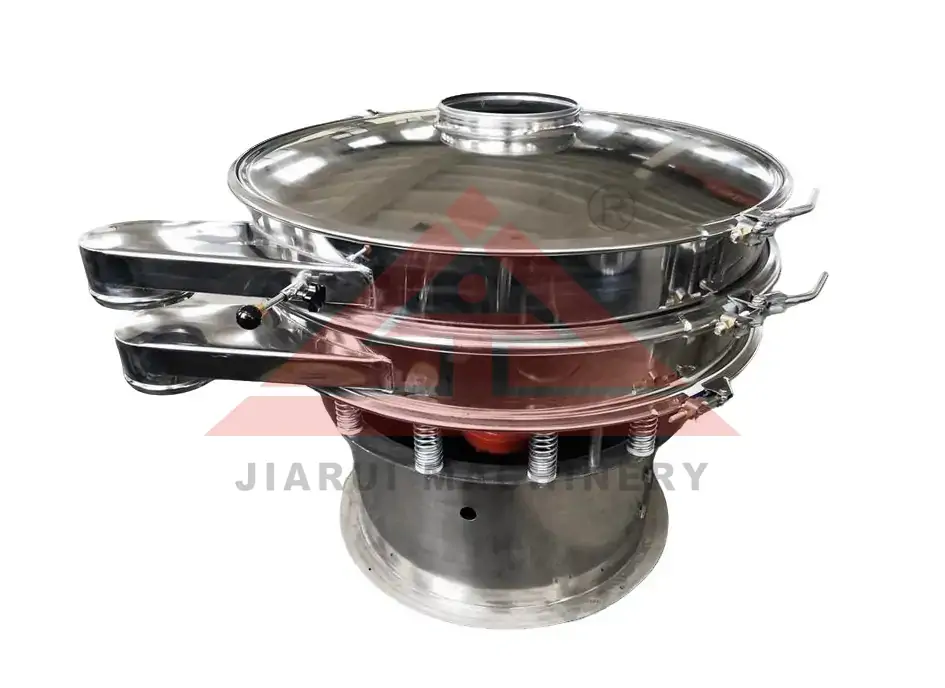
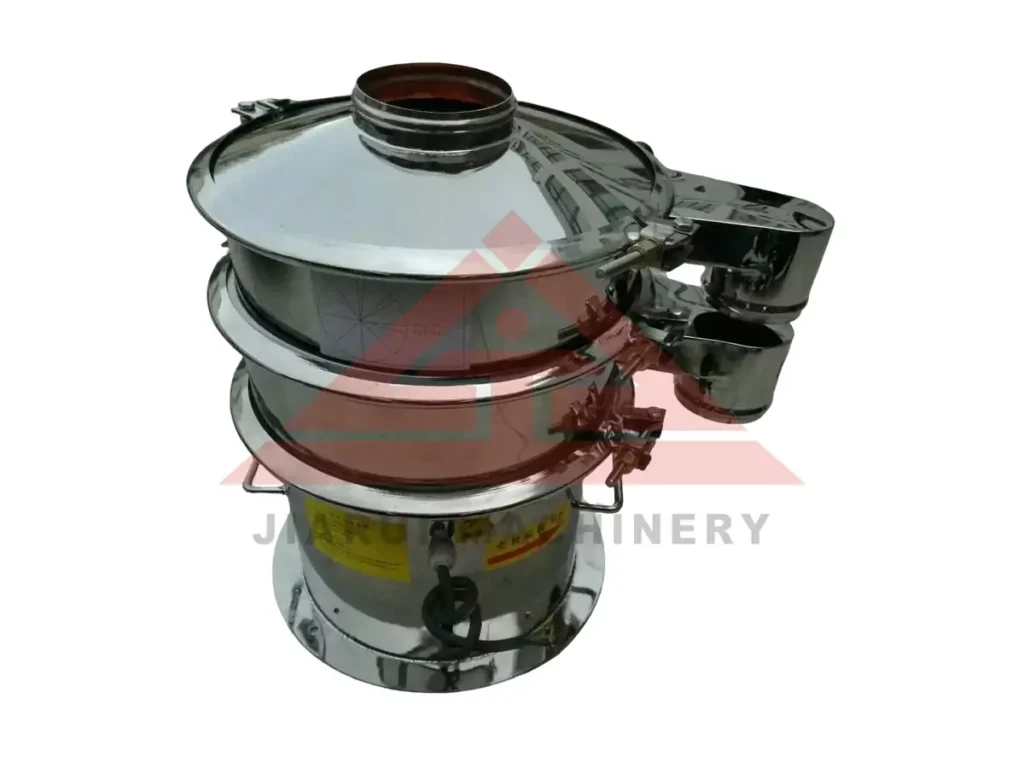
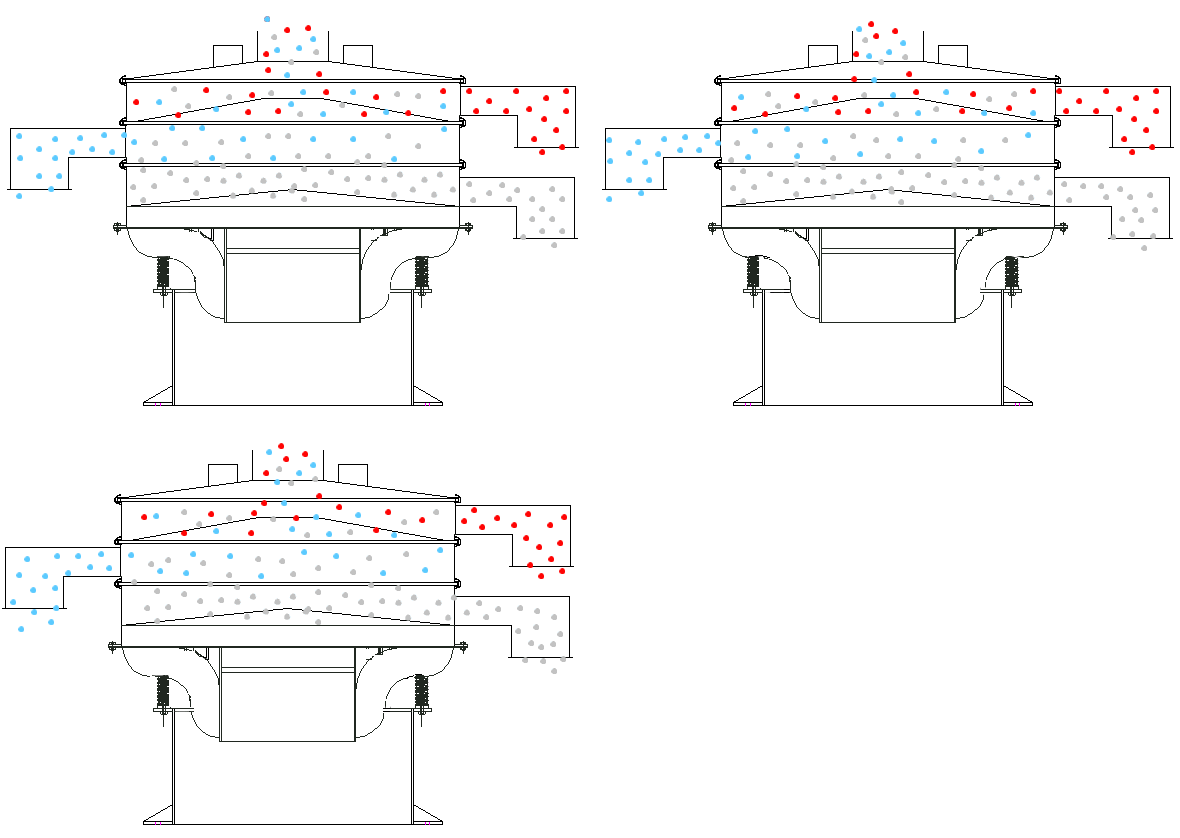
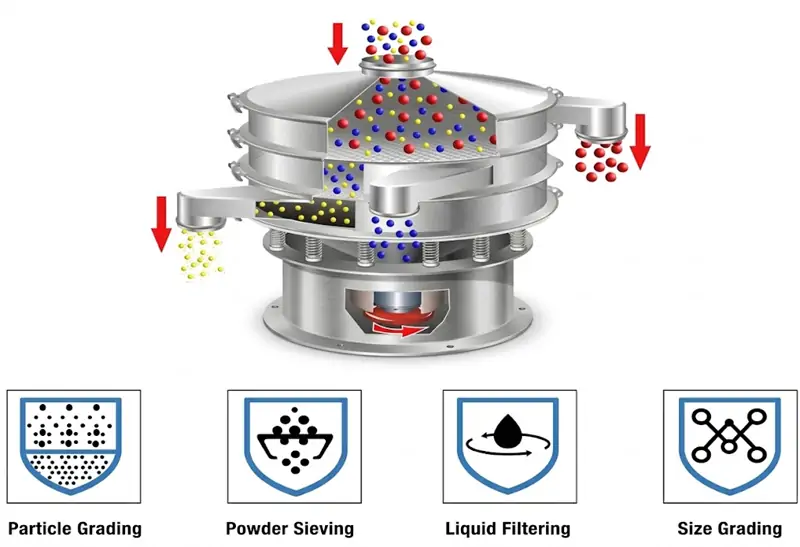
A rotary vibrating screen is a screening machine that uses vibration to screen powders and granular materials. After the material enters the screen surface, it moves continuously under vibration. Material smaller than the screen opening passes through, while larger material remains on the screen surface.
If you need to separate material into two, three, or more particle size ranges, additional screen layers can be added. Different screens provide different screening sizes, so the machine can be configured according to the screening requirements.For the machine structure and available configurations, see our Rotary Vibrating Screen product page.
Whether a rotary vibrating screen is suitable depends mainly on the material and screening requirements.
What Affects the Price of a China Rotary Vibrating Screen?
There is no fixed price for a China rotary vibrating screen. Even for the same type of machine, the quotation can be different because the screen diameter, number of screen layers, screen mesh, material, and configuration are different.
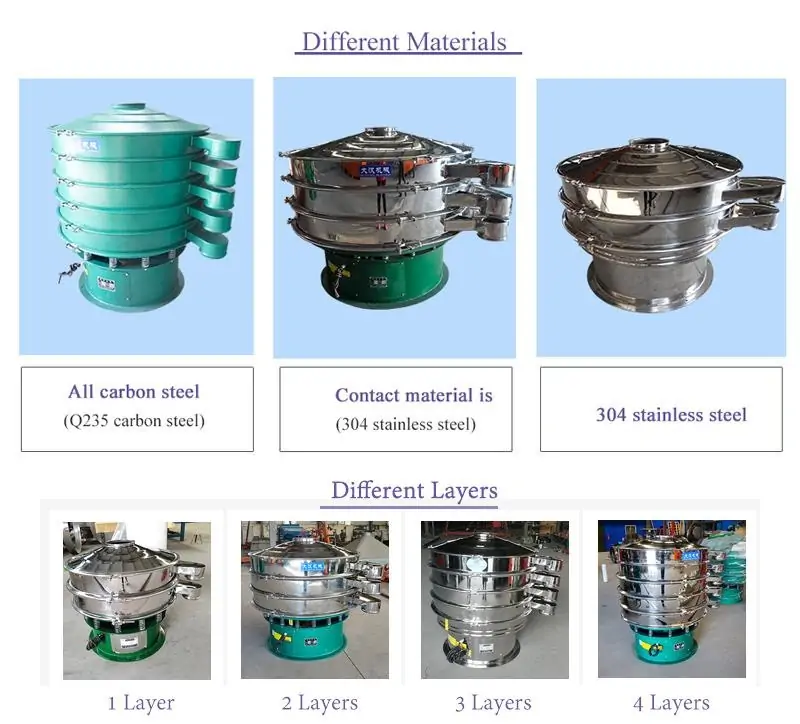
The main factors affecting the price include:
- Screen diameter: Different screen sizes require different machine dimensions and configurations.
- Number of screen layers: More screen layers require additional screen frames, screens, and other components.
- Screen specifications: Different screen openings and screen materials can affect the price.
- Machine material: Carbon steel, stainless steel, and other materials have different costs.
- Special configurations: Screen cleaning methods, special inlet and outlet designs, and other customized configurations can affect the quotation.
When comparing quotations from different China suppliers, first check whether these items are the same:
| Comparison Item | What to Confirm |
| Screen diameter | What is the diameter? |
| Number of screen layers | How many screen layers? |
| Screen | What is the screen opening and material? |
| Machine material | What materials are used for which parts? |
| Special configurations | Are screen cleaning, special inlet/outlet designs, and other requirements included? |
Confirm the configuration first, then compare the price.
What Specifications Should You Check When Buying a Rotary Vibrating Screen?
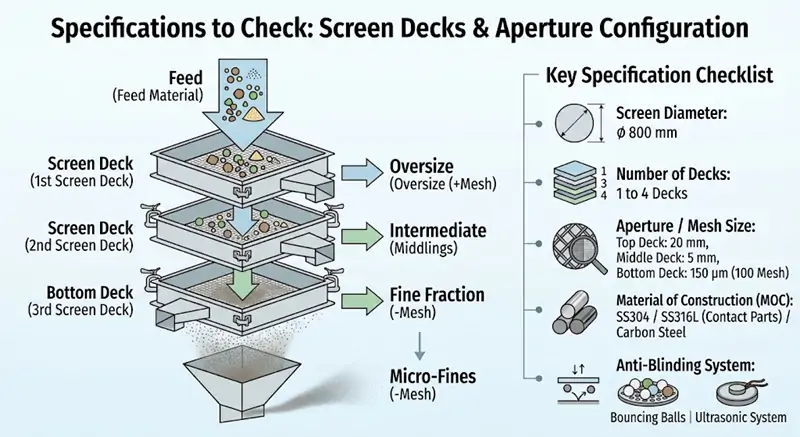
When choosing a rotary vibrating screen, do not look only at the screen diameter. The screen layers, screen opening, material, capacity, and screen cleaning method all need to be checked together.
| Specification | What to Check | How It Affects Selection |
| Screen diameter | Screen surface size | Affects screening area and can also affect capacity |
| Number of screen layers | How many particle size ranges are needed | Multiple particle size ranges require multiple screen layers |
| Screen opening | Target particle size | Determines which particles can pass through the screen |
| Machine material | Material of the parts in contact with the material | Needs to be confirmed when sanitary or corrosion-resistant materials are required |
| Capacity | Required throughput per hour | Affects machine size and configuration |
| Screen cleaning method | Whether the material is prone to screen clogging | Important for fine powders and small screen openings |
1.Screen Diameter:A larger screen diameter provides a larger screening area, but diameter alone cannot determine capacity. Material type, particle size, screen opening, and screening requirements also affect the actual capacity.
2.Number of Screen Layers:If you only need to remove oversized particles, one screen layer may be enough. If you need to separate the material into several particle size ranges, additional screen layers are needed, with the appropriate screen opening for each layer.
3.Screen Opening:The screen opening should be selected according to the target screening size. If particles below a certain size need to pass through the screen, determine the target particle size first and then select the corresponding screen opening.If you need to understand screen sizes and mesh numbers, see our Standard Sieve Sizes guide.
4.Machine Material:If the material comes into direct contact with the machine, confirm the material used for the contact parts. For food, pharmaceutical, or corrosive materials, the specific material requirements also need to be confirmed.
5.Capacity:Do not look only at the maximum capacity listed in a supplier’s specification sheet. Different materials, screen openings, and screening requirements can result in different actual capacities.
6.Screen Cleaning Method:If you are screening fine powder with a small screen opening, pay particular attention to screen clogging. For materials that are prone to clogging, ultrasonic or other screen cleaning methods can be considered. You can also see our Ultrasonic Vibrating Screen for this type of screening application.
How Can You Tell Whether a Rotary Vibrating Screen Is Suitable for Your Material?
A rotary vibrating screen can screen powders and granules, but different materials place different requirements on the machine. The condition of the material is an important part of determining whether the machine is suitable.
Start With Particle Size and Screening Requirements
First determine what you need to remove or what particle size you want to obtain. When requesting a quotation, it is better to tell the supplier the target particle size and screen opening rather than simply saying that you need to screen powder or granules. If you need to understand the particle size distribution of your material, see our What Does a Sieve Analysis Tell You? guide. For aggregate sieve analysis, ASTM C136/C136M provides the standard test method for determining particle size distribution.
Consider Moisture and Stickiness
If the material is relatively wet, tends to form lumps, or tends to stick to the screen, it is more likely to cause screen clogging or poor material flow. For these materials, tell the supplier in advance so they can confirm whether the screen and cleaning method are suitable.
Check Whether the Material Is Corrosive
If the material is corrosive or has specific requirements for the material in contact with it, this should be stated in advance. In this case, confirm the material used for the parts that contact the product rather than looking only at the material of the machine exterior.
How to Choose a China Rotary Vibrating Screen Supplier?
When choosing a China rotary vibrating screen supplier, do not start by looking for the lowest quotation. First check whether the machine configurations from different suppliers are the same or similar.
Compare the Configuration When You Receive Quotations
You can check the following items directly:
| Item | What to Confirm |
| Screen diameter | What size? |
| Screen layers | How many? |
| Screen | Screen opening and material |
| Machine material | What material is used? |
| Screen cleaning method | Is it included? |
| Inlet and outlet | Is the configuration the same? |
| Special requirements | Are they included in the quotation? |
If the configurations are different, the prices cannot be directly compared.
If you have already provided the material, screen opening, required capacity, and site conditions, but the supplier gives you only a model and total price, continue to confirm the specific configuration. Do not compare who is cheaper first. Check whether the configurations are the same.
Common Pitfalls When Buying a Rotary Vibrating Screen
- Looking only at the lowest quotation: First check whether the screen, screen mesh, machine material, and other configurations are the same.
- Looking only at the maximum capacity: The maximum capacity in a specification sheet should not be treated directly as your actual production capacity.
- Adding special requirements after placing the order: Inlet and outlet positions, installation space, material, and screen cleaning methods should be confirmed before the quotation.
Confirm the configuration first, then compare prices. State your requirements clearly before finalizing the machine.
What Should You Confirm Before Requesting a Quotation From a China Supplier?
Before placing an order for a China rotary vibrating screen, confirm not only the machine configuration but also the quotation and delivery details:
- What is included in the quotation: Confirm whether the machine, screens, screen cleaning device, motor, and other accessories are included.
- When will the machine be delivered: Confirm the expected delivery time and shipping method.
- After-sales service and spare parts: Confirm whether replacement screens and other wear parts can be purchased separately and how equipment problems will be handled.
- Machine drawings: If the machine needs to connect to an existing production line, confirm the overall dimensions, inlet and outlet positions, and installation requirements in advance.
Jiarui can help confirm the machine configuration based on your material, required capacity, screening requirements, and site conditions, so you can receive a quotation for the right configuration.
Confirming these details in advance makes purchasing and installation easier.
FAQs
Why Does a Rotary Vibrating Screen Experience Screen Clogging?
Fine powders, small screen openings, materials that tend to form lumps, or materials with some moisture can all increase the risk of screen clogging. If the material is prone to clogging, ask the supplier about a suitable screen cleaning method.
How Fine Can a Rotary Vibrating Screen Screen Powder?
How fine it can screen depends on the screen specification and the material. It cannot be determined by the machine model alone. The target particle size, screen, and material condition also need to be considered.
Does a Smaller Screen Opening Always Mean Lower Capacity?
Not necessarily. Capacity is affected by the screen opening, particle size, material condition, number of screen layers, and screening requirements.
Can a Rotary Vibrating Screen Separate Several Particle Sizes at the Same Time?
Yes. The machine can be configured with the required number of screen layers according to the target particle size ranges. Each layer uses the corresponding screen opening to separate the material into different particle sizes.
Can the Screen Mesh of a Rotary Vibrating Screen Be Replaced?
Yes. The screen is an important screening component and can be replaced. When purchasing, you can confirm the screen specification, material, and how replacement screens can be purchased later.
Can a Rotary Vibrating Screen Be Customized for My Material and Site Conditions?
Yes. The screen diameter, number of screen layers, screen, machine material, inlet and outlet, and other configurations can be confirmed according to the material, capacity, screening requirements, and site conditions. Jiarui can provide customized configurations based on specific requirements.