
Different sieve sizes can be described by numbers such as 200 mm, 75 μm, and 200 mesh. They may all look like they describe the “size” of a sieve, but they do not refer to the same thing. What do these numbers mean, and how should you read them?
Once you understand what each of these numbers means, they are much easier to tell apart.
What Do 200 mm, 75 μm, and 200 Mesh Mean?
Sieve specifications often include numbers such as 200 mm, 75 μm, and 200 mesh. They refer to different specifications:
| Number | What it means |
| 200 mm | Sieve frame diameter |
| 75 μm | Sieve opening size |
| 200 mesh | Mesh count |
200 mm refers to the size of the sieve frame, 75 μm refers to the size of the sieve openings, and 200 mesh refers to the mesh specification. They are related, but they are not the same thing.
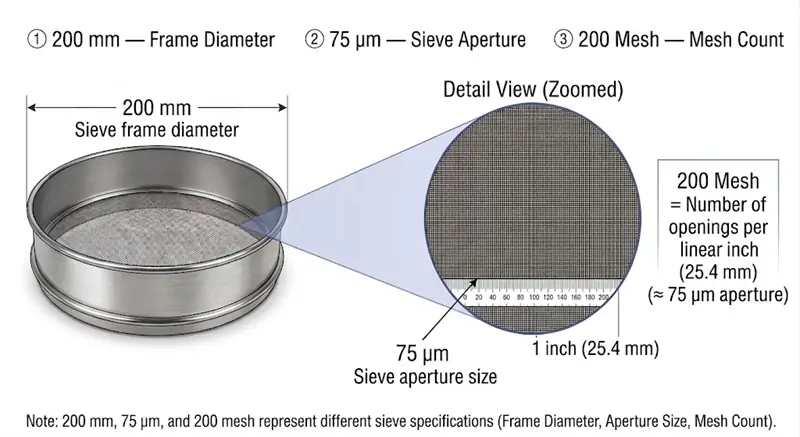
For example, a 200 mm sieve frame can be fitted with screens with different opening sizes. A 200-mesh sieve, on the other hand, does not have 200 μm openings. A common 200-mesh sieve has an opening size of about 75 μm. For more details on standard sieve frame diameters, aperture sizes, and mesh specifications, see our guide to Standard Sieve Sizes.
What Are the Different Sieve Sizes for Different Applications?
The sieve size depends on the application and the amount of material to be screened. Small amounts of material can be handled with a small hand sieve, standard test sieves can be used for particle size testing, and production lines with continuous screening require industrial screening equipment.
Small Hand Sieves
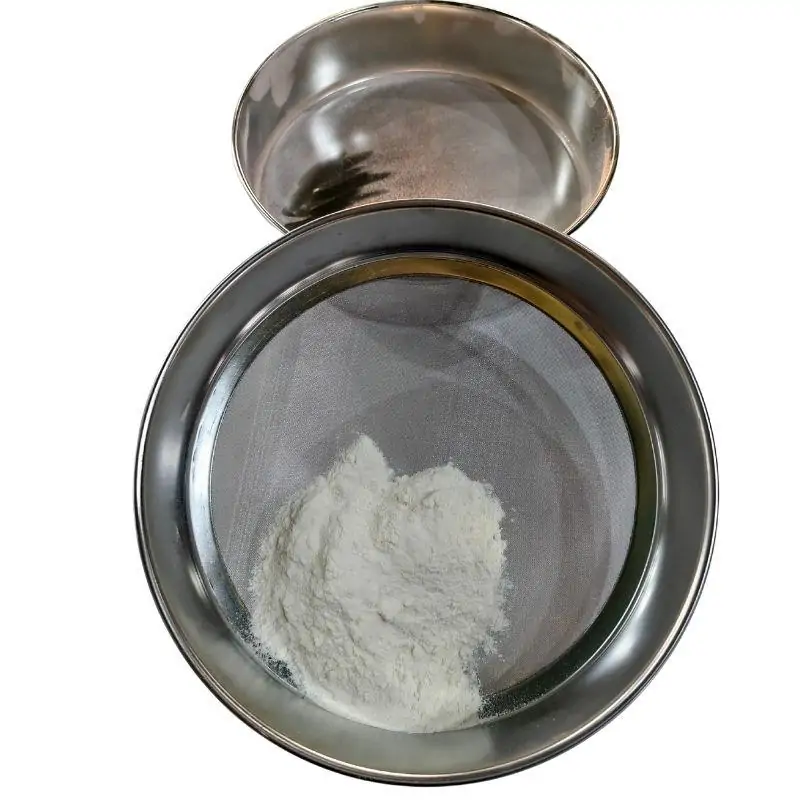
If you only need to screen a small amount of powder, granules, or other materials, a small hand sieve can be used. These sieves are compact and easy to use, making them suitable for small-scale manual screening.


Standard Test Sieves
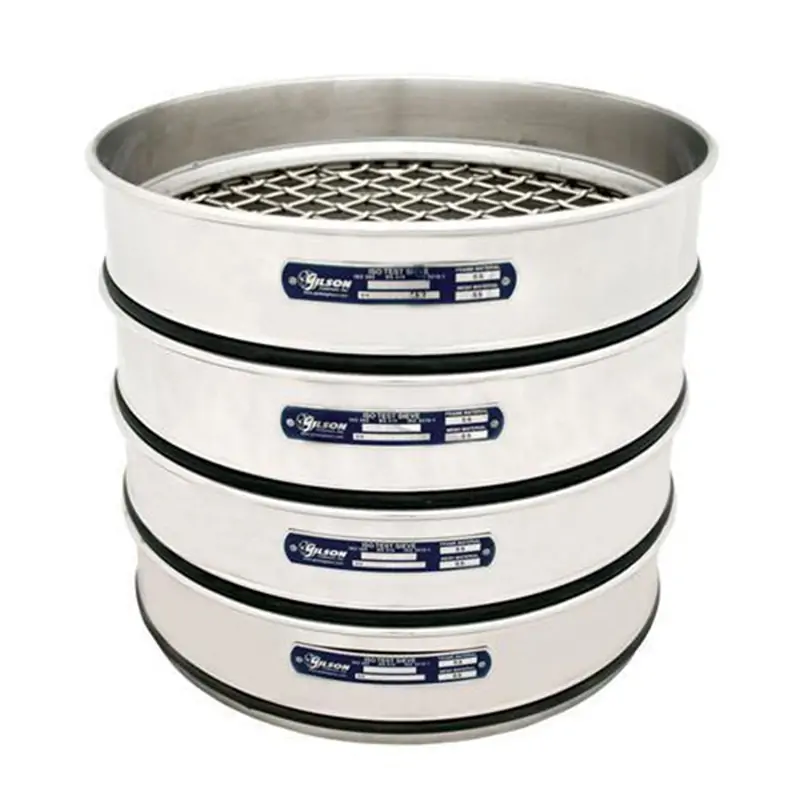
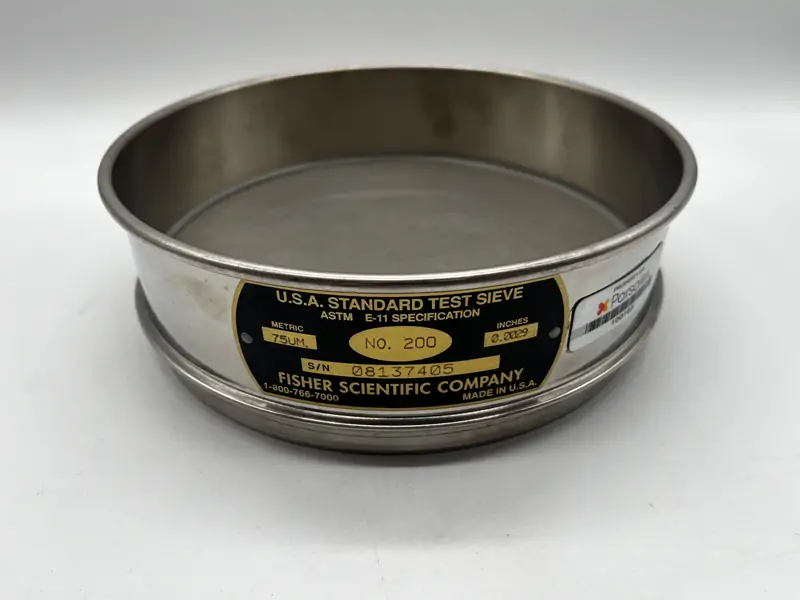
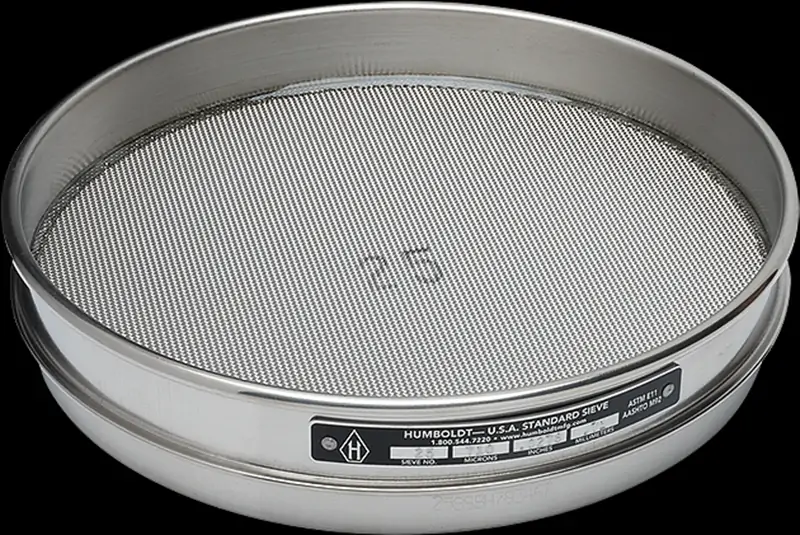
Standard test sieves are commonly used for particle size testing. Common sieve frame diameters include 200 mm and 300 mm, as well as 8-inch and 12-inch sizes. Standards such as ASTM E11 and ISO 3310-1 specify requirements for test sieves and woven wire cloth.
The same sieve frame can be fitted with screens with different opening sizes, such as 1 mm, 500 μm, 250 μm, and 75 μm, to test the size of particles that can pass through the sieve.
Industrial Screening Equipment
For continuous screening on a production line, you need to consider the sieve opening, processing capacity, and equipment size at the same time. For example, even with the same 500 μm sieve opening, the equipment required for processing 100 kg of material per hour will be different from equipment processing 5 tons per hour.
Industrial wire mesh is available in different materials, specifications, opening sizes, wire diameters, and weave types. Jiarui provides woven wire mesh in materials such as stainless steel, copper, and nickel, with opening sizes of approximately 6.00–0.020 mm. Sieve mesh specifications can also be customized according to the material and screening requirements.
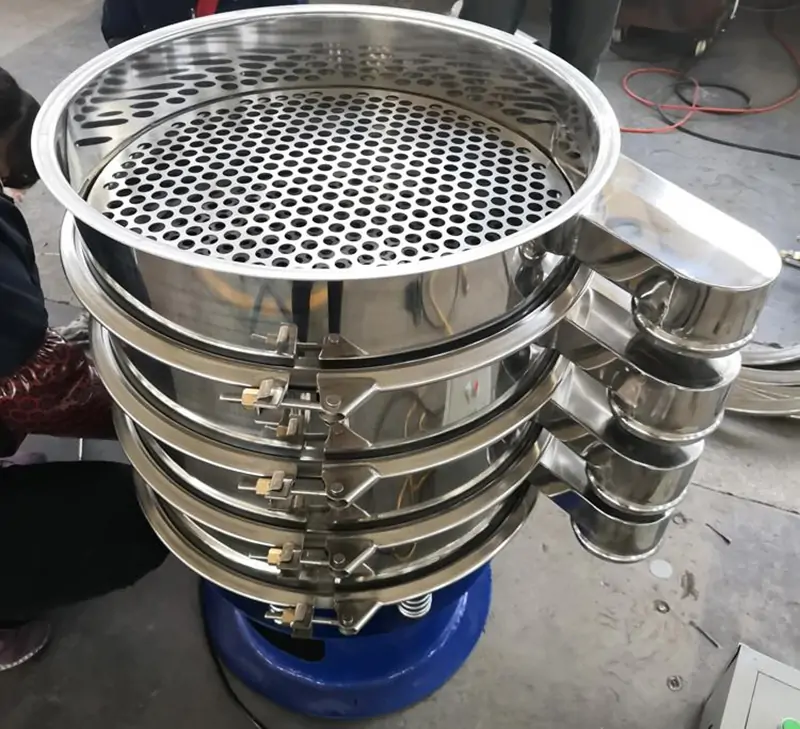
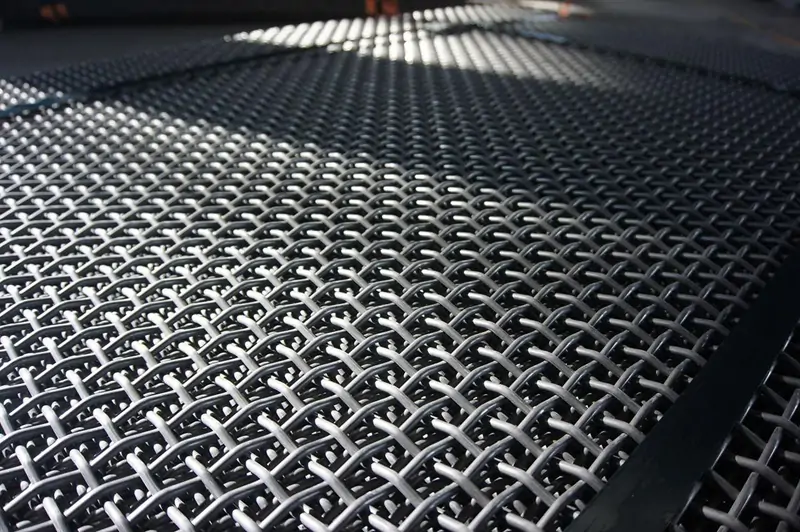
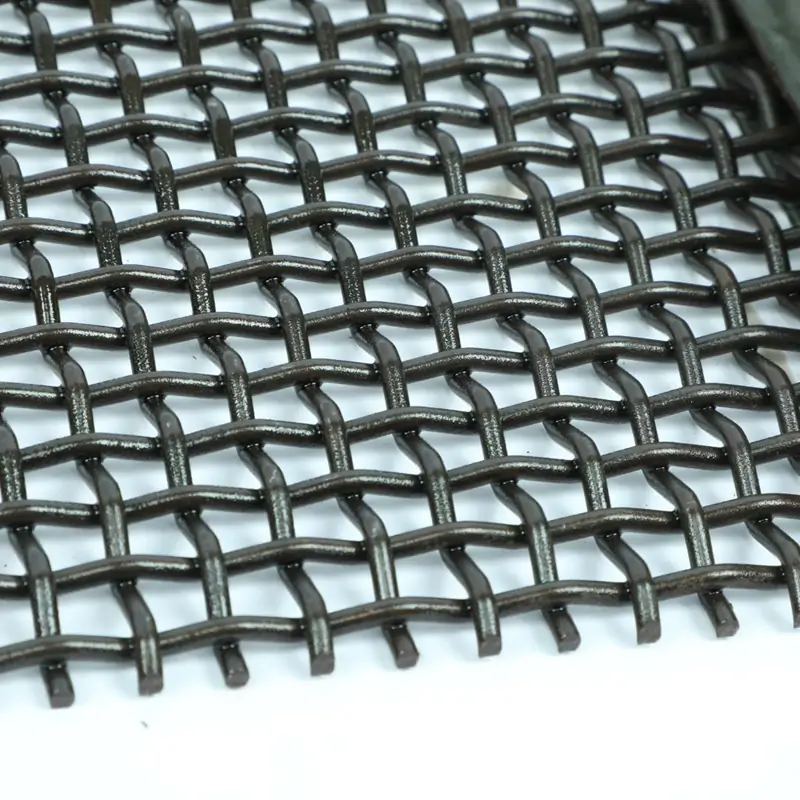
When selecting industrial screening equipment, first determine the material, sieve opening, and processing capacity, and then select the equipment and sieve mesh specifications.For an overview of different industrial screening equipment, see our guide to Types of Industrial Screeners.
What Is the Difference Between Different Sieve Opening Sizes?
Sieve opening size directly affects the particle size that can pass through the mesh. The larger the sieve openings, the larger the particles that can pass through; the smaller the openings, the finer the particles that can pass through. Different materials also require different opening sizes depending on the particle size required.
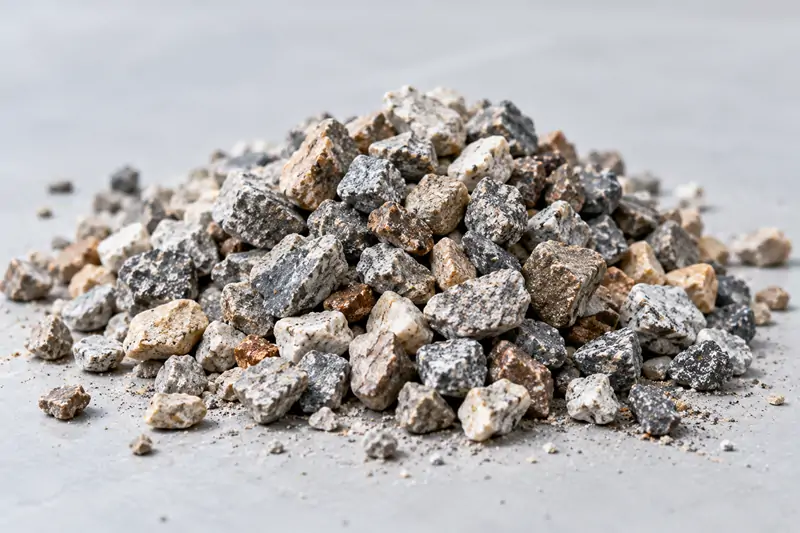
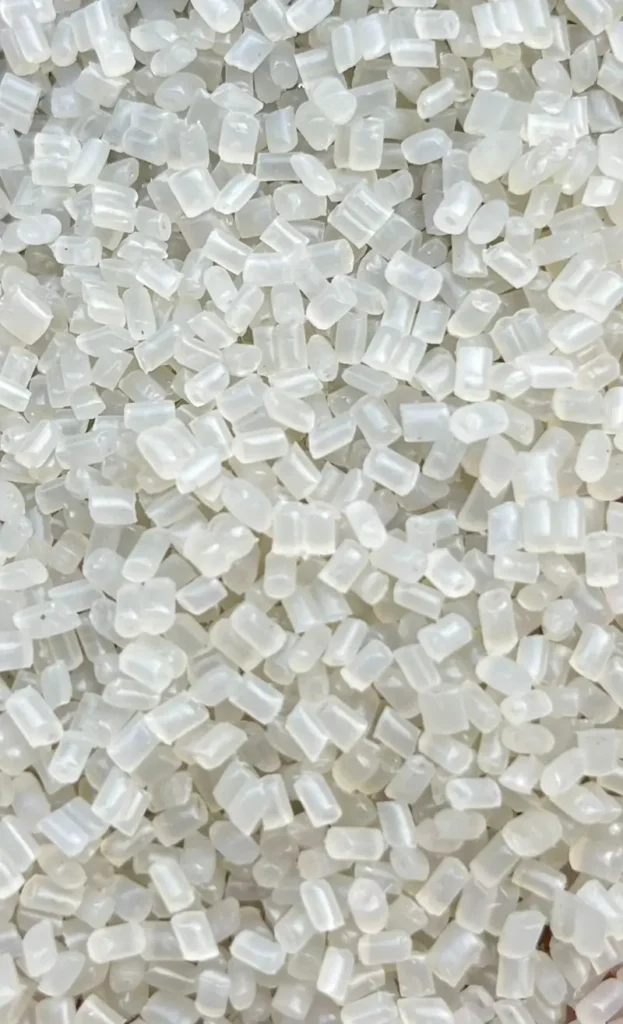
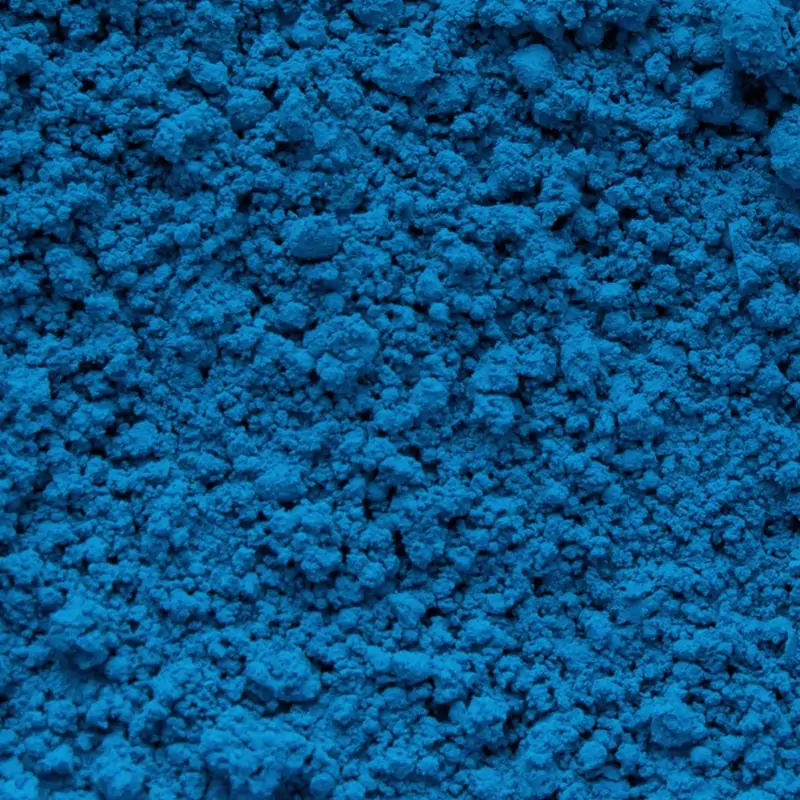
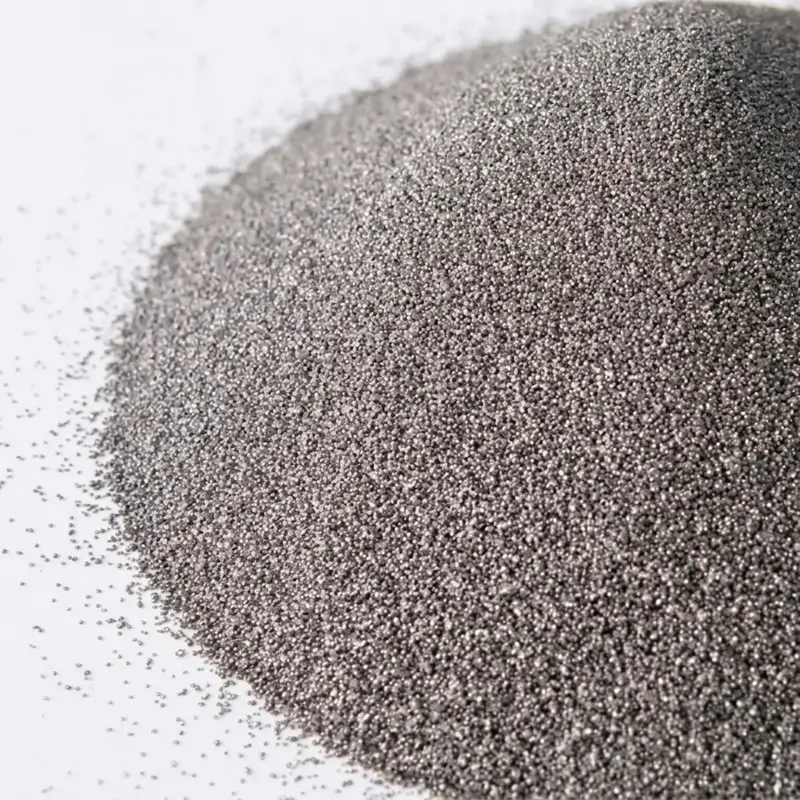
| Sieve opening size | Common materials |
| 4.75–2 mm | Ore, aggregates, coal, and other relatively coarse particles |
| 1 mm–500 μm | Plastic pellets, starch, flour, chemical powders, and other materials |
| 250–125 μm | Pigment powder, food powders, some chemical powders, and other materials |
| 75 μm and below | Metal powders, battery materials, and other fine powders |
For example, when using a 500 μm sieve, particles smaller than 500 μm can pass through, while particles larger than this size remain on the sieve. If you change to a 250 μm sieve, the particle size that can pass through will be smaller.For more reference values comparing mesh count with sieve opening size, see our Vibrating Screen Mesh Size and Aperture Comparison Table.
The materials above are only common examples. This does not mean that a specific material can only use one sieve opening size. The same material may also require different opening sizes depending on the final particle size required.
What Is the Relationship Between Sieve Opening Size and Mesh Count?
Sieve opening size and mesh count are not the same thing, but they are related. In general, the higher the mesh count, the smaller the sieve openings and the finer the particles that can pass through. For example, a common 200-mesh sieve has an opening size of about 75 μm (0.075 mm). Therefore, 200 mesh does not mean 200 μm.For more mesh-to-aperture reference values, see our Vibrating Screen Mesh Size and Aperture Comparison Table.
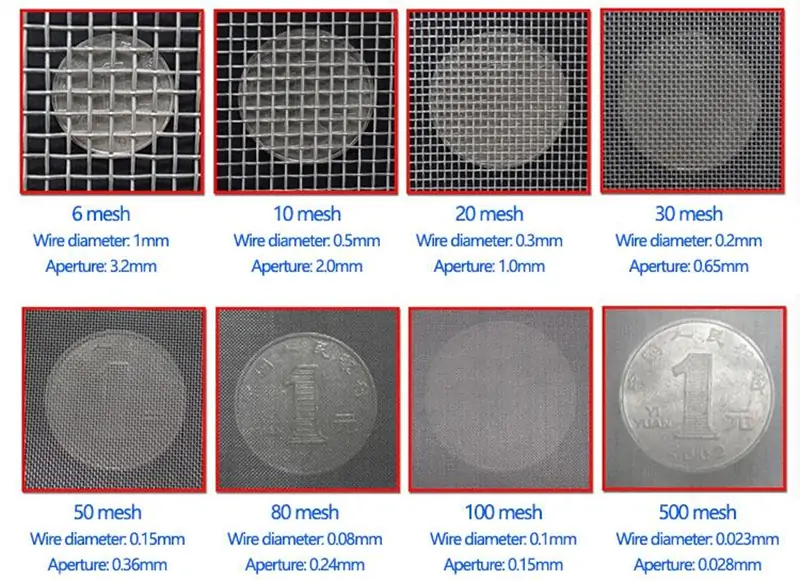
If you need to determine what particle size can pass through a sieve, looking directly at the sieve opening size is clearer. If you are given a mesh count, you need to further confirm the corresponding opening size. If you are not sure which sieve opening size or screening equipment to choose, you can tell Jiarui your material, required particle size, and processing capacity, and we can recommend a suitable sieve mesh and equipment specification based on these conditions.
FAQs
What are the common sieve sizes?
Common standard test sieves include 200 mm, 300 mm, 8-inch, and 12-inch sizes. Sieve opening sizes range from several millimeters to several tens of micrometers, depending on the material and screening requirements.
What is the difference between sieve opening size and mesh count?
Sieve opening size indicates how large the sieve openings are, usually expressed in millimeters or micrometers. Mesh count is one way of specifying the sieve mesh. The two are related, but they are not the same thing.
What is the opening size of a 200-mesh sieve?
A common 200-mesh sieve has an opening size of about 75 μm (0.075 mm). Therefore, 200 mesh does not mean 200 μm.
Does a higher mesh count mean smaller sieve openings?
Generally, yes. A higher mesh count means finer mesh openings, so smaller particles can pass through. However, the exact opening size also depends on the wire diameter and the standard used.
How do I choose the right sieve size?
First determine the particle size you need to screen, then consider the material and processing capacity. For small amounts of material or particle size testing, a standard test sieve may be suitable. For continuous screening on a production line, industrial screening equipment should be selected based on the material characteristics, sieve opening, and processing capacity.
Can Jiarui customize sieve mesh and screening equipment?
Yes. Jiarui can provide different sieve mesh materials, specifications, opening sizes, wire diameters, and weave types. If you are not sure what to choose, you can provide your material, particle size requirement, and processing capacity, and we can help determine a suitable sieve mesh and equipment specification.