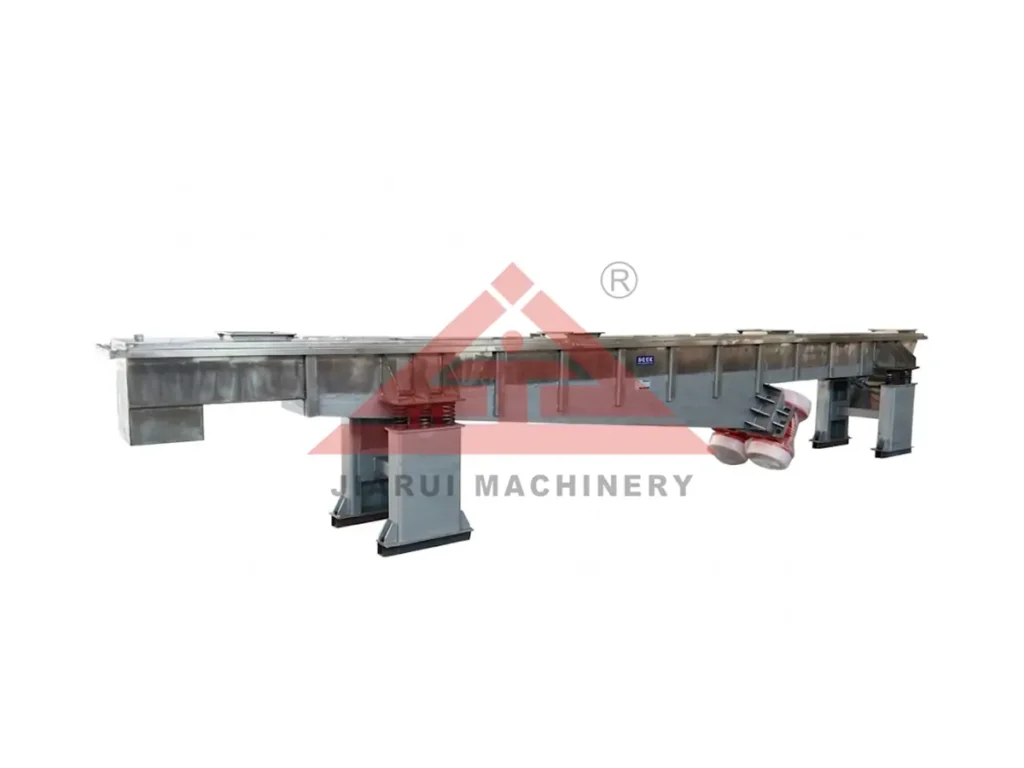
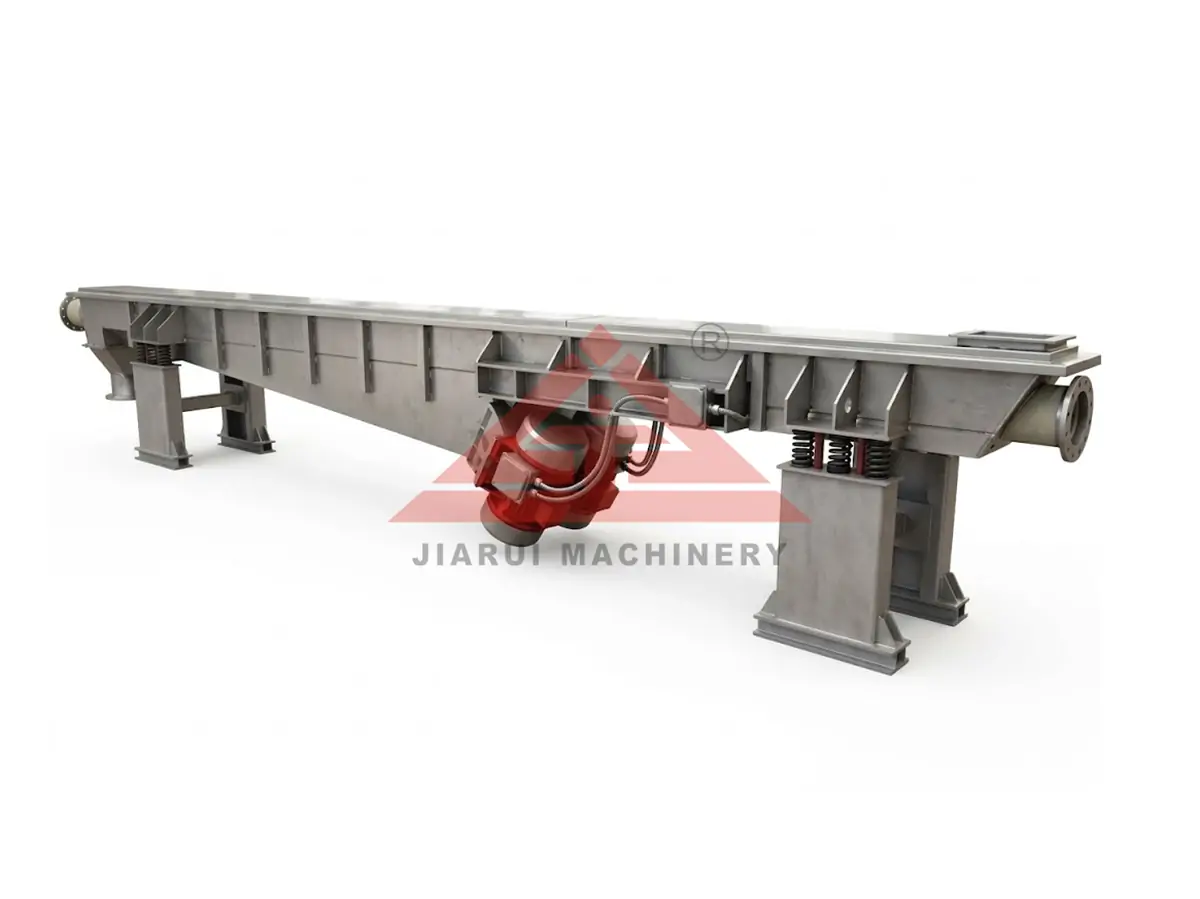
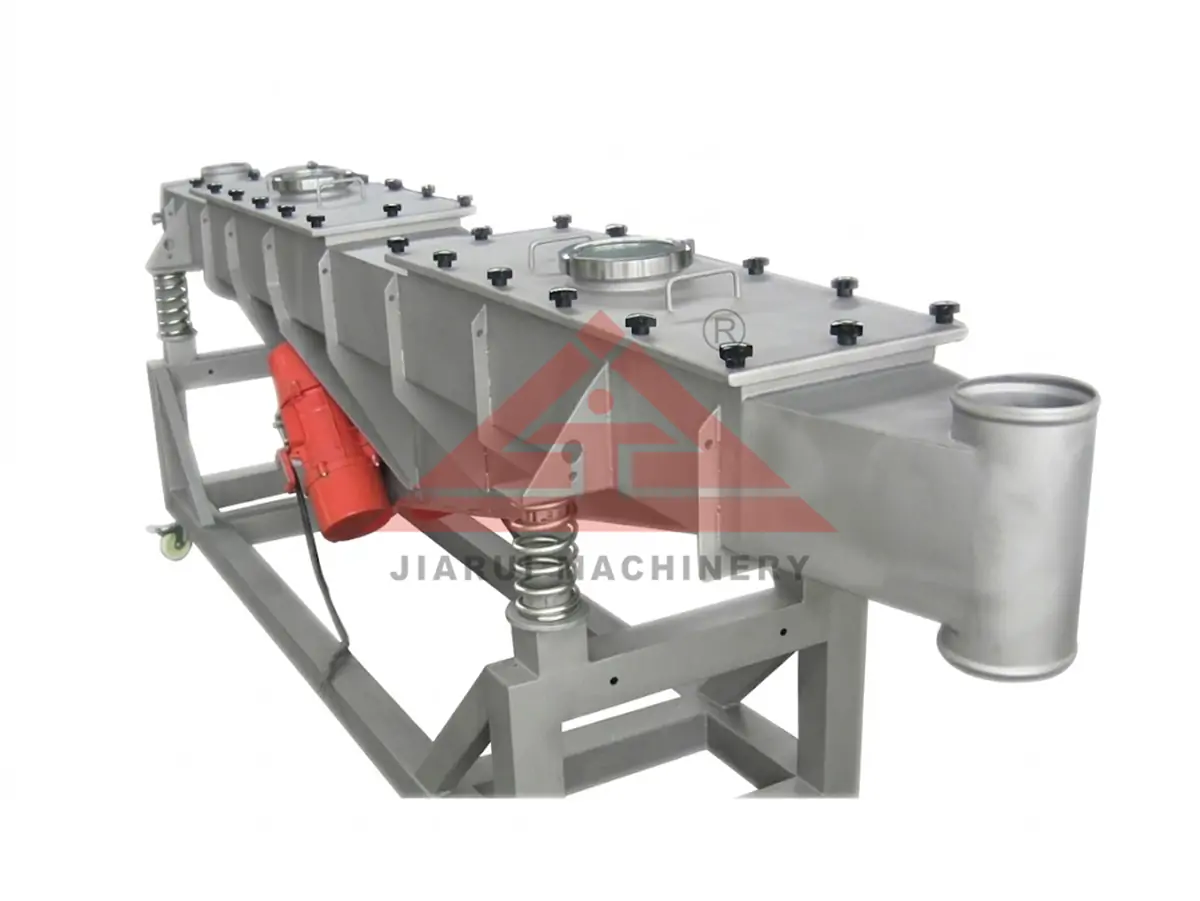
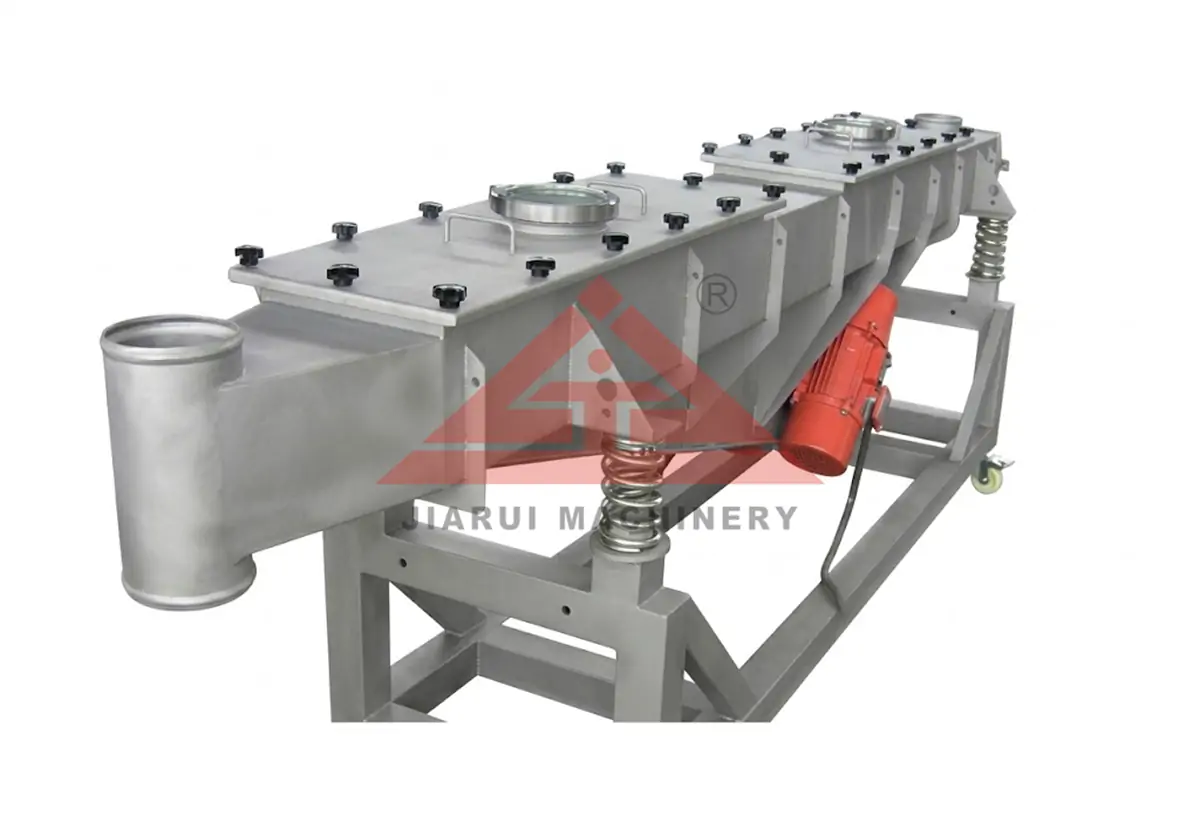
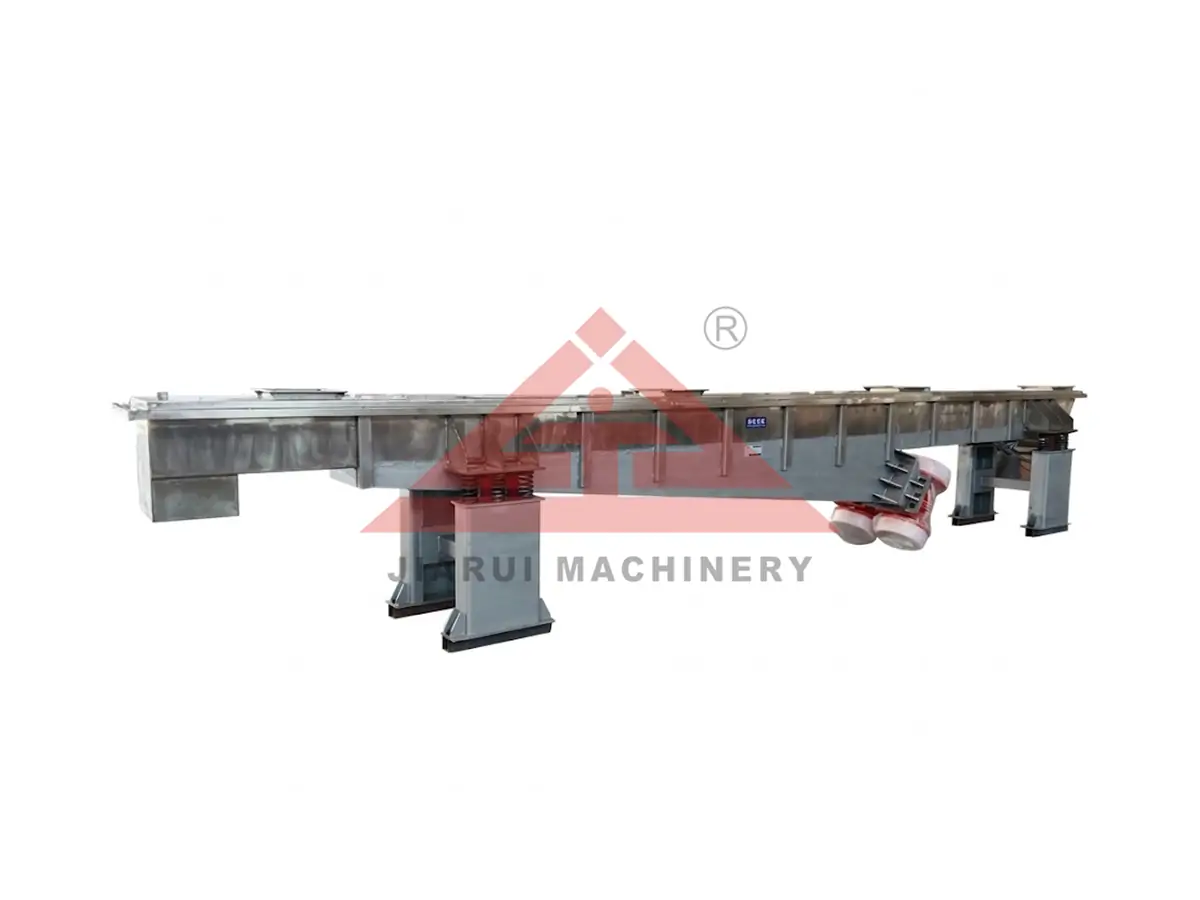
Square Vibrating Feeder
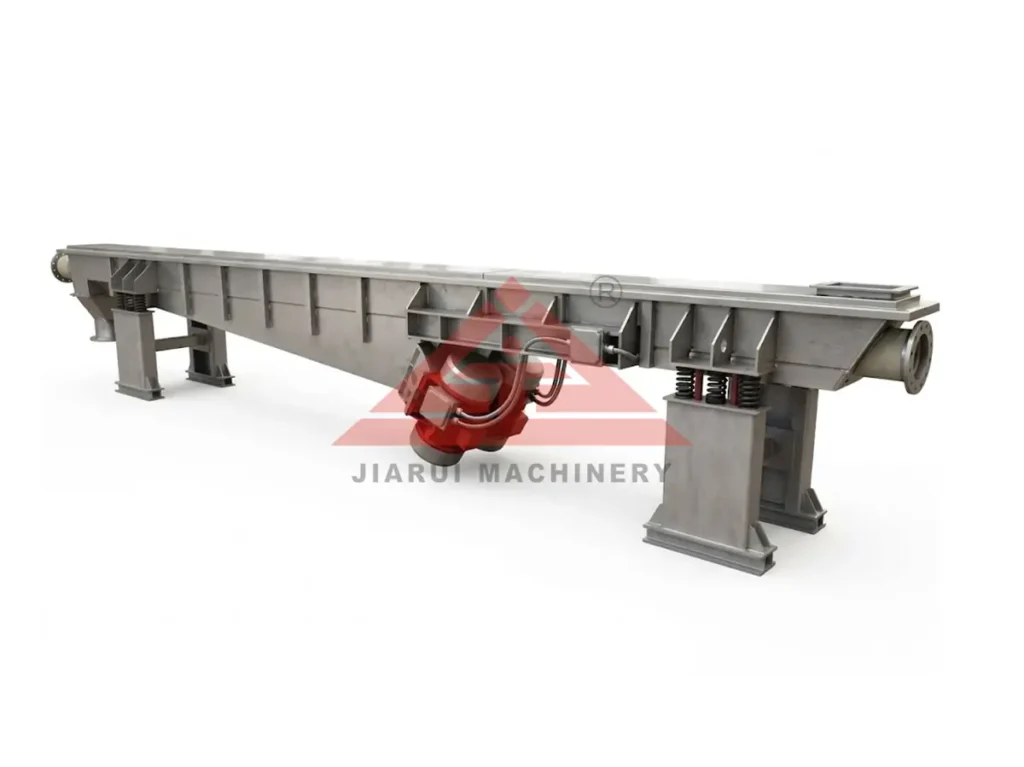
Square Vibrating Feeder is a continuous feeding equipment used for powder, granular, and small bulk materials. Installed at the outlet of hoppers, storage bins, or upstream equipment, it uses vibration to move materials forward evenly and steadily. With stable feeding performance, simple structure, and strong adaptability, it helps reduce material blockage, accumulation, and uneven feeding problems. The equipment is widely used in mining, building materials, chemical, plastic, food, and environmental protection industries.
Jiarui provides customized Square Vibrating Feeder solutions according to material characteristics, production capacity, and installation conditions. The trough size, material selection, vibration parameters, and installation structure can be adjusted to match different production line requirements.
- Model: ZDS300 Series
- Trough Width: 300 mm
- Conveying Distance: 2000–6000 mm
- Motor Power: 0.25–1.1 kW
- Inclination Angle: 0–5°
- Suitable Materials: Powder, granular, and small bulk materials
- Material Options: Carbon Steel / SUS304 / SUS316
- Customization Service: Supports customized dimensions, voltage, structure, and installation methods
What is Square Vibrating Feeder?
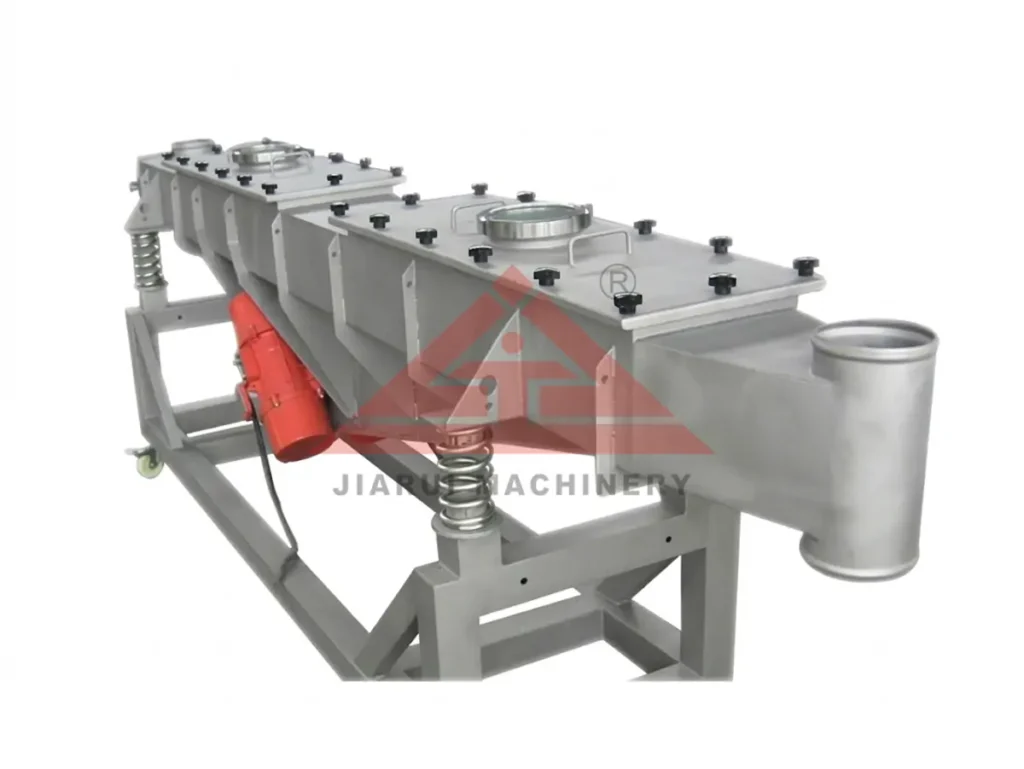
The ZDS Square Vibrating Feeder is an inertial vibratory feeder designed for continuous feeding and short- to medium-distance material transfer of powder, granular, and small lump materials. It provides controlled and uniform material flow from hoppers, storage bins, or upstream equipment to downstream processes such as screening, crushing, and conveying. Different types of vibrating feeders can be selected according to the material and feeding requirements.
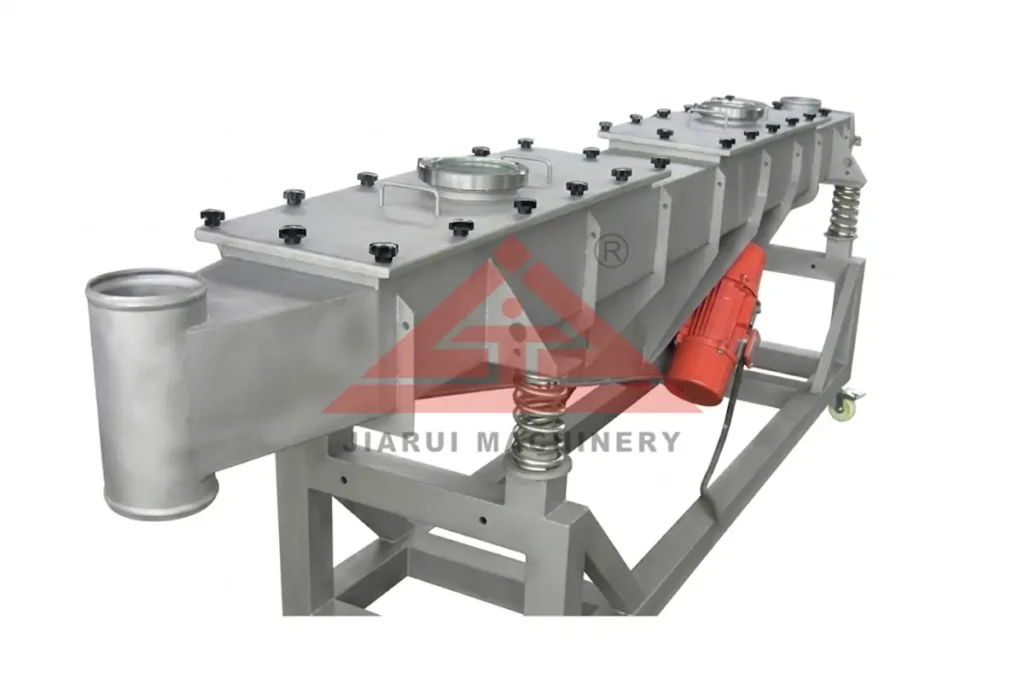
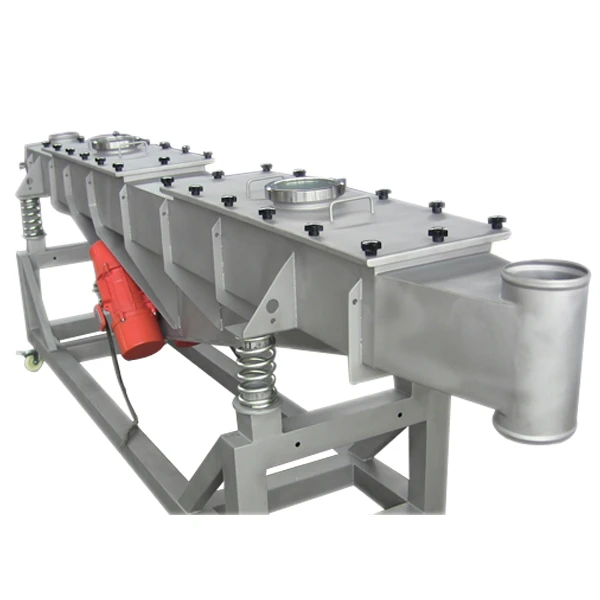
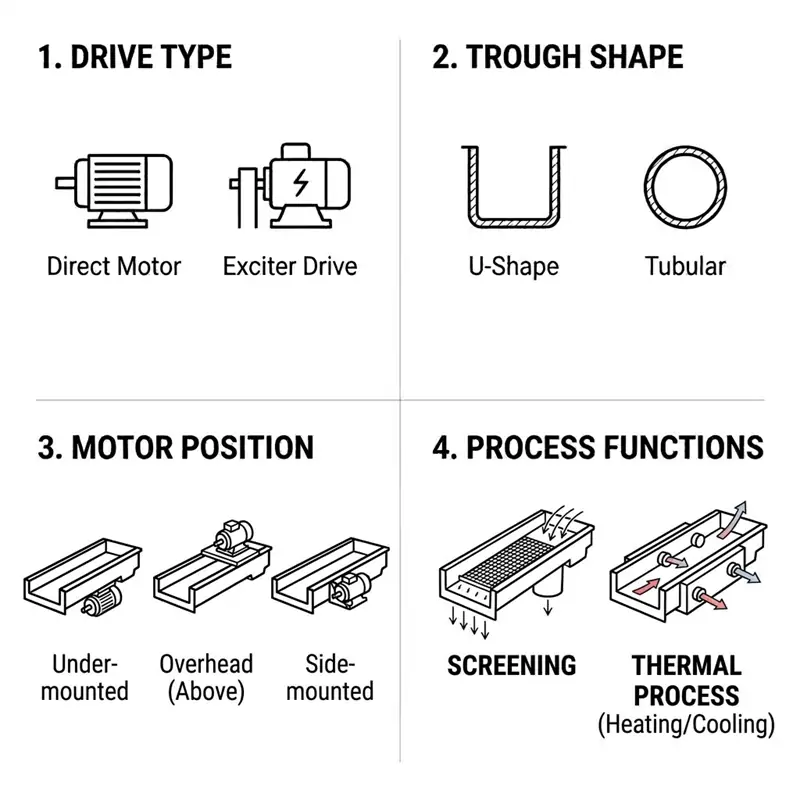
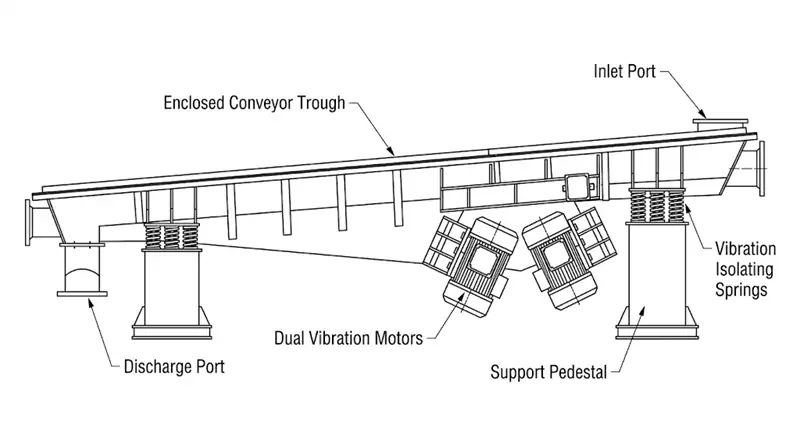
The ZDS feeder is available with U-shaped or tubular troughs, depending on the material and process. Both open and enclosed designs are available for different conveying environments. The drive can use a vibration motor for direct excitation or a conventional motor with an exciter for indirect drive.
Working Principle
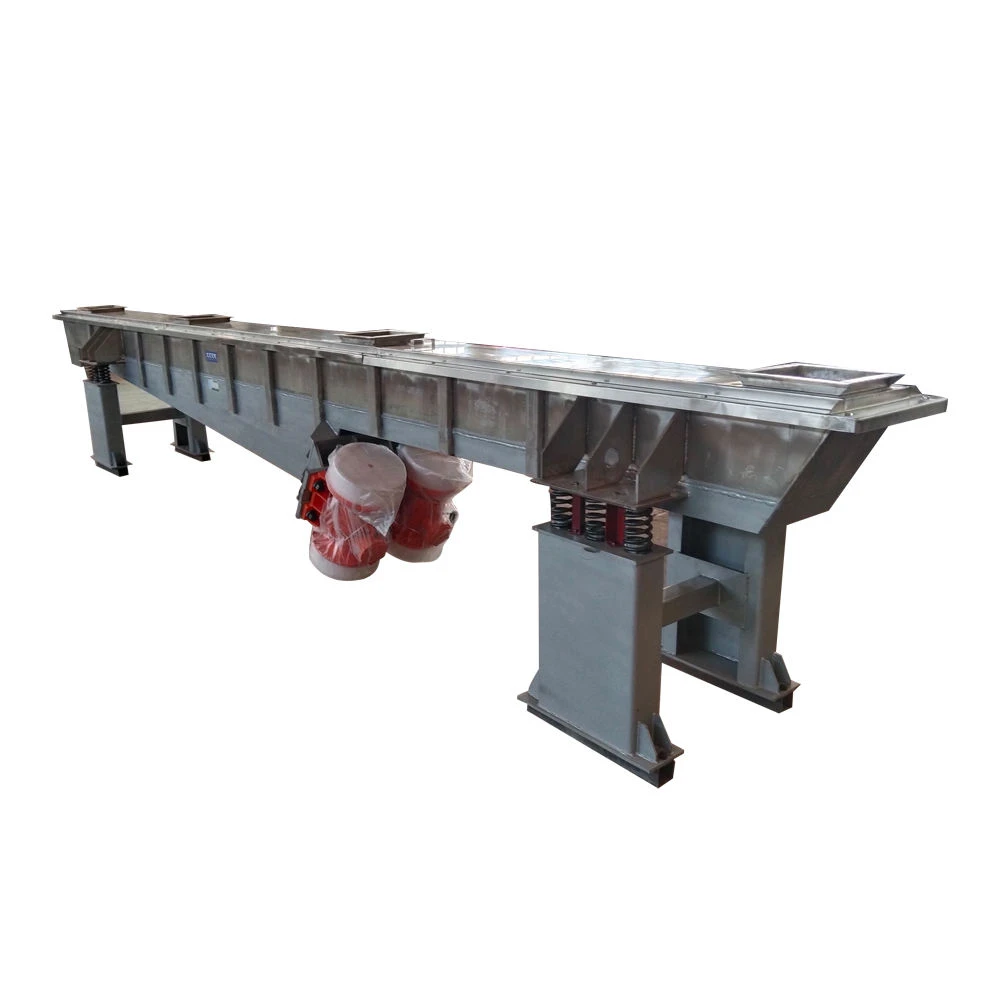
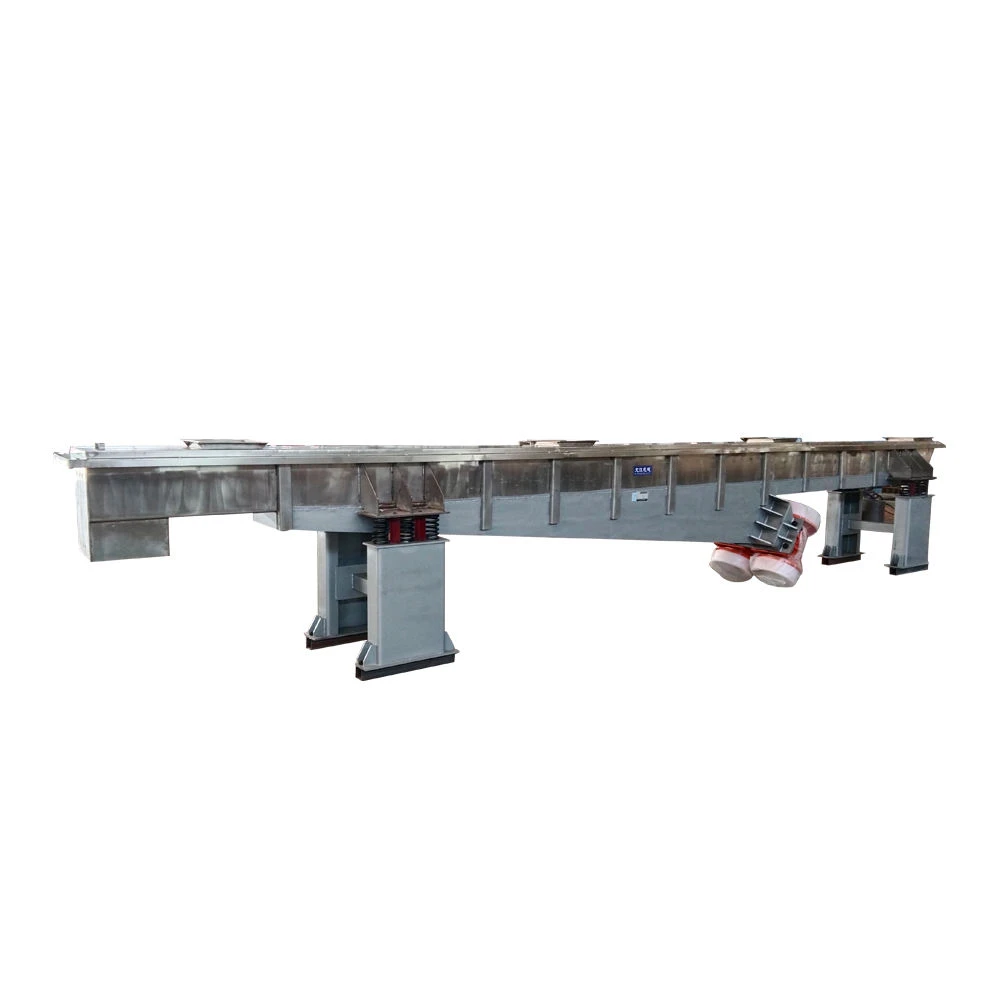
The ZDS Square Vibrating Feeder uses a vibration motor or exciter to generate the vibration that drives the feeding trough. As the trough vibrates, the material moves forward steadily, providing continuous and even feeding to the next process.
The ZDS feeder can handle powder, granular, and small lump materials. With different trough designs and drive configurations, it can also be used for short- to medium-distance conveying.
.
Structure Components
Drive Options
The ZDS feeder can use a vibration motor for direct drive or a conventional motor with an exciter for indirect drive. The drive type is selected based on the equipment layout and operating conditions.
Trough Options
The trough can be made in U-shaped or tubular form according to the material and conveying requirements. Open or enclosed designs are available when better sealing or dust control is required.
Vibration Source Position
The vibration source can be positioned above, below, or on the side of the trough. The position can be selected to suit the available installation space and production line layout.
Additional Process Functions
With a specially designed trough and the appropriate equipment configuration, the ZDS feeder can also be used for screening, drying, heating, or cooling during material handling.
Advantages
The main advantages of the ZDS feeder are stable material flow, flexible configuration, easy integration, and straightforward maintenance.
Stable Continuous Feeding
The vibrating trough moves material forward continuously and evenly. This makes the ZDS feeder suitable for controlled feeding from hoppers, storage bins, and upstream equipment to crushers, screens, conveyors, and other downstream equipment.
Better Material Flow
Vibration helps move powder, granules, and small lumps that may not flow smoothly under gravity alone. For materials such as cement powder and fly ash, the vibration can help reduce bridging and feeding interruptions.
Wear-Resistant Options for Difficult Materials
For abrasive materials such as ore, stone, and aggregate, wear-resistant materials can be used in the trough and other contact areas. The construction can be selected according to the material size, hardness, and operating conditions.
Easy Integration into Existing Lines
Trough dimensions, inlet and outlet connections, and mounting arrangements can be adjusted to suit the available space and existing equipment. This makes the feeder easier to install as part of a new or existing production line.
Flexible Customization
The main service points are the vibration drive, springs, and connecting components. The feeder can also be built to suit the required capacity, trough size, voltage, material of construction, and site conditions.
Low Wear and Easy Maintenance
The feeder has no complex transmission system in the material path. Routine maintenance mainly involves the vibration drive, springs, and connecting parts. For abrasive materials, wear-resistant liners can be added to the areas that contact the material.
Applications
The ZDS Square Vibrating Feeder is used for continuous feeding and short- to medium-distance conveying of powder, granular, and small lump materials. Common applications include mining, building materials, chemical processing, plastics, food and grain handling, and environmental processing.
The equipment configuration depends on the material and working conditions. Mining applications may require a stronger trough and wear-resistant liners, while food applications may require stainless steel construction and easy cleaning. Chemical and dusty materials may require corrosion-resistant materials or an enclosed trough.
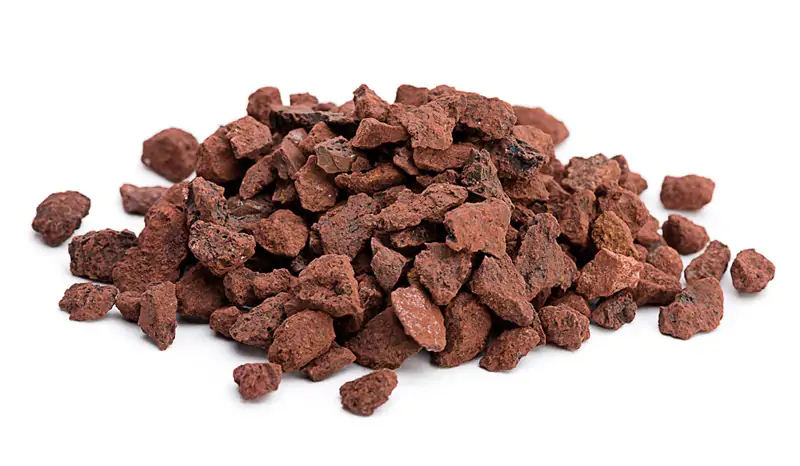 Iron Ore
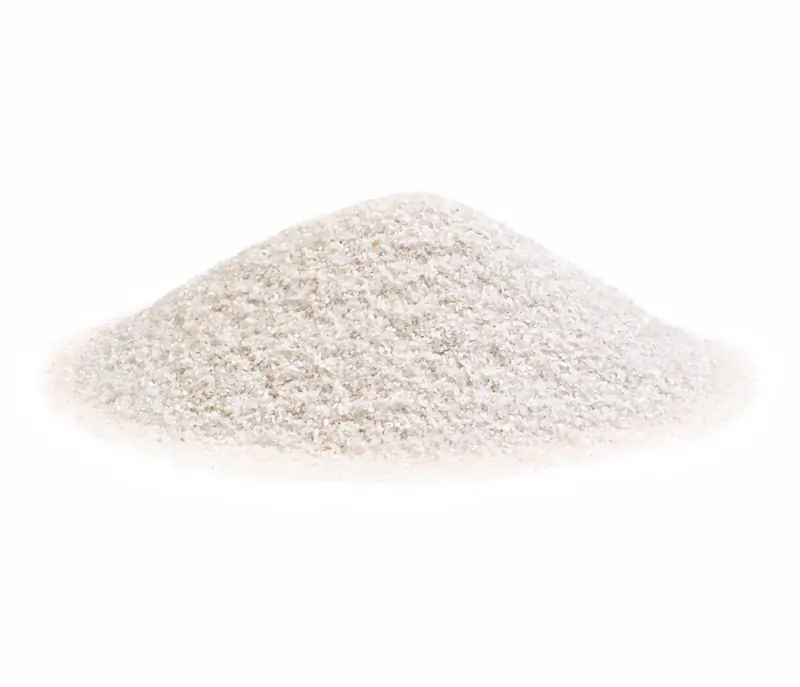 Quartz Sand
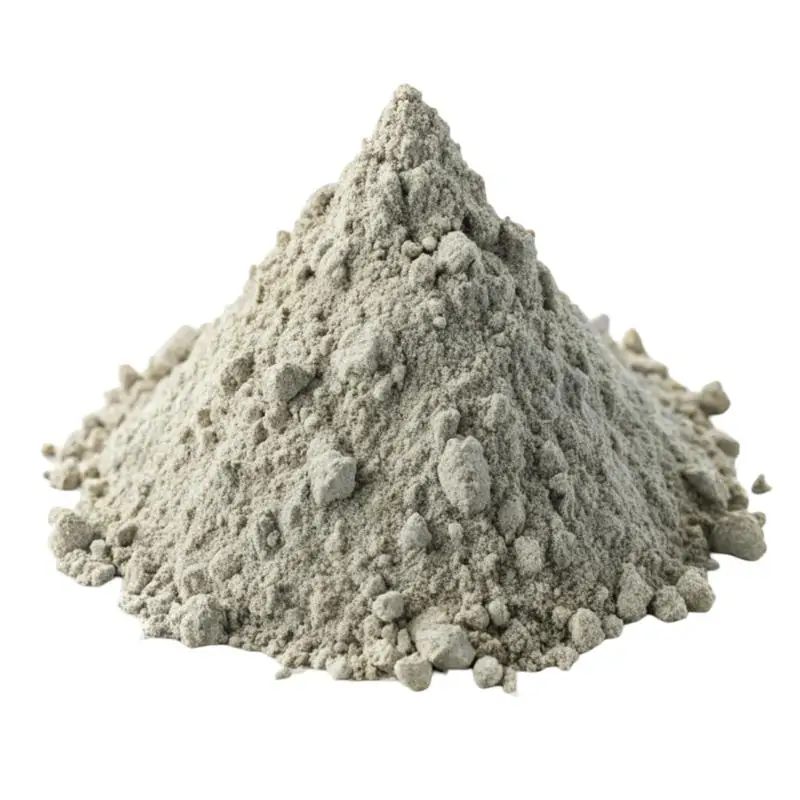 Cement Powder
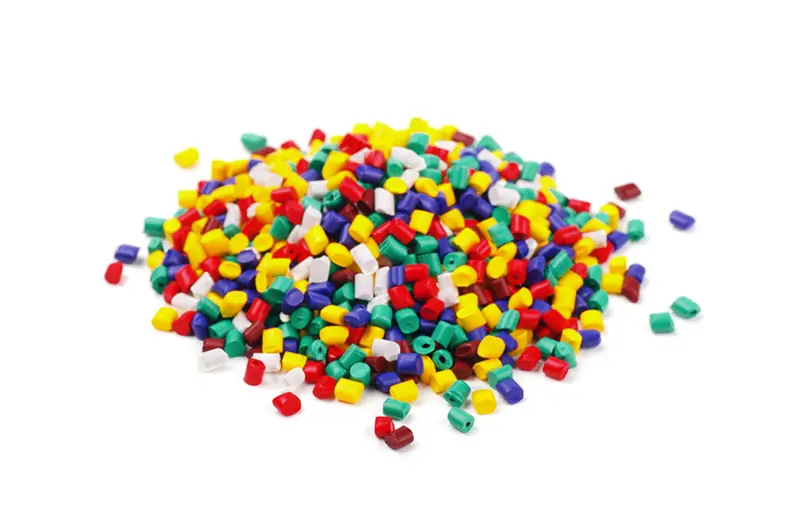 Plastic Pellets
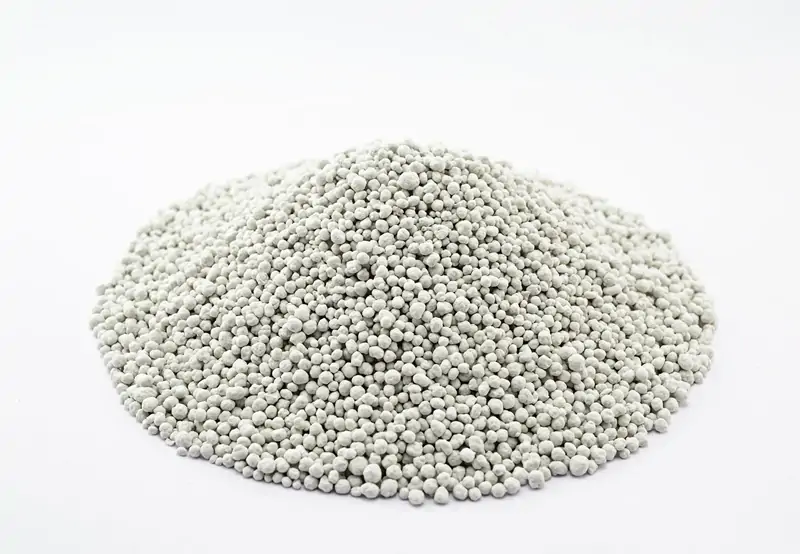 Fertilizer Granules
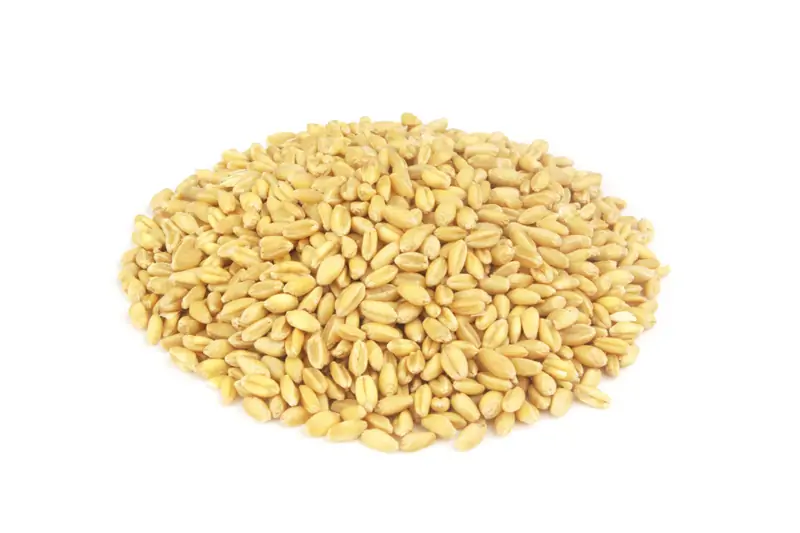 Wheat
Wheat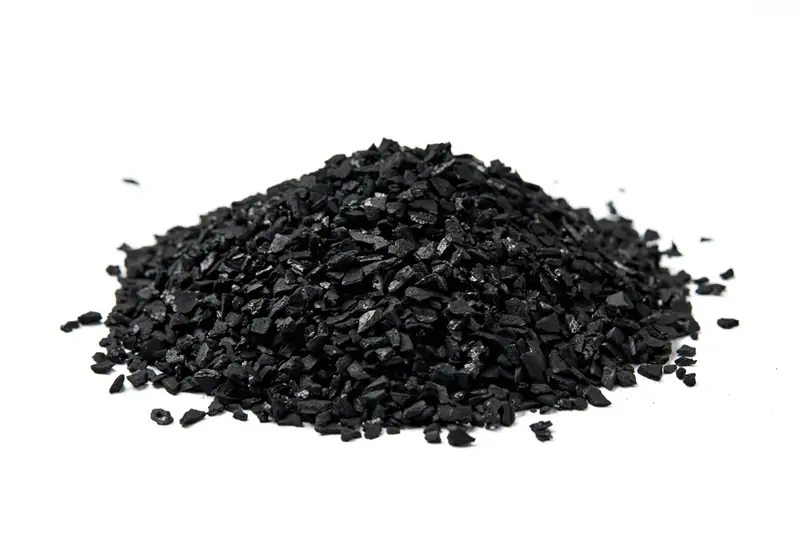 Activated Carbon
 Coffee Beans
Application Reference
| Industry | Common Materials | Application | Key Considerations |
| Mining and Aggregate Industry | Iron ore, copper ore, limestone, aggregate | Used before crushers and screening equipment to provide stable feeding of raw materials | Trough strength, wear resistance, and load capacity are important. Wear liners can be added for abrasive materials. |
| Building Materials Industry | Quartz sand, cement powder, lime powder, fly ash | Used for continuous feeding in cement, glass, and aggregate production | Trough design and vibration parameters should match the material flowability to reduce blockage and unstable feeding. |
| Chemical Industry | Fertilizer granules, resin pellets, chemical powders | Used for raw material feeding, screening systems, and packaging lines | Corrosion resistance, material selection, sealing, and dust control should be considered according to the material. |
| Plastic Industry | PP pellets, PE pellets, recycled plastic pellets | Used in plastic processing lines for continuous material feeding | Feeding speed and vibration parameters should be adjusted to maintain stable particle movement. |
| Food and Grain Industry | Rice, wheat, corn, sugar, salt, coffee beans | Used in food processing and grain handling systems | Stainless steel such as 304 or 316 can be selected when required. Hygiene and cleaning requirements should also be considered. |
| Environmental Industry | Activated carbon, carbon black particles, recycled materials | Used in waste treatment and resource recovery systems | Enclosed designs, sealing, dust control, and stable material flow may be required. |
Which Materials or Working Conditions Require Careful Selection?
Although the ZDS feeder handles a wide range of materials, some conditions need to be checked before selecting the equipment:
- High-moisture or sticky materials may build up on the trough and affect material flow.
- Large and hard materials may require a reinforced trough or wear-resistant liners.
- Long conveying distances may require a dedicated vibrating conveyor, belt conveyor, screw conveyor, or other conveying equipment depending on the material and process layout.
- Very low or precisely controlled feed rates may require dedicated metering equipment rather than a standard vibrating feeder.
The industry alone is not enough to select a vibrating feeder. Material characteristics, required capacity, conveying distance, installation space, and operating conditions all affect the final configuration.
When reviewing a project, the Jiarui engineering team can work from the material name, particle size, required capacity, conveying distance, and installation conditions. These details are used to determine the trough size, construction material, drive configuration, and vibration settings for the application.
Technical Parameters
The ZDS Square Vibrating Feeder is available in different conveying lengths to suit different feeding and installation requirements. The standard ZDS300 series covers conveying distances from 2,000 to 6,000 mm, while other configurations can be customized for specific working conditions.
| Model | Trough Width | Conveying Distance | Motor Power | Inclination Angle | Inlet Size |
| ZDS300-2000 | 300 mm | 2,000 mm | 0.25 kW | 0–5° | Ø200 mm |
| ZDS300-2500 | 300 mm | 2,500 mm | 0.25 kW | 0–5° | Ø200 mm |
| ZDS300-3000 | 300 mm | 3,000 mm | 0.37 kW | 0–5° | Ø200 mm |
| ZDS300-3500 | 300 mm | 3,500 mm | 0.37 kW | 0–5° | Ø200 mm |
| ZDS300-4000 | 300 mm | 4,000 mm | 0.55 kW | 0–5° | Ø200 mm |
| ZDS300-4500 | 300 mm | 4,500 mm | 0.55 kW | 0–5° | Ø200 mm |
| ZDS300-5000 | 300 mm | 5,000 mm | 0.75 kW | 0–5° | Ø200 mm |
| ZDS300-5500 | 300 mm | 5,500 mm | 0.75 kW | 0–5° | Ø200 mm |
| ZDS300-6000 | 300 mm | 6,000 mm | 1.1 kW | 0–5° | Ø200 mm |
For corrosive materials, stainless steel such as SUS304 or SUS316 can be selected. Abrasive materials may require a reinforced trough and wear-resistant liners, while food applications may require materials and construction that meet hygiene and cleaning requirements.
Square Vibrating Feeder vs Electromagnetic Vibrating Feeder vs Screw Feeder
These three feeders can all provide continuous material feeding, but they work differently and suit different materials and feeding conditions. The right choice depends mainly on the material, required feed rate, conveying distance, and how the equipment connects to the production line.
| Comparison | Square Vibrating Feeder | Electromagnetic Vibrating Feeder | Screw Feeder |
| Working Principle | Uses a vibration motor to generate excitation force and move material along the trough | Uses electromagnetic vibration to control material flow | Uses a rotating screw to move material along the conveying direction |
| Suitable Materials | Powder, granular, and small lump materials | Powder and small particles where feed-rate adjustment is important | Powder, granular, and other materials requiring enclosed conveying |
| Feeding Characteristics | Stable continuous feeding and suitable for short- to medium-distance conveying | Fast response and convenient flow-rate adjustment | Controlled conveying with good enclosure and dust containment |
| Main Advantages | Simple construction, easy maintenance, and flexible configuration | Good feed-rate control and easy integration with automatic dosing systems | Enclosed conveying and flexible conveying direction |
| Common Applications | Hopper outlets, crusher inlets, and feeding before screening equipment | Batching, weighing, packaging, and other controlled feeding applications | Hopper discharge, enclosed powder conveying, and feeding before packaging |
| Better Suited For | Continuous feeding where stable material movement and equipment integration are important | Small or controlled feed rates where quick adjustment is required | Enclosed conveying where dust control or a change in conveying direction is needed |
Selection Guide
| Production Requirement | Recommended Equipment |
| Continuous feeding from a hopper to a crusher or screening machine | Square Vibrating Feeder |
| Automatic batching or dosing with controlled feed rate | Electromagnetic Vibrating Feeder |
| Enclosed conveying of powder materials | Screw Feeder |
| Short- to medium-distance continuous feeding with stable material flow | Square Vibrating Feeder |
| Small-flow feeding with frequent start-stop adjustment | Electromagnetic Vibrating Feeder |
If you need to move material continuously from a hopper or storage bin to the next machine, a Square Vibrating Feeder is often a good choice. If you need more precise feed-rate control for batching or dosing, an Electromagnetic Vibrating Feeder may be a better fit. If the material needs to be conveyed in an enclosed system with better dust control, a Screw Feeder is usually worth considering.
Before choosing a feeder, consider the material, particle size, moisture, required capacity, conveying distance, and available installation space. These details will help you choose the right feeder type for your production line.
Customize
A standard Square Vibrating Feeder does not always fit every production line. Depending on the material and installation conditions, we can adjust the trough size, connection structure, construction material, and drive configuration.
For example, a different hopper outlet may require a customized inlet or connection structure. Hard and abrasive materials such as ore and aggregate may need a stronger trough and wear-resistant liners. Powder materials or materials with poor flowability may need a different trough design to improve discharge and reduce bridging or blockage.For customization, please provide the following information:
- Material type and characteristics (particle size, moisture content, abrasiveness, etc.)
- Required feeding capacity per hour
- Conveying distance and available installation space
- Inlet and outlet connection dimensions
- Operating environment and material requirements
Jiarui Manufacturing
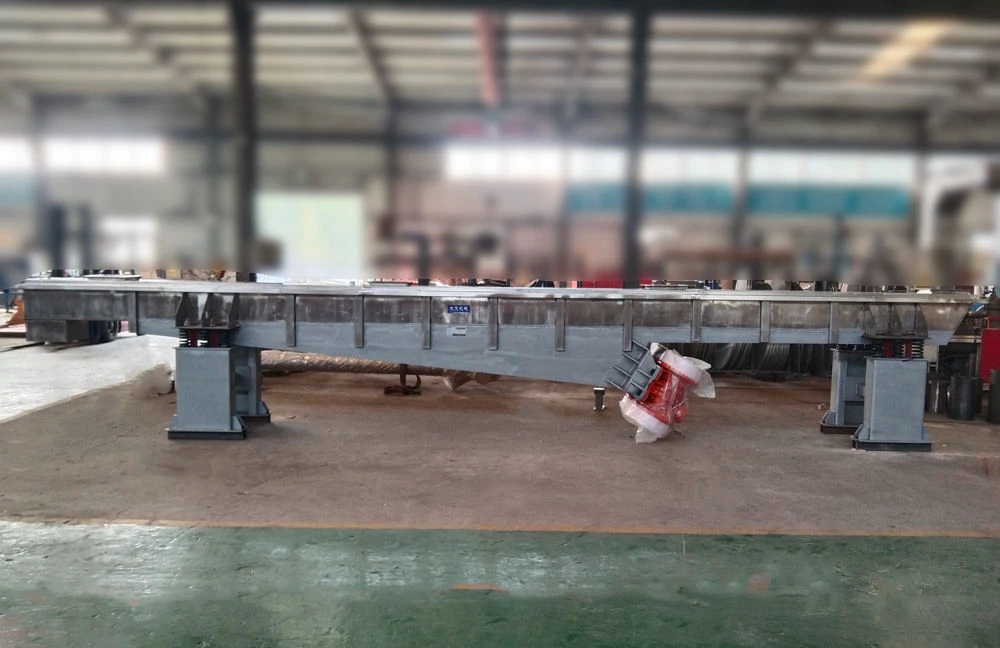
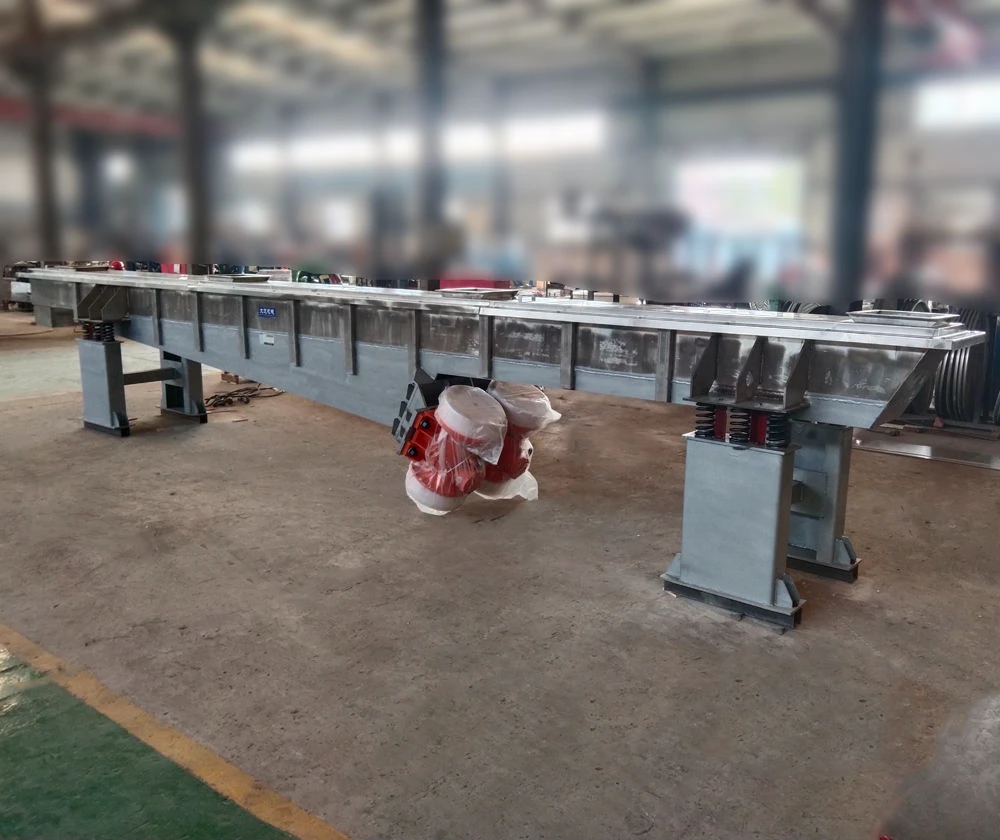
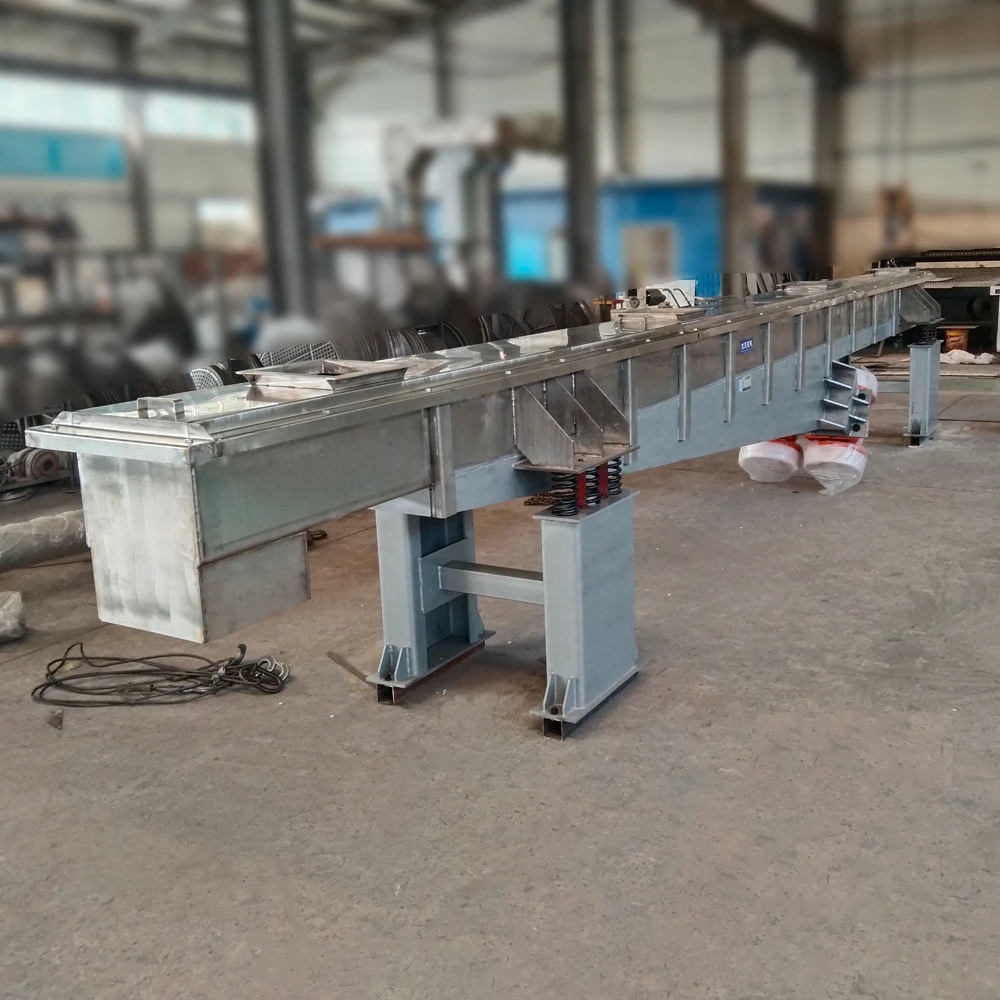
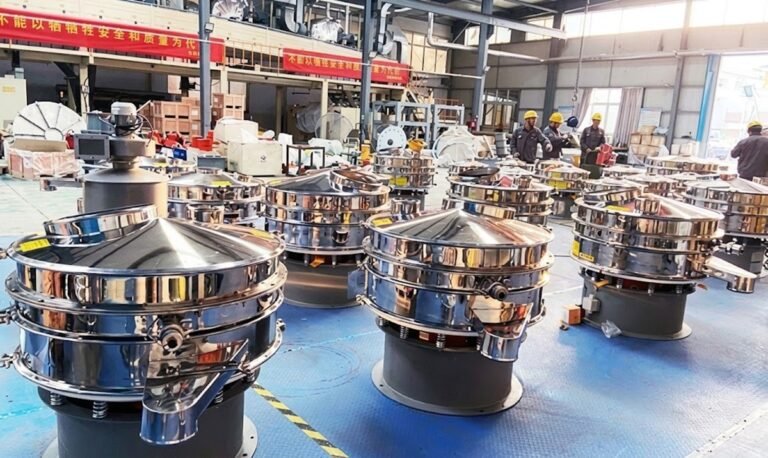
Jiarui builds Square Vibrating Feeders based on the material, capacity, trough size, and installation requirements of each project. After the CAD design is confirmed, the trough and main parts are machined and welded. The vibration motor or exciter is then installed, followed by assembly of the springs, supports, and connecting parts. Each feeder is checked for vibration performance and proper operation before delivery.
For abrasive materials such as ore and aggregate, the trough can be reinforced or fitted with wear-resistant liners. For powder and fine materials, the trough and inlet structure can be adjusted to improve material flow. Jiarui follows the ISO 9001 quality management system during production and provides Square Vibrating Feeders in different sizes, materials, and configurations.
FAQs
Get a Free Consultation
Fill out the form below to connect with our experts and receive personalized recommendations for your application.