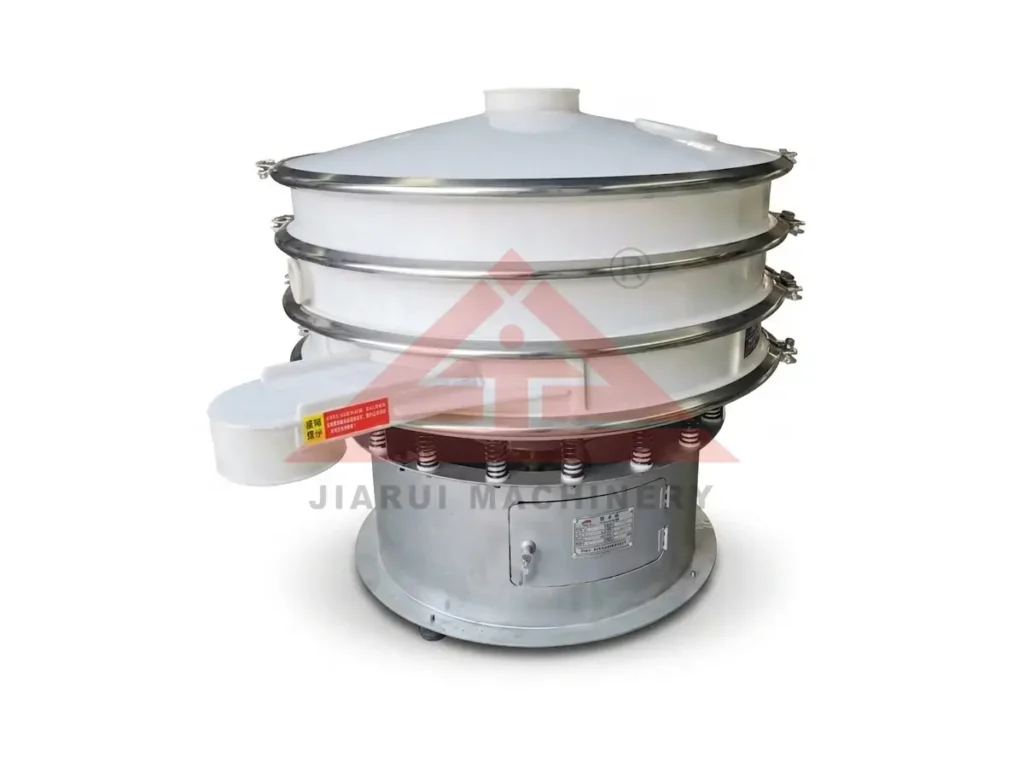
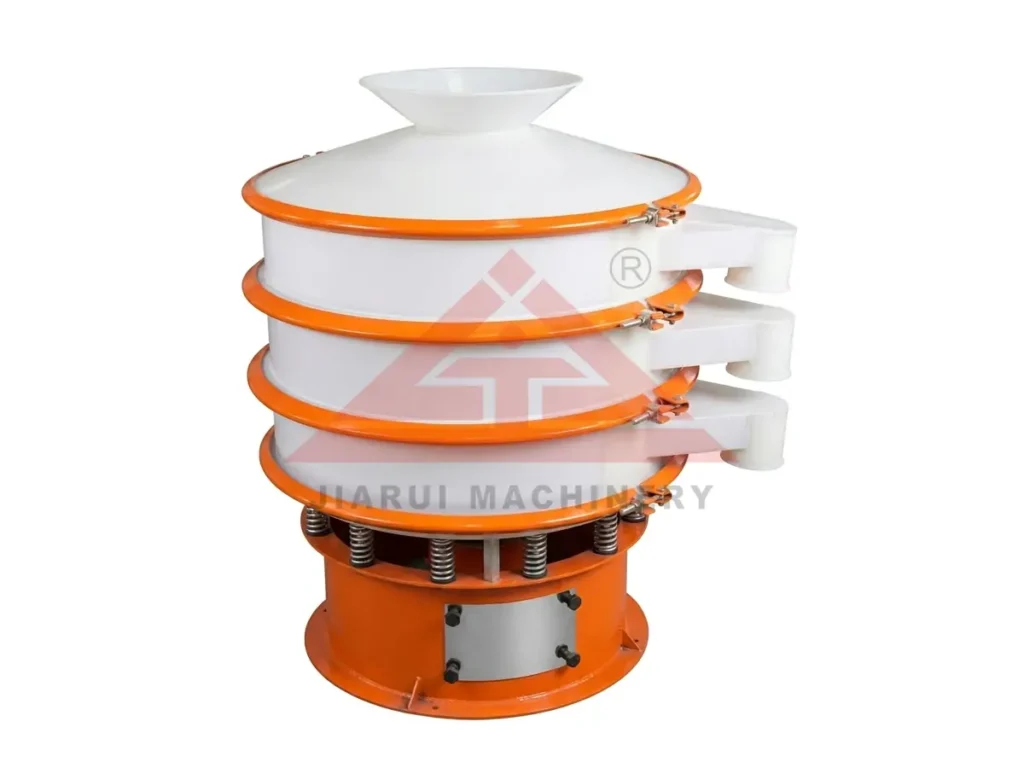
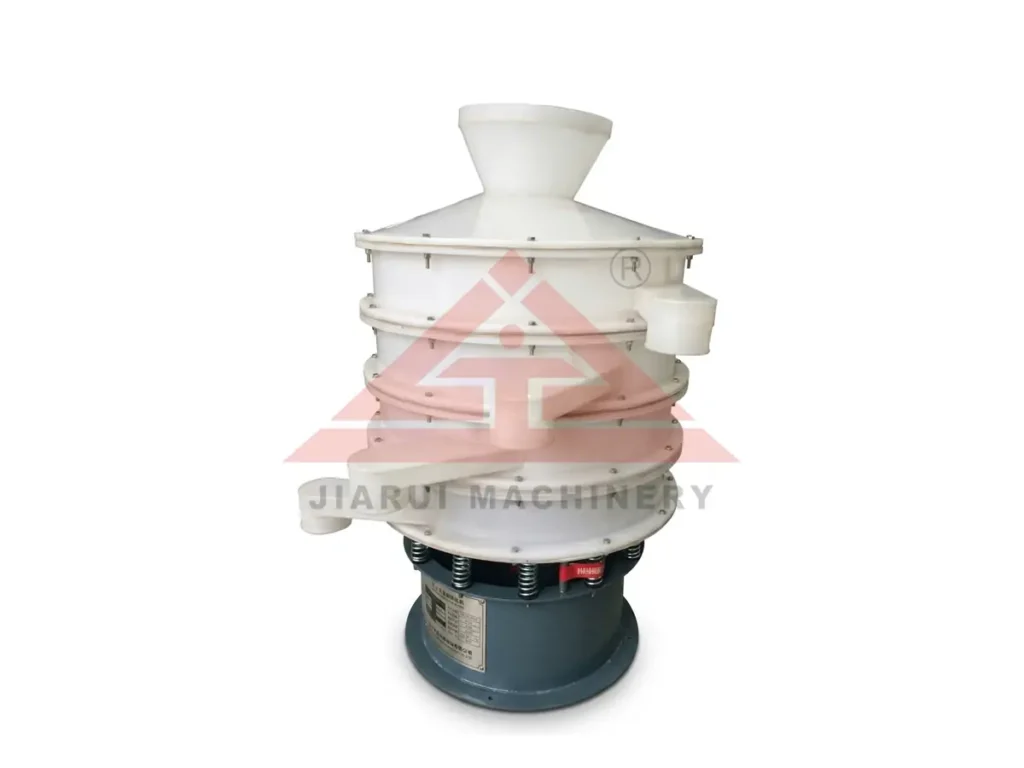
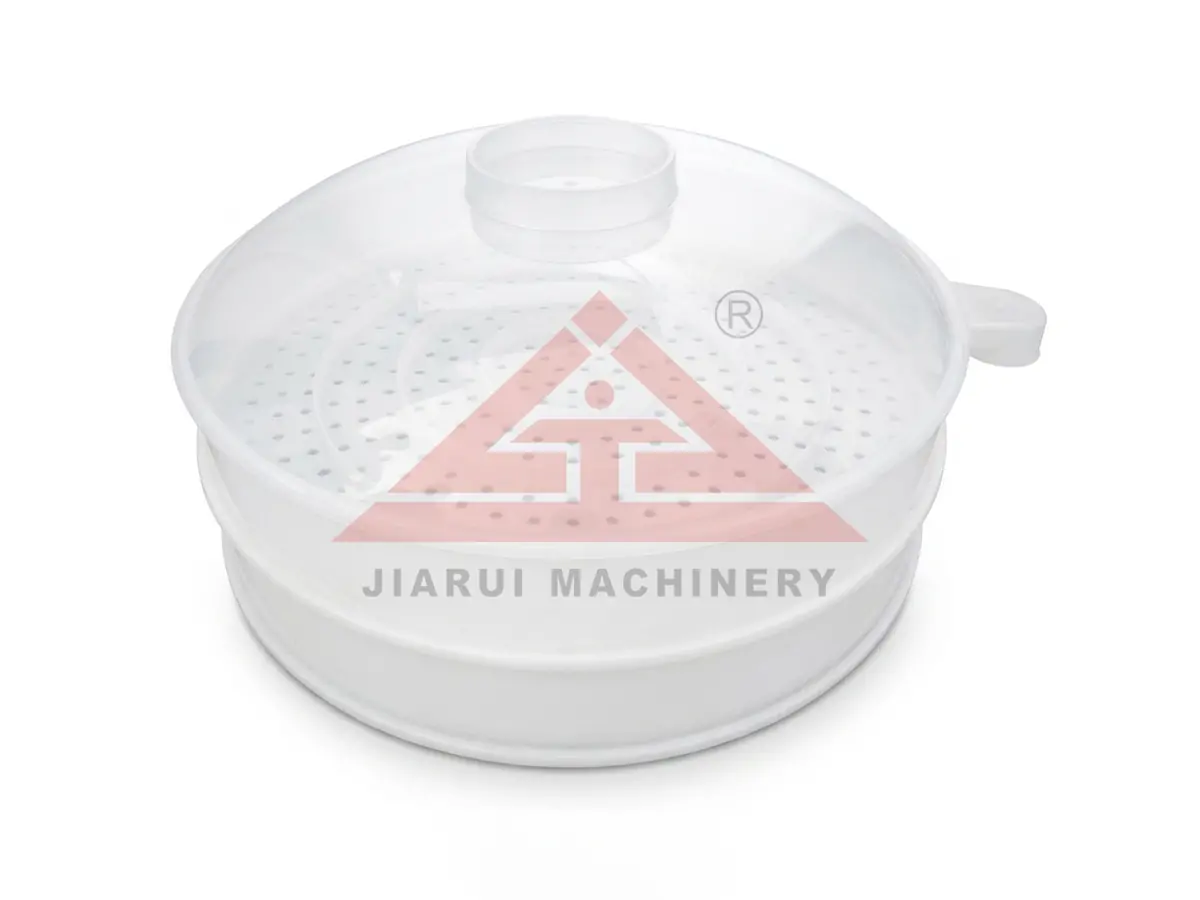
Plastic Vibrating Screen
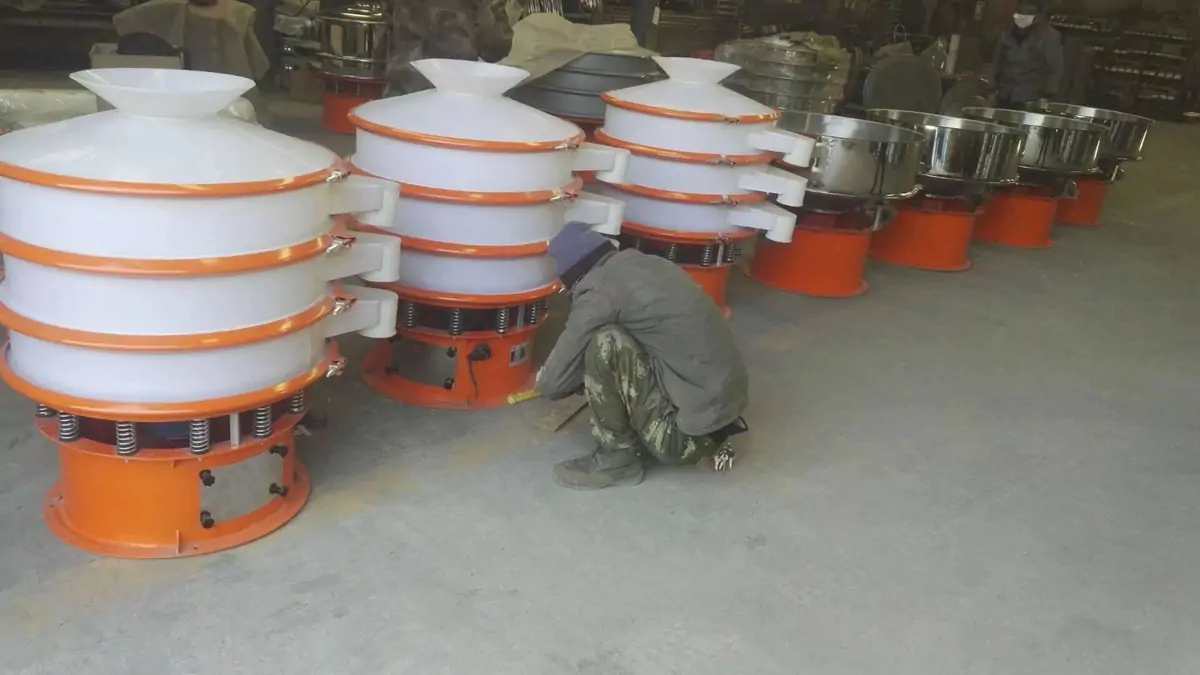
The Plastic Vibrating Screen is manufactured with PP polypropylene material and is mainly used for screening materials that cannot come into direct contact with metal or have corrosive properties. The equipment provides good resistance to acid, alkali, and chemical corrosion, helping reduce the risk of metal ion contamination. It is suitable for high-purity powder screening and special material separation applications.
Jiarui provides customized screening solutions based on customers’ material characteristics and production requirements. The equipment configuration can be adjusted according to different applications, including equipment size, screening layers, screen mesh material, sealing structure, and other components. The PP Plastic Vibrating Screen is widely used in chemical, pharmaceutical, food, new material, and other industries.
- Model: JR-P Φ400/600/800/1000/1200/1500/1800mm
- Material: PP polypropylene (non-metal contact design)
- Screen Mesh Size: 2–500 mesh (customizable according to material requirements)
- Vibration Source: Vibrating motor
- Screen Layers: 1–5 layers
- Customization: Support customization of equipment size, screen mesh material, and structural configuration
What Is a Plastic Vibrating Screen?
The Plastic Vibrating Screen, also known as a PP corrosion-resistant vibrating screen or non-metallic vibrating screen, is a type of vibrating screening equipment that uses PP polypropylene material for the material-contacting parts. The equipment uses a vibrating motor to drive the screen surface, allowing materials to spread evenly and pass through different screen mesh sizes for separation.
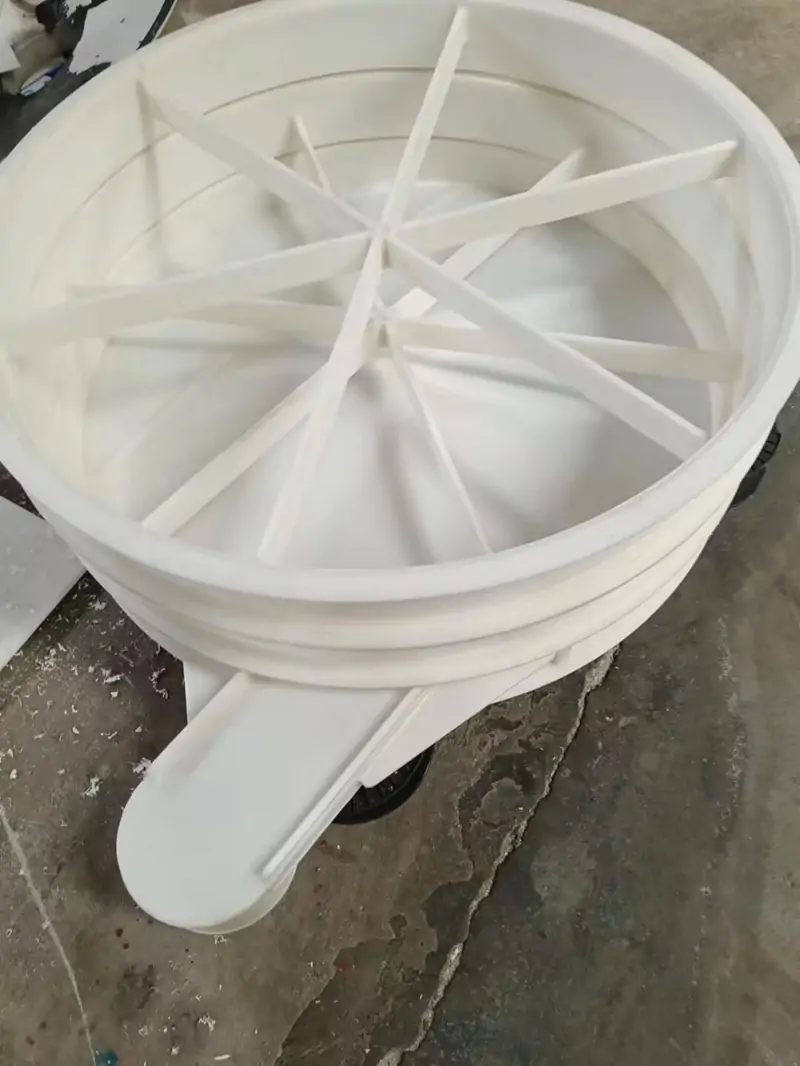
This type of screening machine is mainly used for materials with special requirements on equipment materials, such as materials that cannot contact metal, corrosive powders, or powders requiring high purity. Compared with conventional stainless steel vibrating screens, PP material can reduce the risk of metal contamination and provides good resistance to acid and alkali environments. It is widely used in chemical, pharmaceutical, food, and specialty powder industries. The equipment size, screen layers, screen mesh materials, and structural configuration can be adjusted according to different material characteristics.
Applications
The Plastic Vibrating Screen is mainly used in fine chemical, pharmaceutical, food, new material, ceramic, and specialty powder industries. It is suitable for screening materials that cannot come into direct contact with metal, have corrosive properties, or require high purity.
Different materials have differences in particle size, flowability, and chemical properties. Therefore, suitable screen mesh materials and equipment configurations need to be selected according to material characteristics.
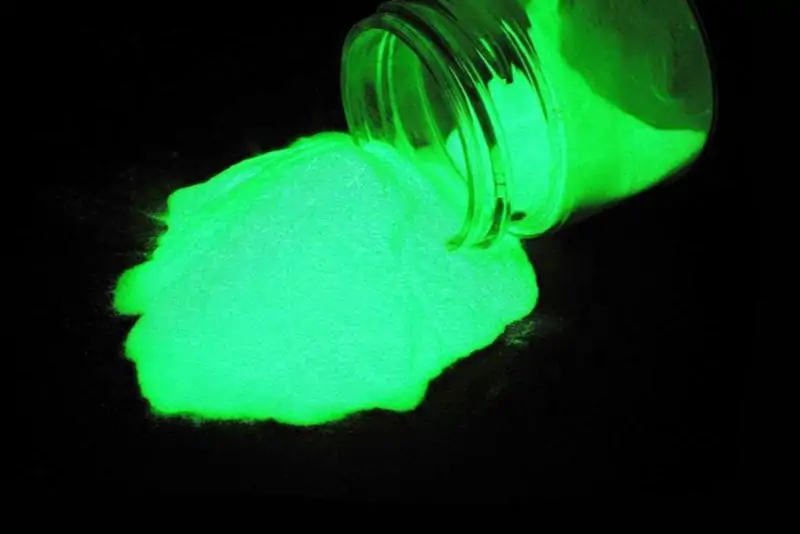 Phosphor
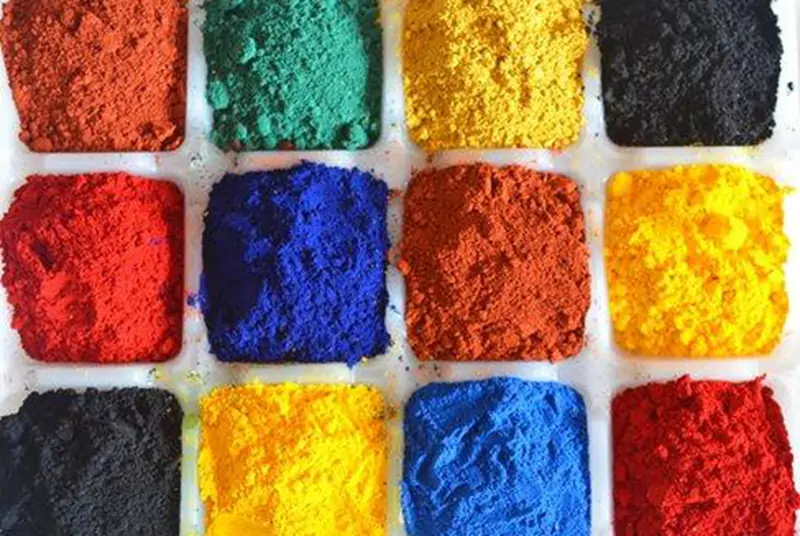 Pigments
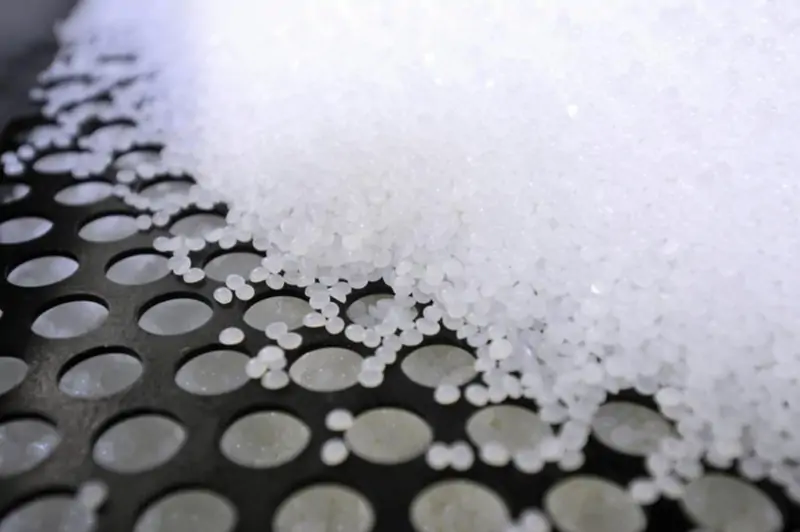 Resins
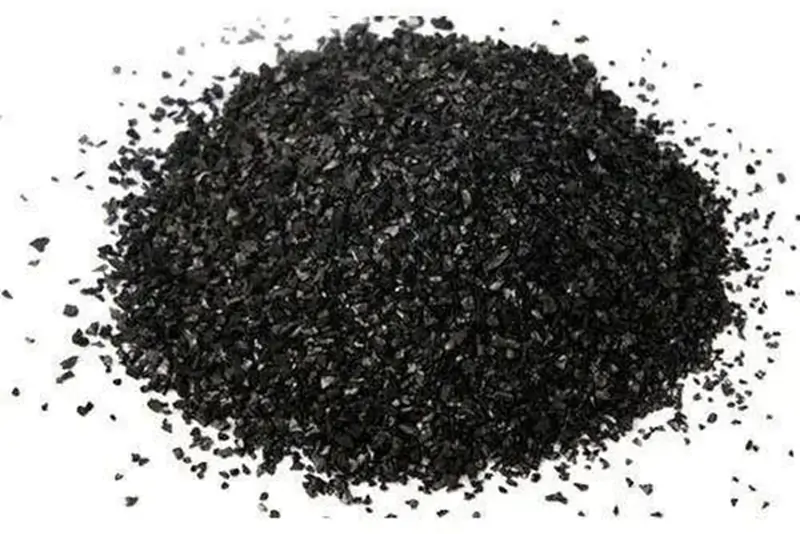 Activated Carbon
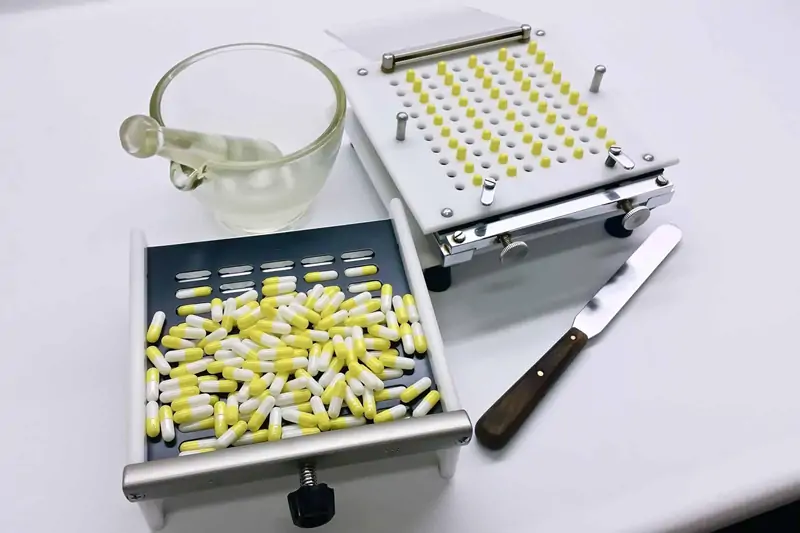 Pharmaceutical Raw Materials
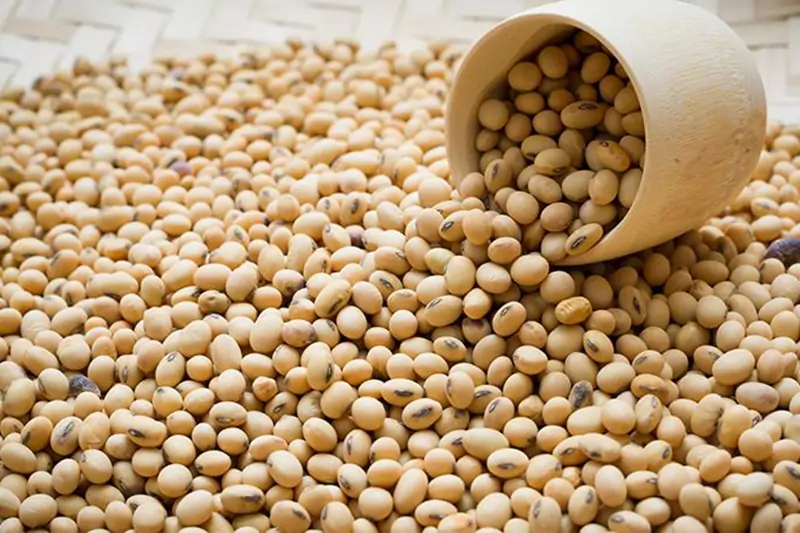 Food
Food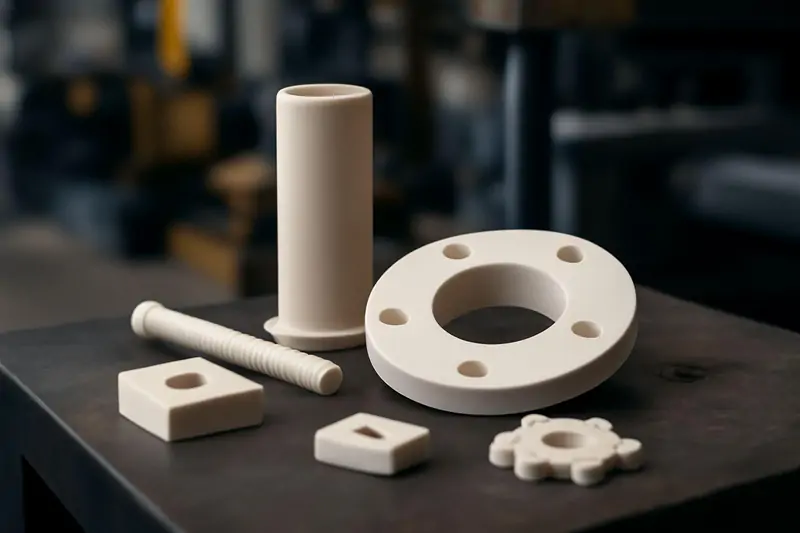 Ceramics
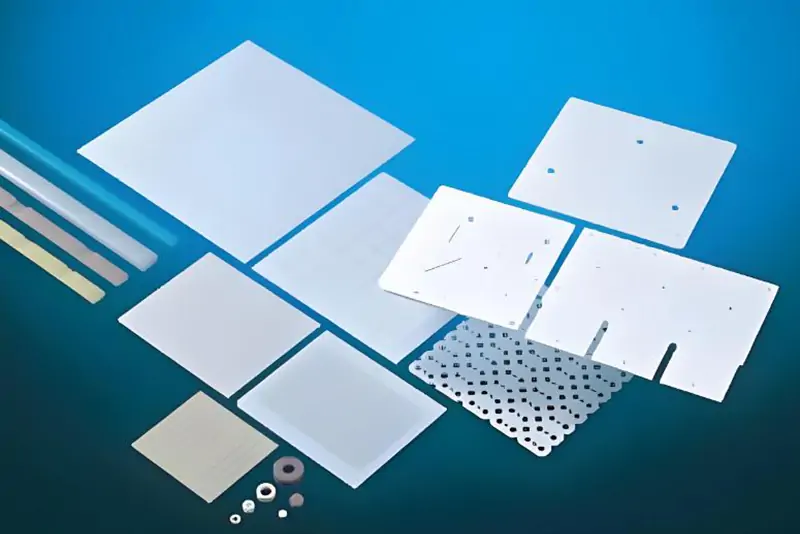 Electronic Materials
Common Screening Industries and Materials
| Application Industry | Typical Screening Materials | Screening Characteristics and Selection Reasons |
| Fine Chemical Industry | Fluorescent powder, pigment powder, resin powder, coating powder, carbon black | Some powders are corrosive and sensitive to metal impurities. PP material helps reduce direct metal contact and lower contamination risks. |
| Pharmaceutical Industry | Herbal powder, pharmaceutical raw materials, pharmaceutical intermediates | These materials require high product purity, clean production conditions, and strict contamination control. Non-metal contact design is suitable for high-purity powder screening. |
| Food Industry | Starch, sugar powder, protein powder, food additives, seasoning powder | Food materials usually require hygienic screening. Equipment materials need to support easy cleaning and reduce external contamination. |
| New Energy and Electronic Materials | Electronic ceramic powder, functional powders, some battery material powders | Some powders are sensitive to metal impurities and require controlled material contact during the screening process. |
| Ceramic and Non-metallic Materials | Ceramic powder, glaze materials, alumina, quartz powder, calcium carbonate | Fine powder materials require stable screening performance and proper matching between material characteristics and equipment configuration. |
| Environmental Materials | Activated carbon, filtration materials, adsorption materials | Some materials have adsorption properties or chemical characteristics. PP structures can improve equipment corrosion resistance in these applications. |
Why Choose Jiarui Plastic Vibrating Screen?
The selection of a Plastic Vibrating Screen should not be based only on the industry type. The same material may have different screening results due to differences in particle size, moisture content, flowability, and production requirements. During equipment selection, we focus more on material characteristics, including contact material, screen mesh configuration, screen layers, and sealing structure, as these details directly affect the long-term performance of the equipment.
With years of experience in vibrating screening equipment manufacturing, Jiarui has handled various powder screening requirements. For materials that cannot come into contact with metal, corrosive materials, or high-purity powders, we adjust the equipment structure and configuration based on specific operating conditions, helping customers avoid issues caused by unsuitable material selection, such as corrosion, contamination, or frequent maintenance.
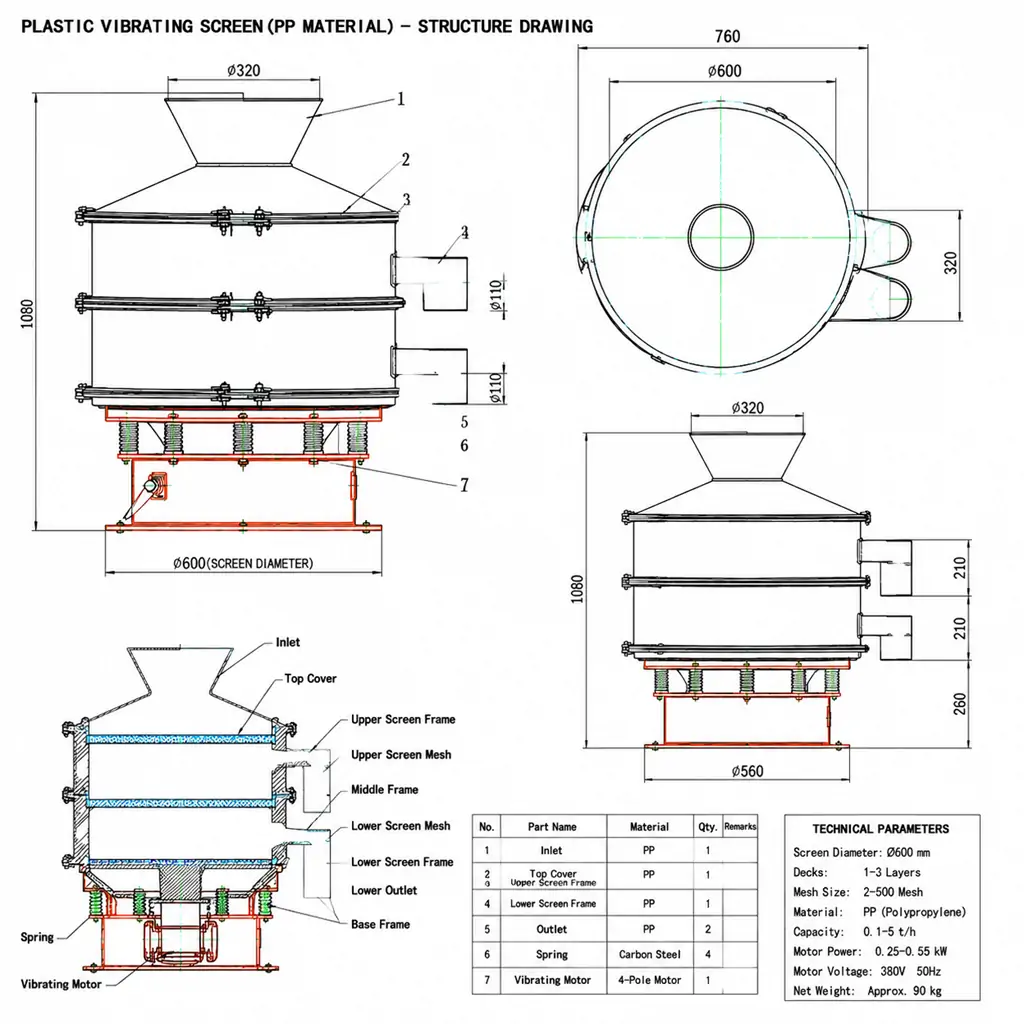
Plastic Vibrating Screen Structure and Components
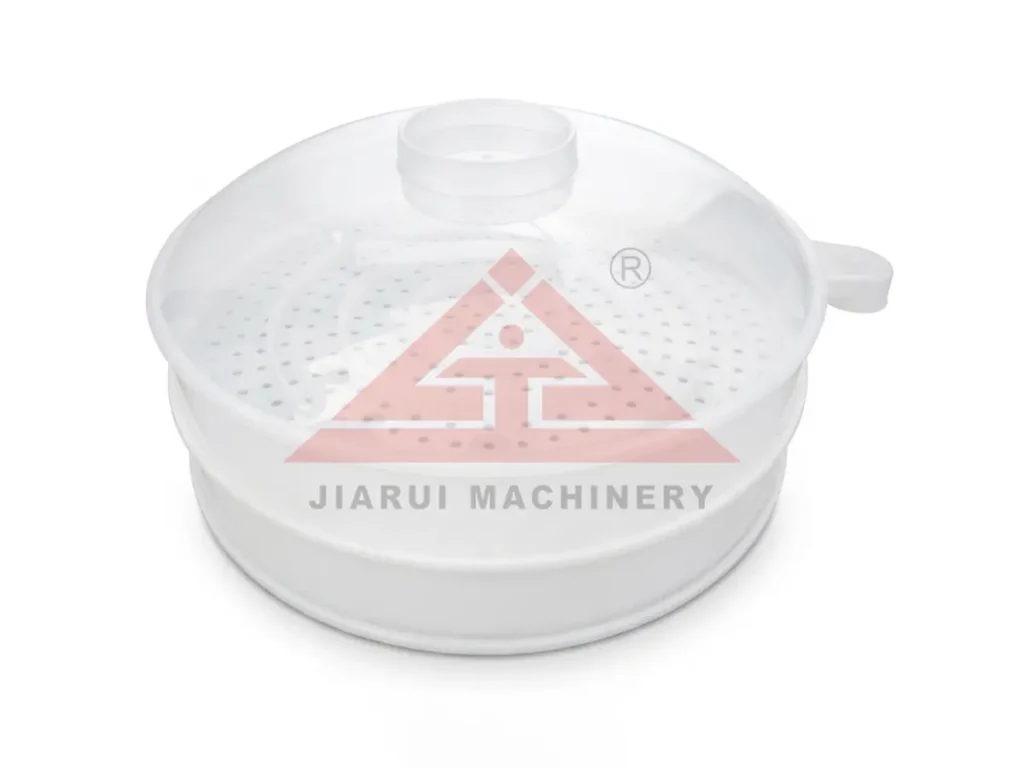
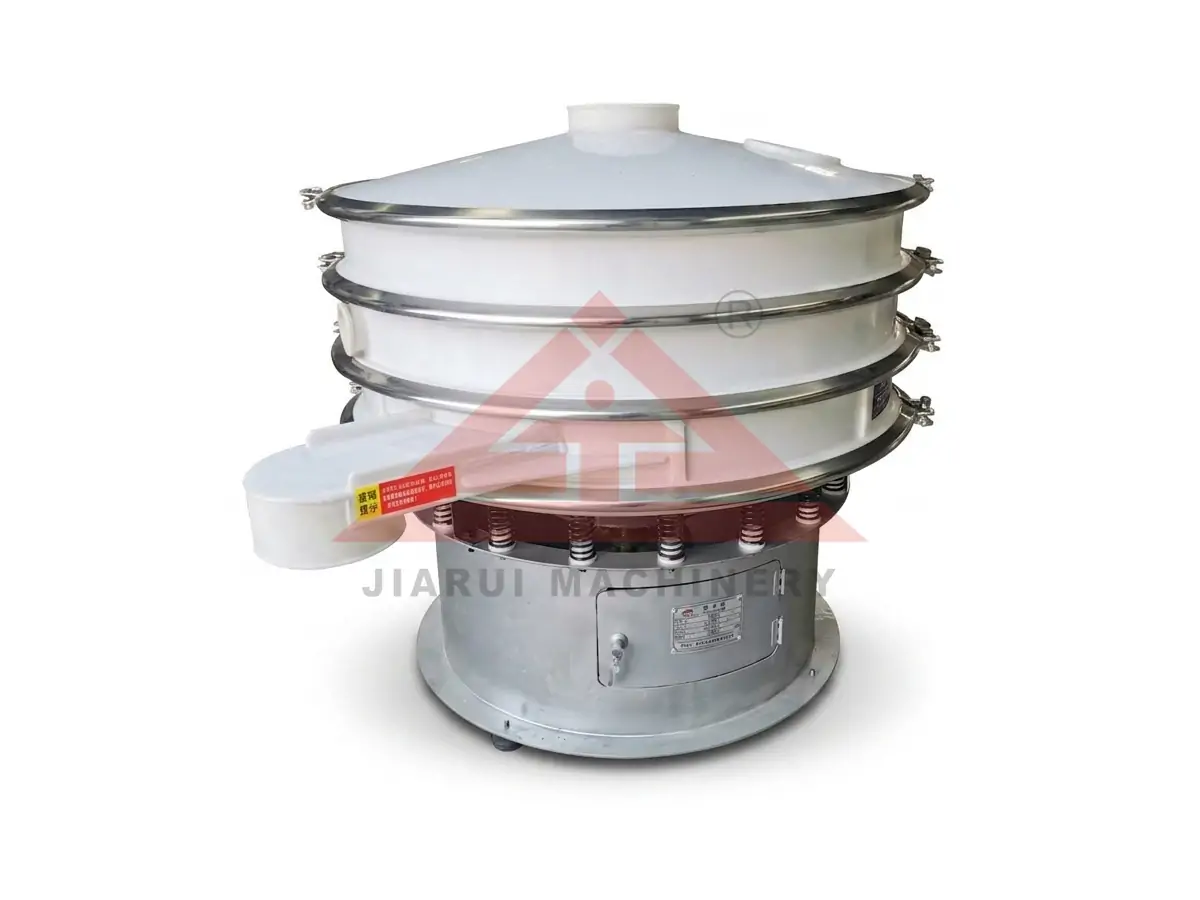
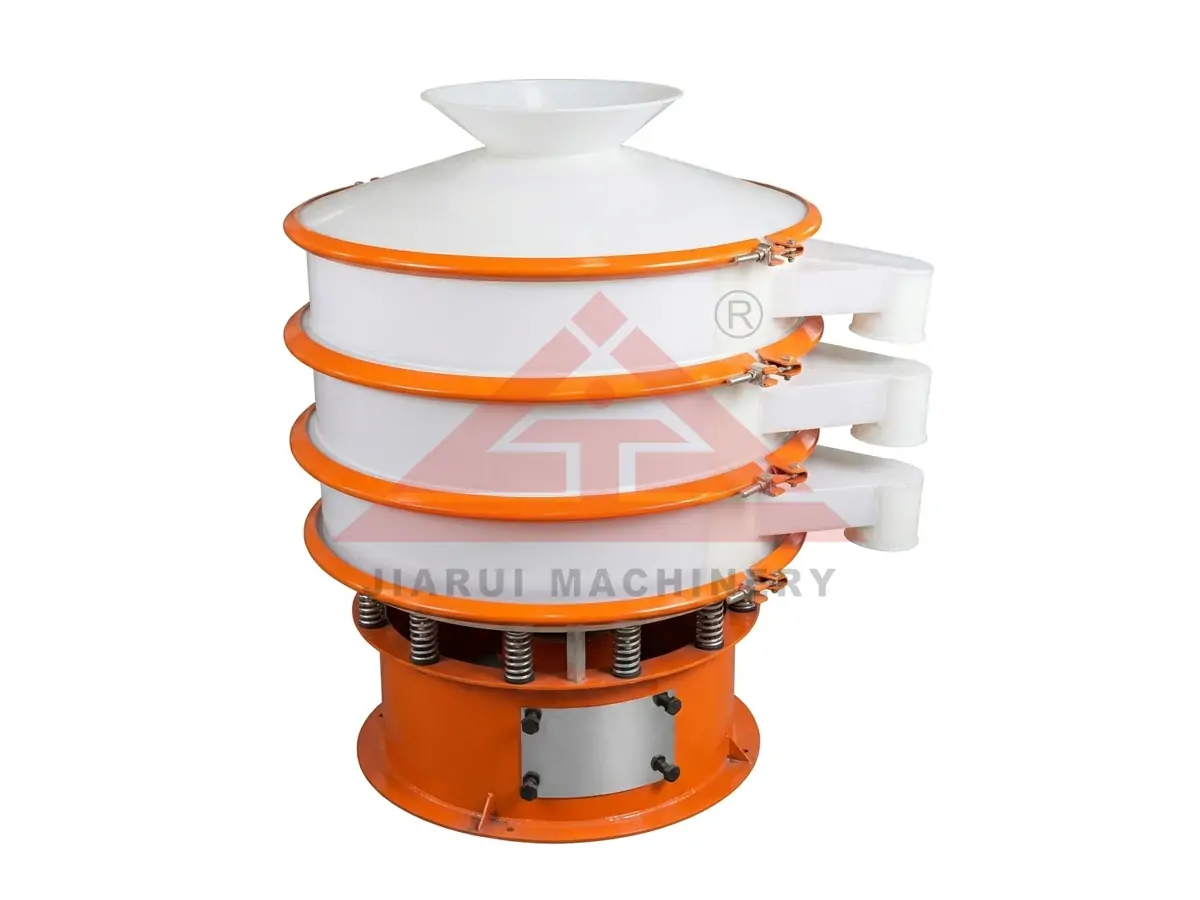
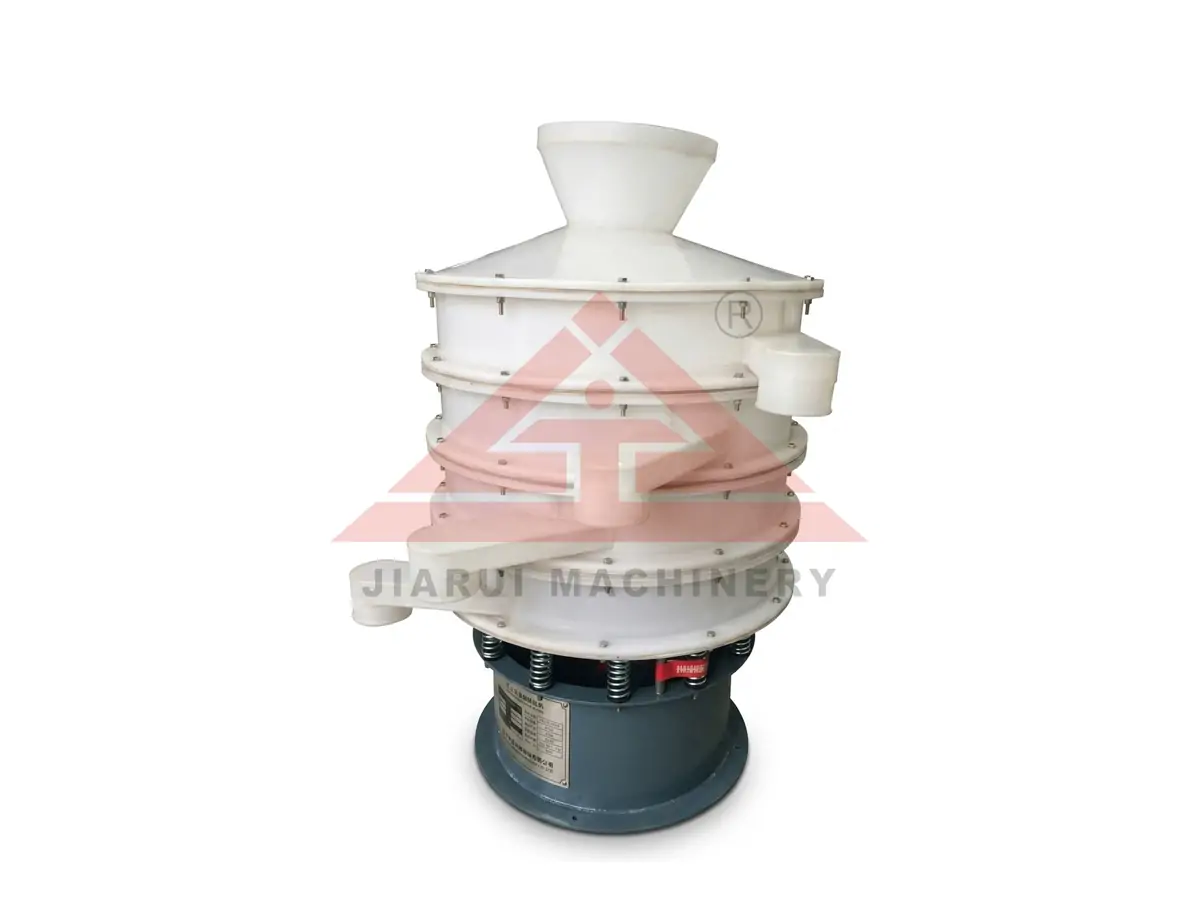
The Plastic Vibrating Screen mainly consists of a PP polypropylene screen body, a screen mesh assembly, a screen frame, a vibrating motor, a sealing structure, and a discharge structure. Compared with conventional metal vibrating screens, this type of equipment is mainly designed for materials that cannot contact metal, corrosive materials, or high-purity powders. Therefore, the material-contacting parts are made of PP and other non-metallic materials.
During equipment design, the configuration is adjusted according to material characteristics. The PP screen body mainly solves corrosion resistance and metal contamination issues, the screen mesh determines screening accuracy; the sealing structure helps control dust leakage; and the multi-layer screen frame supports continuous particle size separation.
1. PP Polypropylene Screen Body
The PP polypropylene screen body is the key component that distinguishes the Plastic Vibrating Screen from conventional vibrating screens. PP material provides good resistance to acids and alkalis, making it suitable for some corrosive powders and materials sensitive to metal impurities, helping reduce contamination risks during the screening process.
2. Screen Mesh Assembly
The screen mesh directly affects screening accuracy and processing capacity. The appropriate screen mesh material and mesh size should be selected according to material particle size, flowability, and screening requirements. Different materials have different requirements for screen mesh selection, and proper configuration is essential to achieve stable screening performance.
3. Multi-layer Screen Frame
According to production requirements, the equipment can be configured with multiple screen layers to separate materials with different particle sizes in one screening process. The number of screen layers should be selected based on material characteristics, production capacity, and screening objectives. More layers do not always mean better performance.
4. Sealing Cover and Discharge Structure
The equipment adopts a sealed structure design to reduce dust leakage during screening and prevent external impurities from entering the material. A reasonable discharge structure helps ensure continuous material discharge and improves equipment operating stability.
5. Vibrating Motor
The vibrating motor provides a stable vibration force for the equipment, allowing materials to form a suitable movement pattern on the screen surface. Adjusting vibration parameters according to material density, particle size, and screening requirements helps improve screening stability.
Different materials have different requirements for screening equipment. The key to a Plastic Vibrating Screen is not only the use of PP material, but also the proper matching of material selection, screen mesh, sealing structure, and vibration parameters. Selecting the right configuration according to material characteristics is essential to ensure long-term stable operation of the equipment.
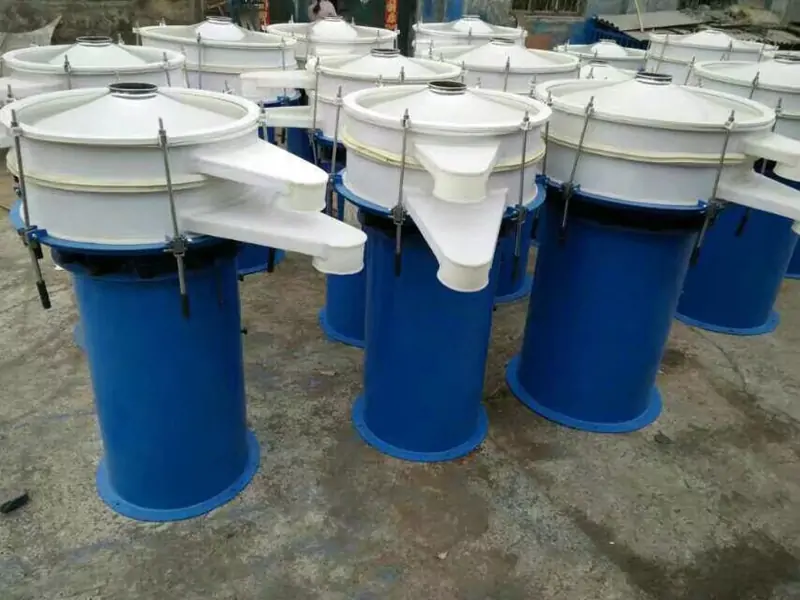 Plastic Vibrating Screen Assembly
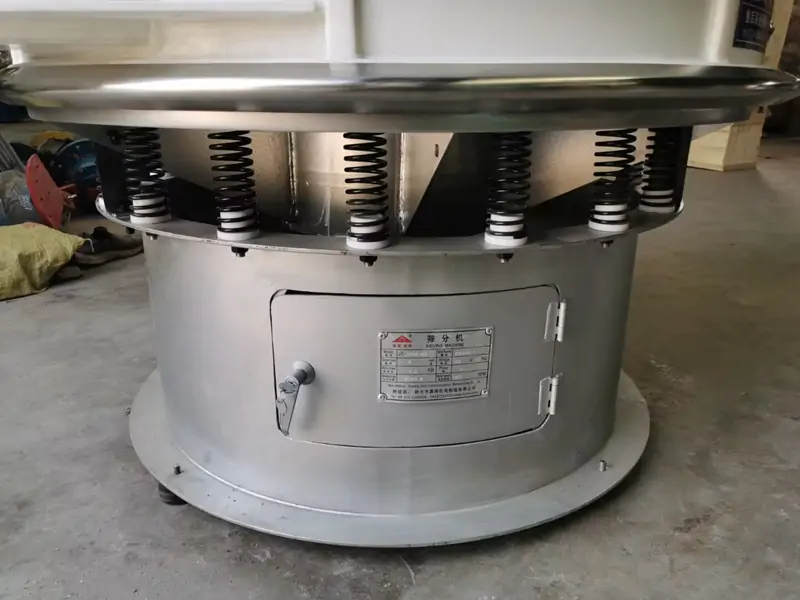 Bottom Base
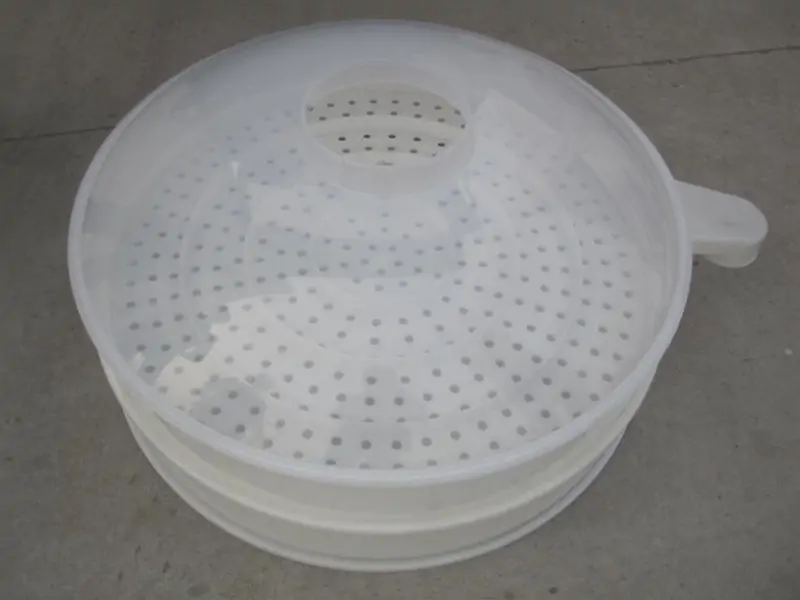 Dust Cover
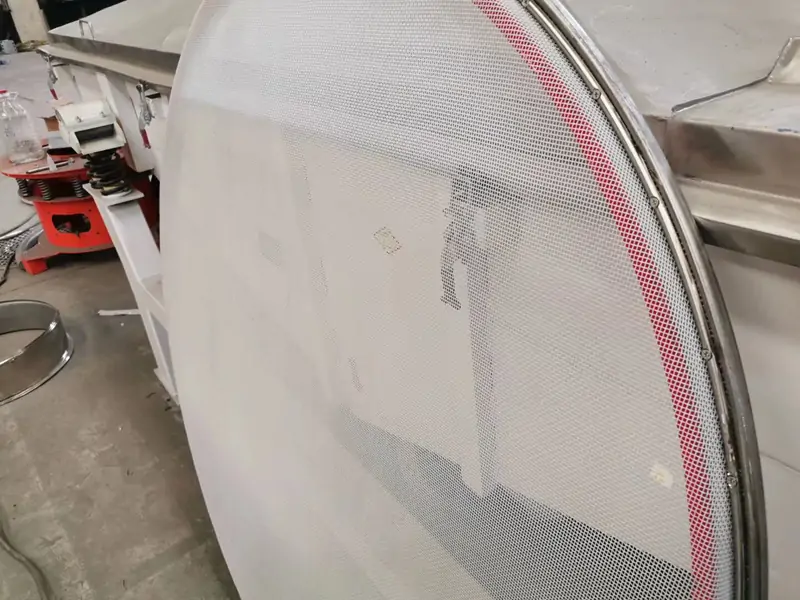 Screen Mesh
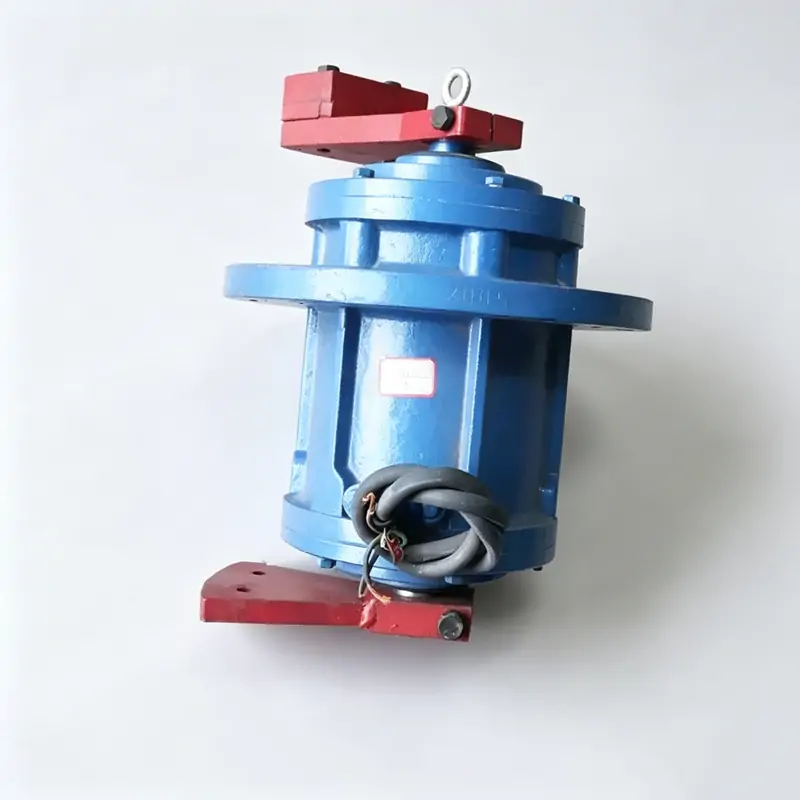 Plastic Vibrating Screen
 10mm Heavy-Duty PP Sheet
Plastic Vibrating Screen Core Advantages
Non-metal Contact Design
The equipment uses PP polypropylene and other non-metallic materials to reduce direct contact between materials and metal parts, making it suitable for powder screening applications with high purity requirements.
Sealed Structure Design
The enclosed structure helps reduce dust leakage during operation while lowering the risk of external impurities entering the material.
Easy Cleaning and Maintenance
The equipment structure is designed for convenient cleaning and maintenance, making it suitable for industries with strict requirements on material purity and production hygiene, such as pharmaceutical, food, and specialty powder applications.
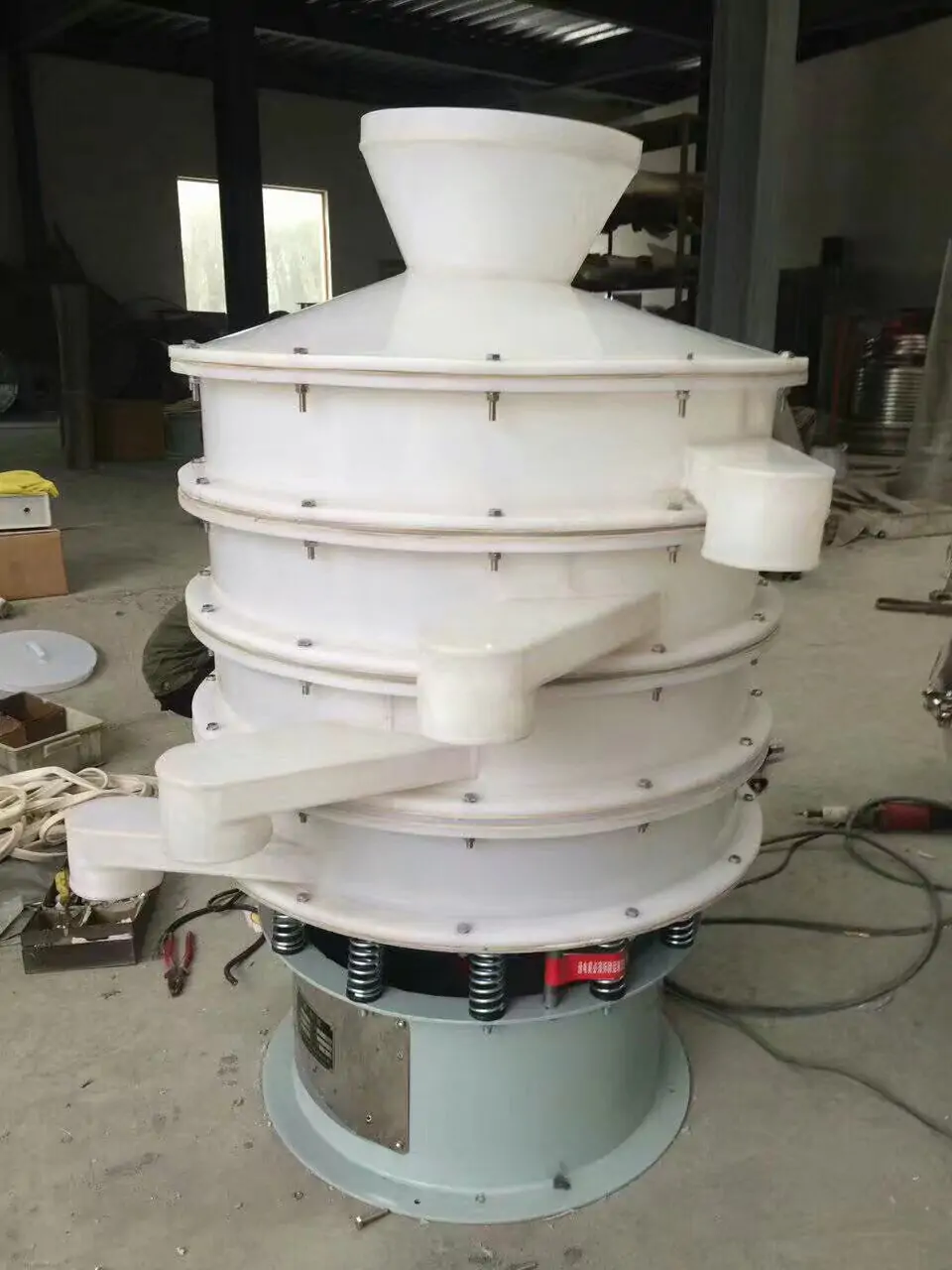
Acid and Alkali Corrosion Resistance
PP material provides good corrosion resistance and is suitable for some chemical, pharmaceutical, and special powder screening environments.
Multi-layer Configuration
The equipment supports multi-layer screening designs and can complete continuous separation of different particle sizes according to production requirements.
Flexible Customization
The screen mesh, screen layers, and structural configuration can be adjusted according to material characteristics, production capacity, and operating requirements to meet different application needs.
Plastic Vibrating Screen Technical Parameters
The specific configuration of the Plastic Vibrating Screen depends on material characteristics and production requirements. Different materials have differences in particle size, flowability, corrosion properties, and screening accuracy, which will affect equipment model selection, screen mesh configuration, and processing capacity. The following parameters are provided as a reference for equipment selection, and the final solution should be confirmed according to actual working conditions.
| Model | Screen Diameter (mm) | Screen Layers | Screen Mesh Size (Mesh) | Power (kW) | Voltage (V) | Reference Capacity (kg/h) | Material Contact Parts |
| JR-P400 | 350 | 1-3 Layers | 2-500 | 0.18 | 220/380 | 100-300 | PP |
| JR-P600 | 550 | 1-3 Layers | 2-500 | 0.25 | 220/380 | 300-600 | PP |
| JR-P800 | 750 | 1-5 Layers | 2-500 | 0.55 | 220/380 | 500-1200 | PP |
| JR-P1000 | 920 | 1-5 Layers | 2-500 | 0.75 | 220/380 | 800-1800 | PP |
| JR-P1200 | 1120 | 1-5 Layers | 2-500 | 1.1 | 220/380 | 1500-2800 | PP |
| JR-P1500 | 1420 | 1-5 Layers | 2-500 | 1.5 | 220/380 | 2100-3500 | PP |
| JR-P1800 | 1720 | 1-5 Layers | 2-500 | 2.2 | 220/380 | Customized according to material | PP |
Standard Configuration:
- Material: PP polypropylene (non-metal contact materials can be customized according to material requirements)
- Frequency: 50Hz / 60Hz
- Vibration Frequency: 1440 rpm
- Optional Configurations: Ultrasonic cleaning system, feeding hopper, mobile base, etc.
Plastic material equipment has certain requirements for the operating environment and material conditions. During selection, factors such as material corrosion properties, temperature, particle size, moisture content, and processing capacity should be considered. The Jiarui engineering team will match suitable equipment structures and configurations based on the material information and production requirements provided by customers.
Plastic Vibrating Screen vs Rotary Vibrating Screen and Ultrasonic Vibrating Screen
The Plastic Vibrating Screen, rotary vibrating screen, and ultrasonic vibrating screen can all be used for powder screening, but they are designed to solve different screening problems. The rotary vibrating screen is mainly used for conventional powder classification; the ultrasonic vibrating screen focuses on improving fine powder screening performance and reducing mesh blockage, while the Plastic Vibrating Screen is mainly designed for materials that cannot directly contact metal, corrosive materials, or high-purity powder applications.
| Comparison Item | Plastic Vibrating Screen | Rotary Vibrating Screen | Ultrasonic Vibrating Screen |
| Main Problem Solved | Solves metal contact, corrosion, and purity requirements | Meets most conventional powder screening requirements | Solves screen blockage problems during fine powder screening |
| Material Contact Parts | PP polypropylene and other non-metallic materials to reduce metal contamination risks | Stainless steel, carbon steel, and other metal materials | Stainless steel structure with ultrasonic mesh cleaning system |
| Suitable Materials | Fluorescent powder, pharmaceutical raw materials, high-purity powders, corrosive chemical powders | Food powder, chemical powder, plastic powder, mineral powder, and other conventional materials | Ultrafine powder, lightweight powder, electrostatic materials, and materials prone to mesh blockage |
| Screening Focus | Material compatibility and product purity | Screening accuracy, processing capacity, and equipment versatility | Fine powder passing rate and screen operation stability |
| Anti-blinding Performance | Depends on material characteristics and screen configuration | Suitable for general powder screening | Provides better improvement for fine powders prone to mesh blockage |
| Typical Applications | Pharmaceutical, new materials, fine chemical, and high-purity powder industries | Food, chemical, plastic, and mineral powder industries | Battery materials, ultrafine powders, and new material applications |
| Selection Focus | First confirm whether the material can contact metal | First confirm production capacity and screening requirements | First confirm whether mesh blockage is the main issue |
How to Choose According to Different Material Conditions?
During equipment selection, more complex equipment is not always better. The key is to identify the actual problems of the material. We usually evaluate material properties, particle size, production capacity, and operating environment before determining the suitable equipment structure and configuration.
| If Your Material Has These Conditions | Recommended Equipment | Selection Reason |
| Conventional powder that only requires particle size classification | Rotary Vibrating Screen | Mature structure and suitable for most standard screening applications |
| Fine powder that easily blocks the screen mesh during screening | Ultrasonic Vibrating Screen | Ultrasonic system helps clean the screen mesh and improves fine powder screening stability |
| Material cannot directly contact metal | Plastic Vibrating Screen | Non-metal contact design helps reduce metal contamination risks |
| Material has certain acid or alkali corrosive properties | Plastic Vibrating Screen | PP material provides good acid and alkali resistance for special working conditions |
| Product requires high purity | Plastic Vibrating Screen | Reduces metal contact and meets high-purity material screening requirements |
Equipment selection does not have a fixed answer. The key is whether the equipment matches the material characteristics and operating requirements. Based on years of experience in vibrating screening equipment design and application, we have found that the same material may require different equipment configurations due to differences in particle size, moisture content, flowability, and production requirements.
If you are not sure whether a Plastic Vibrating Screen, rotary vibrating screen, or ultrasonic vibrating screen is more suitable for your material, you can provide your material information and screening requirements to the Jiarui engineering team. We will provide a more suitable selection recommendation based on actual working conditions, including material selection, screen mesh configuration, and equipment structure.
Customize Your Plastic Vibrating Screen Solution
To recommend a suitable Plastic Vibrating Screen, please provide the following basic information:
- Material Information
- Material name:
- Material characteristics (corrosive / cannot contact metal / high purity requirements):
- Screening Requirements
- Required mesh size:
- Processing capacity:
- Special Requirements
- Number of screen layers:
- Other requirements:
After receiving your information, the Jiarui engineering team will analyze your material properties and production requirements to recommend a suitable Plastic Vibrating Screen configuration.
Why choose Jiarui Machinery?
After years of manufacturing vibrating screening equipment, we have found that many screening problems are caused by improper equipment selection rather than the equipment itself. For materials that cannot contact metal, corrosive powders, or high-purity materials, material selection, screen mesh configuration, and structural design directly affect equipment performance.
The Jiarui engineering team evaluates material properties, screening requirements, and operating conditions to match suitable configurations, including PP material, screen mesh, screen layers, and sealing structure. This helps reduce selection errors and makes the equipment more suitable for long-term operation.
- More Suitable Equipment Configuration
- More Stable Operation
- Flexible Customization
If you are unsure whether the Plastic Vibrating Screen is suitable for your application, provide your material information and screening requirements. The Jiarui engineering team will recommend a suitable configuration based on actual working conditions.
FAQs
Related Articles
What Is a Pneumatic Vibratory Sifter?
Learn what a pneumatic vibratory sifter is, how it works, and why it is used for explosion-proof powder screening. Explore its working principle, components, applications, and advantages over electric vibrating sieves.What Is A Vibrating Sieve?
Discover what a vibrating sieve is, how it works, the different types available, common industrial applications, and practical guidance for selecting the right vibrating sieve machine.Types of Industrial Sieve Machines: How to Choose the Right One?
Learn about different industrial sieve machine types, compare their applications, and discover how to choose the right industrial screening equipment based on material characteristics, screening accuracy, production capacity, and operating requirements.
Get a Free Consultation
Fill out the form below to connect with our experts and receive personalized recommendations for your application.