What is a vibrating screen?
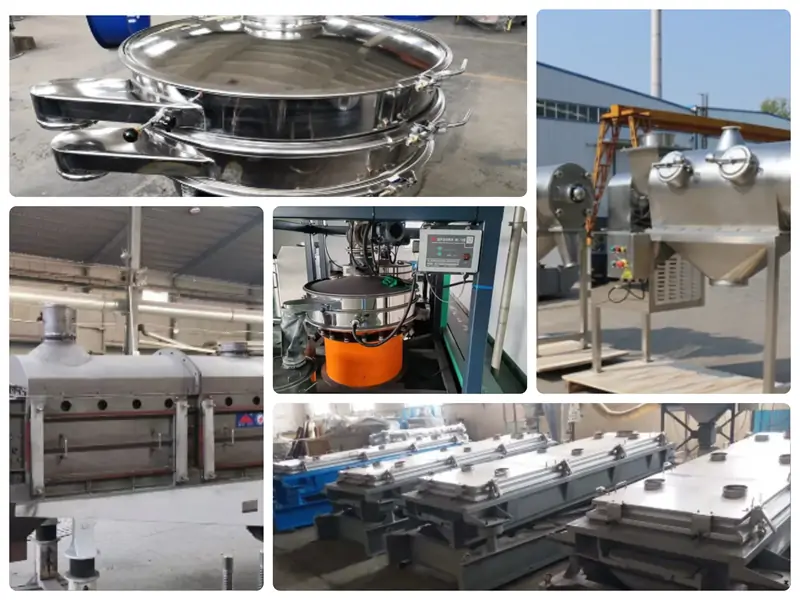
A vibrating screen is a device that achieves particle-size classification and solid-liquid separation by allowing materials to vibrate on a screen surface, thereby performing stratification, permeation, and filtration.It is widely used in industries such as food,pharmaceuticals,chemicals,building materials,and metallurgy.Depending on the properties of the materials and the application industry,the material selection for vibrating screens is mainly divided into two major categories: metallic and non-metallic materials.Vibrating screens made of different materials vary in terms of wear resistance,corrosion resistance,applicable mesh sizes,and suitable industries.These performance differences directly influence the selection of mesh sizes and the adaptation to different industries.
The principle of vibrating screens
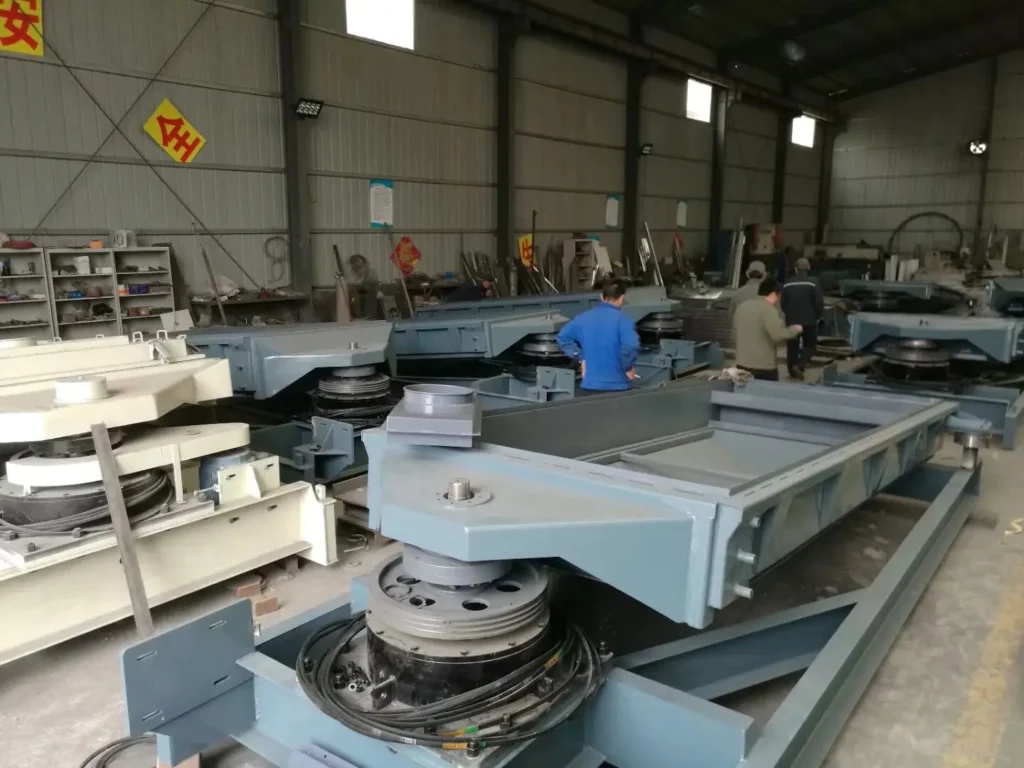
The core principle of a vibrating screen is to drive the material to perform reciprocating and periodic vibrations on the screen surface through exciting force, causing the material to disperse and stratify on the screen for screening, impurity removal, and filtration. However, the movement patterns of materials vary among different types of screens. Below, I will take linear vibrating screens and circular vibrating screens as examples to specifically explain their principles.
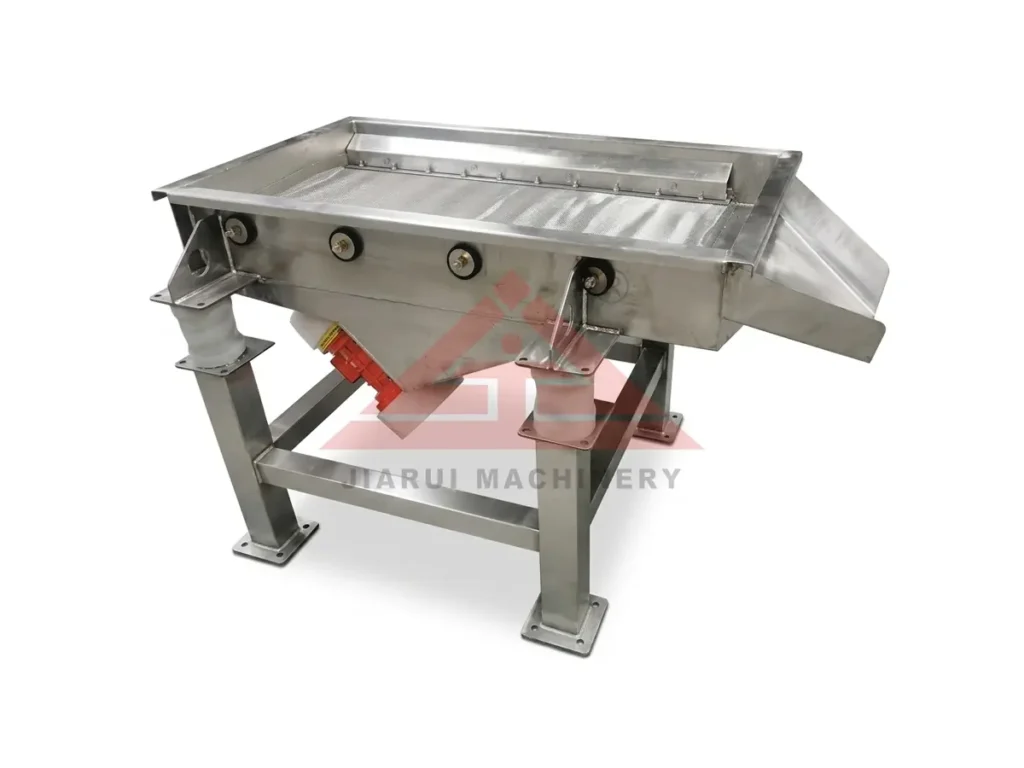
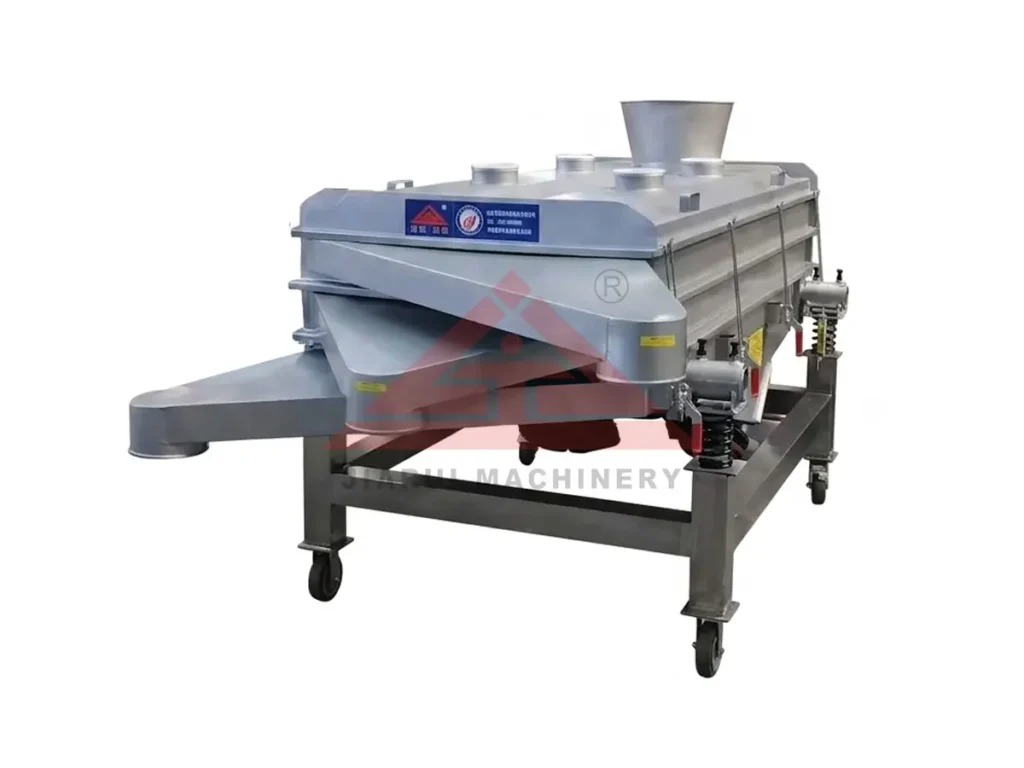
Principle of Linear Vibrating
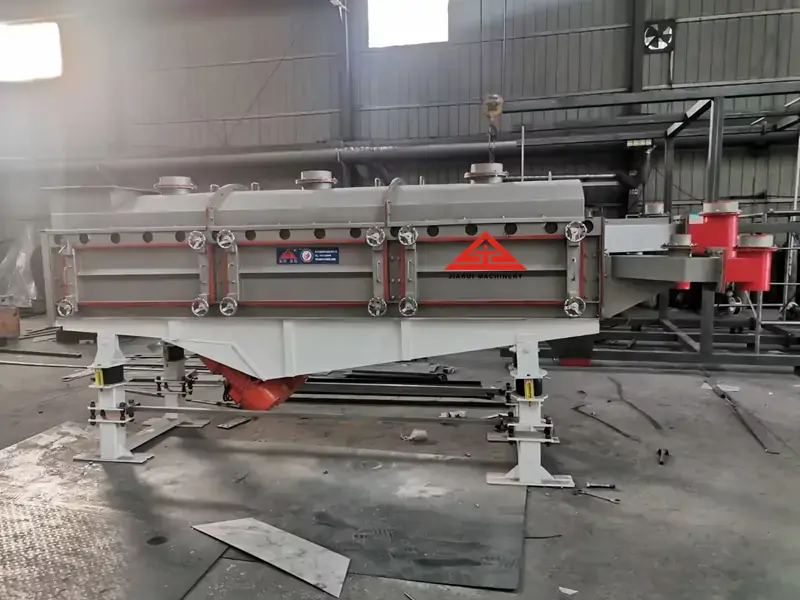
The straight-line vibrating screen is driven by two motors. The two motors rotate synchronously in opposite directions, generating exciting forces that drive the screen box to perform reciprocating linear motion. Under the combined action of the exciting force and its own gravity, the material is thrown up on the screen surface and moves forward in a linear, jumping manner. During this process, screening, grading, impurity removal, and filtration are completed.
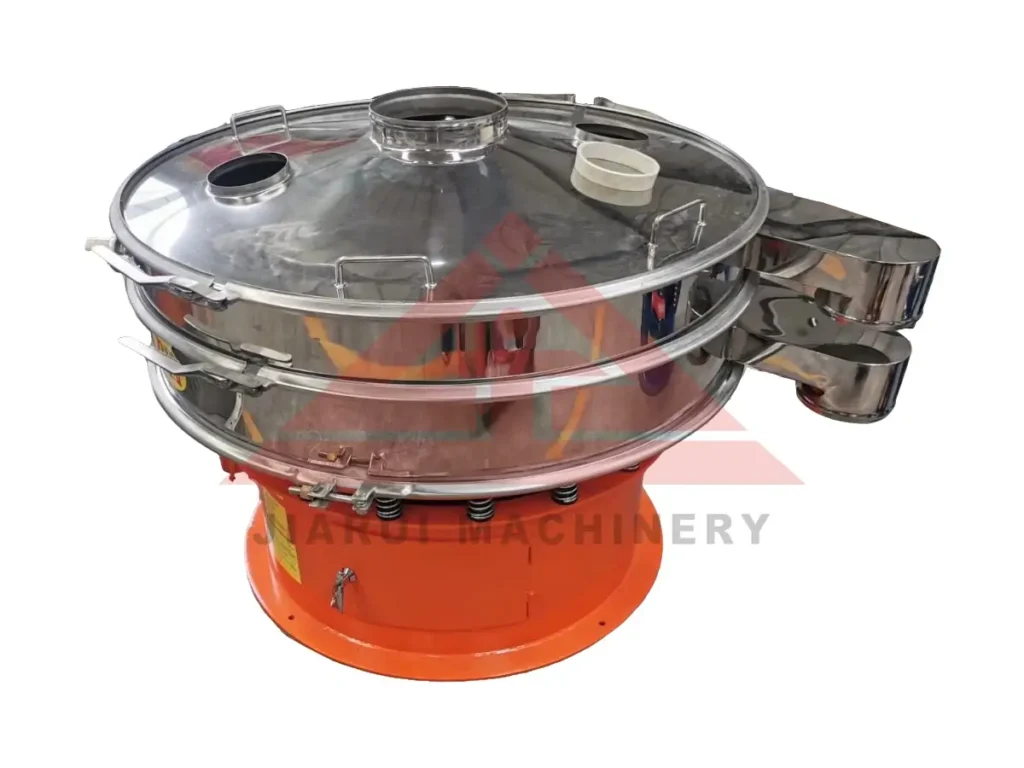
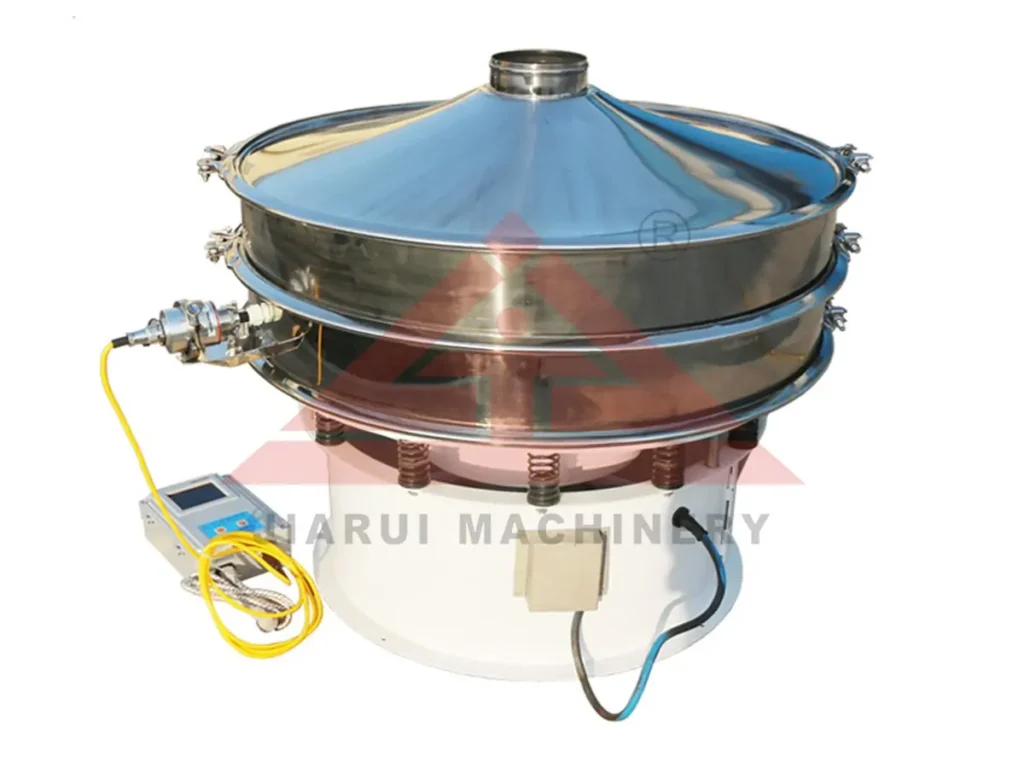
Principle of Rotary Vibrating Screen
The working principle of a Rotary vibrating screen is to generate circular vibration in the screen box through the centrifugal inertial force produced by the vibrator.The material is thrown and rolled on the screen surface,thereby achieving the purpose of separation and screening.
Classify by Sieve Material
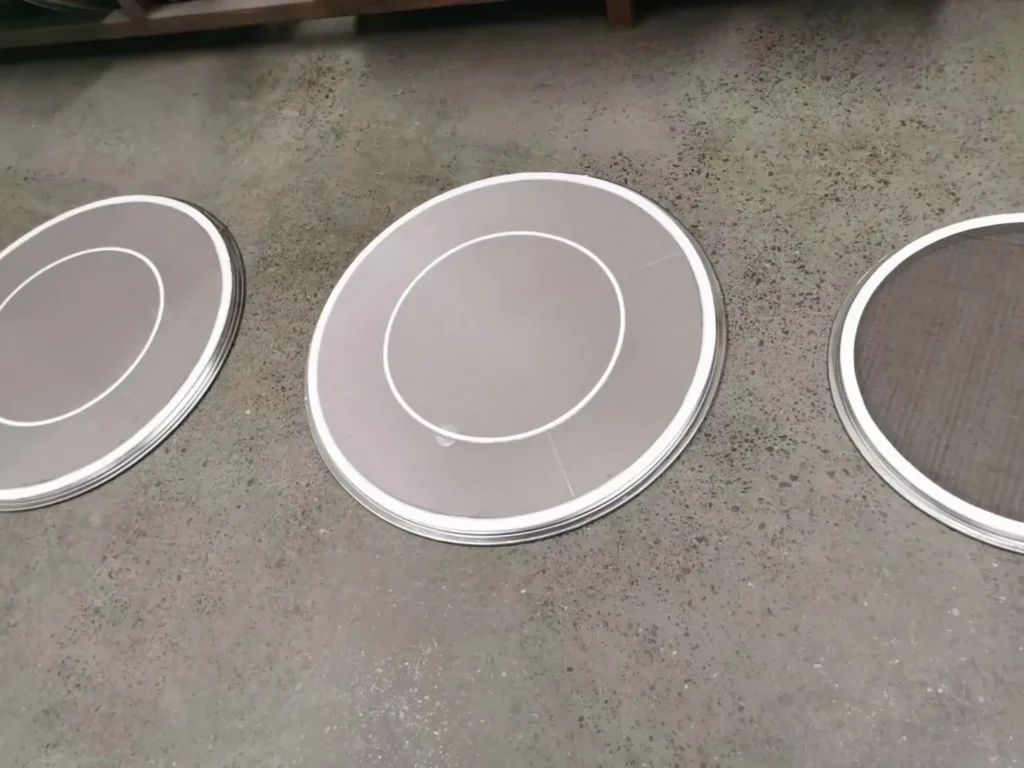
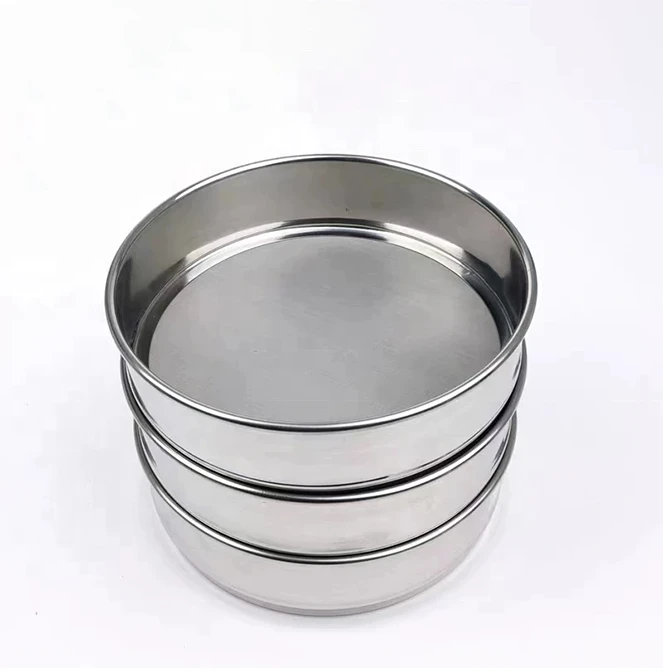
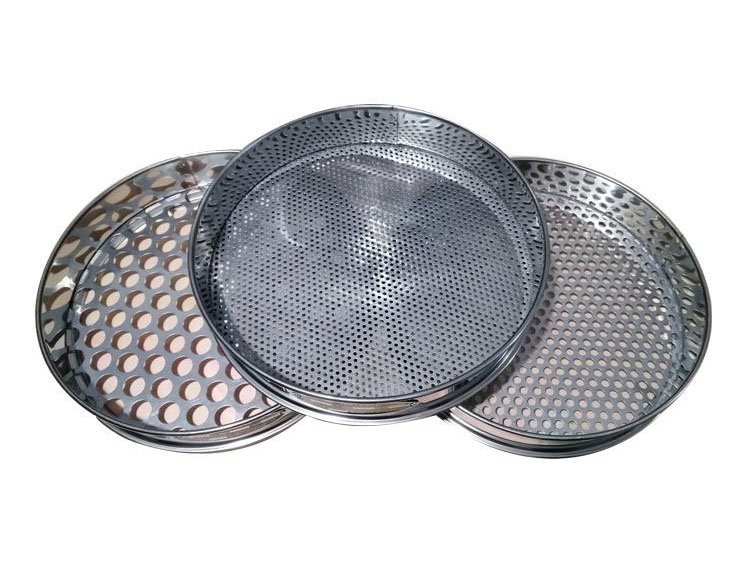
Vibrating screen meshes can be categorized by material into metal screens,perforated sieve plates,and polyurethane/rubber screens.Below is a summary of their advantages and applications under various operating conditions.
| Material category | material | Core Advantages | Type and Usage |
| Metal mesh | Stainless steel (SUS304/316),highmanganese steel,spring steel,carbon steel,copper wire,etc | High strength,heat resistant(up to 800°C for stainless steel),clear mesh holes,and good controllability of screening accuracy | Grading of high-hardness rocks in mines and quarries:Fine screening for hygienic or corrosion-resistant requirements in food,pharmaceuticals,chemical and other industries |
| Polyurethane,rubber | Polyurethane(PU),natural rubber,synthetic rubber | It has excellent wear resistance(3 to 10 times the lifespan of metal sieve plates),is lightweight,operates quietly,features self-cleaning and anti-clogging functions,and is water and corrosion resistant. | Sifting of damp and sticky materials;coal washing and selection,metallurgical slag dewatering;working conditions requiring noise reduction |
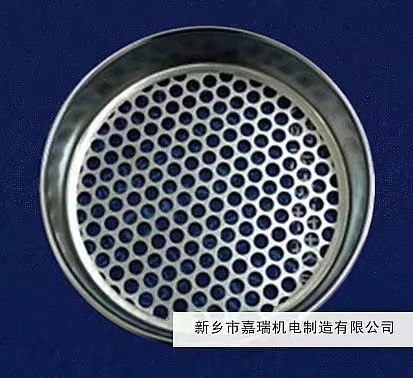
| erforated Sheet | Stainless steel plates,carbon steel plates,aluminum plates,etc. | Uniform precision,resistant to deformation,strong load-bearing capacity,capable of withstanding impacts from large chunks of material | Detection and sieving of coarse-grained materials (>1mm):Vibrating screens with enhanced screen surface strength and mining heavy-duty screens are required. |
Classified by sieve aperture size
Classifying sieves based on the size of their mesh openings is one of the most fundamental methods of categorizing screening equipment.The core objective is to select the appropriate sieve mesh count according to the target particle size of the material,thereby separating the oversize and undersize fractions through screening.To better understand the differences between sieve opening size, mesh count, and sieve frame diameter, see our guide to Different Sieve Sizes.
| Screen hole size range | Screen Surface Type | Common materials | Key Features | Typical uses |
| Coarse grains (>50mm) | ar screen surface | bon steel,manganese steel,etc. | Composed of parallel steel bars,it has a robust structure capable of withstanding impacts from large chunks of material. | d screens or heavy-duty vibrating screens for primary pre-screening of large ore and rock chunks. |
| Medium grain size (1-50mm) | erforated screen | Low-carbon steel,stainless steel | Punched through steel plates,they are sturdy,durable,and long-lasting,but have a relatively small effective open area (approximately 40%-60%).The hole shapes include round holes, square holes elongated holes,etc. | Various vibrating screens for processing medium-sized material.Rectangular holes are suitable for materials with higher moisture content,but the product precision is slightly lower. |
| Medium/Finer Grained (<1mm) | Woven mesh | Stainless steel,spring steel,high manganese steel,nylon,etc. | Made by weaving metal wires or synthetic fibers,it has a large effective open area (up to over 75%) and high screening efficiency, but its service life is relatively short. | Fine grading of medium and fine-grained materials is the most widely applied.By adjusting the wire diameter and mesh count,it can meet sieving requirements ranging from the millimeter level to the micrometer level. |
| Fine particle dewatering and medium removal | Slit screen surface | Stainless Steel | The screen slots are elongated and specifically designed for dewatering desliming,and degritting operations involving liquids or slurries,with slot widths that can be precisely adjusted to 0.25mm or smaller. | Dewatering, desliming,and deashing stages in mineral processing and coal washing. |
| Fine/trace level | Standard Test Sieve | Stainless steel,brass,nylon,etc. | Precision sieves manufactured in accordance with national standards (such as the Chinese Pharmacopoeia,GB/T 6003 series) have strict tolerance ranges for sieve aperture sizes. | Laboratory particle size analysis,product quality control,and powder particle size testing in industries such as pharmaceuticals and food. |
By material category
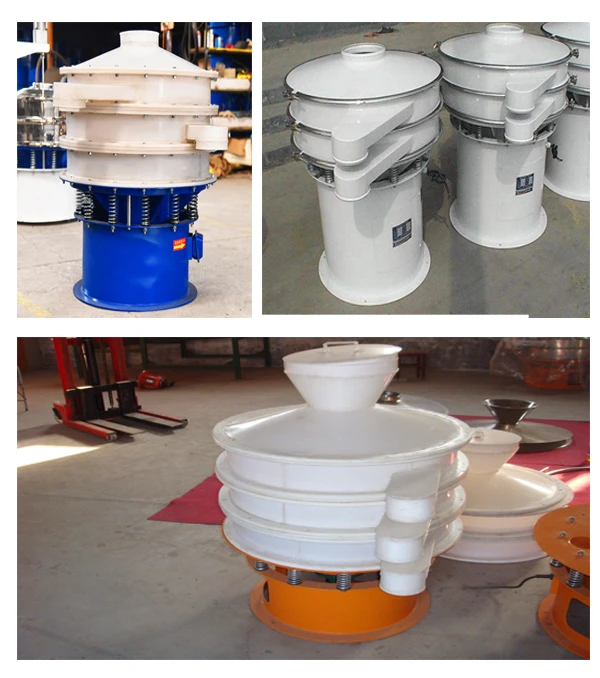
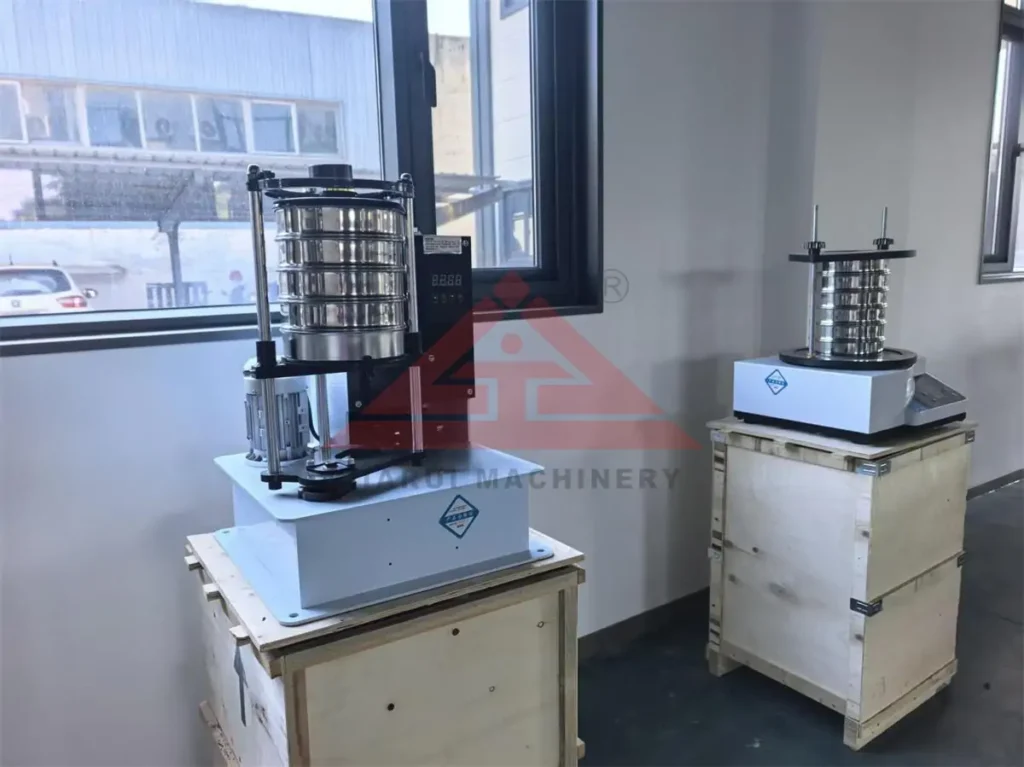
Select the appropriate vibrating screen based on material characteristics.It is mainly divided into three major categories:mining heavy-duty vibrating screens,light-duty precision vibrating screens,and laboratory vibrating sieves.This is the most direct way to distinguish equipment functions.
| Classification | Typical device types | Key Features | Typical Materials and Industries |
| Mining Heavy Vibrating Screen | Vibrating circular screens, vibrating straight-line screens, banana screens, dewatering screens, etc. | Structurally robust (often using frame-type riveting),capable of handling large volumes (up to hundreds of tons per hour),and able to withstand high-load impacts. | Coal,ores, aggregates,sintered ore,etc.for coarse/medium particle size processing such as classification,dewatering,and desliming. |
| Light-duty precision vibrating screen | Vibrating circular screens, straight line screens, ultrasonic vibrating screens, direct discharge screens, etc. | It is ingeniously structured,primarily designed to address the screening and impurity removal of fine materials,with some models specifically engineered to tackle particular challenges. | Powders,granules,or liquids from industries such as chemical engineering,food processing,pharmaceuticals,and coatings,for example starch,resin powder,and traditional Chinese medicine powder. |
| erimental Vibrating Sieve Machine | Standard test sieves, impact vibrating sieves, etc. | Used in laboratory or quality inspection processes for precise particle size analysis and testing of materials | Research, quality control,and material testing |
So how should we select the Jiarui vibrating screen?
When selecting a vibrating screen,we can start by considering the following characteristics of the material:
- Grain size and hardness:For large,high-hardness materials,heavy-duty vibrating screens should be selected,and their screens are mostly made of wear-resistant and durable materials such as manganese steel.
- Humidity and Material Adhesion:For materials with high moisture content,increased humidity can lead to clumping,which affects screening efficiency.We can consider equipping the equipment with a de-clumping device or using special machine types such as high-frequency screens.
- Corrosiveness, Hygiene Requirements,and Special Properties:When screening materials that are strictly regulated or highly corrosive in industries such as food,pharmaceuticals,and chemical engineering,equipment should be made of stainless steel to prevent contamination and corrosion of the materials.Dust covers can be added as needed to avoid contact with the materials.
How to choose the appropriate mesh size?
The selection of mesh size for a vibrating screen depends on the particle size of the target material.A higher mesh number indicates smaller mesh openings and finer screening,while a lower mesh number means larger mesh openings.Below is a summary of common mesh size selections for typical materials,for reference only.Specific choices should be based on the material’s characteristics;you can contact us directly for consultation.
| Material Type / Application Scenario | Recommended mesh range | Instructions |
| Sand, gravel | 20 mesh – 60 mesh | Conventional grading of construction sand and gravel, fine sand can reach 70-100 mesh |
| Medium to fine-grained materials such as limestone, quartz sand, and basalt | 80 mesh – 120 mesh | Screening of medium-hard non-metallic minerals |
| Powdered materials such as calcium carbonate, talc, and heavy calcium carbonate | 00 mesh – 325 mesh | High-precision classification of fine powders |
| Mining Heavy Screen (for Large-Sized Materials) | 3mm – 200mm (expressed directly by sieve aperture size) | Coarse material classification, select sieve hole size directly instead of mesh count |
| Laboratory Particle Size Analysis (Standard Sieve Test) | 2 mesh – 2800 mesh | Mesh 2 – Mesh 2800 |
Applications of Vibrating Screens
- Metallurgy:Vibrating screens are most widely used in mining,coal,and metallurgical industries,primarily for material classification,dewatering,desliming,and de-mediuming.
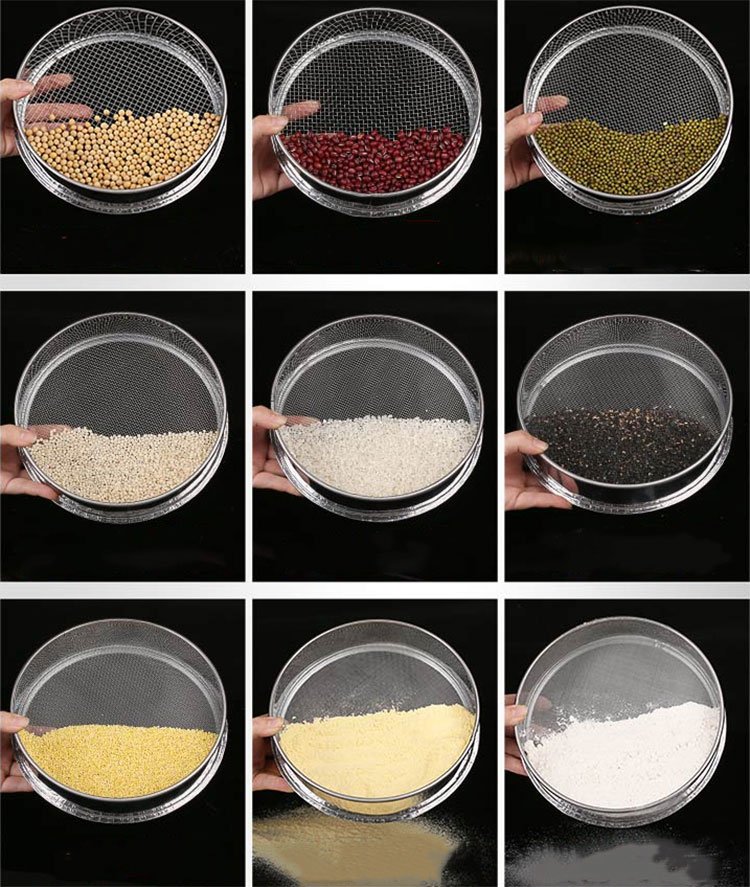
- Chemical Engineering and Food Processing:In fine chemical,pharmaceutical,and food industries,vibrating screens are primarily used for precision sieving and impurity filtration.For example,they process and separate chemical products such as activated carbon and resins;remove impurities and foreign substances from raw materials to ensure product quality and purity.
- Environmental Protection and Other Industries:Vibrating screens can also be used to process special materials such as urban garbage and water-coal slurry.
Conclusion
Vibrating screens have a wide range of applications and are an indispensable part of production lines in many industries,serving as key equipment for sieving,impurity removal,grading,and filtration.Their core function is to utilize their sieving and grading capabilities to address purity and particle size issues of various materials,achieving high efficiency and large output.When selecting a vibrating screen,we need to carefully choose the appropriate model based on the characteristics of the material and specific requirements.