What is a pneumatic vibratory sifter?
Pneumatic vibratory sifters are vibration screens that operate without electricity. These screening devices are powered by compressed air, which converts gas pressure energy into mechanical vibration energy through pneumatic components to drive material movement on the screen for screening and classification. Pneumatic vibratory sifters are an innovation and an optimization of conventional electric vibrating screens, specifically designed to address the safety issues of traditional rotary vibrating screens when handling high-risk, explosive, or special materials.
| Core Features | Explanation |
| Power form | Compressed air drives pneumatic motors or pneumatic vibrators to generate vibrations. |
| Vibration mode | Convert the pressure energy of gas into high-frequency mechanical vibration energy through pneumatic components. |
| Typical variants | Self-loading pneumatic vibratory sifters(with integrated vacuum conveying function), explosion-proof pneumatic vibratory sifter, etc. |
Working principle
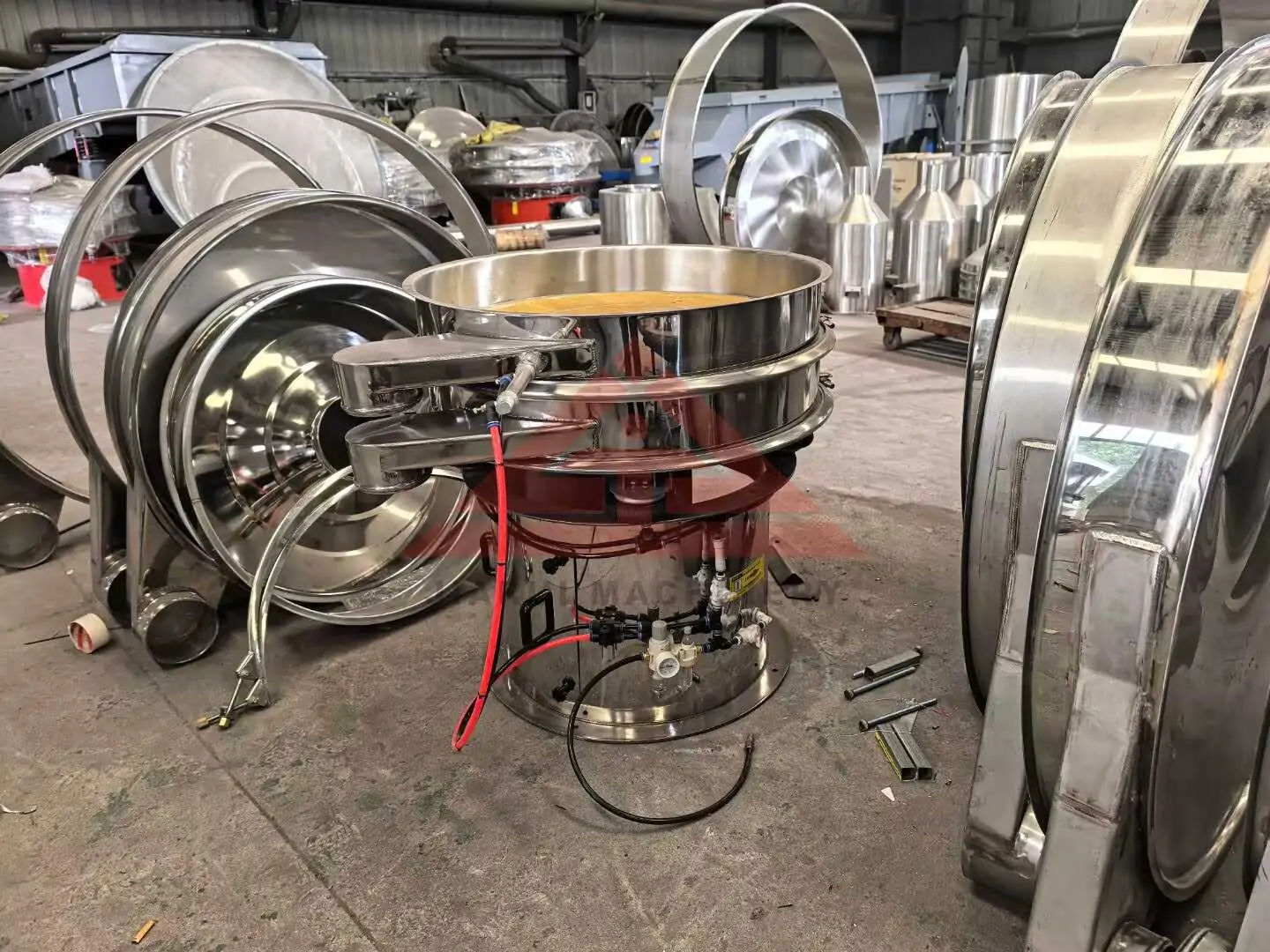
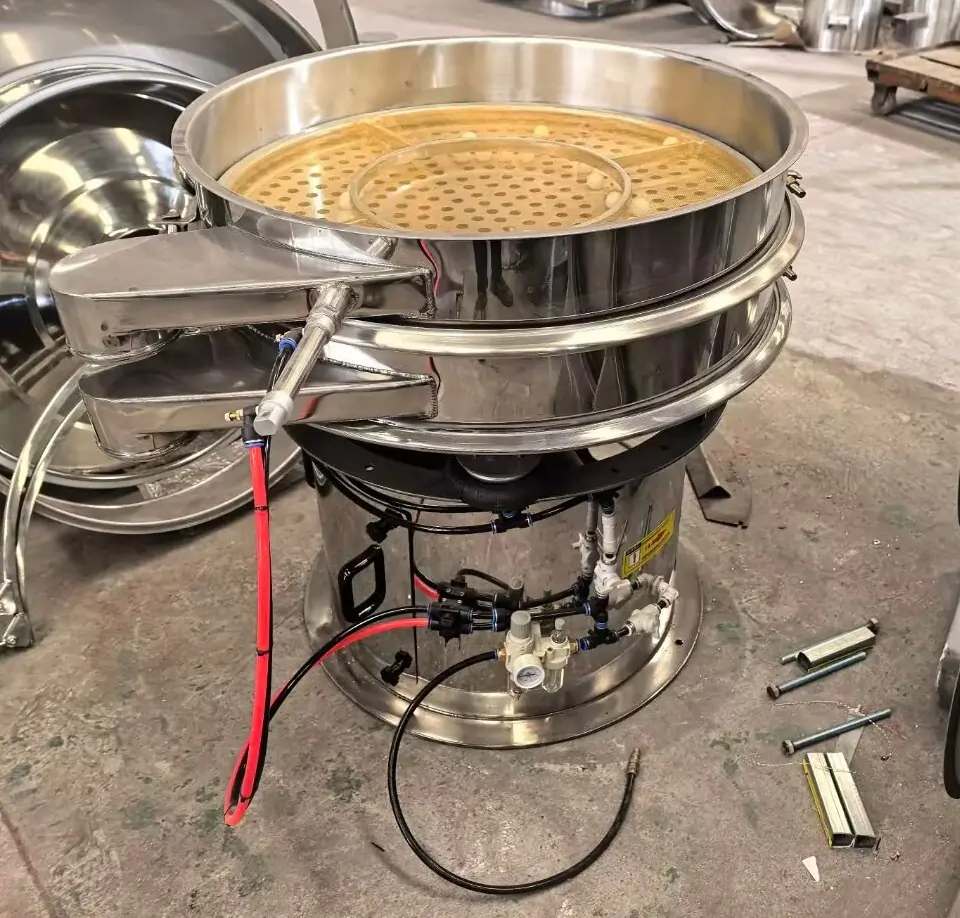
The pneumatic vibratory sifter is a screening device that converts air energy into power energy using an air carrier. It forms a power source by rotating a pneumatic motor, which is driven by an external air supply (air pressure around 0.6 MPa). The equipment operates without electricity and only requires a certain amount of air supply(air consumption of 4620 L/MIN for a 3.0-blade pneumatic motor)to complete the screening operation.
Energy conversion pathway
The screening operation of the pneumatic vibratory sifter is actually a process of energy conversion, which achieves material screening through three stages: the potential energy of compressed air, the mechanical kinetic energy of pneumatic vibrators→the high-frequency vibrational energy of the screen mesh.
| Implementation method | Working principle | Typical applications |
| Pneumatic vibrators drive directly | Compressed air drives turbines or pistons to generate high-frequency vibrations, which are directly transmitted to the screen. | Powder production, precision sieving |
| Pneumatic motor drive | The pneumatic motor, as a power source, drives the eccentric mechanism to generate vibration. | Explosion-proof scenarios, high-power requirements |
| Pneumatic transducer.Vibrating screen combination | The pneumatic control system converts pneumatic energy into mechanical vibration waves of the sieve itself. | Ultra-fine powder sieving,high-viscosity liquid filtration |
Core Components (Five Major Systems)
Working Logic: The air supply system provides gas→The control system regulates pressure→The transducer converts vibration→The frame transmits vibrational force→The sieve body completes the sieving process.
- Pneumatic air supply system: It is the power source of the equipment, responsible for providing and storing compressed air for the entire system, including air compressors, storage tanks, etc.
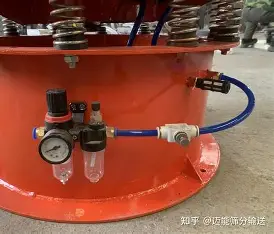
- Pneumatic Control System: The regulating center of the equipment. It is responsible for adjusting the pressure and flow of compressed air to meet the sieving requirements of different materials, thereby achieving regulation and control of amplitude and vibration frequency.
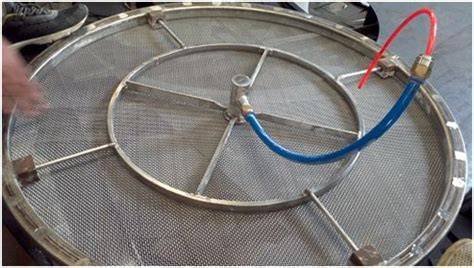
- Pneumatic transducer: The core component of the device’s energy conversion, which converts the pressure energy generated by compressed air into mechanical vibration waves to drive the screen surface vibration and thus perform the screening operation.
- Pneumatic professional truss: It serves as the vibration transmission bridge for vibrating screens. It ensures that the vibration energy during screening is fully and efficiently transmitted to the entire screen surface, thereby enabling the screening process.
- Vibrating Screen Main Body: The working main part of the equipment. It includes the screen box, screen mesh, feed and discharge ports, etc. Materials rely on it to complete loosening, stratification, and screening through the mesh, meeting the screening and classification requirements of different needs.
Explosion-proof safety features
The most prominent differentiating advantage of the pneumatic vibrating screen lies in its safety and explosion-proof performance. It does not rely on electricity as a power source but instead uses compressed air, thereby eliminating ignition risks at the source during operation. Due to this characteristic, it is irreplaceable for screening flammable and explosive materials where electric vibrating screens cannot be used.
| Security Dimension | Technical measures | Technical measures |
| Explosion-proof principle | Driven by compressed air, with no electrical components at all | Prevent electric sparks from igniting hazardous materials. |
| Static Control | Equipped with anti-static materials or grounding devices. | Reduces the risk of static electricity accumulation. |
| Structural Protection | It can be integrated into a fully enclosed structure. | Prevent dust leakage to reduce explosion or health hazards. |
| Temperature control | Pneumatic motors do not generate high-temperature hot spots. | Avoid overheating and ignition. |
| Derived functionality | The explosive device can integrate functions such as heating, sweeping, and iron removal. | Suitable for sticky, wet, and special materials. |
Pneumatic Vibratory Sifter VS Electric Vibrating Sieve
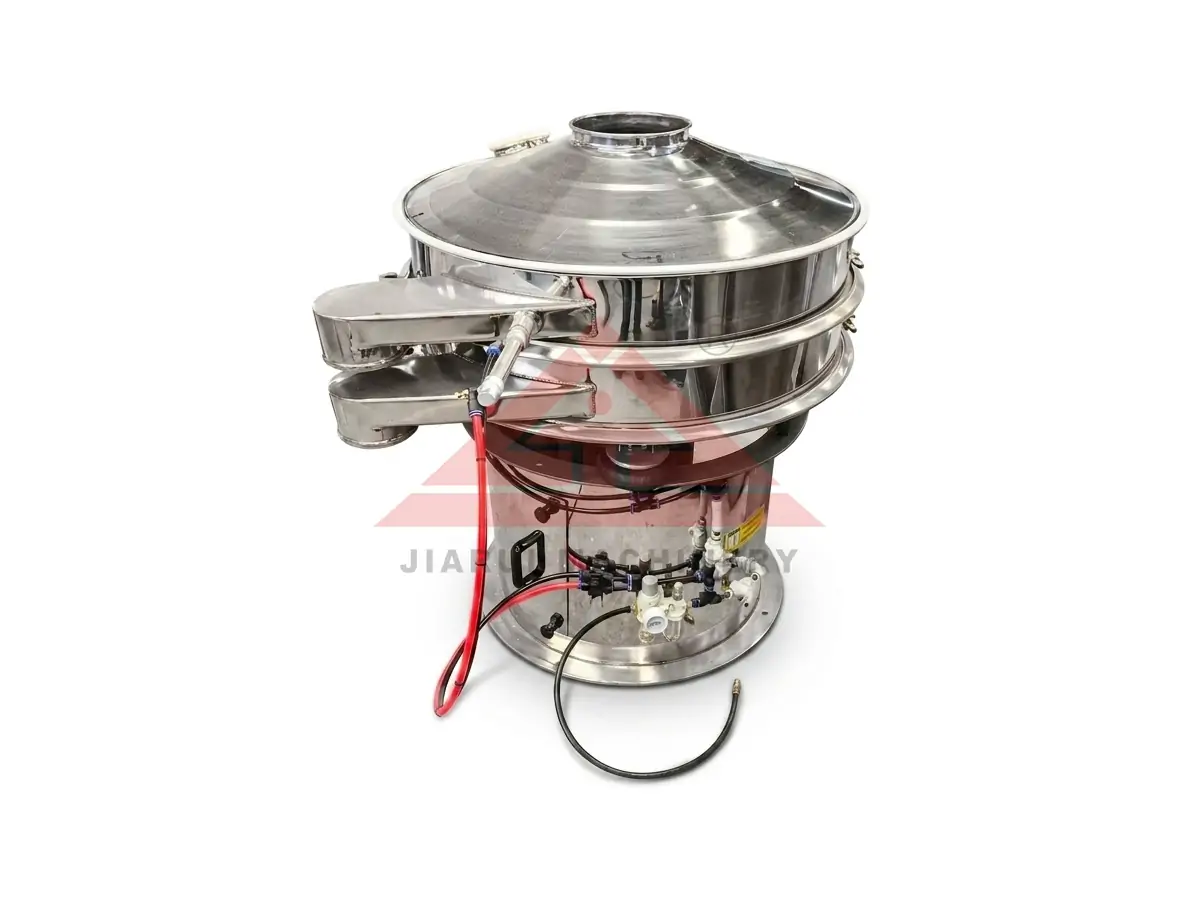
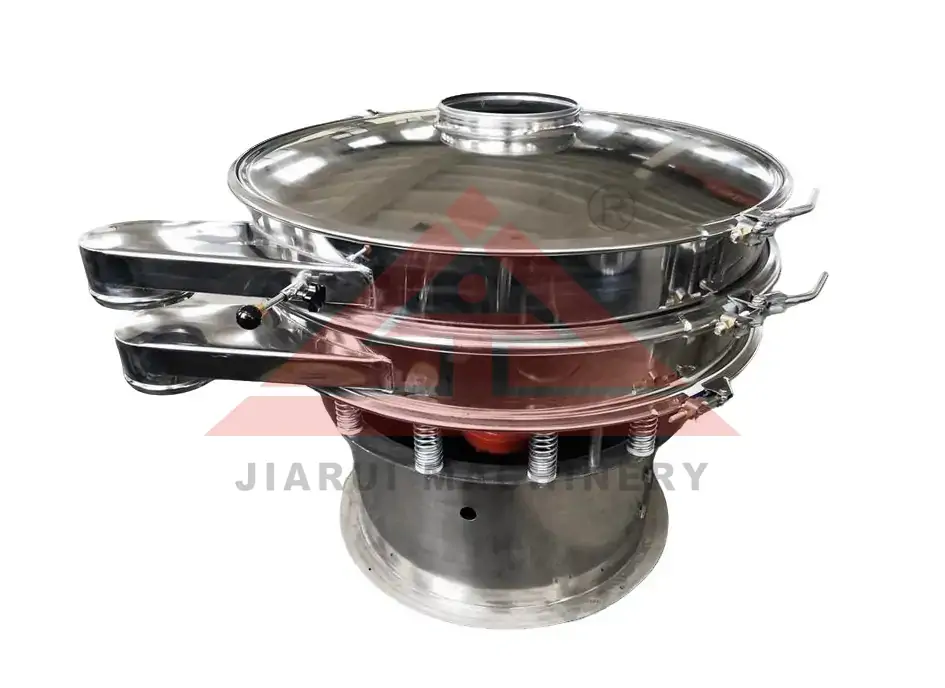
The differences between electric vibrating screens and air-powered screens, as well as the advantages of air-powered screens, will be explained one by one in the following chart:
| Comparison Dimensions | Pneumatic Vibratory Sifter | Electric Vibration Sieve |
| Source of power | Compressed air | Electricity |
| Explosion-proof safety | Inherently safe, no electric sparks | There is a risk of electrical sparks. |
| Screening efficiency | The pass rate can be increased by 80% to 400% | Conventional efficiency |
| Network cleaning methods | Pneumatic self-cleaning, no pollution from auxiliary substances | Bounce balls, ultrasonic waves, and other auxiliary net-cleaning methods |
| Adjustability | Continuous pressure/flow regulation | Variable frequency drive or stepped adjustment |
| Applicable Mesh Size | Powder and slurry with a mesh size of ≤400 | A wider range |
| Cost | Sub-sonic vibration sieve | Depends on the type |
| Applicable Environment | Explosion-proof, moisture-proof, and dust-proof | Conventional environment |
Applicable Industries
Pneumatic vibratory sifters are highly concentrated in industries that have special requirements for screening capabilities with high safety and explosion-proof performance.

| Industry category | Typical application scenarios | Example materials |
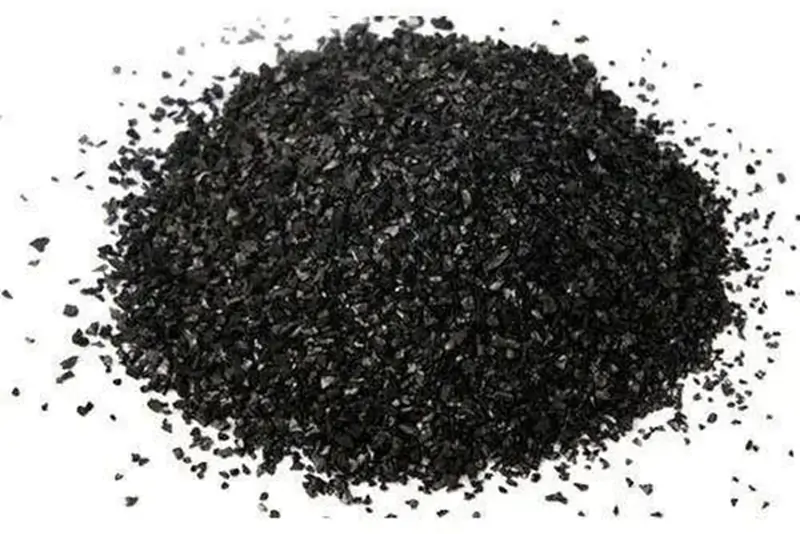
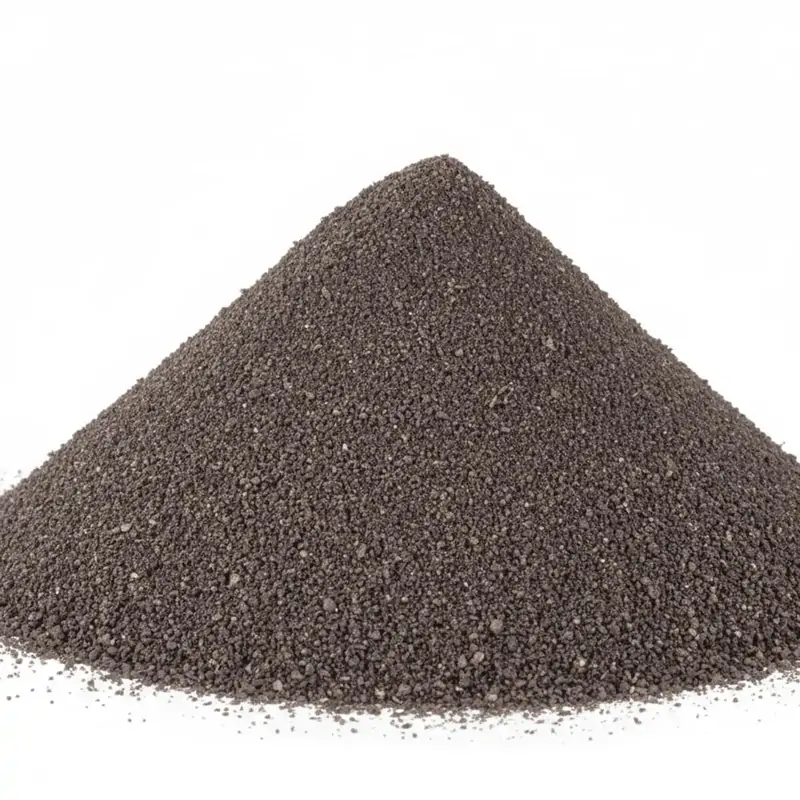
| Chemical Engineering/Fine Chemicals | Fine powder sieving,high-viscosity liquid filtration, and operation in explosion-proof environments | Paints, powder coatings, graphite, carbon powder, lubricants |
| Metal/Metallurgical Powders | Metal powder classification,high-value-added powder processing | Iron powder, copper powder, titanium powder, stainless steel powder, tungsten powder, nickel powder |
| Food/Feed Processing | Powder sieving, GMP cleanrooms, explosion-proof organic powder processing | Sugar, starch, spices, colorings,feed-grade chlortetracycline |
| Military industry / Gunpowder / Fireworks | Sifting of Sensitive Flammable and Explosive Materials(Highest Level of Explosion-Proof Requirements) | Pyrotechnic raw materials, firecracker powder |
| New materials/Batteries/Abrasives | Grading of high-value-added fine powders and high-hardness abrasives | Battery materials, magnetic materials, laser powder, silicon carbide, corundum |
How to choose the right model?
During the selection process of pneumatic sieves, we need to pay attention to precise selection based on the following judgment criteria:
First, we need to determine whether explosion-proof performance and extremely high safety requirements are necessary.
We need to make a judgment based on the working conditions. If the material to be sieved is gunpowder, explosives, fireworks, metal powders, or materials containing volatile solvents, then an air-powered sieve should be considered. Due to its ability to operate using air pressure without requiring electricity, it is the optimal choice.
Next, we need to determine data such as mesh size, output, material, proportion, viscosity, and humidity.
We need to determine our target mesh size based on the particle size of the material. Pneumatic sieves have a significant advantage when sifting ultra-fine powders, with a screening efficiency approximately 80% higher than that of ordinary vibrating circular sieves. We should select an appropriate size based on our production capacity: larger diameter sieves yield higher output while smaller diameter sieves yield lower output.
Conclusion
Pneumatic vibratory sifters are vibration screens that can operate without electricity. They convert gas pressure energy into mechanical vibrational energy through pneumatic components. They are an innovation and optimization of traditional electric vibrating screens, designed to address safety issues with conventional rotating vibrating screens when handling high-risk, flammable, explosive, or special materials.