
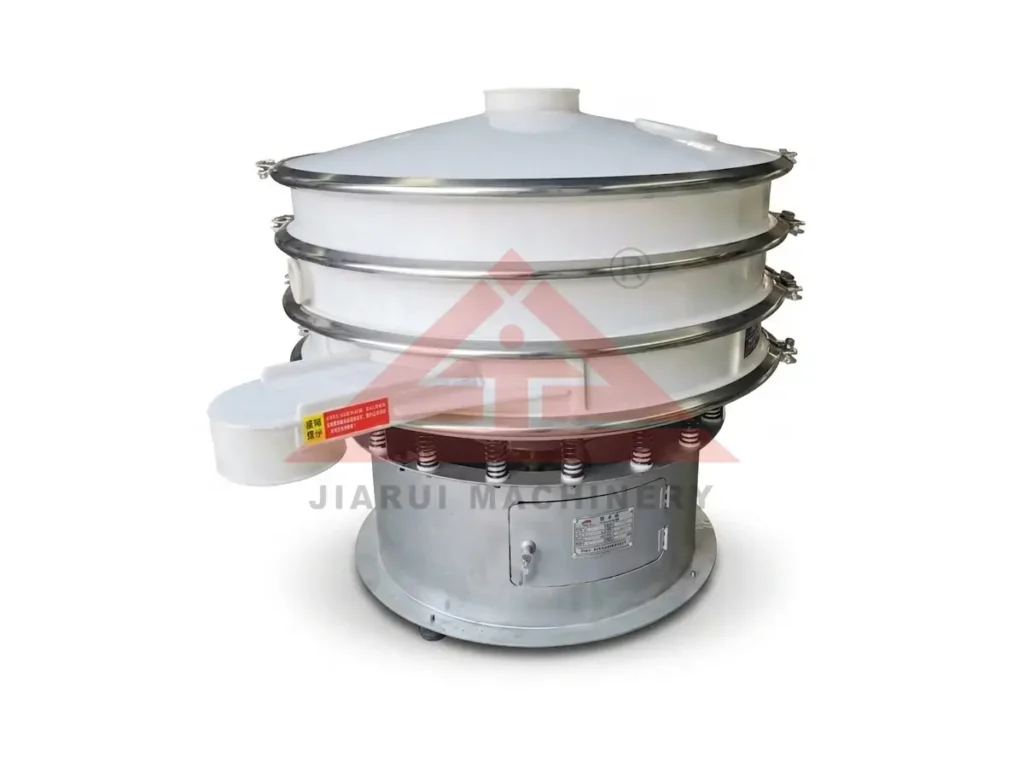
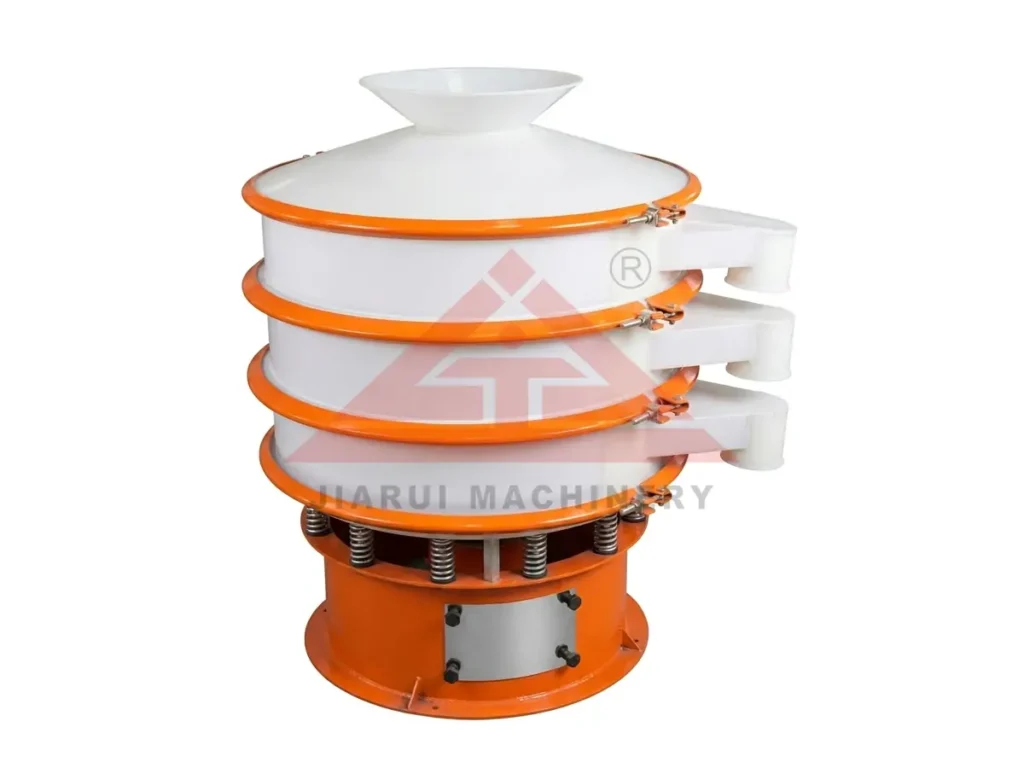
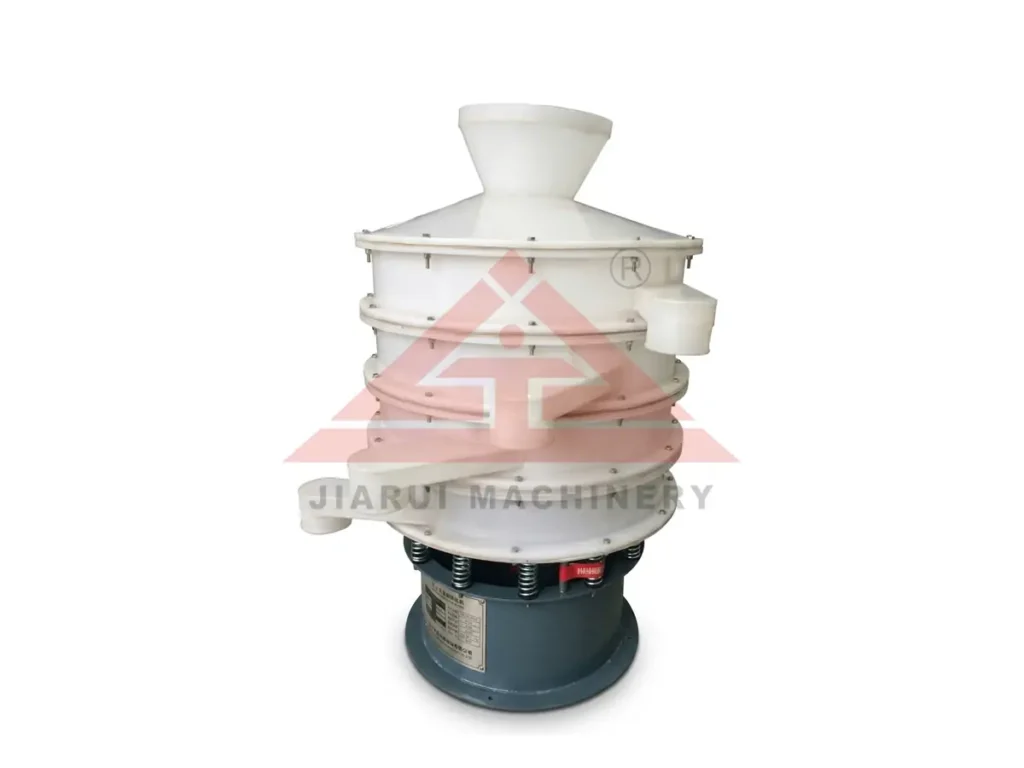
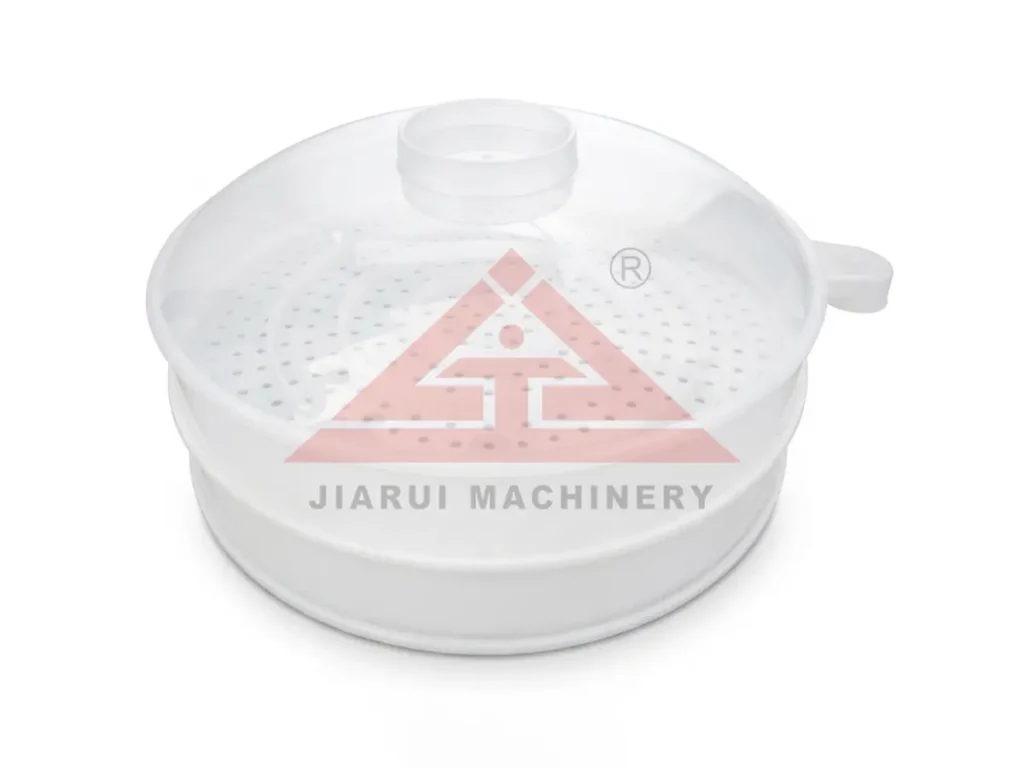
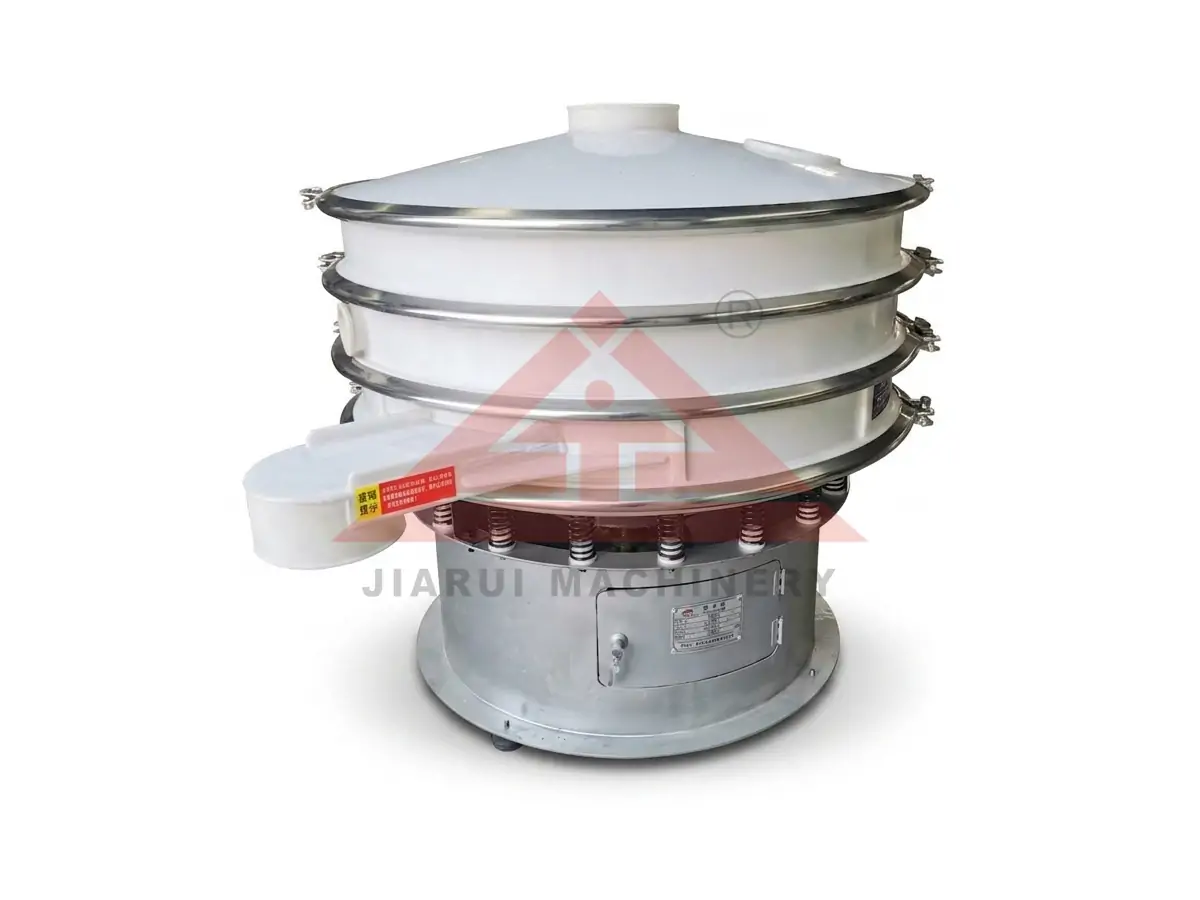
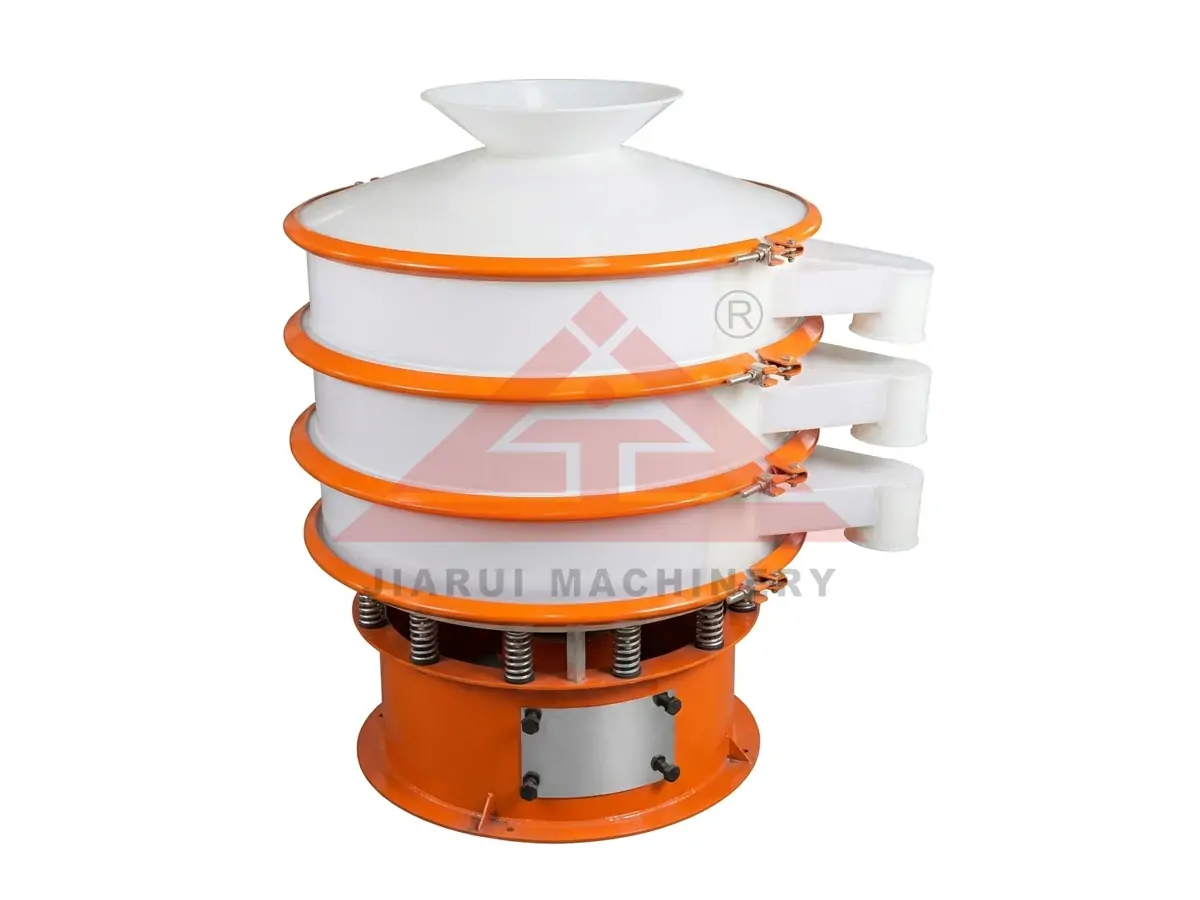
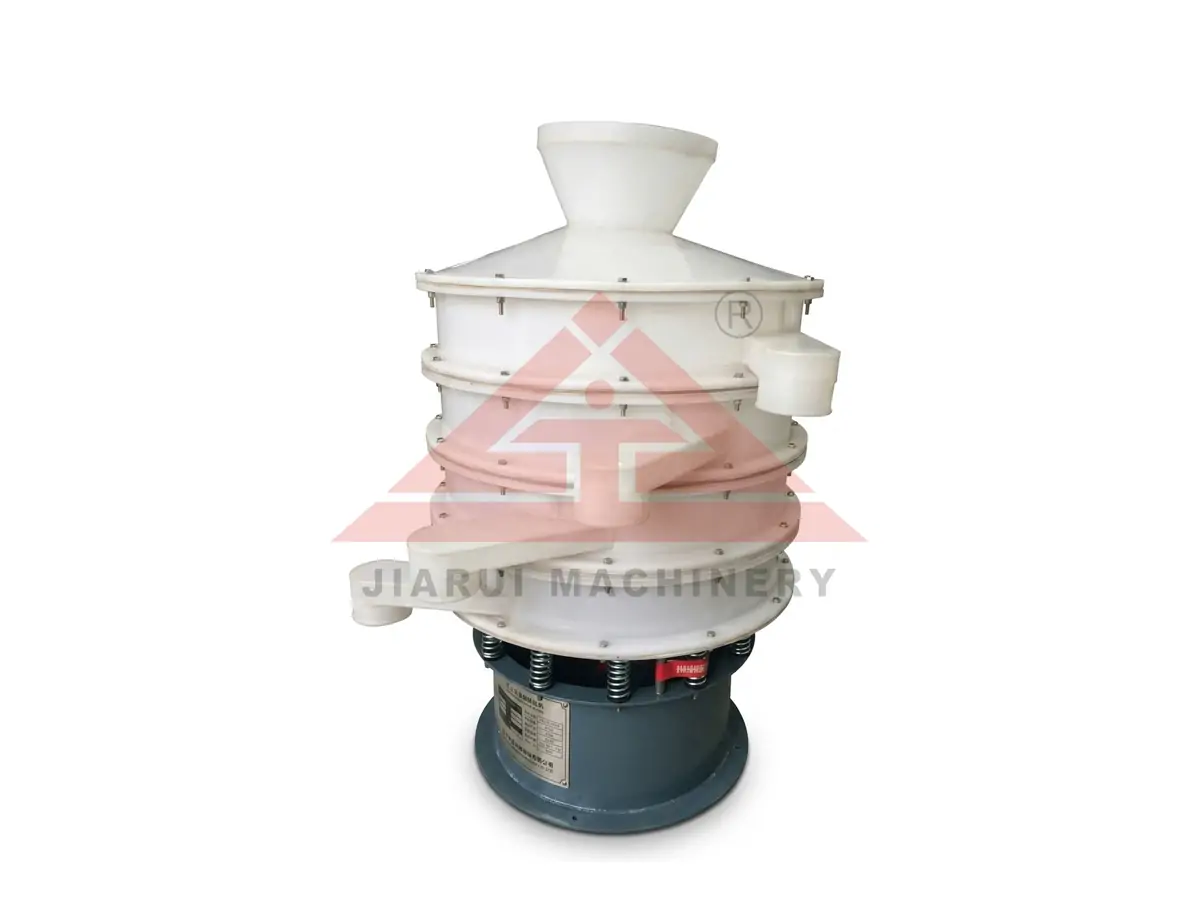
Criba Vibratoria de Plástico
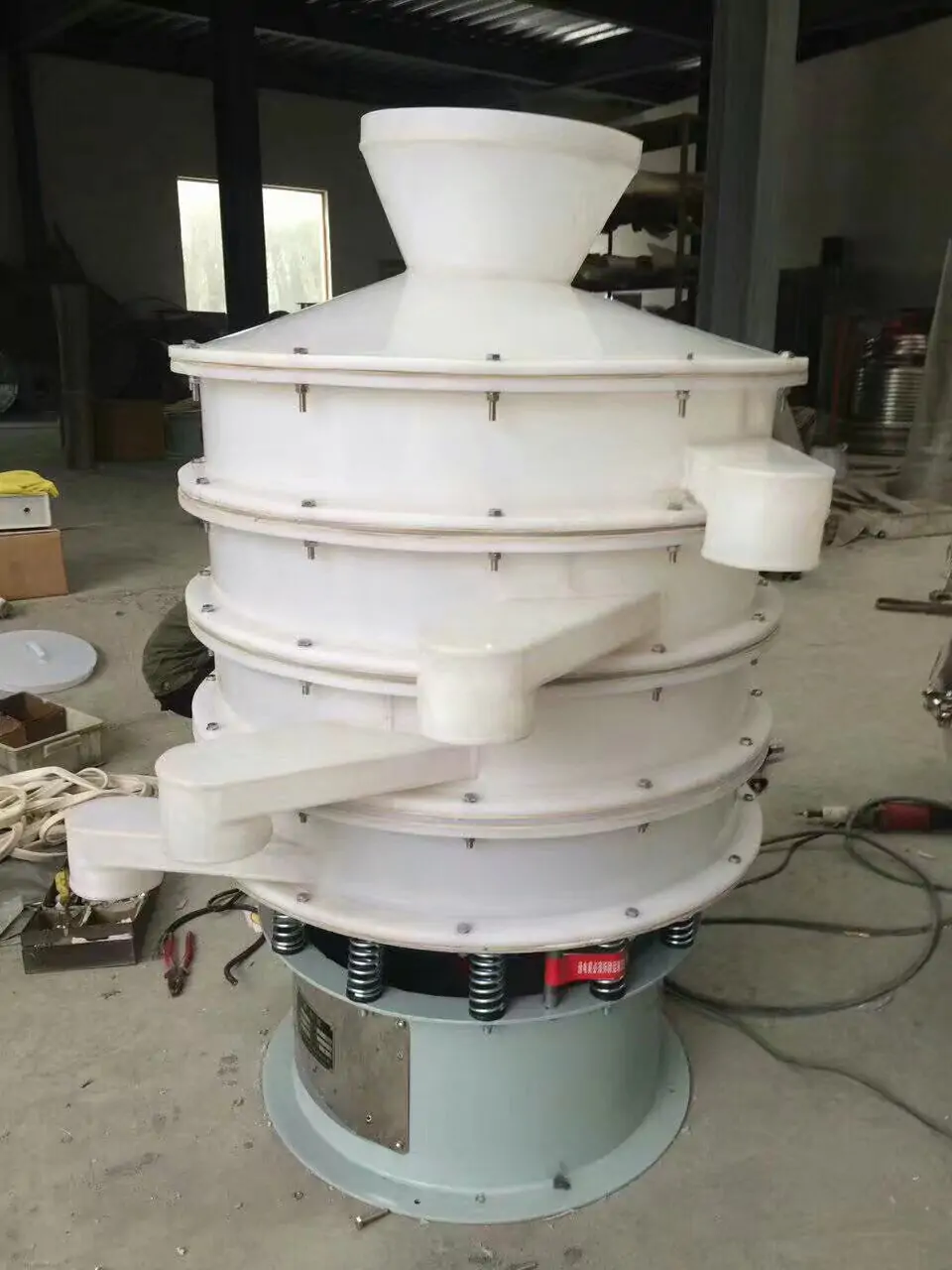
La criba vibratoria de plástico está fabricada con material de polipropileno PP y se utiliza principalmente para tamizar materiales que no pueden entrar en contacto directo con metal o que tienen propiedades corrosivas. El equipo ofrece una buena resistencia a la corrosión por ácidos, álcalis y productos químicos, lo que ayuda a reducir el riesgo de contaminación por iones metálicos. Es adecuado para el cribado de polvos de alta pureza y aplicaciones de separación de materiales especiales.
Jiarui proporciona soluciones de cribado personalizadas según las características del material y los requisitos de producción del cliente. La configuración del equipo se puede ajustar según las diferentes aplicaciones, incluyendo el tamaño del equipo, el número de capas de cribado, el material de la malla, la estructura de sellado y otros componentes. La criba vibratoria de plástico PP se utiliza ampliamente en las industrias química, farmacéutica, alimentaria, de nuevos materiales y otras.
- Modelo: JR-P Φ400/600/800/1000/1200/1500/1800 mm
- Material: Polipropileno PP (diseño sin contacto con metal)
- Tamaño de malla: 2–500 mallas (personalizable según los requisitos del material)
- Fuente de vibración: Motor vibratorio
- Capas de Criba: 1–5 capas
- Personalización: Se admite la personalización del tamaño del equipo, el material de la malla y la configuración estructural
¿Qué es una criba vibratoria de plástico?
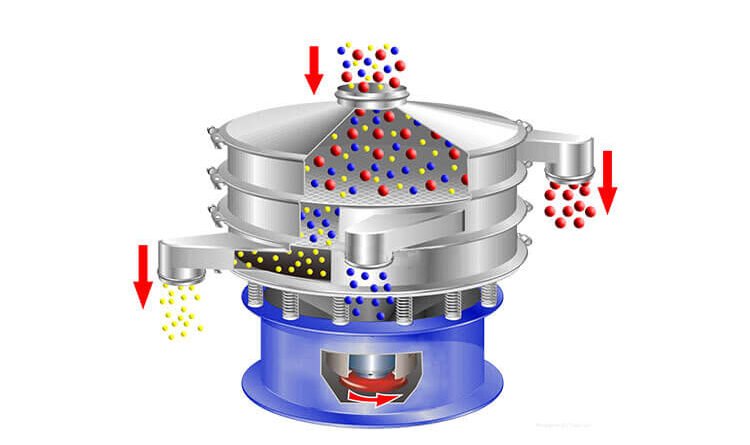
La criba vibratoria de plástico, también conocida como criba vibratoria anticorrosiva de PP o criba vibratoria no metálica, es un tipo de equipo de cribado vibratorio que utiliza material de polipropileno PP para las piezas en contacto con el material. El equipo utiliza un motor vibratorio para accionar la superficie de la malla, lo que permite que los materiales se distribuyan uniformemente y pasen a través de diferentes tamaños de malla para su separación.
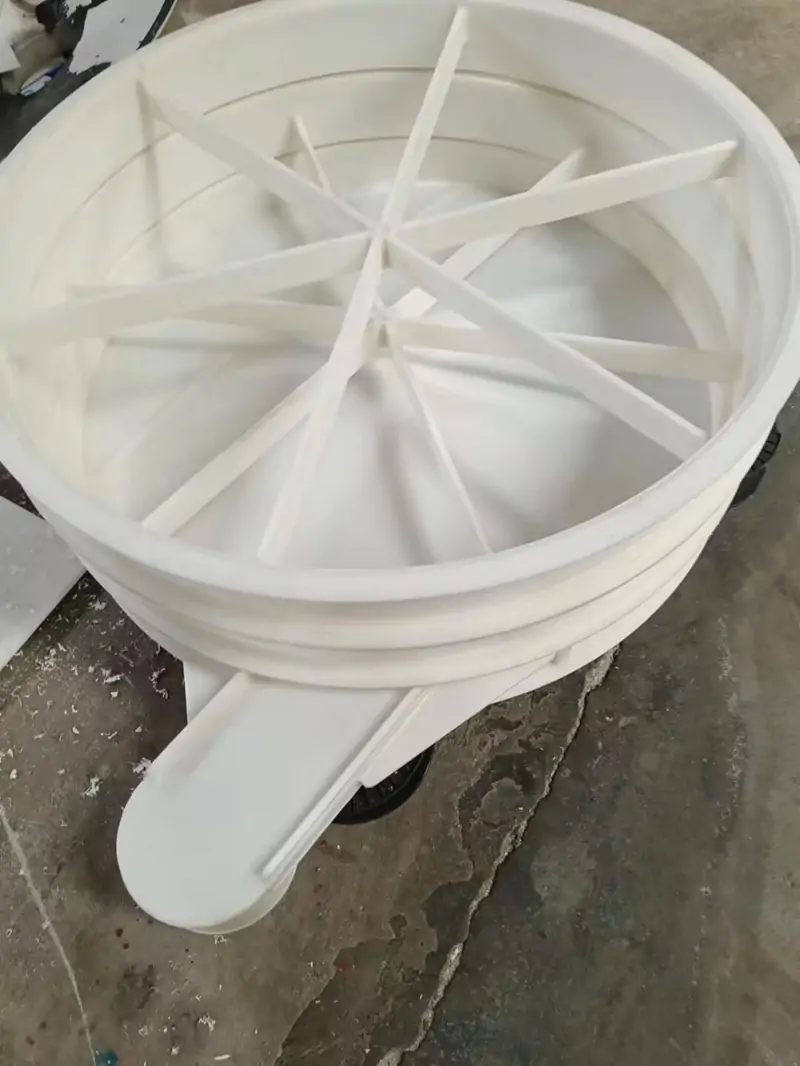
Este tipo de máquina de cribado se utiliza principalmente para materiales con requisitos especiales en cuanto a los materiales del equipo, como materiales que no pueden entrar en contacto con metal, polvos corrosivos o polvos que requieren alta pureza. En comparación con las cribas vibratorias convencionales de acero inoxidable, el material PP puede reducir el riesgo de contaminación metálica y ofrece una buena resistencia a entornos ácidos y alcalinos. Se utiliza ampliamente en las industrias química, farmacéutica, alimentaria y de polvos especiales. El tamaño del equipo, el número de capas de cribado, los materiales de la malla y la configuración estructural se pueden ajustar según las diferentes características del material.
La criba vibratoria Jia Rui se utiliza para tamizar, clasificar y eliminar impurezas de materiales granulares y en polvo, así como para la eliminación de impurezas y filtración de materiales líquidos. Puede utilizarse en combinación con equipos de transporte como alimentadores de vacío y tolvas de alimentación con tornillo sinfín para formar una línea de producción integrada de cribado y transporte, mejorando significativamente la eficiencia de producción. Es compatible con todas las industrias y tiene una amplia gama de aplicaciones, como en las industrias alimentaria, química, farmacéutica, minera y de
La criba vibratoria de plástico se utiliza principalmente en las industrias de química fina, farmacéutica, alimentaria, de nuevos materiales, cerámica y polvos especiales. Es adecuada para tamizar materiales que no pueden entrar en contacto directo con metal, que tienen propiedades corrosivas o que requieren alta pureza.
Los diferentes materiales presentan diferencias en tamaño de partícula, fluidez y propiedades químicas. Por lo tanto, es necesario seleccionar materiales de malla y configuraciones de equipo adecuados según las características del material.
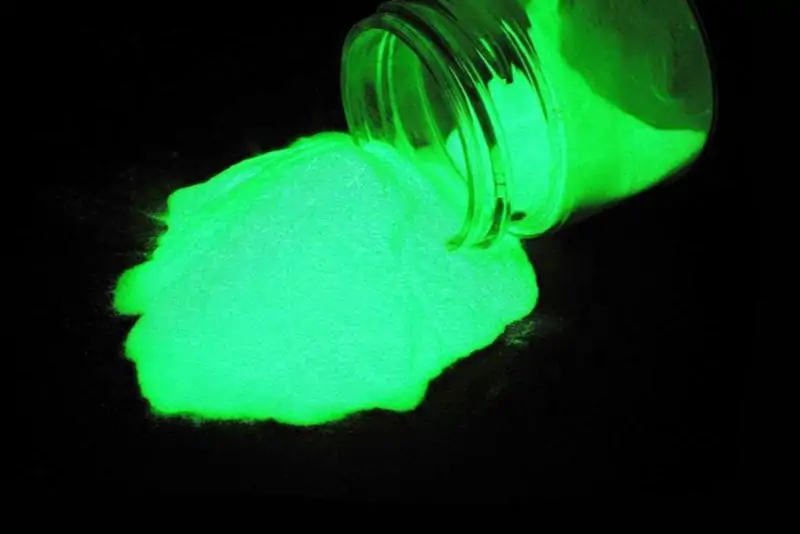 Fósforo
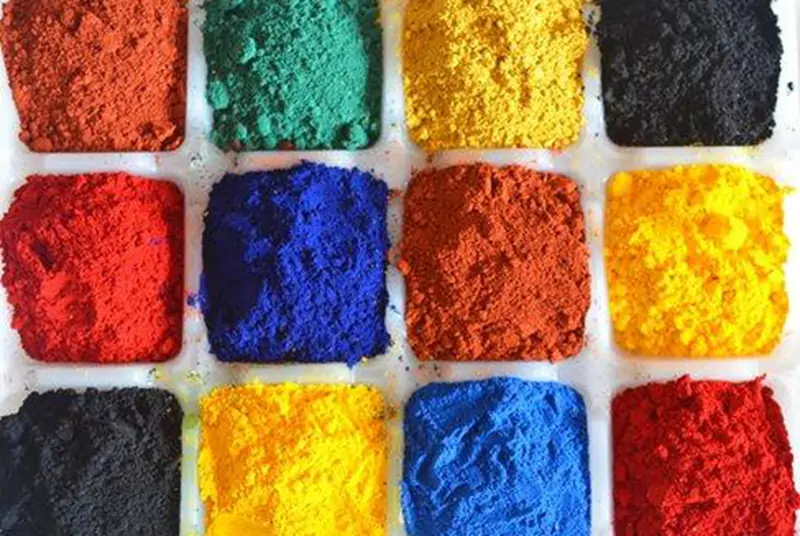 Pigmentos
 Resinas
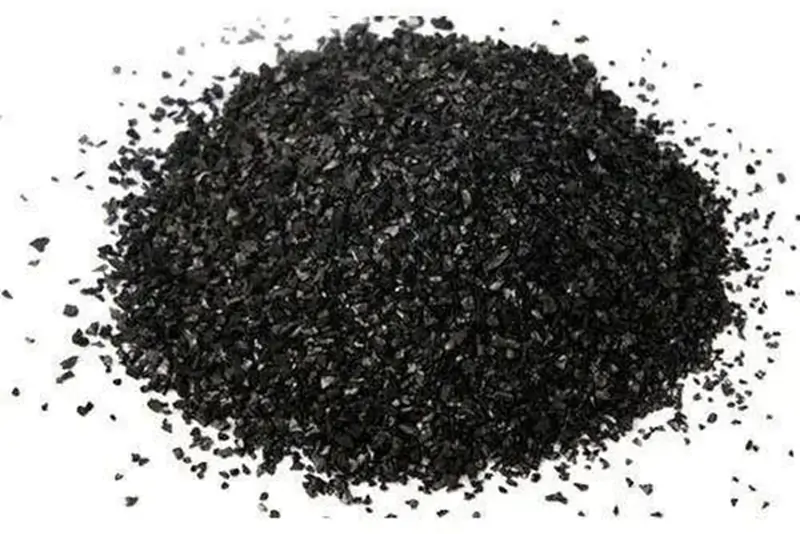 Carbón activado
 Materias Primas Farmacéuticas
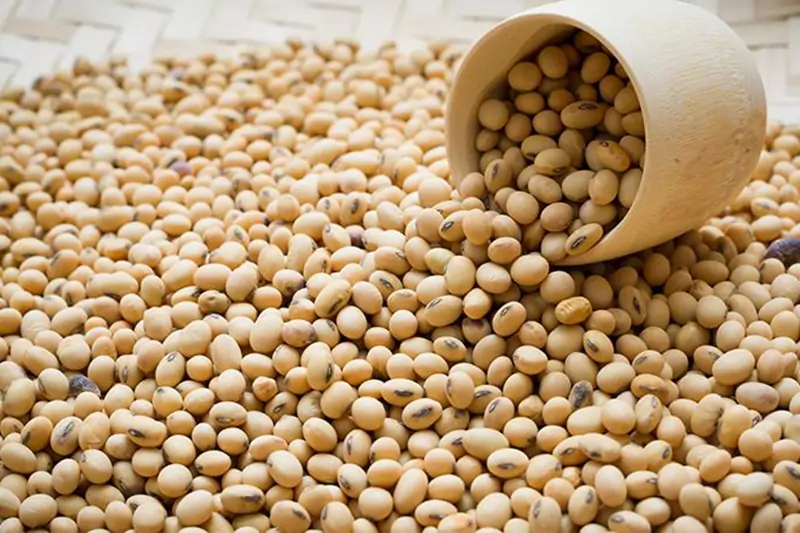 Alimentos
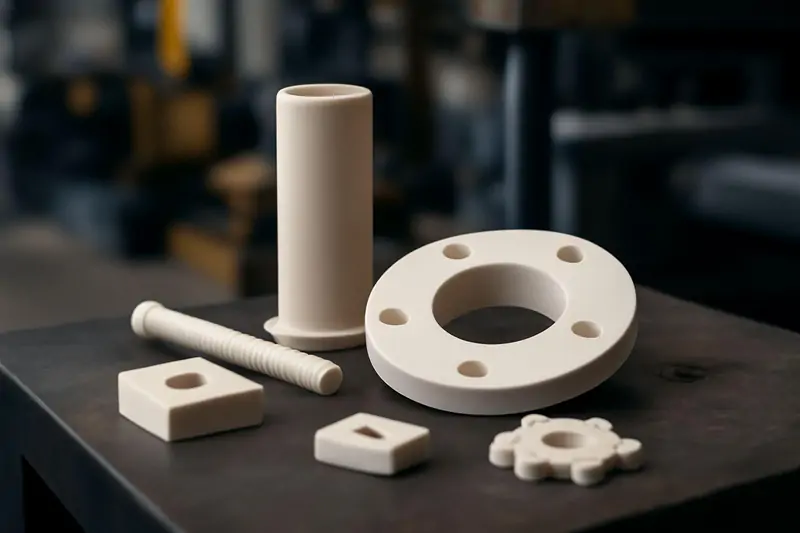 Cerámica
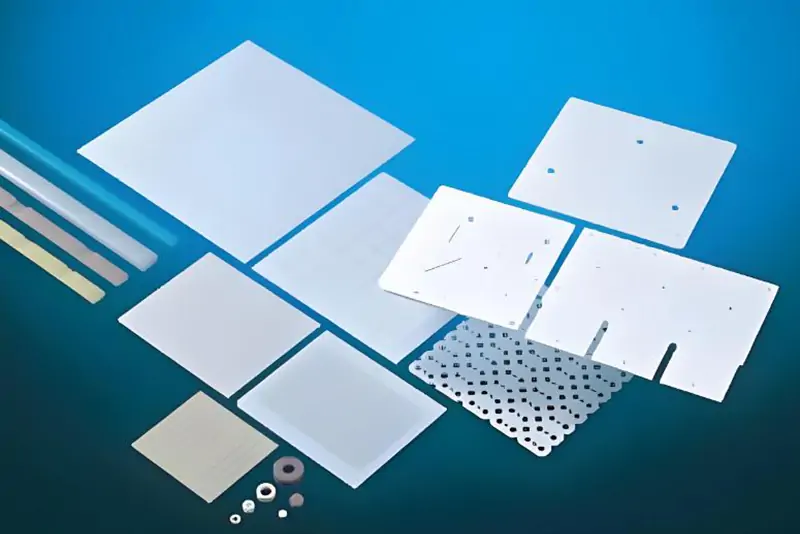 Materiales electrónicos
Industrias y materiales de cribado comunes
| Industria de aplicación | Materiales de cribado típicos | Características de cribado y razones de selección |
| Industria Química Fina | Polvo fluorescente, polvo de pigmento, polvo de resina, polvo de recubrimiento, negro de humo | Algunos polvos son corrosivos y sensibles a las impurezas metálicas. El material PP ayuda a reducir el contacto directo con metal y a disminuir los riesgos de contaminación. |
| Industria Farmacéutica | Polvo de hierbas, materias primas farmacéuticas, intermedios farmacéuticos | Estos materiales requieren alta pureza del producto, condiciones de producción limpias y un control estricto de la contaminación. El diseño sin contacto con metal es adecuado para el cribado de polvos de alta pureza. |
| Industria Alimentaria | Almidón, azúcar en polvo, proteína en polvo, aditivos alimentarios, polvo de condimentos | Los materiales alimentarios generalmente requieren un cribado higiénico. Los materiales del equipo deben facilitar la limpieza y reducir la contaminación externa. |
| Materiales de nueva energía y electrónicos | Polvo cerámico electrónico, polvos funcionales, algunos polvos de materiales de baterías | Algunos polvos son sensibles a las impurezas metálicas y requieren un contacto controlado con el material durante el proceso de cribado. |
| Materiales cerámicos y no metálicos | Polvo cerámico, materiales de esmaltado, alúmina, polvo de cuarzo, carbonato de calcio | Los polvos finos requieren un rendimiento de cribado estable y una correspondencia adecuada entre las características del material y la configuración del equipo. |
| Materiales ambientales | Carbón activado, materiales de filtración, materiales de adsorción | Algunos materiales tienen propiedades de adsorción o características químicas. Las estructuras de PP pueden mejorar la resistencia a la corrosión del equipo en estas aplicaciones. |
¿Por qué elegir la criba vibratoria de plástico Jiarui?
La selección de una criba vibratoria de plástico no debe basarse únicamente en el tipo de industria. El mismo material puede presentar diferentes resultados de cribado debido a diferencias en tamaño de partícula, contenido de humedad, fluidez y requisitos de producción. Durante la selección del equipo, nos centramos más en las características del material, incluyendo el material de contacto, la configuración de la malla, el número de capas de cribado y la estructura de sellado, ya que estos detalles afectan directamente el rendimiento a largo plazo del equipo.
Con años de experiencia en la fabricación de equipos de cribado vibratorio, Jiarui ha manejado diversos requisitos de cribado de polvos. Para materiales que no pueden entrar en contacto con metal, materiales corrosivos o polvos de alta pureza, ajustamos la estructura y configuración del equipo según las condiciones operativas específicas, ayudando a los clientes a evitar problemas causados por una selección inadecuada de materiales, como corrosión, contaminación o mantenimiento frecuente.
Estructura y componentes de la criba vibratoria de plástico
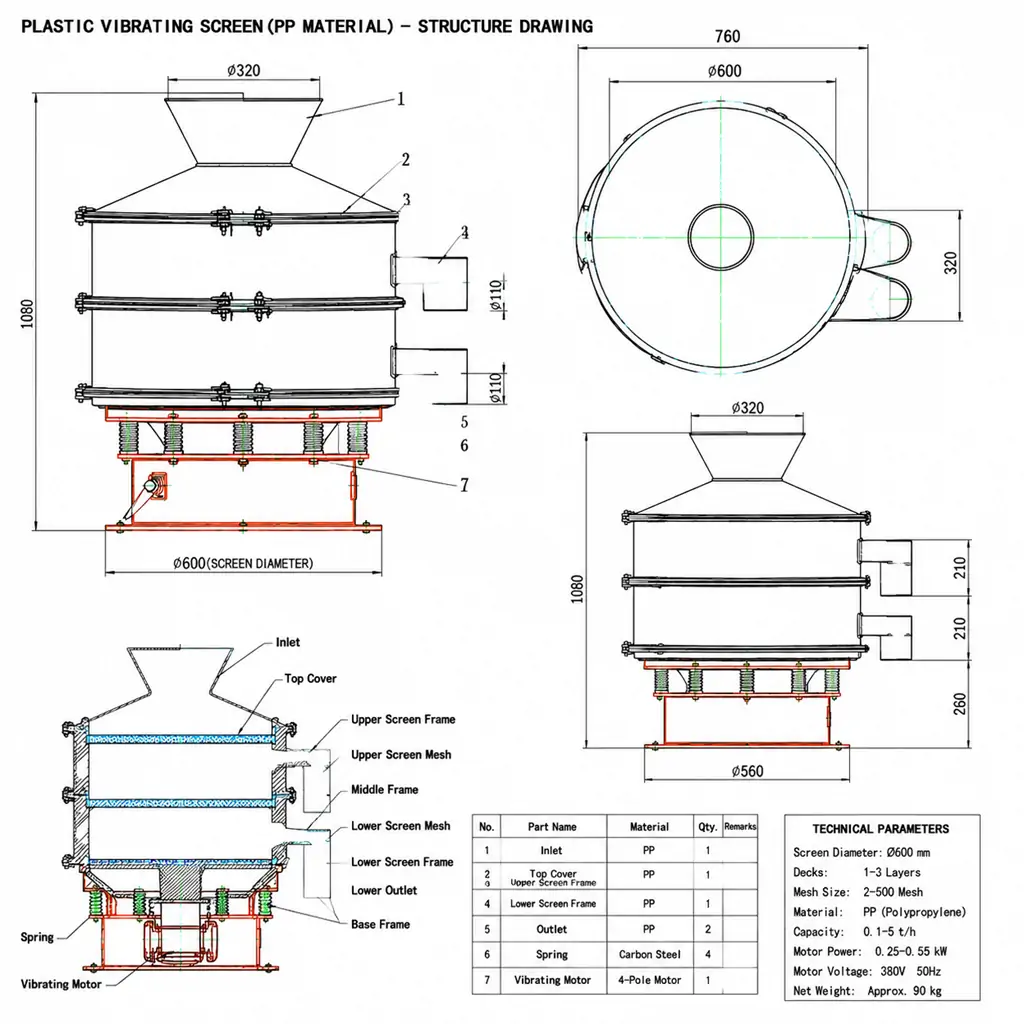
La criba vibratoria de plástico consiste principalmente en un cuerpo de cribado de polipropileno PP, un conjunto de malla, un marco de cribado, un motor vibratorio, una estructura de sellado y una estructura de descarga. En comparación con las cribas vibratorias metálicas convencionales, este tipo de equipo está diseñado principalmente para materiales que no pueden entrar en contacto con metal, materiales corrosivos o polvos de alta pureza. Por lo tanto, las piezas en contacto con el material están fabricadas con PP y otros materiales no metálicos.
Durante el diseño del equipo, la configuración se ajusta según las características del material. El cuerpo de criba de PP resuelve principalmente los problemas de resistencia a la corrosión y contaminación metálica; la malla de cribado determina la precisión de la separación; la estructura de sellado ayuda a controlar fugas de polvo; y el marco de criba de múltiples capas permite la separación continua por tamaño de partícula.
Cuerpo de Criba de Polipropileno PP
El cuerpo de criba de polipropileno PP es el componente clave que distingue la Criba Vibratoria de Plástico de las cribas vibratorias convencionales. El material PP ofrece buena resistencia a ácidos y álcalis, lo que lo hace adecuado para algunos polvos corrosivos y materiales sensibles a impurezas metálicas, ayudando a reducir los riesgos de contaminación durante el proceso de cribado.
Conjunto de Malla de Cribado
La malla de cribado afecta directamente la precisión de separación y la capacidad de procesamiento. El material y la abertura de malla adecuados deben seleccionarse según el tamaño de partícula, la fluidez y los requisitos de cribado del material. Diferentes materiales tienen diferentes requisitos para la selección de la malla, y una configuración adecuada es esencial para lograr un rendimiento de cribado estable.
Marco de Criba de Múltiples Capas
Según los requisitos de producción, el equipo puede configurarse con múltiples capas de criba para separar materiales con diferentes tamaños de partícula en un solo proceso de cribado. El número de capas debe seleccionarse en función de las características del material, la capacidad de producción y los objetivos de cribado. Más capas no siempre significan un mejor rendimiento.
Tapa de Sellado y Estructura de Descarga
El equipo adopta un diseño de estructura sellada para reducir las fugas de polvo durante el cribado e impedir la entrada de impurezas externas en el material. Una estructura de descarga razonable ayuda a garantizar una descarga continua del material y mejora la estabilidad operativa del equipo.
Motor Vibratorio
El motor vibratorio proporciona una fuerza de vibración estable al equipo, permitiendo que los materiales formen un patrón de movimiento adecuado sobre la superficie de la malla. El ajuste de los parámetros de vibración según la densidad del material, el tamaño de partícula y los requisitos de cribado ayuda a mejorar la estabilidad del cribado.
Diferentes materiales tienen diferentes requisitos para los equipos de cribado. La clave de una Criba Vibratoria de Plástico no es solo el uso de material PP, sino también la correcta combinación de selección de material, malla de cribado, estructura de sellado y parámetros de vibración. Seleccionar la configuración adecuada según las características del material es esencial para garantizar una operación estable a largo plazo del equipo.
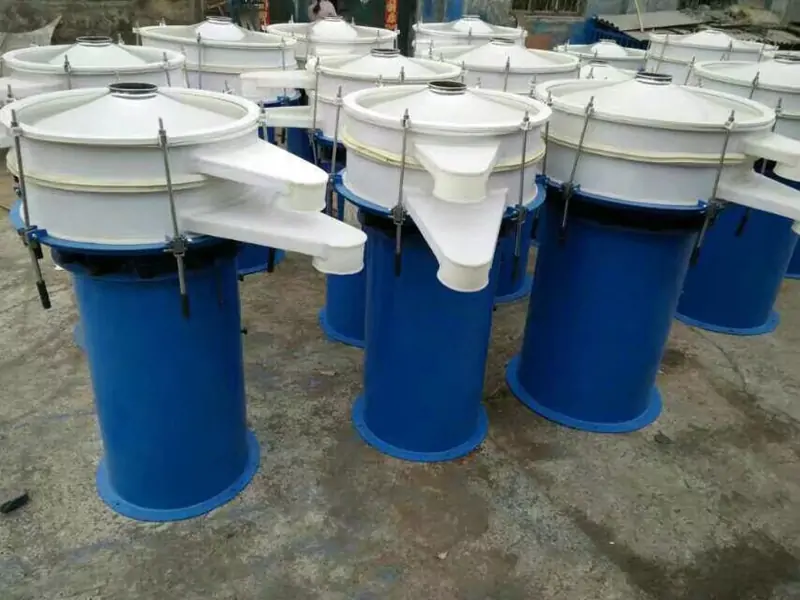 Conjunto de criba vibratoria de plástico
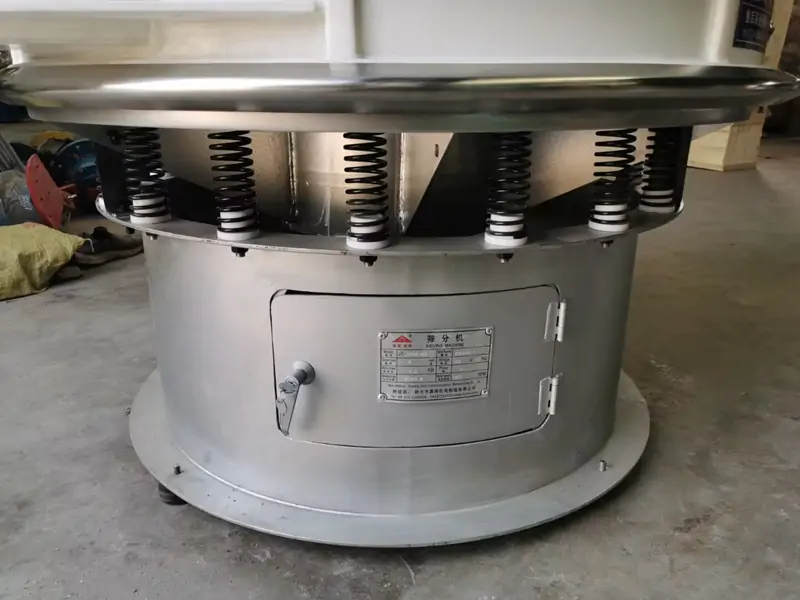 Base Inferior
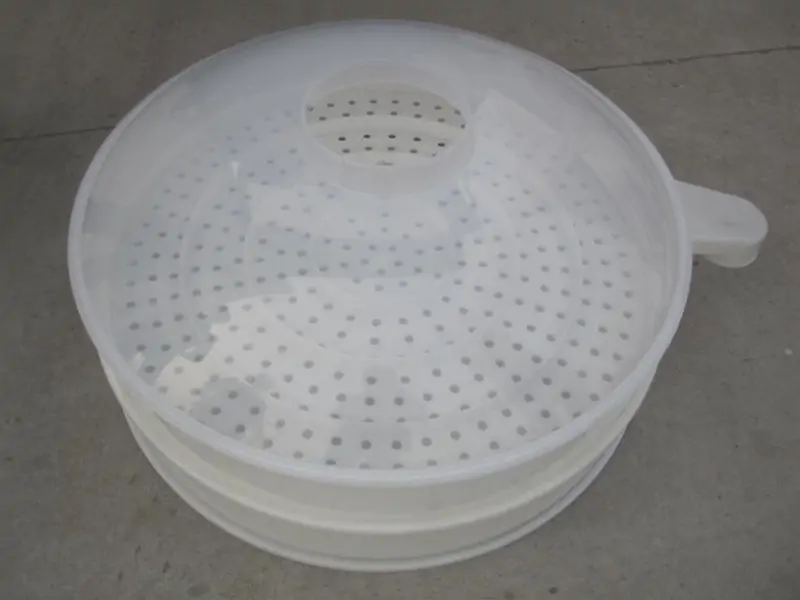 Cubierta Antipolvo
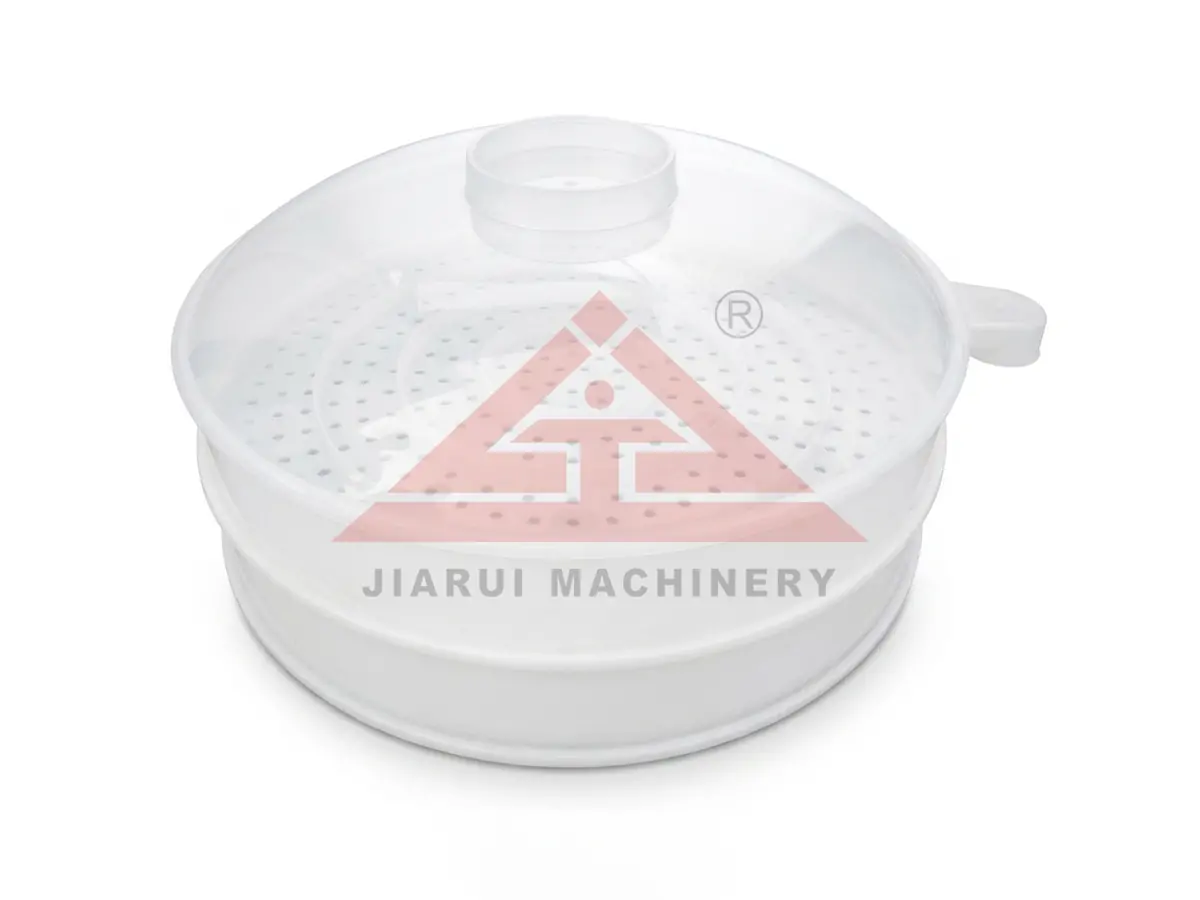
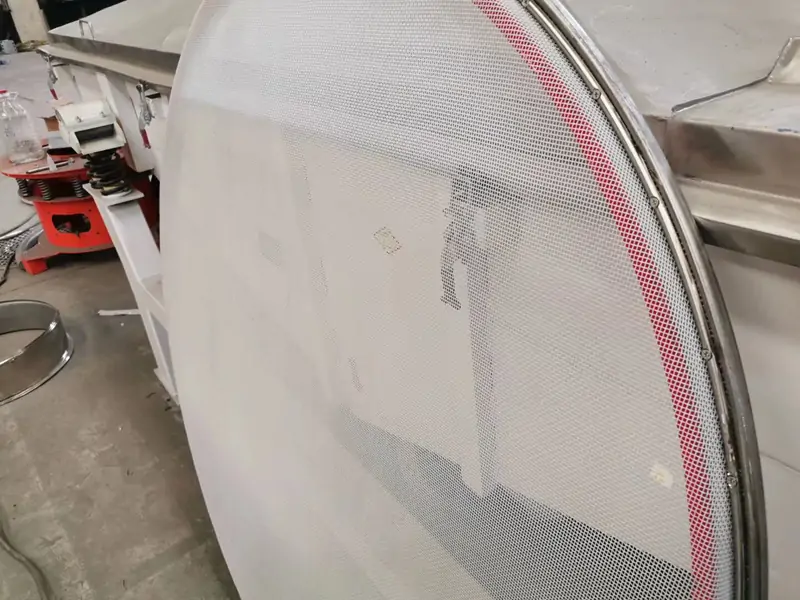 Malla de Cribado
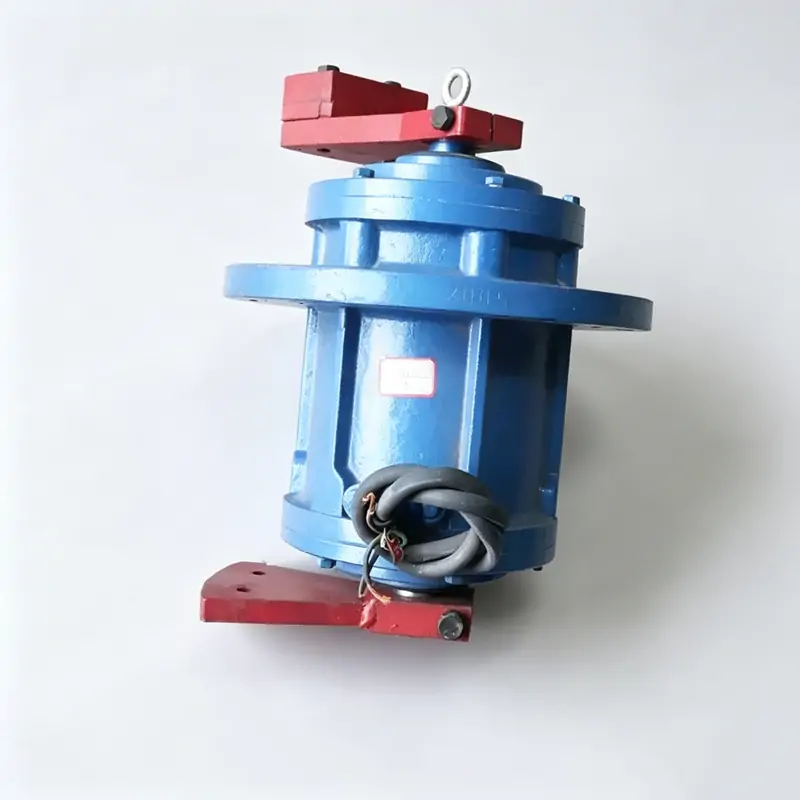 Criba Vibratoria de Plástico
 Lámina de PP Reforzada de 10mm
Ventajas Principales de la Criba Vibratoria de Plástico
Diseño sin Contacto con Metal
El equipo utiliza PP polipropileno y otros materiales no metálicos para reducir el contacto directo entre los materiales y las piezas metálicas, lo que lo hace adecuado para aplicaciones de cribado de polvos con altos requisitos de pureza.
Diseño de Estructura Sellada
La estructura cerrada ayuda a reducir las fugas de polvo durante la operación, al tiempo que disminuye el riesgo de entrada de impurezas externas en el material.
Fácil Limpieza y Mantenimiento
La estructura del equipo está diseñada para facilitar la limpieza y el mantenimiento, lo que lo hace adecuado para industrias con estrictos requisitos de pureza del material y higiene de producción, como aplicaciones farmacéuticas, alimentarias y de polvos especiales.
Resistencia a la Corrosión por Ácidos y Álcalis
El material PP proporciona una buena resistencia a la corrosión y es adecuado para algunos entornos de cribado químico, farmacéutico y de polvos especiales.
Configuración Multicapa
El equipo admite diseños de cribado multicapa y puede completar la separación continua de diferentes tamaños de partícula según los requisitos de producción.
Personalización Flexible
La malla de cribado, las capas de cribado y la configuración estructural se pueden ajustar según las características del material, la capacidad de producción y los requisitos operativos para satisfacer diferentes necesidades de aplicación.
Parámetros Técnicos de la Criba Vibratoria de Plástico
La configuración específica de la Criba Vibratoria de Plástico depende de las características del material y los requisitos de producción. Diferentes materiales presentan diferencias en tamaño de partícula, fluidez, propiedades corrosivas y precisión de cribado, lo que afectará la selección del modelo del equipo, la configuración de la malla de cribado y la capacidad de procesamiento. Los siguientes parámetros se proporcionan como referencia para la selección del equipo, y la solución final debe confirmarse según las condiciones de trabajo reales.
| Modelo | Diámetro de la criba (mm) | Capas de Criba | Tamaño de malla de cribado (Malla) | Potencia (kW) | Voltaje (V) | Capacidad de Referencia (kg/h) | Piezas en Contacto con el Material |
| JR-P400 | 350 | 1-3 Capas | 2-500 | 0.18 | 220/380 | 100-300 | PP |
| JR-P600 | 550 | 1-3 Capas | 2-500 | 0.25 | 220/380 | 300-600 | PP |
| JR-P800 | 750 | 1-5 Capas | 2-500 | 0.55 | 220/380 | 500-1200 | PP |
| JR-P1000 | 920 | 1-5 Capas | 2-500 | 0.75 | 220/380 | 800-1800 | PP |
| JR-P1200 | 1120 | 1-5 Capas | 2-500 | 1.1 | 220/380 | 1500-2800 | PP |
| JR-P1500 | 1420 | 1-5 Capas | 2-500 | 1.5 | 220/380 | 2100-3500 | PP |
| JR-P1800 | 1720 | 1-5 Capas | 2-500 | 2.2 | 220/380 | Personalizado según el material | PP |
Configuración Estándar:
- Material: PP polipropileno (los materiales sin contacto con metal se pueden personalizar según los requisitos del material)
- Frecuencia: 50Hz / 60Hz
- Frecuencia de Vibración: 1440 rpm
- Configuraciones Opcionales: Sistema de limpieza ultrasónica, tolva de alimentación, base móvil, etc.
Los equipos de material plástico tienen ciertos requisitos para el entorno operativo y las condiciones del material. Durante la selección, se deben considerar factores como las propiedades corrosivas del material, la temperatura, el tamaño de partícula, el contenido de humedad y la capacidad de procesamiento. El equipo de ingeniería de Jiarui emparejará las estructuras y configuraciones de equipo adecuadas según la información del material y los requisitos de producción proporcionados por los clientes.
Criba Vibratoria de Plástico vs Criba Vibratoria Rotativa y Criba Vibratoria Ultrasónica
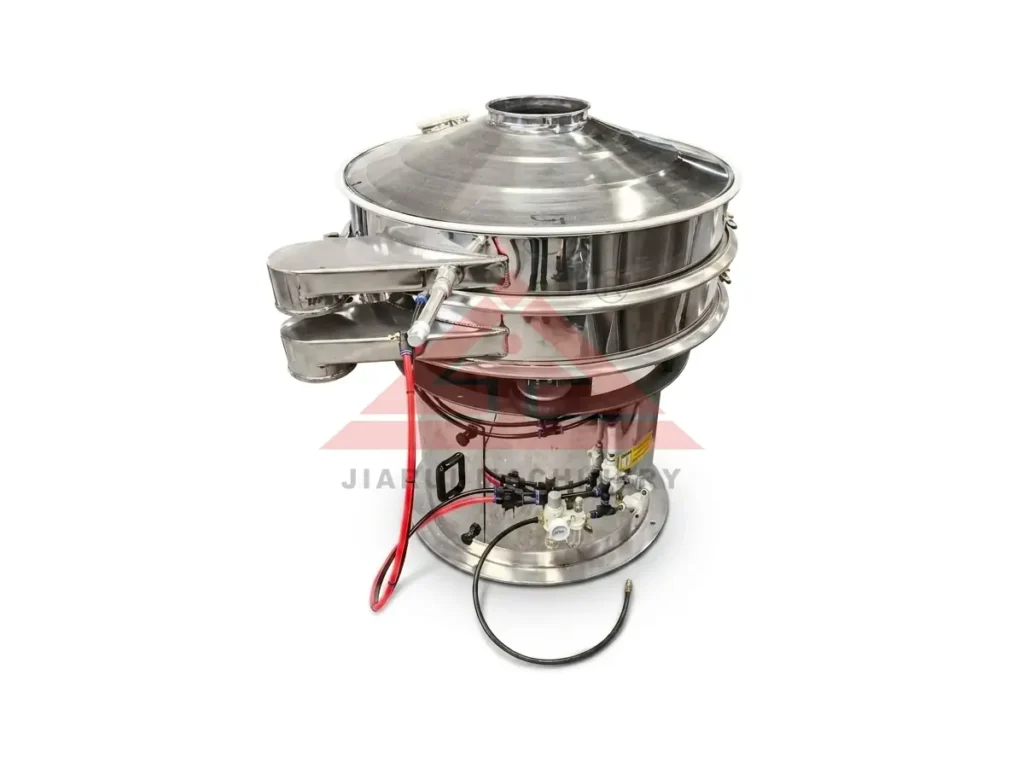
La Criba Vibratoria de Plástico, la criba vibratoria rotativa y la criba vibratoria ultrasónica pueden utilizarse todas para el cribado de polvos, pero están diseñadas para resolver diferentes problemas de cribado. La tamiz vibratorio rotatorio se utiliza principalmente para la clasificación convencional de polvos; la criba vibratoria ultrasónica se centra en mejorar el rendimiento de cribado de polvos finos y reducir el bloqueo de la malla, mientras que la Criba Vibratoria de Plástico está diseñada principalmente para materiales que no pueden entrar en contacto directo con metal, materiales corrosivos o aplicaciones de polvos de alta pureza.
| Elemento de comparación | Criba Vibratoria de Plástico | Criba Vibratoria Rotatoria | Criba Vibratoria Ultrasónica |
| Problema Principal Resuelto | Resuelve requisitos de contacto con metal, corrosión y pureza | Cumple con la mayoría de los requisitos convencionales de cribado de polvos | Resuelve problemas de bloqueo de malla durante el cribado de polvos finos |
| Piezas en Contacto con el Material | PP polipropileno y otros materiales no metálicos para reducir los riesgos de contaminación por metal | Acero inoxidable, acero al carbono y otros materiales metálicos | Estructura de acero inoxidable con sistema de limpieza ultrasónica de malla |
| Materiales adecuados | Polvo fluorescente, materias primas farmacéuticas, polvos de alta pureza, polvos químicos corrosivos | Polvo alimentario, polvo químico, polvo plástico, polvo mineral y otros materiales convencionales | Polvo ultrafino, polvo ligero, materiales electrostáticos y materiales propensos a la obstrucción de la malla |
| Enfoque de cribado | Compatibilidad de materiales y pureza del producto | Precisión de cribado, capacidad de procesamiento y versatilidad del equipo | Tasa de paso de polvo fino y estabilidad operativa del tamiz |
| Rendimiento antiobstrucción | Depende de las características del material y la configuración de la malla | Adecuado para cribado general de polvos | Proporciona una mejor mejora para polvos finos propensos a la obstrucción de la malla |
| Aplicaciones Típicas | Industrias farmacéutica, de nuevos materiales, química fina y de polvos de alta pureza | Industrias alimentaria, química, plástica y de polvo mineral | Materiales para baterías, polvos ultrafinos y aplicaciones de nuevos materiales |
| Enfoque de selección | Primero confirmar si el material puede contactar con metal | Primero confirmar la capacidad de producción y los requisitos de cribado | Primero confirmar si la obstrucción de la malla es el problema principal |
¿Cómo elegir según las diferentes condiciones del material?
Durante la selección del equipo, un equipo más complejo no siempre es mejor. La clave es identificar los problemas reales del material. Normalmente evaluamos las propiedades del material, el tamaño de partícula, la capacidad de producción y el entorno operativo antes de determinar la estructura y configuración adecuadas del equipo.
| Si su material presenta estas condiciones | Equipo Recomendado | Razón de Selección |
| Polvo convencional que solo requiere clasificación por tamaño de partícula | Criba Vibratoria Rotatoria | Estructura madura y adecuada para la mayoría de las aplicaciones de cribado estándar |
| Polvo fino que obstruye fácilmente la malla del tamiz durante el cribado | Criba Vibratoria Ultrasónica | El sistema ultrasónico ayuda a limpiar la malla del tamiz y mejora la estabilidad del cribado de polvos finos |
| El material no puede contactar directamente con metal | Criba Vibratoria de Plástico | El diseño sin contacto con metal ayuda a reducir los riesgos de contaminación metálica |
| El material tiene ciertas propiedades corrosivas ácidas o alcalinas | Criba Vibratoria de Plástico | El material PP proporciona buena resistencia a ácidos y álcalis para condiciones de trabajo especiales |
| El producto requiere alta pureza | Criba Vibratoria de Plástico | Reduce el contacto con metal y cumple con los requisitos de cribado de materiales de alta pureza |
La selección del equipo no tiene una respuesta fija. La clave es si el equipo coincide con las características del material y los requisitos operativos. Basándonos en años de experiencia en el diseño y la aplicación de equipos de cribado vibratorio, hemos comprobado que el mismo material puede requerir diferentes configuraciones de equipo debido a diferencias en el tamaño de partícula, el contenido de humedad, la fluidez y los requisitos de producción.
Si no está seguro de si una criba vibratoria de plástico, una criba vibratoria rotativa o una criba vibratoria ultrasónica es más adecuada para su material, puede proporcionar la información de su material y los requisitos de cribado al equipo de ingeniería de Jiarui. Proporcionaremos una recomendación de selección más adecuada basada en las condiciones de trabajo reales, incluyendo la selección de materiales, la configuración de la malla del tamiz y la estructura del equipo.
Personalice su solución de criba vibratoria de plástico
Para recomendar una criba vibratoria de plástico adecuada, proporcione la siguiente información básica:
- Información del material
- Nombre del material:
- Características del material (corrosivo / no puede contactar con metal / requisitos de alta pureza):
- Requisitos de cribado
- Tamaño de malla requerido:
- Capacidad de procesamiento:
- Requisitos especiales
- Número de capas de tamiz:
- Otros requisitos:
Después de recibir su información, el equipo de ingeniería de Jiarui analizará las propiedades de su material y los requisitos de producción para recomendar una configuración adecuada de criba vibratoria de plástico.
¿Por qué elegir Jiarui Machinery?
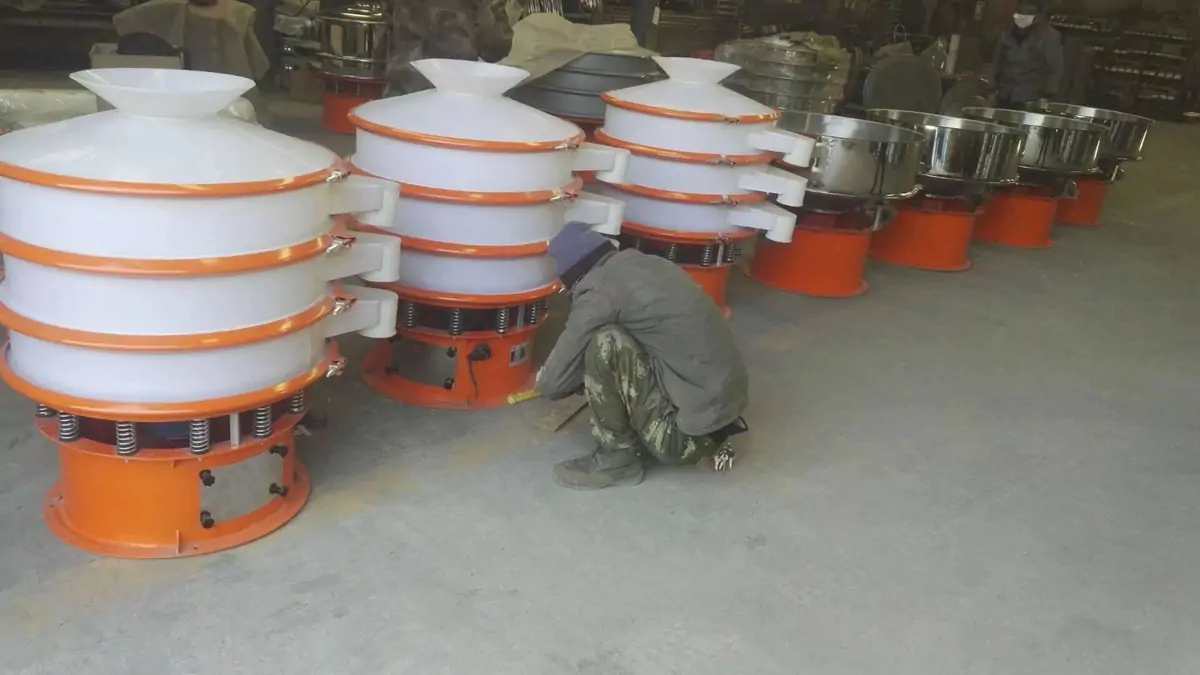
Después de años de fabricación de equipos de cribado vibratorio, hemos comprobado que muchos problemas de cribado son causados por una selección inadecuada del equipo en lugar del propio equipo. Para materiales que no pueden contactar con metal, polvos corrosivos o materiales de alta pureza, la selección de materiales, la configuración de la malla del tamiz y el diseño estructural afectan directamente el rendimiento del equipo.
El equipo de ingeniería de Jiarui evalúa las propiedades del material, los requisitos de cribado y las condiciones operativas para adaptar configuraciones adecuadas, incluyendo material PP, malla del tamiz, capas de tamiz y estructura de sellado. Esto ayuda a reducir los errores de selección y hace que el equipo sea más adecuado para una operación a largo plazo.
- Configuración de equipo más adecuada
- Operación más estable
- Personalización Flexible
Si no está seguro de si la criba vibratoria de plástico es adecuada para su aplicación, proporcione la información de su material y los requisitos de cribado. El equipo de ingeniería de Jiarui recomendará una configuración adecuada basada en las condiciones de trabajo reales.
Preguntas Frecuentes
Artículos relacionados
¿Qué es un tamiz vibratorio neumático?
Conozca qué es un tamiz vibratorio neumático, cómo funciona y por qué se utiliza para el cribado de polvos a prueba de explosiones. Explore su principio de funcionamiento, componentes, aplicaciones y ventajas frente a los tamices vibratorios eléctricos.¿Qué es un tamiz vibratorio?
Descubra qué es un tamiz vibratorio, cómo funciona, los diferentes tipos disponibles, las aplicaciones industriales comunes y una guía práctica para seleccionar la máquina de tamizado vibratorio adecuada.Tipos de máquinas de tamizado industriales: ¿Cómo elegir la adecuada?
Conozca los diferentes tipos de máquinas de tamizado industriales, compare sus aplicaciones y descubra cómo elegir el equipo de cribado industrial adecuado según las características del material, la precisión del tamizado, la capacidad de producción y los requisitos operativos.
Obtenga una consulta gratuita
Complete el siguiente formulario para conectarse con nuestros expertos y recibir recomendaciones personalizadas para su aplicación.