
¿Qué es una criba de movimiento tridimensional (tumbler)?
La Máquina de Cribado por Tumbler, also known as the swing vibrating screen or shaking screen, is a screening equipment designed to meet high production and high-precision screening requirements. It is primarily used in industries such as chemicals, food, pharmaceuticals, mining, materiales de construcción, and recycling. It employs a low-frequency screening principle that mimics manual shaking, generating horizontal and throwing three-dimensional rolling motion through a low-speed V-belt drive. This motion imitates manual screening actions, enabling uniform dispersion of materials and spiral axial propagation. The eccentricity is adjustable from 25 to 40mm, and the low-speed V-belt drive speed is adjustable from 120 to 360rpm to adapt to different material properties.
The equipment uses bounce balls, rotating brushes, or ultrasonic screen-cleaning devices to prevent screen hole blockage. The screening efficiency reaches 90%-99%, with a relatively large processing capacity per unit area. It supports multi-layer screen configurations (typically 1-5 layers). During operation, it has a low acceleration and noise level, usually below 75 decibels (some models can maintain 60-70 decibels). It features a fully enclosed dust-proof structure and a quick screen-changing system.
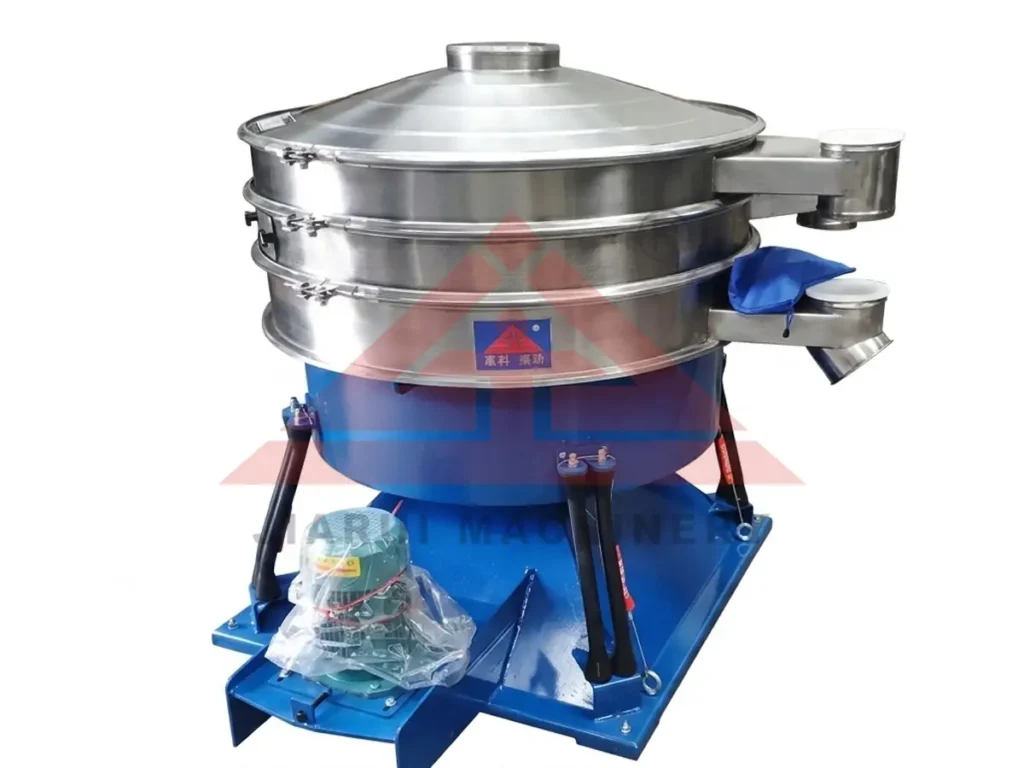
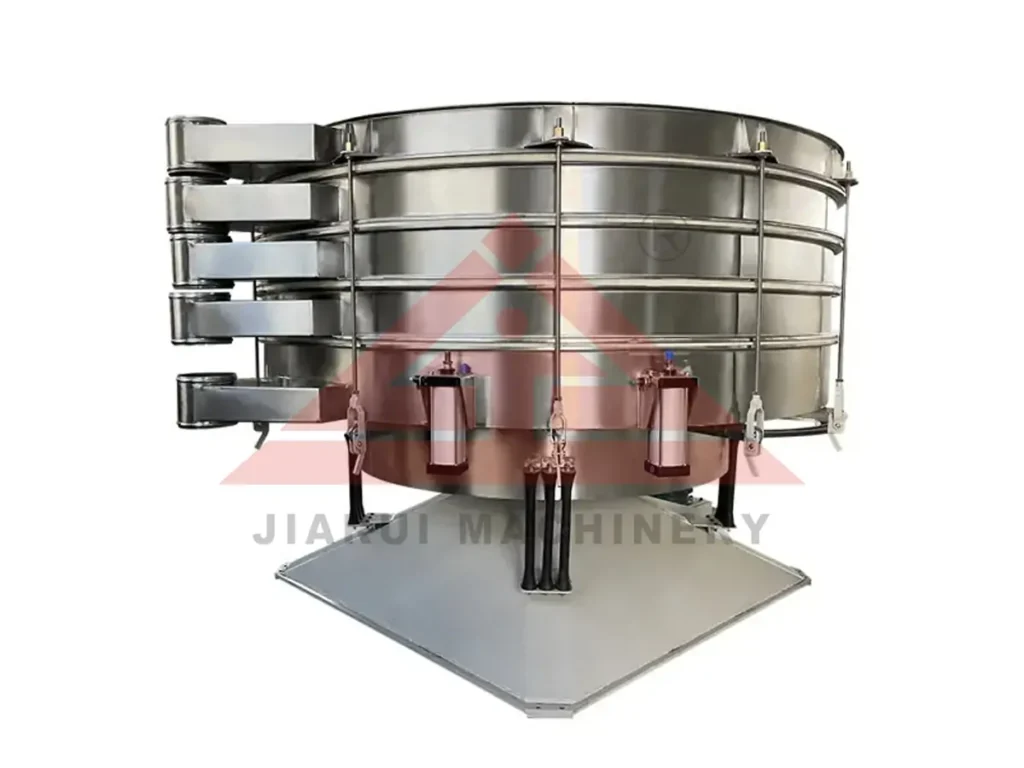
What problems can the tumbler screening machine solve for you?
In short, if you are facing challenges such as high material breakage rates, high production requirements, and short sieve mesh lifespan, the Jiarui tumbler screening machines can help you address the following issues:
- The tumbler screening machine replaces manual sieving. It sieves gently, minimizes damage to materials, and results in a low material breakage rate.
- The tumbler screening machine can achieve a sieving accuracy of 90% to 95% and can easily process ultra-fine powders as fine as 500 mesh (0.028mm).
- It has a large unit processing capacity and high efficiency. The unit area processing capacity is 3 to 5 times that of a conventional vibrating screen, and one machine can replace 3 to 5 machines.
- It can be paired with various net-cleaning devices such as bounce balls and ultrasonic cleaners to fundamentally solve the screening challenges of high-viscosity and easily clogging materials.
- Operates more smoothly, with a sieve life span 5 to 10 times that of conventional equipment, significantly reducing operating costs.
Principio de funcionamiento
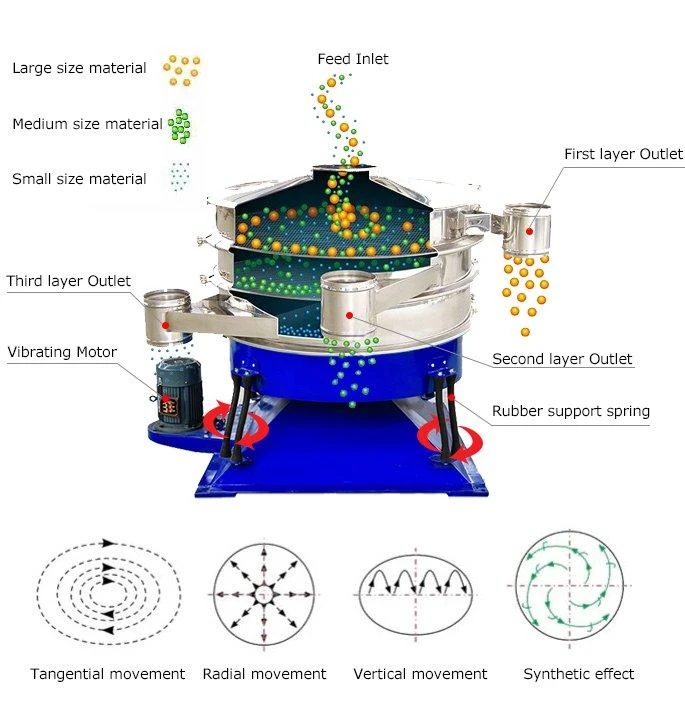
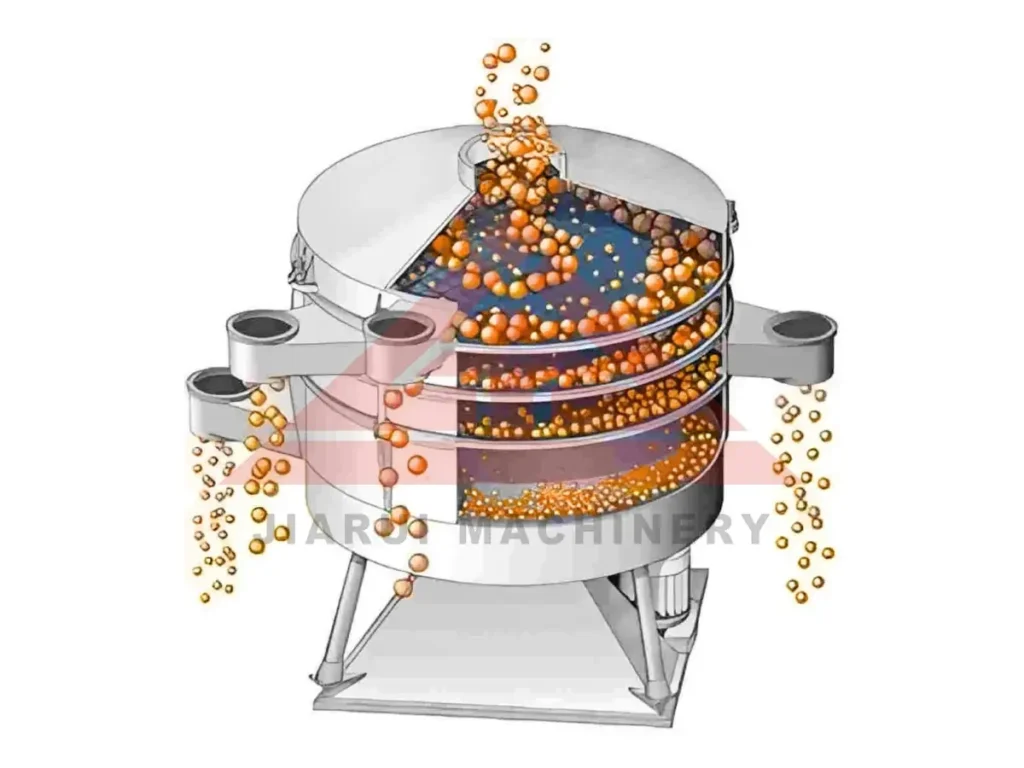
Instantaneous motion is a combination of radial displacement and circular motion around this displacement (helical motion). An adjustable eccentric exciter generates nonlinear three-dimensional motion, causing the material to undergo similar approximate manual operation motion, thereby achieving the screening purpose. With the operation of screening accessories, a more ideal screening effect can be obtained; it is suitable for spherical and cylindrical.
Ways to clean the sieve
- Bouncing Ball Cleaning: Food-grade rubber or silicone balls bounce on a perforated plate beneath a screen, striking the metal mesh to reduce clogging of the screen holes. This system is simple to use and easy to maintain, suitable for most granular materials.
- Ultrasonic Cleaning: High-frequency ultrasonic waves are transmitted to the screen, cleaning it while significantly increasing production capacity. It is suitable for most fine, high-volume, and difficult-to-screen materials.
Main Technical Parameters
As a commonly used screening equipment in our industrial, food, and other industries, the tumbler screening machines come in various models, each with different technical parameters. The following are some technical parameters we have summarized:
| Parameter Category | Parameter range | Explanation |
| Screen body diameter | Φ600 ~ Φ2600 mm | Common specifications |
| Screen area | 0.29 ~ 5.31 m² | Increases with increasing diameter |
| Number of sieve layers | 1st to 5th floors | 5 to 6 sets of graded levels can be provided simultaneously |
| Feed particle size | ≤25 mm | |
| Sieve particle size | 0.073 ~ 3 mm (up to 500 mesh / 0.028 mm) | |
| Processing capability | 6 ~ 60 t/h | Depends on the model and material |
| Amplitude | 5 ~ 8 mm | |
| Motor power | 0.75 ~ 5.5 kW | |
| Swing frequency | 120 ~ 360 rmm | Low-speed V-belt drive |
| Eccentricity | 25 ~ 40 mm | Adjustable |
| Sieve precision | 90% ~ 99% |
Typical Model Parameters
Tumbler screening machines come in various models with different diameters, and thus their screen mesh sizes, screening areas, and capacities also vary. Below is a summary of common parameters for different models.
| Model | Diameter (mm) | Screen Area (m²) | Processing capacity (tons per hour) | Amplitude (mm) | Motor Power (kW) |
| YBS800 | 800 | 0.29 | 6-10 | 5-8 | 0.75 |
| YBS1000 | 1000 | 0.71 | 8-15 | — | 1.5 |
| YBS1200 | 1200 | 1.11 | 15-30 | — | 2.2 |
| YBS1600 | 1600 | 1.83 | 25-40 | — | 3 |
| YBS2000 | 2000 | 2.62 | 30-50 | — | 4 |
| YBS2500 | 2500 | 4.61 | 40-60 | — | 5.5 |
What are the advantages of a tumbler screening machine?
- Highly Efficient Imitation of Manual Sieving: Effectively imitates manual sieving actions and processes with a sieving accuracy as high as 90% to 95%.
- High Output: The processing capacity per unit area can reach up to 5 times that of traditional screening equipment; one circular swing screen can replace 3 to 5 vibratory screens.
- Long sieve life: Operating at low frequency and light load, its acceleration is 4.5 times lower than that of vibrating screens, resulting in a sieve life 5 to 10 times longer than conventional screening equipment.
- Non-clogging: Equipped with various net-cleaning devices (bouncing balls, ultrasonic cleaners, bristles, etc.), effectively solving the problem of screen blockage.
- Fully enclosed and dust-free: Good sealing effect prevents powder from flying, meeting environmental requirements.
Application Industries
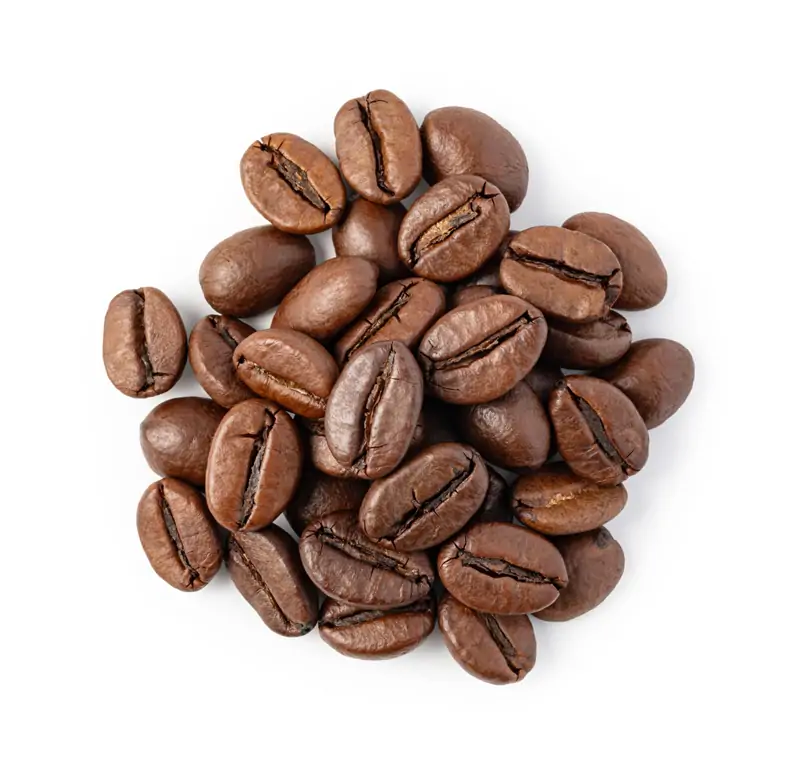
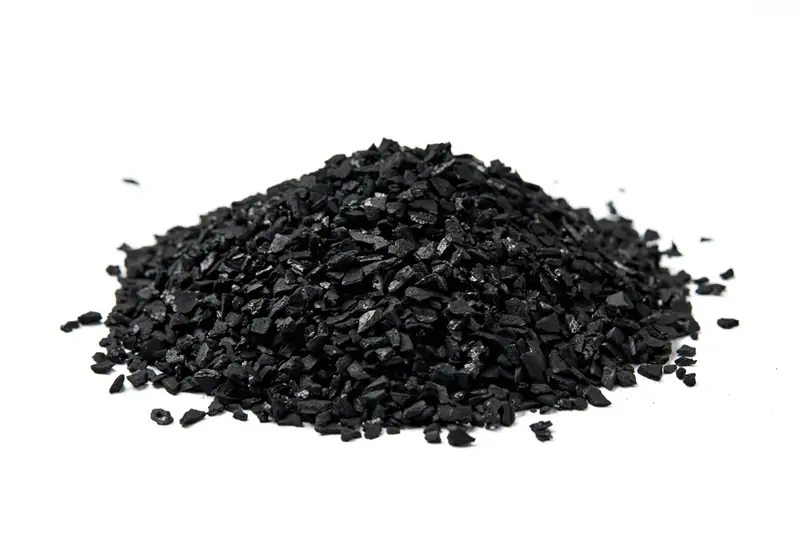
- Chemical industry: Sieving of powders and granules such as metallurgical silicon, titanium silico-manganese, chemical fertilizers, plastics, and rubber.
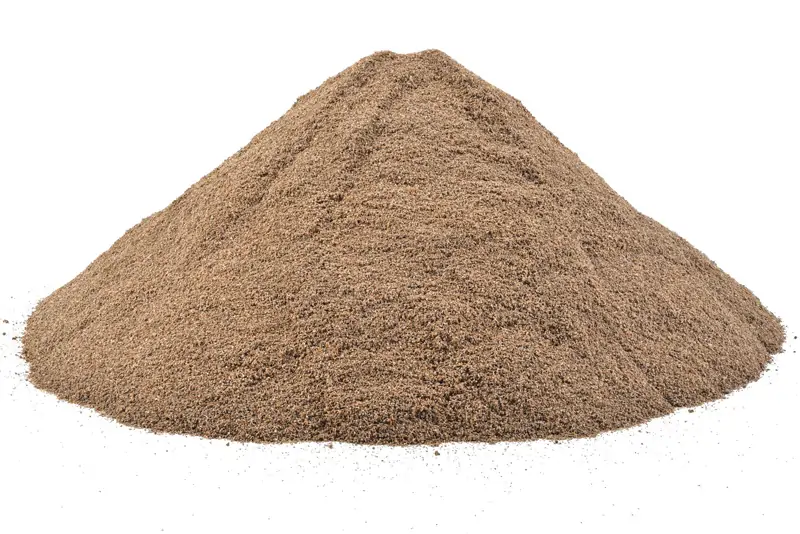
- Food and Spices: Salt, Sugar, Starch, Citric Acid, Tea Leaves, Flour, etc.
- Pharmaceutical Industry: Fine Sieving of Pharmaceutical Powders, Microbead Granulation Processes, etc.
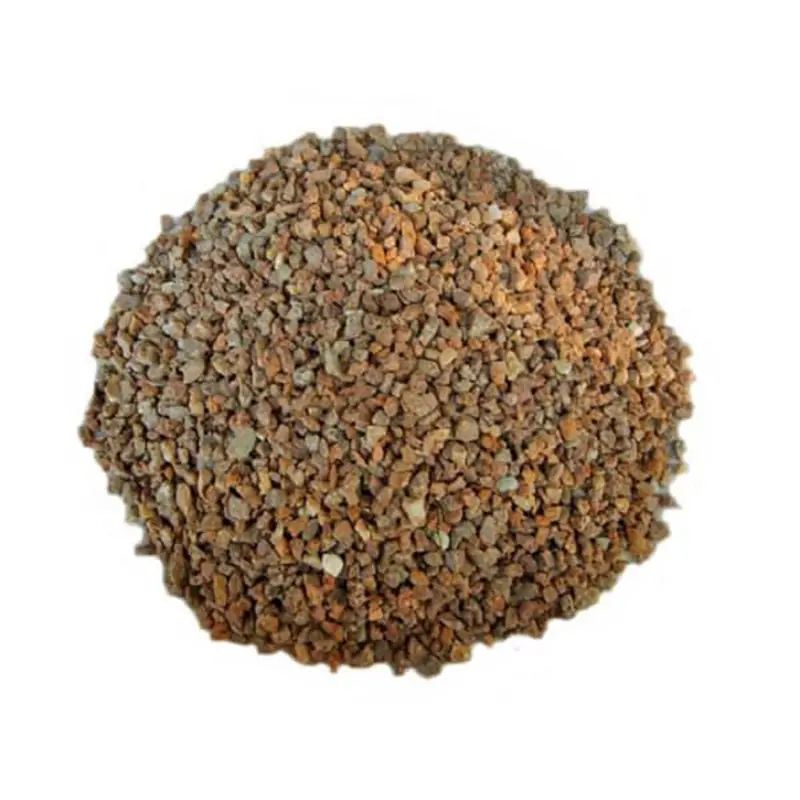
- Minería and Metallurgy: Quartz Sand, Frac Sand, Foundry Sand, Ternary Positive Electrode Materials, Lithium Battery Materials, etc.
- New Materials: Dry and wet screening of various powders and granules such as EPS and new materials.
- Recycling Industry: Material Sorting in the Recovery and Utilization of Recyclable Resources.
- Wood Industry and Plywood: Sieving of Materials Such as Wood Flour and Sawdust.
- Feed Industry: Grading of Feed Raw Materials and Finished Products.

How to choose the right model?
In the Tumbler Screening Machine process, we need to focus on the following aspects:
- Propiedades del Material: We need to select the appropriate mesh size, model, and anti-clogging measures based on the moisture content, stickiness, and particle size of the material to be screened.
- Process Requirements: Determine the diameter, size, and inclination angle of the drum based on material properties, production capacity, and screening efficiency.
- Condition Matching: Selecting the appropriate model and power configuration based on on-site working conditions and workshop requirements.
Common faults
During operation, the tumbler screening machine may encounter some faults. Below is a summary of common faults and their solutions:
| Fault Phenomenon | Possible causes | Solución |
| Screen clogging | Excess moisture in the material, too small screen mesh size, and excessive feeding speed | Control moisture content; replace the sieve with an appropriate mesh size; adjust the feeding speed |
| The equipment is making a lot of noise | Bolt loosening | Retighten the bolts and other fasteners |
| Incorrect rotation direction | The motor power cable is connected incorrectly | Replace any 2 power cables in the junction box |
| The motor starts slowly | Overloading or excessive flow rate | Check the load and adjust the delivery volume |
Tumbler Screening Machines VS Gyratory Screens
Common types of swing screens are divided into gyratory screens and tumbler screening machines. They differ from each other in appearance, screening principle, power source, output, screening area, and other aspects in the industry. The following is a summary of some differences:
| Dimensiones de comparación | Gyratory Screens | Square Swing Screens |
| Appearance and Structure: | The screen frame is mostly open, with discharge ports distributed around the circumference. | The screen frame is mostly open, with discharge ports distributed around the circumference. The square screen has |
| Core Principle | Simulated manual sieving. The material undergoes three-dimensional rolling motion on the screen, involving both horizontal and projectile movements. | Simulated manual sieving. The material undergoes gentle, nearly linear reciprocating motion or horizontal elliptical motion on the sieve. |
| Motion trajectory | Three-dimensional spiral motion. The material is uniformly dispersed in a gradually unwinding spiral from the center to the periphery. | Directional jumping motion. The material moves forward in a zigzag or straight line on the screen. |
| Sieve precision | Extremely high. Particularly suitable for sieving ultra-fine powders below 500 mesh. | High. It typically works well for materials with a mesh size of 300 or lower. |
| Processing capability | Relatively small. Suitable for small-batch, high-precision production scenarios | Very large. With a large screening area, it is suitable for production needs of large batches and high output. |
| Applicable materials | Fine and difficult-to-screen materials. For example, materials prone to clogging screens, irregularly shaped particles, and ultra-fine powders (used in food, pharmaceuticals, and fine chemical industries). | High-output, powdered materials such as fertilizers, quartz sand, ores, etc. (metallurgy, mining, building materials). |
| Anti-clogging performance | Excellent. It can be equipped with various efficient net-cleaning devices such as elastic balls, ultrasonic cleaners, and bristle brushes. | Excellent. Through unique motion trajectories and a sieve surface with a 0°-5° slight inclination, it achieves good self-cleaning performance. |
| Environmental Protection and Noise | Fully enclosed and low-noise. The noise level is typically below 75 decibels. | Fully enclosed and low-noise. Operates smoothly with low noise |
| Installation Requirements | High requirements. The basic ground must be hardened and absolutely level. | Low requirements. A standard hardened ground surface is sufficient, with minimal requirements for the foundation’s dynamic load capacity. |
| Typical applications | Food, pharmaceutical, chemical and other industries — 1. For example: flour, starch, traditional Chinese medicine powder, seasonings, etc. | Metallurgical, mining, building materials and other industries — 1. For example: manufactured sand, quartz sand, ore, fertilizer, etc. |
Conclusión
The Tumbler Screening Machine’s motion imitates manual screening actions, enabling uniform dispersion of materials and spiral axial propagation. The eccentricity is adjustable from 25 to 40mm, and the low-speed V-belt drive speed is adjustable from 120 to 360rpm to adapt to different material properties.