
La criba vibratoria lineal de la serie JR producido por Xinxiang Jiarui Electromechanical Manufacturing Co., Ltd. utiliza un motor vibratorio como fuente de excitación, lo que hace que el material sobre la malla sea lanzado hacia arriba y se desplace hacia adelante en línea recta. Después de que el material se alimenta uniformemente en la boca de alimentación, se puede tamizar a través de mallas de una o varias capas (1–6 capas) para separar los materiales por tamaño de partícula. Los materiales de sobretamaño y de infratamaño se descargan por separado desde sus respectivas salidas. Tiene una gran capacidad de producción por unidad, una estructura simple y es fácil de mantener.
Se puede añadir una cubierta antipolvo según las propiedades del material, y la estructura totalmente cerrada evita que el polvo se escape, creando un taller libre de polvo. Se puede conectar con otros equipos para formar una línea de producción. Es adecuada para múltiples industrias como alimentaria, farmacéutica, química, materiales de construcción y metalurgia, y también ofrecemos servicios de personalización no estándar.
La operación adecuada de la criba vibratoria lineal es esencial para mantener una eficiencia de cribado estable y prolongar la vida útil del equipo.
Veamos la operación y el mantenimiento de la criba vibratoria lineal.
Estructura y principio de funcionamiento de la criba vibratoria lineal
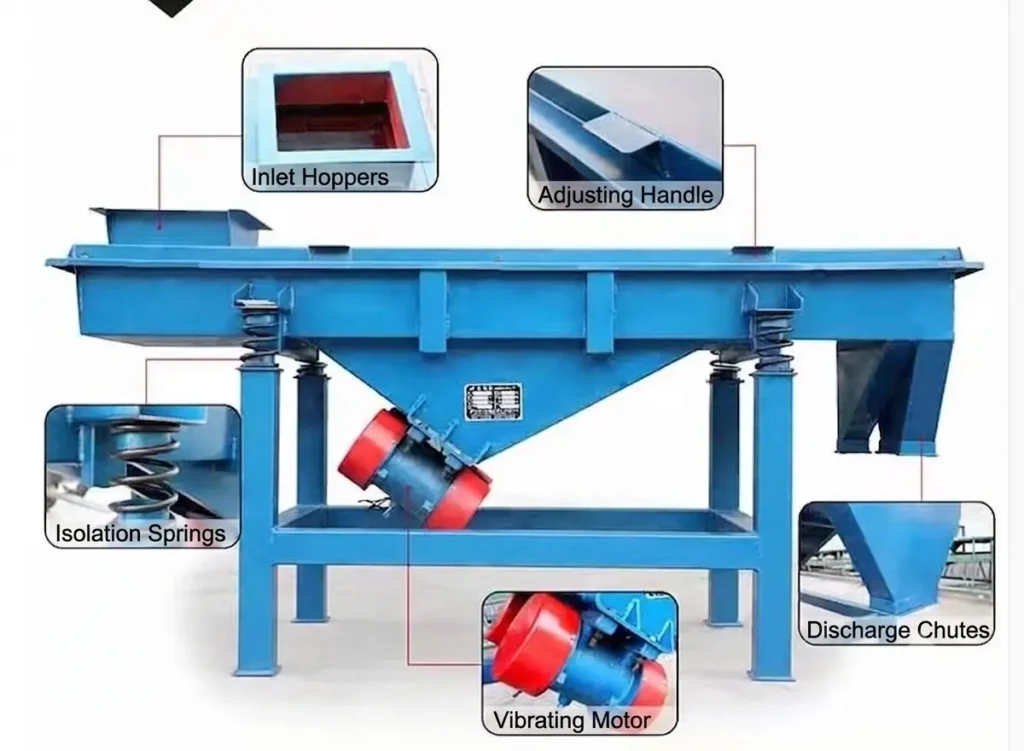
La criba vibratoria lineal está compuesta por múltiples partes, cada una de las cuales tiene su función correspondiente.
A continuación se presenta un resumen de algunos contenidos:
| Nombre del componente | Material y Composición | Descripción de la Función |
| Caja de criba vibratoria | Soldada a partir de varias placas de acero de diferentes espesores | El marco principal del dispositivo debe tener suficiente resistencia y rigidez para soportar todos los componentes. |
| Bastidor de cribado | Generalmente está fabricado de madera con pequeña deformación, como el pino. | Se utiliza para fijar y soportar la malla de la criba, mantener la malla plana y asegurar el efecto de tamizado. |
| Malla | Hay una variedad de materiales disponibles, como acero de bajo carbono, latón y alambre de acero inoxidable, etc. | La superficie de trabajo crítica que entra en contacto directo con el material para completar la operación de clasificación. |
| Motor Vibratorio | Dos motores vibratorios instalados simétricamente. | La fuente de energía central que genera la fuerza de excitación. |
| Resorte Amortiguador | Resortes helicoidales o resortes de goma. | Soportan todo el peso de la caja de la criba mientras aíslan la transmisión de vibración al suelo. Al instalar, los resortes deben estar verticales al suelo. |
| Soporte | Compuesto por pilares y acero de canal. | La base del equipo, utilizada para soportar todo el cuerpo de la criba, con los pilares debiendo estar perpendiculares al suelo durante la instalación. |
Operación de criba vibratoria lineal
Paso 1: Preparación de la criba vibratoria lineal antes de la operación
Antes de realizar las operaciones de cribado, se requiere una inspección sistemática de la criba vibratoria. Este es un paso crítico para garantizar que el equipo funcione de manera fluida y segura durante el cribado.
Verificación básica de instalación antes del encendido
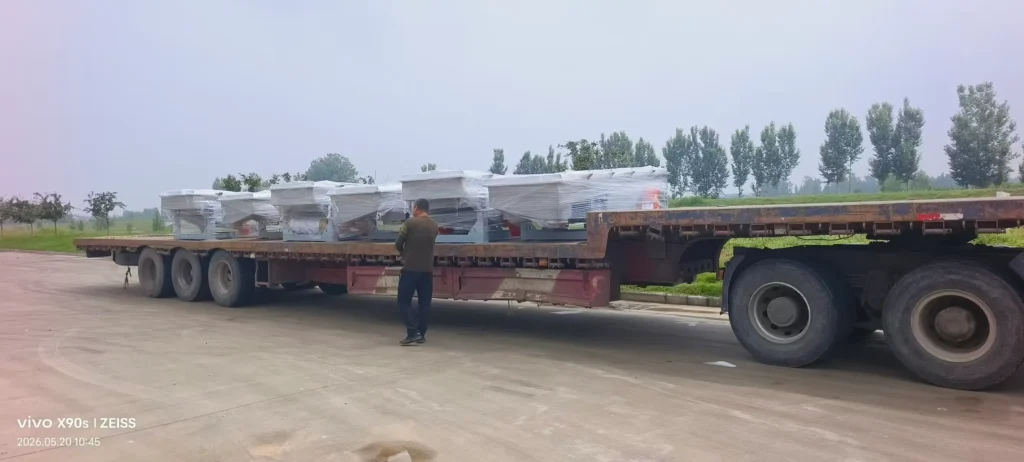
- Retire el dispositivo de protección: Si la máquina se utiliza por primera vez, los dispositivos de soporte o marcos protectores utilizados para asegurar la máquina durante el transporte deben ser retirados. De lo contrario, la criba puede dañarse y su vida útil reducirse.
- Verifique la posición de la máquina y la malla: Verificar si la máquina está colocada horizontalmente y estable sin sacudidas; asegurar que ambos pernos de anclaje a cada lado estén apretados firmemente para evitar que la máquina se desplace aleatoriamente, lo que podría afectar su funcionamiento y seguridad. Inspeccionar la malla de cribado en busca de daños o protuberancias, ya que estos afectarían la precisión del cribado e impedirían garantizar la precisión en el cribado.
- Verifique el dispositivo de limpieza de la malla: Antes de arrancar la máquina, los materiales residuales en la superficie de la malla y en la boca de descarga deben limpiarse oportunamente para evitar que la precisión disminuya y se produzca un cribado inexacto de materiales debido a obstrucciones. Verificar los dispositivos desobstruidores, como las bolas de resorte, de manera oportuna para asegurar que estén intactos y no falten, garantizando el funcionamiento normal de los dispositivos desobstruidores. Esto reduce el fenómeno de paradas repetidas debido a obstrucciones y mejora la eficiencia del cribado.
- Confirme la dirección de rotación del motor: Verificar si los ángulos de los motores vibratorios están sincronizados y son consistentes, y asegurar que partes como la interfaz de alimentación estén en buen contacto sin daños para prevenir daños a la máquina.
- Verifique la hermeticidad de las entradas y salidas: Si existe la necesidad de integrar la línea de producción, es esencial inspeccionar cuidadosamente si la boca de descarga ya ha sido sellada adecuadamente en contacto con los equipos aguas arriba y aguas abajo para prevenir fugas o mezcla de materiales, asegurando así la calidad de los materiales.
Paso 2: Procedimientos de arranque y operación
Antes de Iniciar la Operación
Antes de alimentar materiales, la máquina debe funcionar en vacío primero para verificar si todos los aspectos de su operación son normales, para evitar retrasar el programa de trabajo por esta razón.
- Arrancar primero sin cargar material. Arrancar el equipo primero sin verter ningún material en él, hacerlo funcionar durante aproximadamente 3 minutos, verificar si el motor vibratorio dentro de la máquina vibra sincrónicamente y si la dirección de operación es correcta, asegurando que no haya ruidos anormales ni sacudidas significativas de la máquina.
- Cuando la máquina arranca, opera normalmente. Luego se alimenta el material en ella. El material necesita ser alimentado uniformemente de ida y vuelta a través de la superficie de la malla según su ancho para evitar una distribución desigual de la fuerza sobre la malla al alimentar desde un solo lado. Esto evita que el material se desvíe en la superficie de la malla, lo que de otro modo afectaría la eficiencia y precisión del cribado.
Durante la Operación
Después de realizar la prueba en vacío y confirmar que no hay anomalías en todos los aspectos, puede proceder a alimentar material para la prueba de funcionamiento, entrando en la fase normal de cribado.
- Cuando la máquina arranca, opera normalmente. Luego se alimenta el material en ella. El material necesita ser alimentado uniformemente de ida y vuelta a través de la superficie de la malla según su ancho para evitar una distribución desigual de la fuerza sobre la malla al alimentar desde un solo lado. Esto evita que el material se desvíe en la superficie de la malla, lo que de otro modo afectaría la eficiencia y precisión del cribado.
- Al alimentar materiales, debemos suministrarlos de manera uniforme y continua, y no debemos lanzarlos desde una altura hacia la malla. Esto es para evitar daños en la malla causados por impactos intensos.
- Durante el funcionamiento de la cribadora, es necesario monitorear continuamente varios aspectos de su condición operativa, como si hay ruidos anormales, vibraciones o temperaturas excesivamente altas del motor.
Paso 3: Procedimiento de parada después de la operación
La alimentación debe apagarse y la máquina detenerse solo después de que todo el material sobre la malla haya sido vaciado. Si está conectada a una línea de producción, el equipo de alimentación aguas arriba debe detenerse primero para prolongar la vida útil de la malla.
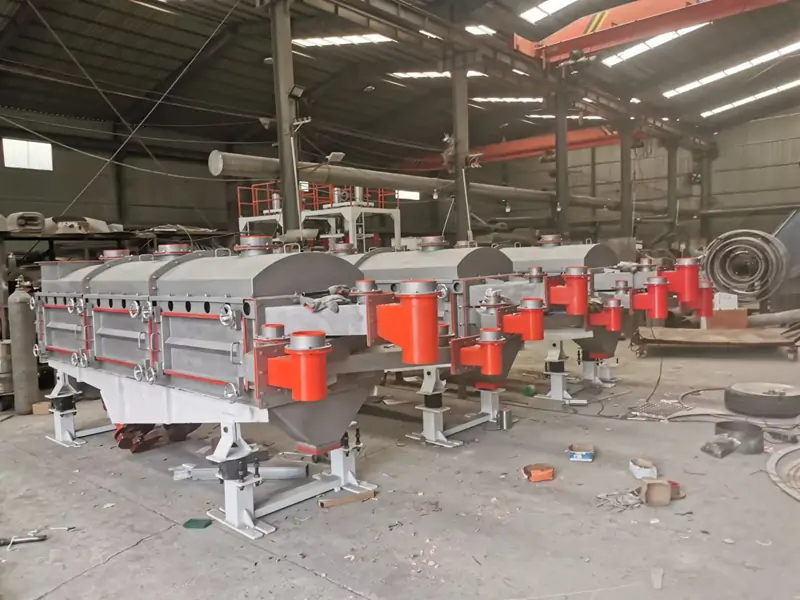
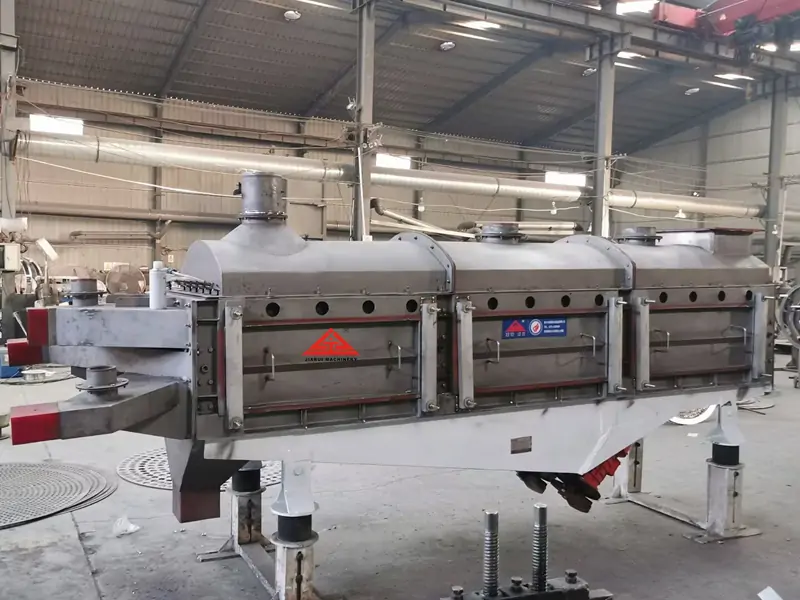
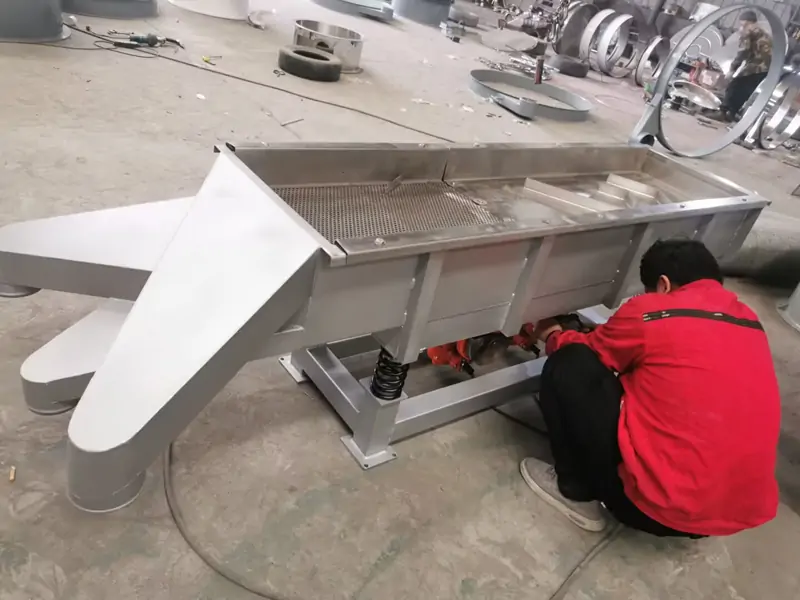
Consejos de mantenimiento de la criba vibratoria lineal
Mantener adecuadamente las máquinas es un paso clave para prolongar su vida útil.
- Mantenimiento diario: Después de que la máquina se detiene, la malla de cribado y la caja de cribado necesitan limpiarse oportunamente para prevenir la acumulación de material residual, lo que podría afectar la precisión y eficiencia del cribado posterior de materiales.
- Verificar si la malla de cribado está dañada o abultada, y asegurar que el dispositivo de limpieza esté intacto para garantizar la eficiencia de cribado de la máquina.
- Verificar si el motor se sobrecalienta y si hay alguna fuga de material; el resorte y otros accesorios permanecen intactos sin signos de rotura.
- Limpiar regularmente la máquina, verificar el envejecimiento del cableado y diversos componentes, apretar tornillos y pernos, y prevenir fallas y paradas del equipo.
Problemas comunes de la criba vibratoria lineal y soluciones
A continuación se presentan algunas fallas comunes de la criba vibratoria lineal y sus soluciones correspondientes.
| Causas posibles | Posibles Causas | Pasos de solución de problemas y manejo |
|---|---|---|
| Materiales que no se mueven o se desvían de la trayectoria de cribado | Los dos motores giran en la misma dirección. Fuerza de excitación desequilibrada (ángulos de los bloques excéntricos inconsistentes). Fuerza de excitación desequilibrada (ángulos de los bloques excéntricos inconsistentes). | Ajustar el cableado del motor para asegurar direcciones de rotación opuestas. Ajustar los ángulos de los bloques excéntricos para hacerlos consistentes. Verificar y reemplazar los conjuntos de resortes con la misma altura. |
| Sobrecalentamiento de rodamientos (>75°C) | Lubricación con grasa excesiva o insuficiente. Desgaste o daño de los rodamientos. Sobrecarga del motor. | Añadir o retirar grasa para mantener una cantidad adecuada. Inspeccionar y reemplazar los rodamientos dañados. Inspeccionar y reemplazar los rodamientos dañados. |
| Ruido anormal | Pernos flojos. Daño de los rodamientos. Resortes rotos o colisión de resortes. | Detener la máquina inmediatamente y apretar todos los pernos. Inspeccionar y reemplazar los rodamientos. Verificar los resortes y reemplazarlos como un conjunto completo si es necesario. |
| Baja eficiencia de cribado | Obstrucción de la malla de la criba. Velocidad de alimentación excesiva o capa de material demasiado gruesa. Amplitud de vibración insuficiente. | Detenga la máquina y limpie la malla de la criba. Ajuste la compuerta de alimentación para controlar la velocidad de alimentación. Ajuste el contrapeso del bloque excéntrico para aumentar la fuerza de vibración. |
Conclusión
La Jiarui La criba vibratoria lineal ofrece un rendimiento de separación de materiales estable y eficiente en múltiples industrias. Siguiendo los procedimientos adecuados de instalación, operación y mantenimiento, los usuarios pueden mejorar significativamente la fiabilidad del equipo y maximizar la eficiencia de producción.
La inspección regular, la lubricación oportuna y el reemplazo inmediato de los componentes desgastados son esenciales para garantizar una operación estable a largo plazo.