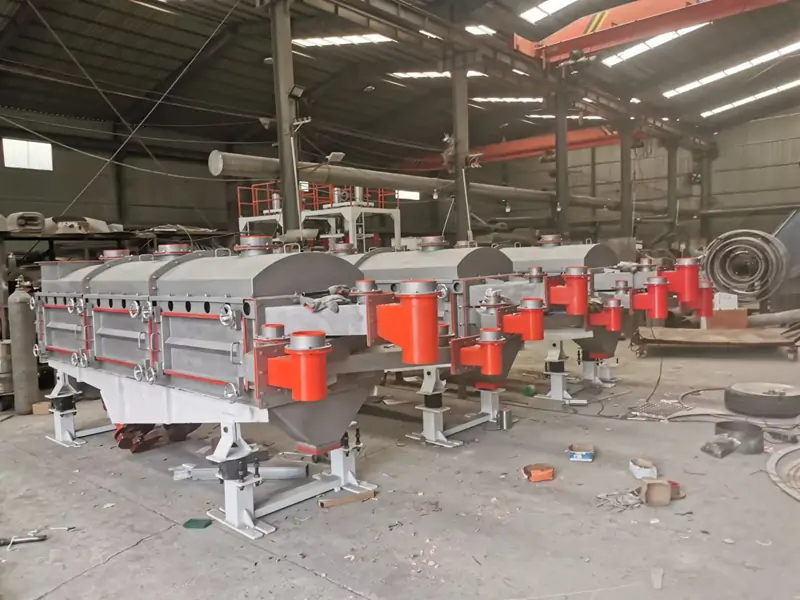
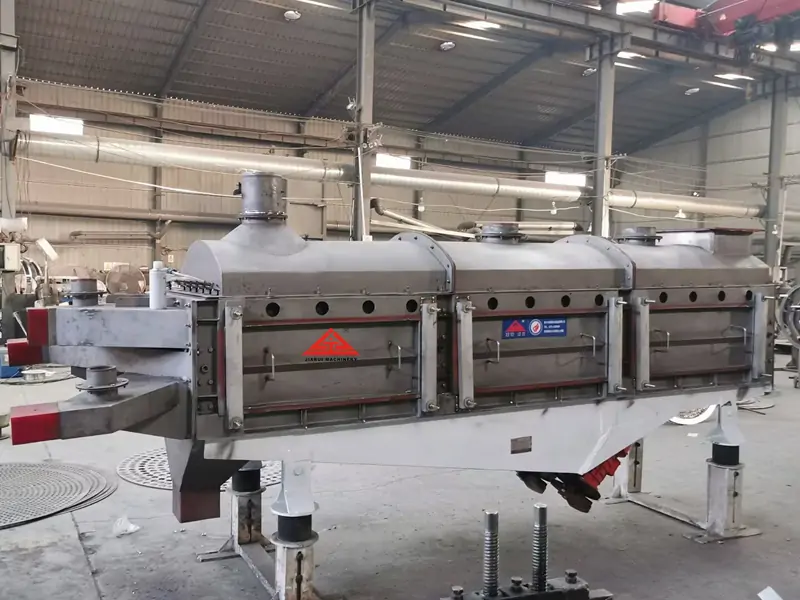
Die lineare Vibrationssiebmaschine der JR-Serie Hergestellt von der Xinxiang Jiarui Electromechanical Manufacturing Co., Ltd., verwendet einen Vibrationsmotor als Erregungsquelle, wodurch das Material auf dem Sieb hochgeschleudert wird und sich geradlinig vorwärts bewegt. Nachdem das Material gleichmäßig in den Einlauf eingespeist wurde, kann es durch ein- oder mehrlagige Siebe (1–6 Lagen) gesiebt werden, um Materialien nach Partikelgröße zu trennen. Das Überkorn und das Unterkorn werden getrennt aus ihren jeweiligen Auslässen ausgetragen. Die Maschine hat eine große Produktionskapazität pro Einheit, eine einfache Struktur und ist leicht zu warten.
Je nach Materialeigenschaften kann eine Staubschutzabdeckung hinzugefügt werden, und die vollständig geschlossene Struktur verhindert das Entweichen von Staub und schafft eine staubfreie Werkstatt. Sie kann mit anderen Geräten zu einer Produktionslinie verbunden werden. Sie ist für verschiedene Branchen wie Lebensmittel, Pharmazie, Chemie, Baustoffe und Metallurgie geeignet, und wir bieten auch kundenspezifische Sonderanfertigungen an.
Der ordnungsgemäße Betrieb des Linearschwingsiebs ist unerlässlich, um eine stabile Siebleistung aufrechtzuerhalten und die Lebensdauer des Geräts zu verlängern.
Werfen wir einen Blick auf den Betrieb und die Wartung des Linearschwingsiebs.
Aufbau und Funktionsprinzip des Linearschwingsiebs
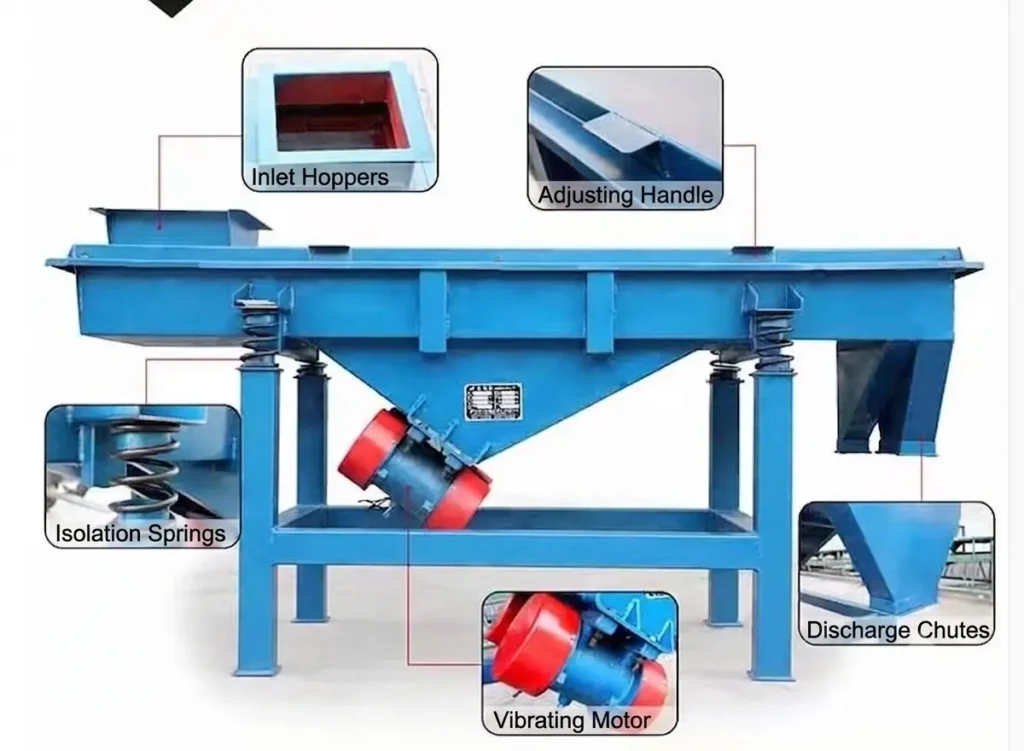
Das Linearschwingsieb besteht aus mehreren Teilen, von denen jedes seine entsprechende Funktion hat.
Nachfolgend eine Zusammenfassung einiger Inhalte:
| Komponentenname | Material und Zusammensetzung | Funktionsbeschreibung |
| Vibrationssiebkasten | Aus mehreren Stahlplatten unterschiedlicher Dicke zusammengeschweißt | Der Hauptrahmen des Geräts muss über ausreichende Festigkeit und Steifigkeit verfügen, um alle Komponenten zu tragen. |
| Siebrahmen | Er besteht üblicherweise aus Holz mit geringer Verformung, wie z. B. Kiefer. | Dient zur Befestigung und Unterstützung des Siebgewebes, hält das Siebgewebe flach und gewährleistet den Siebeffekt. |
| Sieb | Es sind verschiedene Materialien verfügbar, wie z. B. kohlenstoffarmer Stahl, Messing und Edelstahldraht usw. | Die kritische Arbeitsfläche, die direkt mit dem Material in Kontakt kommt, um den Klassierungsvorgang abzuschließen. |
| Vibrationsmotor | Zwei symmetrisch installierte Vibrationsmotoren. | Die Kernenergiequelle, die die Erregerkraft erzeugt. |
| Schwingungsdämpfungsfeder | Spiral- oder Gummifedern. | Trägt das gesamte Gewicht des Siebkastens und isoliert gleichzeitig die Übertragung von Vibrationen auf den Boden. Bei der Installation müssen die Federn senkrecht zum Boden stehen. |
| Ständer | Bestehend aus Stützen und U-Profilstahl. | Die Basis der Ausrüstung, die zur Unterstützung des gesamten Siebmaschinenkörpers dient, wobei die Säulen bei der Installation senkrecht zum Boden stehen müssen. |
Betrieb des Linearvibrationssiebs
Schritt 1: Vorbereitung des Linearschwingsiebs vor dem Betrieb
Vor der Durchführung von Siebvorgängen ist eine systematische Inspektion des Schwingsiebs erforderlich. Dies ist ein entscheidender Schritt, um sicherzustellen, dass das Gerät während des Siebens reibungslos und sicher arbeitet.
Grundlegende Installationsprüfung vor dem Einschalten
- Schutzeinrichtung entfernen: Wenn die Maschine zum ersten Mal verwendet wird, müssen die Stützvorrichtungen oder Schutzrahmen, die zur Sicherung der Maschine während des Transports verwendet wurden, entfernt werden. Andernfalls kann die Siebmaschine beschädigt werden und ihre Lebensdauer verkürzt sich.
- Maschinenposition und Sieb prüfen: Prüfen Sie, ob die Maschine horizontal und stabil ohne Vibration aufgestellt ist; stellen Sie sicher, dass beide Fußbolzen auf beiden Seiten fest angezogen sind, um zu verhindern, dass sich die Maschine unkontrolliert bewegt, was ihren Betrieb und ihre Sicherheit beeinträchtigen könnte. Inspizieren Sie das Siebgewebe auf Beschädigungen oder Unebenheiten, da diese die Siebgenauigkeit beeinträchtigen und keine garantierte Präzision beim Sieben gewährleisten würden.
- Netzreinigungsvorrichtung prüfen: Vor dem Start der Maschine sollten Restmaterialien auf der Sieboberfläche und am Auslauf umgehend entfernt werden, um zu verhindern, dass die Genauigkeit abnimmt und ungenaues Materialsieben durch Verstopfung verursacht wird. Prüfen Sie die Entstopfungsvorrichtungen wie die Federkugeln rechtzeitig, um sicherzustellen, dass sie intakt und nicht fehlend sind, und gewährleisten Sie den normalen Betrieb der Entstopfungsvorrichtungen. Dies reduziert das Phänomen wiederholter Abschaltungen aufgrund von Verstopfung und verbessert die Siebleistung.
- Motordrehrichtung bestätigen: Prüfen Sie, ob die Winkel der Vibrationsmotoren synchronisiert und konsistent sind, und stellen Sie sicher, dass Teile wie die Stromschnittstelle guten Kontakt haben und keine Beschädigungen aufweisen, um Maschinenschäden zu verhindern.
- Dichtheit der Ein- und Auslassöffnungen prüfen: Wenn eine Integration in die Produktionslinie erforderlich ist, ist es unerlässlich, sorgfältig zu prüfen, ob der Auslauf bereits ordnungsgemäß in Kontakt mit vor- und nachgelagerten Geräten abgedichtet ist, um Leckagen oder Vermischung von Materialien zu verhindern und somit die Qualität der Materialien zu gewährleisten.
Schritt 2: Start- und Betriebsverfahren
Vor Betriebsbeginn
Vor der Materialzuführung sollte die Maschine zunächst im Leerlauf laufen, um zu prüfen, ob alle Aspekte ihres Betriebs normal sind, um Verzögerungen im Betriebsablauf aus diesem Grund zu vermeiden.
- Starten Sie zunächst ohne Materialbeladung. Starten Sie das Gerät zuerst, ohne Material einzufüllen, lassen Sie es etwa 3 Minuten laufen, prüfen Sie, ob der Vibrationsmotor im Inneren der Maschine synchron schwingt und ob die Betriebsrichtung korrekt ist, und stellen Sie sicher, dass keine anormalen Geräusche oder erhebliche Vibrationen der Maschine auftreten.
- Wenn die Maschine anläuft, arbeitet sie normal. Das Material wird dann eingeführt. Das Material muss gleichmäßig über die Sieboberfläche entsprechend ihrer Breite verteilt zugeführt werden, um eine ungleichmäßige Kraftverteilung auf dem Sieb bei einseitiger Zuführung zu vermeiden. Dies verhindert, dass das Material auf der Sieboberfläche abweicht, was sonst die Siebleistung und -genauigkeit beeinträchtigen würde.
Während des Betriebs
Nachdem der Leerlauftest durchgeführt und bestätigt wurde, dass keine Auffälligkeiten in allen Bereichen vorliegen, können Sie mit der Materialzuführung für den Probelauf fortfahren und in die normale Siebphase eintreten.
- Wenn die Maschine anläuft, arbeitet sie normal. Das Material wird dann eingeführt. Das Material muss gleichmäßig über die Sieboberfläche entsprechend ihrer Breite verteilt zugeführt werden, um eine ungleichmäßige Kraftverteilung auf dem Sieb bei einseitiger Zuführung zu vermeiden. Dies verhindert, dass das Material auf der Sieboberfläche abweicht, was sonst die Siebleistung und -genauigkeit beeinträchtigen würde.
- Bei der Materialzuführung sollten wir das Material gleichmäßig und kontinuierlich zuführen und es nicht aus großer Höhe in das Sieb werfen. Dies dient dazu, Schäden am Sieb durch starke Aufprallkräfte zu vermeiden.
- Während des Betriebs der Siebmaschine ist es notwendig, verschiedene Aspekte ihres Betriebszustands kontinuierlich zu überwachen, wie z. B. ob ungewöhnliche Geräusche, Vibrationen oder übermäßig hohe Motortemperaturen auftreten.
Schritt 3: Abschaltverfahren nach dem Betrieb
Der Strom muss abgeschaltet und die Maschine erst dann heruntergefahren werden, wenn das gesamte Material auf dem Sieb entleert wurde. Bei Anschluss an eine Produktionslinie sollte zuerst das vorgelagerte Zuführgerät gestoppt werden, um die Lebensdauer des Siebs zu verlängern.
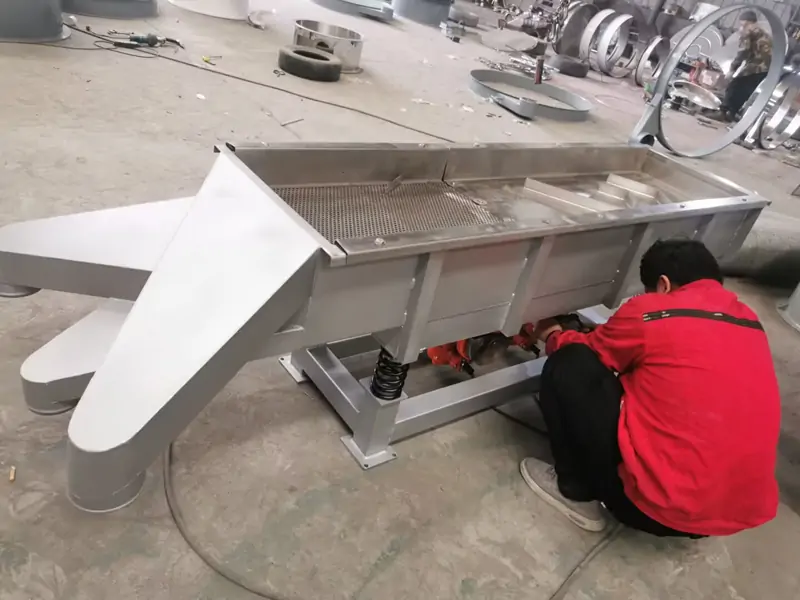
Wartungstipps für das Linearschwingsieb
Die ordnungsgemäße Wartung von Maschinen ist ein entscheidender Schritt zur Verlängerung ihrer Lebensdauer.
- Tägliche Wartung: Nach dem Stoppen der Maschine müssen das Siebgewebe und der Siebkasten umgehend gereinigt werden, um die Ansammlung von Restmaterial zu verhindern, die die Genauigkeit und Effizienz des nachfolgenden Materialsiebens beeinträchtigen könnte.
- Prüfen Sie, ob das Siebgewebe beschädigt oder gewölbt ist, und stellen Sie sicher, dass die Reinigungsvorrichtung intakt ist, um die Siebleistung der Maschine zu gewährleisten.
- Prüfen Sie, ob der Motor überhitzt und ob Materialleckagen vorliegen; die Feder und andere Zubehörteile bleiben intakt ohne Anzeichen von Bruch.
- Reinigen Sie die Maschine regelmäßig, prüfen Sie die Alterung der Verkabelung und verschiedener Komponenten, ziehen Sie Schrauben und Bolzen fest und verhindern Sie Geräteausfälle und Stillstände.
Häufige Probleme und Lösungen beim Linearschwingsieb
Hier sind einige häufige Störungen des Linearschwingsiebs und ihre entsprechenden Lösungen.
| Störungsbild | Mögliche Ursachen | Fehlerbehebungs- und Handhabungsschritte |
|---|---|---|
| Material bewegt sich nicht oder weicht vom Siebweg ab | Die beiden Motoren drehen in die gleiche Richtung. Unausgeglichene Erregungskraft (inkonsistente Winkel der Unwuchtblöcke). Unausgeglichene Erregungskraft (inkonsistente Winkel der Unwuchtblöcke). | Passen Sie die Motorverkabelung an, um entgegengesetzte Drehrichtungen sicherzustellen. Passen Sie die Winkel der Unwuchtblöcke an, um sie konsistent zu machen. Prüfen und ersetzen Sie die Federsätze mit gleicher Höhe. |
| Lagerüberhitzung (>75°C) | Übermäßige oder unzureichende Fettschmierung. Lagerverschleiß oder -beschädigung. Motorüberlastung. | Fügen Sie Fett hinzu oder entfernen Sie es, um eine angemessene Menge beizubehalten. Inspizieren und ersetzen Sie die beschädigten Lager. Inspizieren und ersetzen Sie die beschädigten Lager. |
| Anormale Geräusche | Lose Bolzen. Lagerbeschädigung. Gebrochene Federn oder Federkollision. | Stoppen Sie die Maschine sofort und ziehen Sie alle Bolzen fest. Inspizieren und ersetzen Sie die Lager. Prüfen Sie die Federn und ersetzen Sie sie bei Bedarf als kompletten Satz. |
| Geringe Siebleistung | Verstopfung des Siebgewebes. Zu hohe Aufgabegeschwindigkeit oder zu dicke Materialschicht. Unzureichende Schwingungsamplitude. | Maschine stoppen und das Siebgewebe reinigen. Die Aufgabeschleuse verstellen, um die Aufgabegeschwindigkeit zu regulieren. Das Gegengewicht des Exzentermassenblocks verstellen, um die Schwingungskraft zu erhöhen. |
Fazit
Die Jiarui Das Linear-Schwingsieb liefert stabile und effiziente Materialtrennleistung über mehrere Branchen hinweg. Durch die Befolgung ordnungsgemäßer Installations-, Betriebs- und Wartungsverfahren können Anwender die Zuverlässigkeit der Ausrüstung erheblich verbessern und die Produktionseffizienz maximieren.
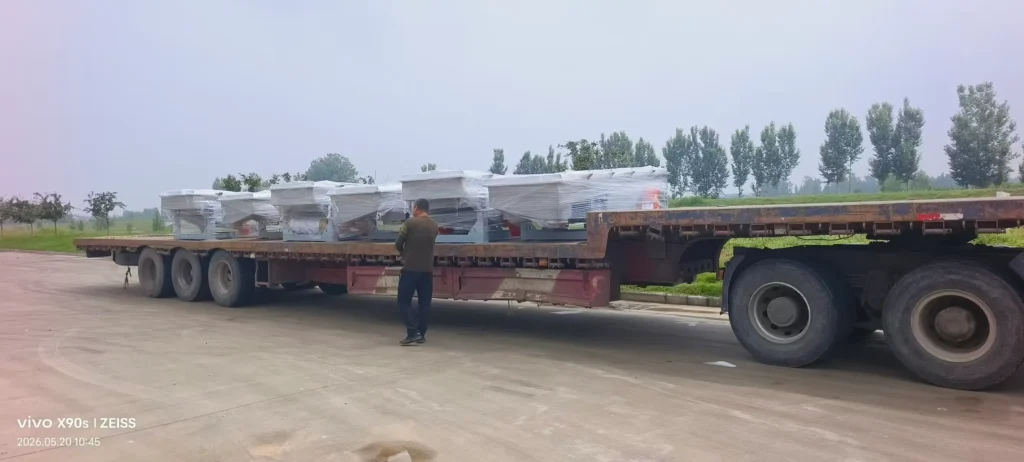
Regelmäßige Inspektion, rechtzeitige Schmierung und sofortiger Austausch verschlissener Komponenten sind unerlässlich, um einen langfristig stabilen Betrieb zu gewährleisten.