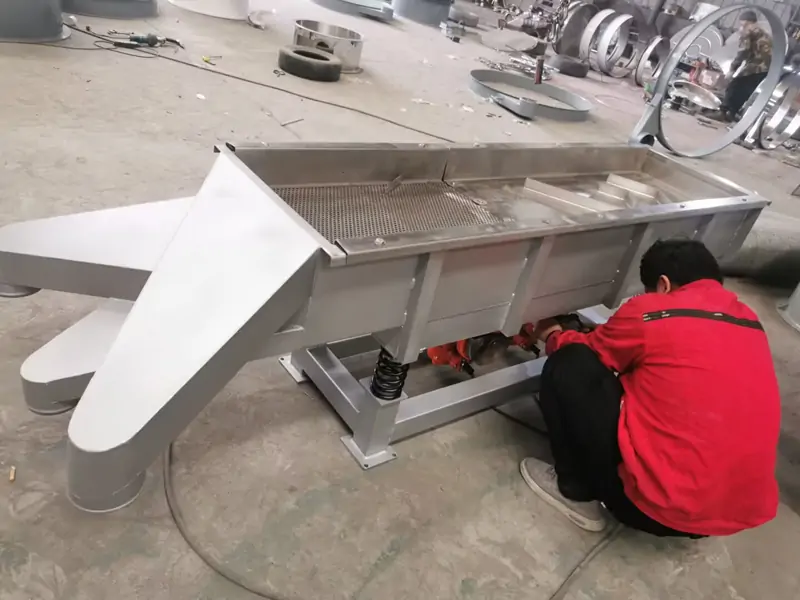
A peneira vibratória linear da série JR produzido pela Xinxiang Jiarui Electromechanical Manufacturing Co., Ltd. utiliza um motor vibratório como fonte de excitação, fazendo com que o material na peneira seja lançado para cima e se mova para frente em linha reta. Após o material ser alimentado uniformemente na entrada de alimentação, ele pode ser peneirado através de peneiras de camada única ou múltiplas camadas (1–6 camadas) para separar os materiais por tamanho de partícula. Os materiais retidos e passantes são descarregados separadamente pelas respectivas saídas. Possui grande capacidade de produção por unidade, estrutura simples e fácil manutenção.
Uma tampa à prova de poeira pode ser adicionada com base nas propriedades do material, e a estrutura totalmente fechada evita o escape de poeira, criando um ambiente de trabalho sem poeira. Pode ser conectada a outros equipamentos para formar uma linha de produção. É adequada para diversos setores, como alimentos, farmacêutico, químico, materiais de construção e metalurgia, e também oferecemos serviços de customização não padronizada.
A operação adequada da peneira vibratória linear é essencial para manter a eficiência de peneiramento estável e prolongar a vida útil do equipamento.
Vamos analisar a operação e a manutenção da peneira vibratória linear.
Estrutura e Princípio de Funcionamento da Peneira Vibratória Linear
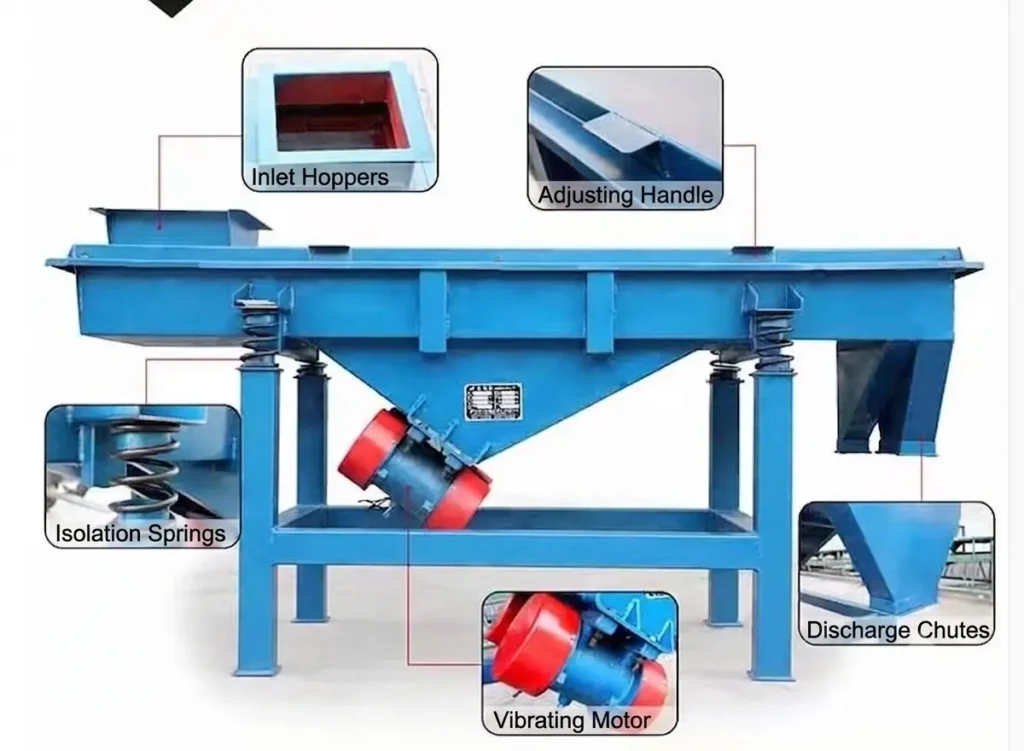
A Peneira Vibratória Linear é composta por várias partes, cada uma com sua função correspondente.
Abaixo está um resumo de alguns conteúdos:
| Nome do componente | Material e Composição | Descrição da Função |
| Caixa da peneira vibratória | Soldada a partir de várias chapas de aço de diferentes espessuras | A estrutura principal do dispositivo deve ter resistência e rigidez suficientes para suportar todos os componentes. |
| Estrutura da peneira | Geralmente é feita de madeira com baixa deformação, como pinho. | Usada para fixar e suportar a malha da peneira, mantendo-a plana e garantindo o efeito de peneiramento. |
| Tela | Uma variedade de materiais está disponível, como aço de baixo carbono, latão e fio de aço inoxidável, etc. | A superfície de trabalho crítica que entra em contato direto com o material para completar a operação de classificação. |
| Motor Vibratório | Dois motores vibratórios instalados simetricamente. | A fonte de energia central que gera a força de excitação. |
| Mola Amortecedora | Molas espirais ou molas de borracha. | Suporta todo o peso da caixa da peneira, isolando a transmissão de vibração para o solo. Ao instalar, as molas devem estar verticais em relação ao solo. |
| Suporte | Composta por pilares e perfil de canal. | A base do equipamento, usada para suportar todo o corpo da peneira, com os pilares precisando estar perpendiculares ao solo durante a instalação. |
Operação da Peneira Vibratória Linear
Etapa 1: Preparação da Peneira Vibratória Linear Antes da Operação
Antes de realizar as operações de peneiramento, é necessária uma inspeção sistemática da peneira vibratória. Esta é uma etapa crítica para garantir que o equipamento opere de forma suave e segura durante o peneiramento.
Verificação básica de instalação antes da energização
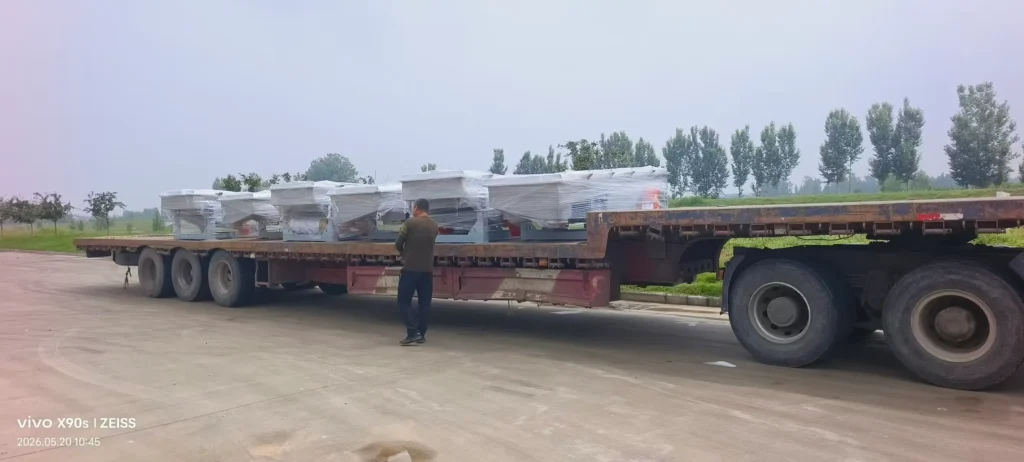
- Remova o dispositivo de proteção: Se a máquina estiver sendo usada pela primeira vez, os dispositivos de suporte ou estruturas de proteção usados para fixar a máquina durante o transporte devem ser removidos. Caso contrário, a peneira pode ser danificada e sua vida útil reduzida.
- Verifique a posição da máquina e a malha da peneiraVerifique se a máquina está posicionada horizontalmente e estável, sem oscilações; garanta que ambos os parafusos de fixação nos pés de cada lado estejam apertados com segurança para evitar que a máquina se mova aleatoriamente, o que poderia afetar sua operação e segurança. Inspecione a malha da peneira quanto a danos ou protuberâncias, pois isso impactaria a precisão do peneiramento e impediria a garantia de precisão na separação.
- Verifique o dispositivo de limpeza da malha: Antes de iniciar a máquina, os materiais residuais na superfície da peneira e na saída de descarga devem ser limpos prontamente para evitar diminuição da precisão e peneiramento impreciso causado por entupimento. Verifique os dispositivos de desentupimento, como as bolas de mola, em tempo hábil para garantir que estejam intactos e não ausentes, garantindo a operação normal dos dispositivos de desentupimento. Isso reduz o fenômeno de paradas repetidas devido a entupimentos e melhora a eficiência do peneiramento.
- Confirme a direção de rotação do motor: Verifique se os ângulos do motor vibratório estão sincronizados e consistentes, e garanta que peças como a interface de energia estejam em bom contato, sem danos, para evitar danos à máquina.
- Verifique a vedação das entradas e saídas: Se houver necessidade de integrar a linha de produção, é essencial inspecionar cuidadosamente se a saída de descarga já foi devidamente vedada em contato com os equipamentos a montante e a jusante, para evitar vazamentos ou mistura de materiais, garantindo assim a qualidade dos materiais.
Etapa 2: Procedimentos de Partida e Operação
Antes de Iniciar a Operação
Antes de alimentar materiais, a máquina deve ser operada em vazio primeiro para verificar se todos os aspectos de sua operação estão normais, a fim de evitar atrasos no cronograma de operação por esse motivo.
- Inicie sem carregar material primeiro. Ligue o equipamento primeiro sem despejar nenhum material nele, opere por cerca de 3 minutos, verifique se o motor vibratório dentro da máquina vibra de forma síncrona e se a direção de operação está correta, garantindo que não haja ruídos anormais ou tremores significativos da máquina.
- Quando a máquina inicia, ela opera normalmente. O material é então alimentado nela. O material precisa ser alimentado uniformemente de um lado para o outro na superfície da peneira de acordo com sua largura, para evitar distribuição desigual de força na peneira ao alimentar apenas de um lado. Isso evita que o material se desvie na superfície da peneira, o que afetaria a eficiência e a precisão do peneiramento.
Durante a Operação
Após executar o teste em vazio e confirmar que não há anormalidades em todos os aspectos, você pode prosseguir com a alimentação de material para o teste de operação, entrando na fase normal de peneiramento.
- Quando a máquina inicia, ela opera normalmente. O material é então alimentado nela. O material precisa ser alimentado uniformemente de um lado para o outro na superfície da peneira de acordo com sua largura, para evitar distribuição desigual de força na peneira ao alimentar apenas de um lado. Isso evita que o material se desvie na superfície da peneira, o que afetaria a eficiência e a precisão do peneiramento.
- Ao alimentar materiais, devemos fornecê-los de forma uniforme e contínua, e não devemos lançá-los de uma altura na peneira. Isso é para evitar danos à malha causados por forças de impacto intensas.
- Durante a operação da peneira, é necessário monitorar continuamente vários aspectos de sua condição operacional, como se há ruídos anormais, vibrações ou temperaturas excessivamente altas do motor.
Etapa 3: Procedimento de Desligamento Após a Operação
A energia deve ser desligada e a máquina parada somente após todo o material na peneira ter sido esvaziado. Se conectada a uma linha de produção, o equipamento de alimentação a montante deve ser parado primeiro para prolongar a vida útil da peneira.
Dicas de Manutenção da Peneira Vibratória Linear
Manter as máquinas adequadamente é um passo fundamental para prolongar sua vida útil.
- Manutenção diária: Após a máquina parar, a malha da peneira e a caixa da peneira precisam ser limpas prontamente para evitar acúmulo de material residual, o que poderia afetar a precisão e a eficiência do peneiramento de materiais subsequentes.
- Verifique se a malha da peneira está danificada ou abaulada, e garanta que o dispositivo de limpeza esteja intacto para assegurar a eficiência de peneiramento da máquina.
- Verifique se o motor está superaquecendo e se há vazamento de material; a mola e outros acessórios permanecem intactos, sem sinais de quebra.
- Limpe regularmente a máquina, verifique o envelhecimento da fiação e de vários componentes, aperte parafusos e porcas e evite falhas e paradas do equipamento.
Problemas Comuns da Peneira Vibratória Linear e Soluções
Aqui estão algumas falhas comuns da Peneira Vibratória Linear e suas soluções correspondentes.
| Fenômeno de Falha | Causas Possíveis | Etapas de Solução de Problemas e Tratamento |
|---|---|---|
| Materiais não se movendo ou desviando do caminho de peneiramento | Os dois motores giram na mesma direção. Força de excitação desequilibrada (ângulos dos blocos excêntricos inconsistentes). Força de excitação desequilibrada (ângulos dos blocos excêntricos inconsistentes). | Ajuste a fiação do motor para garantir direções de rotação opostas. Ajuste os ângulos dos blocos excêntricos para torná-los consistentes. Verifique e substitua os conjuntos de molas com a mesma altura. |
| Superaquecimento do rolamento (>75°C) | Lubrificação com graxa excessiva ou insuficiente. Desgaste ou dano no rolamento. Sobrecarga do motor. | Adicione ou remova graxa para manter uma quantidade adequada. Inspecione e substitua os rolamentos danificados. Inspecione e substitua os rolamentos danificados. |
| Ruído anormal | Parafusos soltos. Dano no rolamento. Molas quebradas ou colisão de molas. | Pare a máquina imediatamente e aperte todos os parafusos. Inspecione e substitua os rolamentos. Verifique as molas e substitua-as como um conjunto completo, se necessário. |
| Baixa eficiência de peneiramento | Obstrução da malha da peneira. Taxa de alimentação excessiva ou camada de material muito espessa. Amplitude de vibração insuficiente. | Pare a máquina e limpe a malha da peneira. Ajuste a comporta de alimentação para controlar a taxa de alimentação. Ajuste o contrapeso do bloco excêntrico para aumentar a força de vibração. |
Conclusão
O Jiarui A peneira vibratória linear oferece desempenho estável e eficiente de separação de materiais em diversos setores. Seguindo procedimentos adequados de instalação, operação e manutenção, os usuários podem aumentar significativamente a confiabilidade do equipamento e maximizar a eficiência de produção.
Inspeção regular, lubrificação oportuna e substituição imediata de componentes desgastados são essenciais para garantir operação estável a longo prazo.