What is a Planar Rotary Screen?
The Jiarui Planar Rotary Screen is efficient and precise particle-material classification and sieving equipment. It combines the high output characteristics of straight-line sieves with the high precision features of vibrating circular sieves, making it a highly efficient and low-energy-consuming sieving device. It simulates manual sieving, does not damage the materials, has a simple structure, runs smoothly, is fully enclosed, and operates quietly. It is widely used in various industries such as food, chemicals, pharmaceuticals, building materials, and metallurgy. It gets its name from the fact that when the sieve box is working, the sieve body performs a reciprocating rotary motion on a horizontal plane. With an ultra-large processing capacity design, it can perform multi-layer classification, full enclosure for dust prevention, and can be paired with other conveying equipment to form a production line.
What problems can the planar rotary screen solve for you?
The planar rotary sieve mainly addresses the problems of high material breakage rate and short screen life during the sieving process of traditional vibrating sieves. By mimicking the unique sieving mode of manual hand sieving, the material undergoes low-speed motion with low-frequency rotation on the screen, resulting in gentle sieving. It offers high output and efficiency, with a sieving accuracy of up to 98%.
Main components
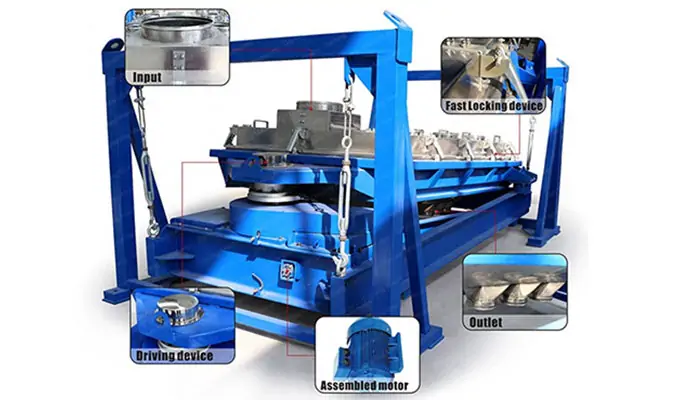
The planar rotary screen is mainly composed of the following components:
| Name | Functions and Effects |
| Sieve box | It consists of a sieve mesh and a sieve frame,serving as the working place for material screening. |
| Power unit | It includes vibration motors, eccentric wheels,etc.,and is the power source for generating rotational motion. |
| Support | Includes a sieve machine support frame used to support the entire machine. |
| Vibration-damping device | vibration-reducing springs,which reduce the amplitude of equipment vibrations to ensure smooth operation of the equipment. |
The core of the planar rotary screen
It mimics the sifting action of manual hand sifting, with gentle movements that transform traditional high-impact and large-amplitude motions into light rotary actions.
Principle of Planar Rotary Screen
After the material enters the screen from the feed port,the screen body performs a reciprocating rotary motion nearly horizontal on the horizontal plane,which evenly distributes the material across the entire screen surface,facilitating thorough screening of the material.
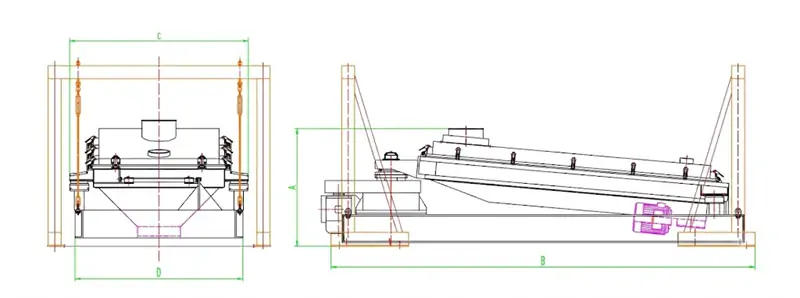
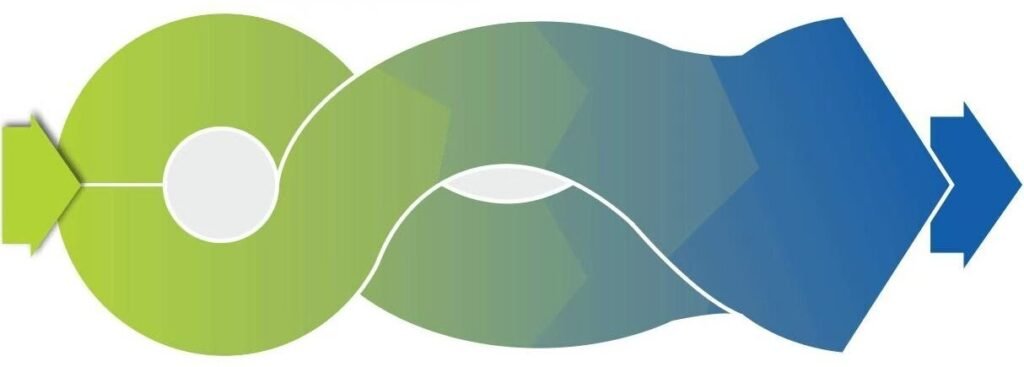
The motion trajectory of a Planar rotary screen
The motion trajectory of the planar rotary screen is a three-stage progressive operation.Here is the specific situation:
Step 1:Feed end
Circular motion:As the material is poured into the machine and falls onto the screen surface,the screen body performs a standard circular rotation.This causes the material to spread quickly across the screen surface,preventing local accumulation and uneven distribution.The material is then separated into coarse and fine particles based on their size:the coarse particles remain on the screen surface,while the fine powder falls through the screen holes and is discharged from the outlet.
Step 2:Middle section sieve surface
Elliptical Smooth Motion:Material is conveyed from the front feed inlet to the middle section,where the circular rotating motion gradually narrows into an elliptical motion,and the swirling speed progressively slows down.This allows the material to make extensive contact with the screen mesh,ensuring thorough sieving.As a result,the sieving becomes more precise, achieving high-precision sieving.
Step 3:Discharge end
Approximately straight reciprocating motion:The motion trajectory narrows down to a small-amplitude linear reciprocating movement.The forward thrust becomes stronger,quickly pushing the coarse particles that cannot pass through the screen to the discharge port.This effectively prevents the backflow of coarse materials,ensures the screening accuracy of the material,and guarantees the quality of the finished product.
Advantages of Jia Rui Planar Rotary Sieve
Large output and high precision
The output can reach tens to hundreds of tons.With a large screen length and width,it has a large screening area, high unit processing capacity, and high production capacity.The hourly output of a single unit is much higher than that of a circular swing screen,making it suitable for large-scale production line operations.A single machine can be equipped with multiple layers of screens to simultaneously separate materials into various specifications.While ensuring strict grading standards,it can also maintain high production capacity screening of the material.
The planar rotary screen can achieve a precision of over 95%.It performs grading through slow and smooth sliding, mimicking manual sieving.This gentle sieving process prevents damage to the material.By evenly distributing the material on the sieve surface, it ensures more thorough sieving.A bounce ball cleaning device is installed beneath the sieve mesh.During the sieving process,the balls jump and strike the sieve mesh,effectively preventing a decline in sieve precision caused by mesh blockage,thus maintaining the stability of the sieve mesh precision.
Dust-free environmental protection
The body adopts a fully enclosed structure with dust-proof covers installed to prevent dust leakage,creating a dust-free workshop environment that ensures environmental quality and protects workers’ health.It also prevents contamination caused by contact between special materials and external air,guaranteeing the purity of the materials.
Easy maintenance
The structure of planar rotary screen is relatively simple,and the repair and maintenance work is more convenient, which reduces the production cost.
At the same time,its screen mesh design is optimized,easy to replace,reducing downtime.
Anti-clogging nets and long service life
Bounce balls can be placed below the sieve.When the Planar rotary sieve is in operation,the bounce balls jump and strike the sieve,thereby achieving a sieve-cleaning effect.When sieving highly adhesive and easily adsorbent fine powders,the sieve is less likely to clog.It does not reduce the sieving accuracy due to material sticking to the sieve surface,effectively extending its service life.It also reduces the frequency of stopping the machine to clean the sieve,significantly improving sieving efficiency.
Low material breakage rate
The planar rotary sieve employs low-speed planar motion,resulting in low energy consumption.It mimics manual sieving, avoiding violent and intense sieving,thus providing a gentle and non-irritating sieving process.This makes it extremely friendly to easily damaged materials,such as glass and crystals.
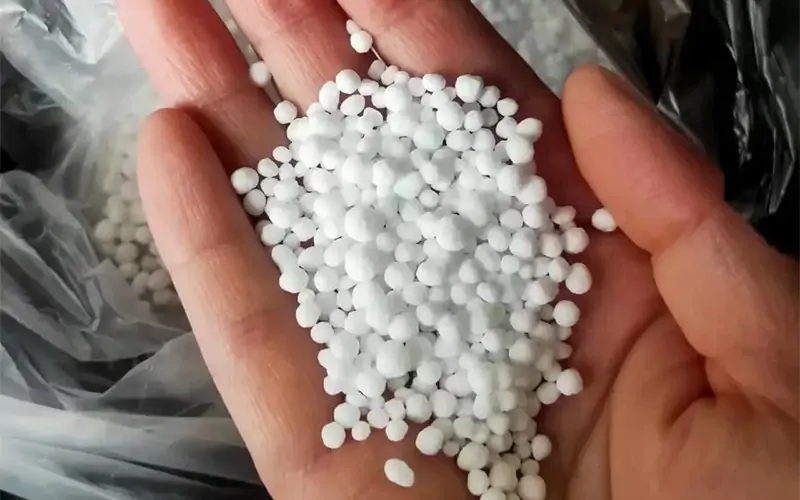
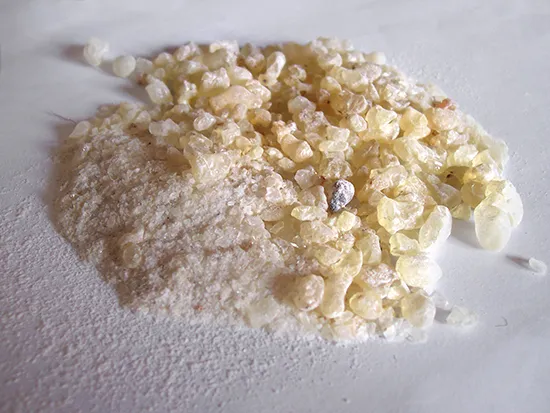

Why does the planar rotary screen have a low damage rate?
- The planar rotary screen relies on low-speed eccentricity to achieve a gentle planar rotary motion. Materials are slowly graded as they move forward on the screen surface without high-frequency motion impacts. The impact forces between materials and between the screen mesh and materials are weak, making it less likely to cause material damage.
- The material layer is evenly dispersed, runs smoothly at a slow speed, and there are no situations such as high-speed falling of materials. This significantly increases the integrity of fragile materials.
- It mimics manual sieving, providing a gentle sieving action, and its sieve surface is typically horizontal or inclined.
Jia Rui Planar Rotary Screen VS Traditional Vibrating Screen
The characteristics and differences of the planar rotary screen and other vibrating screens are as follows:
| Dimension | Planar Rotary Screen | Traditional vibrating screen |
| Core exercise methods | The horizontal plane rotary motion screen body performs uniform circular, elliptical, and linear reciprocating movements within the horizontal plane, with no vertical jumping, and the motion is gentle. | Upward or forced vibration causes the material to ‘jump’ and fall repeatedly through high-frequency vertical impact forces, resulting in an intense process. |
| Screen stress state | There is no vertical vibration, no impact on the screen mesh, and minimal wear. The screen mesh life typically lasts 6 to 12 months. | Subjected to continuous high-frequency vibration impacts, the screen wears out quickly and has a short lifespan. |
| Material movement trajectory | It advances along a regular spiral trajectory on the screen, with a long path and distinct laminar flow layers. | Mostly forced through the screen with a single movement path, which is prone to causing local accumulation and impact. |
| Material stress state | Moving smoothly without generating destructive impacts, it is subject only to inertial forces and friction in the horizontal direction. | Subject to strong impact and shear forces, it is prone to material breakage or surface wear. |
Uses of Jia Rui planar rotary screen in different industries
The application scope of the planar rotary sieve is extremely wide, suitable for all industries. Below are some applicable materials summarized for different industries.


| Industry | Typical Materials |
| Mining industry | coal, metal ores, and other materials |
| Chemical | chemical fertilizers,plastics,rubber and other chemical products |
| Food industry | Grain, sugar, salt, tea, tobacco, flour |
| Pharmaceutical Industry: | Pills, powder |
| Building materials industry | cement,sand and gravel,glass raw materials and other building materials |
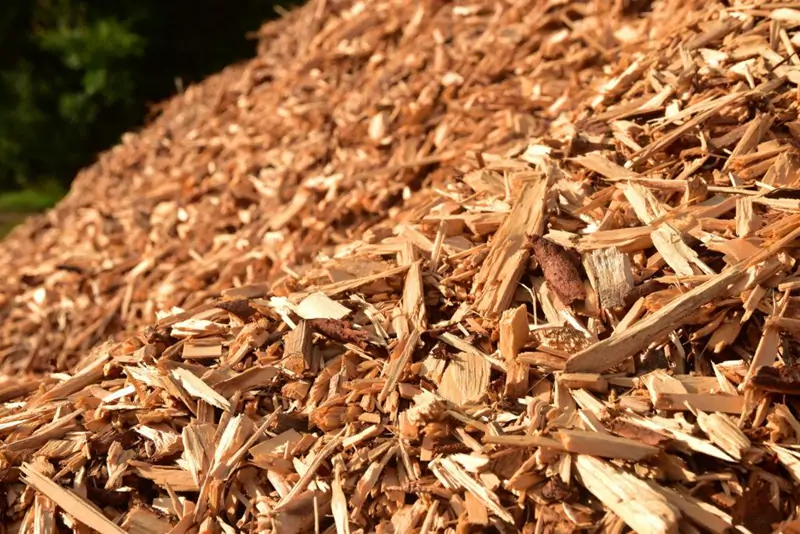
| Other Industries | PVC powder, abrasives, welding flux, wood chips, plastic pellets |
How to choose the appropriate model of a Jia Rui planar rotary screen?
Here are the steps that can be referred to for selecting the model of a planar rotary screen.
- First, we need to determine the base model specifications based on the actual production demand. The core is to calculate the hourly material processing capacity, and then match it with the corresponding model that has the appropriate screen length and width.
- Clearly define the sieving requirements and select appropriate materials based on the material properties, such as all-stainless steel, stainless steel for material contact, or carbon steel materials.
- Determine how many size specifications the original materials need to be screened into, and based on this, select single-layer or multi-layer screens.
- If there are space constraints or a need to connect upstream and downstream equipment, the height or dimensions can be customized to fit the production line, avoiding overly complicated changes later on.
- Determine if a screen-cleaning device is needed. For high-viscosity and high-moisture materials, a bounce ball screen-cleaning device should be added on the basis of the same specification model.
| Condition | Material selection |
| Food, medicine, and corrosive chemical raw materials, | Entirely 304/316 stainless steel body |
| Ordinary sand and gravel, non-metallic particles | Carbon Steel |
| Ultra-fine powder, dusty working conditions | Directly select the fully sealed dustproof model |
| Flammable and explosive materials | Matching explosion-proof motor dedicated model |
How to choose the appropriate mesh size of a screen?
To ensure the screening accuracy of materials and improve production efficiency, we need to select the appropriate mesh size of the sieve based on the particle size of different materials. Here is some organized data for reference only:
| Mesh range | Sieve precision | Processing capability | Applicable Material Examples |
| Low mesh count (0-20 mesh) | Lower, larger sieve holes, coarse particles are easy to pass through | High, fast material passing speed, large processing capacity | Ore coarse screening and initial screening of large particle impurities |
| Mesh count (40-80 mesh) | Medium, with uniform and moderate sieving particle size | Moderate, balancing yield and precision | Moderate, balancing yield and precision |
| High mesh count (100 mesh or more) | High, capable of accurately screening finer particles with lower content | Lower, with fine screen holes that are prone to clogging, limiting the processing capacity | Pharmaceuticals, coatings, fine powders |
Example of Sieve Mesh Size Selection
If you want to use a flat rotary screen to sieve quartz sand with a large output, and it is necessary to screen out three different specifications of materials, you can choose:
Mesh size selection
- Based on common quartz sand specifications, you can choose between 30-120 mesh.
- If the material is water treatment sand, it can be selected within the range of 20-80 mesh.
Number of sieve layers
- If customers require screening three different specifications of material, two layers of sieves are needed. The number of sieve layers is determined as: the number of target specifications minus one.
Conclusion
In summary, the planar rotary screen machine with its high energy efficiency screening, energy saving and environmental protection, intelligent control, easy maintenance, adaptability, and smooth operation and other advantageous features, plays a vital role in modern industrial production. It has a wide range of applications and specific use functions in the mining industry, chemical industry, food industry, pharmaceutical industry, building materials industry, and many other fields.