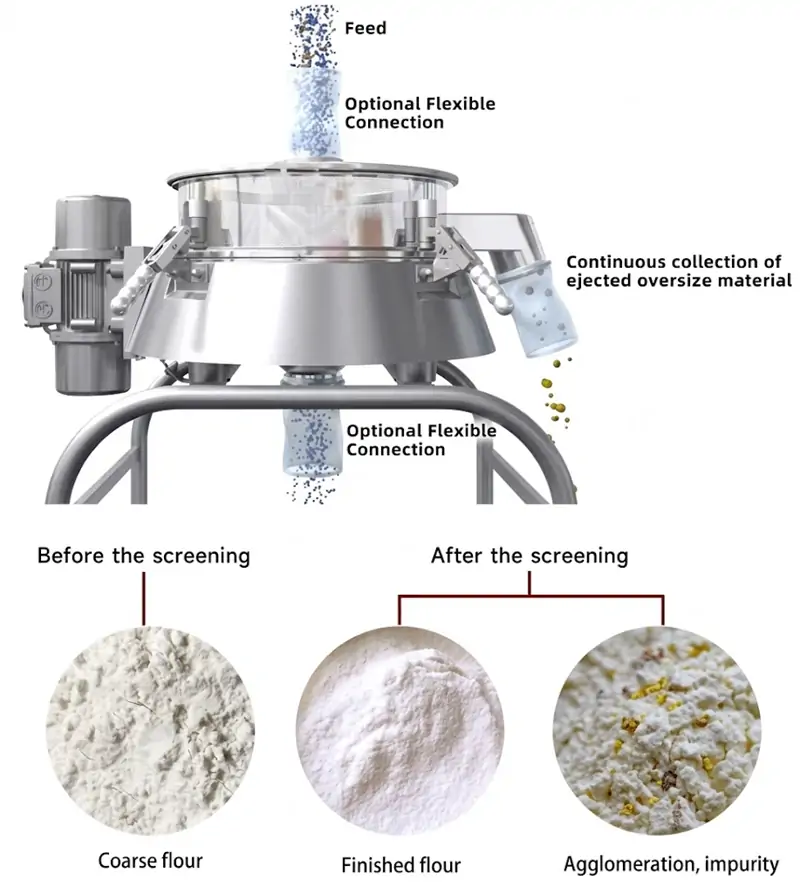
A flour powder rotary vibrating screen can be used for different screening tasks, so the right equipment depends on what the flour needs to be screened for. Some production lines only need to remove lumps and impurities, while others need to screen flour more finely or separate flour into different size ranges.
Before choosing the equipment, first determine what needs to be removed and how fine the flour needs to be. Then look at the screen, capacity, number of screen layers, and equipment size.
What Is Flour Screening Mainly Used For?
There are three common situations.
The first is removing lumps and impurities.
Flour may form lumps during storage and conveying, and larger impurities may also enter the material. In this case, the qualified flour passes through the screen while lumps and larger particles are retained on the screen. If this is the only screening task, one screen layer is usually enough.
The second is screening the flour more finely.
In this case, the screen opening is important. The smaller the screen opening, the finer the particles that can pass through, but the flour will also pass through the screen more slowly. If the flour tends to form lumps, a very fine screen opening may also increase the risk of screen clogging. So you should not only look at the mesh size, but also consider how fine the flour needs to be. For test sieve specifications, see ISO 3310-1.
The third is separating flour into different size ranges.
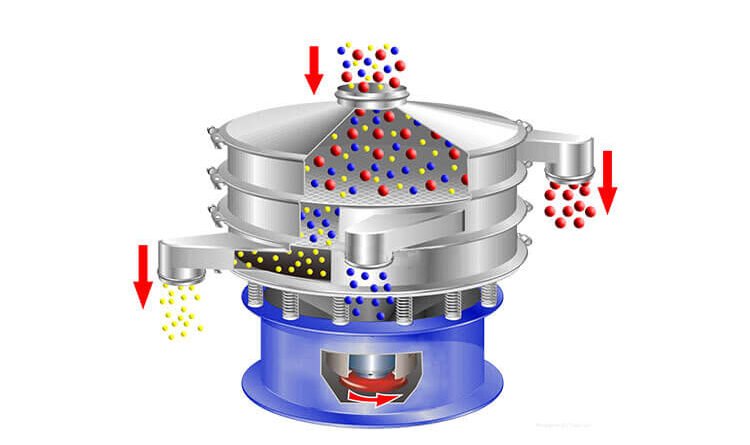
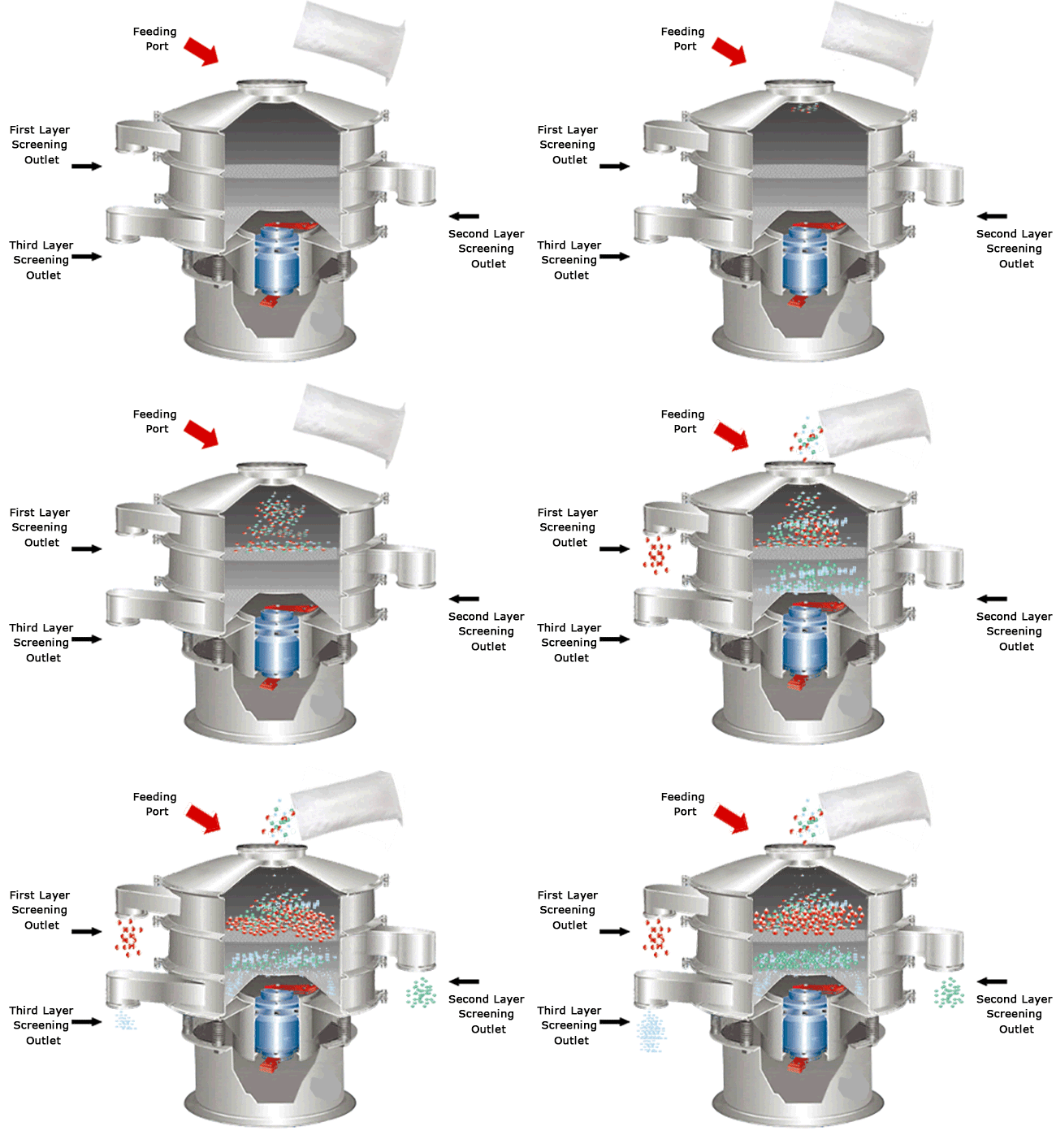
This requires different screen layers to separate the material. For example, two screen layers can separate flour into different size ranges. If the only purpose is to remove lumps and impurities, there is no need to add multiple screen layers. The more screen layers there are, the more complex cleaning and maintenance will be.
Which Screening Equipment Is Suitable for Flour?
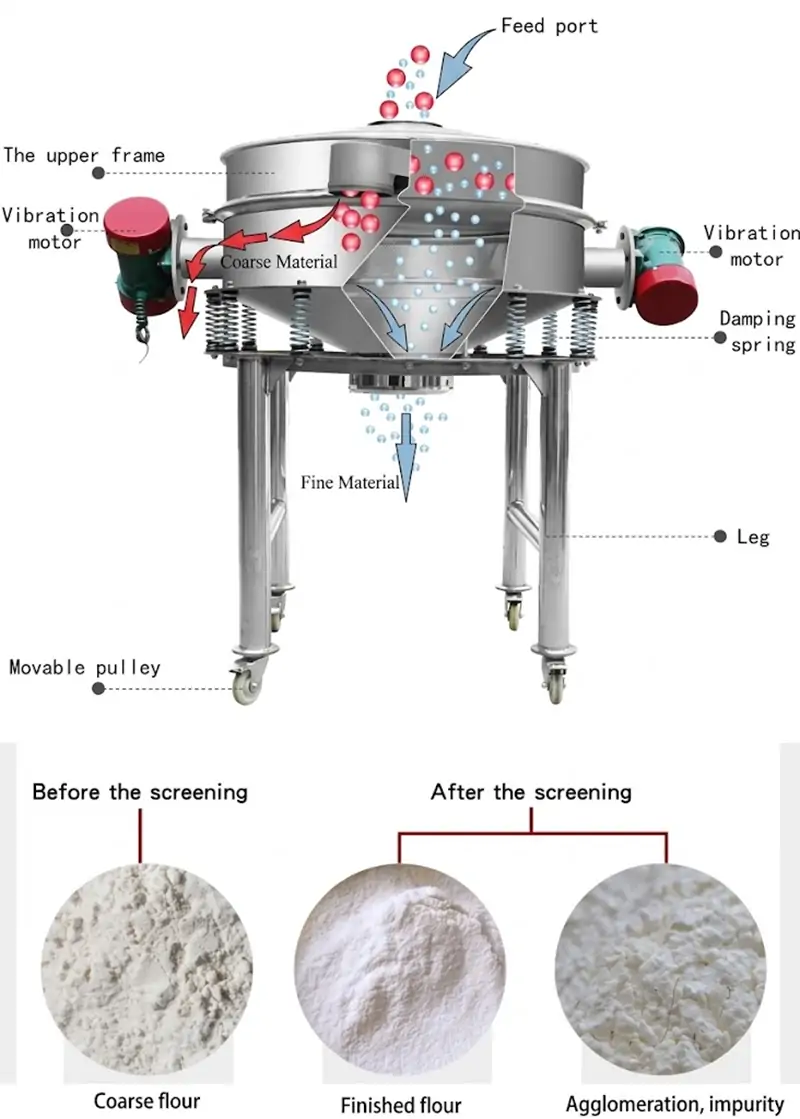
Common equipment for industrial flour screening includes direct-discharge vibrating screens and rotary vibrating screens. Both can be used for screening, but they are suitable for different conditions.
If you only need to remove lumps and larger impurities and want the material to pass through the screen quickly, a direct-discharge vibrating screen can be considered. The material enters the machine and is discharged quickly, making it suitable for relatively simple screening processes.
If you also need to screen the flour more finely or separate different flour sizes, a rotary vibrating screen can be considered. A rotary vibrating screen can use different screen openings and can also add screen layers for multi-stage screening.
Therefore, the choice of equipment mainly depends on the screening task. If you only need to remove lumps and impurities, focus on screening speed and discharge method. If fine screening or grading is required, focus on the screen opening, number of screen layers, and screening area.
How to Choose a Flour Powder Rotary Vibrating Screen?
When choosing a flour powder rotary vibrating screen, first look at four things: capacity, screen opening, screen layers, and screening area.
Capacity: How much flour needs to be screened per hour?
First determine how much flour the production line needs to screen per hour. Do not look only at the machine diameter. For machines of the same size, the actual capacity can still vary with the screen opening, flour condition, and feeding rate.
Screen opening: What size particles need to be removed?
If you only need to remove lumps and impurities, there is no need to use an overly fine screen opening.
If you need to screen the flour more finely, a smaller screen opening is required. But the smaller the screen opening, the more slowly the flour passes through, and the more likely screen clogging becomes.
Screen layers: How many size ranges need to be separated?
If you only need to remove lumps and impurities, one screen layer is usually enough.
If you need to separate different flour sizes, more screen layers can be added. If more size ranges need to be separated, more screen layers can be considered.
Screening area: How much screening space does the machine need?
A larger machine diameter generally means a larger screening area, giving the material more space for screening.
But capacity cannot be judged by machine diameter alone. Screen opening, feeding rate, and whether the flour tends to form lumps can all affect the actual screening capacity.
So, do not first look at how many layers or what diameter the machine has and then try to determine whether it can be used.
First determine how much flour needs to be screened per hour, what needs to be removed, and how many size ranges need to be separated. Then determine the rotary vibrating screen specifications.
How to Prevent Screen Clogging?
The finer the flour needs to be screened, the greater the possibility of screen clogging. The three most common causes are lumps, a screen opening that is too fine, and feeding too quickly.
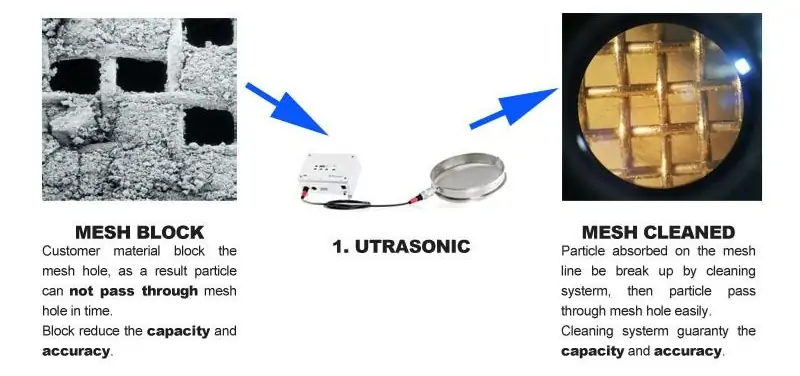
Flour lumps → They can get stuck in the screen openings
Lumps formed during storage or conveying may enter the screen and become stuck in the openings. If there are many lumps in the flour, a breaking or de-lumping process can be added before screening. If there are only a few lumps, the screen can also retain them directly.
Fine screen opening + feeding too quickly → More likely to cause clogging
The smaller the screen opening, the finer the flour that can pass through, but fine powder is also more likely to cover the screen openings. If too much material is fed at one time, the flour can build up too thickly on the screen and affect material passage. So, screen opening and feeding rate need to be considered together.
If clogging still occurs, consider a screen cleaning device.
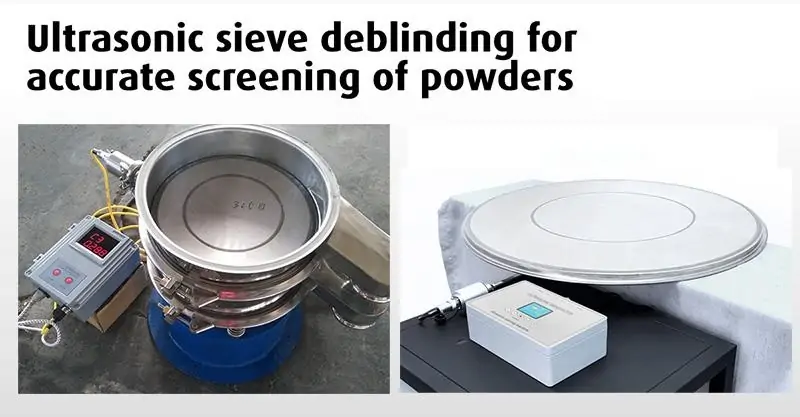
Bouncing balls can help clean material stuck in the screen openings. If the screen opening is very fine and bouncing balls are not enough, ultrasonic screen cleaning can be considered to reduce fine powder from blocking the screen openings.
So, first find out why the screen is clogging, then decide which screen cleaning method to use.
What Should You Consider When Screening Flour for Food Processing?
For flour used in food processing, you need to consider not only whether the equipment can screen the material, but also whether the parts that contact the flour are suitable for food production and whether the equipment is easy to clean afterward.For reference, the FDA Food Code 2026 includes requirements related to food-contact equipment materials and cleanability.
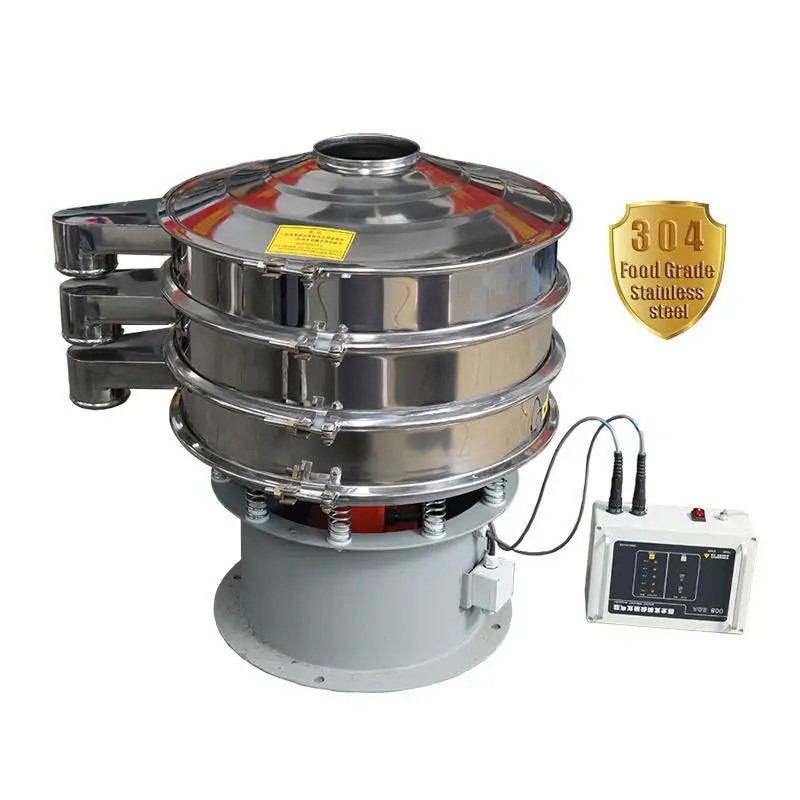
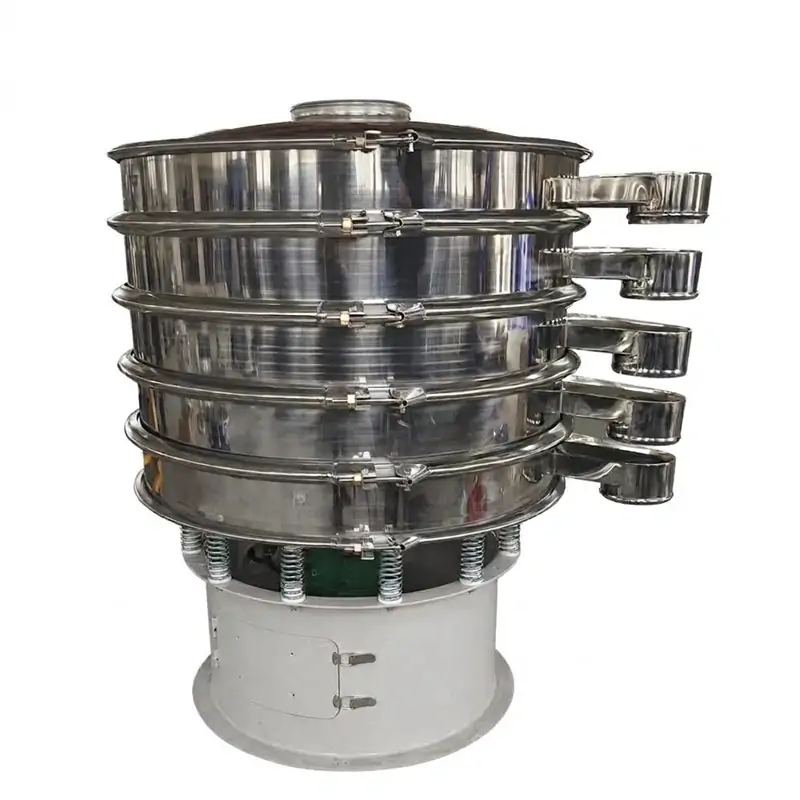
- Check the material of the flour-contact parts.
- Food processing equipment commonly uses stainless steel. Whether 304 or 316L is suitable depends on the flour, cleaning method, and production requirements. When purchasing, do not look only at the machine housing. Also confirm the screen frame, screen mesh, inlet, outlet, and other parts that come into contact with the flour.
- Sealing is also important.
- Flour is fine and can generate dust during operation. If the screen is not properly sealed, dust may escape from the inlet, outlet, or connection points. So, besides screening performance, you should also check the sealing structure and discharge connection.
- Cleaning should be easy.
- Flour can remain on the screen mesh, screen frame, and equipment connections. If these parts are difficult to disassemble, cleaning will take longer and material residues may remain. Therefore, check whether the screen is easy to remove and install and whether there are areas inside the machine that are difficult to clean.
- For food production, do not only look at how fast the machine screens.
Material, sealing, disassembly and cleaning, and internal structure should all be considered.
Conclusion
When choosing a flour powder rotary vibrating screen, first determine whether you need lump removal, impurity removal, fine screening, or grading.
Then look at how much flour needs to be screened per hour, the required screen opening, the number of screen layers, and the required screening area.
If the flour tends to form lumps or the screen opening is fine, screen clogging should also be considered in advance. For food processing, also confirm the material of the flour-contact parts, sealing, and cleaning method.
Once these conditions are clear, you can choose a rotary vibrating screen that fits your production line instead of looking only at machine size or screen mesh size. If you are not sure which equipment and configuration are suitable for you, you can contact us. Jiarui can help determine a suitable configuration based on your screening requirements, capacity, and site conditions.
FAQs
Can flour be screened with a rotary vibrating screen?
Yes. A flour powder rotary vibrating screen can be used for removing lumps and impurities, fine screening, and grading flour. The right equipment depends on whether you only need to remove lumps and impurities or also need to separate different flour sizes.
What mesh size should be used for flour screening?
There is no single mesh size that is suitable for all flour. First determine what you want to remove and what size particles you want to pass through the screen. If you only need to remove lumps and impurities, there is no need to choose an unnecessarily fine screen. If finer flour screening is required, a smaller screen opening can be selected. The smaller the screen opening, the more attention should also be paid to screen clogging.
How much flour can a rotary vibrating screen process per hour?
There is no fixed capacity. It depends on the machine size, screen opening, number of screen layers, feeding rate, and flour condition. Even machines of the same size can have different actual capacities when different screen openings are used. So when selecting the equipment, first determine how much flour needs to be screened per hour, then determine the machine specifications.
What should I do if the screen clogs when screening flour?
First check whether the flour has lumps, whether the screen opening is too fine, and whether the feeding rate is too high. If there are many lumps, a breaking or de-lumping process can be added first. If clogging still occurs, bouncing balls or ultrasonic screen cleaning can be considered.
What material should be used for a flour screening machine in food processing?
Pay particular attention to the parts that come into contact with the flour, including the screen mesh, screen frame, inlet, and outlet. Stainless steel is commonly used for food processing equipment. Whether 304 or 316L is suitable depends on the product, cleaning method, and production requirements. Do not look only at the material of the machine housing.
Can a flour rotary vibrating screen be customized?
Yes. If a standard machine cannot directly match the production line, it can be adjusted according to flour capacity, screen opening, number of screen layers, inlet and outlet direction, installation space, and contact material. Jiarui can customize a flour rotary vibrating screen based on specific screening requirements and site conditions to better fit the existing production line.