| Comparison Item | Horizontal Centrifugal Sifter | Vertical Centrifugal Sifter |
| Installation Direction | Horizontal installation | Vertical installation |
| Equipment Design | Extends mainly in the horizontal direction | Extends mainly in the vertical direction |
| Floor Space | Requires a certain installation length | Relatively small floor footprint |
| Height Requirement | Relatively low | Requires a certain plant height |
| Material Flow Direction | Mainly horizontal | Mainly vertical |
| Production Line Layout | Better suited to horizontal production lines | Better suited to compact or vertical layouts |
| Common Applications | Continuous powder screening | Fine and ultrafine powder screening |
What Are the Main Differences Between Horizontal and Vertical Centrifugal Sifters?
1.Shape and Installation: One Is Horizontal, the Other Is Vertical
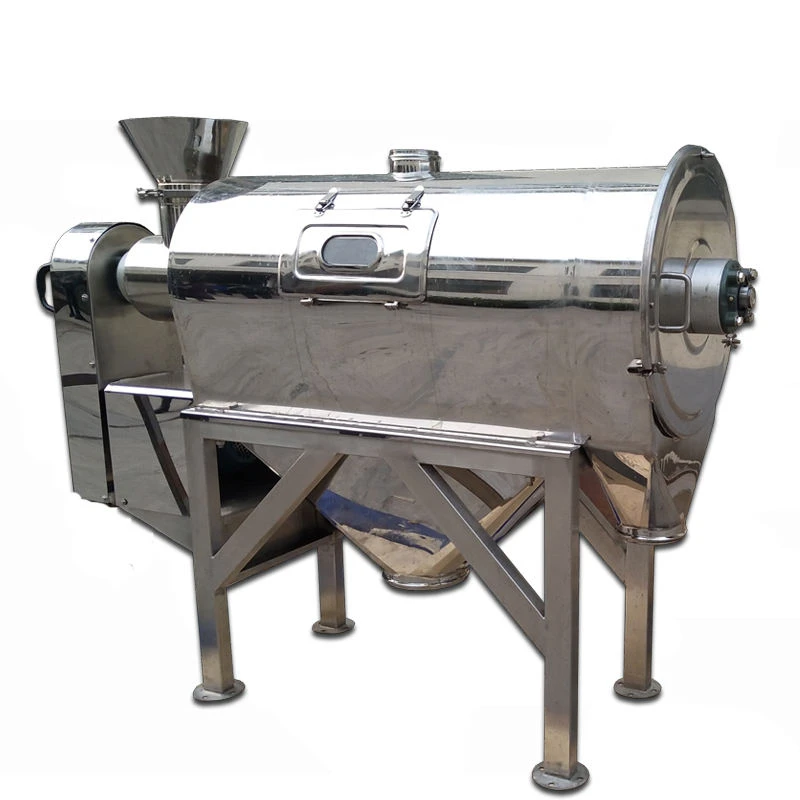
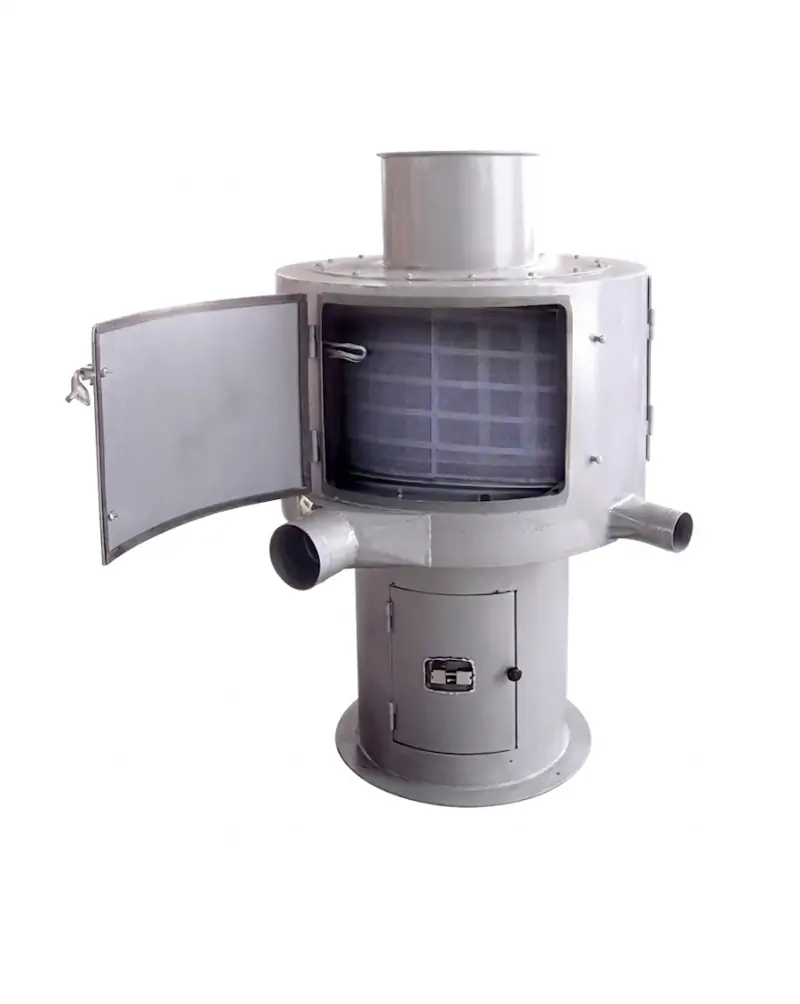
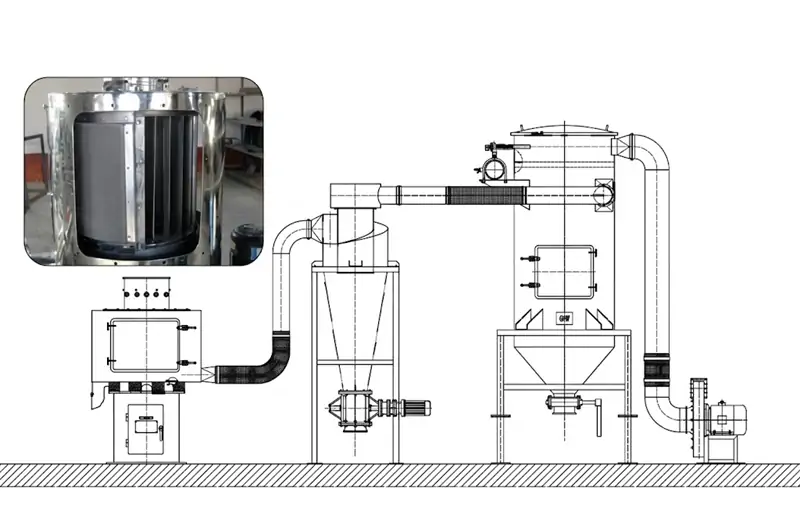
The main structural difference is the direction in which the screening system is arranged. A horizontal centrifugal sifter is arranged horizontally and requires more floor length, while the vertical type is arranged vertically and makes greater use of the plant’s height.
If the production line is mainly laid out horizontally, the horizontal type is usually easier to connect with the upstream and downstream equipment. If floor space is limited but sufficient plant height is available, the vertical type may be easier to install. The inlet and outlet positions should also be considered.
2.Screening Effect and Capacity: Which Screens Finer and Which Handles More?
This is often the first question when comparing the two types. However, it is not accurate to say that the vertical type always provides finer screening or that the horizontal type always has a higher capacity. Screening performance and capacity depend on the screen specification, rotation speed, airflow, and material characteristics such as particle size, moisture, and flowability.
Some Jiarui centrifugal sifter models can be fitted with screens up to approximately 500 mesh. The actual screening range and capacity depend on the equipment model, screen specification, and material conditions.
3.How They Work: The Principle Is the Same, but the Direction Is Different
The basic screening principle is the same for both types. Both centrifugal sifters use a rotating screening system to move material through the screening area. Fine particles pass through the screen, while larger particles continue toward the discharge outlet. Depending on the equipment design, airflow can also help with material conveying and dispersion.
4.Application: Mainly Depends on How the Production Line Is Arranged
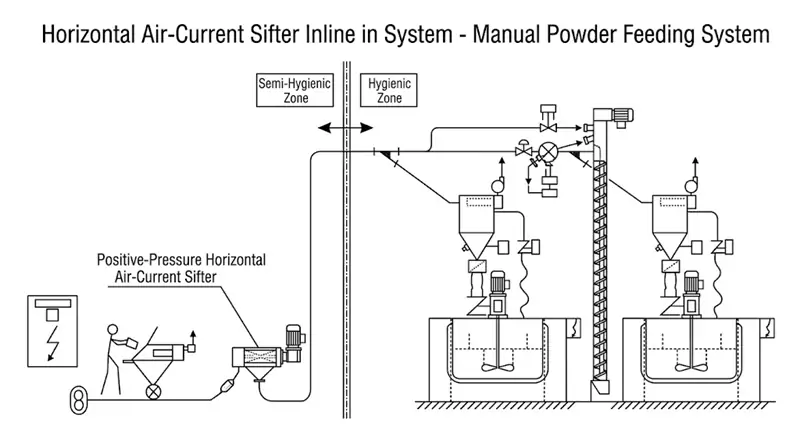
The horizontal type is better suited to continuous powder processing lines, especially processes where the upstream and downstream equipment are arranged horizontally and continuous conveying and screening are required.
The vertical type can be used for fine and ultrafine powder screening, as well as production lines where floor space is limited and plant height can be utilized.
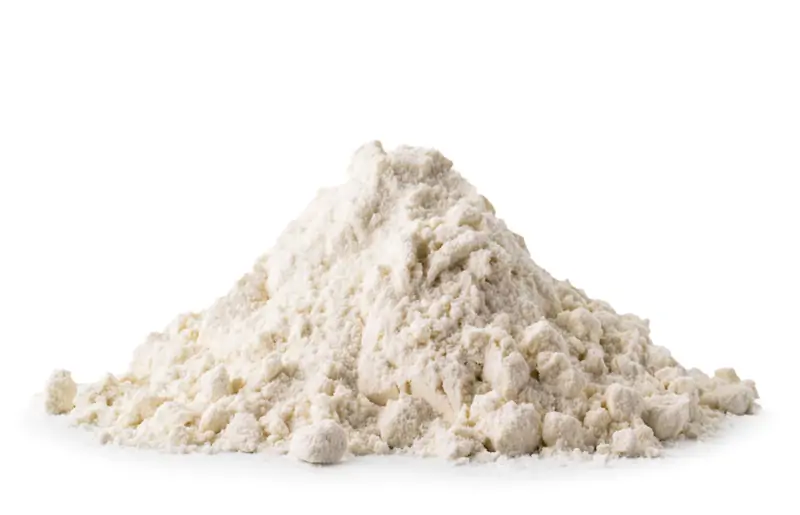

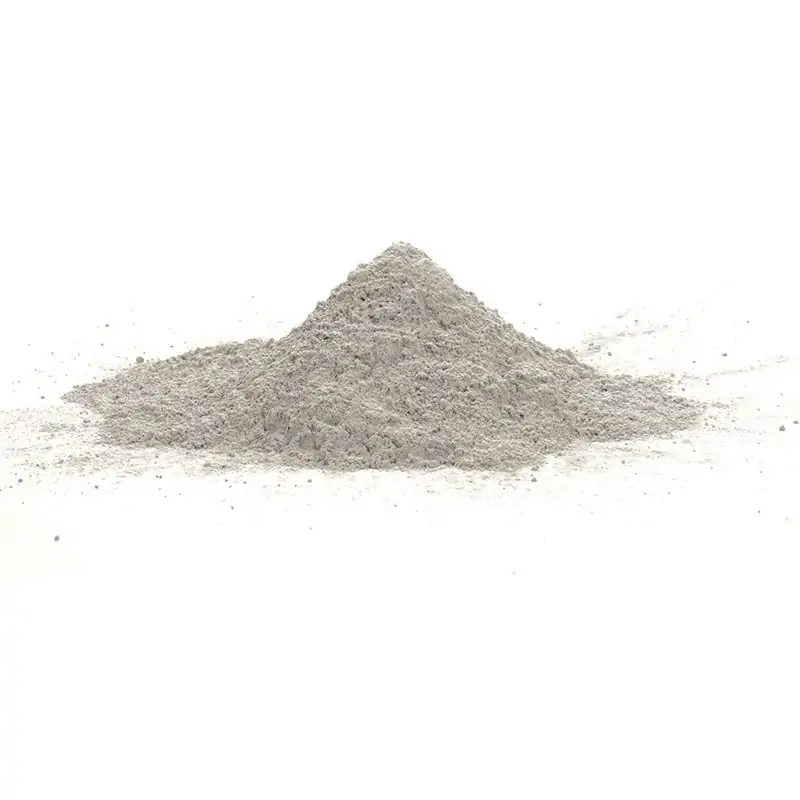
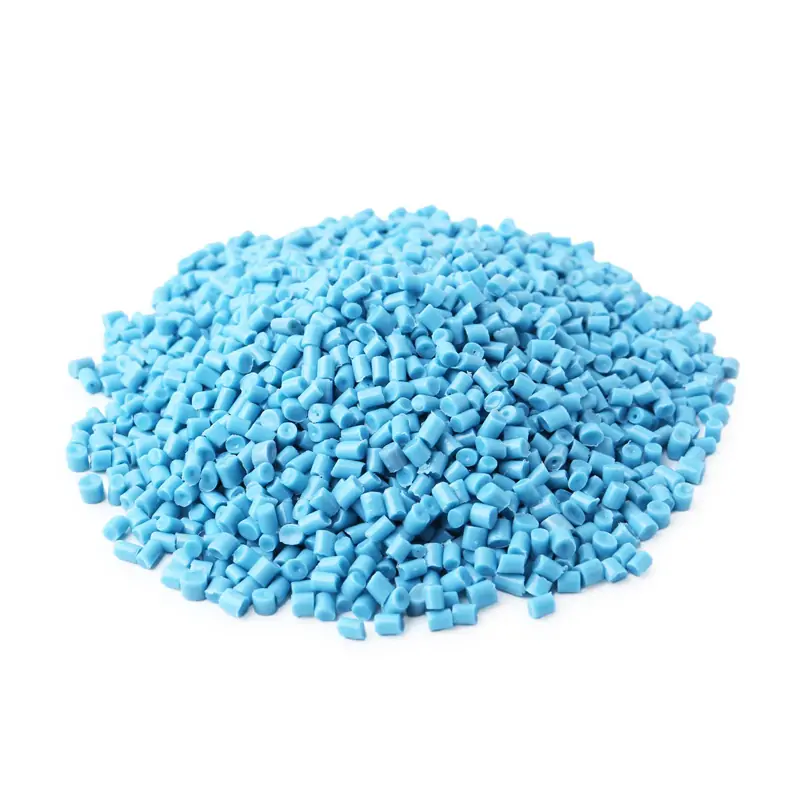
The applications of the two types are not completely separate. The same material may be processed by either structure depending on the screening requirements, capacity, and production line layout. The final selection should not be based on the material name alone. The equipment’s position in the overall process and how it will operate also need to be considered.
5.Maintenance and Cleaning
For centrifugal sifters, routine maintenance mainly means keeping the screen and screening chamber clean and checking the screen, rotor, and seals for wear or damage. If the screen is worn or no longer gives the required screening result, it should be replaced.
Sticky or moisture-sensitive powders may need more frequent cleaning to prevent material buildup. When comparing the two types, check whether the screen and screening chamber are easy to access, clean, and replace.
Horizontal or Vertical Centrifugal Sifter? How to Choose?
If you are mainly considering the production line layout, you can start with the following guide:
| Production Requirement | Recommended Choice |
| Horizontal production line requiring continuous connection with upstream and downstream equipment | Horizontal Centrifugal Sifter |
| Limited floor space and sufficient plant height | Vertical Centrifugal Sifter |
| Fine or ultrafine powder screening where floor space is limited | Vertical Centrifugal Sifter |
| Continuous conveying and screening through a horizontal process line | Horizontal Centrifugal Sifter |
| Both structures can meet the process requirements | Compare specific models and configurations |
If both structures can meet the screening requirement, compare the screen specification, capacity, equipment dimensions, airflow configuration, and available floor space, plant height, and inlet and outlet positions. If you are not sure which type of centrifugal sifter is suitable, the Jiarui engineering team can help you compare the options based on your material, screening requirements, and production line layout.