
Screw conveyor parts mainly include the drive unit, screw assembly, housing, bearing assemblies, inlet and outlet, and sealing components. Different parts are responsible for power transmission, material movement, support, and sealing, working together to keep the equipment running steadily. The screw flights move the material, the screw shaft transmits power, the drive unit provides rotational power, while the bearings and sealing structure help reduce wear during operation.
Different materials and operating environments also have different requirements for component design. For example, when conveying ordinary powders, highly viscous materials, or abrasive materials, the screw flight design, material selection, and support structure may be different. Understanding the function of these screw conveyor parts helps determine whether the equipment structure is suitable for the actual conveying requirements.
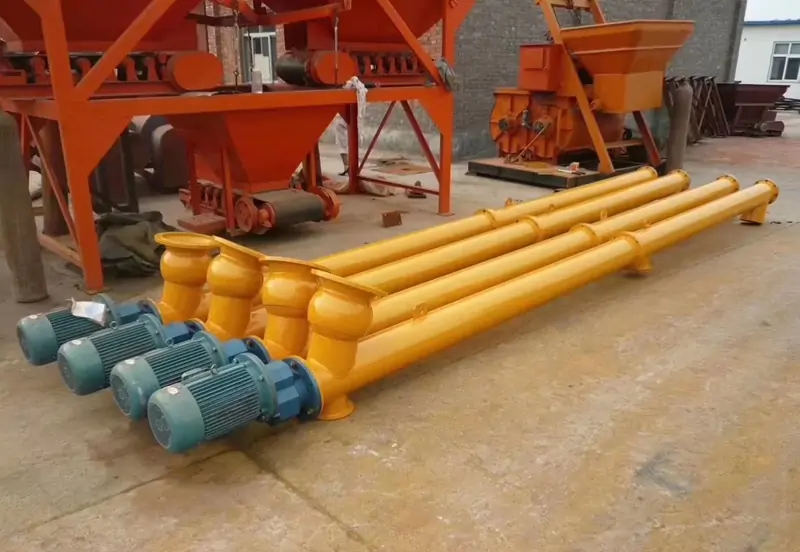
What Are the Main Screw Conveyor Parts?
From a structural point of view, a screw conveyor can be divided into several main parts:
| Component | Main Function |
| Drive unit | Provides rotational power |
| Screw assembly | Moves the material |
| Housing | Forms the conveying channel |
| Bearings and seals | Supports rotation and protects internal components |
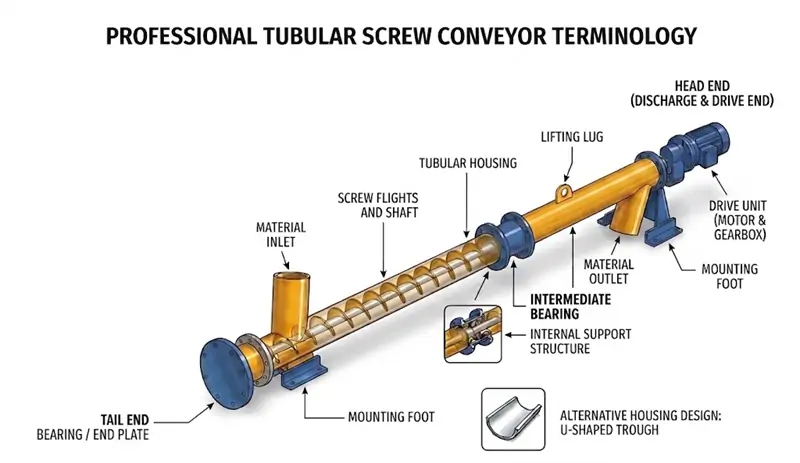
Screw Conveyor Drive Unit
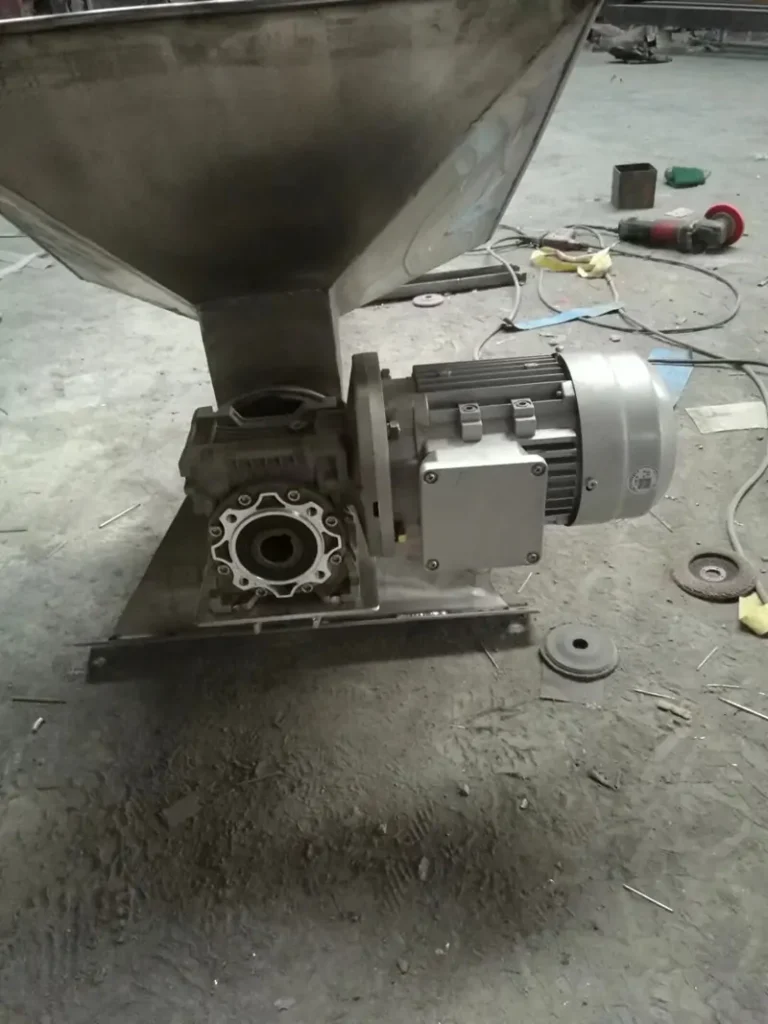
The drive unit is the part that makes the screw conveyor rotate. It mainly includes the motor, gearbox, and coupling. The motor provides power, while the gearbox reduces the rotational speed and increases the force needed to move the material, allowing the screw flights to push the material steadily. The coupling connects the gearbox to the screw shaft and transfers power to the internal screw assembly.
Simply put: the motor provides power, the gearbox adjusts the speed, and the screw assembly moves the material.
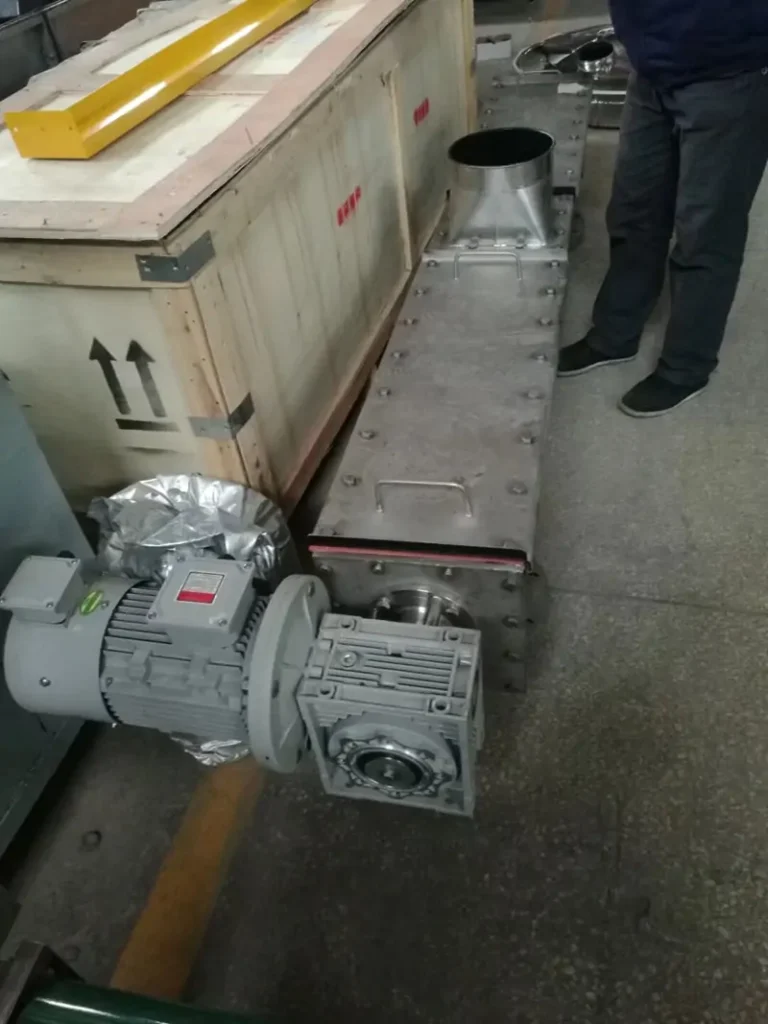
Screw Conveyor Screw Assembly
The screw assembly is the part of the screw conveyor that directly moves the material. It mainly consists of the screw shaft and screw flights.
The screw shaft connects the drive unit and the flights, causing the flights to rotate together. Depending on the application, either a hollow shaft or solid shaft can be selected:
Hollow shaft: Lighter in weight and suitable for general conveying and longer equipment;
Solid shaft: Higher strength and suitable for heavier loads or heavier materials.
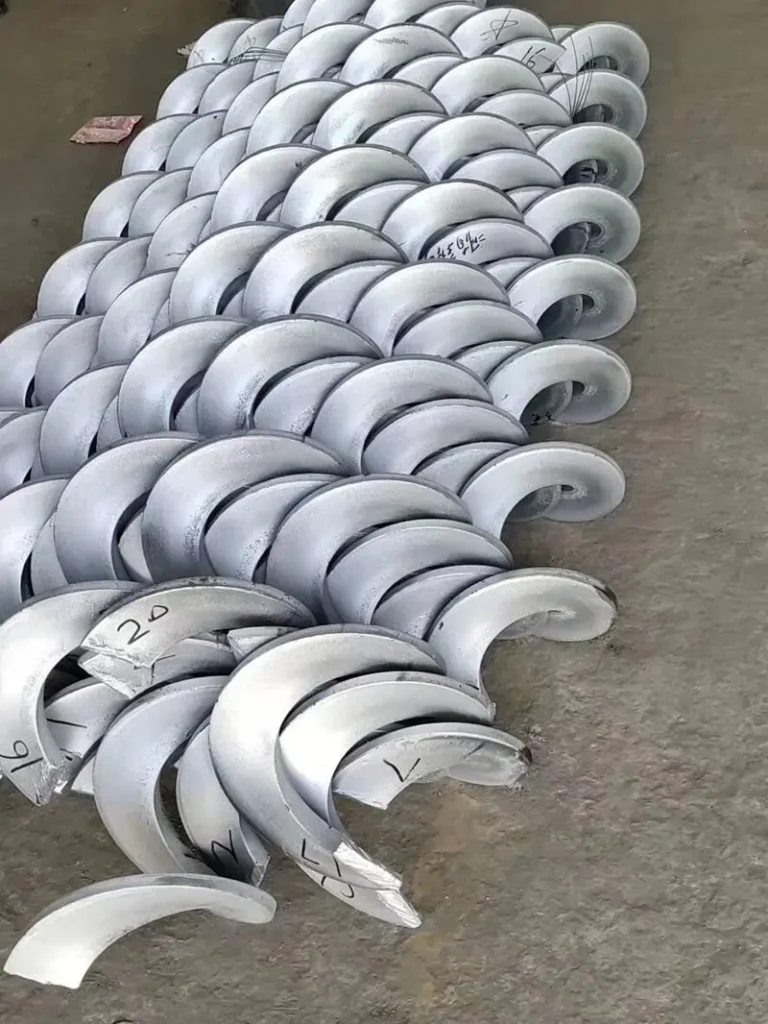
The screw flights are the key components that move the material. Common types include:
- Continuous flights: The most common type, suitable for powders and granular materials;
- Ribbon flights: Reduce material buildup and are suitable for viscous or easily caking materials;
- Paddle flights: Can also provide a certain mixing effect during conveying.
When selecting flights, the material characteristics should be considered rather than looking only at the conveying capacity.
Screw Conveyor Housing, Inlet and Outlet
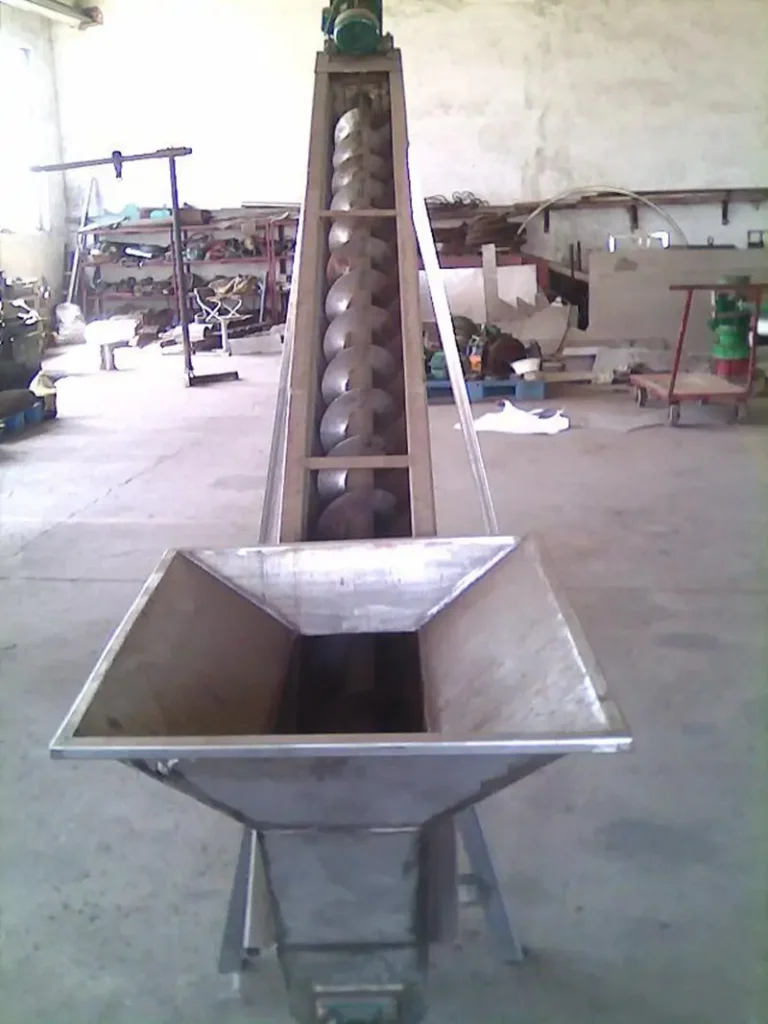
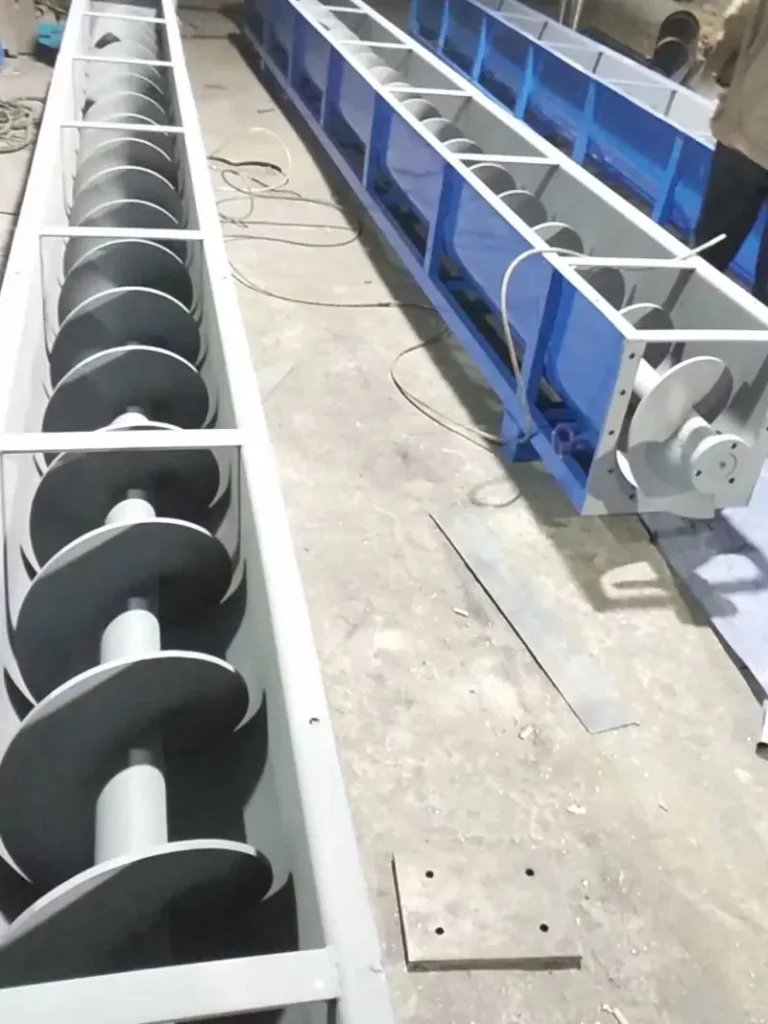
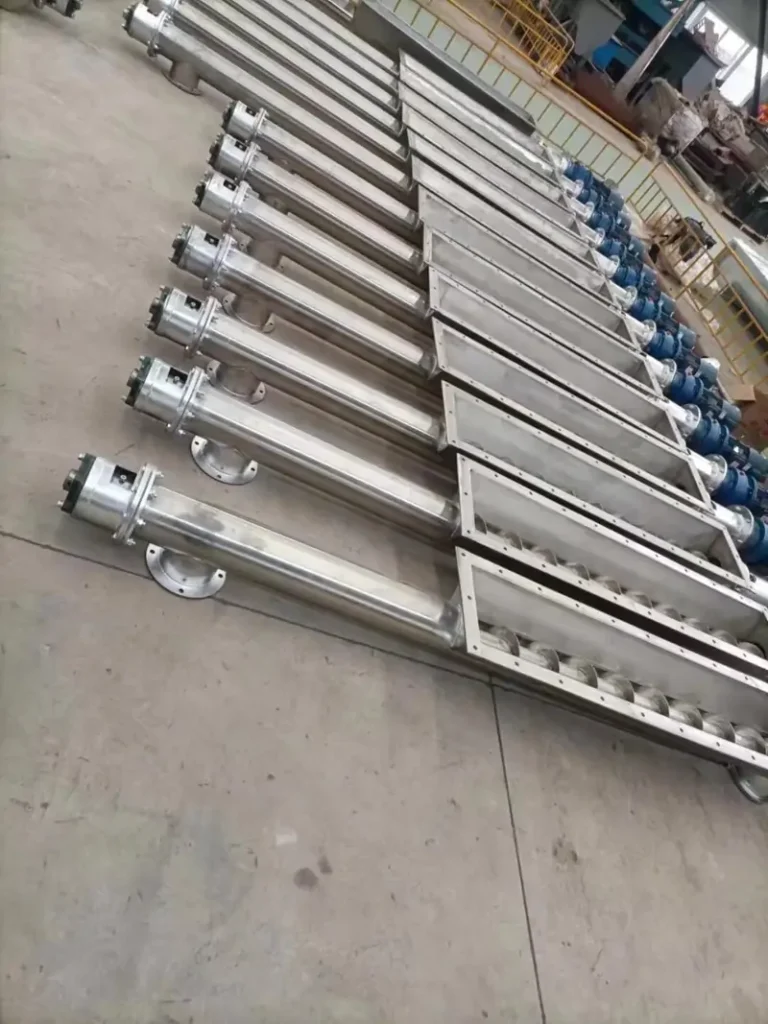
The housing is the outer structure enclosing the screw assembly. It creates a conveying channel for materials while reducing dust and material spillage. There are two common housing types:
- U‑shaped trough: Easy to open for inspection and cleaning, suitable for most horizontal conveying applications.
- Tubular housing: Offers superior sealing performance, ideal for high‑dust environments.
The inlet allows material to enter the equipment, and the discharge outlet transfers material to the next process.
Screw Conveyor Bearings and Sealing Components
Bearings support the screw shaft and keep it rotating steadily. Short screw conveyors usually use support at both ends. For longer equipment, intermediate hanger bearings are needed to prevent the screw shaft from bending under its own weight.
Sealing components mainly protect the bearings and prevent dust and material from entering the internal parts. For equipment running for long periods, particular attention should be paid to the wear and aging of hanger bearings and seals. For equipment conveying abrasive materials such as mineral powder and sand and gravel, the wear of the screw flights should also be checked.
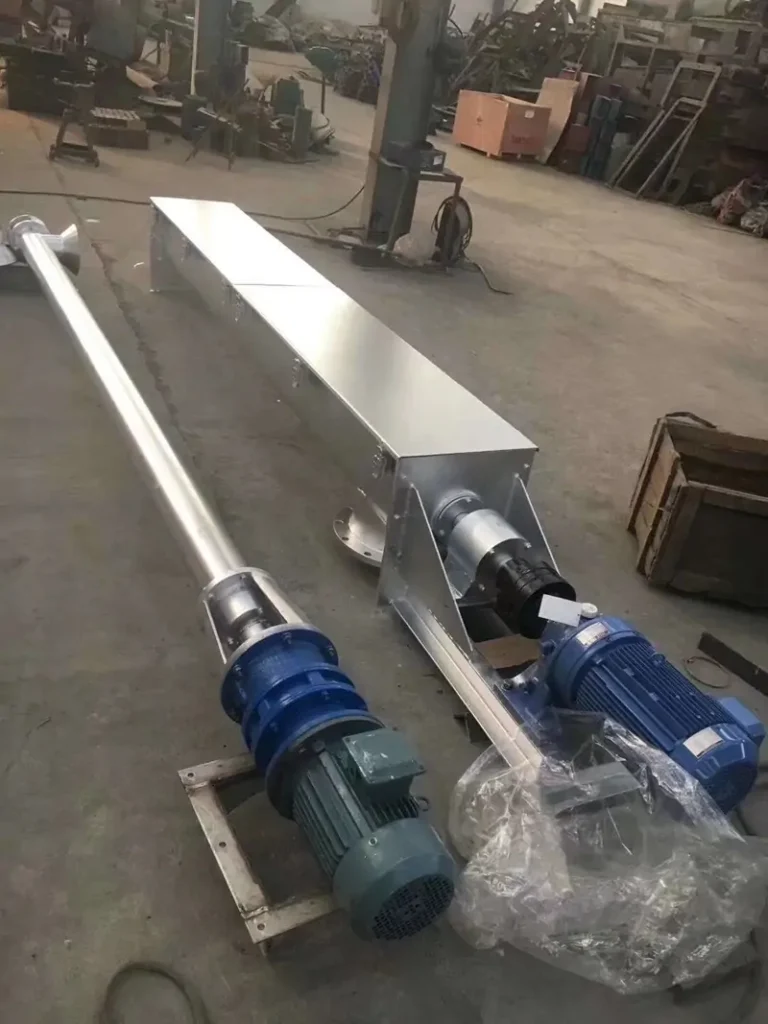
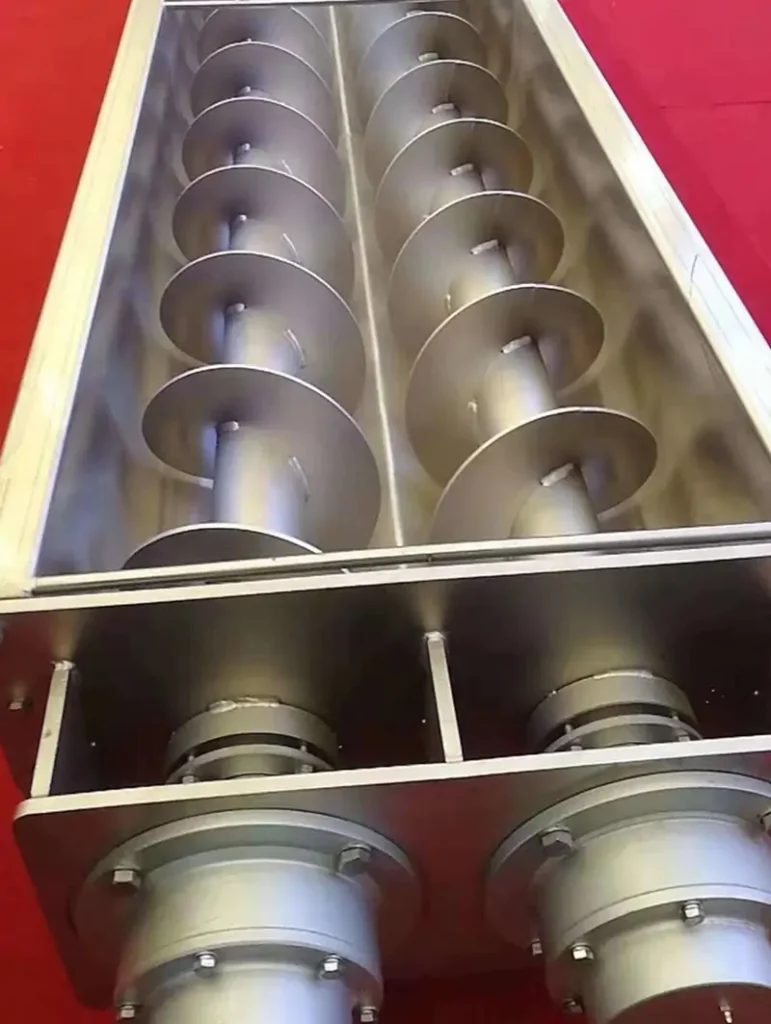
Different manufacturers may use different screw diameters, shaft diameters, connection methods, and component dimensions even when their screw conveyors have similar structures. Some standard component dimensions are also covered by industry standards such as those published by CEMA. Therefore, when replacing parts, the dimensions and connection method of the original equipment, as well as the conveying material, should be considered to ensure proper matching and avoid installation problems or unsatisfactory performance.
If the relevant parameters are not available, you can provide equipment photos, operating conditions, and material information. The Jiarui engineering team can help confirm a suitable component design based on the actual application.