
What is a Vibration Table?
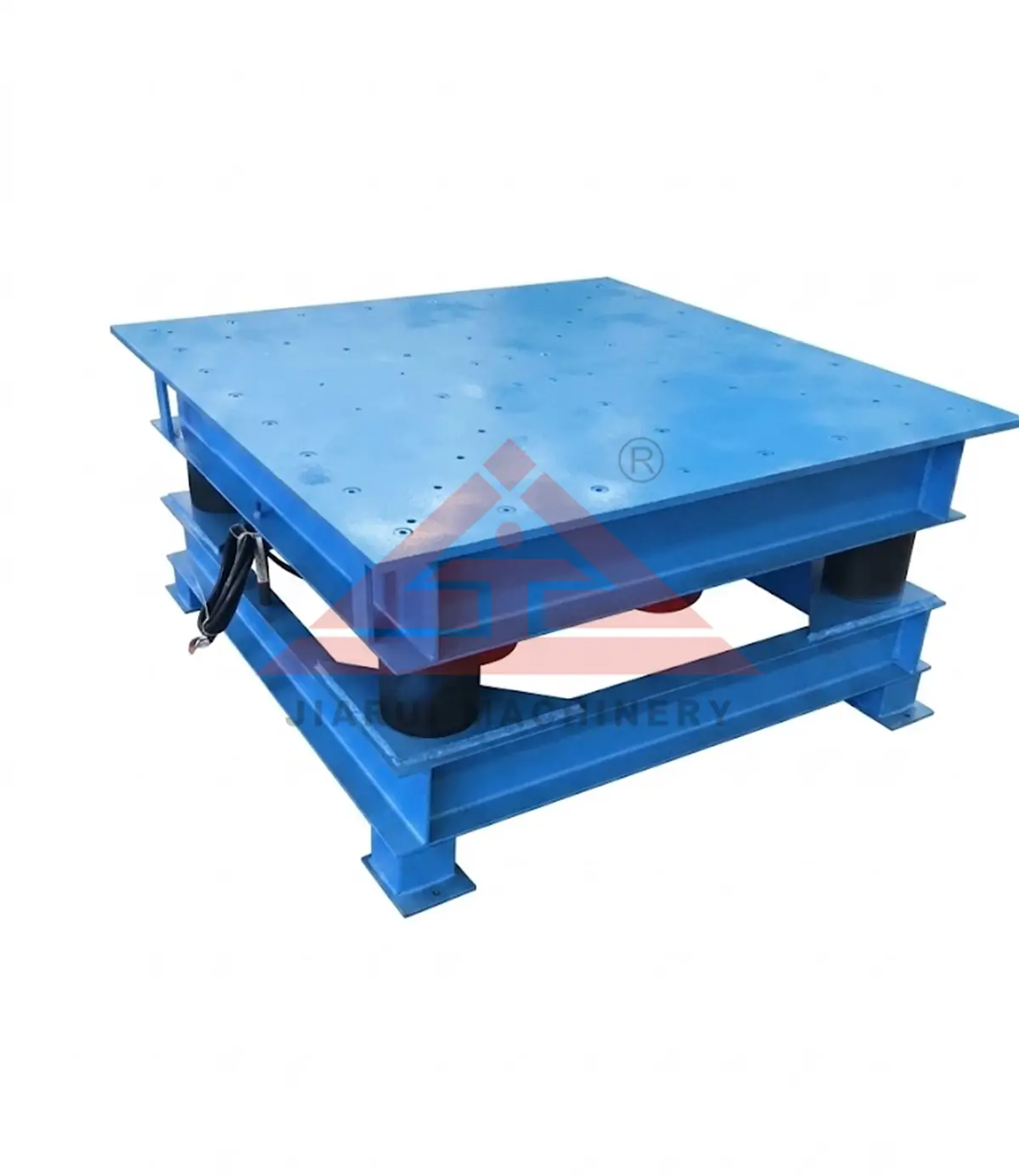
Jiarui vibration tables, also known as compacting tables, are primarily used for compacting materials. They can reduce air and gaps within the materials. Driven by vibration mechanisms, these tables perform three-dimensional vibrations in horizontal, vertical, and longitudinal directions. During use, the compaction effect of the materials can be achieved by adjusting the excitation force of the vibration motors. According to user requirements, there are concrete vibration tables, cement product vibration platforms, three-dimensional vibration platforms, etc., and the platform surface can be custom-made.
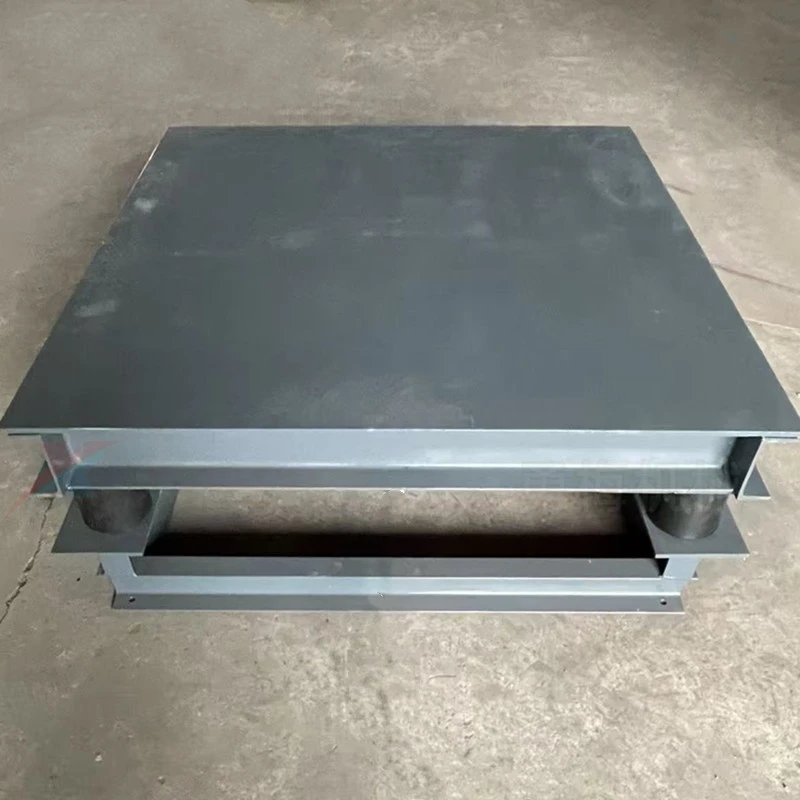
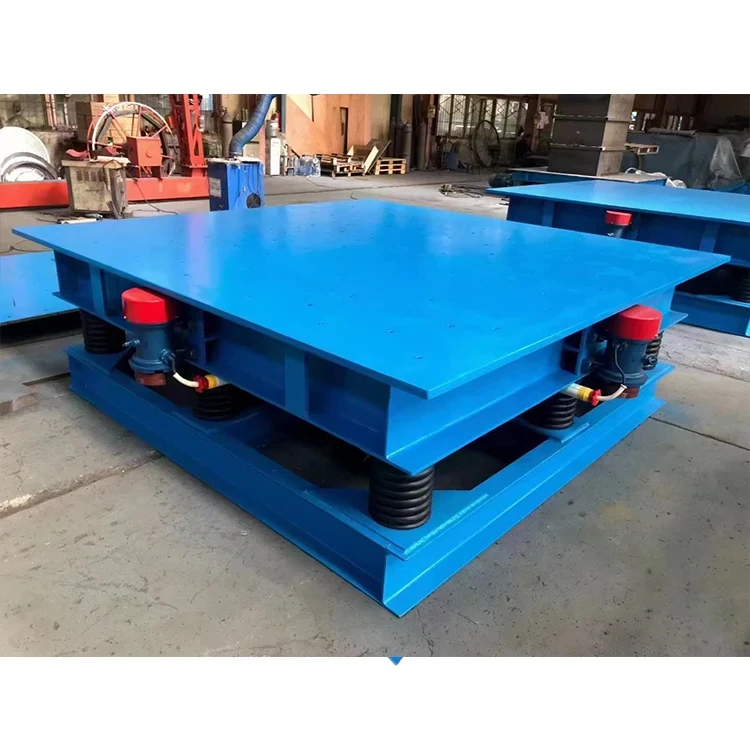
What problems can the vibrating platform solve for you?
| What problems to you encounter? | How can the vibrating platform solve it? |
| There are bubbles and pores inside the product, resulting in unmet strength requirements. | By high-frequency vibration, air and moisture inside materials (such as concrete, molding sand, and powders) are thoroughly expelled, making the product structure dense and enhancing its strength. |
| The material is loosely piled, leading to high transportation costs or inflated bagging. | Vibration also allows particles to rearrange, significantly increasing bulk density. This means more material can be packed into the same packaging, reducing transportation and packaging costs. |
| Complex molds cannot be fully filled, causing missing material at the edges and corners. | The throwing force generated by three-dimensional vibration allows fine particles to flow like water, filling every minute corner of the mold and ensuring the integrity of the casting or product shape. |
| Low production efficiency and labor-intensive manual compaction are time-consuming and physically demanding. | Automated equipment can complete compaction in a few minutes or even a few seconds, replacing manual labor, significantly shortening the molding cycle, and improving production line efficiency. |
| Dust creates a harsh working environment that affects health. | The platform can be used in conjunction with enclosed hoods to control dust during the vibration process, improve workshop air quality, and meet environmental requirements. |
| Material stratification and unevenness occur during the production process. | Vibration causes materials of different particle sizes to redistribute through jumping and falling, effectively preventing segregation and ensuring the uniformity of each batch of products. |
| Product testing requirements (transport simulation/reliability) | As a test platform, it can simulate vibrational environments to pre-expose structural weaknesses of products and test their reliability during transportation or use. |
Conditions to confirm before using a vibration table
Vibration tables are suitable for materials that require settlement and compaction due to internal voids. However, not all materials are appropriate for vibration treatment. When selecting equipment, it is important to confirm the material conditions and production requirements in advance.
Step1
Production processes that require crushing, screening, or mixing cannot be replaced by vibrating tables. Wet materials with high moisture content and strong adhesion may stick together or form lumps after vibration.
Step2
Materials that need continuous conveying should consider using equipment such as vibrating conveyors or screw conveyors. Precision products that are sensitive to vibration and may be damaged should not be processed directly on vibrating tables.
Highlighting strengths
- Good compaction effect and stable equipment operation.
- Stepless speed adjustment allows for good compaction results without damaging the model.
- High power and large working surface: 7.5 kW power and up to 80 kN excitation force, capable of withstanding a weight of approximately 8 tons.
- Three vibration modes available: upper-lower vibration, spiral vibration, and three-dimensional vibration.
- Adjustable working surface height with automatic locking function, ensuring convenient operation and reliable performance.
Structural details
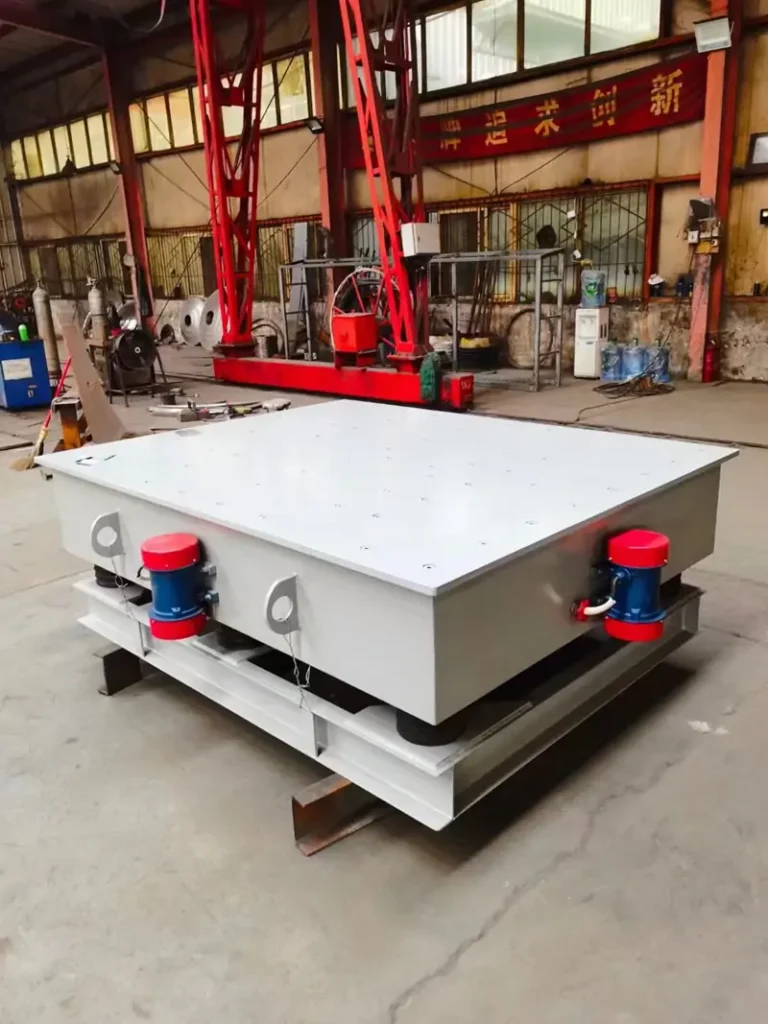
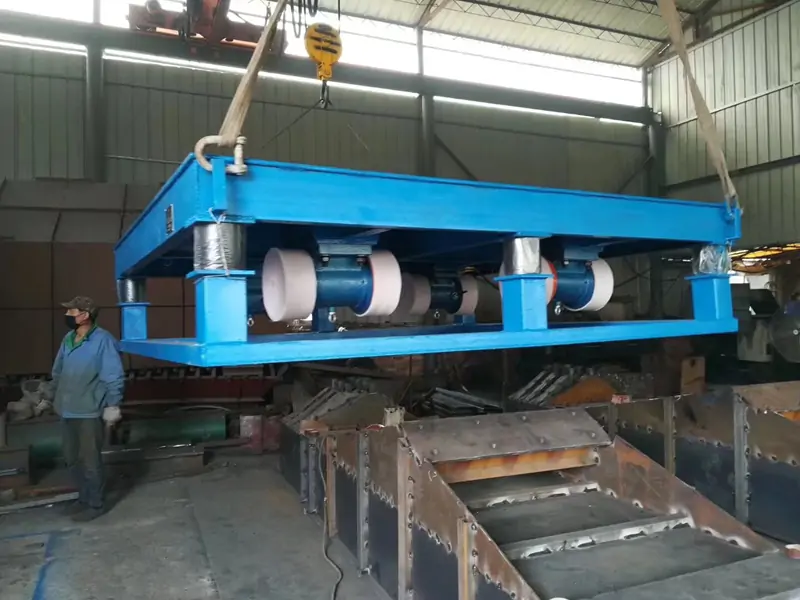
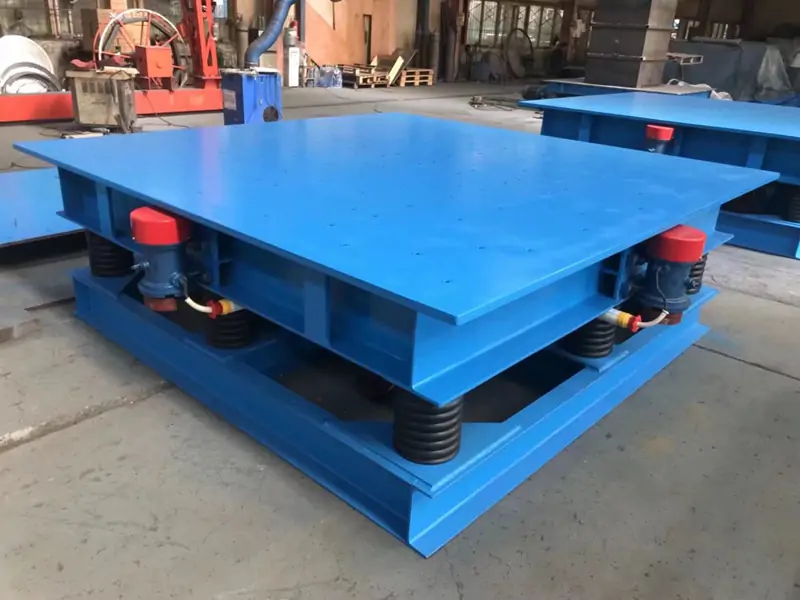
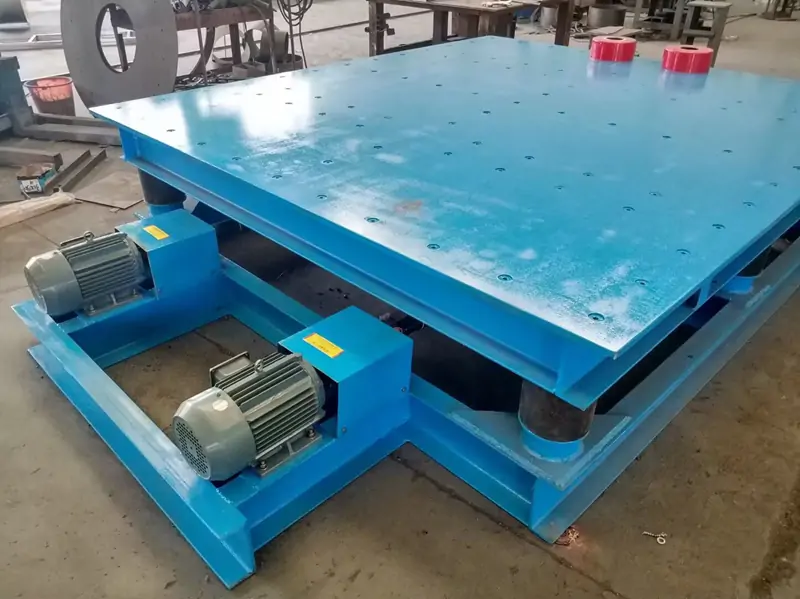
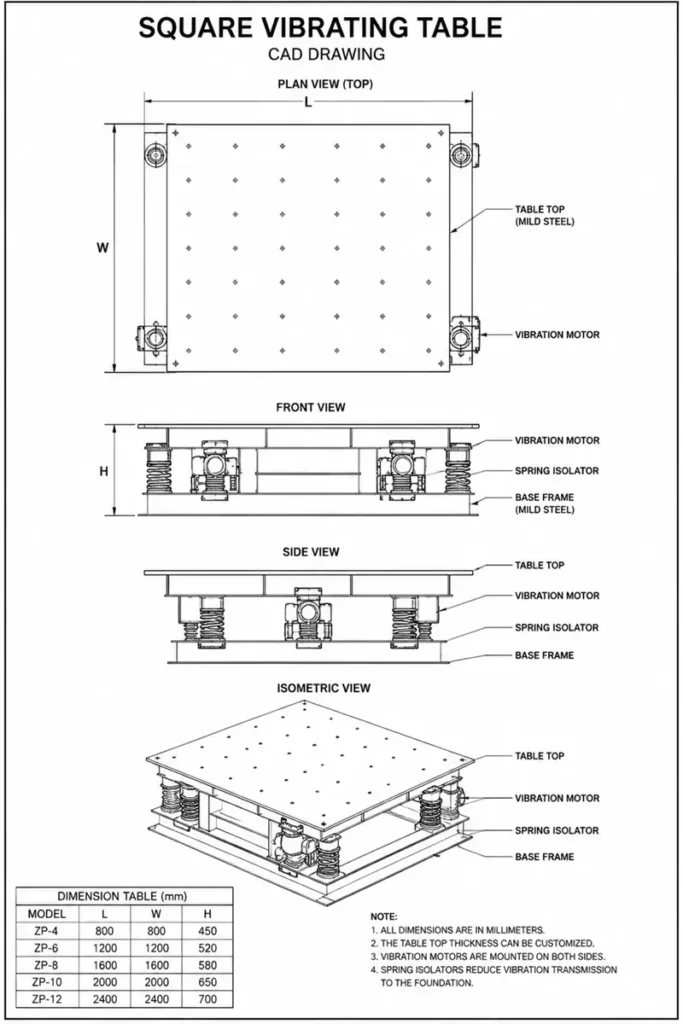
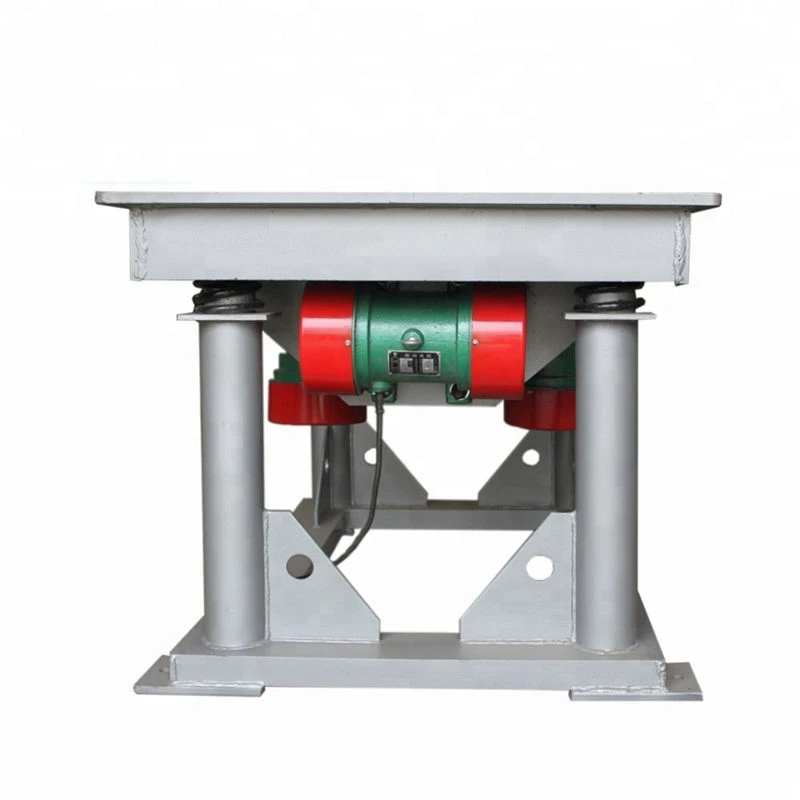
The vibration table is mainly composed of four parts: frame, platform surface, vibration mechanism, and shock absorption mechanism.
- Vibration Mechanism: It consists of several vibration motors and transmission plates. The number of vibration motors is generally 4, 6, 8, 10, etc., and even numbers are usually selected.
- Shock Absorption Mechanism: It is mainly composed of shock-absorption springs, which are divided into rubber springs, composite springs, and air springs, etc.
Working principle
The working principle of a vibration table mainly involves using a motor to drive devices such as eccentric blocks or cams to generate exciting forces, causing the platform to vibrate. When the motor rotates, the centrifugal force of the eccentric block or cam acts on the platform, producing vibrations in vertical, horizontal, or inclined directions. This vibration can be transmitted to objects placed on the platform, inducing corresponding motion in them.
Common types of vibration tables include electromagnetic vibration tables, mechanical vibration tables, and hydraulic vibration tables. Electromagnetic vibration tables generate vibrations using electromagnetic force. They typically consist of an electromagnet, an armature, and springs. When the electromagnet is energized, it produces an electromagnetic force that attracts the armature, causing the tables to vibrate. Electromagnetic vibration tables are characterized by high vibration frequency, small amplitude, and easy adjustability, making them suitable for applications with high requirements for vibration frequency and amplitude, such as small-scale vibration tests in laboratories.
Mechanical vibration tables primarily generate exciting forces by driving eccentric blocks to rotate via a motor. This type of vibration platform has a simple structure, high reliability, and low cost, making it suitable for large-scale vibration operations in industrial production. However, its vibration frequency and amplitude are relatively fixed, with a limited adjustment range. Hydraulic vibration platforms generate vibrations by using pressure from a hydraulic system to drive piston movement, thereby causing the platform to vibrate. Hydraulic vibration platforms have advantages such as large amplitude, strong load-bearing capacity, and smooth vibration, making them suitable for vibration tests on large objects or applications with high requirements for vibration smoothness.
The main differences in the working principles of different types of vibration tables are reflected in the way and characteristics of generating exciting forces. Electromagnetic vibration tables rely on electromagnetic force, featuring high frequency, small amplitude, and adjustable properties; mechanical vibration tables generate exciting forces through the rotation of eccentric blocks, with a simple structure but limited adjustment range; hydraulic vibration tables utilize hydraulic systems, offering advantages such as large amplitude, strong load-bearing capacity, and smooth vibration. In practical applications, the appropriate type of vibration platform should be selected based on different requirements.
Two major core application directions
- Product Testing and Vibration Testing (Vibration Test Shaker): Primarily used to simulate environments where vibration may occur, thereby inspecting the operational structure, stability, and reliability of the vibration platform during operation.
- Industrial Compaction and Molding (Industrial Vibration Table / Compaction Table): Utilizes the vibrational force of the vibration platform to expel air from the material, making it more compact and gap-free. It is commonly used in the production of concrete prefabricated products, refractory materials, etc.
Main Categories
Vibration tables can be classified according to vibration methods, purposes, etc., and are mainly divided into the following categories:
| Classification Dimensions | Specific Types | Key Characteristics |
| vibration method | Up-down vibration | Vibrates in only one direction (usually the vertical direction). |
| Spiral vibration | The vibration path is spiral-shaped. | |
| Three-dimensional vibration | The most common type, which can generate composite vibrations in three directions—horizontal, vertical, and up-down—at the same time, offers the best effect. | |
| By application and principle | Industrial Vibrating Table | Used for material compaction and shaping, it is production equipment. |
| Test Vibration Table | Used for vibration, impact, and other reliability testing of products. | |
| Optical Vibration Isolation Platform | Used for precision experiments, its function is to isolate external vibrations rather than generate vibrations. |
Common Models and Technical Specifications
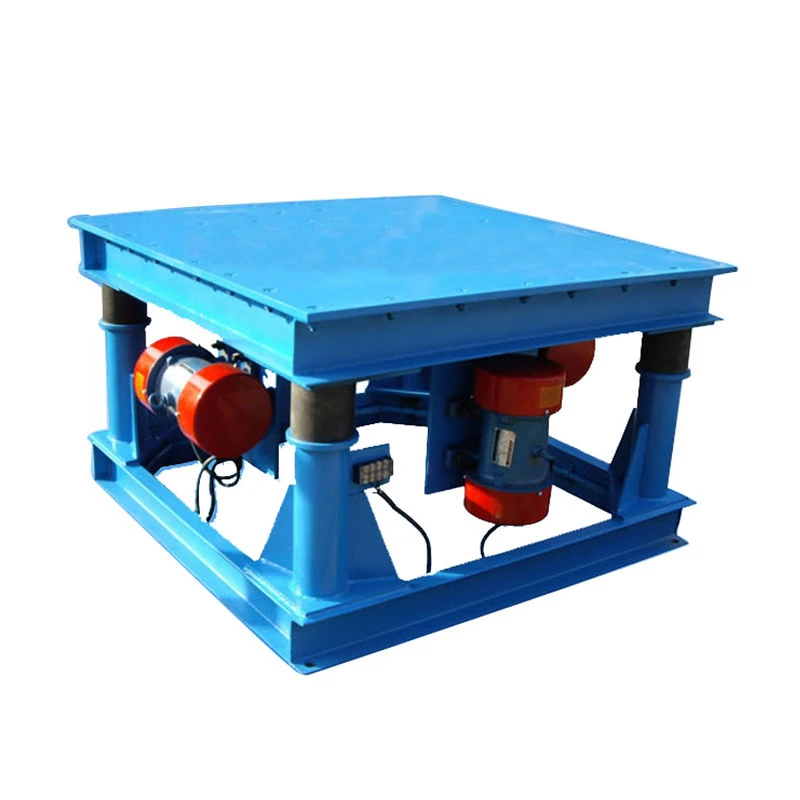
As an indispensable vibrating compacting device for screening operations in the industrial field, vibration tables have summarized some common models and technical parameters to help you select the appropriate one more efficiently.
| Model | Top Surface Size (mm) | Excitation Force (kN) | Power (kW) | Capacity (kg) | Vibration Frequency (Hz) |
| ZP-4 | 800 × 800 | 16-20 | 1.5-1.6 | 450-500 | 20-80 |
| ZP-6-I | 1000 × 1000 | 20-30 | 1.5-2.4 | 600-800 | 20-80 |
| ZP-6-II | 1200 × 1200 | 30-40 | 2.4-3.0 | 860-1500 | 20-80 |
| ZP-8-I | 1600 × 1200 | 40 | 3.0-3.2 | 1000-1800 | 20-80 |
| ZP-10-I | 2000 × 1600 | 50-60 | 4.0-4.4 | 1200-1600 | 20-80 |
| ZP-12-I | 3000 × 2000 | 60-80 | 6.6-7.5 | 3100-4000 | 20-80 |
Application Industries
Vibration tables, as commonly used equipment for compaction and leveling, are applicable across a wide range of industries. Below are some of the applicable industries and their related parameters that we have summarized:
| Industry sectors | Typical Applications | Scenarios Specific Explanations |
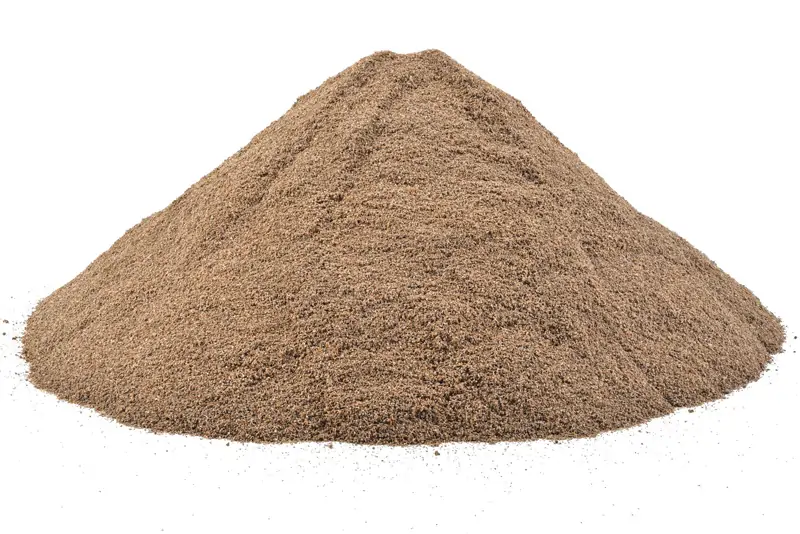
| Foundry industry | Lost foam casting, resin sand molding, V-process molding; | Compacting sand molds through vibration to fill complex mold cavities is one of the most core applications of vibration platforms. |
| Building materials industry | Concrete prefabricated components, cement products, refractory bricks, civil air defense doors; | Vibrating to exhaust air, compact and shape materials such as concrete, thereby improving product strength and uniformity. |
| Metallurgy/mining | Powder metallurgy, ore, sand and soil compaction | Used for compacting and shaping various powdery and granular materials to increase their density. |
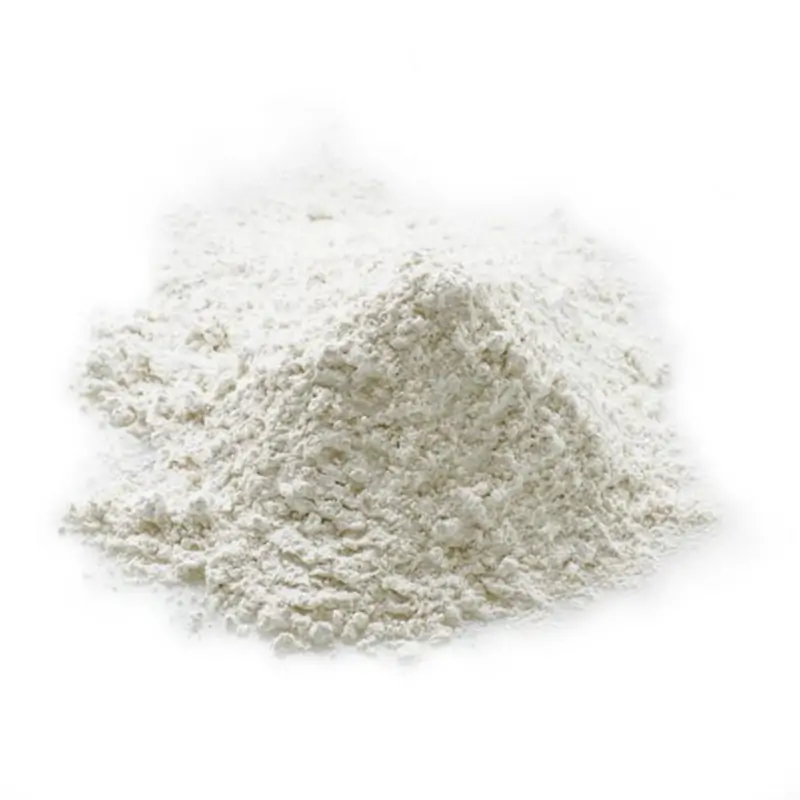
| Chemical industry | Powder processing for coatings, inks, pigments, fertilizers, etc. | Used for uniform mixing, compacting, and shaping of granular and powdered materials. |
| Food industry | Powder compaction for flour, starch, seasonings, etc. | Used for compacting and shaping materials to ensure product density and consistency. |
| Pharmaceutical industry | Compaction and packaging of pharmaceutical powders and granules. | Ensures the medication is filled densely and the dosage is accurate. |
| Automotive/transportation | Production of automotive parts and castings. | Used for compacting, shaping, or simulating transportation vibration testing in the manufacturing and assembly of components. |
| Packaging industry | Compaction of bulk bag and bagged materials. | Compact fluffy powder materials through vibration to improve bagging efficiency and avoid ‘false high’ weight. |
| Laboratory/research | Cement mortar strength testing, material testing, and simulated transportation testing. | Used to eliminate air bubbles in trial molds, or to conduct vibration, impact, and other reliability tests on products. |
| Other industries | Power, water conservancy, molds, plastics, ceramics, aerospace. | It has applications in fields such as power equipment manufacturing, water conservancy engineering construction, mold filling, and precision manufacturing. |
| Foundry industry | Lost foam casting, resin sand molding, V-process molding. | Compacting sand molds through vibration to fill complex mold cavities is one of the most core applications of vibration platforms. |


Key Points for Selection
The following points need to be considered during the selection process:
- Determine the tabletop size: Select an appropriate size based on the length, width, and overall dimensions of the items to be compacted.
- Clarify the application scenario: Determine whether it is for industrial compaction or product testing.
- Calculate the load capacity: Choose a model with sufficient load-bearing capacity based on the total weight of the material, sand box, or workpiece.
- Consider special requirements: If explosion-proofing or special materials are needed, inform the manufacturer in advance.
Conclusion
Vibration tables can reduce air and gaps within the materials. Driven by vibration mechanisms, these platforms perform three-dimensional vibrations in horizontal, vertical, and longitudinal directions. There are concrete vibration tables, cement product vibration platforms, three-dimensional vibration tables, etc., and the platform surface can be custom-made.