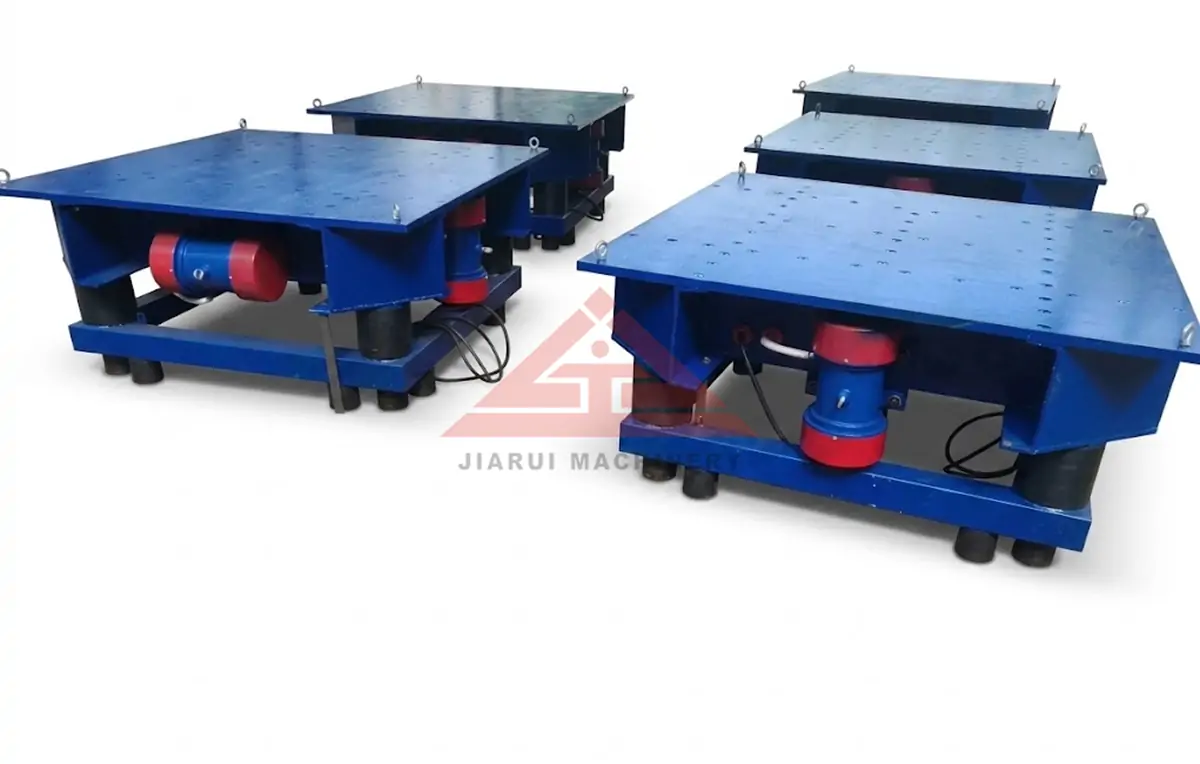
Vibrating Table
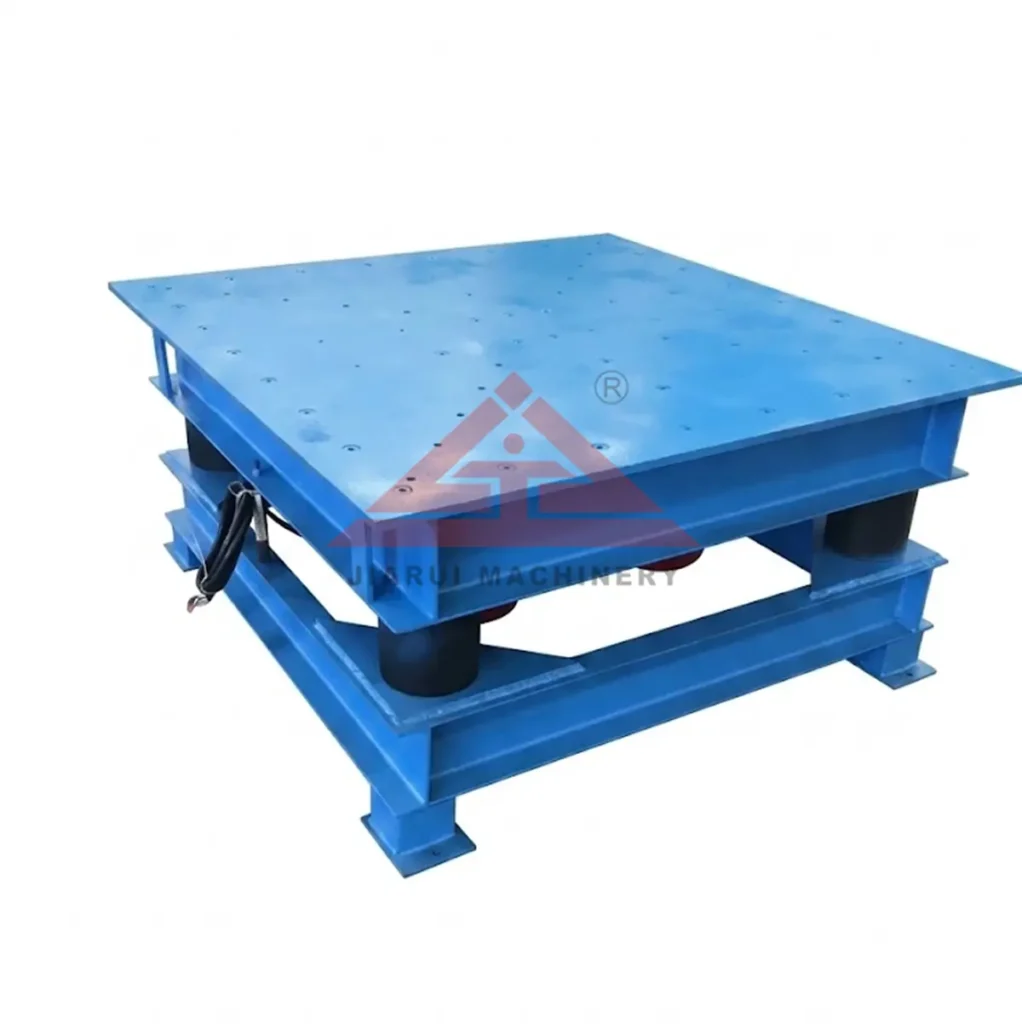
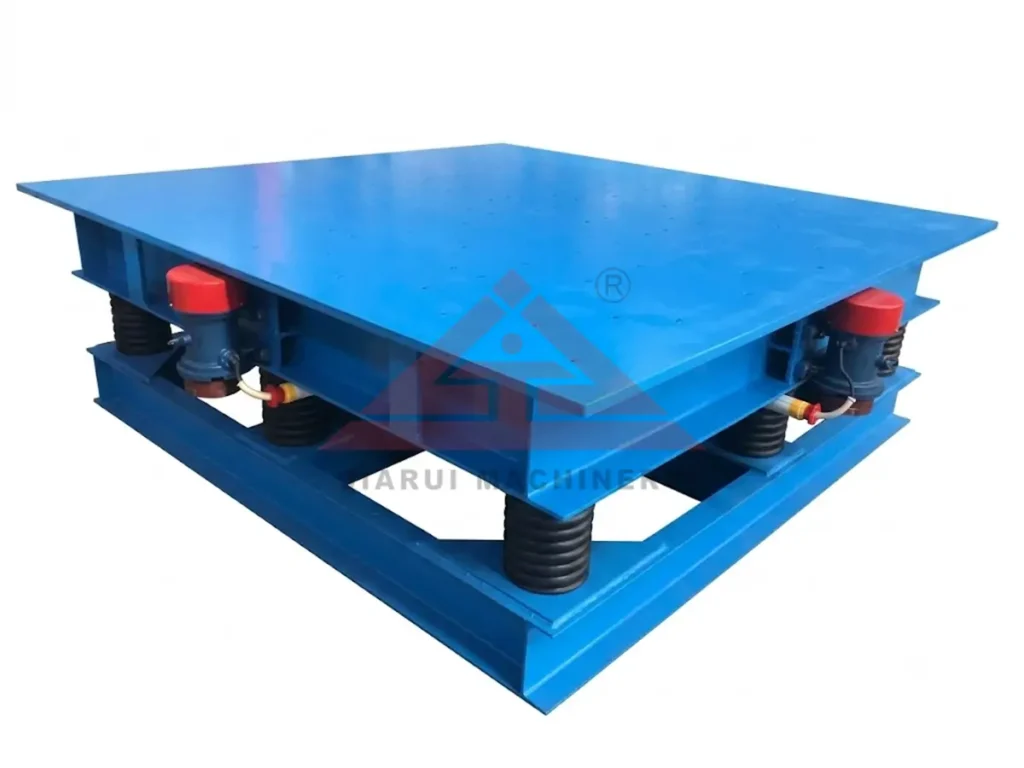
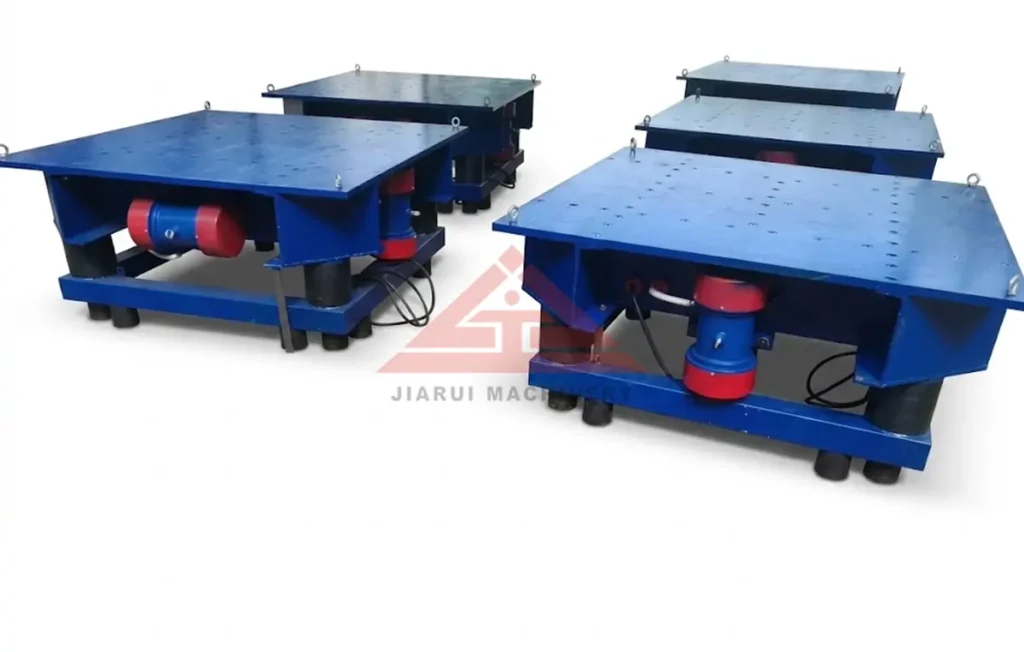
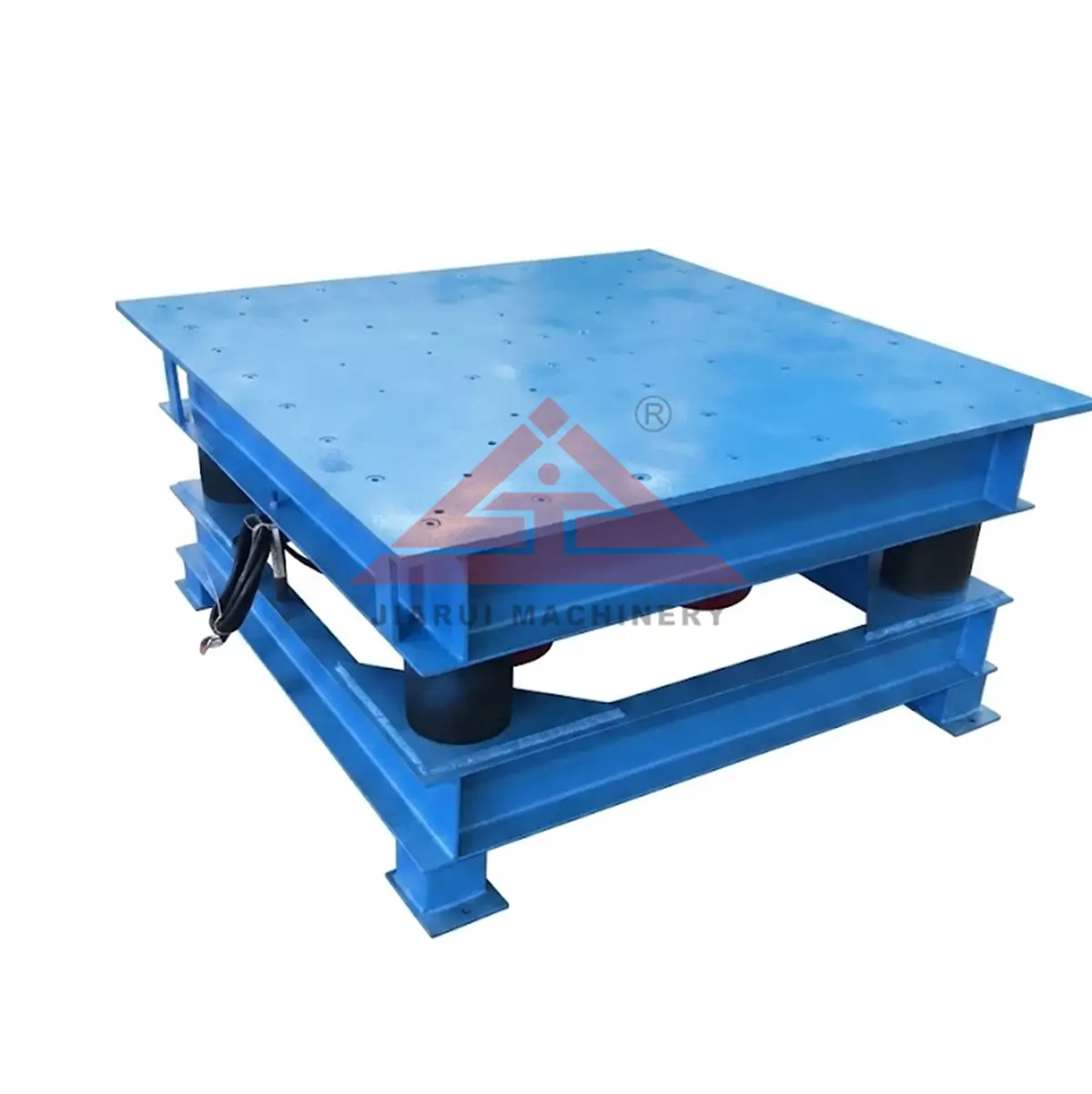
Vibration tables, also known as compacting tables, are primarily used for compacting materials. They can reduce air and gaps within the materials. Driven by vibration mechanisms, these platforms perform three-dimensional vibrations in horizontal, vertical, and longitudinal directions. During use, the compaction effect of the materials can be achieved by adjusting the excitation force of the vibration motors. According to user requirements, there are concrete vibration platforms, cement product vibration platforms, three-dimensional vibration platforms, etc., and the platform surface can be custom-made.
Different workpiece weights, table sizes, and production methods require different vibration force and structural configurations. Jiarui engineering team can adjust the table size, vibration system configuration, and installation solution according to actual operating conditions, ensuring that the equipment is better matched with the production process.
- Models: ZP-4 / ZP-6 / ZP-8 / ZP-10 / ZP-12 Series
- Table Size: 400 mm × 400 mm- 2000 mm × 2000 mm
- External Shape: Square, Rectangle, or Other Shapes
- Excitation Force: 20–80 kN
- Power Range: 1.6–7.5 kW
- Application Industries: Foundry, concrete products, powder materials, refractory materials
- Customization: Supports customized table size, vibration parameters, and structural design
What is a Vibrating Table?
A Vibrating Table, also known as a vibration compaction table or vibrating platform, is mainly used for compacting materials and molds. By applying controlled vibration, loose materials gradually settle down, reducing internal air gaps and improving filling density. It is commonly used in foundry sandboxes, concrete products, powder packaging, and refractory material production.
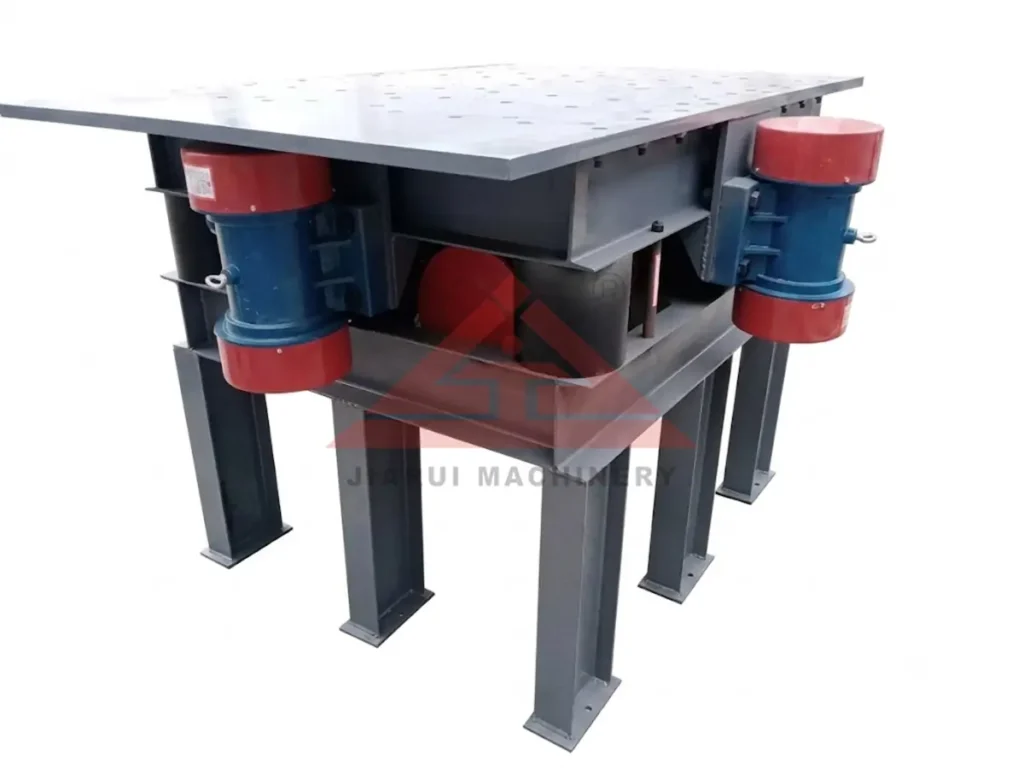
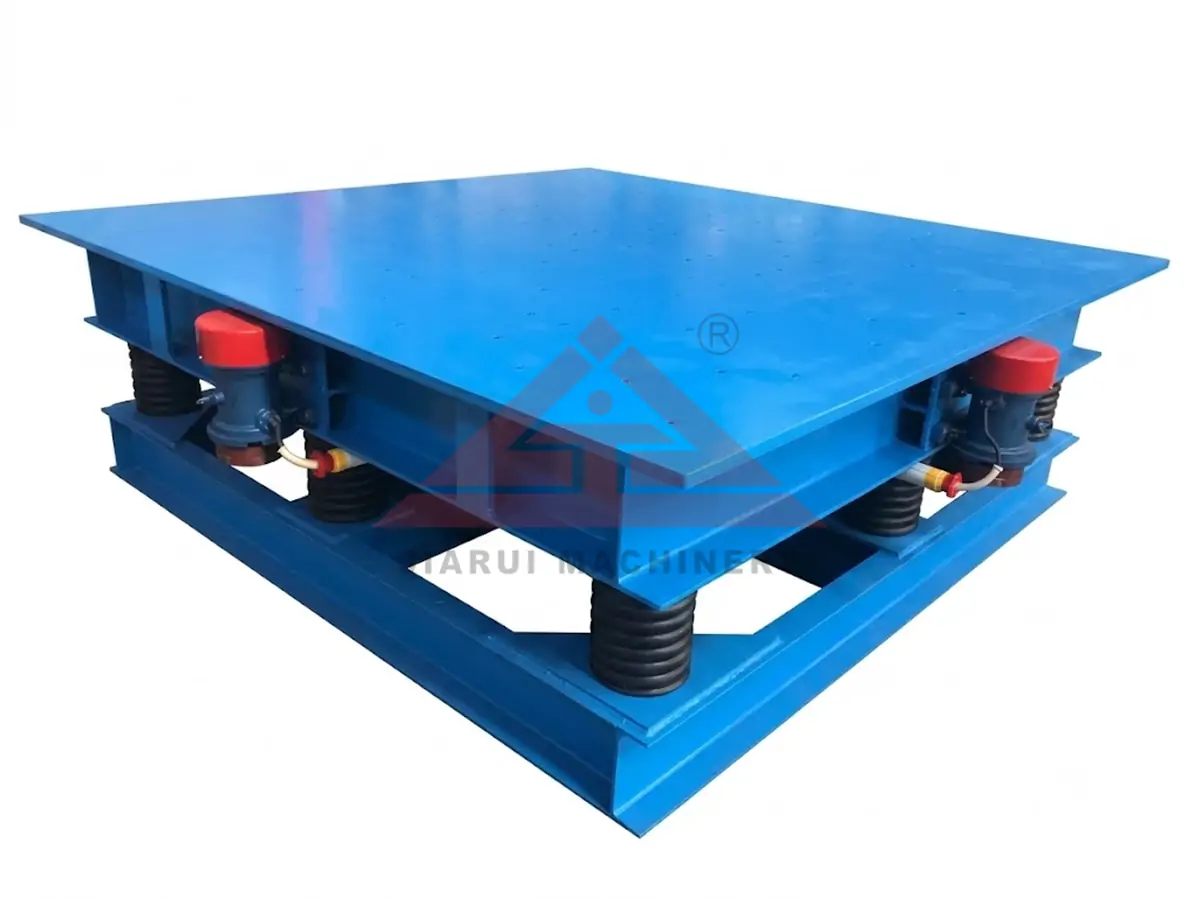
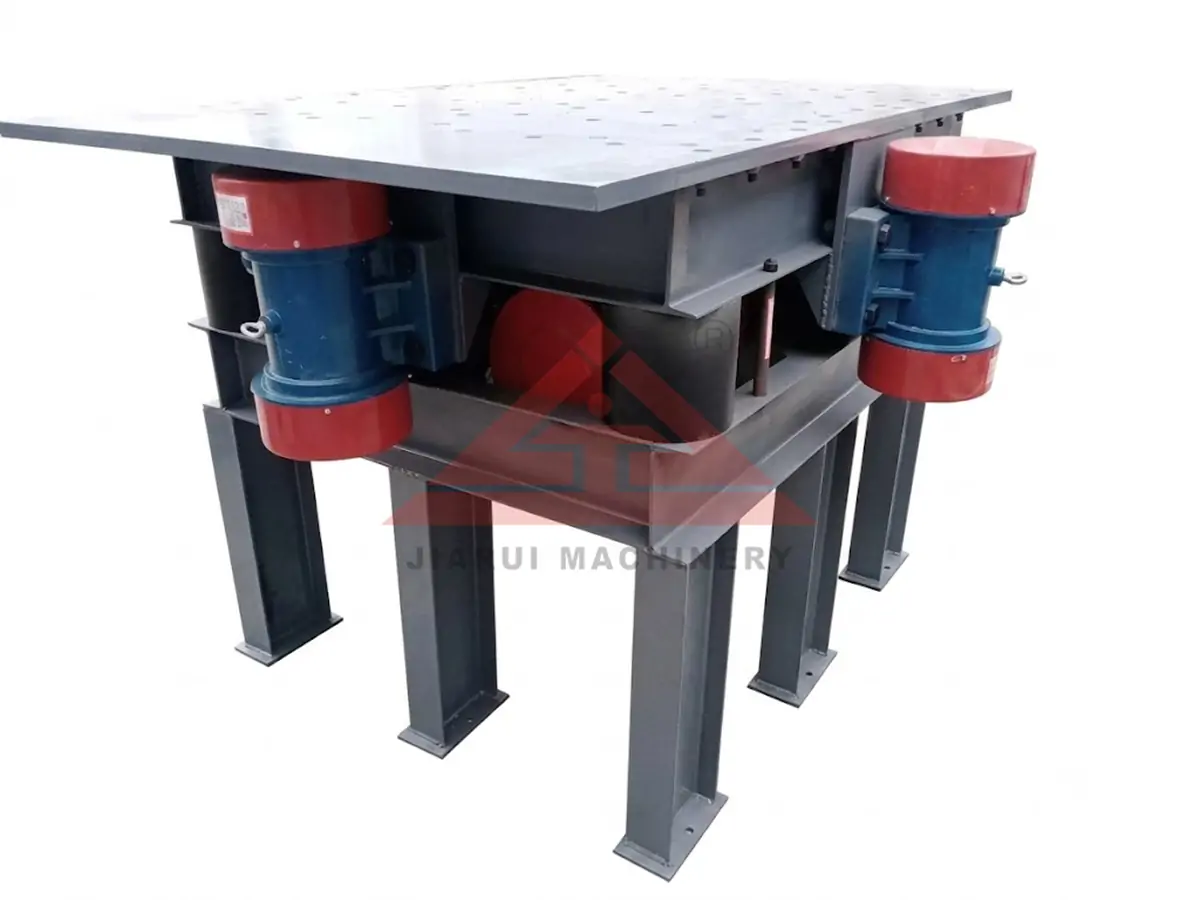
Sandboxes, molds, and precast products usually have different weights and dimensions, which require different vibration forces, table sizes, and load capacities. The ZP Series uses a multi-point excitation structure with 4–12 vibration points. The maximum exciting force can reach 80 kN, and the equipment configuration can be selected according to workpiece weight, mold size, and production requirements.
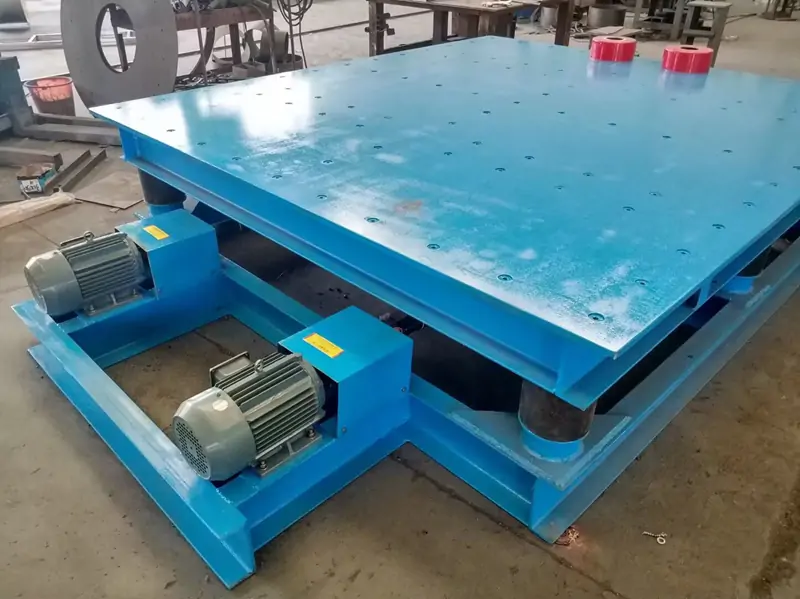
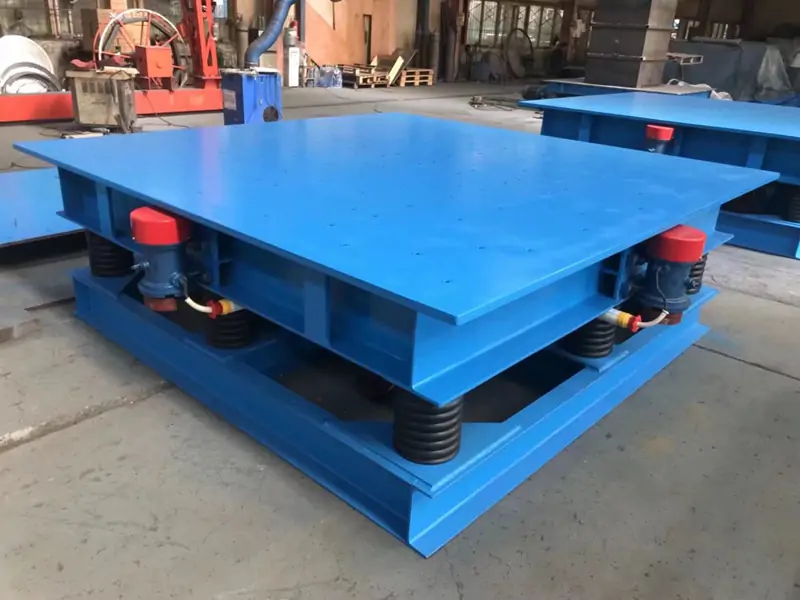
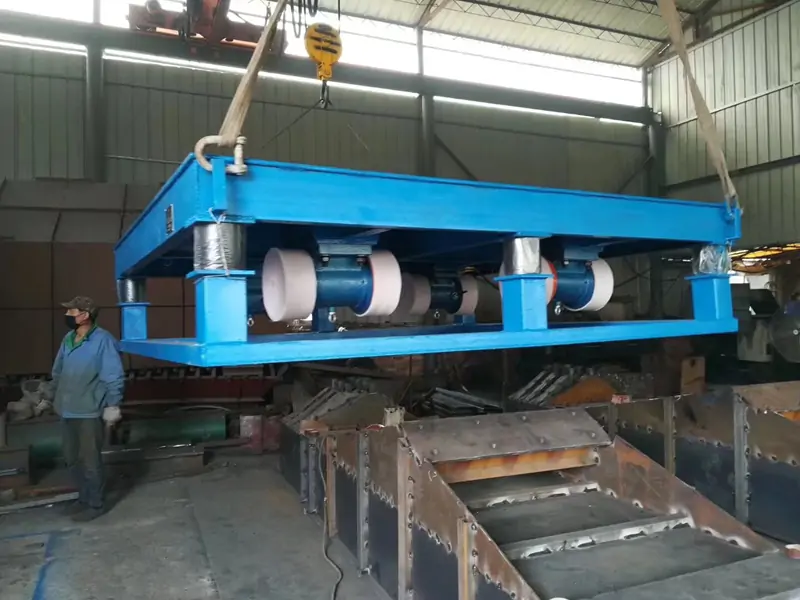
Working Principle
The equipment works by using vibration motors to generate exciting force, causing the table surface to produce stable vibration and driving the materials, molds, or sandboxes to move together. During vibration, loose materials gradually settle, particles rearrange, and internal gaps are reduced, achieving better compaction results.
1. Materials are placed on the vibrating table surface
During operation, sandboxes, molds, or containers filled with materials are placed on the working table. The equipment requires suitable table dimensions according to workpiece size and weight to ensure stable force distribution during vibration.
2. Vibration motors drive the table operation
After the equipment starts, the vibration motors generate an exciting force and transmit it to the table surface through the connection structure, causing materials or molds to vibrate with the table in a regular motion.
3. Materials gradually become compact during vibration
As vibration continues, particles inside loose materials continuously adjust their positions. Smaller particles fill the gaps between larger particles, while internal air is gradually removed, allowing materials such as foundry sand, concrete, and powder materials to achieve better compaction.
4. Compacted materials enter the next production process
After reaching the required process standard, the workpiece or material moves to the next production stage. The ZP Series can be designed according to site layout requirements and integrated with conveying equipment to support continuous production.
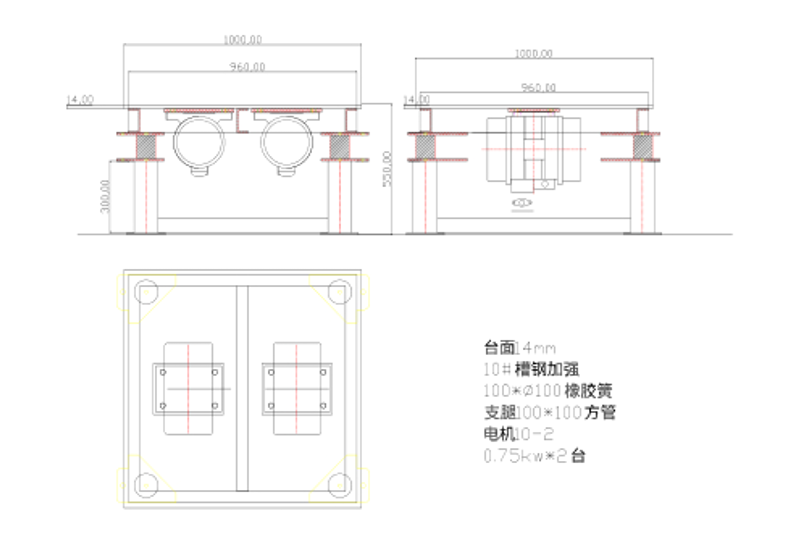
Equipment performance depends not only on vibration force but also on material characteristics, workpiece weight, and equipment configuration. Proper matching of vibration parameters is essential for stable long-term operation.
Advantages
The ZP Series Vibrating Table focuses on load capacity, vibration stability, and actual application requirements during design. It is suitable for workpieces of different sizes and various production environments.
High Load-Bearing Structure Design
The reinforced steel table structure can withstand vibration loads from sandboxes, molds, precast concrete products, and other workpieces with different weights, meeting the compaction requirements of large and heavy components.
Multi-Point Excitation for More Uniform Vibration
Multiple excitation points are configured according to the table size, allowing vibration force to be evenly transferred across the platform. This helps reduce insufficient vibration areas that may occur on large-size tables.
Flexible Vibration Parameter Adjustment
The exciting force, vibration amplitude, and operating parameters can be adjusted according to material characteristics, workpiece weight, and compaction requirements, improving overall compaction performance.
Suitable for Multiple Compaction Applications
It is suitable for foundry sandboxes, concrete precast products, powder packaging, refractory materials, and other production processes, meeting different material densification requirements.
Production Line Integration Capability
The equipment can be customized according to site layout by adjusting table height, installation method, and connection structure. It can also be integrated with conveying equipment and automated production lines.
Engineering-Based Customized Design
According to workpiece dimensions, load requirements, and operating conditions, Jiarui provides customized design for table size, excitation configuration, and structural form to ensure the equipment matches the actual application.
Applications
This equipment is mainly used to solve problems such as loose materials and insufficient filling. The ZP Series Vibrating Compaction Table is suitable for applications involving foundry sand, concrete, powder materials, refractory materials, and other materials. Vibration performance can be adjusted according to material characteristics and process requirements.
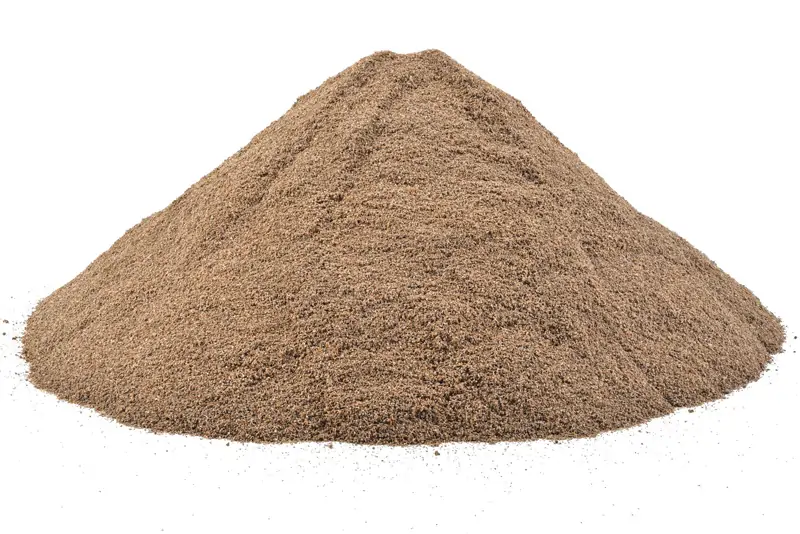
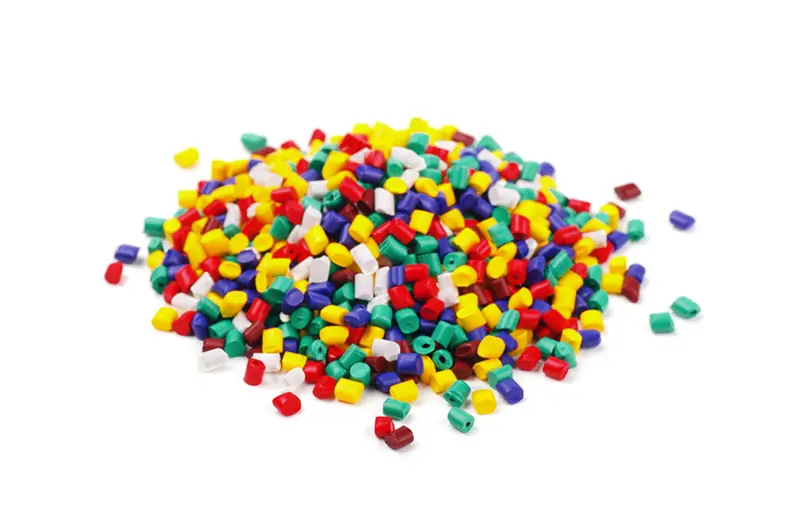
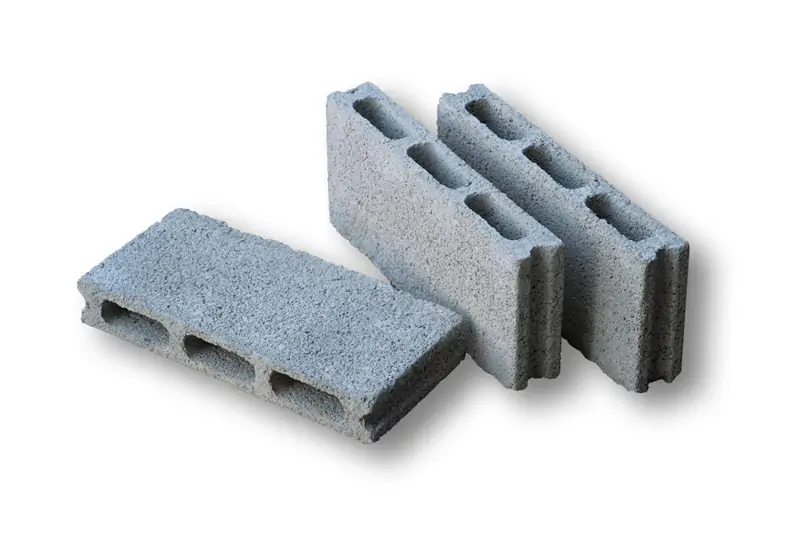

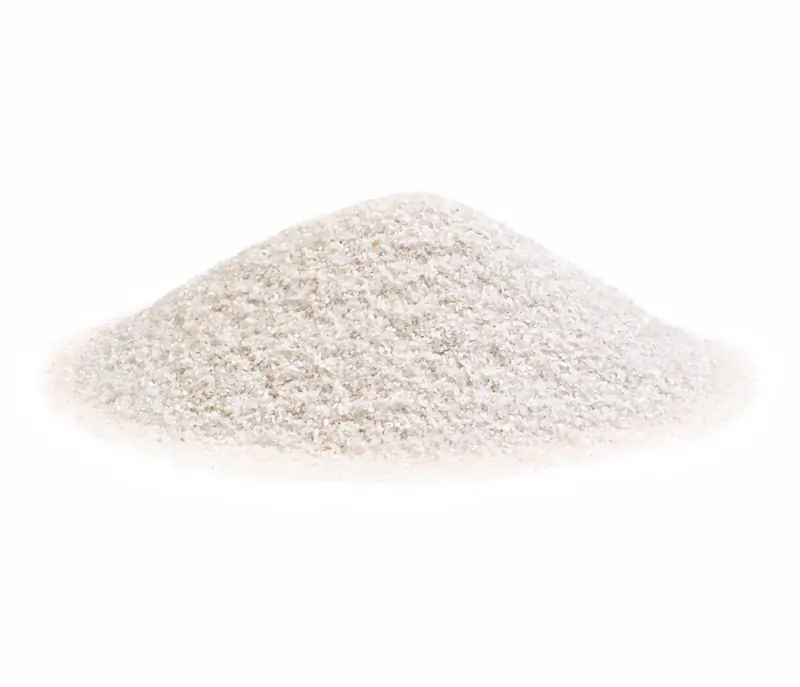

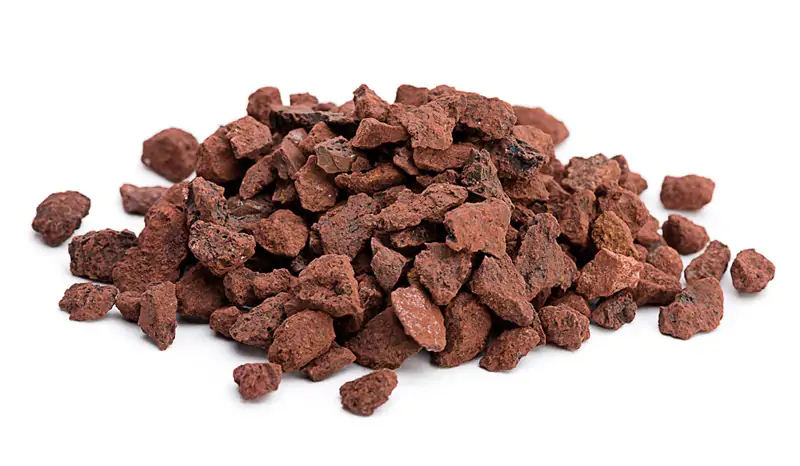
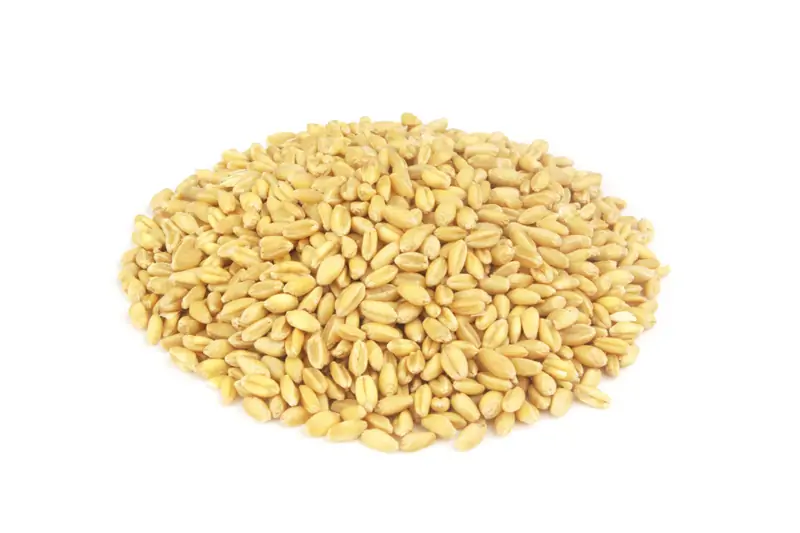
Which Materials Are Suitable for a Vibrating Table?
| Suitable Materials | Common Industries | Vibration Function |
| Foundry sand, resin sand | Foundry industry | Helps sand fill mold cavities and improves sand compactness |
| Concrete precast products | Building materials industry | Removes internal air bubbles and improves concrete density |
| Cement powder, mineral powder | Powder processing industry | Allows powder materials to settle naturally, improving filling efficiency and reducing packaging gaps |
| Refractory materials | Refractory industry | Helps compact materials and improve stability after forming |
| Quartz sand | Glass and foundry industries | Improves particle arrangement and filling performance |
| Chemical powders | Chemical industry | Used during bagging and container filling to improve container utilization |
| Plastic pellets | Plastic industry | Promotes particle settlement and improves packaging compactness |
| Mineral sand, mineral powder | Metallurgical industry | Improves loose material stacking condition and stability |
Conditions to Confirm Before Using a Vibrating Table
This equipment is suitable for materials that require settling and compaction due to internal gaps. However, not all materials are suitable for vibration treatment. During equipment selection, material conditions and production requirements should be confirmed in advance.
- Wet materials with high moisture content and strong adhesion may cause sticking or agglomeration after vibration.
- Materials requiring continuous conveying should consider vibrating conveying equipment or screw conveyors instead.
- Precision products that are sensitive to vibration and may be damaged should not be directly processed on this equipment.
- Production processes requiring crushing, screening, or mixing cannot be replaced by a Vibrating Table.
The vibration effect is closely related to material characteristics, workpiece weight, table size, and vibration parameters. Equipment configuration should be matched with actual production conditions to avoid insufficient vibration force or unstable operation.
When Is a Vibrating Table Needed?
During production, when materials or workpieces have problems such as insufficient filling, excessive internal gaps, or low compaction density, a Vibrating Table can be used as an auxiliary compaction solution. Through stable vibration, material particles rearrange to improve filling performance and forming consistency.
Common application situations include:
- Foundry sandboxes require higher sand compaction after filling to improve mold tightness.
- Concrete precast products contain excessive internal air bubbles and require improved concrete density.
- Powder or granular materials have large gaps after packaging and require higher filling density.
- Large molds or workpieces require a more stable mechanical compaction method instead of manual vibration.
- Production processes require higher product consistency and reduced differences caused by manual operation.
The main purpose of a Vibrating Table is to solve the problem of how loose materials can be compacted more evenly and effectively. If the production requirement involves continuous conveying, screening, or mixing, the corresponding equipment should be selected instead.
Technical Parameters
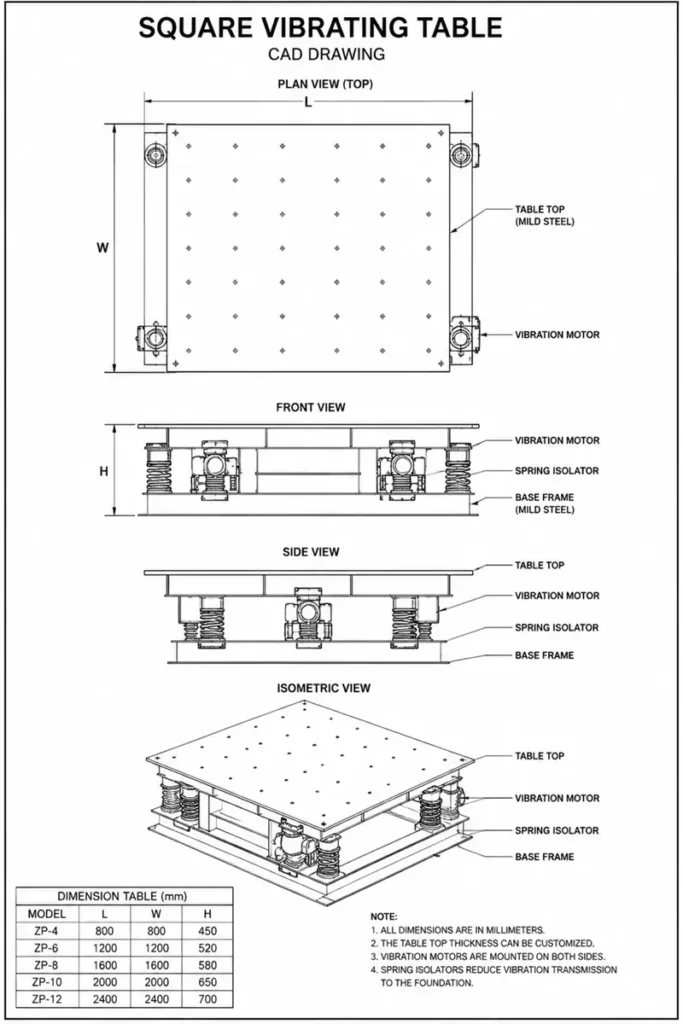
The ZP Series Vibrating Table provides multiple specifications for different application requirements. The table size range covers 400×400 mm to 2000×2000 mm, with exciting force from 20–80 kN. Different models are designed with different numbers of excitation points, power configurations, and structural dimensions, making them suitable for the compaction requirements of sandboxes, molds, precast products, and powder materials with different weight levels. The following parameters are for reference only; actual production and processing shall prevail.
| Model | Top Surface Size (mm) | Excitation Force (kN) | Power (kW) | Capacity (kg) |
| ZDP-500×500 | 500×500 | — | 2×0.25 | 300 (self-weight) |
| Two-dimensional Vibration Platform | 500×500 | 6 (Total) | 0.25 | 500 |
| Two-dimensional Vibration Platform | 800×800 | 10 (Total) | 0.37 | 700 |
| ZP-4 | 800×800 | 20 | 1.6 | 450 (weight) |
| Two-dimensional Vibration Platform | 1000×1000 | 10 (Total) | 0.37 | 700 |
| ZP-6-Ⅰ | 1000×1000 | 30 | 2.4 | 600 (weight) |
| Two-dimensional Vibration Platform | 1200×1200 | 20 (Total) | 0.75 | 1500 |
| ZP-6-Ⅱ | 1200×1200 | 30 | 2.4 | 860 (weight) |
| Two-dimensional Vibration Platform | 1500×1500 | 40 (Total) | 0.75 | 3000 |
| ZP-8-Ⅰ | 1600×1200 | 40 | 3.2 | 1000 (weight) |
| ZP-8-Ⅱ | 1600×1400 | 40 | 3.2 | 1250 (weight) |
| Two-dimensional Vibration Platform | 1600×2000 | 40 (Total) | 0.75 | 3000 |
| ZP-10-Ⅰ | 2000×1600 | 50 | 4.0 | 1600 (weight) |
| ZP-10-Ⅱ | 2000×1800 | 60 | 6.0 | 2000 (weight) |
| Two-dimensional Vibration Platform | 2000×2000 | 60 (Total) | 1.1 | 4500 |
Vibration Parameters:
| Parameter | Range |
| Vibration Frequency | 20–80 Hz |
| Vibration Acceleration | 1–2 g |
| Amplitude | 0.5–2 mm |
Jiarui can customize the Vibrating Table according to customer workpiece dimensions, load requirements, and production line conditions. For large sandboxes, complex cavity castings, or continuous production line applications, we can provide a compaction table solution that matches specific operating conditions.
Vibrating Table Selection Guide
There is no fixed Vibrating Table model that can directly fit every application. Equipment selection mainly depends on workpiece weight, table size, and compaction requirements. When configuring equipment, our engineers usually confirm the actual load and operating method first to avoid insufficient vibration force or unnecessary oversizing.
First Confirm the Workpiece Weight
When selecting a Vibrating Table, the total working load should be considered, including the weight of the sandbox, mold, workpiece, and material. A higher load requires a stronger platform structure and greater exciting force, so the vibration configuration should be properly matched.
Then Determine the Required Table Size
The table size should not only meet workpiece placement requirements but also ensure that vibration force can be evenly transferred. For large sandboxes, molds, or precast products, a larger working surface and more excitation points are usually required to avoid insufficient vibration in local areas.
Finally, Confirm the Installation Method
For standalone operation, the main considerations are load capacity and operating convenience. If the Vibrating Table needs to be integrated into an automated production line, equipment height, positioning method, and connection with upstream and downstream equipment should also be considered.
The key to Vibrating Table selection is not choosing the largest model, but ensuring that equipment parameters match actual operating conditions. If the application conditions are special, customers can provide workpiece dimensions, weight, and production requirements. Jiarui engineering team can help confirm a suitable configuration based on practical experience.
Customization
Different factories have different workpiece sizes, weights, and production processes. Standard models may not fully meet every application requirement. Vibrating Table customization is not simply about changing equipment dimensions; it requires comprehensive consideration of load conditions, compaction requirements, and installation environment to design the table structure, excitation system, and connection method properly.
Based on years of experience in vibration equipment design, we usually confirm workpiece weight, dimensions, and operating methods first, then match the suitable structure and parameters according to site conditions. If you are unsure about the right model, providing the following basic information allows our engineering team to confirm the equipment configuration.
Required Information:
- Workpiece or material name
- Maximum weight
- Overall dimensions
- Application requirements
After receiving the above information, we will evaluate the workpiece weight, size, and operating requirements to confirm the appropriate Vibrating Table structure and configuration solution.
Jiarui Manufacturing
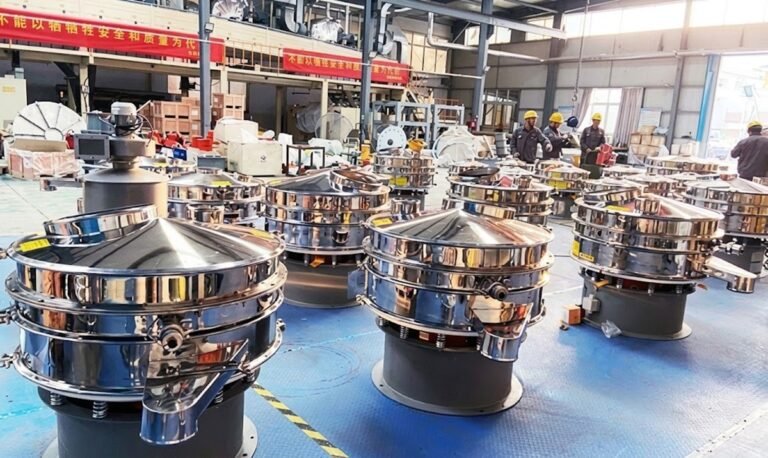
A Vibrating Table is not simply a steel structure machine. During long-term operation, it continuously withstands vibration loads, and factors such as table strength, welding quality, and excitation system installation directly affect equipment stability and service life. During manufacturing, we focus on these details that influence long-term performance, from structural processing and component assembly to complete machine testing, ensuring stable operation after delivery.
With years of experience in vibration equipment manufacturing, Jiarui focuses on the long-term performance and reliability of equipment in real production environments, rather than simply meeting basic technical specifications. Our Vibrating Table and other vibration equipment are supplied to global customers through professional B2B platforms such as Made-in-China.com, where customers can learn more about our manufacturing capabilities, product range, and customized service solutions.
FAQs
Get a Free Consultation
Fill out the form below to connect with our experts and receive personalized recommendations for your application.