A vibrating sieve machine uses vibration to move materials across the screen surface and classify them according to particle size. It is mainly used for the classification, impurity removal, and filtration of powders, granules, slurries, and some liquids for solid-liquid separation.
When choosing screening equipment, many users first look at mesh size, capacity, and equipment type. However, screening performance is also affected by material characteristics, the screening purpose, and equipment structure. This article explains how a vibrating sieve machine works, what to consider when screening powders and liquids, and the key factors to confirm when selecting equipment.
What Is a Vibrating Sieve Machine?
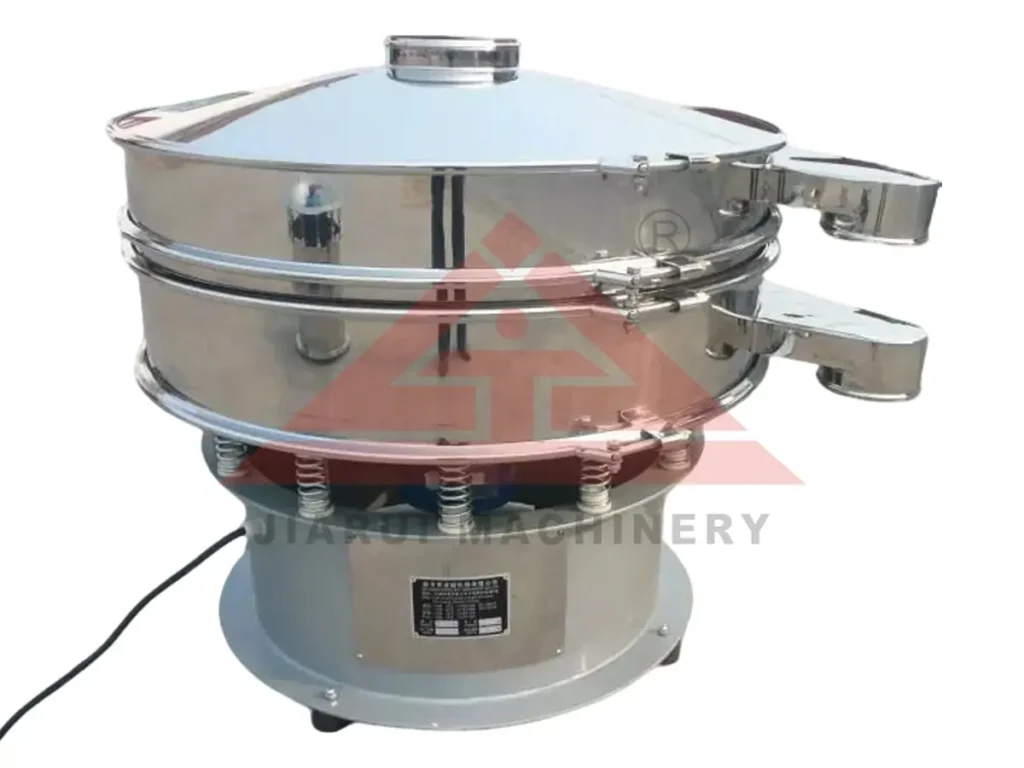
A vibrating sieve machine is industrial equipment mainly used to separate materials of different sizes. It uses a screen mesh to separate materials for particle-size classification, impurity removal, and filtration. Unlike manual sieving, a vibrating sieve machine does not require the screen to be operated by hand. Instead, mechanical vibration keeps the material moving across the screen surface, making it more suitable for continuous screening in production lines.
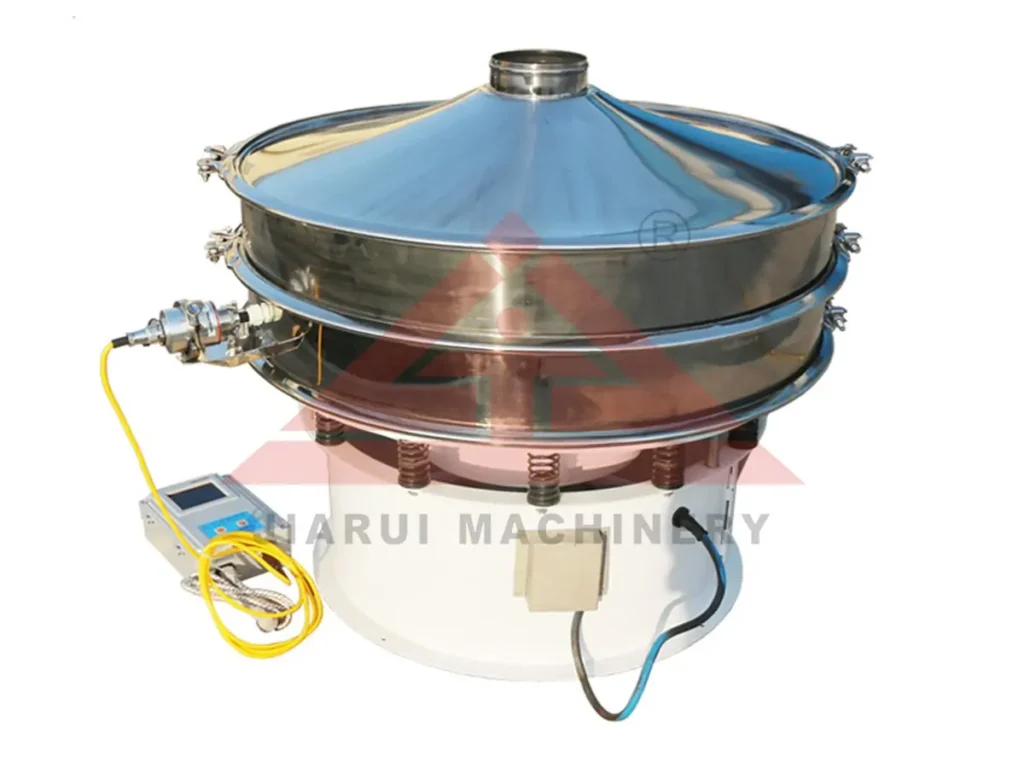
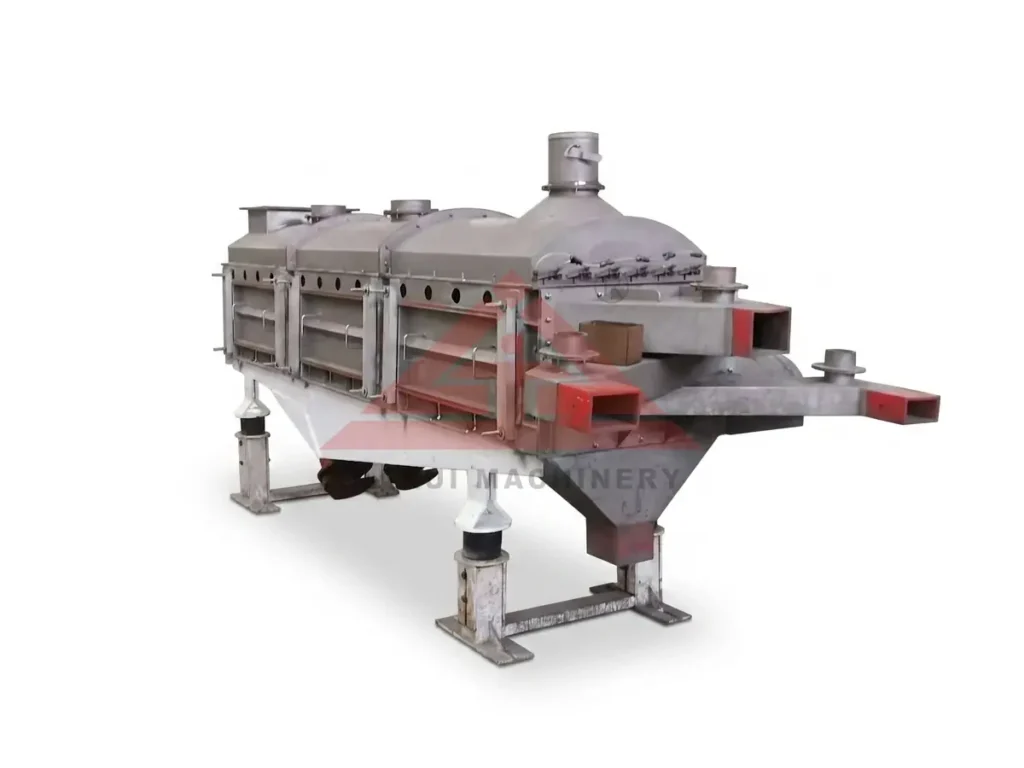
It is important to note that a vibrating sieve machine is not one fixed equipment model, but a general term for a range of screening machines. Depending on the material characteristics and production requirements, common types include rotary vibrating screens, ultrasonic vibrating screens, and linear vibrating screens.
How Does a Vibrating Sieve Machine Complete the Screening Process?
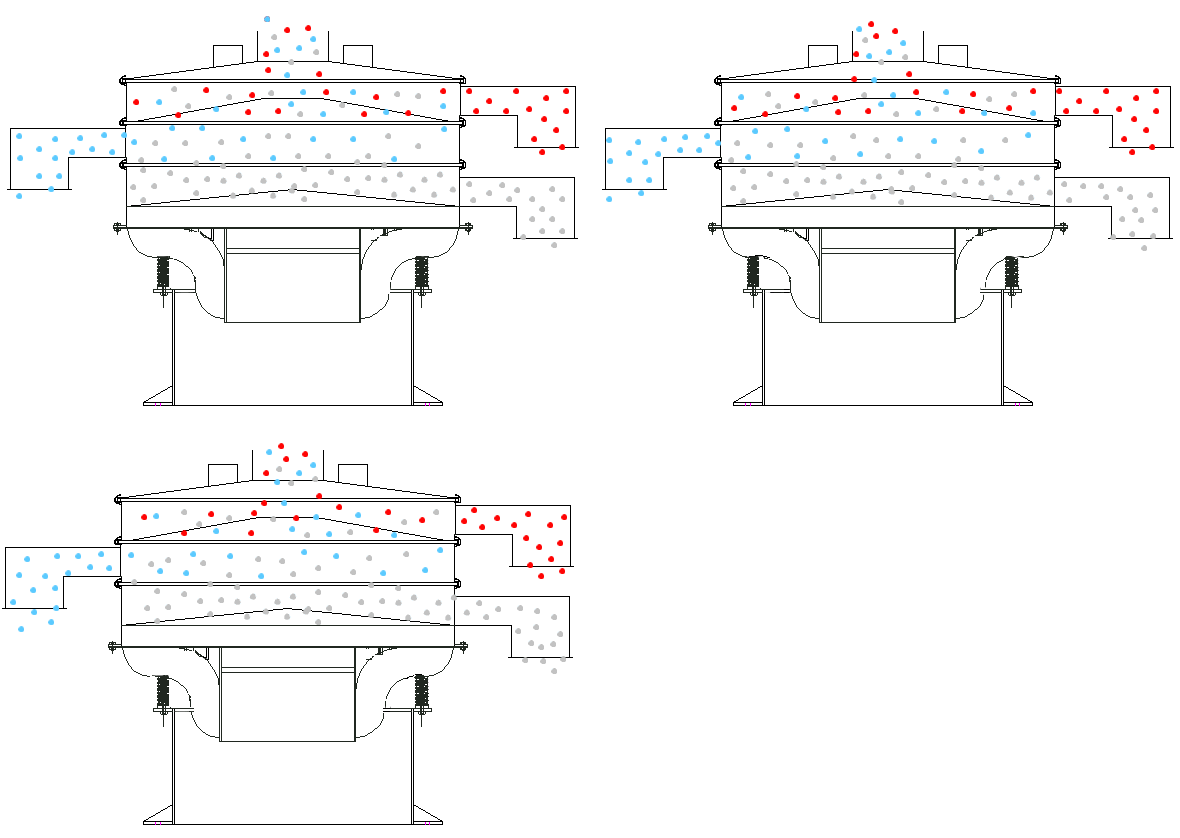
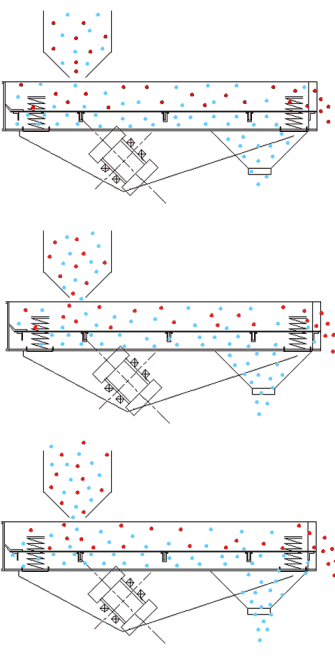
The working process of a vibrating sieve machine is not complicated. Its basic function is to keep the material moving across the screen surface so that particles of different sizes can gradually separate. After the material enters the machine, vibration moves and disperses the material across the screen. Smaller particles can pass through the screen openings and enter the next screen deck or collection area, while larger particles cannot pass through the mesh and continue moving toward the discharge end.
Screening performance mainly depends on the screen opening size and how the material moves across the screen surface. The screen opening determines the particle size that can pass through, while the right vibration motion helps disperse the material and keep screening stable. With multiple screen decks, the material can be separated into different particle-size ranges and discharged as different product grades.
What Materials Can a Vibrating Sieve Machine Screen?
A vibrating sieve machine can handle different types of materials, including powders, granules, and slurries. However, different materials present different screening challenges. When selecting equipment, it is important to first consider the material condition and the intended screening result.
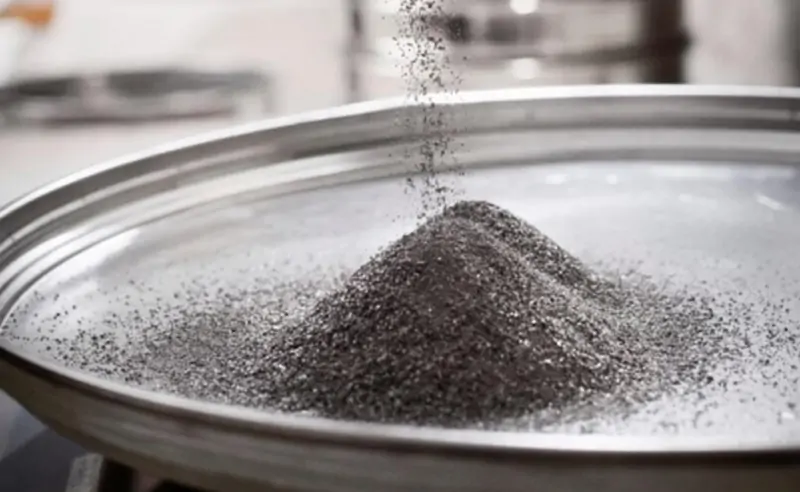
Powder Screening:When screening powders, in addition to screening accuracy, it is important to consider whether the material is prone to agglomeration, adhesion, or static electricity.
Dry powders with good flowability usually pass through the screen more easily, while fine powders or powders that tend to agglomerate may block the screen mesh and affect screening performance. For these materials, anti-clogging measures such as bouncing balls or ultrasonic screening can be added to help prevent fine powder from affecting normal screening.
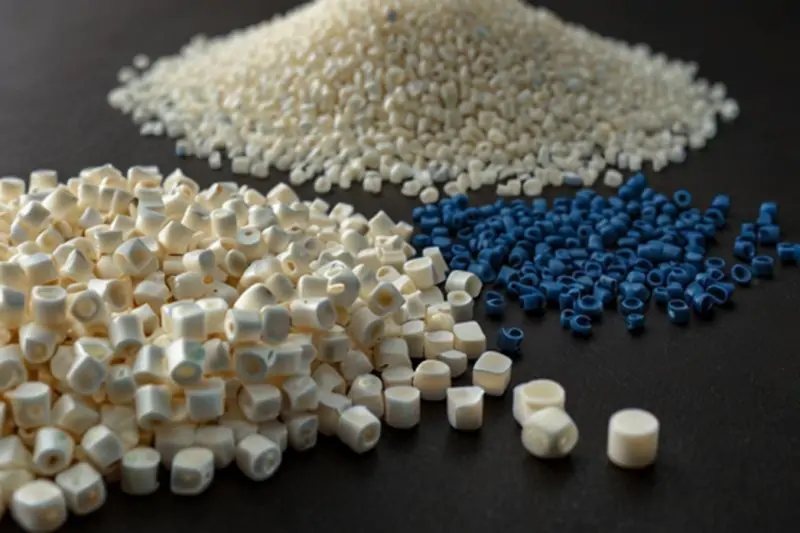
Particle Classification:Granular materials are mainly classified by using screen meshes with different opening sizes.
When the same material needs to be separated into several particle-size ranges, multiple screen decks can be used so that particles of different sizes are discharged separately. For continuous production, material flowability and capacity also need to be considered to prevent excessive feeding from causing material buildup on the screen surface.
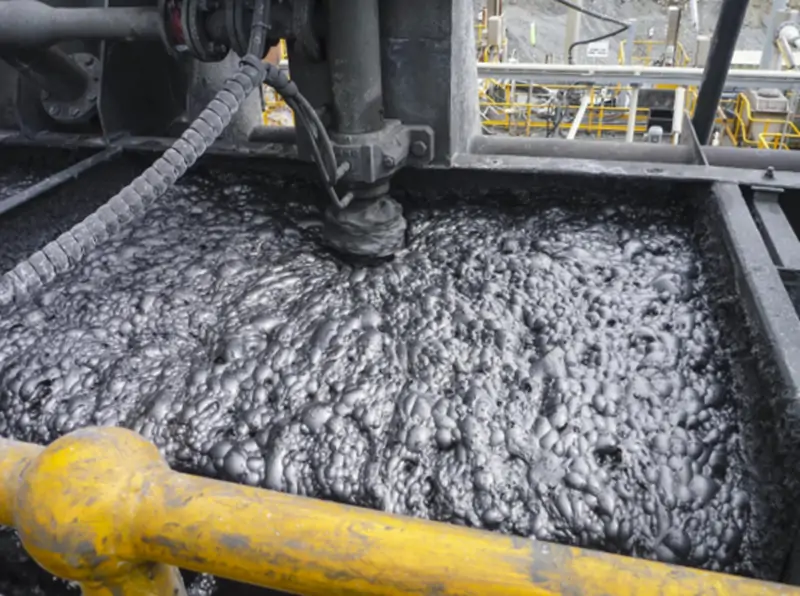
Liquid and Slurry Filtration:Liquid screening is usually not intended to separate the liquid itself, but to remove solid particles from it.
For example, impurities, agglomerates, or undissolved particles in a slurry can be removed through a screen. For high-viscosity materials or materials with a high solids content, the screening structure needs to be selected according to the material condition.
What Are the Differences Between Different Types of Vibrating Sieve Machines?
Vibrating screens may look similar in structure, but different types of equipment are designed for different screening requirements.
Common types of vibrating sieve machines include rotary vibrating screens, ultrasonic vibrating screens, and linear vibrating screens. Their main differences are the way the material moves, screening precision, and processing capacity.
| Type | Main Features | More Suitable For |
| Rotary Vibrating Screen | The material moves in multiple directions across the screen surface, providing a wide screening range and good adaptability | General powder and granular material screening, impurity removal, and classification |
| Ultrasonic Vibrating Screen | Adds high-frequency vibration to conventional vibration to help fine particles pass through the screen and reduce mesh clogging | Fine powders, high-mesh screening, and materials prone to agglomeration or static electricity |
| Linear Vibrating Screen | The material moves in a linear direction, providing fast screening and higher processing capacity | Large-volume granular material screening, coarse classification, and continuous production |
When selecting equipment, you can make an initial judgment based on the material characteristics and production requirements:
- For general powder and granular material screening, a rotary vibrating screen can usually be considered first.
- For fine powders, materials prone to mesh clogging, or applications requiring higher screening precision, an ultrasonic vibrating screen can be considered.
- If capacity and continuous production are the main priorities, a linear vibrating screen can be considered.
How to Choose a Suitable Vibrating Sieve Machine?
When choosing a vibrating sieve machine, do not look only at the equipment model or screen mesh size. First confirm the material characteristics, screening purpose, and production requirements.
1.Material Characteristics:Powders, granules, and slurries have different screening requirements. You need to confirm whether the material is prone to agglomeration, mesh clogging, or adhesion, as well as its particle size and solids content.
2.Screening Purpose:First determine whether the purpose is impurity removal or particle-size classification. Impurity removal mainly focuses on screen configuration. If multiple particle sizes need to be separated, multiple screen decks need to be considered.
3.Capacity Requirements:Production volume affects equipment size and screen configuration. Continuous production requires attention to processing capacity, while small-batch production may place more emphasis on equipment flexibility.
4.Screening Accuracy: Screen opening size determines the final separation range. For fine powders, high-mesh screening, or materials prone to mesh clogging, anti-clogging screen configurations should be considered. It is also important to consider problems such as screen blinding, screen wear, vibration and noise, and changes in actual throughput. See disadvantages of a sieve shaker for more information.
5.Material Requirements: For food and pharmaceutical applications, the material of the parts that come into contact with the product and the cleaning requirements need to be considered.
If you are considering a rotary vibrating screen, see our China Rotary Vibrating Screen guide for specifications, price factors, and supplier selection.
For corrosive materials, a suitable construction material should be selected according to the material characteristics. If the material, capacity, or installation conditions are more specialized, Jiarui can also provide corresponding vibrating sieve machine configuration recommendations based on the actual requirements.
FAQs
What materials can a vibrating sieve machine screen?
A vibrating sieve machine is mainly used for the classification, impurity removal, and filtration of powders, granules, and slurries. Different materials require different configurations based on particle size, flowability, moisture content, and screening purpose. For example, fine powders require attention to mesh clogging, while slurries require consideration of solid-liquid separation performance.
Can a vibrating sieve machine be used for liquid filtration?
Yes. Liquid screening is mainly used to remove solid impurities from the liquid rather than separate the liquid itself. For example, slurries, coatings, and suspensions containing solid particles can be filtered through a screen to remove larger particles and impurities.
Why does fine powder tend to clog the screen mesh during screening?
Fine powder particles are small and can affect screen passage because of static electricity, agglomeration, or material buildup. For high-mesh powders or materials prone to adhesion, an anti-clogging configuration such as ultrasonic screening can be considered to help the material pass through the screen more consistently.
How many screen decks does a vibrating sieve machine need?
The number of screen decks depends on the screening purpose. If the machine is only used for impurity removal, a single screen deck is usually sufficient. If multiple particle-size grades need to be separated at the same time, multiple screen decks are required for classification.
How do you determine the capacity of a vibrating sieve machine?
Capacity cannot be determined by equipment size alone. It also needs to be considered together with material properties, target particle size, screen area, and production requirements. For the same material, different particle sizes, densities, flowability, and screening requirements may require different equipment specifications.
Can a vibrating sieve machine be customized for special materials and production requirements?
Yes. Different customers have different material characteristics, processing capacities, installation spaces, and production requirements, so standard equipment may not fully match the actual operating conditions.
Jiarui can adjust the number of screen decks, material, structural configuration, and equipment setup according to the actual requirements and provide corresponding vibrating sieve machine configuration recommendations.