
Eğimli Paletli Bant Konveyör Nedir?
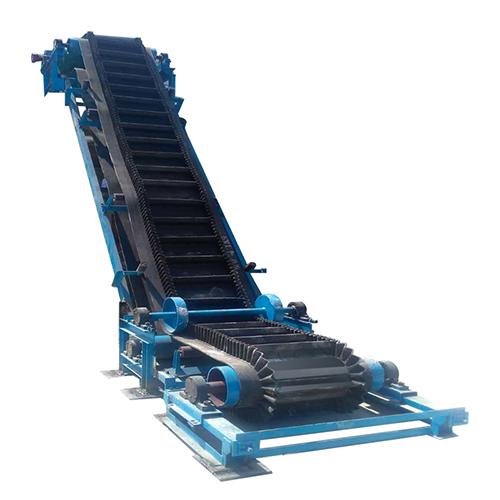
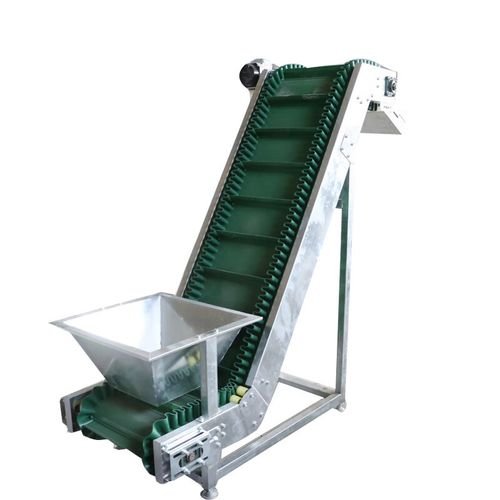
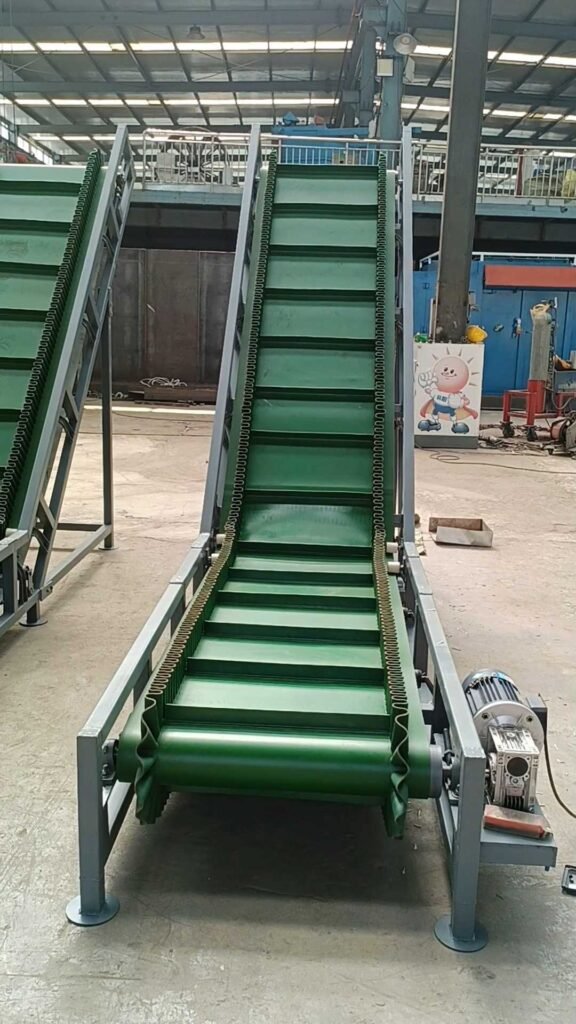
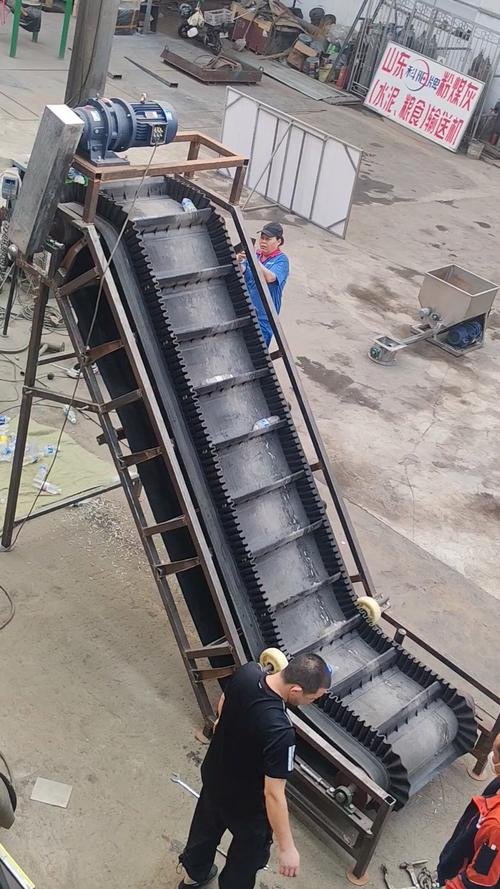
Bir eğimli bantlı paletli konveyör yan bariyerli olan, malzemeleri sürekli olarak taşıyan bir bantlı taşıma ekipmanı türüdür. Düz bir lastik taşıma bandının her iki tarafına serbestçe uzayabilen, dalgalı dikey ‘yan etekler’ takılması ve etekler arasına belirli mukavemet ve esnekliğe sahip enine bölmeler yerleştirilerek kutu benzeri oluklar oluşturulması ve malzemelerin bu oluklar içinde sürekli olarak taşınmasıyla oluşur. Bu konveyör, kömür, tahıl, yapı malzemeleri, kimya endüstrisi, hidroelektrik ve metalurji gibi departmanlarda yaygın olarak kullanılır. -19℃ ile +40℃ ortam sıcaklığı aralığında, 0,5-2,5 t/m³ yığma yoğunluğuna sahip çeşitli dökme malzemeleri taşıyabilir. Yüksek sıcaklık, asidik veya alkali maddeler, yağlar veya organik çözücüler içerenler gibi özel taşıma gereksinimleri olan malzemeler için özel yan bariyerli konveyör bantları kullanılmalıdır.
Temel yapı
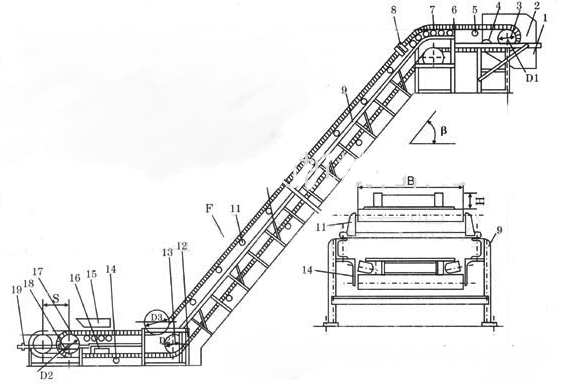
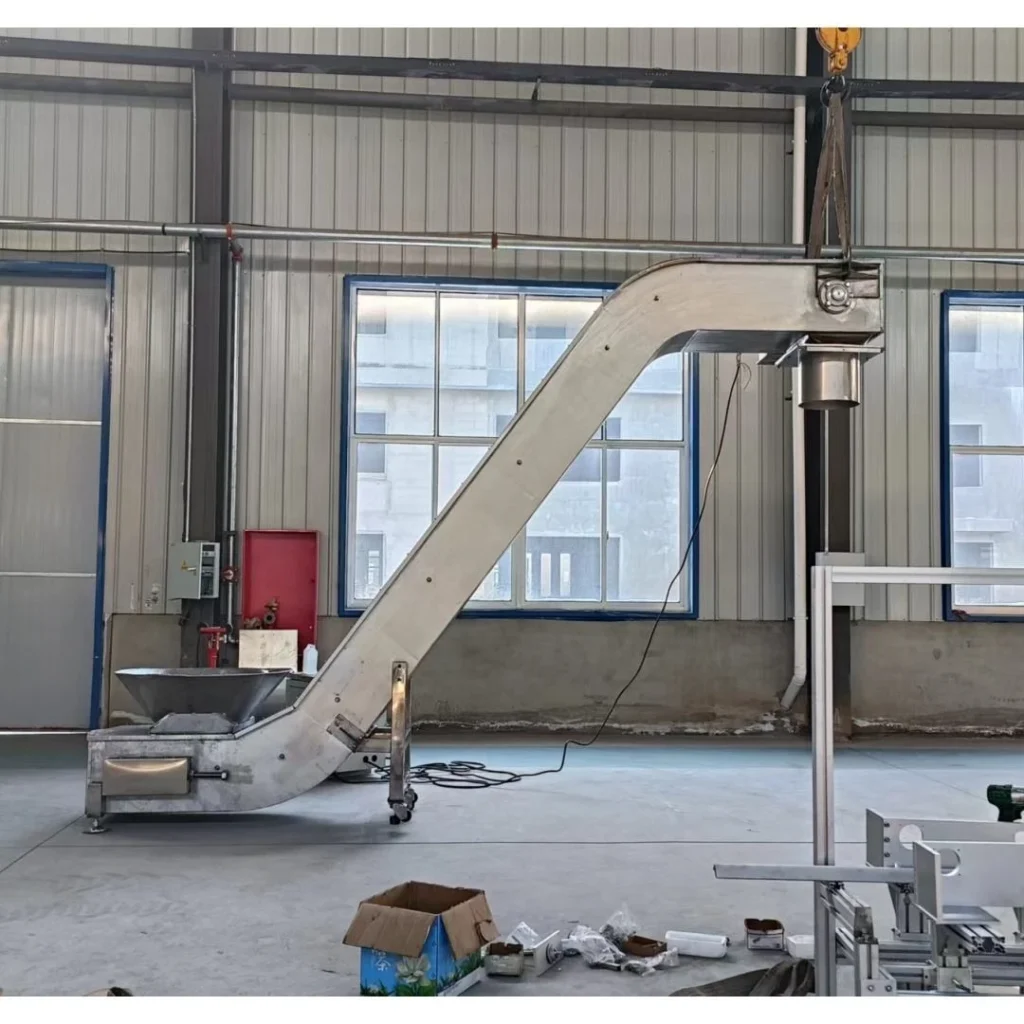
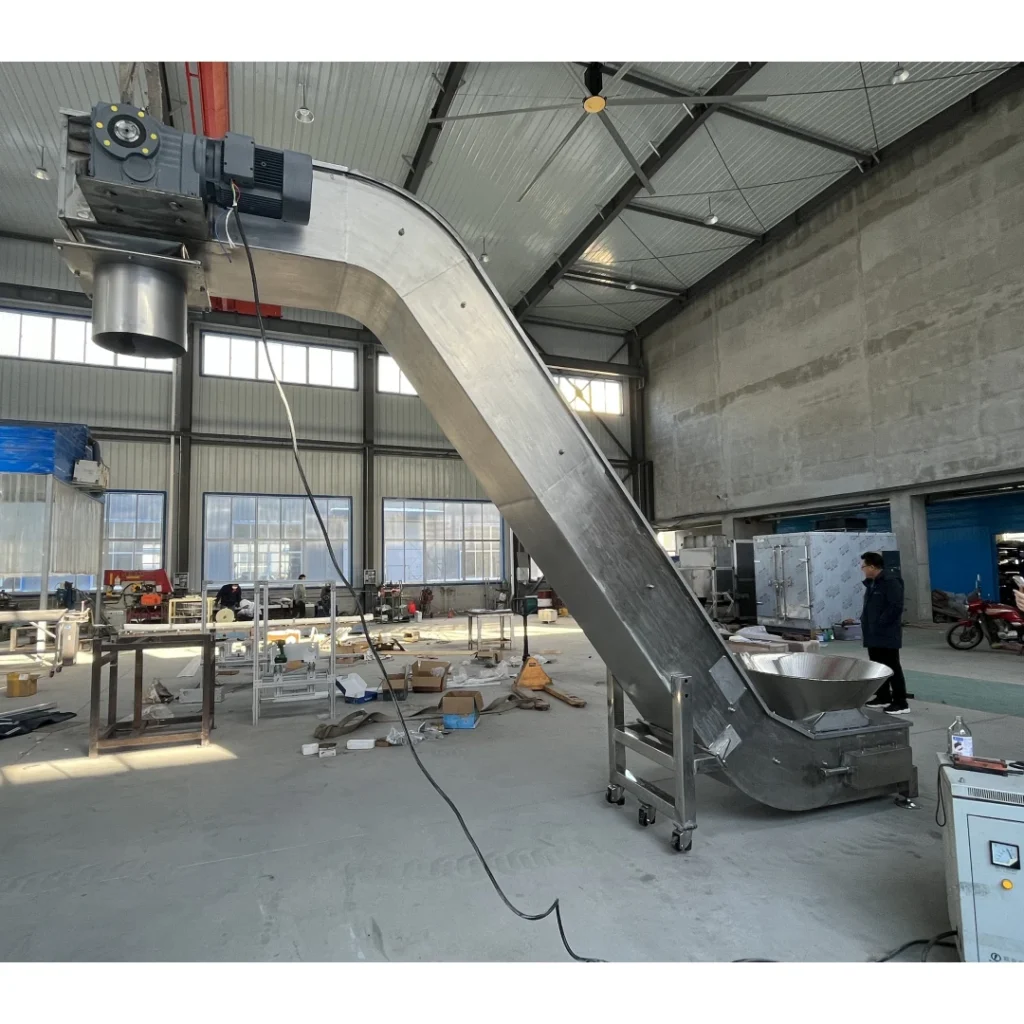
Eğimli bantlı paletli konveyör, ‘Z’ şeklinde bir yerleşim benimser ve esas olarak üst yatay bölüm, alt yatay bölüm ve eğimli bölümden oluşur. Ayrıntılar aşağıdaki gibidir.
Adım1
Üst Yatay Bölüm: Farklı boşaltma yüksekliği gereksinimlerini karşılamak için başlık çerçevesi, alçak profilli başlık çerçeveleri (başlık çerçevesi yüksekliği H0 = 1000mm), orta profilli başlık çerçeveleri (başlık çerçevesi yüksekliği H0 = 1100~1500mm) ve yüksek profilli başlık çerçeveleri (başlık çerçevesi yüksekliği H0 = 1600~2000mm) olarak ayrılır. Buna karşılık, üst yatay bölüm için sırasıyla alçak profilli dışbükey yay bölümü çerçeveleri ve alçak profilli ara çerçeve ayakları (başlık çerçevesi yüksekliği H0 = 1000mm için), orta profilli dışbükey yay bölümü çerçeveleri ve orta profilli ara çerçeve ayakları (başlık çerçevesi yüksekliği H0 = 1100~1500mm için) ve yüksek profilli dışbükey yay bölümü çerçeveleri ve yüksek profilli ara çerçeve ayakları (başlık çerçevesi yüksekliği H0 = 1600~2000mm için) kullanılır.
Adım2
Eğimli Bölüm: Üst yatay bölümün alçak profilli, orta profilli veya yüksek profilli ara çerçeve ayakları kullanmasından bağımsız olarak, eğimli bölüm alçak profilli ara çerçeve ayakları kullanır. Konveyör eğim açısı β ≥ 45° olduğunda, Tip II alçak profilli ara çerçeve ayakları önerilir.
Adım3
Alt Yatay Bölüm: Alt yatay bölüm alçak profilli ara çerçeve ayakları kullanır.
Çalışma prensibi
Çalışma prensibi, gücün tahrik silindiri ile konveyör bandı arasındaki sürtünme yoluyla iletildiği geleneksel bir bantlı. konveyörünkine benzer. Malzeme, alt yatay bölümün kılavuz oluğu aracılığıyla konveyör bandındaki ‘kutu benzeri oluklara’ girer. Konveyör bandı çalıştıkça malzeme, boşaltma için üst yatay bölüme istikrarlı bir şekilde kaldırılır. Taşıma sırasında malzemenin geri akışını önlemek için ekipman ayrıca basınç silindirleri gibi cihazlarla donatılmıştır.
What problems can it solve for you?
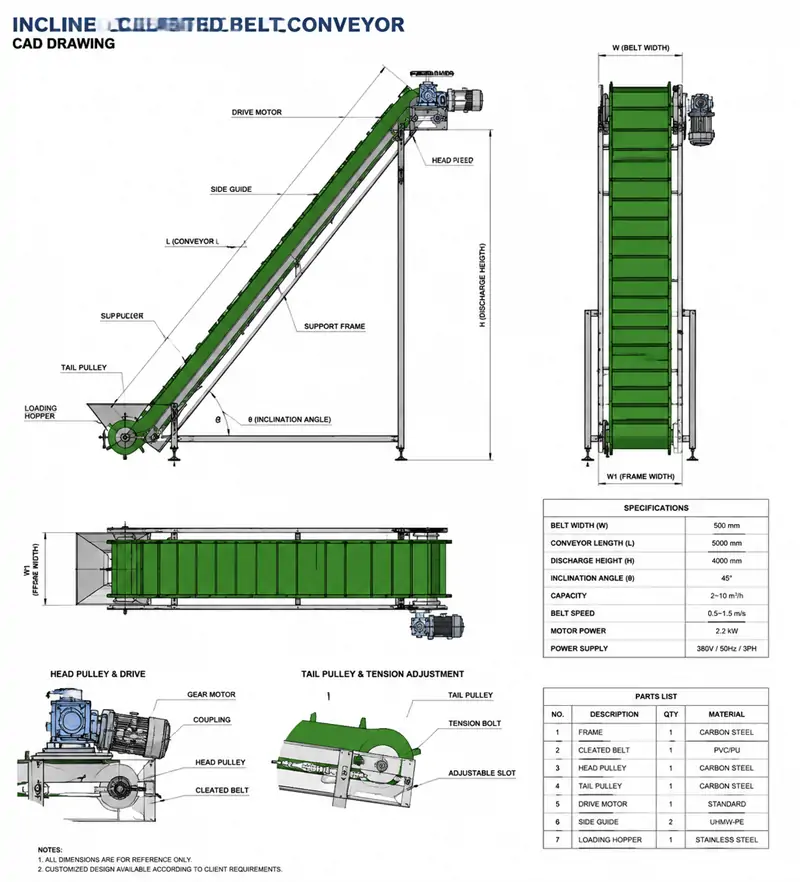
- Eğimli bantlı paletli konveyörler, dalgalı yan bariyerli ve enine bölmeli konveyör bantları kullanan genel amaçlı dökme malzeme sürekli taşıma ekipmanlarıdır. Bu nedenle, özellikle büyük eğimlerde taşıma için uygundurlar.
- Bu makine kömür, kimya mühendisliği, yapı malzemeleri, metalurji, enerji, hafif sanayi, tahıl, liman ve denizcilik gibi endüstrilerde kullanılabilir. -15℃ ile +40℃ çalışma ortamı nem aralığında, 0,5-2,5 t/m³ yığma yoğunluğuna sahip çeşitli dökme malzemeleri taşıyabilir.
- Yüksek sıcaklık, asit, alkali, yağ veya organik çözücü içerenler gibi özel taşıma gereksinimleri olan malzemeler için özel konveyör bantları kullanılmalıdır.
- Eğimli bantlı paletli konveyör, 0° ila 90° eğim aralığında malzeme taşıyabilir.
Avantajlar ve özellikler
- Artırılmış taşıma açısı (30 ila 90 derece);
- Küçük kapladığı alan, düşük yatırım;
- Büyük taşıma kapasitesine sahiptir ve daha yüksek kaldırma yükseklikleri elde edebilir;
- Yataydan eğimliye (veya dikeye) sorunsuz geçiş yapabilir;
- Kolayca dağılan toz, granül, küçük blok, macun ve sıvı malzemelerin taşınması için uygundur;
- Düşük enerji tüketimi, basit yapı, yüksek bant mukavemeti ve uzun hizmet ömrü.
Model Parameters
Çok sayıda makine modeli vardır ve her modelin parametreleri ve taşıma kapasiteleri değişiklik gösterir. Aşağıda yalnızca referans için bazı verilerin bir özeti verilmiştir. Belirli ayrıntılar için lütfen daha fazla danışın.
Ana akım model serileri
| Model Serisi | Açıklama |
| DJ Serisi | Çoğu dik eğimli taşıma senaryosu için uygun, en yaygın genel amaçlı seri. |
| DJS Serisi | Genellikle DJ serisinin geliştirilmiş veya özel olarak iyileştirilmiş versiyonları. |
| JH Serisis | Yaygın serilerden biri |
| QB Serisi | Xinxiang Hetian Machinery'nin QB-550 ve QB-650 gibi bazı üreticilere özel modelleri. |
| DJ.WQ Serisi | Belirli üreticilere özel modeller (Wuhu Qiyun gibi) JB/T8908-2013 standardının gereksinimlerini karşılar. |
DJ Serisi Büyük Eğimli Bantlı Paletli Konveyör
| Bant Genişliği (mm) | Bant Hızı (m/s) | Taşıma Kapasitesi (t/h) | Güç (KW) |
| 500 | 0.8 ~ 2.5 | 78 ~ 230 | 1.5 ~ 30 |
| 650 | 0.8 ~ 2.5 | 131 ~ 191 | 1.5 ~ 40 |
| 800 | 1.0 ~ 3.15 | 278 ~ 824 | 1.5 ~ 75 |
| 1000 | 1.0 ~ 3.15 | 435 ~ 1233 | 3 ~ 100 |
| 1200 | 1.0 ~ 4.0 | 655 ~ 2200 | 4 ~ 185 |
| 1400 | 1.0 ~ 4.0 | 891 ~ 2900 | 4 ~ 185 |
DJD Serisi Büyük Eğimli Bantlı Paletli Konveyör
| Model | Bant Genişliği (mm) | Bölme Yüksekliği (mm) | Inclination Angle (°) | BBant Hızı (m/s) | Üretim Kapasitesi (m³/sa) |
| DJD500 | 500 | 80/120 | 20-90 | 0.8-3.15 | 13-71 |
| DJD650 | 650 | 120/160 | 20-90 | 0.8-3.15 | 31-104 |
| DJD800 | 800 | 120/160/200/240 | 20-90 | 0.8-3.15 | 38-235 |
| DJD1000 | 1000 | 120/160/200/240 | 20-90 | 0.8-3.15 | 51-327 |
| DJD1200 | 1200 | 120/160/200/240 | 20-90 | 0.8-3.15 | 85-466 |
Uygulanabilir Endüstriler
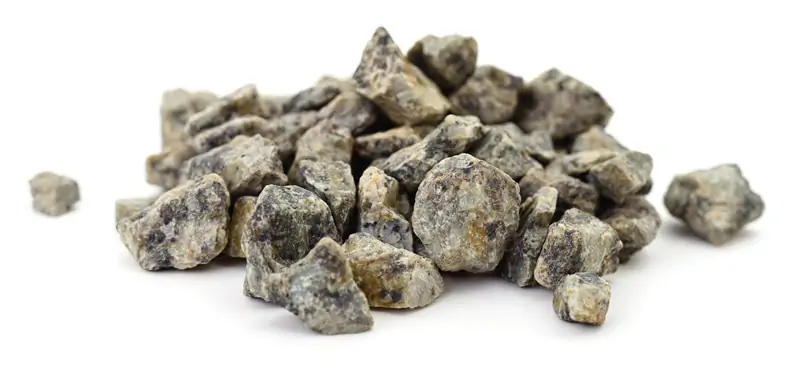
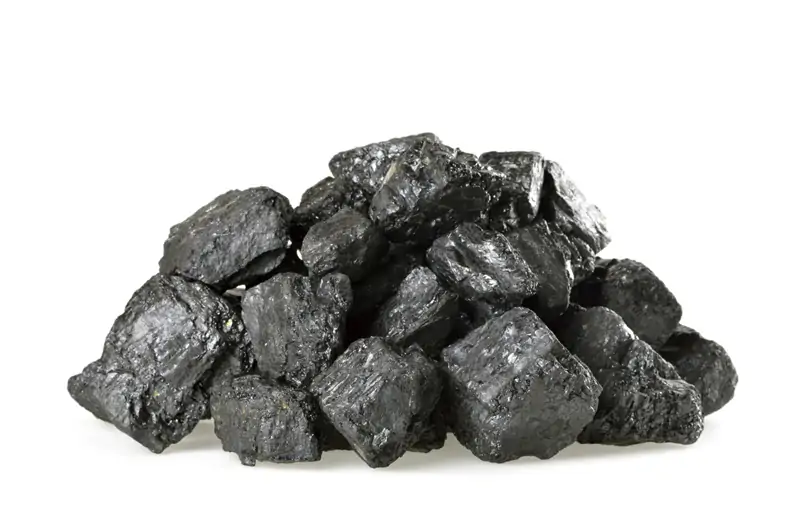
Eğimli paletli bant konveyörler; kömür, tahıl, yapı malzemeleri, kimya, hidroelektrik ve metalurji gibi sektörlerde yaygın olarak kullanılmaktadır. -19°C ile +40°C ortam sıcaklığı aralığında, 0,5 ila 2,5 t/m³ yığma yoğunluğuna sahip çeşitli dökme malzemeleri taşıyabilirler. Yüksek sıcaklık, asidik veya alkali maddeler, yağlar veya organik çözücüler içeren malzemeler gibi özel taşıma gereksinimleri olan durumlarda, özel kenar bantlı konveyör bantları kullanılmalıdır.
| Endüstri Alanı | Tipik Uygulamalar ve Malzemeler | Temel Özellikler |
| Kömür ve Madenler | Kömür ve Madenler – Ham kömür, işlenmiş kömür, cevher, gang taşı vb. | Yeraltı ve açık ocak madenciliğine uygun, temel uygulama alanlarından biridir. |
| Metalurji | Sinterlenmiş cevher, çinko oksit ve yüksek fırın şarjı vb. | Çelik fabrikaları gibi yüksek sıcaklık ve ağır yük ortamlarında kullanılır. |
| Elektrik Enerjisi | Termik Santrallerin Kömür Taşıma Sistemi. | Santraller için sürekli yakıt tedarikinin sağlanması. |
| Yapı Malzemeleri ve Çimento | Kireç taşı, kil, çimento klinkeri, kum ve çakıl vb. | Büyük miktarda ekipman yerleşim alanından tasarruf sağlayabilir. |
| Kimya Endüstrisiy | Çeşitli kimyasal gübreler ve kimyasal hammaddeler. | Konveyör bantlar, malzemelerin asitlik ve bazlık durumuna ve diğer özelliklerine göre özelleştirilebilir. |
| Tahıln | Tahıllar ve baklagiller. | Genellikle tahıl depolama ve taşıma işlemlerinde kullanılırlar. |
| Limanlar ve Gemiler | Dökme yük boşaltma, yükleme ve saha operasyonları. | Büyük kendinden boşaltmalı gemiler gibi senaryolar için uygundur. |
| Hafif Sanayi ve Diğerleri | Atık işleme, taş ocakları, seramik, döküm vb. | Esnek uygulama, ihtiyaçlara göre özelleştirilebilir. |

Enine Bölme Tipleri ve Seçimi
Bölme formunun seçimi, taşıma verimliliğini ve stabilitesini doğrudan etkiler. Taşıma eğim açısına ve malzemenin özelliklerine göre seçim yapmamız gerekir:
| Bölme Tipi | Uygulanabilir Eğim Açısı | Malzeme Özellikleri |
| T tipi, TS tipi | ≤ 40° | Genel amaçlı. |
| C tipi | > 40° | Malzeme iyi akışkanlığa sahiptir. |
| T tipi, TS tipi | > 40° | Malzeme yüksek viskoziteye ve büyük parça boyutuna sahiptir. |
Normal Bantlı Konveyör ile Eğimli Paletli Bantlı Konveyör Karşılaştırması
| Karşılaştırma Boyutu | Eğimli Bantlı Paletli Konveyör | Normal Bant Konveyör |
| Çekirdek Konveyör Bant | Dalgalı Kenar Konveyör Bant. Taban bant, her iki tarafta iki dalgalı kenar bariyeri ve ara çapraz plakalardan oluşur. Taban bandın enine sertliği daha yüksektir. | Düz bantlar veya desenli bantlar. Yüzey düz bir düzlem olabilir veya sürtünmeyi artırmak için sığ desenlere sahip olabilir. |
| Maksimum Taşıma Eğimi | 0° ila 90°, dikey kaldırma sağlanabilir. | Genellikle 18° ila 28°'yi aşmaz. |
| Malzeme Kaymasını Önleme Mekanizması | Çapraz bariyerler ve dalgalı yan duvarların oluşturduğu ‘hazne’ malzemeyi tutar. | Konveyör bandı ile malzeme arasındaki sürtünme nedeniyle, eğim çok dik olduğunda malzeme kaymaya eğilimlidir. |
| Çekirdek Bileşenlerdeki Farklılıklar | Genel bileşenlere ek olarak, basınç makaraları/merdaneleri ve özel avareler eklenmiştir. | Standart avareler, merdaneler, tahrik üniteleri vb. |
| Kaplanan Zemin Alanı | Küçük. Kısa bir mesafede büyük bir yükseklik artışı sağlanabilir, alandan önemli ölçüde tasarruf edilir. | Büyük. Aynı kaldırma yüksekliğini elde etmek için daha uzun bir yatay veya eğimli mesafe gerekir. |
| Uygun Malzemeler | Daha geniş bir kullanım alanına sahiptir ve özellikle toz, granül ve diğer dökme malzemelerin taşınması için uygundur. Bazı tasarımlar asidik, alkali veya yağlı malzemeleri taşıyabilir. | Yaygın olarak uygulanabilir, ancak yuvarlanmaya, kaymaya eğilimli veya büyük eğim açılarına sahip malzemelere karşı zayıf uyum sağlar. |
| Tipik Uygulama Senaryoları | Madenler, metalurji, yapı malzemeleri ve limanlar gibi dik açılı taşıma ve alan kısıtlı ortamları içeren uygulamalar için. | Lojistik, paketleme ve montaj hatları gibi yatay veya sığ açılı taşıma için. |
| Yatırım ve İşletme Maliyetleri | Azaltılmış bileşenler ve daha düşük inşaat maliyetleri nedeniyle toplam yatırımdan ila tasarruf sağlanabilir. | Büyük kaldırma yüksekliğine sahip projeler için, geniş ayak izi ve uzun ekipman nedeniyle toplam yatırım daha yüksek olabilir. |
Doğru model nasıl seçilir?
- Taşıma kapasitesi: Gerekli saatlik taşıma kapasitesi, seçim için birincil temeldir.
- Bant genişliği ve transfer hızı: Cihazın boyut özelliklerini ve teslimat verimliliğini belirleyin.
- Taşıma eğimi: Ekipmanın maksimum eğim açısı.
- Yan bariyerin yüksekliği ve çapraz bariyerin formu: Ne kadar malzemenin ‘içerilebileceğini’ belirleyin. Örneğin, eğim açısı 40°'den az olduğunda T-tipi veya TS-tipi çapraz bariyerler yaygın olarak kullanılırken, eğim açısı 40°'den büyük olduğunda C-tipi, TC-tipi veya TCS-tipi çapraz bariyerler seçilir.
- Malzeme Özellikleri: Seçim, tip, yığın yoğunluğu, parça boyutu, sıcaklık ve aşındırıcılık gibi malzeme özelliklerine göre belirlenir.
- Motor Gücü: Motor gücü, taşıma hacmi, mesafe ve kaldırma yüksekliğine göre hesaplanır.
Sonuç
Yan bariyerli eğimli paletli bantlı konveyör, malzemeleri sürekli olarak taşıyan bir tür bantlı taşıma ekipmanıdır. Düz bir kauçuk taşıma bandının her iki tarafına serbestçe uzayabilen dalgalı dikey ‘yan etekler’ takılarak ve etekler arasına belirli mukavemet ve esnekliğe sahip enine bölmeler takılarak kutu benzeri oluklar oluşturulur ve malzemelerin bu oluklar içinde sürekli olarak taşınması sağlanır.