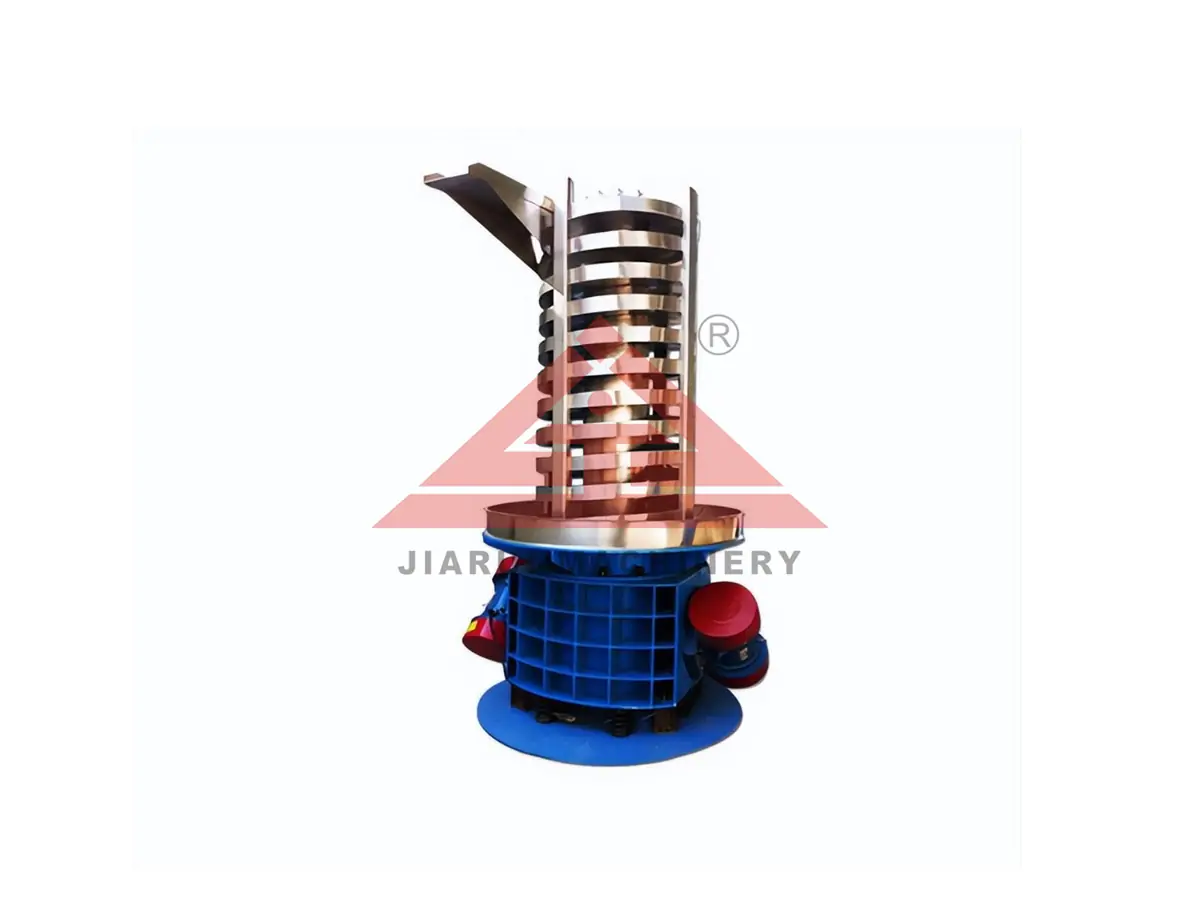
Titreşimli spiral elevatörler
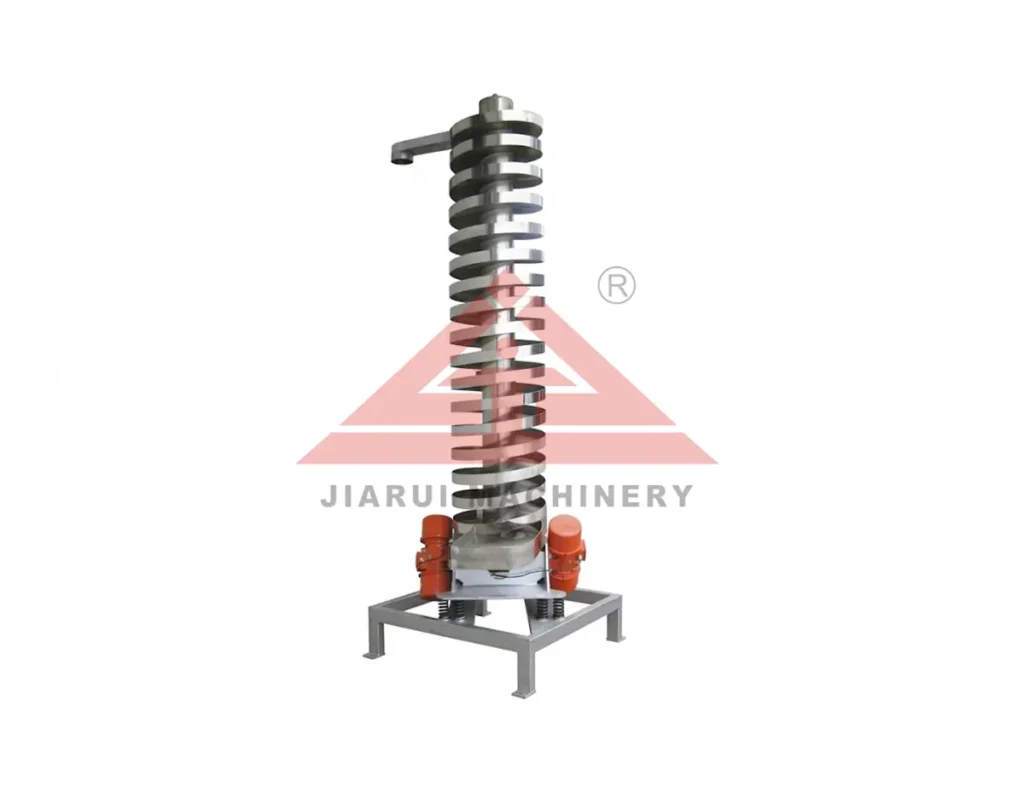
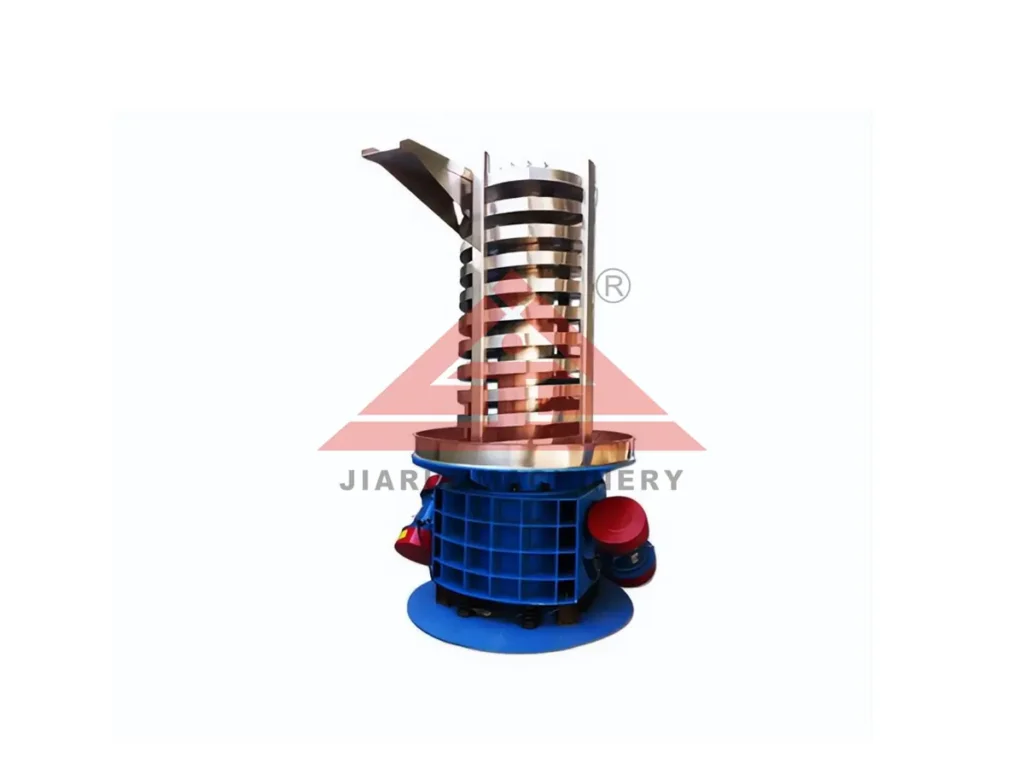
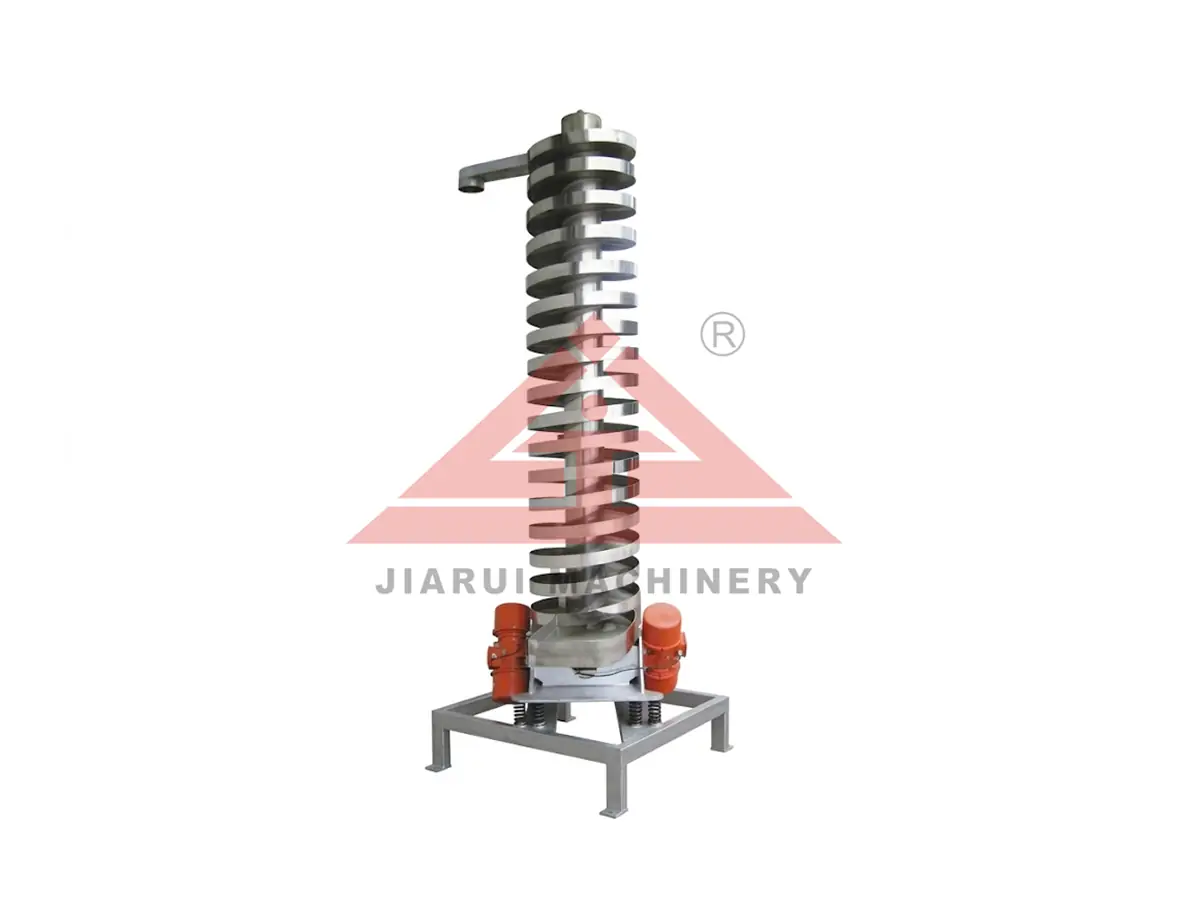
Vibrasyonlu spiral elevatörler, esas olarak üretim hatlarında malzemelerin dikey transferini çözmek için tasarlanmıştır; özellikle fabrika alanının sınırlı olduğu veya farklı prosesler arasında yükseklik farkı bulunan uygulamalar için uygundur. Ekipman, vibrasyon kuvveti üretmek için çift vibrasyon motoru kullanır ve malzemeleri spiral taşıma yolu boyunca sürekli olarak yukarı taşır. Toz, granül ve küçük topak malzemelerin işlenmesi için uygundur.
Bu vibrasyonlu spiral elevatörler genellikle plastik peletler, gıda bileşenleri, kimyasal malzemeler, mineral tozları ve diğer dökme malzemelerin taşınmasında kullanılır. Malzeme akışkanlığı, yoğunluğu ve kurulum koşulları uygulamalar arasında değişiklik gösterdiğinden, Jiarui ekipman yapısı, malzeme seçimi ve taşıma yüksekliği belirli çalışma gereksinimlerine göre ayarlanabilir.
- Seri Modeller: JRCZ300–JRCZ900 Serisi
- Taşıma Kapasitesi: ≤1–4 t/sa
- Taşıma Yüksekliği: ≤2–6 m
- Toplam Motor Gücü: 0,8–6 kW
- Yapı Seçenekleri: Açık Tip, Kapalı Tip
- Uygun Malzemeler: Toz, Granül ve Küçük Topak Malzemeler
- Özelleştirme: Malzeme özelliklerine, kapasite gereksinimlerine ve kurulum koşullarına göre temin edilebilir
Vibrasyonlu Spiral Elevatör Nedir?
Vibrasyonlu spiral elevatör, dikey vibrasyonlu elevatör veya dikey vibrasyonlu konveyör olarak da bilinir; dikey malzeme taşıma için kullanılan bir vibrasyonlu taşıma ekipmanı türüdür. Esas olarak iki vibrasyon motoru kullanarak uyarım kuvveti üretir ve spiral taşıma oluğunun sürekli titreşmesini sağlar. Malzemeler vibrasyon etkisi altında kademeli olarak yukarı hareket eder ve tozların, granüllerin ve küçük dökme malzemelerin dikey kaldırılmasını tamamlar.
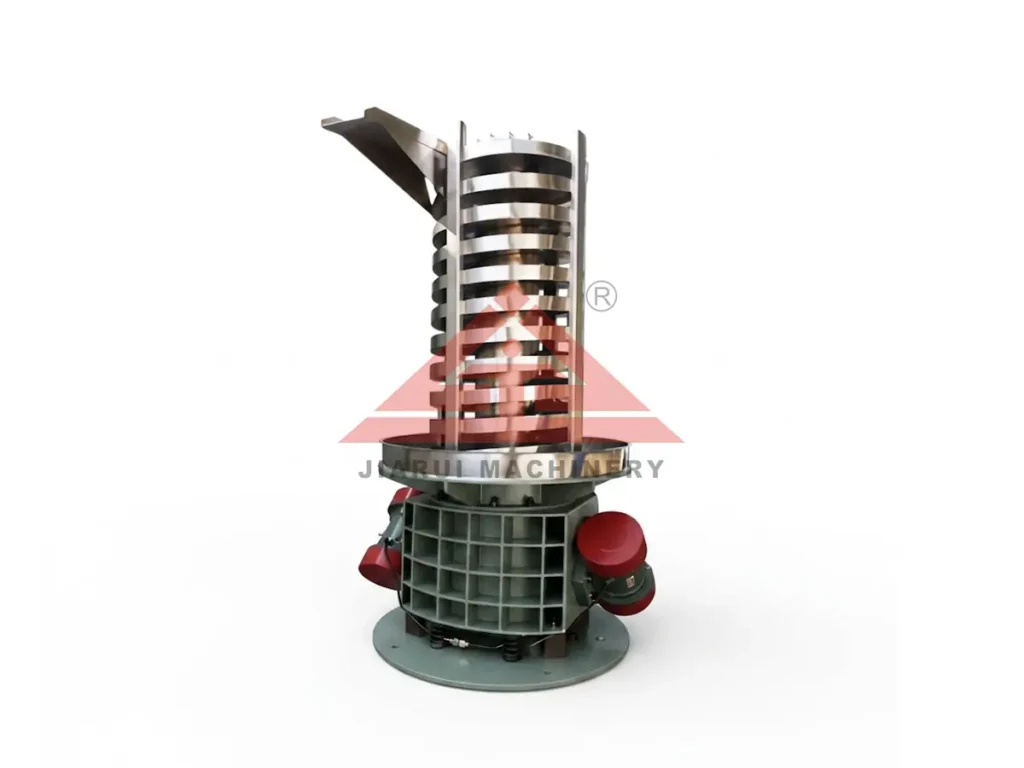
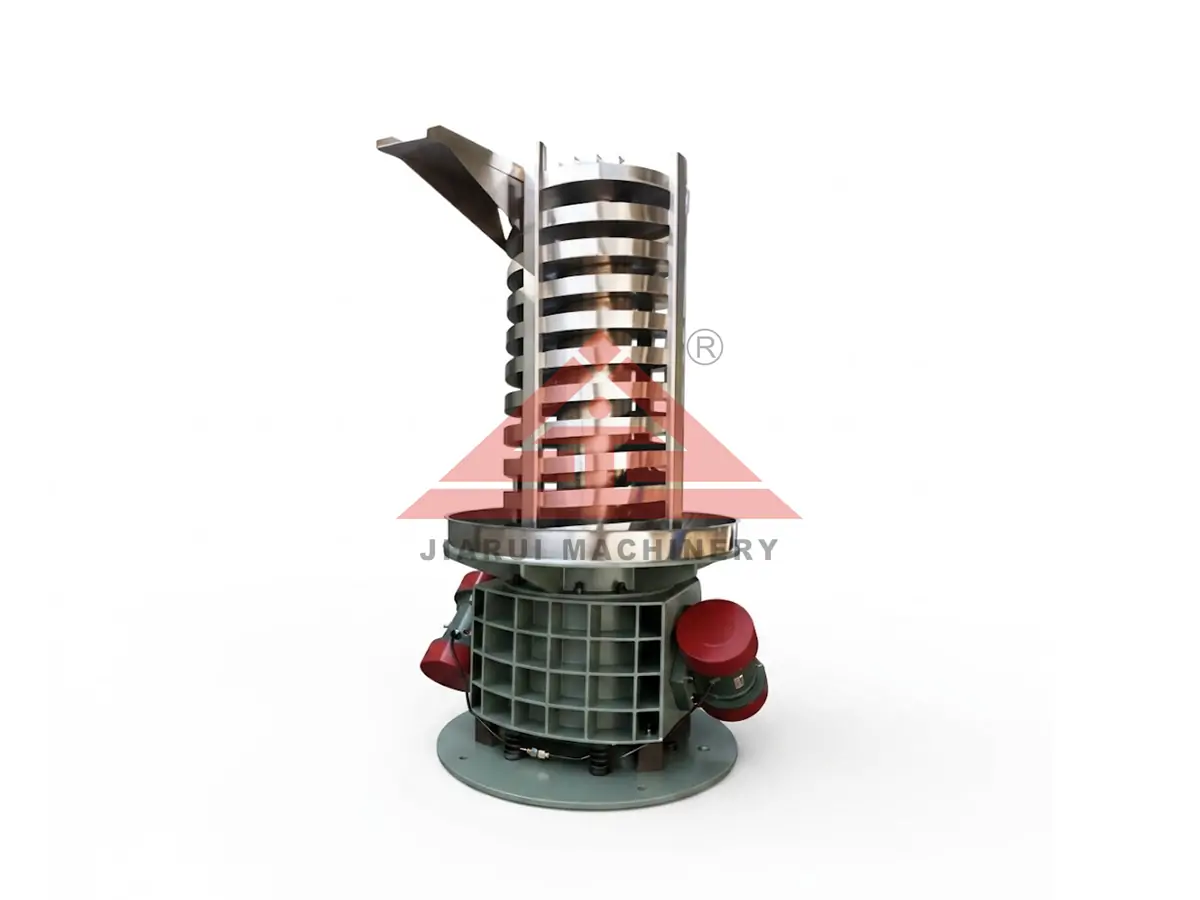
Birçok üretim hattı tasarımında, yukarı ve aşağı akış ekipmanları arasında genellikle yükseklik farkı bulunur. Geleneksel yatay taşıma yöntemlerinin kullanılması daha uzun taşıma mesafeleri gerektirebilir ve daha fazla kurulum alanı kaplayabilir. Vibrasyonlu spiral elevatör, bu tür dikey taşıma gereksinimlerini çözmek için tasarlanmıştır. Ekipman, saha koşullarına göre açık veya kapalı yapı ile yapılandırılabilir; oluk boyutu, malzeme ve konfigürasyon, malzeme özelliklerine göre ayarlanabilir. Plastik peletlerin, gıda malzemelerinin, kimyasal ürünlerin, mineral tozlarının ve diğer dökme malzemelerin taşınmasında yaygın olarak kullanılır.
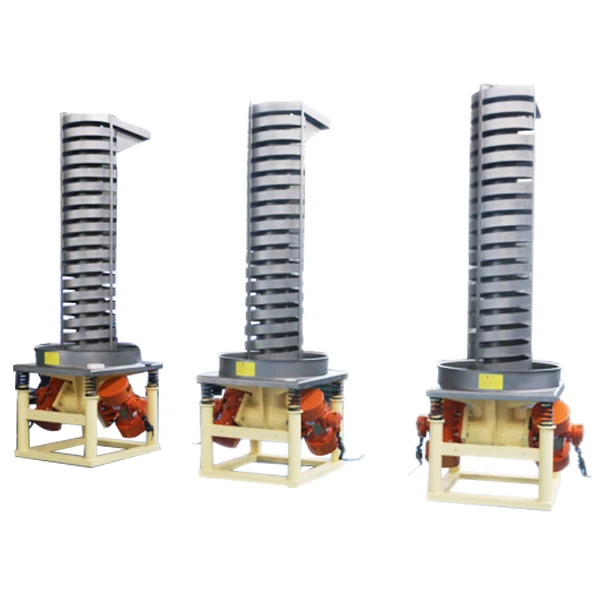
Vibrasyonlu Spiral Elevatörlerin Çalışma Prensibi?
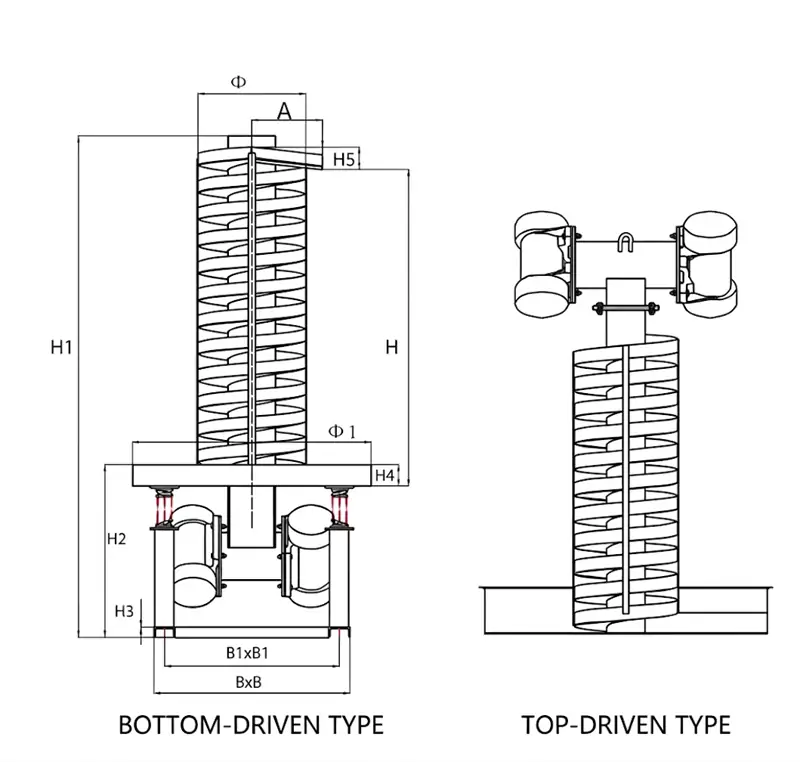
Vibrasyonlu spiral elevatörler esas olarak tahrik kuvveti sağlamak için iki vibrasyon motoruna dayanır. Motorlar çalıştığında, taşıma oluğunun titreşmesine neden olan sürekli vibrasyon üretirler. Oluğa girdikten sonra malzemeler, vibrasyon ve spiral taşıma yapısının birleşik etkisi altında yukarı hareket eder.
Titreşim Motorları Tahrik Kuvveti Sağlar:Ekipmanın üst kısmına monte edilen iki vibrasyon motoru, stabil uyarım kuvveti üretmek için senkronize çalışır ve spiral taşıma oluğunu sürekli titreşimde tutar. Vibrasyon etkisi altında malzemeler, zorla itilmek yerine tekrarlanan sıçrama hareketleriyle ilerler ve bu da daha yumuşak taşıma performansı sağlar.
Malzemeler Spiral Oluk Boyunca Yukarı Hareket Eder:Taşıma oluğu spiral yapı tasarımına sahiptir. Çalışma sırasında malzemeler, alt girişten üst çıkışa doğru spiral yol boyunca kademeli olarak yukarı hareket eder. Taşıma sırasında vida veya zincir gibi doğrudan itici bileşenler bulunmadığından, malzeme sıkışması ve sürtünmesi azalır ve ekipman tozlar, granüller ve küçük topak malzemeler için uygun hale gelir.
Çalışma Koşullarına Göre Yapı Seçimi:Farklı üretim hatlarının taşıma ekipmanları için farklı gereksinimleri vardır. Sıradan malzeme taşıma için, daha kolay inceleme ve bakım amacıyla açık yapı seçilebilir. Tozlu malzemelerin işlenmesinde, malzeme sızıntısını azaltmak için kapalı yapı kullanılabilir. Ekipman yüksekliği, oluk boyutu ve malzeme seçimi de kurulum koşullarına göre ayarlanabilir.
Basit bir ifadeyle, vibrasyonlu spiral elevatörler malzemeleri spiral bir oluk boyunca yukarı taşımak için vibrasyon kuvveti kullanır ve sınırlı kurulum alanlarında sürekli dikey taşıma sağlar.
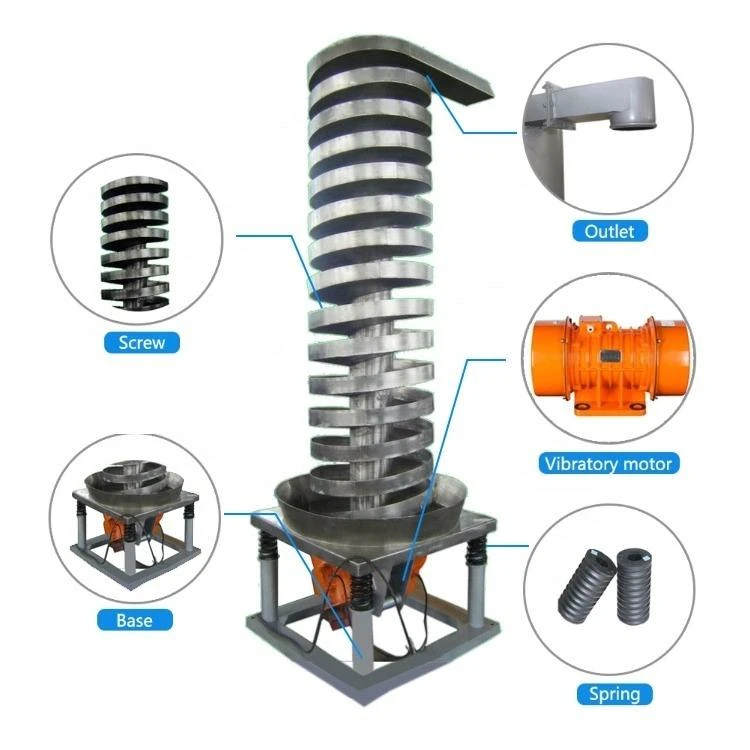
Avantajlar
Kompakt Kurulum Alanı
Ekipman dikey kurulum tasarımına sahiptir ve uzun yatay taşıma mesafeleri gerektirmez. Sınırlı fabrika alanı veya farklı işleme aşamaları arasında yükseklik farkı bulunan üretim yerleşimleri için uygundur.
Stabil Taşıma Performansı
Malzemeleri spiral oluk boyunca sürekli olarak yukarı taşımak için vibrasyon kuvveti kullanıldığından, taşıma süreci daha yumuşaktır ve üretim hatlarında sürekli malzeme transferi için daha uygundur.
Düşük Malzeme Hasarı
Malzemeler, vida veya zincir gibi bileşenler tarafından zorlanmak yerine vibrasyon altında kademeli olarak yukarı hareket eder. Bu, taşıma sırasında sıkışma ve sürtünmeyi azaltır ve ekipmanı malzeme bütünlüğünün önemli olduğu uygulamalar için uygun hale getirir.
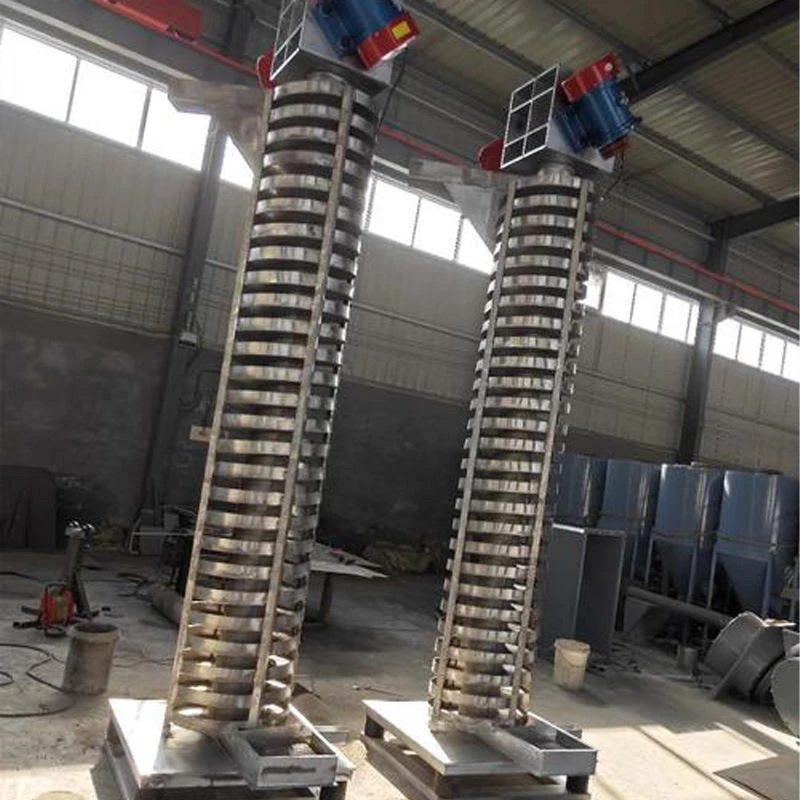
Etkili Toz Kontrolü
Daha fazla toz üreten malzemeler için, taşıma sırasında malzeme dağılımını azaltmak ve çalışma ortamını iyileştirmek amacıyla kapalı yapı seçilebilir.
Basit Yapı ve Kolay Bakım
Ekipman esas olarak bir taşıma oluğu, vibrasyon motorları ve bir sönümleme sisteminden oluşur. Karmaşık aktarma bileşenleri olmadan, günlük inceleme ve bakım daha kolaydır.
Yardımcı Malzeme Soğutma Fonksiyonu
Kaldırma işlemi sırasında malzemeler sürekli olarak ters çevrilir ve havaya maruz kalır; bu, belirli proses gereksinimlerine göre malzeme sıcaklığının düşürülmesine yardımcı olabilir.
Uygulamalar
Vibrasyonlu spiral elevatörler esas olarak tozların, granüllerin ve küçük topak dökme malzemelerin dikey taşınması için kullanılır. Nispeten iyi akışkanlığa sahip malzemeler için uygundurlar. Malzeme özelliklerine, üretim ortamına ve proses gereksinimlerine göre ekipman; plastik, gıda işleme, kimyasal üretim, madencilik ve yapı malzemeleri gibi endüstrilerde uygulanabilir.
 Plastik Peletler
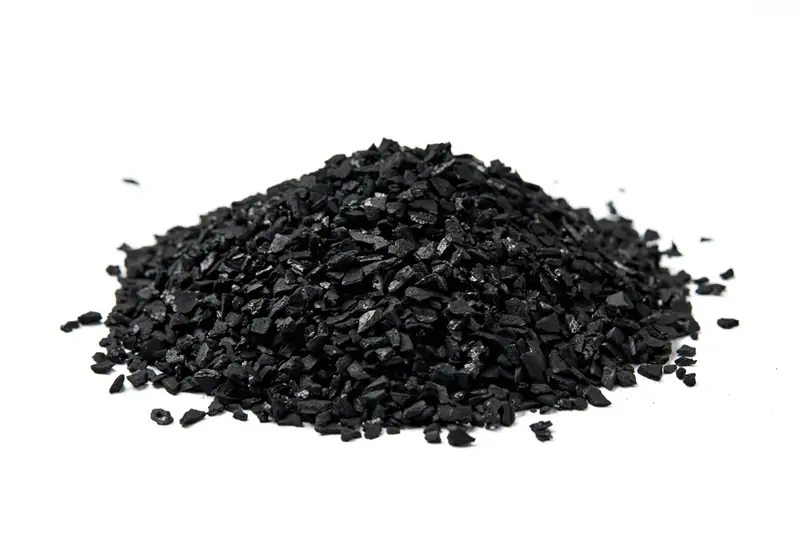 Aktif Karbon
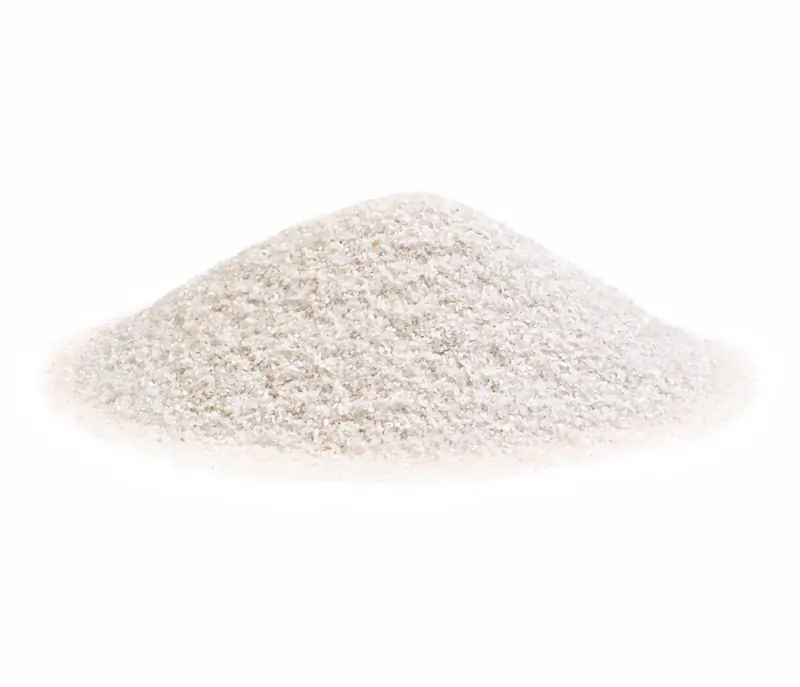 Kuvars Kumu
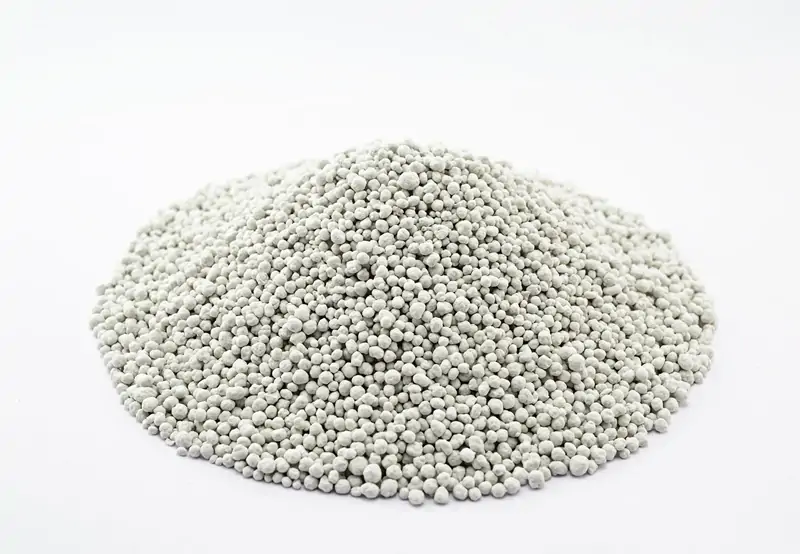 Gübre Granülleri
 Elektronik Malzemeler
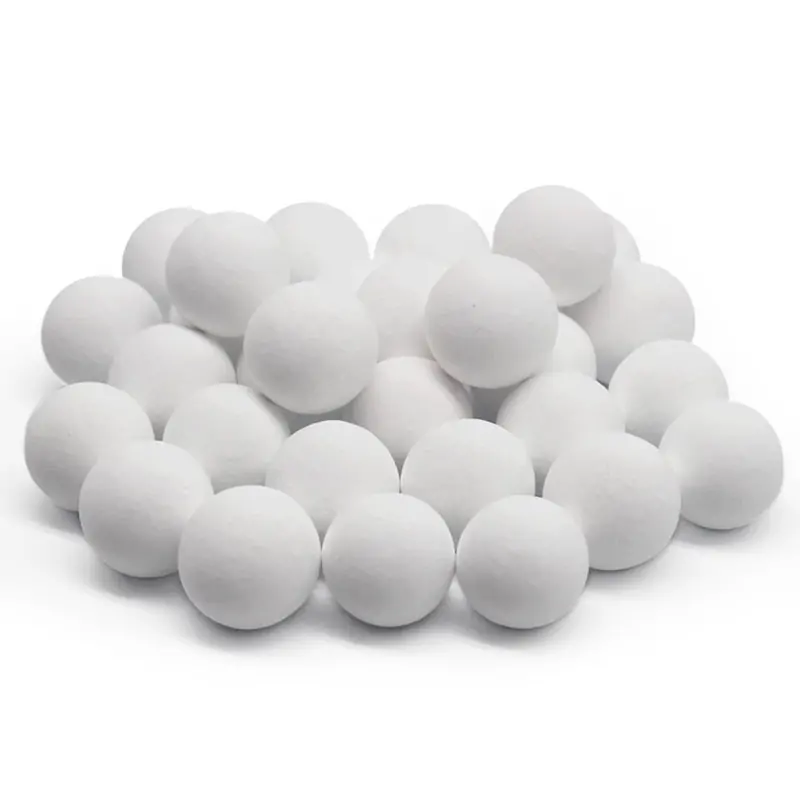 Seramikler
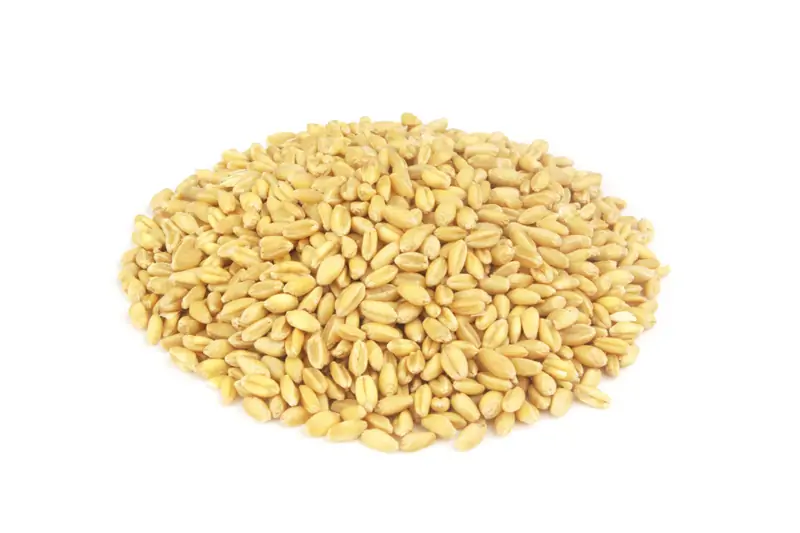 Buğday
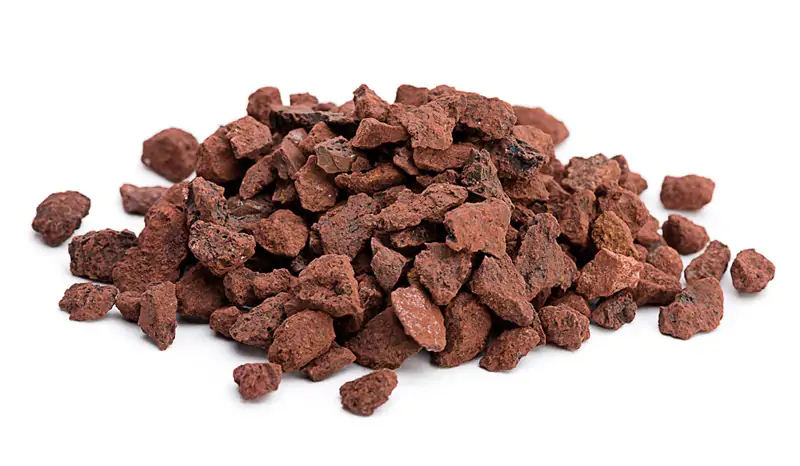 Demir Cevheri
Uygulama Endüstrileri ve Seçim Referansı
| Endüstri | Tipik Uygulamalar | Seçim Hususları |
| Plastik Endüstrisi | Plastik peletler, reçine malzemeleri ve benzeri malzemelerin farklı üretim aşamaları arasında sürekli dikey taşınması için kullanılır | Taşıma kapasitesine, kaldırma yüksekliğine ve malzeme hasarı gereksinimlerine dikkat edin |
| Gıda Endüstrisi | Gıda bileşenlerinin dikey transferi ve işleme, eleme veya paketleme prosesleri arasındaki bağlantı için kullanılır | Ekipman malzemesini, hijyen gereksinimlerini ve toz önleme tasarımını göz önünde bulundurun |
| Kimya Endüstrisi | Toz ve granüler kimyasal malzemelerin sürekli kaldırılması ve proses bağlantısı için kullanılır | Malzeme korozyon direncini, sızdırmazlık gereksinimlerini ve çalışma ortamını göz önünde bulundurun |
| Maden İşleme ve Yapı Malzemeleri Endüstrisi | Kırma, eleme, depolama ve diğer üretim süreçleri arasında dökme malzemelerin dikey transferi için kullanılır | Malzeme aşındırıcılığına, taşıma kapasitesine ve aşınmaya dayanıklı tasarıma dikkat edin |
Seçim Hususları
Titreşimli spiral elevatörler, akışkanlığı iyi olan kuru dökme malzemeler için daha uygundur. Aşağıdaki koşullar için malzeme özellikleri ve ekipman yapısı önceden teyit edilmelidir:
- Yüksek viskoziteli malzemeler: Malzemeler taşıma oluğu yüzeyine yapışabilir ve normal hareketi etkileyebilir;
- Yüksek nemli malzemeler: Malzemeler topaklanabilir ve sürekli taşımayı etkileyebilir;
- Büyük boyutlu topak malzemeler: Büyük parçacıklar taşıma stabilitesini etkileyebilir ve uygun parçacık boyutunun teyit edilmesi gerekir;
- Topaklanmaya yatkın tozlar: Uygun taşıma çözümünü seçmeden önce malzeme koşulları değerlendirilmelidir.
Ekipman seçimi genellikle malzeme türü, parçacık boyutu, taşıma kapasitesi, kaldırma yüksekliği ve kurulum koşullarının dikkate alınmasını gerektirir. Uygun taşıma ekipmanları proses gereksinimlerine göre seçilmelidir.
Titreşimli Spiral Elevatörlerin Teknik Parametreleri
JRCZ serisi titreşimli spiral elevatörler esas olarak spiral oluk çapı ve taşıma kapasitesine göre sınıflandırılır. Farklı modeller farklı kaldırma yükseklikleri ve malzeme taşıma gereksinimleri için uygundur. Titreşimli spiral elevatör serisi JRCZ300–JRCZ900 modellerini içerir ve taşıma kapasitesi malzeme özelliklerine ve üretim gereksinimlerine göre yapılandırılabilir. Aşağıdaki veriler standart modelleri temsil ederken, gerçek ekipman boyutları ve konfigürasyonları saha koşullarına göre ayarlanabilir.
| Model | Taşıma Kapasitesi (t/s) | Spiral Oluk Çapı (mm) | Taşıma Genişliği (mm) | Kaldırma Yüksekliği (m) | Titreşim Frekansı (r/dk) | Çift Genlik (mm) | Motor Gücü (kW) | Ağırlık (kg) |
| JRCZ300 | ≤1,0 | 300 | 77 | ≤2,0 | 960 | 7 Haziran | 2×0.4 | 680 |
| JRCZ500 | ≤2,0 | 500 | 140 | ≤3,0 | 960 | 8 Haziran | 2×0.75 | 1010 |
| JRCZ550 | ≤3,0 | 550 | 152 | ≤3,5 | 960 | 8 Haziran | 2×1.5 | 1190 |
| JRCZ600 | ≤3,0 | 600 | 163 | ≤4,0 | 960 | 7 Haziran | 2×1.5 | 1310 |
| JRCZ800 | ≤4,0 | 800 | 224 | ≤4,5 | 960 | 8 Haziran | 2×2.2 | 1590 |
| JRCZ850 | ≤4,0 | 850 | 224 | ≤5,0 | 960 | 9 Haziran | 2×2.2 | 1750 |
| JRCZ900 | ≤3,5 | 900 | 185 | ≤6,0 | 960 | 9 Haziran | 2×3.0 | 2100 |
Yukarıdaki parametreler standart konfigürasyonlara dayanmaktadır. Gerçek ekipman, taşıma malzemeleri, işleme kapasitesi, kaldırma yüksekliği ve kurulum koşullarına göre ayarlanacaktır. JRCZ300–JRCZ900 serisi farklı kaldırma yüksekliği ve taşıma kapasitesi gereksinimlerini kapsar. Nihai model seçimi malzeme özelliklerine, saatlik verime ve mevcut kurulum alanına göre belirlenmelidir.
Farklı Dikey Taşıma Ekipmanlarının Karşılaştırılması
Endüstriyel üretimde, farklı malzemeler ve üretim düzenleri farklı kaldırma çözümleri gerektirir. Titreşimli Spiral Elevatörler, Helezon Konveyörler, ve Kovalı Elevatörler farklı taşıma prensiplerine, yapısal tasarımlara ve uygulama alanlarına sahiptir. Ekipman seçimi malzeme özelliklerine, taşıma kapasitesine, kaldırma yüksekliğine ve saha koşullarına göre yapılmalıdır.
| Karşılaştırma Kalemi | Titreşimli Spiral Elevatör | Helezon Konveyörler | Kepçeli Elevatör Konveyörü |
| Ana Taşıma Malzemeleri | Plastik peletler, kimyasal tozlar ve mineral tozları gibi toz, granül ve küçük parçalı malzemeler | İyi akışkanlığa sahip toz malzemeler, granül malzemeler ve dökme malzemeler | Tahıl, cevher, çimento ve agrega gibi granül ve parçalı malzemeler |
| Taşıma Prensibi | Malzemeleri spiral oluk boyunca sürekli olarak yukarı doğru hareket ettirmek için titreşim kuvveti kullanır | Malzemeleri ileri doğru itmek için dönen helezon kanatları kullanır | Malzemeleri dikey olarak kaldırmak için dolaşan kovalar kullanır |
| Taşıma Özellikleri | Kompakt yapı, açık veya kapalı tasarım seçenekleriyle sunulur, sürekli dikey taşıma için uygundur | Esnek taşıma yönü ve yerleşimi, farklı kurulum düzenlemeleri için uygundur | Büyük hacimli sürekli kaldırma ve daha yüksek taşıma yükseklikleri için uygundur |
| Taşıma Kapasitesi | Orta ve küçük ölçekli sürekli taşıma uygulamaları için uygundur, genellikle üretim hattı bağlantısı için kullanılır | Vida çapı ve dönüş hızına bağlı olarak geniş kapasite aralığı | Büyük kapasiteli sürekli kaldırma uygulamaları için uygundur |
| Kurulum Gereksinimleri | Küçük ayak izine sahip dikey yapı, alan kısıtlı üretim yerleşimleri için uygundur | Kurulum alanı taşıma yönüne ve uzunluğuna bağlıdır; yatay, eğimli veya dikey olabilir | Yeterli kurulum yüksekliği ve genel ekipman yerleşim planlaması gerektirir |
| Malzeme İşleme Özellikleri | Malzemeler titreşim altında hareket eder ve proses gereksinimlerine göre soğutma veya kurutma gibi yardımcı işlevler sağlayabilir | Malzemeler sabit bir güzergah boyunca hareket eder, istikrarlı besleme için uygundur | Uzun mesafeli taşıma ve büyük yükseklik farkları için uygundur |
| Yaygın Endüstriler | Kimya, gıda, ilaç, plastik, mineral işleme ve toz endüstrileri | Kimya, yapı malzemeleri, tahıl ve toz işleme endüstrileri | Madencilik, tahıl, çimento, agrega ve ağır malzeme endüstrileri |
Farklı üretim hatları farklı malzeme özelliklerine, taşıma gereksinimlerine ve kurulum koşullarına sahiptir. Örneğin, Tüp Titreşimli Konveyörler proses aşamaları arasında kapalı taşıma gerektiğinde düşünülebilir.
Özelleştirilmiş Tasarım
Her üretim hattı farklı kurulum koşullarına ve taşıma gereksinimlerine sahiptir. Standart modeller tüm çalışma durumlarını tam olarak karşılayamayabilir. Titreşimli spiral elevatörler, malzeme özelliklerine, kaldırma yüksekliğine ve üretim yerleşimine göre ayarlanabilir; böylece üst ve alt prosesleri daha iyi bağlayarak istikrarlı çalışma sağlar.
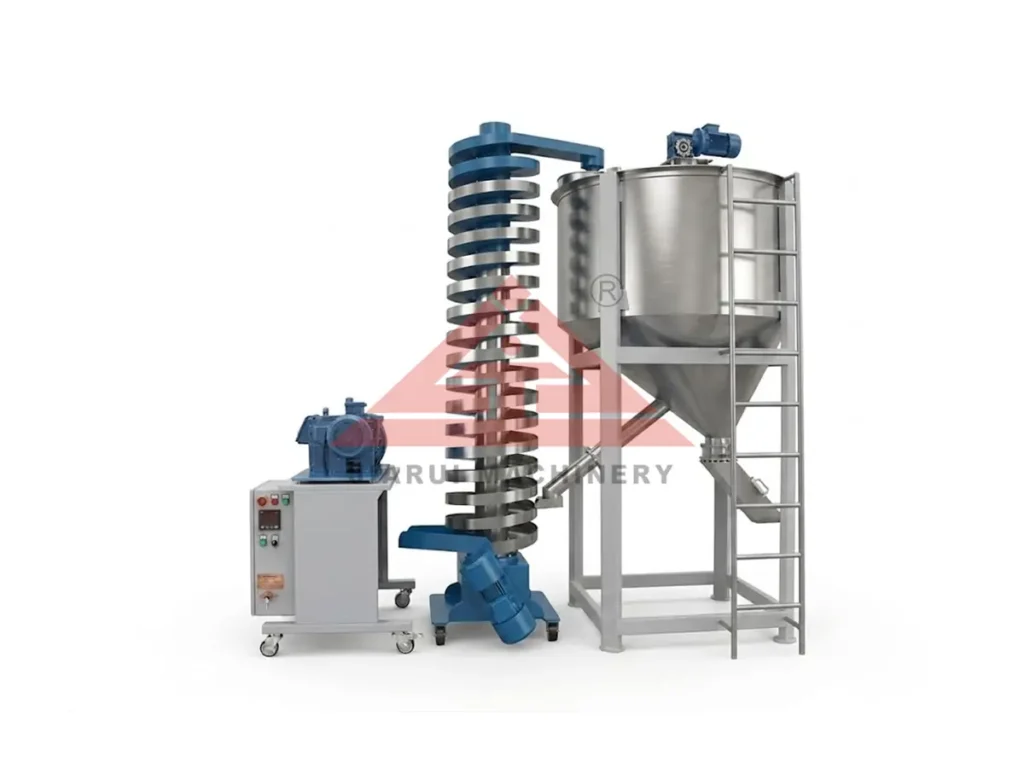
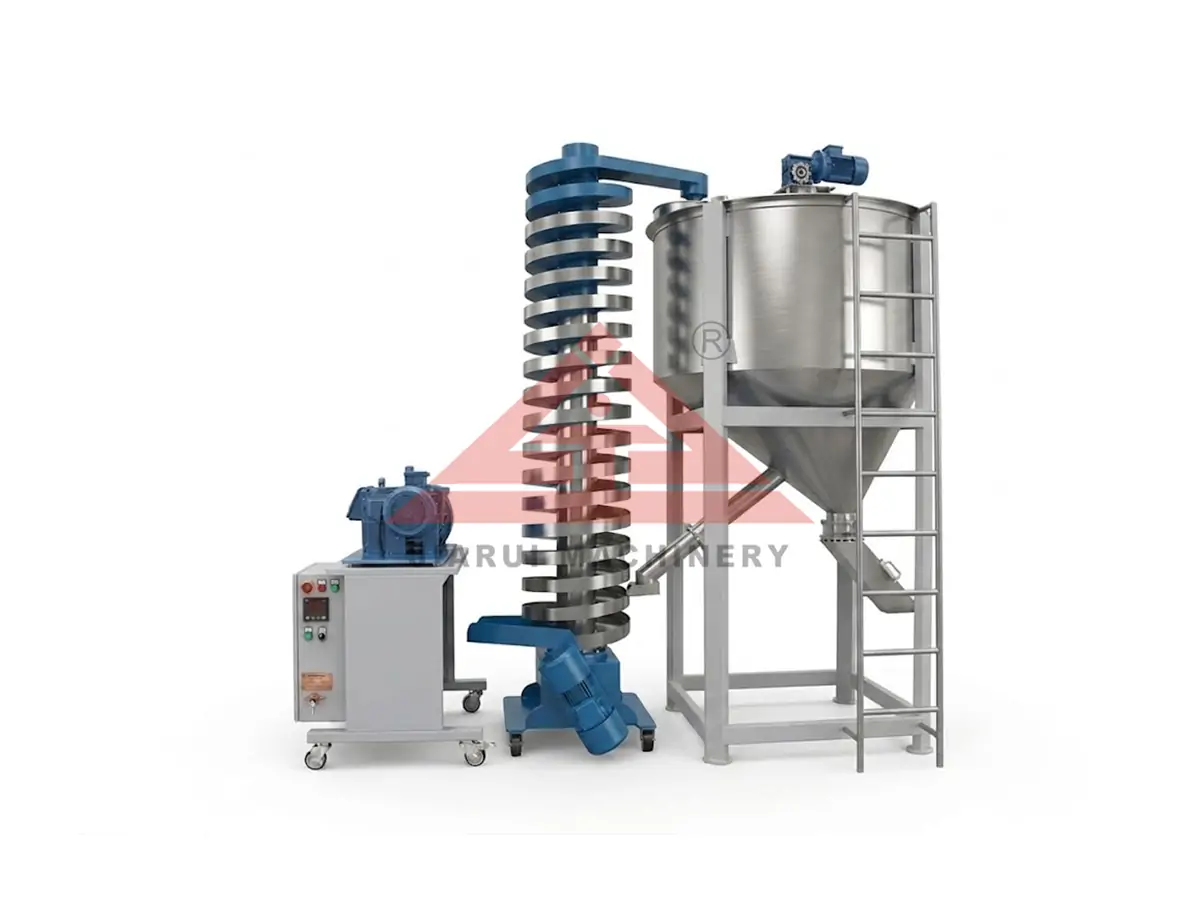
Müşteri gereksinimlerine göre ekipman yüksekliğini, yapısal tasarımı, malzeme seçimini ve giriş/çıkış konfigürasyonunu özelleştirebiliriz. Bu ayarlamalar sınırlı kurulum alanı, ekipman bağlantısı, toz kontrolü ve özel malzeme kaldırma gereksinimleri gibi sorunların çözülmesine yardımcı olur. Ekipman ayrıca eleme, taşıma ve besleme sistemleriyle entegre edilebilir: Auger Vidalı Besleyici Haznesi, bir üretim hattının farklı aşamalarını bağlamak için.Uygun bir model seçmek için lütfen aşağıdakileri sağlayın:
- Malzeme bilgileri
- Malzeme özellikleri
- Gerekli taşıma kapasitesi
- Kaldırma yüksekliği
- Kurulum yerleşimi
- Özel gereksinimler
Yeni bir taşıma sistemi planlıyorsanız veya mevcut bir üretim hattını değiştiriyorsanız, lütfen yukarıdaki çalışma bilgilerini sağlayın. Jiarui mühendislik ekibi uygulama koşullarını değerlendirecek ve uygun bir ekipman konfigürasyonu ve yapısal tasarım önerecektir.
Jiarui Üretim
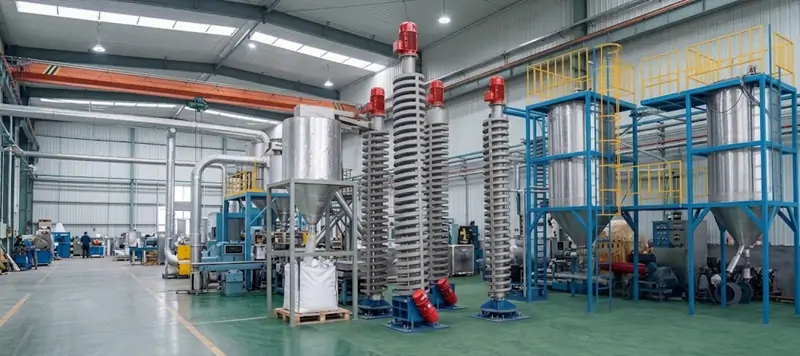
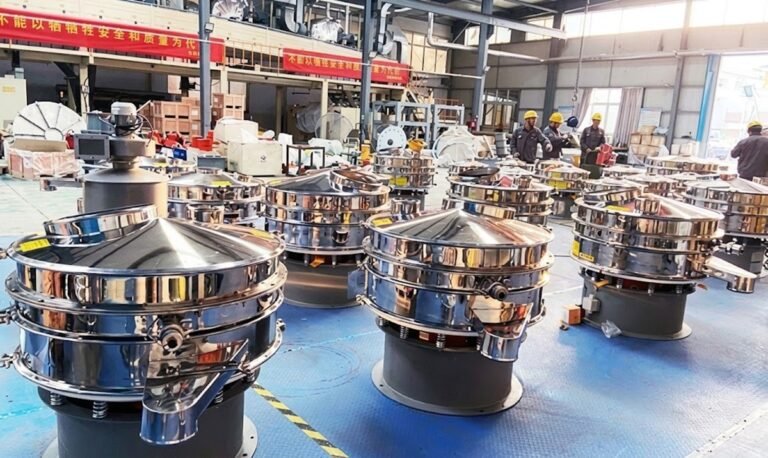
Jiarui, Çin'in Xinxiang kentinde bulunan ve titreşimli eleme, taşıma ve filtrasyon ekipmanlarının geliştirilmesi ve üretiminde uzmanlaşmış bir titreşimli ekipman üreticisidir. Titreşimli spiral elevatörler için yalnızca ekipman yapısına değil, aynı zamanda malzeme özelliklerinin, taşıma gereksinimlerinin ve üretim detaylarının doğru şekilde eşleştirilmesine de odaklanıyoruz. Üretim kalitesine odaklanan Jiarui, ISO 9001 sertifikalı kalite yönetim sistemi altında faaliyet göstererek tutarlı üretim standartları ve güvenilir ekipman performansı sağlar.
Hammadde işlemeden yapısal kaynağa, ekipman montajından fabrika testine kadar her üretim aşaması ilgili kalite kontrol prosedürlerini takip eder. Farklı malzeme özelliklerine ve çalışma ortamlarına göre Jiarui, ekipmanın müşteri üretim koşullarına daha iyi uyum sağlamasına yardımcı olmak için uygun malzeme seçenekleri ve yapısal konfigürasyonlar sunabilir.
SSS
Ücretsiz Danışmanlık Alın
Uzmanlarımızla iletişime geçmek ve uygulamanız için kişiselleştirilmiş öneriler almak için aşağıdaki formu doldurun.