Screw conveyor advantages and limitations depend largely on the material, conveying capacity, conveying distance, and installation conditions. A screw conveyor uses a rotating screw flight to move material forward and is commonly used to convey powders, granules, and small lumps. It is often installed between hoppers, production equipment, and packaging equipment for continuous material transfer.
Its structure is relatively compact, and the conveying section can be designed as an enclosed system. In most cases, it is suitable for horizontal or slightly inclined conveying. The screw diameter, conveying length, and drive power depend on the material, conveying capacity, and installation conditions.
What Are the Advantages and Limitations of Screw Conveyors?
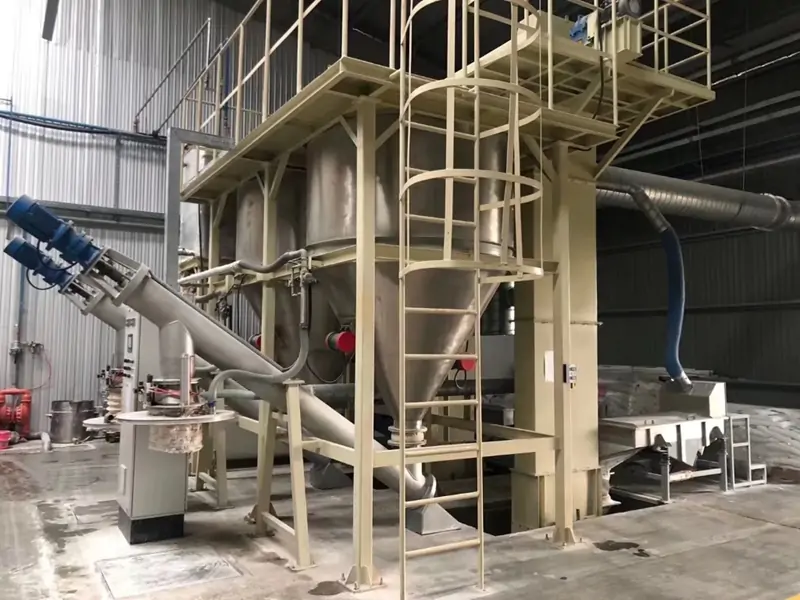
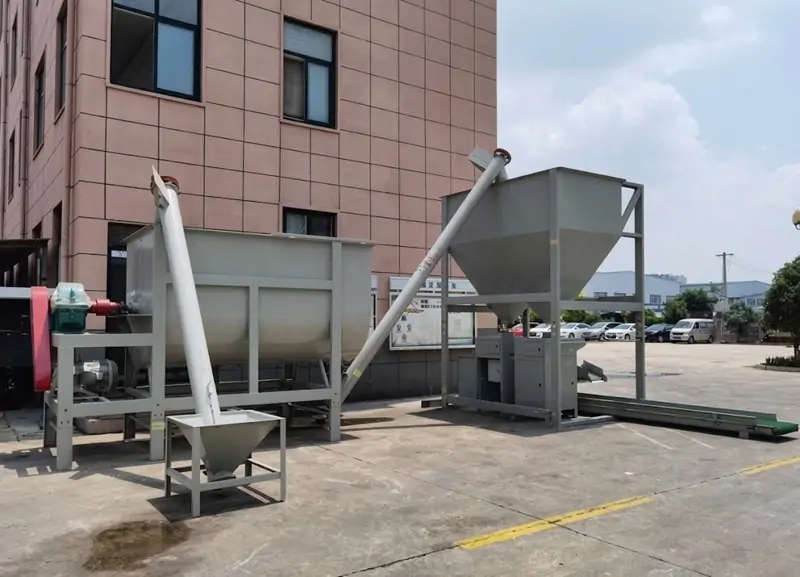
Compact Structure for Short-Distance Conveying Between Equipment:Screw conveyors take up relatively little space and are suitable for installation between hoppers, production equipment, and packaging equipment. When the distance between equipment is short and floor space is limited, this design can be convenient.
Enclosed Conveying for Powder Materials:Screw conveyors can be designed as enclosed systems, so the material is not directly exposed during conveying. For materials such as flour, mineral powder, and chemical powders that can generate dust, this can reduce dust escaping into the surrounding area and also reduce the chance of foreign matter entering the material.
Suitable for Continuous Conveying:A screw conveyor can continuously move material from one piece of equipment to another. It is suitable for connection between equipment such as hoppers, mixers, and packaging machines. When continuous feeding is required, it can reduce manual material transfer.
Can Be Adjusted for Different Operating Conditions:The screw diameter, length, screw design, and drive configuration can all be adjusted. The material being conveyed, required capacity, conveying distance, and installation conditions all affect the final configuration.
Therefore, a screw conveyor is not a machine where “one model can convey any material.” The equipment needs to be configured according to the specific operating conditions.
What Are the Main Limitations of Screw Conveyors?
Not Suitable for Every Material:Screw conveyors are relatively sensitive to material characteristics. Materials that are highly sticky, prone to agglomeration, or likely to wrap around the screw can cause material buildup or uneven conveying. These materials need to be evaluated first before determining the screw design. When necessary, other conveying methods can also be considered. If screw conveying is not suitable for your material or conveying conditions, a Vacuum Conveyor may be another option for enclosed conveying of powders and granules.
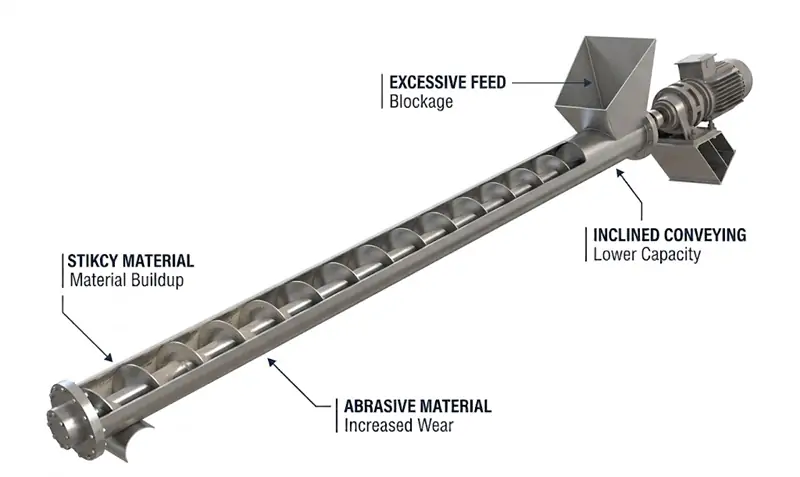
Abrasive Materials Can Increase Equipment Wear:Hard or highly abrasive materials such as sand and mineral powder continuously rub against the screw flights and conveyor housing. When conveying these materials, wear-resistant materials or reinforced components can be selected, and future replacement should be considered in advance. As long as the structure and materials are properly selected, changing to another conveying method is not always necessary.
Inclined Installation Affects Conveying Capacity:Screw conveyors can be installed at an incline, but as the angle increases, it becomes more difficult for the material to move forward, and conveying capacity may decrease. If only a small amount of elevation is required, the conveying capacity should be reconfirmed according to the installation angle. If a large vertical lift is required, equipment such as a bucket elevator may be more suitable.
Long-Distance Conveying Cannot Simply Use a Longer Version of a Short-Distance Configuration:As the conveying distance increases, the drive power and structural requirements also change. For longer distances, the screw diameter, length, and drive configuration need to be reconfirmed instead of simply extending a short-distance conveyor. When the distance is relatively long, other options such as belt conveyors should also be considered.
Fragile Materials May Experience Particle Breakage:The screw flights continuously push the material forward, and some fragile materials may be subjected to compression or friction during conveying. If particle integrity is important, it is necessary to first confirm whether the material can withstand this type of conveying. If the material is particularly fragile, a gentler conveying method should be considered.
Excessive Feed Can Cause Material Buildup and Blockage:If the feed rate exceeds the conveying capacity of the equipment, or if the material tends to agglomerate, material buildup or even blockage may occur. Therefore, the feed rate should not be based only on the output of the upstream equipment. It also needs to match the actual capacity of the screw conveyor. For materials prone to agglomeration, the feeding method and screw design also need to be considered.
What Are the Differences Between Different Types of Screw Conveyors?
Different screw conveyor designs are suitable for different operating conditions.
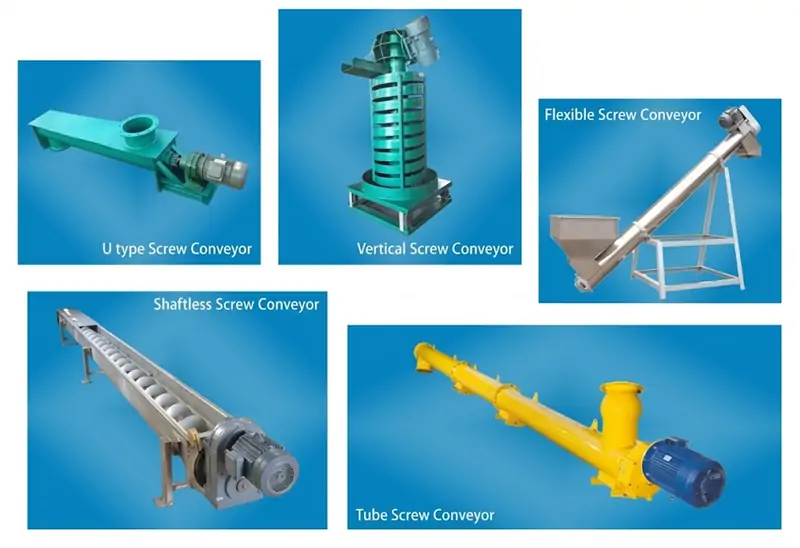
| Type | Main Advantage | Main Limitation | More Suitable For |
| Horizontal Screw Conveyor | Relatively simple structure, suitable for continuous horizontal conveying, and easy to connect with upstream and downstream equipment | Not suitable for large-height lifting | Continuous feeding between equipment without a significant height difference |
| Inclined Screw Conveyor | Can raise the material while conveying it, reducing the need for additional lifting equipment | Conveying capacity may decrease as the incline angle increases | Feeding between equipment with a certain height difference |
| U-Trough Screw Conveyor | Easy to inspect, clean, and maintain; covers can also be added as needed | Compared with a fully enclosed tubular design, dust control depends on the cover and overall sealing design | Continuous conveying of general powders and granular materials |
| Tubular Screw Conveyor | The conveying section is well enclosed, helping reduce dust escape and the entry of foreign matter | Inspection and cleaning are less straightforward than with a U-trough | Powder materials or applications requiring enclosed conveying |
| Shaftless Screw Conveyor | No center shaft, providing better adaptability for some materials that tend to wrap or entangle | Not suitable for every material; conveying capacity and design need to be confirmed separately | Specific sticky, fibrous, or easily entangled materials |
These types are not completely independent. For example, a screw conveyor can have an inclined installation + tubular design. Therefore, the equipment name alone cannot determine which structure is more suitable.
What Should You Consider When Selecting a Screw Conveyor?
When selecting a screw conveyor, you cannot look only at conveying capacity. At least the following conditions should be clarified first.
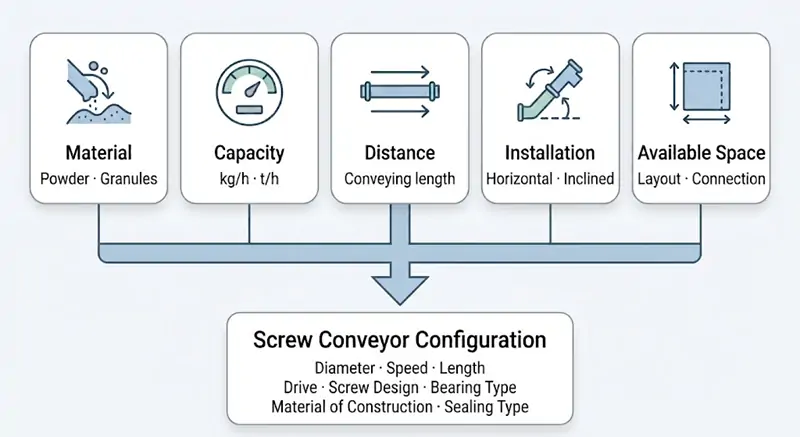
| Conditions to Confirm | Main Impact |
| Material | Powders, granules, sticky materials, materials prone to agglomeration, and abrasive materials have different requirements for screw design and materials. |
| Conveying Capacity | Affects the screw diameter, speed, and drive configuration. |
| Conveying Distance | Affects the screw length, drive power, and overall structure. |
| Installation Method | Horizontal and inclined installations have different conveying capacities, so the installation angle needs to be confirmed in advance. |
| Available Space | Affects the equipment length, inlet, outlet, and connection with upstream and downstream equipment. |
ISO 7119 provides design rules for the drive power of screw conveyors used in horizontal or inclined conveying applications. Therefore, you cannot simply tell the manufacturer, “I need to convey 5 tons per hour.” You also need to provide information such as the material, conveying distance, and installation method to determine whether a screw conveyor is actually suitable.
When Is a Screw Conveyor a Suitable Choice?
If you mainly convey powders or granules, need continuous feeding between equipment, and have a relatively short conveying distance with limited installation space, a screw conveyor is usually a suitable choice.It is especially suitable for the following situations:
- The conveying distance is not long, and the conveyor is mainly installed horizontally or at a small incline.
- Continuous feeding is required between hoppers, production equipment, and packaging equipment.
- The conveying process needs to remain enclosed to reduce dust escape.
- Installation space is limited and a compact structure is required.
If the material is highly sticky, easily entangled, the conveying distance is very long, a large lifting angle is required, or particle integrity is very important, the choice needs to be considered carefully. In these cases, a screw conveyor may not be the most suitable option.
If you are not sure whether your operating conditions are suitable, you can contact Jiarui Machinery and provide the material, conveying capacity, conveying distance, and installation conditions. Our engineers can help determine a suitable conveying method and equipment configuration.
FAQs
What Materials Are Suitable for Screw Conveyors?
Screw conveyors are commonly used to convey powders, granules, and small lumps, such as flour, grain, mineral powder, chemical raw materials, and plastic pellets. For materials that are highly sticky, prone to agglomeration, easily entangled, or highly abrasive, the material characteristics should be confirmed first before determining the screw design and equipment materials.
Can a Screw Conveyor Be Installed at an Incline?
Yes. A screw conveyor can be installed horizontally or at a small incline. However, as the installation angle increases, conveying capacity may decrease. Therefore, the conveying capacity, screw design, and drive configuration need to be reconfirmed according to the specific angle.
Are Screw Conveyors Suitable for Long-Distance Conveying?
Screw conveyors can be used for continuous conveying over a certain distance, but as the distance increases, the screw length, diameter, drive power, and overall structure need to be redesigned. For longer conveying distances, other conveying methods such as belt conveyors can also be considered.
What Is the Difference Between Tubular and U-Trough Screw Conveyors?
Tubular screw conveyors provide better enclosure of the conveying section and are more suitable for powder materials and applications with higher dust-control requirements. U-trough screw conveyors provide easier access for inspection, cleaning, and maintenance, and covers can be added as needed. The specific choice depends on the material characteristics, cleaning requirements, and site conditions.
Can Screw Conveyors Convey Fragile Materials?
Yes, but the required degree of particle breakage needs to be confirmed first. The screw flights create some compression and friction while moving the material, so some fragile particles may break during conveying. If particle integrity is important, it is necessary to confirm in advance whether the material is suitable for screw conveying.
Can Jiarui Customize Screw Conveyors for Different Operating Conditions?
Yes. Jiarui can adjust the screw diameter, conveying length, screw design, equipment material, drive configuration, and inlet and outlet design according to the material, conveying capacity, conveying distance, installation location, and connection with upstream and downstream equipment. If a standard configuration cannot meet the site conditions, the conveyor can be customized according to the specific requirements.