
The electromagnetic vibrating feeder working principle may look simple: a constantly vibrating trough moves material toward the outlet. But the key is not simply how the trough vibrates. It is how this vibration makes the material move forward continuously. During operation, the electromagnetic system drives the trough in a high-frequency reciprocating motion, causing the material to move forward along the trough under the effect of vibration. The electromagnetic force starts the movement, the spring system helps maintain the vibration, and the repeated motion of the trough keeps the material moving toward the outlet.
What Are the Main Parts Involved?
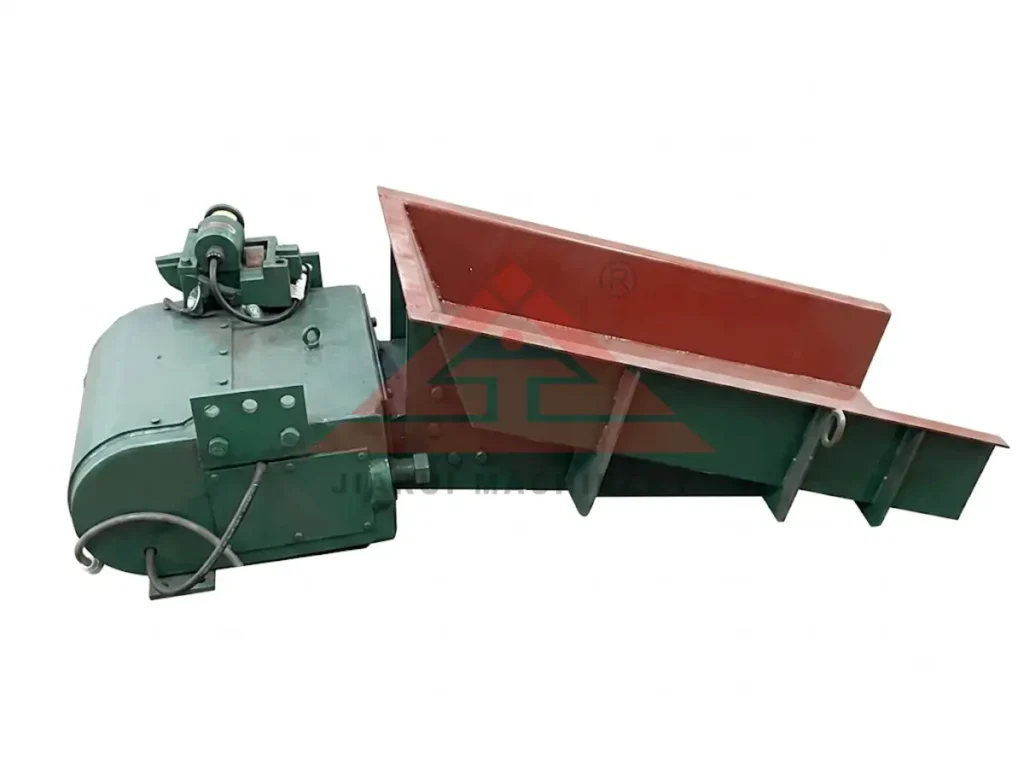
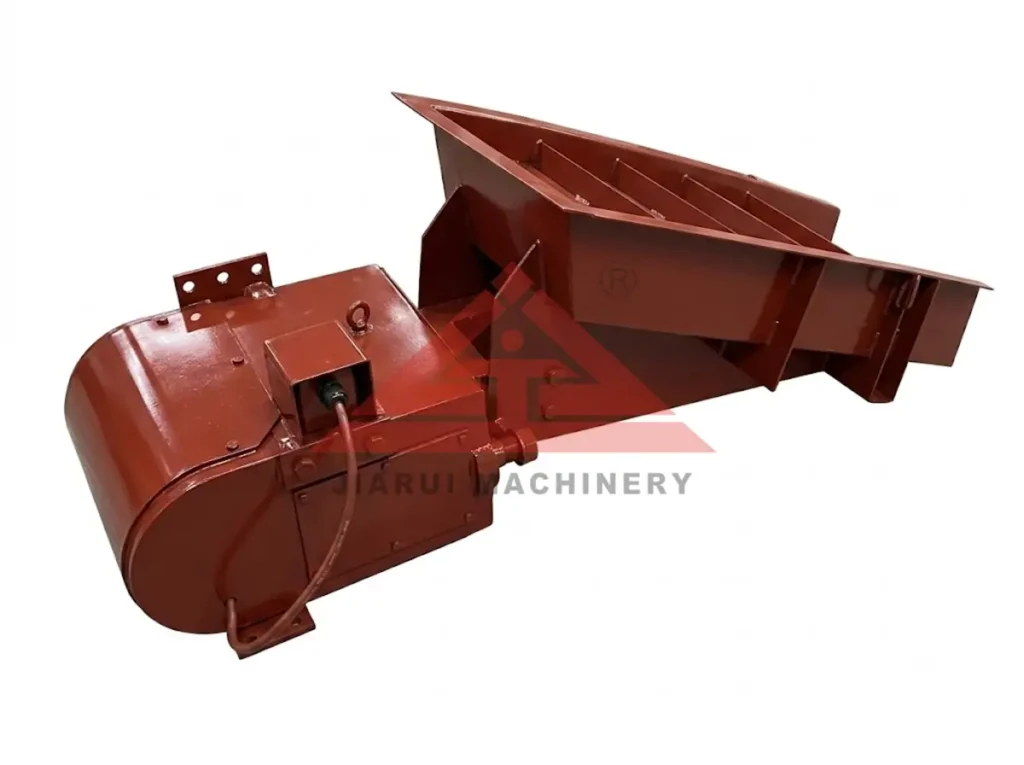
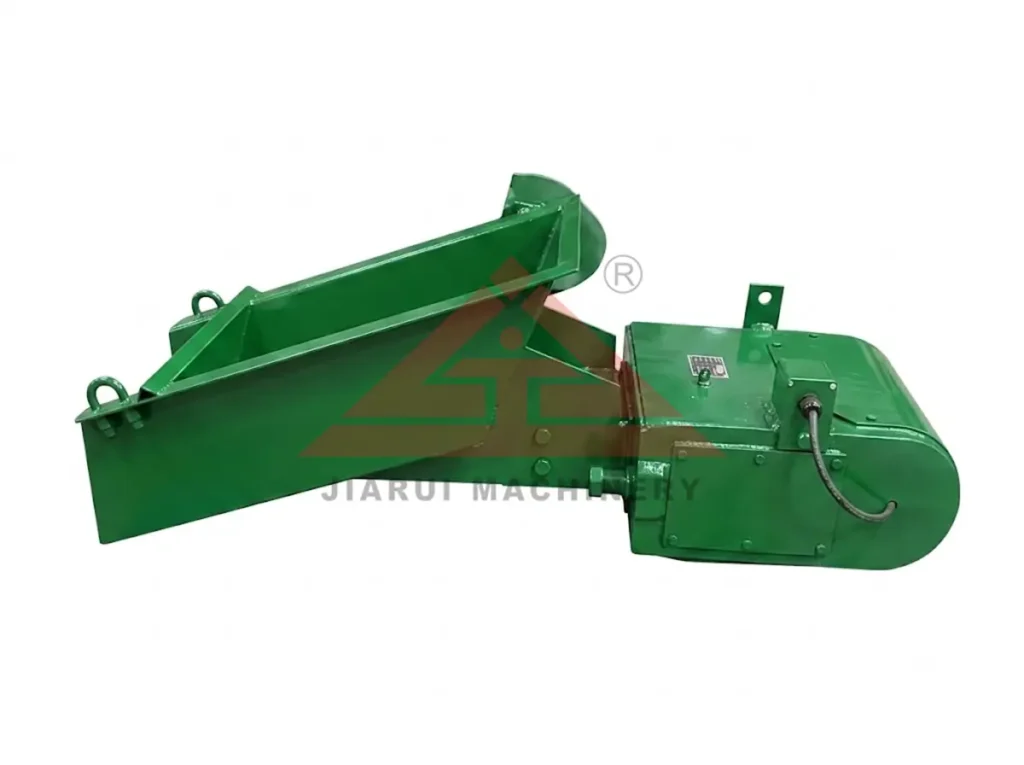
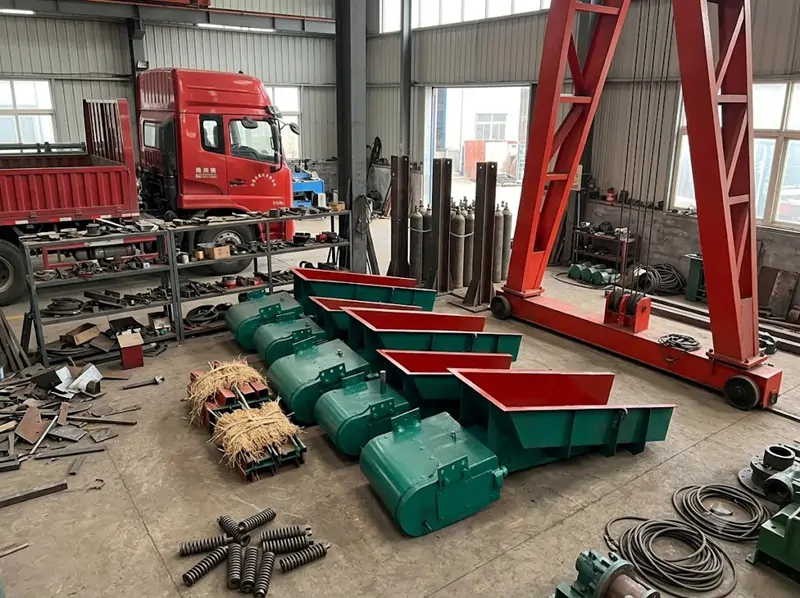
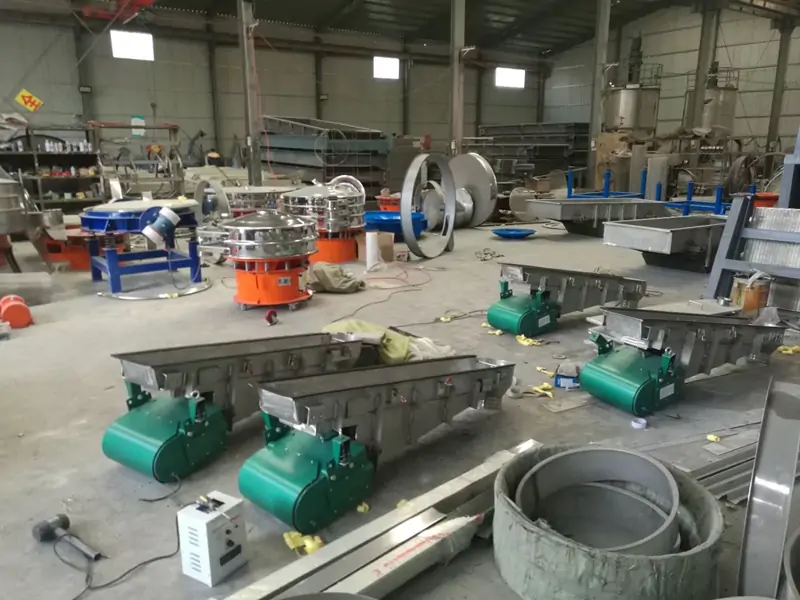
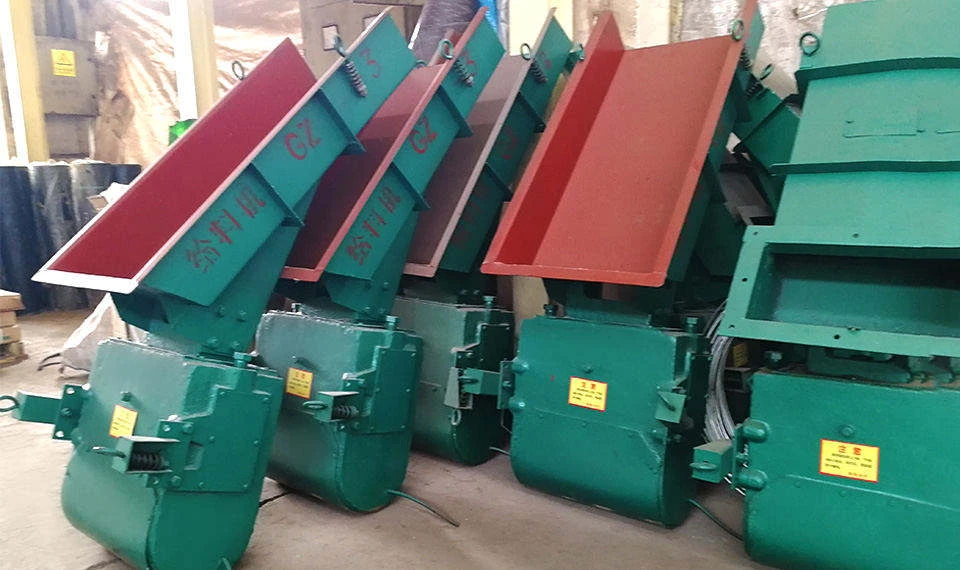
Three main parts work together here: the electromagnet, the springs, and the vibrating trough. The electromagnet creates the driving force, the springs help the moving parts return, and the trough passes the vibration to the material.
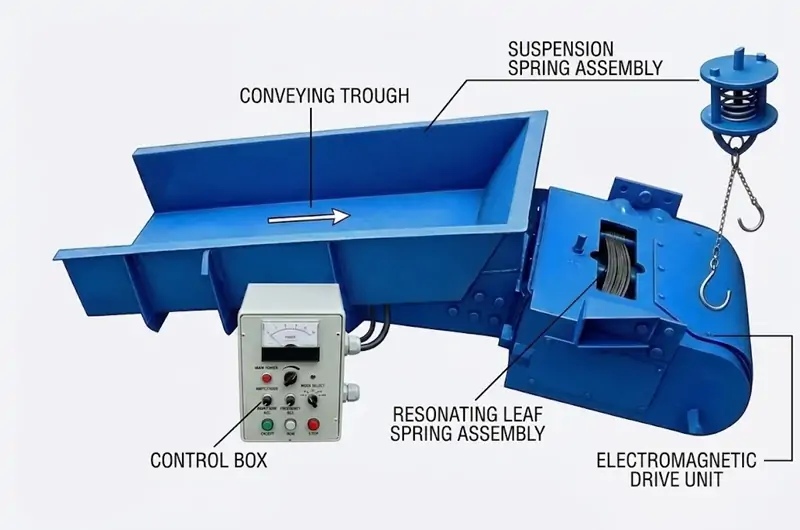
How Does an Electromagnetic Vibrating Feeder Work?
The electromagnetic vibrating feeder working principle can be simply understood as:
Power on → electromagnetic force is generated → trough vibrates → material moves forward
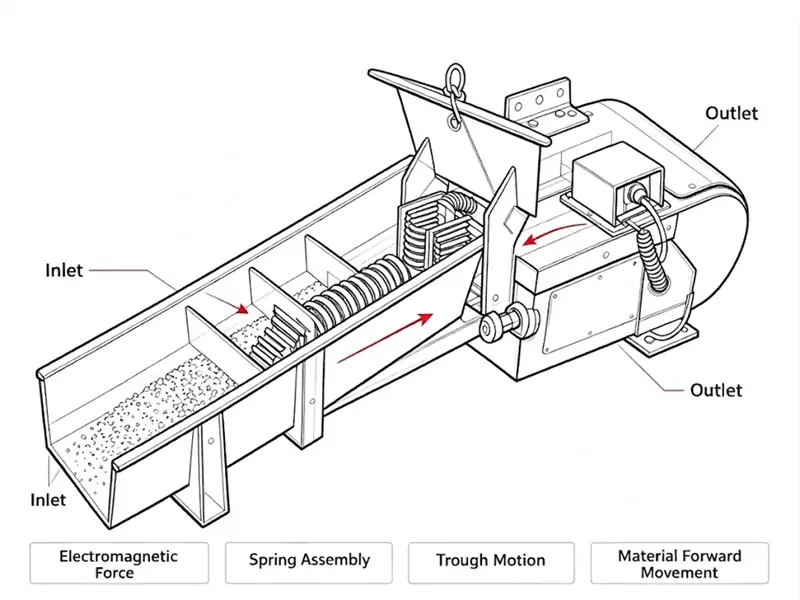
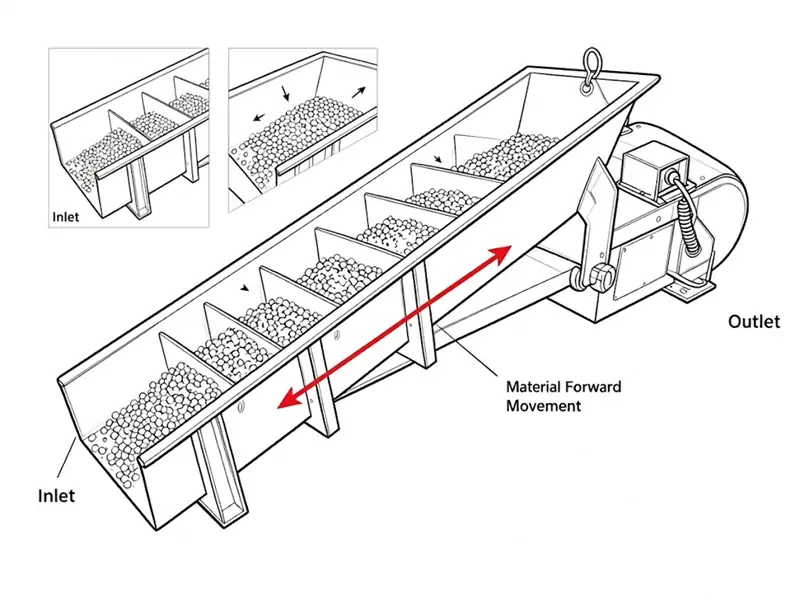
When current enters the coil, the electromagnetic system generates the force that drives the feeder trough in a reciprocating motion. As the trough vibrates, the material is affected by inertia and begins to move in the feeding direction, gradually moving from the inlet to the outlet.
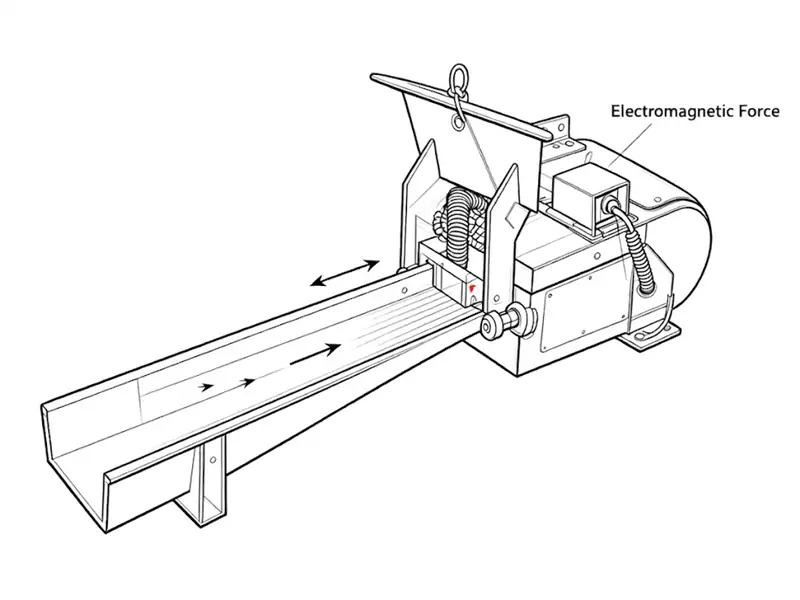
1.Electromagnetic Force Starts the Vibration
When current passes through the electromagnetic coil, it creates a magnetic force that pulls the moving part of the feeder. The trough then starts moving back and forth, similar to the electromagnetic feeders used by Eriez.
How far the trough moves in each cycle depends partly on the strength of the electromagnetic force. This is important because the material will move differently with a small vibration than with a larger one.
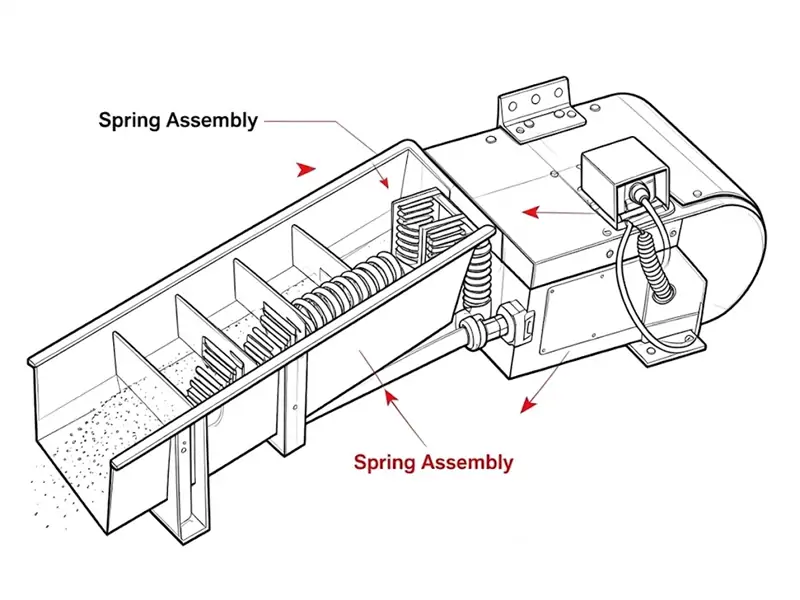
2.The Springs Keep the Movement Going
As the electromagnet pulls the moving part, the springs are compressed or stretched. They store energy and then release it as the electromagnetic force changes, helping the trough move back again.
The electromagnet keeps pulling, and the springs keep helping the moving parts return. This happens over and over, which is how the feeder keeps vibrating instead of stopping after one movement.
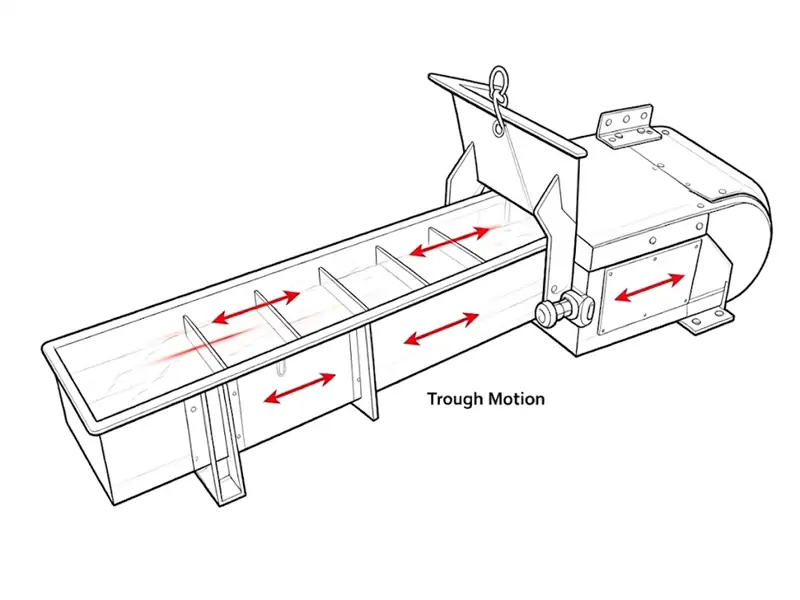
3.The Trough Moves Back and Forth
With the electromagnet and springs working together, the trough moves back and forth rapidly. The movement has a set direction and amplitude, so the trough is not just shaking randomly.
This is the movement that the material actually feels. As the trough moves, it gives the material small pushes in the feeding direction.
4.The Material Moves Forward Along the Trough
The material is not simply pushed forward by the trough. When the trough moves forward, the material moves with it. When the trough moves back, the material does not immediately move back because of inertia, so it stays slightly ahead.
The distance moved in one cycle is very small, but the cycle happens many times every second. Those small movements add up, and the material gradually travels from the inlet to the outlet.
It is a bit like taking small steps while walking. Each step is short, but after repeating it again and again, you still move a long way.
Why Does the Material Move Forward Instead of Backward?
You may wonder: if the trough keeps moving back and forth, why does the material keep going toward the outlet instead of moving back and forth too?
The electromagnetic vibrating feeder working principle relies mainly on inertia. When the trough moves forward, the material moves with it.When the trough moves back, the material does not immediately move back with the trough. It keeps moving forward for a short distance. The same thing happens again and again, so the material gradually moves toward the outlet.
How Does Vibration Affect the Feeding Rate?
The stronger the trough moves, the more movement the material usually gets in each vibration cycle. So, within a reasonable range, increasing the vibration amplitude can make the material move faster, while reducing it slows the feeding down.
But the vibration setting is not the only thing that matters. A fine powder, a heavy granule, and a damp material may all behave differently under the same vibration. That is why the vibration needs to be adjusted according to the material and the required feeding rate.
If you have any questions about how an electromagnetic vibrating feeder works, feel free to contact the Jiarui engineering team. We will be happy to help.