Jiarui Rotary Vibrating Screen (also called 3D Vibrating Sieve or Circular Vibratory Screen) is a highly efficient and precise automated screening equipment, widely used in industries such as chemicals, food, building materials, pharmaceuticals, and metallurgy. Known for its unique three-dimensional vibration trajectory and modular design, it is suitable for screening, grading, impurity removal, and filtration of various materials including granules, powders, and slurries.
How does a Rotary Vibrating Screen work?
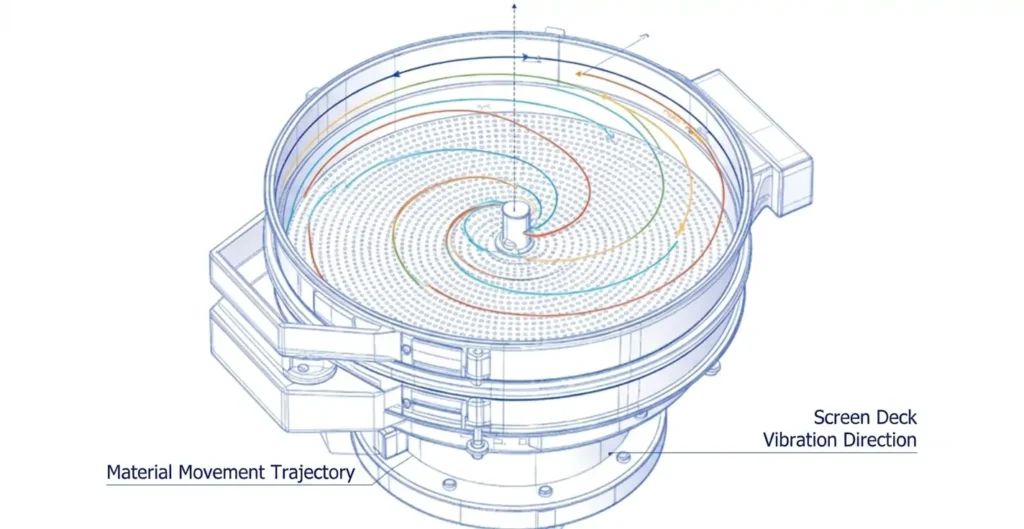
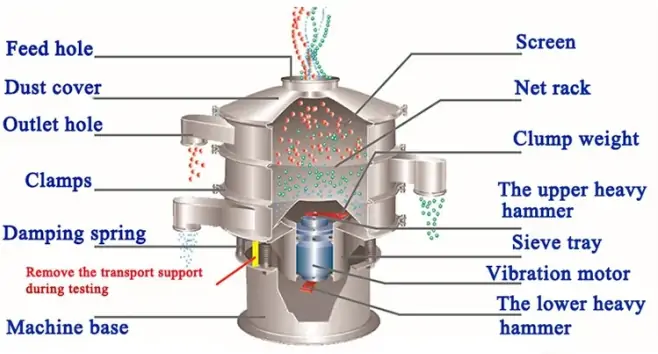
Principles of Three-Dimensional Motion: The rotary vibrating screen uses a vertical vibration motor as the vibration source. Eccentric weights are fitted at the top and bottom of the motor, converting the motor’s rotational motion into three-dimensional movement in horizontal, vertical, and inclined directions. This three-dimensional motion is transmitted to the screen surface with the aid of shock-absorbing and vibration-aiding springs. By adjusting the phase angle of the upper and lower eccentric weights, the movement trajectory of materials can be altered, and their residence time on the screen surface can be extended or shortened, so as to achieve an optimal screening effect.
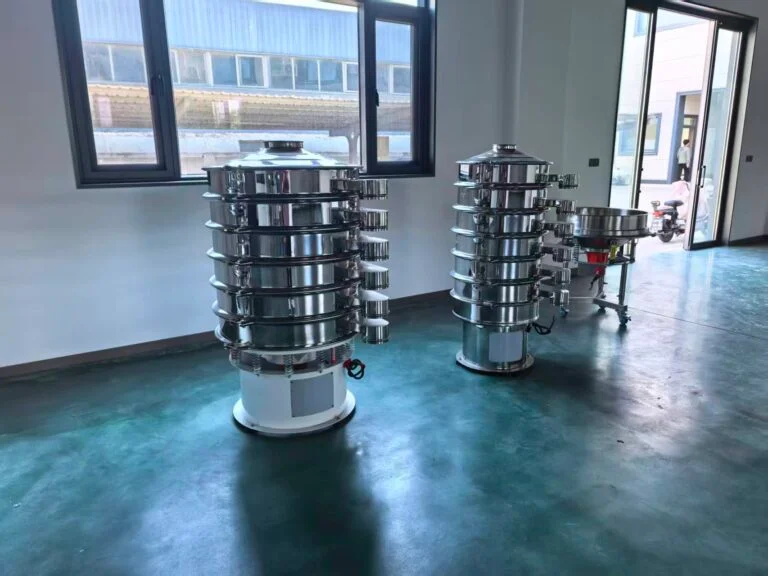
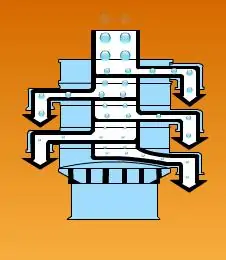
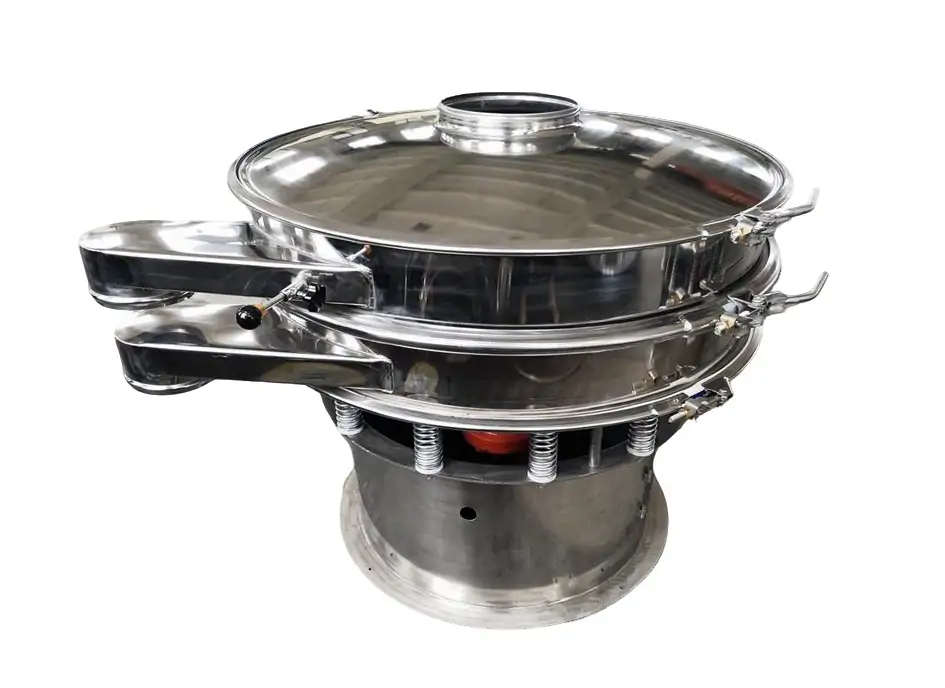
Multi-level hierarchical capability: Our company, Jiarui, produces vibrating screens with standard configurations of 1-3 sieve layers, while customized options can reach up to 6-7 layers. The sieve mesh can achieve a maximum fineness of 500 mesh, making it ideal for sieving ultra-fine powders. A single vibrating screen can simultaneously accommodate multiple layers of sieve meshes with varying mesh sizes. From top to bottom, the mesh size progressively increases in fineness. By stacking sieves with different apertures, the machine enables multi-stage separation, meeting diverse customer sieving requirements and achieving precise classification of materials by particle
Vibrating Sifter Sieving Process
The machine starts, and the vibration motor generates high-frequency motion. Material is evenly fed into the center of the screen surface. Under three-dimensional vibration, materials are dispersed and layered automatically.Fine particles pass through the mesh openings and fall to the lower outlet, while oversized particles continue moving toward the discharge outlet. Multi-layer models allow simultaneous separation into multiple particle size fractions in one operation.
The core advantages of Jia Rui Vibrating Sieve
- Support for non-standard customization: All machinery produced by our Jia Rui supports non-standard customization. We provide customized professional sieving solutions based on the materials you need to sift. You only need to tell us the name, specific gravity, desired output, mesh size, number of sieve layers, and material requirements of the material you want to sift. We have professional technical consultants to answer your questions and recommend the most suitable vibrating sieve model for you.
- Effectively prevent clogging of the network: The rotary vibrating screen operates through a vertical vibration motor that generates centrifugal force via eccentric weights installed at both ends of the motor shaft. When sieving fine or electrostatically chargeable powdery materials, an ultrasonic system can be used in conjunction, or a jump ball can be added. The high-frequency vibrations of the ultrasonic system at 3000 times per second enable rapid cleaning of the mesh, effectively preventing the problem of difficult sieving and clogging of the mesh.
- A variety of materials are available for selection. All our products support non-standard customization. Due to the diversity of materials, we offer different material options for customers based on various operating conditions and the nature of the materials. These options include full stainless steel (314, 316), stainless steel in contact with materials, full carbon steel, and plastic materials.
- Flexible installation, easy to switch networks: A quick-release structure can be added, making installation simple and flexible. One person can easily complete it in 3-5 minutes, significantly improving production efficiency.
- Low-noise design: Machines can be equipped with silent springs to effectively reduce noise generated during the operation of the sieve.
- Closed screening: To ensure material purity and workshop air quality in accordance with screening requirements based on material properties and operating conditions, a dust-proof cover can be added, equipped with a visual window. This allows for dust-free screening while enabling real-time monitoring of the material’s screening status.
Types of Vibrating Sifter
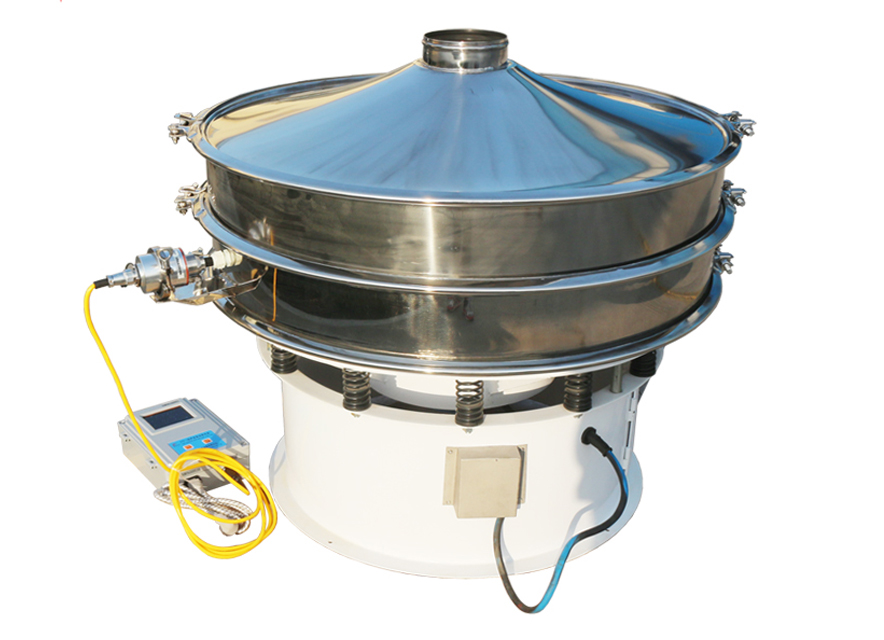
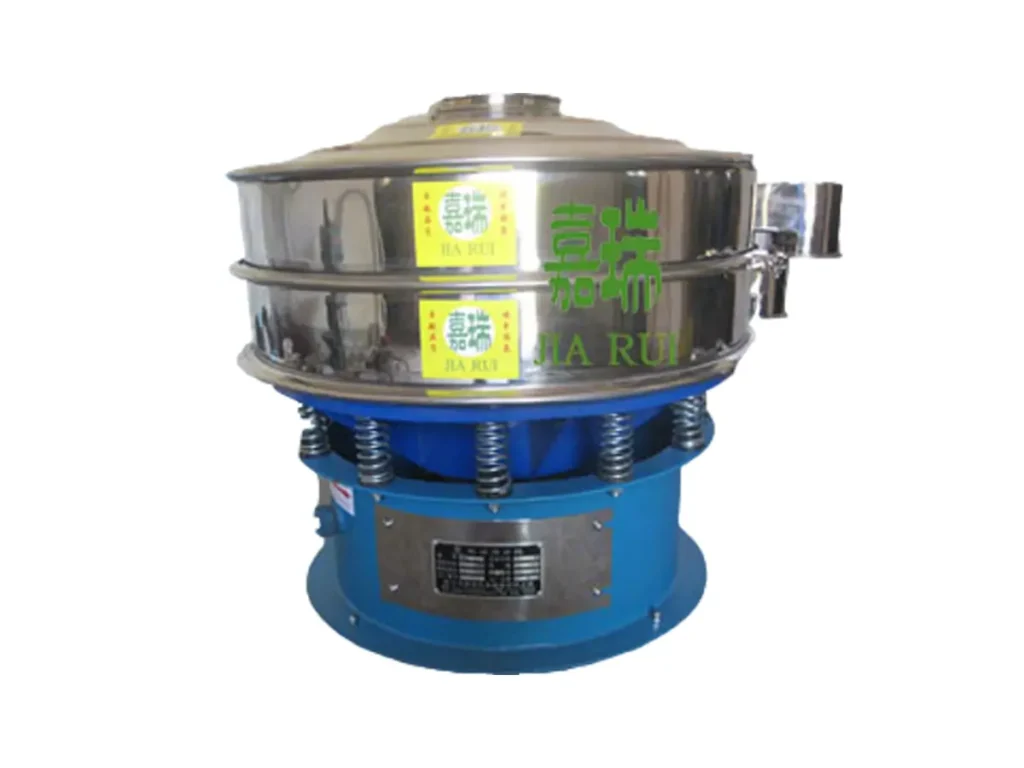
- Ordinary Vibrating Sieve: It is the most widely used vibratory screen, suitable for sieving most conventional powders, granular materials, and slurry-like substances. If the material is not highly corrosive, ultra-fine powder (below 300 mesh), and there are no issues with electrostatic adhesion or clumping, you can choose a standard vibrating screen. It has a wide range of applications, high output, and a good cost-performance ratio.
- Ultrasonic Vibration Sieve: It is used for sieving and impurity removal of fine powders that are difficult to screen due to static electricity and prone to adhesion.Based on a conventional vibrating sieve, an ultrasonic system is added to automatically and quickly clean the mesh, solving the problem of mesh blockage during sieving and significantly improving sieving efficiency and production progress.
- Plastic sieve: Plastic sieves are the only option when the material is strongly acidic, strongly alkaline, highly saline, or when contact with metal materials needs to be avoided to prevent contamination. It can effectively prevent equipment corrosion and has a long service life. Such as acidic and alkaline liquids in the chemical industry, PVC resin powder slurries, and high-salt materials in the food industry.
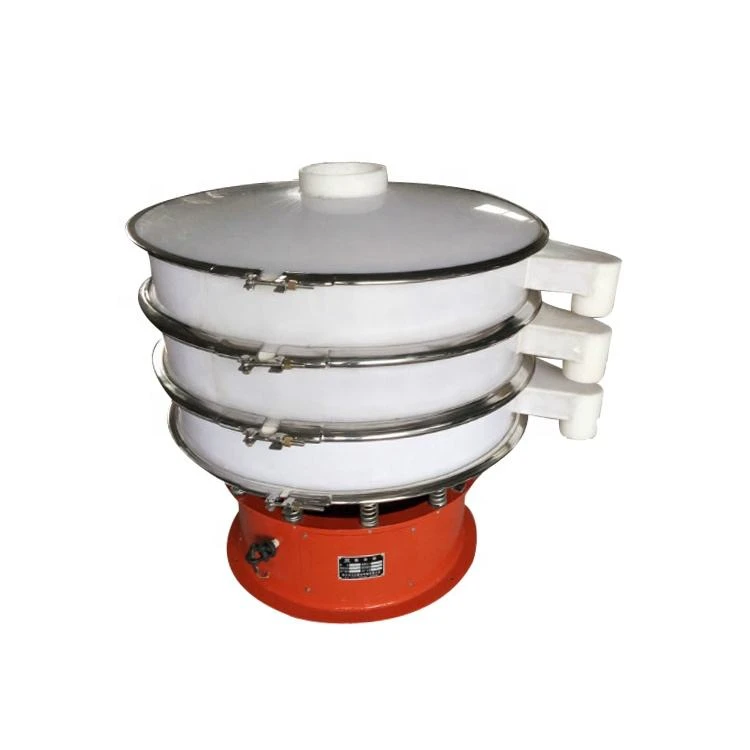
Applications
Jia Rui vibrating screen is used for sieving, grading, and impurity removal of granular and powder materials, as well as impurity removal and filtration of liquid materials. It can be used in conjunction with conveying equipment such as vacuum feeders and auger Screw Feeder Hoppers to form an integrated screening and conveying production line, significantly improving production efficiency. It is compatible with all industries and has a wide range of applications, such as in the food, chemical, pharmaceutical, mining, and building materials industries.
Selection Guide
- Processing volume: We recommend a model based on your daily required output, such as the number of hours you need to work and your target production. If the processing volume is large and the hourly output is high, you should consider a large-diameter vibrating screen. If the processing volume is small and the hourly output is low, you can consider using a small vibrating screen.
- Material: We, Jiarui, offer you a variety of material options, which you can select based on the type of your own materials and industry requirements. These include full stainless steel (316/304 stainless steel), stainless steel for material contact, carbon steel, and plastic materials.
- Explosion-proof requirements: The chemical industry needs to consider explosion-proof performance, such as explosion-proof motors.
- Mesh size selection: The smaller the particle size of the material you are screening, the larger the mesh number.The larger the particle size of the material, the smaller the mesh number.
Recommended Screening Mesh Size by Material
| Industry Category | Typical Materials | Recommended Mesh Size |
|---|---|---|
| Grains & Cereals | Wheat, Corn, Soybean, Peanut | 10–20 Mesh |
| Millet, Broken Rice, Brown Rice | 24–40 Mesh | |
| Edible Starch | 80–120 Mesh | |
| Food & Condiments | Wheat Flour, Whole Wheat Flour | 60–100 Mesh |
| White Sugar, Salt, MSG | 40–80 Mesh | |
| Milk Powder, Seasoning Powder | 100–160 Mesh | |
| Traditional Chinese Medicine (TCM) | TCM Granules, Herbal Slices | 30–60 Mesh |
| Fine Herbal Powder, Health Supplement Powder | 120–300 Mesh | |
| Chemical Raw Materials | Plastic Pellets, Rubber Granules | 12–30 Mesh |
| Talc Powder, Calcium Carbonate | 150–325 Mesh | |
| Pigments, Dyes, Coating Powder | 200–400 Mesh | |
| Metal & New Energy Materials | Conventional Metal Powder | 100–200 Mesh |
| Lithium Battery Materials, 3D Printing Powder | 250–600 Mesh | |
| Fruits & Agricultural Products | Fruit Granules, Nuts, Dried Fruits | 16–32 Mesh |
| Fruit Powder, Vegetable Powder, Meal Replacement Powder | 120–200 Mesh |
Note: The recommended mesh sizes above are general references based on common industrial screening applications. Actual mesh selection should be determined by particle size distribution, moisture content, bulk density, screening capacity, and the required product quality. For customized recommendations, consult our engineering team with your material characteristics and production requirements.
Conclusion
Jia Rui vibrating screen is a reliable and efficient screening solution in modern industry. Its advanced three-dimensional motion system ensures high precision, strong adaptability, and stable long-term performance across various materials. Jia Rui produces standard vibrating screens, ultrasonic vibrating screens, and plastic screens to meet your diverse operating conditions. Our company supports non-standard customization. State your requirements, and our professional technical staff will analyze them and provide you with the most professional screening solutions.