工业筛分机类型:如何选择合适的一款?

Industrial sieve machines are not simply used to separate materials into different size ranges. Different projects face different screening challenges. Some require higher processing capacity, some need to solve fine powder screen clogging problems, while others focus on screening accuracy and maintaining material integrity.

Based on years of industrial sieve machine design and application experience, we have found that many unstable screening results are not caused by equipment problems, but by a mismatch between the sieve machine type, material characteristics, and production conditions. Material particle size, moisture content, flowability, stickiness, and capacity requirements all affect the selection of industrial sieving machines.

Quick Comparison of Industrial Sieve Machines

Different industrial sieve machines are designed for different screening requirements. There is no single machine type that can handle all materials. The following comparison of common industrial sieve machine types helps you quickly understand what problems each equipment type is mainly designed to solve.

Industrial Sieve Machine TypeMain Problems SolvedCommon Applications
回転式振動篩General powder classification and multi-size separationFood powders, chemical powders, mineral powders
超声波振动筛Fine powder clogging prevention and improved screening stabilityMetal powders, battery materials, ultrafine powders
リニア振動ふるいContinuous production and high-capacity screeningAggregates, minerals, industrial materials
平面旋转筛High-precision screening with reduced material damageFood, chemicals, new materials
遠心シフターDispersion and screening of ultrafine and lightweight powdersChemical powders, lightweight powders

From the perspective of industrial sieve machine selection, rotary vibrating sieves are more suitable for general powder screening, while linear vibrating screens are designed for continuous production with higher capacity requirements. Ultrasonic vibrating sieves, planar rotary screens, and centrifugal sifters are mainly used for fine powders, high-precision screening, and difficult-to-screen materials.

Main Types of Industrial Sieve Machines

Many customers first ask when choosing industrial screening equipment: “Which sieve machine is the best?”

The focus of each screening project is different. Some projects care more about processing capacity and continuous operation, while others pay more attention to screening accuracy. Some materials mainly need solutions for sticking, clogging, or poor screening performance. Therefore, choosing the right industrial sieving machine starts with understanding the material characteristics and production requirements.

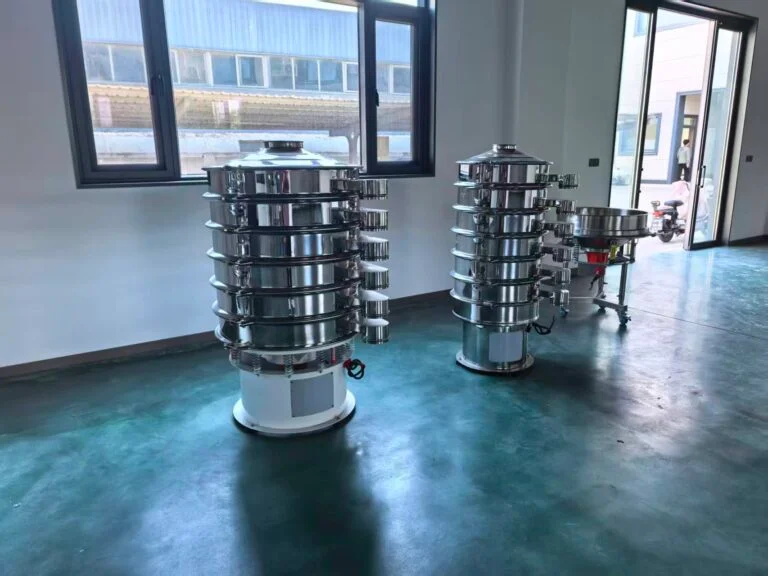
回転式振動篩

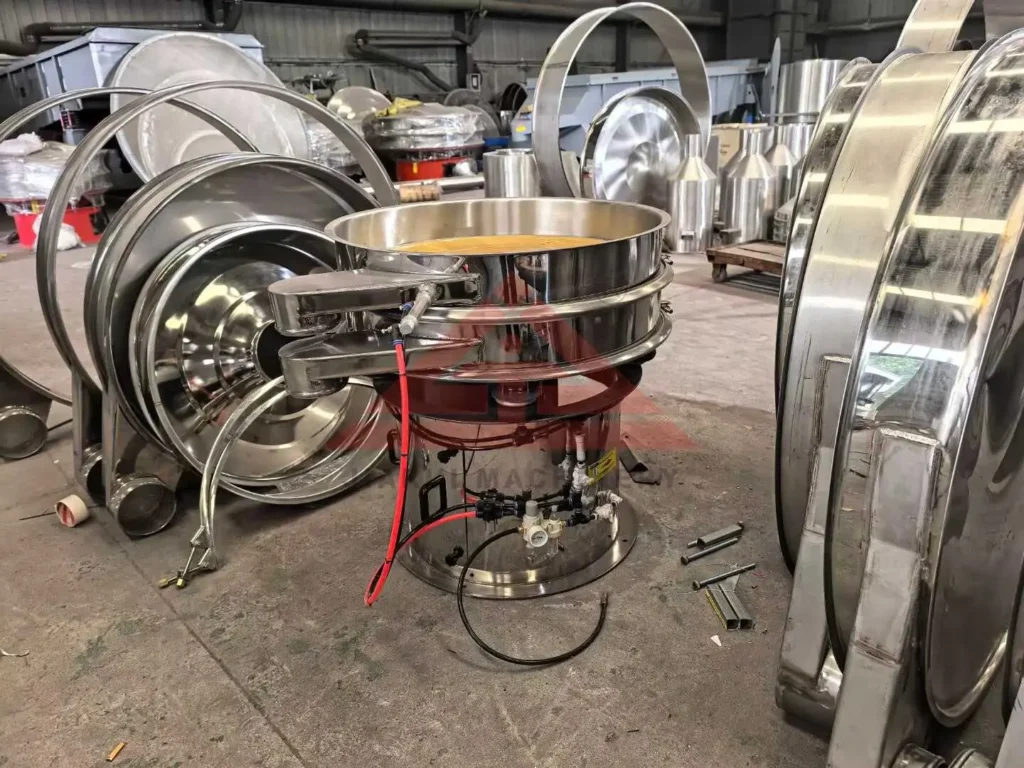
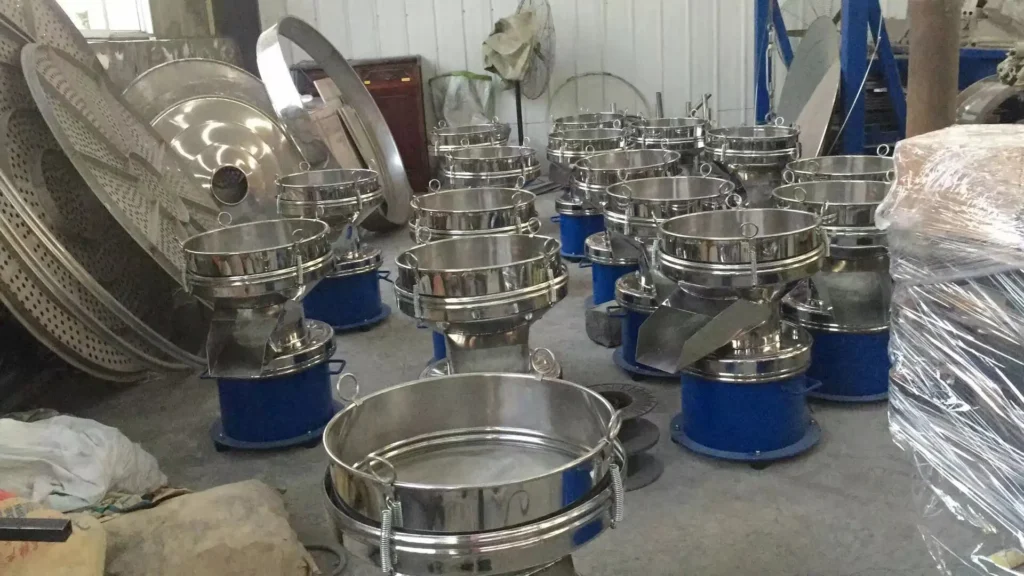
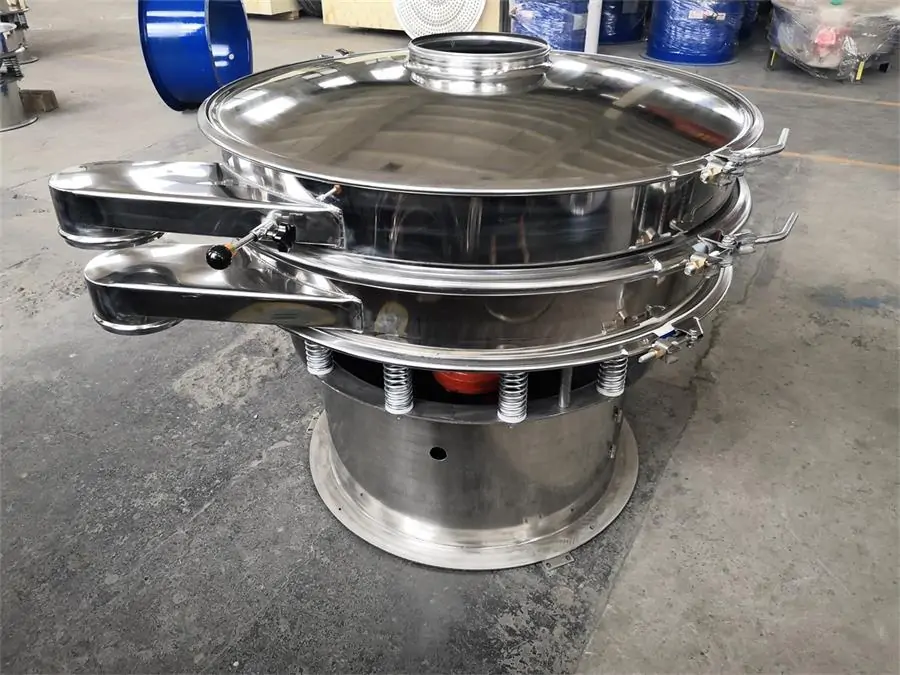
A rotary vibrating sieve is one of the commonly used industrial sieve machines for powder screening. It is mainly used for fine powder classification, impurity removal, and separation of materials with different particle sizes. During operation, the vibration force makes materials spread evenly across the screen surface. Smaller particles pass through the screen mesh, while larger particles are discharged to complete the separation process. For materials with relatively fine particle sizes, higher screening accuracy requirements, and the need for flexible screen deck configurations, rotary vibrating sieves are usually a suitable choice.

Suitable Materials:

  • Chemical powders
  • Food powders
  • Plastic granules
  • Ceramic powders
  • Mineral powders

Main Features:

  • Provides good screening accuracy for fine powders and small particles.
  • Flexible screen mesh and deck configurations according to different screening requirements.
  • Suitable for a wide range of powder and granular materials.

Selection Considerations:

If the material is easy to absorb moisture, sticks to the screen mesh, or blocks screen openings, anti-clogging solutions should be considered in advance, such as adding an ultrasonic cleaning system. If the project focuses on continuous high-capacity screening, other industrial screening equipment types should be evaluated based on production capacity and material characteristics.

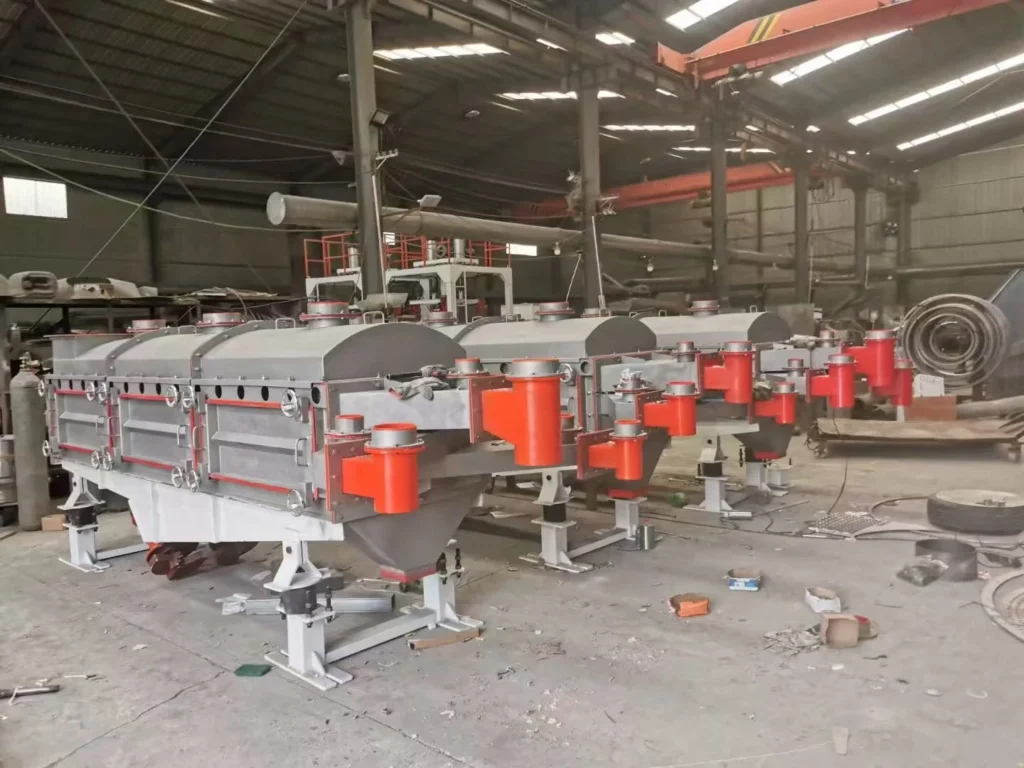
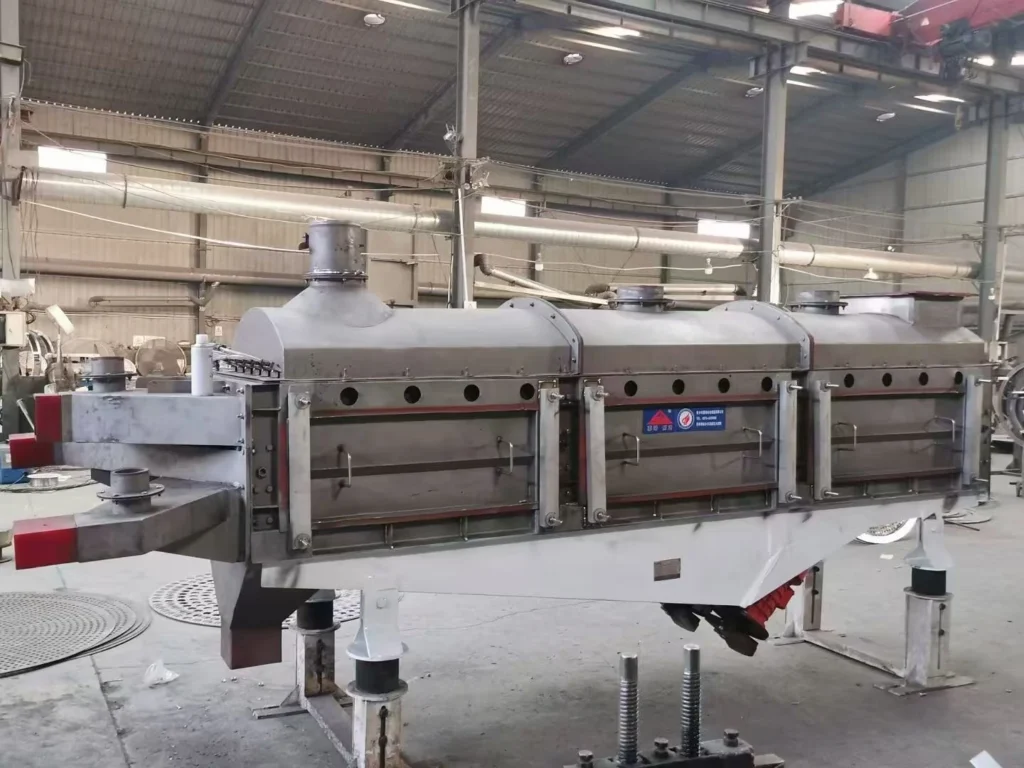
リニア振動ふるい

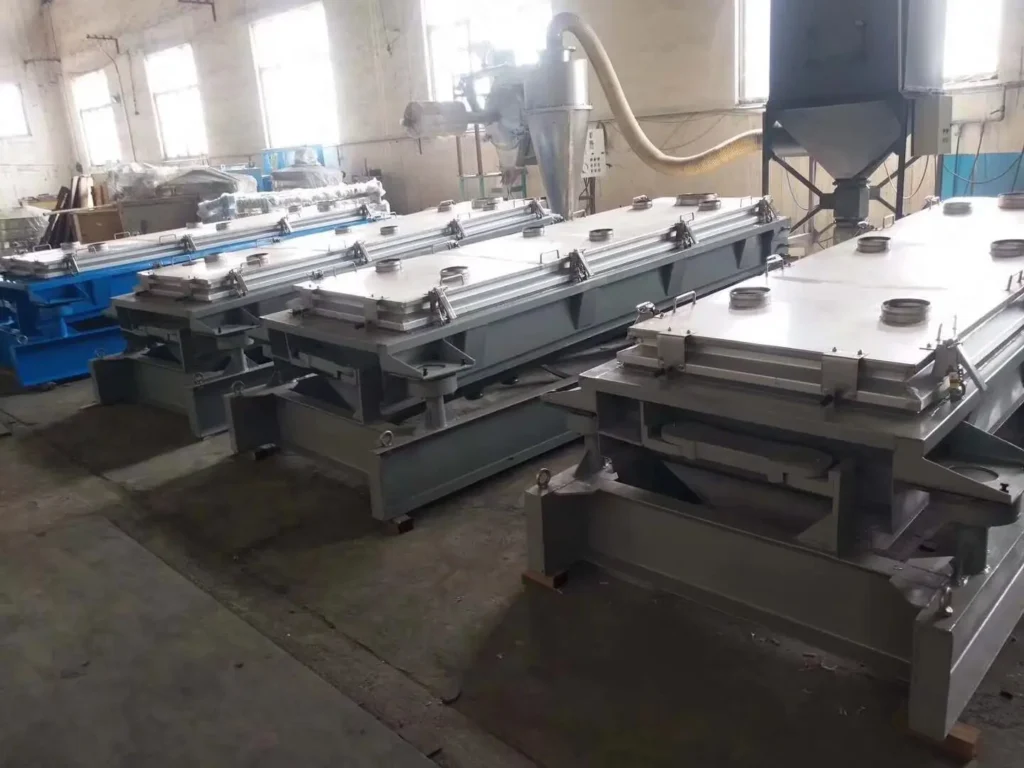
A linear vibrating screen is mainly used for continuous screening and classification of granular materials. During operation, materials move forward in a straight line along the screen surface and are separated into different sizes through different screen meshes.

Compared with rotary vibrating sieves, linear vibrating screens are more suitable for applications requiring larger processing capacity and long-term continuous operation. They are widely used as industrial screening equipment in mining, aggregates, and material processing industries.

Suitable Materials:

  • Sand and gravel aggregates
  • Mineral particles
  • Coal
  • Plastic granules
  • Chemical granules

Main Features:

  • Higher processing capacity, suitable for continuous production.
  • Clear screening flow, suitable for multi-stage material separation.
  • Simple structure and stable operation for long working periods.

Selection Considerations:

Linear vibrating screens are more suitable for granular materials with good flowability. If the material mainly consists of fine powder or has a tendency to stick and block the screen openings, other industrial sieve machine types should be considered according to material characteristics.

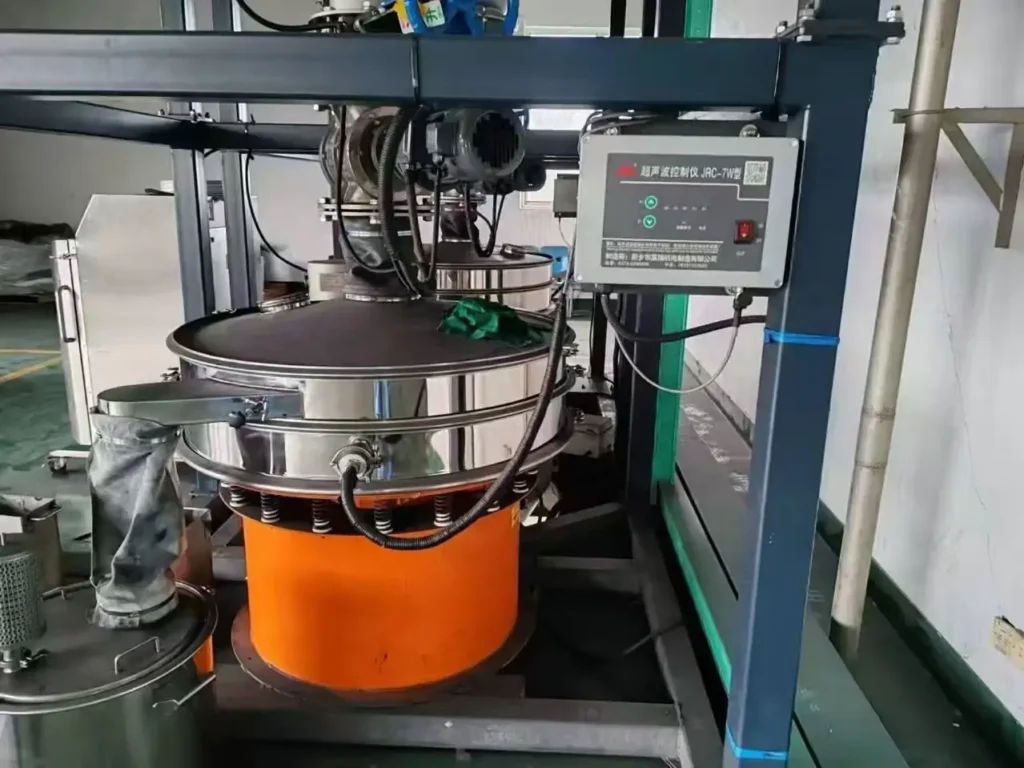
超声波振动筛

An ultrasonic vibrating sieve is mainly designed for fine powder and ultrafine powder screening. It helps solve common problems in conventional screening, such as screen blockage and difficulty in passing fine particles through the mesh. During the screening process, ultrasonic vibration is added to the screen surface, allowing fine particles to pass through the mesh more easily.

In many powder screening applications, the main challenge with ultrafine materials is not processing capacity, but screen mesh blockage and unstable screening performance. For materials such as metal powders and battery materials, ultrasonic-assisted screening is often considered first.

Suitable Materials:

  • Metal powders
  • Chemical powders
  • Battery materials
  • Food powders
  • Ultrafine mineral powders

Main Features:

  • Reduces fine powder screen clogging and improves screening stability.
  • Suitable for ultrafine powders and difficult-to-screen materials.
  • Can be configured with different screen decks and mesh specifications according to screening requirements.

Selection Considerations:

Ultrasonic vibrating sieves are mainly designed for fine powders and screen blockage problems. If the material particle size is large or the project requires very high processing capacity, other industrial screening equipment, such as linear vibrating screens, should be considered.

平面旋转筛

A planar rotary screen is mainly used for high-precision classification of powders and granular materials. The equipment uses a relatively gentle screening motion, allowing materials to spread evenly across the screen surface and complete separation. Compared with conventional vibrating sieve machines, planar rotary screens are more suitable for fragile materials and applications requiring precise particle classification.

For projects that require high screening accuracy, reduced material damage, and stable separation performance, a planar rotary screen is usually a suitable solution.

Suitable Materials:

  • Food powders
  • Chemical powders
  • Plastic granules
  • Mineral powders
  • New materials

Main Features:

  • Gentle screening process, suitable for fragile materials or applications requiring particle shape protection.
  • Longer material retention time on the screen surface, helping improve fine powder screening performance.
  • Multi-layer screen configurations available for different particle size classifications.

Selection Considerations:

Planar rotary screens are more suitable for high-precision screening applications with low material damage requirements.

If the project mainly focuses on high-capacity continuous screening, the production requirements should be considered carefully, and equipment such as linear vibrating screens may be more suitable.

遠心シフター

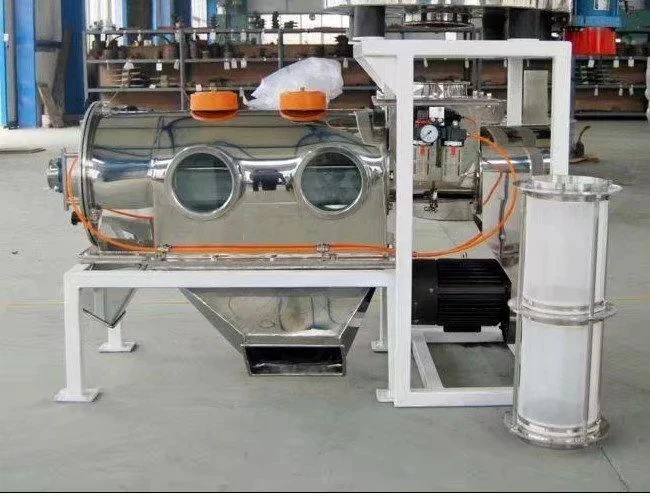
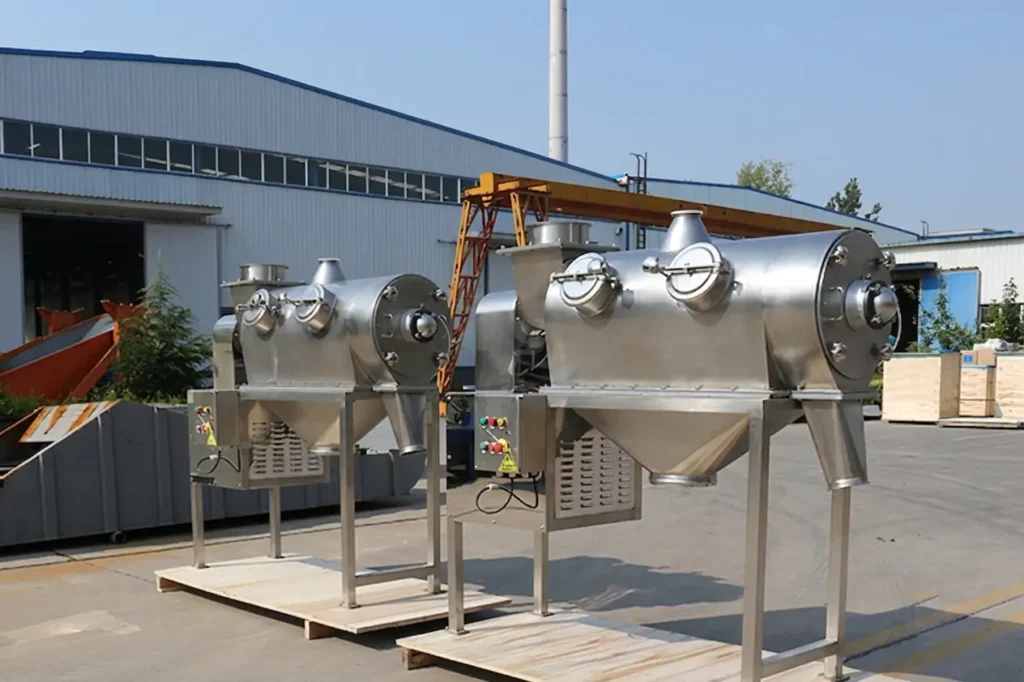
A centrifugal sifter is mainly used for ultrafine powder and lightweight powder screening. It is suitable for materials that are difficult to screen steadily with conventional vibrating sieve machines. The equipment uses airflow to disperse materials and helps fine particles pass through the screen mesh for classification.

For powders with small particle sizes, poor dispersion, easy agglomeration, or screen blockage problems, centrifugal sifters are often a suitable choice.

Suitable Materials:

  • Food powders
  • Chemical powders
  • Metal powders
  • Battery materials
  • Ceramic powders
  • Mineral powders

Main Features:

  • Suitable for ultrafine powder screening and helps reduce screen clogging problems.
  • Provides better material dispersion for difficult-to-screen powders.
  • Enclosed screening structure suitable for applications with strict dust control requirements.

Selection Considerations:

Centrifugal sifters are mainly designed for fine powders and special powder materials.

If the material particle size is larger or the project requires high processing capacity, other industrial sieve machine types should be selected according to production conditions.

How to Choose the Right Industrial Sieve Machine?

There is no fixed answer when selecting an industrial sieve machine. The same material may require different equipment types under different production capacities, screening accuracy requirements, and operating conditions.

When selecting equipment for a project, engineers usually start by understanding the material characteristics and screening requirements, then match the most suitable industrial sieving machine type.

Screening Requirements推荐设备Common MaterialsSuitable Applications
Fine powder and general powder screening回転式振動篩Chemical powders, food powders, mineral powdersSuitable for fine powder classification, impurity removal, and multi-size separation
Granular materials and high-capacity screeningリニア振動ふるいAggregates, mineral particles, coal, etc.Suitable for continuous production with higher requirements for capacity and operating stability
Fine powders with frequent screen clogging超声波振动筛Metal powders, battery materials, ultrafine powdersSuitable for solving screen blockage problems during fine powder screening
High-precision and low-damage screening平面旋转筛Food powders, chemical powders, new materialsSuitable for applications requiring high screening accuracy and material integrity
Ultrafine and lightweight powder screening遠心シフターUltrafine chemical powders, lightweight powders, special powdersSuitable for fine powders with poor flowability and easy agglomeration

If you are not sure which industrial sieve machine is suitable for your material and production requirements, you can contact us. Our engineering team will provide suitable equipment recommendations based on your material characteristics, processing capacity, and screening targets.

Additional Notes About Industrial Sieve Machine Selection

After the industrial sieve machine type is confirmed, the final screening performance can still be affected by screen mesh configuration, material changes, and production line matching.

Some projects may run normally during the initial stage, but screening performance can change when production capacity increases or material conditions vary. In many cases, this is not caused by the equipment itself, but because material characteristics were not fully considered during the initial equipment selection.

Therefore, when choosing industrial sieve machines, it is important to consider not only the equipment type but also material particle size, moisture content, processing capacity, and screening requirements. Proper evaluation during the selection stage can help reduce later adjustments and maintain stable equipment operation.

まとめ

Unstable screening performance is often not caused by the sieve machine itself, but by a mismatch between the equipment type, material characteristics, and production conditions. Material particle size, moisture content, flowability, stickiness, and capacity requirements all affect the final screening results.

Based on years of industrial sieve machine design and application experience, equipment selection should start with analyzing material properties and production requirements before determining the suitable machine type. Careful consideration during the selection stage can reduce later modifications and adjustments, helping maintain stable screening performance.

If you have questions about industrial sieve machine selection or screening solutions, our engineering team can provide suitable recommendations based on your material conditions and production requirements.

よくある質問

A. 选择工业筛分设备不应仅取决于设备型号。应首先考虑物料特性和生产需求。.

重要因素包括粒径、含水量、粘性、流动性、处理能力及所需筛分效果。例如,易堵塞筛网的物料可能需要超声波辅助,而大容量颗粒物料筛分通常更适合使用直线振动筛。.

A. 旋振筛与直线振动筛的主要区别在于其筛分运动方式及应用重点。.

旋振筛更适用于粉末、细颗粒及多级分级,配置灵活,筛分精度更高。直线振动筛则专为颗粒物料的连续筛分而设计,更注重处理能力大和运行稳定。.

A. 筛网堵塞通常与物料粒径、含水量、粘性及静电有关。.

仅更换筛网可能无法完全解决问题。还应根据物料特性调整筛分方式。对于超细粉末、金属粉末或易团聚的物料,可加装超声波系统,以减少筛网堵塞对筛分性能的影响。.

A.適切な工業用篩い分け機を選定するには、材料の種類、粒子径範囲、処理能力、含水率、篩い分け要件、設置条件をご提供いただくことをお勧めします。.

この情報により、エンジニアは機器構造、スクリーンデッキ構成、メッシュ仕様、追加システムの要否を判断でき、後期調整の必要性を低減できます。.

A. Industrial sieve machines can handle different materials by adjusting screen mesh specifications and equipment configurations, but one machine is not suitable for every application.

Different materials vary in particle size, flowability, stickiness, and capacity requirements. Therefore, screen mesh, deck number, and auxiliary devices usually need to be adjusted according to specific conditions.

A. Yes. Jiarui provides customized industrial sieve machine solutions based on customer material characteristics, processing capacity, screening requirements, and site conditions.

In addition to individual sieve machines, Jiarui can also design complete screening solutions according to production line requirements, helping customers select equipment configurations that better match their operating conditions.