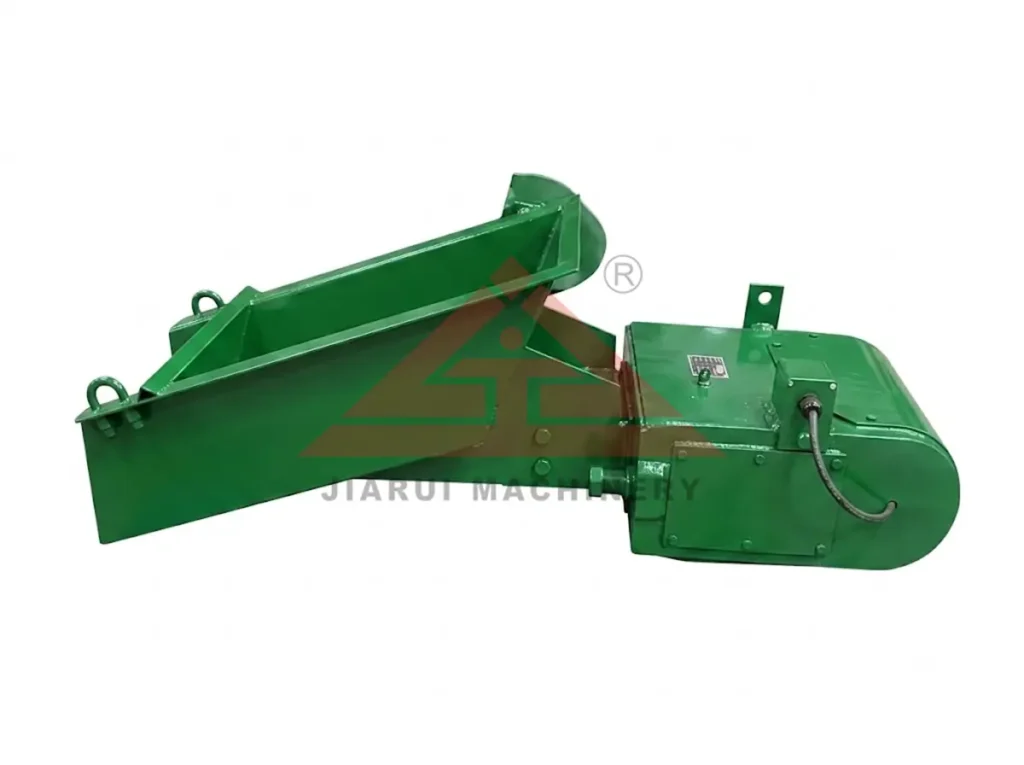
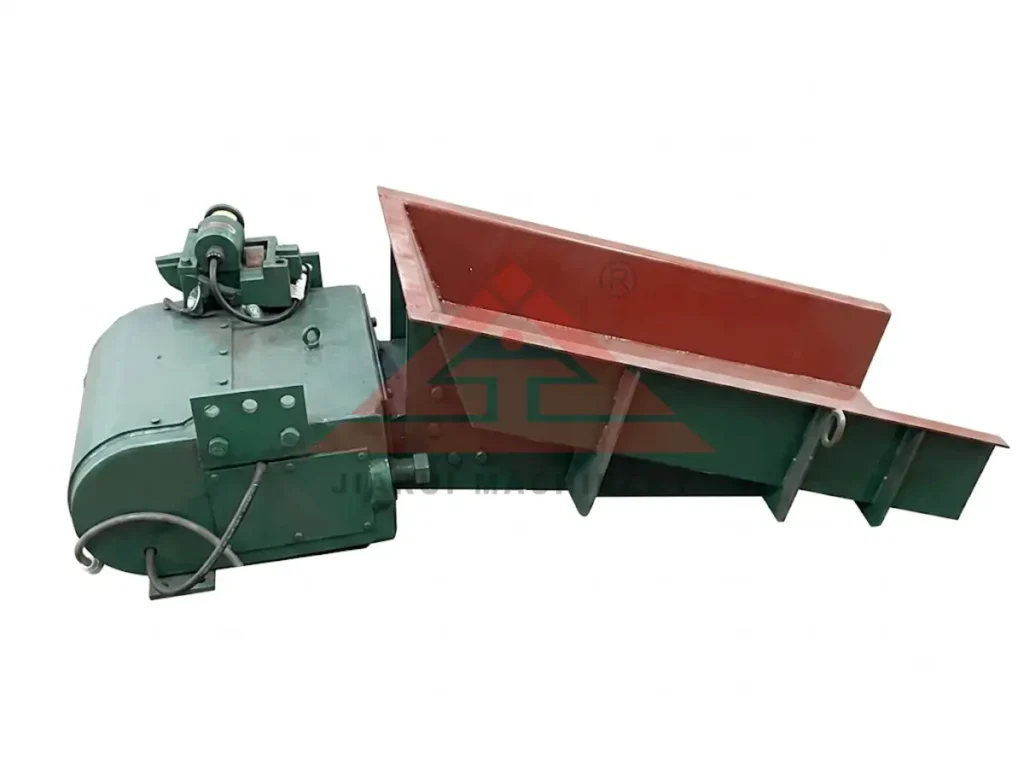
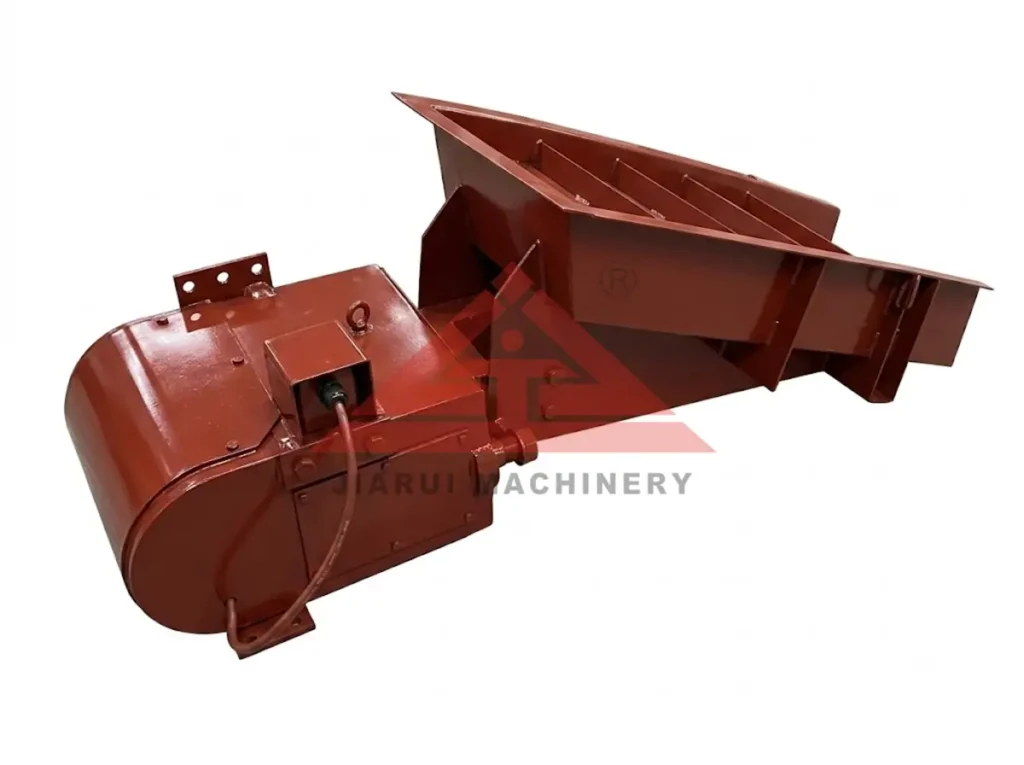
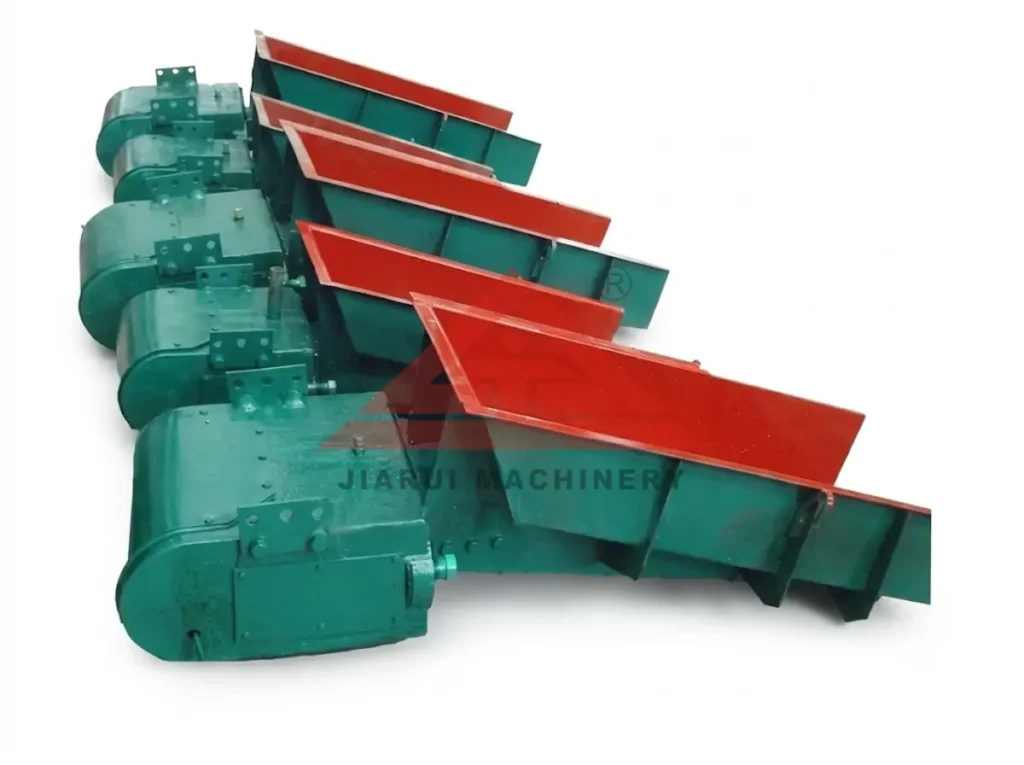
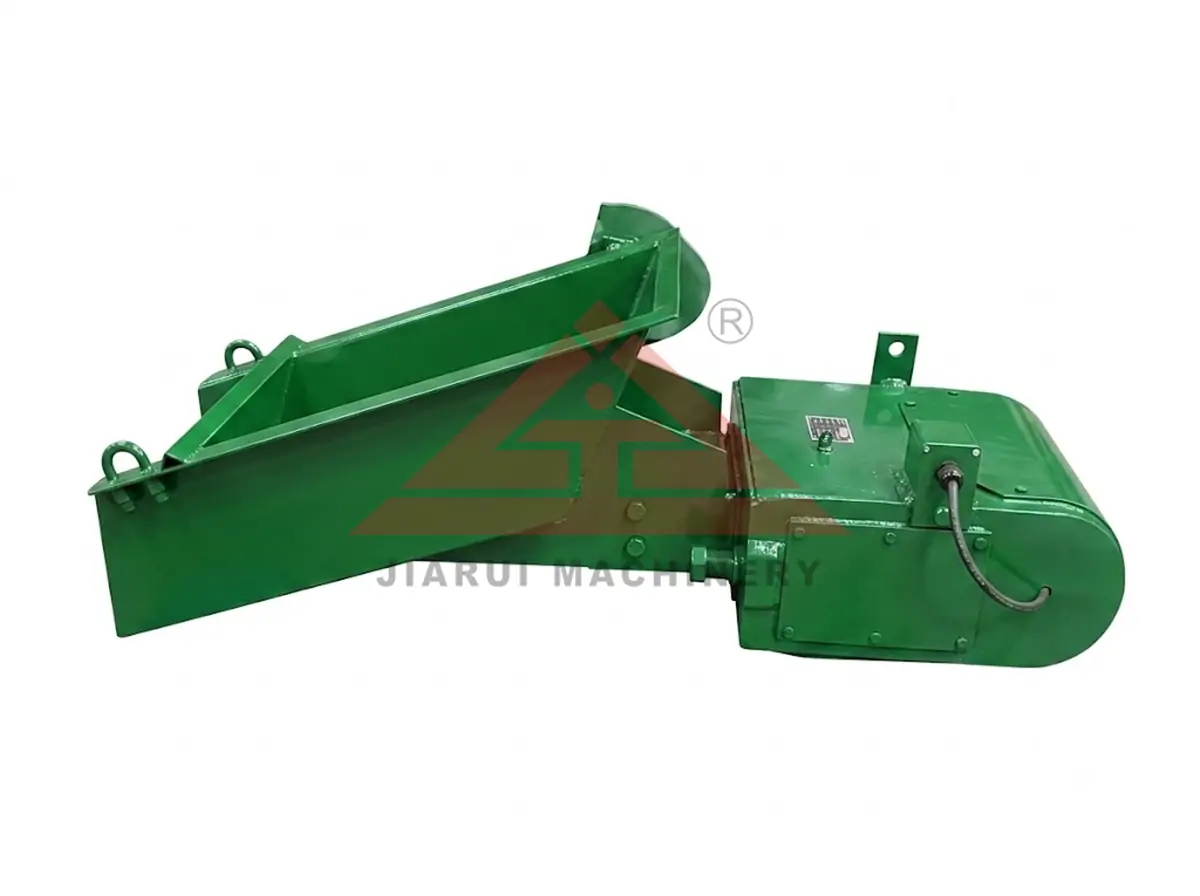
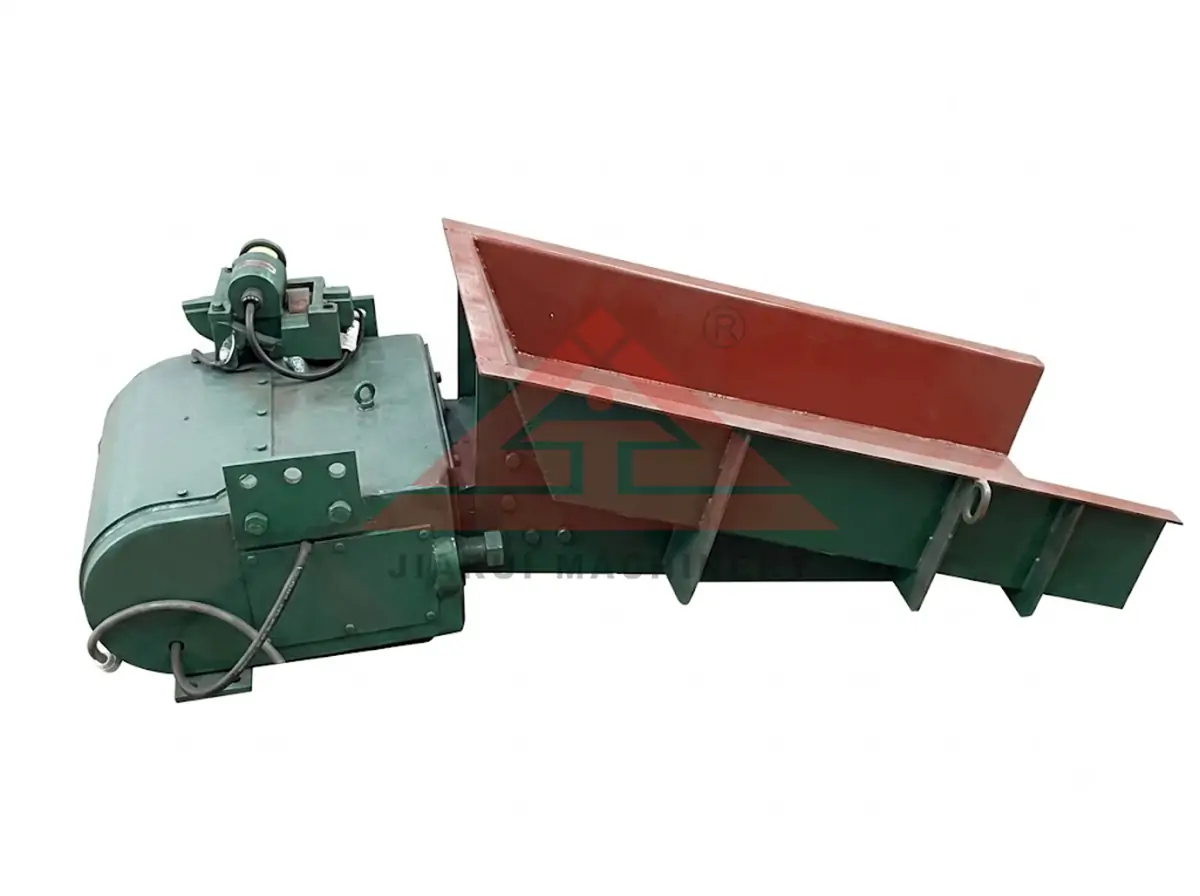
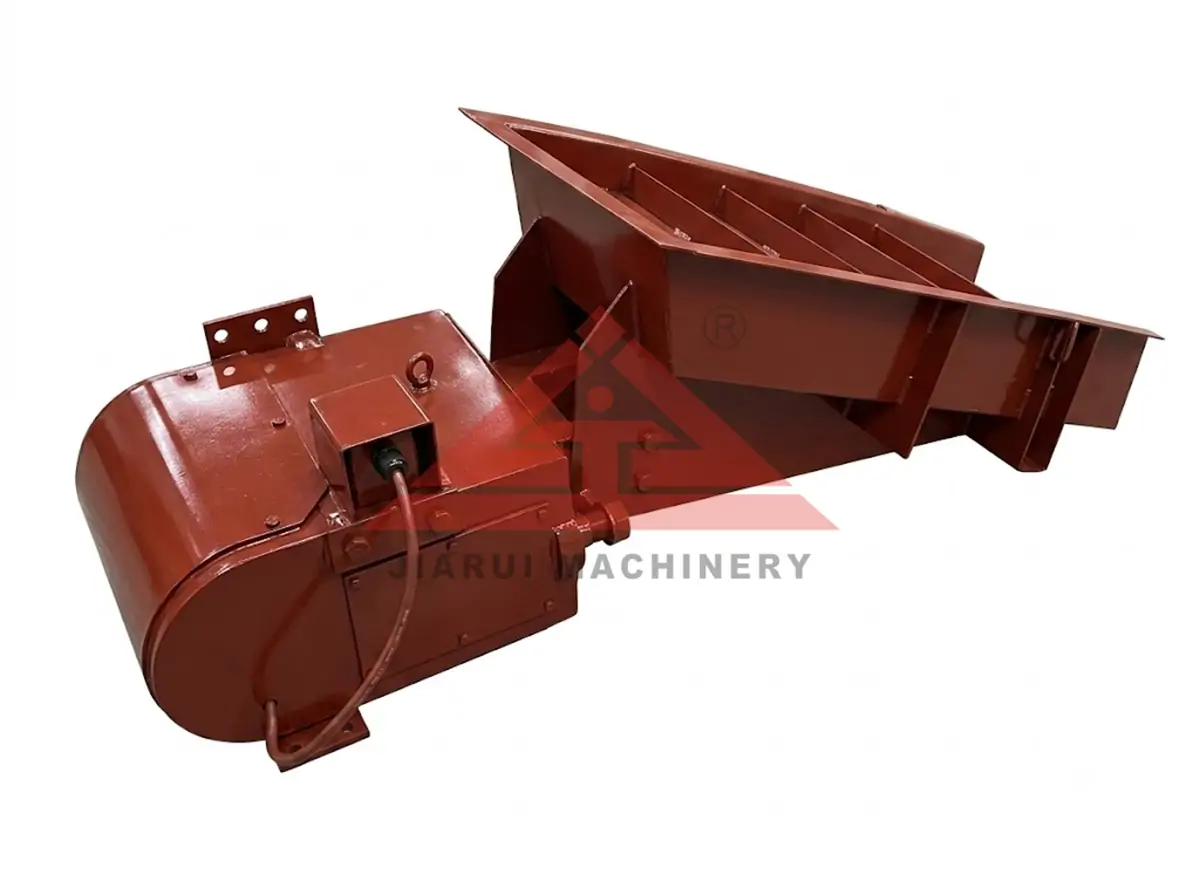
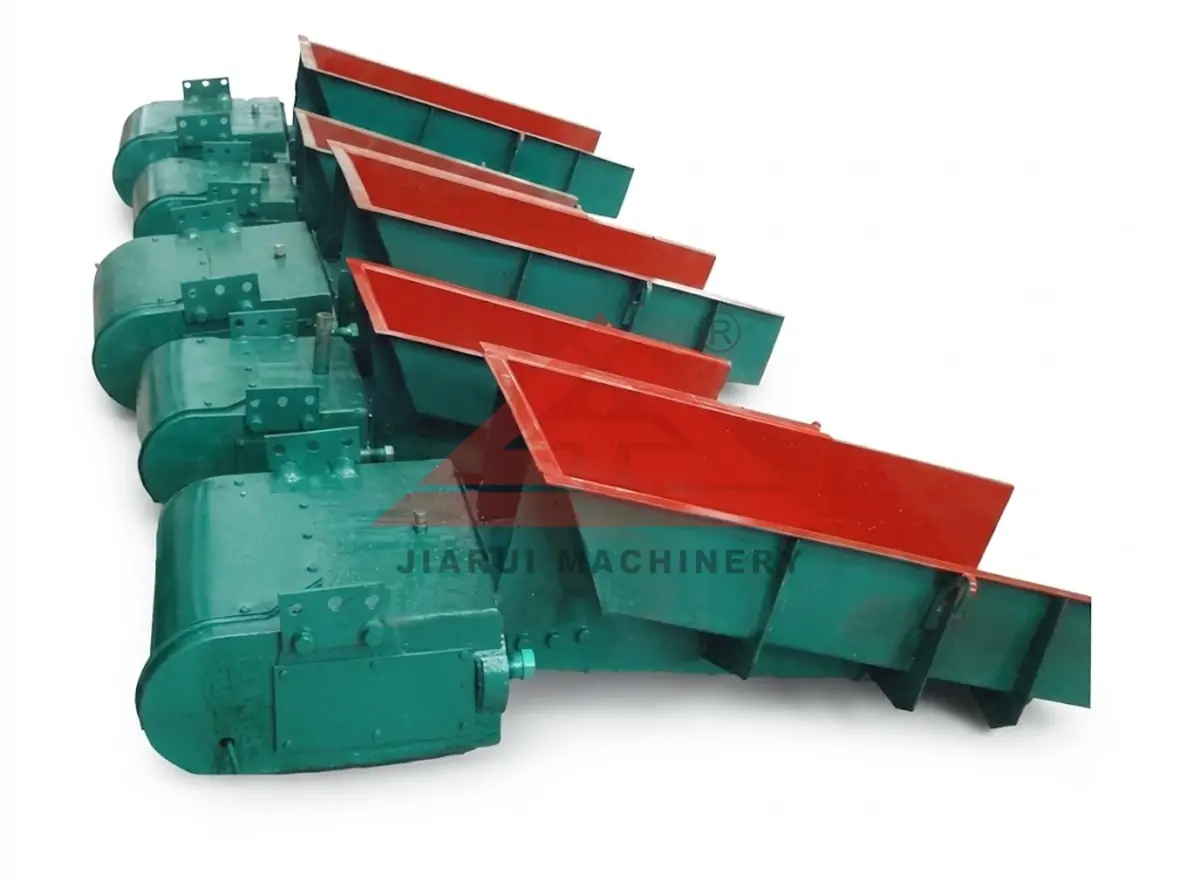
Alimentador Vibratorio Electromagnético Serie GZ
El Alimentador Vibratorio Electromagnético de la Serie GZ se utiliza principalmente para controlar la descarga uniforme de materiales desde tolvas. La vibración electromagnética impulsa el canal de alimentación a trabajar de forma continua, permitiendo que polvos, gránulos y materiales de pequeño tamaño pasen al siguiente proceso a una velocidad de alimentación establecida. La tasa de alimentación es fácil de ajustar y el equipo responde rápidamente durante la operación, lo que lo hace adecuado para procesos de dosificación, pesaje y producción automatizada que requieren una alimentación precisa de materiales.
Jiarui ajusta la estructura y los parámetros del Alimentador Vibratorio Electromagnético de la Serie GZ según las características del material y las condiciones de operación, incluyendo el tamaño del canal, el diseño de protección contra polvo, el tratamiento resistente al desgaste y la selección del método de control. Ya sea que se manejen materiales comunes como minerales y agregados o materiales en polvo y granulares, nuestro equipo de ingeniería evalúa los requisitos de capacidad, la posición de instalación y el proceso de producción para proporcionar una configuración de alimentación adecuada.
- Modelo: Alimentador Vibratorio Electromagnético Serie GZ
- Capacidad: 5–750 t/h (personalizable)
- Método de Alimentación: Vibración electromagnética, alimentación continua y ajustable
- Tamaño Máximo de Alimentación: Hasta 500 mm
- Materiales Adecuados: Mineral, carbón, piedra caliza, polvos y gránulos
- Aplicaciones: Minería, materiales de construcción, industria química y líneas de producción automatizadas
- Personalización: El tamaño del canal, la estructura y el sistema de control se pueden personalizar
¿Qué es el Alimentador Vibratorio Electromagnético de la Serie GZ?
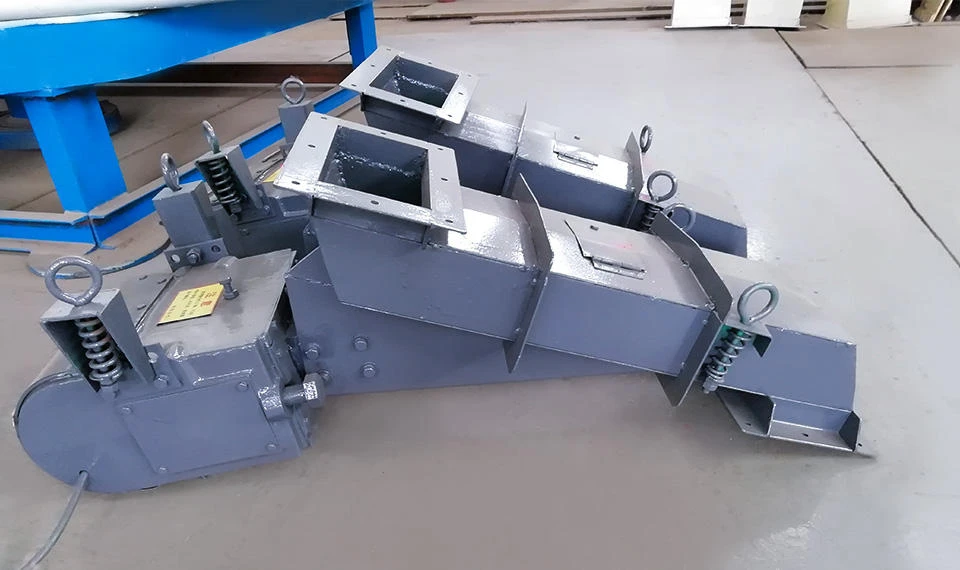
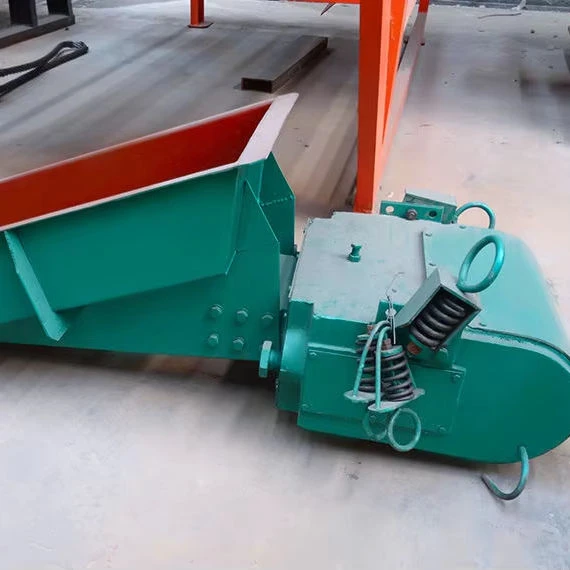
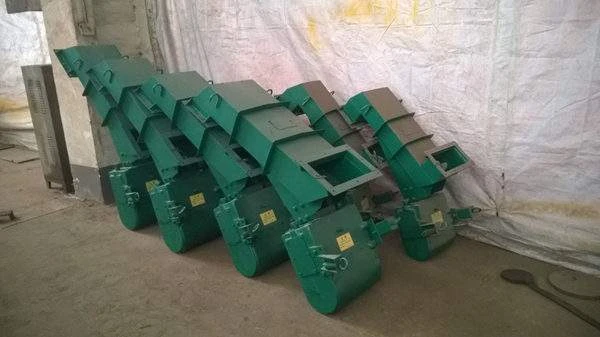
El Alimentador Vibratorio Electromagnético de la Serie GZ, también conocido como alimentador electromagnético o máquina alimentadora vibratoria electromagnética, es un equipo de alimentación industrial que utiliza vibración electromagnética para lograr una alimentación continua de materiales. Se utiliza principalmente para transferir de manera uniforme materiales en trozos, granulares y en polvo desde tolvas o equipos de almacenamiento al siguiente proceso de producción. El equipo genera vibración periódica mediante accionamiento electromagnético, haciendo que los materiales se muevan a lo largo de la dirección del canal a una velocidad de alimentación estable.
El Alimentador Vibratorio Electromagnético de la Serie GZ utiliza control electromagnético para ajustar la amplitud de vibración y cambiar la tasa de alimentación. Es adecuado para procesos de producción que requieren alimentación uniforme y control de flujo. En comparación con los equipos de alimentación mecánicos tradicionales, tiene una estructura más compacta y una respuesta de ajuste más rápida. Se utiliza comúnmente para la alimentación continua de mineral, carbón, agregados, materiales en polvo y gránulos, y sirve como unidad de conexión entre tolvas y equipos como trituradoras, cribas, y sistemas de dosificación.
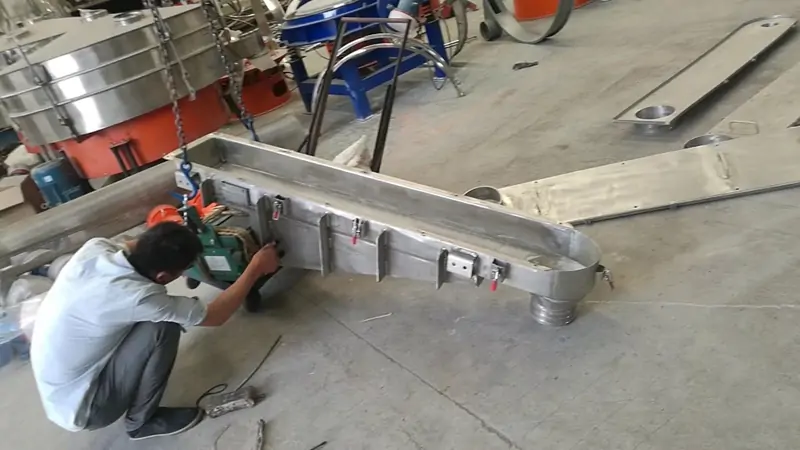
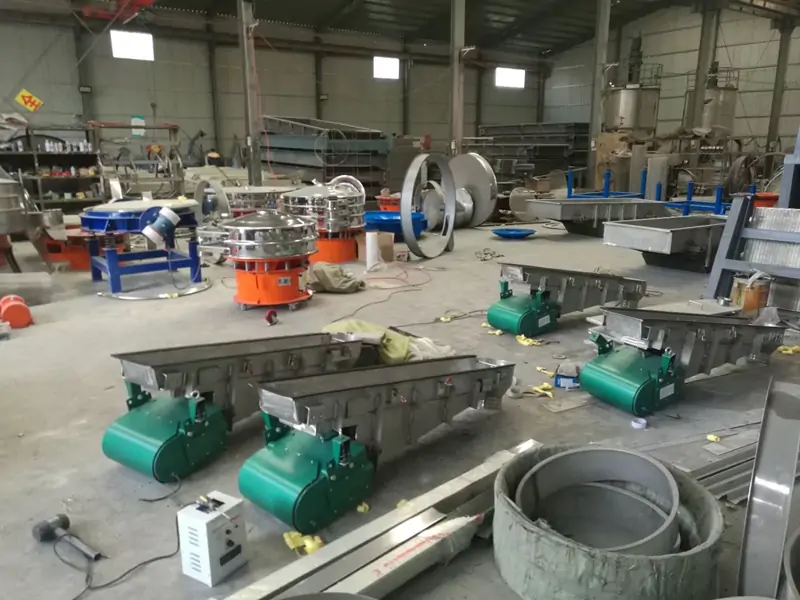
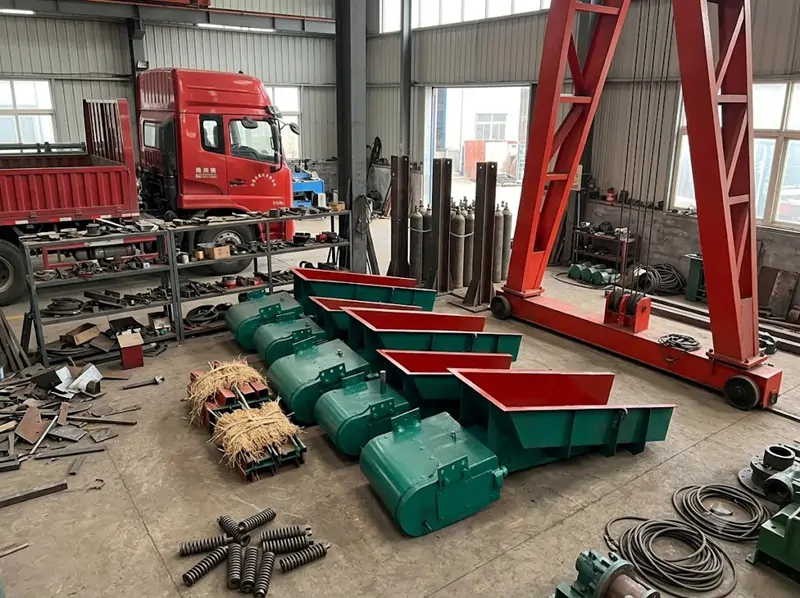
Principio de Funcionamiento
El alimentador vibratorio electromagnético de la serie GZ utiliza un vibrador electromagnético para generar una fuerza de excitación periódica, impulsando la artesa a realizar una vibración reciprocante. Los materiales dentro de la artesa se desplazan continuamente hacia la dirección de descarga. La velocidad de alimentación se puede ajustar mediante el accionamiento electromagnético y el sistema de control, lo que hace que el equipo sea adecuado para la alimentación continua y controlable de materiales.
La vibración electromagnética impulsa el canal
Después de suministrar energía, la bobina dentro del vibrador electromagnético genera fuerza de atracción periódica, haciendo que la armadura y el canal se muevan hacia adelante y hacia atrás. Debido a que el equipo utiliza accionamiento electromagnético, tiene una estructura compacta sin piezas de transmisión mecánica complejas. La respuesta de arranque y parada es rápida, lo que facilita el ajuste de la operación según los requisitos de producción.
La fuerza de vibración mueve los materiales hacia adelante
Durante la vibración del canal, los materiales se ven afectados por la fuerza de vibración y su propia gravedad. Los materiales se aflojan y se mueven continuamente hacia la salida. El tamaño de partícula del material, las características de flujo y las condiciones de acumulación afectan los resultados reales de operación, por lo que la selección del equipo debe basarse en condiciones operativas específicas.
Ajuste la corriente para controlar la velocidad de alimentación
La caja de control ajusta la excitación electromagnética para regular la amplitud de vibración y la velocidad de alimentación, lo que modifica la velocidad de movimiento del material. Los operadores pueden ajustar la velocidad de alimentación según los requisitos de los procesos de trituración, cribado, pesaje o dosificación, ayudando a que los equipos aguas arriba y aguas abajo funcionen conjuntamente.
El principio de funcionamiento del Alimentador Vibratorio Electromagnético de la Serie GZ es simple, pero su rendimiento de aplicación está estrechamente relacionado con el diseño del canal, el método de instalación y la coincidencia de parámetros de control. Una selección adecuada ayuda a reducir los ajustes de operación y mejora la coordinación entre el alimentador y la línea de producción.
.
Ventajas
Las ventajas del Alimentador Vibratorio Electromagnético de la Serie GZ se centran principalmente en el control de alimentación y la aplicación en campo. En comparación con los equipos de alimentación mecánicos ordinarios, la Serie GZ utiliza accionamiento electromagnético y una caja de control para ajustar las condiciones de vibración, lo que facilita el control de la velocidad de alimentación. Es adecuado para procesos de producción que requieren alimentación continua, ajuste de flujo y control automático.
Ajuste más fácil de la tasa de alimentación
Al ajustar los parámetros de salida de la caja de control, se pueden cambiar la amplitud de vibración y la velocidad de movimiento del material. Esto permite ajustar la tasa de alimentación según los requisitos de producción y es adecuado para procesos como dosificación y pesaje que requieren un control preciso del flujo.
Más adecuado para líneas de producción automatizadas
La Serie GZ utiliza control electromagnético, lo que permite un ajuste más rápido de los parámetros de operación. Se puede conectar con sistemas PLC, equipos de pesaje y sistemas automáticos de dosificación para soportar el control automático durante la producción continua.
Respuesta rápida de arranque y parada
La estructura de accionamiento electromagnético no requiere piezas de transmisión mecánica complejas. El equipo puede arrancar y detenerse con ajuste flexible, lo que lo hace adecuado para procesos de producción que requieren cambios frecuentes en las condiciones de alimentación.
Estructura compacta y pequeño espacio de instalación
El equipo consiste principalmente en un vibrador electromagnético, componentes de resorte, canal y sistema de control. La estructura general es simple y adecuada para la instalación en salidas de tolvas o puntos de conexión de líneas de producción.
Múltiples diseños de canal para diferentes aplicaciones
Según el espacio de instalación y las características del material, la serie GZ puede configurarse con tipo básico, tipo cerrado, tipo de vibración montada en la parte superior, tipo de canal ancho, tipo tubular y otras estructuras para satisfacer diferentes requisitos de control de polvo, instalación y condiciones de alimentación.
Operación continua y estable
Con la combinación adecuada de parámetros de vibración y estructura del canal, el equipo puede mantener una alimentación continua y uniforme, reduciendo las fluctuaciones de producción causadas por el suministro inestable de material entre equipos aguas arriba y aguas abajo.
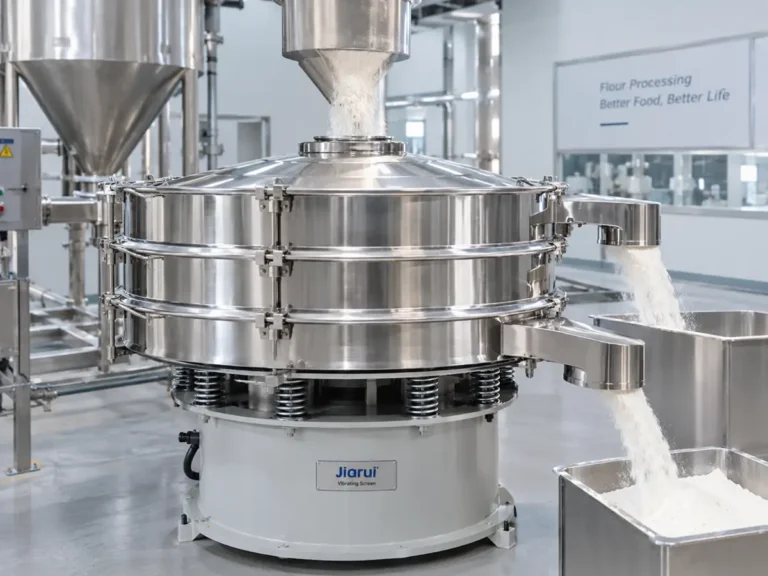
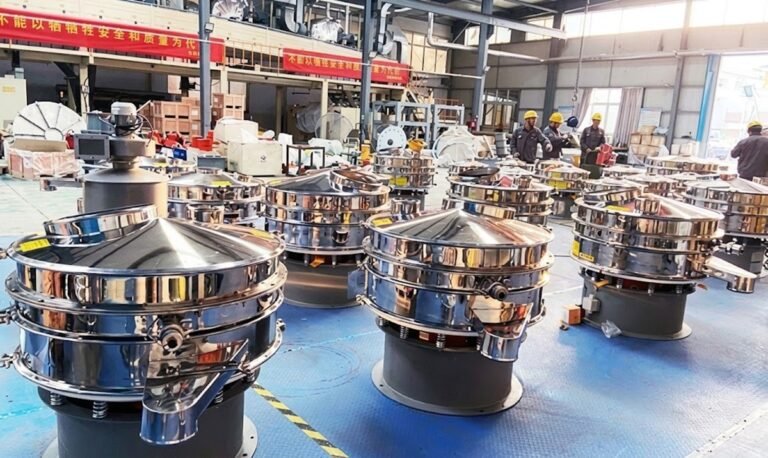
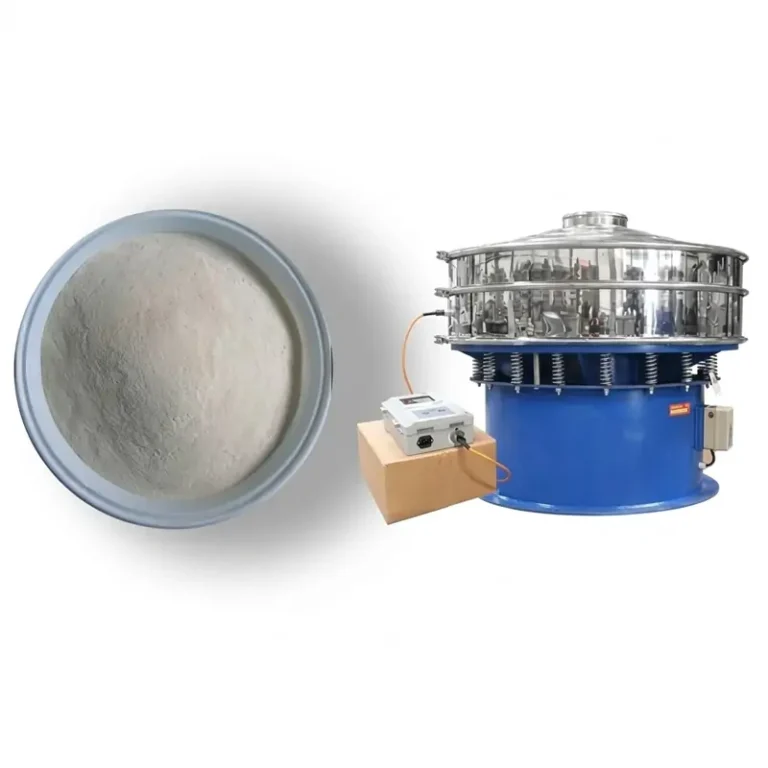
La criba vibratoria Jia Rui se utiliza para tamizar, clasificar y eliminar impurezas de materiales granulares y en polvo, así como para la eliminación de impurezas y filtración de materiales líquidos. Puede utilizarse en combinación con equipos de transporte como alimentadores de vacío y tolvas de alimentación con tornillo sinfín para formar una línea de producción integrada de cribado y transporte, mejorando significativamente la eficiencia de producción. Es compatible con todas las industrias y tiene una amplia gama de aplicaciones, como en las industrias alimentaria, química, farmacéutica, minera y de
El alimentador vibratorio electromagnético de la serie GZ se instala generalmente en las salidas de tolvas, puntos de descarga de equipos de almacenamiento o secciones de alimentación de líneas de producción, para controlar la velocidad de alimentación de los materiales que ingresan al siguiente proceso. Diferentes aplicaciones se centran en diferentes requisitos. Las aplicaciones mineras prestan más atención a la capacidad de manejo de materiales grandes, las industrias de polvos se enfocan en el control de polvo y la descarga continua, mientras que las líneas de producción automatizadas requieren un mejor ajuste de alimentación y conexión de equipos.

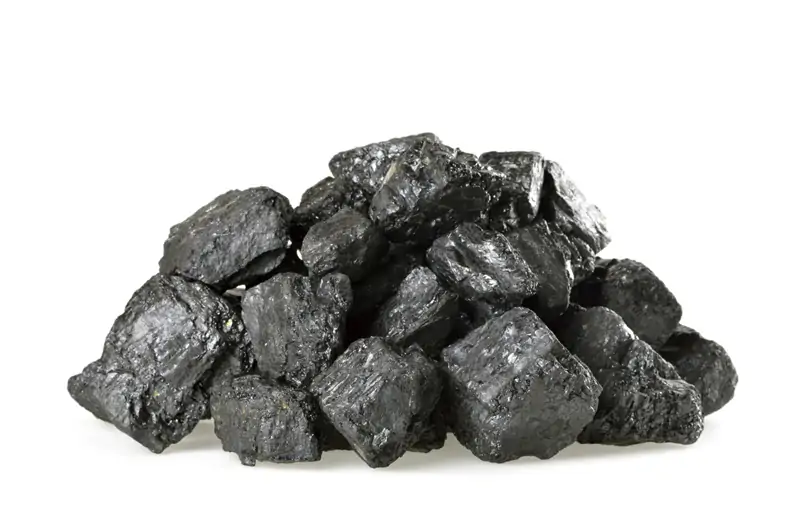

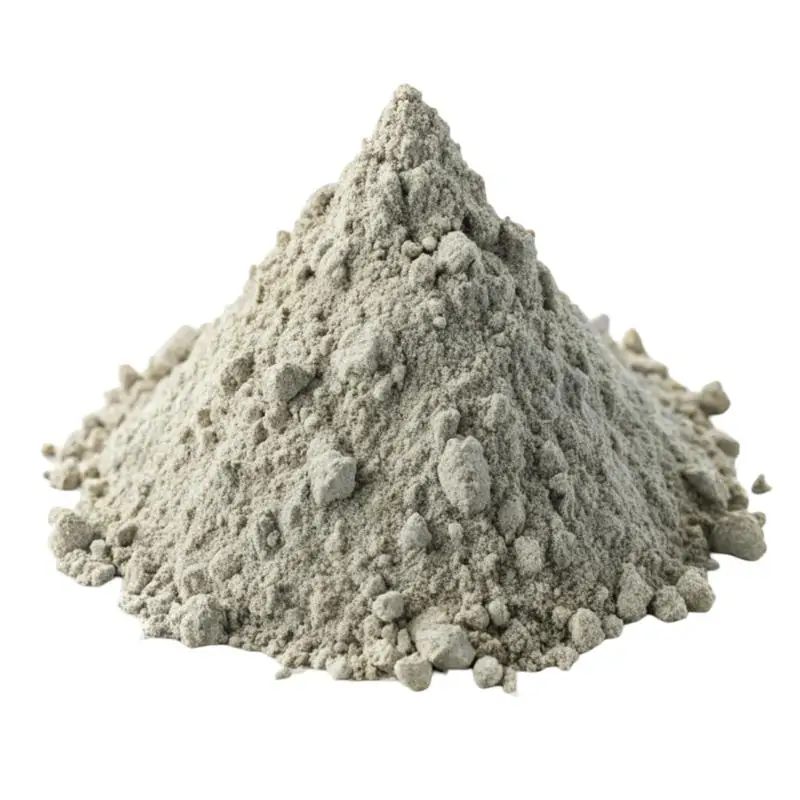
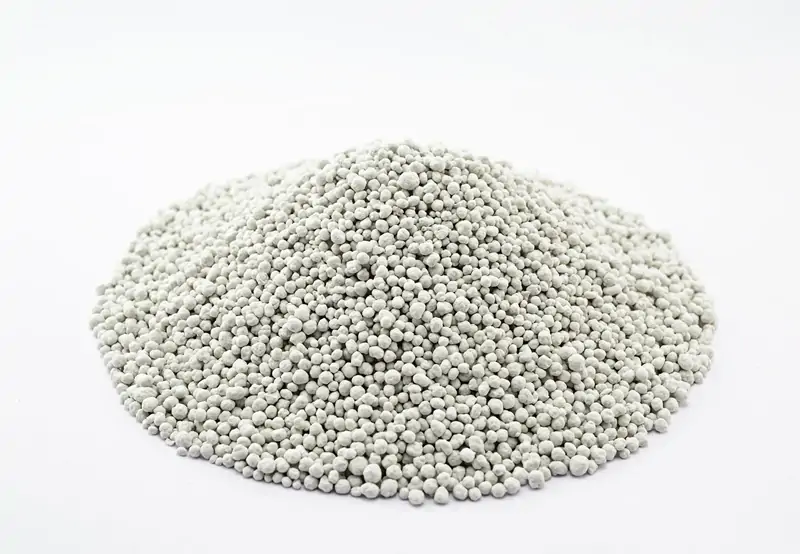

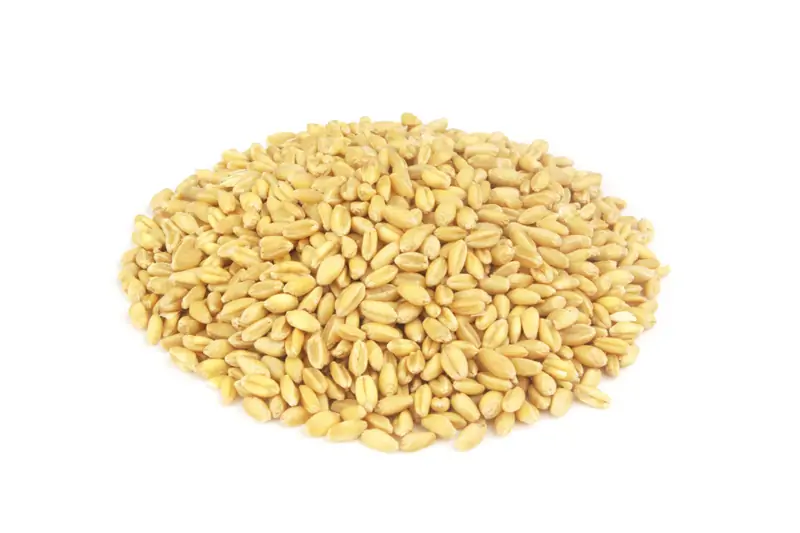
Áreas de aplicación comunes
| Industria | Materiales típicos | Posición de instalación común |
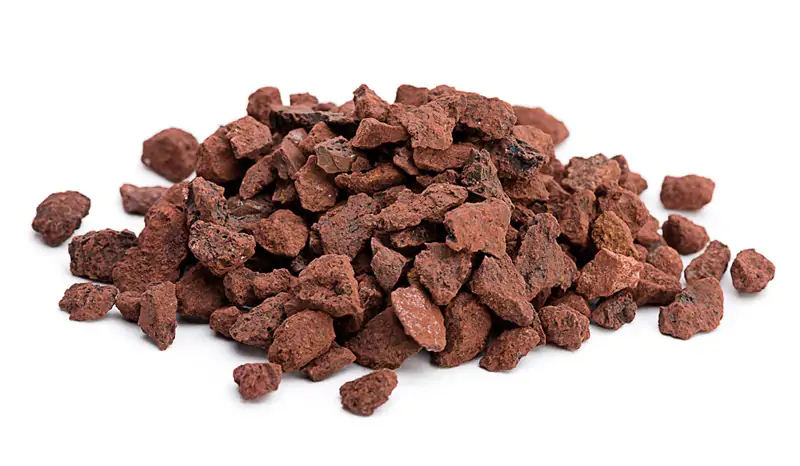
| Industria minera | Mineral de hierro, mineral de cobre, mineral triturado, agregado | Instalado debajo de tolvas para alimentar materiales a trituradoras, cribas o sistemas de transporte de banda |
| Industria de materiales de construcción | Piedra caliza, clínker de cemento, arena de cuarzo, agregado de construcción | Utilizado en el extremo inicial de líneas de producción de trituración, molienda y cribado, conectado con equipos aguas abajo |
| Industria del carbón | Carbón crudo, trozos de carbón, coque | Instalado debajo de silos de almacenamiento de carbón para controlar la alimentación de material hacia equipos de transporte o procesamiento |
| Industria metalúrgica | Polvo mineral, materiales de horno, gránulos metálicos | Se utiliza en procesos de fundición, cribado y dosificación para alimentación continua |
| Industria química | Gránulos de fertilizante, pellets de resina, pellets de plástico, materiales en polvo | Se utiliza en la parte frontal de líneas de producción automatizadas de dosificación, envasado y empaque. Se pueden seleccionar estructuras cerradas según los requisitos ambientales |
| Industria alimentaria | Granos, semillas, materiales alimentarios granulares | Se utiliza antes de equipos de almacenamiento, pesaje y envasado para una descarga uniforme de material |
Situaciones que requieren selección cuidadosa
El Alimentador Vibratorio Electromagnético Serie GZ es adecuado para la mayoría de materiales secos a granel, pero no todos los materiales y condiciones de operación son adecuados para uso directo. Confirmar las condiciones de campo antes de la selección puede reducir problemas posteriores de ajuste y operación.
- Materiales con alta humedad y pegajosos: Por ejemplo, polvo mineral húmedo y materiales en polvo con contenido de agua pueden acumularse dentro del canal. La estructura y el método de tratamiento deben seleccionarse según las condiciones reales.
- Materiales de gran tamaño sobredimensionados: Si el tamaño de alimentación excede el rango diseñado, puede aumentar la carga de impacto en el canal y afectar la operación del equipo.
- Requisitos de transporte de larga distancia: Los alimentadores vibratorios electromagnéticos se utilizan principalmente para alimentación continua de corta distancia y no son adecuados como equipos de transporte de larga distancia.
- Entornos de producción sensibles a la vibración: Algunos procesos de producción de precisión necesitan evitar la influencia de la vibración. El método de instalación debe confirmarse con anticipación.
El rendimiento de aplicación del Alimentador Vibratorio Electromagnético Serie GZ está relacionado con la condición del material, la posición de instalación y la conexión con equipos aguas arriba y aguas abajo. La selección debe considerar no solo la capacidad, sino también el espacio de instalación, los equipos conectados y el entorno operativo.
Parámetros Técnicos
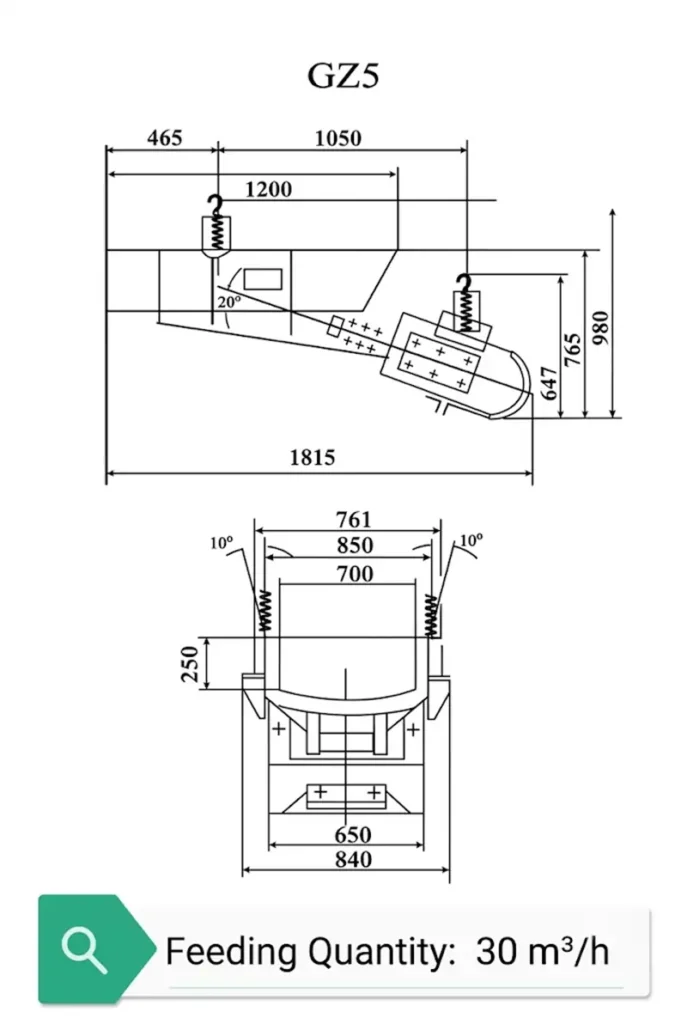
El alimentador vibratorio electromagnético de la serie GZ está disponible en diferentes modelos para distintas capacidades de alimentación y tamaños de material. Las siguientes cifras son de referencia. La capacidad real depende del material, el tamaño de alimentación, la densidad aparente y las condiciones de operación.
| Rango de modelos | Capacidad de referencia | Tamaño máximo de alimentación | Aplicación adecuada |
| GZ1–GZ3 | 5–25 t/h | ≤75 mm | Alimentación de flujo pequeño, dosificación y alimentación auxiliar |
| GZ4–GZ6 | 50–150 t/h | ≤200 mm | Alimentación de mineral, áridos y materiales granulares |
| GZ7–GZ8 | 250–400 t/h | ≤300 mm | Alimentación continua para líneas de producción medianas y grandes |
| GZ9–GZ10 | 600–750 t/h | ≤500 mm | Líneas de producción mineras e industriales de gran escala |
El modelo se selecciona normalmente según la velocidad de alimentación requerida, el tamaño del material, las dimensiones de la tolva y el equipo aguas abajo. Los diferentes modelos varían principalmente en el tamaño de la artesa, los parámetros de vibración y la configuración estructural. Si el espacio de instalación o las condiciones de alimentación son diferentes de las aplicaciones estándar, Jiarui puede ajustar la estructura y configuración del alimentador en consecuencia.
Referencia de parámetros básicos
| Parámetro | Contenido |
| Método de accionamiento | Accionamiento por vibración electromagnética |
| Método de alimentación | Alimentación continua y ajustable |
| Capacidad | 5-750 t/h |
| Tamaño máximo de alimentación | Hasta 500 mm |
| Materiales adecuados | Mineral, carbón, piedra caliza, materiales en polvo y gránulos |
| Método de control | Ajuste de la amplitud de vibración y velocidad de alimentación mediante caja de control |
| Tipos de estructura | Tipo básico, tipo cerrado, tipo montado superior, tipo de canal ancho, tipo tubular, etc. |
Al seleccionar el Alimentador Vibratorio Electromagnético Serie GZ, se recomienda confirmar primero el tipo de material, los requisitos de capacidad y las condiciones de instalación, y luego determinar el modelo y la estructura adecuados. Jiarui ajusta los parámetros del equipo según las condiciones operativas reales para evitar seleccionar una especificación que no se ajuste a los requisitos de producción.
¿Cómo seleccionar diferentes estructuras?
El Alimentador Vibratorio Electromagnético Serie GZ puede diseñarse con diferentes estructuras según el espacio de instalación, el entorno de alimentación y los requisitos de aplicación. Las diferentes estructuras no representan diferentes niveles de rendimiento, sino que están diseñadas para adaptarse a diferentes condiciones operativas. La selección depende principalmente de las condiciones de instalación y los requisitos de uso.
| Tipo | Diferencia Principal | Aplicación adecuada |
| Tipo Básico | Estructura de canal abierto con diseño maduro y amplio rango de aplicación | Minerales comunes, carbón, agregados y materiales a granel donde no hay restricciones especiales |
| Tipo Montado Superior | Dispositivo de vibración instalado sobre el canal | Aplicaciones donde el espacio debajo del alimentador es limitado o se debe evitar la instalación de otros equipos |
| Tipo Cerrado | Cubierta protectora añadida para reducir la dispersión de polvo | Materiales en polvo, materiales con polvo o talleres con mayores requisitos de control ambiental |
| Tipo de Canal Ligero | Estructura de canal más ligera con menor carga del equipo | Instalaciones con condiciones de soporte limitadas o requisitos de peso reducido del equipo |
| Tipo de Canal Plano | Diseño de canal más plano para una descarga más uniforme | Alimentación de capa delgada o conexión con equipos de cribado y dosificación |
| Tipo de Canal Ancho | Mayor ancho del canal para mayor capacidad de paso | Aplicaciones que requieren una superficie de alimentación más amplia o un flujo de material mayor |
| Tipo Tubular | Estructura tubular cerrada con mejor rendimiento de sellado | Aplicaciones que requieren control estricto de polvo o reducción de contaminación externa |
| Tipo de Servicio Pesado | Estructura de carga reforzada para mayor capacidad | Operaciones mineras a gran escala y sistemas de alimentación continua de alta capacidad |
Al seleccionar la estructura del Alimentador Vibratorio Electromagnético Serie GZ, no se recomienda elegir solo según el tamaño del modelo. También se deben considerar la posición de instalación, el método de conexión con otros equipos y el entorno operativo. Las diferentes estructuras se utilizan principalmente para adaptarse a diferentes condiciones de instalación y requisitos de producción.
¿Cómo seleccionar un Alimentador Vibratorio Electromagnético?
Estos dos tipos de equipos utilizan fuerza de vibración para mover materiales, pero sus propósitos en las líneas de producción son diferentes. El Alimentador Vibratorio Electromagnético Serie GZ resuelve principalmente el problema de controlar la velocidad de alimentación y el ritmo operativo. Es más adecuado para alimentación cuantitativa continua y procesos de control automático. Los transportadores alimentadores vibratorios se centran principalmente en mover grandes cantidades de material de forma continua y son adecuados para aplicaciones de alta capacidad y servicio pesado.
| Elemento de comparación | Alimentador Vibratorio Electromagnético Serie GZ | Transportador Alimentador Vibratorio |
| Función del Equipo | Equipo de control preciso de alimentación | Equipo de transporte de material de alta capacidad |
| Método de accionamiento | Accionamiento electromagnético, velocidad de alimentación ajustada por amplitud de vibración | Accionado por motores vibratorios o excitadores para mover material continuamente |
| Propósito Principal | Controla la velocidad de descarga de la tolva para alimentación continua y cuantitativa | Maneja el transporte de material de gran volumen en líneas de producción |
| Aplicaciones Adecuadas | Sistemas de dosificación, equipos de pesaje, equipos de envasado, líneas de producción automatizadas | Plantas de trituración minera, líneas de cribado y sistemas de transporte de gran tamaño |
| Materiales adecuados | Materiales en polvo, gránulos y materiales de tamaño pequeño a mediano | Mineral, agregados, carbón y materiales a granel de gran tamaño |
| Principales Ventajas | Respuesta de ajuste rápida, control de alimentación flexible, fácil conexión con sistemas de control | Alta capacidad, fuerte capacidad de carga, adecuado para operación continua de servicio pesado |
| Características de Instalación | Estructura compacta, adecuado para salidas de tolva y puntos de conexión de equipos | Más adecuado para diseños de líneas de producción grandes y operación continua a largo plazo |
Si la línea de producción se centra en controlar la velocidad de alimentación, integrar sistemas de pesaje y dosificación, o ajustar frecuentemente la cantidad de descarga, el Alimentador Vibratorio Electromagnético Serie GZ es más adecuado. Si el requisito principal es manejar materiales de gran tamaño, alta capacidad y transporte continuo, un transportador alimentador vibratorio es una mejor opción.
Servicio de personalización
Aunque el alimentador vibratorio electromagnético de la serie GZ tiene modelos estándar, diferentes líneas de producción tienen distintos requisitos en cuanto a posición de instalación, equipos conectados y condiciones de operación. Si las dimensiones del equipo, la estructura del canal y los métodos de control no coinciden con la aplicación, puede afectar la instalación y el rendimiento operativo. Para estas situaciones, ajustamos la estructura y configuración del equipo según los requisitos del cliente para determinar un diseño de alimentación más adecuado.
Si no está seguro de qué modelo o estructura es adecuado, puede proporcionar la siguiente información básica. Evaluaremos las condiciones de operación y confirmaremos el diseño de canal, las especificaciones y el método de control adecuados.
Información recomendada para la selección:
- Información del material: Nombre del material, tamaño de partícula, si es pegajoso o polvoriento
- Requisitos de capacidad: Capacidad de alimentación requerida por hora
- Condiciones de instalación: Tamaño de la tolva, espacio de instalación, dirección de descarga
- Entorno de operación: Si se requiere protección contra polvo, resistencia al desgaste o materiales especiales
- Requisitos de control: Si se necesita conexión con PLC, dosificación o sistemas de control automático
El equipo de ingeniería de Jiarui evalúa la información proporcionada para ajustar la configuración del equipo, desde la selección del modelo y el diseño estructural hasta los requisitos de fabricación, reduciendo errores de selección y ayudando a que el equipo se adapte al proceso de producción.
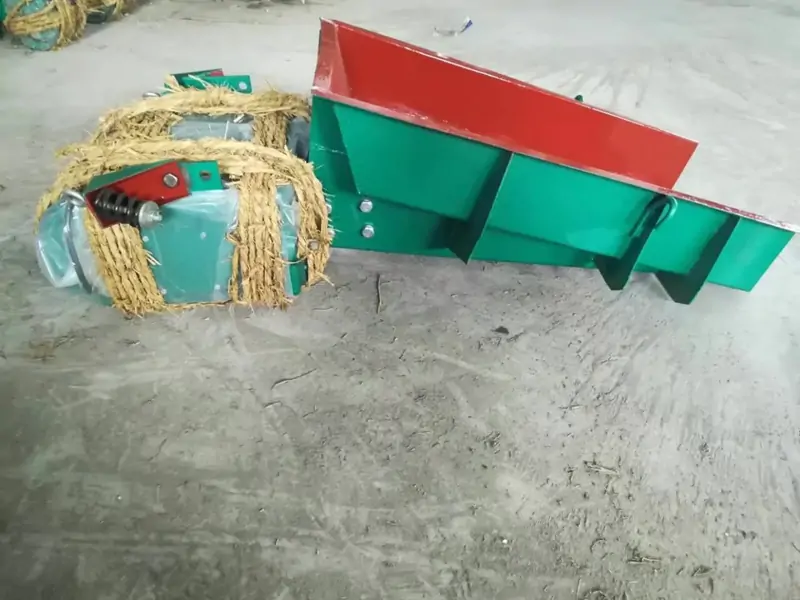
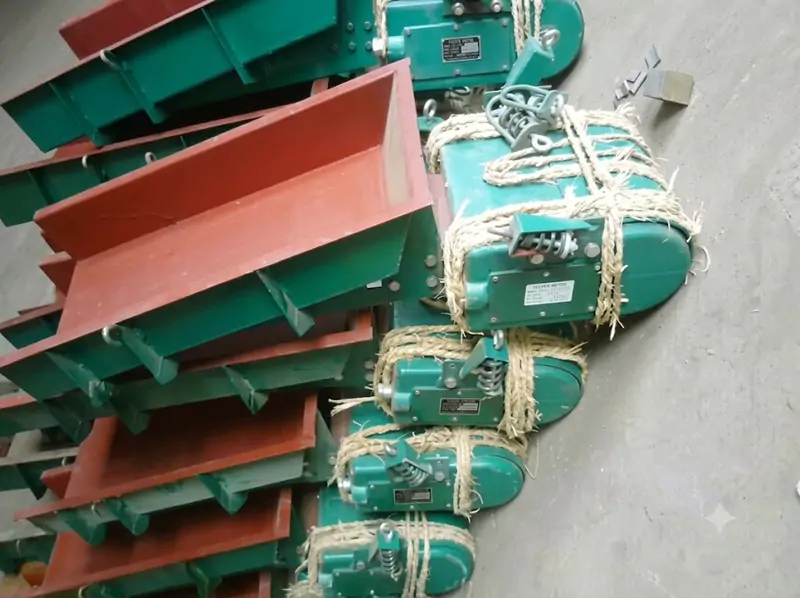
Fabricación Jiarui
Para el alimentador vibratorio electromagnético de la serie GZ, la precisión de fabricación afecta el rendimiento del equipo después de la instalación. La estructura del canal, el sistema de vibración electromagnética y el proceso de ensamblaje deben coincidir con las características del material y las condiciones de trabajo para mantener una alimentación estable.
Estructura de canal diseñada para condiciones reales
Las dimensiones del canal, la selección de materiales y la protección contra el desgaste se determinan según la capacidad de alimentación, las propiedades del material y los requisitos de instalación. Esto ayuda a reducir la obstrucción del material y mantiene un proceso de alimentación más consistente.
Sistema de vibración ajustado durante el ensamblaje
El vibrador electromagnético, los resortes y los componentes de control se ensamblan según los parámetros de diseño confirmados. Después del ensamblaje, cada alimentador se verifica en cuanto a operación vibratoria y respuesta de alimentación antes de la entrega.
Fabricación basada en planos aprobados
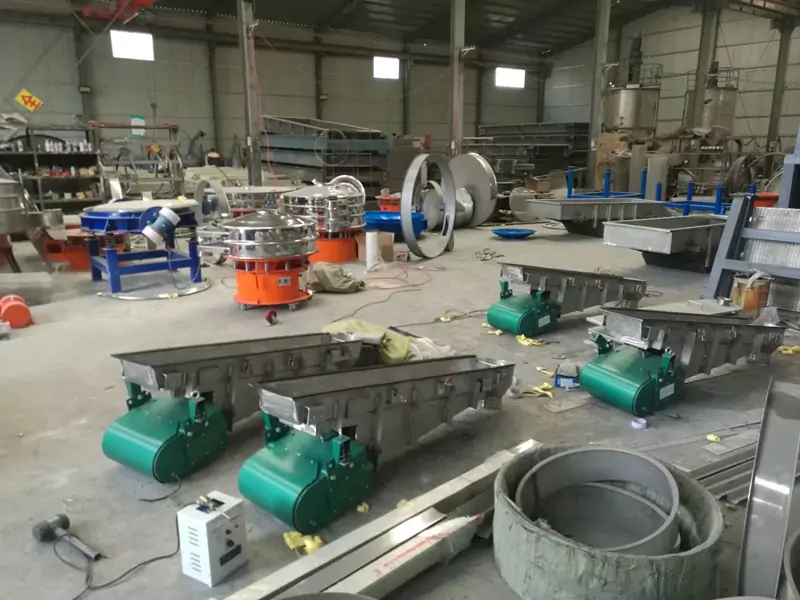
Jiarui completa el proceso de fabricación desde la confirmación CAD, el procesamiento de componentes y el ensamblaje hasta las pruebas, según los requisitos técnicos del cliente. Esto mantiene la configuración final del equipo consistente con el diseño confirmado.
El proceso de fabricación sigue principios de gestión de calidad para controlar los pasos clave de producción y mantener un rendimiento estable del equipo.
Preguntas Frecuentes
Obtenga una consulta gratuita
Complete el siguiente formulario para conectarse con nuestros expertos y recibir recomendaciones personalizadas para su aplicación.