
What Is an Ultrasonic Vibrating Screen?
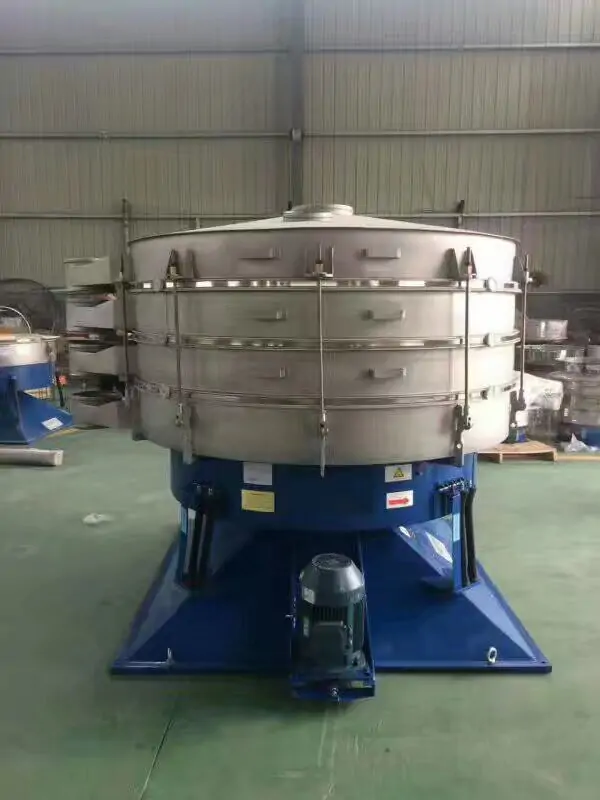
An Ultrasonic vibrating screen, also known as a fine powder ultrasonic vibrating screen, is a high-precision screening device that incorporates an ultrasonic screening system into a traditional vibrating screen(For example, the Tumbler Screening Machine, Rotary Vibrating Screen, etc.). By superimposing a low-amplitude, high-frequency ultrasonic vibration wave, it is specifically designed to address the screening challenges posed by ultra-fine powders, highly viscous materials, materials prone to agglomeration, and electrically charged materials.
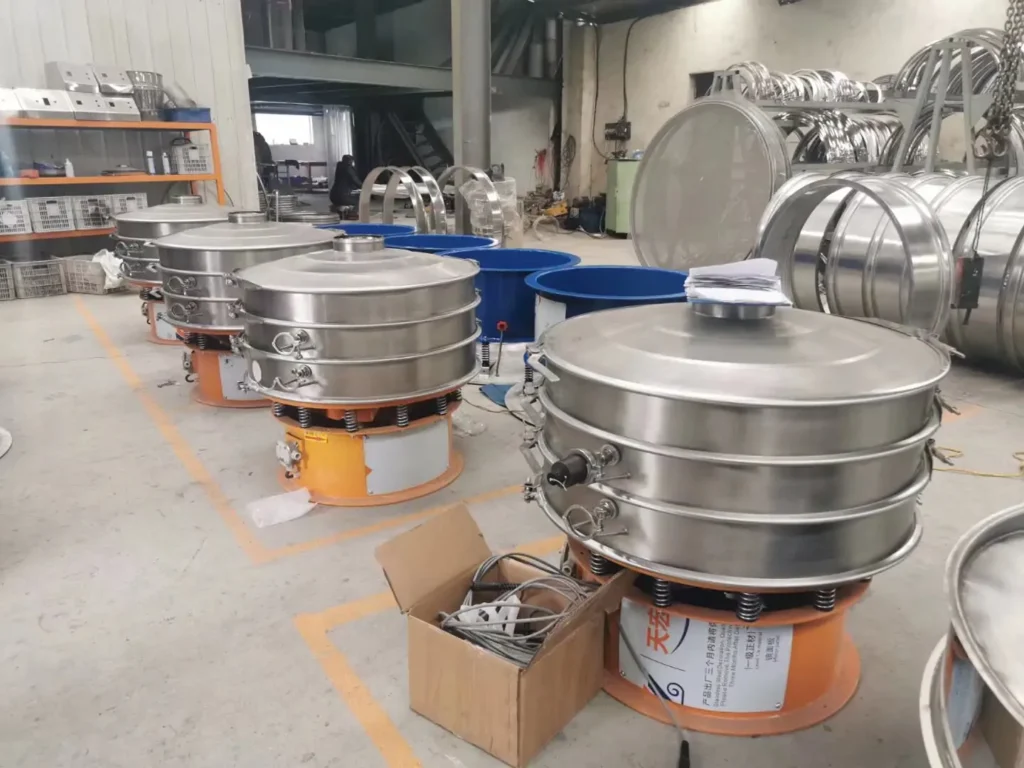
Its core operating principle is based on a dual-power drive:
- Basic Vibration: A vibration motor generates conventional three-dimensional vibrations (such as circular or linear vibrations), causing the material to disperse evenly across the screen surface.
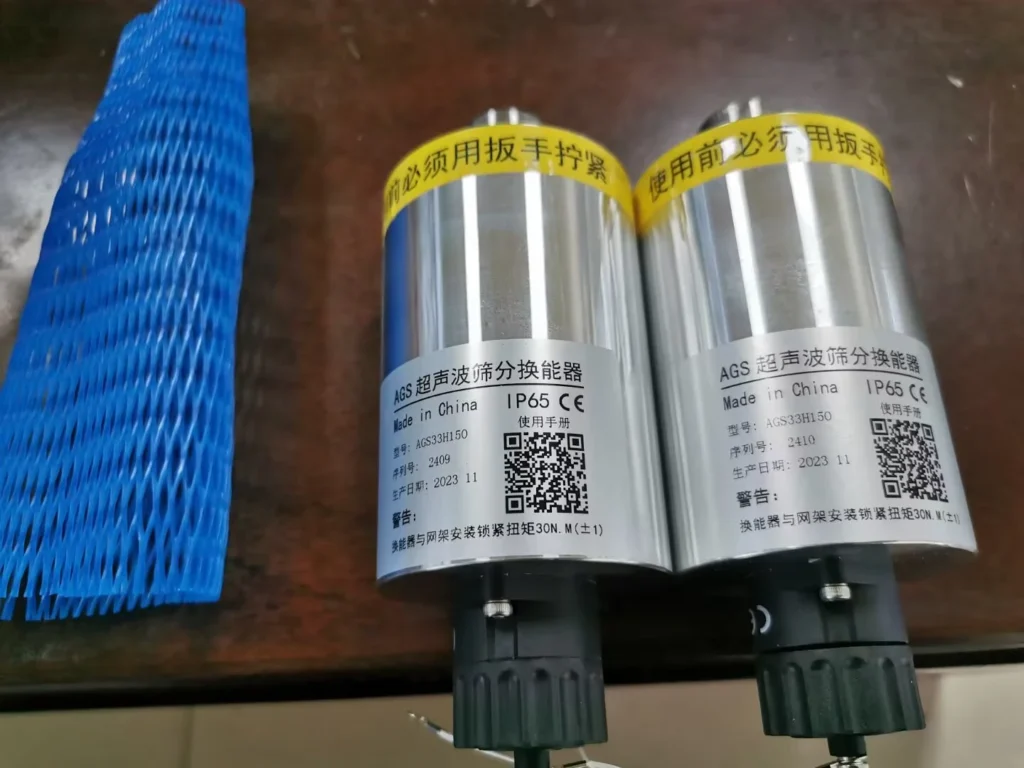
- Ultrasonic Vibration: An ultrasonic generator converts electrical energy (typically 220V/50Hz) into high-frequency electrical energy (common frequencies include 18KHz, 20KHz, 36KHz, or 38KHz), which is then converted into high-frequency mechanical vibrations via a transducer (oscillator) and a resonance ring, and uniformly transmitted throughout the entire screen mesh. This causes the screen mesh to produce micrometer-level high-frequency vibrations tens of thousands of times per second.
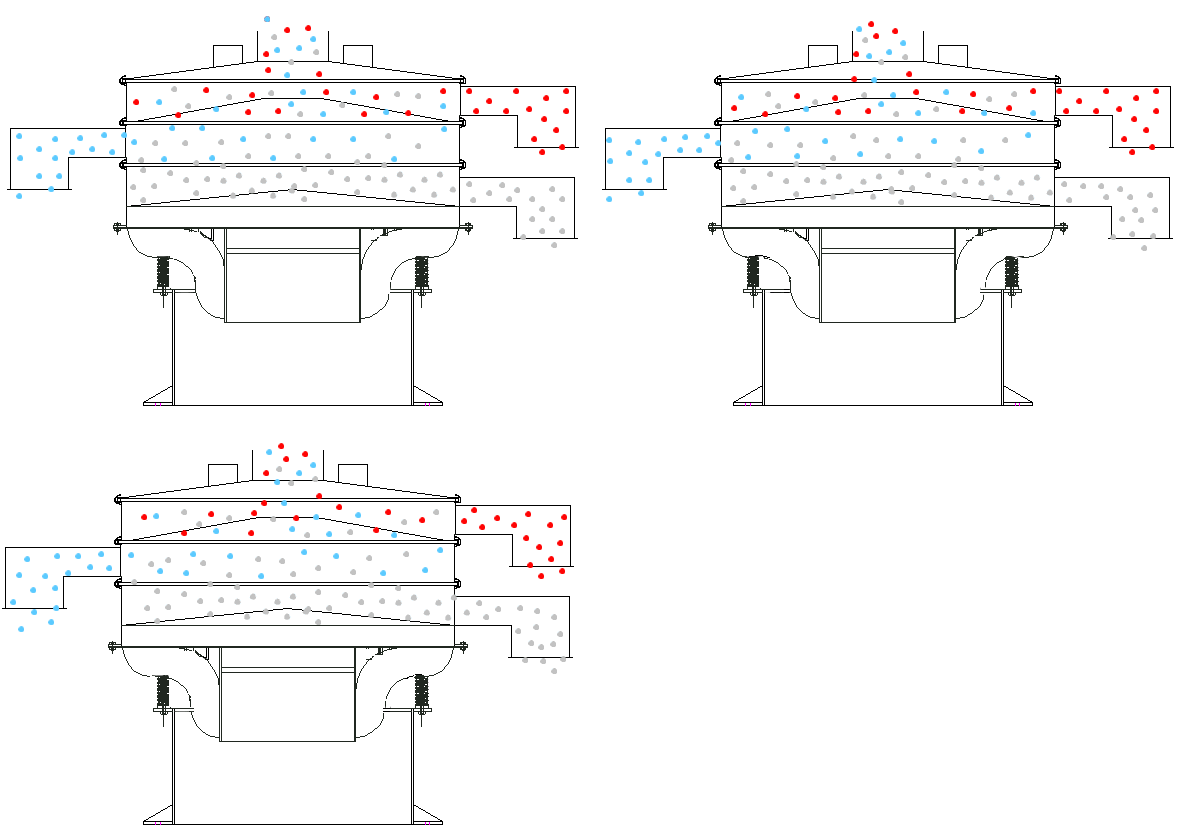
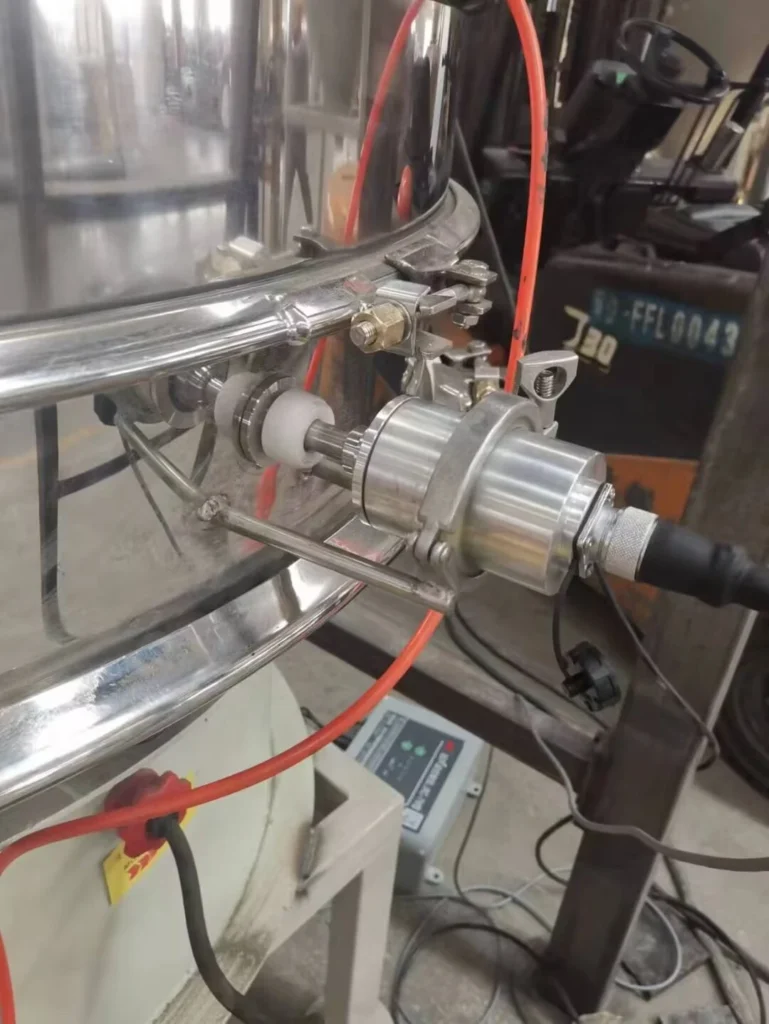
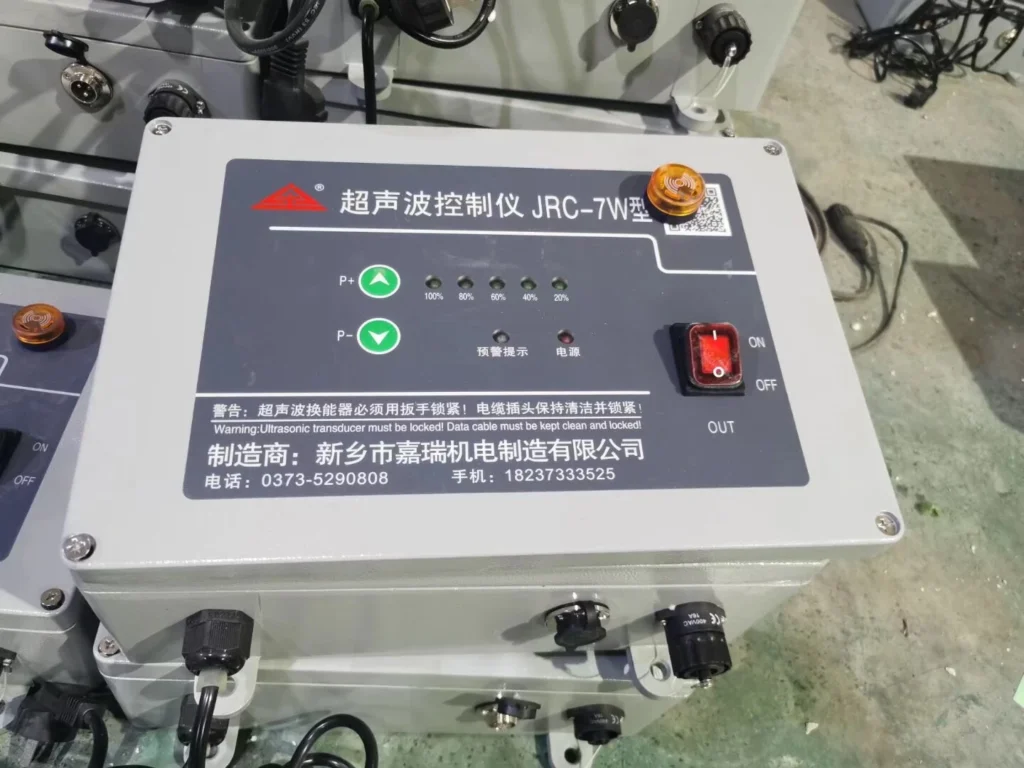
This high-frequency, low-amplitude vibration delivers revolutionary screening results:
- Anti-clogging: High-frequency vibrations subject ultra-fine powders on the screen mesh to immense ultrasonic acceleration, keeping them in a constant “suspended” state. This effectively prevents material from clogging the screen apertures due to adhesion, friction, static electricity, or agglomeration. This is its most critical advantage.
- High Precision and High Throughput: While solving the screen clogging problem, it significantly improves screening precision and efficiency. Screening precision can be increased by 1%–100% compared to conventional vibrating screens, and throughput can be increased by 0.5–20 times, making it particularly suitable for ultra-fine screening from 500 mesh to 635 mesh and above.
- Low Damage and Self-Cleaning: With a small vibration amplitude, it minimizes damage to brittle crystals or fibrous materials; it also features a self-cleaning screen function, eliminating the need for auxiliary cleaning devices such as bouncing balls and preventing secondary contamination of the material.
For more product specifications, please read: Ultrasonic Vibrating Screen
Parts of an Ultrasonic System
A typical ultrasonic system used in an ultrasonic vibrating screen consists of several core components that work together to generate, transmit, and apply ultrasonic energy for high-precision fine powder screening.
Below is a structured breakdown of each component and its function:
| Component | Main Function | Core Description & Key Parameters |
|---|---|---|
| Ultrasonic Generator (Power Supply) | Generates and drives ultrasonic energy | Converts standard power supply (e.g., 220V/50Hz AC) into high-frequency electrical signals matched with the ultrasonic vibrating screen system (typically 20kHz–40kHz). Responsible for automatic frequency tracking, power regulation, and system protection to ensure stable screening performance. |
| Ultrasonic Transducer | Core energy conversion component | Converts high-frequency electrical signals from the generator into mechanical vibration energy at the same frequency. Uses piezoelectric ceramics as the core material. Must be precisely matched with the generator in an ultrasonic vibrating screen system to ensure efficiency and stability. |
| Amplitude Booster (Horn / Booster Rod) | Amplifies vibration amplitude | Connected between the transducer and the screen frame. Its function is to increase mechanical vibration amplitude to enhance screening efficiency, especially for ultra-fine powders and anti-clogging performance in ultrasonic vibrating screen applications. |
| Working Head / Screen Frame | Outputs ultrasonic vibration to the screening surface | Directly transfers ultrasonic energy to the screen mesh in an ultrasonic vibrating screen system. Its structural design, material, and resonance characteristics significantly affect screening accuracy, anti-blocking ability, and throughput efficiency. |
| Control System & Sensor Feedback System | Controls and monitors system operation | Manages start/stop, frequency adjustment, and power regulation of the ultrasonic vibrating screen system. Advanced systems may include sensors for real-time vibration monitoring and feedback optimization for stable performance. |
| Power Supply & Auxiliary System | Provides stable power and system support | Supplies continuous electrical energy to the ultrasonic system. Additional components may include HMI interface, cooling system, and safety protection modules to ensure reliable long-term operation of the ultrasonic vibrating screen. |
Advantages of Ultrasonic Vibrating Screens
Why Can’t Conventional Vibrating Screens Handle Ultra-Fine Powders?
Traditional vibrating screens struggle with ultra-fine powders (200–635 mesh) because of three main issues:
- Electrostatic adsorption: Fine particles easily generate static electricity and stick to the mesh surface, reducing effective screening area.
- Particle agglomeration: Ultra-fine powders tend to form clusters, making them harder to pass through mesh openings.
- Mesh clogging: Conventional vibration is often not strong enough to continuously clean the screen surface, leading to blockage and reduced efficiency.

What Problems Can an Ultrasonic Vibrating Screen Solve?
An ultrasonic vibrating screen system is specifically designed to overcome the limitations of traditional screening equipment when handling fine and difficult materials.
It is widely used for:
- 200–635 mesh ultra-fine powders
- High-value materials requiring high-purity separation
- Sensitive powders used in:
- Pharmaceutical manufacturing
- Lithium battery cathode and anode materials
- Food additives and fine ingredients
- Chemical and metal powders
By applying high-frequency ultrasonic vibration, the system significantly improves particle separation efficiency and reduces mesh-related issues.
Applications of Ultrasonic Vibrating Screen
Thanks to its unique ability to address challenges such as screen clogging and electrostatic agglomeration in ultra-fine powders, Jiarui Machinery’s ultrasonic vibrating screens are widely used in numerous industries that demand extremely high precision and purity in material screening.
 API Intermediates
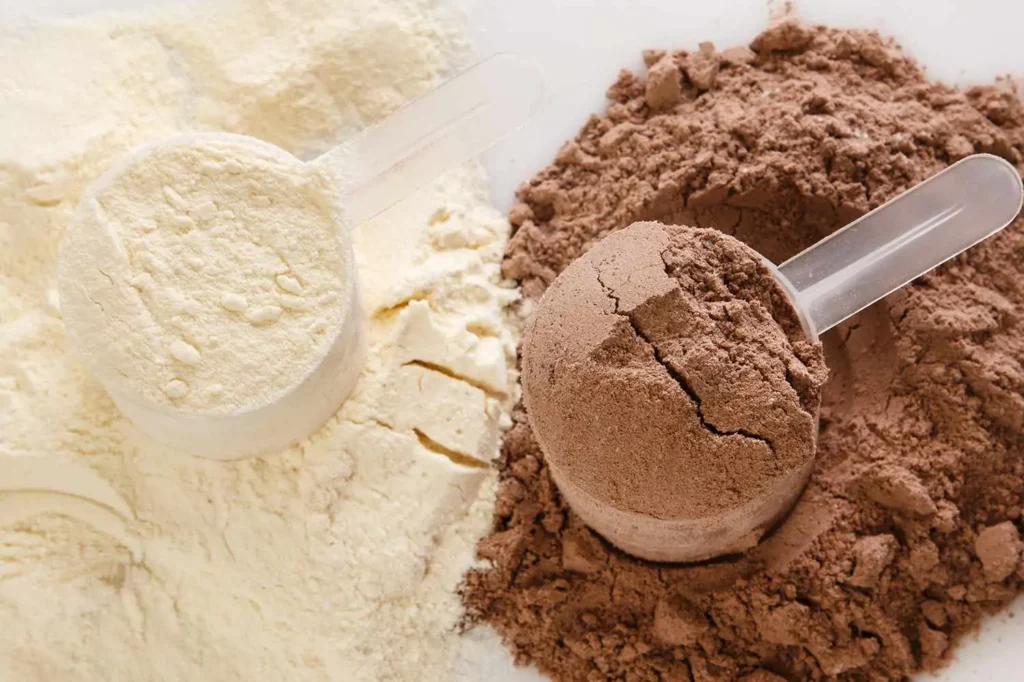 Malt Powder
 Sugar Powder
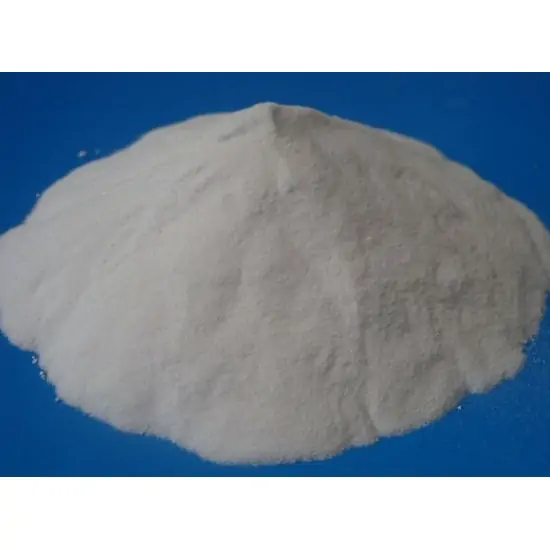 Ribavirin Powder
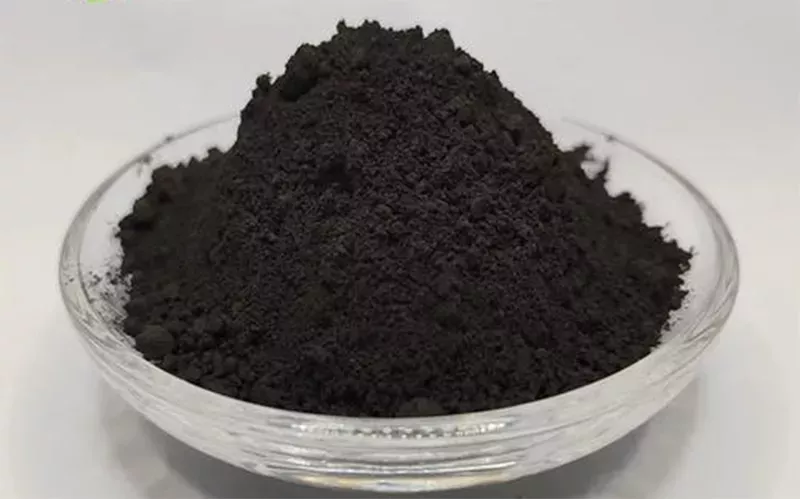 Boron Carbide Powder
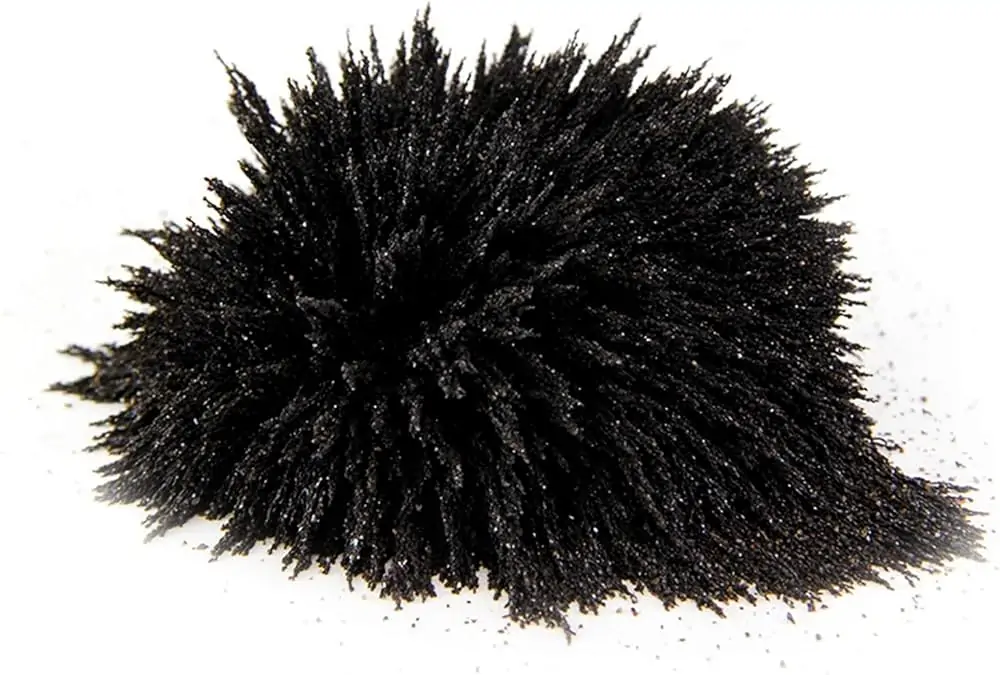 Magnetic Powder
 Powder Coatings
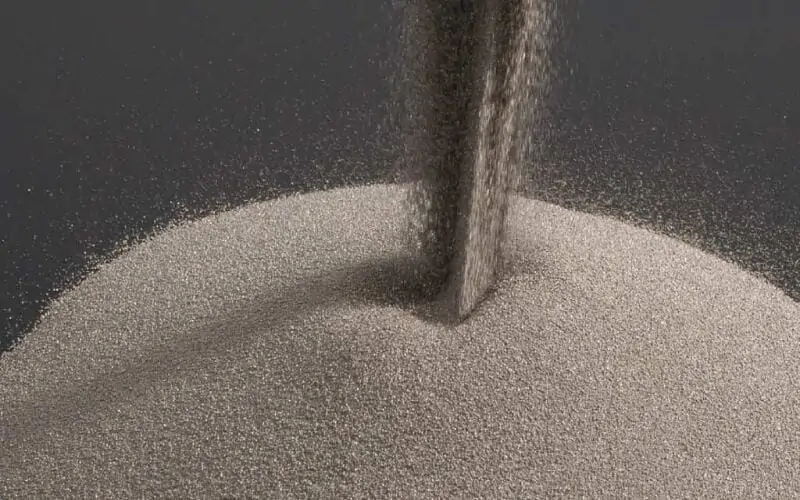 Stainless Steel Powder
| Industry | Typical Materials (400–600 Mesh Screening) |
|---|---|
| New Energy & Advanced Materials | Lithium Battery Anode Materials, Cathode Materials, Magnetic Powder, Laser Powder, Alloy Powder |
| Metal Powder & Powder Metallurgy | Molybdenum Powder, Stainless Steel Powder, Tungsten Powder, Nickel Powder, Cobalt Powder, Alloy Powder |
| Chemical & Coating Industry | Powder Coatings, Silicon Carbide Powder, Boron Carbide Powder, Quartz Powder, Organic Chemical Powders |
| Food & Food Additives | Malt Powder, Coffee Powder, Starch, Sugar Powder, Milk Powder |
| Pharmaceutical & API Processing | Ribavirin Powder, Herbal Medicine Powder, Pharmaceutical Powders, API Intermediates |
| Abrasives & Ceramic Materials | Silicon Carbide, Boron Carbide, Quartz Powder, Alumina, Ceramic Powder |
Ultrasonic Vibrating Screen vs Conventional Vibrating Screen: What’s the Difference?
The main difference between an ultrasonic vibrating screen and a conventional vibrating screen lies in how they handle fine powders and mesh blockage.
| Feature | Conventional Vibrating Screen | Ultrasonic Vibrating Screen |
|---|---|---|
| Working Principle | Mechanical vibration driven by motor to separate particles by size | Mechanical vibration + ultrasonic high-frequency waves applied to screen mesh |
| Vibration Type | Low / medium-frequency mechanical vibration | High-frequency ultrasonic micro-vibration + mechanical vibration |
| Suitable Particle Size | Coarse to medium powders | Ultra-fine powders (200–635 mesh) |
| Anti-Clogging Performance | Prone to mesh clogging due to static and adhesion | Strong anti-clogging ability, reduces adhesion and mesh blockage |
| Static Electricity Handling | Poor control of electrostatic adsorption | Effectively reduces static effects on fine powders |
| Screening Accuracy | Medium accuracy, declines with finer materials | High precision for fine and ultra-fine powder separation |
| Application Industries | Mining, aggregates, sand, general powder processing | Pharmaceuticals, lithium batteries, food additives, fine chemicals |
| Efficiency for Fine Powders | Low efficiency, often requires repeated screening | High efficiency and stable continuous screening |
| Maintenance Needs | Lower complexity but more frequent clogging cleaning | Slightly higher system complexity but less clogging downtime |
The key difference is that conventional vibrating screens rely only on mechanical motion, while ultrasonic vibrating screens integrate ultrasonic energy to solve fine powder screening problems such as clogging, static electricity, and poor flowability.
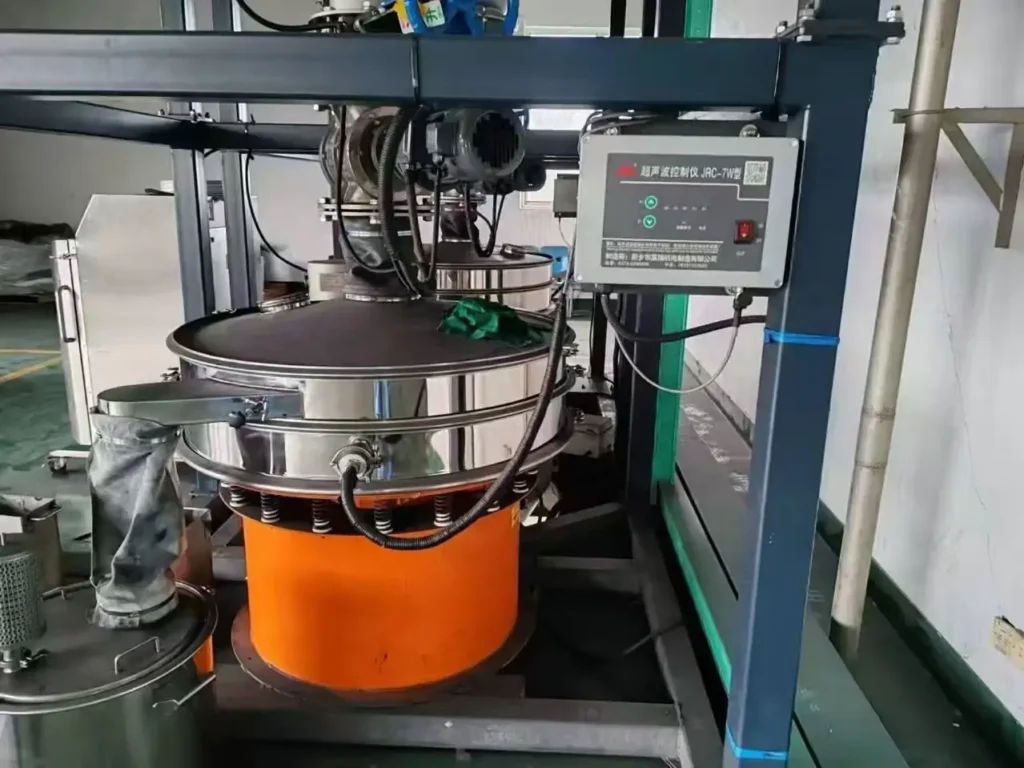 Ultrasonic Vibrating Screen
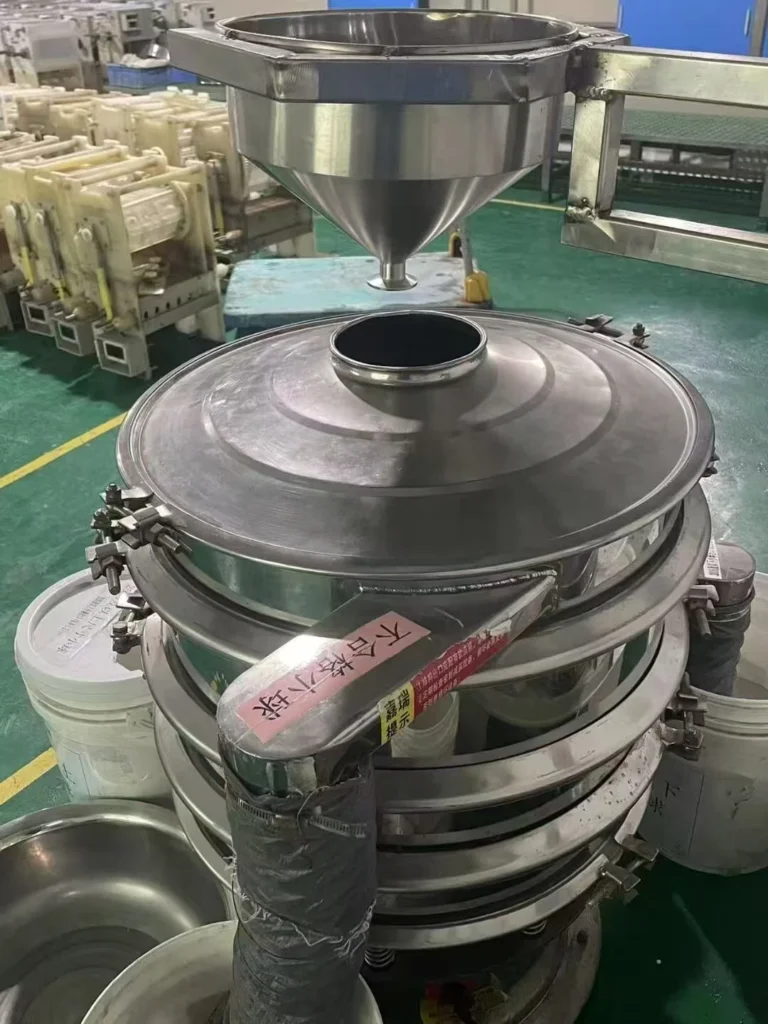 Rotary Vibrating Screen
How to Choose an Ultrasonic Vibrating Screen
First, an ultrasonic vibrating screen system is mainly used to solve screening problems such as ultra-fine powders, particle agglomeration, static electricity, high or low specific gravity materials, and mesh clogging, especially for 200–635 mesh fine powder screening. It is widely used in lithium battery, pharmaceutical, food, and chemical industries.
Step 1: Define Your Requirements (Foundation of Selection)
Material properties are the most important factor. You need to clearly define particle size (mesh), specific gravity, moisture, viscosity, static electricity, and corrosiveness.
For example, when processing ultra-fine materials such as 600-mesh silicon carbide or lithium battery powders, a higher-power ultrasonic system is required.
You should also define:
- Required screening precision
- Production capacity (throughput)
Different models of ultrasonic vibrating screens from suppliers like Jiarui Machinery correspond to different capacities and applications.
Industry requirements are also critical:
- Food & pharmaceutical industry requires 316L stainless steel and fully enclosed design (GMP standard)
- Chemical & lithium battery industry may require corrosion resistance or explosion-proof design
Step 2: Focus on Core Equipment Parameters
After clarifying needs, evaluate key parameters:
- Ultrasonic system:
Check generator power (50W, 80W, 100W) and frequency adjustment capability. Higher difficulty materials usually require higher power ultrasonic systems. A stable system can automatically adjust frequency to maintain consistent vibration. - Screen mesh:
Confirm mesh range (200–635 mesh) and material (304 or 316L stainless steel). Mesh quality directly affects screening efficiency and service life. - Material & structure:
Choose carbon steel, 304, or 316L stainless steel depending on material properties. Fully enclosed design helps reduce dust and improve cleanliness. - Anti-clogging performance:
The ultrasonic vibrating screen uses high-frequency vibration transmitted to the mesh, reducing adhesion and preventing clogging—especially effective for ultra-fine powders.
Step 3: Choose a Reliable Supplier
Equipment performance depends heavily on the manufacturer.
You should choose suppliers with:
- Strong R&D capability
- Proven ultrasonic vibrating screen technology
- Industry application experience
Manufacturers such as Jiarui Machinery provide ultrasonic vibrating screen solutions for different industrial applications.
Also consider:
- After-sales service (spare parts + technical support)
- Whether they provide material testing before purchase
- Customization capability for special production requirements
In summary, selecting an ultrasonic vibrating screen is about matching material characteristics, technical configuration, and supplier capability.
There is no “best” machine—only the most suitable one for your production needs.
Conclusion
In summary, an ultrasonic vibrating screen effectively solves key problems in ultra-fine powder screening such as mesh clogging, static electricity, and agglomeration, while significantly improving screening precision and efficiency.
If you are looking for a reliable ultrasonic vibrating screen solution, contact Jiarui Machinery to get professional selection support and customized equipment recommendations for your application.