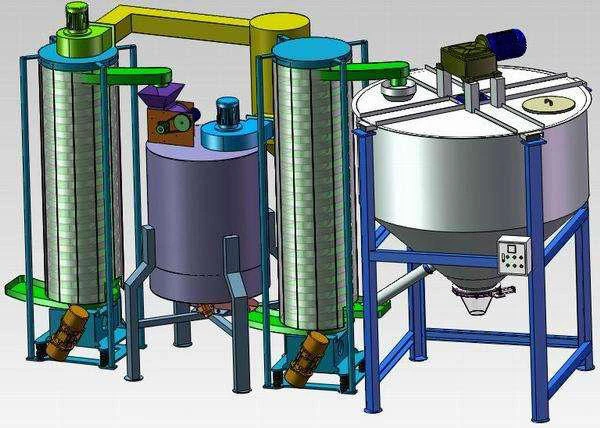
Elevadores vibratórios espirais
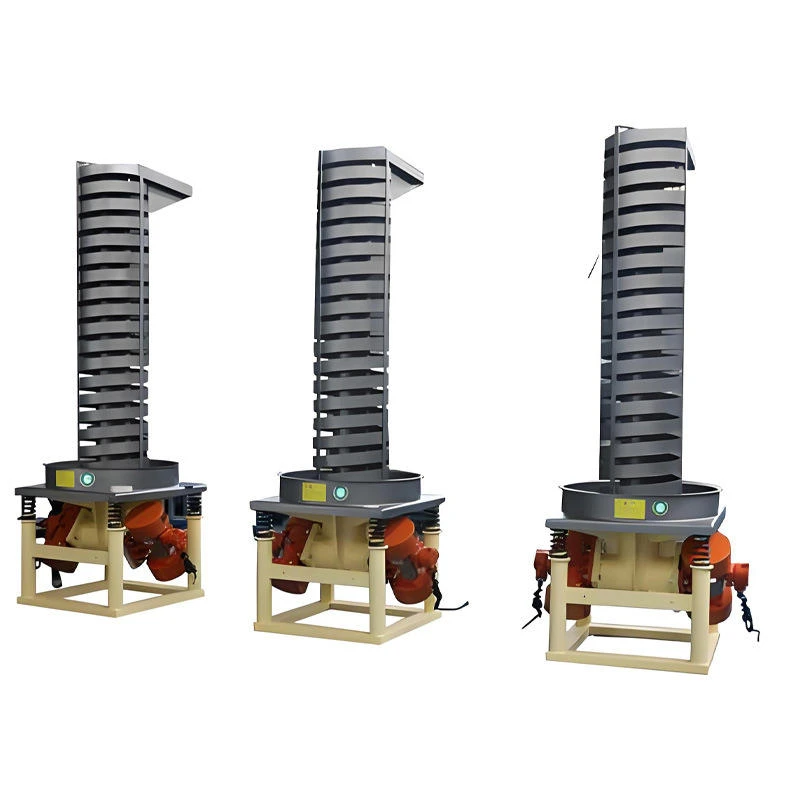
Vibrating spiral elevators are mainly designed to solve the vertical transfer of materials in production lines, especially for applications where factory space is limited or there is a height difference between different processes. The equipment uses dual vibration motors to generate vibration force, driving materials continuously upward along the spiral conveying path. It is suitable for handling powders, granules, and small lump materials.
These vibrating spiral elevators are commonly used for conveying plastic pellets, food ingredients, chemical materials, mineral powders, and other bulk materials. Since material flowability, density, and installation conditions vary between applications, Jiarui can adjust the equipment structure, material selection, and conveying height according to specific operating requirements.
- Series Models: JRCZ300–JRCZ900 Series
- Conveying Capacity: ≤1–4 t/h
- Conveying Height: ≤2–6 m
- Total Motor Power: 0.8–6 kW
- Structure Options: Open Type, Enclosed Type
- Suitable Materials: Powder, Granular, and Small Lump Materials
- Customization: Available based on material characteristics, capacity requirements, and installation conditions
What Is a Vibrating Spiral Elevator?
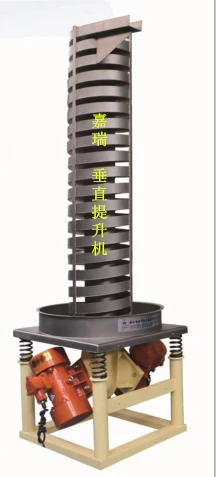
A vibrating spiral elevator, also known as a vertical vibrating elevator or vertical vibratory conveyor, is a type of vibration conveying equipment used for vertical material transportation. It mainly uses two vibration motors to generate excitation force, causing the spiral conveying trough to vibrate continuously. Materials move upward gradually under the vibration effect, completing vertical lifting of powders, granules, and small bulk materials.
In many production line designs, there is often a height difference between upstream and downstream equipment. Using traditional horizontal conveying methods may require longer conveying distances and occupy more installation space. A vibrating spiral elevator is designed to solve this type of vertical conveying requirement. The equipment can be configured with an open or enclosed structure according to site conditions, while the trough size, material, and configuration can be adjusted based on material characteristics. It is widely used for conveying plastic pellets, food materials, chemical products, mineral powders, and other bulk materials.
Working Principle of Vibrating Spiral Elevators?
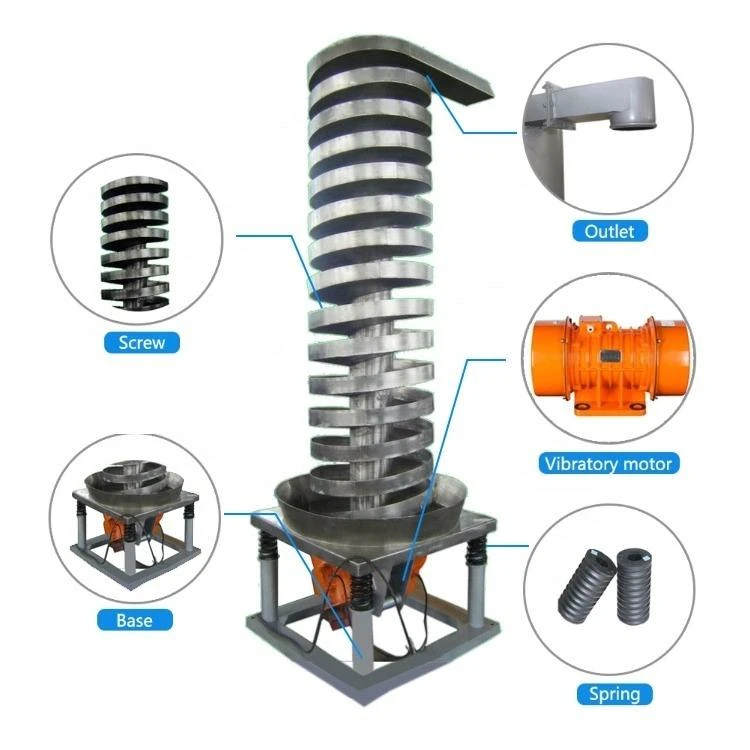
Vibrating spiral elevators mainly rely on two vibration motors to provide driving force. When the motors operate, they generate continuous vibration that causes the conveying trough to vibrate. After entering the trough, materials move upward under the combined effect of vibration and the spiral conveying structure.
1.Vibration Motors Provide Driving Force
The two vibration motors installed on the top of the equipment operate synchronously to generate stable excitation force, keeping the spiral conveying trough in continuous vibration. Under the vibration effect, materials move forward through repeated jumping movements instead of being pushed forcibly, resulting in smoother conveying performance.
2.Materials Move Upward Along the Spiral Trough
The conveying trough adopts a spiral structure design. During operation, materials gradually move upward along the spiral path from the lower inlet to the upper outlet. Since there are no direct pushing components such as screws or chains during conveying, material compression and friction are reduced, making the equipment suitable for powders, granules, and small lump materials.
3.Structure Selection According to Operating Conditions
Different production lines have different requirements for conveying equipment. For ordinary material transportation, an open structure can be selected for easier inspection and maintenance. When handling dusty materials, an enclosed structure can be used to reduce material leakage. The equipment height, trough size, and material selection can also be adjusted according to installation conditions.
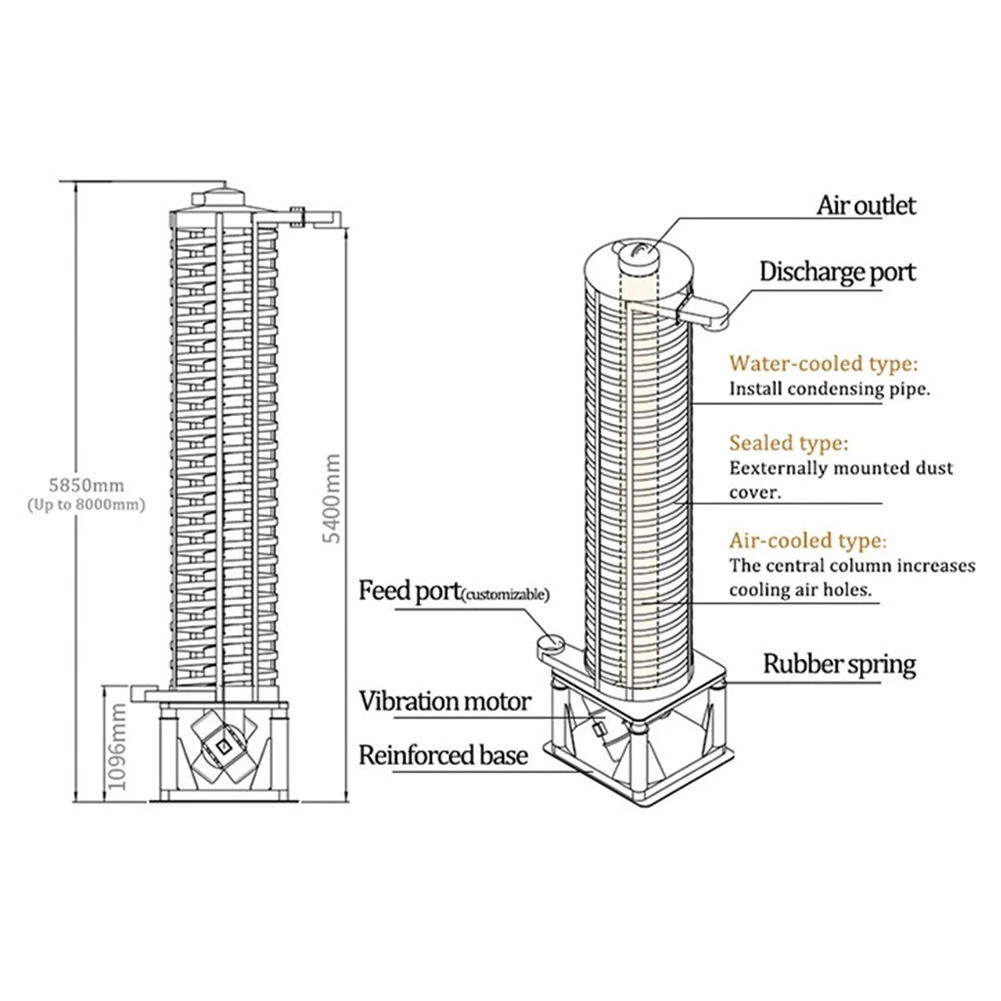
In simple terms, vibrating spiral elevators use vibration force to move materials upward along a spiral trough, providing continuous vertical conveying in limited installation spaces.
Advantages
Compact Installation Space
The equipment adopts a vertical installation design and does not require long horizontal conveying distances. It is suitable for production layouts with limited factory space or height differences between different processing stages.
Stable Conveying Performance
By using vibration force to move materials continuously upward along the spiral trough, the conveying process is smoother and more suitable for continuous material transfer in production lines.
Low Material Damage
Materials move upward gradually under vibration instead of being forced by components such as screws or chains. This reduces compression and friction during conveying, making the equipment suitable for applications where material integrity is important.
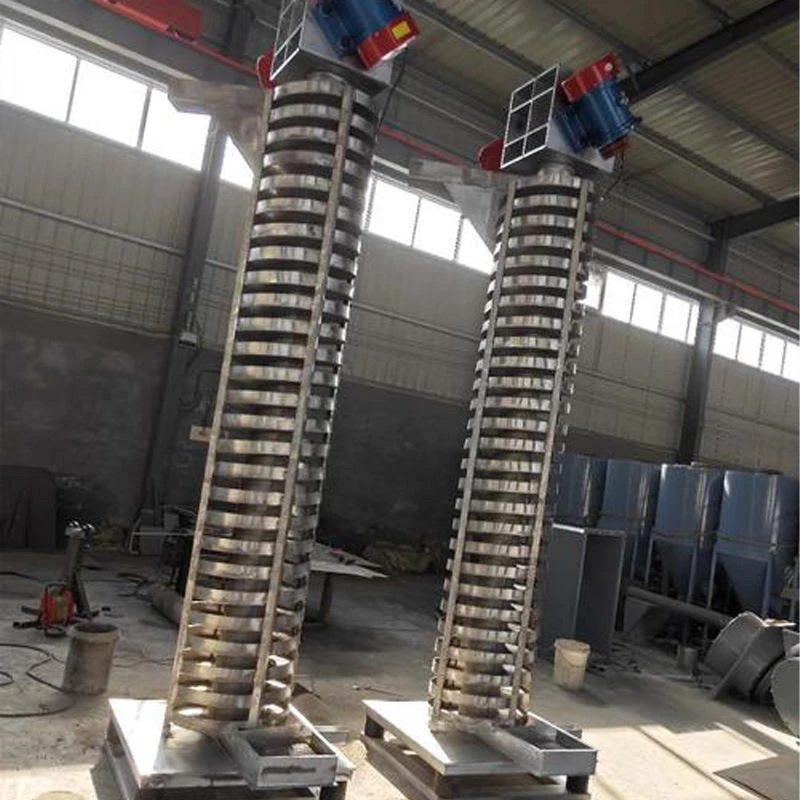
Effective Dust Control
For materials that generate more dust, an enclosed structure can be selected to reduce material dispersion during conveying and improve the working environment.
Simple Structure and Easy Maintenance
The equipment mainly consists of a conveying trough, vibration motors, and a damping system. Without complex transmission components, daily inspection and maintenance are more convenient.
Auxiliary Material Cooling Function
During the lifting process, materials are continuously turned over and exposed to air, which can help reduce material temperature according to specific process requirements.
Aplicações
Vibrating spiral elevators are mainly used for the vertical conveying of powders, granules, and small lump bulk materials. They are suitable for materials with relatively good flowability. According to material characteristics, production environment, and process requirements, the equipment can be applied in industries such as plastics, food processing, chemical production, mining, and building materials.
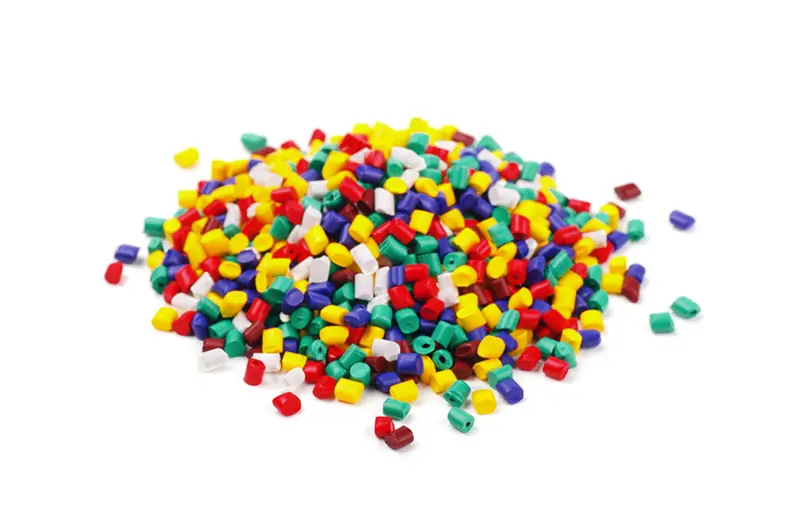 Plastic Pellets
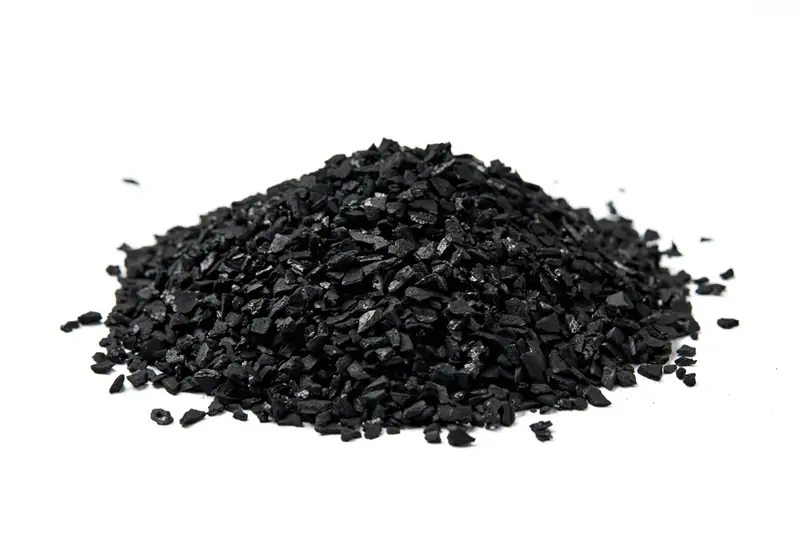 Activated Carbon
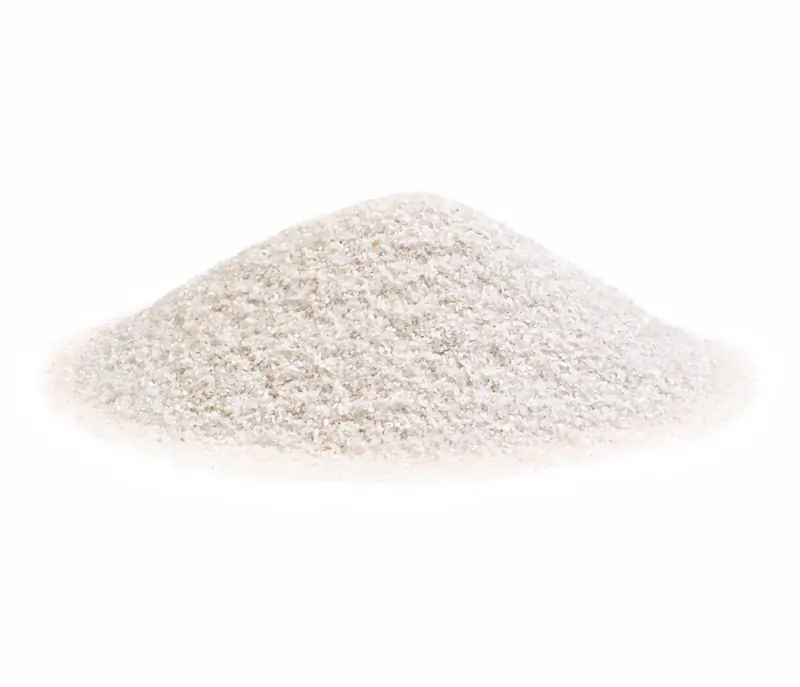 Quartz Sand
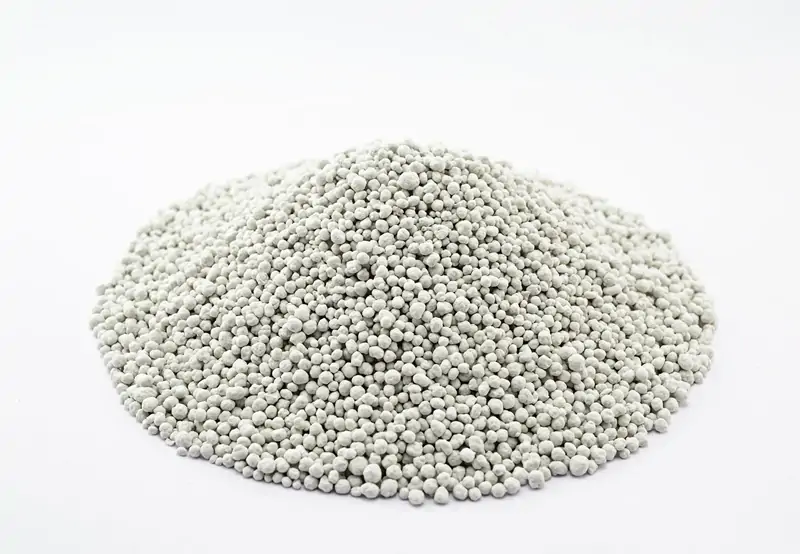 Fertilizer Granules
 Electronic Materials
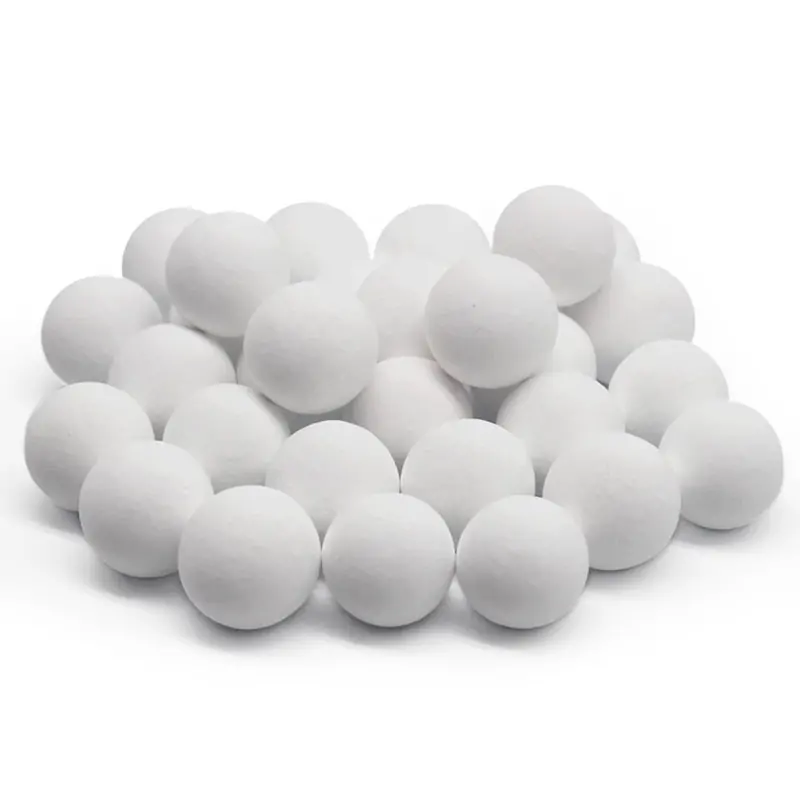 Ceramics
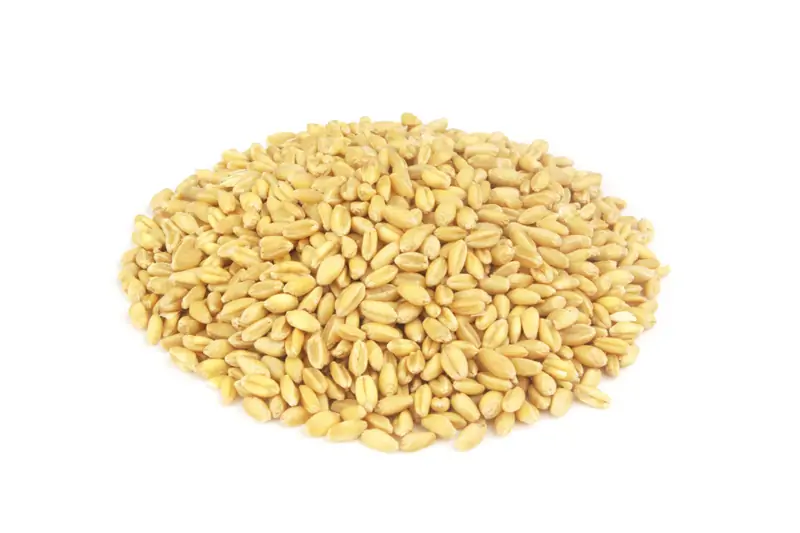 Wheat
Wheat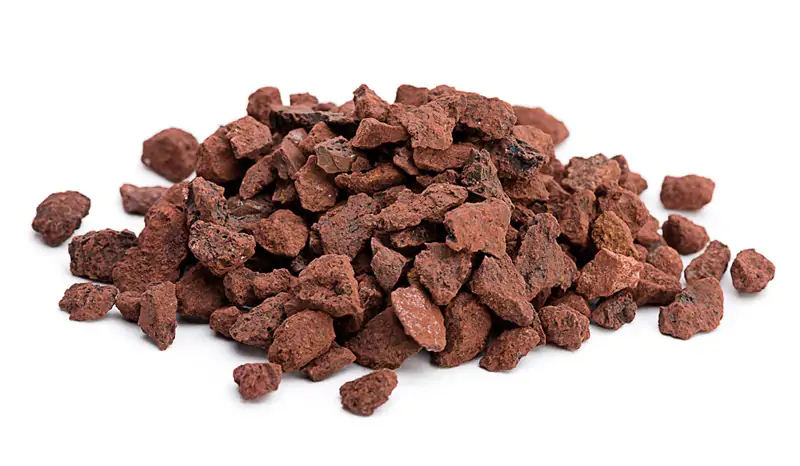 Iron Ore
Application Industries and Selection Reference
| Indústria | Aplicações Típicas | Selection Considerations |
| Plastic Industry | Used for continuous vertical conveying of plastic pellets, resin materials, and similar materials between different production stages | Pay attention to conveying capacity, lifting height, and material damage requirements |
| Food Industry | Used for vertical transfer of food ingredients and connection between processing, screening, or packaging processes | Consider equipment material, hygiene requirements, and dust prevention design |
| Indústria Química | Used for continuous lifting and process connection of powder and granular chemical materials | Consider material corrosion resistance, sealing requirements, and operating environment |
| Mineral Processing and Building Materials Industry | Used for vertical transfer of bulk materials between crushing, screening, storage, and other production processes | Pay attention to material abrasiveness, conveying capacity, and wear-resistant design |
Selection Considerations
Vibrating spiral elevators are more suitable for dry bulk materials with good flowability. For the following conditions, material characteristics and equipment structure should be confirmed in advance:
- High-viscosity materials: Materials may stick to the conveying trough surface and affect normal movement;
- High-moisture materials: Materials may form lumps and influence continuous conveying;
- Large-size lump materials: Large particles may affect conveying stability and require confirmation of suitable particle size;
- Powders prone to caking: Material conditions should be evaluated before selecting the appropriate conveying solution.
Equipment selection usually needs to consider material type, particle size, conveying capacity, lifting height, and installation conditions. Jiarui engineering team can provide suitable structural design and equipment configuration based on actual operating requirements.
Technical Parameters of Vibrating Spiral Elevators
The JRCZ series vibrating spiral elevators are classified mainly according to spiral trough diameter and conveying capacity. Different models are suitable for different lifting heights and material handling requirements. The vibrating spiral elevator series includes JRCZ300–JRCZ900 models, and the conveying capacity can be configured according to material characteristics and production requirements. The following data represents standard models, while actual equipment dimensions and configurations can be adjusted according to site conditions.
| Model | Conveying Capacity (t/h) | Spiral Trough Diameter (mm) | Conveying Width (mm) | Lifting Height (m) | Vibration Frequency (r/min) | Double Amplitude (mm) | Motor Power (kW) | Weight (kg) |
| JRCZ300 | ≤1.0 | 300 | 77 | ≤2.0 | 960 | 6月7日 | 2×0.4 | 680 |
| JRCZ500 | ≤2.0 | 500 | 140 | ≤3.0 | 960 | 6月8日 | 2×0.75 | 1010 |
| JRCZ550 | ≤3.0 | 550 | 152 | ≤3.5 | 960 | 6月8日 | 2×1.5 | 1190 |
| JRCZ600 | ≤3.0 | 600 | 163 | ≤4.0 | 960 | 6月7日 | 2×1.5 | 1310 |
| JRCZ800 | ≤4.0 | 800 | 224 | ≤4.5 | 960 | 6月8日 | 2×2.2 | 1590 |
| JRCZ850 | ≤4.0 | 850 | 224 | ≤5.0 | 960 | 6月9日 | 2×2.2 | 1750 |
| JRCZ900 | ≤3.5 | 900 | 185 | ≤6.0 | 960 | 6月9日 | 2×3.0 | 2100 |
The above parameters are based on standard configurations. Actual equipment will be adjusted according to conveying materials, processing capacity, lifting height, and installation conditions. The JRCZ300–JRCZ900 series covers different lifting height and conveying capacity requirements. The final model selection should be determined according to material characteristics, hourly throughput, and available installation space.
Comparison of Different Vertical Conveying Equipment
In industrial production, different materials and production layouts require different lifting solutions. Vibrating Spiral Elevators, Screw Conveyors, e Bucket Elevators have different conveying principles, structural designs, and application ranges. Equipment selection should be based on material characteristics, conveying capacity, lifting height, and site conditions.
| Comparison Item | Vibrating Spiral Elevator | Screw Conveyors | Elevador de Caçambas |
| Main Conveying Materials | Powder, granular, and small lump materials, such as plastic pellets, chemical powders, and mineral powders | Powder materials, granular materials, and bulk materials with good flowability | Granular and lump materials, such as grain, ores, cement, and aggregates |
| Conveying Principle | Uses vibration force to move materials continuously upward along the spiral trough | Uses rotating screw flights to push materials forward | Uses circulating buckets to lift materials vertically |
| Conveying Characteristics | Compact structure, available with open or enclosed design, suitable for continuous vertical conveying | Flexible conveying direction and layout, suitable for different installation arrangements | Suitable for large-volume continuous lifting and higher conveying heights |
| Conveying Capacity | Suitable for medium and small continuous conveying applications, commonly used for production line connection | Wide capacity range depending on screw diameter and rotation speed | Suitable for large-capacity continuous lifting applications |
| Installation Requirements | Vertical structure with small footprint, suitable for space-limited production layouts | Installation space depends on conveying direction and length, can be horizontal, inclined, or vertical | Requires sufficient installation height and overall equipment layout planning |
| Material Handling Characteristics | Materials move under vibration and can provide auxiliary functions such as cooling or drying according to process requirements | Materials move along a fixed route, suitable for stable feeding | Suitable for long-distance conveying and large height differences |
| Common Industries | Chemical, food, pharmaceutical, plastic, mineral processing, and powder industries | Chemical, building materials, grain, and powder processing industries | Mining, grain, cement, aggregate, and heavy material industries |
Different production lines have different material characteristics, conveying requirements, and installation conditions. The most suitable conveying equipment should be selected based on the actual application situation. Jiarui engineering team can provide suitable equipment configurations and structural solutions according to material type, conveying capacity, lifting height, and installation requirements.
Customized Design
Every production line has different installation conditions and conveying requirements. Standard models may not fully meet all operating situations. Vibrating spiral elevators need to be adjusted according to material characteristics, lifting height, and production layout to better connect upstream and downstream processes and ensure stable operation.
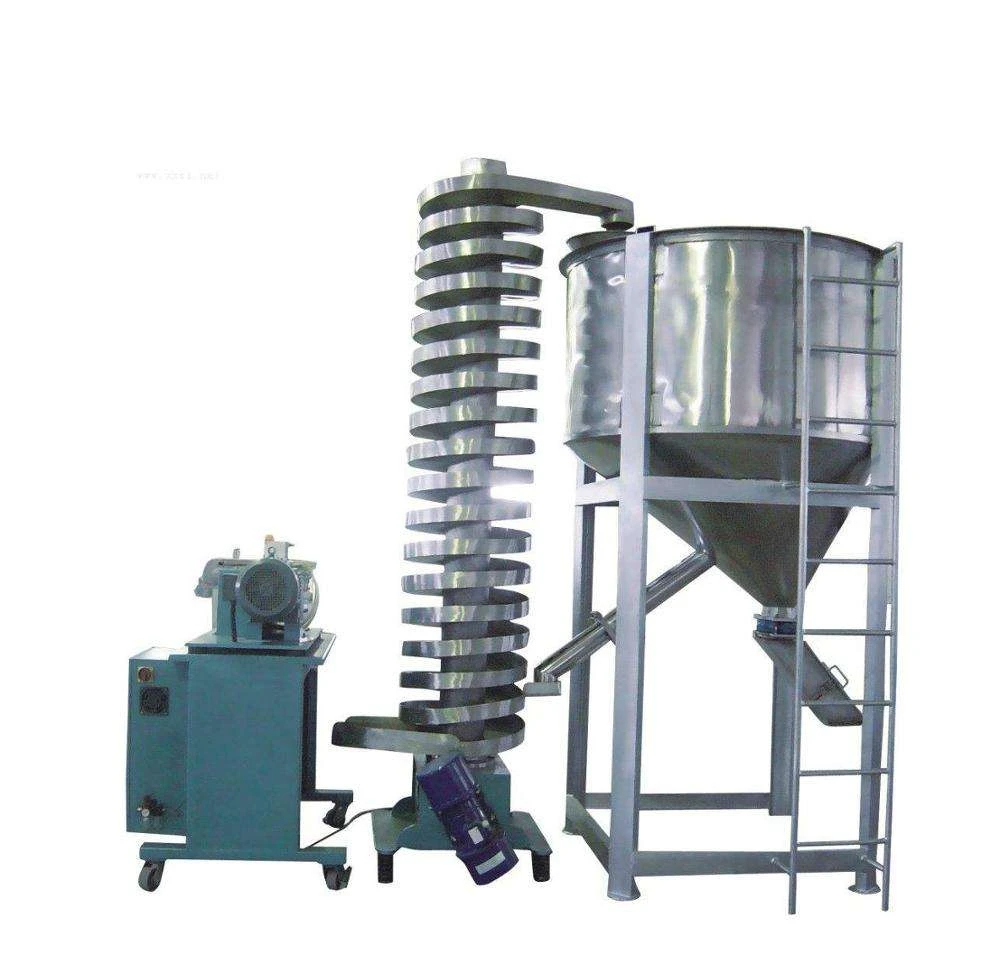
We can customize the equipment height, structural design, material selection, and inlet/outlet configuration according to customer requirements. These adjustments help solve issues such as limited installation space, equipment connection, dust control, and special material lifting requirements. The equipment can also be integrated into screening, conveying, and feeding systems as a connecting unit between different production processes.
To confirm a suitable solution quickly, please provide:
- Material information
- Material characteristics
- Required conveying capacity
- Lifting height
- Installation layout
- Special requirements
If you are planning a new conveying system or need to modify equipment for an existing production line, please provide the above operating information. Jiarui engineering team will evaluate the application conditions and provide a suitable structural design.
Jiarui Manufacturing
Jiarui is a vibrating equipment manufacturer located in Xinxiang, China, specializing in the development and manufacturing of vibrating screening, conveying, and filtration equipment. For vibrating spiral elevators, we focus not only on equipment structure but also on the proper matching of material characteristics, conveying requirements, and manufacturing details. With a focus on manufacturing quality, Jiarui operates under an ISO 9001 certified quality management system to ensure consistent production standards and reliable equipment performance.
From raw material processing and structural welding to equipment assembly and factory testing, each production stage follows corresponding quality control procedures. According to different material properties and working environments, Jiarui can provide suitable material options and structural configurations to help equipment better adapt to customer production conditions.
Perguntas Frequentes
Get a Free Consultation
Fill out the form below to connect with our experts and receive personalized recommendations for your application.