Estação de Alimentação sem Poeira de Alta Eficiência
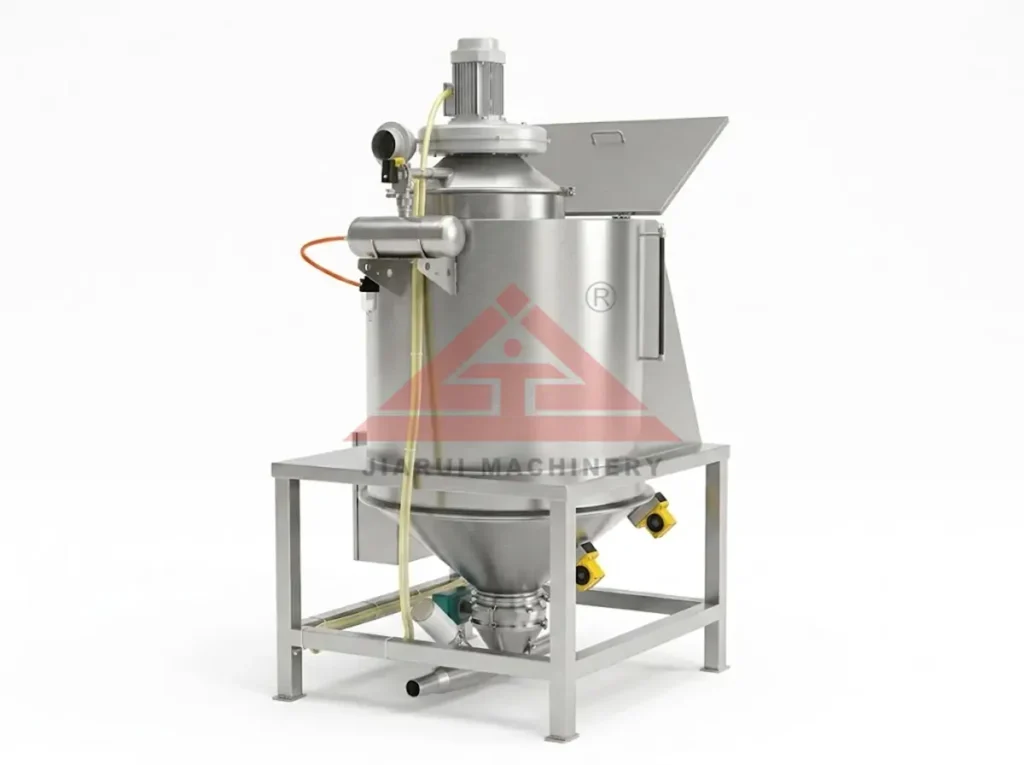
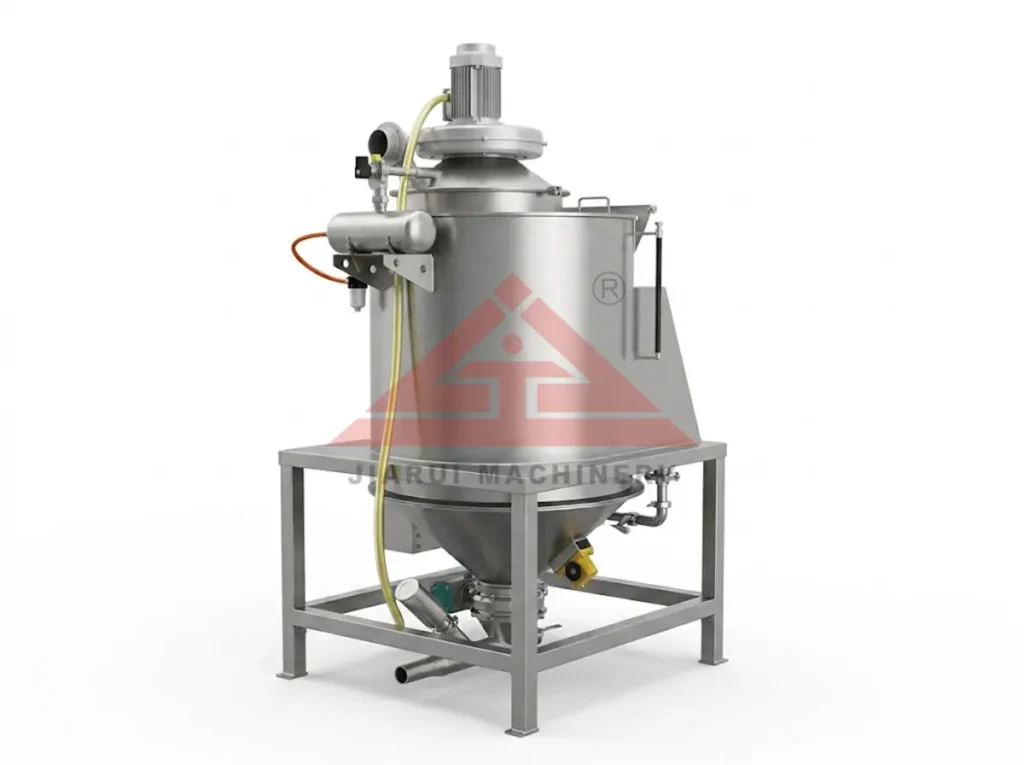
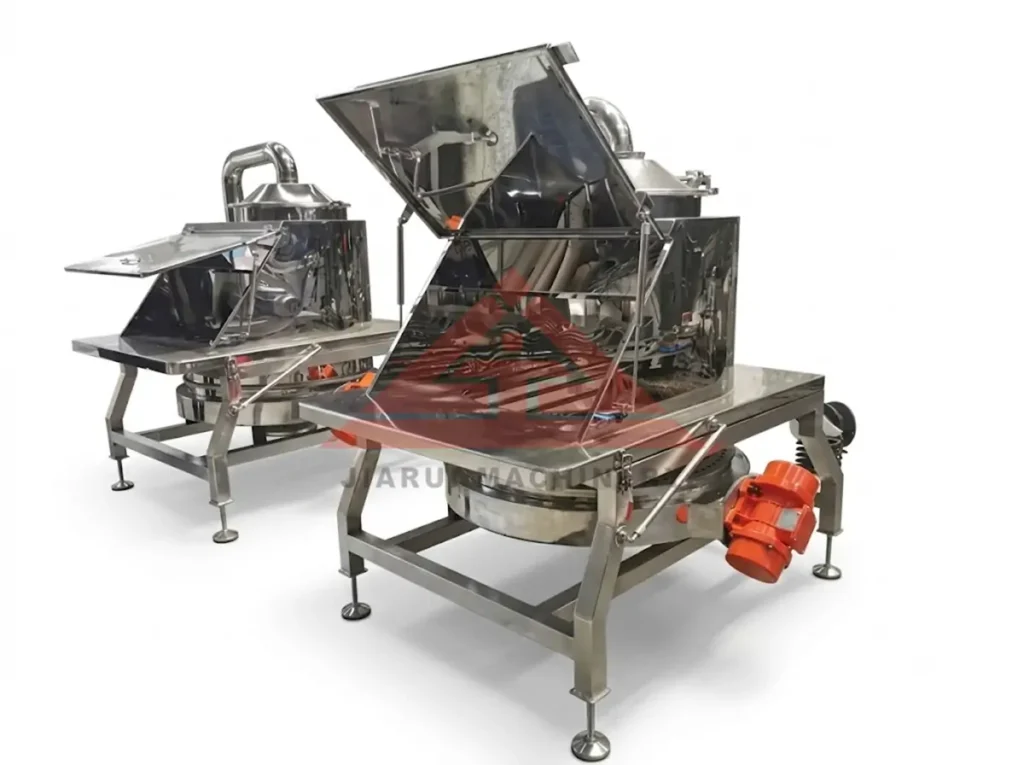
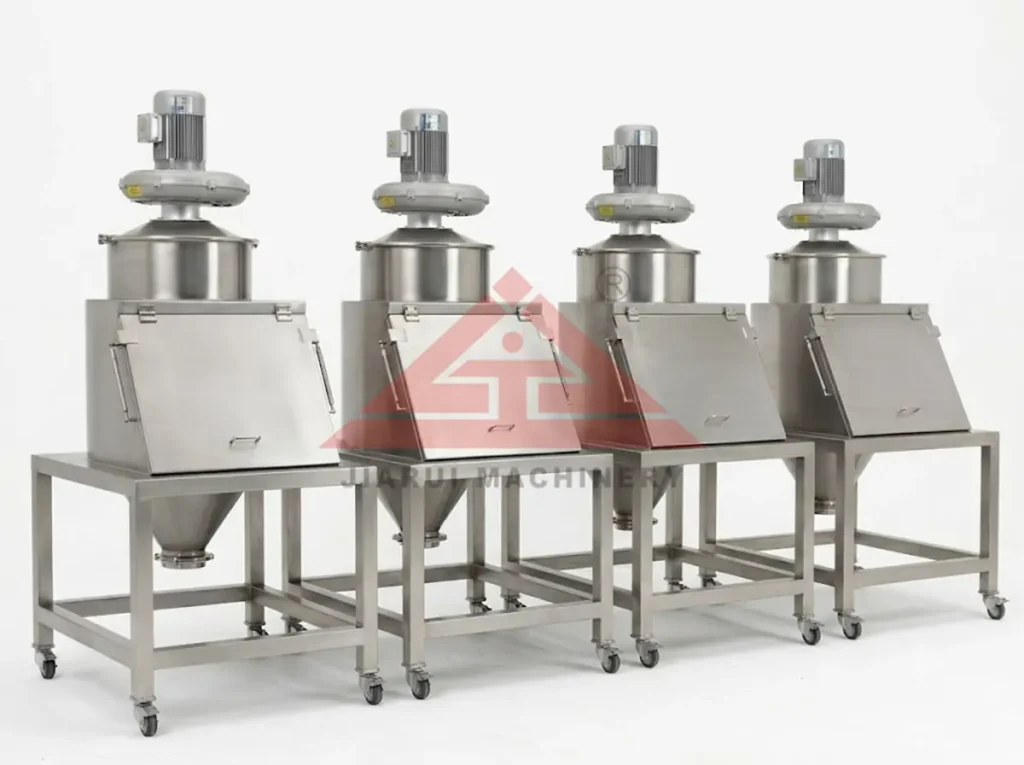
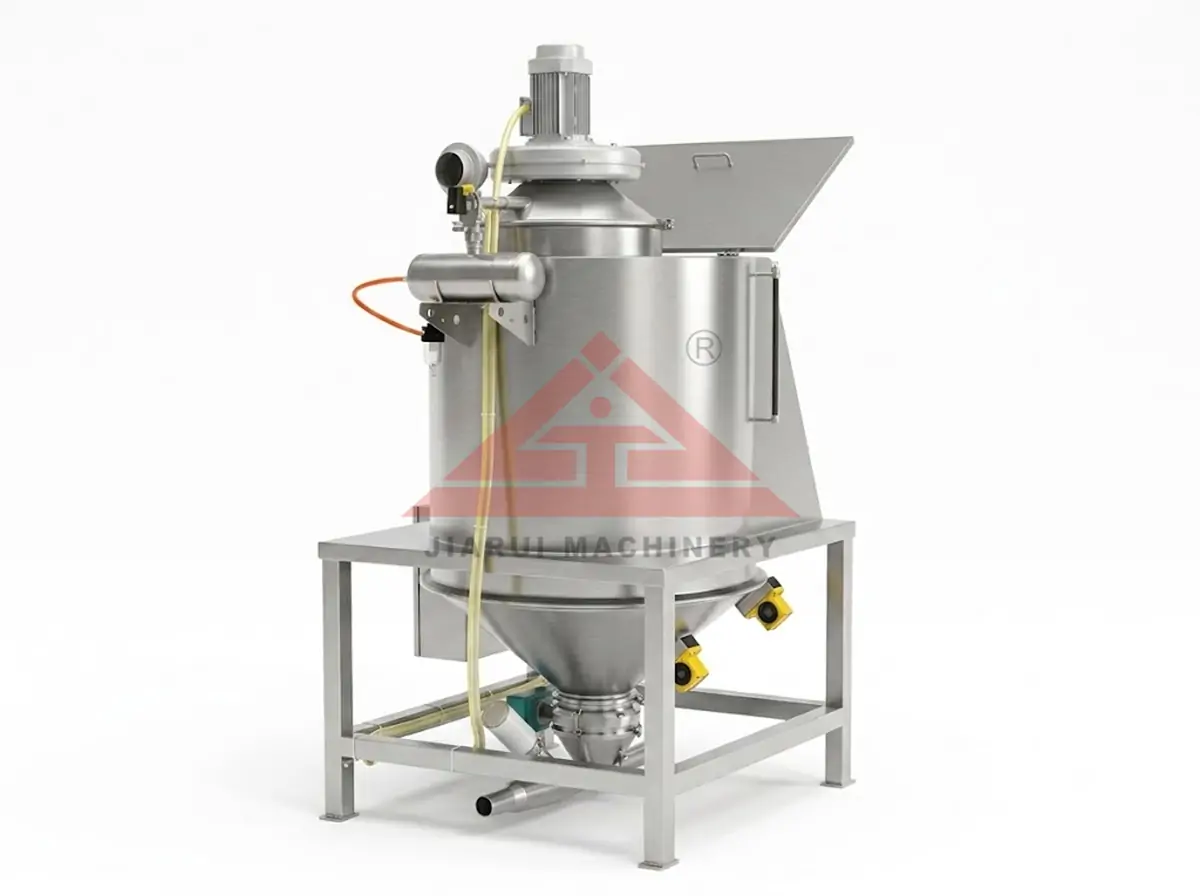
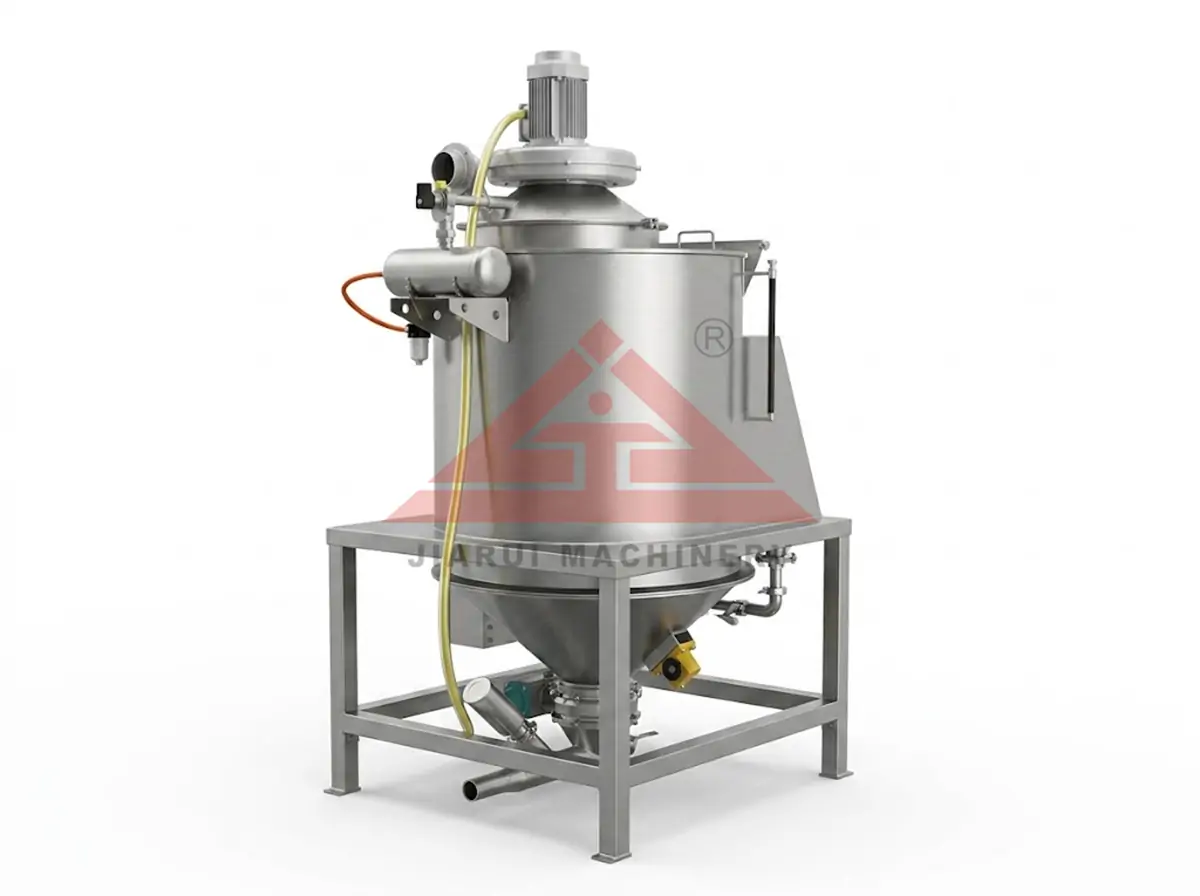
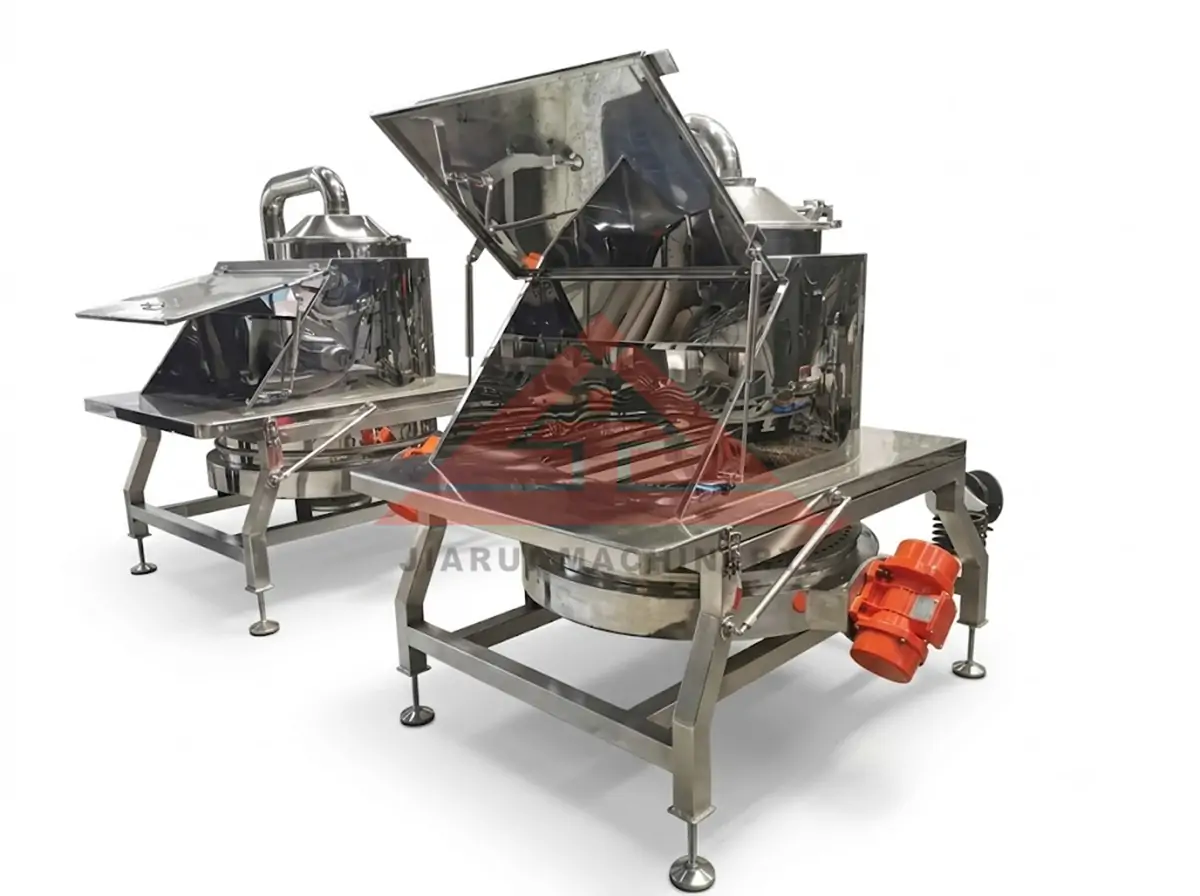
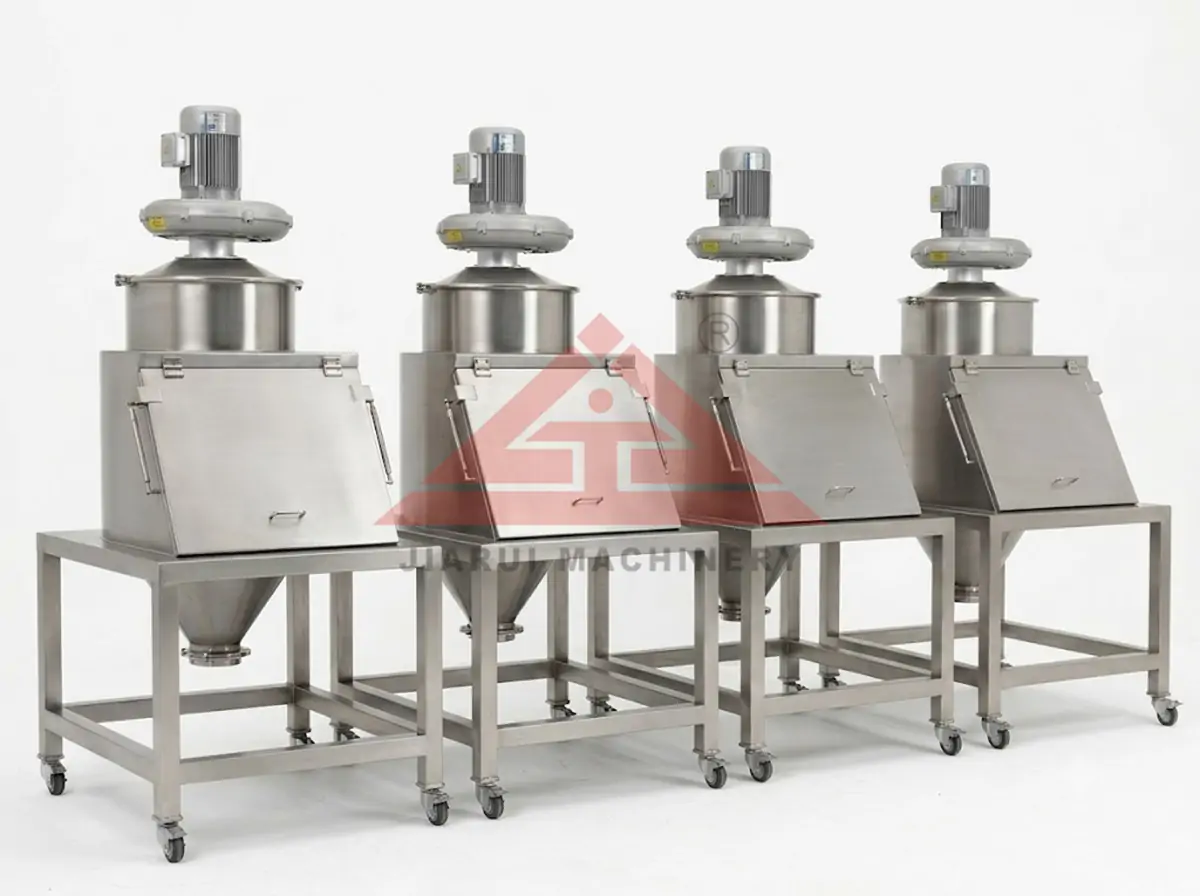
High-Efficiency Dustless Feeding Station is mainly used for manual bag dumping of powder and granular materials. It adopts a closed feeding structure, negative pressure dust collection, and vibrating screening design to control dust dispersion during feeding and screen materials before entering the next process. The equipment can be connected with vacuum conveyors, screw conveyors, and other conveying equipment. It is suitable for industries such as food, chemical, new energy materials, pharmaceutical, and mineral powder processing.
Jiarui adjusts the structure of the Dustless Feeding Station according to bag specifications, material dust characteristics, and downstream conveying methods. For example, fine powder materials require more attention to filter area and dust recovery methods, materials that are easy to agglomerate require additional screening functions, and continuous feeding production lines can be matched with vacuum conveying or screw conveying interfaces.
- Models: JR800 / JR1000
- Reference Capacity: 1–4 t/h
- Feeding Type: Manual Bag Dumping
- Dust Collection: Negative Pressure Filtration System
- Peneiramento: Vibrating Screen Available
- Suitable Materials: Powder, granular, and fine powder materials
- Customization: Customized hopper sizes, dust collection systems, screening structures, and conveying connections available
What Is a High-Efficiency Dustless Feeding Station?
High-Efficiency Dustless Feeding Station, also known as a small bag dumping station or manual bag dumping station, is front-end equipment used for manual feeding of powder and granular materials. It is usually installed before raw material hoppers, mixers, packaging machines, or conveying equipment to handle the feeding process after bag opening.
Different from traditional open manual dumping, the Dustless Feeding Station integrates the operator area, material collection area, and dust collection structure into one unit, allowing material feeding and pre-treatment to be completed before entering the production line. The equipment can be equipped with screening, magnetic separation, and conveying connection structures according to production requirements.
Princípio de Funcionamento
The working process of the Dustless Feeding Station starts with manual bag opening. After the material enters the feeding hopper, the negative pressure system removes dust generated during feeding. The filtered air is discharged from the equipment, and the material enters downstream conveying equipment through screening and the bottom outlet.
1.Manual Bag Opening and Closed Feeding
After placing the bagged material on the feeding platform, the operator opens the bag and feeds the material into the hopper. For fine powder materials such as flour, graphite powder, and pharmaceutical raw materials, the closed feeding area reduces powder dispersion during dumping.
2.Negative Pressure Dust Collection and Powder Recovery
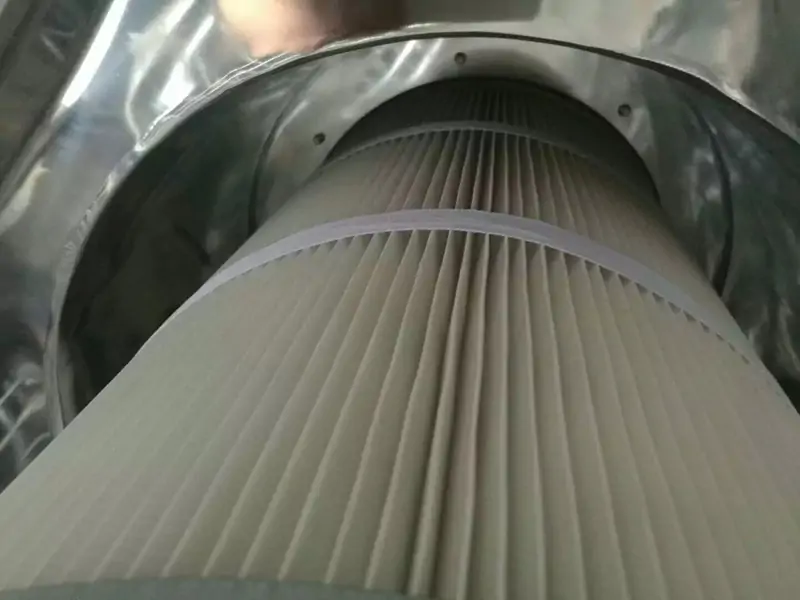
During operation, the fan continuously draws air from the feeding area, making dust generated during bag opening move toward the filtration area. The dust-containing air passes through filter cartridges, where powder particles are collected on the filter surface. After regular pulse cleaning, the collected powder falls back into the hopper, reducing fine powder loss.
3.Screening and Downstream Conveying Connection
After entering the discharge area, materials can pass through a vibrating screen to remove agglomerated materials and packaging debris. Screened materials are discharged through the bottom outlet and connected to vacuum conveyors, screw conveyors, or storage equipment for further processes such as mixing and packaging.
From manual bag opening, materials pass through the feeding hopper, screening area, and discharge outlet before entering downstream conveying equipment. This integrates bag dumping, dust collection, and material feeding into one system. Different powders vary in particle size, moisture content, and flowability, so equipment configuration should be confirmed based on three factors: dust control method, screening requirements, and downstream connection method.
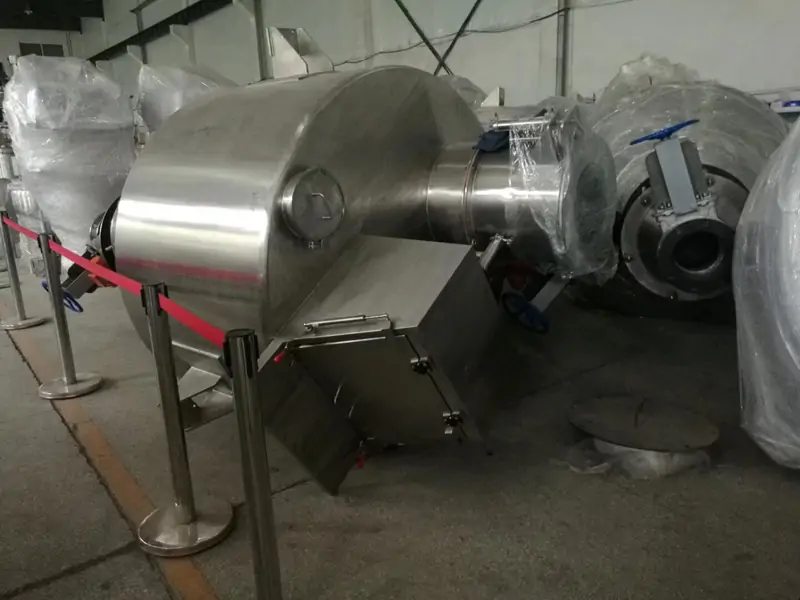
Main Structure
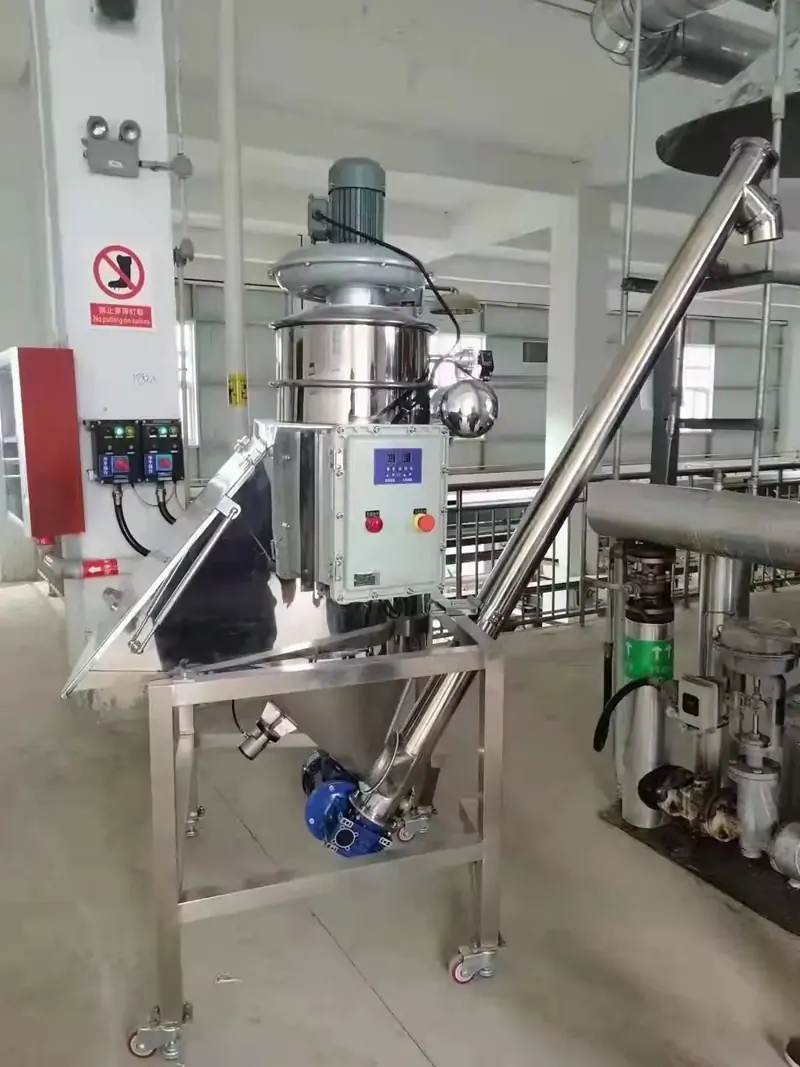
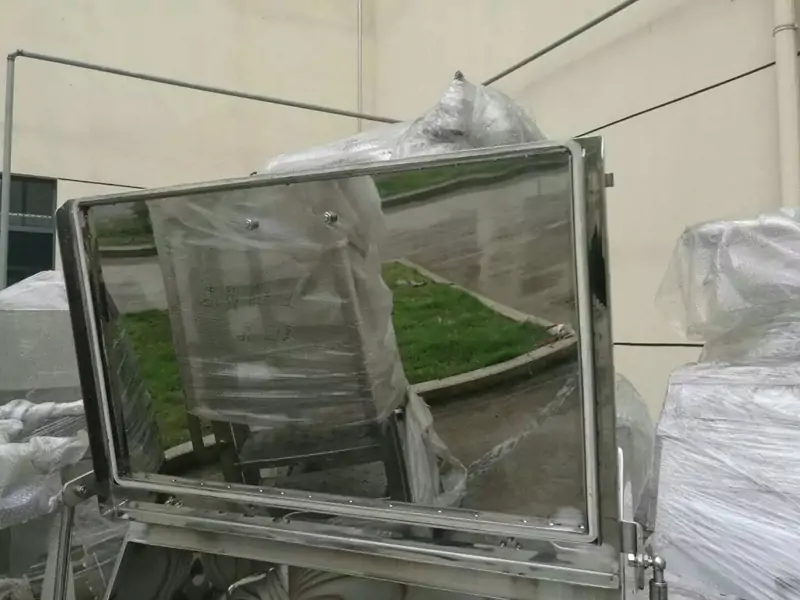
The Dustless Feeding Station is designed around three processes: manual bag dumping, dust control, and material conveying. The main components include the feeding hopper, dust collection system, and conveying connection section.
Feeding Hopper and Screening Structure
The feeding hopper receives powder or granular materials after manual bag opening. The hopper structure can be adjusted according to operation methods and installation space. A vibrating screen can be installed at the bottom to remove agglomerated materials, packaging debris, and impurities before the materials enter the next process.
Negative Pressure Dust Collection System
The negative pressure dust collection system is the core component for controlling dust dispersion in the Dustless Feeding Station. It mainly consists of a fan, filtration components, and cleaning devices. During feeding, dust-containing air enters the filtration area, where powder particles are collected, and clean air is discharged from the equipment. Fine powders, moisture-sensitive materials, and high-value powders have different requirements for filtration area, filter type, and powder recovery methods. Equipment configuration cannot simply use the same design for all materials.
Conveying Connection Structure
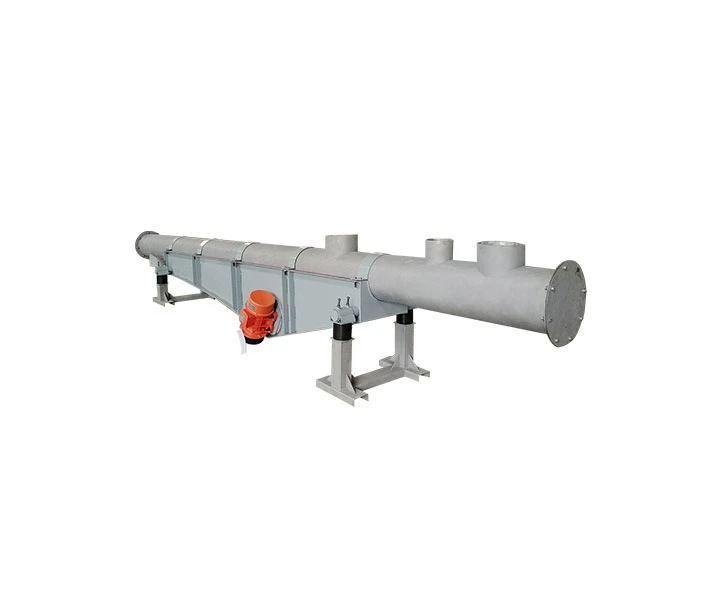
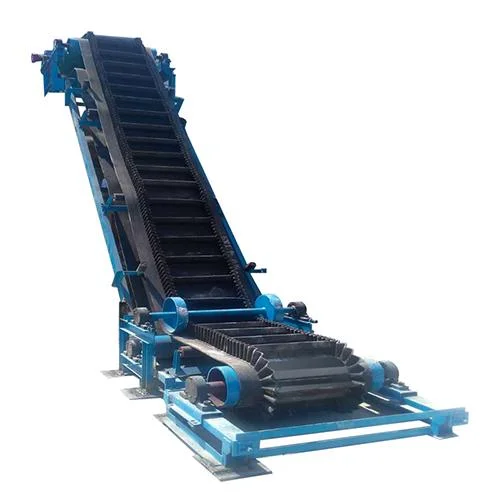
The bottom of the equipment is equipped with a material outlet, which can be connected to vacuum conveyors, screw conveyors, or storage equipment. It connects the manual bag dumping process with downstream production equipment. For production lines requiring continuous feeding, reasonable design of the outlet position and discharge method helps improve the compatibility between equipment installation and operation.
The Dustless Feeding Station does not use the same structure for all operating conditions. For example, fine powder materials such as flour and pharmaceutical raw materials require more attention to dust filtration capacity, while granular materials such as resin pellets focus more on feeding speed and discharge interface design. Therefore, the equipment structure needs to be adjusted according to material characteristics.
.
Production Problems Solved
During manual bag dumping of powder materials, common problems mainly include dust dispersion, material loss, impurity control, and connection with the production process. The Dustless Feeding Station handles these issues through closed feeding, negative pressure dust collection, screening, and conveying connection design, making the feeding process easier to connect with downstream production lines.
Reducing Dust Dispersion During Manual Bag Dumping
Powder materials can easily generate instant dust during bag opening and dumping, especially fine powders such as flour, graphite powder, and pharmaceutical raw materials. When operators open the bags, dust generated during feeding is drawn into the dust collection area on the side of the equipment, filtered through the cartridges, and prevented from directly entering the workshop air.
Reducing Fine Powder Material Loss
Lightweight powders can easily disperse into the air during open feeding, affecting the working environment and causing material loss. The filtration system collects dust generated during feeding, and the collected powder can return to the hopper after cleaning, reducing the loss of valuable powder materials.
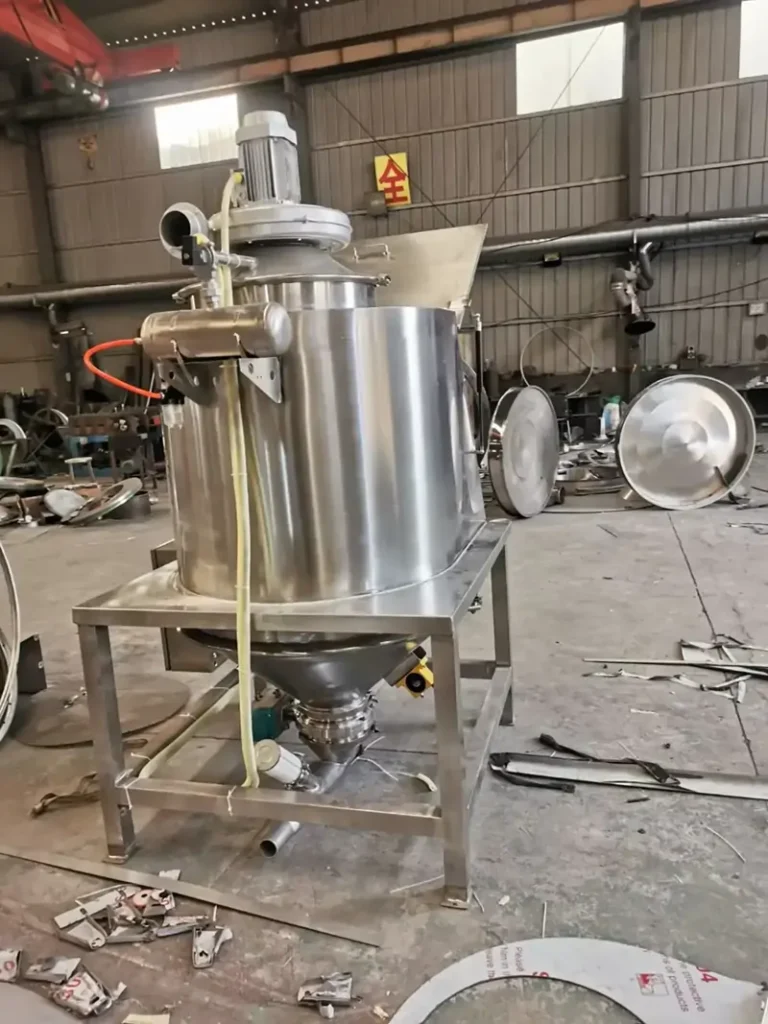
Reducing Packaging Debris Entering the Production Process
During manual bag opening, packaging fragments and agglomerated materials may enter downstream processing equipment. The Dustless Feeding Station can be equipped with a vibrating screen to remove these materials and reduce impurities entering mixing, packaging, or other production processes.
Convenient Connection with Automatic Conveying Equipment
The bottom of the Dustless Feeding Station can be connected to vacuum conveyors, screw conveyors, or storage equipment, allowing materials after manual bag dumping to directly enter the next process. For production lines requiring continuous feeding, it can reduce manual handling and improve the connection between feeding and downstream equipment.
Dustless Feeding Station Comparison
Traditional manual bag dumping is simple to operate, but powder materials can easily generate dust during dumping, causing material loss and packaging debris entering the production process. The Dustless Feeding Station uses a closed feeding structure, negative pressure dust collection, and screening design to handle the bag dumping process in a centralized way, reducing dust dispersion and helping materials enter downstream processes more steadily.
| Comparison Item | Traditional Manual Bag Dumping | Estação de Alimentação sem Poeira |
| Feeding Method | Operators open bags and directly dump materials into the hopper. The operation area is relatively open. | Bag opening and material feeding are completed in a closed feeding area. |
| Dust Control | Fine powders can easily generate dust during dumping and require manual cleaning. | The negative pressure dust collection system collects dust-containing air and reduces dust escape. |
| Material Loss | Lightweight powders such as flour and graphite powder can disperse into the air, causing material loss. | Dust is filtered and collected, reducing the waste of fine powder materials. |
| Impurity Control | Mainly relies on manual inspection of packaging and material conditions. | A vibrating screen can be installed to reduce agglomerated materials and packaging debris entering the production process. |
| Working Environment | Dust accumulation is more likely to occur in the feeding area, requiring frequent cleaning and maintenance. | Reduces dust in the feeding area and improves the working environment. |
| Downstream Connection | Usually requires manual transfer or additional equipment connection. | Can connect with vacuum conveyors, screw conveyors, and other equipment for continuous feeding. |
Application Conditions
The Dustless Feeding Station is generally suitable for the following production conditions:
- Manual bag dumping of fine powder materials such as flour, starch, graphite powder, and pharmaceutical raw materials where dust generation is high;
- Production processes that need to reduce powder loss and improve raw material utilization;
- Food, pharmaceutical, new energy materials, and other industries with higher requirements for feeding hygiene and working environment;
- Processes where materials need screening before entering the next stage to remove agglomerated materials or packaging debris;
- Production lines requiring connection with vacuum conveyors, screw conveyors, or other equipment for continuous feeding.
The Dustless Feeding Station is not simply a replacement for manual dumping. It integrates bag dumping, dust collection, screening, and conveying connection into one feeding process. For applications requiring reduced feeding dust, lower material loss, and connection with downstream equipment, this equipment provides a more stable feeding method.
Applications and Materials
During manual bag dumping of bagged powder materials, dust dispersion, material loss, and packaging debris entering the process may occur. The Dustless Feeding Station integrates manual feeding, negative pressure dust collection, vibrating screening, and downstream conveying connection in one unit to control dust release during feeding and improve material cleanliness before entering the production line.
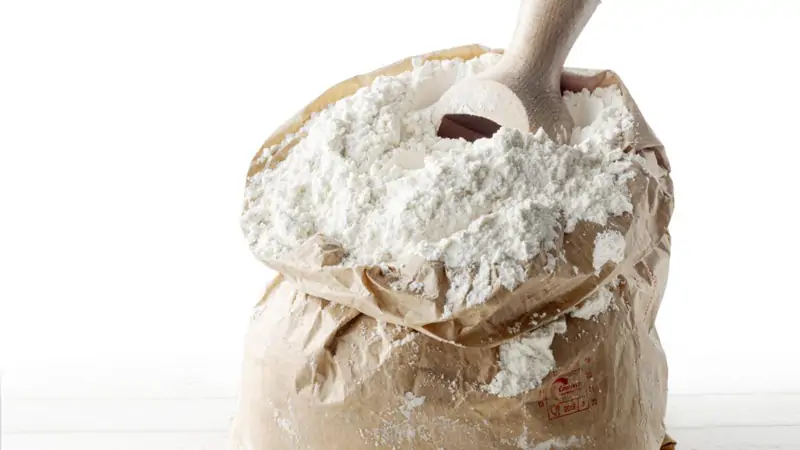 Farinha
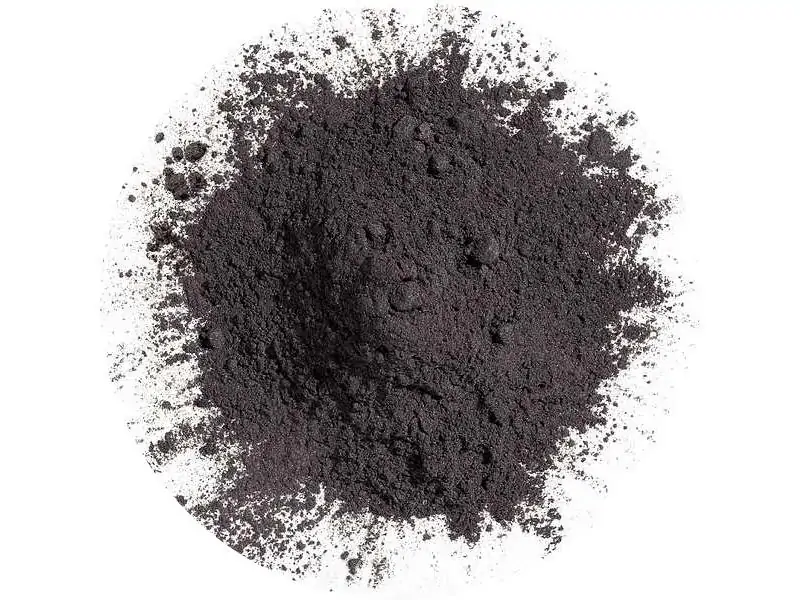 Graphite Powder
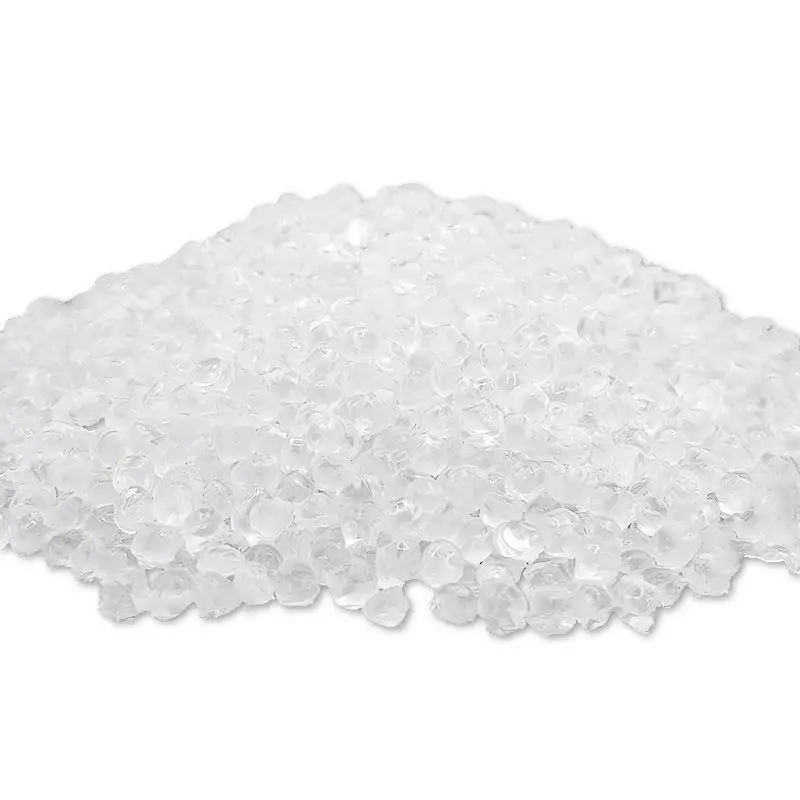 Resin Pellets
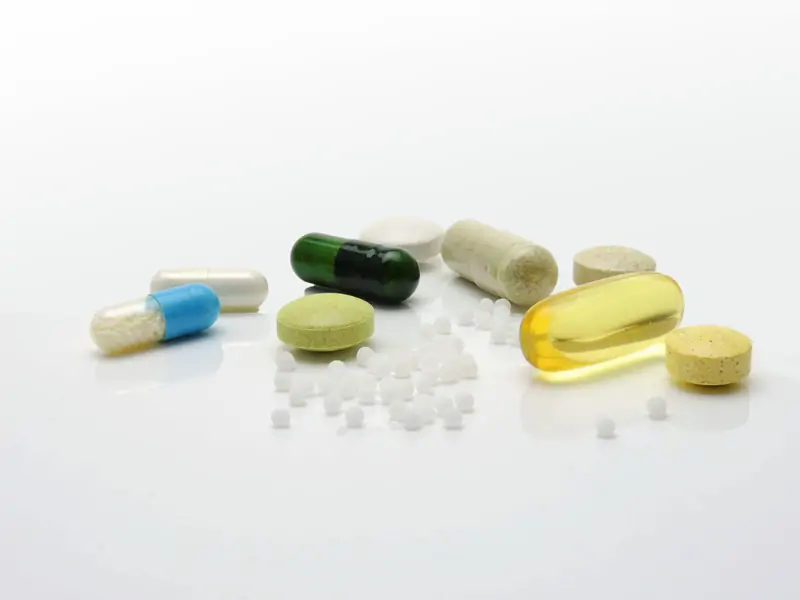 Pós Farmacêuticos
Material Characteristics
| Material Type | Materiais Típicos | Feeding Characteristics | Configuration Focus |
| Food Powder | Flour, starch, sugar powder, milk powder, food additives | Fine powders are easy to generate dust, and production processes have higher hygiene requirements. | Focus on SUS304/316L material, internal cleaning structure, and filtration method. |
| Pós Farmacêuticos | Pharmaceutical raw materials, traditional medicine powder, pharmaceutical excipients | High-value materials require strict control of production environment and cross-contamination. | Focus on sealing design, hygienic structure, and filtration recovery method. |
| New Energy Powder | Graphite powder, lithium iron phosphate, carbon materials | Fine particle size and easy dispersion. Some materials require additional safety configurations. | Focus on dust collection capacity, anti-static design, and powder recovery. |
| Chemical Powder | Resin powder, pigments, PVC powder, catalysts | Wide range of materials. Some materials may have adhesion or corrosion issues. | Focus on filter material, corrosion protection, and discharge structure. |
| Granular Materials | Resin pellets, plastic pellets, granular additives | Different flow characteristics from powders, requiring stable and continuous feeding. | Focus on screening configuration and downstream conveying connection. |
When Not to Use
The Dustless Feeding Station is suitable for most bagged powder and small granular materials, but some special materials require confirmation of equipment structure in advance.
- Materials with high moisture content and strong adhesion require adjustment of the discharge structure;
- Flammable and explosive powders require additional explosion-proof and anti-static design. Related design should consider safety requirements in combustible dust environments.
- Big bag unloading or large-scale automatic feeding systems require a redesigned system solution.
The selection of a Dustless Feeding Station should not only consider the industry type, but also confirm material characteristics, feeding method, and downstream production process. Only with suitable dust collection, screening, and conveying configurations can the feeding process connect reliably with the complete production line.
Technical Parameters
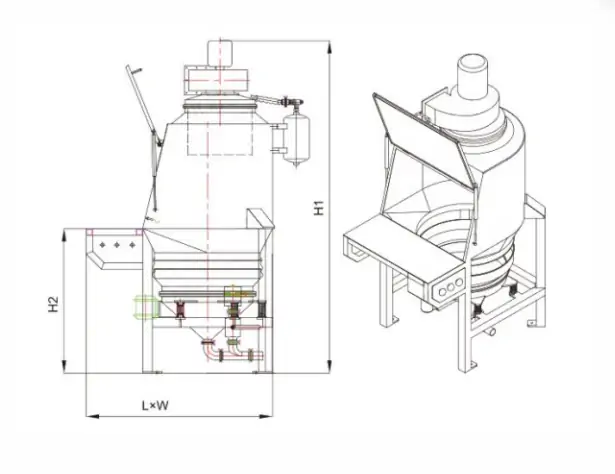
The Dustless Feeding Station does not have a fixed size. Model selection mainly depends on material characteristics, feeding method, and installation space. The following parameters are reference values for standard models. Actual equipment dimensions, screening configuration, and conveying interfaces can be adjusted according to production requirements.
| Model | Equipment Height H1 (mm) | Feeding Height H2 (mm) | Length L (mm) | Width W (mm) | Reference Capacity |
| JR800 | 2200 | 900 | 1100 | 800 | 1-2 t/h |
| JR1000 | 2200 | 900 | 1100 | 1000 | 2-4 t/h |
The above capacity values are for reference only. Actual capacity is affected by material density, particle size, flowability, and screen specifications. The equipment supports customized design according to customer installation space, material characteristics, and production requirements.
How to Select a Dustless Feeding Station?
When selecting a Dustless Feeding Station, it is necessary to confirm whether the material is easy to generate dust, whether agglomeration occurs, and whether the material directly enters conveying or mixing equipment after feeding. Different materials vary in dust generation, flowability, and conveying methods, which affects the requirements for dust collection, screening, and connection structures. Food powders usually focus on contact materials and cleaning structures, new energy powders pay more attention to powder recovery and anti-static design, while granular materials require confirmation of discharge outlet size and conveying method.
- Fine Powder Materials with High Dust Generation
For materials such as graphite powder, pharmaceutical raw materials, and flour, attention should be paid to filtration area, dust collection capacity, and powder recovery methods. Anti-static configurations can be added when required to reduce powder dispersion during manual bag dumping.
- Materials Easy to Agglomerate or Contain Impurities
For materials such as food additives and some chemical powders, the vibrating screen configuration and screen specifications should be considered to reduce agglomerated materials and packaging debris entering the next process.
- Granular Materials
For materials such as resin pellets and plastic pellets, stable feeding and downstream equipment connection are more important. The discharge interface, conveying method, and installation space need to be confirmed.
During project communication, we find that many customers initially focus only on dust collection performance, but equipment operating stability is also affected by material flowability, packaging specifications, and production processes. After providing material information and process requirements, Jiarui engineering team can help confirm a more suitable configuration.
Custom Configuration
The structure configuration of the Dustless Feeding Station is not fixed. During design, material characteristics and downstream process requirements need to be confirmed first. Material particle size, flowability, moisture content, and dust generation level directly affect the selection of the filtration system, screening configuration, and discharge interface. Graphite powder and other lightweight powder materials usually require more attention to dust recovery and filtration capacity, while resin pellets and other materials with good flowability require more focus on discharge methods and conveying connections.
Jiarui can adjust Dustless Feeding Station configurations according to different application requirements, including feeding hopper size, dust collection system, screening structure, material selection, and conveying interfaces. The engineering team will refer to material conditions, capacity requirements, and production requirements to confirm equipment structures suitable for industries such as food, pharmaceutical, new energy materials, and chemical processing.
When customizing a Dustless Feeding Station, it is recommended to provide the following information:
- Material name and condition (powder or granular, whether it is easy to generate dust or adhere);
- Capacity requirements (feeding amount per hour);
- Packaging method and manual feeding method;
- Downstream connected equipment (vacuum conveyor, screw conveyor, etc.);
- Installation space and special requirements (explosion-proof, hygienic materials, etc.).
After providing the above basic information, engineers can confirm equipment dimensions, functional configurations, and connection methods, allowing the feeding station to be installed into the existing production process.
Jiarui Manufacturing
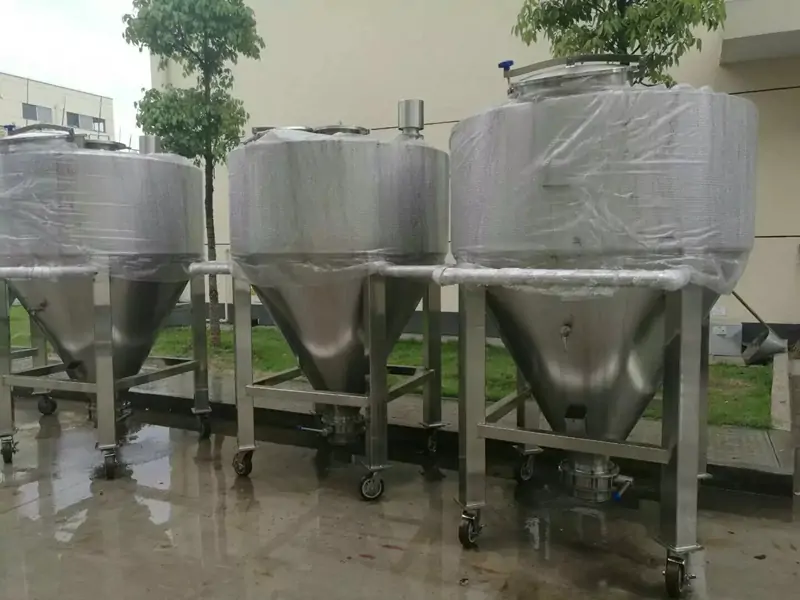
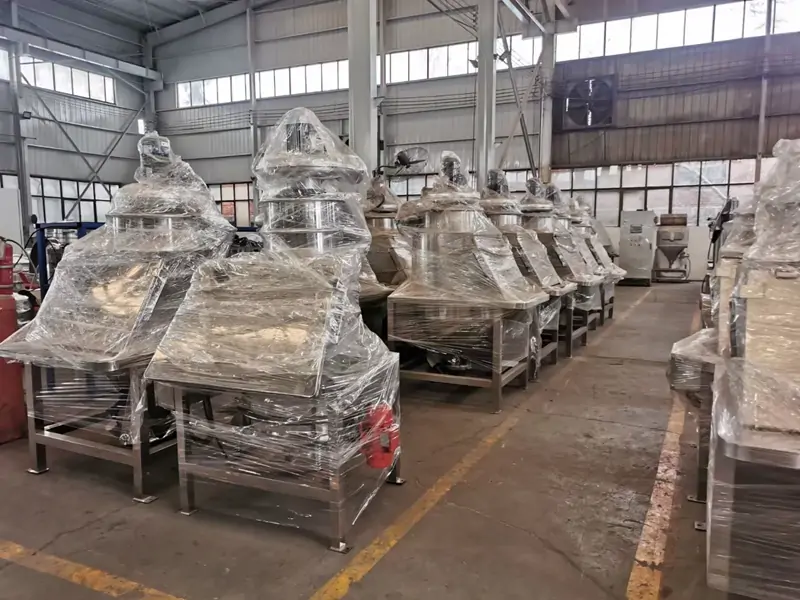
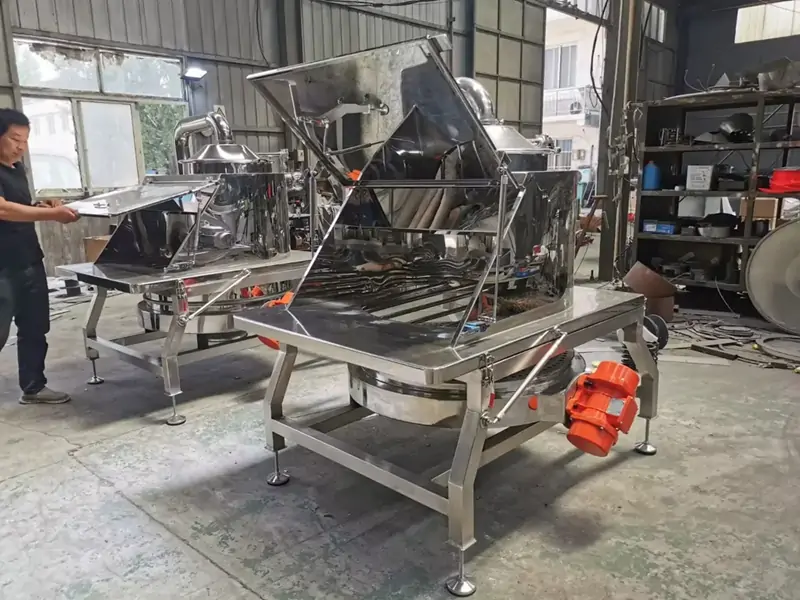
Manufacturing a Dustless Feeding Station requires not only equipment strength but also attention to sealing performance, dust collection efficiency, and material flow conditions during powder feeding. The feeding hopper structure, dust collection port position, filtration system configuration, and screening component installation method all affect dust control and material conveying performance during operation.
When manufacturing Dustless Feeding Stations, Jiarui adjusts the equipment structure according to different materials and application environments. For industries such as food and pharmaceutical, the focus is on material selection for contact areas, internal finishing, and cleaning requirements. For fine powder materials in new energy and chemical industries, the focus is on dust collection, anti-static configuration, and powder recovery methods.
From design confirmation to equipment manufacturing, the engineering team adjusts the feeding hopper size, screening configuration, and connection structure according to material characteristics, capacity requirements, feeding methods, and downstream conveying equipment. Jiarui Dustless Feeding Station supports customized design and can be adjusted according to site conditions and production requirements.
Perguntas Frequentes
Get a Free Consultation
Fill out the form below to connect with our experts and receive personalized recommendations for your application.