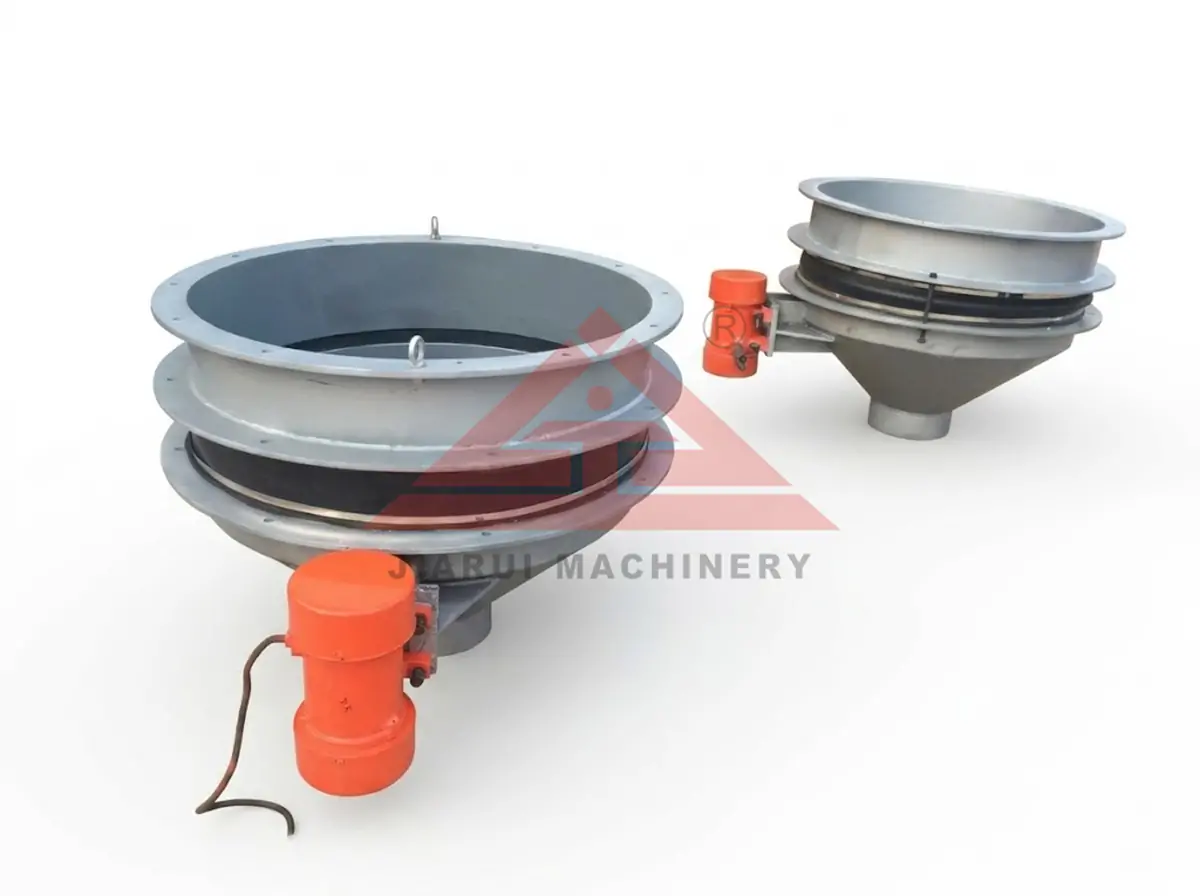
GZD Vibrating Bin Activator
GZD Vibrating Bin Activator is a vibration-based equipment used for hopper flow activation and auxiliary discharge. It mainly solves problems such as bridging, blockage, and unstable discharge of powder materials during storage, including cement, mineral powder, and fly ash. The equipment uses vibration force to improve material flow conditions, with features such as effective anti-bridging performance, continuous and uniform discharge, and stable operation. It is suitable for various bulk materials such as cement, mineral powder, chemical powders, food powders, and plastic pellets in hopper discharge systems.
Jiarui can provide GZD Vibrating Bin Activator configuration plans according to material conditions, hopper dimensions, and site requirements. The engineering team evaluates hopper structure, outlet design, and discharge requirements, then adjusts equipment specifications, activation structure, and vibration parameters to help solve problems such as bridging, blockage, and discontinuous material discharge.
- Model: GZD Series Vibrating Bin Activator
- Function: Hopper anti-bridging, material activation, uniform discharge
- Installation position: Installed at the bottom of hoppers and hopper outlets to improve the flowability of powder and granular materials
- Suitable materials: Cement, mineral powder, chemical powders, fly ash, plastic pellets, and other bulk materials
- Features: Reduce bridging and blockage, maintain stable discharge, support customized design
What is GZD Vibrating Bin Activator?
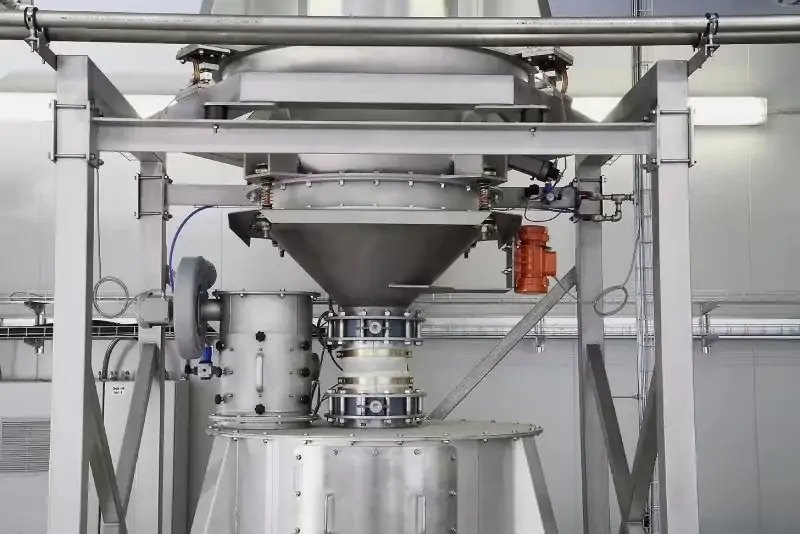
GZD Vibrating Bin Activator, also known as a vibrating hopper activator or hopper flow activator, is an auxiliary discharge device installed at the bottom outlet of a hopper. It does not independently convey materials but works together with the hopper by improving material flow conditions at the outlet area, allowing stored materials to enter subsequent conveying, weighing, or packaging equipment smoothly.
During the storage of many powder and granular materials, the hopper may have sufficient capacity, but material discharge can become unstable due to material compaction, moisture content, or interaction between particles. GZD Vibrating Bin Activator is designed for these hopper discharge problems. By activating the material at the hopper bottom, it improves the stability of the entire storage and discharge system.
Working Principle
GZD Vibrating Bin Activator generates vibration force through a vibration motor and transfers the vibration to the hopper outlet area through the activator structure, changing the original stress condition of the material. During operation, the vibration breaks the bridging structure formed between materials, allowing powder and granular materials to regain flowability and discharge under their own gravity.
Vibration motor generates excitation force
After the equipment starts, the eccentric blocks inside the vibration motor rotate to generate centrifugal force, causing periodic vibration of the hopper. The vibration force is transferred through the hopper body to the activator, continuously acting on the material at the bottom of the hopper and reducing blockage caused by material compaction.
Activator changes material conditions
The activator is an important component affecting the discharge performance of GZD Vibrating Bin Activator. It transfers vibration force into the material, causing relative movement between particles. For powder materials that are easy to form arches, the activator can break the bridging structure near the outlet and help materials regain flow.
Material discharges along the outlet direction
After activation, the material moves toward the outlet under the combined action of vibration force and gravity, then enters subsequent conveying, weighing, or packaging equipment. GZD Vibrating Bin Activator mainly improves hopper discharge conditions and does not replace conveying equipment for material transportation.
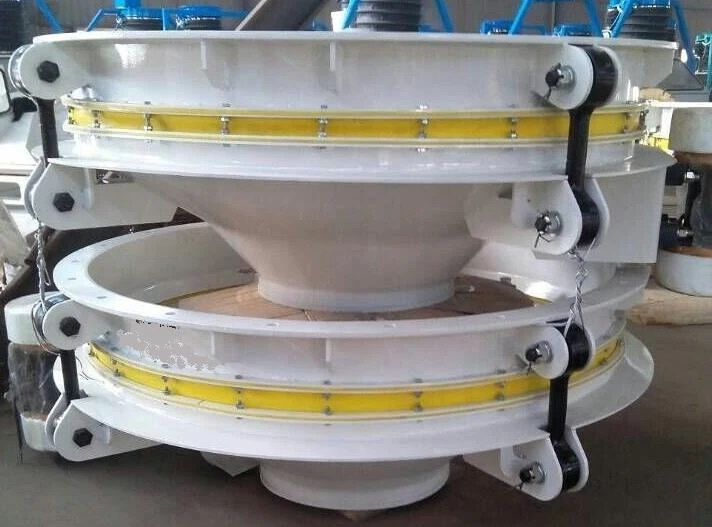
The actual discharge performance is related to material properties and hopper structure. During selection, material particle size, moisture content, bulk density, and hopper dimensions need to be confirmed.
Main Components
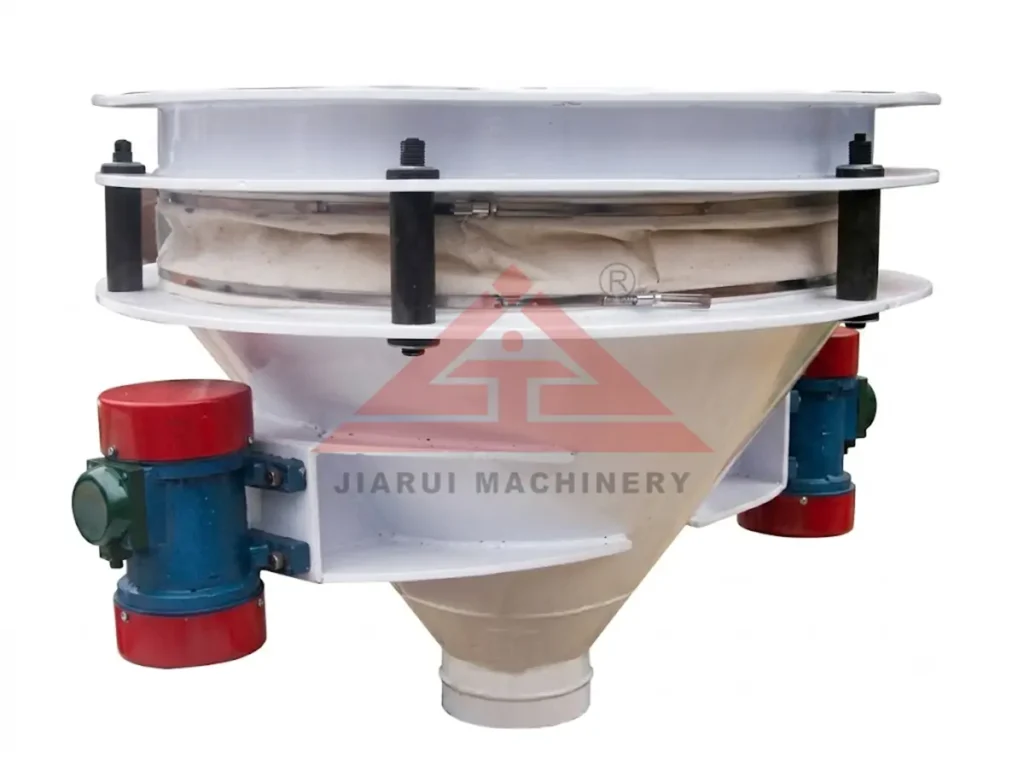
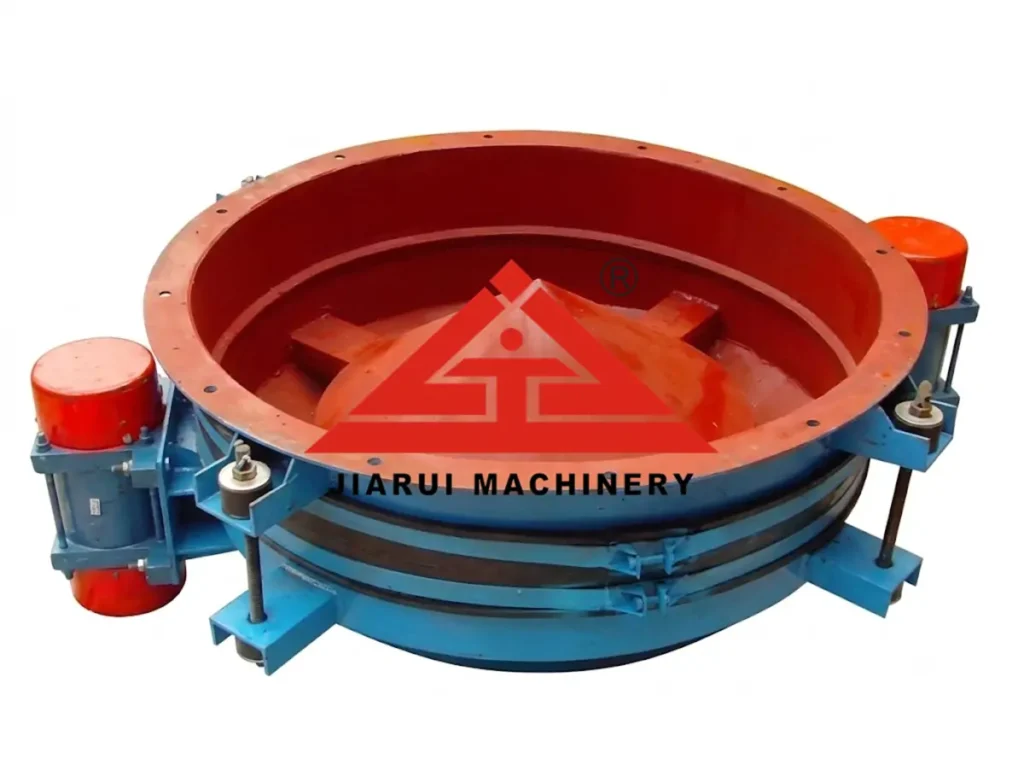
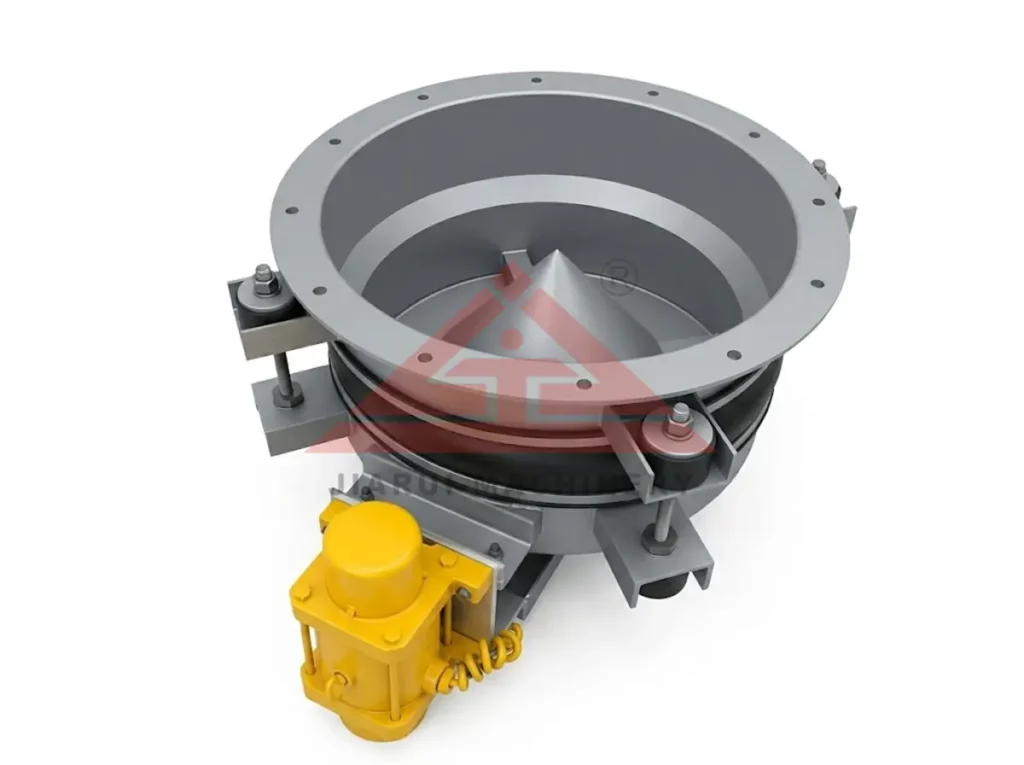
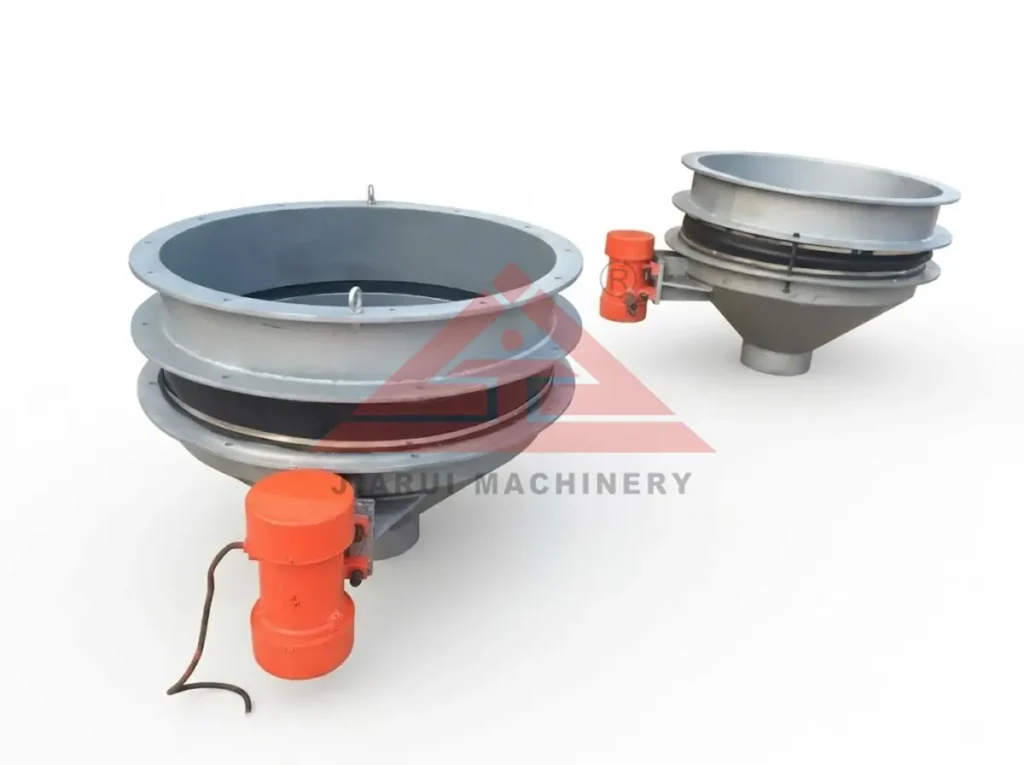
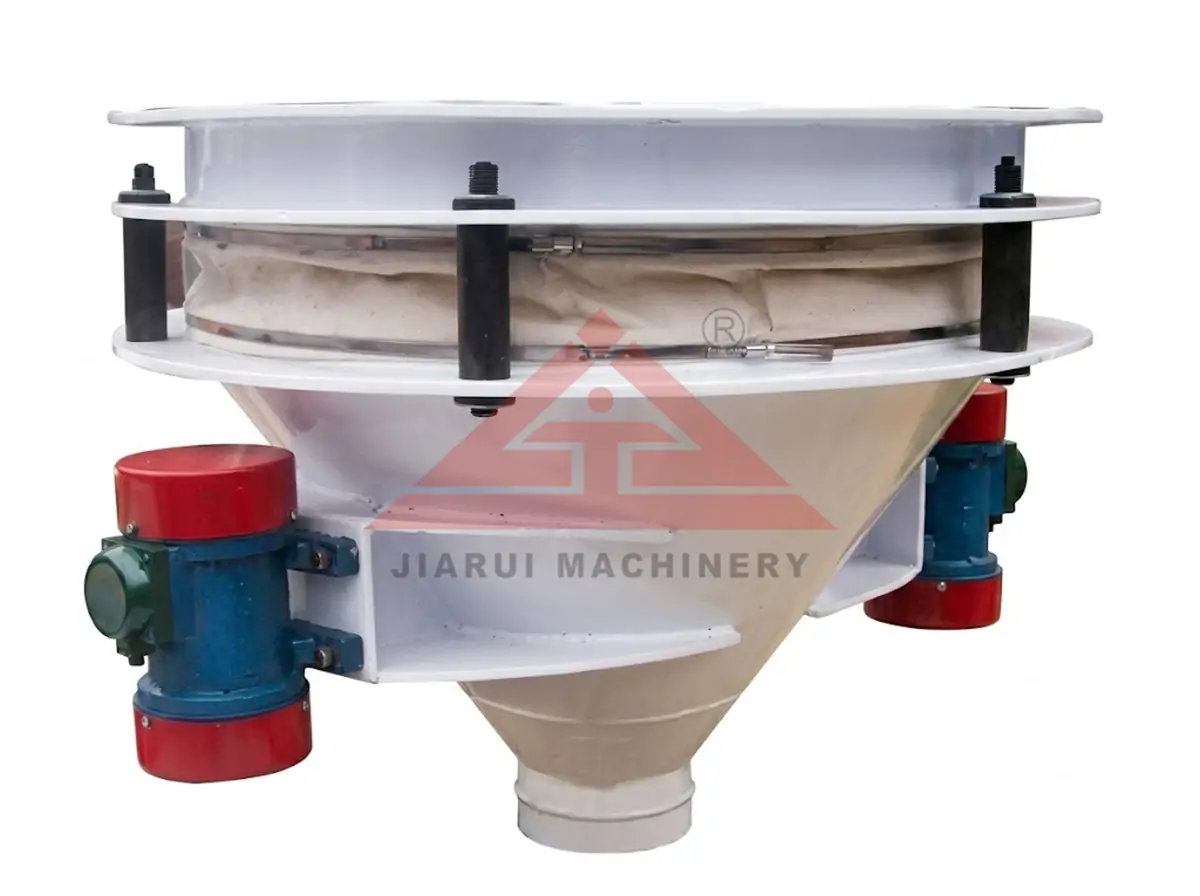
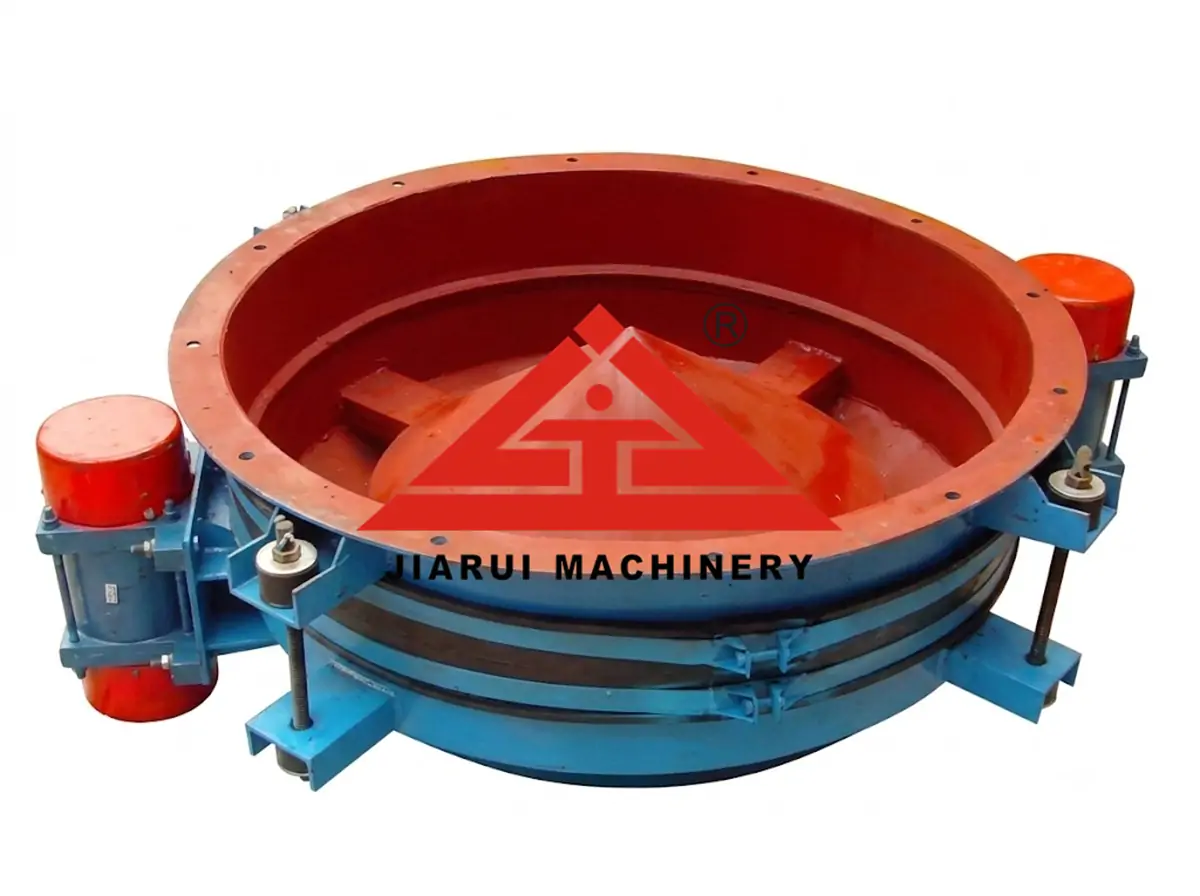
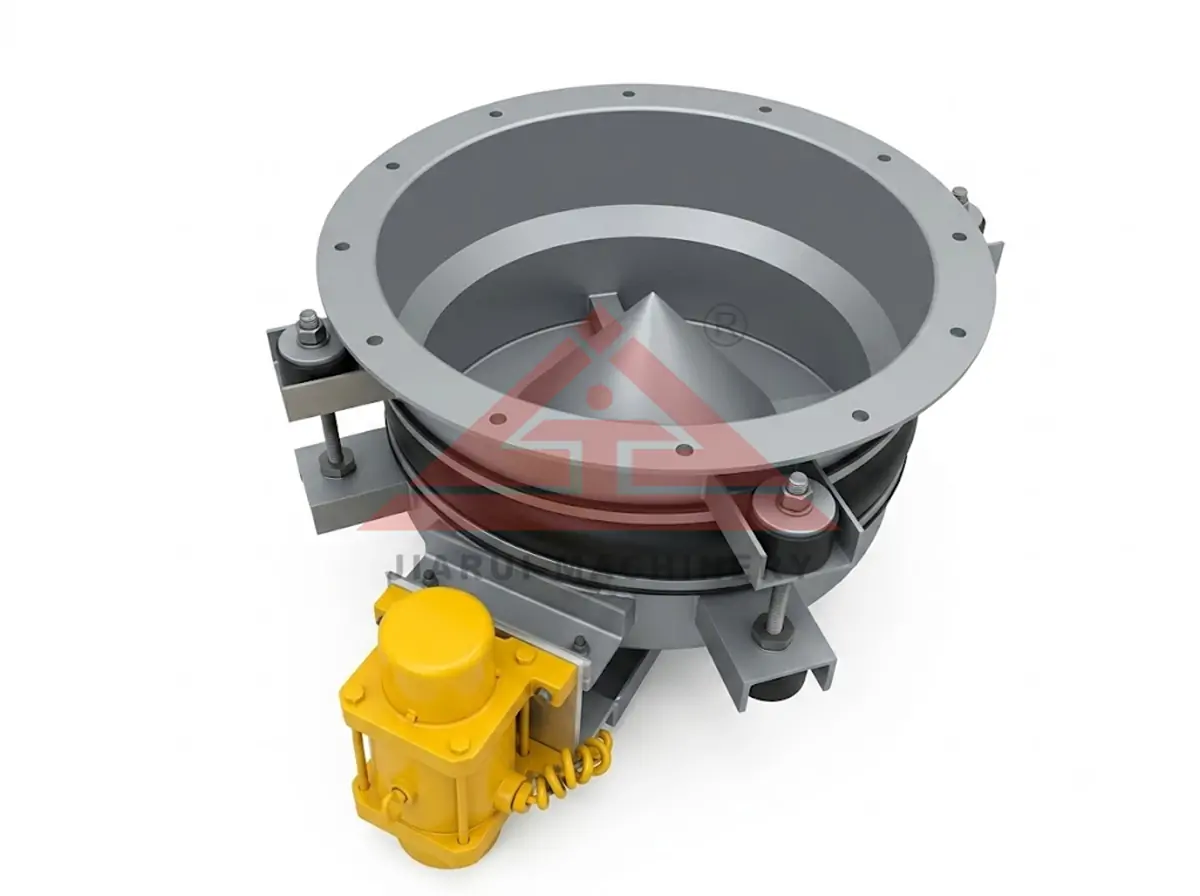
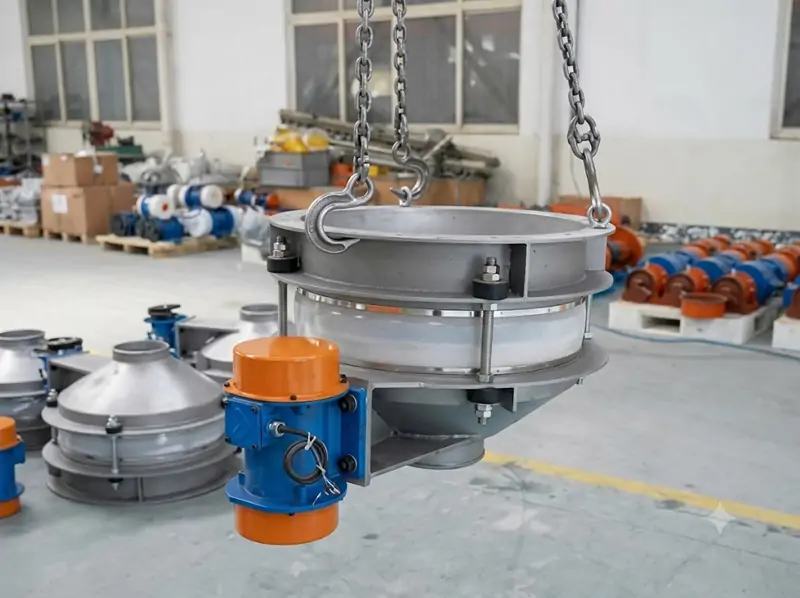
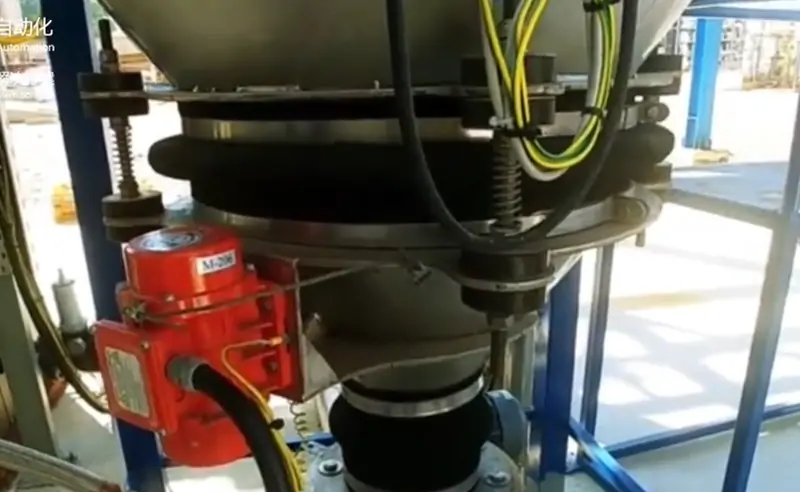
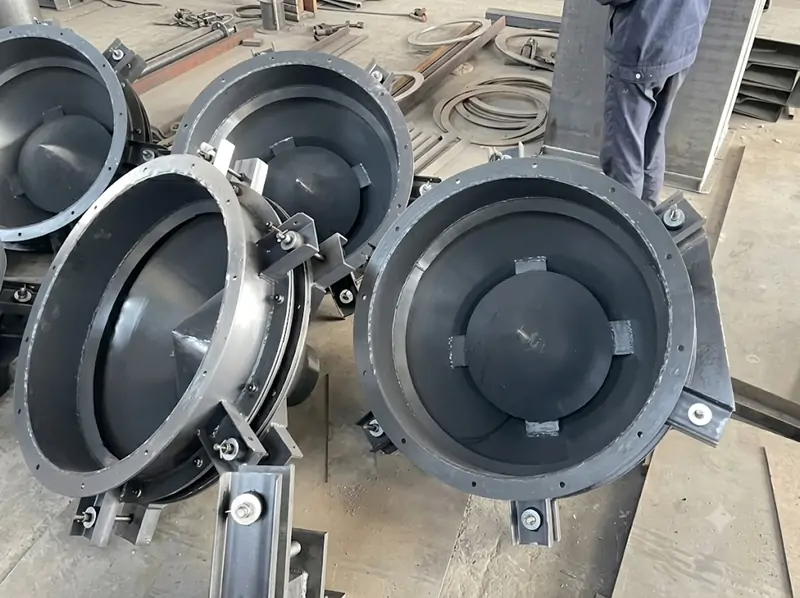
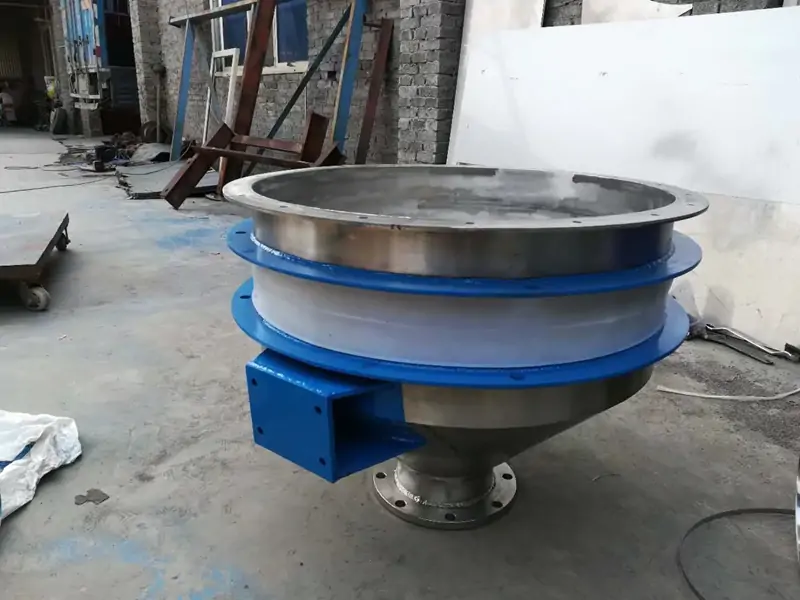
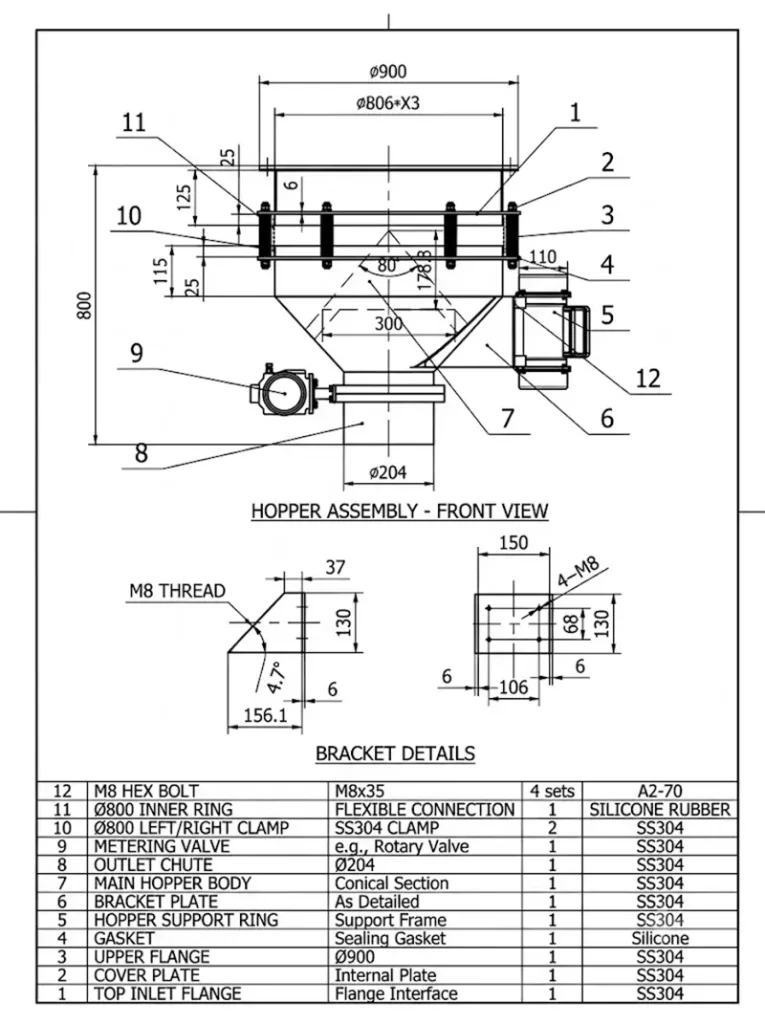
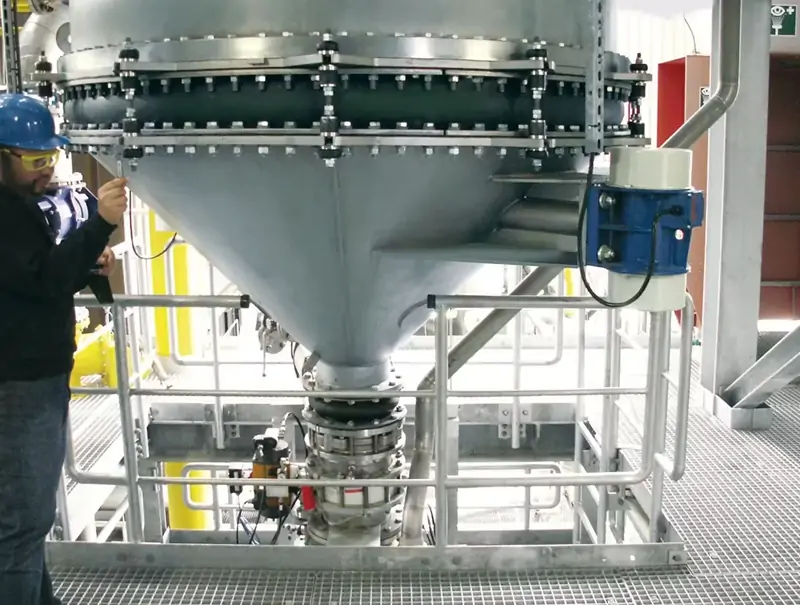
GZD Vibrating Bin Activator mainly consists of a vibration motor, activator, vibrating hopper body, and vibration isolation connection device. These components work together to complete vibration transmission, material activation, and hopper discharge. The vibration system and activator are the key structures affecting equipment performance.
Vibration Motor
The vibration motor provides excitation force for the equipment. By rotating eccentric blocks, it generates vibration that acts on the hopper and activator. Motor parameters need to be matched according to hopper dimensions, material characteristics, and discharge requirements.
Activator
The activator directly acts on the hopper outlet area and is an important component for improving material flow. The vibration force is transferred through the activator into the material, helping break bridging and compaction conditions so that materials can move more easily toward the outlet.
Vibrating Hopper Body and Vibration Isolation Device
The vibrating hopper body carries the vibration force and connects with the activation area. The vibration isolation device reduces the influence of vibration on the hopper structure. Both parts need to be designed according to installation methods and operating conditions to maintain long-term operation.
The components of GZD Vibrating Bin Activator work together to complete vibration transmission, material activation, and stable discharge. The vibration motor provides power, the activator improves material flow, and the vibrating hopper body with vibration isolation device maintains stable operation.
.
Advantages
GZD Vibrating Bin Activator is used to solve unstable discharge problems at hopper outlets. Conventional hoppers mainly rely on material gravity for discharge. When powder materials form bridging structures due to pressure, material flow may become interrupted. GZD uses vibration force to break the accumulation condition near the outlet, allowing materials to maintain continuous discharge.
Why do conventional hoppers have discharge problems?
Conventional hoppers mainly rely on material gravity for discharge. When powder materials are affected by pressure and form bridging or become compacted, the outlet area may experience interrupted discharge. GZD Vibrating Bin Activator applies vibration force to the hopper outlet, helping materials regain flowability. It is more suitable for bulk materials that are easy to form bridges, such as cement, mineral powder, and fly ash.
Suitable for hopper modification projects
Many existing systems have adequately sized hoppers, but discharge problems may occur when material conditions change.GZD Vibrating Bin Activator can be installed at the bottom of existing hoppers to improve discharge conditions by adding an activation device, reducing the cost of replacing storage equipment.
Can Be Integrated With Existing Conveying Systems
GZD Vibrating Bin Activator is mainly used for hopper discharge activation rather than long-distance conveying. It can be integrated with existing conveyors, weighing systems, and packaging equipment when the outlet and connection dimensions are properly matched.
Different materials require different configurations
Different materials have different flow characteristics. Mineral powder, cement, chemical powders, and food powders have different requirements for equipment selection. The configuration needs to be matched according to hopper dimensions, material particle size, moisture content, and other conditions.
Applications
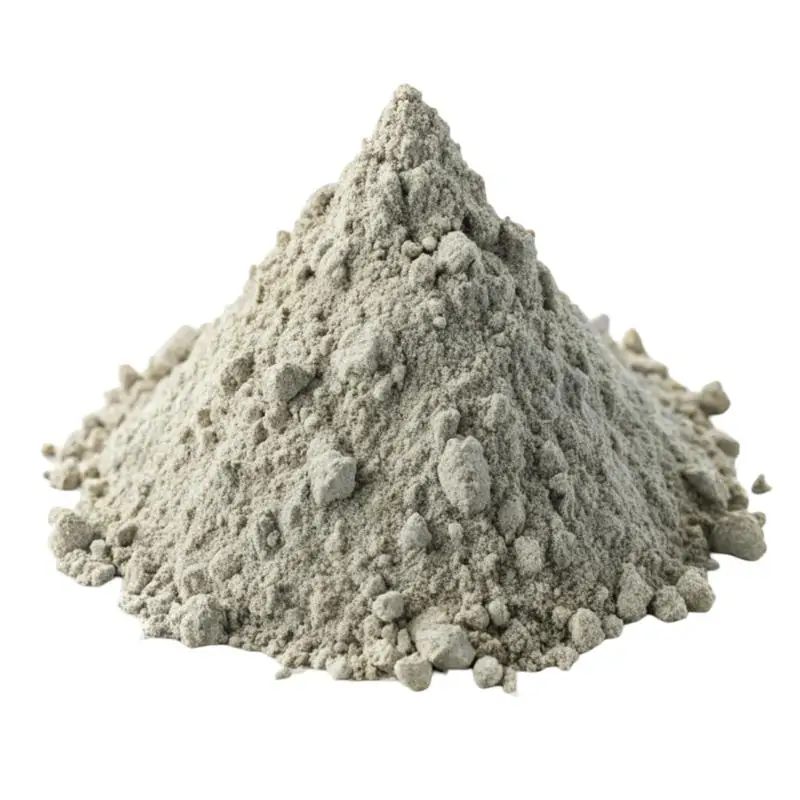
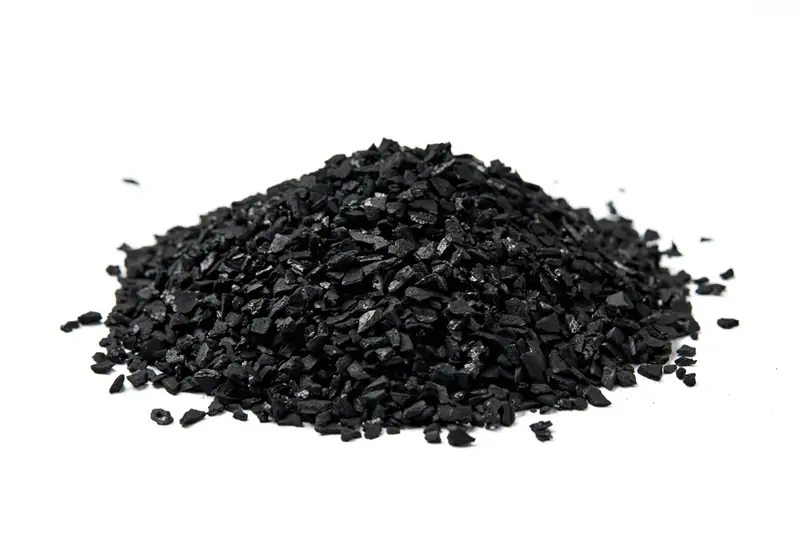
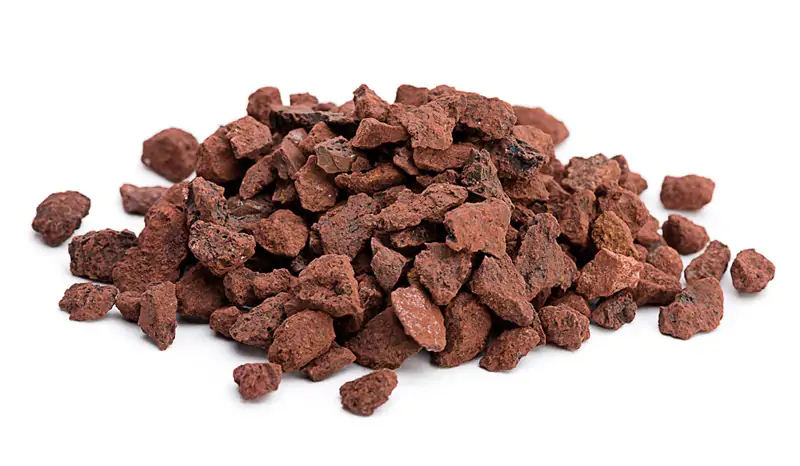
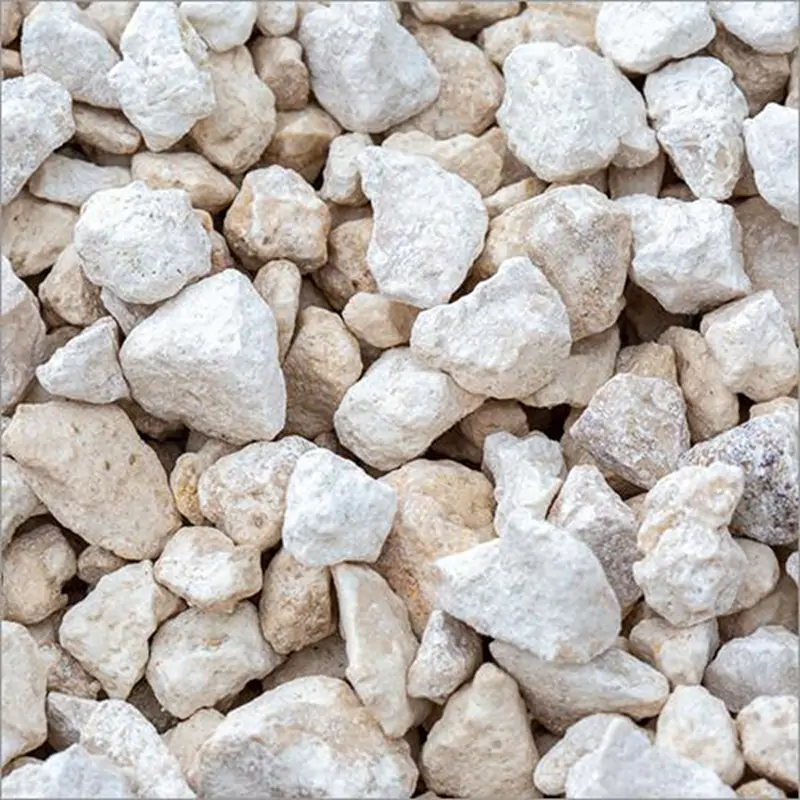
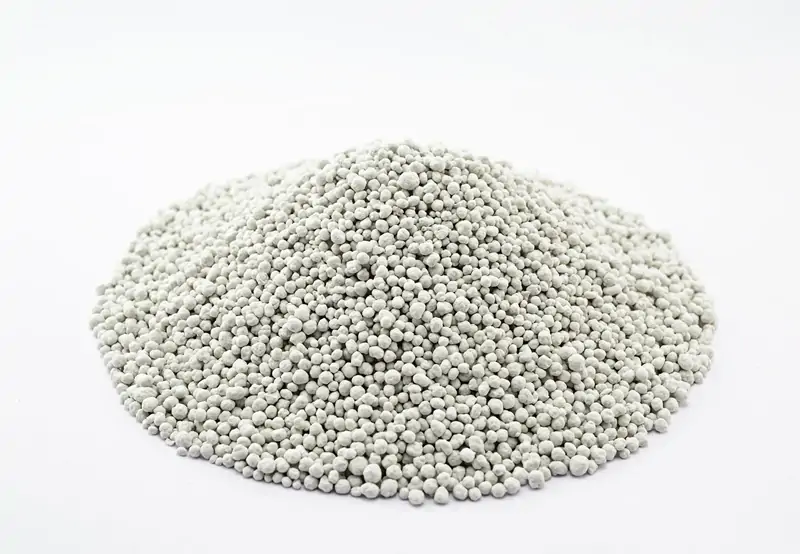
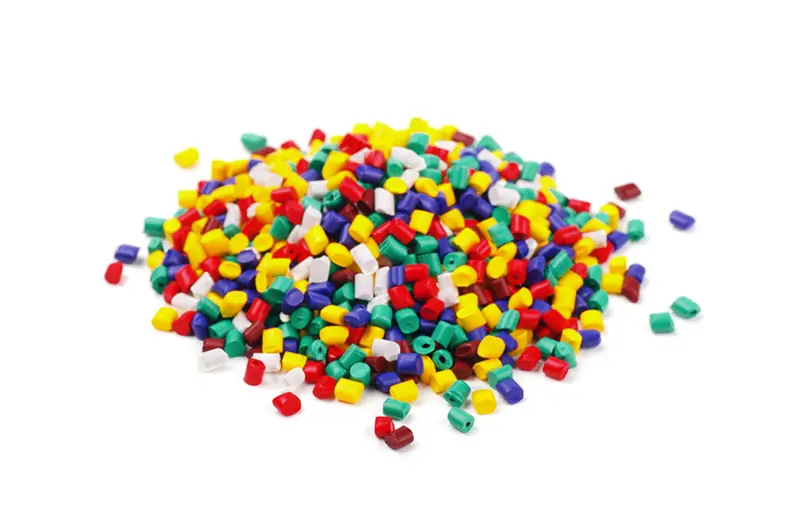
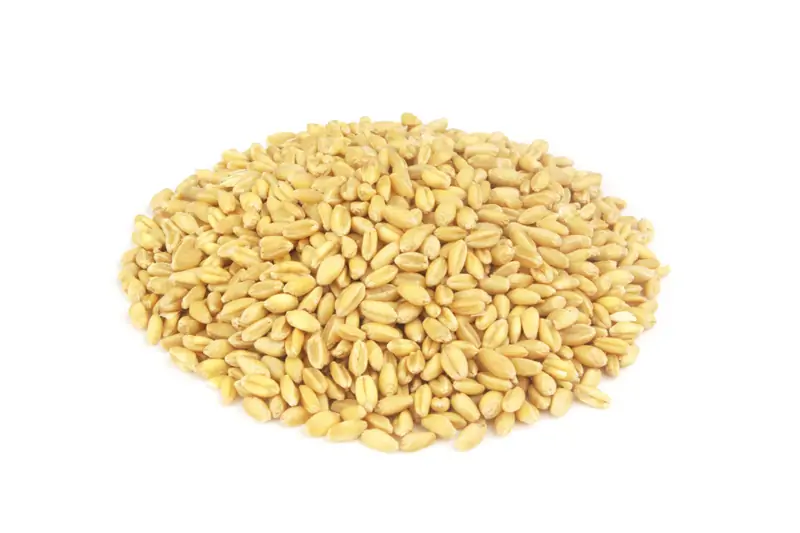
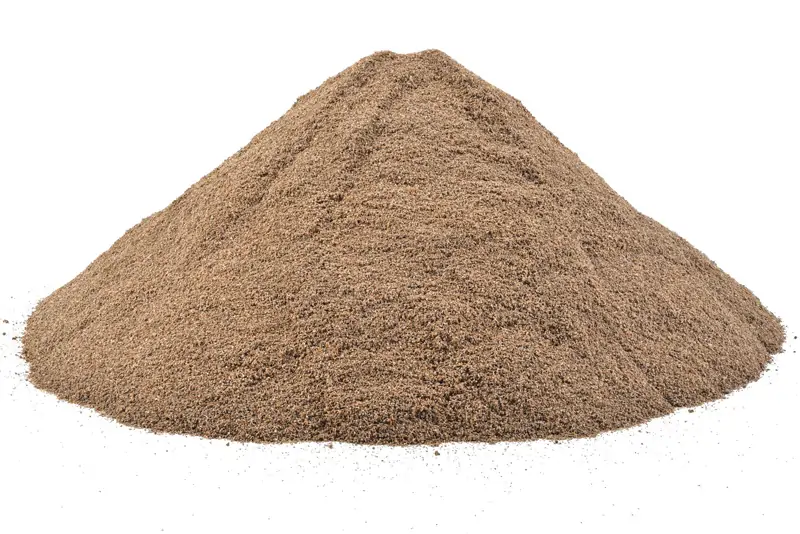
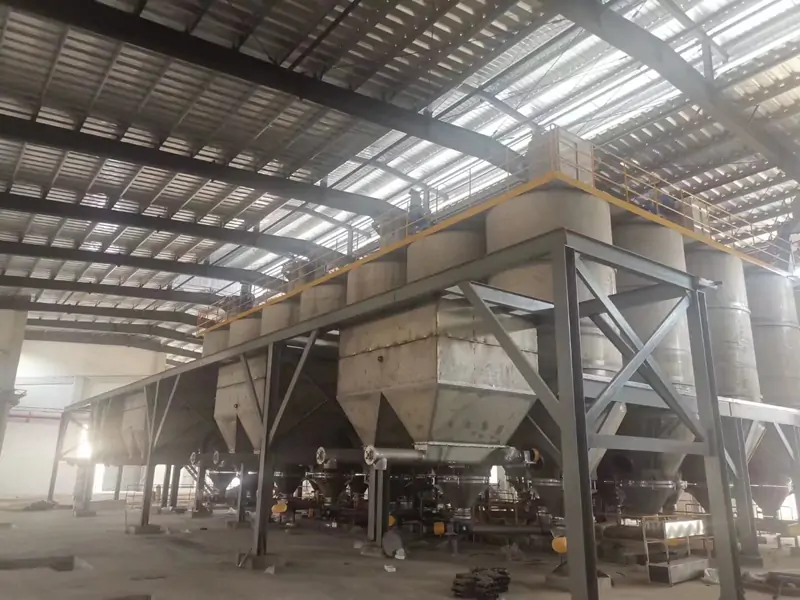
During the storage of powder and granular materials, the hopper outlet often experiences poor discharge caused by material compaction, bridging, or reduced flowability. GZD Vibrating Bin Activator is commonly used in hopper discharge systems for bulk materials such as cement, mineral powder, chemical powders, and grain particles.
Common Suitable Materials
| Material | Common problems | Suitable industries | Function of GZD Vibrating Bin Activator |
| Cement, fly ash, lime powder, mineral powder | Fine powders are easily affected by pressure inside the hopper, causing compaction at the bottom and unstable discharge | Cement, building materials, environmental protection, mineral processing | Improves material conditions at the hopper bottom through vibration and reduces bridging and arching |
| Iron ore powder, sinter, alumina powder | High bulk density materials may lose flowability after long-term storage | Mining, metallurgy, raw material handling | Helps materials regain flow and improves hopper outlet discharge |
| Fertilizer pellets, soda ash, activated carbon, plastic pellets | Powder and granular materials may accumulate near the outlet and affect continuous feeding | Chemical industry, agriculture, plastic processing | Suitable as a bottom hopper activation device connected with conveying and batching equipment |
| Flour, starch, sugar, grain particles | Powder and granular materials may be affected by storage time and environment, causing poor discharge | Food processing, grain processing | Improves discharge conditions of enclosed storage systems and reduces manual handling |
| Foundry sand, quartz sand, ceramic clay | Granular materials may accumulate, and flowability changes with different particle sizes | Foundry, ceramics, refractory materials | Improves particle movement and helps materials discharge from the hopper |
Which Working Conditions Are Not Suitable for GZD Vibrating Bin Activator?
GZD Vibrating Bin Activator is mainly used to improve material flow problems at hopper outlets. It is suitable for powder and granular materials that are prone to compaction, bridging, or unstable discharge. For the following special conditions, other equipment or treatment methods may be more suitable.
1.High-moisture and adhesive materials
If the material has already formed obvious lumps or adhered to the hopper wall, vibration alone may not restore flowability. Additional methods such as crushing or drying may be required to improve material conditions.
2.Materials requiring long-distance conveying
GZD is mainly used for hopper activation and auxiliary discharge and does not handle long-distance material conveying. If continuous material transportation is required, suitable conveying equipment such as vibrating feeders or screw conveyors should be selected according to conveying distance and installation conditions.
3.Large-sized ore or high-impact load materials
For materials with large particle sizes and high impact loads, such as ores and rocks, heavy-duty vibrating feeders or apron feeders are usually considered first.
4.Materials requiring high-precision metering
If the main requirement is quantitative feeding or accurate batching, dedicated metering equipment should be selected. GZD is mainly used to improve hopper discharge conditions.
The selection of GZD Vibrating Bin Activator mainly focuses on material flow conditions rather than industry classification. During selection, it is necessary to confirm whether the material has problems such as compaction, bridging, or blockage, and match the suitable hopper size and vibration parameters.
Technical Parameters
The following values are for reference. Final specifications depend on the hopper size, material characteristics, and required discharge capacity.
| Model | Inner Diameter (mm) | Matched Hopper Diameter (m) | Cement Discharge (t/h) | Raw Material Discharge (t/h) | Motor Power (kW) | Excitation Force (kN) | Particle Size (mm) | Weight (kg) |
| GZD04 | Φ400 | 2–4 | 6–13 | 4–7 | 0.15 | 0–1.5 | ≤15 | 132 |
| GZD06 | Φ600 | 3–6 | 8–20 | 7–13 | 0.25 | 0–2.5 | ≤20 | 185 |
| GZD08 | Φ800 | 4–8 | 35–50 | 15–30 | 0.4 | 0–5.0 | ≤22 | 322 |
| GZD10 | Φ1000 | 5–10 | 50–80 | 20–50 | 0.75 | 0–8.0 | ≤28 | 430 |
| GZD12 | Φ1200 | 6–12 | 50–100 | 30–70 | 1.5 | 0–16 | ≤32 | 510 |
| GZD15 | Φ1500 | 7–14 | 60–120 | 40–80 | 1.5 | 0–20 | ≤35 | 650 |
| GZD20 | Φ2000 | 8–20 | 80–160 | 60–100 | 2 × 1.50 | 0–30 | ≤42 | 1,310 |
The parameters in the table are based on common bulk materials such as cement and raw materials. Since material flowability, density, and moisture content vary, the actual discharge performance may be different. Equipment selection should be confirmed according to specific operating conditions.
Model Selection
When selecting a GZD Vibrating Bin Activator, mainly consider the following two aspects:
1.Hopper Dimensions and Discharge Requirements
Start with the hopper diameter, outlet size, and required discharge capacity. Small hoppers can generally use GZD04–GZD08, medium-sized hoppers GZD08–GZD12, and larger hoppers or higher discharge requirements GZD15–GZD20. Installation space and connection dimensions should also be checked.
2.Material Flow Conditions
Material flow behavior directly affects activation performance. For cement, fly ash, and mineral powder that tend to compact or bridge, anti-bridging performance is important. Higher-density or larger-particle materials require proper matching of vibration force and discharge capacity. For materials with high moisture, strong adhesion, or existing lumps, material conditions should be evaluated before selection.
Customization
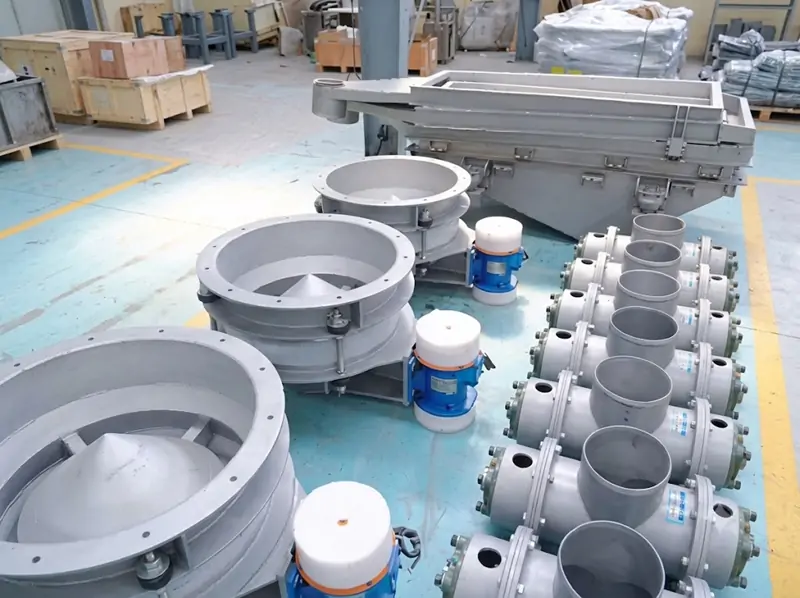
The configuration of GZD Vibrating Bin Activator needs to consider equipment model, hopper structure, and material conditions. Since different projects have different outlet sizes, discharge requirements, and installation methods, standard specifications may need to be adjusted. Jiarui adjusts equipment structure and vibration configuration according to site conditions to help solve hopper bridging, blockage, and unstable discharge problems.
During the customization process, the engineering team adjusts the hopper structure, vibration configuration, and installation method according to hopper dimensions, material characteristics, and equipment connection requirements, allowing the equipment to better match existing conveying, weighing, and packaging systems. Whether for new production line applications or existing hopper modification projects, suitable configurations can be designed according to site requirements.
To confirm a suitable configuration, please provide the following information:
- Material name and condition: Such as cement, mineral powder, fly ash, granular materials, and whether the material is prone to bridging or lump formation.
- Basic hopper dimensions: Including hopper diameter, outlet size, or installation position.
- Discharge requirements: Required approximate discharge capacity or connected downstream equipment.
After receiving the above information, Jiarui engineering team can evaluate a suitable GZD Vibrating Bin Activator configuration according to site conditions.
Jiarui Manufacturing Capability
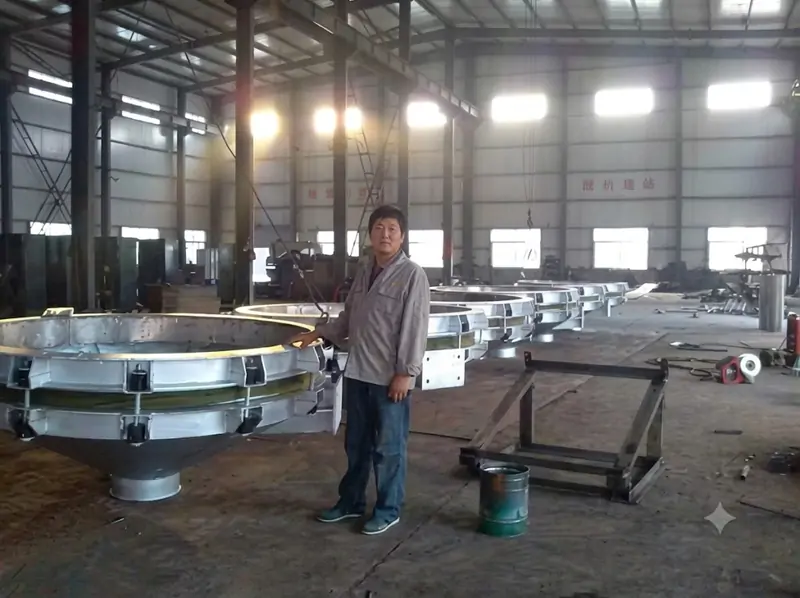
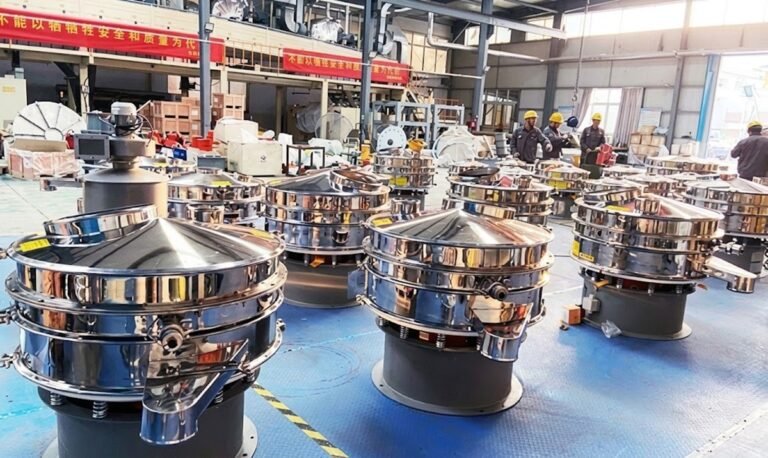
During the manufacturing of GZD Vibrating Bin Activator, Jiarui focuses on controlling the vibration system, activation structure, and main connection quality to adapt the equipment to different hopper discharge requirements.
Jiarui focuses on the following aspects during manufacturing:
Vibration system matching
Adjust the vibration configuration according to equipment structure and application requirements, allowing vibration force to effectively act on the hopper outlet area.
Structure and installation adaptation
Adjust the connection structure according to hopper dimensions, outlet design, and installation space to facilitate on-site installation and operation.
Manufacturing quality control
Inspect the main structure, welding, and assembly process, and control the production process according to the ISO 9001 quality management system requirements.
FAQs
Get a Free Consultation
Fill out the form below to connect with our experts and receive personalized recommendations for your application.