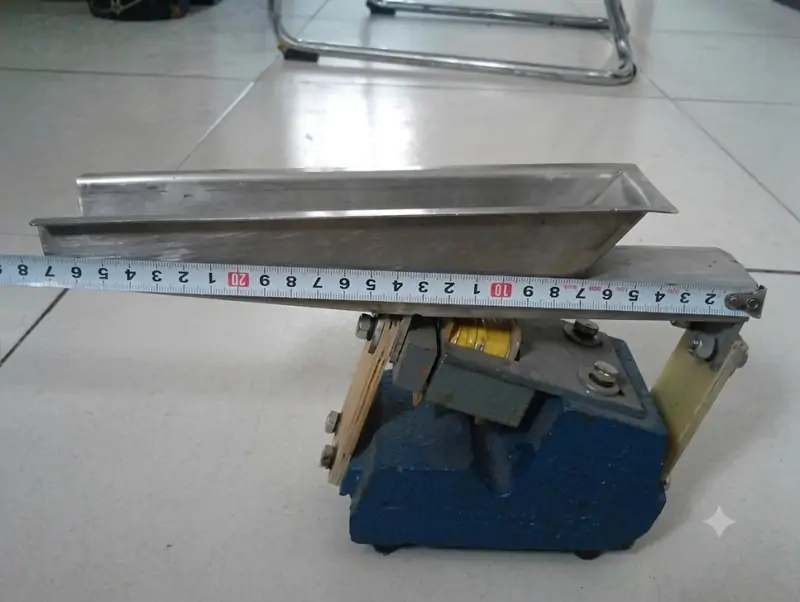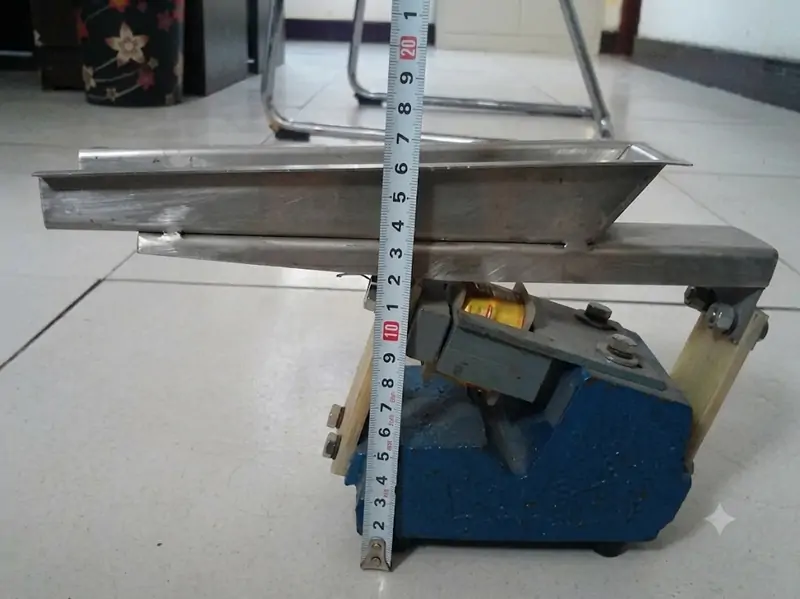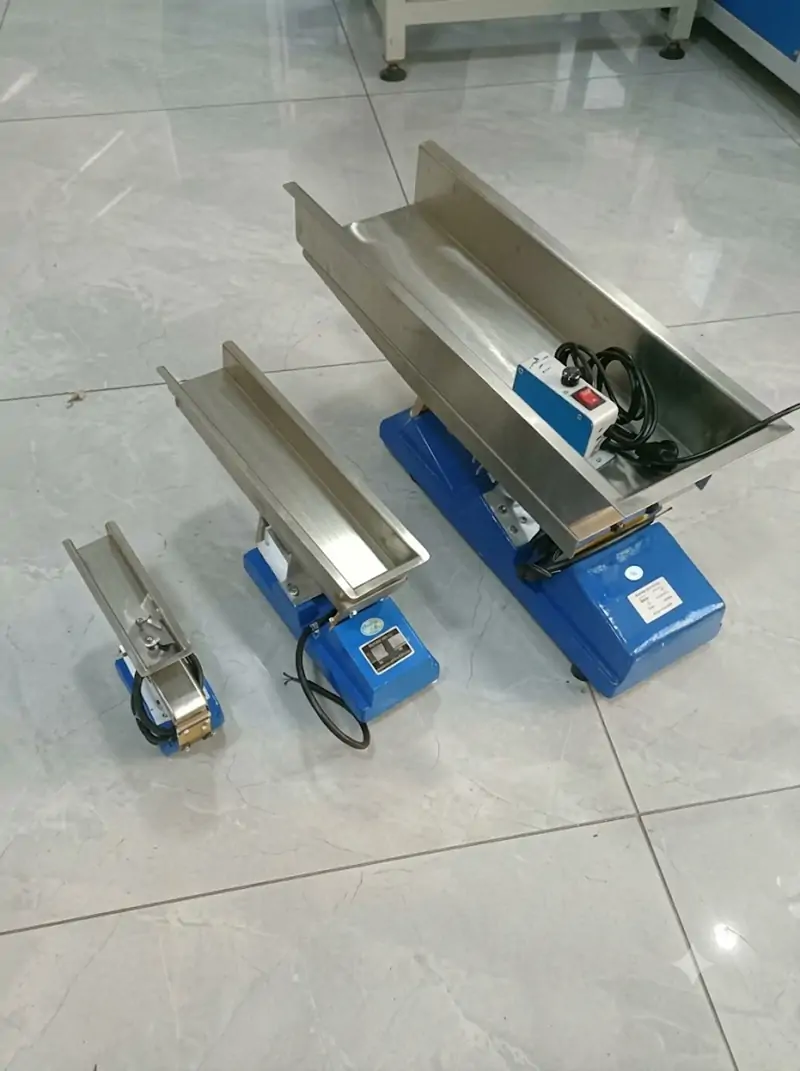
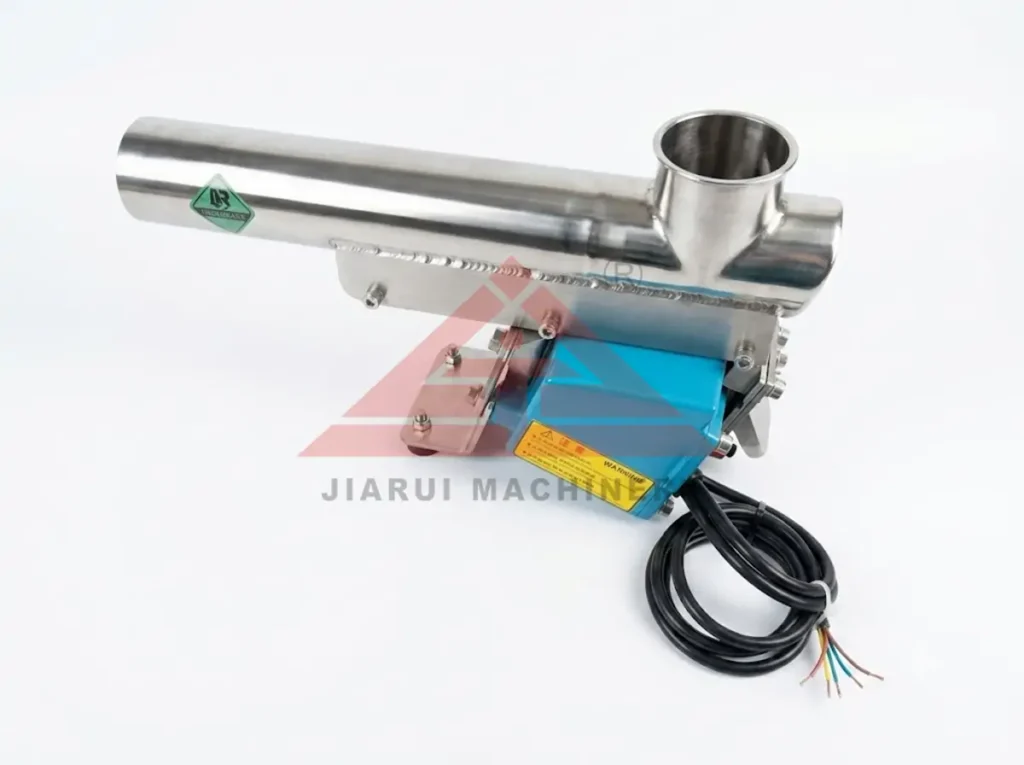
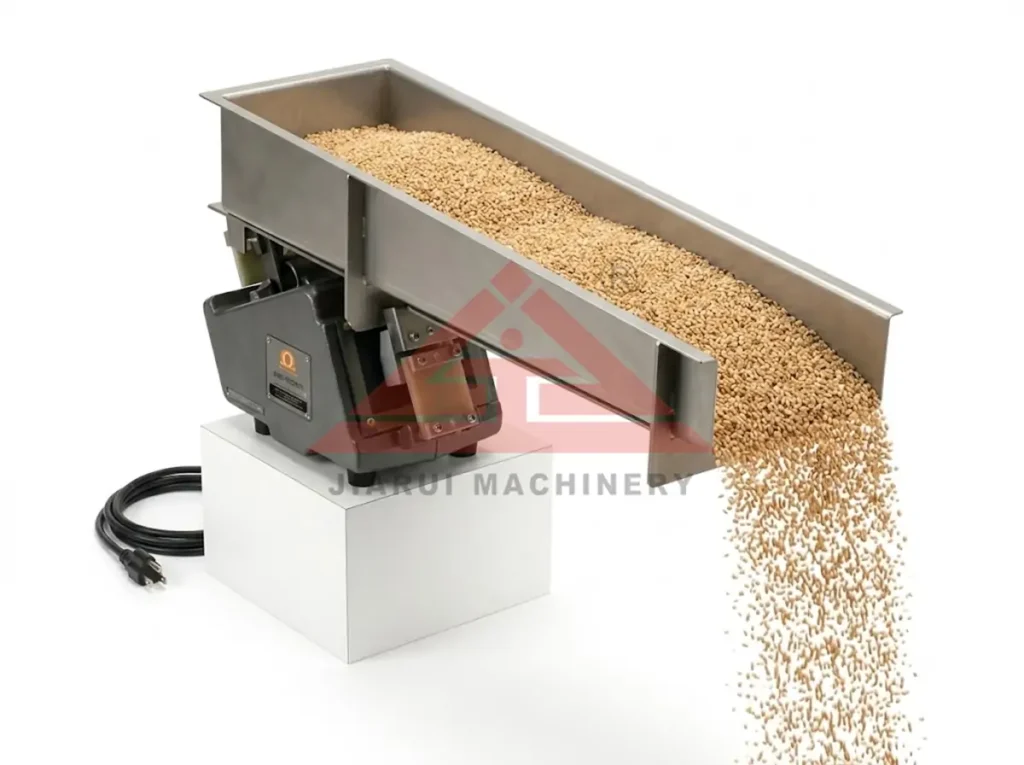
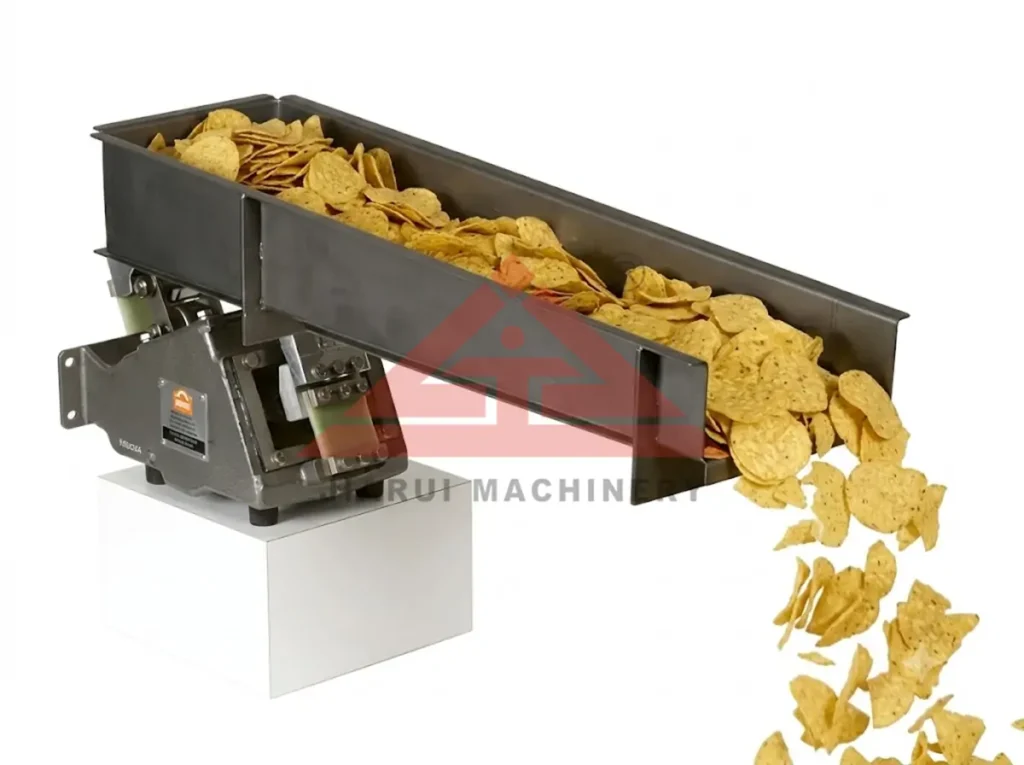
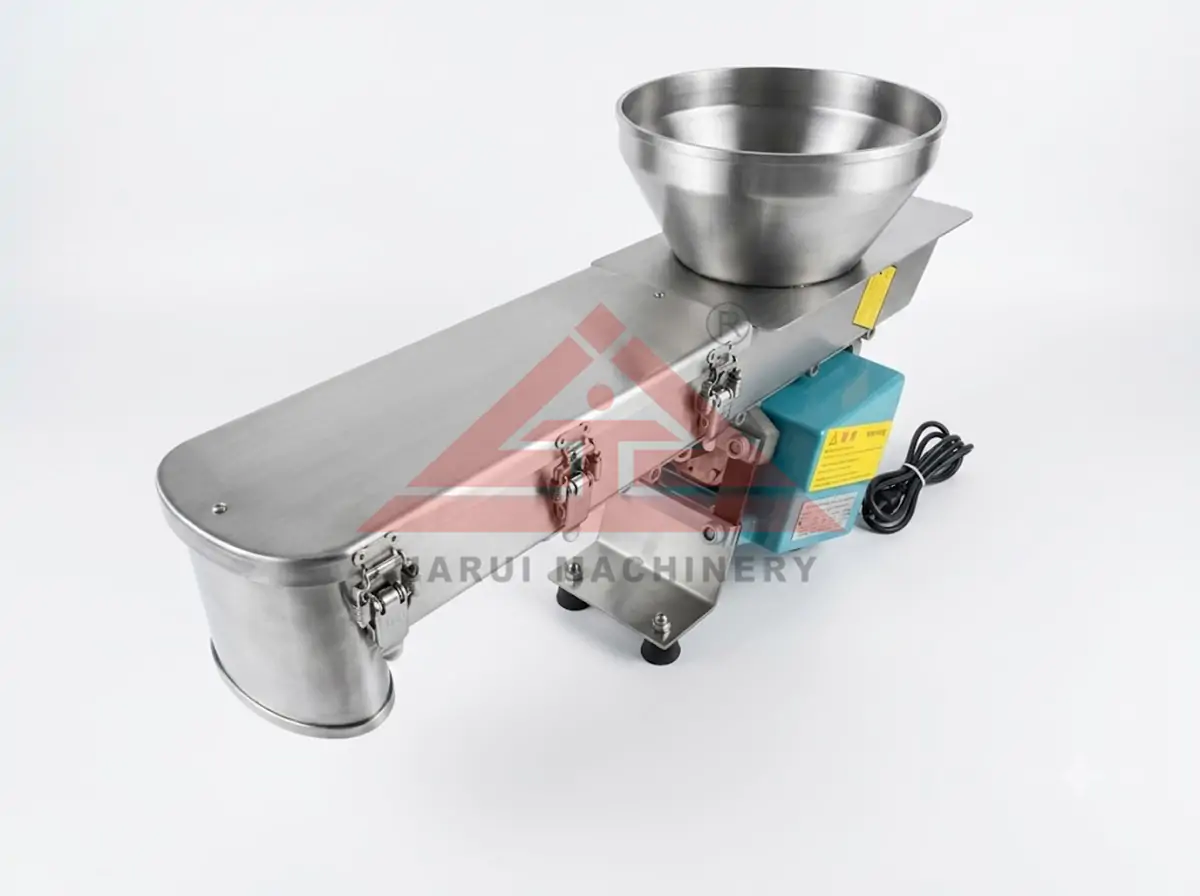
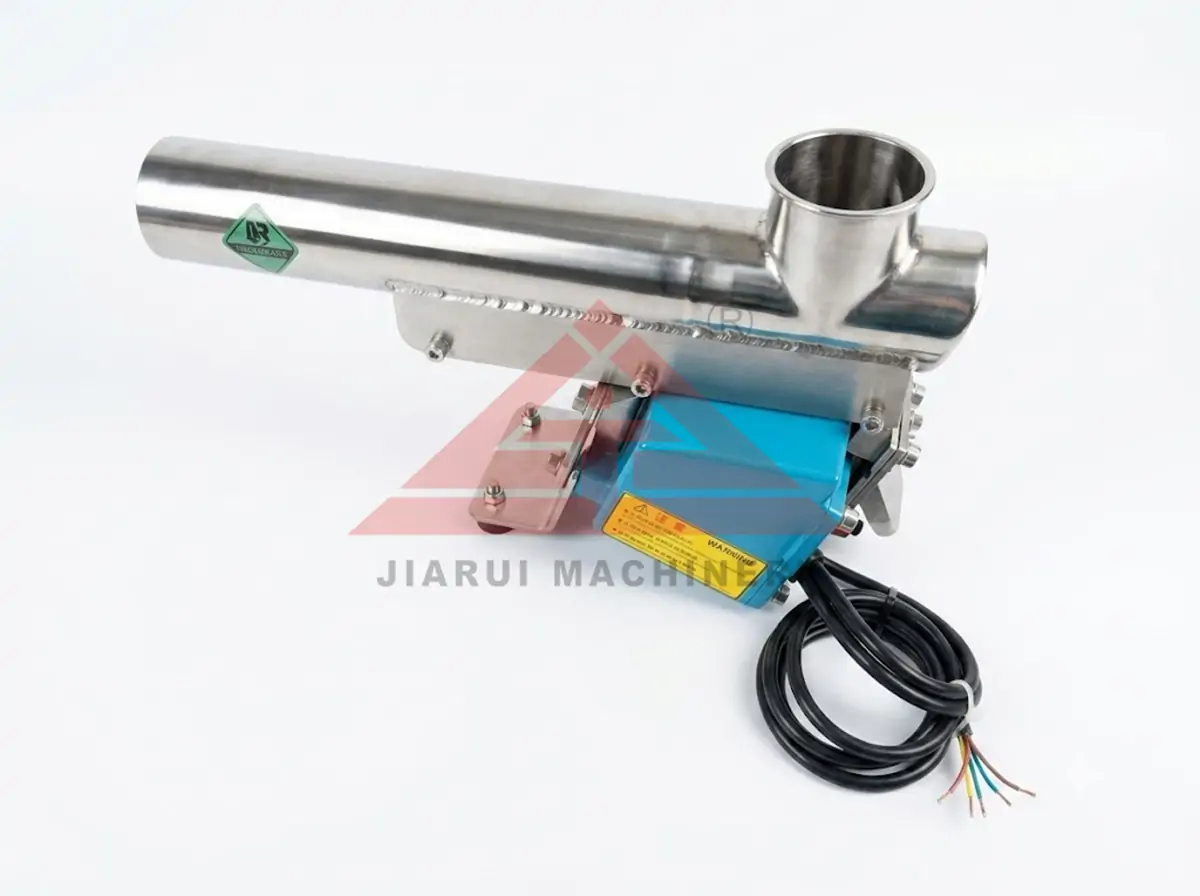
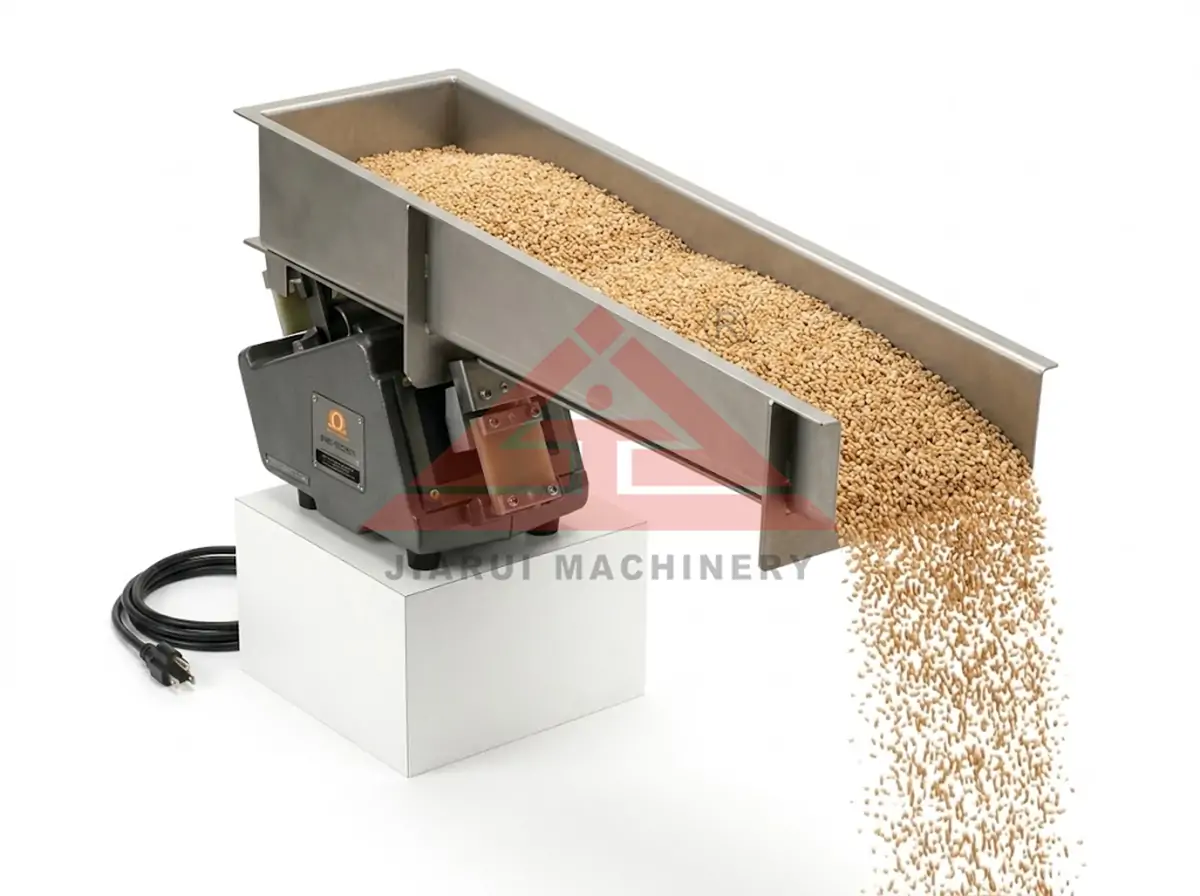
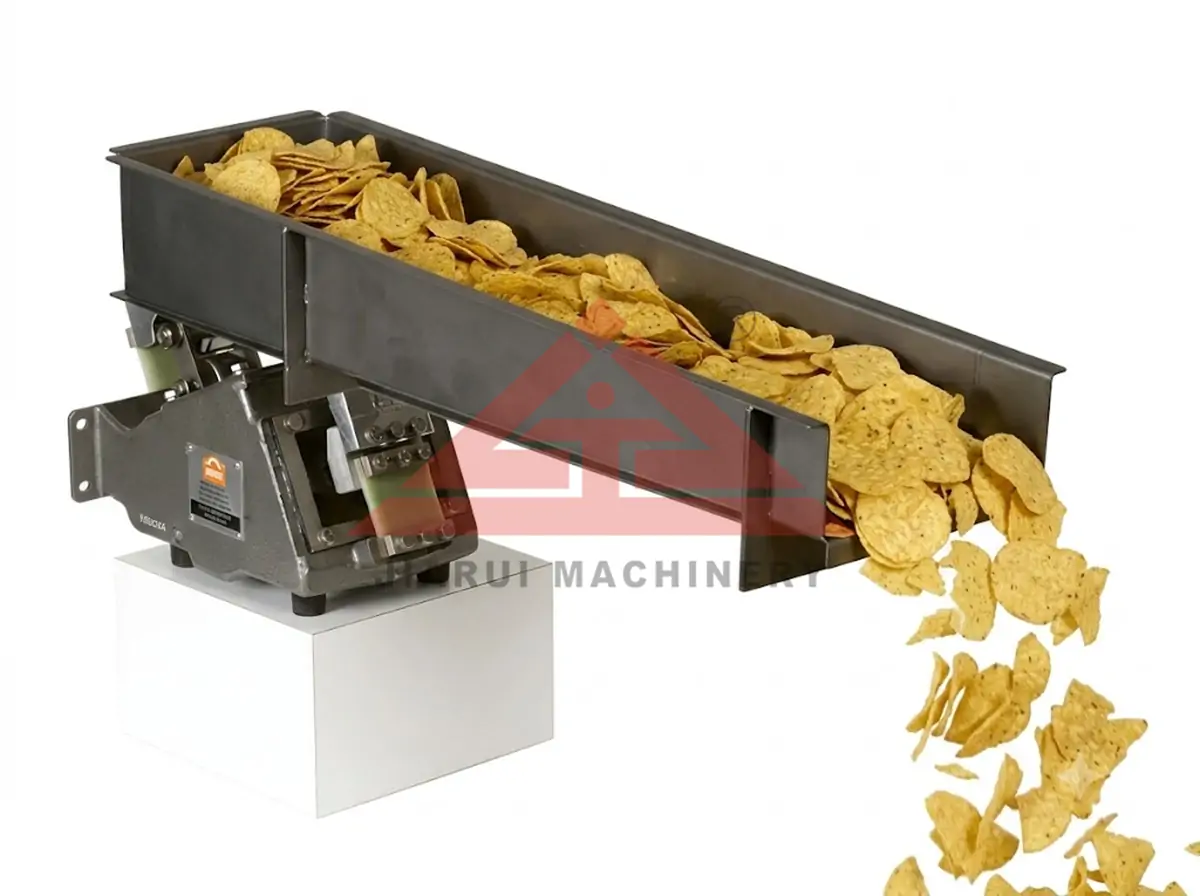
미니 전자기 피더 (GZV 시리즈)

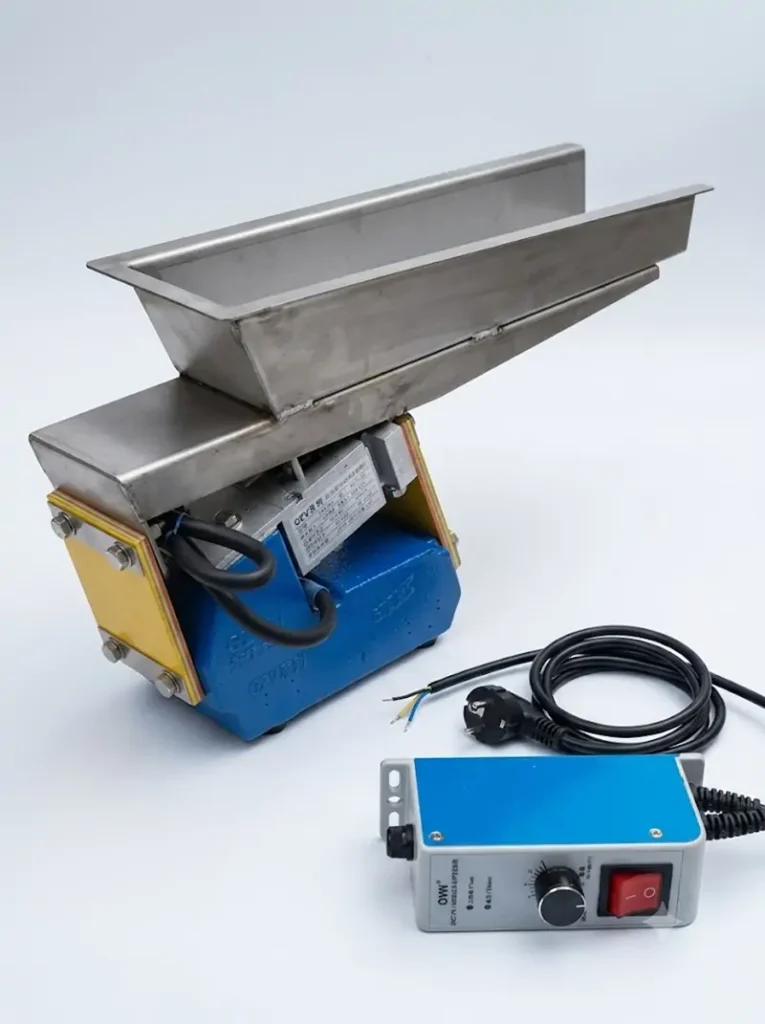
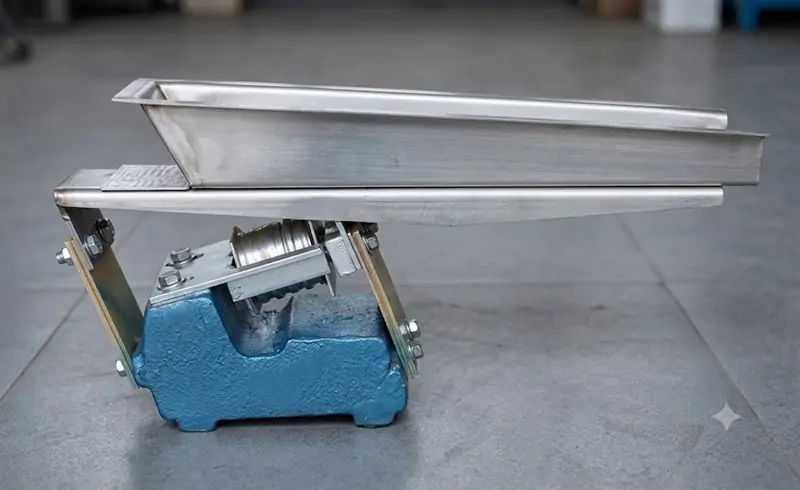
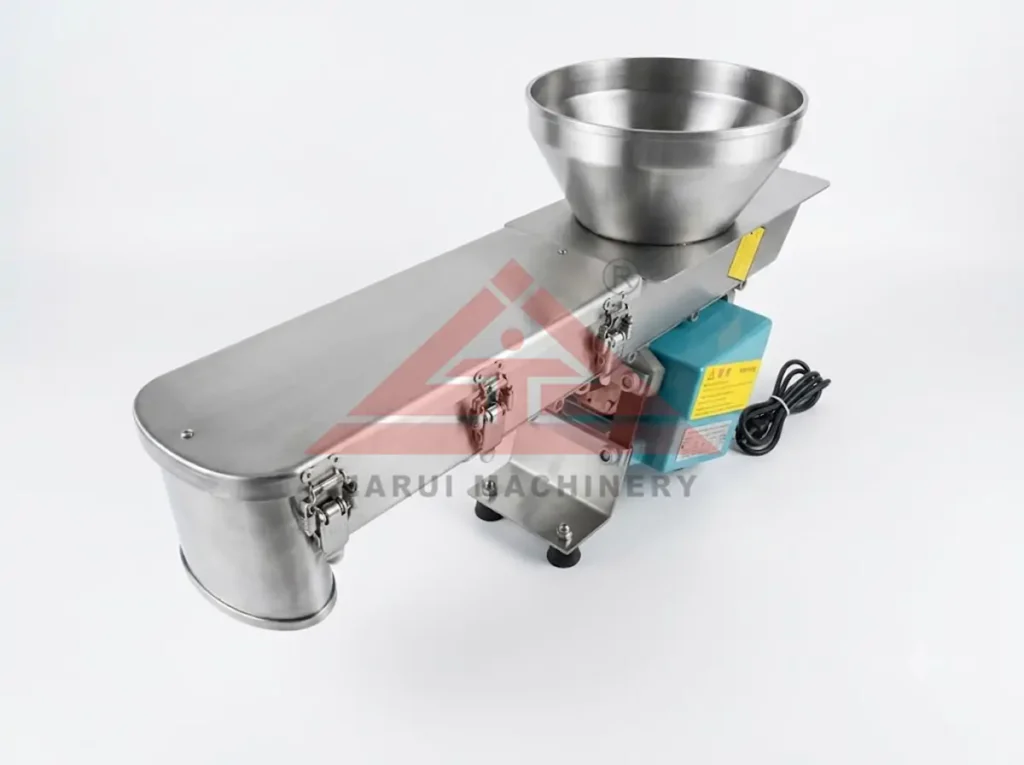
Mini Electromagnetic Feeder (GZV Series) is mainly designed for continuous low-flow feeding of powder and granular materials. It is commonly used in packaging machines, weighing systems, automatic batching equipment, and feeding units for industries such as food processing, chemical industry, plastics, electronic materials, and powder processing. The equipment adopts an electromagnetic drive system and controls feeding speed by adjusting vibration force, featuring fast response, low power consumption, compact structure, and convenient adjustment.

자루이 engineering team can customize the feeder according to material characteristics, feeding requirements, and installation space, including feeder tray dimensions, material selection, and connection methods, helping the equipment better match different production requirements.

  • 모델: GZV1-GZV5
  • Feeding Capacity: 0.1-4 t/h
  • Vibration Frequency: 3000 times/min
  • Low Power Consumption: 5-30 W
  • Control System: XKZV-II
  • Applications: Powder and granular material feeding
견적 요청 이메일 보내기

What is a Mini Electromagnetic Feeder?

Mini Electromagnetic Feeder (GZV Series), also known as a mini electromagnetic vibratory feeder or electromagnetic feeder machine, is a precision feeding device used for continuous feeding of powder and granular materials. It uses electromagnetic vibration to drive the feeder tray, allowing materials to move forward evenly along the tray surface. By adjusting the vibration output, the feeding speed can be controlled according to production requirements, providing stable material supply and accurate feeding.

Compared with large vibrating feeders commonly used in mining applications, the GZV Series is mainly designed for small-flow and precision feeding tasks. It is usually installed below hoppers or connected with packaging machines, weighing systems, and automatic batching equipment to control the material flow entering the next process. This helps reduce unstable manual feeding and feeding fluctuations caused by inconsistent material supply.

작동 원리

The GZV Series Mini Electromagnetic Feeder generates periodic vibration through an electromagnetic drive system, causing materials to move continuously along the feeder tray direction. By adjusting the electromagnetic output, the vibration amplitude can be changed to match different feeding requirements and production speeds.

Material Moves Along the Feeder Tray

After entering the feeder tray, materials move toward the discharge end under the action of vibration force. By optimizing the tray structure, vibration amplitude, and operating frequency, powder and granular materials can maintain a more even flow condition, reducing problems such as interrupted feeding or unstable material movement.

Electromagnetic Components Provide Driving Force

The electromagnetic coil, armature, and elastic components inside the equipment form the main driving system. When the control unit changes the input current, the electromagnetic force changes accordingly, allowing the feeder to operate at a suitable vibration condition while reducing unnecessary power consumption.

Adjust Feeding Output to Match Production Speed

The GZV Series can adjust electromagnetic output through the control system to change the feeding speed. For packaging, weighing, and automatic batching applications, the feeding rate can be adjusted according to the operating speed of the connected equipment.

The core value of the GZV Series is not large conveying capacity, but providing controllable continuous feeding in limited installation space. It is more suitable for small-flow feeding applications that require precise adjustment and stable material supply.

미니 전자기 피더 (GZV 시리즈)

Main Components

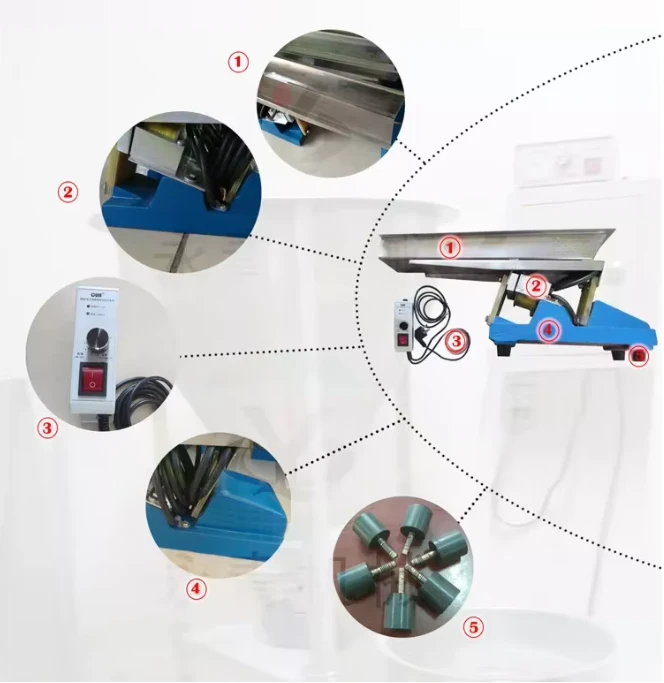
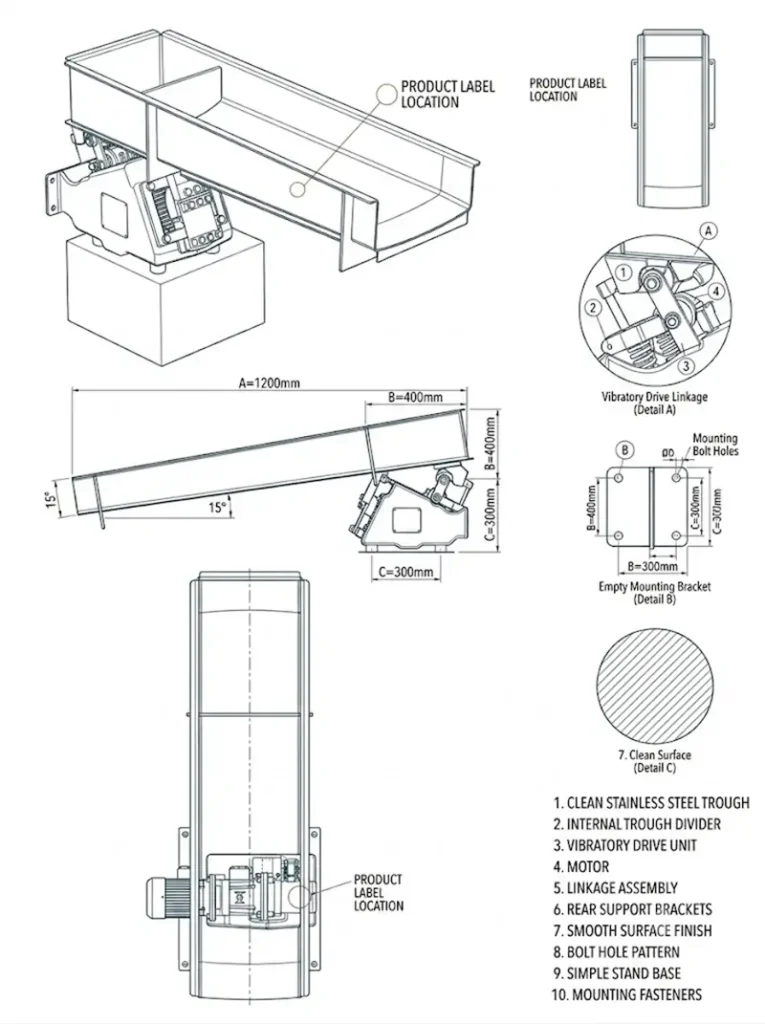
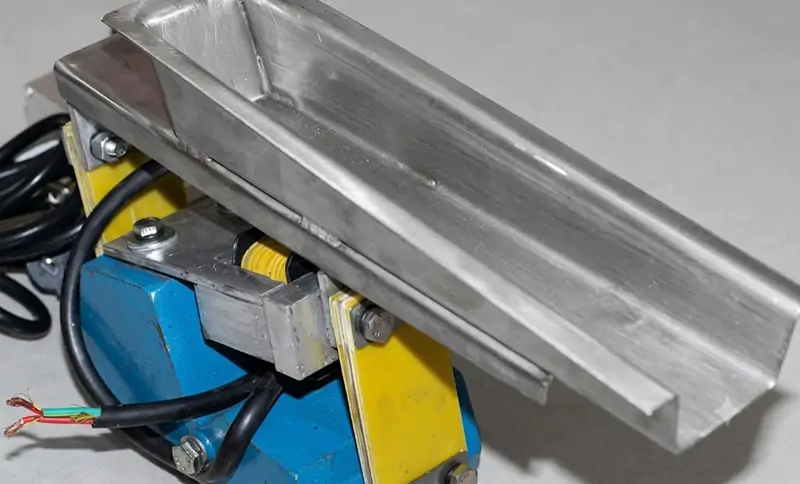
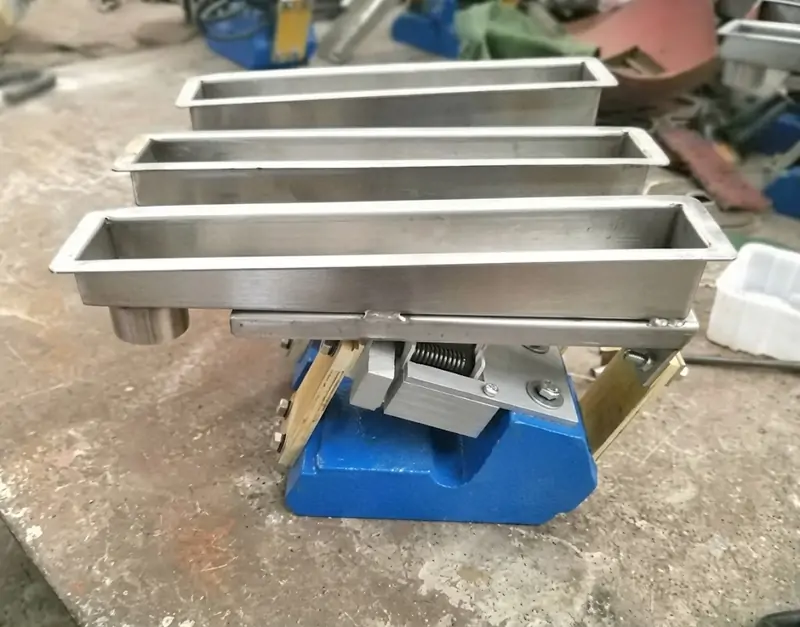
The GZV Series Mini Electromagnetic Feeder mainly consists of an electromagnetic vibration unit, feeder tray, elastic support system, and control device. These components work together to influence the vibration condition, feeding speed, and operating performance of the equipment.

Electromagnetic Vibration Unit

The electromagnetic vibration unit is the core component that generates driving force. Through the coil, it produces alternating electromagnetic force and drives the armature to move periodically, allowing the feeder tray to generate continuous vibration. The electromagnetic gap, component matching, and operating condition directly affect vibration amplitude and feeding performance, so they need to be carefully considered during installation and adjustment.

Feeder Tray

The feeder tray is the part that directly contacts with materials. Its size, structure, and material selection need to be determined according to material characteristics. For general granular materials, carbon steel structures are commonly used. For applications in food, chemical, and other industries with higher requirements for hygiene or corrosion resistance, stainless steel feeder trays can be selected.

Elastic Support System

The elastic support system works together with the electromagnetic drive system to form a stable vibration mechanism, helping the equipment maintain a suitable vibration condition during operation. During long-term use, wear, looseness, or deformation of spring plates may affect feeding performance, so key connection parts should be checked regularly.

Control Device

The control device is used to adjust electromagnetic output and control material movement speed by changing vibration force. For packaging, weighing, and automatic batching applications that require accurate material flow control, a reliable control system helps the feeder better match the production process.

This type of equipment has a simple structure, but factors such as electromagnetic gap, feeder tray design, and material characteristics can affect feeding performance. Confirming operating conditions before selection can reduce adjustment time after installation.

Why Choose It?

Advantages

The GZV Series Mini Electromagnetic Feeder is mainly used for continuous low-flow feeding of powder and granular materials. Compared with manual feeding or simple discharge methods, the equipment adjusts material movement through electromagnetic control, making it more suitable for production processes that require controlled feeding speed, compact installation space, and automation integration.

미니 전자기 피더 (GZV 시리즈)

Technical Parameters

The GZV Series Mini Electromagnetic Feeder includes multiple models from GZV1 to GZV5. The main differences are feeding capacity and power configuration. During selection, the material flowability, installation space, and production requirements should be considered together to determine a suitable model.

모델Feeding CapacityDouble Amplitude진동 주파수전원Control Device
GZV10.1 t/h1.5 mm3000 times/min5 WXKZV-II
GZV20.5 t/h1.5 mm3000 times/min8 WXKZV-II
GZV31 t/h1.5 mm3000 times/min20 WXKZV-II
GZV42 t/h1.5 mm3000 times/min25 WXKZV-II
GZV54 t/h1.5 mm3000 times/min30 WXKZV-II

GZV Series Quick Selection Guide

Production RequirementRecommended Model
Continuous feeding for packaging machinesGZV1-GZV3
Feeding for weighing systemsGZV2-GZV4
Automatic feeding of small granular materialsGZV3-GZV5
Large-scale mining material feedingNot recommended. Industrial vibrating feeders are more suitable


The GZV Series adopts controllable half-wave rectification control technology. By adjusting output current, the vibration force can be changed to control feeding speed. Different material properties, including particle size, moisture content, and flowability, can affect feeding performance. Therefore, the suitable model should be confirmed according to actual operating conditions.

Applications and Suitable Materials

The GZV Series Mini Electromagnetic Feeder is mainly used for continuous low-flow feeding of powder and granular materials. It is suitable for production processes that require stable material supply, such as packaging, weighing, and automatic batching systems. Different material characteristics, including flowability, particle size, and moisture content, can directly affect feeding performance. The suitable configuration should be selected according to actual operating conditions.

Application
적용 분야
Typical IndustriesCommon MaterialsProblems Solved
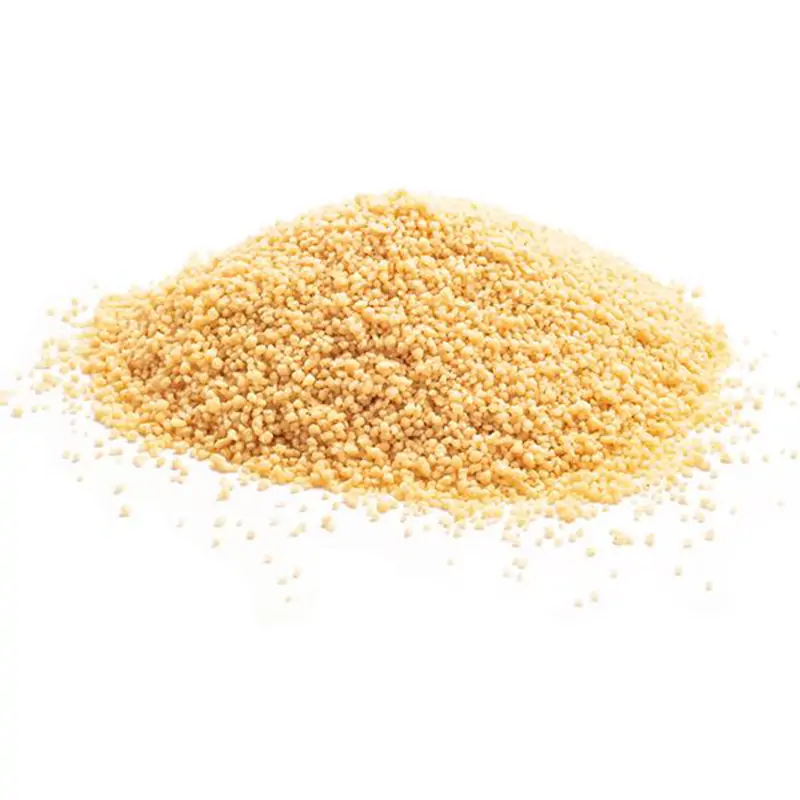
Continuous feeding before packagingFood processing, plastics, chemical industriesGrains, seeds, plastic pellets, resin particles, etc.Maintains continuous material supply into packaging equipment and reduces feeding fluctuations caused by manual operation
Precise feeding for weighing systemsFood processing, granular material industriesSeeds, plastic pellets, food particles, etc.Adjusts feeding speed according to weighing requirements and improves consistency during measurement
Material feeding for automatic batching systemsChemical industry, powder processing industryFine chemical powders, additives, small granular raw materials, etc.Controls continuous material supply and reduces uneven feeding during batching processes
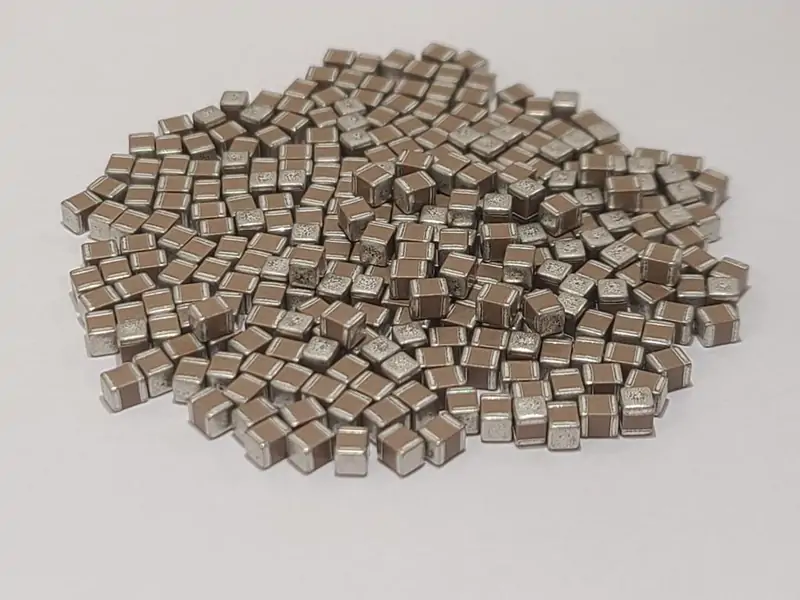
Feeding for automated equipment integrationElectronic materials, automation equipment industriesMLCC ceramic particles, electronic ceramic material particles, etc.Uses compact structure and low power consumption to achieve stable connection between equipment units

Materials and Conditions Not Suitable for GZV Series

The GZV Series is designed for small-flow and precision feeding applications. Its main advantage is controlling feeding speed and maintaining consistent material supply, rather than handling large-volume conveying tasks. The following materials or operating conditions require careful evaluation before selection:

Application ConditionReason
Large rocks, ore blocks, and heavy materialsIndividual material weight is too large and exceeds the suitable operating range of a mini electromagnetic feeder
High-moisture powder materials with strong adhesionMaterials may stick to the feeder tray surface, affecting normal movement and feeding performance
Large-volume continuous feedingThe feeding capacity is limited and the equipment is not suitable as the main feeding unit for large production lines
Powder materials prone to bridgingAdditional measures such as hopper anti-bridging structures or special discharge designs may be required to improve feeding performance

When selecting a Mini Electromagnetic Feeder, it is recommended to provide key information such as material name, feeding capacity, particle size range, and installation space. Proper matching of equipment parameters can reduce later adjustments and improve long-term operating performance.

문의하기

이메일: info@jiaruimachinery.com
전화/왓츠앱: +86 18838703198

견적 요청

How to Choose the Right Electromagnetic Feeder?

Electromagnetic feeders can be divided into small-flow precision feeding equipment and larger continuous feeding equipment according to feeding capacity and application requirements. Selection should be based on material characteristics, production requirements, and installation conditions.

Comparison ItemGZV Series Mini Electromagnetic FeederGZ Series Electromagnetic FeederScrew Feeder
Application PositioningSmall-flow precision feedingContinuous feeding for production linesPowder material conveying and feeding
Feeding Capacity0.1-4 t/h, suitable for precise controlMore suitable for large-capacity continuous feedingDetermined by screw diameter and rotation speed
작동 원리Electromagnetic vibration moves materials forwardElectromagnetic vibration drives continuous material feedingRotating screw flights push materials forward
Suitable MaterialsPowder, granular materials, small bulk materialsOre, coal, aggregate, and other bulk materialsPowder materials, fine particles, and some flowable materials
대표적인 적용 분야Packaging, weighing, batching, automation equipmentMining, building materials, metallurgy, and other industriesPowder processing and enclosed conveying systems
Selection FocusFeeding accuracy, response speed, and installation spaceProcessing capacity and long-term continuous operationConveying distance, dust control, and material adaptability

Choose GZV Series for Small-Flow Automatic Feeding

When the feeding process is mainly used for packaging, weighing, batching, or automatic equipment feeding, the key requirement is usually not conveying distance, but controlling feeding speed and maintaining stable material supply. The GZV Series changes vibration force by adjusting electromagnetic output without complex mechanical adjustment, making it more suitable for small-flow feeding applications that require frequent adjustment.

Choose GZ Series or Screw Feeder for Large-Flow Continuous Feeding

When materials need to continuously enter crushing, screening, or conveying systems, the main focus is feeding capacity and long-term operating stability. The GZ Series Electromagnetic Feeder is more suitable for continuous feeding applications in larger production lines.

For powder materials that require enclosed conveying, longer feeding distances, or accurate dosing, the structural characteristics of a screw feeder should also be considered.

When selecting equipment, do not focus only on equipment names or maximum feeding capacity. Small-flow feeding applications mainly focus on control performance, while large production lines pay more attention to continuous operation capability. Confirming material characteristics, feeding requirements, and installation conditions in advance can reduce later adjustment and modification, allowing the equipment to better match the production process.

Customization Service

The GZV Series Mini Electromagnetic Feeder is not suitable for every application with the same configuration. Material flowability, feeding speed, and installation space can affect the final operating performance. Jiarui engineering team can adjust the feeder tray size, material selection, and connection structure according to specific requirements, helping solve problems related to unstable feeding, limited installation space, and special material handling.

From small automated equipment integration to powder and granular material feeding systems, we evaluate the application conditions and confirm a suitable solution. If you are unsure about the model or configuration, please provide the following key information, and our engineering team will assist with the evaluation:

  • Material name and condition (powder, granules, etc.)
  • Required feeding capacity (kg/h or t/h)
  • Equipment installation dimensions or site requirements

Confirming material characteristics and operating conditions in advance can reduce later adjustments and help maintain stable equipment operation.

미니 전자기 피더 (GZV 시리즈)

문의하기

이메일: info@jiaruimachinery.com
전화/왓츠앱: +86 18838703198

견적 요청

Jiarui Manufacturing

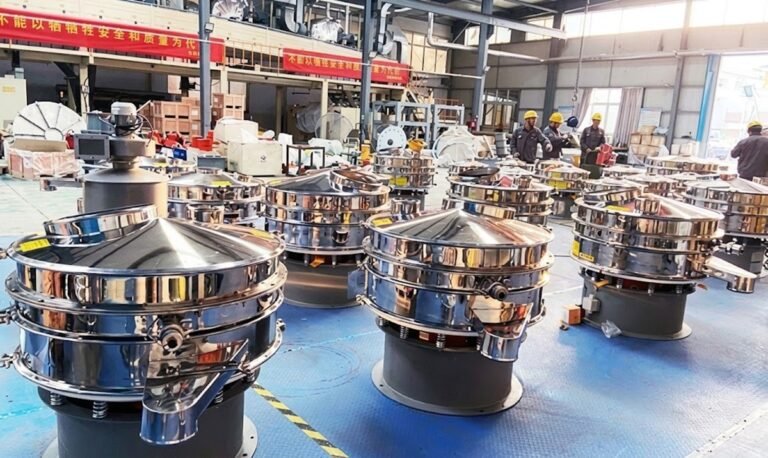
Although the Mini Electromagnetic Feeder has a compact structure, feeding performance does not only depend on the electromagnetic components. It is also related to vibration system matching, feeder tray design, and assembly accuracy. During manufacturing, Jiarui focuses on these key factors that affect equipment operation. From structural design and component processing to final assembly and testing, each stage is controlled to ensure the feeder better matches different feeding processes.

For different material characteristics and equipment integration requirements, Jiarui engineering team confirms feeding capacity, installation method, and available space before optimizing the feeder tray size, material selection, and connection structure. The manufacturing process follows quality management requirements, with production control referring to the ISO 9001 quality management system standard. Key manufacturing steps are controlled to improve equipment compatibility with customers’ existing production processes and reduce later adjustment and maintenance costs.

자주 묻는 질문

GZV 시리즈 미니 전자기 피더는 분말, 입상 재료 및 소형 벌크 재료의 연속 공급을 위해 주로 설계되었습니다. 일반적인 적용 분야로는 플라스틱 펠릿, 곡물, 종자, 화학 분말 및 전자 세라믹 입자가 있습니다. 선정 시 재료 이름만으로는 충분하지 않습니다. 유동성, 입자 크기 및 부착 특성과 같은 요소도 고려하여 피더가 장기 운전에 적합한지 여부를 판단해야 합니다.

GZV 시리즈는 전자기 출력을 변경하여 공급 속도를 조정할 수 있습니다. 제어 장치는 입력 전류 조정을 통해 진동력을 변화시켜, 작업자가 공급 속도를 포장, 계량 및 배칭 공정에 맞출 수 있도록 합니다. 이 조정 방식은 피더가 복잡한 기계적 변경 없이 다양한 생산 리듬에 적응할 수 있게 도와줍니다.

Yes. The GZV Series features a compact structure and low power consumption, making it suitable as a front-end feeding unit for packaging machines, weighing systems, automatic batching equipment, and small production lines. During installation, the equipment interface, feeding direction, and hopper connection method should be considered to avoid material accumulation or unstable feeding.

Feeding performance is affected not only by equipment parameters but also by actual operating conditions. Factors such as hopper pressure changes, electromagnetic gap adjustment, elastic component condition, and material flowability may influence feeding results. Proper installation, correct adjustment, and regular inspection of key components can help maintain stable long-term operation.

The GZV Series mainly uses electromagnetic vibration to move materials forward, making it more suitable for small-flow feeding applications that require frequent adjustment and fast response. A screw feeder uses rotating screw flights to transport materials and is more suitable for powder conveying, enclosed feeding, and longer-distance transportation. The final selection should be based on material characteristics, feeding method, and production requirements.

Yes. Different customers have different equipment layouts, material conditions, and production requirements. Jiarui engineering team can customize the feeder tray size, material, connection structure, and installation method according to actual applications. If a standard model cannot fully match the working conditions, customers can provide material information, required feeding capacity, and installation conditions, and our team will help confirm a suitable solution.

Get a Free Consultation

Fill out the form below to connect with our experts and receive personalized recommendations for your application.

  • Material Type
  • Material Size/Granulation
  • Required Screening/Conveying Capacity
  • Material Flow Rate
  • Moisture Content
  • Separation Requirements
  • Special Features or Customization Needs
Follow Us: