
A wheat flour rotary vibrating screen can help remove lumps and oversized particles from flour. Common screening problems include lumping, screen blinding, and reduced throughput. When these occur, check the material, feed conditions, and screen mesh first. Then determine whether the equipment configuration needs to be adjusted.
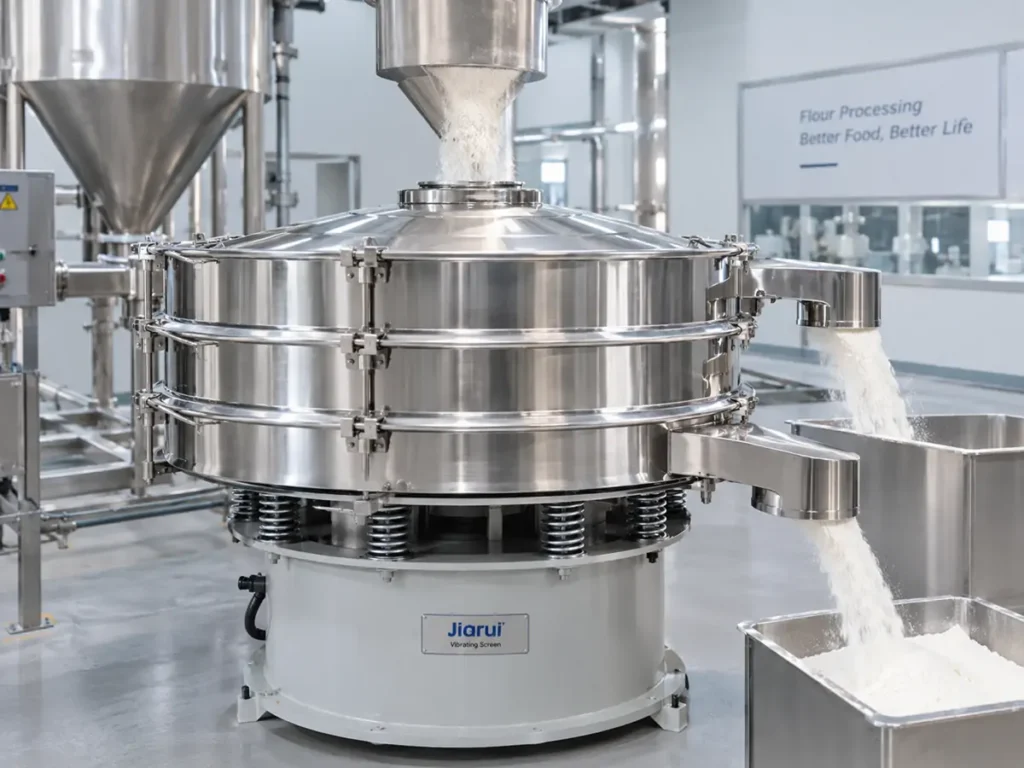
Why Does Wheat Flour Form Lumps and Blind the Screen? How Can These Problems Be Solved?
What Should You Do If Wheat Flour Forms Lumps?
If wheat flour already contains lumps before entering the screen, first check whether the flour has absorbed moisture and whether storage conditions are appropriate.
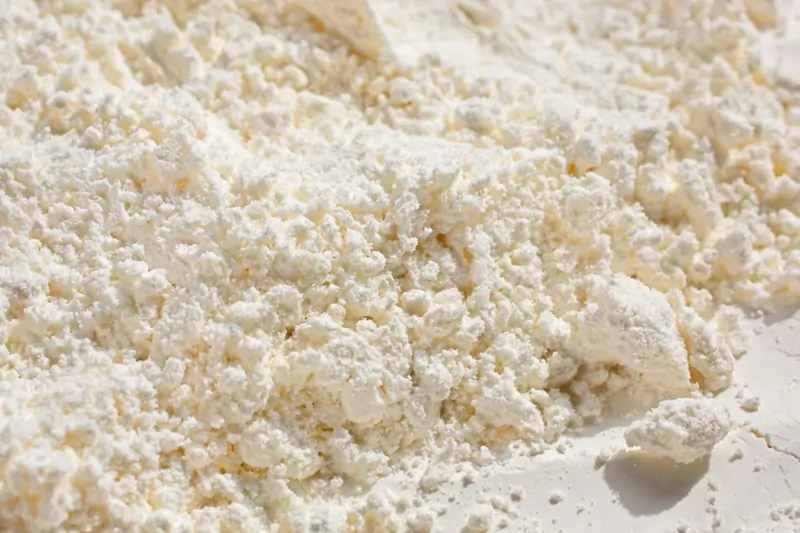
A tamiz vibratorio rotatorio can retain lumps larger than the screen openings, but it cannot solve moisture-related problems. If there are many lumps, identify the cause and treat the material according to production requirements. If only a small number of lumps need to be removed, select the screen aperture based on the size of the particles to be retained.
Why Does the Screen Mesh Become Blinded?
Check three things first:
- Is the feed rate too high, or is the flour entering at one point? If flour accumulates in one area of the screen surface, check the feed position and feed rate to prevent localized buildup.
- Are the screen openings too small? Check the screening requirements against the screen aperture. Openings that are too small may slow the passage of flour and increase the risk of screen blinding.
- Are the mesh openings blocked by flour? Stop the machine and inspect the screen surface and openings for adhering powder or lumps. Clean the screen and observe its performance after restarting.
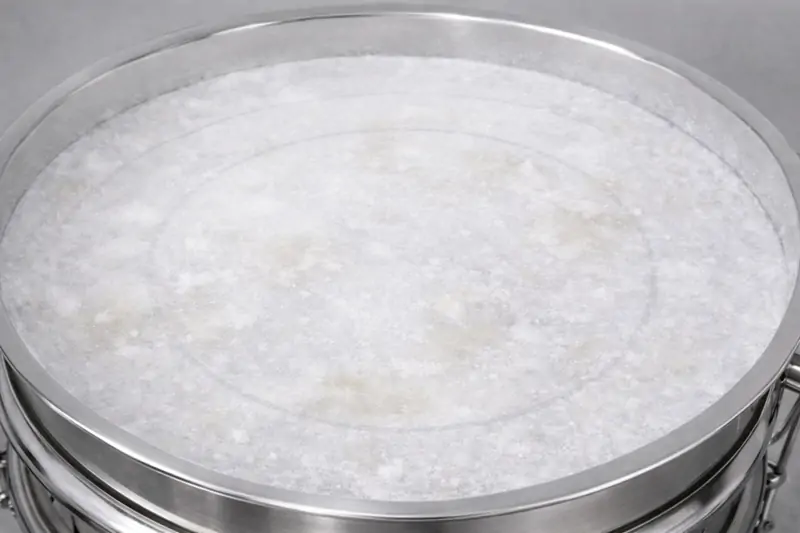
If the screen blinds again soon after cleaning, check whether the flour has absorbed moisture, whether the feed rate is excessive, and whether the screen aperture is appropriate. Only after ruling out these causes should you assess whether bouncing balls, brushes, or an ultrasonic screen cleaning system are needed.
How to Troubleshoot Poor Screening Results and Unstable Throughput in Wheat Flour Screening
Large Particles Remain After Screening: Check the Screen Mesh First
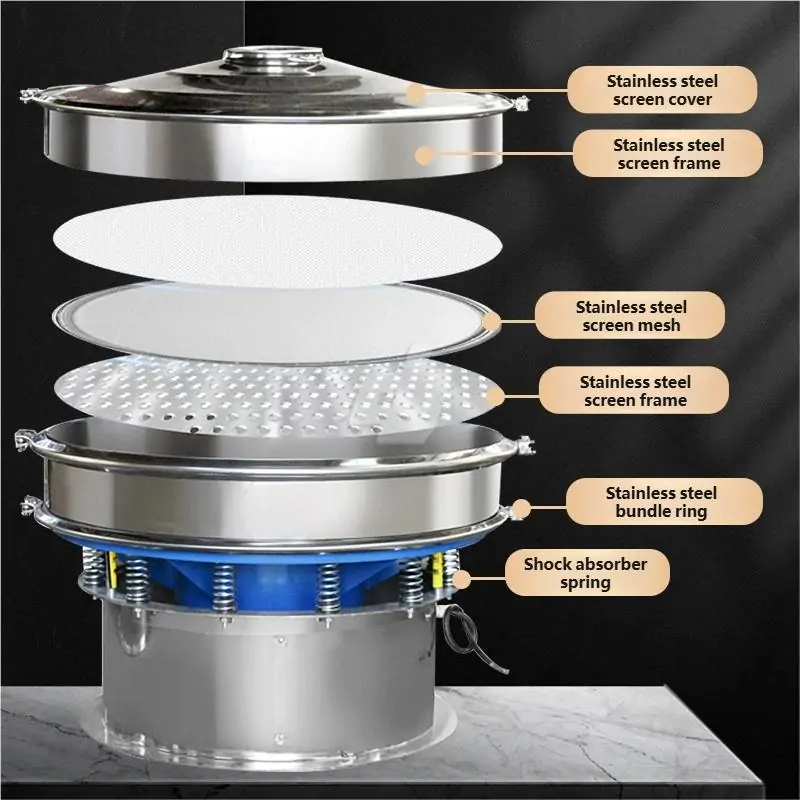
If larger particles that should have been retained end up in the undersize product, stop the machine and inspect the screen for damage, incorrect installation, and gaps between the screen mesh and frame that could allow material to bypass the screen.
If the screen is intact, check whether the aperture meets the screening requirements. If the openings are too large to retain the particles that need to be removed, confirm the correct screen specification.
Why Is the Equipment Failing to Reach the Required Throughput?
First, check whether flour is accumulating on the screen surface or entering at one concentrated point. If the screen is blinded, follow the troubleshooting steps in the previous section.
If the feed is normal and the screen is not blocked, check whether the screen openings are too small and whether the effective screening area is sufficient.
Do not judge capacity only by the equipment diameter or the manufacturer’s stated maximum throughput. Actual capacity varies with screen specifications, material conditions, and screening requirements.
How to Choose the Configuration of a Wheat Flour Rotary Vibrating Screen
The main configuration factors are the screening objective, number of screen decks, and screen blinding conditions. For a broader overview of flour screening equipment, see our guide to the máquina industrial tamizadora de harina.
| Elemento de Configuración | How to Choose | What to Consider |
| Screen mesh specification | If you only need to remove lumps or larger particles, select the aperture according to the particle size to be retained. If you need to separate flour into different particle size fractions, define the screening requirements first. | Do not rely on mesh count alone. Confirm the actual screen aperture. |
| Number of screen decks | A single deck is generally sufficient for removing lumps or larger particles. Consider multiple decks when different flour particle size fractions need to be separated. | More decks make product discharge arrangements, cleaning, and screen replacement more complex. |
| Screen cleaning system | Consider a screen cleaning system if blinding continues after normal adjustments. | Bouncing balls, brushes, and ultrasonic systems are designed for different screen structures. Confirm compatibility with the equipment before selecting one. |
What Should You Consider About Materials, Cleaning, and Dust Control for a Wheat Flour Rotary Vibrating Screen?
In addition to the housing material, pay attention to the components that contact the flour, how easily the equipment can be cleaned, and whether flour dust can escape at the feed and discharge points.
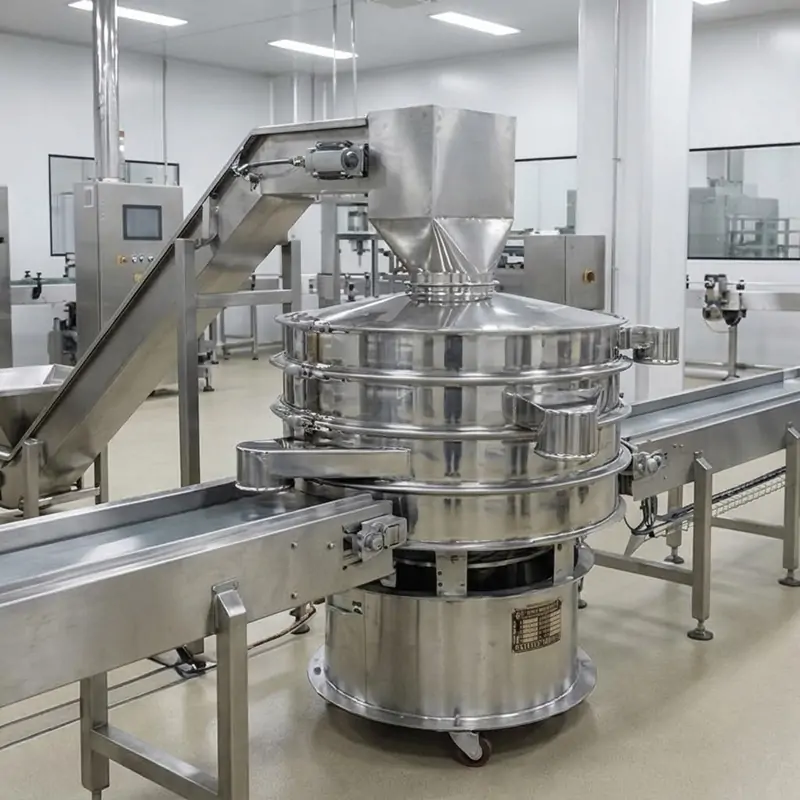
| Inspection Item | What to Check When Purchasing |
| Material-contact components | Confirm the material requirements for contact parts such as the screen mesh, screen frame, and seals. Do not ask about the housing material alone. |
| Cleaning and maintenance | Check whether the screen mesh can be removed easily, whether there are internal areas that are difficult to clean, and whether the equipment is easy to inspect after cleaning. |
| Feed, discharge, and dust | Check whether flour dust can escape from the feed inlet, discharge outlets, or piping connections, and whether the equipment can connect to the plant’s dust collection system. |
If the site has dust control or explosion protection requirements, confirm the dust collection system and appropriate protective measures in advance. Covering the equipment does not replace a complete dust control system.
If you have questions about the configuration or installation requirements for wheat flour screening equipment, contact the Jiarui team. We can help determine a suitable configuration based on your material, screening requirements, and site conditions.
Preguntas Frecuentes
¿Qué tamaño de malla se utiliza generalmente para el tamizado de harina de trigo?
No existe un número de malla fijo. Primero determine el tamaño de las partículas que se van a retener o la especificación de cribado requerida, luego confirme la abertura de la malla. No seleccione la malla basándose únicamente en el número de malla.
¿Cuántas toneladas de harina de trigo puede procesar por hora una criba vibratoria rotativa?
El rendimiento depende del tamaño del equipo, las especificaciones de la malla, la condición de la harina, la velocidad de alimentación y otros factores. Al solicitar una cotización, especifique el rendimiento objetivo y los requisitos de cribado, y confirme la capacidad alcanzable bajo sus condiciones reales de operación.
¿Puede una criba vibratoria rotativa deshacer los grumos en la harina de trigo?
No. Una criba vibratoria rotativa se utiliza principalmente para el cribado. Puede retener grumos de mayor tamaño, pero no puede sustituir a los equipos desaglomeradores. Si la formación de grumos es grave, identifique primero la causa y luego determine si es necesario un pretratamiento.
Does a wheat flour screen that frequently blinds always need an ultrasonic system?
Not necessarily. First check whether the flour has absorbed moisture, whether the feed rate is excessive, and whether the screen aperture is appropriate. If blinding continues, assess whether ultrasonic screen cleaning is suitable.
Should I choose a single-deck or multi-deck rotary vibrating screen for wheat flour?
A single deck is generally suitable when the goal is to remove lumps or larger foreign particles. Choose multiple decks when different flour particle size fractions need to be separated simultaneously.
Can a wheat flour rotary vibrating screen be customized?
Yes. Jiarui can discuss customized configurations based on your screening objectives, required throughput, and site conditions. Options include screen specifications, number of screen decks, materials for product-contact components, and feed and discharge connections. The final configuration should be confirmed according to actual operating conditions.