
How Ultrasonic Technology Prevented Static Powder Clumping in Powder Coating Screening
Project Background & Screening Conditions
The UAE powder coating line has a 120 mesh screening step right before packaging. If the screening is not stable, the packing section will be affected immediately.
The screen sits at the last stage of the line, so it directly controls the final product flow going into packaging.
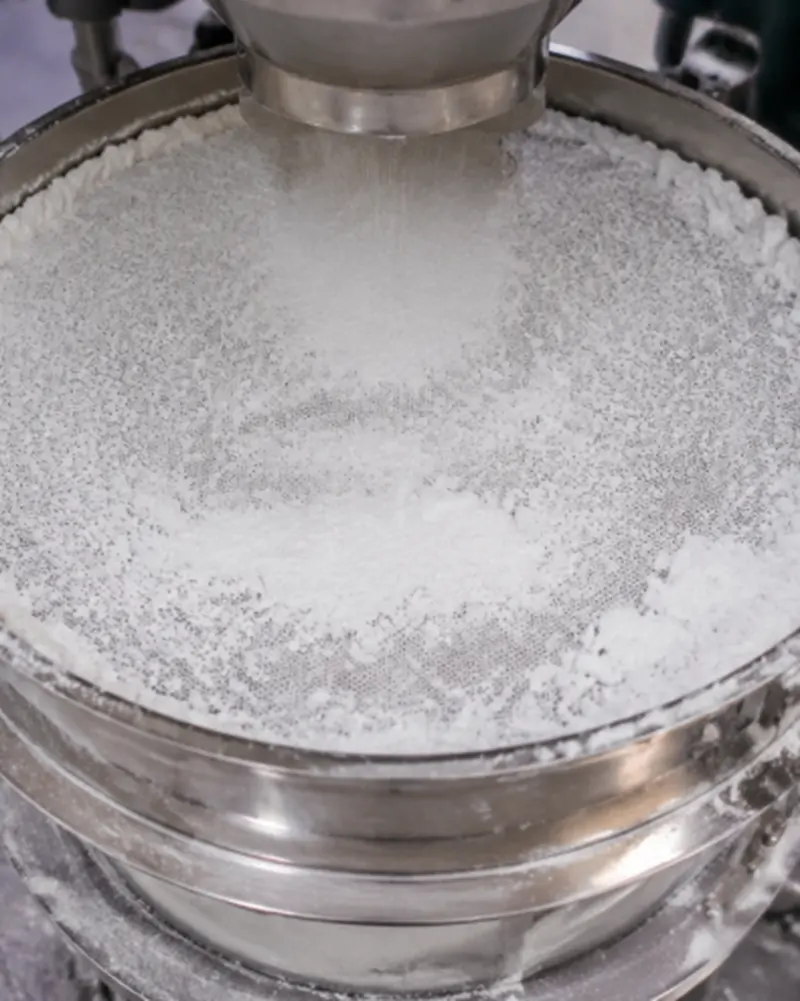
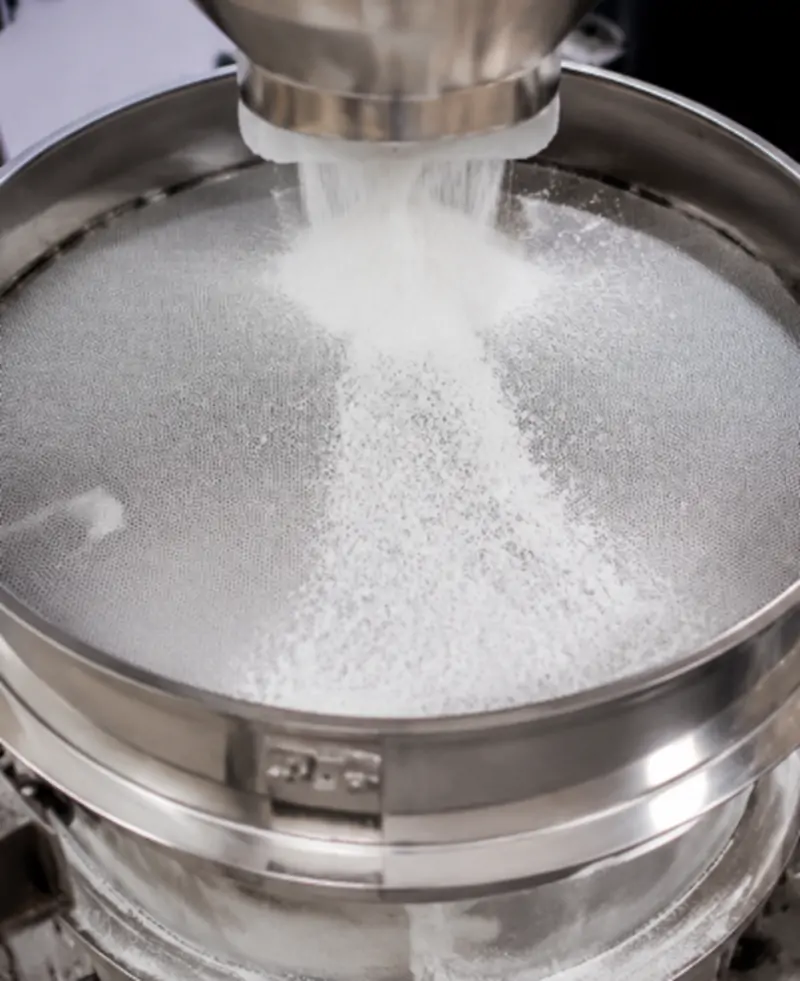
The system runs in continuous shifts under dry conditions. The material is a very fine electrostatic powder. During long operating hours, it behaves differently from normal dry powders. Fine particles tend to stick to the screen surface and make it harder for material to pass through stably.
Engineering Diagnosis
After receiving the materials mailed by the customer, our Jiarui engineering team immediately conducted an analysis using our in-house test sieves. The main factors are as follows:
- Electrostatic Adhesion Effect: During the screening process, friction between the powder and the screen mesh generates static electricity, causing the powder to adhere to the screen surface and form a “static barrier layer.” For 120-mesh powder, static electricity causes particles to clump together and stick to the edges of the mesh openings, preventing them from passing through the screen.
- Material Properties:
- Agglomeration of ultrafine powders: 120-mesh powders have a fine particle size and large specific surface area. Strong van der Waals forces and surface energy between particles cause them to agglomerate spontaneously.
- Moisture Absorption and Caking: If ambient humidity is high (e.g., relative humidity exceeds 65%), moisture absorbed by the powder surface exacerbates adhesion, forming hard agglomerates at the screen apertures.
- Intrinsic Static Charge: The powder has already accumulated an electric charge during grinding and conveying, which further exacerbates screen clogging during screening.
Solution
Based on the material samples provided by the customer, we reviewed the screening performance before confirming the final configuration.
Instead of modifying the screening structure or increasing vibration intensity, the focus was placed on reducing powder adhesion during operation.
For this application, a JRC1200-1S ultrasonic vibrating screen was selected. The ultrasonic system keeps the mesh surface active during continuous operation, helping prevent fine electrostatic powder from forming a stable layer on the screen.
With reduced particle adhesion on the mesh surface, the screening process remains more stable during long production shifts.
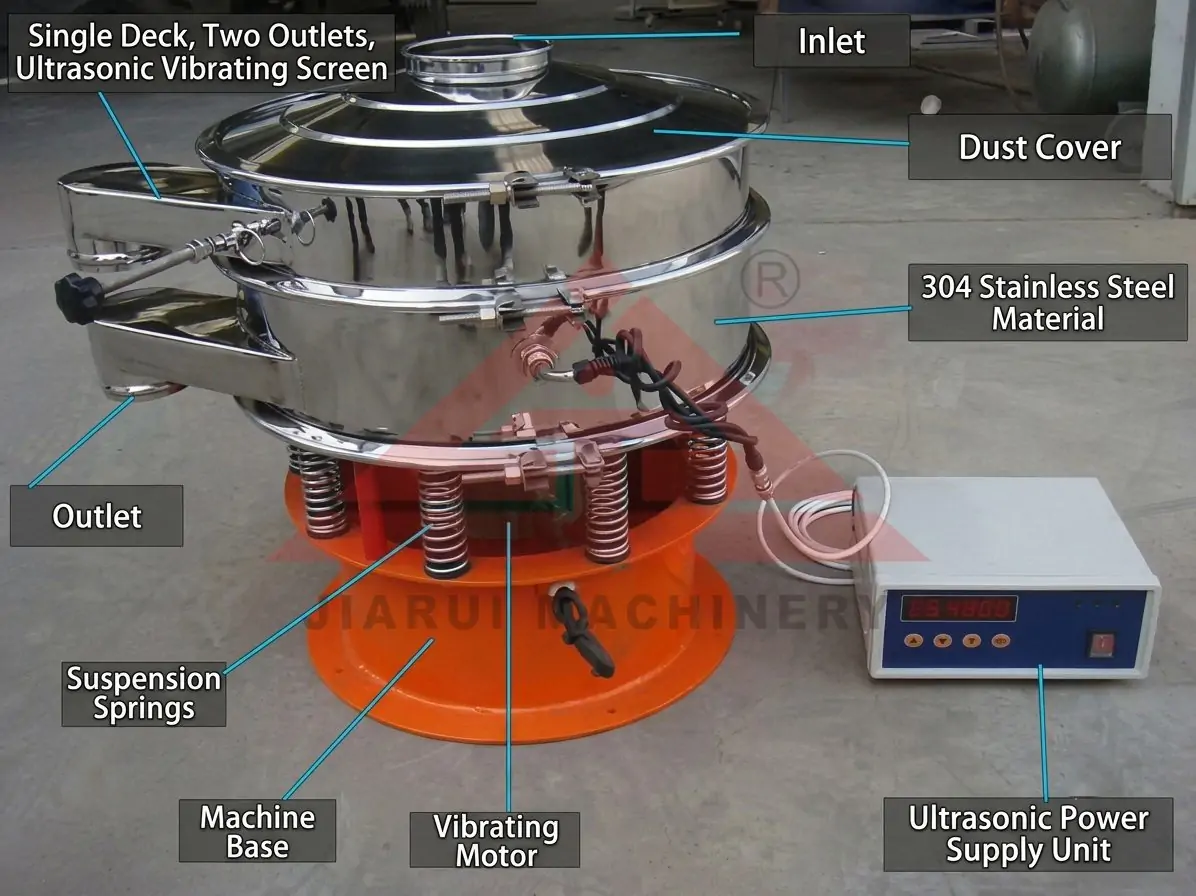
JRC1200-1S Ultrasonic Vibrating Screen Technical Configuration
| System Module | Technical Specification | Engineering Purpose / Problem Solved |
| Ultrasonic System | High-frequency ultrasonic generator (matched with transducer) | Breaks electrostatic adhesion between fine powder and mesh surface, reducing mesh blinding during continuous operation |
| Screening Frame | 1200 mm diameter circular screen deck | Provides stable fine powder classification at 120 mesh with uniform material distribution |
| Mesh System | 304 stainless steel screen mesh | Ensures food-grade / industrial-grade material contact, prevents contamination and maintains stable screening precision |
| Screening Motion | 3D rotary vibration + ultrasonic superposition | Combines mechanical dispersion and surface de-adhesion to maintain continuous powder flow under electrostatic conditions |
| Anti-blocking Mechanism | Ultrasonic de-agglomeration at mesh level | Prevents powder buildup caused by static electricity and ultra-fine particle cohesion during long running shifts |
| Feeding Structure | Central top feeding inlet | Ensures even material distribution across full screen surface, avoiding local accumulation |
| Discharge Design | Bottom discharge with stable flow outlet | Maintains consistent throughput of fine powder into packaging line without fluctuation |
| Electrical System | 1.5 kW / 380V / 50Hz industrial standard | Supports continuous industrial operation with stable power output for ultrasonic system |
| Operation Mode | Continuous dry screening mode | Designed specifically for low-moisture electrostatic powders such as powder coating materials |
| Maintenance Design | Quick disassembly screen structure | Allows fast screen replacement and cleaning without long production interruption |
Performance Result (Before vs After Installation)
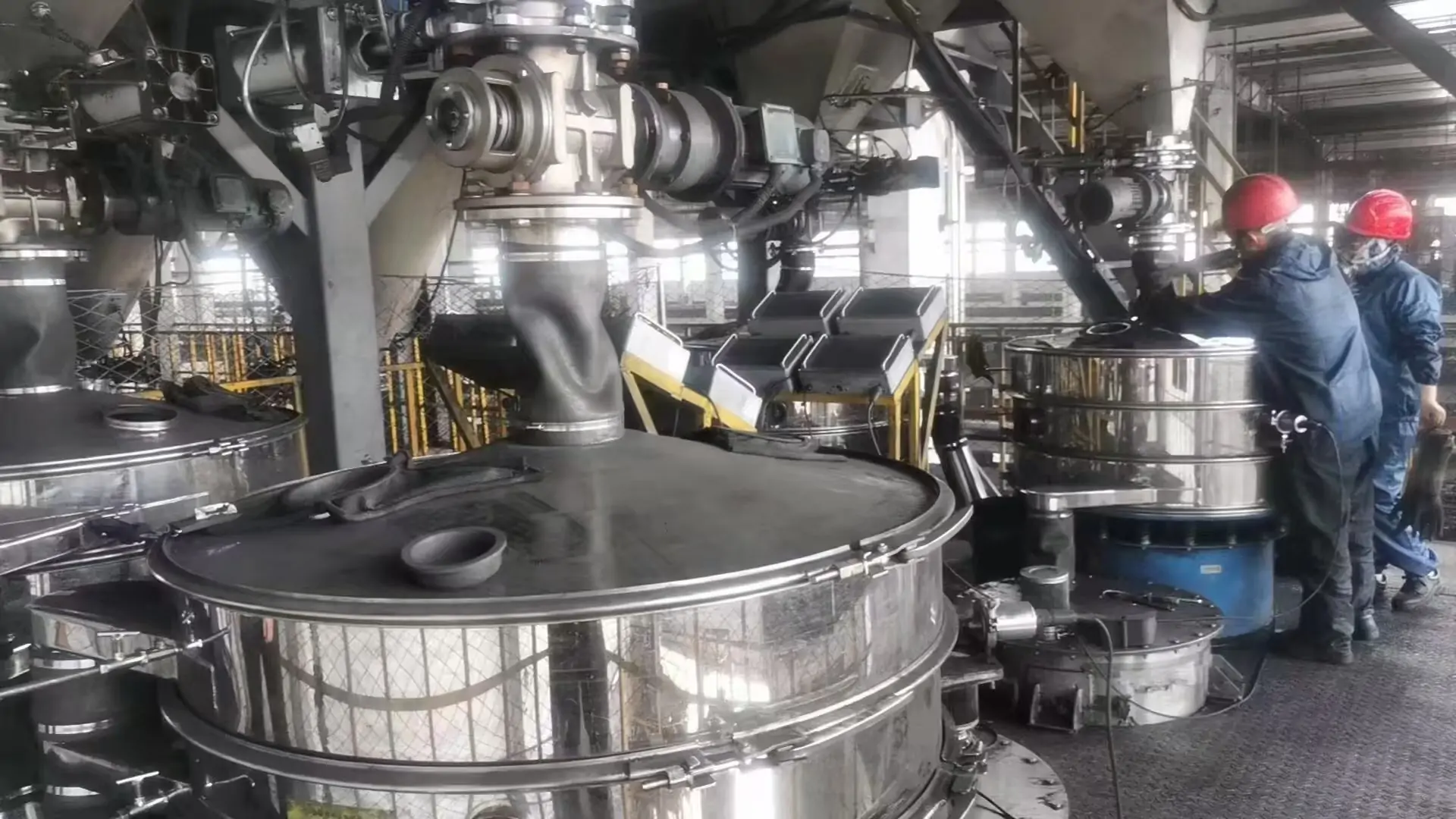
The JRC1200-1S ultrasonic vibrating screen has been operating in the UAE powder coating line for several months under continuous production.
Before installation, electrostatic buildup on the mesh surface gradually affected the screening process during long running shifts. Powder would start to accumulate over time, making the discharge flow less stable and leading to occasional stops for cleaning.
After the ultrasonic system was introduced, the condition of the mesh surface during operation became more stable. Powder adhesion was reduced, and material flow remained more consistent under continuous dry running conditions.
As a result, the screening section now operates more smoothly in daily production. Cleaning stops are less frequent, and the screening process stays aligned with the packaging line, keeping the overall production flow more stable.
Engineering Comparison in Fine Powder Screening Applications
Different screening systems are designed for different material behaviors, especially in fine powder applications where particle adhesion becomes a key factor during operation.
| Item | Rotary Vibrating Screen | Ultrasonic Vibrating Screen |
| Working principle | Three-dimensional rotary motion | Rotary/linear vibration with ultrasonic mesh activation |
| Typical application | Fine to medium powder classification | Fine powder with electrostatic or cohesive behavior |
| Screening behavior | Stable separation under normal powder conditions | Reduced particle adhesion on mesh surface during operation |
| Stability in fine powder | May decrease in electrostatic or ultra-fine powders | More stable under continuous fine powder screening |
| Maintenance demand | Higher cleaning frequency in sticky powders | Reduced mesh blockage and cleaning frequency |
In fine powder coating applications, the key challenge is not only particle separation, but also how the powder behaves on the screen surface during continuous operation.
Rotary vibrating screens are widely used for standard powder classification and perform well under normal conditions. However, when handling ultra-fine or electrostatic powders, material adhesion may gradually affect screening stability.
In such cases, ultrasonic vibration can be used as an enhancement to reduce surface adhesion and help maintain more stable screening conditions during long production cycles.
Engineering Recommendations
From this project and other fine powder screening applications, we observed a few practical points during operation.
- For 100 mesh fine powders, especially those with electrostatic properties, the material does not behave like normal dry granules. It tends to stay on the screen surface and gradually form a thin layer that affects flow over time.
- In most cases, increasing vibration intensity does not solve the problem. Stronger vibration can even compact the powder layer and make it more difficult to clear during operation.
- For long-running production lines, relying on shutdown cleaning is not practical. Once frequent stops are required, the screening section quickly becomes a weak point in the process flow.
In these conditions, stable screening is mainly determined by whether the screen surface can stay active during operation, rather than how strong the mechanical vibration is.
This is why Ultrasonic Vibrating Screen shows better stability in fine electrostatic powder applications.
Performance Result
After installing the Ultrasonic Vibrating Screen, the screening section operated more consistently during normal production shifts.
Compared with previous operation, powder buildup on the mesh surface developed more slowly, and operators did not need to stop the line as often for cleaning.
Under continuous running with electrostatic powder, the 120 mesh separation remained stable, and the discharge flow became easier to maintain during long production hours.
Overall, the screening section now runs as part of a stable production flow instead of being a point that interrupts operation.
Application Scope
The JRC1200-1S ultrasonic vibrating screen is used for fine powder screening where electrostatic adhesion or mesh blinding may affect continuous production.
| Industry | Typical Materials (400–600 Mesh Screening) |
|---|---|
| New Energy & Advanced Materials | Lithium Battery Anode Materials, Cathode Materials, Magnetic Powder, Laser Powder, Alloy Powder |
| Metal Powder & Powder Metallurgy | Molybdenum Powder, Stainless Steel Powder, Tungsten Powder, Nickel Powder, Cobalt Powder, Alloy Powder |
| Chemical & Coating Industry | Powder Coatings, Silicon Carbide Powder, Boron Carbide Powder, Quartz Powder, Organic Chemical Powders |
| Food & Food Additives | Malt Powder, Coffee Powder, Starch, Sugar Powder, Milk Powder |
| Pharmaceutical & API Processing | Ribavirin Powder, Herbal Medicine Powder, Pharmaceutical Powders, API Intermediates |
| Abrasives & Ceramic Materials | Silicon Carbide, Boron Carbide, Quartz Powder, Alumina, Ceramic Powder |
Engineering Note
The system is mainly recommended for fine powders with electrostatic or cohesive behavior, where standard vibration screening may face mesh blinding during continuous operation.
Get a Customized Screening Solution
For powder coating production lines experiencing issues such as mesh blinding, unstable fine powder separation, or frequent cleaning interruptions, the engineering team at Jairui Machinery can provide support based on actual material conditions.
We usually start by reviewing the powder characteristics and screening behavior, and then recommend suitable process and equipment configurations accordingly.
Our support includes:
- Material testing based on your powder samples
- Screening process evaluation under real operating conditions
- Equipment selection and system configuration advice
We typically respond within 24 hours after receiving your material information.
Upgrade your fine powder screening process with JRC1200-1S ultrasonic vibrating screen technology.