Ultrasonic Vibrating Screen for Lithium Battery Powder Case Study
Project Background
This case study focuses on a domestic Chinese new energy battery material manufacturer specializing in the research and large-scale production of high-nickel ternary cathode materials (NCM) and lithium iron phosphate (LFP) precursor powders.
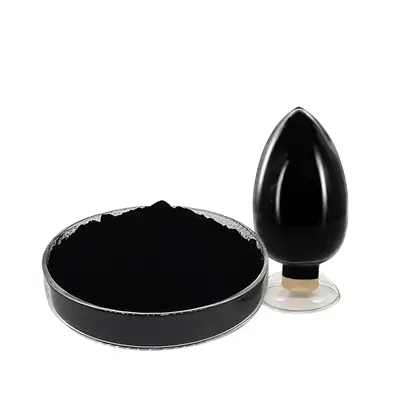
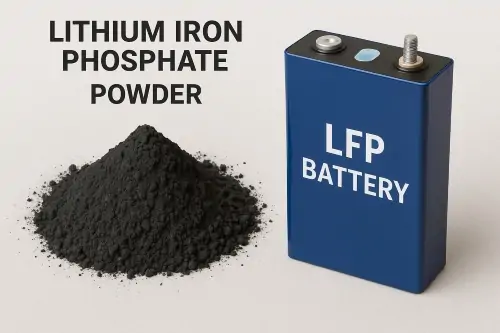
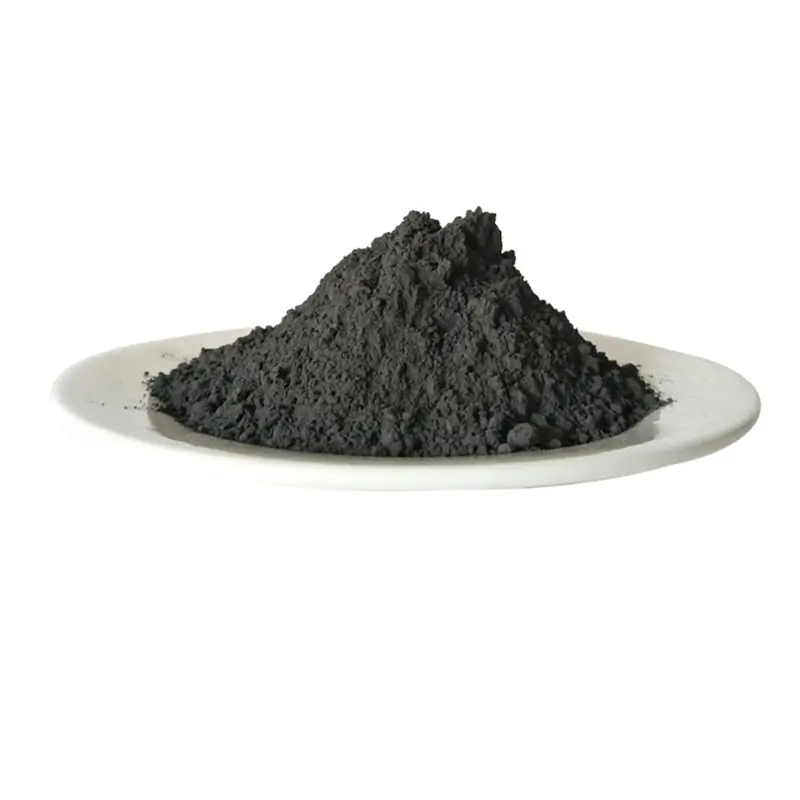
During the production process, the calcined cathode precursor materials must undergo strict particle size classification to ensure consistency, safety, and high energy density of lithium battery products. The customer’s original screening process used a traditional vibrating screen; however, when processing ultra-fine powders above 300 mesh, especially in an ultrasonic vibrating screen for lithium battery powder applications, the system frequently encountered the following challenges.
Core Problems Faced by the Customer
Severe Screen Blinding
High-nickel cathode materials have extremely fine particle sizes (target screening range: 325–500 mesh). Due to Van der Waals forces and electrostatic adsorption, severe screen blinding and crust formation occur on the mesh surface, significantly reducing the effective screening area. The customer had to stop the line 2–3 times per shift for manual cleaning, seriously affecting the continuous production of lithium battery powder.
Low Screening Efficiency and Poor Accuracy
Due to persistent clogging, the screening efficiency of the traditional system fluctuated significantly. Fine powder pass-through rate was insufficient, resulting in coarse particles mixing into qualified products, while a large amount of fine powder remained in the oversize fraction. This not only caused raw material waste but also negatively impacted the electrochemical consistency of lithium battery materials.
Static Electricity and Agglomeration Issues
Under dry processing conditions, the material carries strong static charges, leading to particle agglomeration and the formation of pseudo-coarse particles. This interferes with accurate particle size distribution and reduces the effectiveness of lithium battery powder screening, causing significant yield loss of usable fine powder.
Production Bottlenecks and High Maintenance Costs
Frequent shutdowns for screen cleaning reduced equipment utilization and prevented the expansion of production capacity. At the same time, manual cleaning increased labor intensity and caused mechanical wear on the screen mesh, further increasing consumable costs in the screening process.
Ultrasonic Vibrating Screen Solution Provided by Jiarui Machinery
To address the above challenges in lithium battery powder screening applications, the technical team of Jiarui Machinery conducted on-site inspection and material testing and recommended a customized solution based on the JR-C-1000 ultrasonic vibrating screen for lithium battery powder processing.
Equipment Selection
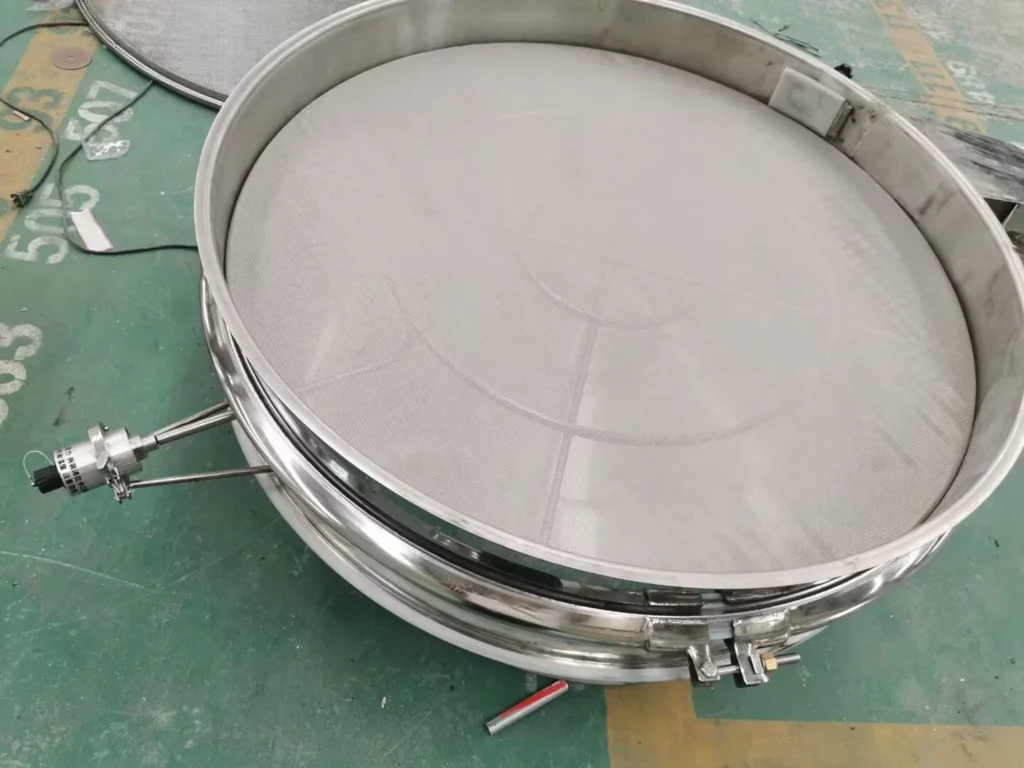
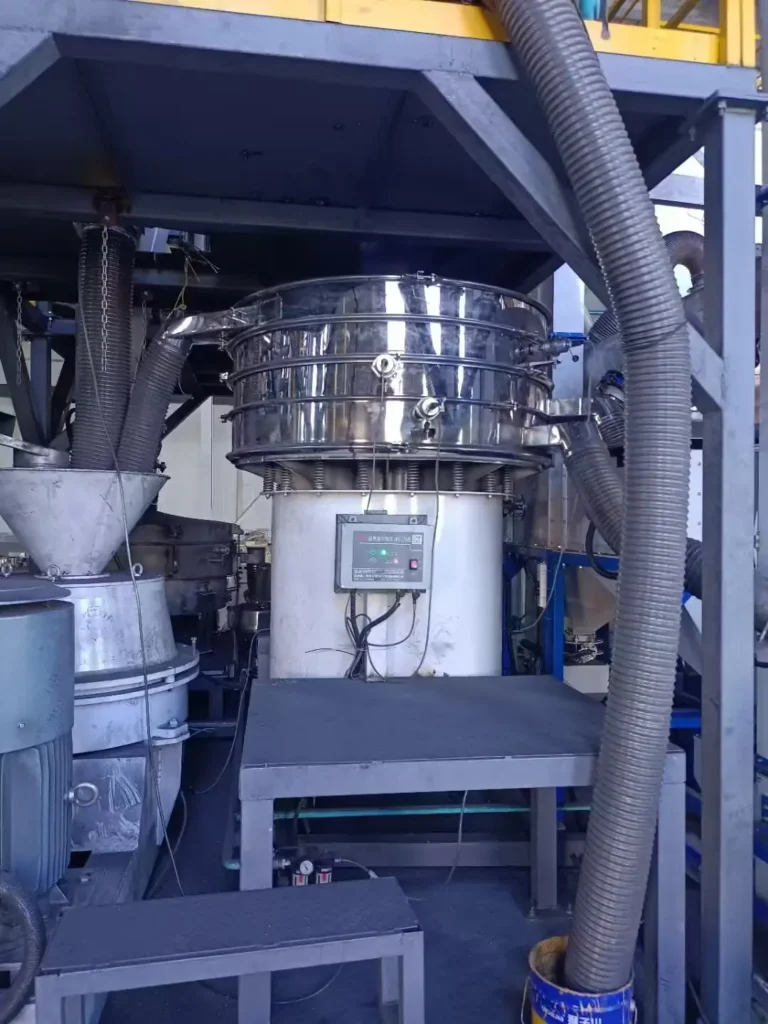
JR-C-1000 ultrasonic vibrating screen, with an effective screening diameter of 950 mm and a screening area of 0.7085 m². The machine is equipped with a 3-layer screen frame, enabling multi-stage precision classification.
Reference: Ultrasonic Vibrating Screens
Core Configuration
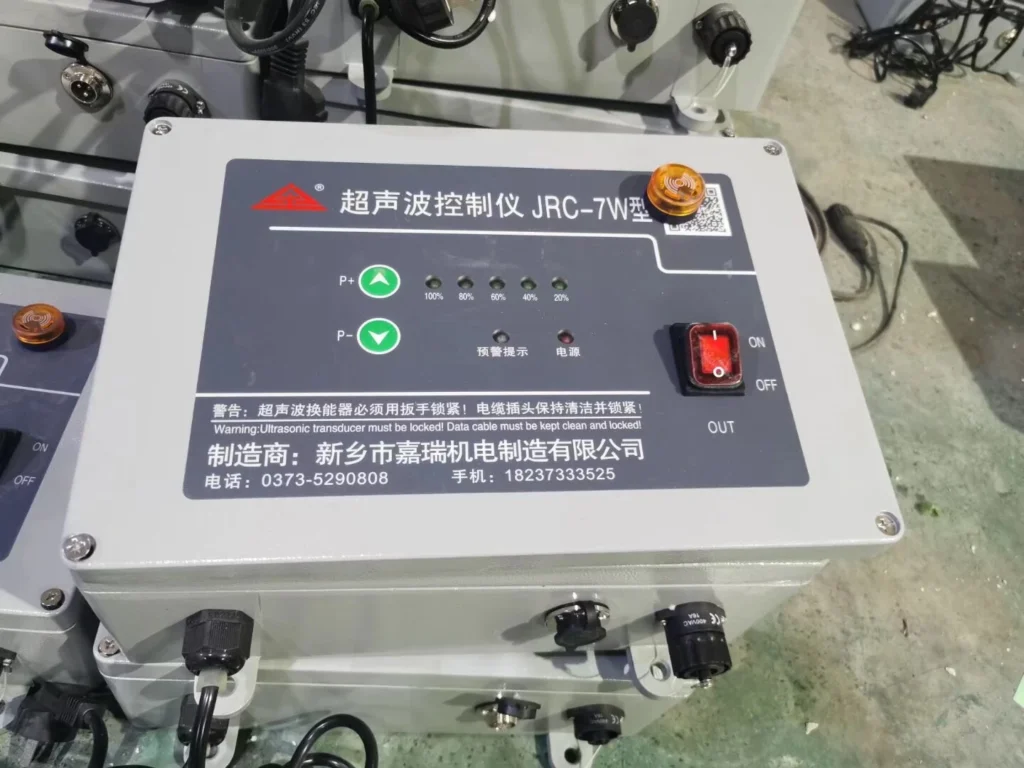
Ultrasonic System
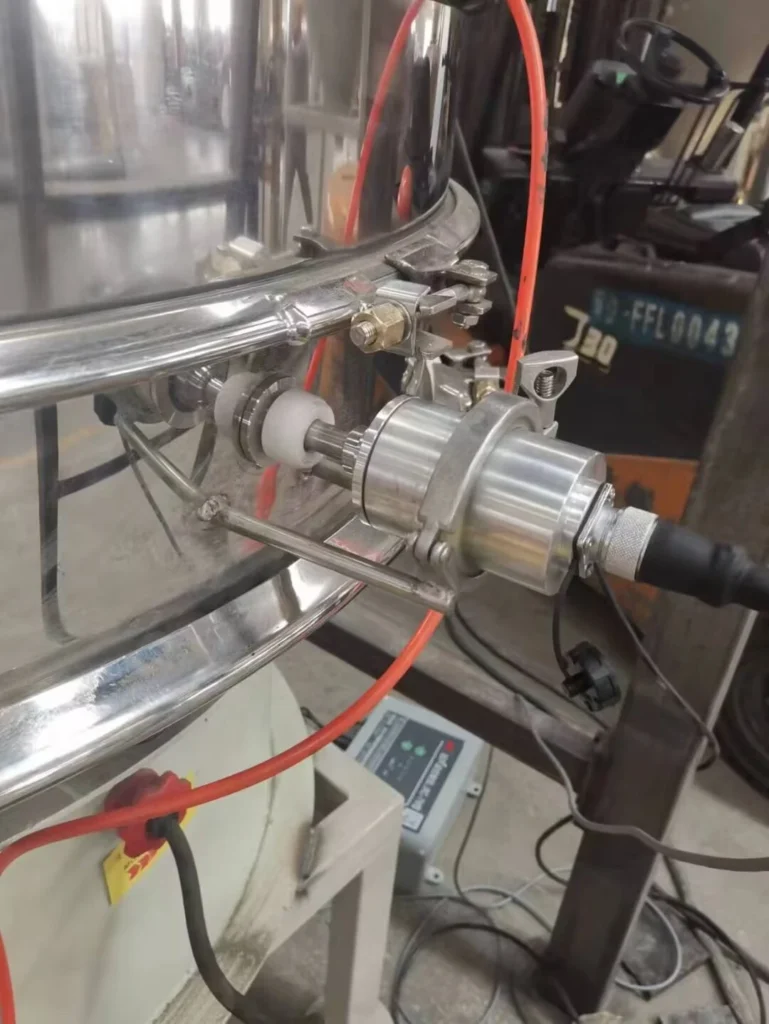
The system integrates a 38kHz high-frequency ultrasonic power supply and transducer, which converts electrical signals into high-frequency mechanical vibration and directly transmits it to the screen mesh. This is the core technology of the ultrasonic vibrating screen for lithium battery powder applications, effectively preventing mesh clogging in ultra-fine powder screening.
Anti-Sticking and Corrosion-Resistant Treatment
Based on the material characteristics, all product-contacting parts of the screening machine (including the screen frame) are treated with PTFE (Teflon) coating. This prevents material adhesion and provides resistance to potential trace corrosive components in lithium battery precursor powders.
Customized Screen Mesh
High-tension, high-precision stainless steel mesh is adopted, with a target classification point of 400 mesh (approximately 38 μm). The mesh works in synergy with the ultrasonic system to achieve stable and precise lithium battery powder screening.
Working Mode
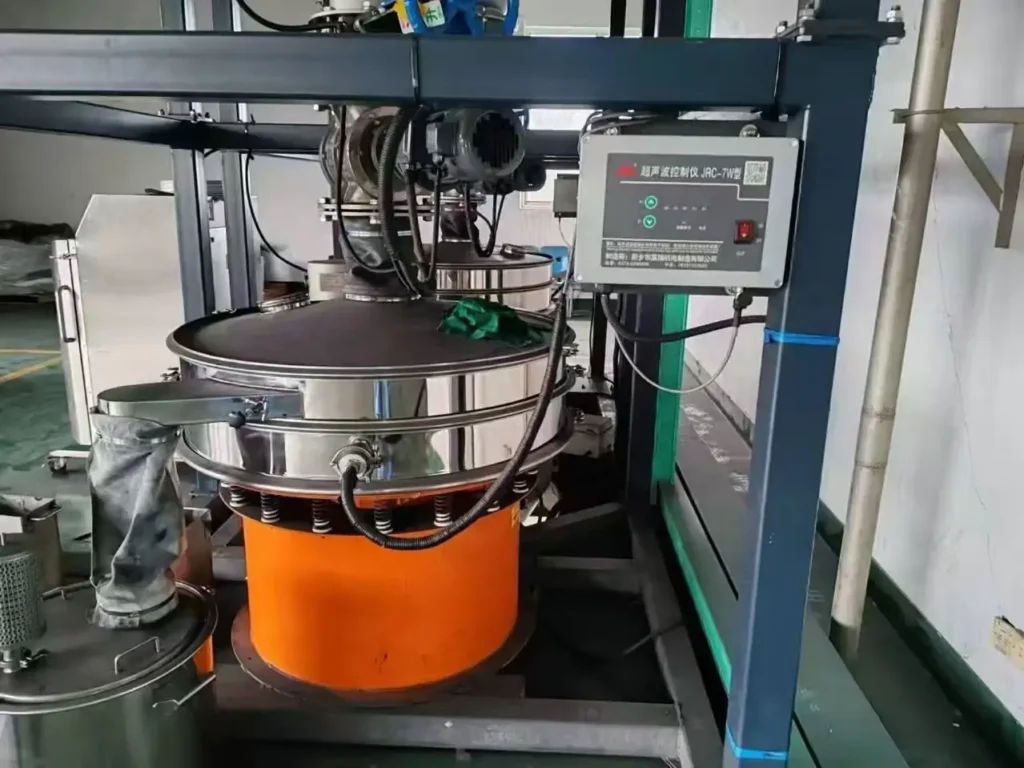
The equipment operates in a dual-drive system. The bottom vibration motor generates three-dimensional mechanical vibration to ensure uniform material distribution and forward conveying. At the same time, the superimposed ultrasonic vibration generates high-frequency, low-amplitude micro-vibrations on the screen mesh, effectively breaking particle adhesion and electrostatic forces, ensuring stable operation of the ultrasonic vibrating screen for lithium battery powder processing.
Customer Feedback and Operational Results
Following the installation and commissioning of the equipment, after one month of continuous production monitoring, the customer provided the following feedback:
- Complete Resolution of Clogging Issues: The high-frequency vibrations of the ultrasonic waves keep the screen mesh in a constant “self-cleaning” state, preventing material from adhering to the mesh openings. The customer achieved 72 hours of continuous, uninterrupted operation without any downtime for screen cleaning, fully unlocking production capacity.
- Significantly Improved Screening Accuracy and Efficiency: According to statistics, the screening yield for products in the target particle size range (400 mesh) has steadily increased from approximately 75% to over 98%. The concentration of the product particle size distribution (Span value) has significantly improved, and batch consistency meets the requirements of high-end customers.
- Significantly Increased Yield: Losses of fine powder caused by agglomeration and clogging have been virtually eliminated, resulting in an approximate 5% increase in the overall raw material yield and significant economic benefits.
- Stable and Reliable Operation: The equipment supports continuous industrial operation for 12–24 hours. The ultrasonic system operates stably without requiring additional cooling devices. A 2-hour full-load test conducted prior to shipment validated its reliability.
Comparison Table
To clearly evaluate the improvement brought by the ultrasonic vibrating screen for lithium battery powder, the performance before and after implementation is summarized below:
| Performance Indicator | Before (Vibrating Screen) | After (JR-C-1000 Ultrasonic Vibrating Screen) |
|---|---|---|
| Screen Clogging | Severe clogging, 2–3 manual cleanings per shift | Self-cleaning, no clogging during operation |
| Continuous Operation | Frequent shutdowns for cleaning | 72-hour continuous operation achieved |
| Screening Efficiency | Unstable, ~75% fine powder pass rate | Stable, >98% pass rate |
| Particle Consistency | Poor, wide particle distribution | Highly uniform particle size distribution |
| Material Yield | Significant fine powder loss due to clogging | Yield increased by ~5% |
| Maintenance Requirement | High labor and screen wear | Minimal maintenance required |
| Production Stability | Interrupted and unstable | Stable industrial-grade continuous operation |
Advantages of Ultrasonic Vibrating Screen for Lithium Battery Powder
The ultrasonic vibrating screen for lithium battery powder applications provides the following key advantages:
- Anti-clogging and Self-Cleaning: High-frequency ultrasonic vibrations fundamentally solve the problem of screen clogging caused by ultra-fine powders, highly electrostatic materials, and materials prone to agglomeration.
- High-Precision Screening: Particularly suitable for the precise classification of ultra-fine powders in the 200–635 mesh (18–75 μm) range, with screening accuracy improved by 1%–70%.
- Increased Production Capacity and Yield: Stable, clog-free operation boosts screening capacity by 0.5–10 times while reducing material waste.
- Adaptability to Special Materials: Customized solutions, such as PTFE coating, enable the processing of materials that are sticky, corrosive, or require high purity.
Typical Applications of Ultrasonic Vibrating Screen
| Industry | Typical Materials |
|---|---|
| New Energy Materials | Lithium battery cathode/anode powders, magnetic powders, alloy powders |
| Powder Metallurgy | Molybdenum powder, tungsten powder, nickel powder, cobalt powder |
| Chemicals & Coatings | Silicon carbide, boron carbide, quartz powder |
| Food Industry | Starch, sugar powder, milk powder, coffee powder |
| Pharmaceuticals | API powders, herbal powders |
| Ceramic Materials | Alumina, ceramic powders, abrasive powders |
Conclusion
This project demonstrates that the JR-C series ultrasonic vibrating screen for lithium battery powder processing effectively solves industry-wide challenges such as clogging, low precision, and poor yield in ultra-fine powder screening.
By combining mechanical vibration with ultrasonic energy, the system significantly improves production efficiency and product consistency, while delivering measurable economic benefits.
Customized Ultrasonic Vibrating Screen Solutions
Jiarui Machinery provides fully customized screening solutions for different industries and material conditions.
We offer standard models ranging from Φ400 mm to Φ1800 mm, as well as customized systems including:
- Inert gas protection screening systems
- Integrated cleaning or cooling functions
- GMP / FDA-compliant designs for high-purity applications
If you are facing challenges in lithium battery powder screening, please provide your material specifications and process requirements. Our engineering team will provide professional selection guidance and customized solutions.