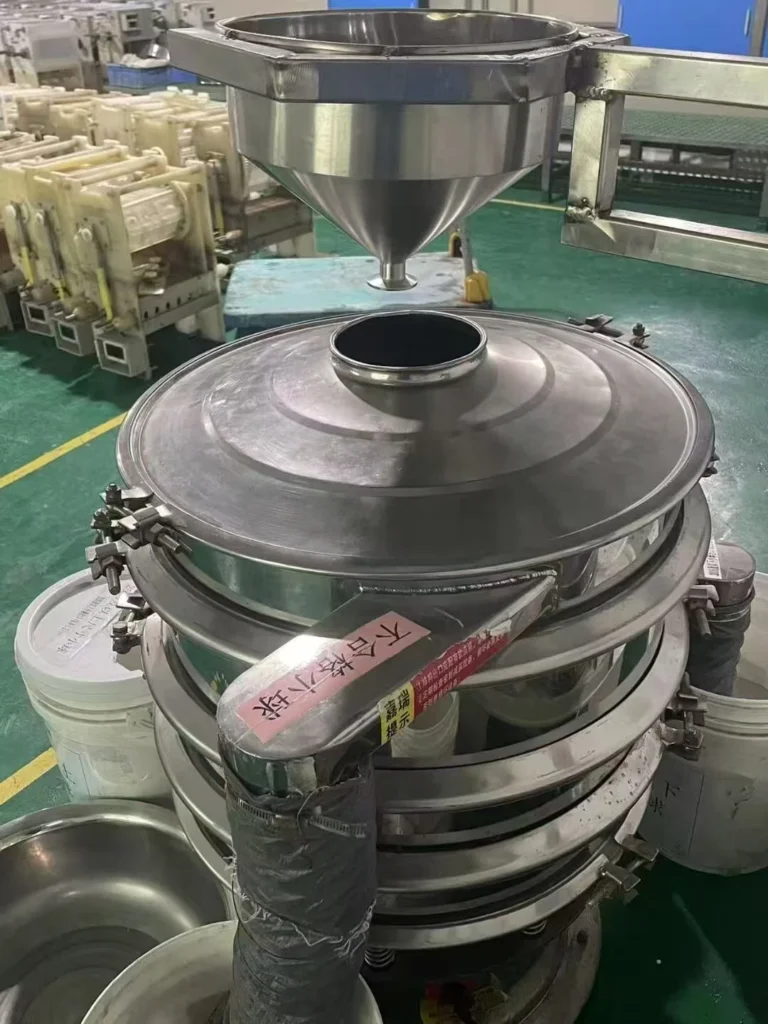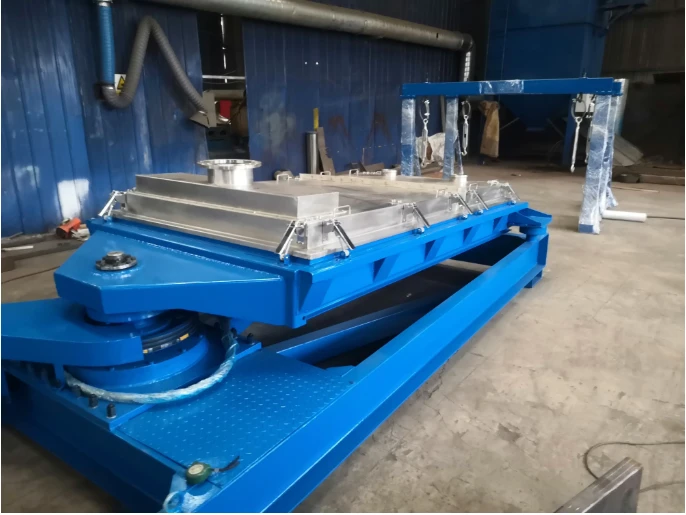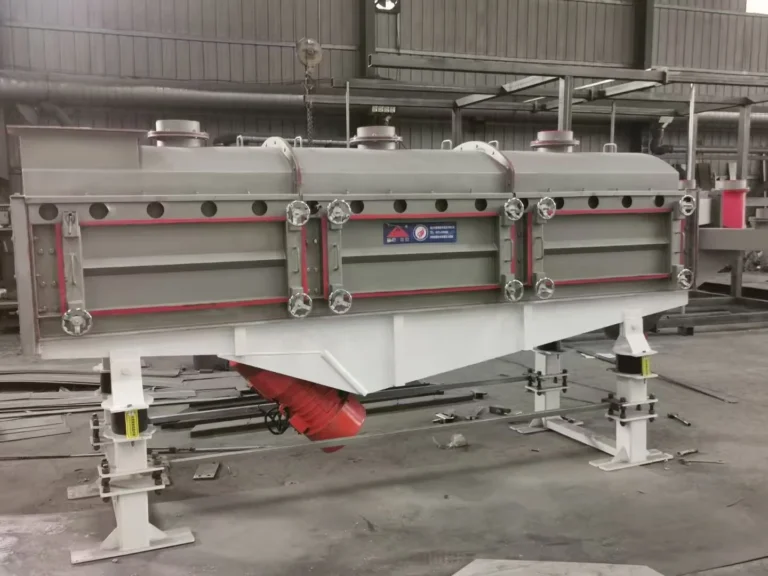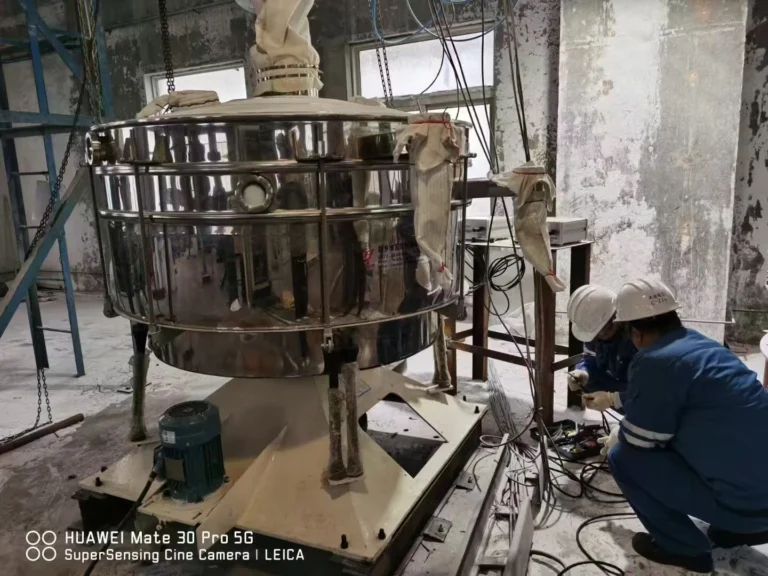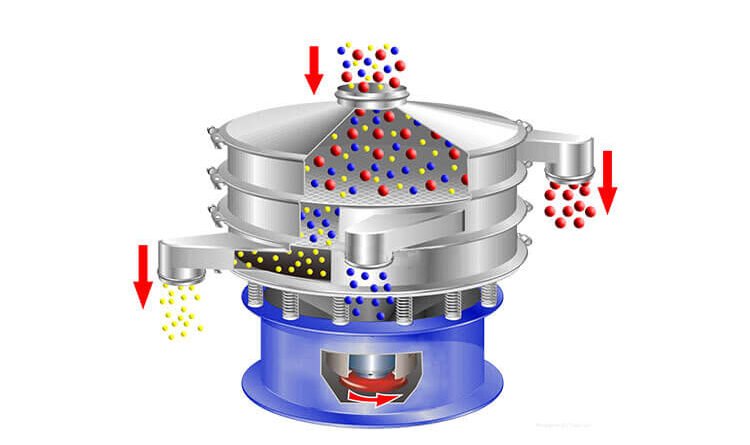
The ultrasonic vibrating screen is developed on the basis of a traditional vibrating screen and integrates an advanced ultrasonic screening system. It is specially designed to solve difficult screening problems such as static electricity, agglomeration, and fine powder adhesion.
By converting standard electrical input (220V/50Hz or 110V/60Hz) into high-frequency ultrasonic vibration energy at around 36–38kHz, the system applies millions of micro-vibrations per second to the screen surface. This helps fine particles form a micro-suspension layer, significantly improving material passing efficiency while preventing clogging and adhesion.
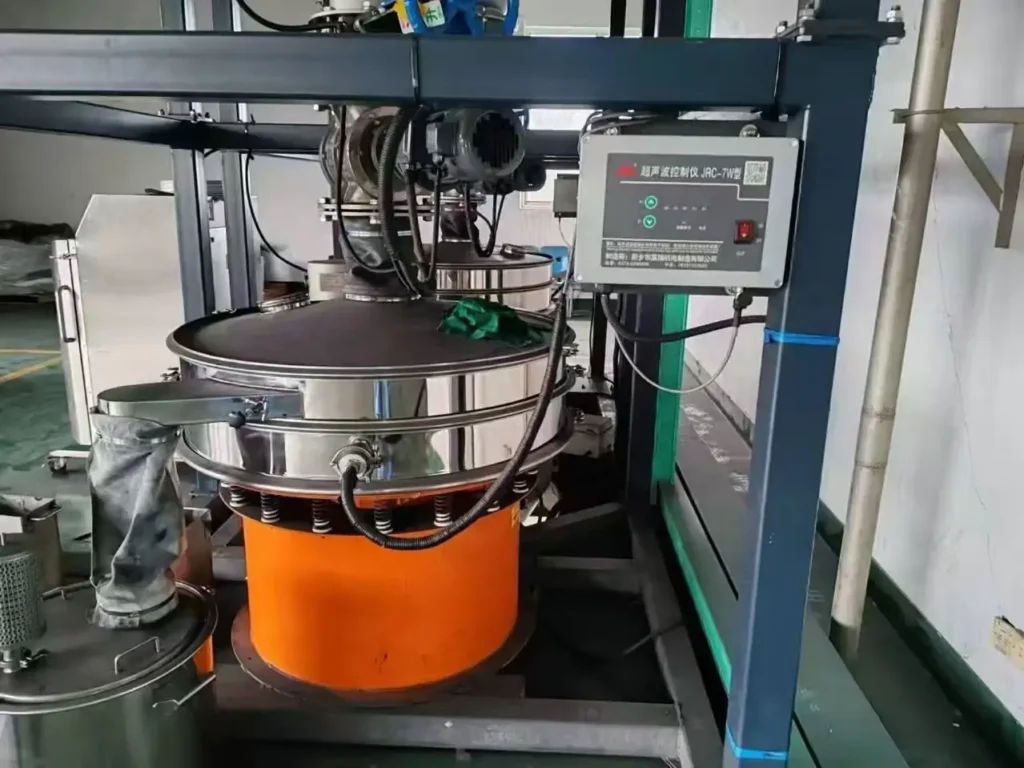
Working Principle of Ultrasonic Vibrating Screen
The ultrasonic system generates high-frequency mechanical vibration energy that is transmitted directly to the screen mesh. This vibration breaks surface tension between particles, reducing static adsorption and preventing blockage.
As a result, fine powders can pass through the mesh more easily, improving both screening accuracy and production efficiency.
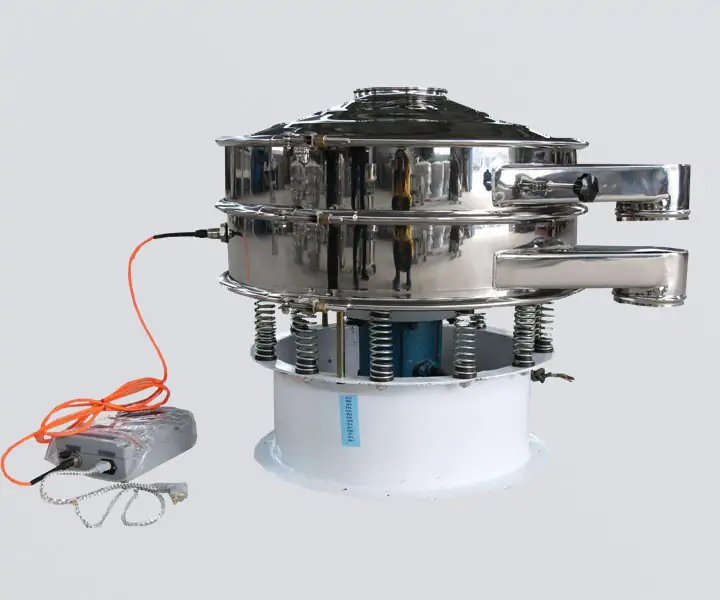
Ultrasonic System Structure
The ultrasonic screening system consists of several key components:
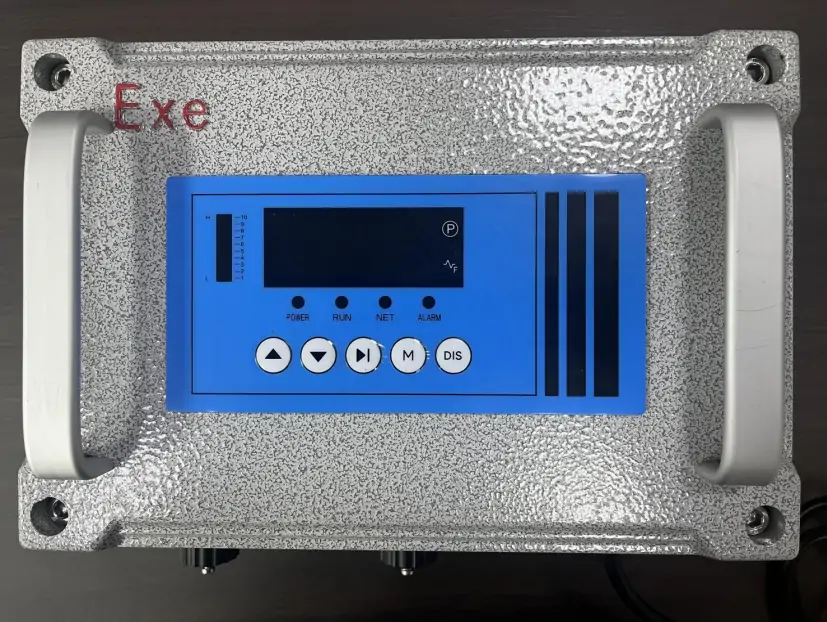
- Ultrasonic power supply: Converts standard electricity into high-frequency energy (around 38kHz), with intelligent frequency tracking and stable output.
- Connection cables: High-quality cables ensure stable energy transmission between components.
- Aviation connectors: Industrial-grade connectors for reliable and quick installation.
- Ultrasonic transducer: Converts electrical energy into mechanical vibration energy efficiently.
- Resonance ring / grid: Enhances vibration distribution across the screen surface for better screening performance.
Applications of Ultrasonic Vibrating Screen
This equipment is ideal for materials that are difficult to screen due to:
- Strong adsorption
- High static electricity
- Easy agglomeration
- High fineness or low bulk density
It is widely used for ultra-fine powder classification and liquid filtration, with screening accuracy up to 25µm for dry powders and filtration down to 10µm.
Typical materials include:
- Metal powders (silicon carbide, tungsten, nickel, molybdenum, stainless steel powder)
- Graphite powder
- Coating and paint powders
- Pharmaceutical powders
- Food powders such as milk powder, coffee powder, malt powder
- Battery materials and electromagnetic powders
- Quartz powder and fine chemical materials
Features of Ultrasonic Vibrating Screen
- High-precision screening for ultra-fine powders (up to 500 mesh and above)
- Prevents mesh clogging and reduces downtime
- Self-cleaning function during operation
- Can be used in single-layer or multi-layer screening systems
- Improves screening efficiency by 1–100% and output by 1–10 times
- Maintains stable material properties during processing
- Suitable for continuous 24-hour industrial operation
Noise Reduction Methods for Ultrasonic Vibrating Screen
During operation, vibration noise may occur. If noise becomes abnormal, the following methods can help reduce it:
1. Tighten all components
Ensure all bolts and screen parts are properly fixed to avoid additional vibration caused by loosening.
2. Install motor soundproof cover
A soundproof enclosure can significantly reduce motor-generated noise.
3. Add damping to bearings
Use rubber or foam materials on bearing seats to absorb vibration and reduce noise transmission.
4. Install rubber plates
Rubber damping on the screen box, feed inlet, and discharge areas helps reduce structural vibration.
5. Replace steel springs with rubber springs
Rubber springs provide better shock absorption for small and medium equipment.
Amplitude Adjustment of Ultrasonic Vibrating Screen
Amplitude adjustment affects both screening accuracy and output:
- Low amplitude: Suitable for heavy, free-flowing materials
- Medium amplitude: Ideal for general materials and stable screening
- High amplitude: Used for light, sticky, or highly static materials to prevent adhesion and improve dispersion
Proper adjustment ensures optimal performance for different material types.
Conclusion
The ultrasonic vibrating screen is a highly efficient solution for fine powder screening, especially for materials that are prone to clogging, static buildup, or poor flowability. Its advanced ultrasonic system significantly improves screening precision, efficiency, and stability, making it widely applicable across multiple industries.
FAQs – Ultrasonic Vibrating Screen
Q. What is an ultrasonic vibrating screen used for?
A: It is used for fine powder screening, particle classification, and liquid filtration, especially for materials with static electricity, high adhesion, or easy agglomeration.
Q. How does an ultrasonic vibrating screen work?
A: It uses high-frequency ultrasonic vibration (around 36–38kHz) to break particle adhesion and prevent mesh clogging, allowing fine materials to pass through more efficiently.
Q. What materials can be processed by ultrasonic vibrating screens?
A: It is suitable for metal powders, graphite, coatings, pharmaceuticals, food powders, battery materials, and ultra-fine chemical powders.
Q. What is the advantage of ultrasonic screening compared to traditional vibrating screens?
A: It improves screening accuracy, prevents mesh blockage, increases output efficiency, and enables stable processing of ultra-fine powders.
Q. Can ultrasonic vibrating screens be used for very fine mesh sizes?
A: Yes, they can handle screening above 500 mesh and even filter particles down to around 10–25 microns, depending on the material.
6. How can noise be reduced during operation?
A: Noise can be reduced by tightening components, adding motor soundproof covers, using damping materials on bearings, and replacing steel springs with rubber springs.