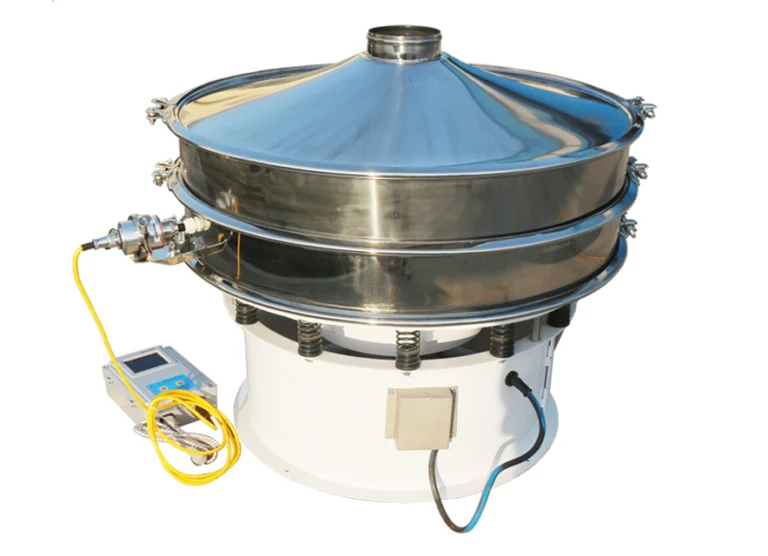
In modern industrial processing, especially in chemical, pharmaceutical, food, and mining industries, fine screening is a critical step that directly affects product quality and process efficiency. Among various screening machines, the rotary vibrating screen (also called a circular vibrating sieve) stands out for its precision, versatility, and compact design.
This article provides a professional, engineering-level explanation of how a rotary vibrating screen works, focusing on its mechanical structure, working principle, and performance optimization, while aligning with real-world search intent for industrial buyers and engineers.
What Is a Rotary Vibrating Screen?
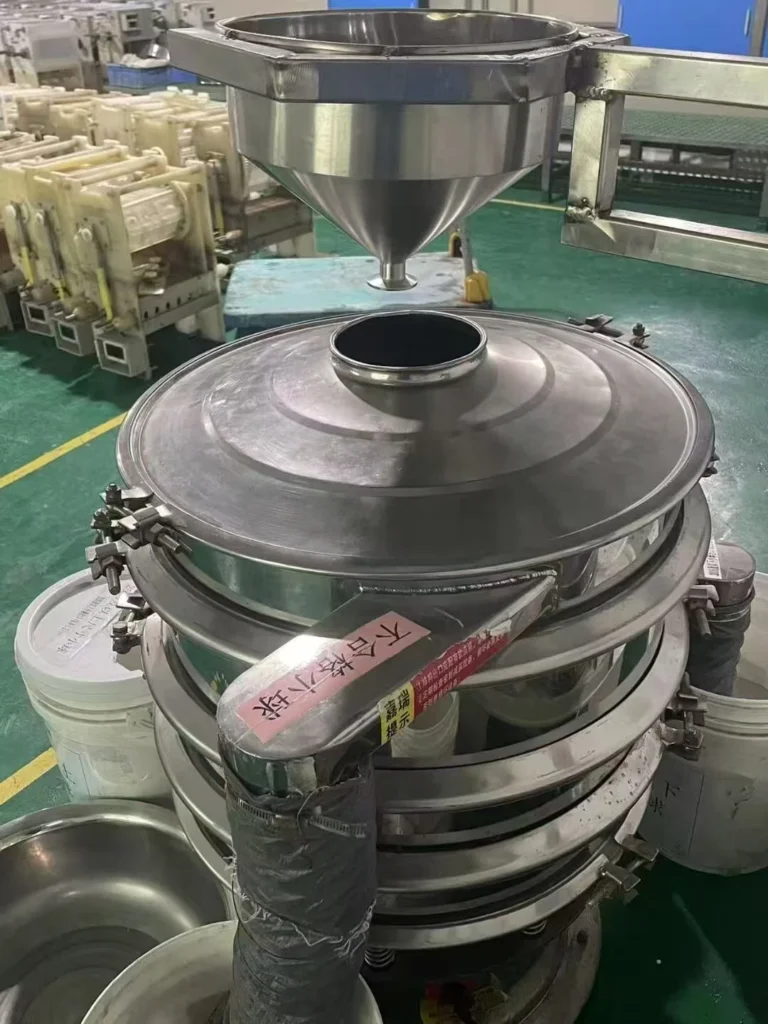
A rotary vibrating screen is a high-precision screening machine designed for fine classification of materials, capable of separating particles down to 500 mesh (0.025 mm).
Specifically, it is widely used to:
- Classify powders and granules into different sizes
- Filter liquids and slurries
- Remove impurities from raw materials
Because of its versatility, it is commonly applied in:
- Chemical processing
- Food and pharmaceutical industries
- Mining and environmental protection
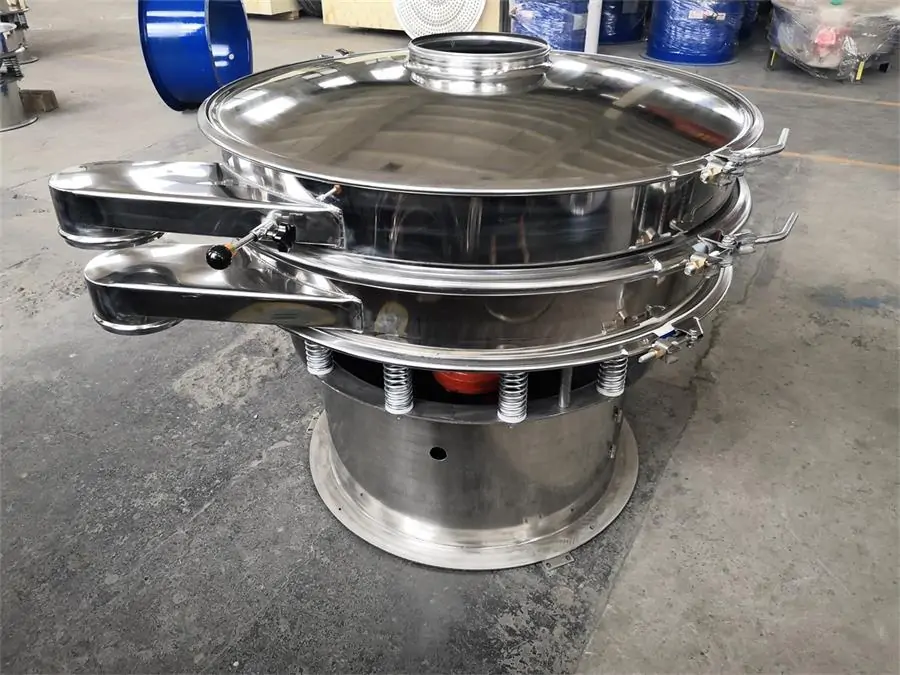
Structural Composition of a Rotary Vibrating Screen
A rotary vibrating screen is composed of multiple functional systems that together ensure stable operation, efficient screening, and long service life.
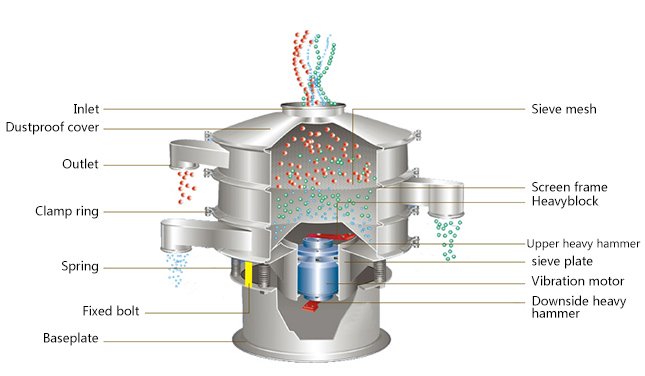
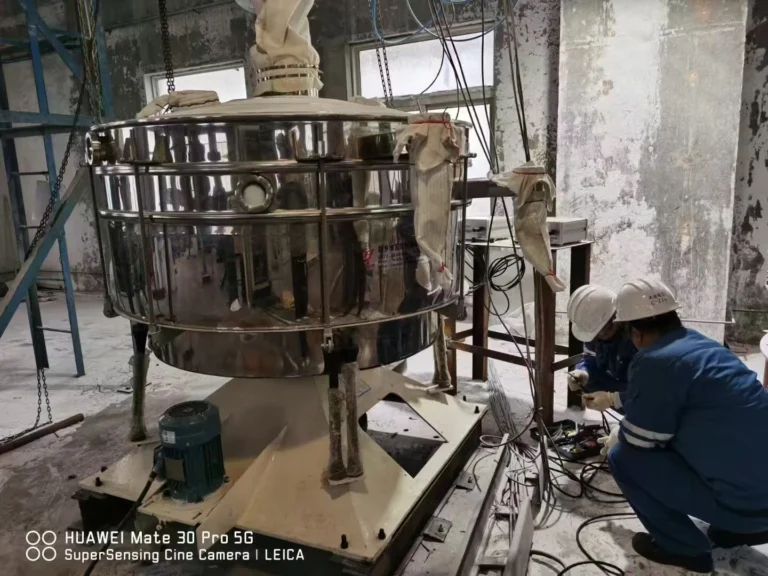
From top to bottom and from outside to inside, the machine consists of five key systems:
2.1 Feeding & Sealing System
This system ensures controlled material input while preventing dust leakage and contamination.
Dust cover: prevents material spillage and pollution
Feed inlet: guides material evenly into the screen
2.2 Screening System
This is the core working section where material classification takes place.
- Screen mesh: determines particle separation size
- Screen frame: supports the mesh structure
- Screen deck: holds multiple layers for grading
- Clamping ring: secures the screen layers tightly
- Discharge outlet: separates materials of different sizes
2.3 Vibration Drive System
This system provides the excitation force required for screening.
- Vertical vibration motor: generates primary vibration energy
- Upper and lower eccentric weights: control vibration direction and motion pattern
- Transmission body: transfers force to the screen structure
2.4 Vibration Isolation System
This system protects the machine by reducing vibration impact.
- Isolation springs: absorb vibration energy
- Spring washers: stabilize the system and reduce stress
2.5 Base Structure
The base ensures overall machine stability and structural support.
Machine base: supports all components and maintains balance during operation
Working Principle of a Rotary Vibrating Screen
The rotary vibrating screen operates by generating a three-dimensional vibration motion, enabling efficient material dispersion and classification.
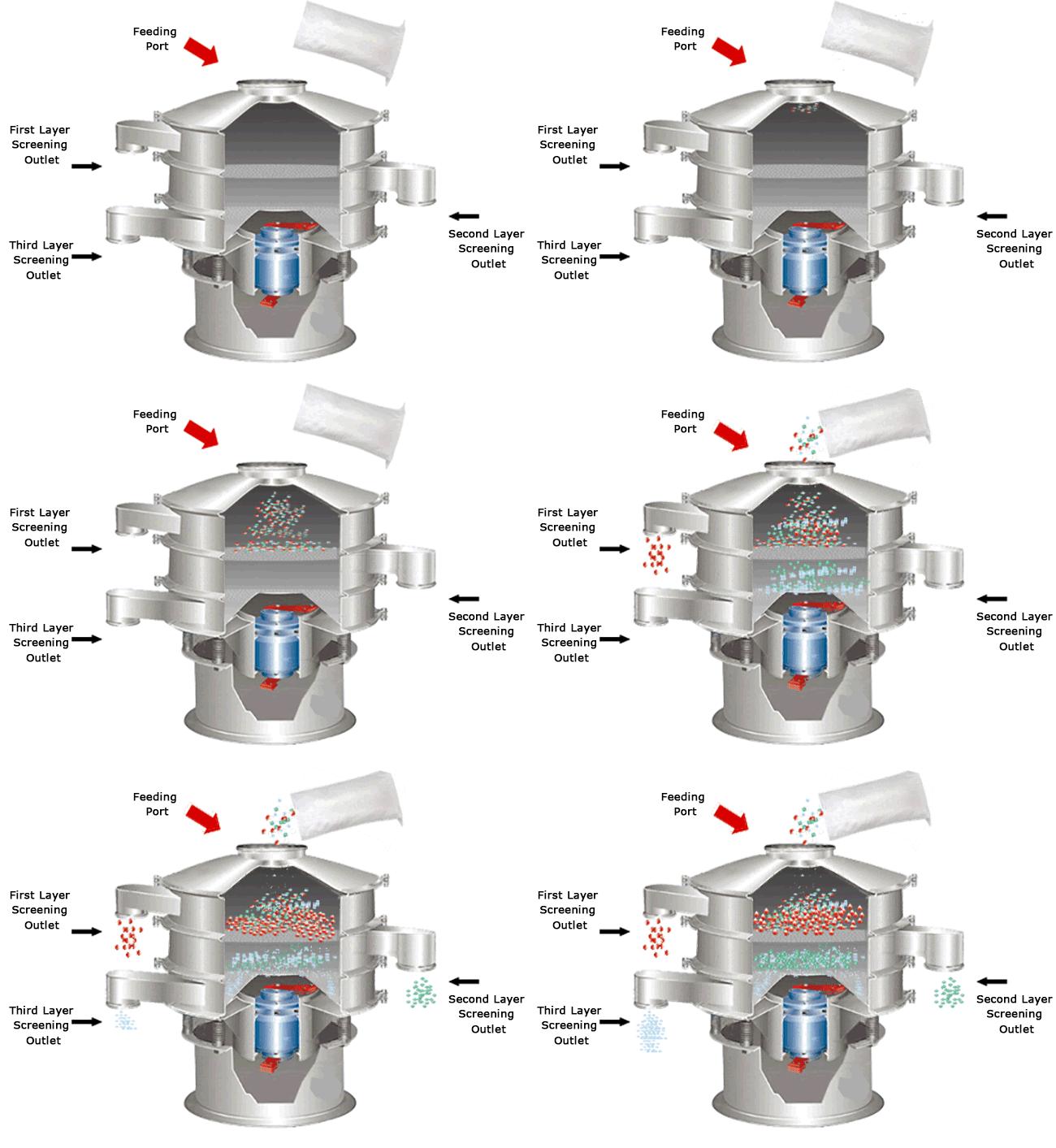
In detail, the working process is as follows:
3.1 Vibration Generation
The vertical vibration motor acts as the power source, producing a continuous excitation force.
- Converts electrical energy into mechanical vibration
- Drives the entire screen body
3.2 Motion Transformation
The eccentric weights convert rotational force into complex motion patterns.
- Upper weight: controls horizontal motion
- Lower weight: controls vertical motion
- Combined effect: produces inclined motion
These forces create a 3D motion (horizontal + vertical + inclined).
3.3 Material Screening Process
The generated motion drives material movement and separation.
- Material spreads evenly across the screen surface
- Fine particles pass through the mesh
- Coarse particles move outward in a spiral path
- Multi-layer screens classify materials step by step
- Final products exit through different outlets
Key Components and Their Functions
Each component in the rotary vibrating screen plays a crucial role in performance and durability.
4.1 Vibration Motor
The vibration motor is the core power source of the machine.
Provides excitation force
Determines vibration intensity and efficiency
4.2 Eccentric Weights
These are the key elements controlling motion behavior.
Adjust vibration amplitude and direction
Control material flow speed and trajectory
4.3 Spring System
The spring system ensures shock absorption and machine protection.
- Reduces structural stress
- Prevents damage from continuous vibration
- Extends equipment lifespan
4.4 Screen Mesh & Cleaning System
This system ensures continuous and efficient screening.
- Mesh defines particle size separation
- Bouncing balls prevent clogging
- Reduces maintenance frequency
4.5 Clamping Ring & Frame
These components ensure structural stability and sealing.
- Fix screen layers securely
- Maintain tight connections
- Enable multi-layer operation
Why Rotary Vibrating Screens Are Highly Efficient?
The high efficiency of rotary vibrating screens comes from optimized mechanical design and motion control.
- Specifically, their advantages include:
- Adjustable vibration parameters for precise control
- Multi-layer screening for simultaneous classification
- Self-cleaning mechanisms to prevent blockage
- Uniform material distribution for better accuracy
Industrial Applications
Rotary vibrating screens are widely used across industries due to their adaptability and precision.
They are particularly suitable for:
- Chemical powders and corrosive materials
- Food-grade materials require hygiene
- Pharmaceutical fine powders
- Mining particle grading
- Wastewater and slurry separation
Conclusion
The rotary vibrating screen is a highly efficient and precisely engineered screening machine, combining vibration mechanics with practical industrial design.
By understanding its structure and working principle, engineers and buyers can:
- Select the right equipment
- Improve screening efficiency
- Extend machine lifespan
FAQ (SEO & GEO Optimized)
1. How does a rotary vibrating screen generate motion?
It uses a vertical vibration motor with eccentric weights to create three-dimensional motion (horizontal, vertical, and inclined).
2. What is the maximum screening fineness?
It can achieve up to 500 mesh (0.025 mm), suitable for ultra-fine materials.
3. Can it handle liquid materials?
Yes, it is widely used for slurry filtration and solid-liquid separation.
4. How is clogging prevented?
Anti-blocking balls or ultrasonic systems keep the mesh clean during operation.
5. What affects screening efficiency?
Factors include mesh size, vibration settings, and material properties such as moisture and density.