What is a Tumbler Screening Machine?
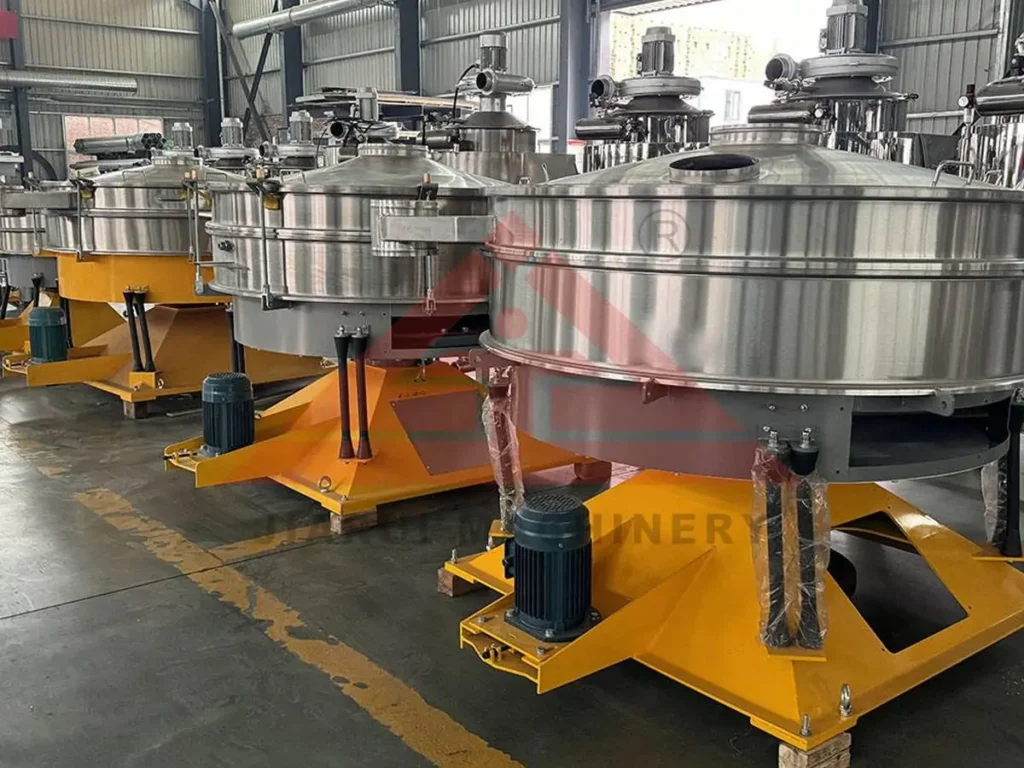
Die Tumbler-Siebmaschine, also known as a Circular Swing Screen or Gyratory Swing Screen, is a high-precision screening device designed to mimic the combination of “sifting” and “shaking” motions found in manual screening. Through low-speed rotational and horizontal swinging motions, it causes the material on the screen surface to follow a trajectory similar to manual “sifting,” thereby achieving highly efficient and precise classification and screening.
Compared to traditional vibrating screens, Jiarui Machinery’s Tumbler Screening Machine places greater emphasis on screening accuracy, consistent throughput, and the preservation of material particle shape. It is widely used in industries such as food, chemicals, pharmaceuticals, plastics, mineral powders, and new energy materials.
Working Principle of Jiarui Tumbler Screening Machine
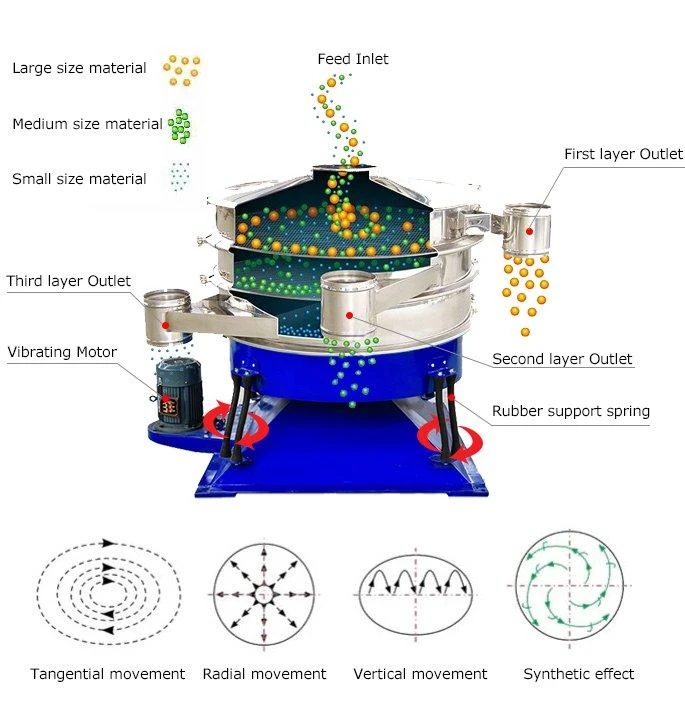
The core feature of the Tumbler Screening Machine lies in its unique three-dimensional oscillating motion. Once the machine is started, the motor drives the main shaft via a belt. The eccentric device on the main shaft (with an eccentricity typically adjustable between 25 and 40 mm) works in conjunction with the eccentric shaft—which has both radial and tangential angles of inclination—to induce a complex spatial motion in the screen box. This motion can be broken down as follows:
- Horizontal circular motion: The material spreads evenly from the center toward the periphery of the screen surface.
- Vertical parabolic motion: The material is gently tossed upward, facilitating stratification.
Below is a step-by-step explanation provided by Jiarui engineers:
Step 1: The motor drives the oscillating motion
When the Tumbler Screener is in operation, a standard motor drives the screen box through a transmission mechanism to perform a horizontal circular oscillating motion.
The motion trajectory of the screen box resembles manual screening:
- Initial stage: Material spreads along the outer edge of the screen surface
- Middle stage: Material continuously tumbles and separates into layers
- Final stage: Fine particles pass through the screen mesh, while larger particles move toward the discharge outlet
This creates a combined screening effect of horizontal circular motion and vertical micro-vibration.
Step 2: Automatic Material Separation
Upon entering the Tumbler Screen, the material undergoes stratification due to the oscillating motion:
- Coarse particles remain in the upper layer
- Fine particles settle to the bottom layer
- Particles close to the mesh size come into full contact with the screen surface
This improves mesh utilization and allows fine particles to pass through the screen more easily.
The above describes the principle of the Circular Tumbler Screen. Our Jiarui Industrial Sieve Machine can achieve multi-layer screening in a single pass, as detailed below:
| Screen Layer | Screening Function |
|---|---|
| First Layer | Removes oversized particles and foreign impurities |
| Second Layer | Separates qualified medium-size particles |
| Third Layer | Collects fine powder and smaller particles |
A single run can complete the grading of products in multiple sizes.
Advantages of Jiarui Tumbler Screening Machine
The Tumbler Screening Machine offers significant advantages in several areas:
High screening efficiency and accuracy: Screening accuracy can reach 90%–95%, or even higher. Its motion trajectory, which mimics manual screening, effectively separates hard-to-screen particles that are close to the screen aperture size.
High processing capacity: For the same screening area, its throughput is 3–5 times that of a conventional vibrating screen; a single unit can replace multiple traditional screening machines.
Minimal Material Damage: Because it employs a low-frequency, low-acceleration (4–5 times lower than that of vibrating screens) rocking motion rather than high-speed vibration, it protects fragile and prone-to-caking materials, preserving their original form.
Long Screen Life: The gentle motion minimizes impact and wear on the screens, resulting in a service life 5–10 times longer than that of conventional screening equipment.
Smooth Operation and Low Noise: The equipment utilizes cushioning components such as rubber springs; moving parts swing side-to-side rather than bouncing violently up and down, with operating noise typically below 75 decibels.
Anti-clogging design: Various screen-cleaning devices—such as bouncing balls, ultrasonic systems, and rotating brushes—can be flexibly configured based on material characteristics to effectively prevent screen aperture blockages and ensure continuous, stable screening.
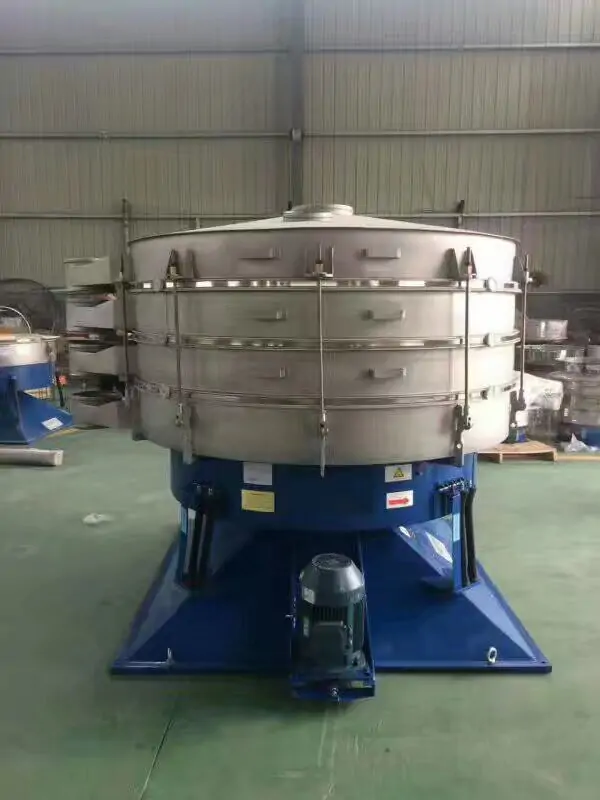
Multi-layer classification: Typically configured with 1–5 layers of screens, enabling precise separation into up to six particle size grades.
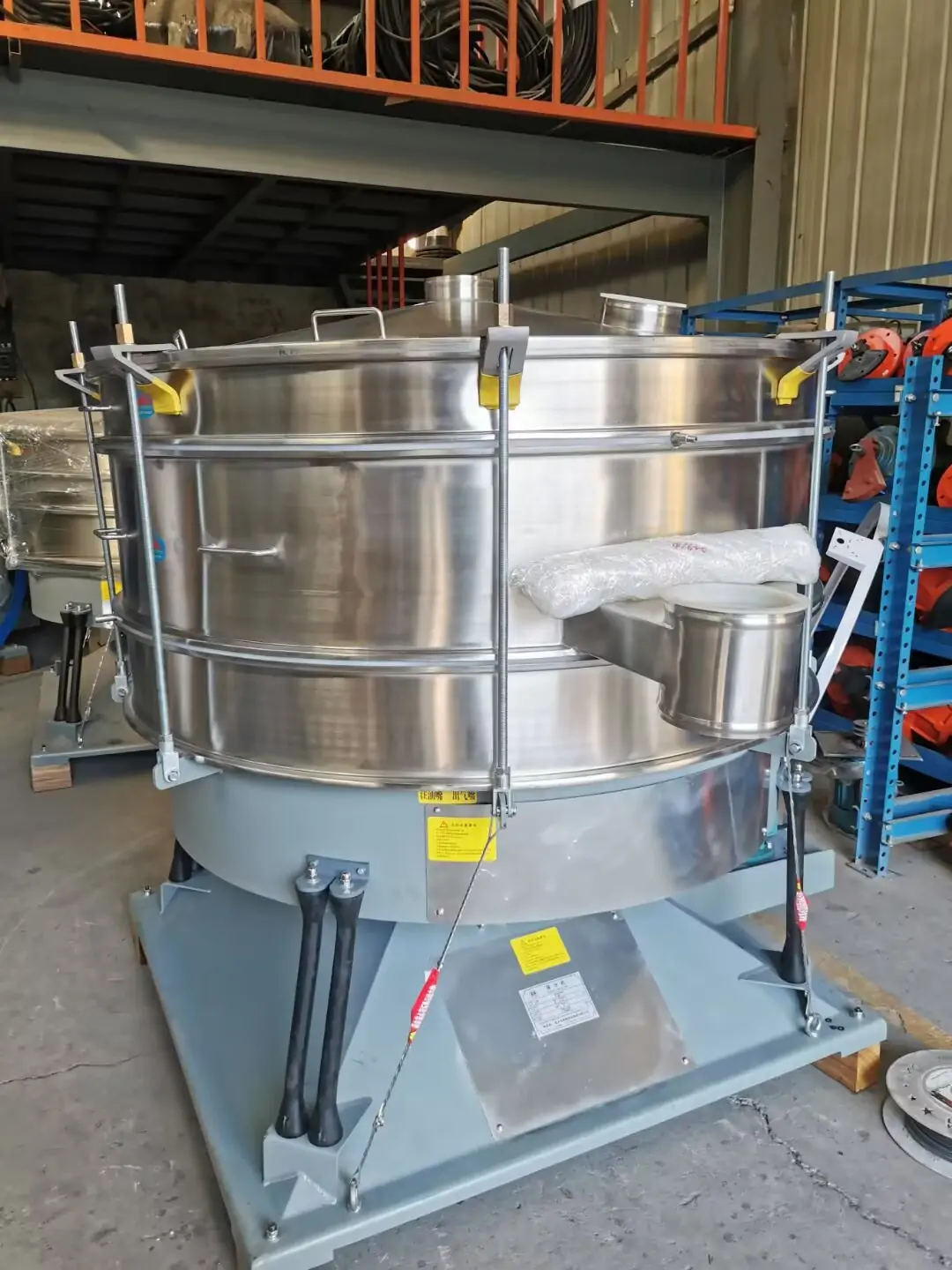
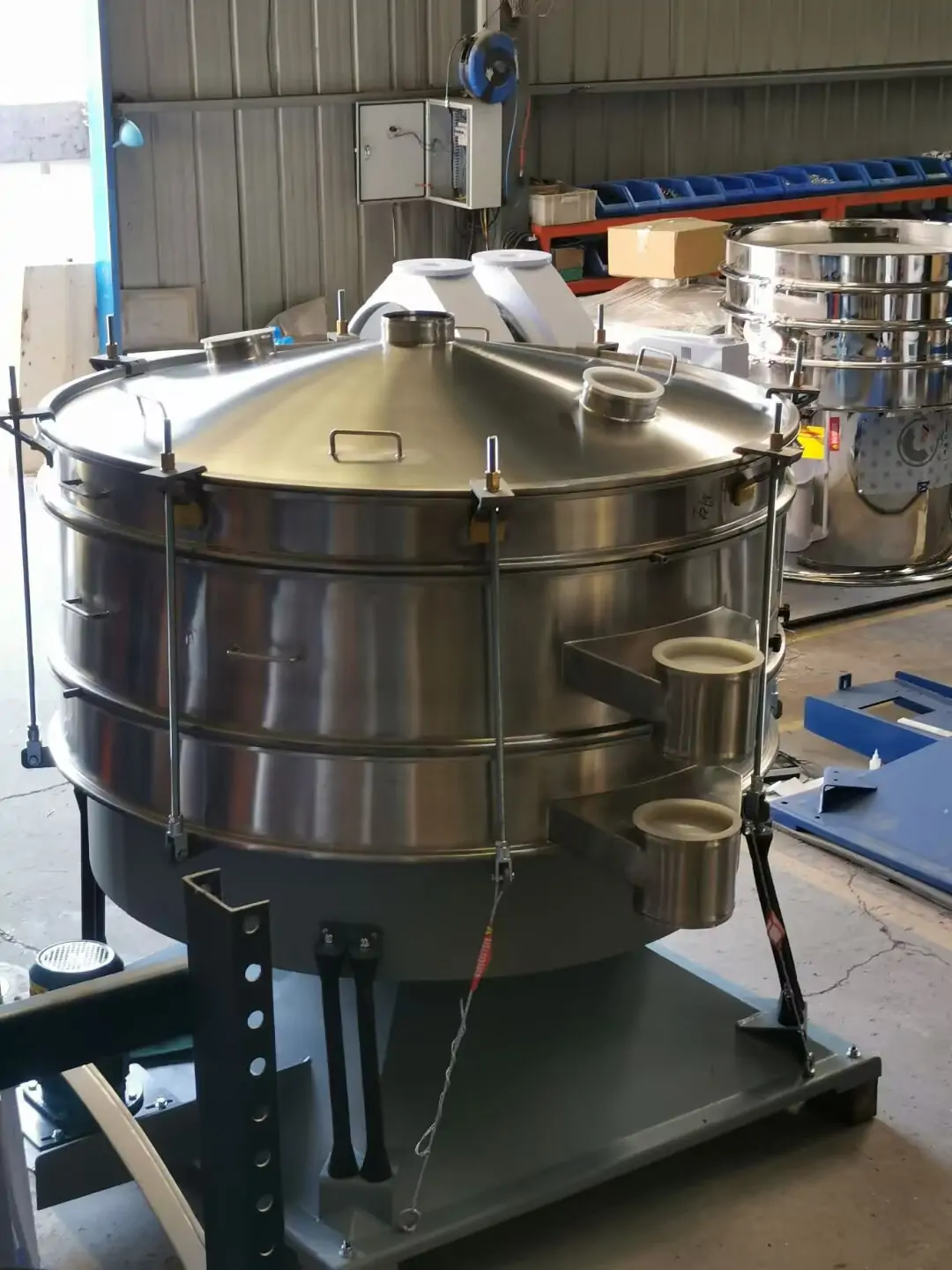
Tumbler Screening Machine vs Rotary Vibrating Screen: How to Choose?
Both Jiarui Tumbler Screening Machine and Rundvibrationssieb are reliable screening solutions. The best choice depends on material characteristics, required accuracy, processing capacity, and production conditions.
| Comparison | Jiarui Tumbler Screening Machine | Jiarui Rotary Vibrating Screen |
|---|---|---|
| Screening Motion | Low-speed gyratory movement simulating manual screening | High-frequency three-dimensional vibration |
| Siebgenauigkeit | Excellent for fine and difficult-to-screen materials | Suitable for general and continuous screening applications |
| Screening Efficiency | 90–95%+ depending on material conditions | High efficiency for standard screening requirements |
| Processing Capacity | High capacity due to larger effective screening area | Flexible capacity based on screen diameter and configuration |
| Material Protection | Better for fragile and easily damaged materials | Suitable for stronger materials requiring fast separation |
| Fine Powder Screening | Excellent performance for fine powders | Good performance with suitable screen cleaning systems |
| Screen Wear | Lower impact force, longer screen service life | Normal wear rate under standard vibration operation |
| Noise Level | Usually below 75 dB | Slightly higher due to vibration intensity |
| Screening Layers | 1–5 layers, up to 6 particle size classifications | 1–5 layers for multi-stage separation |
| Recommended Applications | Fine powder, fragile materials, high-value materials, strict particle size requirements | General powder, granules, industrial screening, high-throughput applications |
Which Screening Machine Should You Choose?
Jiarui engineers recommend choosing the appropriate screening solution based on the following conditions:
Choose Jiarui Tumbler Screening Machine when:
- High screening accuracy is required
- Materials are fragile or easily damaged
- Fine powder screening is needed
- Particle shape preservation is important
- Multiple precise classifications are required
Choose Jiarui Rotary Vibrating Screen when:
- Standard screening is required
- Compact equipment design is preferred
- Fast separation of powders and granules is needed
- The application requires flexible screening solutions
Jiarui provides both Tumbler Screening Machines and Rotary Vibrating Screens, offering customized screening solutions according to different material characteristics and production requirements.
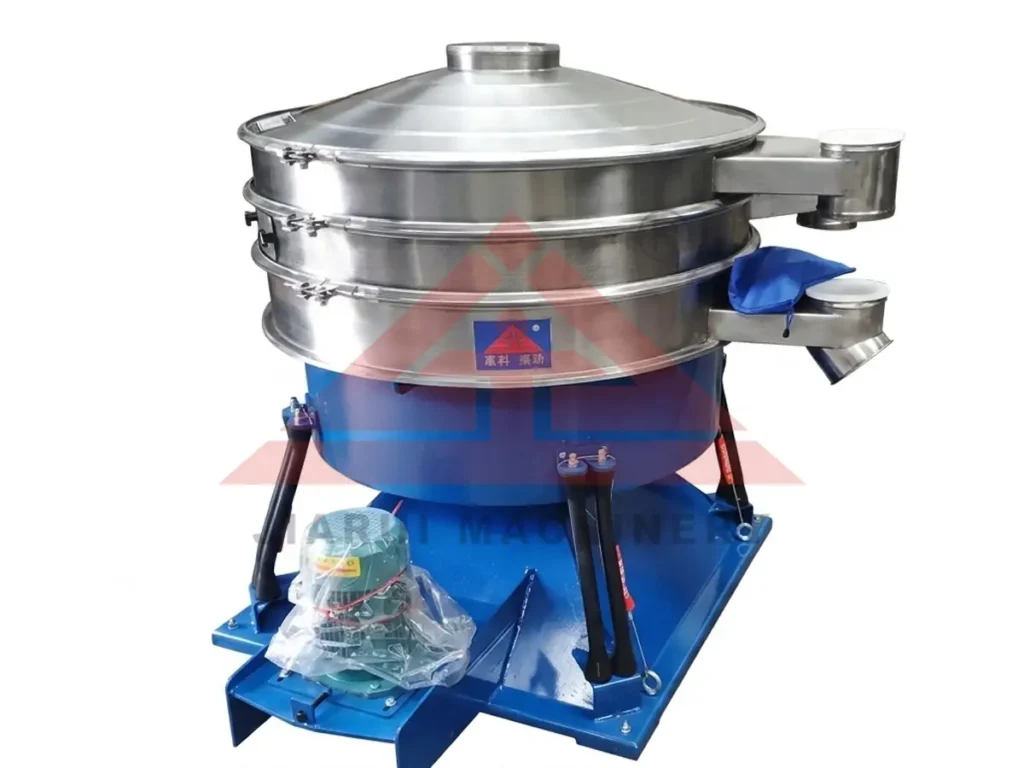 Tumbler-Siebmaschine
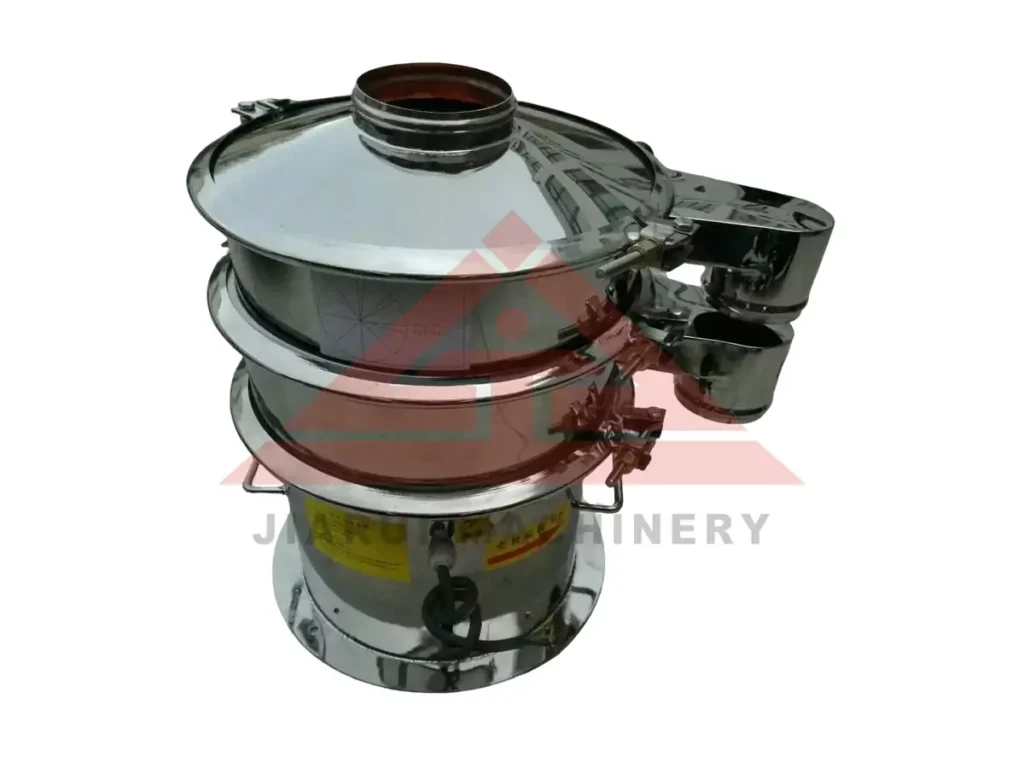 Rundvibrationssieb
Need Help Choosing the Right Screening Machine?
Choosing the correct screening equipment depends on many factors, including material properties, particle size, moisture content, production capacity, and screening targets.
If you are not sure which screening machine is suitable for your application, or want to learn more about Jiarui Tumbler Screening Machine, please contact our engineering team.
Our engineers will analyze your material characteristics and production requirements to provide a suitable screening solution.
Contact Jiarui today for professional screening equipment selection support.
Conclusion:
A Tumbler Screening Machine is not simply a replacement for a traditional vibrating screen. Its main advantage is providing a gentler and more accurate screening method for materials that require strict particle size control, high screening efficiency, or better particle protection.
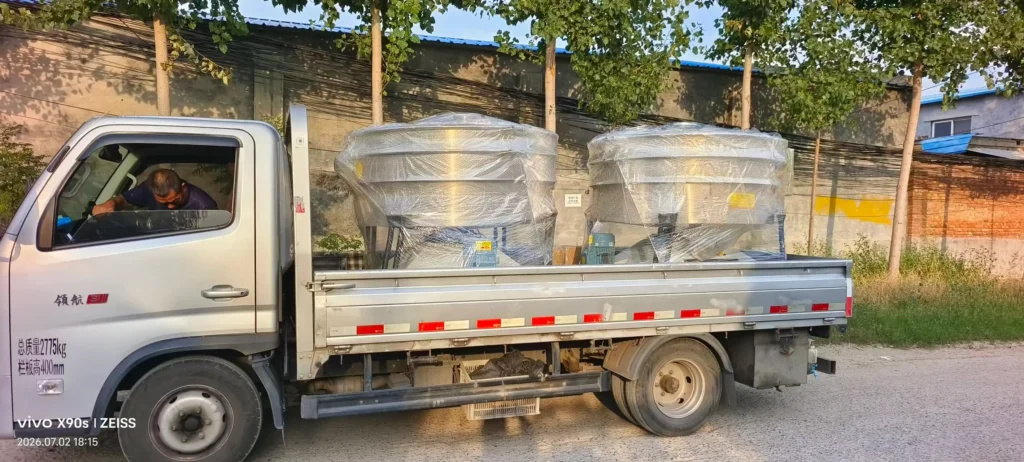
In practical applications, Jiarui engineers usually select screening equipment based on several factors, including material characteristics, particle size distribution, moisture content, required output, and final screening requirements.
For fine powders, fragile materials, and applications where particle shape and screening accuracy are critical, a Tumbler Screening Machine can provide a more reliable solution. For standard powder and granule screening applications, a Rotary Vibrating Screen may be a more economical and flexible choice.
Selecting the correct screening equipment at the beginning can improve production stability, reduce screen maintenance costs, and ensure consistent product quality.
If you are evaluating a Tumbler Screening Machine for your material, Jiarui engineers can help analyze your application requirements and recommend a suitable screening solution.