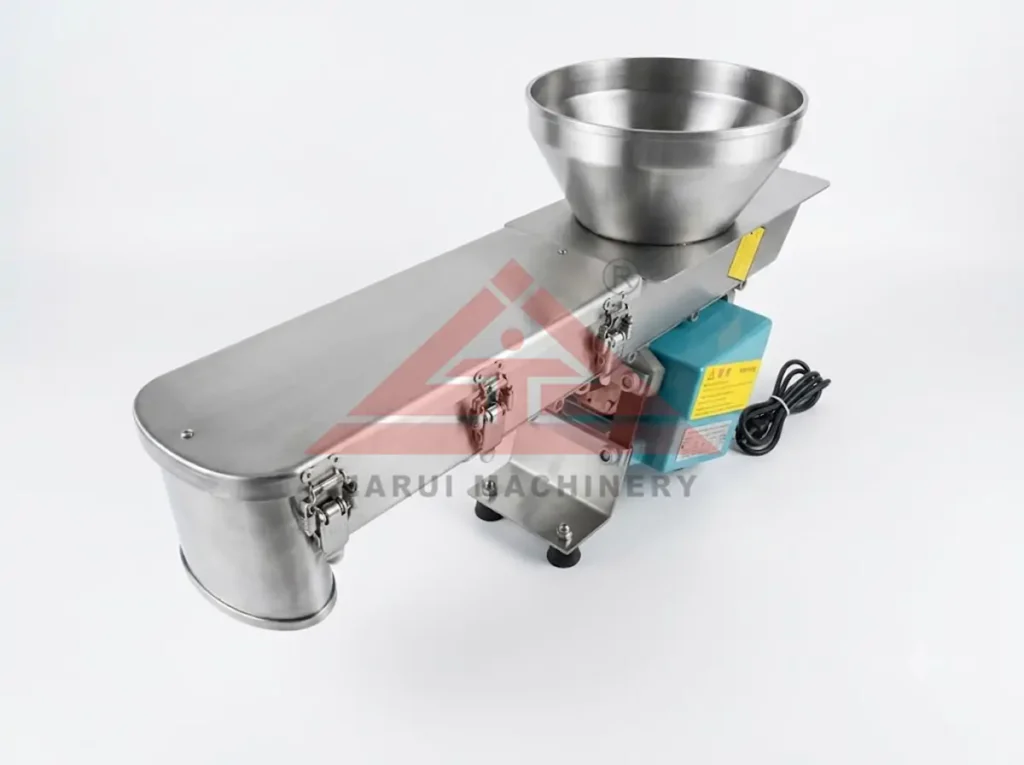
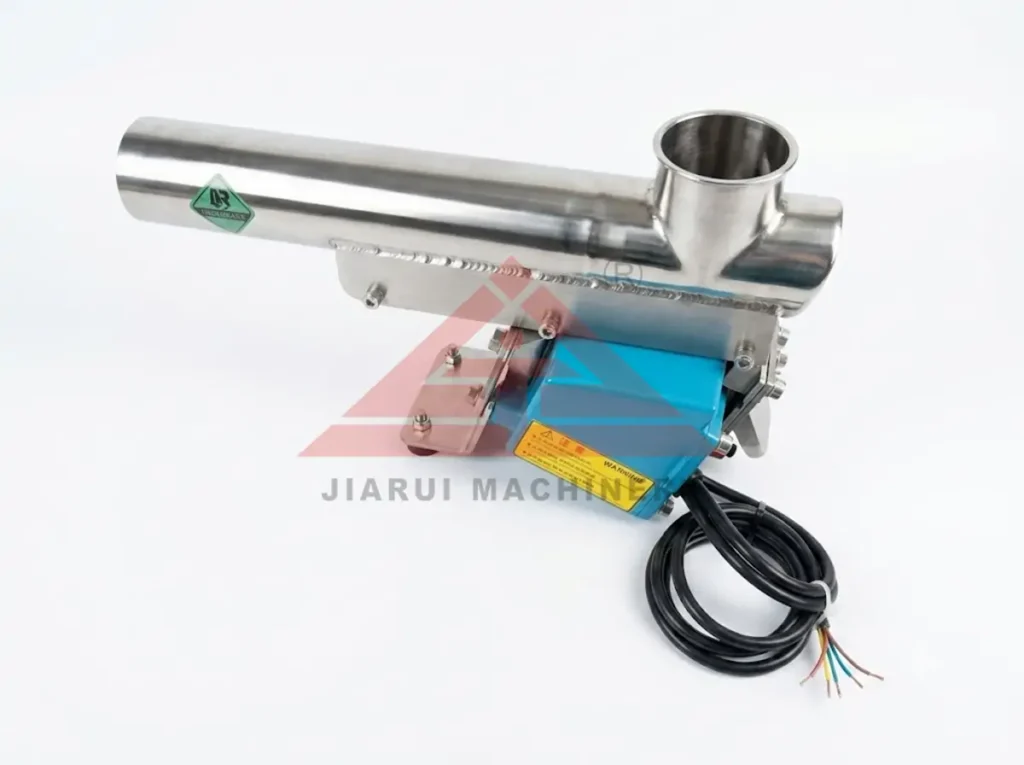
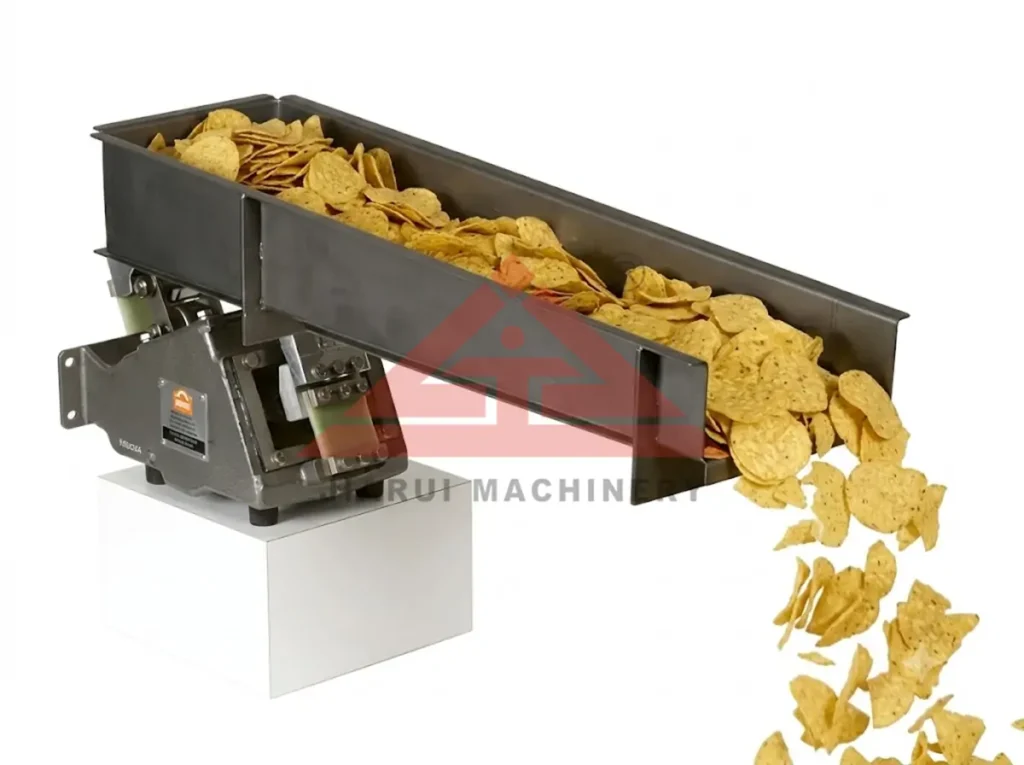
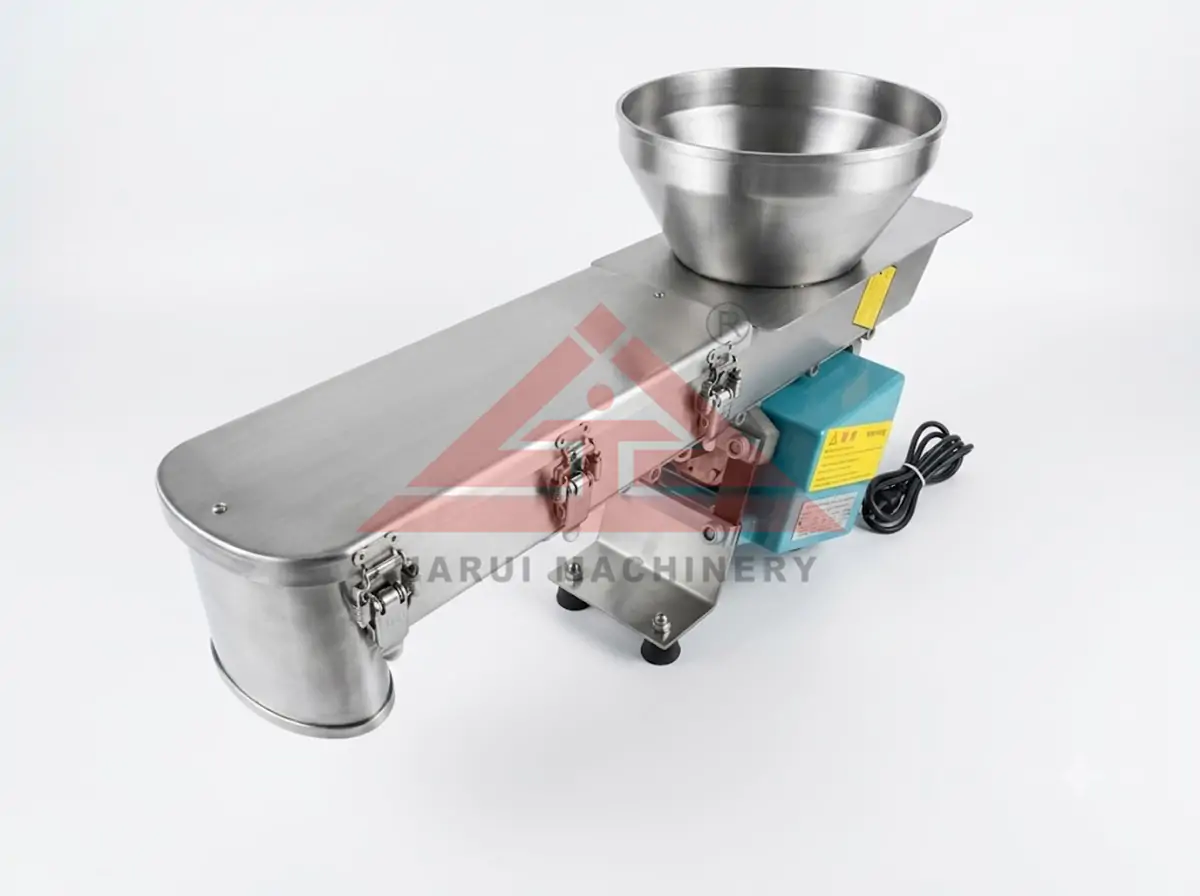
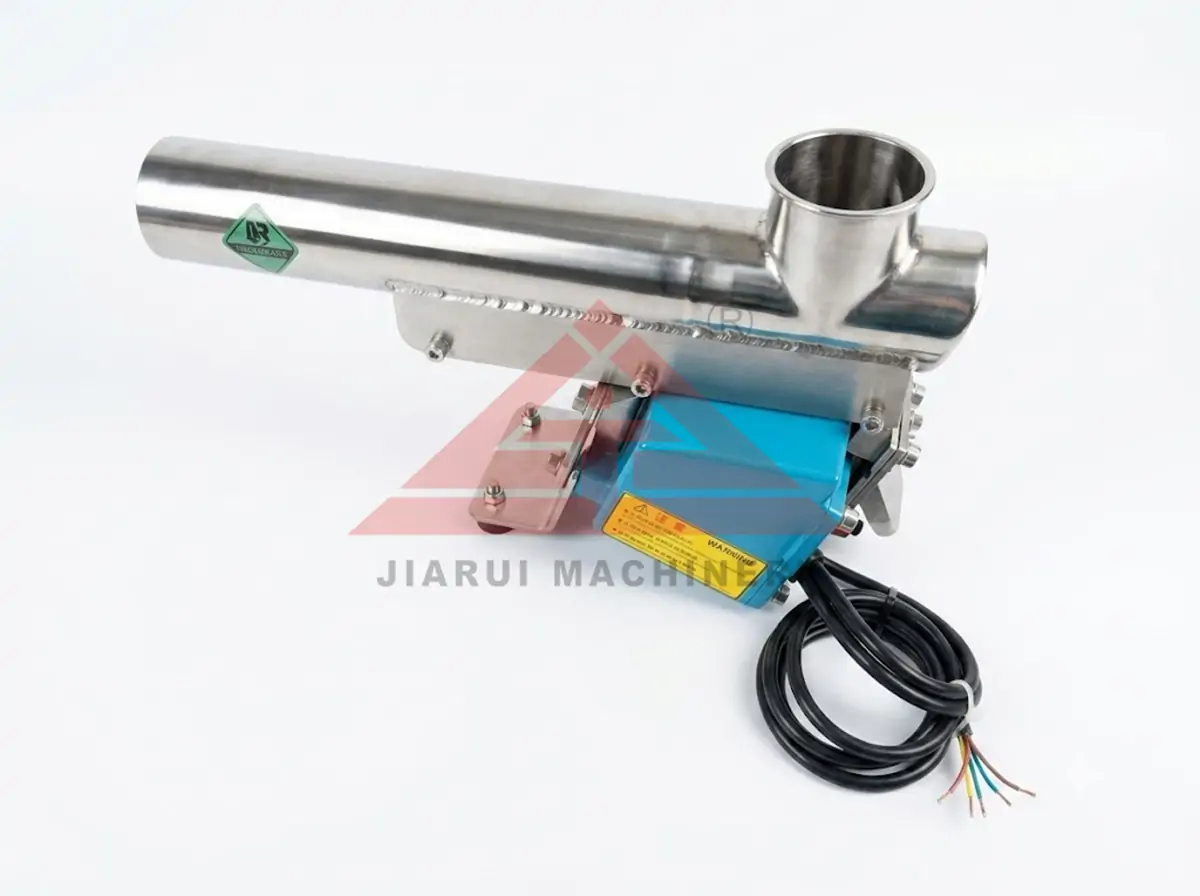
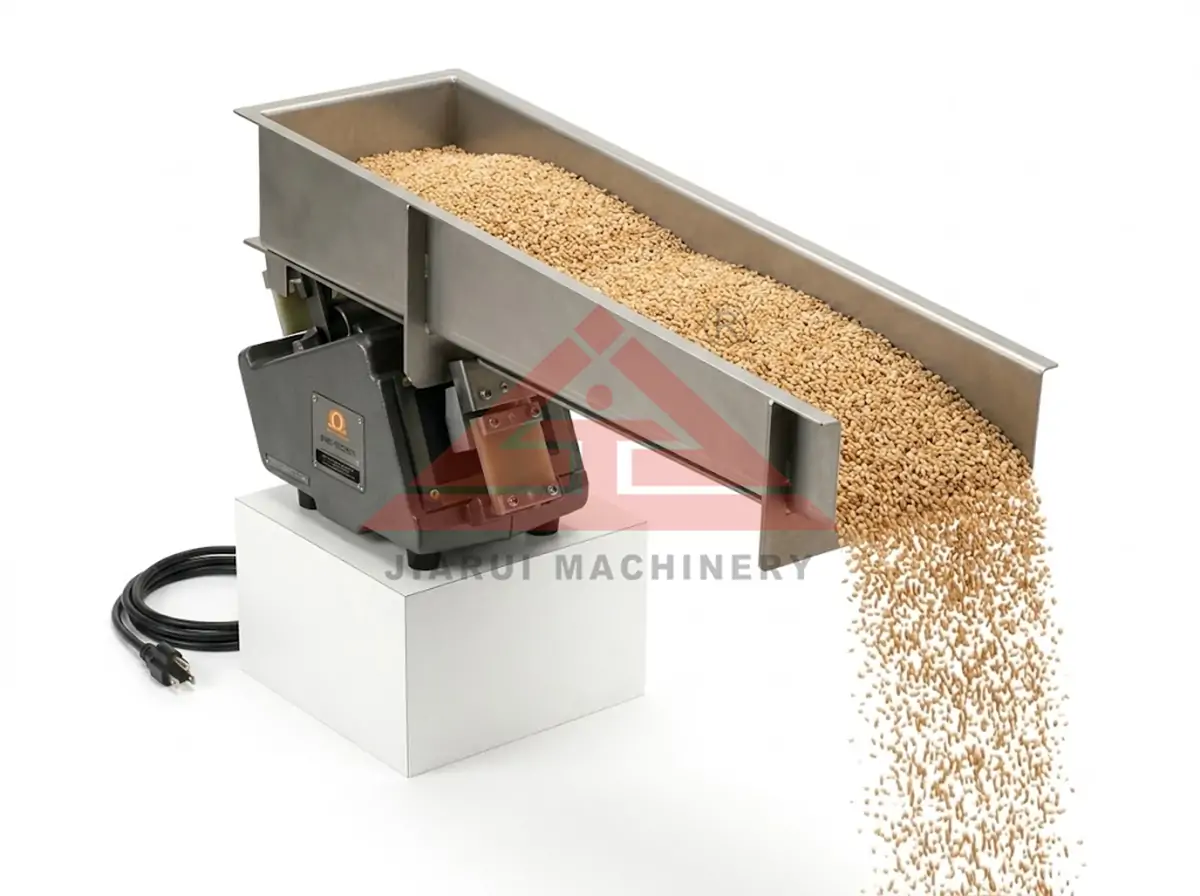
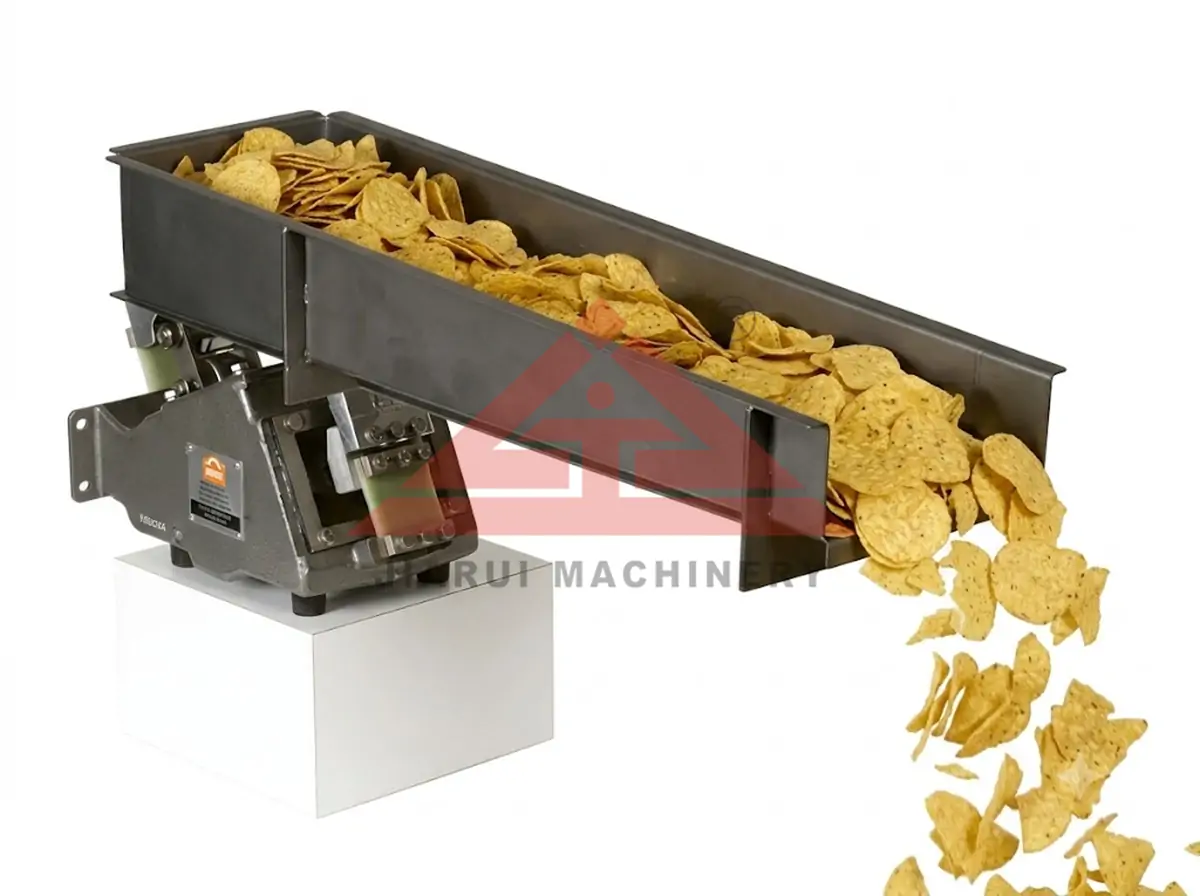
Mini Alimentador Electromagnético (Serie GZV)
El Mini Alimentador Electromagnético (Serie GZV) está diseñado principalmente para la alimentación continua de bajo caudal de materiales en polvo y granulares. Se utiliza comúnmente en máquinas de envasado, sistemas de pesaje, equipos de dosificación automática y unidades de alimentación para industrias como procesamiento de alimentos, industria química, plásticos, materiales electrónicos y procesamiento de polvos. El equipo adopta un sistema de accionamiento electromagnético y controla la velocidad de alimentación ajustando la fuerza de vibración, ofreciendo respuesta rápida, bajo consumo de energía, estructura compacta y ajuste conveniente.
Jiarui El equipo de ingeniería puede personalizar el alimentador según las características del material, los requisitos de alimentación y el espacio de instalación, incluyendo las dimensiones de la bandeja del alimentador, la selección de materiales y los métodos de conexión, ayudando al equipo a adaptarse mejor a diferentes requisitos de producción.
- Modelo: GZV1-GZV5
- Capacidad de Alimentación: 0,1-4 t/h
- Frecuencia de Vibración: 3000 r/min
- Bajo Consumo de Energía: 5-30 W
- Sistema de Control: XKZV-II
- Aplicaciones: Alimentación de materiales en polvo y granulares
¿Qué es un Mini Alimentador Electromagnético?
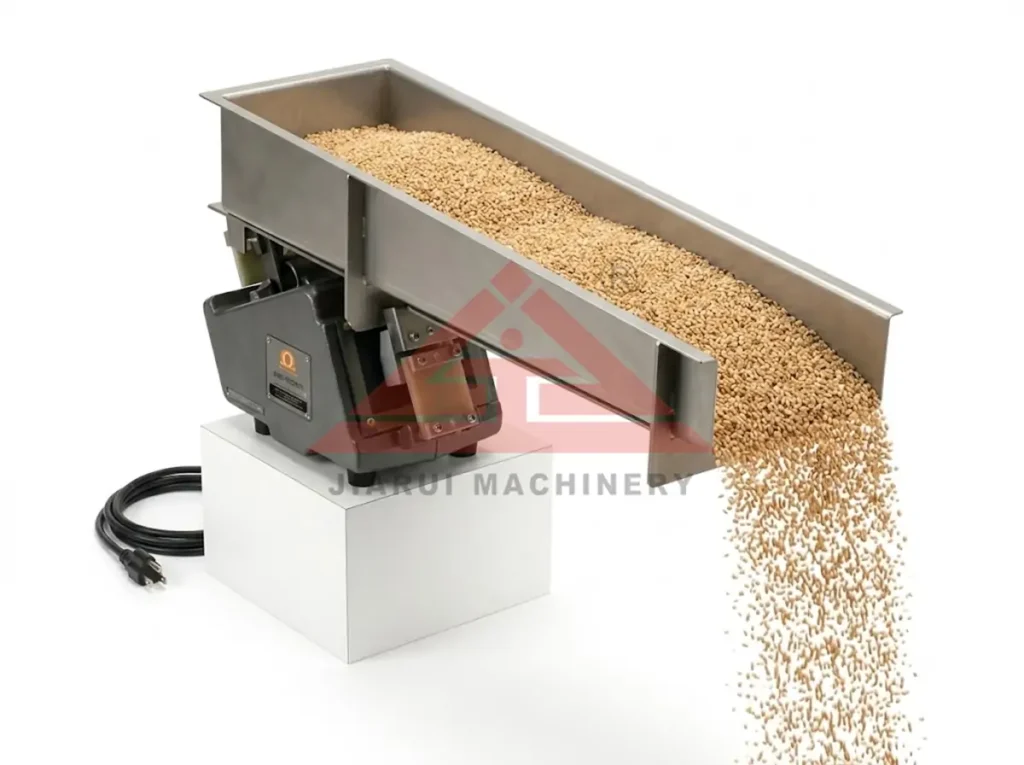
El Mini Alimentador Electromagnético (Serie GZV), también conocido como mini alimentador vibratorio electromagnético o máquina alimentadora electromagnética, es un dispositivo de alimentación de precisión utilizado para la alimentación continua de materiales en polvo y granulares. Utiliza vibración electromagnética para accionar la bandeja del alimentador, permitiendo que los materiales avancen uniformemente a lo largo de la superficie de la bandeja. Al ajustar la salida de vibración, la velocidad de alimentación puede controlarse según los requisitos de producción, proporcionando un suministro estable de material y una alimentación precisa.
En comparación con los alimentadores vibratorios grandes comúnmente utilizados en aplicaciones mineras, la Serie GZV está diseñada principalmente para tareas de alimentación de pequeño caudal y precisión. Generalmente se instala debajo de tolvas o se conecta con máquinas de envasado, sistemas de pesaje y equipos de dosificación automática para controlar el flujo de material que ingresa al siguiente proceso. Esto ayuda a reducir la alimentación manual inestable y las fluctuaciones de alimentación causadas por un suministro inconsistente de material.
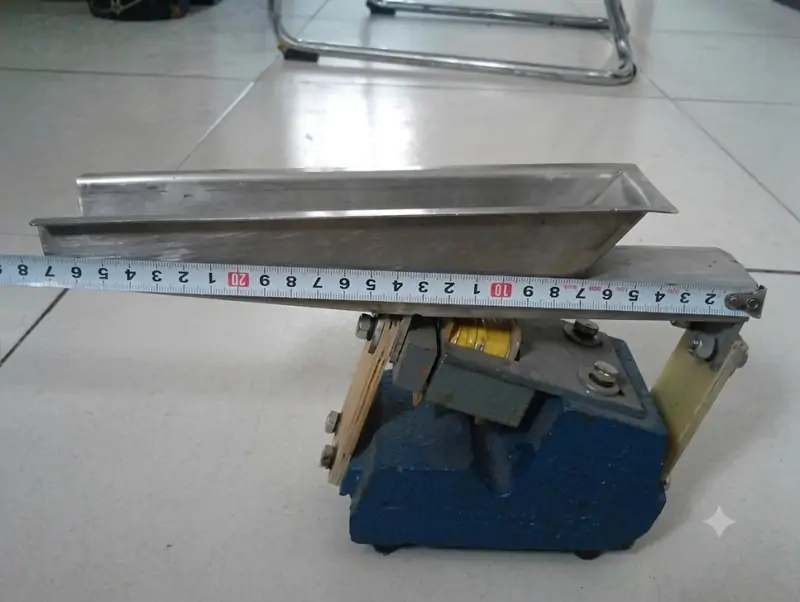
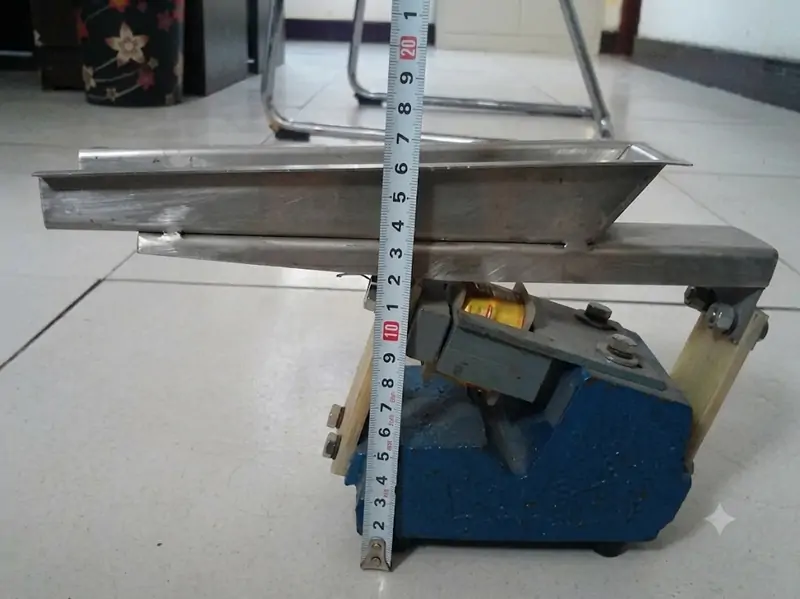
Principio de Funcionamiento
El Mini Alimentador Electromagnético de la Serie GZV genera vibración periódica a través de un sistema de accionamiento electromagnético, haciendo que los materiales se muevan continuamente a lo largo de la dirección de la bandeja del alimentador. Al ajustar la salida electromagnética, la amplitud de vibración puede modificarse para adaptarse a diferentes requisitos de alimentación y velocidades de producción.
El Material se Mueve a lo Largo de la Bandeja del Alimentador
Después de ingresar a la bandeja del alimentador, los materiales se mueven hacia el extremo de descarga bajo la acción de la fuerza de vibración. Al optimizar la estructura de la bandeja, la amplitud de vibración y la frecuencia de operación, los materiales en polvo y granulares pueden mantener una condición de flujo más uniforme, reduciendo problemas como alimentación interrumpida o movimiento inestable del material.
Los Componentes Electromagnéticos Proporcionan la Fuerza de Accionamiento
La bobina electromagnética, la armadura y los componentes elásticos dentro del equipo forman el sistema de accionamiento principal. Cuando la unidad de control cambia la corriente de entrada, la fuerza electromagnética cambia en consecuencia, permitiendo que el alimentador opere en una condición de vibración adecuada mientras reduce el consumo innecesario de energía.
Ajuste la Salida de Alimentación para Igualar la Velocidad de Producción
La Serie GZV puede ajustar la salida electromagnética a través del sistema de control para cambiar la velocidad de alimentación. Para aplicaciones de envasado, pesaje y dosificación automática, la tasa de alimentación puede ajustarse según la velocidad de operación del equipo conectado.
El valor central de la Serie GZV no es la gran capacidad de transporte, sino proporcionar alimentación continua controlable en un espacio de instalación limitado. Es más adecuado para aplicaciones de alimentación de pequeño caudal que requieren ajuste preciso y suministro estable de material.
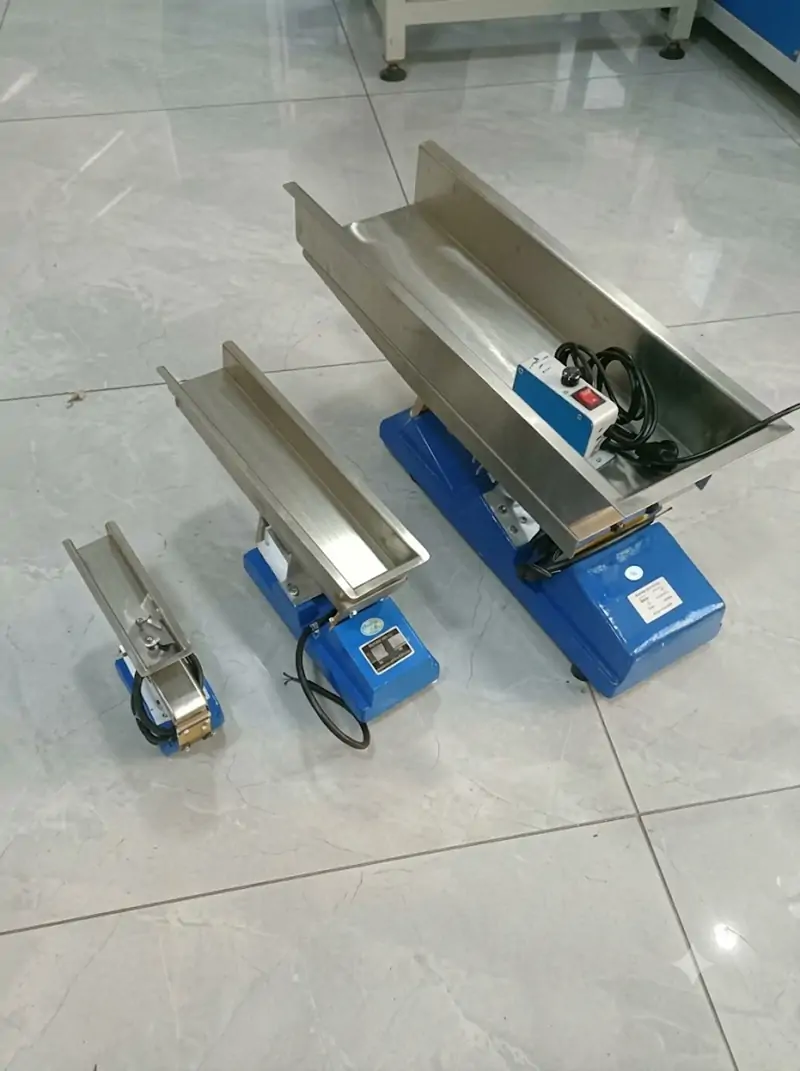
Componentes Principales
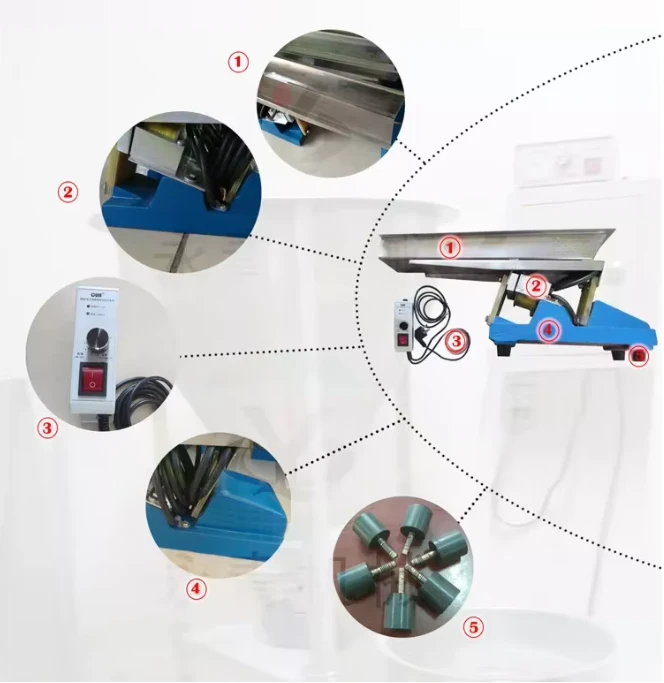
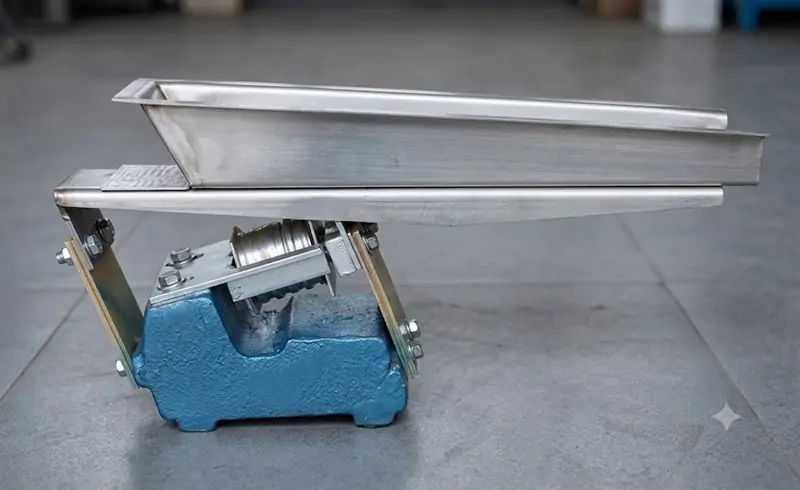
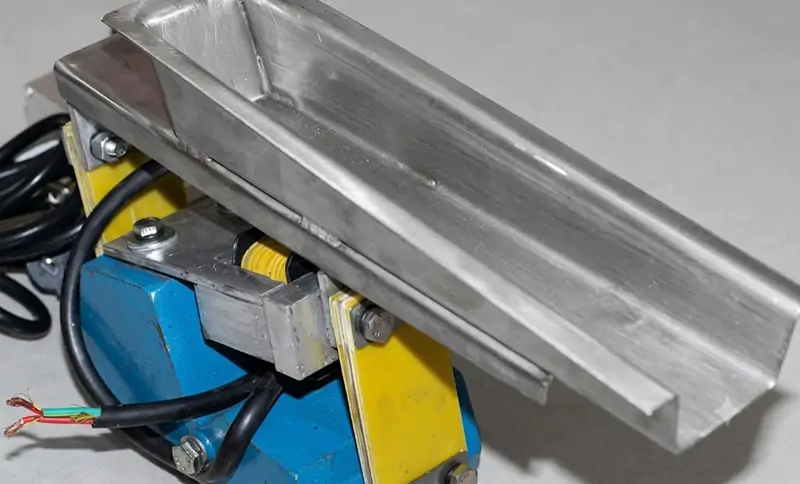
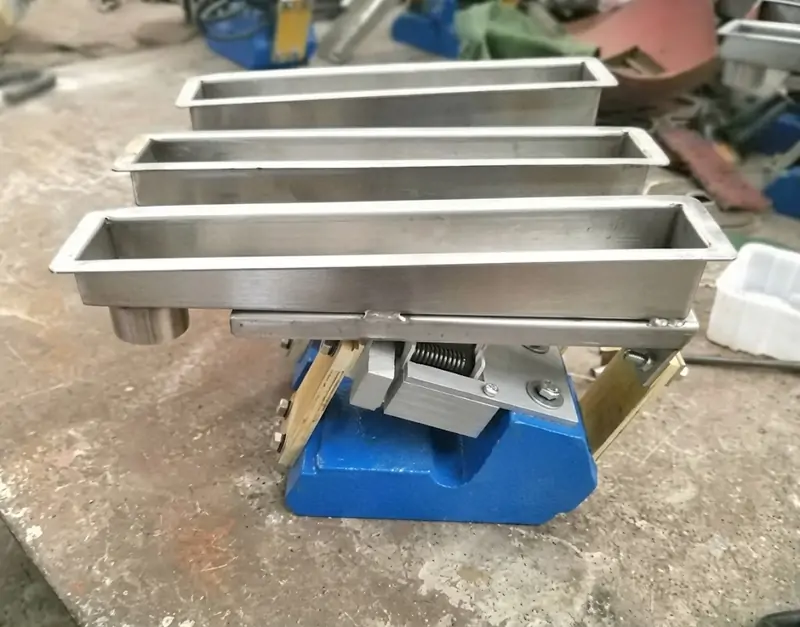
El Mini Alimentador Electromagnético de la Serie GZV consiste principalmente en una unidad de vibración electromagnética, bandeja del alimentador, sistema de soporte elástico y dispositivo de control. Estos componentes trabajan juntos para influir en la condición de vibración, la velocidad de alimentación y el rendimiento operativo del equipo.
Unidad de Vibración Electromagnética
La unidad de vibración electromagnética es el componente central que genera la fuerza de accionamiento. A través de la bobina, produce fuerza electromagnética alterna y acciona la armadura para moverse periódicamente, permitiendo que la bandeja del alimentador genere vibración continua. La separación electromagnética, el acoplamiento de componentes y la condición de operación afectan directamente la amplitud de vibración y el rendimiento de alimentación, por lo que deben considerarse cuidadosamente durante la instalación y el ajuste.
Bandeja del Alimentador
La bandeja del alimentador es la parte que entra en contacto directo con los materiales. Su tamaño, estructura y selección de material deben determinarse según las características del material. Para materiales granulares generales, se utilizan comúnmente estructuras de acero al carbono. Para aplicaciones en industrias alimentarias, químicas y otras con mayores requisitos de higiene o resistencia a la corrosión, pueden seleccionarse bandejas de alimentador de acero inoxidable.
Sistema de Soporte Elástico
El sistema de soporte elástico trabaja junto con el sistema de accionamiento electromagnético para formar un mecanismo de vibración estable, ayudando al equipo a mantener una condición de vibración adecuada durante la operación. Durante el uso prolongado, el desgaste, la holgura o la deformación de las placas de resorte pueden afectar el rendimiento de alimentación, por lo que las partes de conexión clave deben revisarse regularmente.
Dispositivo de Control
El dispositivo de control se utiliza para ajustar la salida electromagnética y controlar la velocidad de movimiento del material cambiando la fuerza de vibración. Para aplicaciones de envasado, pesaje y dosificación automática que requieren un control preciso del flujo de material, un sistema de control confiable ayuda al alimentador a adaptarse mejor al proceso de producción.
Este tipo de equipo tiene una estructura simple, pero factores como la separación electromagnética, el diseño de la bandeja del alimentador y las características del material pueden afectar el rendimiento de alimentación. Confirmar las condiciones de operación antes de la selección puede reducir el tiempo de ajuste después de la instalación.
Ventajas
El Mini Alimentador Electromagnético de la Serie GZV se utiliza principalmente para la alimentación continua de bajo caudal de materiales en polvo y granulares. En comparación con la alimentación manual o los métodos de descarga simples, el equipo ajusta el movimiento del material mediante control electromagnético, lo que lo hace más adecuado para procesos de producción que requieren velocidad de alimentación controlada, espacio de instalación compacto e integración de automatización.
Adecuado para la Alimentación Inicial de Equipos Automáticos
La Serie GZV cambia la fuerza de vibración ajustando la salida electromagnética, lo que permite controlar la velocidad de movimiento del material según los requisitos de producción. Cuando se utiliza antes de máquinas envasadoras, equipos de pesaje y sistemas de dosificación automática, puede sincronizar la velocidad de alimentación con el ritmo operativo del equipo, reduciendo problemas como sobrealimentación, falta de material o suministro inestable.
Respuesta Más Rápida Mediante Control Electromagnético
El equipo adopta un sistema de accionamiento electromagnético y cambia la condición de salida directamente a través del dispositivo de control, sin necesidad de ajustar componentes de transmisión mecánica. Cuando cambian los lotes de producción, las condiciones del material o las velocidades operativas del equipo, los operadores pueden ajustar rápidamente los parámetros de alimentación, permitiendo que el alimentador se adapte a diferentes requisitos de producción.
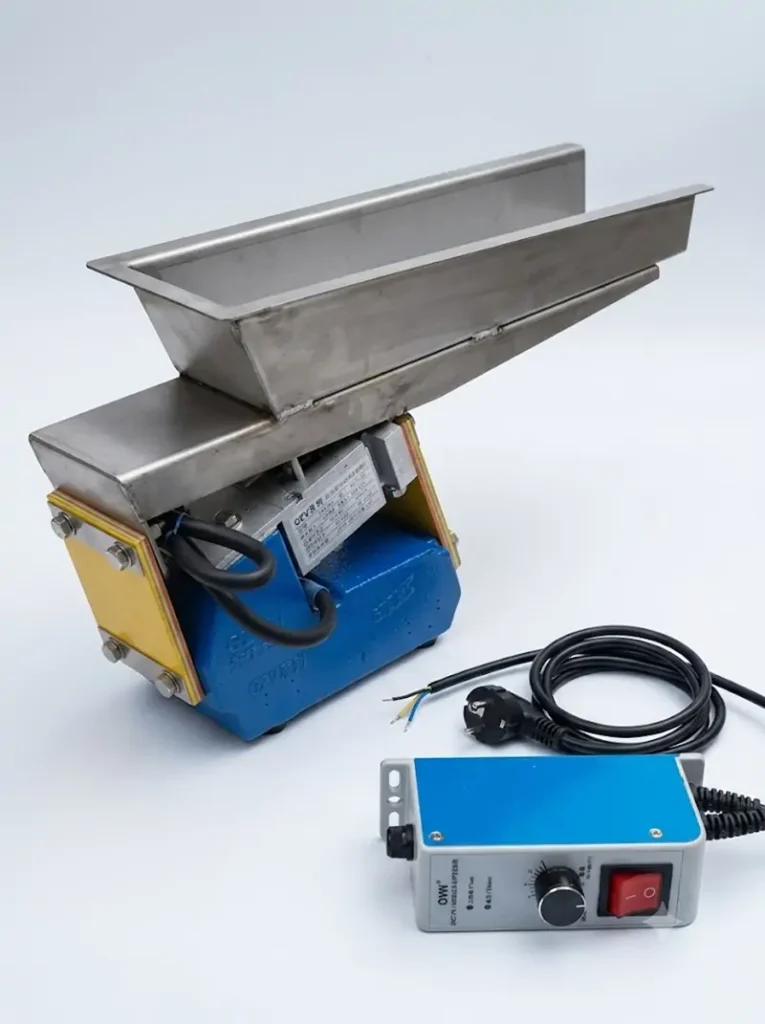
Instalación Flexible en Espacios Reducidos
La Serie GZV presenta una estructura compacta y bajo consumo de energía, lo que la hace adecuada como unidad de alimentación para equipos automatizados. Para máquinas envasadoras, sistemas de pesaje y líneas de producción pequeñas, el método de conexión se puede ajustar según la distribución del sitio, facilitando la integración con equipos existentes.
Reducción de la Alimentación Intermitente Manual
El material avanza continuamente a lo largo de la bandeja del alimentador bajo vibración, reduciendo las fluctuaciones de alimentación causadas por la operación manual intermitente. Para procesos de envasado, medición y dosificación automática, el equipo ayuda a mejorar la coordinación entre la unidad de alimentación y los equipos posteriores.
Parámetros Técnicos
El Mini Alimentador Electromagnético de la Serie GZV incluye múltiples modelos, desde GZV1 hasta GZV5. Las principales diferencias son la capacidad de alimentación y la configuración de potencia. Durante la selección, se deben considerar conjuntamente la fluidez del material, el espacio de instalación y los requisitos de producción para determinar un modelo adecuado.
| Modelo | Capacidad de Alimentación | Amplitud Doble | Frecuencia de Vibración | Potencia | Dispositivo de Control |
| GZV1 | 0,1 t/h | 1,5 mm | 3000 veces/min | 5 W | XKZV-II |
| GZV2 | 0,5 t/h | 1,5 mm | 3000 veces/min | 8 W | XKZV-II |
| GZV3 | 1 t/h | 1,5 mm | 3000 veces/min | 20 W | XKZV-II |
| GZV4 | 2 t/h | 1,5 mm | 3000 veces/min | 25 W | XKZV-II |
| GZV5 | 4 t/h | 1,5 mm | 3000 veces/min | 30 W | XKZV-II |
Guía de selección rápida de la serie GZV
| Requisito de producción | Modelo recomendado |
| Alimentación continua para máquinas de envasado | GZV1-GZV3 |
| Alimentación para sistemas de pesaje | GZV2-GZV4 |
| Alimentación automática de materiales granulares pequeños | GZV3-GZV5 |
| Alimentación de materiales mineros a gran escala | No recomendado. Los alimentadores vibratorios industriales son más adecuados |
La serie GZV adopta tecnología de control de rectificación de media onda controlable. Al ajustar la corriente de salida, se puede modificar la fuerza de vibración para controlar la velocidad de alimentación. Las diferentes propiedades del material, incluidos el tamaño de partícula, el contenido de humedad y la fluidez, pueden afectar el rendimiento de alimentación. Por lo tanto, el modelo adecuado debe confirmarse según las condiciones operativas reales.
Aplicaciones y materiales adecuados
El mini alimentador electromagnético de la serie GZV se utiliza principalmente para la alimentación continua de bajo flujo de materiales en polvo y granulares. Es adecuado para procesos de producción que requieren un suministro estable de material, como sistemas de envasado, pesaje y dosificación automática. Las diferentes características del material, incluidos la fluidez, el tamaño de partícula y el contenido de humedad, pueden afectar directamente el rendimiento de alimentación. La configuración adecuada debe seleccionarse según las condiciones operativas reales.
 Gránulos de plástico de colores
 Polvo químico fino
 Gránulos de granos y semillas
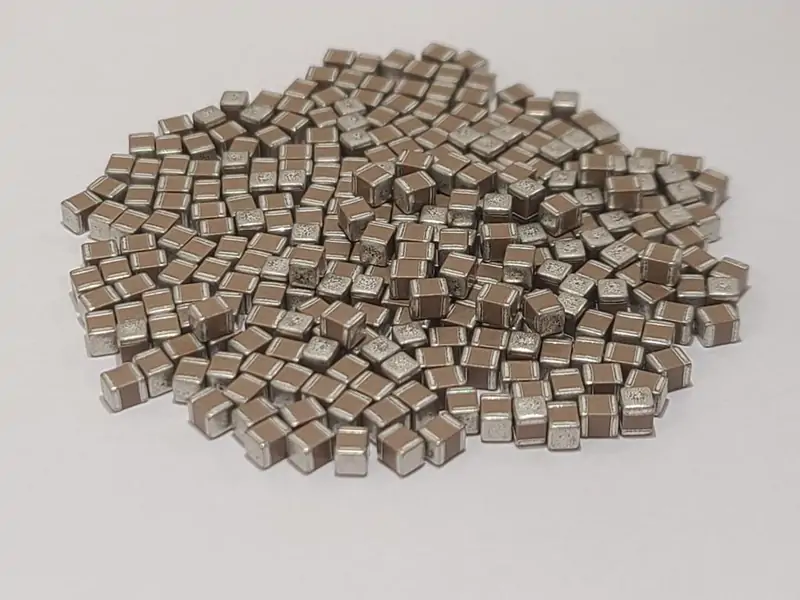 Gránulos cerámicos MLCC
| Aplicación | Industrias típicas | Materiales comunes | Problemas resueltos |
| Alimentación continua antes del envasado | Procesamiento de alimentos, plásticos, industrias químicas | Granos, semillas, pellets de plástico, partículas de resina, etc. | Mantiene el suministro continuo de material hacia el equipo de envasado y reduce las fluctuaciones de alimentación causadas por la operación manual |
| Alimentación precisa para sistemas de pesaje | Procesamiento de alimentos, industrias de materiales granulares | Semillas, pellets de plástico, partículas de alimentos, etc. | Ajusta la velocidad de alimentación según los requisitos de pesaje y mejora la consistencia durante la medición |
| Alimentación de material para sistemas de dosificación automática | Industria química, industria de procesamiento de polvos | Polvos químicos finos, aditivos, materias primas granulares pequeñas, etc. | Controla el suministro continuo de material y reduce la alimentación desigual durante los procesos de dosificación |
| Alimentación para integración de equipos automatizados | Materiales electrónicos, industrias de equipos de automatización | Partículas cerámicas MLCC, partículas de materiales cerámicos electrónicos, etc. | Utiliza estructura compacta y bajo consumo de energía para lograr una conexión estable entre unidades de equipo |
Materiales y condiciones no adecuados para la serie GZV
La serie GZV está diseñada para aplicaciones de alimentación de bajo flujo y precisión. Su principal ventaja es controlar la velocidad de alimentación y mantener un suministro constante de material, en lugar de manejar tareas de transporte de gran volumen. Los siguientes materiales o condiciones operativas requieren una evaluación cuidadosa antes de la selección:
| Condición de aplicación | Razón |
| Rocas grandes, bloques de mineral y materiales pesados | El peso individual del material es demasiado grande y excede el rango operativo adecuado de un mini alimentador electromagnético |
| Materiales en polvo con alta humedad y fuerte adherencia | Los materiales pueden adherirse a la superficie de la bandeja del alimentador, afectando el movimiento normal y el rendimiento de alimentación |
| Alimentación continua de gran volumen | La capacidad de alimentación es limitada y el equipo no es adecuado como unidad principal de alimentación para líneas de producción grandes |
| Materiales en polvo propensos a formación de puentes | Pueden requerirse medidas adicionales como estructuras anti-puente en la tolva o diseños especiales de descarga para mejorar el rendimiento de alimentación |
Al seleccionar un Mini Alimentador Electromagnético, se recomienda proporcionar información clave como nombre del material, capacidad de alimentación, rango de tamaño de partícula y espacio de instalación. La correcta correspondencia de los parámetros del equipo puede reducir ajustes posteriores y mejorar el rendimiento operativo a largo plazo.
¿Cómo elegir el alimentador electromagnético adecuado?
Los alimentadores electromagnéticos pueden dividirse en equipos de alimentación de precisión de bajo flujo y equipos de alimentación continua de mayor capacidad, según la capacidad de alimentación y los requisitos de aplicación. La selección debe basarse en las características del material, los requisitos de producción y las condiciones de instalación.
| Elemento de comparación | Serie GZV Mini Alimentador Electromagnético | Serie GZ Alimentador Electromagnético | Alimentador de Tornillo |
| Posicionamiento de aplicación | Alimentación de precisión de bajo flujo | Alimentación continua para líneas de producción | Transporte y alimentación de materiales en polvo |
| Capacidad de Alimentación | 0,1-4 t/h, adecuado para control preciso | Más adecuado para alimentación continua de gran capacidad | Determinado por el diámetro del tornillo y la velocidad de rotación |
| Principio de Funcionamiento | La vibración electromagnética mueve los materiales hacia adelante | La vibración electromagnética impulsa la alimentación continua de materiales | Las hélices giratorias del tornillo empujan los materiales hacia adelante |
| Materiales adecuados | Materiales en polvo y granulares | Mineral, carbón, agregados y otros materiales a granel | Materiales en polvo, partículas finas y algunos materiales fluidos |
| Aplicaciones Típicas | Envasado, pesaje, dosificación, equipos de automatización | Minería, materiales de construcción, metalurgia y otras industrias | Procesamiento de polvos y sistemas de transporte cerrados |
| Enfoque de selección | Precisión de alimentación, velocidad de respuesta y espacio de instalación | Capacidad de procesamiento y operación continua a largo plazo | Distancia de transporte, control de polvo y adaptabilidad del material |
Elija la Serie GZV para Alimentación Automática de Bajo Flujo
Cuando el proceso de alimentación se utiliza principalmente para envasado, pesaje, dosificación o alimentación de equipos automáticos, el requisito clave generalmente no es la distancia de transporte, sino controlar la velocidad de alimentación y mantener un suministro estable de material. La Serie GZV cambia la fuerza de vibración ajustando la salida electromagnética sin ajuste mecánico complejo, lo que la hace más adecuada para aplicaciones de alimentación de bajo flujo que requieren ajustes frecuentes.
Elija la Serie GZ o el Alimentador de Tornillo para Alimentación Continua de Gran Flujo
Cuando los materiales necesitan ingresar continuamente a sistemas de trituración, cribado o transporte, el enfoque principal es la capacidad de alimentación y la estabilidad operativa a largo plazo. El Alimentador Electromagnético Serie GZ es más adecuado para aplicaciones de alimentación continua en líneas de producción más grandes.
Para materiales en polvo que requieren transporte cerrado, distancias de alimentación más largas o dosificación precisa, también deben considerarse las características estructurales de un alimentador de tornillo.
Al seleccionar equipos, no se centre únicamente en los nombres de los equipos o la capacidad máxima de alimentación. Las aplicaciones de alimentación de bajo flujo se centran principalmente en el rendimiento de control, mientras que las líneas de producción grandes prestan más atención a la capacidad de operación continua. Confirmar las características del material, los requisitos de alimentación y las condiciones de instalación con anticipación puede reducir ajustes y modificaciones posteriores, permitiendo que el equipo se adapte mejor al proceso de producción.
Servicio de personalización
El Mini Alimentador Electromagnético Serie GZV no es adecuado para todas las aplicaciones con la misma configuración. La fluidez del material, la velocidad de alimentación y el espacio de instalación pueden afectar el rendimiento operativo final. El equipo de ingeniería de Jiarui puede ajustar el tamaño de la bandeja del alimentador, la selección de materiales y la estructura de conexión según requisitos específicos, ayudando a resolver problemas relacionados con alimentación inestable, espacio de instalación limitado y manejo de materiales especiales.
Desde la integración de equipos automatizados pequeños hasta sistemas de alimentación de materiales en polvo y granulares, evaluamos las condiciones de aplicación y confirmamos una solución adecuada. Si no está seguro sobre el modelo o la configuración, proporcione la siguiente información clave y nuestro equipo de ingeniería ayudará con la evaluación:
- Nombre y condición del material (polvo, gránulos, etc.)
- Capacidad de alimentación requerida (kg/h o t/h)
- Dimensiones de instalación del equipo o requisitos del sitio
Confirmar las características del material y las condiciones operativas con anticipación puede reducir ajustes posteriores y ayudar a mantener una operación estable del equipo.
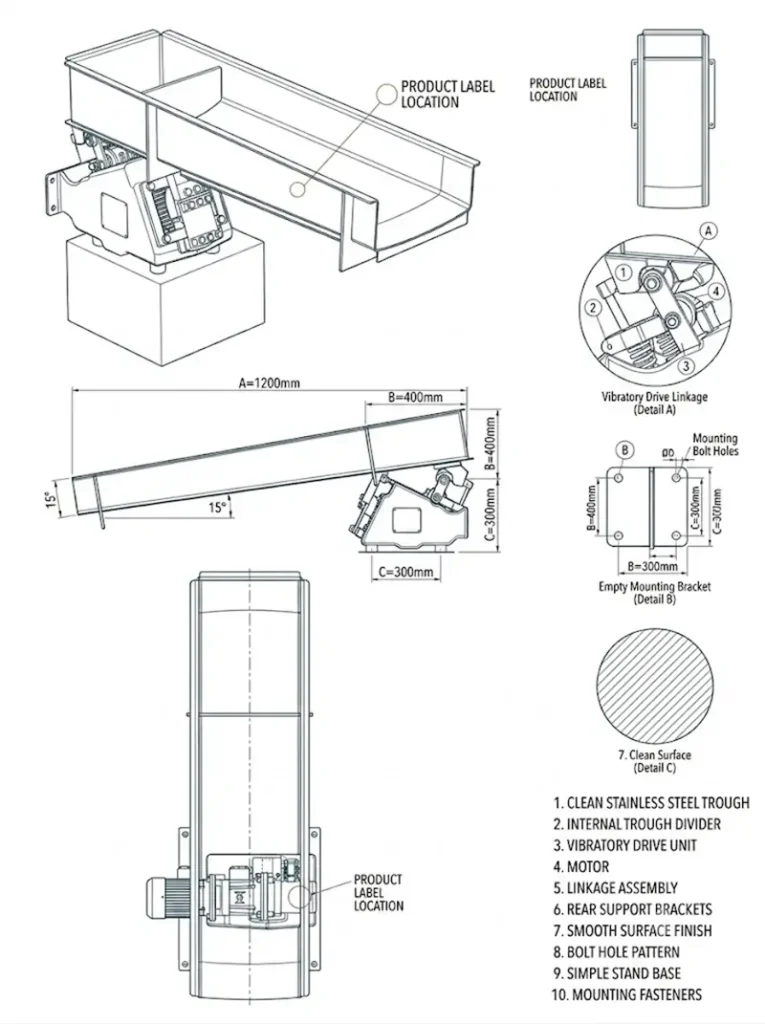
Fabricación Jiarui
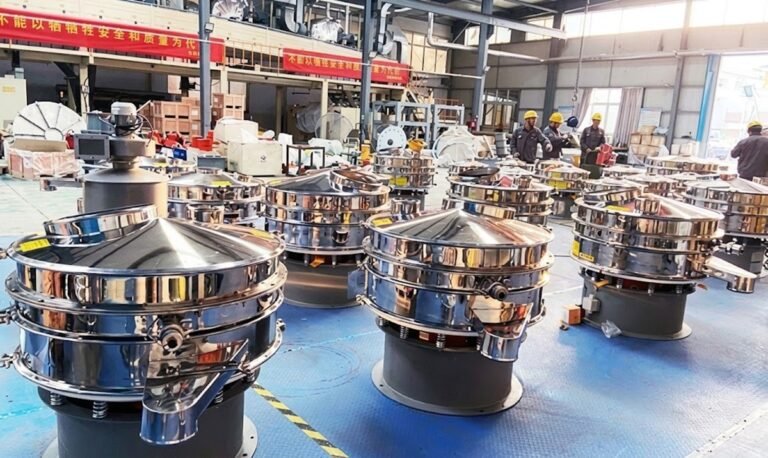
Aunque el Mini Alimentador Electromagnético tiene una estructura compacta, el rendimiento de alimentación no depende solo de los componentes electromagnéticos. También está relacionado con la correspondencia del sistema de vibración, el diseño de la bandeja del alimentador y la precisión de ensamblaje. Durante la fabricación, Jiarui se centra en estos factores clave que afectan la operación del equipo. Desde el diseño estructural y el procesamiento de componentes hasta el ensamblaje final y las pruebas, cada etapa se controla para garantizar que el alimentador se adapte mejor a diferentes procesos de alimentación.
Para diferentes características de materiales y requisitos de integración de equipos, el equipo de ingeniería de Jiarui confirma la capacidad de alimentación, el método de instalación y el espacio disponible antes de optimizar el tamaño de la bandeja del alimentador, la selección de materiales y la estructura de conexión. El proceso de fabricación sigue los requisitos de gestión de calidad, con el control de producción referido a la ISO 9001 norma del sistema de gestión de calidad. Los pasos clave de fabricación se controlan para mejorar la compatibilidad del equipo con los procesos de producción existentes del cliente y reducir los costos posteriores de ajuste y mantenimiento.
Preguntas Frecuentes
Obtenga una consulta gratuita
Complete el siguiente formulario para conectarse con nuestros expertos y recibir recomendaciones personalizadas para su aplicación.